Posts Tagged ‘Transcendental Meditation’

Vermont Public Radio: Transcendental Meditation Studied For Military Use

March 12, 2012

VPR News: VPR’s Steve Zind reports on research underway at Norwich University that uses Transcendental Meditation as a tool to make better soldiers and inoculate them from the psychological trauma of combat.

Transcendental Meditation Studied For Military Use
Monday, 03/12/12 12:44pm

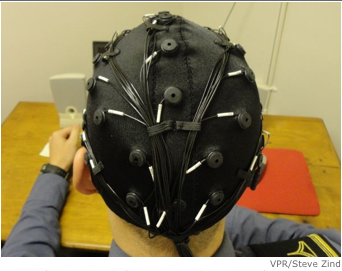
A Norwich University Cadet Wearing A Cap Designed to Monitor Brain Activity.

The military devotes a lot of money and resources to training for combat and to treating post-combat stress. Now there’s research underway at Norwich University in Northfield that uses a tool more associated with peace than warfare to prepare military men and women.

The study is looking at whether Transcendental Meditation will not only make better soldiers, but inoculate them from the psychological trauma of combat.

VPR’s Steve Zind has this story on a group of cadets that some are calling ‘Oom Platoon’.

From Vermont Edition: Dairy’s Value-Added Future

Related: The Norwich Guidon: Rooks experiment with meditation

Dr. Norman Rosenthal gives an engaging talk to medical staff at Northern Westchester Hospital

February 22, 2012

Dr. Norman Rosenthal addresses medical staff at NWH

Dr. Norman Rosenthal recently gave a wonderfully engaging talk on the Transcendental Meditation technique to the medical staff of Northern Westchester Hospital as part of their Health Education program.

Norman E. Rosenthal, MD, a world-renowned psychiatrist and author who described seasonal affective disorder (SAD) and pioneered the use of light therapy to treat it has improved the health of millions of people. His latest book Transcendence: Healing and Transformation Through Transcendental Meditation (Tarcher-Penguin, 2011) explores the value of this ancient meditation technique for healing and transformation in today’s modern world.

Dr. Rosenthal began his talk by highlighting the key themes of healing and transformation brought about by TM, and explained how certain parts of the brain are effected by stress and improved by meditation. He humorously described the conflict that exists neurologically in a stressed mind between the prefrontal cortex and the amygdala by using the simple analogy of the CEO of a company and the fire marshall. It made a lot of sense. Everyone got it.

Drawing on anecdotes from his best-selling book, Transcendence, Dr. Rosenthal’s relaxed narrative style held the audience’s attention throughout the presentation. He shared personal stories of how TM had improved the lives of those interviewed for the book, like Hollywood filmmaker David Lynch, actress Laura Dern, Pulitzer-prize-winning journalist Tim Page, neuropsychologist William Stixrud, as well as patients from his own practice.

A former NIH researcher, Dr. Rosenthal had looked into, and was impressed by, the volume of scientific research studies on TM in the fields of mental and physical health, education and social behavior. He cited some of these studies, including more recent ones.

Dr. Rosenthal also mentioned a published pilot study he had conducted on Veterans with PTSD that showed a 50% reduction in symptoms within two months. He posted an article about it on his blog, along with an emotionally-charged video of one of the Veterans and his mother:  The Case for Using Transcendental Meditation to Treat Combat Related PTSD.

He told the amazing story of Jim Dierke, principal of Visitacion Valley Middle School, and how he had transformed violent, stressed under-achieving, low-attending students to motivated harmonious academically successful ones with the highest attendance ever, after he had introduced the TM/Quiet Time program to his staff and students. The program was implemented and funded by the David Lynch Foundation. Here is a recent article, with a video of principal Dierke, posted on the TM Blog: Breaking the “predictive power of demographics”: SF principal talks about how TM helps his students.

Dr. Rosenthal also shared his own story of how he started TM as a college student in South Africa back in the 70’s. “As they say, if you remember the 70’s you probably weren’t there, but I was there,” he quipped, and giggled. Like most of us he was inspired by the Beatles traveling to India to study Transcendental Meditation with Maharishi Mahesh Yogi. But, he says, he was overwhelmed with his medical studies and didn’t take the time to meditate regularly. He dropped the meditation, yet returned to it decades later after one of his patients recommended he do it based on his own experiences. He went to the local TM center to refresh his practice. After looking into some of the research studies, and noticing subtle yet lasting changes in his own life, he was convinced that this simple, natural process could really make a difference in people’s lives.

Dr. Rosenthal swore he would never write another book; it takes too much time and energy, but after seeing how much of a difference TM was making in his life, and in the lives of his patients, he just had to write this one last book. He felt as compelled to write about TM as he had been about his earlier medical discovery. He was also pleasantly surprised with how enjoyable the whole process went, compared to earlier experiences. He felt the joy of being in the flow, of being in the moment, totally engaged in the creative process. He said the whole experience was very rewarding, uplifting and fulfilling.

He concluded his talk with the value of groups, organizations, practicing TM together, and the impact that has. As an example he mentioned Oprah and how she chose to give TM to her whole organization, and the amazing transformations that brought about. She wrote about it in her magazine, What I Know for Sure.

You can enjoy watching Dr. Rosenthal’s entertaining and informative presentation here on the Northern Westchester Hospital website: http://www.nwhc.net/home/about-us/video-suite/health-education.

Credit and appreciation goes to Sally Rosenfeld, a Certified Teacher of the Transcendental Meditation program, in Westchester County, NY, for arranging to have Dr. Rosenthal speak at Northern Westchester Hospital. Sally said it was a great event, with around 100 people attending from both the hospital and community. Several of them later came to the TM Center to learn how to meditate. Considering how progressive NWH is with their alternative offerings, adding the TM program to the mix would seem like a natural outcome of the meeting.

Can meditation save us? Fox News Opinion by Tom McKinley Ball

February 20, 2012

Can meditation save us?

FOX NEWS Opinion by Tom McKinley Ball
Published February 19, 2012 | FoxNews.com

Economic uncertainty, political divisiveness—it seems that our nation and many of us individually are now under more stress than we’re designed to handle.

It’s no surprise that increasing numbers of people are turning to meditation for refuge. And why shouldn’t we? It’s just the natural use of our own minds.

An effective meditation technique allows you to dive deep within and contact reserves of peace, energy and clarity to help you more gracefully accomplish what you wish to achieve in life. It dissolves deep-rooted, accumulated stresses that obstruct your health.

But it’s more than that: meditation can show you who you really are. Not just on the surface but deep within—where reside greater possibilities of creativity and intelligence, untapped potentialities of heart and mind.

Resurgence

“If Transcendental Meditation were a new drug, conferring this many benefits, it would be the biggest, multi-billion dollar blockbuster drug on the market.”—former senior NIH researcher Norman Rosenthal, M.D.

In the 1970s, Transcendental Meditation (“TM”) became a widespread cultural phenomenon. Now there’s a rising new wave of interest in TM, but for different reasons: because there’s so much scientific research verifying its effects.

Doctors and therapists are recommending it in growing numbers.

Business owners offer it as a human resource for employees—such as Oprah Winfrey and her company, Harpo Productions.

Prison systems in the U.S. and abroad are implementing programs for inmates. Hundreds of schools around the world are offering TM-Quiet Time programs for students. But mostly, people are learning it because they notice positive change in someone they know who’s learned.

From a health point of view, meditation can save your life: the deep, restorative rest rejuvenates body and mind and facilitates healing.

Research sponsored by the National Institutes of Health has shown that the TM technique reduces heart attack and stroke by nearly 50%. Clinical trails showed that it reduces cholesterol by 30 milliliters. “If you’re on medication for cholesterol,” says Dr. Mehmet Oz, “we hope you can get 30 milliliters lower. But this happened through Transcendental Meditation alone.”

Besides reducing the major risk factors for heart disease, meditation can also save lives by reducing depression and anxiety, as numerous studies on TM have shown.

“It Saved Me”

I’ve met many people who’ve told me that meditation saved their life. People struggling with high blood pressure who were eventually able to get off their meds after learning TM.

I encountered a Native American woman who said her insulin levels normalized for the first time in years, a few months after learning this meditation. A young woman on the verge of suicide learned the technique, pulled herself out of severe depression and found the wherewithal to return to college for a business degree.

There was the boy with ADHD, who after his first meditation never again needed to wear the Ritalin patch that was stunting his growth.

Hopelessness can be turned into hope when you get to that place within yourself that’s strong enough, resourceful enough to overcome challenges.

Even a person fighting for their life can find solace in meditation: it’s something one can do to help oneself instead of surrendering entirely to the care of others.

Calming the Waters

Here’s the beauty of Transcendental Meditation: it’s a stress-reducing practice that transcends personal opinion, likes and dislikes, beliefs and ideologies. It works on the basis of something deeper and more universal—the mind’s natural tendency.

Our minds naturally seek greater freedom and happiness, greater knowledge. The TM technique allows you to use that natural attraction to happiness in a special way by turning attention inward and finding greater happiness and peace inside you, satisfying the mind’s quest.

But it’s not a selfish thing. Even though you do it for yourself, it’s one of the best things you can do for the people around you.

The flight attendant tells us, in case of emergency, secure your own oxygen mask first. If you don’t, you’ll be useless to help anyone. Meditation allows us to save ourselves from the undertow of stress so we can be sufficiently calm and fully functional to help others.

Bridging the Differences

The TM technique is a secular, non-religious form of meditation involving no beliefs. Many religious people practice it and find that it deepens their spirituality. A physicist friend tells me it refines his appreciation of nature. All the things that define us in the outer world lose their ability to divide us as we familiarize ourselves with that deeper, universal field of order at the basis of the mind—a transcendental level of life that belongs to all of us.

Transcendental Meditation is not a sect. It’s not foreign to our culture because it’s based on natural principles of mind and body that we all share. It’s an effortless technique that anyone can learn, a tool you can use all your life and it gets better with age—it helps you get better with age and stay younger in body, mind and spirit (and yes, there’s research on that).

Tom McKinley Ball is a writer for the David Lynch Foundation. He attended a Transcendental Meditation teacher training course in 1975-76, where he studied with Maharishi Mahesh Yogi, and has taught meditation for almost 40 years.

http://www.foxnews.com/opinion/2012/02/19/can-meditation-save-us

Words—a poem on the nature of words and mind

February 19, 2012

Ever looked at a legal document and wondered what the heck you just read? Depending on the way we use language, communication can obfuscate or elucidate, confuse or clarify.

Words can mean different things to different people. The English language uses different words to mean the same thing, and different things use similar sounding words. It can get confusing, especially if English is not your first language. Apparently only Sanskrit has a direct one-to-one relationship between a word and its meaning, between name and form, nama-rupa.

One way to use words to create clarity of mind is in meditation, where the mind, if allowed, can refer to its own essential nature. In the case of Transcendental Meditation, a technique that automatically transcends its own activity, a different kind of word, or thought, is employed—a mantra—a suitable harmonious meaningless sound. With the appropriate mantra, and instructions how to use it properly, the mind can effortlessly transcend words, thinking, its own activity, and arrive at the source of mind, a state of pure awareness, the meditator’s inner Self.

Hope this introduction helps you to better understand this abstract poem I wrote in the late 1980’s. For lack of a better title, I just called it, Words.

Words

the mind is of two minds
one listens to the sounds of words
the other follows their meanings
words help the mind to know things

names are the words for things
things are the forms of names
sounds and meanings of names and forms
things are contained within words

when words become things in themselves
then words get contained within words
sounds and meanings within names and forms
names and forms within sounds and meanings

layers of communication get built up create complex structures
and break down under the weight of their own words
too many words hinder the mind’s ability to know things
the mind cannot know its own mind

. . . . .

when words use themselves
to lose themselves
they allow the mind
to experience itself

experiencing itself
losing itself
to the Self
left to its Self

alone
the silent home
where things and words are one
all one

© Ken Chawkin

John Hagelin — “Only Higher Consciousness Can Transform Our World” — Beyond Awakening Blog

February 13, 2012

“Only Higher Consciousness Can Transform Our World”
John Hagelin is interviewed by Terry Patten for Beyond Awakening Blog

Terry Patten conducted a conversation at the leading edge with John Hagelin, PhD for their Beyond Awakening Series. You can listen to a replay of this enlightening 90-minute interview recorded Sunday, February 12th, 2012 on the Beyond Awakening Blog, on SoundCloud: BeyondAwakening.Hagelin.02.12.2012, or Download the MP3.

Beyond AwakeningHost Terry Patten is a passionate Integral coach, teacher, trainer, consultant, and writer. He is committed to serving the emergence of Integral consciousness—by writing and educating, and by helping conscious individuals and organizations negotiate extraordinary transitions.

Terry describes John Hagelin as a physicist, educator, author, and large-scale activist — a truly remarkable “Renaissance man.”

His work has demonstrated that since our perception and behavior is a direct reflection of our consciousness, any attempt to improve human behavior or transform society can only succeed if it addresses the fundamental issue of consciousness.

And cutting-edge neuroscientific research reveals clear-cut evidence for “higher states of consciousness” with vastly expanded mental capabilities and enhanced powers. Physiologically well-documented higher states include the temporary experience of Samadhi—Pure Consciousness—the unbounded, universal, transcendental Self. They also include the permanently stabilized experience of Samadhi—together with waking, sleeping and dreaming experience—known as Nirvikalpa Samadhi, Liberation, or Nirvana.

He describes how our new understanding of higher states of consciousness—and their ready accessibility—radically changes our understanding of the limits of human potential. It has far-reaching implications for the transformation of society—for solving intractable problems in the field of education; reducing crime, terrorism and war; and promoting social harmony and world peace.

Dr. Hagelin is a leading researcher and educator who has brought the practice of meditation to half a million at-risk children and has helped conduct a body of research that demonstrates the powerful effects of group meditation practice on reducing social violence, crime, war, and terrorism and promoting societal peace.

In our conversation he will bring together cutting-edge discoveries in quantum physics and neuroscience to forge a new understanding of consciousness and the physical universe—mind and matter—revealing a startling connection between our inner and outer realities.

About John Hagelin:

Official photo of John HagelinJohn Hagelin, Ph.D., is a world-renowned quantum physicist, educator, author, and President of the Global Union of Scientists for Peace. He has conducted pioneering research at CERN (the European Center for Particle Physics) and SLAC (the Stanford Linear Accelerator Center). He is responsible for the development of a highly successful grand unified field theory based on the superstring—a theory that was featured in a cover story of Discover magazine.

In addition, Dr. Hagelin has spent much of the past quarter century leading a scientific investigation into the foundations of human consciousness. He is one of the world’s pre-eminent researchers on the effects of meditation on brain development, and the use of collective meditation to defuse societal stress and to reduce crime and social violence.

In recognition of his outstanding achievements, Dr. Hagelin was named winner of the prestigious Kilby Award, which recognizes scientists who have made “major contributions to society through their applied research in the fields of science and technology.” The award recognized Dr. Hagelin as “a scientist in the tradition of Einstein, Jeans, Bohr and Eddington.”

Dr. Hagelin has appeared many times on ABC’s Nightline, NBC’s Meet the Press, CNN’s Larry King Live! and many others. He has been regularly featured in the Washington Post, the New York Times, the Wall Street Journal, and most other major metropolitan newspapers.

See IONS interview: The Power of The Collective, by John Hagelin.

TV interviews: Conscious TV: John Hagelin – The Core of Nature | John Hagelin, Ph.D., Speaks on the Nature of Consciousness and the Universe | Dr. John Hagelin: Look Within to Understand the Universe.

Special webcast by Dr. John Hagelin: The Origin of the Universe and the Nature of ConsciousnessThis video serves as an introduction to Dr. Hagelin’s online course, “Foundations of Physics and Consciousness.” For more information about the course and to register, please click here: http://www.mum.edu/de/physics.html

MindShiftKQED: How we will learn: Amidst Chaos, 15 Minutes of Quiet Time Helps Focus Students

February 9, 2012

Amidst Chaos, 15 Minutes of Quiet Time Helps Focus Students
February 9, 2012 | 10:36 AM | By Tina Barseghian
Filed Under: Culture, Learning Methods
Students at Visitacion Valley School in South San Francisco
observe 15 minutes of quiet time every morning.

By Kyle Palmer

On a recent morning at Visitacion Valley Middle School in South San Francisco, Principal James Dierke looked out over the school’s auditorium at more than 100 eighth graders. A restless din filled the large room. Bursts of laughter and errant shouts punctuated the buzz. Most of the students seemed disinterested in Dierke’s announcements about the spring’s impending graduation, upcoming field trips, and recent birthdays.

Then, Dierke struck a bell and said, “Okay, it’s quiet time.”

And just like that, a hush fell over the auditorium. Students straightened their backs and closed their eyes. Some bowed their heads. Others rested them on the backs of their chairs. The once-boisterous hall became silent and remained so for the next 15 minutes.

“Visitors are always amazed,” Dierke said afterwards, “but it works. It really is quiet time.”

“Quiet Time” isn’t just a slogan but a daily regimen at Visitacion Valley. The entire school—faculty, staff, and students—spend the first and last 15 minutes of every day in silence. Students are encouraged to use the time to meditate, but Dierke says students can simply clear their mind, think about schoolwork, or even sleep. Just as long as they are quiet.

“I’ve found that it makes people—students and teachers—more joyful,” Dierke said, “To have that time to reflect and be still is important.”

That is not always possible for his school’s students, Dierke said. He said the neighborhood around Visitacion Valley can be rife with violence and crime. “These kids hear gunshots on their way to and from school. That kind of stuff makes it hard to focus on algebra,” he said.

Besides dealing with problems outside school, Visitacion Valley faces challenges in school, too. Nearly 90 percent of Visitacion Valley’s students are classified by the district as socioeconomically disadvantaged and more than 40 percent are English Language Learners.

Dierke, who has been principal at the school for 13 years, said things reached a turning point about five years ago. “We were looking for a way to get kids to relax,” he said. “We saw kids with real post-traumatic stress disorder symptoms. I noticed a lot of them missing school, fighting, and getting angry a lot. They couldn’t concentrate on school.”

An assistant principal suggested the idea for quiet time after she saw Hollywood director David Lynch speak about the program and the accompanying benefits of transcendental meditation. Lynch runs a non-profit foundation that promotes meditation in schools and also sponsors meditation retreats for under-served students.

With the help of the David Lynch Foundation and the San Francisco-based Center for Wellness and Achievement in Education (CWAE), Visitacion Valley trained teachers on how to conduct Quiet Time sessions in their class. CWAE specialists counseled students on meditation techniques and five full-time staffers remain on campus to help maintain the program.

Since beginning Quiet Time, Dierke said things have improved: Daily attendance last year was more than 98 percent, and there have been fewer suspensions and higher test scores.

Angelica Mahinay, Visitacion Valley’s 8th grade student body president, said Quiet Time gives her more energy. “I get to school at 7 a.m. for softball practice. It helps me not be so tired during school,” she said.

Eighth grader Art Parkeenvincha moved to San Francisco from Canada in the middle of this year. “I can be really hyperactive,” he said. “I had never done meditation before, but now I do Quiet Time. I think of my mantra, and it helps me calm down.”

Bob Roth, Executive Director for the David Lynch Foundation, said meditation is not just a way for students to relax but has real cognitive benefits. “Meditation strengthens the areas of the brain that control our ‘fear center’,” he said. “It helps kids reduce anxiety and increase their ability to reason and concentrate.”

Principal Dierke said, as a result of Quiet Time, the school’s image is changing. “This school used to be known as the ‘fight’ school,” he said. “Now, I have other principals asking me about Quiet Time. It feels good to have that reputation.”

Two other schools in SFUSD have begun their own Quiet Time programs and a district spokesperson said other schools have begun asking questions about Visitacion Valley’s success.

Visitacion Valley also got attention from actor Russell Brand, who visited the school just before Christmas on a trip sponsored by the David Lynch Foundation. “That was crazy,” Angelica, the student body president, said. “I got to sit right by him and the whole school meditated with him.”

In addition, Dierke said regular Quiet Time has also helped teachers relax. “Only two teachers have left in the past five years, outside of retirements and district layoffs. That’s amazing for an urban middle school,” he said. He attributes that to higher levels of job satisfaction.

Physical Education teacher Barry O’Driscoll agreed that Quiet Time has helped improve the staff’s quality of life. “I was very reluctant when it first started,” he said. “I thought it was just another fad. But now I meditate twice a day, and I do it at home. I think it’s helped my golf game, too.”

Visitacion Valley still struggles with significant challenges. This year, the school has had to integrate more than 100 new students onto campus after another nearby middle school was closed by the district. Likewise, test scores have increased in recent years but still remain low compared to other SFUSD middle schools.

“We’re not perfect,” Dierke said. “Quiet Time is just like an umbrella. When you have it up, it keeps the rain off, and you can focus on trying to build a culture with kids. That’s what we’re gradually doing here.”

The payoff might be most evident in students like Angelica Mahinay, who says, “Man, when I hear students getting an attitude, or they’re saying they’re going to fight, I say, ‘Hey! Just meditate!’”

Related articles: The San Francisco Examiner—Meditation program mends troubled Visitacion Valley Middle School and Meditation for Students: Results of the David Lynch Foundation’s Quiet Time/TM Program in San Francisco Schools, New research shows Transcendental Meditation improves standardized academic achievement, Breaking the “predictive power of demographics”: SF principal talks about how TM helps his students. And here’s a wonderful report from the The George Lucas Educational Foundation (GLEF): Edutopia: SF School Uses TM to Overcome Problems.

Watch the trailer for a new documentary film on David Lynch titled “Meditation Creativity Peace”

February 9, 2012

“Meditation Creativity Peace”

“Meditation Creativity Peace” is David Lynch Foundation Television’s compelling new documentary film featuring exclusive, candid footage from David Lynch’s 16-country tour around the world when he spoke to government leaders, film students, and the press during 2007 and 2008. David’s unique, free-styling demeanor grabs your attention from the very beginning of the film. David has also selected deeply insightful quotes from great thinkers and revered texts throughout history, which reveal how the practice of meditation, developing creativity, and enjoying true inner peace are the birthright of everyone. As David says in the documentary, “Transcendental Meditation is for human beings—it doesn’t matter where you live.” Watch the trailer for this new documentary film here: Meditation Creativity Peace.*

About the David Lynch Foundation

The David Lynch Foundation, a 501(c)(3) organization, was established in 2005 to fund the implementation of scientifically proven stress-reducing modalities including Transcendental Meditation, for at-risk populations such as underserved inner-city students; veterans with PTSD and their families; American Indians suffering from diabetes, cardiovascular disease, and high suicide rates; homeless men participating in reentry programs striving to overcome addictions; and incarcerated juveniles and adults. The Foundation also funds university and medical school research to assess the effects of the program on academic performance, ADHD and other learning disorders, anxiety, depression, substance abuse, cardiovascular disease, post-traumatic stress disorder, and diabetes.

Related Websites and Posts

David Lynch Foundation http://www.davidlynchfoundation.org
Operation Warrior Wellness http://www.operationwarriorwellness.org
David Lynch Foundation Music http://davidlynchfoundationmusic.org
David Lynch Foundation Television http://dlf.tv
Transcendental Meditation http://www.tm.org
Click here for DLF Featured Past Events

Announcements and Reviews: Julie Eagleton: Meditation Creativity Peace: A Documentary of David Lynch’s 16 Country Tour | BlackBook: David Lynch’s Transcendental Meditation Documentary Gets a New York Premiere | New York Times: David Lynch Double Bill | Gothamist: David Lynchian Events Happening All Over NYC This Weekend | Yelp: An Evening with the Work of David Lynch, from Transcendental Meditation to Eraserhead

Related articles: HUFFPOST: David Lynch: Why I Meditate | Meditation for Students: Results of the David Lynch Foundation’s Quiet Time/TM Program in San Francisco Schools | Replay of David Lynch Foundation Launch of Operation Warrior Wellness Los Angeles | Third Annual David Lynch Foundation Benefit Gala | David Lynch gives $1M to teach vets meditation | David Lynch donates $1 million in grants through his foundation to teach veterans to meditateRussell Brand Does Stand-Up for Transcendental Meditation | What do Stephen Collins, Ellen DeGeneres, Russell Brand, Russell Simmons, David Lynch and Oprah have in common?

New related posts: Russell Brand and David Lynch at LA Premiere of ‘Meditation, Creativity, Peace’ Documentary, and David Lynch, Russell Brand, Bob Roth Q&A after screening Meditation, Creativity, Peace documentary at Hammer Museum. Enlightenment, The TM Magazine, reported on the LA Premiere: Meditation Creativity Peace: How the David Lynch Foundation Brings Change from Within. David Lynch speaks with Alan Colmes about his 16-country tour film Meditation Creativity Peace.

*Visit the new website, Meditation Creativity Peace, for a list of upcoming and previous screenings. You can also ask your local TM Center if they have a copy and plan to show it. http://meditationcreativitypeace.com

You can now see the film “Meditation Creativity Peace”—A documentary of David Lynch’s 16-country tour during 2007–2009.

MUM President Dr Bevan Morris Suggests Ghana Should Consider Consciousness-Based Education

February 3, 2012
   Education  |  3 February 2012

Consider Consciousness-Based Education
Through 15 Minutes Quiet Time

The President of Maharishi University of Management in the United States, Dr Bevan Morris, says the country should consider the adoption of consciousness-based education through which a learning technique known as transcendental meditation or ‘quiet time’ is used to improve academic performance and discipline in schools.

He explained that transcendental meditation was a simple technique to aid the development of total brain functioning so that students could unfold the inner reserves of brain potentials by increasing their creative intelligence, reducing their stress and anxiety and having greater success in their academic performance.

At a presentation on consciousness-based education in Accra, Dr Morris said scientific evidence was so strong that the technique could change students’ lives in positive ways, adding that more than 51 countries in the world had adopted the technique which was working well for their students.

“They (students) just need 10 to 15 minutes practice in the morning and in the afternoon, added to their regular academic programme. They (students) just sit down comfortably in a chair and close their eyes and follow a simple technique that allows the mind to settle down to a more restful stage until they (students) reach a stage of restful alertness where the whole body is deeply relaxed and the mind is silent and peaceful, and when they come out from that they come out with great joy and energy to go ahead and study what they have to study during the day,” he said.

The act, he said, led to excellent academic results and better behavior where the problem of misbehavior such as fighting, destruction of school property and bullying in school was common around the world.

Dr Morris said in tackling indiscipline, it was not adequate to enforce rules and regulations which students were asked to adhere to.

He said with the evidence and experience all over the world, it would be great opportunity for Ghana to look at the practice seriously to be introduced in schools in the country.

The teachers of transcendental meditation, he said, went through four or five months of intensive study to become skillful, adding that there were already teachers of transcendental meditation in Ghana.

Dr Morris said the university was ready to assist in the implementation of transcendental meditation in the country.

He said in practicing the technique, pre-tertiary students could adopt 10-15 minutes while tertiary students could adopt 20 minutes in the morning and afternoon.

He said in the course of transcendental meditation, students did not need to concentrate on anything but would just relax their mind.

Dr Morris said transcendental meditation was not a religious practice, and that it was only a systematic development of brain functioning and higher consciousness.

“TM comes from an ancient tradition in India, ”he emphasised.

The President of Maharishi Foundation in Ghana, Dr T.K. Orgle, said there were two training centres at Labone and Odorkor.

He said TM was being practiced at a school in Chorkor.

The Headmaster of the Manhean Senior High School, Mr Joseph Amuah, said it was up to the country to decide which way to go, as far as transcendental meditation was concerned.

Source: Emmanuel Bonney – Daily Graphic
Also see Permanent World Peace CAN be created says Dr Morris

Oprah writes in O Mag about her visit to TM Town and meditating with ladies in their Golden Dome

January 17, 2012

In the February 2012 issue of O, The Oprah Magazine, Oprah in her column, What I Know for Sure, (page 162) shares her mission in life, what she’s all about: seeking the fullest expression of self. Part of that life’s purpose brought her to Fairfield, Iowa, or TM Town, as she calls it.

Oprah and her crew were here filming segments for her Next Chapter on OWN, including interviews with students at the Maharishi School; Vedic Pandits in neighboring Maharishi Vedic City; a visit to a home in Abundance Eco-Village, which is totally off the grid and designed with Vedic architectural principles; and practicing Transcendental Meditation with the ladies in one of the two golden domes on the campus of Maharishi University of Management. The show may be airing sometime in March. Updates to follow.

In the article, Oprah shares some personal thoughts on her visit to Fairfield, in particular, meditating in one of the golden domes with the ladies of the Fairfield community. She had a “powerfully energizing yet calming experience” of deep inner stillness and “didn’t want it to end.” When it did, she “walked away feeling fuller than when I’d come in…full of hope, a sense of contentment, and deep joy.” She elaborates saying we all need to tap into and experience “the constancy of stillness” from where “you can create your best work and your best life,” even during “the daily craziness that bombards us from every direction.”

Click on the photo and then the text box to enlarge and better see them. You can also click on this Oprah Feb 2012 to download a pdf of the article, or pick up a copy at a store where her magazine is sold. The same article is now posted on Oprah.com with a larger photo showing hundreds of ladies meditating behind Oprah in a packed dome: Oprah on Stillness and Meditation – Oprah Visits Fairfield Iowa – What Oprah Knows for Sure About Finding the Fullest Expression of Yourself. Enjoy!

AND THANK YOU, OPRAH!

Also reported in Global Good News | Maharishi School News | TM Program for Women Professionals | Transcendental Meditation Blog | Peacetown, USA.

See related posts: Some Reports on Dr. Oz’s Interview with Oprah about TM and her Next Chapter, which includes a segment of that interview, Oprah meditates with ladies in MUM Golden Dome, Reports of Oprah’s visit to Fairfield, Iowa, and Oprah says she and her staff meditate, enjoy a Quiet Time twice a day—Facebook Live interview.

Free Your Mind Project Show Discusses the David Lynch Foundation’s Commitment to 10,000 Vets

January 15, 2012

David Lynch Foundation’s Commitment to 10,000 Vets and 8 Easy Ways Make Your New Year’s Resolutions Work for Real Happiness

Here’s another Free Your Mind Projects On Air Radio Show on Transcendental Meditation and the David Lynch Foundation’s work with Veterans. Guests include longtime Teacher of Transcendental Meditation, Denny Goodman, and Veteran Infantryman David George. You can hear them on the 3rd and 4th segments of this 55:24 minute show. Information about this FYMP show is copied below from their post.

We have had the honor of inviting the people over at the David Lynch Foundation onto our show again. Thanks to Ken Chawkin and Lynn Kaplan, who both set us up with one of their great Transcendental Meditation (TM) teachers, Denny Goodman, and also a US veteran, David George, who has been to hell and back. Listen as they talk about how TM has helped soldiers recover from PTSD, and how they are committed to helping 10,000 Vets across the country. We also have a clip of our interview with David Lynch at his past event. Also thanks to our guest host from LA County Department of Mental Health, PIO Kathleen Piche´, for getting us in touch with TM!

This is the video that we talk about on the show, which has David and his mother talking about his ups and downs and finally his recovery.

Please note, our guest stated the way to make this kind of therapy available for all Veterans across the country who may be coming back with conditions such as PTSD (that’s about 500,000 vets!), is to have them tell the Veteran’s Administration they want this for everyone. Please, if you know a Vet, let them know this is available and to reach out to the VA and the David Lynch Foundation. Thank you.

Here is the link for Operation Warrior Wellness, the David Lynch Foundation division that is offering Transcendental Meditation to Veterans: http://www.operationwarriorwellness.org/contact-us.html.

You can find the printed version of previous Free Your Mind Projects Radio Show Guest Dr. William Arroyo from LACDMH and Project ABC’s “8 Easy Ways to do Your New Year’s Resolutions” on our Free Your Mind Blog.

I checked their blog posts and found 3 so far on Transcendental Meditation. Click here, scroll down and you’ll see 3 entries on the 7th of Oct, Nov, and Dec. Also listen to a previous show: Bob Roth, Executive Director, David Lynch Foundation, Discusses Transcendental Meditation On Free Your Mind Projects Radio Show.