Posts Tagged ‘meditation’

Inspiring excerpts – David Lynch: Catching the Big Fish – Meditation, Consciousness, and Creativity

July 28, 2013

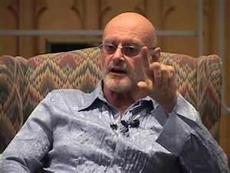
Inspiring excerpts from a book by David Lynch: Catching the Big Fish – Meditation, Consciousness, and Creativity

Ideas are like fish. If you want to catch little fish, you can stay in the shallow water. But if you want to catch the big fish, you’ve got to go deeper. Down deep, the fish are more powerful and more pure. They’re huge and abstract. And they’re beautiful. Everything, anything that is a thing, comes up from the deepest level. Modern physics calls that level the Unified Field. The more your consciousness – your awareness – is expanded, the deeper you go toward this source, and the bigger fish you can catch.

Catching the Big Fish: Meditation, Consciousness, and Creativity
–David Lynch

David Lynch (b. 1946) – director, visual artist, musician and, most significantly, long-term Transcendental Meditation practitioner – is best known for his surrealist films, having developed his own unique cinematic style, characterized by dream imagery and meticulous sound design. In the course of his career, he has received numerous nominations and awards, including the illustrious Palme d’Or at the Cannes Film Festival and a Golden Lion award for lifetime achievement at the Venice Film Festival.

His most popular and critically-acclaimed film projects include Eraserhead, The Elephant Man, Wild at Heart, Twin Peaks, Blue Velvet, Mulholland Drive and INLAND EMPIRE. He has also embraced the internet as a medium, producing several web-based shows, such as the animation, Dumbland, and the surrealist sitcom, Rabbits.

He has also produced a brilliant literary offering, Catching the Big Fish: Meditation, Consciousness, and Creativity. Written in short chapters on themes as diverse as painting, filmmaking, meditation, consciousness, the texture of a dead body and other such profound matters, it is an absolute treat for any aspiring artist who is also keen to dive deep for the so-called bigger fish and is looking for a truly authentic and honest interpretation of life.

Desire
Desire for an idea is like bait. When you’re fishing, you have to have patience. You bait your hook, and you wait. The desire is the bait that pulls those fish in – those ideas.

The beautiful thing is that when you catch one fish that you love, even if it’s a little fish – a fragment of an idea – that fish will draw in another fish, and they’ll hook onto it. Then you’re on your way. Soon there are more and more and more fragments, and the whole thing emerges. But it starts with desire.

Consciousness
Through meditation one realizes the unbounded. That which is unbounded is happy. There is no happiness in the small.
Upanishads

Little fish swim on the surface, but the big ones swim down below. If you can expand the container you’re fishing in – your consciousness – you can catch bigger fish.

Here’s how it works: Inside every human being is an ocean of pure, vibrant consciousness. When you ‘transcend’ in Transcendental Meditation, you dive down into that ocean of pure consciousness. You splash into it. And it’s bliss. You can vibrate with this bliss. Experiencing pure consciousness enlivens it, expands it. It starts to unfold and grow.

Intuition
Know That by knowing which everything is known.
Upanishads

Life is filled with abstractions, and the only way we make heads or tails of it is through intuition. Intuition is seeing the solution – seeing it, knowing it. It’s emotion and intellect going together. That’s essential for the filmmaker.

How do you get something to feel right? Everybody’s got the same tools: the camera and the tapes and the world and the actors. But in putting those parts together, there are differences. That’s where intuition enters.

Personally, I think intuition can be sharpened and expanded through meditation, diving into the Self. There’s an ocean of consciousness inside each of us, and it’s an ocean of solutions. When you dive into that ocean, that consciousness, you enliven it.

You don’t dive for specific solutions; you dive to enlighten that ocean of consciousness. Then your intuition grows and you have a way of solving those problems – knowing when it’s not right and knowing a way to make it feel correct for you. That capacity grows and things go much more smoothly.

Identity
The thing about meditation is: You become more and more you.

Sound
Sometimes you hear a piece of music, and it marries to a scene in the script. When I’m shooting, I will often play that piece of music in the headphones whilst listening to the dialogue. Hearing the music is just a verification that things are going the right way – for instance, the right pace or lighting. It’s just another tool to ensure that you’re following that original idea and being true to it.

Ask The Idea
The form which embodies that wish appeared in consciousnesses – that is to be held within consciousness.
Upanishads

The idea is the whole thing. If you stay true to the idea, it tells you everything you need to know, really. You just keep working to make it look like that idea looked, feel like it felt, sound like it sounded, and be the way it was. And it’s weird, because when you veer off, you sort of know it. You know when you’re doing something that is not correct because it feels incorrect. It says, ‘No, no; this isn’t like the idea said it.’ And when you’re getting into it the correct way, it feels correct. It’s an intuition: You feel-think your way through.

You start one place, and as you go, it gets more and more finely tuned. But all along it’s the idea talking. At some point, it feels correct to you. And you hope that it feels somewhat correct to others.

Suffering
It’s good for the artist to understand conflict and stress. Those things can give you ideas. But I guarantee you, if you have enough stress, you won’t be able to create. And if you have enough conflict, it will get in the way of your creativity. You can understand conflict, but you don’t have to live in it.

In stories, in the worlds that we can go into, there’s suffering, confusion, darkness, tension and anger. There are murders; there’s all kinds of stuff. But the filmmaker doesn’t have to be suffering to show suffering. You can show it, show the human condition, show conflicts and contrasts, but you don’t have to go through that yourself. You are the orchestrator of it, but you’re not in it. Let your characters do the suffering.

It’s common sense: The more the artist is suffering, the less creative he is going to be. It’s less likely that he is going to enjoy his work and less likely that he will be able to do really good work.

Light of the Self
He who sees everything as nothing but the Self,
and the Self in everything he sees,
such a seer withdraws from nothing.
For the enlightened, all that exists is nothing but the Self,
so how could any suffering or delusion continue
for those who know Oneness?
Upanishads

Negativity is like darkness. So what is darkness? You look at darkness, and you see that it’s nothing: It’s the absence of something. You turn on the light, and darkness goes.

But sunlight, for instance, doesn’t get rid of negativity. It gets rid of darkness but not negativity. So what light can you turn on that removes negativity the way sunlight removes darkness? It’s the light of pure consciousness, the Self – the light of unity.

Don’t fight the darkness. Don’t even worry about the darkness. Turn on the light and the darkness goes. Turn up that light of pure consciousness: Negativity goes.

The Box and the Key
I don’t have a clue what those are.

Fire
Sitting in front of a fire is mesmerizing. It’s magical. I feel the same way about electricity. And smoke. And flickering lights.

Advice 
The Truth upholds the fragrant Earth and makes the living
water wet. Truth makes fire burn and the air move,
Makes the sun shine and all life grow. A hidden truth
supports everything. Find it and win.
Ramayana

Stay true to yourself. Let your voice ring out, and don’t let anybody fiddle with it. Never turn down a good idea, but never take a bad idea. And meditate. It’s very important to experience the Self, that pure consciousness. It’s really helped me. I think it would help any filmmaker. So start diving within, enlivening that bliss consciousness. Grow in happiness and intuition. Experience the joy of doing. And you’ll glow in this peaceful way. Your friends will be very, very happy with you. Everyone will want to sit next to you. And people will give you money!

Thanks to StillnessSpeaks.com for compiling this list.

See Fishing For Fallen Light: A Tanka inspired by David Lynch and Pablo Neruda with links to videos of David talking about these ideas.

Documentary film on David Lynch titled “Meditation Creativity Peace”

Since the book, David Lynch made a 16-country tour around the world when he spoke to government leaders, film students, and the press. It was made into a documentary film and premiered in NY. Watch the trailer for a new documentary film on David Lynch titled “Meditation Creativity Peace”.

This was later followed by a premier in Los Angeles: Russell Brand and David Lynch at LA Premiere of ‘Meditation, Creativity, Peace’ Documentary. Also see David Lynch, Russell Brand, Bob Roth Q&A after screening Meditation, Creativity, Peace documentary at Hammer Museum. Links to videos and articles are available at the bottom of each post.

The film continues to be shown in major cities around the world. Check your local TM center and the David Lynch Foundation for more information.

The documentary film was made available online, March 3, 2016. You can watch it here on The Uncarved Blog.

Les Crane interviews Maharishi Mahesh Yogi

July 6, 2013

This is a delightful find—early vintage Maharishi—interviewed by a popular LA television talk show host. Les Crane interviewed Maharishi Mahesh Yogi in September 1967 about a month after The Beatles had met and learned Transcendental Meditation from him. They go over the basics of what Transcendental Meditation is and is not. Maharishi is delightful, laughing and quipping throughout the interview. The one-hour show, minus commercials, is 49:30 minutes long.

67_beatles_maharishi-mahesh_yogi_002-580x389

Les asks Maharishi when he first heard of the Beatles and when they first met him. He then quotes the Beatles from the current (Sept 22, 1967) Time magazine cover story, THE BEATLES / Their New Incarnation, where they favorably describe Maharishi and how TM fulfilled their search for a genuine spiritual experience.

Les asked some good questions. He was an intelligent man. Halfway into the program Les opens up questions from the audience. He also introduces Efrem Zimbalist Jr. and mentions his association with Maharishi. Les then introduces Jerry Jarvis, national director of SIMS, and asks him to explain the Five Year Plan. Maharishi mentions Charles Lutes and his plan to build an Academy of Meditation in the US. Les asks what the world would look like if many people practiced Transcendental Meditation, and Maharishi gives him a very practical description.

At the end of the program Les apologetically prefaces what he’s about to say when he announces who his guests will be on the next show. “We have been talking about Transcendental Meditation and spiritual enrichment and fulfillment tonight. Tomorrow night we’re going to have a group of people on the program who believe that the way to find inner peace and happiness is an entirely different way. We’re gonna have a few representatives of the Sexual Freedom League on the program.” [laughter, a few more comments, then adds] “I had to say that because that’s what we do here, we look at everything.”

Maharishi: “To search is good.” Les, smiling: “To search is good.” Maharishi adds: “And to find fulfillment is really great.” [loud applause] Les: “Maharishi, thank you very much.” Maharishi: “Good luck to the whole nation through you.” Les: “Good bye. Bless you all.”

See this recent post of The Telegraph reporting on a recent TM study improving graduation rates saying the Beatles may have been on to something after all during their fabled journey to India.

Also see Maharishi interviewed on the BBC in 1967.

The BBC World Service program Witness, will air an interview with Theresa Olson, Monday March 3, 2014, 8:50 GMT. In the spring of 1959, Indian guru Maharishi Mahesh Yogi set off around the world to spread the teachings of Transcendental Meditation. Witness speaks to Theresa Olson, who was ten years old when the Maharishi came to stay in her parents’ house. A photo is shown of Maharishi taken from BBC1, Sunday July 5, 1964, to promote the upcoming interview on The Maharishi’s World Tour.

Another program worth watching from those early days is the 1968 CBC documentary of Maharishi at Lake Louise.

The most recent biography on Maharishi aired on A&E’s History Channel, 40 years after the BBC and Les Crane interviews.

A new BBC report, on the 50th anniversary of that visit to Bangor to learn more about Transcendental Meditation from Maharishi was published today, August 25, 2017. The Beatles: Historians say 1967 Bangor visit was a turning point. The report  includes interviews with people who were there at that time.

Maharishi explains the reason for TM’s worldwide popularity

Maharishi always had an interesting take on world events. In this recently posted 1968 video, he discusses where the worldwide popularity for Transcendental Meditation started. During his visit to England in the summer of 1967, he describes the countrywide concern that was being expressed over the previous 8 months about the deplorable drug problem among the youth. Thanks to Patti Harrison, The Beatles heard Maharishi was going to speak at the London Hilton and got front row seats. They wanted to meet him afterwards and it was arranged. Maharishi inspired them to want to do something good for the youth and they agreed. They wanted to learn how to meditate from Maharishi and he invited them to join him on the long train ride to Wales where he was going to lead a 3-day meditation course. Some reporters overheard their plans. When The Beatles met Maharishi at the train station, they were surrounded by over 50 press and hundreds of fans. The video contains footage from that time as well as photos taken at the lecture and on the train. There is also actual footage taken privately of their discussion, but it has yet to be made public.

Maharishi explains it was not the Beatles that created the worldwide publicity about TM, but the English press who reported on their wanting to learn to meditate, which, they felt would inspire the British youth to give up drugs in favor of meditation. An example of one of the English headlines was the report from the Archbishop of Canterbury congratulating The Beatles for starting Transcendental Meditation. Then the world press picked up this Beatles story and it spread globally. Maharishi emphasized it was not The Beatles, but the tense situation in the country at the time that brought about the news headlines. He said they wanted “to change the psychology of the children, and they succeeded, greatly. So this phase was behind the worldwide publicity.”

Save

Additions: #TranscendentalMeditation founder Maharishi Mahesh Yogi interviewed on Finnish TV in 1973. And Maharishi on the nature of a settled, silent mind in the November 1993 Science of Mind interview. And Rememberances of #TranscendentalMeditation and #MaharishiU founder Maharishi Mahesh Yogi.

Pages 12-13 of the September 2020 issue of Transcendental Meditation News in the UK under The Maharishi Interviews features a transcript of part 1 of Les Crane’s interview with Maharishi in Los Angeles, Autumn 1967. Part 2 continues in their next issue. Transcendental News, Vol 24. No 2, September 2020.

Who was Bungalow Bill from the Beatles White Album and what happened to him? He tells us! This post now includes mention of the new film, Meeting the Beatles in India, by Paul Saltzman. In the Q&A that followed, Rikki Cooke III, aka Bungalow Bill, explained why he thought the remaining Beatles left the ashram abruptly. It made a lot more sense than the usual rumor mentioned in the article. I posted a comment after the Variety article of what he said about it, and included related material.

Ted Henry interviews “Dear Prudence” Farrow Bruns about her life with TM and Maharishi

June 9, 2013

This wonderful interview is also available from on Vimeo. Retired TV journalist Ted Henry conducts interviews with spiritual people for Souljourns. Last month he interviewed Prudence Bruns Farrow. You can also see the interview on their Vimeo channel: http://vimeo.com/67166559. Here is their introduction to the video:

From the very beginning Prudence Farrow Bruns recognized an added layer or texture to her life, a spiritual dimension that would take her deep within.

She was among the first in the West to become initiated into Transcendental Meditation and in the mid sixties she traveled to Rishikesh, India to learn to become a TM teacher. Her own teacher in India, Maharishi Mahesh Yogi who is credited for bringing TM to the world.

In India with her at this time, her sister and acclaimed actress, Mia Farrow, The Beatles, Mike Love of the Beach Boys, Donovan and others.

Prudence and her husband, Albert Bruns who is also a TM instructor, live in Seagrove along the Gulf of Mexico in Northwest Florida.

The interview was recorded in Seagrove, Florida in May, 2013.

See this related BBC news item: Prudence Farrow — subject of the Beatles song Dear Prudence — visits India’s Kumbh Mela. And this video: The Beatles “Dear Prudence”: A Portrait of Prudence Farrow Bruns, Maharishi and TM.

Who was Dear Prudence the Beatles sang to in India? What happened to her? Here is her story.

David Lynch, Russell Brand, Bob Roth Q&A after screening Meditation, Creativity, Peace documentary at Hammer Museum

May 24, 2013

David Lynch: Meditation, Creativity, Peace Q&A

Filmmaker David Lynch, comedian Russell Brand, and David Lynch Foundation Executive Director Bob Roth answer questions about Transcendental Meditation following a screening of the documentary Meditation, Creativity, Peace. (Run Time: 41 minutes, April 2, 2103.)

Published on May 2, 2013 by hammermuseum

See related videos: Russell Brand and David Lynch at LA Premiere of ‘Meditation, Creativity, Peace’ Documentary and Watch the trailer for a new documentary film on David Lynch titled “Meditation Creativity Peace”

Enlightenment, The TM Magazine, also reported on the event: Meditation Creativity Peace: How the David Lynch Foundation Brings Change from Within.

David Lynch speaks with Alan Colmes about his 16-country tour film Meditation Creativity Peace.

Visit the new website, Meditation Creativity Peace, for a list of upcoming and previous screenings: http://meditationcreativitypeace.com.

Celebs who meditate featured in The Daily Beast

April 24, 2013

This article on Transcendental Meditation was one of the rotating stories on The Daily Beast today, April 23, 2013. It was the 9th top story of rotating images in the big box on the upper left corner of the home page. The article appeared as a result of Rupert Murdoch learning to meditate last weekend. It was supposed to be private, but he tweeted about it and drew media attention. Click on the links below to see photos and descriptions of the 14 featured meditating celebs.

Celebs who meditate -The Daily Beast

Celebs Who Meditate – The Daily Beast – Invision/AP; WireImage

Oprah & More Stars Who Do Transcendental Meditation

The Daily BeastTranscendental Meditation has made its rounds with celebrities as far back as when the Beatles were a unit, but is once again creeping up as the latest trend among celebrities. Rupert Murdoch recently tweeted on his indoctrination into the mantra meditation movement, Oprah Winfrey devoted an entire show to it, and David Lynch even launched a nonprofit foundation for the practice.

The technique was established in India by Maharishi Mahesh Yogi in the 1950s and has spread worldwide since, used as a means to relieve stress and build personal development. The practice involves twice-a-day, 15- to 20-minute meditations, and courses are taught by certified instructors for a fee. See which other stars are endorsing the practice and taking time for some inner peace!

Read celebrity descriptions and view all (15) photos in fullscreen. Most of these celebrities, in order of appearance, practice and/or are connected with TM in some way: Rupert Murdoch, David Lynch, Russell Brand, Shirley MacLaine, Sheryl Crow, Paul McCartney, Oprah Winfrey, Moby, Katy Perry, Howard Stern, Hugh Jackman, George Lucas, Clint Eastwood, and Candy Crowley.

Read a related article: 14 Executives Who Swear By Meditation–10 do TM.

Also see Why CEOs, actors, and pop stars love Transcendental Meditation | Well+Good NYC and What do Stephen Collins, Ellen DeGeneres, Russell Brand, Russell Simmons, David Lynch and Oprah have in common? and The New York Times: Look Who’s Meditating Now.

The Intelligent Optimist’s Consciousness Issue Features Maharishi’s Approach to World Peace

March 24, 2013

The new Intelligent Optimist is out with The Consciousness Issue

Features articles on Maharishi Mahesh Yogi’s approach to world peace.

Optimist Jan-Feb 2013 The Intelligent Optimist, formerly OdeWire, is a magazine that pays attention to what’s good in the world. The new Consciousness Issue shows people meditating, connected to everyone else, with the words: The revenge of the spirit: A new consciousness is coming—and it will change everything. The Jan/Feb 2013 issue will be posted on their website. The editor-in-chief, Jurriaan Kamp, is inviting readers to receive The Consciousness Issue in digital format in their e-mailbox, for free.

There are two major articles on Maharishi’s approach to world peace: When monks rule: Rigorous research shows that group meditation reduces conflict and violence in society (pages 44–48), and Levitating for a better world: Selling his telecom company made Paul Gelderloos rich. Now he plans to spend millions reducing world poverty—through meditation (pages 50–53). You can also download PDFs of the articles: When monks rule and Levitating for a better world.

Optimist-When monks ruleThe Dutch-American publisher, Jurriaan Kamp, has written a most intelligent article. It’s actually one of the most enlightened pieces I’ve ever read about our approach to collectively transform society from within through the ongoing global world peace project. I especially loved his piece on Paul Gelderloos, our “Flying Dutchman!” 🙂 You’ll know what I mean when you see the photo they put together. I believe it was Paul who encouraged Jurriaan to write about Maharishi’s World Peace Project and the means to transform society. He did a brilliant job! You’ll enjoy it.

Of interest are Jurriaan Kamp’s Letter from the Editor: Your attention, please (page 5), and his editorial article (pages 36–40): The revenge of the spirit: Humanity stands at the threshold of a new era: the era of consciousness. After conquering the external world, human beings will discover their inner selves.

Here is an invitation from the Publisher and Editor-in-Chief of The Intelligent Optimist, Jurriaan Kamp. (more…)

Haiku With My Muse, Sali, inspired by Paul Horn

March 20, 2013

Haiku With My Muse

You are my soul mate
With you, I can be mySelf
Together, We Are

© Ken Chawkin
With Sali at Parkview
Sunday, March 17, 2013

See Celebrating Paul Horn and his Contribution to Jazz, World Music, Meditation and Spirituality.

(more…)

“Sanctifying Morning” is a poem by Ken Chawkin on one way to be “spiritual but not religious”

February 17, 2013

Sanctifying Morning is a poem I wrote four years and one month ago today. It may remind you of the phrase, “spiritual but not religious,” how millions of Americans now identify themselves, a trend I was not aware of until I learned about it from Philip Goldberg, author of American Veda. TM* is my way of being spiritual but not religious.

Sanctifying Morning

Charcoal in a church,
Incense-filled smoke,
Knees on the ground,
Wafer on a tongue —
Prayers ascend the sky.

It’s Sunday morning,
And I have my own rituals.
The smell of burnt toast sanctifies the morning air.
Orange rinds round out the debris of breakfast.
Fumes float upwards from a hot coffee cup.

Having pacified the body’s urges,
With no work to be done today,
Though the senses focus outward,
It’s time to bring them within,
And prepare for this peaceful morning.

I retire to my meditation room,
Sit comfortably, and close the eyes.
Thinking my mantra, effortlessly,
I descend to the depths of my mind,
And transcend.

My body follows —
Breath slows, and suspends,
Heart beats quieter,
Brain cells speak softly, in unison —
I’m at peace with myself.

This is the true communion of the spirit
Within the church of the Self.
No pews are required here
As one prepares to meet the maker
Of one’s life.

© Ken Chawkin
January 17, 2009
Fairfield, Iowa, USA

*TM stands for Transcendental Meditation. It’s not a religion. To me, it’s a spiritual practice that is compatible with any or no religion. Today millions of Americans admit to practicing some form of meditation. Members of different faiths practice Transcendental Meditation, including monks, nuns, priests and rabbis. Even atheists and agnostics meditate. You may too, some day, if you haven’t, already.

Publication and Update

Carrying the Branch-Poets in Search of Peace

Thanks to Iowa poet and editor Rustin Larson for selecting “Sanctifying Morning,” which was later included in Carrying the Branch: Poets in Search of Peace. The book was published by Glass Lyre Press October 1, 2017 and edited by Ami Kaye. My poem is found on page 132. These other poets also submitted their poems and participated as editors soliciting poems and curating their sections for this anthology: Diane Frank, Lois P. Jones, Gloria Mindock, and Melissa Studdard. All profits after printing go to the Red Cross and Doctors Without Borders.

It is also an honor to be included among so many distinguished authors and poet laureates, like Robert Pinsky, W. E. Butts, Joy Harjo, Rita Dove, and Jane Hirshfield, to name a few collected here.

Blogger Chris Rice Cooper was the first to review our anthology, (January 17, 2018): Receiving & Giving Peace in the anthology CARRYING THE BRANCH POETS IN SEARCH OF PEACE . . . She put a lot of work into it with photos, excerpts, and links to an alphabetical listing of the poets and their websites. Next to my photo she provided the link to an article: PR to poetry – how things sometimes happen to Ken Chawkin.

After describing the different problem areas the poems deal with, Cooper says, “In this specific piece I’d like to focus on the poems that offer suggestions of acts and thoughts that we as individual human beings can do or think to bring peace into our own lives, the lives of our communities, and the lives of the entire world.”

Surprisingly, she includes my poem in her review: “In Ken Chawkin’s poem “Sanctifying Morning” the speaker of the poem experiences his own peace by having “church” in his own body, in his own home where he retreats to his meditation room and meditates mentally, emotionally, and spiritually.”

She concludes by saying, “There are numerous lessons to be learned from this anthology but the top two are:  we must love the enemy within and without ourselves; and we must transcribe our experiences down, rather on paper or canvas – only then will the next generation receive their rightful inheritance – their own branch of peace.”

War veterans say Transcendental Meditation could help with PTSD

February 11, 2013

War veterans say meditation could help with PTSD

By Agence France-Presse
Tuesday, February 5, 2013 6:27 EST

Meditation might sound an unlikely activity for men trained in killing people and blowing things up in Afghanistan and Iraq. But US war veterans say meditation could help heal the post-war mental disturbances that afflict a growing number of American soldiers, including possibly the ex-Marine who gunned down the country’s most famous sniper over the weekend.

Luke Jensen, a former undercover police officer who fell apart mentally on arrival in Afghanistan, said that after trying to commit suicide in front of his family, he agreed to try Transcendental Meditation — and was saved.

“There’s a lot of coping methods out there that are offered to our veterans. This needs to be one of them,” the heftily built man said in a shaking voice at a meeting of the David Lynch Foundation, which promotes meditation for treating post-traumatic stress disorder.

Jensen said he has since taken a job in the government’s Department of Veterans Affairs, helping other stressed out vets. Just two weeks ago, one of those he worked with committed suicide.

Transcendental Meditation “needs to be implemented. It needs to be an option,” Jensen told the panel in New York.

After years of being a little-talked about subject, PTSD is increasingly acknowledged as a mental health epidemic in the United States and one of the less easily quantifiable costs of America’s wars on the other side of the world.

The Department of Veterans Affairs estimates that PTSD occurs in between 11 and 20 percent of veterans from the Afghan and Iraq wars, and in 31 percent of Vietnam war veterans.

Although combat is commonly assumed to be the main cause of PTSD, simply witnessing the effects of bombings, for example, or the stress of being in a hostile country, are also blamed.

Another major source of PTSD, though less often discussed, is what the government calls military sexual trauma. Veterans Affairs figures show that 23 percent of women report sexual assault in the ranks, while more than half have experienced sexual harassment.

The most frightening result associated with PTSD is the rising number of suicides, which now run at 22 a day among military veterans, according to a government study released last week.

And the problem is no less alarming among active duty soldiers, with a record 349 killing themselves in 2012 — more than were killed by the Taliban or other enemy in the field.

In the latest incident to highlight the violence engulfing former soldiers, an ex-Marine in Texas was accused Saturday of shooting dead another veteran who had devoted himself to helping comrades adjust to peaceful life.

Adding to the shock value, the victim, Chris Kyle, was an author of a best-selling book about his former exploits as a sniper with 150 confirmed kills.

In the effort to address the problem of PTSD, meditation is an outlier.

However, early studies show remarkable success, and demand is growing, advocates at filmmaker Lynch’s foundation said.

Transcendental Meditation involves entering “a state of rest in many cases deeper than sleep,” said Bob Roth, executive director of the David Lynch Foundation. “This allows deeply rooted stresses to be dissolved.”

Retired rear admiral Richard Schneider, president of the private military institute Norwich University, said tests showed that cadets using the techniques increased focus in class and were better “emotionally prepared.”

The meditation instructor, a chisel-faced air force veteran called David Zobeck, said a stigma long attached to meditation was evaporating among students, who are preparing for careers as officers.

“They’re not getting the weird stares anymore,” he said.

Jerry Yellin, a fighter pilot in World War II who spoke of losing comrades and making dangerous missions in the bloody Pacific theater, said he began suffering nightmares, then behavioral problems on return home at a time when PTSD was rarely discussed.

“The hard stuff began in my life, because I didn’t sleep,” he said. “I had an addiction that ruled my life.”

Meditating, he said, “got my life back 100 percent.”

The Raw Story published this report from Agence France-Presse.

See more articles on PTSD and TM posted on The Uncarved Blog.

Ken Wilber said meditation can change the world. Jaochim Chissano showed it could – Steve Taylor.

December 19, 2012

Can Meditation Change the World?
The amazing story of the ‘meditating president.’
Published on December 10, 2012 by Steve Taylor in Out of the Darkness

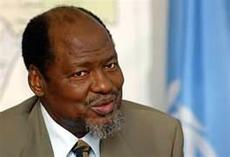
Ken WilburLast week a group of my students were giving a presentation on the spiritual philosopher Ken Wilber. It included a video interview in which Wilber remarked, ‘The best way to stop famine in the world is to meditate.’ Some students were outraged, and my initial thought was that the comment was glib and offensive. Surely the best way to stop famine is to provide food, to donate money, or at least to end conflict or reduce corruption? However, there is a case study which illustrates Wilber’s meaning very clearly. It’s the story of the ‘meditating president’, Joachim Chissano of Mozambique.

In 1992, Mozambique’s civil war came to an end, after 15 years of devastation, and around a million casualties. The country was completely broken, and showing all signs of being trapped in the cycle of conflict and corruption which has afflicted many African countries. But Joachim Chissano – whose forces had won the war – surprised the world by acting sensibly and empathically. Rather than trying to shore up his own power base and enacting revenge, Chissano treated the rebel forces who had been trying to overthrow his government with respect. He made compromises, promised there would be no prosecutions or punishments and offered the rebels half of the places in the Mozambiquan army. He gave them the chance of gaining power through political means. Rather than trying to crush the rebels, he began to work with them.

Two years later, Mozambique’s first ever multi-party elections were held, and Chissano and the former rebel leader came face to face in the polls. Chissano won the election, and set about the task of establishing lasting peace by reducing poverty. Between 1997 and 2003, almost three million people were rescued from extreme poverty, out of a total population of almost 20 million. This lead to a 35% decrease in the number of children dying under the age of five, and an increase of 65% in the number of children going to primary school. Through Chissano’s ability to set aside differences and connect with his former enemies, Mozambique was brought back from the brink of self-destruction and has instead become one of Africa’s most stable and peaceful countries.

What was it that made Chissano so rational and compassionate as a leader?

Joachim Chissano

In 1992, he learned Transcendental Meditation. Quickly becoming aware of the benefits of the practice himself, he taught it to his family, then his cabinet ministers and his wider government. In 1994, it became a requirement for all military and police recruits to meditate twice a day, for 20 minutes.

Chissano himself is in no doubt that this collective meditation was responsible for the peace and increasing prosperity of the country. As he said, ‘The result has been political peace and balance in nature in my country…The culture of war has to be replaced by the culture of peace. For that purpose, something deeper has to be changed in our mind and in our consciousness to prevent the recurrence of war.’

In 2004, Chissano’s second term in office came to end. Rather than pursuing a third term – as he would have been legally able to do under Mozambique law – he stepped aside. Since then he has been an elder statesman, campaigning for peace and working as an envoy and negotiator for the United Nations. In 2007, on his 68th birthday, he was awarded Africa’s equivalent of the Nobel Prize, the $5 million prize for Achievement in African Leadership.

This is Wilber’s point, of course. In the short term, meditation reduces anger and aggression. In the long term, it increases our capacity for empathy, compassion and rationality. It leads to less self-centred behaviour, and reduces cravings for power and wealth. It generates a sense of well-being which makes us less liable to be affected by slights or prejudices.

Research has confirmed these effects. In 2003, scientists at the University of Wisconsin scanned the brain of people with a long experience of Buddhist meditation. They found that their left pre-frontal lobes – the areas of the brain linked with positive moods and emotions – were unusually active. In other words, they seemed to be happier than normal. In a 2011 study at the University of Massachusetts Center for Mindfulness 16 people meditated for an average of 27 minutes each day. MRI scans after 8 weeks showed increased ‘grey matter’ in parts of the brain associated with compassion, introspection and learning.

So Wilber’s seemingly glib comments may well be right. Human social behaviour is a manifestation of our inner state. Discord in the world stems from discord in our minds, and there will only be harmony and peace in the world once there is harmony and peace inside us.

Steve Taylor is a lecturer in psychology at Leeds Metropolitan University, UK. He is the author of Back to Sanity: Healing the Madness of the Human Mind. Eckhart Tolle has called his work ‘an important contribution to the shift in consciousness happening on our planet at this time.’ stevenmtaylor.co.uk | Follow Steve on Facebook and Twitter

###

What Steve Taylor says in this Psychology Today article is true. In addition, there have also been hundreds of scientific studies on Transcendental Meditation showing improvements in mental and emotional development as well as health and social behavior. See Hard evidence grows for including meditation in government-sponsored health programs and Excellent article by Tom Jacobs on Meditation: Strong Preventative Medicine for Heart Patients.

But one of the most striking effects is the impact large numbers of people practicing Transcendental Meditation together in large groups in one or more places can have on their environment. This is what happened in Mozambique. The longtime drought also came to an end as balance was restored in nature; the rain came!

Over fifty studies have scientifically documented the profound and measurable benefits of this approach to peace. Many have been published in respected peer-reviewed journals, including the Journal of Conflict Resolution, 1988, 32: 776–812; Social Indicators Research, 1999, 47: 153-201; Journal of Offender Rehabilitation, 2003, 36 (1-4): 283-302; Journal of Social Behavior and Personality, 2005, 17(1): 339-373; Journal of Social Behavior and Personality, 2005, 17(1): 285-338; and Journal of Scientific Exploration, 2009, 23(2): 139-166.

For a scientific explanation behind the power of large groups collectively practicing the Transcendental Meditation and TM-Sidhi program including Yogic Flying, read The Power of The Collective, by John Hagelin. Also see this Op-Ed peace piece spreading around the world: Reducing Tension in the Middle East

And here is a newly published study on this topic: Can group meditation prevent violent crime? Surprisingly, the data suggests yes: New study (SAGE Open Apr 2016, 6 (2).

One last point, and that is comparing different meditation practices and generalizing their results can be a bit misleading. With the aid of fMRI, EEG, and other methods, we can now see that different parts of the brain are effected by different meditation techniques, which utilize their own approaches, like concentration, open monitoring, or transcending. To better understand these differences and outcomes scientists have created categories of meditation, matching approaches with their scientific measurements. See Are all meditation techniques the same?. And this more recently published paper using fMRI:  New study highlights unique state of “restful alertness” during Transcendental Meditation.

For a current perspective on how TM has been successfully applied in various settings, see this recent video presentation: John Hagelin speaks on meditation as a powerful tool for health, education & post-traumatic stress at TEDxWomen 2012.

Read two reviews of Can meditation change the world? in the January 28, 2013, UK TM News blog, and below in a print copy from the February 2013 issue (Vol. 19, No. 5.) of UK Transcendental Meditation News. Click twice on the image to read it.

Update: Athens Democracy Award Goes to Mozambique’s Joaquim Chissano. This article, published Sept 18, 2018, references President Chissano’s use of TM. “Besides bringing peace, reconciliation, stable democracy and economic progress to Mozambique, and supporting LGBT rights in Africa, Chissano is said to have introduced Transcendental Meditation techniques to government officials, police and military.”

(more…)