‘Tis the Season To Be Jolly … Or SAD? Article for Ageless Living by Helen Foster-Grimmett

December 14, 2012

‘Tis the Season To Be Jolly … Or SAD?
By Helen Foster-Grimmett

Tonight, my husband told me that this article lacked pizzazz. I said: “Sorry, my serotonin is seasonally challenged – no sparkle.” I find myself standing in front of travel agency windows mesmerized by posters of sun-drenched Hawaii, Mexico, Barbados. Mauritius looks delicious.

By Christmas – the season to be jolly – some people have been feeling sad, down, or downright depressed since the onset of autumn. And they’ll motor on through to the first buds of spring feeling the same way. If you are one of those people, you may be experiencing Seasonal Affective Disorder (SAD). According to the Canadian Mental Health Association, about five million Canadians experience the “winter blues,” a mild form of Seasonal Affective Disorder. At least two to three percent have symptoms severe enough to be diagnosed as “SAD” – an apt acronym. People with SAD often feel a sense of happiness on a cloudy day when the sun peeks through the clouds, then deflated when the clouds cover the sky again. It’s as if the clouds are a manifestation of their minds. For people with SAD, those inner clouds can be dark, and they sometimes don’t lift until the spring flowers bloom and sunshine is more constant. The Canadian Mental Health Association tells us that women are more at risk for Seasonal Affective Disorder than men: eight times as many women as men report having SAD. Although the reasons for this are not defined, one suggestion is that women may spend more time indoors with their children than men and, therefore, less time in sunlight.

Sunless and SAD
Experts are not sure what causes SAD, but they generally link it to lack of sunlight. SAD is rare in those living within 30 degrees of the equator, where daylight hours are consistently long and bright. It is more common in northern countries, including Canada, where bright winter sunlight is sparse. Lack of light may upset our cycles and other rhythms. It may cause problems with a brain chemical called serotonin, which affects mood. People with mild winter blues manage to cope throughout the season. However, those diagnosed with SAD could feel more severe symptoms, including:
• Depression, apathy, negative thoughts, loss of self-esteem
• Sleep problems
• Lethargy, fatigue
• Overeating or little appetite
• Difficulty with concentration and memory
• Withdrawn – finding it hard to be around people
• Anxiety
• Inability to deal with stress
If you are affected by any of these symptoms, take heart: there are remedies that work wonders for SAD.

Relief for SAD Symptoms
Millions of people with SAD have been helped by the work of Dr. Norman Rosenthal, a world-renowned psychiatrist. Rosenthal and his team at the National Institute of Mental Health pioneered research that first led to describing Seasonal Affective Disorder, and the use of light therapy to treat it.

According to the Seasonal Affective Disorder Association in the UK, “light therapy has been shown to be effective in up to 85 percent of diagnosed cases.” Light therapy is now routinely prescribed for SAD in northern countries, but at the time Rosenthal and his team first used it, the results were dramatic. In his New York Times best-selling book Transcendence, Dr. Rosenthal recalls a comment from one of his colleagues. He had noticed a remarkable change in a patient who had been having light therapy for SAD for just one week: “I don’t know what treatment she is receiving, but she’s blooming like a rose!” A vivid metaphor for our need for light from the life-giving sun.

Dr. Rosenthal’s other guide for readers who suffer from SAD is called Winter Blues. This book provides a self-test that readers can use to evaluate their own seasonal mood changes, presents remedies for SAD, research on the use of medication, and new recipes to counterbalance unhealthy winter food cravings. A cautionary caveat: if you or someone you know is seriously depressed, it is imperative to seek professional advice, as depression can be debilitating or even life-threatening.

The good news? The incidence of Seasonal Affective Disorder decreases with age. So for all you seniors out there, as we approach the holiday season, ‘tis truly the season for you to be jolly!

Helen Foster-Grimmett writes on issues of health, education, and stress management. These days you may find her outside travel agency windows, looking wistful. Article references available upon request.

This is Helen’s 2nd article for the Canadian magazine, Ageless Living. You can read her first article there: The Answer To Cancer.

For more information on Dr. Norman Rosenthal, his work and books: Winter Blues, and Transcendence, visit: http://normanrosenthal.com.
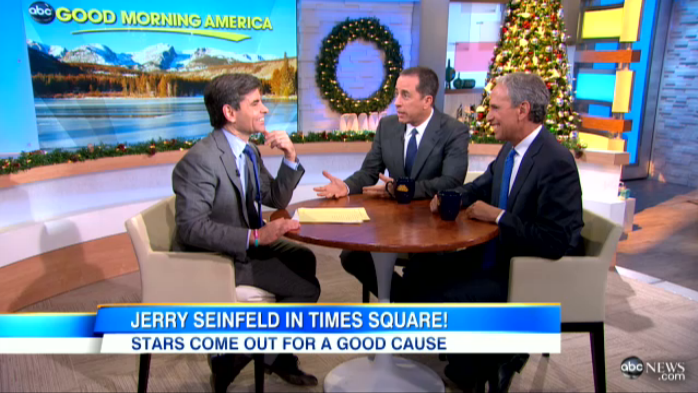
George Stephanopoulos interviews Jerry Seinfeld & Bob Roth on the importance of Transcendental Meditation for PTSD

December 13, 2012

Jerry Seinfeld on GMAThis morning on Good Morning America, George Stephanopoulos interviewed comedian Jerry Seinfeld and Bob Roth, executive director of the David Lynch Foundation, on the importance of Transcendental Meditation for PTSD. Jerry said he’s been practicing TM for 40 years now. Both Seinfeld and Roth gave clear explanations of what TM can do for you. Jerry added his trademark humor describing how stressed George’s work was having spent the morning with him on the set. George said he’s been practicing TM for two years and it’s made a big difference. While on the set Jerry helped chef Emeril bake Christmas cookies.

Bob Roth discussed the successful application of TM for veterans and inner-city school students with PTSD. He mentioned a recent TM study published by the American Heart Association showing an almost 50% reduction in heart attacks, stroke and death in patients who regularly practiced Transcendental Meditation over a 5-year period.

Roth also mentioned Admiral Schneider, President of Norwich University, the oldest military college in the country, using Transcendental Meditation to develop resiliency in their cadets, inoculating tomorrow’s warriors against stress. See President Schneider discuss the impact of the technique at a recent Iowa Veterans Summit on PTSD and Transcendental Meditation.

Uploaded on Dec 13, 2012 by meditationchannel. Click to read a Transcript for Jerry Seinfeld on Importance of Meditation for PTSD.

Tonight at the Lincoln Center an historic jazz concert was held as a Benefit Gala to fund such projects sponsored by the David Lynch Foundation. Visit www.changebeginswithin.org to see the line up of top jazz musicians. Mail Online gave a report from the Red Carpet with photos of celebrity guests and musicians: All jazzed up: Liv Tyler steals looks on the red carpet at star-studded music gala for the David Lynch Foundation. Recapo also gave a good synopsis GMA: Jerry Seinfeld, George Stephanopoulos Transcendental Meditation. You can see photos on the m&c website: 4th Annual David Lynch Foundation Gala Pictures. Read this excellent report in BULLETT by Stella Girkins: Celebrating Transcendental Meditation at the 2012 David Lynch Foundation Benefit Gala, which also includes a video from the David Lynch Foundation: Changing Lives With Meditation. See the DLF Gala Benefit Report.

Related news: Soledad O’Brien interviews Russell Simmons and Bob Roth of the David Lynch Foundation on TM for Vets with PTS on CNN’s Starting Point and Study suggests meditation may help prevent PTSD—Boston Globe article by Bryan Bender. Elevated Existence: Jerry Seinfeld Talks About His 40 Years of Transcendental Meditation.

See the video Highlights from Jazz at Lincoln Center Benefit for David Lynch Foundation.

See the latest news on TM at Norwich University, May 10, 2016.

Watch this Feb 6, 2018 show: @GMA’s @RobinRoberts & @GStephanopoulos interview @meditationbob on his new book #StrengthInStillness: The Power of #TranscendentalMeditation.

Free Your Mind Projects host Wendy Almasy interviews meditating stars on the red carpet at David Lynch Foundation event

December 7, 2012

FYMP

Listen to the first half of this FREE YOUR MIND PROJECT show with hosts Brian Canning and Wendy Almasy. They attended last year’s Third Annual David Lynch Foundation Benefit Gala. Wendy is joined on the red carpet at the DLF event by David Lynch, Hip Hop mogul Russell Simmons, actress Dee Wallace who shares her own personal story, and actors Cheech Marin and Robert Davie – all talking about the impact that Meditation…specifically Transcendental Meditation can make on living a healthful life. It’s proven, it works and it is something worthy to explore!

Also, a special note of thanks to the David Lynch Foundation who have taken their TM practices and teaching “to the streets” with research projects and has made incredible impact both with returning vets and young people in school through their pilot projects. Find out more at  www.davidlynchfoundation.org.

Click this short link to hear the show: http://bit.ly/TKl37Q.

Previous Free Your Mind shows on DLF and TM: Free Your Mind Project Show Discusses the David Lynch Foundation’s Commitment to 10,000 Vets and Bob Roth, Executive Director, David Lynch Foundation, Discusses Transcendental Meditation On Free Your Mind Projects Radio Show.

John Hagelin speaks on meditation as a powerful tool for health, education & post-traumatic stress at TEDxWomen 2012

December 6, 2012

Enjoy this powerful, clear and concise talk by John Hagelin at TEDxWomen 2012 in The Paley Center for Media, Washington, DC. The theme of the 2-day conference was The Space Between. Dr. Hagelin’s PowerPoint presentation highlighted meditation as a powerful tool for health, education and post-traumatic stress. He concluded his presentation with a short video of how people’s stressed lives were transformed by the Transcendental Meditation technique. These at-risk groups were able to learn TM through scholarships from the David Lynch Foundation. Dr. Hagelin’s concluding remarks beautifully summed up the saliant point of his talk delivered in Session Two, Saturday morning, Dec 1, 2012, published Dec 4, 2012 by : “The Space Between” –TED Conference Explores the Value of Meditation.

“Medically, scientifically, the most powerful antidote to stress, and the key to optimal brain functioning, is to transcend.” — John Hagelin.

John Hagelin, Ph.D., is a world-renowned quantum physicist, science and public policy expert, educator, author, and leading proponent of peace.

Dr. Hagelin has conducted pioneering research at CERN (the European Center for Particle Physics) and SLAC (the Stanford Linear Accelerator Center). He is responsible for the development of a highly successful Grand Unified Field Theory based on the superstring—a theory that was featured in a cover story of Discover magazine.

In addition, Dr. Hagelin is one of the world’s preeminent researchers on the effects of meditation on brain development, and the use of meditation to address critical problems in the field of education, rehabilitation, and post-traumatic stress.

Dr. Hagelin is a recipient of the prestigious Kilby Award, which recognizes scientists who have made “major contributions to society through their applied research in the fields of science and technology.” The award recognized Dr. Hagelin as “a scientist in the tradition of Einstein, Jeans, Bohr and Eddington.”

Dr. Hagelin has appeared often on ABC’s Nightline and Politically Incorrect, NBC’s Meet the Press, CNN’s Larry King Live!, and other programs. He has been regularly featured in the Washington Post, the New York Times, the Wall Street Journal, and other major metropolitan newspapers.

TEDxWomen was curated and produced by The Paley Center for Media. In the spirit of ideas worth spreading, TEDx is a program of local, self-organized events that bring people together to share a TED-like experience. At a TEDx event, TEDTalks video and live speakers combine to spark deep discussion and connection in a small group. These local, self-organized events are branded TEDx, where x = independently organized TED event. The TED Conference provides general guidance for the TEDx program, but individual TEDx events are self-organized.* (*Subject to certain rules and regulations)

Also see The Power of The Collective, by John Hagelin | John Hagelin — “Only Higher Consciousness Can Transform Our World” — Beyond Awakening Blog | Conscious TV: John Hagelin – The Core of Nature | John Hagelin, Ph.D., Speaks on the Nature of Consciousness and the Universe

Transcendental Meditation May Help Fight Heart Disease—article on Chef Marcus Samuelsson’s blog

December 6, 2012

Here’s an informative article Carla F. Williams wrote December 4, 2012 on Chef Marcus Samuelsson’s blog: Transcendental Meditation May Help Fight Heart Disease.

We’re all familiar with the uncomfortable feelings stress can create. What’s even more important than the feelings, however, is what that stress may be doing to our bodies. The medical community links “psychosocial stress” to both the onset and the progression of cardiovascular disease (CVD), proof positive that stress affects our lives beyond our conscious feelings.  Plainly put, stress can indeed kill and reducing stress is key to protecting our health and wellbeing. The good news is that it appears that our brains may well have the power to positively impact our health by helping keep stress at bay.

Transcendental Meditation (TM) has been shown to reduce stress and help overcome the stress-driven contributors to CVD, including hypertension.  The beneficial outcomes springing from this mind-over-matter are so promising that The National Institute of Health has granted over $24 million in grants over the past 20+ years to study the effects of Transcendental Meditation and related programs tackling CVD.  A study recently released in the American Heart Association’s journal Circulation: Cardiovascular Quality and Outcomes tracked the impact of Transcendental Meditation versus health education on heart disease in a controlled sample of 201 African-American men and women who had already been diagnosed with CVD.  TM came in strong as a tool for helping improve the cardio health of the participants over a 5 + year period, significantly reducing risk for mortality, myocardial infarction (a.k.a. heart attack), and stroke along with lowering blood pressure.

The study authors describe TM as a “simple, natural, effortless procedure that is practiced 20 minutes twice a day while sitting comfortably with the eyes closed.” During this process, ordinary thinking processes settle down and physiological rest kicks in. Although the process may be simple, there was nothing simple about the training study participants received. It was quite intense with an instructor certified by the Maharashi Foundation guiding them through a 7-step course of instruction over six 1.5 -2 hour meetings with follow-up over the course of the study.  They invested hours in learning to calm their minds and their bodies, an investment that paid off.

The implications of this study and the string of similar studies go beyond African-Americans. The writing is on the wall for everyone.  Meditation and developing the ability to truly calm our minds might well improve the health of our bodies. Transcendental Meditation may not be on your radar but if you think about it, what’s not to love about a risk-free potential pathway to better health?  TM has a lot going for it.  Once you master the process it costs nothing, can be practiced almost anywhere and requires no special equipment.  It’s certainly worth looking into.  Your heart may just thank you.

###

Read more about the heart disease study from the American Heart Association posted on this blog: Transcendental Meditation may reduce death, heart attack and stroke in heart patients—AHA. Additional news coverage is available at the bottom of the page. For more information on Transcendental Meditation visit www.tm.org.

The David Lynch Foundation provides free instruction in Transcendental Meditation to at-risk youth in under-served schools; veterans with PTS and their families; and women and girls who are victims of violence, abuse and rape. The Foundation will be hosting another Gala Event in Lincoln Center Thursday night, Dec 13 to raise funds for such projects.

See the musicians who will be playing jazz during this historic night at Lincoln Center’s Frederick P. Rose Hall in the Time Warner Center, New York. www.changebeginswithin.org. Interestingly, Lincoln Center is also where one of Marcus Samuelsson’s new restaurants, American Table Cafe and Bar, recently opened. Read more about Marcus Samuelsson on his Amazon author’s page.

New: Thrive Global, January 24, 2020: Manage Your Mind to Manage Your Heart: Why Transcendental Meditation is Vital for Heart Health. Research studies show regular TM practice reduces risk factors for cardiovascular disease. By Robert Schneider, M.D., FACC, Dean, College of Integrative Medicine, Maharishi International University.

Study suggests meditation may help prevent PTSD—Boston Globe article by Bryan Bender

December 3, 2012

Study suggests meditation may help prevent PTSD

By Bryan Bender | Globe Staff | December 02, 2012

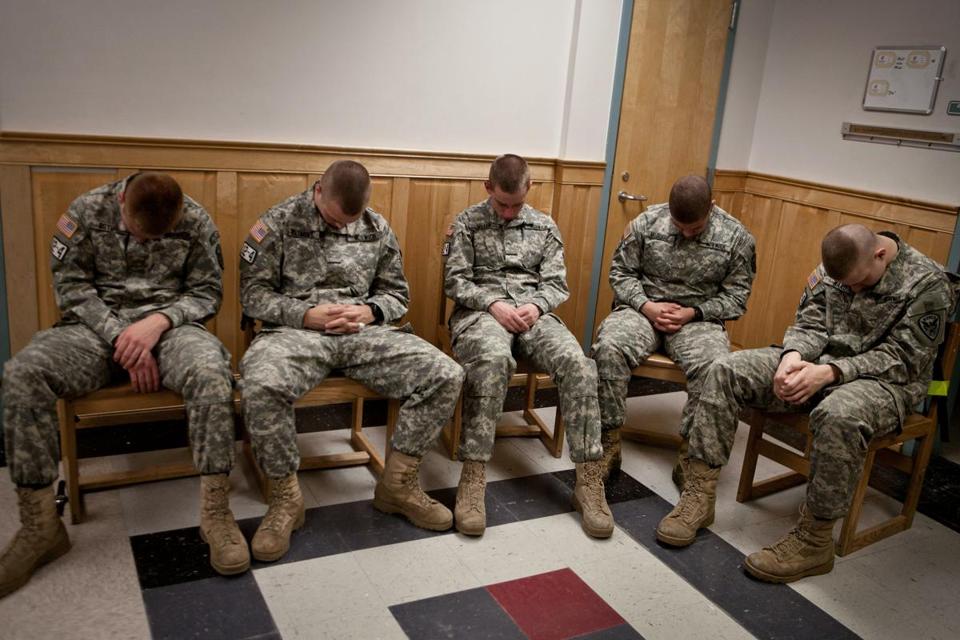
Norwich Rooks Meditate after classes

Lance Ostby, Rob Wetmore, Matt Miller, Aaron McDuffie, and Jeremy Ward practiced meditation following afternoon classes. Kayana Szymczak for the Boston Globe

NORTHFIELD, Vt. — It is part of a highly regimented daily routine at Norwich University, the nation’s oldest private military academy and a cultivator of battlefield leaders for nearly two centuries.

Dressed in combat fatigues and boots, a platoon of first-year cadets — “Rooks” — are up early in their barracks. On the orders of their instructor, the young men and women take their places. At 0800 sharp, they sit on wooden chairs in a circle and begin — to meditate.

The first-of-its-kind training is part of a long-term study to determine whether regular brief periods of silent, peaceful consciousness can improve troops’ performance. Ultimately, researchers hope the transcendental meditation training might be made available across all branches of the military to help inoculate troops against acute post-traumatic stress disorder, which has reached epidemic proportions and is blamed for a record number of suicides in the ranks.

For an institution that demands that incoming cadets exhibit physical and mental toughness, meditation training is a radical approach. The broader military culture had long associated meditation with a leftist, antiwar philosophy. Known by its shorthand, TM was widely introduced to the West by Maharishi Mahesh Yogi, the Hindu leader who once served as the spiritual guru to the Beatles.

“I was very skeptical at first,” said Norwich president Richard W. Schneider, a retired Coast Guard admiral who is among several university officials who have also been trained in the technique. “I’m not a touchy-feely guy.”

But the preliminary results of the study, now in its second year, surprised even its lead researchers. They have been methodically tracking the dozens of participants and several control groups of non-meditating cadets through detailed questionnaires as well as brain wave and eye scans to measure levels of stress, anxiety, and depression.

“All those things decreased significantly,” said Dr. Carole Bandy, a Norwich psychology professor overseeing the project. “In fact, they decreased very significantly.”

Positive traits such as critical thinking and mental resilience improved, according to preliminary findings shared with the Globe that Bandy and her team plan to publish next year.

The project has garnered high-level attention from the Army.

“Becoming more psychologically fit is just like becoming physically fit. It is better to do it before you are injured,” said retired Brigadier General Rhonda Cornum, a surgeon who until recently ran the Army’s Comprehensive Soldier Fitness Program and visited Norwich three times to be briefed on the work. “There seems to be no question that meditation is, frankly, good for you. I am very encouraged by the Norwich University study.”

Read the rest of this entry »

Why CEOs, actors, and pop stars love Transcendental Meditation | Well+Good NYC

November 30, 2012

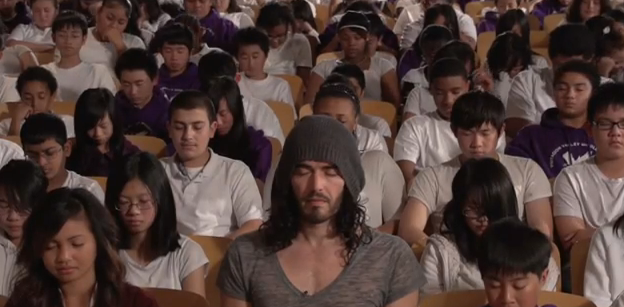
Here is an excerpt from a Well + Good NYC article, Why CEOs, actors, and pop stars love Transcendental Meditation, posted under their Good Advice column on Tuesday, November 27, 2012. The top photo shows Russell Brand meditating with students at a San Francisco Middle School.

Russell Brand meditates with students in a San Francisco School

The Beatles famously credited Transcendental Meditation with helping them write their best music. Oprah swears by her daily practice. So does billionaire hedge fund founder Ray Dalio, British comedian Russell Brand, and music mogul Russell Simmons.

In fact, the list of celebrities and Fortune 500 CEOs who say Transcendental Meditation has helped them in their personal and professional lives is so long that we may need to start a new list: “Successful People Who Don’t Practice Transcendental Meditation.”

Just what is this popular style of meditation and how does it differ from others? We’ll tell you!

“TM,” the acronym used by insiders, is the practice of sitting for 20 minutes, twice a day, repeating a personal mantra given to you by a TM teacher. The technique is based on a Vedic tradition, an ancient Indian process of enlightenment. Fifty years ago, spiritual leader Maharishi Mahesh Yogi introduced the practice to the rest of the world, founding the Transcendental Meditation Program.

“A Creative Edge”

According to the program, TM allows your mind to settle into a state of pure awareness, known as transcendental consciousness. In this state, the body is at its most relaxed, and the brain supposedly has the greatest access to its creative energy. Devotees claim that TM gives them a creative edge, allowing them to be more focused throughout the day and access innovative ideas.

Shel Pink, founder of the cutting-edge SpaRitual line of nail polishes and cosmetics, credits TM for helping her run her successful business. David Lynch, the movie director who is arguably TM’s biggest (and most recognizably creative) spokesperson at the moment, told an auditorium of film students how indispensable TM is to the craft: “it boosts awareness of pure vibrant consciousness” and “experiencing the act of enlivening your consciousness makes creativity flow.” (Check it out here at minute 7.)

But Lynch would also say TM is not just for film students (or celebrities and CEOs). It’s also a potent healing practice. That’s why The David Lynch Foundation raises money to offer TM programs for high-stress, at-risk populations, such as inner-city students and the homeless.

Peter Trivelas, a Navy veteran who now teaches TM to other veterans, agrees that this simple practice has powerful benefits for post-traumatic stress. “TM teaches you to put your brain in a state of profound rest, so your body can begin to repair itself on a profound level.”

See the rest of this great article with photos of David Lynch and Shel Pink here: t.co/p0UJwQ6W.

Also see 14 Executives Who Swear By Meditation–10 do TM.


Op-Ed peace piece spreading around the world: Reducing Tension in the Middle East

November 29, 2012

In a response to the current volatile situation in the Middle East co-authors David Orme-Johnson and David Leffler ask if we want to continue repeating history, killing and destroying to solve political problems, or transform ourselves with a more enlightened alternative approach that’s been scientifically proven to create peace.

Modern unified field theory supports the perennial philosophy of all major cultural traditions that there exists a transcendental field at the most fundamental level of natural law, which can be directly accessed as the silent transcendental level of the human mind. Hundreds of studies have shown that experience of transcendental consciousness breaks the chain of conditioned reflexes coming on from past behavior, as seen in reduced addictive behaviors of all kinds, decreased prison recidivism, and reduced behavioral problems in inner-city children.

Are we as nations to go on like rats trapped in a conditioning cage, reacting the same way decade after decade? Or shall we step out of the cage into the transcendental level of our own consciousness and grow up into enlightened human beings, rather than continuing to resort to destroying and killing? This is the choice we have right now.

Read this paradigm-shifting Op-Ed piece on how we can put an end to war and create permanent peace: Reducing Tension in the Middle East. It’s being posted on news websites and online journals around the world. The AsiaN published it as Transcendental meditation proved helpful in solving enmity among nations. The Israel Herald published it under: Lasting peace in Middle East may need warring parties to meditate, and the Palestinian News: Meditation cited as possible remedy to reduce tensions in Mideast conflict.

Here is a list of publications under dates in the countries where the article was published, over 50 times so far: Israel, Afghanistan, Romania, UK, Nepal, USA, Pakistan, Greece, Cyprus, Ghana, Liberia, Balkans, India, Ivory Coast, Africa, Australia/Tonga, Canada, Jordan, Balkans, Palestine, South Korea, Kashmir, Ireland, China, South Africa, Egypt, Germany, France, Denmark, Spain, Thailand. Check them all posted here: Op-Ed Piece “Reducing Tension in the Middle East” by Drs. Orme-Johnson and Leffler is Available Worldwide in over 50 Locations.

For more information on this powerful benign approach, see: The Power of The Collective, by John Hagelin and John Hagelin — “Only Higher Consciousness Can Transform Our World” — Beyond Awakening Blog. Here are reports: Group Meditations Reduce Crime, As Predicted and Explanation to Steady Decline in Major Crime in the US.

CNN Hero Robin Lim visiting Fairfield

November 14, 2012

CNN Hero Robin Lim visiting Fairfield

By DONNA SCHILL CLEVELAND, Ledger staff writer | Nov 13, 2012

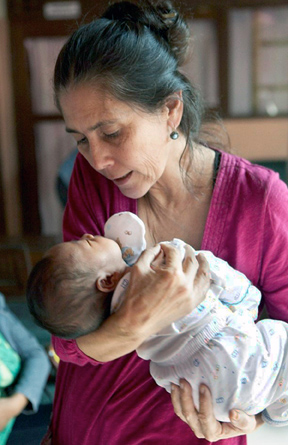
PHOTO SUBMITTED Midwife Ibu “mother” Robin Lim holds one of the countless babies she has helped deliver since she opened her first free birthing clinic in Bali more than a decade ago. Lim won the CNN Hero of the Year award by popular vote in 2011 for her service as a midwife through her nonprofit, the Bumi Sehat Foundation. “It was a special victory for all midwives,” she said.

Renowned midwife and CNN Hero of the Year Robin Lim has returned home with a message for midwives practicing in Iowa: “Don’t give up.”

Lim has taken leave of her free clinics and birthing centers in Bali, Indonesia, the Bumi Sehat Foundation, for a speaking tour in the United States. During a stop in Washington, D.C., the ambassador of Indonesia invited her for tea, and insisted she stay with his family next time she visited. Before arriving in Fairfield Monday, Lim addressed an auditorium full of college students, doctors, midwives and nurses at Des Moines University. The city of Fairfield will be recognizing Lim’s service at 8 p.m. today at the Fairfield Arts & Convention Center, where she will speak about her work and Mayor Ed Malloy will proclaim Nov. 13 “Robin Lim Day.” Admission is free.

Lim’s newfound celebrity status has not caused her to overlook the place she still calls home. She’s booked extra events in Fairfield, not only to see old friends, but because Iowa is one of more than a dozen states where it is illegal for midwives to assist with home births.

“I find it ironic, CNN called me a hero for my work as a midwife, when in my home state, delivering a baby at home is considered a felony,” she said.

Lim won CNN Hero of the Year last December by popular vote for assisting thousands of low-income women through her clinics, offering free prenatal care, birthing services and medical aid in Indonesia, where many families cannot afford care.

Under Lim’s direction, Bumi Sehat has been a first responder in disaster relief efforts in Indonesia including Aceh in 2004, Yogyakarta in 2006 and Padang in 2008. She also helped set up a clinic in Haiti in 2010. Lim said reproductive care falls by the wayside in tsunami zones, leading to an urgent need for midwives who can deliver reproductive healthcare, even in the most dire circumstances, without access to running water or electricity.

“Every baby’s first breath on Earth could be one of peace and love. Every mother should be healthy and strong. Every birth could be safe and loving. But our world is not there yet,” Lim said during the CNN award ceremony in Los Angeles, with a reported 16 million viewers watching.

“It was a special victory for all midwives,” she said Monday. “I received hundred of emails from people who said they were crying tears of joy.”

Lim hopes her recognition by CNN will help states like Iowa see the merits of midwifery beyond disaster-relief settings.

Her goal? “For the state of Iowa to embrace midwifery care as an important option.”

While Lim faces many challenges in Bali, such as high rates of hemorrhaging during labor due to malnutrition, she said midwives in Iowa face challenges of their own.

In the United States, Lim has seen fellow certified professional midwives prosecuted for assisting with home births. She said the controversy surrounding midwifery discourages young women from pursuing training in midwifery, and causes women to have hospital births who would prefer to do it at home.

“There are people all over the world who would rather have their baby safely at home,” she said. “The sad thing in Iowa, is many, many families are not getting that opportunity.”

Lim said home births could help decongest hospitals and lower welfare expenses.

In Bali, she said it creates an environment where she can work harmoniously with hospitals and doctors when pregnancy complications arise.

“Midwives are well respected in their profession in Indonesia,” she said.

Lim believes midwives and hospitals should not be at odds, but providing complimentary services.

“Hospitals are amazing life-saving places,” she said.

Lim said The Bumi Sehat Foundation “stands on three feet:” excellent medical science, respect for nature and holistic medicine.

The clinic carries antibiotics, oxygen, intravenous fluids, anti-hemorrhagic treatments and also has an ambulance at the ready for when complications arise. Lim said less than 2 percent of the women she sees need to be transferred to the hospital.

Last year, she expanded services to include community healthcare, elderly yoga, birth attendant training, disaster preparedness support, acupuncture and homeopathic medicine, youth education, village-based recycling and organic gardening.

Lim’s dedication to providing the highest quality care to poor, marginalized women emerged after a crushing personal loss. Lim’s younger sister died 22 years ago due to complications with a pregnancy.

“She felt unwell during her pregnancy,” said Lim. “She called her doctor, and he said “I’ll see you in three weeks.’”

Before she got that chance, Lim’s sister suffered a stroke in her sleep and died. Lim said they determined she had high blood pressure and hypertension.

“Simple medications could have saved her life,” said Lim.

Shortly thereafter, Lim decided to take the plunge into midwifery. She moved to Indonesia where she began offering services informally out of her living room and returned 12 years ago after completing training as a certified professional midwife.

In her work, she said she treats each woman with the love and respect she wished her sister had received.

“When a woman calls me, I’m not going to say let’s talk about it in three weeks, I say ‘I’ll see you right now,’” she said. “I decided to be a very good midwife.”

“Licensed certified midwives are the guardians of normal birth,” she said. “They are trained to notice when a mother needs special care.”

Lim said she’s had very positive childbirth experiences herself, which gave her the vision for her clinic.

“What inspired me was the birth of my own children,” she said. “It is the biggest life passage you can have.”

She said her goal has been to try and help other women have safe, positive birthing experiences.

Lim’s Iowa roots took hold when she moved to Fairfield as a teenage mother in 1976. She had all of her children at home, and researched natural approaches to childbirth, postpartum diet and exercise.

“I wanted to be a happy, good mom,” she said.

Looking into her past, Lim said it was inevitable she would one day become a midwife. At 14, for instance, she was fascinated by a school course on reproductive health.

Lim will be speaking to students about their interests 9:30 a.m. Wednesday at Maharishi School, and 9 a.m. Friday at Fairfield High School.

“I will tell them, ‘Pay attention to your dreams when you are young, they are there for a reason,’” she said. “For me, it turned into a lifetime of service, which has brought me more joy than most people ever experience.”

Related: KTVO’s Tess Hedrick posted her news piece on Robin’s return visit to Fairfield: CNN Hero of the Year and native Iowan shares her passion in life, midwifery. Mark Newman of the Ottumwa Courier wrote: Health care for poor moms and babies was CNN Hero’s dream. The Des Moines Register put up two articles: CNN’s 2011 Hero of the Year to speak in Des Moines and Midwife returns to Iowa as a hero. Here are two articles posted in The Iowa Source, one of them was a cover story: Robin Lim Day — CNN Hero Returns to Fairfield, Iowa for a Hometown Hero’s Welcome. And this is my first post: Robin Lim is the 2011 CNN Hero Of The Year.

Excellent article by Tom Jacobs on Meditation: Strong Preventative Medicine for Heart Patients

November 14, 2012

Meditation: Strong Preventative Medicine for Heart Patients

New research finds major health benefits of meditation for African Americans with heart disease.

November 13, 2012 • By for Pacific Standard

Meditation is usually thought of as a practice of healthy, well-off white people and Asians. But newly published research suggests it can produce hugely significant health benefits in a very different demographic group: African Americans with heart disease.

A study of that followed 201 African Americans for an average of five years found those who meditated regularly were far more likely to avoid three extremely unwelcome outcomes. Compared to peers participating in a health-education program, meditators were, in that period, 48 percent less likely to die, have a heart attack, or suffer a stroke.

“It appears that Transcendental Meditation is a technique that turns on the body’s own pharmacy—to repair and maintain itself,” said Dr. Robert Schneider, the paper’s lead author and director of the Institute for National Medicine and Prevention at the Maharishi University of Management in Fairfield, Iowa. His research is published in the American Heart Association journal Circulation: Cardiovascular Quality and Outcomes.

The paper was originally scheduled to be published in 2011 in the journal Archives of Internal Medicine, but was withdrawn just before being posted “to allow time for review and statistical analysis of additional data.” The AHA’s Maggie Francis reports that the paper “went through peer review, statistical review, editorial discussions, and the authors of the article were responsive to the review process.”

While, two decades ago, research from Maharishi University was often regarded with skepticism, the institution is now well-regarded for its scholarly work.

Schneider and his co-authors undertook this research in part because African Americans “suffer from disproportionately high rates” of mortality due to cardiovascular disease. As we have reported, this may in part reflect high stress levels, the result of living in a society where racial prejudice continues to linger.

The study was conducted at the Medical College of Wisconsin in two phases: From 1998 to 2003, and from 2004 to 2007. Participants were African Americans whose blood flow to the heart was seriously obstructed. Specifically, at least one of their coronary arteries had been narrowed by at least 50 percent.

The patients’ mean age was 59; almost half reported an income of under $10,000. Males slightly outnumbered females. Around 40 percent were cigarette smokers; their mean body mass index was just over 32, making them, on average, clinically obese.

They were randomly divided into two groups. Half took part in a cardiovascular health education program, in which they “were advised to spent at least 20 minutes a day at home practicing heart-healthy behaviors,” including exercise and eating healthy food.

The others were taught the technique of Transcendental Meditation, and encouraged to engage in this activity for 20 minutes each day. “Follow-up and maintenance meetings were held weekly for the first month, biweekly for the next two months, and monthly thereafter,” the researchers write.

The researchers followed up on the participants an average of 5.4 years after they initially joined the experiment. They found those in the meditation group were 48 percent less likely than their peers to have suffered one of three negative outcomes: a heart attack, a stroke, or death from any cause.

“There was a significant association between regularity of home (meditation) practice and survival,” the researchers report. “The subgroup of subjects who were regular in their TM practice had a 66 percent risk reduction, compared with the overall sample risk reduction of 48 percent.”

Regular meditators also reduced their blood pressure, on average, and reported feeling less anger than they did before beginning the experiment.

“This trial did not address the effects of other mind-body, meditation-type interventions on clinical events,” the researchers note. So it’s not clear if these apparent health benefits were the result of some specific aspect of Transcendental Meditation, or would apply to any regimen involving deep breathing and clearing one’s mind.

Nevertheless, as the researchers note, this appears to be the first randomized, controlled trial to find the risk of mortality, heart attack and stroke declined “with the individual practice of a relatively simple mind-body intervention.”

It’s some of the clearest evidence yet that reducing stress through regular meditation can have a positive effect on one’s physical health.

About Tom Jacobs
Staff writer Tom Jacobs is a veteran journalist with more than 20 years experience at daily newspapers. He has served as a staff writer for The Los Angeles Daily News and the Santa Barbara News-Press. His work has also appeared in The Los Angeles Times, Chicago Tribune and Ventura County Star.
###