Bob Roth interviewed for Starts at 60 during Strength in Stillness book launch in Australia

March 6, 2019

Starts at 60 Writers is an Australian-New Zealand-based group of writers over sixty. Bob Roth did many interviews during his book tour there last year to promote his #1 best-selling Strength In Stillness: The Power of Transcendental Meditation.

Starts at 60 did an excellent interview that resulted in two great articles published in their Mental Health section on Friday and Saturday, March 16 & 17, 2018: Transcendental Meditation saved Hugh Jackman’s family from anxiety and Transcendental Meditation takes off with over-60s.

Bob Roth effectively explains the differences between the two popular meditation approaches—mindfulness and transcendental. He described it as deep meditation, what Maharishi ​used to call it, which became Transcendental Deep Meditation, then Transcendental Meditation, or TM.

I also found it ironic that this was written by writers over 60 for their demographic—the generation that took to Maharishi and his teachings in droves in the 1960s. Obviously many have forgotten about that and may now be discovering TM for the first time, but from a more scientific perspective. So glad the pragmatic Bob Roth presents TM to the world in the down-to-earth way that he does! I corrected a few typos and capitalized Transcendental Meditation, as it should be. Here they are.

Transcendental Meditation takes off with over-60s

Mindfulness and meditation have hit the zeitgeist in recent years, with everyone from Oprah to businessman and housewives singing their praises and crediting the practice with reducing stress levels and anxiety.

While meditation is a term most people are familiar with these days, it’s a particular branch of the calming technique, called Transcendental Meditation (TM), that’s really piqued the interest of the world’s elite.

TM focuses on a deep parts of the mind and is said to be so effective that actor Hugh Jackman enlisted the teachings of TM expert Bob Roth to ease his stress and help his young son cope with anxiety.

Roth, one of the world’s leading experts in TM, recently spoke to Starts at 60 about the many health benefits of the practice and the thousands of people he has taught, including Oprah Winfrey, Ellen DeGeneres, Paul McCartney and Gwyneth Paltrow, to embrace the calming technique throughout his 45-year career.

While there are many different types of meditation around, transcendental focuses on the deep parts of the mind, Roth explains.

“There are mindfulness approaches to meditation which are more on the surface, how to think, how to walk, how to talk, how to act, how to breathe, many different things like that,” he said. “Transcendental is deep meditation, it means it accesses a level of the mind, a quiet, calm level of the mind’s stillness that already exists within everyone.”

TM focuses on thinking inwards rather than outwards and through practice, people have the ability to overcome stress, tension and fatigue and anxiety.

While Roth admits that like many people he was sceptical at first when he first discovered TM in his youth, but quickly changed his mind when he began to see “immediate results”. He also cites “20 peer-reviewed studies that show that TM reduces high blood pressure better than anti-hypertensive medications, without the side effects of anti-hypertensive medications”.

“And that’s research that was published by the US National Institute of Health and research done at Harvard Medical School and published in the American Medical Association’s top journal. It’s very real, when we’re talking about TM, we’re not talking about something on the fringe. It may be an unusual word, but the reality is it’s an established medical tool,” he added.

While he has a black book filled with clients, most of Roth’s clients are ‘everyday’ people, many of them over 6o.

“So an older person who is either in retirement or moving towards retirement or can’t retire but is under a lot of pressure, it’s a wonderful tool to get rid of stress and wake up the brain so we have more energy to do the things we need to do,” he said.

He added that it’s important for people to work TM into their lives and not to use it as a replacement for medication.

“In the toolbox of an older person, there should be many tools that we can draw upon to help us deal with the very real, very deadly epidemic of stress, that we’re all living in,” he said.

“Let’s say you have high blood pressure, you wouldn’t just go online and say, ‘here’s some magic potion online and some recipe and I’m going to take it because it’s going to help my blood pressure’,” he said. “No, you look at stuff that works. Same as meditation, you should look at the research that shows that it works.”

To help the most sceptical, Bob recently released a book called Strength in Stillness. He said that he wanted the book to help people with questions and to make sense of something that people may not be familiar with. “I’m not pushing this on anybody. People should decide for themselves. I wrote the book so people could make an informed decision,” he said.

“The beautiful thing about Transcendental Meditation is you can be 100 per cent sceptical and it works just as well. You can be sceptical about electricity, but when you turn on a light switch, the light goes on.”

Strength in Stillness is currently available in book stores and as an eBook online.

Transcendental Meditation saved Hugh Jackman’s family from anxiety

In an age when mindfulness and practising the art of stillness has become more popular than a bowl full of kale, one particular form of meditation seems to stand out from the crowd: Transcendental Meditation.

The unique form of meditation, which goes beyond mindfulness to produce a deeper and long-lasting sense of peace, has been around for more than 40 years, but has recently shot to the top of the popularity heap thanks to a host of celebrity clients and a rock star teacher.

Bob Roth has taught the likes of Oprah Winfrey, Ellen DeGeneres, Paul McCartney and Gwyneth Paltrow, but his favourite client thus far is The Greatest Showman himself, Hugh Jackman.

“Hugh Jackman and his wife Deborra-Lee Furness are just wonderful,” Roth told Starts at 60. “Down to earth, they have two children, I know the family well. I consider them my friends.”

Roth has been working with the Jackman clan for years and his teachings have been particularly useful for Hugh and Deborra-Lee’s son, Oscar, who suffered from anxiety.

“I taught Oscar to meditate,” Bob revealed. “He’s now 17 and I taught him when he was 12. They have a daughter, Ava, who I think I’m going to teach next year.”

Jackman has praised Roth’s work in the past and said his teachings on how to calm the mind did wonders for Oscar’s mental health.
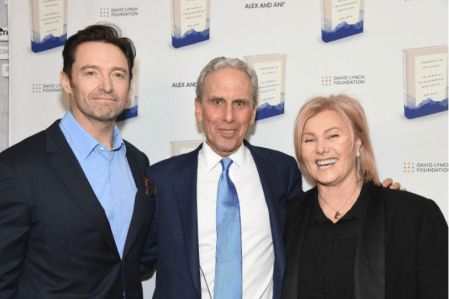
Bob Roth pictured with Hugh Jackman and Deborra-Lee Furness
Bob Roth pictured with Hugh Jackman and Deborra-Lee Furness. (Getty)

Bob’s really helped us and our son, who was a stressed, anxious kid,” the actor said.

Slightly different to regular forms of meditation, TM focuses on the deep parts of the mind and accesses the quiet, calm and still parts of the brain that exist inside everyone. While it’s a hit with celebrities, Roth’s main clients are ‘everyday’ people, many of them over 60, who are looking for a way to ease stresses and invigorate the mind.

“They run out of energy and they just feel like they don’t have the energy they once had,” he said of his older students. “They’re more vulnerable to aches and pains and illnesses because the immune system is compromised, memory maybe isn’t as clear, and from a long life.”

He said there’s a strong correlation between the kinds of issues his regular students and more high-profile students face.

“Being known by a lot of people does not make you immune from worrying about a sick child or stopping you from staying awake at night because you’re worried about things in your career or your partner,” he said. “They have the same feelings, just like us. They have more money, to what? Buy more sleeping pills?”

Despite his popularity amongst some of Hollywood’s favourite stars, he said he owes his credibility to word-of-mouth. “You can’t seek out a celebrity. You can’t go, ‘I want to teach Tom Hanks’. They live in their own world and it’s almost like a bubble. And they talk to each other a lot,” he said.

More recently, Roth worked with Jackman’s The Greatest Showman co-star Zac Efron who was experiencing some personal issues on set. “So I’ve sort of become the go-to guy for meditation,” he explained. “But I should make a point – I’ve taught maybe 30 or 40 well-known actors. I’ve taught thousands of regular people.

“It’s not, ‘oh this is a 20-year-old veteran’ or ‘this is Hugh Jackman’, really and truly, I see in their eyes, they’re looking for something to help them navigate through life.”

Roth’s book Strength in Stillness is currently available in book stores and online.

###

You can see Bob Roth’s global book launch with Hugh and Deboora-Lee introducing Bob about 26 minutes into the third video posted here. Bob also interviews comedian Jerry Seinfeld who has been meditating since he was a college student. The video starts with quotes from celebrity meditators, followed by Good Morning America’s Robin Roberts and George Stephanopoulos interviewing Bob about his book.
Transcendental Meditation Reduces Compassion Fatigue and Improves Resilience for Nurses

February 27, 2019

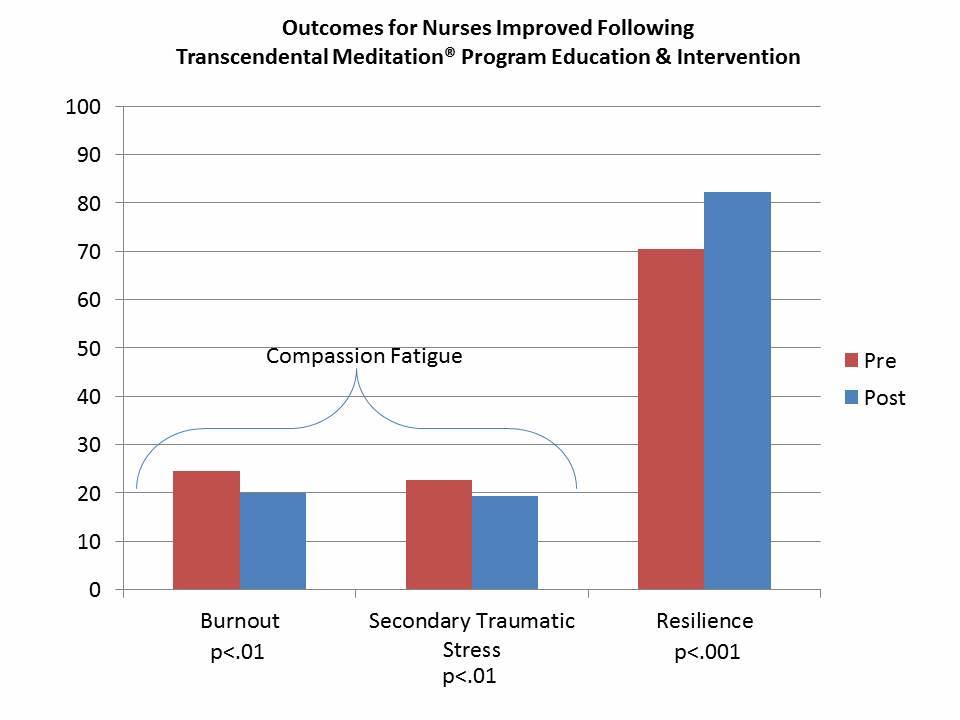
Nurses can better cope with the burnout that’s endemic to the profession by practicing the Transcendental Meditation® technique, according to a new study published today in the Journal for Nurses in Professional Development. After four months of practice, standardized assessments found that nurses in the study had reductions in “compassion fatigue” and burnout, and increases in compassion satisfaction and resilience. The study highlights the importance that self-care plays for professional development and longevity in nursing. (EurekAlert!) (PubMed)

TM Outcomes for Nurses-Reduced Compassion Fatigue and Increased Resilience

After 4 months of practicing Transcendental Meditation, a group of 27 nurses experienced an 18% reduction in burnout (“compassion fatigue”), a 16.9% increase in resilience, and a 9.2% increase in compassion satisfaction.

Research suggests that self-care for nurses is important for professional development

The Transcendental Meditation technique helped to reduce “compassion fatigue” and burnout in a group of 27 nurses while also improving resilience according to a study published today in Journal for Nurses in Professional Development (Mar/Apr 2019, Vol 35, Issue 2).

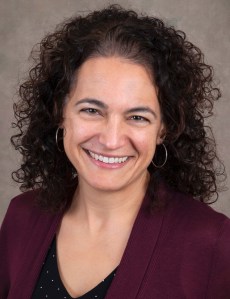
Jen Bonamer, PhD, RN-BC, NPD (cropped)

Jennifer Bonamer

Standardized assessments showed a significant improvement after four months of practice.

“For years I watched nurses struggle to care for their patients and themselves,” said lead author Jennifer Bonamer, PhD, RN-BC, AHN-BC, Nursing Professional Development Specialist at Sarasota Memorial Health Care System in Florida. “Working with people who are suffering trauma eventually takes a toll and produces what’s come to be called ‘compassion fatigue.'”

Study included mostly Registered Nurses

Dr. Bonamer searched the literature for self-care methods that could help nurses cope with burnout and hypothesized that Transcendental Meditation would help relieve compassion fatigue in nurses and improve their ability to bounce back from the challenges of work.

Most of the 27 nurses in the study were Registered Nurses working directly with patients. They had been working as nurses 15.7 mean years, and in their current practice area for an average of 6.5 years.

Standardized assessments quantify benefits

The researchers used the Professional Quality of Life Scale, which includes a 30-item survey that measures compassion satisfaction and compassion fatigue on a 5-point scale. After four months of practicing Transcendental Meditation, the nurses experienced a 9.2% increase in compassion satisfaction and 18% reduction in burnout.

Resilience was measured via the Connor-Davidson Resilience Scale, a 25-item survey with statements that reflect resilient perspectives. It also uses a 5-point scale. Again, after four months of Transcendental Meditation, the nurses experienced a 16.9% increase in resilience.

“These surveys are widely used with demonstrated validity and reliability,” Dr. Bonamer said. “They demonstrated quantitatively what the nurses reported: they felt better and enjoyed their work more.”

Increasing importance of self-care techniques in nursing

There is an increasing trend toward appreciating the necessity of helping nurses in their careers by taking active steps to use self-care techniques to build resilience.

“We need to invest in our nursing staff and ensure that they have rewarding careers while also providing the best possible care for their patients,” Dr. Bonamer said. “The Transcendental Meditation technique is one step that we could take. A variety of studies have shown its effectiveness in reducing stress and promoting health and well-being.”

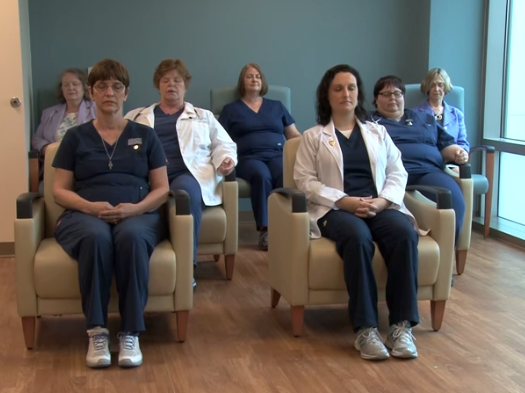
RNs practice TM for self-care at Sarasota Memorial Health Care System

RNs practice TM for self-care at Sarasota Memorial Health Care System

The nurses learned Transcendental Meditation from two certified teachers over a four-day period. They then practiced it for 20 minutes twice a day, though their demanding schedules sometimes made it challenging to fit it in. The technique is typically practiced once in the morning and then again in the late afternoon. In this video, Nourishing the Caregiver from Within, nurses describe the benefits they are receiving from the TM Program.

Previous qualitative study also found a benefit

The present study is the second of two that have used the Transcendental Meditation technique as a modality to improve the well-being of nurses. A study published in 2018 in International Journal for Human Caring reported the experience of RNs in graduate school who practiced Transcendental Meditation for four months. The qualitative study entailed the students keeping a journal and then the researchers used Giorgi’s descriptive phenomenological method to examine their journals.

The results showed that graduate students were more present and balanced, and experienced enhanced job performance. They also enjoyed greater feelings of bliss, peace, and integrity.

About the Transcendental Meditation Technique

Transcendental Meditation is a simple, natural technique practiced 20 minutes twice each day while sitting comfortably with the eyes closed. It is easily learned, and is not a religion, philosophy, or lifestyle. It doesn’t involve concentration, control of the mind, contemplation, or monitoring of thoughts or breathing. The practice allows the active thinking mind to settle down to a state of inner calm. For more information visit www.tm-women.org/nurses.

Study: Self-Care Strategies for Professional Development: Transcendental Meditation®; Reduces Compassion Fatigue and Improves Resilience for Nurses, Jennifer (Rheingans) Bonamer, PhD; Catherine Aquino-Russell, PhD. DOI: 10.1097/NND.0000000000000522

Photo credits: Jennifer Bonamer—Sarasota Memorial Health Care System; meditating nurses and graph—Transcendental Meditation for Women.

Locally, The Fairfield Weekly Reader published an article on the study: Transcendental Meditation reduces compassion fatigue and improves resilience.  The Iowa Source published an article by Amy Ruff, RN, National Director of Transcendental Meditation for Nurses: Helping the Helpers: Reducing Burnout Among Nurses. MUM’s The Review reported: Study Shows Benefit for Nurses.

Alliance for PTSD Recovery interviewed Amy Ruff, Director of Transcendental Meditation for Nurses. She discusses the challenges of nurse burnout and traumatic stress and the need for greater resilience.

Linda Egenes wrote Nurses Need Nourishing Too: New Research Shows TM Reduces Compassion Fatigue.

Western New York Physician: Rochester & Buffalo Issue Vol 2, 2018 published an article (pages 15 & 16) by Amy Ruff, RN BSN: New Study: Transcendental Meditation Reduces Compassion Fatigue and Improves Resilience for Nurses. Here’s a PDF of the article.

Podcast: Kathy’s Corner: TM for Nurses – Interview with Amy Ruff, RN | May 2019. Kathy and Amy discuss the value of caring for the caregivers.

New Study published December 11, 2023 in Journal of Nursing Administration: New study shows Transcendental Meditation significantly reduced PTSD and anxiety in frontline nurses during COVID-19 pandemic by more than half over a 3-month period.

New study shows Transcendental Meditation reduces PTSD in South African college students

February 20, 2019

Tues, Feb 19, 2019: A study published in Psychological Reports showed that after 3.5 months of practicing Transcendental Meditation (TM), most of the 34 tertiary-level students at Maharishi Institute (MI)—all of whom were initially diagnosed with PTSD by mental health professionals—went below clinical thresholds as measured by standard assessments. Students also experienced relief from depression. A comparison group from University of Johannesburg (UJ) with the same diagnosis received no treatment and showed no change in their symptoms.

IMAGE

College students diagnosed with PTSD at Maharishi Institute (MI) and University of Johannesburg (UJ) were tested at 15, 60 and 105 days. After 3.5 months, the MI group practicing Transcendental Meditation (TM) went below clinical thresholds, while controls at UJ showed no change.

A very high percentage of young people in South Africa suffer from post-traumatic stress disorder (PTSD) and depression. A college that offers the Transcendental Meditation (TM) technique to its students found this approach helped reduce their symptoms.

A study published today in Psychological Reports showed that after 3.5 months of practicing Transcendental Meditation (TM), most of the 34 tertiary-level students at Maharishi Institute (MI)—all of whom were initially diagnosed with PTSD by mental health professionals—went below clinical thresholds as measured by standard assessments. The students also experienced relief from depression.

A comparison group of 34 students from the University of Johannesburg (UJ) suffering from PTSD and depression received no treatment and continued to show no change in their symptoms throughout the study.

High levels of PTSD

An international research team of seven scientists and psychologists conducted the study. At the start, students at MI and UJ had a score of 44 or more on their PCL-C test and a clinician’s verification of PTSD. A score above 44 indicates likely PTSD and below 34 indicates that one is below the PTSD threshold.

Symptoms included nightmares, flashbacks to traumatic events, anxiety, fear, and hyper-vigilance. They also reported emotional numbness, anger, and violent behavior, as well as abuse of drugs and alcohol. PTSD is a chronic, debilitating condition that may last a lifetime if not treated effectively.

The study showed a rapid and significant reduction of symptoms in the test group, according to lead author Dr. Carole Bandy, professor of psychology at Norwich University, America’s oldest military college. Results were stable over time.

“A high percentage of young people in South Africa, especially those living in the townships, suffer from PTSD,” said co-author Michael Dillbeck, researcher in the Institute for Science, Technology, and Public Policy at Maharishi University of Management, Fairfield, Iowa. “To become successful students and productive members of society, they absolutely need help dealing with the symptoms of post-traumatic stress disorder. Our study shows, that after 3 months of meditation, this group, on average, was out of PTSD. It offers a way for others to effectively deal with this problem.”

Our study shows, that after 3 months of meditation (TM), this group, on average, was out of PTSD. It offers a way for others to effectively deal with this problem.”

High levels of PTSD are prevalent in South Africa

Up to 25% of the population in South Africa suffers from PTSD, according to Dr. Eugene Allers, past-president of the South African Society of Psychiatrists. Estimates put the same figure in the USA at 8%.

Several recent scientific studies show that adolescents and children in South Africa may be exposed to relatively high levels of traumatic experiences, particularly witnessing or experiencing violence of a criminal or domestic nature, associated in turn with estimates of post-traumatic stress disorder (PTSD) ranging from 8% to 38% (Ensink, Robertson, Zissis & Leger, 1997; Pelzer, 1999; Seedat, van Nood, Vythilingum, Stein & Kaminer, 2000; Suliman, Kaminer, Seedat & Stein, 2005).

UJ students assessed by expert NGO

The South African Depression and Anxiety Group (SADAG), the largest mental health NGO in SA, which assists more than 180,000 people each year, interviewed and tested UJ students suffering from PTSD. They were also tested for depression, since it often accompanies PTSD and can in fact be considered a component of PTSD.

Students were only invited to join the study if they met two criteria for having PTSD: a score indicating PTSD on the PCL-C paper test and the opinion of a trained psychologist. Re-testing was 15, 60 and 105 days after baseline testing.

MI students find relief

At 15 days into the study, Maharishi Institute students showed a significant drop of more than 10 points in their PTSD symptoms after learning Transcendental Meditation. They also found relief from depression, judged by Beck Depression Index scores.

Re-testing was also carried out at 60 days and 105 days of their TM practice. By 105 days, the average group score for the MI students was below the PTSD threshold of 34, according to the paper tests. The UJ students showed no significant reduction in symptoms—neither depression nor PTSD. They received no support of any kind.

A binary logistical regression analysis for the effect of TM practice on PTSD PCL-C diagnosis 105 days after instruction was also highly significant, with 7 likely PTSD and 27 unlikely for the experimental group and 30 likely and 4 unlikely for the comparison group.

First study of its kind

This is the first study of its kind to show how Transcendental Meditation can reduce PTSD in college students. “This study shows that there are new tools available for professionals to add to their tool bag,” says Zane Wilson, Founder and Chairman of SADAG.

This is the first study of its kind to show how Transcendental Meditation can reduce PTSD in college students.

Thirteen previous studies utilizing Transcendental Meditation showed reductions in PTSD on Congolese war refugees, US war veterans, and male and female prisoners.

###

About the Transcendental Meditation Technique

Transcendental Meditation® is a simple, natural technique practiced 20 minutes twice each day while sitting comfortably with the eyes closed. It is easily learned, and is not a religion, philosophy, or lifestyle. It doesn’t involve concentration, control of the mind, contemplation, or monitoring of thoughts or breathing. The practice allows the active thinking mind to settle down to a state of inner calm. For more information visit https://www.tm.org.

Funding for the study was provided by David Lynch Foundation and PTSD Relief Now Corporation (African PTSD Relief), two US 501c3 charities.

Ref: Bandy, C, Dillbeck, M., Sezibera, V., Taljaard, L., de Reuck, J., Wilks, M., Shapiro, D., Peycke, R. (Psychological Reports. on-line: February, 2019) Reduction of PTSD in South African University Students Using Transcendental Meditation Practice. DOI: 10.1177/0033294119828036 | US National Library of Medicine & National Institutes of Health: PubMed

EurekAlert! | ZME Science | Medical News Today | PsychCentral | OMTimes: New Hope for Trauma Victims by David H Shapiro | many more

MGFC reviewed this new study, including previous research in this area, and interviewed co-authors, research coordinator David Shapiro, and Maharishi Institute chairman Richard Peycke: 80% of Students Free of PTSD in 105 Days with Transcendental Meditation.

See this recent study: #TranscendentalMeditation as good as or better than ‘gold standard’ when treating veterans with #PTSD. See other TM studies and articles on PTSD posted on this blog.

OMTimes: Transcendental Meditation Reduces PTSD (May 11, 2019).

Dan Fogelberg’s song, Longer, and my 3 love poems complete today’s Valentine’s Day Show

February 14, 2019

Sheila Moschen asked me to read 3 of my love poems for a Valentine Day’s Show on her KHOE radio program, Let Your Heart Sing. This 38-minute show (#56) aired on Monday and Tuesday this week at 1:00 and 7:00 pm, and will soon go into her archive. The last musical selection Sheila played was the beautiful love song, Longer, by Dan Fogelberg (at 33:05) [Lyrics]. The 3 short poems, about a special relationship I shared with my sweetheart Sally Peden, complete the show (at 36:34).

UPDATE: The show also replayed the following year on Valentine’s Day, Wednesday, February 12, 2020 with new links on OneDrive and YouTube.

CELEBRATING VALENTINE’S DAY WITH MUSIC AND POETRY

roses_bouquet_3491

COMMITTED
a two-haiku poem

When the tide rolls in
bows of boats bump each other
tethered to the dock

With our ups and downs
we remain tied together
solid as a rock

~

This Quiet Love

This is a quiet love
One of simplicity and easiness
No complications here
It’s too late in life for that sort of thing
Just time to be best friends

~

In Our Loving Eyes

Some people are stargazers
We were soul-gazers
Looking in each other’s eyes

Windows to the Soul
A Self-reflecting mirror
Drawing us nearer

Love … looking … at Love

two_roses

World Radio KHOE 90.5 FM is broadcast from the campus of Maharishi International University in Fairfield, Iowa, and streamed live online.

Sheila had invited me to read more of my poems on other shows. She asked me to read another love poem, The Enlightened Heart, which concluded show #72. She liked my tree poems and asked me to read a haiku, Be Spring, poem IX in 13 Ways to Write Haiku: A Poet’s Dozen, followed by Willow Tree, a tanka from a tree’s perspective, on show #61. She asked me to read What do trees do? Something to think about, for show #70. And Friendship – another tree tanka for show #76. And I read Being in Nature: A Gift from a Tree for show #93

Some of my favorite love poems: i carry your heart with me by e.e. cummings | Emily Dickinson succinctly describes the eternal nature of Love in this short but powerful poem | Love after Love, by Derek Walcott, resonates deeply when you first acknowledge yourself.

Added February 18, 2024: This Sunday, Sheila Moschen’s Valentine’s Day show was being rebroadcast on KHOE. After she had signed off, station manager James Moore came on air to share the sad news of Sheila’s passing. Her daughter had contacted him to say that her mother had passed on January 15. James spoke about her considerable contribution to the radio station. Sheila provided a platform for the many fine local musicians and poets. On February 15, The Recorder posted the Sheila Moschen Obituary.

I was shocked to hear this news. I emailed James to relay my surprise and to thank him for his high praise of Sheila. He thanked me and said:

Sheila was a joy to work with and a real treasure for Heaven on Earth radio. That’s why I’ve chosen to continue broadcasting her rich content.

She told me recently that creating the LET YOUR HEART SING shows was one of her very favorite things in life, a highlight, in fact. Her commitment to uplifting hearts and minds, enriching life, and focus on local creatives with timely seasonal offerings was always a joy to broadcast.

She will be missed but grateful to be able to keep her beautiful work in rotation.

All the best,

James

He later sent me an mp3 of what he said on the show.

@eltonofficial Christmas TV ad for @jlandpartners tells story of the power of a gift to change a life

February 4, 2019

“Some gifts are more than just a gift”

Just saw this tweet from 15 Nov 2018 by @JKCorden of an amazing TV advert—a narrative about gift-giving featuring @eltonofficial—made for @jlandpartners, a large department store chain, played on Liverpool’s @RadioCity967. This artistic production also delivers a powerful message at the end—the power of a gift to change a life. It makes a statement! They must’ve aired it weeks before Christmas to get people in the spirit of shopping for gifts at their stores. But the message is timeless.

The Boy and The Piano

Watch the new John Lewis & Partners Christmas TV advert, The Boy and The Piano. This year’s story is about the power of a gift. And how that gift inspired, changed and influenced the course of a little boy’s life. That little boy just happens to be Elton John. The film begins in present day and works backwards chronologically through Elton’s life right until the moment on Christmas morning when he received the special gift that changed his life. Here is the video: John Lewis & Partners Christmas Ad 2018#EltonJohnLewis 🎹

The Independent published a story behind the making of the video of the commercial: John Lewis Christmas advert: Behind the scenes of the film starring Elton John. They also include their video: The Making of The Boy and The Piano | John Lewis & Partners Christmas Ad 2018 #EltonJohnLewis 🎹

College life can be destructive to student health. Panel of experts offer evidence-based solutions.

February 3, 2019

VIEW EMAIL ANNOUNCEMENT WITH ALL IMAGES

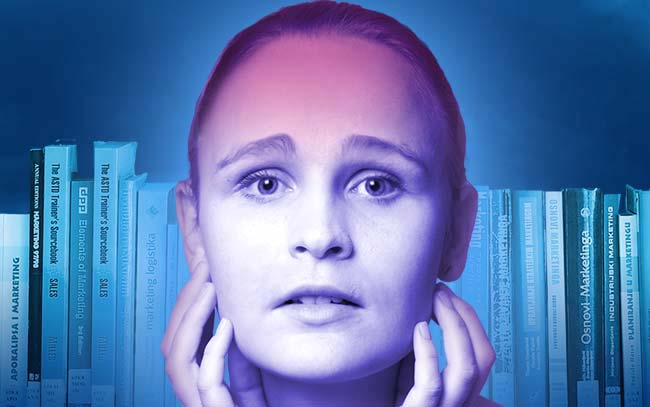
Young girl touching her face with hands, like a tree

Is College Bad For Your Brain?
How the epidemic of stress on college campuses
is destructive to student health–and what can be done about it
 

LIVE EVENT 
Friday February 8th • 7:30 pm CT 
Dalby Hall, MUM Campus, Fairfield, Iowa
 

GLOBAL WEBCAST 
Wednesday, February 13th • 4:00 pm ET

Webcast link: https://www.mum.edu/changemakers-event-2019

Young girl touching her face with hands, like a tree

Mental health challenges, substance abuse and poor lifestyle choices undermine student learning outcomes and successful college experiences. This webinar will explore disruptive solutions and highlight a unique university that is reversing this trend by placing stress-busting meditation at the core of its curriculum.

The statistics are sobering: 75% of college students report feeling stressed and 39% of college freshmen report symptoms of anxiety or depression.  Suicidal ideation in students has doubled over the last 10 years, 40% of college students binge drink, and there is a 30% rise in requests for mental health support.

Is there an antidote to this potentially lethal epidemic on college campuses? The David Lynch Foundation (DLF) and Maharishi University of Management (MUM) are cohosting a major conference, “Is College Bad For Your Brain?” to offer evidence-based, disruptive solutions to college students and educators alike on Friday, February 8 on the MUM campus in Fairfield, Iowa. The conference will be then webcast on Wednesday, February 13. A distinguished panel of thought-leaders—neuroscientists, educators, psychologists and students–will convene to explore the destructive impact of college stress on mental and physical health and what can be done about it.

Young girl touching her face with hands, like a tree

Gregory Gruener MD, Vice Dean for Education and neurology professor at Loyola University Chicago Stritch School of Medicine, has developed a cutting-edge wellness program in the highly stressful environment of medical school. “A lot of studies show that as many as 50 percent of medical students and residents exhibit symptoms from stress that can develop into burnout, so we’re trying to help students focus on wellness for themselves by teaching skills that they can take with them, skills they will need to be effective physicians.”

Young girl touching her face with hands, like a tree

To counteract this trend and help students better manage their stress, Dr. Gruener and Adjunct professor at Loyola Stritch, Carla Brown EdD, established the first elective course in Transcendental Meditation (TM) to be offered at a major medical school. Drs. Gruener and Brown will speak (via Skype) about the benefits medical students have been experiencing in their program since it’s inception in 2014.

Young girl touching her face with hands, like a treeClinical neuropsychologist William Stixrud, Ph.D. will also address the conference. Author of The Self-Driven Child, Stixrud has worked closely with students to help them manage their stress and become more proactive in creating success in college and in life.  Stixrud commented on the problem in his recent New York Times op-ed, When a College Student Comes Home to Stay.
“As we see it, there are two critical issues at hand.  First, college life is a highly deregulated environment with inconsistent sleep patterns and diets, little structure, and an abundance of binge-drinking, pot-smoking, and abuse of stimulants like Adderall.  Second, students haven’t been given control of their own lives until way too late.  It may be just too much to ask students to go from parental control to near-total freedom.”  In addition to healthy lifestyle changes, the most effective antidote that Dr. Stixrud has found to relieve the problem is the regular practice of the stress-reducing Transcendental Meditation technique.

Young girl touching her face with hands, like a treeHeart transplant specialist and Chief Informatics Officer for the U.S. Navy, Hassan Tetteh, M.D., brings a unique medical perspective to the issue.  After two tours of duty in Iraq, and as Command Surgeon for the National Defense University, which trains the elite officers in the military, Tetteh saw firsthand the effects of stress in these high-stakes, life-and-death environments.  But after several personal life-altering experiences in the military, he found a calling to heal others, in particular, by helping them to cultivate a deeper mind-body connection.  His favorite John Steinbeck quote captured this feeling, “A sad soul can kill you quicker than a germ;” and added, “Identifying the goals, beliefs and human connections that enrich our souls can be just as essential to healthy living as any medical treatment.”
2019_01_changemakers-2_travisMUM neuroscientist Fred Travis, Ph.D., will report on new research showing that meditating students display a “brain signature” indicating greater resiliency, adaptability and coherence in the face of stress. MUM offers students a Brain Integration Progress Report using a Brain Integration Scale to begin to assess the effects of their college experience on brain functioning. Dr. Travis will conduct a live EEG demonstration at the conference highlighting the differences between a brain under stress and a brain during TM.
Young girl touching her face with hands, like a tree“As experts search for a solution to the effects of stress on learning, one common theme seems to emerge: mind-body practices such as Transcendental Meditation work,” says MUM Dean of Faculty and co-founder of the Institute for Research on Consciousness and Human Development, Vicki Alexander Herriott. “MUM is already a global leader in the field because its educational curriculum and campus culture has made Transcendental Meditation (TM) central to the life of the student—and teacher. This conference will showcase why.”
MUM Student Body President, T. Chevonne added, “The best thing in my life is my TM practice.  It has helped me see past doubts and fears into the infinite realm of possibilities.  I am more confident and outspoken than I’ve ever been, and anxiety is a distant memory to me.”

For more information and a list of speakers and panelists visit: https://www.mum.edu/changemakers-event-2019.

Organizer Michael Sternfeld wrote an excellent article on this second Changemakers event published in the February issue of The Iowa Source Magazine: Is College Bad For Your Brain? MUM also posted this short video promo.

Watch Changemakers: Is College Bad For Your Brain? • Part 1Part 2. You can also see the 10 individual talks now posted at the event page.

###

Related: The first Transcendental Meditation elective course offered at a major US medical school | Catholic Health World reports on medical students learning Transcendental Meditation to counter stress, promote physician wellness


negative capability, reverse seeing, beauty & the desire for transcendence & unity in life & poetry

February 3, 2019

One day, while Angela “was reading the letters of poet John Keats,” she “received some small insight into this mystery. The young Keats would invest himself so entirely in the books he was reading (and in the lives he was living) he would become one with the creatures and emotions he encountered.” She said “the master poet wrote of—watching the birds outside his window, he would imagine himself scratching and pecking in the gravel alongside them.” She continues with this clear definition of what he called “negative capability”. I’ll underline the essence of it.

This “negative capability” Keats so prized — the impulse to negate The Self and become The Other, to inhabit a state of being perceived outside oneself—had overwhelmed our small son when he first set eyes on his hamsters, amazing little beings he had never seen before. Pierced by their beauty, his capacity to become them was outstripped by his desire, his five impassioned, puzzling words proclaiming the power and lamenting the limits of his imagination.

My response to Haiku: Pierced by Beauty

Lovely post, Angela! I never fully understood Keats’ “negative capability” until I read your clear explanation of it. Thank you. I remember reading what one writing facilitator described as “reverse seeing,” which sounds similar. I was lucky to have had such an experience once, not knowing that’s what it was at the time.

Around 30 years ago, a friend and I drove out to the countryside and ended up at Round Prairie Park. There had been a drought that summer and in a pond stood many large lotus pads. My friend, an artist, took out her sketchbook and started drawing them. I asked for a piece of paper and tried to write a poem about them, but it was nothing worth mentioning.

We had both read “The Secret Life of Plants” and talked about the lotuses and their sensitivity. She resumed sketching, and I tried writing again. Nothing notable. I didn’t realize it, but I was warming up by pre-writing.

At one point I wondered what the lotus pads were feeling about us looking at them. All of a sudden my mind took on a different, heightened perspective. The words came and I quickly wrote them down. When it was over, I looked down at a poem on the page! It was as if it was dictated to me. At that point a bird “blessed” my hand from the tree above me. Nature’s confirmation!

I had later read in The Fairfield Ledger that Sparrowgrass Poetry Forum had put out a call for poems, so I sent it in to their competition. Much to my surprise the poem won an award!

You can read, “Ode to the Artist: Sketching Sketching Lotus Pads at Round Prairie Park” on my blog: https://theuncarvedblog.com/2011/01/16/ode-to-the-artist-a-magical-day-looking-at-lotus-pads/.

I also mention another poem that later came out of that experience. The editor had wanted me to submit a poem for their next publication so I wrote about how some poems come to be written. It was sort of a commentary on the first one. You can read “Sometimes Poetry Happens” on my blog: https://theuncarvedblog.com/2011/01/16/sometimes-poetry-happens-a-poem-about-the-mystery-of-creativity/.

I never planned to write this little epistle, but kept expanding and refining it to get it to this stage. Thank you tweetspeak for this opportunity to share this story about some of my early poetry!

# # #

I discuss this idea in these future posts. Ada Limón, the 24th U.S. Poet Laureate describes what Ranier Maria Rilke reveals can happen if you give yourself fully over to a Thing (The Other), how it can respond if your attention is completely devoted to it. I share how 4 poems came to me: Being written—how some poems come through us. Karen Matheson sings a beautiful Gaelic song written by Brendan Graham who describes how he was chosen as a conduit for its sad story to be told.

Sharad Kharé @kharecom interviews Bob Roth @meditationbob, CEO @LynchFoundation, on TM

January 31, 2019

Legacy documentarian Sharad Kharé interviewed Bob Roth, CEO of the David Lynch Foundation, and produced this impressive piece: In dialogue with Bob Roth, A gift of Meditation. Bob shares stories of how his journey started and what the David Lynch Foundation is doing globally for adults and children with TM. Below is the article with video of his visit posted on Thrive Global. Thank you, Sharad, for giving us permission to share your wonderful story with our readers. See his author bio for more.

sharad kharé and bob roth

Legacy documentarian Sharad Khare with Bob Roth, David Lynch Foundation

The idea that something so simple can help you and your entire life seems so unreal. But it is very real and its available to you right now.

When I started meditation a few years back, I found it tough, I gave up many times, but something kept bringing me back. Like anything in life, practice allows for growth and mastery. While I am not a master by any means, I now understand the strength of meditation in my daily because of many mentors and friends. Friends like Bob.

I first met Bob a few years back when my meditation coach introduced us. I flew to New York to shoot my first interview with him in 2015. He was welcoming, kind and totally candid. Since then I have continued to connect with Bob by updating him on my work and my practice. He has always had an open door to my ideas, and I thought it was time to update the world on what he was working on.

Bob had released his book “Strength in Stillness: The Power of Transcendental Meditation”, which is a guide that shares the power of how TM can calm the mind body and spirit.

In our interview Bob shares stories of how this journey started and what TM is doing for adults and children globally.

To learn more of Bob’s incredible work, please check out davidlynchfoundation.org.

See Sharad’s interview with Bob in the video below.

— Published on January 30, 2019

To learn more about Digital Journalist, Legacy Documentarian, Curator, and Curious Soul Sharad Kharé, visit http://www.kharecom.com.

See the result of their first meeting: Digital storyteller Sharad Kharé speaks with David Lynch Foundation executive director Bob Roth.

See more interviews with Bob Roth about his book, Strength in Stillness, posted on The Uncarved Blog.

Jerry Yellin laid to rest with full military honors

January 22, 2019

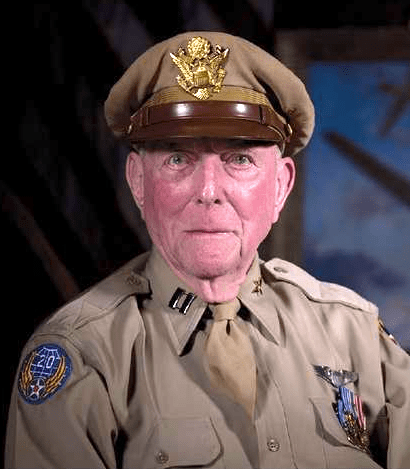
Jerry Yellin was featured prominently with a 2-page cover story in The Fairfield Ledger on Monday, January 21, 2019. ​​Capt Yellin was laid to rest last Tuesday, January 15, 2019, with full military honors at Arlington National Cemetery (Air Force Pubic Affairs). Ledger News Editor Andy Hallman spoke with Jerry’s sons Steven and Robert, and Fairfield friends Jim and Ginger Belilove. ​​The result is an amazing report on the former Fairfield resident and war hero. ​Click the title to see 13 photos above the article on The Fairfield Ledger website: Full military honors.

WWII fighter pilot Jerry Yellin buried at Arlington National Cemetery

wwii fighter pilot jerry yellin

WWII fighter pilot Jerry Yellin

Former Fairfield resident and World War II fighter pilot Jerry Yellin was laid to rest with full military honors Tuesday at Arlington National Cemetery in Arlington, Virginia.

Yellin flew the last combat mission of World War II, and achieved notoriety late in life for his advocacy of peace and reconciliation, and for raising awareness of post-traumatic stress disorder. Yellin died Dec. 21, 2017, at age 93. He was buried along with his wife of 65 years, Helene, who died in 2015.

“My father wanted to be buried with his fellow warriors,” said his son, Steven, a Fairfield resident, who petitioned to have Jerry and Helene’s remains buried at Arlington National Cemetery. “It was an incredible ceremony, very dignified and moving.”

To be buried with full military honors meant that Jerry’s remains were carried to the cemetery on a horse-drawn caisson, a wagon used to transport ammunition in earlier eras but which today is reserved for funeral processions.

“An American flag is draped over the caisson, and after the ceremony, four Marines take the flag off, and in perfect unison, fold it and give it to us,” Steven said.

Steven also arranged for the U.S. Air Force to perform a four-jet flyover, which he said was no easy feat. The A-10 jets came from the 23rd Wing at Moody Air Force Base in Georgia. They performed the “missing man” formation typically used to honor a decorated pilot or political leader, whereby one of the jets peels off from the group to signal the dignitary’s passing.

“Sixteen squadrons in the Air Force wanted to do the flyover,” Steven said. “All Air Force pilots look up to my father as a hero.”

Extraordinary man

Steven estimated that 125-150 people attended the ceremony. Afterward, one of Jerry’s friends sponsored a dinner at a local hotel. People took turns speaking about how Jerry touched their lives.

“I lived with my father for the past three years in Orlando,” Steven said. “Living with Jerry Yellin was an extraordinary experience because he was so engaging, even at such an advanced age. His intellect was so sharp. For 2.5 years, he traveled two to four times per month everywhere in the country.”

Jim and Ginger Belilove were among a handful of Fairfield residents who traveled to Arlington to honor their late friend.

“Jerry really made his mark on the world,” Ginger said. “For the last five years of his life, he was extremely busy speaking on peace and reconciliation, and [about] Transcendental Meditation alleviating post-traumatic stress for servicemen.”

Steven said his father suffered from a severe case of PTSD. Of Jerry’s 32-member squadron, exactly half survived. Why did he live when so many others died? This question gnawed at him for years. Steven recalls his father telling him that, when he was flying missions over Iwo Jima, all he could think about was going back home. But when the war ended and he came home, all he could think of was returning to Iwo Jima.

In 1975, Helene and Jerry began practicing Transcendental Meditation. Jerry credited the technique with allowing him to live into his 90s.

Background

Since Arlington National Cemetery is the most well-known and coveted burial ground, being awarded a plot is a prestigious honor. In the biography of his father that he submitted to the cemetery authorities, Steven wrote about Jerry’s combat missions in the Pacific Theater.

Jerry enlisted in the military two months after the bombing of Pearl Harbor on Dec. 7, 1941. He graduated from his fighter pilot school in August 1943, and spent the remainder of the war flying combat missions with the 78th Fighter Squadron. Steven said his father strafed the island of Iwo Jima to assist the Marines in taking it in March 1945. Jerry participated in the first land-based fighter mission over Japan on April 7, 1945, and led the final mission of the war on Aug. 14, 1945. For his efforts during the war, Yellin was awarded the Distinguished Flying Cross with an oak leaf cluster and the Air Medal with four oak leaf clusters.

Meeting Jerry

The Beliloves came to know Jerry when he stepped inside their business 10 years ago. The Beliloves run Creative Edge Master Shop, and Jerry was there because he needed a plaque. When Jim asked him what it was for, Jerry told him it was destined for Japan, to commemorate an incident that occurred during the war.

According to Jerry Yellin’s official website, two American B-29s crashed mid-air during a bombing mission over Japan in June 1945. A local soybean farmer came upon the wreckage, and gave a proper burial to the 23 Americans who died. The farmer was given a prison sentence for giving counsel to the enemy, but after his release, he commissioned the construction of a shrine as a memorial to peace. He raised money from the neighboring city of Shizuoka, which the Americans had been bombing. Even after this farmer died, others have kept alive the tradition of honoring deceased soldiers from both sides at this peace memorial atop Mount Shizuhata.

When Jim heard this story, he insisted on giving Jerry the plaque for free. Jerry accepted, on the condition that the Beliloves attend the ceremony in Japan with him. They agreed, and it became the first of many trips the Beliloves took with Jerry and his family.

Reconciling with Japan

Steven said his father “hated the Japanese” in the years immediately after the war, but his attitude changed while on a business trip to the country in 1982. Somehow, on the trip he felt a close kinship with Japanese people and their culture. That kinship would grow in the coming years thanks to his son Robert.

Robert is the youngest of the four boys (Steven, Michael and David). He visited Japan for a few weeks during college, and liked it so much he returned to the country later to work in an English school. He fell in love with a young Japanese woman named Takako, but he ran into a problem with her family.

Takako’s father refused even to meet Robert for the first seven months. Finally, the family met Robert for dinner at a restaurant. Takako’s three older brothers grilled him with questions, asking him about his background and his parents. They wanted to hear about his father.

“Uh oh,” Robert remembers thinking. “I told them that my father was in World War II, and that he fought at Iwo Jima.”

Upon hearing this, Takako’s father perked up. He wanted to know more. Robert explained that Jerry was a P-51 pilot.

“Once he learned that, the father was immediately in favor of the marriage,” Robert said. “He was a couple of years younger than Jerry, and was training to become a pilot, too. He said there are no enemies in the skies.”

The father said that anyone who flies a P-51 is brave, and that person’s lineage can be welcomed into the house. Robert breathed a sigh of relief.

Jerry and Takako’s dad, Mr. Yamakawa, met later on, and discovered they had much in common, becoming lifelong friends. The bonds of that friendship grew stronger with the birth of Robert and Takako’s three children: Kentaro, Simon and Sara. The decorated American fighter pilot who once hated the Japanese now had three Japanese-American grandkids.

Jerry’s legacy

The legacy of Jerry Yellin has been kept alive through his books, such as his autobiography “Of War and Weddings,” the tale of the final combat mission over Japan in “The Last Fighter Pilot,” his struggles with PTSD in “The Resilient Warrior,” and others. His official website is captainjerryyellin.com.

A documentary about Jerry’s life titled “The Last Man Standing” is in production. The director, Louisa Merino, met Jerry in Fairfield, and after hearing his stories, knew they must be made into a film. Steven said the documentary should be finished in the next six months, and that it will be shown at film festivals and eventually, he hopes, online.

###

I added a new post on Veteran’s Day 2020. The film is finished and streaming throughout the week: Jerry’s Last Mission was not just in WW2; he later helped bring peace to today’s troubled veterans.

###

Below are scans of the newspaper cover story with part 2 on page 7. Click here to see a few previous posts, and the Jerry Yellin Memorial Service last year in Montclair, NJ January 20, 2018.

Read the rest of this entry »

This cartoon is so unexpectedly funny

January 20, 2019

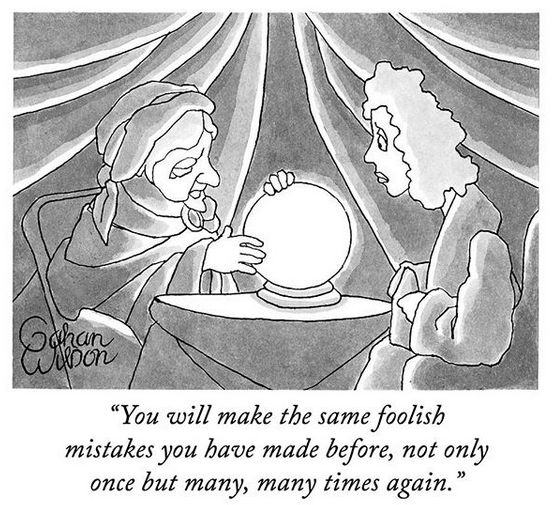
This fortuneteller cartoon by Gahan Wilson was published on The New Yorker Cartoons Instagram. Wilson is known for his dark sense of humor.

Fortune Teller - newyorkercartoons.png

Guess some of us don’t learn from our mistakes. Good to have a sense of humor about it though. Here’s to getting it right, sooner or later.

Reminds me of these funny New Yorker cartoons I included in this post about Coming Back For Love In Five Favorite Romantic Films.

The one on top is where we go to keep learning. The other at the bottom perfectly reminds me of Bill Murray waking up each morning in the brilliant little film Ground Hog Day.

Alex Gregory is astutely funny showing what social media is doing to us.

This funny cartoon tellingly depicts our obsession with the past and future while ignoring how to be in the present moment with meditation!