Lissie @lissiemusic and her connections to Twin Peaks, Fairfield and #TranscendentalMeditation

May 11, 2019
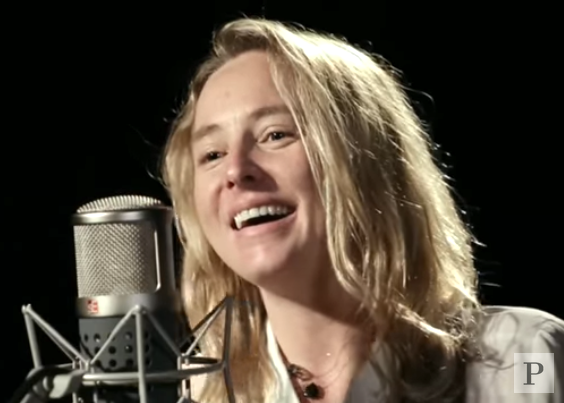
Lissie at Paste Studio NYC live from The Manhattan Center
Streamed live on Feb 28, 2018

I heard an interview this week (May 8, 2019) on Iowa Public Radio’s Talk of Iowa with Charity Nebbe. She spoke with singer/songwriter Lissie. During the conversation her connections to Twin Peaks, Fairfield and TM came up. Listen to Singer Lissie On Ditching The West Coast For Life On An Iowa Farm.

I had never heard of her and was impressed with her powerful voice and candid nature. She can sometimes sound like Stevie Nicks or Adele. Listen to this Fleetwood Mac cover of Dreams and you’ll understand why.

Around 9 minutes in she talks about a peace she found in Mt. Pleasant at her great-grandmother’s funeral. She carried it with her to California and always came back to visit family. Then she says, “I went to Fairfield and took a TM course, Transcendental Meditation.” We checked and verified that Lissie had learned TM in June 2014.

Lissie says the same thing in a video with this Des Moines Register article from Aug. 15, 2017: An Iowa musician was featured on one of this summer’s favorite TV shows. They’re referring to Twin Peaks.

They embed the video from Oct. 11, 2016: Folk musician Lissie escapes back home to Midwest. After leaving the Quad Cities area for the fast-paced lifestyle in Los Angeles, Folk-style musician Lissie discovered an Iowa farm was better for her soul than the fast lanes of Southern California.
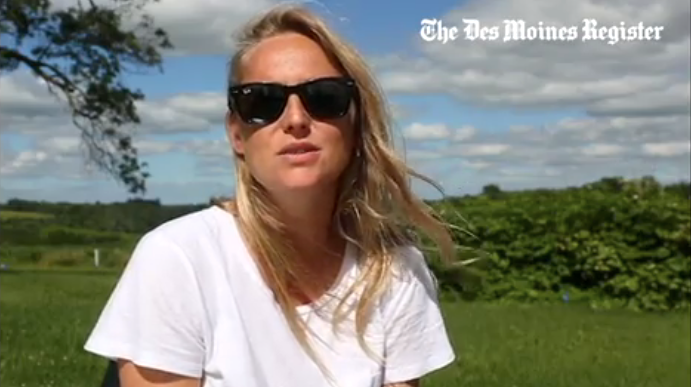
I’ve been to Fairfield to learn Transcendental Meditation.

Lissie says: “I spent my time growing up in Iowa. I had this kind of romanticized dream or idea that some day I’ll have a farm in Iowa. I visited the Bridges of Madison County. My mom and I took a road trip and we went to John Wayne’s house. You know, like I’ve done some things in Iowa. I’ve been to Fairfield to learn Transcendental Meditation. And I’ve just always had this soft spot for Iowa.”

Lissie identifies as a Midwesterner from the Heartland and says how much she loves Iowa, describing all the reasons why. It’s where her heart belongs. Looks like she found her roots and is at peace with herself.

I mentioned this to Erin Skipper (The Light That Seeks You). She said, “David Lynch is a fan and had her be a Roadhouse performer on Twin Peaks.”

Dean Hurley, the show’s music director, and a collaborator since 2005, said she “is an incredibly emotive performer who completely embodies her music and gives everything. Lissie was definitely one of the acts that David wanted involved from the beginning. He’s been a big fan of hers for years and discovered her by a series of videos she posted on YouTube covering Lady Gaga, Metallica, etc.” (See others including Bonnie Raitt and Bob Dylan.)

In that interview, The Music of Twin Peaks: The Return: Lissie, Dean further explains what David looks for in a musical performance when realizing his ideas for the series. He blends intense music, emotion and acting, so the power of Lissie’s music fulfills that for him.

He said “David doesn’t attend a lot of concerts, but when she came through LA years back, he wanted to go. I can’t emphasize how rare that is for him to want to go out to a show.”

He added, “An artist like Lissie thrives in the live performance arena, she’s one of these people that almost can’t be contained on a recording because she’s the fullest realization of herself live.”

Lissie was invited to sing a certain song to close out Part 14 of Season 3, but she suggested Wild West instead, which turned out to be a better fit. You can hear it on “Twin Peaks – Music From The Limited Event Series” – Track 15, Lissie – Wild West (Roadhouse Mix). Here is the Official Audio version from her new album Wild West. She posted it on her YouTube channel: Lissie – Wild West (Twin Peaks version). She posted a clip from the show on her Instagram: Lissie – Wild West – Twin Peaks: The Return.

See the Update below where Lissie explains how she and David connected, how she learned TM in Fairfield, Iowa, then went to have coffee and talk with him in LA, and ultimately received an email from him asking her if she wanted to be part of the new Twin Peaks.

I enjoyed this short video profile on iHeartRadio: Lissie – Artist Stories – Interview (2016) – Part 1 and Part 2. It starts with her intention: “I would like to be successful with my music, but it’s about more than that, it’s about, like figuring out what my purpose for being on this planet is.”

This is an interesting description from that interview: With a career that has seen her open for renowned artist Lenny Kravitz an early supporter, Tom Petty, and even been asked to perform at Ashton Kutcher and Demi Moore’s wedding, Lissie has had a wealth of incredible experiences that have made her the confident and determined artist she is today.

This is also worth watching: Lissie On Staying True To Herself At The Patch. From Cali to Iowa: Lissie keeps it Lissie. Join her at The Patch as she performs “Ojai” and “Don’t You Give Up On Me” and talks about giving in to her ambitions, not giving them up.

Verse 2 of Ojai is pure poetry; so succinct yet says so much!

I miss the seasons, I miss the land
I miss them for reasons I don’t understand
I took it all for granted
I bloomed where I was planted

She sums up her approach: “You know, I’m not trying to do anything. I’m not trying to be cool. I’m not trying to ever have a fresh sound or a cool look for an image. I’m just singing songs about my life in the most heartfelt genuine way I can, and I’m gonna be moving on to more songs very soon. And it’s as simple as that.”

I wonder if some of these developments may have come about after she learned TM? Lissie had the courage to trust and act on her inner yearnings and is happier for it. She followed her heart and is now living her life on her own terms.

Lissie has a new album out: When I’m Alone: The Piano Retrospective: https://lissie.lnk.to/WIATW. Here’s the title song with lyrics.

Lissie – When I’m Alone (Piano Version) [Lyric Video]

Here are 3 examples of the first song on the album—Don’t You Give Up On Me—the official video with her band, a live version with her guitarist in the studios of 89.3 The Current, and on this new album as a Piano Version. Listen to her on Spotify, YouTube and VEVO.

It’d be nice if she decided to visit and play Fairfield one day. Some of us are reaching out to her. She’s on tour, so we’ll see if anything happens.

Update: Now that I’ve been finding and listening to more of her performances and interviews on YouTube, I noticed Lissie mentions again her learning TM in Fairfield, in last year’s BUILD interview, and also says it’s where Maharishi University is located in Iowa.

Further into the interview she’s asked how she got into Twin Peaks, and extends what Dean Hurley had mentioned about David Lynch going to see her in concert. “We ultimately ended up talking on the phone and he came to my show. He’s really into TM, so after I had been in Iowa to take this TM course, I had reached out, and ended up joining him at his home and drinking coffee and catching up on life. And so we just stayed in touch over the years and he’s just been very supportive and kind to me. So I think it was 2015, I got an email, ‘Hey would you want to be on the new Twin Peaks?’ So of course, like yes, that’s amazing, like this legendary status. Ya, he wanted me to be a part of it, and I performed in episode (14) for Twin Peaks!”

Further Update: A little over 7 months later I would finally get to hear Lissie perform in person. A strong supporter of Bernie Sanders, Lissie had posted on her Instagram that she was going to open for him at the Steamboat Senior Center in Burlington, Iowa on Saturday night, and then at the Bridge View Center in Ottumwa the following night, Sunday, December 15, 2019.

I drove with a friend to the Ottumwa event. We sat up close to a makeshift stage in the lobby area surrounded by rows of chairs. When she sang, I felt my head tingling! Wish fulfilled. After she left the stage, I introduced myself, that I was from Fairfield, Maharishi University, mentioned her TM teacher, her meeting David Lynch, what he thought of her as an artist, and that I felt the same way.

I asked her what it was like when David invited her to perform in Twin Peaks, The Return. She was driving at the time and had to pull over to the side of the road to read his message. What an unexpected surprise!

Lissie said David’s friendship and support did a lot for her self-esteem. David’s like that. He recognizes talent when he sees it. He’s given several unknown artists a chance to shine, drawing out their best performances that would launch their careers. Naomi Watts comes to mind.

Of course in Lissie’s case, she was already a fully formed exciting artist, as Dean Hurley explained in his interview. What David did was offer her a legendary venue to perform in and be heard by a much larger audience!

None of this fame seems to have gone to Lissie’s head. She’s very down to earth, accessible. I found her to be very friendly, quite lovely actually. She introduced me to her sister Annika, who took our picture. Here is a cropped closeup of one of them. Looking forward to Lissie visiting us some time next year.
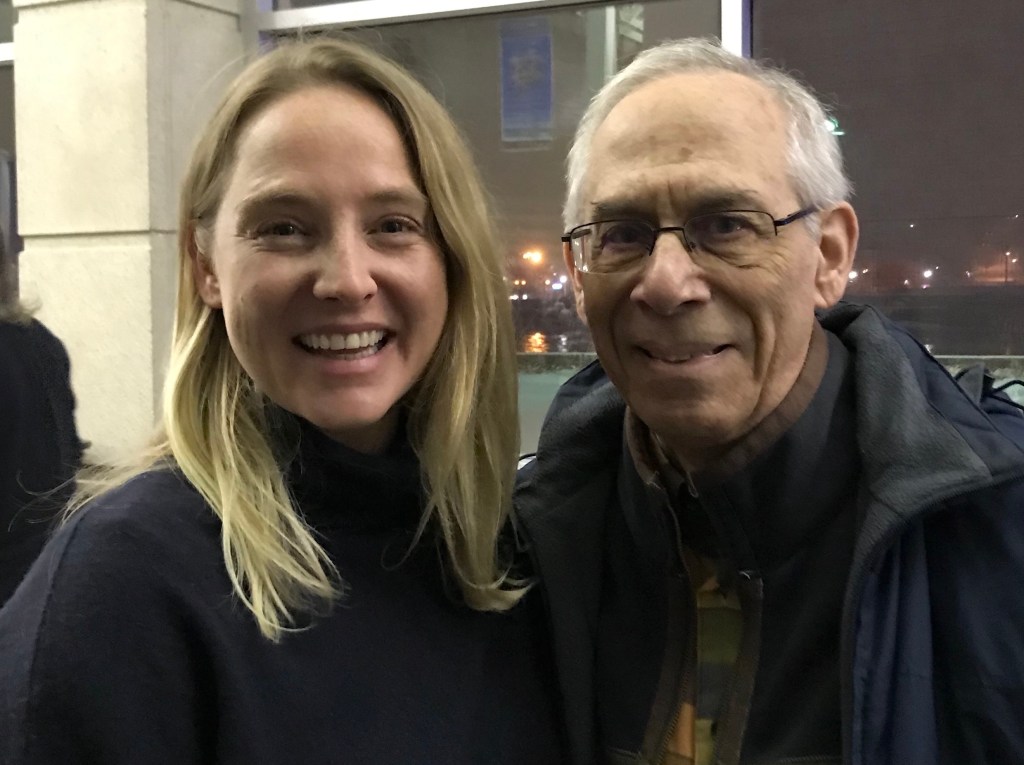
Meeting Lissie at the Bridge View Center in Ottumwa after her opening for Bernie Sanders on Sunday, December 15, 2019

New addition: Don Henley and Lissie use the same approach to writing songs—don’t force it and wash the dishes!

Newer addition: Feb 19, 2021: @ipondrnetwork posted a short video profile of Lissie today on her farm in NE Iowa. This musician didn’t know she was missing something. Until now. Musician @lissiemusic migrated back to the Midwest after spending time in California, and was surprised to find how creatively fulfilled she felt there. The pandemic has afforded her more time to enjoy her new home and appreciate the passing of the seasons. Lissie also posted a clip from it on her Instagram. See the full 5:09 minute video here.

Winter Holiday addition: Saturday, Dec 18, 2021: A Holiday Winter’s Eve Concert with Lissie. Just in time to kick-off the season, Lissie returned to The Parkway Theater for a very special holiday performance which was filmed and will be streaming for you. Join in for a festive show of holiday classics and some of Lissie’s originals accompanied by piano. Lissie will be live-chatting during the premiere on Dec. 18 at 1pm PT / 3pm CT / 4pm ET / 9pm UK time – come say hi! If you can’t watch the premiere you can watch the stream On Demand through December 26th. Get your tickets: https://bit.ly/lissiexmas.

New Album: Sept 2022: Lissie’s new album, Carving Canyons, is out now and she’s on tour starting in Norway. While there she collaborated with Darling West for a new Family Session where they recorded a beautiful cover of Fleetwood Mac’s “Dreams.”

She’s been doing interviews to promote the album. Here are a few: The XS Noize Podcast: Lissie on her new American-tinged indie folk album Carving Canyons and Voice Of America’s Border Crossings: Lissie where she also sings a few songs. VOA reaches 100 countries in multiple languages.

I follow her on Twitter (https://twitter.com/lissiemusic), which is how I discovered those podcasts. Visit her website (https://lissie.com) for tour dates, recent videos and more.

Posts on other great musical artists

Discover and enjoy the amazing soulful voice of young Angelina Jordan. It is jaw-dropping great! || My Mind by YEBBA at Sofar will blow your mind! || The hauntingly beautiful voice of Eva Cassidy || Colin Hay’s song—I Just Don’t Think I’ll Ever Get Over You—is so relevant during these tough times || Leonard Cohen said there’s a crack in everything—how the light gets in. It came thru him & lit up a broken humanity. || Hafiz said to leave something in the marketplace, and Jesse Winchester sure did before he left us. || The hauntingly beautiful music of Davy Spillane played on uilleann pipes and low whistle || Bill Evans’s Peace Piece is musical onomatopoeia || Bobby Hutcherson plays Bouquet with Ron Carter and Herbie Hancock at One Night with Blue Note

— Written and compiled (citing sources) by Ken Chawkin for The Uncarved Blog.

After looking through a telescope Louise Glück identified with the silent enormity of the stars

April 28, 2019

I recently discovered poets writing about telescopes, like Ted Kooser and Kenneth Rexroth, what they saw through them, and how they were transformed by the experience. Here is a poem called Telescope (Averno: Poems) by Pulitzer Prize winner (1993) Louise Glück. It was among the poems she read during a Lannan Literary Event (May 11, 2016).

The Great Cluster in the constellation Hercules

Telescope

There is a moment after you move your eye away
when you forget where you are
because you’ve been living, it seems,
somewhere else, in the silence of the night sky.

You’ve been stopped being here in the world.
You’re in a different place,
a place where human life has no meaning.

You’re not a creature in a body.
You exist as the stars exist,
participating in their stillness, their immensity.

Then you’re in the world again.
At night, on a cold hill,
taking the telescope apart.

You realize afterward
not that the image is false
but the relation is false.

You see again how far away
each thing is from every other thing.

Louise Glück

Louise Glück reads Telescope at a Lannan Literary Event

Kenneth Rexroth also describes a loss of body awareness and identifies with the enormity of the star-filled summer night sky while looking through a telescope. Here’s an excerpt from The Heart of Herakles.

My body is asleep. Only
My eyes and brain are awake.
The stars stand around me
Like gold eyes, I can no longer
Tell where I begin and leave off.

Breaking News from The Nobel Prize (Oct 8, 2020): The 2020 Nobel Prize in Literature is awarded to the American poet Louise Glück “for her unmistakable poetic voice that with austere beauty makes individual existence universal.” They posted these Biobibliographical notes.

Presentation of the 2020 Nobel Prize in Literature

Watch the very moment 2020 Literature Laureate Louise Glück received her Nobel Prize medal and diploma. Glück received the prize “for her unmistakable poetic voice that with austere beauty makes individual existence universal”. (This presentation took place over 2 months later still during the time of the coronavirus so she and her presenter were wearing masks.)

Read more about this poet in a Poets & Writers interview: Internal Tapestries: A Q&A With Louise Glück. (September/October 2014)

The heart of The Red Poppy in Louise Glück’s poem speaks to us from a different perspective

Oct 13, 2023: Reuters: US Nobel-winning poet Louise Gluck dies at 80

Poets Kooser, Rexroth, and Glück describe their experiences with telescopes looking at the stars

April 28, 2019

Poets have written about the night sky and how it’s transformed them. Pulitzer Prize winner (2005) and U.S. Poet Laureate (2004-2006) Ted Kooser read from his poetry before a standing-room only audience in Campbell Hall at UC Santa Barbara (August/2005). In his introduction to this poem, Telescope, Kooser describes how he wakes up early every morning to write. William Stafford used to do the same thing.

Telescope

This is the pipe that pierces the dam
that holds back the universe,

that takes off some of the pressure,
keeping the weight of the unknown

from breaking through
and washing us all down the valley.

Because of this small tube,
through which a cold light rushes

from the bottom of time,
the depth of the stars stays always constant

and we are able to sleep, at least for now,
beneath the straining wall of darkness.

Ted Kooser, Delights and Shadows, p. 6

As part of the Pulitzer Centennial Campfires Initiative, the South Dakota Humanities Council commissioned a series of essays about prize winners. Christine Stewart-Nuñez wrote about her poetry teacher: Ted Kooser: A poet of connection.

Kenneth Rexroth also wrote about the cosmos looking through a telescope and how it changed him in this poem, The Heart of Herakles.

My body is asleep. Only
My eyes and brain are awake.
The stars stand around me
Like gold eyes, I can no longer
Tell where I begin and leave off.

Louise Glück in her poem, Telescope, describes a similar loss of body awareness as she identifies with the enormity of the star-filled night sky.

You’ve been stopped being here in the world.
You’re in a different place,
a place where human life has no meaning.

You’re not a creature in a body.
You exist as the stars exist,
participating in their stillness, their immensity.

Poets Rumi and Octavio Paz also open our minds to a cosmic perspective. In The Essential Rumi, Coleman Barks translates his poem:

I am so small I can barely be seen.
How can this great love be inside me?

Look at your eyes. They are small,
but they see enormous things.

Paz’s poem, Brotherhood, translated with Eliot Weinberger, is an homage to the ancient astronomer, Claudius Ptolemy.

I am a man: little do I last
and the night is enormous.
But I look up:
the stars write.
Unknowing I understand:
I too am written,
and at this very moment
someone spells me out.

In that blog post I conclude with my haiku, Forest Flowers, and mention my poem As Above So Below. Both describe relationships between the individual and the universal. 

Mark Strand in his poem, My Name, also lay in the grass looking at the great distances above him and felt the vast star-clustered sky as his own. I included that full poem in this memorial post: Poetry helps us imagine what it’s like to be human. ~ Mark Strand (1934–2014).

I love the passion and precision of the tango in these pieces by Alacrán and Gotan Project

April 25, 2019

Caution: This music is contagious!!

Reflejo de Luna – Alacrán

One of many videos on YouTube with this music

”Reflejo de Luna‘ by Alacrán, a Latin group (Ignacio Egaña, Fernando Arbex, Oscar Lasprilla), is the title song and 3rd of their 15-track album. Music and lyrics by Stefano Micarell were released on January 1, 2015. The words to this tango are: Eres color / Eres calor / Eres sonido en mi corazon / Manos de luz / Reflejo de Luna; which, translated into English are: You are colour / You are warmth / You are sound in my heart / Hands of light / Reflection of the moon.

Tango Santa Maria – Gotan Project

Watch this couple move across the dance floor with passion, precision, and grace. The video opens with these words: E’ un profumo, avvolgente, caldo, sensuale. E’ una storia travolgente. E’ una tango. English translation: It is a warm, sensual, enveloping fragrance. It is a sweeping story. It is a tango. Halfway through these words appear: E’ Ricordo, Emozione, Vibrazione, Poesia In Musica, Desiderio, Forza, Gelosia, Stile. Translation: It is memory, emotion, vibration, poetry in music, desire, strength, jealousy, style. Together these words attempt to describe this unique exciting cultural phenomenon.

Gotan Project – Santa Maria

There are many videos of this song Tango Santa Maria by Gotan Project as well with visuals. You can see the musicians playing it in this extended version: Gotan Project – Santa Maria (HD,1080) “Live” from La Revancha Del Tango (2005). The words: Hay milonga de amor / hay temblor de gotán / este tango es para vos. / Argentina Buenos Aires. Hay milonga de amor hay temblor de gotán. Argentina Buenos Aires El Puerto de Santa Maria del Buen Ayre. (Repeats). In English: There is a milonga of love / there is trembling of gotán / this tango is for you. / Argentina Buenos Aires. / There is milonga of love / there is trembling of gotan. Argentina Buenos Aires The Port of Saint Mary of the Good Air. (Repeats). It’s the 1st of 15 tracks found on Gotan Project – Best Of Gotan Project (Full Album).

— Written and compiled (citing sources) by Ken Chawkin for The Uncarved Blog.

This stunningly beautiful scene of “A Fjord” was painted by Norwegian artist Adelsteen Normann

April 15, 2019
A Fjord painted by Norwegian artist Adelsteen Normann

I discovered this beautiful painting on Twitter. Don’t know whether this scene represents a sunrise or a sunset between the mountains. Either way, the vivid colors on the horizon and in the sky, and their reflection on the water are spectacular! I did some research to learn more about this impressive artist and found some of his paintings at artnet and in videos 1 & 2. Click on the video description to read more about this master painter. Here’s an excerpt from this Wikipedia biograhy.

Eilert Adelsteen Normann (May 1, 1848 – December 26, 1918) was a Norwegian painter who worked in Berlin. He was a noted painter of landscapes of Norway. Normann was the artist who invited Edvard Munch to Berlin, where he painted The Scream. Normann’s fjord paintings are credited with making the Norwegian fjords a more popular tourist destination.

The perils of praise or blame for young writers. New ways to help students find their own voice.

April 13, 2019

The teaching of writing has evolved over the decades. Teachers used to praise students for duplicating what they were instructed to write, or criticized and graded poorly for not meeting established norms. This practice of praise or blame created consequences that were detrimental to the writer. They doubted their own natural ability to express themselves in writing, wondering whether it was good or not.

W.S. Merwin, in his poem, Berryman,* about his college professor John Berryman, asks him “how can you ever be sure that what you write is really any good at all?” He gives him an unexpected honest answer.

I had hardly begun to read
I asked how can you ever be sure
that what you write is really
any good at all and he said you can’t

you can’t you can never be sure
you die without knowing
whether anything you wrote was any good
if you have to be sure don’t write

Nearly three decades after he mentored Merwin, Berryman would encapsulate his advice to young writers in this Paris Review interview, on the perils of praise and blame.

I would recommend the cultivation of extreme indifference to both praise and blame because praise will lead you to vanity, and blame will lead you to self-pity, and both are bad for writers.

It’s interesting to see this explanation—how praise (fame) or blame (criticism) might influence a young writer’s psychology, and therefore his or her creative output and development as a writer. Advising them to stay true to themselves, remain unswayed by public opinion, would allow them to maintain their own integrity as artists.

David Lynch is another artist who always follows his own muse and tells young filmmakers to do the same. Answering a student’s question about his creative process, he says we’re nothing without an idea. Using a fishing analogy, he explains that a desire for an idea is like a bait on a hook. He gives a detailed account of how he falls in love with ideas, turns them into a script, and transforms them into a film, or other works of art. To catch bigger fish, you have to dive deeper. David describes daydreaming and TM as ways to get there. He tells students to stay true to their vision, to meditate, and most importantly, to always have the final cut.

In this interview, he answers the same question, but from a different perspective: In the other room, the puzzle is all together, but they keep flipping in just one piece at a time.

Learning by doing: writing and teaching

When writers and poets were asked to teach creative writing, some conveyed the enterprise as a process to be explored and unfolded, not as a specific product to be reproduced. What they said made sense. I practiced their suggestions and discovered my own process of becoming a writer and a poet.

I also shared their strategies with my students facilitating them as writers. The most important takeaway was this: If you took care of the writer, the writing would take care of itself.

I enjoyed asking younger students questions to find out what they were passionate about, to help them uncover their own voice. If they said something interesting, I had them write it down, then asked them to combine their thoughts into a rough draft. I had them listen to what they had written by reading it aloud to me, to use their skills as a reader. Once involved in the process they naturally wanted to clarify their writing, to include relevant details, to edit their work. They had become intrinsically motivated writers!

Here are a few favorite writers who inspired me along the way.

What some favorite poets, writers and teachers say about writing

Read the rest of this entry »

MUM @maharishiuni professors explore secrets of world-class performers in World-Class Brain book

March 26, 2019

What Do the Brains of World-Class Performers have in Common?

The brains of world-class performers are different from the brains of average performers. No surprise there. But what is surprising is that regardless of whether these top performers are athletes, musicians, or CEOs, their brains share one feature that makes them stand out: More integrated functioning. A world-class brain works in a more coherent, relaxed, wakeful, and efficient way.

A new book tells the story of these top performers and offers an easy-to-read introduction to the research showing that their brain function is different. This short book also describes other features that these top performers have in common, such as intensely happy and fulfilling peak experiences and a greater moral sense. Readers also learn how they, too, can effortlessly develop greater brain integration.

New Book Explores Secret of World-Class Performers

World-Class BrainA new book coauthored by former MUM professor Harald Harung of Oslo Metropolitan University and professor Fred Travis offers an easy-to-read account of the defining characteristic of world-class performers – an integrated brain – and how one can develop it.

Titled, World-Class Brain, the 130-page book begins by outlining the results of three studies: on Olympic athletes, top managers, and symphony orchestra musicians. These top performers were found to have high levels of brain integration according to EEG measurements.

The book then explains in simple terms what brain integration means and presents various ways to increase it, such as playing a musical instrument, exercising, and meditation.

The authors then discuss the research on the Transcendental Meditation technique showing that it is the most effective way to develop high levels of brain integration.

The book goes into detail about peak experiences associated with brain integration in the several groups of subjects. It then discusses research on long-term practitioners of Transcendental Meditation who are experiencing higher states of consciousness and describes the defining characteristics of these higher states.

The final two chapters explain the research showing that brain integration can affect organizations and all of society.

World-Class Brain: A Textbook Teaching Tool

Co-author Harald S. Harung described editor Jim Karpen‘s great contribution to the book, “which mainly had two components: The smooth progression of chapters and ideas, and making the language very easy, enjoyable, and readable.”

Co-author Fred Travis, director of the Center for Brain, Consciousness, and Cognition, and dean of the Graduate School at Maharishi University of Management, said they used the structure of the book’s chapters to structure how the knowledge was taught to MBA students in China.

Dennis Heaton, professor and dean of the College of Business Administration at Maharishi University of Management, said, “I’m using World-Class Brain with my MBA and PhD students, and they really appreciate how readable it is. The authors have written about the key to top performance in a way that’s interesting and easy to understand. In addition, in the later chapters the book does an excellent job of distilling decades of research and theory, including higher states of consciousness.”

The book is available on Amazon.

Visit Dr. Harung’s website for a list of English articles and YouTube videos of their research on top performers: www.harvest.no.

Visit Dr. Travis’ website for the mission of the Brain Center, presentations, books and videos, and more: drfredtravis.com.

Related articles: Research breakthrough: High brain integration underlies winning performances | What do world-class athletes, top-level managers, musicians, and TM meditators have in common? | New study highlights unique state of “restful alertness” during Transcendental Meditation | Dr. Fred Travis at GIBS: Mind-Brain Development for Excellence and TM Develops Brain Coherence

this snow buddha photo inspired a winter haiku

March 22, 2019

My daughter Shara and her husband Toby live on Lopez Island, WA. On Feb 12, Toby took this photograph of their buddha statue covered in snow. About a foot tall, it’s located in their back yard near the clifftop seats overlooking the ocean. It’s quite the view! I visited them in June 2017. Toby said: “We had quite a bit of snow here, it was really lovely just for that week.” He recently added the photo to his impressive collection on social media. I was inspired to write him a winter haiku on this first day of spring!

a winter haiku

wrapped in white silence
contemplating nothingness
the buddha ascends

©Ken Chawkin
March 21, 2019
Fairfield, Iowa

You can see more of Toby’s photos on his Facebook: fatbuddhascat and Instagram: greatbritishphoto.

Here is another winter haiku based on this photographer’s work: A photograph by Julia Preminger of the Catskill Mountains covered in snow inspired this haiku.

Mary Oliver advises us to open up to joy and not hesitate if we suddenly and unexpectedly feel it

March 13, 2019

                    DON’T HESITATE

If you suddenly and unexpectedly feel joy,
don’t hesitate. Give in to it. There are plenty
of lives and whole towns destroyed or about
to be. We are not wise, and not very often
kind. And much can never be redeemed.
Still, life has some possibility left. Perhaps this
is its way of fighting back, that sometimes
something happens better than all the riches
or power in the world. It could be anything,
but very likely you notice it in the instant
when love begins. Anyway, that’s often the
case. Anyway, whatever it is, don’t be afraid
of its plenty. Joy is not made to be a crumb.

— Mary Oliver, Evidence (2009), Devotions (2017)

See this remembrance of Mary Oliver with links to more of her poems.

— Written and compiled (citing sources) by Ken Chawkin for The Uncarved Blog.
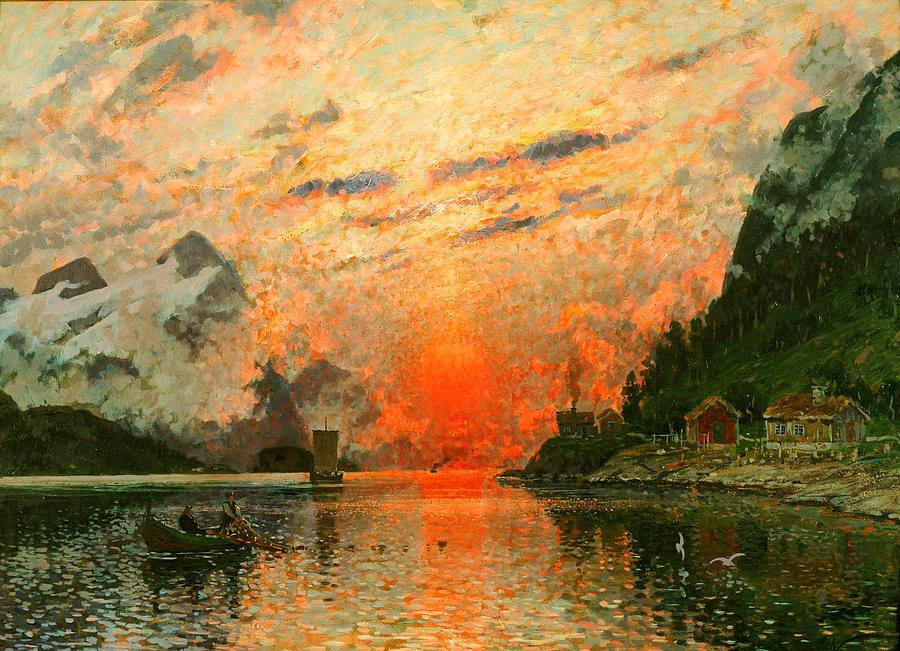
The nurturing effect of rainwater in Mary Oliver’s poems Lingering In Happiness At Blackwater Pond

March 13, 2019

These two poems by Mary Oliver describe the nurturing effect of rainwater in nature deep within the body of the earth and inside her own.

LINGERING IN HAPPINESS

After rain after many days without rain,
it stays cool, private and cleansed, under the trees,
and the dampness there, married now to gravity,
falls branch to branch, leaf to leaf, down to the ground

where it will disappear—but not, of course, vanish
except to our eyes. The roots of the oaks will have their share,
and the white threads of the grasses, and the cushion of moss;
a few drops, round as pearls, will enter the mole’s tunnel;

and soon so many small stones, buried for a thousand years,
will feel themselves being touched.

— Mary Oliver, Why I Wake Early (2004), Devotions (2017)

AT BLACKWATER POND

At Blackwater Pond the tossed waters have settled
after a night of rain.
I dip my cupped hands. I drink
a long time. It tastes
like stone, leaves, fire. It falls cold
into my body, waking the bones. I hear them
deep inside me, whispering
oh what is that beautiful thing
that just happened?

— Mary Oliver, At Blackwater Pond (2006), Devotions (2017)

See this remembrance of Mary Oliver with links to more of her poems.

Both of these poems remind me of this short poem by William Stafford.

B.C.

The seed that met water spoke a little name.

(Great sunflowers were lording the air that day;
this was before Jesus, before Rome; that other air
was readying our hundreds of years to say things
that rain has beat down on over broken stones
and heaped behind us in many slag lands.)

Quiet in the earth a drop of water came,
and the little seed spoke: “Sequoia is my name.”

— Written and compiled (citing sources) by Ken Chawkin for The Uncarved Blog.