Archive for the ‘Writing’ Category

Writers’ Voices interviews B. Steven Verney, author of “The Best of All Possible Worlds”

September 10, 2013

Writers’ Voices: Author in the house –
B. Steven Verney and “The Best of All Possible Worlds”

Writers' Voices  Verney up close

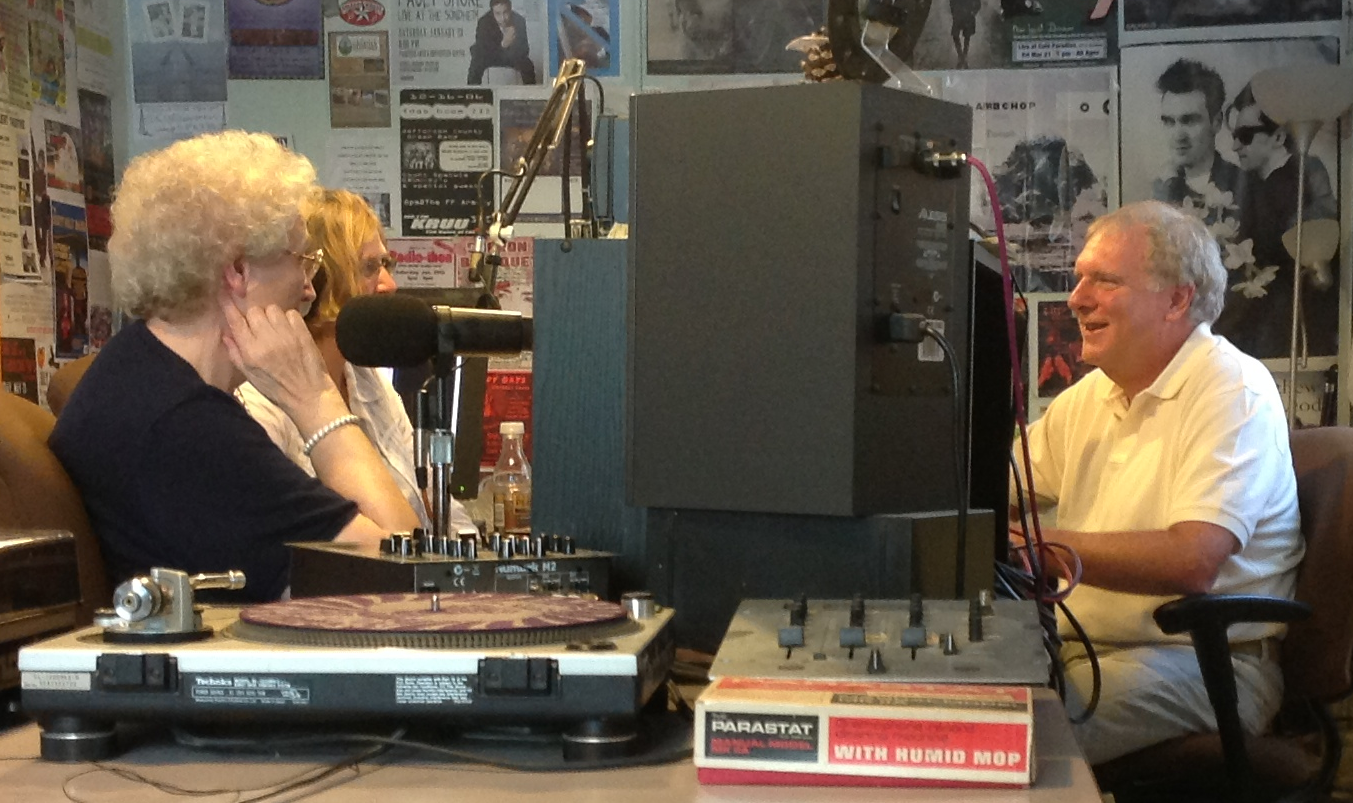
Monica Hadley and Caroline Kilbourn are delighted to welcome first-time novelist and former MIU student B. Steven Verney to KRUU 100.1 FM and Writers’ Voices, as he returns to Fairfield from his home in Massachusetts to join in the festivities of the MUM Literature Reunion being held this weekend, August 30 – September 2. See the press release: MUM Celebrates Literature Reunion 2013.*

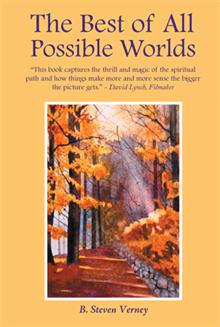
The Best of All Possible WorldsIn “The Best of All Possible Worlds,” published May 2012, Verney combines story-telling, philosophy, and the history of the TM movement into a unique and engaging novel. Anyone who attended TM teacher training courses in Switzerland or learned to meditate at Amherst in the early 70’s may just recognize pieces of their own personal history in this novel, while younger meditators, and even non-meditators with no connection to those events, will get a much deeper perspective of what all the fuss was about. This interview aired live, Fri Aug 30 1:00 pm – 2:00 pm and replayed, Mon Sep 02 8:00 am – 9:00 am. Here is an MP3 of it.

A newer interview recorded before Christmas 2013 was later posted in the new year: @MaharishiU Dean of Faculty, Dr. Cathy Gorini, interviews author Steven Verney on MUM’s KHOE.

If you went to MIU, Bruce Verney, as he was known back then, was student body president and won the Enlightened Leadership Award. He graduated in 1981 in Philosophy and married fellow student Kay Noble the following year. For the next 24 years, Steve and Kay started and operated three different businesses while raising their two sons. They’ve resided in New Salem, MA and currently live in Wellfleet, MA. This is his first novel.

I highly recommend the book. It won’t disappoint. The ending is mind-blowing! Steven said it took him 18 months to get the first draft down, and 3 years to revise and shape it, with some help from an editor, who curiously enough, turned out to be the person who had taught him Transcendental Meditation in Cambridge, MA decades earlier!

Although Steve is now writing his second novel, this first one is finally taking on a life of its own. David Lynch loved it and gave Steven a quote to help promote the book. “This book captures the thrill and magic of the spiritual path and how things make more and more sense the bigger the picture gets.” — David Lynch, Filmaker

The book will no doubt spread by word of mouth. George Ellis, author of A Symphony of Silence: An Enlightened Vision, said it should be turned into a screenplay. I agree. It’s destined to become a classic. I’m sure we’ll be hearing more of B. Steven Verney.

Visit Steve’s new website one of his son’s designed for him http://steveverney.com and blog. Read the overview of the book and see the Xlibris Book Trailer: The Best of All Possible Worlds.

*You may also enjoy The Flow of Consciousness: Maharishi Mahesh Yogi on Literature and Language, 1971 to 1976, edited by Rhoda F. Orme-Johnson, Ph.D. and Susan K. Anderson, Ph.D., two former chairpersons of the MIU/MUM Literature department who attended the Literature Reunion 2013.

Another novel about a meditating philosophy professor worth reading is, “To Be Enlightened” by Alan J. Steinberg.

a writing tanka on writing tanka by ken chawkin

September 8, 2013

writing tanka
a writing tanka on writing tanka

stare at the blank page
intimidating or what
now just start writing

no matter what you put down
it will all come back to you

© Ken Chawkin
Fairfield, Iowa, USA
September 7, 2013

WRITING TANKA—Preparing to Write

Writing—a poem on the writing process

Haiku On The Nature of Haiku

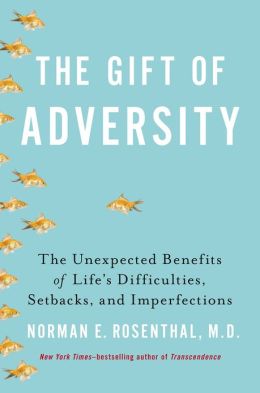
Norman E. Rosenthal, M.D.’s new book, The Gift of Adversity, helps us to look at life differently

September 1, 2013

Throughout his storied career as a research psychiatrist, Dr. Norman E. Rosenthal has searched outside the box for ways to help people struggling with depression and other mood disorders.  This search led him to diagnose and name seasonal affective disorder (SAD) and develop light therapy as a wonderfully effective treatment while at the National Institute of Mental Health. He went on to write several books that brought alternative, non-pharmaceutical treatments straight into public awareness, including “Winter Blues,” “St. John’s Wort: The Herbal Way to Feeling Good,” and, most recently, the New York Times bestseller, “Transcendence,” which explores the power of Transcendental Meditation in healing and transformation.

The Gift of AdversityIn his new book, “The Gift of Adversity: The Unexpected Benefits of Life’s Difficulties, Setbacks and Imperfections,” Dr. Rosenthal shares personal stories of adversity, as well as case studies and lessons he has learned from his heroes. Less scientific than his previous books, “The Gift of Adversity” is part memoir, part inspiration, and thoroughly enjoyable to read.

Adversity is an irreducible fact of life. Although we can and should learn from all experiences, both positive and negative, bestselling author Dr. Norman E. Rosenthal, believes that adversity is by far the best teacher most of us will ever encounter.

Whether the adversity one experiences is the result of poor decision-making, a desire to test one’s mettle, or plain bad luck, Rosenthal believes life’s most important lessons—from the value of family to the importance of occasionally cutting corners—can be best learned from it. Running counter to society’s current prevailing message that “excellence” must always be aspired to, and failure or mistakes of any sort are to be avoided at all costs, Rosenthal shows that engaging with our own failures and defeats is one of the only ways we are able to live authentic and meaningful lives, and that each different type of adversity carries its own challenges and has the potential to yield its own form of wisdom.

David Lynch Foundation executive director and author, Bob Roth, interviews Dr. Norman Rosenthal on how he went from writing “Transcendence” to “The Gift of Adversity.”

In this excerpt from the interview, Dr. Rosenthal shares with Bob Roth the gift he received from a very adverse situation early on in his life.

There are many reviews and interviews coming out on The Gift of Adversity and with Norman Rosenthal. Here are a few of them on Huffington Post and elsewhere: The Gift of Adversity: A Book Review by Lloyd I. Sederer, MD on HuffPost’s HealthyLiving. Norman Rosenthal on the Surprising Benefits of Life’s Biggest Challenges on Bookish. Norman Rosenthal ‏posted an article on HuffingtonPost: The Gift of Adversity. Norman wrote Your Mind, Your Body, How to live a happier, healthier life, for Psychology Today. Jeanne Ball ‏ posted 3 Ways Meditation Helps You Deal With Adversity also on HealthyLiving. The TM Blog posted an article by Dr. Norman Rosenthal: From Transcendence to The Gift of Adversity. And this excellent review by Jane E. Brody in the Personal Health section of the New York Times titled, Life’s Hard Lessons.

Norman Rosenthal was interviewed on Writers’ Voices: Looking for the Silver Lining with Dr. Norman E. Rosenthal and “The Gift of Adversity”. Dennis Raimondi on his show Speaking Freely asks Norman Rosenthal about his new book, The Gift of Adversity on KRUU-LP 100.1 FM (23:51).

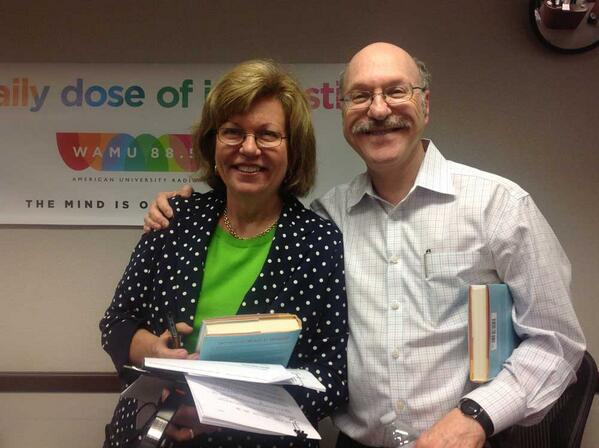
Susan Page and Norman Rosenthal at WAMU 88.5 FM

Guest host Susan Page interviewed Dr. Norman Rosenthal on The Diane Rehm Show

Norman Rosenthal was booked on the Diane Rehm Show to discuss his latest book, The Gift of Adversity, Wednesday, Sept 4, 11:00am to noon ET. Listen live on WAMU 88.5 FM or online.

As it turned out, Diane was on vacation, and guest host Susan Page, American Journalist and Washington Bureau Chief for USA Today, conducted the interview. Visit their post to read an excerpt of the book, Dr. Norman Rosenthal: “The Gift Of Adversity”, and listen to a replay of the interview on their audioplayer.

He was also interviewed by Dr. Sherrill Sellman on her show What Women Must Know – The Gift of Adversity with Norman E. Rosenthal – 09/26/13.

As I continue to read this wonderful book I find myself quietly reflecting on my own life’s experiences and lessons learned, triggered by reading Dr. Rosenthal’s and those of the people he discusses. Each chapter has a takeaway point, something to reflect on and learn from the transforming alchemy of adversity.

I am reminded of two quotes that beautifully encapsulate the message of the book: One by Buddha: “Every experience, no matter how bad it seems, holds within it a blessing of some kind. The goal is to find it.” And the other by Tom Bodett: “In school, you’re taught a lesson, then given a test. In life, you’re given a test that teaches you a lesson.” Dr. Rosenthal looks for and finds the blessings and lessons that adversity has brought him and the subjects in his book. It should be required reading for young adults to help them build empathy and understanding, preparing them for their journey through life.

Dr. Rosenthal also gives us hope when he says that the stressful experiences of adversity can also lead to growth. Quoting Friedrich Nietzsche’s famous dictum: “That which does not kill us makes us stronger,” he tells us of the dividend of PTG from the payment of PTS, the post-traumatic growth that may come from the post-traumatic stress we’ve endured. And he also gives us the tools to deal with the stress, mentioned in his earlier books, like “Winter Blues”, using light therapy to chase away the winter blues, and from “Transcendence”, his most recent bestseller, extolling the healing and transformational virtues of Transcendental Meditation. Discovering what Dr. Rosenthal says in his books is like finding a thoughtful friend who dispenses wise advice.

On December 20, 2013 he spoke in New York at TEDx: Norman Rosenthal on The Gift of Adversity in which he describes the three kinds of adversities, and mentions his three heroes.

Nature’s Bi-Cycle, a poem from/for the child in us

August 8, 2013

I wrote a poem the first day on my job working for the Vancouver Board of Parks and Recreation as a paper-picker in Queen Elizabeth Park. It was in the mid-1990’s, during the wintertime. The job kept me active, walking miles each day, spent mostly in nature, in a beautiful park setting. And I made more money doing that than teaching kids writing after school at a Sylvan Learning Center in North Vancouver. It was what I needed at the time. But that’s a whole other story.

The park attendant would leave each year to go to California for the winter. Some friends who had done the job for him the previous winter introduced us. A fellow poet and a meditator (not TM), we shared common interests. He offered me the job and said I could stay in the caretaker facility he lived in across the street from Q.E. Park in Hillsdale Park. In exchange I would cover his utilities. I just had to get his boss’s approval, who did hire me, but wasn’t happy about the arrangement. He said there were people ahead of me in line for such a hard-to-come-by job. But it worked out well and he later hired me for the summer in Stanley Park when the caretaker returned from California.

I was lucky to get that prized job, doing simple work, like cleaning the park facilities and picking up trash. I also appreciated the beautiful park settings and composed poems as I walked the grounds. I actually amused myself that first day. I thought of how things grew from seed to tree, and their interrelationships with the animals. Dark berries turned white in winter and the birds who ate them caught my attention as I thought of the cycles in nature.

My inner child loved composing and hearing the sounds and meanings of the words. Every time I shared this poem with kids, they’d squeal with delight! Maybe the child in you will like it too.

NATURE’S BI-CYCLE

Berries are meant to be eaten by birds
who poop out the seeds contained in their turds
this process prepares seeds to sprout in the spring
’til one day they’re trees and in them birds sing

© Ken Chawkin

Read Park Poems from Ken Chawkin for more details on this story and other poems inspired from Q.E. Park and others I visited in the Greater Vancouver area.

Celeb Spiritual Report: One significant day in my life by David Lynch for Jane Magazine (May 2004)

August 3, 2013

Here is an article I helped facilitate for David Lynch when we first started working with him, a year before the idea for the David Lynch Foundation was created under the dynamic leadership of Bob Roth, executive director for the Foundation. Up to this point David had kept his Transcendental Meditation practice private. When he made the decision to go public and help the TM movement he turned out to be a most unique and brilliant spokesman.

One event was a project to create world peace. We sent out our press release to the media and set up a NY press conference David would attend. Jauretsi Saizarbitoria, the entertainment editor for Jane magazine at the time, emailed back saying she was interested in David’s meditating and suggested he write an article for their special celeb issue on the topic: One significant day in my life. We mentioned it to him and he sent us an article of the day he learned that our human physiology, our body, was made of consciousness, which we forwarded to them. Knowing he was a painter, they also wanted to know what consciousness looked like to David. He sent a jpeg of an image he had created and they included it, giving him a whole page and titling it a Celeb Spiritual Report, with that announcement on the bottom right side of the magazine cover. It was published in their May, 2004 celeb issue. Jane was a popular woman’s magazine, published from 1997-2007. David posted the report on his website with other earlier David Lynch articles and interviews.

Here is David’s love of Maharishi’s Vedic knowledge explained in such a simple conversational tone that’s truly David Lynch. He’s actually a brilliant writer and speaker! They put the text on the bottom right of this photo. Here it is with the text underneath.

Jane – May, 2004
One significant day in my life

By David Lynch

This is a picture that director David Lynch (above) painted to show what consciousness looks like.

This is a picture that director David Lynch (above) painted to show what consciousness looks like.

A significant event occurred in my life the day I learned that our human physiology, our body, is made of consciousness.

Consciousness???

“What???” I asked out loud in wonder.

I learned that our human physiology is so magnificent and complex, and so exquisite in its design and makeup, as to be wondrous beyond imagination. We are spun out of unbounded, infinite, eternal consciousness.

I learned that underlying all matter is a vast, unbounded, infinite and eternal field of consciousness called the Unified Field. I found out that modern science started taking this field seriously about 25 years ago and that all matter is unified at this level in a state of perfect symmetry, or balance. The entire universe emerges from this field in a process called “spontaneous sequential symmetry breaking.”

Are you still with me?

I also learned that there is another science called Vedic Science. This Vedic Science is ancient, and it has always talked of the Unified Field.

Interesting!

Veda, I learned, means “total knowledge.” The home of total knowledge is the Unified Field. It is also the home of all the laws of nature. The branches of Veda, 40 in total, make up the language of the Unified Field, the impulses of this eternal field.

I realized this Unified Field is quite an interesting place. It is not manifest and is full, meaning it is no thing, yet all things in potential. It manifests and permeates all things: the whole universe, everything, while still remaining full and not manifest.

Amazing!

Is this mind-boggling or what?

Now comes the hippest part. I have learned that any human being can “experience” the Unified Field.

Really?

Or: So what?

Why in the world would we care to experience the Unified Field?

First, another question.

Have you ever heard that most of us human beings use only 5 percent of our brain, our mind? Have you ever wondered what in the heck the other 95 percent is all about?

This is the beautiful part coming up.

The “experience” of the Unified Field actually unfolds “enlightenment”—higher states of consciousness culminating in Unity Consciousness, the highest state of consciousness. These higher states use that 95 percent of the brain. That is what the 95 percent is there for—to give us permanent, all-time enlightenment.

Now, what is enlightenment? If you were a lightbulb, let’s say, your “glow” might light up your whole house and surrounding yard. In enlightenment, your “glow” would be unbounded, infinite and eternal. That would be some glow!

Enlightenment is fulfillment. Supreme fulfillment. Unbounded, infinite, eternal bliss, consciousness, intelligence, creativity, harmony, dynamic peace.

Enlightenment, I have learned, is our “full potential.” It is the birthright of every human being to enjoy enlightenment.

Is this good news? I think it is such good news.

In Vedic Science, the Unified Field is called “Atma.” Translated, that is “Self”—the Self of us all.

The Unified Field is not something foreign, or even something far away. It is right within each of us at the base of our mind, the source of thought. A great sage from the Himalayas, Maharishi Mahesh Yogi, brought a beautiful gift to our world in the form of Transcendental Meditation. Transcendental Meditation is an easy and effortless, yet supremely profound, technique that allows any human to dive within and experience that unbounded ocean of pure bliss, pure consciousness. the Unified Field, our Self.

It may be interesting for you to know that millions of people are practicing Transcendental Meditation all around the world. People from all religions, and all walks of life. Over 600 studies have been done in universities and research institutes validating the profound benefits of Maharishi’s Transcendental Meditation Program.

Having this kind of knowledge and technologies of consciousness available to us in this age is, in my mind, a significant event. Yet the “experience” of that Unified Field is the most significant event, because it unfolds what we truly are—totality.

David’s movies include Eraserhead, Dune, Blue Velvet and Mulholland Drive. He is looking forward to Creating World Peace Day, to be held mid-September at the Maharishi University of Management in Fairfield, Iowa (www.mum.edu).

Copyright 2004 Fairchild Publications, Inc.

(more…)

Inspiring excerpts – David Lynch: Catching the Big Fish – Meditation, Consciousness, and Creativity

July 28, 2013

Inspiring excerpts from a book by David Lynch: Catching the Big Fish – Meditation, Consciousness, and Creativity

Ideas are like fish. If you want to catch little fish, you can stay in the shallow water. But if you want to catch the big fish, you’ve got to go deeper. Down deep, the fish are more powerful and more pure. They’re huge and abstract. And they’re beautiful. Everything, anything that is a thing, comes up from the deepest level. Modern physics calls that level the Unified Field. The more your consciousness – your awareness – is expanded, the deeper you go toward this source, and the bigger fish you can catch.

Catching the Big Fish: Meditation, Consciousness, and Creativity
–David Lynch

David Lynch (b. 1946) – director, visual artist, musician and, most significantly, long-term Transcendental Meditation practitioner – is best known for his surrealist films, having developed his own unique cinematic style, characterized by dream imagery and meticulous sound design. In the course of his career, he has received numerous nominations and awards, including the illustrious Palme d’Or at the Cannes Film Festival and a Golden Lion award for lifetime achievement at the Venice Film Festival.

His most popular and critically-acclaimed film projects include Eraserhead, The Elephant Man, Wild at Heart, Twin Peaks, Blue Velvet, Mulholland Drive and INLAND EMPIRE. He has also embraced the internet as a medium, producing several web-based shows, such as the animation, Dumbland, and the surrealist sitcom, Rabbits.

He has also produced a brilliant literary offering, Catching the Big Fish: Meditation, Consciousness, and Creativity. Written in short chapters on themes as diverse as painting, filmmaking, meditation, consciousness, the texture of a dead body and other such profound matters, it is an absolute treat for any aspiring artist who is also keen to dive deep for the so-called bigger fish and is looking for a truly authentic and honest interpretation of life.

Desire
Desire for an idea is like bait. When you’re fishing, you have to have patience. You bait your hook, and you wait. The desire is the bait that pulls those fish in – those ideas.

The beautiful thing is that when you catch one fish that you love, even if it’s a little fish – a fragment of an idea – that fish will draw in another fish, and they’ll hook onto it. Then you’re on your way. Soon there are more and more and more fragments, and the whole thing emerges. But it starts with desire.

Consciousness
Through meditation one realizes the unbounded. That which is unbounded is happy. There is no happiness in the small.
Upanishads

Little fish swim on the surface, but the big ones swim down below. If you can expand the container you’re fishing in – your consciousness – you can catch bigger fish.

Here’s how it works: Inside every human being is an ocean of pure, vibrant consciousness. When you ‘transcend’ in Transcendental Meditation, you dive down into that ocean of pure consciousness. You splash into it. And it’s bliss. You can vibrate with this bliss. Experiencing pure consciousness enlivens it, expands it. It starts to unfold and grow.

Intuition
Know That by knowing which everything is known.
Upanishads

Life is filled with abstractions, and the only way we make heads or tails of it is through intuition. Intuition is seeing the solution – seeing it, knowing it. It’s emotion and intellect going together. That’s essential for the filmmaker.

How do you get something to feel right? Everybody’s got the same tools: the camera and the tapes and the world and the actors. But in putting those parts together, there are differences. That’s where intuition enters.

Personally, I think intuition can be sharpened and expanded through meditation, diving into the Self. There’s an ocean of consciousness inside each of us, and it’s an ocean of solutions. When you dive into that ocean, that consciousness, you enliven it.

You don’t dive for specific solutions; you dive to enlighten that ocean of consciousness. Then your intuition grows and you have a way of solving those problems – knowing when it’s not right and knowing a way to make it feel correct for you. That capacity grows and things go much more smoothly.

Identity
The thing about meditation is: You become more and more you.

Sound
Sometimes you hear a piece of music, and it marries to a scene in the script. When I’m shooting, I will often play that piece of music in the headphones whilst listening to the dialogue. Hearing the music is just a verification that things are going the right way – for instance, the right pace or lighting. It’s just another tool to ensure that you’re following that original idea and being true to it.

Ask The Idea
The form which embodies that wish appeared in consciousnesses – that is to be held within consciousness.
Upanishads

The idea is the whole thing. If you stay true to the idea, it tells you everything you need to know, really. You just keep working to make it look like that idea looked, feel like it felt, sound like it sounded, and be the way it was. And it’s weird, because when you veer off, you sort of know it. You know when you’re doing something that is not correct because it feels incorrect. It says, ‘No, no; this isn’t like the idea said it.’ And when you’re getting into it the correct way, it feels correct. It’s an intuition: You feel-think your way through.

You start one place, and as you go, it gets more and more finely tuned. But all along it’s the idea talking. At some point, it feels correct to you. And you hope that it feels somewhat correct to others.

Suffering
It’s good for the artist to understand conflict and stress. Those things can give you ideas. But I guarantee you, if you have enough stress, you won’t be able to create. And if you have enough conflict, it will get in the way of your creativity. You can understand conflict, but you don’t have to live in it.

In stories, in the worlds that we can go into, there’s suffering, confusion, darkness, tension and anger. There are murders; there’s all kinds of stuff. But the filmmaker doesn’t have to be suffering to show suffering. You can show it, show the human condition, show conflicts and contrasts, but you don’t have to go through that yourself. You are the orchestrator of it, but you’re not in it. Let your characters do the suffering.

It’s common sense: The more the artist is suffering, the less creative he is going to be. It’s less likely that he is going to enjoy his work and less likely that he will be able to do really good work.

Light of the Self
He who sees everything as nothing but the Self,
and the Self in everything he sees,
such a seer withdraws from nothing.
For the enlightened, all that exists is nothing but the Self,
so how could any suffering or delusion continue
for those who know Oneness?
Upanishads

Negativity is like darkness. So what is darkness? You look at darkness, and you see that it’s nothing: It’s the absence of something. You turn on the light, and darkness goes.

But sunlight, for instance, doesn’t get rid of negativity. It gets rid of darkness but not negativity. So what light can you turn on that removes negativity the way sunlight removes darkness? It’s the light of pure consciousness, the Self – the light of unity.

Don’t fight the darkness. Don’t even worry about the darkness. Turn on the light and the darkness goes. Turn up that light of pure consciousness: Negativity goes.

The Box and the Key
I don’t have a clue what those are.

Fire
Sitting in front of a fire is mesmerizing. It’s magical. I feel the same way about electricity. And smoke. And flickering lights.

Advice 
The Truth upholds the fragrant Earth and makes the living
water wet. Truth makes fire burn and the air move,
Makes the sun shine and all life grow. A hidden truth
supports everything. Find it and win.
Ramayana

Stay true to yourself. Let your voice ring out, and don’t let anybody fiddle with it. Never turn down a good idea, but never take a bad idea. And meditate. It’s very important to experience the Self, that pure consciousness. It’s really helped me. I think it would help any filmmaker. So start diving within, enlivening that bliss consciousness. Grow in happiness and intuition. Experience the joy of doing. And you’ll glow in this peaceful way. Your friends will be very, very happy with you. Everyone will want to sit next to you. And people will give you money!

Thanks to StillnessSpeaks.com for compiling this list.

See Fishing For Fallen Light: A Tanka inspired by David Lynch and Pablo Neruda with links to videos of David talking about these ideas.

Documentary film on David Lynch titled “Meditation Creativity Peace”

Since the book, David Lynch made a 16-country tour around the world when he spoke to government leaders, film students, and the press. It was made into a documentary film and premiered in NY. Watch the trailer for a new documentary film on David Lynch titled “Meditation Creativity Peace”.

This was later followed by a premier in Los Angeles: Russell Brand and David Lynch at LA Premiere of ‘Meditation, Creativity, Peace’ Documentary. Also see David Lynch, Russell Brand, Bob Roth Q&A after screening Meditation, Creativity, Peace documentary at Hammer Museum. Links to videos and articles are available at the bottom of each post.

The film continues to be shown in major cities around the world. Check your local TM center and the David Lynch Foundation for more information.

The documentary film was made available online, March 3, 2016. You can watch it here on The Uncarved Blog.
Fishing For Fallen Light: A Tanka inspired by David Lynch and Pablo Neruda

July 28, 2013

I thought of David Lynch and his book, Catching the Big Fish, when I read a particular poem by Pablo Neruda in The Sea and the Bells. Both deal with the search for illumination; finding and clarifying a creative idea.

In this video David answers a question about his creative process, describing where ideas come from and how they coalesce into a finished product: David Lynch: ‘Ideas Are Like Fish.’ He says ideas are like fish and the deeper you go the more powerful, abstract and beautiful they are. Your desire for an idea is like a bait on a hook. When you catch one, others get attracted to it. Lynch sometimes gets a part of an idea and others come along. He writes them down. He advises that you have to stay true to the initial idea as it begins to form, even in ways you may not have anticipated, until it all comes together and you get it right. He describes how a script for a film can come about in this way.

The last line-stanza in Neruda’s poem uses the same idea, described here as sitting on the rim of a well of darkness fishing for fallen light.

Talk about transcending and patiently waiting to catch the big fish, an idea that will illuminate the mind and inform a work of art!

Here is that poem by Pablo Neruda in The Sea and the Bells (pp. 82/83):

Si cada día
dentro de cada noche,
hay un pozo
donde la claridad está encerrada.

Hay que sentarse a la orilla
del pozo de la sombra
y pescar luz caída
con paciencia.

If each day falls
inside each night,
there exists a well
where clarity is imprisoned.

We need to sit on the rim
of the well of darkness
and fish for fallen light
with patience.

Here is my tanka inspired by David Lynch and Pablo Neruda:

Fishing For Fallen Light

Catching the big fish
will illuminate the mind
and inform the work

Look within to find the light
ideas are swimming there

More information on David Lynch and his book:

This audio book review provides a clear synopsis of David’s book and the ideas expressed in it. See Inspiring excerpts – David Lynch: Catching the Big Fish – Meditation, Consciousness, and Creativity, which lists quotes by topic posted on StillnessSpeaks.com. You can listen to Catching the Big Fish (FULL AUDIOBOOK) on YouTube. Excerpts by topic can be found on YouTube, for example, the notion of suffering to create.

David Lynch says meditation has allowed him to remove stress and access deeper more beautiful ideas he falls in love with and translates into film, painting, sculpture or music. In this talk filmmaker David Lynch describes his experience of the creative process in the light of his practice of Transcendental Meditation at the Majestic Theater in Boston. He says, “It’s a great thing for the filmmaker.”

See Inspiring excerpts – David Lynch: Catching the Big Fish – Meditation, Consciousness, and Creativity.

Maharishi University featured in ALT magazine

April 24, 2013

Journalism students from Grandview University in Des Moines, Iowa came to Maharishi University of Management in Fairfield, Iowa to find out what we were all about. The result of that visit is this article, MAHARISHI, which can be found in Volume 7 of ALT Magazine. You can see it online, pages 25-26/33, http://altmagonline.com/Maharishi, and can download a PDF to see the layout as it appears in print on pages 46-49, http://altmagonline.com/wp-content/uploads/2013/04/ALTVol7.pdf.

IMG_1157

Google describes Transcendental Meditation as “A technique for detaching oneself from anxiety and promoting harmony and self-realization by meditation and repetition of a mantra.”

In a Southeastern Iowa town, TM, or Transcendental Meditation®, is the method the Maharishi community eats, sleeps and breathes.

Maharishi Mahesh Yogi developed the TM technique that the students of the Maharishi University of Management, a liberal arts school (M.U.M.), use everyday to decompress and get away from the stresses of college and everyday life.

STUDENT PERSPECTIVES

Hannelore Clemenson, a 32-year-old student from Des Moines and single mother, has been a student for two years at MUM and practices TM daily.

Clemenson found Fairfield and TM by word of mouth. Her dance teacher suggested going to MUM and when she thought her son was missing out on “small town life” she made the trip to Fairfield and hasn’t left.

Clemenson said, “I came across this school ten years ago and it was always a possibility and something definitely different from all the other schools I had been to before. If I was going to go back to school with my son it was going to have to be a special place.”

The soft-spoken Clemenson said MUM provides students with a Consciousness-Based℠ education that helps get rid of fatigue and stress and keeps students awake in class. M.U.M. uses block scheduling, which means they have only one class a month and attend six days a week.

IMG_1110-300x200Clemenson said the classes are very hands on, which allows her to pursue music depending on which class she has that particular month. With the block scheduling, students take one class for an entire month, allowing them to do more in-depth projects.

Class is only part of the MUM college experience. Clemenson, along with the rest of the M.U.M. students, are required to take a six-week course that introduces the students to Maharishi’s knowledge. In the second week, students are taught how to meditate and learn the proper technique of meditation. Students are required to meditate for 20 minutes before coming to their morning class, and after their morning class is completed they do a ten-minute meditation, which Clemenson said is very helpful.

“That’s really benefited me, even though it’s not a full meditation. I have a lot of stomach problems, so when I started meditating before I went to eat it helped soothe me,” Clemenson said.

When the afternoon classes end around 2:45 p.m., students take a break and attend their second full meditation together.

Clemenson said, “It’s a really nice way to unwind and shake your eyes from the computer screen. It’s just 20 minutes, twice a day, it’s the most incredible thing. I’ve noticed it’s changed me little by little. All these things have improved; the way I operate, the way I think and react to things, it’s just happened and I’m grateful everyday that I do this.”

Clemenson said, “Learning TM was the best thing that’s happened to me; it’s sweet to have that be a part of everybody’s life.”

AHEAD OF ITS TIME

IMG_1143Have you ever been in a building that creates more energy then it uses? Or in a building that is held up by tree logs and made entirely of Earth blocks? It’s unlikely because many of us haven’t been to Fairfield, Iowa to visit Lawrence Gamble and his Sustainable Living Center.

The Sustainable Living Center on the Maharishi campus is a classroom, a workshop and an office building, all while not leaving behind a carbon footprint.

On a sunny day, the center will generate ten or twenty times more power than what is actually used and on an annual basis, the building produces 30% more than what they use, for not only electricity, but for heating and cooling as well. The building has produced 3,000 more kilowatts than what it’s used.

The building is one of a kind, made entirely of earth blocks that were formed by former M.U.M. students and large tree logs that support the building. Everything in the building is all-natural.

The paint that goes on these earth blocks is made of sand, chopped straw and cow manure which helps everything stick together. The building is heated by a flow of water running throughout the entire center and is lit only by strategically placed windows. In classrooms, the desks that students sit in are hand-made from wood.

MISTER GREEN

Gamble, the Curriculum Director for the Department of Sustainable Living, said, “A large percentage of energy in a building like this is for lighting, and there are environmental consequences for building solar panels and wind generators, so we want to use that energy really wisely.”

Gamble continued by saying the classrooms stay lit by, “Putting the windows in the right places.” The building has taller windows that allow more light to enter and the main corridor is designed to let light in.

Gamble said, “In our program, what we are designed to do is give students the skills to be successful in a world that doesn’t exist yet. We are giving them a way of looking at the world with a new set of eyes, and we are trying to give them a broad perspective.”

Sustainable Living Programs are comparable to environmental science classes, and the area that M.U.M. and Gamble decided to focus on was environmental problem solving.

“We rolled our sleeves up and got right to work asking ourselves what are the practical things we can start doing now,” Gamble said. “The development of consciousness, which is kind of the central unique feature of M.U.M., is essential to this whole process.”

Another feature to the Sustainable Living Center is the Greenhouse or student lounge. The windows in the Greenhouse face south and this is one of the main ways the building is heated. Solar panels sit on top of the Greenhouse and provide shade in the summertime. With the sun’s position in the summer, the panels shade the windows so that the building does not get unnecessary heat, keeping the building cool.

Gamble said, “We like to do a lot of project based learning. I’ve taken kids to an island off the coast of Alaska.”

He said that him as well as a group of students over a period of years, helped setup solar powered energy in an Alaskan Village.

The students that worked on that project learned how to install solar panels and when they returned they started their own company. Last year, they sold a million dollars worth of solar panels.

Gamble, as well as every other professor at M.U.M. believes TM is essential for a student to fully maximize their potential in the classroom.

Gamble said, “Transcendental Meditation has such a simple way of allowing your mind to settle down, get deep rest and have that experience of being inside you that everything in nature is connected. Then when you come out of that meditation and you study sustainable living, you are intellectually exploring how everything is connected.”

MEDITATION BENEFITS

Transcendental Meditation, TM, benefits more than studying habits. According to tm.org, the techniques help develop the brain and increase creativity and intelligence while improving decision making and problem solving skills.

THE BRAIN OF TM

Dr. Fred Travis, Director for the Center of Brain, Consciousness and Cognition at M.U.M. studies the brain to understand consciousness.

Travis said, “The brain is the interface between us and the world. The brain is a way that allows us to actually see the world and interact with the world.”

Travis, who taught at Iowa Wesleyan College in Mount Pleasant, Iowa, said M.U.M. is different from other places he’s taught at.

“It’s quite unlike any other place,” Travis said. “The students don’t have their heads on the table, they keep you on your toes with very challenging questions.”

Travis said that when the brain is stressed and tired, it doesn’t allow you to take in as much information as it would if you were rested and aware. By adding TM it opens the student’s mind and brain to an entirely new way of thinking.

Travis observed that stress takes frontal executive circuits off line and so keeps students from being able to see larger implications of what they are learning.  He noticed that the students he taught at Iowa Wesleyan were are able to follow the lecture, but he couldn’t tell them everything that he knew.

“What you would be giving them is very much superficial, facts and how the facts relate,” Travis said. “The more fundamental ideas of underlying principles and how this relates to the meaning of life and how it relates to the environment, you can’t go into that because they don’t have the framework to take it in.”

Travis believes that the scheduling at M.U.M. plays a major role in how the students succeed in the classroom.

“At M.U.M., students take one class at a time. Instead of juggling two or three courses at once, you can focus on one subject,” Travis said. “The part of your brain used when you focus is the memory center. The part of the brain during multitasking is that part of your brain that has to do with sequencing.”

Travis said, “TM practice adds another engine to learning. Learning requires localized areas of the brain to function. In contrast, TM practice is a process of transcending and the brain is restful and alert as suggested by global alpha brain coherence.”

With regular TM practice, these brain changes are seen during a person’s daily activity after meditation practice. This gives a new platform to see the world. You are more awake, and more alert.

Writers Joey Aguirre & Stephanie Ivankovich Designer Allie McFayden Photographer Stephanie Ivankovich

I asked Fred Travis to revise his quotes to appear closer to what he said. – Ken Chawkin

1. Dining Hall 2. Argiro Lobby Flags 3. SLC Tree Posts 4. SLC Earth Blocks 5. Veda Bhavan:CBCC

See this article from Drake University journalism honor students: Students find their centers at Maharishi.

Mary Oliver’s poem, Praying, is a lesson on attention, receptivity, listening and writing

March 14, 2013

Praying

It doesn’t have to be
the blue iris, it could be
weeds in a vacant lot, or a few
small stones; just
pay attention, then patch

a few words together and don’t try
to make them elaborate, this isn’t
a contest but the doorway

into thanks, and a silence in which
another voice may speak.

~ Mary Oliver ~

(Thirst)

Another example of this theme is her poem, Mindful, in this later post: Attentive to and delighting in her surroundings, Mary Oliver lived a life writing astonishing poetry.

An inspiration for a poem came to me from such receptivity to a tree. The first words entered my mind while admiring it. I wrote them down, and the next morning, I rewrote them as a stanza, and then the sequential stanzas naturally followed, reiterating what Mary Oliver describes. It was as if I was given a creative seed and it sprouted. This gift from the tree was much appreciated. I later called it Being in Nature. Its sequel, trees, was about the nature of trees, and what we can learn from them. Another poem once came to me from a rock with a sense of humor. You can read RIVER ROCK SPEAKS in my Vancouver Park Poems.

An early encounter with nature inspired my creativity. It turned into my first published poem, which won an award: ODE TO THE ARTIST, Sketching Lotus Pads at Round Prairie Park.

Her poem also reminds me of The nurturing effect of rainwater in Mary Oliver’s poems Lingering In Happiness At Blackwater Pond and William Stafford’s poem, B.C., which I later added.

Read about Mary Oliver (1935-2019) and her astonishing poetry in this memorial acknowledgment to her poetic legacy. It contains links to articles, interviews, and poetry readings, as well as many of her favorite poems I’ve loved and posted over the years.

— Written and compiled (citing sources) by Ken Chawkin for The Uncarved Blog.

Diane Vance and Norman Zierold discuss his new memoir, That Reminds Me, at Revelations Café

March 12, 2013

Norman Zierold, author of “That Reminds Me,” autographs one of his books for Peter Ecob Saturday at Revelations Café, after a book discussion. Freddy Fonseca, center, pushes in a chair after attending Zierold’s interview while Terry Weiss, seated, talks with others across the table.

Norman Zierold, author of “That Reminds Me,” autographs one of his books for Peter Ecob Saturday at Revelations Café, after a book discussion. Freddy Fonseca, center, pushes in a chair after attending Zierold’s interview while Terry Weiss, seated, talks with others across the table. Photo by Diane Vance

Fairfield author talks about recent work

By DIANE VANCE
Ledger staff writer
Tuesday, March 12, 2013

More than a dozen people attended a book discussion Saturday featuring Fairfield author Norman Zierold talking about his latest publication, “That Reminds Me.”

An Iowa native, born and raised in the Amana Colonies, Zierold has written and published eight books, but this latest, subtitled, “A Conversational Memoir,” comes 40 years after his seventh book, “Sex Goddesses of the Silent Screen.”

Those first seven books, beginning with “The Child Stars,” published in 1965, mostly deal with Zierold’s first-hand encounters, insights and research about authors, stars of stage and movies, his life and work in New York and Hollywood.

Zierold moved to Fairfield more than a decade ago and works at Maharishi University of Management.

“For about 50 years, people have said I should write a memoir,” he said. “I was always doing other things. I moved to Fairfield — though I’d been in and out of here before — and it took a couple years to begin writing.”

Having committed words to paper, he wasn’t sure how to get it all together in a readable fashion. He asked a co-worker and friend, Ken Chawkin, for help.

“Ken helped me get it all on my computer so I could manage it,” said Zierold.

“I always felt like I’d do a memoir; I knew I had one more book inside. Everyone has one book in them — everyone has ups and downs, traumas and experiences, and if presented well, it makes an interesting read. Everyone has a book,” he said.

So while Zierold happily drops names throughout his memoir, it is not about bragging or a “kiss-and-tell” expose.

Rather, Zierold keeps the little-boy wonder of the Iowa farm kid who spoke only German in his youngest years and relates everyday incidents, family dynamics and serendipitous meetings with the likes of Andy Warhol, Dylan Thomas, T.S. Eliot, E.E. Cummings, Anais Nin, Groucho Marx and many more.

Working for nearly a decade in New York City at Theatre Arts Magazine, Zierold’s job included interviewing Noel Coward and others, attending theatre productions and rubbing elbows with intellectuals, playwrights and celebrities at Sardis.

Even before his magazine job, his service to country and Navy uniform got him in to see performances of Ethel Merman, Edith Piaf and Mae West— including a back-stage meeting with her after the show.

Anthony Quinn hired Zierold to help him organize writing his autobiography. Part one took place around Los Angeles, with Quinn’s favorite retreat for working on his writing in California’s Death Valley. Part two took Zierold on a six-week encampment in Libya in 1979 while Quinn was shooting a movie on location in the Sahara Desert.

Zierold’s second book, “Little Charlie Ross,” published in 1967, is a true crime story about the first kidnapping for ransom in America in July 1874. His book landed Zierold an interview on the “Today Show” in New York, with Barbara Walters.

While studying for a master’s degree in English at the University of Iowa, Zierold was alone in a faculty lounge when the Welsh poet Dylan Thomas walked in.

“He was lecturing classes there for awhile, and he walks in and we have a visit, then I hear him again when he’s teaching the class,” said Zierold. “His reading of poetry is incomparable.”

Zierold is an avid reader. Before the book discussion began Saturday, he was perusing the biography bookshelves at Revelations Café while his audience gathered.

“I grew up reading, and especially liked Scott Fitzgerald and Ernest Hemingway,” he said. “Now I read biographies.”

He refers to Voltaire and Henry James as other favorites.

“I would encourage anyone to write,” he said. “Writing has a rhythm. Write without censoring yourself. Put it all in — you can take it out later. But if you leave it out and think you’ll go back to put something in later, it can interrupt the flow and not fit. It’s much easier to take something out than add it later.”

“That Reminds Me,” is a memoir, but it is not written in a chronological fashion. Zierold “puts it all in there,” and lets it flow as a conversation with a friend — this thought leads to another topic; that incident reminds him of another story.

Reading the slim paperback gives a full glimpse of a life, as he wrote in Chapter Five: “These digestible portions of prose will add up in time to a fully drawn portrait, just you wait and see. It will be like nature’s unfolding of a rose, petal by petal.”

Zierold writes about cocktail parties and gala weekends spent at various friends homes, at the shore or in Mexico. He writes about eventually asking himself if getting high, waking with hangovers and being witty at parties is all there is?

He relocates from L.A. to nearby-but-a-different-world, Laguna Beach. He describes the town’s peacefulness and incomparable beauty and power of the Pacific Ocean.

He sees a poster about Maharishi Mahesh Yogi and decides to attend a meeting, where he meets young people who have learned Transcendental Meditation. At age 45, Zierold discerns meditation seemed to work for them, so he signs up to learn TM in 1972. It is a quiet, gradual transformation for Zierold that leads to transcendence, bliss and months of euphoria, then becoming a TM teacher himself. He adds more travels to his passport and continues learning.

One of the gems among the jewels in this book is Zierold’s story about his own father and their relationship as adults.

Zierold asks questions about life and offers some answers.

Posted with permission from The Fairfield Ledger. This article was featured prominently on the front and back pages.

Here’s an earlier announcement Diane Vance wrote Thursday, March 7 on the upcoming book discussion and signing at Revelations Café.

Author speaking about new book

Iowa native and Fairfield resident since 2002, Norman Zierold, will talk about his latest book, “That Reminds Me,” at 2 p.m. Saturday upstairs at Revelations Café in Fairfield.

Everyone is welcome to this meet-the-author session.

This is Zierold’s eighth book, which he’s subtitled, “A Conversational Memoir.” Reading it is nearly like having a conversation with him. He tells stories from his days of rubbing elbows with celebrities, including authors, artists, movie stars, Broadway stars, TV stars, news anchors and more.

Saturday provides an opportunity to have an actual conversation with Zierold. A time for questions and answers is planned.

Born and raised in the Amana Colonies, Zierold enlisted in the navy, graduated cum laude from Harvard and earned a master’s degree in English Literature at the University of Iowa.

He always wanted to write, but also travel, and he spent two years in France on a French Government Teaching Assistantship. After Paris, he spent a decade in New York City, teaching at Brearley School and working at Collier’s Encyclopedia before landing rewarding assignments with Theater Arts Magazine and Show.

His first book, “The Child Stars,” was published in 1965 and is available at the Fairfield Public Library. It features stories about the child stars of the 1920s and 1930s, including Shirley Temple, Mickey Rooney and Judy Garland.

Other books followed: “Little Charlie Ross,” in 1967; “Three Sisters in Black,” in 1968, which won a Special Edgar Allen Poe Award; “The Moguls,” and “Garbo,” both in 1969; “The Skyscraper Doom,” in 1972; and “Sex Goddesses of the Silent Screen,” in 1973.

His books run the gamut of true crime novels, tales of Hollywood’s golden age in the 1940s and 1950s, and science fiction.

Posted with permission from The Fairfield Ledger.

For more information and other articles and interviews on Norman, see: That Reminds Me: A Conversational Memoir by Hollywood biographer Norman Zierold is now out!Norman Zierold: Hollywood biographer, novelist, TM Teacher, member of Maharishi’s Purusha program, raconteur, publicist, beloved by all