Posts Tagged ‘Transcendental Meditation’

The GQ Guide to Transcendental Meditation: The Totally Stressed-Out Man’s Guide to Meditation

September 10, 2013

The GQ Guide to Transcendental Meditation

GQ

Men’s Lives

The Totally Stressed-Out Man’s Guide to Meditation

by Josh Dean | Illustrations by Brian Cronin | September 2013

The most successful, innovative men alive do it. Overworked, very, very busy (and insanely rich) hedge-fund managers swear by it. So the question is: Should you cross your legs, close your eyes, and join in?  Read more >

This is the best no-nonsense, hip, informed article on Transcendental Meditation I have ever come across. See “6 Things TM Can Make You Better At” on page 1, listing  what TM will do for busy execs, including the results of a school project implemented by the David Lynch Foundation.

Check out The Tree of Ommmm on page 2 of the 3-page article, which has a chart with pictures of Maharishi to Paul McCartney representing The Beatles, to two levels of Celebrities with David Lynch as guru to the stars. Click on the picture and it will enlarge so you can see and read it better. I also added this comment posted there. GQ also embedded the video described in the comment with the link.

There’s a great video of Maharishi Mahesh Yogi giving a brief answer about what TM is and how it is taught. You won’t won’t find a reference that gives more insight into the technique itself and the teaching methodology used to teach it than this: Mantra and Transcendental Meditation explained by Maharishi.

To see what the whole article looks like with the illustrations, pick up a copy of the magazine, otherwise see it online by clicking on the title. Here is a scanned PDF of the article as it appears in the magazine. It’s an enjoyable read!

See a review of  “The Totally 
Stressed-Out 
Man’s Guide 
to Meditation” on the TM Blog by Mario Orsatti.

This article was updated and republished Oct 18, 2016 with the same title, but a different comparison chart: GQ-The Totally Stressed-Out Man’s Guide to Meditation.

Also see Renowned (TM) meditation teacher Bob Roth featured on The Third Metric and HuffPost Live.

Watch David Lynch on Esquire Network, How I Rock It, talking about Transcendental Meditation, which contains a link to a lucid description of Josh Zabar’s experiences with TM: Daily Reset – A Look Into Transcendental Meditation.

On March 19, 2025, GQ published an excellent article on TM and DLF. Colin Groundwater spoke with Bob Roth about the history, mission, and growth of the Foundation and David Lynch’s immense contribution. See David Lynch Was Transcendental Meditation’s Greatest Ambassador. What Happens to the Movement Now?

— Written and compiled (citing sources) by Ken Chawkin for The Uncarved Blog.

The Beatles “Dear Prudence”: A Portrait of Prudence Farrow Bruns, Maharishi and TM

September 6, 2013

Dear Prudence: A Portrait of Prudence Farrow Bruns

Enjoy this video portrait of Prudence Farrow Bruns, the inspiration for the Beatles song “Dear Prudence”. Prudence discusses her personal journey, meditating with the Beatles in India, the transformation her generation tried to bring about in the world, and the change that can only come from within through Transcendental Meditation.

Directed, shot and edited by Kryshan Randel, music by Mike Pellarin, produced by David Shaw for iTranscend TM, a concept created by Ashley Cooper. For more information on Transcendental Meditation, visit these websites: http://maharishi.ca (Canada) and http://www.tm.org (USA).

Visit the newly launched Dear Prudence Foundation and click on About Prudence to read about her journey and why she set up a foundation: http://dearprudencefoundation.org.

See these other interviews with Prudence: 1) Amitava Sanyal, Allahabad, for BBC News India: Prudence Farrow — subject of the Beatles song Dear Prudence — visits India’s Kumbh Mela, and two videos: 2) Ted Henry interviews “Dear Prudence” Farrow Bruns about her life with TM and Maharishi, and 3) MicCameraAction: PRUDENCE FARROW BRUNS.

Other iTranscend TM Portraits

Another video portrait made by Canadian filmmaker Kryshan Randel is about Paralympian Daniel Westley. Westley had represented Canada in the 1988 Paralympic Games in Seoul, South Korea. As Paralympic Games grew, Daniel went on to participate in both the summer and winter games in a wide range of sports that included everything from wheelchair racing to skiing. Read this inspiring story: Meditation key to finding balance for Paralympian Daniel Westley — special to The Vancouver Sun, which contains the video, Physical Meditation: A Portrait Of Daniel Westley.

Both videos appear on the iTranscend TM YouTube channel series along with other heartfelt testimonials from new meditators, meditators dicussing meditation, and portraits of veteran meditators — people from all walks of life telling their stories — a physiotherapist, bakery story owner, musician, students, sharing how they are realizing their potential through the profound life-changing benefits of their Transcendental Meditation practice. And this video is an edited composite of some celebrities talking about the value of meditation, TM, in their lives: iTranscend Hollywood.

See: Who was Dear Prudence the Beatles sang to in India? What happened to her? Here is her story.

Prudence’s memoir is now out: Dear Prudence: The Story Behind the Song.

Read this excellent article in the Pensacola News Journal: Woman behind Beatles ‘Dear Prudence’ reads at Open Books.

Norman E. Rosenthal, M.D.’s new book, The Gift of Adversity, helps us to look at life differently

September 1, 2013

Throughout his storied career as a research psychiatrist, Dr. Norman E. Rosenthal has searched outside the box for ways to help people struggling with depression and other mood disorders.  This search led him to diagnose and name seasonal affective disorder (SAD) and develop light therapy as a wonderfully effective treatment while at the National Institute of Mental Health. He went on to write several books that brought alternative, non-pharmaceutical treatments straight into public awareness, including “Winter Blues,” “St. John’s Wort: The Herbal Way to Feeling Good,” and, most recently, the New York Times bestseller, “Transcendence,” which explores the power of Transcendental Meditation in healing and transformation.

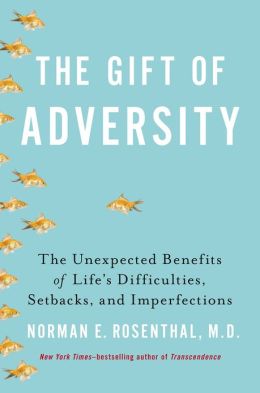
The Gift of AdversityIn his new book, “The Gift of Adversity: The Unexpected Benefits of Life’s Difficulties, Setbacks and Imperfections,” Dr. Rosenthal shares personal stories of adversity, as well as case studies and lessons he has learned from his heroes. Less scientific than his previous books, “The Gift of Adversity” is part memoir, part inspiration, and thoroughly enjoyable to read.

Adversity is an irreducible fact of life. Although we can and should learn from all experiences, both positive and negative, bestselling author Dr. Norman E. Rosenthal, believes that adversity is by far the best teacher most of us will ever encounter.

Whether the adversity one experiences is the result of poor decision-making, a desire to test one’s mettle, or plain bad luck, Rosenthal believes life’s most important lessons—from the value of family to the importance of occasionally cutting corners—can be best learned from it. Running counter to society’s current prevailing message that “excellence” must always be aspired to, and failure or mistakes of any sort are to be avoided at all costs, Rosenthal shows that engaging with our own failures and defeats is one of the only ways we are able to live authentic and meaningful lives, and that each different type of adversity carries its own challenges and has the potential to yield its own form of wisdom.

David Lynch Foundation executive director and author, Bob Roth, interviews Dr. Norman Rosenthal on how he went from writing “Transcendence” to “The Gift of Adversity.”

In this excerpt from the interview, Dr. Rosenthal shares with Bob Roth the gift he received from a very adverse situation early on in his life.

There are many reviews and interviews coming out on The Gift of Adversity and with Norman Rosenthal. Here are a few of them on Huffington Post and elsewhere: The Gift of Adversity: A Book Review by Lloyd I. Sederer, MD on HuffPost’s HealthyLiving. Norman Rosenthal on the Surprising Benefits of Life’s Biggest Challenges on Bookish. Norman Rosenthal ‏posted an article on HuffingtonPost: The Gift of Adversity. Norman wrote Your Mind, Your Body, How to live a happier, healthier life, for Psychology Today. Jeanne Ball ‏ posted 3 Ways Meditation Helps You Deal With Adversity also on HealthyLiving. The TM Blog posted an article by Dr. Norman Rosenthal: From Transcendence to The Gift of Adversity. And this excellent review by Jane E. Brody in the Personal Health section of the New York Times titled, Life’s Hard Lessons.

Norman Rosenthal was interviewed on Writers’ Voices: Looking for the Silver Lining with Dr. Norman E. Rosenthal and “The Gift of Adversity”. Dennis Raimondi on his show Speaking Freely asks Norman Rosenthal about his new book, The Gift of Adversity on KRUU-LP 100.1 FM (23:51).

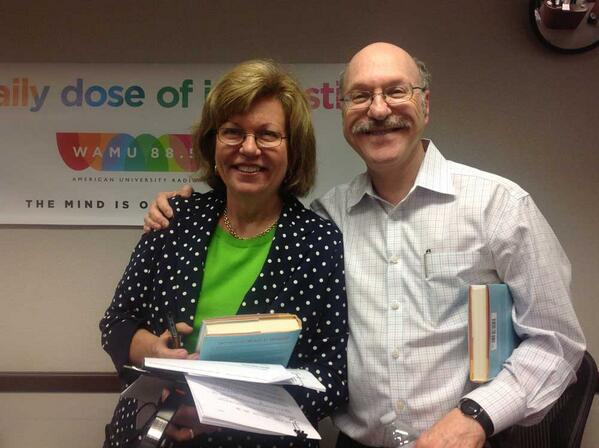
Susan Page and Norman Rosenthal at WAMU 88.5 FM

Guest host Susan Page interviewed Dr. Norman Rosenthal on The Diane Rehm Show

Norman Rosenthal was booked on the Diane Rehm Show to discuss his latest book, The Gift of Adversity, Wednesday, Sept 4, 11:00am to noon ET. Listen live on WAMU 88.5 FM or online.

As it turned out, Diane was on vacation, and guest host Susan Page, American Journalist and Washington Bureau Chief for USA Today, conducted the interview. Visit their post to read an excerpt of the book, Dr. Norman Rosenthal: “The Gift Of Adversity”, and listen to a replay of the interview on their audioplayer.

He was also interviewed by Dr. Sherrill Sellman on her show What Women Must Know – The Gift of Adversity with Norman E. Rosenthal – 09/26/13.

As I continue to read this wonderful book I find myself quietly reflecting on my own life’s experiences and lessons learned, triggered by reading Dr. Rosenthal’s and those of the people he discusses. Each chapter has a takeaway point, something to reflect on and learn from the transforming alchemy of adversity.

I am reminded of two quotes that beautifully encapsulate the message of the book: One by Buddha: “Every experience, no matter how bad it seems, holds within it a blessing of some kind. The goal is to find it.” And the other by Tom Bodett: “In school, you’re taught a lesson, then given a test. In life, you’re given a test that teaches you a lesson.” Dr. Rosenthal looks for and finds the blessings and lessons that adversity has brought him and the subjects in his book. It should be required reading for young adults to help them build empathy and understanding, preparing them for their journey through life.

Dr. Rosenthal also gives us hope when he says that the stressful experiences of adversity can also lead to growth. Quoting Friedrich Nietzsche’s famous dictum: “That which does not kill us makes us stronger,” he tells us of the dividend of PTG from the payment of PTS, the post-traumatic growth that may come from the post-traumatic stress we’ve endured. And he also gives us the tools to deal with the stress, mentioned in his earlier books, like “Winter Blues”, using light therapy to chase away the winter blues, and from “Transcendence”, his most recent bestseller, extolling the healing and transformational virtues of Transcendental Meditation. Discovering what Dr. Rosenthal says in his books is like finding a thoughtful friend who dispenses wise advice.

On December 20, 2013 he spoke in New York at TEDx: Norman Rosenthal on The Gift of Adversity in which he describes the three kinds of adversities, and mentions his three heroes.

Diane Vance reports on M.U.M.’s new David Lynch MA in Film for The Fairfield Ledger

August 14, 2013

M.U.M. adds master’s in film

By DIANE VANCE | Aug 14, 2013

The Maharishi University of Management debuts a new master’s degree this semester, The David Lynch MA in film.

The university has offered undergraduate filmmaking since 2007 in its Media and Communications Department and animation courses available in the Art Department for many years. It is now adding the next layer of learning.

“The graduate program is designed to take an idea to completion in a major project, with the possibility of publication,” said Gurdy Leete, co-chairman and associate professor of M.U.M.’s Media and Communications.

The course and fall semester begin Monday, and as with all M.U.M. courses, are taught in the block schedule of one course at a time.

“We’re expecting 20 to 25 students,” said Leete. “This program is about creating a supportive environment where artists connect with the audience. Students will have the opportunity to make deep connections in the film-making industry and gain recognition.”

The one-year, August to May course, includes curriculum in Advanced Narrative, Advanced Screenwriting, Acting for Film, The Frame, The Field, and from February to April an Advanced Video Media Project and then, The Media Market. Students who have not yet learned Transcendental Meditation will be taught the technique during the first few weeks of class.

About half the expected students have attended M.U.M. before.

“I’m excited about the group of students enrolled and how they will be producing great work,” said Stuart Tanner, co-chairman and assistant professor of M.U.M.’s Media and Communications. “The students will get a great deal out of working with one another and following the structure of the program. The goal is to produce a major piece of work.”

Tanner has had a glimpse of some of that work. The department offered a full scholarship for the master’s in film program based on applicants submitting a short film to compete for the scholarship.

Leete said the department received several dozens film submissions, which were all screened by the department faculty and program sponsors. The top six short films were then submitted to David Lynch, filmmaker, writer, artist, for viewing.

Tanner talked with Lynch by phone Tuesday for about 20 minutes.

“He really liked viewing the six shorts,” said Tanner. “Some of them were very accomplished pieces. He said when watching a film he watches for what stays with the viewer, what leaves a strong feeling. A short film doesn’t have a long time to develop that. He selected the film by Kinga Kulcsar as the scholarship winner because hers had that quality of making an impression, leaving the viewer with a feeling.

“I got to tell her last night that she won the scholarship.”

Tanner said the film will have a link at M.U.M.’s David Lynch MA in Film website filmschool.mum.edu in the near future.

Students in the master’s program also will visit with Lynch about filmmaking.

“We’re still working with David about his schedule,” said Leete. “Students will connect with him by Skype and at some point in the year the class will travel to Los Angeles for a couple of days and students will have a few question and answer sessions directly with him.”

Tanner said naming the program for David Lynch is a perfect fit for the program.

“He is the filmmaker’s film maker,” said Tanner. “He’s a fantastic person to be around. He is a role model and visionary with great integrity to his own vision. Putting his name on the program is perfect. It’s an idea that’s been bubbling away for a while and now it’s happening.”

Tanner said Lynch will be calling the classes throughout the year.

“And we will bring other insiders from the industry, we’ll bring other experts to the classes,” said Tanner.

Leete said the department is in contact with other industry people to connect with the program.

“Other luminaries in the field will connect by Skype, visit Fairfield and lead workshops or be available when we are in L.A.,” said Leete. “Schedules are always changing for people in film, but we expect quite an array of industry insiders from various fields to work with us.”

Not all students in the program will need to produce a major film. Many aspects of film will be studied and students may collaborate with one another to create a project. Students may screen write, direct, cast, design costumes and sets, or be special effects supervisor. Film also has an important business side and students may focus on setting up a media company.

“Students can create different products, it could be a film or a website of music videos,” said Leete. “The idea is to make a giant step forward and make it easier at the end of the program to work in the industry.”

“All we require is that film plays a significant part in the final project. The program is about having a year to go deeply into a creative experience that will transform both you and your career,” according to information on the program’s website.

Admission requirements include a bachelor’s degree in any subject, a resume, a portfolio of best work, including at least one film of any length created by the applicant, other creative work and special achievements. Applicants also have an interview with department faculty.

Published with permission from The Fairfield Ledger

Also reported in Indiewire: There’s a David Lynch MA in Film. Why is it in Iowa? Must students meditate? Burning questions, we’ve got answers: Besides Transcendental Meditation, What Does One Learn with the David Lynch MA in Film?

David Lynch speaks with Alan Colmes about his 16-country tour film Meditation Creativity Peace

August 8, 2013

banner-colmesLegendary Filmmaker David Lynch

Award-winning filmmaker David Lynch speaks with Alan Colmes about his 16-country tour, teaching millions of struggling people how to achieve peace through Transcendental Meditation. Click on the title to go to the website and listen to this dynamic and inspiring interview: [Video] Alan’s FASCINATING interview with legendary filmmaker David Lynch! and here: David Lynch On The Value Of Transcendental Meditation.

Watch the trailer for a new documentary film on David Lynch titled “Meditation Creativity Peace” | Russell Brand and David Lynch at LA Premiere of ‘Meditation, Creativity, Peace’ Documentary | Russell Brand and David Lynch at LA Premiere of ‘Meditation, Creativity, Peace’ Documentary | Enlightenment, The TM Magazine: Meditation Creativity Peace: How the David Lynch Foundation Brings Change from Within.

Visit the new website, Meditation Creativity Peace, for a list of upcoming and previous screenings: http://meditationcreativitypeace.com.

You may also enjoy this earlier article David Lynch wrote for Jane Magazine’s celeb issue: Celeb Spiritual Report: One significant day in my life by David Lynch for Jane Magazine (May 2004).

Celeb Spiritual Report: One significant day in my life by David Lynch for Jane Magazine (May 2004)

August 3, 2013

Here is an article I helped facilitate for David Lynch when we first started working with him, a year before the idea for the David Lynch Foundation was created under the dynamic leadership of Bob Roth, executive director for the Foundation. Up to this point David had kept his Transcendental Meditation practice private. When he made the decision to go public and help the TM movement he turned out to be a most unique and brilliant spokesman.

One event was a project to create world peace. We sent out our press release to the media and set up a NY press conference David would attend. Jauretsi Saizarbitoria, the entertainment editor for Jane magazine at the time, emailed back saying she was interested in David’s meditating and suggested he write an article for their special celeb issue on the topic: One significant day in my life. We mentioned it to him and he sent us an article of the day he learned that our human physiology, our body, was made of consciousness, which we forwarded to them. Knowing he was a painter, they also wanted to know what consciousness looked like to David. He sent a jpeg of an image he had created and they included it, giving him a whole page and titling it a Celeb Spiritual Report, with that announcement on the bottom right side of the magazine cover. It was published in their May, 2004 celeb issue. Jane was a popular woman’s magazine, published from 1997-2007. David posted the report on his website with other earlier David Lynch articles and interviews.

Here is David’s love of Maharishi’s Vedic knowledge explained in such a simple conversational tone that’s truly David Lynch. He’s actually a brilliant writer and speaker! They put the text on the bottom right of this photo. Here it is with the text underneath.

Jane – May, 2004
One significant day in my life

By David Lynch

This is a picture that director David Lynch (above) painted to show what consciousness looks like.

This is a picture that director David Lynch (above) painted to show what consciousness looks like.

A significant event occurred in my life the day I learned that our human physiology, our body, is made of consciousness.

Consciousness???

“What???” I asked out loud in wonder.

I learned that our human physiology is so magnificent and complex, and so exquisite in its design and makeup, as to be wondrous beyond imagination. We are spun out of unbounded, infinite, eternal consciousness.

I learned that underlying all matter is a vast, unbounded, infinite and eternal field of consciousness called the Unified Field. I found out that modern science started taking this field seriously about 25 years ago and that all matter is unified at this level in a state of perfect symmetry, or balance. The entire universe emerges from this field in a process called “spontaneous sequential symmetry breaking.”

Are you still with me?

I also learned that there is another science called Vedic Science. This Vedic Science is ancient, and it has always talked of the Unified Field.

Interesting!

Veda, I learned, means “total knowledge.” The home of total knowledge is the Unified Field. It is also the home of all the laws of nature. The branches of Veda, 40 in total, make up the language of the Unified Field, the impulses of this eternal field.

I realized this Unified Field is quite an interesting place. It is not manifest and is full, meaning it is no thing, yet all things in potential. It manifests and permeates all things: the whole universe, everything, while still remaining full and not manifest.

Amazing!

Is this mind-boggling or what?

Now comes the hippest part. I have learned that any human being can “experience” the Unified Field.

Really?

Or: So what?

Why in the world would we care to experience the Unified Field?

First, another question.

Have you ever heard that most of us human beings use only 5 percent of our brain, our mind? Have you ever wondered what in the heck the other 95 percent is all about?

This is the beautiful part coming up.

The “experience” of the Unified Field actually unfolds “enlightenment”—higher states of consciousness culminating in Unity Consciousness, the highest state of consciousness. These higher states use that 95 percent of the brain. That is what the 95 percent is there for—to give us permanent, all-time enlightenment.

Now, what is enlightenment? If you were a lightbulb, let’s say, your “glow” might light up your whole house and surrounding yard. In enlightenment, your “glow” would be unbounded, infinite and eternal. That would be some glow!

Enlightenment is fulfillment. Supreme fulfillment. Unbounded, infinite, eternal bliss, consciousness, intelligence, creativity, harmony, dynamic peace.

Enlightenment, I have learned, is our “full potential.” It is the birthright of every human being to enjoy enlightenment.

Is this good news? I think it is such good news.

In Vedic Science, the Unified Field is called “Atma.” Translated, that is “Self”—the Self of us all.

The Unified Field is not something foreign, or even something far away. It is right within each of us at the base of our mind, the source of thought. A great sage from the Himalayas, Maharishi Mahesh Yogi, brought a beautiful gift to our world in the form of Transcendental Meditation. Transcendental Meditation is an easy and effortless, yet supremely profound, technique that allows any human to dive within and experience that unbounded ocean of pure bliss, pure consciousness. the Unified Field, our Self.

It may be interesting for you to know that millions of people are practicing Transcendental Meditation all around the world. People from all religions, and all walks of life. Over 600 studies have been done in universities and research institutes validating the profound benefits of Maharishi’s Transcendental Meditation Program.

Having this kind of knowledge and technologies of consciousness available to us in this age is, in my mind, a significant event. Yet the “experience” of that Unified Field is the most significant event, because it unfolds what we truly are—totality.

David’s movies include Eraserhead, Dune, Blue Velvet and Mulholland Drive. He is looking forward to Creating World Peace Day, to be held mid-September at the Maharishi University of Management in Fairfield, Iowa (www.mum.edu).

Copyright 2004 Fairchild Publications, Inc.

(more…)

Inspiring excerpts – David Lynch: Catching the Big Fish – Meditation, Consciousness, and Creativity

July 28, 2013

Inspiring excerpts from a book by David Lynch: Catching the Big Fish – Meditation, Consciousness, and Creativity

Ideas are like fish. If you want to catch little fish, you can stay in the shallow water. But if you want to catch the big fish, you’ve got to go deeper. Down deep, the fish are more powerful and more pure. They’re huge and abstract. And they’re beautiful. Everything, anything that is a thing, comes up from the deepest level. Modern physics calls that level the Unified Field. The more your consciousness – your awareness – is expanded, the deeper you go toward this source, and the bigger fish you can catch.

Catching the Big Fish: Meditation, Consciousness, and Creativity
–David Lynch

David Lynch (b. 1946) – director, visual artist, musician and, most significantly, long-term Transcendental Meditation practitioner – is best known for his surrealist films, having developed his own unique cinematic style, characterized by dream imagery and meticulous sound design. In the course of his career, he has received numerous nominations and awards, including the illustrious Palme d’Or at the Cannes Film Festival and a Golden Lion award for lifetime achievement at the Venice Film Festival.

His most popular and critically-acclaimed film projects include Eraserhead, The Elephant Man, Wild at Heart, Twin Peaks, Blue Velvet, Mulholland Drive and INLAND EMPIRE. He has also embraced the internet as a medium, producing several web-based shows, such as the animation, Dumbland, and the surrealist sitcom, Rabbits.

He has also produced a brilliant literary offering, Catching the Big Fish: Meditation, Consciousness, and Creativity. Written in short chapters on themes as diverse as painting, filmmaking, meditation, consciousness, the texture of a dead body and other such profound matters, it is an absolute treat for any aspiring artist who is also keen to dive deep for the so-called bigger fish and is looking for a truly authentic and honest interpretation of life.

Desire
Desire for an idea is like bait. When you’re fishing, you have to have patience. You bait your hook, and you wait. The desire is the bait that pulls those fish in – those ideas.

The beautiful thing is that when you catch one fish that you love, even if it’s a little fish – a fragment of an idea – that fish will draw in another fish, and they’ll hook onto it. Then you’re on your way. Soon there are more and more and more fragments, and the whole thing emerges. But it starts with desire.

Consciousness
Through meditation one realizes the unbounded. That which is unbounded is happy. There is no happiness in the small.
Upanishads

Little fish swim on the surface, but the big ones swim down below. If you can expand the container you’re fishing in – your consciousness – you can catch bigger fish.

Here’s how it works: Inside every human being is an ocean of pure, vibrant consciousness. When you ‘transcend’ in Transcendental Meditation, you dive down into that ocean of pure consciousness. You splash into it. And it’s bliss. You can vibrate with this bliss. Experiencing pure consciousness enlivens it, expands it. It starts to unfold and grow.

Intuition
Know That by knowing which everything is known.
Upanishads

Life is filled with abstractions, and the only way we make heads or tails of it is through intuition. Intuition is seeing the solution – seeing it, knowing it. It’s emotion and intellect going together. That’s essential for the filmmaker.

How do you get something to feel right? Everybody’s got the same tools: the camera and the tapes and the world and the actors. But in putting those parts together, there are differences. That’s where intuition enters.

Personally, I think intuition can be sharpened and expanded through meditation, diving into the Self. There’s an ocean of consciousness inside each of us, and it’s an ocean of solutions. When you dive into that ocean, that consciousness, you enliven it.

You don’t dive for specific solutions; you dive to enlighten that ocean of consciousness. Then your intuition grows and you have a way of solving those problems – knowing when it’s not right and knowing a way to make it feel correct for you. That capacity grows and things go much more smoothly.

Identity
The thing about meditation is: You become more and more you.

Sound
Sometimes you hear a piece of music, and it marries to a scene in the script. When I’m shooting, I will often play that piece of music in the headphones whilst listening to the dialogue. Hearing the music is just a verification that things are going the right way – for instance, the right pace or lighting. It’s just another tool to ensure that you’re following that original idea and being true to it.

Ask The Idea
The form which embodies that wish appeared in consciousnesses – that is to be held within consciousness.
Upanishads

The idea is the whole thing. If you stay true to the idea, it tells you everything you need to know, really. You just keep working to make it look like that idea looked, feel like it felt, sound like it sounded, and be the way it was. And it’s weird, because when you veer off, you sort of know it. You know when you’re doing something that is not correct because it feels incorrect. It says, ‘No, no; this isn’t like the idea said it.’ And when you’re getting into it the correct way, it feels correct. It’s an intuition: You feel-think your way through.

You start one place, and as you go, it gets more and more finely tuned. But all along it’s the idea talking. At some point, it feels correct to you. And you hope that it feels somewhat correct to others.

Suffering
It’s good for the artist to understand conflict and stress. Those things can give you ideas. But I guarantee you, if you have enough stress, you won’t be able to create. And if you have enough conflict, it will get in the way of your creativity. You can understand conflict, but you don’t have to live in it.

In stories, in the worlds that we can go into, there’s suffering, confusion, darkness, tension and anger. There are murders; there’s all kinds of stuff. But the filmmaker doesn’t have to be suffering to show suffering. You can show it, show the human condition, show conflicts and contrasts, but you don’t have to go through that yourself. You are the orchestrator of it, but you’re not in it. Let your characters do the suffering.

It’s common sense: The more the artist is suffering, the less creative he is going to be. It’s less likely that he is going to enjoy his work and less likely that he will be able to do really good work.

Light of the Self
He who sees everything as nothing but the Self,
and the Self in everything he sees,
such a seer withdraws from nothing.
For the enlightened, all that exists is nothing but the Self,
so how could any suffering or delusion continue
for those who know Oneness?
Upanishads

Negativity is like darkness. So what is darkness? You look at darkness, and you see that it’s nothing: It’s the absence of something. You turn on the light, and darkness goes.

But sunlight, for instance, doesn’t get rid of negativity. It gets rid of darkness but not negativity. So what light can you turn on that removes negativity the way sunlight removes darkness? It’s the light of pure consciousness, the Self – the light of unity.

Don’t fight the darkness. Don’t even worry about the darkness. Turn on the light and the darkness goes. Turn up that light of pure consciousness: Negativity goes.

The Box and the Key
I don’t have a clue what those are.

Fire
Sitting in front of a fire is mesmerizing. It’s magical. I feel the same way about electricity. And smoke. And flickering lights.

Advice 
The Truth upholds the fragrant Earth and makes the living
water wet. Truth makes fire burn and the air move,
Makes the sun shine and all life grow. A hidden truth
supports everything. Find it and win.
Ramayana

Stay true to yourself. Let your voice ring out, and don’t let anybody fiddle with it. Never turn down a good idea, but never take a bad idea. And meditate. It’s very important to experience the Self, that pure consciousness. It’s really helped me. I think it would help any filmmaker. So start diving within, enlivening that bliss consciousness. Grow in happiness and intuition. Experience the joy of doing. And you’ll glow in this peaceful way. Your friends will be very, very happy with you. Everyone will want to sit next to you. And people will give you money!

Thanks to StillnessSpeaks.com for compiling this list.

See Fishing For Fallen Light: A Tanka inspired by David Lynch and Pablo Neruda with links to videos of David talking about these ideas.

Documentary film on David Lynch titled “Meditation Creativity Peace”

Since the book, David Lynch made a 16-country tour around the world when he spoke to government leaders, film students, and the press. It was made into a documentary film and premiered in NY. Watch the trailer for a new documentary film on David Lynch titled “Meditation Creativity Peace”.

This was later followed by a premier in Los Angeles: Russell Brand and David Lynch at LA Premiere of ‘Meditation, Creativity, Peace’ Documentary. Also see David Lynch, Russell Brand, Bob Roth Q&A after screening Meditation, Creativity, Peace documentary at Hammer Museum. Links to videos and articles are available at the bottom of each post.

The film continues to be shown in major cities around the world. Check your local TM center and the David Lynch Foundation for more information.

The documentary film was made available online, March 3, 2016. You can watch it here on The Uncarved Blog.

Les Crane interviews Maharishi Mahesh Yogi

July 6, 2013

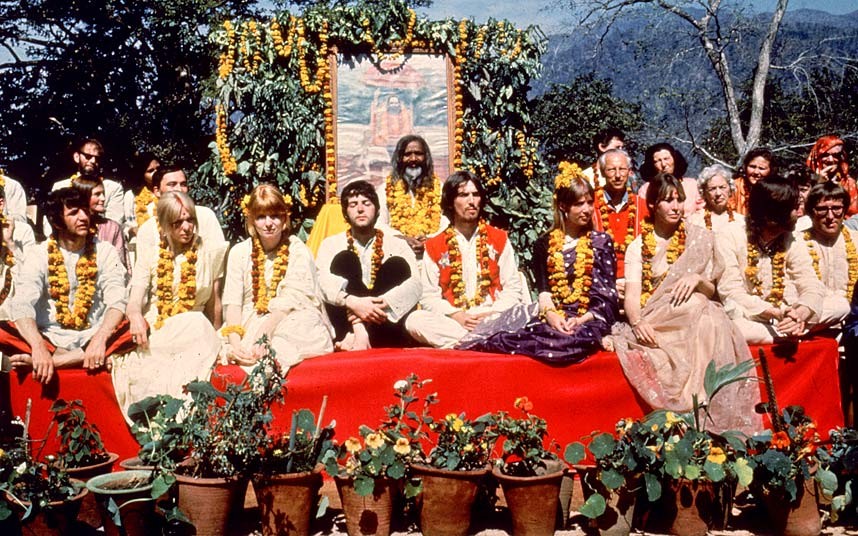
This is a delightful find—early vintage Maharishi—interviewed by a popular LA television talk show host. Les Crane interviewed Maharishi Mahesh Yogi in September 1967 about a month after The Beatles had met and learned Transcendental Meditation from him. They go over the basics of what Transcendental Meditation is and is not. Maharishi is delightful, laughing and quipping throughout the interview. The one-hour show, minus commercials, is 49:30 minutes long.

67_beatles_maharishi-mahesh_yogi_002-580x389

Les asks Maharishi when he first heard of the Beatles and when they first met him. He then quotes the Beatles from the current (Sept 22, 1967) Time magazine cover story, THE BEATLES / Their New Incarnation, where they favorably describe Maharishi and how TM fulfilled their search for a genuine spiritual experience.

Les asked some good questions. He was an intelligent man. Halfway into the program Les opens up questions from the audience. He also introduces Efrem Zimbalist Jr. and mentions his association with Maharishi. Les then introduces Jerry Jarvis, national director of SIMS, and asks him to explain the Five Year Plan. Maharishi mentions Charles Lutes and his plan to build an Academy of Meditation in the US. Les asks what the world would look like if many people practiced Transcendental Meditation, and Maharishi gives him a very practical description.

At the end of the program Les apologetically prefaces what he’s about to say when he announces who his guests will be on the next show. “We have been talking about Transcendental Meditation and spiritual enrichment and fulfillment tonight. Tomorrow night we’re going to have a group of people on the program who believe that the way to find inner peace and happiness is an entirely different way. We’re gonna have a few representatives of the Sexual Freedom League on the program.” [laughter, a few more comments, then adds] “I had to say that because that’s what we do here, we look at everything.”

Maharishi: “To search is good.” Les, smiling: “To search is good.” Maharishi adds: “And to find fulfillment is really great.” [loud applause] Les: “Maharishi, thank you very much.” Maharishi: “Good luck to the whole nation through you.” Les: “Good bye. Bless you all.”

See this recent post of The Telegraph reporting on a recent TM study improving graduation rates saying the Beatles may have been on to something after all during their fabled journey to India.

Also see Maharishi interviewed on the BBC in 1967.

The BBC World Service program Witness, will air an interview with Theresa Olson, Monday March 3, 2014, 8:50 GMT. In the spring of 1959, Indian guru Maharishi Mahesh Yogi set off around the world to spread the teachings of Transcendental Meditation. Witness speaks to Theresa Olson, who was ten years old when the Maharishi came to stay in her parents’ house. A photo is shown of Maharishi taken from BBC1, Sunday July 5, 1964, to promote the upcoming interview on The Maharishi’s World Tour.

Another program worth watching from those early days is the 1968 CBC documentary of Maharishi at Lake Louise.

The most recent biography on Maharishi aired on A&E’s History Channel, 40 years after the BBC and Les Crane interviews.

A new BBC report, on the 50th anniversary of that visit to Bangor to learn more about Transcendental Meditation from Maharishi was published today, August 25, 2017. The Beatles: Historians say 1967 Bangor visit was a turning point. The report  includes interviews with people who were there at that time.

Maharishi explains the reason for TM’s worldwide popularity

Maharishi always had an interesting take on world events. In this recently posted 1968 video, he discusses where the worldwide popularity for Transcendental Meditation started. During his visit to England in the summer of 1967, he describes the countrywide concern that was being expressed over the previous 8 months about the deplorable drug problem among the youth. Thanks to Patti Harrison, The Beatles heard Maharishi was going to speak at the London Hilton and got front row seats. They wanted to meet him afterwards and it was arranged. Maharishi inspired them to want to do something good for the youth and they agreed. They wanted to learn how to meditate from Maharishi and he invited them to join him on the long train ride to Wales where he was going to lead a 3-day meditation course. Some reporters overheard their plans. When The Beatles met Maharishi at the train station, they were surrounded by over 50 press and hundreds of fans. The video contains footage from that time as well as photos taken at the lecture and on the train. There is also actual footage taken privately of their discussion, but it has yet to be made public.

Maharishi explains it was not the Beatles that created the worldwide publicity about TM, but the English press who reported on their wanting to learn to meditate, which, they felt would inspire the British youth to give up drugs in favor of meditation. An example of one of the English headlines was the report from the Archbishop of Canterbury congratulating The Beatles for starting Transcendental Meditation. Then the world press picked up this Beatles story and it spread globally. Maharishi emphasized it was not The Beatles, but the tense situation in the country at the time that brought about the news headlines. He said they wanted “to change the psychology of the children, and they succeeded, greatly. So this phase was behind the worldwide publicity.”

Save

Additions: #TranscendentalMeditation founder Maharishi Mahesh Yogi interviewed on Finnish TV in 1973. And Maharishi on the nature of a settled, silent mind in the November 1993 Science of Mind interview. And Rememberances of #TranscendentalMeditation and #MaharishiU founder Maharishi Mahesh Yogi.

Pages 12-13 of the September 2020 issue of Transcendental Meditation News in the UK under The Maharishi Interviews features a transcript of part 1 of Les Crane’s interview with Maharishi in Los Angeles, Autumn 1967. Part 2 continues in their next issue. Transcendental News, Vol 24. No 2, September 2020.

Who was Bungalow Bill from the Beatles White Album and what happened to him? He tells us! This post now includes mention of the new film, Meeting the Beatles in India, by Paul Saltzman. In the Q&A that followed, Rikki Cooke III, aka Bungalow Bill, explained why he thought the remaining Beatles left the ashram abruptly. It made a lot more sense than the usual rumor mentioned in the article. I posted a comment after the Variety article of what he said about it, and included related material.

Grammy Award winner Omar Akram says TM brought him closer to his source of creativity

June 26, 2013

Enjoy this great interview Christopher Caplan conducted with Omar Akram, published June 25, 2013 at 12:15 pm in RYOT Reports. I was pleasantly surprised to learn how Transcendental Meditation freed the creativity of this Grammy award-winning composer and recording artist, and the respect he has for David Lynch and the David Lynch Foundation.

Q&A: Omar Akram, first Afghan American to win a Grammy, talks Transcendental Meditation

Omar Akram, 2013 New Age Music Grammy Award Winner

I recently sat down with Omar Akram, the first Afghan American to win a Grammy award to learn a bit more about his creative process. He has been referred to as a cultural diplomat by many, and the musical equivalent of Khaled Hosseini, author of The Kite Runner, in that he is (gradually) mending cultural differences between war-torn nations through art. His recent article on The Huffington Post bespeaks of a well traveled life in which he has mingled with Cuban dictators and contributed to peace in the Middle East. What’s particularly interesting about Omar is the way he uses Transcendental Meditation in his creative process, as well as his support and admiration of the David Lynch Foundation.

Q: When and how did you first discover Transcendental Meditation?

I began using TM about 5 years ago. I was going through some creative blocks, so to speak, and a friend of mine suggested it. I’d known about it for years, but I had never taken the time to try it. I started to meditate slowly, and after doing it a few times, I got hooked.

Q: How has TM helped your creative process over the years?

I think it definitely brings you closer to the source of creativity. I feel this way almost every time. I remember David Lynch was talking about it. He said it was like “searching for the big fish,” or in other words, reaching deep down. I can reach deep down inside of myself and get to the big fish — that big creative idea. That’s what it’s all about, the big creative idea, and TM helps me find this.

Q: Have you tried other forms of meditation?

Yes, I’ve tried straight meditation, on and off for many years. But five years ago I became a lot more serious about it.

Q: How do you feel about David Lynch’s recent advocacy of TM?

I think what he’s doing is fantastic because he is really trying to get it out to school kids and to people that have never been exposed to it before. I think that once people try it, I mean really try it, they realize how beneficial it is.

Q: How do you think TM can help children and students?

One thing that I know is that kids sometimes have a hard time focusing on anything. Especially nowadays because they are being bombarded with so much media. I think it’s really helpful for kids once they give it a chance. They learn the value of meditation and focus. It will be hard in the beginning to understand what they’re doing, but with proper guidance they’ll learn. I think that not only will it help them become more creative, but they will improve in all aspects of schooling and self-esteem.

Q: Do you use TM when you are in the recording studio?

I try to do it a couple of times a day, once in the morning, and once in the evening. It has been really helpful both with creativity and dealing with the stress and deadlines of my upcoming album, “Daytime Dreamer.” It kind of sets the course of my whole day. Once I’m in the studio, I like to take a few minutes, but it’s hard to do it during the day, and that’s my routine. When I do it the morning it helps me focus for the whole day, and shift everything so I have a clearer sense of what I need to do. In the evening I can absorb everything that I’ve done, and refresh my mind all over again.

Q: What do you see for the future of TM and its continuing acceptance in the mainstream?

I think the more people are exposed to TM the more they’re going to realize the benefits of it. A lot of people are not aware of TM, and that’s what David is doing, he’s going around and introducing it to a lot of people that otherwise would never be exposed to it. The more people are exposed to it, the more practitioners there will be, and I think it’s going to be huge. Guys like David Lynch are pioneers in that. I have nothing but respect for him, especially with what he’s doing in schools. I think it’ll make a huge difference.

posted by Omar Akram. Check out his blog: www.omarmusic.com.

RYOT NOTE: Transcendental Meditation not only helps to reduce stress, it also helps with clearing the mind and allowing people to be more creative. The David Lynch Foundation provides millions of dollars of free services every year, implementing these scientifically proven stress-reducing modalities for at-risk populations and communities. See other related articles on David Lynch from RYOT posted at the bottom of this article, and click the gray box to learn more, donate and Become the News!

You can read more about Omar Akram’s background and musical influences in this PRWeb press release: Grammy Award Winning Artist Omar Akram Becomes Latest Entertainment Client to Join YM & Associates PR Marketing Firm at Beverly Hills.

UPDATE

In an April 29, 2019 interview in Thrive Global, Omar was asked:

Which tips would you recommend to your colleagues in your industry to help them to thrive and not “burn out”?

What helps me is meditation. I would highly recommend it to my colleagues. I’ve been doing Transcendental Meditation for many years and it has had a big difference in my life.

Great article on TM helping students boost grades shows the Beatles were way ahead of their time

June 22, 2013

Here is that great article written by , Science Correspondent for The Telegraph, published June 11, 2013, 9:00PM BST: Transcendental Meditation may boost student grades. He says, It may have seemed simply a phase in pop history, but it seems the Beatles may have been on to something after all during their fabled journey to India.

BEATLES_2587635kIt seems the Beatles may have been on to something after all during their fabled journey to India.  Photo: GETTY IMAGES

A form of meditation made popular by John Lennon and his band mates during the “flower power” era has been found to improve students’ grades.

A study of school pupils found that performing two 20-minute sessions of Transcendental Meditation each day improves academic achievement.

The practice involves sitting still with eyes closed while chanting a mantra – also sometimes derided as “oming”.

It became synonymous with hippy culture in the 1960s after The Beatles embraced it following a visit to India where they were taught the technique by the late Maharishi Mahesh Yogi.

Now a growing body of research is suggesting it can have a positive effect on people’s lives.

Recent studies have shown that it can be used to treat high blood pressure and help people overcome psychological problems.

The latest research found that US school pupils who performed the meditation technique had higher graduation rates than those who did not.

The effect was even greater among those who had the lowest academic grades, the research conducted by the University of Connecticut and Maharishi University of Management, Iowa, found.

Researchers found that Transcendental Meditation increased the number of students graduating by 15 per cent while among those with the lowest academic grades, a further 25 per cent graduated compared to those not meditating.

Professor Robert Colbert, from the Neag School of Education at the University of Connecticut, said: “Transcendental Meditation appears to hold tremendous promise for enriching the lives of students.”

He added that the meditation technique was a viable method for turning around “poor student academic performance and low graduation rates”.

Sanford Nidich, a professor of education at Maharishi University of Management who conducted the research, added: “These results are the first to show that the Transcendental Meditation program can have a positive impact on student graduation rates.

“The largest effect was found in the most academically challenged students.

“Recently published research on increased academic achievement and reduced psychological stress in urban school students may provide possible mechanisms for the higher graduation rates found in this study.”

It is estimated that around 6 million people now practice Transcendental Meditation around the world.

The technique aims to concentrate the mind inwards by uttering the mantra and is intended to empty the mind of thoughts and feelings.

Proponents of the technique claim it can aid concentration and help to rid them of negative emotions.

The Beatles’ time with Maharishi Mahesh Yogi, at his teaching centre in the foothills of the Himalayas in 1968, produced some of the most famous images of the Fab Four, dressed in white and draped in flower garlands.

It was also one of their most productive periods musically, with Lennon declaring that between them they wrote around 30 new songs during their visit to Rishikesh.

The tracks, which ended up on The Beatles, also known as the White Album, and Abbey Road, include Back in the USSR, Blackbird, Revolution and Mean Mr Mustard.

In an interview conducted in 2009, Paul McCartney and drummer Ringo Starr spoke candidly about how the meditation technique helped them.

Starr said: “Since then, sometimes a lot, sometimes a little, I have meditated. It is a gift he [the Maharishi] gave me.”

McCartney added: “It wasn’t all about meditation, it’s just you were focused – but yeah, there were very blissful moments.

“It is one of the few things anyone has ever given to me that means so much to me. For us, it came at a time when we were looking for something to stabilise us at the end of the crazy sixties.”

McCartney has also in the past called for Transcendental Meditation to be used in schools.

He said: “I believe that in the future meditation could be as commonplace in schools and society as eco-awareness is now. It interests me that an ancient cure may be the solution to a modern problem.”

The new research, which involved 235 students in their senior year at an urban school on the US east coast, was funded by the David Lynch Foundation, which has been campaigning to have meditation incorporated into the school day.

They claim that where meditation has been used in schools, it has helped to reduce stress and anxiety in pupils while also lowering suspension rates.

The foundation was set up two years ago by film director David Lynch after he used meditation to overcome his own anger issues.

Describing the difference it has made to his life, he said: “When I started meditating I had a real anger in me, and I would take this out on my first wife.

“Two weeks after I started meditating, this anger lifted.”

See EurekAlert! press release for the study: Transcendental Meditation positively impacts student graduation rates, new research shows.

See this related post on some of the news coverage: New study shows TM significantly improved school graduation rates, world press reports.

This article was later highlighted on the University of Connecticut Neag School of Education website on their Spotlight page reporting the latest news: Transcendental Meditation May Boost Student Grades.

See The former Beatles Paul McCartney and Ringo Starr reunion for David Lynch’s benefit concert airs on New York’s THIRTEEN, Sunday, April 29.