Posts Tagged ‘David Lynch’

Inspiring excerpts – David Lynch: Catching the Big Fish – Meditation, Consciousness, and Creativity

July 28, 2013

Inspiring excerpts from a book by David Lynch: Catching the Big Fish – Meditation, Consciousness, and Creativity

Ideas are like fish. If you want to catch little fish, you can stay in the shallow water. But if you want to catch the big fish, you’ve got to go deeper. Down deep, the fish are more powerful and more pure. They’re huge and abstract. And they’re beautiful. Everything, anything that is a thing, comes up from the deepest level. Modern physics calls that level the Unified Field. The more your consciousness – your awareness – is expanded, the deeper you go toward this source, and the bigger fish you can catch.

Catching the Big Fish: Meditation, Consciousness, and Creativity
–David Lynch

David Lynch (b. 1946) – director, visual artist, musician and, most significantly, long-term Transcendental Meditation practitioner – is best known for his surrealist films, having developed his own unique cinematic style, characterized by dream imagery and meticulous sound design. In the course of his career, he has received numerous nominations and awards, including the illustrious Palme d’Or at the Cannes Film Festival and a Golden Lion award for lifetime achievement at the Venice Film Festival.

His most popular and critically-acclaimed film projects include Eraserhead, The Elephant Man, Wild at Heart, Twin Peaks, Blue Velvet, Mulholland Drive and INLAND EMPIRE. He has also embraced the internet as a medium, producing several web-based shows, such as the animation, Dumbland, and the surrealist sitcom, Rabbits.

He has also produced a brilliant literary offering, Catching the Big Fish: Meditation, Consciousness, and Creativity. Written in short chapters on themes as diverse as painting, filmmaking, meditation, consciousness, the texture of a dead body and other such profound matters, it is an absolute treat for any aspiring artist who is also keen to dive deep for the so-called bigger fish and is looking for a truly authentic and honest interpretation of life.

Desire
Desire for an idea is like bait. When you’re fishing, you have to have patience. You bait your hook, and you wait. The desire is the bait that pulls those fish in – those ideas.

The beautiful thing is that when you catch one fish that you love, even if it’s a little fish – a fragment of an idea – that fish will draw in another fish, and they’ll hook onto it. Then you’re on your way. Soon there are more and more and more fragments, and the whole thing emerges. But it starts with desire.

Consciousness
Through meditation one realizes the unbounded. That which is unbounded is happy. There is no happiness in the small.
Upanishads

Little fish swim on the surface, but the big ones swim down below. If you can expand the container you’re fishing in – your consciousness – you can catch bigger fish.

Here’s how it works: Inside every human being is an ocean of pure, vibrant consciousness. When you ‘transcend’ in Transcendental Meditation, you dive down into that ocean of pure consciousness. You splash into it. And it’s bliss. You can vibrate with this bliss. Experiencing pure consciousness enlivens it, expands it. It starts to unfold and grow.

Intuition
Know That by knowing which everything is known.
Upanishads

Life is filled with abstractions, and the only way we make heads or tails of it is through intuition. Intuition is seeing the solution – seeing it, knowing it. It’s emotion and intellect going together. That’s essential for the filmmaker.

How do you get something to feel right? Everybody’s got the same tools: the camera and the tapes and the world and the actors. But in putting those parts together, there are differences. That’s where intuition enters.

Personally, I think intuition can be sharpened and expanded through meditation, diving into the Self. There’s an ocean of consciousness inside each of us, and it’s an ocean of solutions. When you dive into that ocean, that consciousness, you enliven it.

You don’t dive for specific solutions; you dive to enlighten that ocean of consciousness. Then your intuition grows and you have a way of solving those problems – knowing when it’s not right and knowing a way to make it feel correct for you. That capacity grows and things go much more smoothly.

Identity
The thing about meditation is: You become more and more you.

Sound
Sometimes you hear a piece of music, and it marries to a scene in the script. When I’m shooting, I will often play that piece of music in the headphones whilst listening to the dialogue. Hearing the music is just a verification that things are going the right way – for instance, the right pace or lighting. It’s just another tool to ensure that you’re following that original idea and being true to it.

Ask The Idea
The form which embodies that wish appeared in consciousnesses – that is to be held within consciousness.
Upanishads

The idea is the whole thing. If you stay true to the idea, it tells you everything you need to know, really. You just keep working to make it look like that idea looked, feel like it felt, sound like it sounded, and be the way it was. And it’s weird, because when you veer off, you sort of know it. You know when you’re doing something that is not correct because it feels incorrect. It says, ‘No, no; this isn’t like the idea said it.’ And when you’re getting into it the correct way, it feels correct. It’s an intuition: You feel-think your way through.

You start one place, and as you go, it gets more and more finely tuned. But all along it’s the idea talking. At some point, it feels correct to you. And you hope that it feels somewhat correct to others.

Suffering
It’s good for the artist to understand conflict and stress. Those things can give you ideas. But I guarantee you, if you have enough stress, you won’t be able to create. And if you have enough conflict, it will get in the way of your creativity. You can understand conflict, but you don’t have to live in it.

In stories, in the worlds that we can go into, there’s suffering, confusion, darkness, tension and anger. There are murders; there’s all kinds of stuff. But the filmmaker doesn’t have to be suffering to show suffering. You can show it, show the human condition, show conflicts and contrasts, but you don’t have to go through that yourself. You are the orchestrator of it, but you’re not in it. Let your characters do the suffering.

It’s common sense: The more the artist is suffering, the less creative he is going to be. It’s less likely that he is going to enjoy his work and less likely that he will be able to do really good work.

Light of the Self
He who sees everything as nothing but the Self,
and the Self in everything he sees,
such a seer withdraws from nothing.
For the enlightened, all that exists is nothing but the Self,
so how could any suffering or delusion continue
for those who know Oneness?
Upanishads

Negativity is like darkness. So what is darkness? You look at darkness, and you see that it’s nothing: It’s the absence of something. You turn on the light, and darkness goes.

But sunlight, for instance, doesn’t get rid of negativity. It gets rid of darkness but not negativity. So what light can you turn on that removes negativity the way sunlight removes darkness? It’s the light of pure consciousness, the Self – the light of unity.

Don’t fight the darkness. Don’t even worry about the darkness. Turn on the light and the darkness goes. Turn up that light of pure consciousness: Negativity goes.

The Box and the Key
I don’t have a clue what those are.

Fire
Sitting in front of a fire is mesmerizing. It’s magical. I feel the same way about electricity. And smoke. And flickering lights.

Advice 
The Truth upholds the fragrant Earth and makes the living
water wet. Truth makes fire burn and the air move,
Makes the sun shine and all life grow. A hidden truth
supports everything. Find it and win.
Ramayana

Stay true to yourself. Let your voice ring out, and don’t let anybody fiddle with it. Never turn down a good idea, but never take a bad idea. And meditate. It’s very important to experience the Self, that pure consciousness. It’s really helped me. I think it would help any filmmaker. So start diving within, enlivening that bliss consciousness. Grow in happiness and intuition. Experience the joy of doing. And you’ll glow in this peaceful way. Your friends will be very, very happy with you. Everyone will want to sit next to you. And people will give you money!

Thanks to StillnessSpeaks.com for compiling this list.

See Fishing For Fallen Light: A Tanka inspired by David Lynch and Pablo Neruda with links to videos of David talking about these ideas.

Documentary film on David Lynch titled “Meditation Creativity Peace”

Since the book, David Lynch made a 16-country tour around the world when he spoke to government leaders, film students, and the press. It was made into a documentary film and premiered in NY. Watch the trailer for a new documentary film on David Lynch titled “Meditation Creativity Peace”.

This was later followed by a premier in Los Angeles: Russell Brand and David Lynch at LA Premiere of ‘Meditation, Creativity, Peace’ Documentary. Also see David Lynch, Russell Brand, Bob Roth Q&A after screening Meditation, Creativity, Peace documentary at Hammer Museum. Links to videos and articles are available at the bottom of each post.

The film continues to be shown in major cities around the world. Check your local TM center and the David Lynch Foundation for more information.

The documentary film was made available online, March 3, 2016. You can watch it here on The Uncarved Blog.

Fishing For Fallen Light: A Tanka inspired by David Lynch and Pablo Neruda

July 28, 2013

I thought of David Lynch and his book, Catching the Big Fish, when I read a particular poem by Pablo Neruda in The Sea and the Bells. Both deal with the search for illumination; finding and clarifying a creative idea.

In this video David answers a question about his creative process, describing where ideas come from and how they coalesce into a finished product: David Lynch: ‘Ideas Are Like Fish.’ He says ideas are like fish and the deeper you go the more powerful, abstract and beautiful they are. Your desire for an idea is like a bait on a hook. When you catch one, others get attracted to it. Lynch sometimes gets a part of an idea and others come along. He writes them down. He advises that you have to stay true to the initial idea as it begins to form, even in ways you may not have anticipated, until it all comes together and you get it right. He describes how a script for a film can come about in this way.

The last line-stanza in Neruda’s poem uses the same idea, described here as sitting on the rim of a well of darkness fishing for fallen light.

Talk about transcending and patiently waiting to catch the big fish, an idea that will illuminate the mind and inform a work of art!

Here is that poem by Pablo Neruda in The Sea and the Bells (pp. 82/83):

Si cada día
dentro de cada noche,
hay un pozo
donde la claridad está encerrada.

Hay que sentarse a la orilla
del pozo de la sombra
y pescar luz caída
con paciencia.

If each day falls
inside each night,
there exists a well
where clarity is imprisoned.

We need to sit on the rim
of the well of darkness
and fish for fallen light
with patience.

Here is my tanka inspired by David Lynch and Pablo Neruda:

Fishing For Fallen Light

Catching the big fish
will illuminate the mind
and inform the work

Look within to find the light
ideas are swimming there

More information on David Lynch and his book:

This audio book review provides a clear synopsis of David’s book and the ideas expressed in it. See Inspiring excerpts – David Lynch: Catching the Big Fish – Meditation, Consciousness, and Creativity, which lists quotes by topic posted on StillnessSpeaks.com. You can listen to Catching the Big Fish (FULL AUDIOBOOK) on YouTube. Excerpts by topic can be found on YouTube, for example, the notion of suffering to create.

David Lynch says meditation has allowed him to remove stress and access deeper more beautiful ideas he falls in love with and translates into film, painting, sculpture or music. In this talk filmmaker David Lynch describes his experience of the creative process in the light of his practice of Transcendental Meditation at the Majestic Theater in Boston. He says, “It’s a great thing for the filmmaker.”

See Inspiring excerpts – David Lynch: Catching the Big Fish – Meditation, Consciousness, and Creativity.

Grammy Award winner Omar Akram says TM brought him closer to his source of creativity

June 26, 2013

Enjoy this great interview Christopher Caplan conducted with Omar Akram, published June 25, 2013 at 12:15 pm in RYOT Reports. I was pleasantly surprised to learn how Transcendental Meditation freed the creativity of this Grammy award-winning composer and recording artist, and the respect he has for David Lynch and the David Lynch Foundation.

Q&A: Omar Akram, first Afghan American to win a Grammy, talks Transcendental Meditation

Omar Akram, 2013 New Age Music Grammy Award Winner

I recently sat down with Omar Akram, the first Afghan American to win a Grammy award to learn a bit more about his creative process. He has been referred to as a cultural diplomat by many, and the musical equivalent of Khaled Hosseini, author of The Kite Runner, in that he is (gradually) mending cultural differences between war-torn nations through art. His recent article on The Huffington Post bespeaks of a well traveled life in which he has mingled with Cuban dictators and contributed to peace in the Middle East. What’s particularly interesting about Omar is the way he uses Transcendental Meditation in his creative process, as well as his support and admiration of the David Lynch Foundation.

Q: When and how did you first discover Transcendental Meditation?

I began using TM about 5 years ago. I was going through some creative blocks, so to speak, and a friend of mine suggested it. I’d known about it for years, but I had never taken the time to try it. I started to meditate slowly, and after doing it a few times, I got hooked.

Q: How has TM helped your creative process over the years?

I think it definitely brings you closer to the source of creativity. I feel this way almost every time. I remember David Lynch was talking about it. He said it was like “searching for the big fish,” or in other words, reaching deep down. I can reach deep down inside of myself and get to the big fish — that big creative idea. That’s what it’s all about, the big creative idea, and TM helps me find this.

Q: Have you tried other forms of meditation?

Yes, I’ve tried straight meditation, on and off for many years. But five years ago I became a lot more serious about it.

Q: How do you feel about David Lynch’s recent advocacy of TM?

I think what he’s doing is fantastic because he is really trying to get it out to school kids and to people that have never been exposed to it before. I think that once people try it, I mean really try it, they realize how beneficial it is.

Q: How do you think TM can help children and students?

One thing that I know is that kids sometimes have a hard time focusing on anything. Especially nowadays because they are being bombarded with so much media. I think it’s really helpful for kids once they give it a chance. They learn the value of meditation and focus. It will be hard in the beginning to understand what they’re doing, but with proper guidance they’ll learn. I think that not only will it help them become more creative, but they will improve in all aspects of schooling and self-esteem.

Q: Do you use TM when you are in the recording studio?

I try to do it a couple of times a day, once in the morning, and once in the evening. It has been really helpful both with creativity and dealing with the stress and deadlines of my upcoming album, “Daytime Dreamer.” It kind of sets the course of my whole day. Once I’m in the studio, I like to take a few minutes, but it’s hard to do it during the day, and that’s my routine. When I do it the morning it helps me focus for the whole day, and shift everything so I have a clearer sense of what I need to do. In the evening I can absorb everything that I’ve done, and refresh my mind all over again.

Q: What do you see for the future of TM and its continuing acceptance in the mainstream?

I think the more people are exposed to TM the more they’re going to realize the benefits of it. A lot of people are not aware of TM, and that’s what David is doing, he’s going around and introducing it to a lot of people that otherwise would never be exposed to it. The more people are exposed to it, the more practitioners there will be, and I think it’s going to be huge. Guys like David Lynch are pioneers in that. I have nothing but respect for him, especially with what he’s doing in schools. I think it’ll make a huge difference.

posted by Omar Akram. Check out his blog: www.omarmusic.com.

RYOT NOTE: Transcendental Meditation not only helps to reduce stress, it also helps with clearing the mind and allowing people to be more creative. The David Lynch Foundation provides millions of dollars of free services every year, implementing these scientifically proven stress-reducing modalities for at-risk populations and communities. See other related articles on David Lynch from RYOT posted at the bottom of this article, and click the gray box to learn more, donate and Become the News!

You can read more about Omar Akram’s background and musical influences in this PRWeb press release: Grammy Award Winning Artist Omar Akram Becomes Latest Entertainment Client to Join YM & Associates PR Marketing Firm at Beverly Hills.

UPDATE

In an April 29, 2019 interview in Thrive Global, Omar was asked:

Which tips would you recommend to your colleagues in your industry to help them to thrive and not “burn out”?

What helps me is meditation. I would highly recommend it to my colleagues. I’ve been doing Transcendental Meditation for many years and it has had a big difference in my life.

David Lynch, Russell Brand, Bob Roth Q&A after screening Meditation, Creativity, Peace documentary at Hammer Museum

May 24, 2013

David Lynch: Meditation, Creativity, Peace Q&A

Filmmaker David Lynch, comedian Russell Brand, and David Lynch Foundation Executive Director Bob Roth answer questions about Transcendental Meditation following a screening of the documentary Meditation, Creativity, Peace. (Run Time: 41 minutes, April 2, 2103.)

Published on May 2, 2013 by hammermuseum

See related videos: Russell Brand and David Lynch at LA Premiere of ‘Meditation, Creativity, Peace’ Documentary and Watch the trailer for a new documentary film on David Lynch titled “Meditation Creativity Peace”

Enlightenment, The TM Magazine, also reported on the event: Meditation Creativity Peace: How the David Lynch Foundation Brings Change from Within.

David Lynch speaks with Alan Colmes about his 16-country tour film Meditation Creativity Peace.

Visit the new website, Meditation Creativity Peace, for a list of upcoming and previous screenings: http://meditationcreativitypeace.com.

Celebs who meditate featured in The Daily Beast

April 24, 2013

This article on Transcendental Meditation was one of the rotating stories on The Daily Beast today, April 23, 2013. It was the 9th top story of rotating images in the big box on the upper left corner of the home page. The article appeared as a result of Rupert Murdoch learning to meditate last weekend. It was supposed to be private, but he tweeted about it and drew media attention. Click on the links below to see photos and descriptions of the 14 featured meditating celebs.

Celebs who meditate -The Daily Beast

Celebs Who Meditate – The Daily Beast – Invision/AP; WireImage

Oprah & More Stars Who Do Transcendental Meditation

The Daily BeastTranscendental Meditation has made its rounds with celebrities as far back as when the Beatles were a unit, but is once again creeping up as the latest trend among celebrities. Rupert Murdoch recently tweeted on his indoctrination into the mantra meditation movement, Oprah Winfrey devoted an entire show to it, and David Lynch even launched a nonprofit foundation for the practice.

The technique was established in India by Maharishi Mahesh Yogi in the 1950s and has spread worldwide since, used as a means to relieve stress and build personal development. The practice involves twice-a-day, 15- to 20-minute meditations, and courses are taught by certified instructors for a fee. See which other stars are endorsing the practice and taking time for some inner peace!

Read celebrity descriptions and view all (15) photos in fullscreen. Most of these celebrities, in order of appearance, practice and/or are connected with TM in some way: Rupert Murdoch, David Lynch, Russell Brand, Shirley MacLaine, Sheryl Crow, Paul McCartney, Oprah Winfrey, Moby, Katy Perry, Howard Stern, Hugh Jackman, George Lucas, Clint Eastwood, and Candy Crowley.

Read a related article: 14 Executives Who Swear By Meditation–10 do TM.

Also see Why CEOs, actors, and pop stars love Transcendental Meditation | Well+Good NYC and What do Stephen Collins, Ellen DeGeneres, Russell Brand, Russell Simmons, David Lynch and Oprah have in common? and The New York Times: Look Who’s Meditating Now.

Russell Brand and David Lynch at LA Premiere of ‘Meditation, Creativity, Peace’ Documentary

April 5, 2013

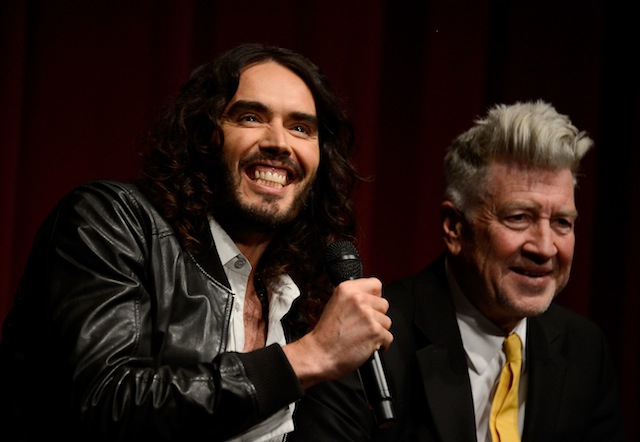
Comedian Russell Brand and Founder/Director David Lynch speak during the 'Meditation In Education' Global Outreach Campaign at The Billy Wilder Theater at the Hammer Museum on April 2, 2013 in Los Angeles, California. (Photo by Frazer Harrison/Getty Images)

Comedian Russell Brand and Founder/Director David Lynch speak during the ‘Meditation In Education’ Global Outreach Campaign at The Billy Wilder Theater at the Hammer Museum on April 2, 2013 in Los Angeles, California. (Photo by Frazer Harrison/Getty Images)

David Lynch and Russell Brand joined forces to help bring Transcendental Meditation to 1,000,000 at-risk youth at the U.S. premiere of ‘Meditation, Creativity, Peace’ at the Hammer Museum’s Billy Wilder Theater in Los Angeles on Tuesday, April 2. The premiere marked the launch of the “Meditation in Education” global outreach campaign.

“Proceeds from the global distribution of the documentary will be used to help students in the United States and across the world overcome traumatic stress, improve learning ability and raise performance through Transcendental Meditation,” said Lynch.

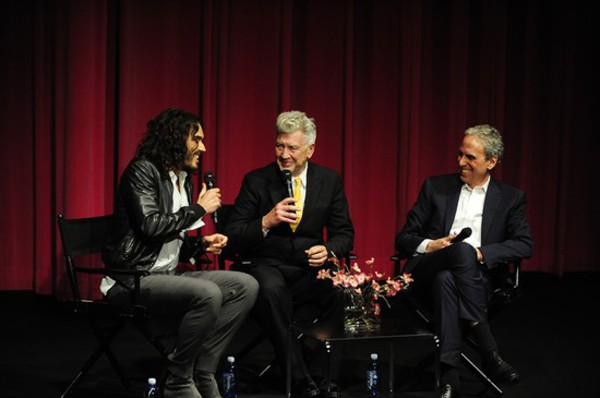
The response to the film was overwhelming with only 300 seats and over 1,000 people showing up. An overflow hall and outdoor screens were set up so hundreds more could see the film, and the dynamic 41-minute interview that followed with David Lynch, Russell Brand, and DLF executive director, Bob Roth. Hopefully that interview will be posted soon.* Roth said the overwhelming response was indicative of a change in collective consciousness since the film was first shown in New York a year and a half ago.**

Russell Brand and David Lynch talk Transcendental Meditation with Bob Roth. Credit/Copyright: Amy Graves via The TASC Group

Russell Brand and David Lynch talk Transcendental Meditation with Bob Roth. Credit/Copyright: Amy Graves via The TASC Group

Following last night’s debut in L.A., the documentary will go on to screen in 12 major international cities, including London, Paris, Berlin, Tel Aviv, Johannesburg, Tokyo, Rio de Janeiro, Buenos Aires and Toronto, in May and June. The film will also be screened at the Palm Beach International Film Festival in West Palm Beach, FL on Saturday, April 6. Visit the new website, Meditation Creativity Peace, for a list of upcoming and previous screenings: http://meditationcreativitypeace.com.

Read more of what happened that night in these reports: Look to the Stars: Russell Brand And David Lynch Bring Meditation To At-Risk Youth and LAist: David Lynch & Russell Brand Changing Lives With ‘Meditation Creativity Peace’, which include photos and videos. Sean Macaulay covered the event, including an interview, for The Daily Beast: David Lynch Discusses Transcendental Meditation in Los Angeles. Google posted this excellent article by AFP: Filmmaker David Lynch touts meditation for PTSD.

Here are some videos by World Monitor TV covering the event. In this first one, Russell Brand and David Lynch arrive at ‘Meditation Creativity Peace’ US premier, after posing for photographers, David and Russell walk over to Puki Freeberg for an interview, which starts around 1:38. It’s difficult to make out what they’re saying with the many people talking in the room and photographers shouting at the celebrities to turn their way. At first David complains about the bright lights, saying they need to be covered with gels. But then David introduces the “fantastic” Puki to Russell who lights up and exclaims, “Oh you’re Puki! I hear a lot about you, and I met you once after a show in a different context, in a different dress, in a different light.

Puki asks Russell why he supports the David Lynch Foundation and he answers, “Because of the wonderful work it does in schools, with veterans, and because meditation is something everyone can use in their life, and because David asked me.”

David smiles and tells Puki that “Russell Brand is going to start a revolution…for peace and enlightenment…for all the people…and that’s why Russell’s here. And also Russell has a gift, somewhat of a gift for humor, and it’s really good to have him here.”

Puki asks David how he feels about premiering his documentary (Meditation, Creativity, Peace) in LA tonight, and he says, “I feel very good about it, because, hopefully, the documentary holds good news for the people…and we’ll see how it goes tonight…we’ll see if they think it’s good news.” There’s more discussion about the interview, which Russell says was very successful, but it’s hard to discern the rest of what they’re saying as they bring it to an end. Here is a more recent updated clearer version:

 Other meditating celebrities arrive and are seen in these videos: Maya Stojan, Russell Brand arrive at ‘Meditation Creativity Peace’ US premier | ‘Meditation Creativity Peace’ US premiere – Matt Bomer, Russell Brand, Nick Zano | Matt Bomer, Nick Zano all smiles at ‘Meditation Creativity Peace’ US premiere.

*The Hammer Museum did post the 41-minute interview the following month: David Lynch, Russell Brand, Bob Roth Q&A after screening Meditation, Creativity, Peace documentary at Hammer Museum. Richard Broome also posted it on his website highlighting key quotes from the interview.

**Here is an earlier post on the film when it was shown in NYC: Watch the trailer for a new documentary film on David Lynch titled “Meditation Creativity Peace”.

Enlightenment, The TM Magazine, also reported on the event: Meditation Creativity Peace: How the David Lynch Foundation Brings Change from Within.

David Lynch speaks with Alan Colmes about his 16-country tour film Meditation Creativity Peace.

Celebrating Paul Horn and his Contribution to Jazz, World Music, Meditation and Spirituality

March 20, 2013

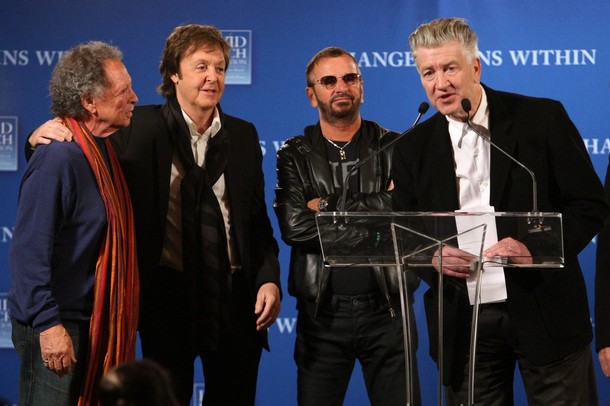
Paul Horn, Sir Paul McCartney, Ringo Starr and David Lynch attend the press conference for the David Lynch Foundation “Change Begins Within” Benefit Concert at Radio City Music Hall on April 3, 2009 in New York City. (Photo by Bryan Bedder/Getty Images)

It was St. Patrick’s Day on Sunday, March 17, 2013. It was also Paul Horn’s 83rd birthday, and I had sent around an email about it with links to Paul’s participation (:55–1:22) in the Change Begins Within Press Conference Highlights from Radio City Music Hall in NYC, April 3, 2009, and the concert the following night. Here’s an overview of the Change Begins Within Press Conference and musical Paul McCartney & Ringo Starr Concert Highlights. This is a great collection of concert clips and interviews, and DLF school clips: Paul McCartney and Ringo Starr Collaborate for Meditation in Schools. PBS later aired an edited version.

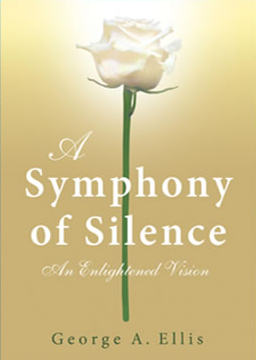
A Symphony of SilenceI also read an interview with Paul Horn in the first chapter of A Symphony of Silence: An Enlightened Vision by George A. Ellis. Paul spoke about his philosophy of music and improvisation, how he communicated musically with a killer whale at an aquarium in Victoria, BC, and in Hawaii. He also spoke about his own spiritual quest, how he started Transcendental Meditation and met Maharishi Mahesh Yogi. He discussed how he was invited to join a course in India with Maharishi and his experiences there. George Ellis also asked Paul questions about his becoming a TM teacher in those early days, and also playing his flute in the Taj Mahal. It’s a great interview, and a wonderful way to start the book! It got me hooked.

Rolf Erickson, editor-in-chief of Enlightenment, The Transcendental Meditation Magazine, emailed to say there’s an excerpt of the interview with Paul Horn in the latest issue, number 11, called The Music of Meditation. In it, George cites a beautiful quote from Paul’s own book, Inside Paul Horn: The Spiritual Odyssey of a Universal Traveler, highlighted at the top of the article: “We are traveling in historical time, from the present to the distant past. We are traveling inwardly as well, through the music of meditation.” Rolf also contributed an article about George Ellis, Sharing the Symphony of Silence, describing what he had accomplished as a TM teacher and entrepreneur, and his heartfelt tribute to Maharishi with this book. Visit http://asymphonyofsilence.com.

Here is an excerpt from the book A Symphony of Silence by George Ellis on Paul Horn and the Music of Meditation published in Enjoy TM News.

Here’s an earlier post from a few years ago: Iconic Jazz Musician Paul Horn Performs Inside MUM’s Golden Dome in Historic Concert May 15. The concert was in the context of a Symposium on Music and Consciousness during which Paul Horn was honored for his lifelong contribution to music, as a jazz musician and Father of New Age Music; and consciousness, as a longtime teacher of Maharishi’s Transcendental Meditation technique. Paul taught thousands of people to meditate in the 70’s. Here is Paul’s great talk at that Symposium: Improvisation: The Ultimate Art of Self-Expression — Paul Horn at MUM. Click here to see all of the Lecture and Performance Videos including Q & A.

During his visit to MUM and Fairfield, Jo Ann Gesner interviewed Paul for an article, Paul Horn: Improvisation from the Inside Out, published in Enlightenment Magazine’s 6th issue as Inside with Musician Paul Horn, with a beautiful photo that Jo Ann took of Paul and his wife, Ann Mortifee, in front of the mural painted by Lynne Teeple in Café Paradiso.

This video, Inside Paul Horn, is an overview of Paul Horn’s career. Originally titled, Inside Paul Horn Special Edition, it includes clips from Story of a Jazz Musician – David Wolper Presents, and was uploaded on Jan 14, 2011 by annmortifee. It seems to have been taken down now but you can see the full 3-part film here.

For more on the music of Paul Horn and Ann Mortifee, visit http://paulhornmusic.com and http://annmortifee.com.

Listen to Monica Hadley interview George A. Ellis on KRUU’s Writer’s Voices – 20130712 and how his book Symphony of Silence came about. Also posted on Writer’s Voices website.

See my Haiku With My Muse, Sali, inspired by Paul Horn.

See Snapshots: Paul Horn in Conversation: History & Influences.

Paul Horn died June 29, 2014. There were many memorial articles about the jazz flutist, composer and creator of new age music who also became a teacher of  Maharishi’s Transcendental Meditation at his ashram in Rishikesh, India. He taught thousands to meditate in the United States and returned to make a film about Maharishi when the Beatles happened to be there to learn more about TM at his ashram. The Guardian announced his passing: Paul Horn, father of new age music, dies aged 84, then published a more detailed obituary.

Update July 4, 2020: A Symphony of Silence: An Enlightened Vision: 3rd Edition Abridged Paperback – June 28, 2020 and Kindle Edition. Also available in Spanish as Sinfonia del Silencio.

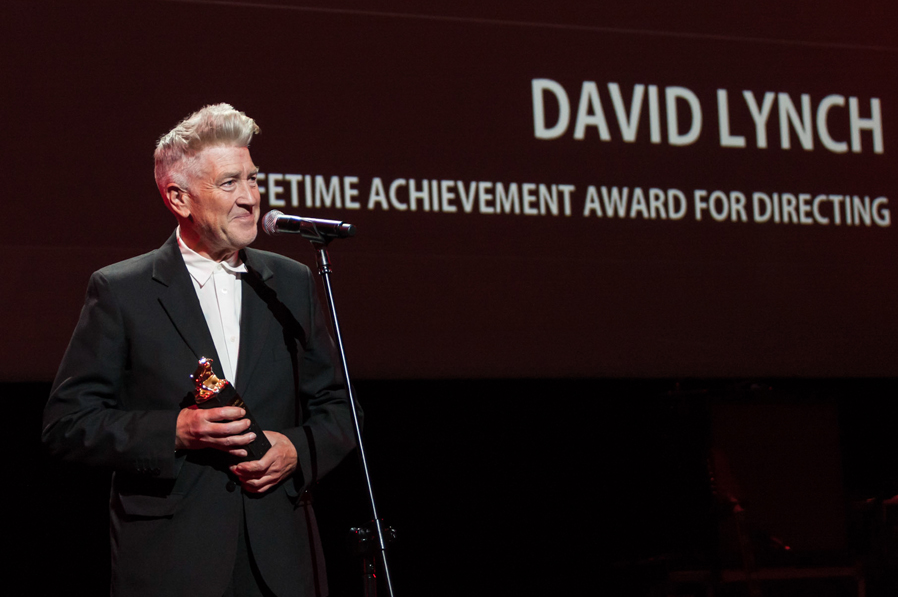
David Lynch receives the Plus Camerimage 2012 Lifetime Achievement Award for Directing

February 17, 2013

David Lynch receives Plus Camerimage Lifetime Achievement Award for Directing © Marta Pawłowska

David Lynch receives Plus Camerimage Lifetime Achievement Award for Directing 2012 © Marta Pawłowska

The International Film Festival of the Art of Cinematography PLUS CAMERIMAGE is the greatest and most recognized festival dedicated to the art of cinematography and its creators – cinematographers. This 20th Plus Camerimage Festival took place November 24 to December 1, 2012 in Bydgoszcz, Poland.

Plus Camerimage contributes to the growth of cinematographers’ prestige. The unconventional format of the Festival, which awards films according to their visual, aesthetic and technical values, has turned out to be an alternative for traditional film festivals. As all their guests emphasize – PLUS CAMERIMAGE is unique. Find out more here.

David Lynch in PolandDarek Kuzma talks with David Lynch, the recipient of the Plus Camerimage Lifetime Achievement Award for Directing at their 2012 festival. Different topics are brought up and David discusses the value of Transcendental Meditation for him and his work when answering the 4th question. He seemed very relaxed and happy to be there.

1. Do you feel that your films inspire people or may change their lives?
2. Can you call yourself a believer in the magic of cinema?
3. Now, when special effects, gadgets and digital cinema are so developed, people don’t have to imagine things…
4. What motivates you to keep working even if there are obstacles in the way? A: (2:46–5:02)
5. This edition of Plus Camerimage festival is devoted to the theme of “digital versus film.” What is your stand on it?
6. How do you feel about the Plus Camerimage festival and it’s 20th edition?

This video was published by pluscamerimage2012 Nov 29, 2012.

See the humanitarian work of the David Lynch Foundation healing traumatic stress and raising performance in at-risk populations.

David Lynch on His Lifetime Achievement Award at Plus Camerimage’s International Film Festival

December 15, 2012

Plus Camerimage: David Lynch on His Lifetime Achievement Award

Source: Silas Lesnick | November 28, 2012

An attendee of the Plus Camerimage’s International Film Festival of the Art of Cinematography since 2000, legendary filmmaker David Lynch is, this year, the recipient of a Lifetime Achievement Award for now-classic works like Eraserhead, The Elephant Man, Blue Velvet, The Straight Story, Mullholland Dr. and many more.

On location in the town of Bydgoszcz, Poland all this week, ComingSoon.net caught Lynch shortly after his awards ceremony and had a chance to speak with the artist on a wide range of topics, including factories, nude women, Transcendental Meditation and sparrows. Check out the interview below and, if you missed yesterday’s report, click here to check out a conversation with Keanu Reeves and the fellow filmmakers behind the recent documentary Side By Side.

I’ve extracted the TM-related excerpts from this interview with David Lynch at the Polish International Film Festival on his receiving a lifetime achievement award. It’s a very interesting article on film, the digital revolution, and that sparrow story. The ending is particularly sweet. 

CS: What are you working on now?
Lynch:
I’m working on painting and music, lithography, drawing and… [long, long pause] …maybe some other things.

CS: In terms of balancing all of that, what’s a normal day for you?
Lynch:
Get up. Have a coffee. Have a smoke. Then I do my Transcendental Meditation. Then I go to work. It depends on the ideas. I always say, “It depends on the ideas.” But normally in the mornings I work on painting and then, in the afternoon, I work on music. If I’m getting other ideas, I work on those also in the morning and also the afternoon. But I usually end up in the music studio near the end of the day.

CS: I know you’ve been very fond of Transcendental Meditation. What does it actually entail?
Lynch:
Transcendental Meditation is a mental technique. An ancient form of meditation that allows every human being to dive within and experience that deepest level of life. An eternal level. Pure consciousness. The unified field of reality. The Self with a capital “S.” Every time a human being experiences that deepest level, they infuse some of that. They begin to expand consciousness. Whatever size consciousness they had, now it starts expanding. Every human being has consciousness, but not every human being has the same amount. Qualities of consciousness in that deepest level, offer unbounded consciousness. Unbounded creativity. Unbounded happiness. Unbounded love. Unbounded energy. Unbounded peace. You start transcending, experiencing that deepest level, whoa, it’s such a beautiful feeling. You infuse that. You grow in that. The side effect is that negativity starts to lift away from the human being. Anxiety. Stress. Traumatic stress. Sorrow. Depression. Hate, anger and fear start to lift away. You start to work in more and more freedom. Gold coming up from within. Garbage going out. And you are unfolding your full potential as a human being. The full potential of every human being is called enlightenment, which total fulfillment. Total liberation. Infinite bliss. Happiness. Totality. It’s the full potential of a human being and it’s every human being’s birthright to enjoy enlightenment. Transcendental Meditation is not concentration. It’s not contemplation. It’s a unique form of meditation which is easy and effortless. You dive within through deeper levels of mind and intellect. At the border of intellect, you transcend and you experience this eternal level. It’s very, very beautiful. A ten-year-old child can do it and a 110-year old adult can do it. If you can think, it will work. Life gets better and better and better.

CS: Would you compare the effects of Transcendental Meditation in any way to seeing a film or experiencing another piece of art that truly moves you?
Lynch:
No. You see a powerful film, it’s like seeing a powerful experience in your life. People have an idea that, number one, all meditations are the same and they’re not. There are surface experiences that can be beautiful. Seeing a great film is a thrill. Some films, I think, can enliven deeper levels just like some music can enliven deeper levels. When you feel, “Whoa, man. That took me someplace.” It was so beautiful. So powerful. I don’t know how it happened, but I felt deep. But Transcendental Meditation takes you to the deepest. The first time and every time. It’s so beautiful. It’s so blissful. It’s so profound. It’s a cosmic experience. In brain research they see that, when a person truly transcends. Experiences the transcendent. The big self. The unified field. Ocean of consciousness. They see a wonderful thing on the EEG machine. The full brain lights up. It’s the only experience in life that does it. Any other thing we do — if we play the piano, it’s this little part of the brain. If we do a math problem, it’s this little part of the brain. We paint a picture, it’s this little part of the brain. But here’s an experience that lights up the whole brain. They call it “total brain coherence”. So it shows you the relationship of the human being to this deepest level of life. This is that level of life what they say never had a beginning. It is and it will be forever. That’s the definition of eternal. It’s not a religion to practice Transcendental Meditation. It’s just a technique that will get you there. It’s like being handed a key to the treasury. It will open that door to the treasury within easily and effortlessly. It’s such an important thing for the human being. So that’s the deal.

CS: Coming out of it, do you know what you’re doing with the rest of the day?
Lynch:
You come out feeling refreshed, happier and more energized. That’s the normal feeling. This thing of bliss is a strange feeling. Bliss takes up where happiness leaves off. Bliss is physical happiness. Emotional happiness, mental happiness, and physical happiness all rolled into one. It’s thick happiness. It’s intense happiness. Every human being was meant to feel that. Mankind was not. made. to. suffer. Bliss is our nature. The individual is cosmic. To have a human physiology is a great, great blessing. It has a full potential. It’s just not taught in schools. More and more people are realizing this. They’re called seekers. They’re looking for something and they don’t know what it is, but they know it’s there. It’s built into the human being. It’s very, very beautiful. When they have this experience, like the Maharishi said, when they transcend, more often than not, the first thing they say is, “Thank you very much.” It’s so beautiful.

The Hollywood Reporter also interviewed David about his win and the debate over digital cinema versus analog: David Lynch: ‘Feature Films Have Become Cheap’ (Q&A).

The Hollywood Reporter: Clips from your films were shown before you received your lifetime-achievement award. What was going through your mind while you watched?

David Lynch: First of all, I think I’ve gotten some lifetime-achievement awards before. But I thought it would be something I’d be kind of separated from. I don’t know what happened, but I was overwhelmed with emotion. I couldn’t believe that I’d done it; it was pretty impressive, really.

THR asks him why he isn’t making anything for television anymore and David gives his quintessential answer. Read the short interview: http://www.hollywoodreporter.com/news/david-lynch-feature-films-have-395849.

Free Your Mind Projects host Wendy Almasy interviews meditating stars on the red carpet at David Lynch Foundation event

December 7, 2012

FYMP

Listen to the first half of this FREE YOUR MIND PROJECT show with hosts Brian Canning and Wendy Almasy. They attended last year’s Third Annual David Lynch Foundation Benefit Gala. Wendy is joined on the red carpet at the DLF event by David Lynch, Hip Hop mogul Russell Simmons, actress Dee Wallace who shares her own personal story, and actors Cheech Marin and Robert Davie – all talking about the impact that Meditation…specifically Transcendental Meditation can make on living a healthful life. It’s proven, it works and it is something worthy to explore!

Also, a special note of thanks to the David Lynch Foundation who have taken their TM practices and teaching “to the streets” with research projects and has made incredible impact both with returning vets and young people in school through their pilot projects. Find out more at  www.davidlynchfoundation.org.

Click this short link to hear the show: http://bit.ly/TKl37Q.

Previous Free Your Mind shows on DLF and TM: Free Your Mind Project Show Discusses the David Lynch Foundation’s Commitment to 10,000 Vets and Bob Roth, Executive Director, David Lynch Foundation, Discusses Transcendental Meditation On Free Your Mind Projects Radio Show.