Posts Tagged ‘Consciousness’

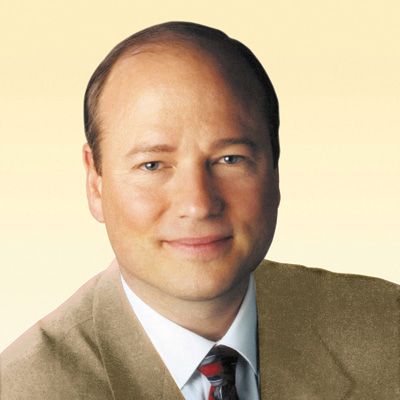
THE REMARKABLE DAVID LYNCH FOUNDATION — written by Norman Zierold for Healthy Referral

June 8, 2012

Posted 27 January 2012 in Healthy Referral Newspaper

THE REMARKABLE DAVID LYNCH FOUNDATION

It’s no secret that problems abound in our society, but two areas that quickly come to mind are major sources of national stress—at-risk school children and veterans returning from wars abroad with post-traumatic stress.
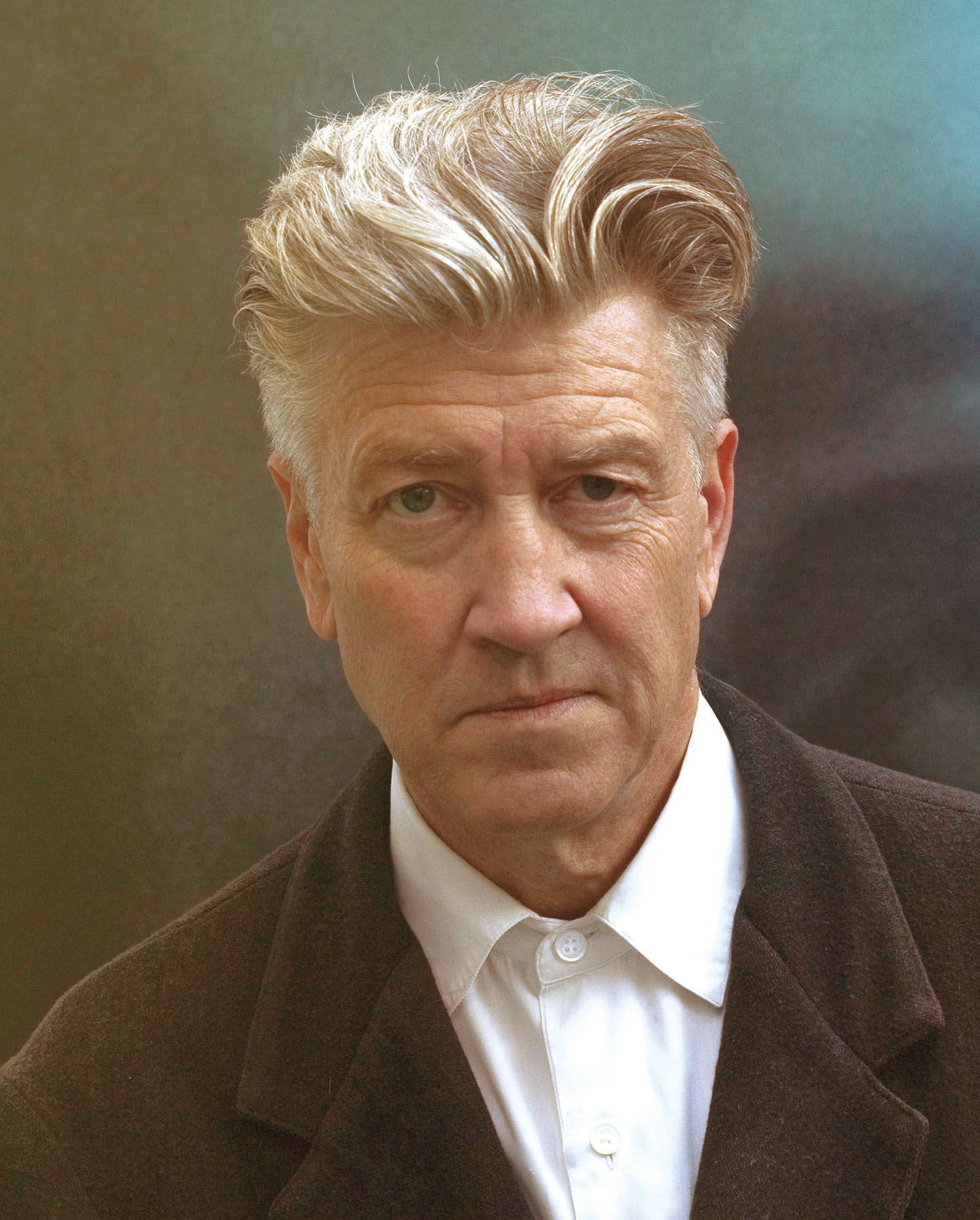
Enter iconic American filmmaker David Lynch, director of TV’s groundbreaking Twin Peaks, and feature films that include Eraserhead, Elephant Man, Blue Velvet, Mulholland Drive, The Straight Story, and most recently, Inland Empire. The United Kingdom’s highly reputed Guardian has dubbed Lynch “the most important film-maker of the current era,” but an illustrious career has not impeded his concern for the needy.

Mind you, many individuals and organizations have stepped forward in the troubled areas of our society. Much has been done, yet even more remains to be done. What is his modality of choice to help? Meditation, he declares, and specifically Transcendental Meditation, or TM, which is neither a religion nor a philosophy, and therefore requires no change of lifestyle.

Transcendental Meditation is a simple, easily learned technique, practiced for 20 minutes twice daily while sitting comfortably in a chair with eyes closed. This quiet time provides the mind and body with a unique state of “restful alertness” which allows stress and fatigue to be released in a natural way, resulting in better health, greater energy, more clarity of mind, and overall enhancement of the joy of life. It utilizes the natural tendency of the mind to go to a field of greater happiness, hence is basically effortless, differing thereby from all other meditation techniques, which invariably involve either concentration or contemplation, modalities that tend to keep the mind on the surface level of thought and so impede the transcending process.

John Hagelin, Ph.D., world-renowned quantum physicist (“What The Bleep Do We Know!?” and “The Secret”) and recipient of the coveted Kilby Award in physics, describes Transcendental Meditation as “a systematic means to turn the attention powerfully within, to experience and explore deeper levels of mind, quieter levels of human awareness, a state of rest for the body deeper than sleep, where deep-seated stress is dissolved, providing an effective prevention and treatment for stress-related illness.”

Over 600 scientific studies have been conducted on Transcendental Meditation at 250 medical schools and universities in over 30 countries to verify its wide range of benefits for the individual and society. Most notably, the U.S. National Institutes of Health, or NIH, funded in recent decades $26 million in grants to study the effects of TM practice on high blood pressure, atherosclerosis, obesity, and heart disease. Subjects for research have been readily available because the TM technique has now been taught to six million people in over 120 countries.

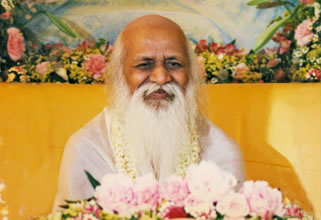
The timeless knowledge of TM derives from the Vedic heritage of India, the world’s oldest system of knowledge. Veda means truth, or knowledge, and this tradition provides knowledge about many areas of life. For example, Yoga comes from the Vedic tradition, as does Ayurveda, the world’s most ancient system of health care, and Sthapatya Veda, knowledge about building in accord with Natural Law. The knowledge of Transcendental Meditation was revived in our era by the revered sage Maharishi Mahesh Yogi, launched, in 1957, a worldwide movement to make it available on every continent. Maharishi first came to the United States in 1959, and on various occasions thereafter, to oversee the progress of the local TM movement.

Why did David Lynch take up the TM practice? Well, he just couldn’t think of anything better to do. Just kidding. Lynch not only writes, produces, and directs his own films, but also composes popular music, and paints stunning pictures that are exhibited in major art galleries. And oh, yes, crowning a plethora of other avocations, he recently opened his own nightclub in Paris.

As for Transcendental Meditation, his sister first brought it to his attention. “My sister called, and she had started TM,” he reminisces. “There was something in her voice—less stress and more happiness, a certain upbeat lilt. ‘I gotta have that,’ I said to myself. When I actually started, it was like boom, as if a cable had been cut and the elevator plunged right down into pure consciousness.

“I have been ‘diving within’ through the Transcendental Meditation technique for over 30 years now,” he continues. “It has changed my life, my world, allowing me to release stress that was causing fear and anxiety, opening the door to heightened creativity and bliss.”

“Not long ago, when I heard about the crippling levels of stress and violence in the lives of children today, about the need for armed guards to patrol school corridors, and about widespread use of prescription drugs with deleterious side effects, I became concerned about what this was doing to the health of these children and their ability to learn.”

“Discussing the matter with a friend, the thought came that in today’s turbulent world all school kids should have a class period to begin and end the school day where they can dive within and experience the field of silence, the transcendental level of life, which is an enormous reservoir of energy and intelligence within all of us.”

To help at-risk students, the director established the David Lynch Foundation for Consciousness-Based Education and World Peace—and promptly made hefty donations to give it a jump-start.

Since then the DLF has helped fund “Quiet Time” programs, which are always voluntary, around the world, teaching TM to over 250,000 children in the United States and Latin America, the Middle East, Europe, and Africa. The US schools can be found in more than a dozen states.

Progress was made in the financial area by a benefit concert given at New York’s Radio City Music Hall and featuring such renowned meditating artists as Beatles Sir Paul McCartney and Ringo Starr, legendary singer/songwriter Donovan, Mike Love of the Beach Boys, flute virtuoso Paul Horn, Sheryl Crow, Moby, Eddie Vedder, Ben Harper, Russell Simmons, co-founder of the pioneering hip-hop label Def Jam, and Jerry Seinfeld in a winning stand-up comic skit. Since a huge number of schools around the world remain on a waiting list for Quiet Time programs, plans are underway for future benefit concerts in different venues. Watch News conference Highlights from the day before the concert, and Watch Event Highlights, which include clips of David Lynch interviewing Paul, Ringo, Sheryl, Eddie, and excerpts from that amazing magical evening. Check here for other DLF featured past events.

Transcendental Meditation in Education

Dr. Sanford Nidich, professor of education and physiology at Maharishi University of Management, has been working with at-risk adolescents in U.S. schools and reports on a study conducted at the University of Connecticut involving 106 secondary school students from three public schools, primarily from lower-income, minority populations. “Meditating students,” he relates, showed significant reductions in anxiety, emotional problems, and hyperactivity, and improved overall mental health after an average of four months compared to controls.”

“Something must be done to help today’s youth deal with the enormous amount of stress in their lives,” says Dr. Robert Colbert, professor at the University of Connecticut and co-author of the study. “This study shows that something can help immediately—and it is easy to implement in any school setting.

Two more recent studies out last year, also funded by the David Lynch Foundation, showed TM improved standardized academic achievement and effectively lowered record stress levels in students.

The study, published in the journal Education, reported students who practiced the Transcendental Meditation program showed significant increases in math and English scale scores and performance level scores over a one-year period. Forty-one percent of the meditating students showed a gain of at least one performance level in math compared to 15.0% of the non-meditating controls.

The latest study published in the Journal of Instructional Psychology found the Transcendental Meditation technique significantly decreased psychological distress in at-risk racial and ethnic minority public school students by 36 percent over 4 months compared to controls. The study also found significant decreases in trait anxiety and depressive symptoms.

In the area of students with learning disabilities, one study, published in the 2009 issue of the peer-reviewed Current Issues in Education, followed a group of 10 middle-school students with ADHD who were practicing the Transcendental Meditation technique twice a day at school. After three months, researchers found over 50% reduction in stress and anxiety, and improvements in ADHD behavior regulation.

“The effect was much greater than we expected,” says Dr. Sarina Grosswald, Ed.D., a George Washington University-trained cognitive learning specialist and lead researcher on the study. “The children also showed improvements in attention, working memory, and organization.” The study was funded by grants from the Abramson Family Foundation and the David Lynch Foundation.

A follow-up study, also funded by the David Lynch Foundation, came out last year. This random-assignment controlled study conducted over a period of 6 months in an independent school for children with language-based learning disabilities in Washington, DC, found improved brain functioning, decreased symptoms of attention-deficit/hyperactivity disorder, (ADHD), and improved language-based skills among ADHD students practicing the Transcendental Meditation technique. The paper, ADHD, Brain Functioning, and Transcendental Meditation Practice, was published in Mind & Brain, The Journal of Psychiatry.

At the Ideal Academy Public Charter School in Washington, D.C., students from the 5th through 12th grades now practice the TM/Quiet Time program. “It changed the whole climate of the school, says principal Dr. George Rutherford, a highly regarded D.C. educator. “It was just beautiful. The academic achievement has gone up, and behavioral problems have gone down. I could never work in a school that doesn’t have the TM/Quiet Time program.”

One student at the Ideal Academy reports, “I notice I haven’t been mad for a while, since I learned TM. I used to get in fights and talk to people behind their back. And it helps me to not get distracted.”

A student at the Tucson, Arizona, Museum of Art School was struggling in math, but now says, “I’m doing really good in there, and my behavior’s been a lot better.” One of the students at the Kingsbury School in Washington, D.C., states that just two weeks after practicing TM twice a day the nightmares he was having stopped, allowing him to sleep much better and so avoid the fatigue that usually followed during the day.

“I have had the pleasure of meeting many students who are “diving within” and experiencing Consciousness-Based Education,” sums up DLF founder David Lynch. “These students are all unique individuals, very much themselves. They are amazing, self-sufficient, wide-awake, energetic, blissful, creative, powerfully intelligent and peaceful human beings. Meeting these students, for me, was the proof that Consciousness-Based Education is a profoundly good thing for our schools and for our world.”

Principal James Dierke agrees. The 2008 National Association of Secondary School Principals—National Middle School Principal of the Year, says, “Stress is the number one enemy of public education, especially in inner-city schools. It creates tension, violence, and compromises the cognitive and psychological capacity of students to learn and grow. The TM/Quiet Time program is the most powerful, effective program I have come across in my 39 years as a public school educator for addressing this problem. It is nourishing children and providing them an immensely valuable tool for life. It is saving lives.”

TM for Veterans: Operation Warrior Wellness

While the DLF’s work with at-risk children got into full gear, founder David Lynch was given the staggering statistics from the Veterans Administration showing that more soldiers are dying from the trauma of combat incurred in Iraq and Afghanistan than at the hands of enemy combatants. Over 500,000 veterans have been diagnosed with post-traumatic stress, or PTS, since 2001, with 18 veterans committing suicide each day.

To help meet this challenging situation, the David Lynch Foundation launched Operation Warrior Wellness, a national outreach to help 10,000 war veterans suffering from PTS by teaching them Transcendental Meditation. A December 2010 press conference and follow-up fund-raiser Gala Event at the Metropolitan Museum of Art in New York was supported by noted film directors Clint Eastwood and Martin Scorsese, fashion maven Donna Karan, pop music mogul Russell Simmons, and yet another Russell, versatile actor/comedian Russell Brand, plus “America’s Doctor,” Dr. Mehmet Oz.

A year later on December 2, 2011 the David Lynch Foundation launched Operation Warrior Wellness in Los Angeles with a global press conference at the Beverly Hills Hotel where David Lynch presented a check for one million dollars for Veterans to learn Transcendental Meditation. The 3rd Annual Change Begins Within Gala Event took place at the Los Angeles County Museum of Art.Ellen DeGeneres opened the evening and then turned the proceedings over to host Russell Brand. Photos can be seen on the David Lynch Foundation photo stream.

Combatants from past and present conflicts delivered testimonials of their devastating war experiences and told of how TM gave them a new lease on life. World War II pilot Jerry Yellin spoke eloquently of the toll that extensive bombing raids against Japan had on his nervous system so that for three decades after the end of the war he felt no satisfaction from anything he did. “At 51,” he recounted, “I took up TM and only then did I finally find peace.”

Vietnam vet Dan Burks gave a moving account of the mental scars he carried after a battle in which he killed Vietnamese soldiers and lost many of his own comrades. “PTS is a wound,” he concluded. “It takes your life away, just like losing a limb. But guess what? You can get rid of that wound. My life, after the discovery of Transcendental Meditation, was like the difference between heaven and hell.”

Finally, David George, 23, a former infantry soldier, told of the trauma he experienced not only in Iraq, but also on returning home, where long ago battles still raged deep within his system. “Happily,” he said, “I found TM and that cleared the air and I could tell where I was going. I felt this warm, groovy feeling. It just keeps getting better and better.”

Veterans with PTS showed a 50 percent reduction in their symptoms after just eight weeks of practicing the stress-reducing Transcendental Meditation technique, according to a pilot study published in June 2011 in the scientific journal Military Medicine. The study found that Transcendental Meditation produced significant reductions in stress and depression and marked improvements in relationships and overall quality of life.

The paper’s senior researcher, Norman Rosenthal, M.D., is clinical professor of psychiatry at Georgetown University Medical School and director of research at Capital Clinical Research Associates in Rockville, Maryland. “These young men were in extreme distress as a direct result of trauma suffered during combat,” he affirms, “and the simple and effortless Transcendental Meditation technique literally transformed their lives.”

The findings were similar to those from a randomly controlled study of Vietnam veterans conducted by researchers at the University of Colorado School of Medicine in 1985. In that study, published in the Journal of Counseling and Development, after three months of twice-daily TM practice, the veterans had fewer symptoms than those receiving conventional psychotherapy of the day. In fact, most of the TM-treated subjects required no further treatment.

“The soldiers are truly suffering,” affirms David Lynch. “No one knows what they’ve been through. No one knows what they’ve done, what they’ve experienced, what they’ve seen, and their lives in many cases are a true nightmare. That’s why we want to offer them Transcendental Meditation. It’s a beautiful thing for the human being. It’s a big stress-buster, and when these soldiers get this simple effortless technique, they’re going to get their lives back again. It’s not hocus-pocus. It’s going to save lives, and help not only the soldiers, but all the families who are suffering, and their friendships as well.”

For the already noted Operation Warrior Wellness benefit at New York’s Metropolitan Museum of Art, Clint Eastwood, best known for playing violent, hardened characters on-screen, sent a video in which he stated his strong support of Transcendental Meditation. “I’ve been using it for almost 40 years now,” he declared. “It’s a great tool to combat stress, especially considering the stress our men and women in the armed forces are going through. There’s enough studies out there that show TM is something that can benefit everybody.”

***************************************************

Norman Zierold is the author of a bevy of books on Hollywood, including The Child Stars, The Moguls, Garbo, and Sex Goddesses of the Silent Screen, as well as two true-crime stories—Little Charley Ross: The Story of America’s First Kidnapping for Ransom, and Three Sisters in Black, recipient of a Special Edgar Allan Poe Award from the Mystery Writers of America. He has also published articles in a plethora of magazines, ranging from New York Magazine, McCall’s, and Popular Mechanics to Good Housekeeping, Variety, and Reader’s Digest.

REFERENCES:

David Lynch Foundation http://www.davidlynchfoundation.org

Operation Warrior Wellness http://www.operationwarriorwellness.org

The Transcendental Meditation program http://tm.org

Ask the Doctors: Specialists answer your questions about TM and health http://askthedoctors.com

ADHD, the Mind and the TM technique http://www.adhd-tm.org

Maharishi University of Management http://www.mum.edu

If read in the UK, use this for The Transcendental Meditation Program: http://www.t-m.org.uk

****************************************

Related article by Norman Zierold: Embody: focus on TM: Iconic Filmmaker David Lynch has a viable solution to a pressing problem.

And enjoy this article about Norman: The Chronicle of Higher Education: Notes From Academe: The Spokesman Who Kept Calling.

Here is an excellent Huffington Post interview with David Lynch that came out two years later, Dec 9, 2014: Interview With David Lynch: His Mission to Change the World Through Meditation.
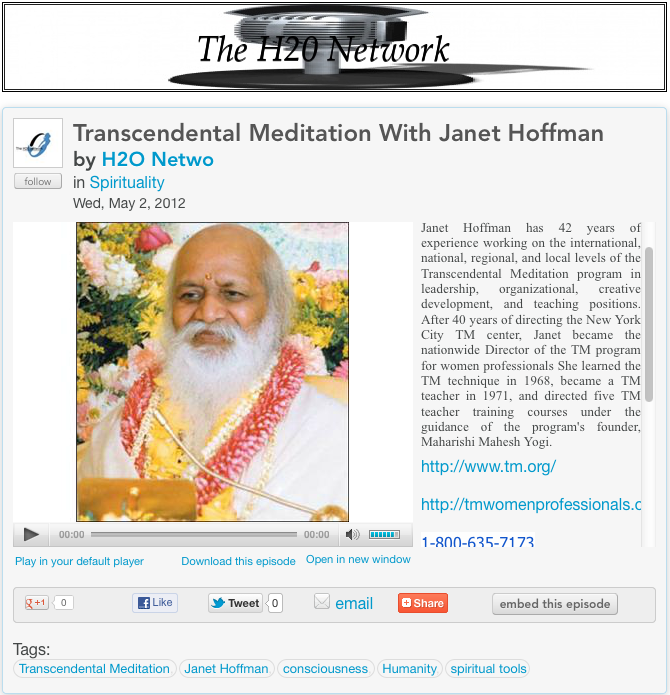
The H20 Network on Blog Talk Radio interviews Janet Hoffman about Transcendental Meditation

May 2, 2012

Click on this link to go to the website and listen to this great interview! http://www.blogtalkradio.com/theh2onetwork/2012/05/02/transcendental-meditation-with-janet-hoffman

Janet Hoffman has 42 years of experience working on the international, national, regional, and local levels of the Transcendental Meditation program in leadership, organizational, creative development, and teaching positions. After 40 years of directing the New York City TM center, Janet became the nationwide Director of the TM program for women professionals She learned the TM technique in 1968, became a TM teacher in 1971, and directed five TM teacher training courses under the guidance of the program’s founder, Maharishi Mahesh Yogi.

To sign up for the July conference on women and consciousness go to: http://www.gmdousa.org/4Day.

For more information on the Transcendental Meditation program: http://tmwomenprofessionals.org, http://www.tm.org, 800-635-7173.

Maharishi University of Management featured in Education Executive Magazine — Spring 2012

April 14, 2012

Maharishi University of Management

Higher Education – Spring 2012 (pages 62-63)

Open Mindedness

Transcendental Meditation® helps students at Maharishi University of Management enhance their learning, the institution says.

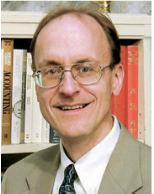
All successful administrators believe firmly in the missions of their institutions, but the connection runs deeper for Dr. Craig Pearson, executive vice president of Maharishi University of Management (MUM). After graduating from Duke University in 1971 and feeling disillusioned from the tumultuous impact of the Vietnam War, Pearson discovered the practice of Transcendental Meditation (TM).

“I saw a need for change, and I wanted to participate in that and I wanted it to be meaningful,” Pearson says. “Finally, I realized it would be a nice contribution to make to this society that I lived in if I taught TM.” After he became versed in teaching TM, Pearson discovered an opportunity to teach at MUM, and what has followed has been a learning experience that has lasted more than 30 years.

“I’ve had just an amazing range of opportunities and experiences here,” Pearson says.

Located in Fairfield, Iowa, MUM was founded on the practice of TM, brought to light from the ancient Vedic tradition by Maharishi Mahesh Yogi, a Vedic sage who taught the practice in his native India before traveling the world with it. Not a religion or philosophy, TM is a simple, effortless technique practiced for 20 minutes at the start and end of each day that allows the mind to settle to a state of inner quiet. Those who practice TM say it can help expand consciousness and expand the mind’s capacity for learning. This is why the university’s approach is called Consciousness-BasedSM education.

“This is huge for education,” Pearson says, adding that studies have shown growth of intelligence and other measures of personal development to level off during adolescence. Practicing TM, research suggests, unfreezes that potential and allows the mind to continue growing.

Same, But Different

Aside from the beginning and end of each day, when students and faculty join in practicing TM, Pearson says MUM offers the same curriculum one would find at a top university elsewhere in the world. “If you or anybody were to come to MUM and walk around during the day, you would find a lot that’s similar to what’s going on in universities around the world,” he says. “If you were to go into a Shakespeare class, it’s the same Shakespeare.”

Where MUM differs from other universities, of course, is the 20-minute TM sessions twice a day, built into the daily schedule. Pearson says this has a profound impact on the campus culture and in the performance of its student body and the overall feeling on the campus. Pearson says TM significantly reduces stress and mental fatigue by allowing the mind effortlessly to relax and settle inward rather than focus on the outside world.

“These days, one of the things most problematic on college campuses is stress,” he says.

Through TM, students at MUM are able to expand their consciousness to a point where learning and personal growth are practically unlimited, Pearson claims. The implications for higher education are significant, he adds. “Now human development can be unfrozen, now it can continue to develop,” he says, adding that the university has found student IQs increase after enrolling. One study, for example, found IQ to increase an average of 4 points after one year and 9 points after 4 years.

Expanding Future

The university’s application of TM in the curriculum has implications for more than student performance and stress levels, Pearson says. It also affects enrollment trends, as nearly 75 percent of MUM’s student body consists of transfer students from other institutions. Most of them discover the university on the Internet, but an increasing number are hearing about it by word of mouth.

“Since that’s our mission, students come because they’re attracted to the mission,” Pearson says. “They transfer because they’re not satisfied with where they are.”

As the concept of meditation becomes more popular through yoga classes and other fitness regimens, MUM has seen a long-term upswing in enrollment. The university’s current enrollment of about 1,100 is double what it was five years ago, and nearly triple what it was 10 years ago, according to Pearson. “Now, meditation is mainstream and the idea of meditation in education isn’t so unusual,” he adds.

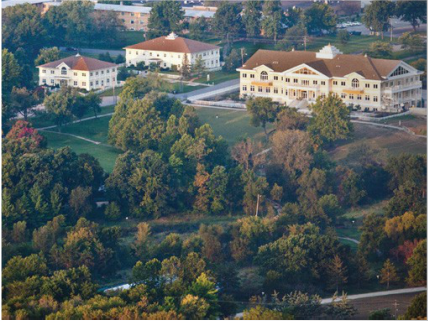
To deal with the continuing growth, the university 11 years ago embarked on an ambitious campaign to reconstruct its campus. Originally built as Parson’s College before it closed in 1973, the MUM campus has torn down 45 old buildings and has invested substantially in renovating a number of others. Additionally, 60-plus new buildings have been constructed on campus. The newest building is the university’s Sustainable Living Center, which, when completed, will be unique in the world, embodying four different sustainable building philosophies and completely off the grid with respect to heating/cooling, electricity, water, and sewage. Pearson says the university’s commitment to sustainability is another attractive feature for many students, citing the campus’ all-organic, vegetarian menu.

Pearson says the university hopes to reach an enrollment of 2,000 in the years to come, with a long-term vision of approximately 8,000 students. To help achieve that goal it has established an endowment campaign with an initial goal of $50 million. Pearson says the campaign has received some very good initial support, and that those funds will be used for scholarships, faculty support, academic programs, and campus development.

Seeing the university grow has been a rewarding experience for Pearson, and he says he believes the education students receive at MUM will give them a consciousness-based approach to decision making that will be needed to solve the world’s greatest problems.

“It’s one thing to change the way we get our power or food, but our students recognize there needs to be a change in the kind of consciousness that created those types of problems, and I’m very inspired by that,” he says.

—Chris Petersen

Copyright 2012 Education Executive Magazine. All Rights Reserved.

Links to the online version with only one photo: http://www.education-executive.com/index.php/higher-education/1125-maharishi-university-of-management and digital edition: http://www.nxtbook.com/nxtbooks/phoenix/eduexec_2012spring/#/64 of the two-page layout containing photos of Craig Pearson, Argiro Student Center, MUM campus, and the Aladdin Food Management Services ad.

Veda, Consciousness, the Ramayana, and the Self — A New Paradigm Tour Will Visit Ten Cities

April 12, 2012

NEW PARADIGM TOUR VISITS 10 NORTH AMERICAN CITIES

“Veda, Consciousness, the Ramayana, and the Self”

Science and spirituality merge as leading scientists, artists and business leaders present cutting-edge knowledge to Indian Communities Throughout North America

A team of leading scientists, artists and business leaders will tour 10 North American cities this spring, delivering a series of cutting-edge presentations entitled “A New Paradigm: Veda, Consciousness, the Ramayana, and the Self.” The tour includes visits to San Diego; San Francisco; Vancouver; Fairfield, Iowa; Chicago; Toronto; Montreal; Boston; New York; and Washington, DC. www.newparadigmtour.org

The event will explore the meeting point of science and spirituality by presenting pioneering research that reveals the Veda and the Ramayana as blueprints of our body and the entire universe. Extensive research on these breakthrough discoveries has also documented collective benefits for society, including the potential for creating world peace. The event will feature a video presentation of 1,000 Vedic Pandits in Maharishi Vedic City, Iowa, chanting the Veda. Listen: http://bit.ly/vedicpandits.

SPEAKERS

The speakers at this event come from diverse backgrounds. Tony Nader, M.D., Ph.D., neuroscientist and researcher, will headline the event as the keynote speaker with his presentation, “Embodying Totality”.  Dr. Nader received his Ph.D. in the area of Brain and Cognitive Science from the Massachusetts Institute of Technology (MIT) and completed post-doctoral work at Harvard Medical School.

Dr. Nader’s desire to gain a deeper understanding of the human mind and body—of consciousness and physiology—led him to the study of Vedic Science under the guidance of the Vedic sage Maharishi Mahesh Yogi, founder of the worldwide Transcendental Meditation movement (TM) http://www.tm.org. Dr. Nader’s discoveries have inspired medical doctors and scientists throughout the world by demonstrating the effectiveness of Vedic sound to heal mind, body and society (for example: Enlivening the Healing Ability of the Body through Maharishi Vedic Sound).

John Hagelin, Ph.D., is a world-renowned Harvard-trained quantum physicist, educator, public policy expert, and leading proponent of peace. Winner of the prestigious Kilby Award, Dr. Hagelin was recognized for his achievements as a scientist in the tradition of Einstein, Jeans, Bohr and Eddington. He is Chairman of the Physics Department at Maharishi University of Management (www.MUM.edu) and will speak on “Consciousness and the Unified Field.”

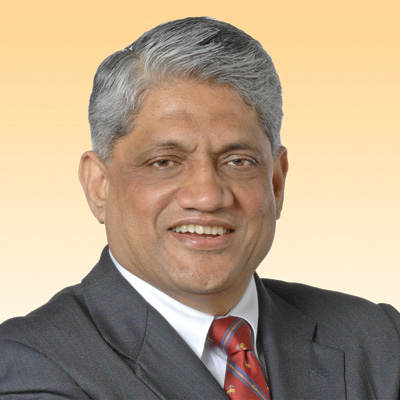
Ramani Ayer was the first Indo-American CEO of a Fortune 100 company. He was Chairman of the Board and CEO of Hartford Financial Services Group for 13 years, retiring in 2009.  Mr. Ayer will speak on “Enlightened Leadership and World Peace.”

For more information on the speaker profiles see: http://www.newparadigmtour.org/speakers.html

SPECIAL HOLLYWOOD AND BOLLYWOOD GUESTS

Joining these speakers via videoconference will be special guests, Hollywood director, David Lynch, and the Sagar family, of Ramayana fame, from Mumbai. David Lynch is acclaimed as one of the most creative minds in film, art, and music today.  He is also the founder of the David Lynch Foundation www.davidlynchfoundation.org. Ramanand Sagar created the original epic Ramayana series in 1987, inspiring all of India while preserving Vedic values in the culture.  The next generation of Sagars—Prem, Anand, Shiv and Shakti of Sagar Arts—created the 2008 remake of this timeless saga.

THEMES

The speakers will explore three primary themes in the presentation. The first theme explores the cosmic nature of the individual. The sounds of the Veda have been found to be blueprints that structure the physiology on every level.  The brain, the heart and the whole physiology are seen from this perspective as a replica of Veda and the Vedic literature. The practical application of this has been documented by original research conducted by medical doctors and scientists that demonstrates the effectiveness of these Vedic sounds for creating brain coherence and for the treatment of chronic disorders.

The second theme explores the applications of this discovery on the collective level of society.  The presentation will review evidence that large groups of thousands of peace-creating Vedic pandits are capable of changing the destiny of mankind by applying Vedic technologies of consciousness from the deepest level of consciousness—the common unified source of both science and religion. Demonstrating the effectiveness of this approach, the Global Peace Initiative has already established 1000 Maharishi Vedic Pandits in Maharishi Vedic City in Iowa, and 2500 at the center of India in Madhya Pradesh. www.vedicpandits.org

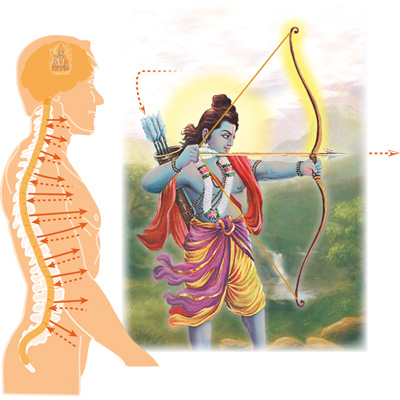
The third theme covers Dr. Nader’s latest book, “Ramayan in Human Physiology,” which will be released on this tour. It describes the profound correlation between the characters, details and happenings of the Ramayana with every part of the human physiology. “It will serve as a revelation to those who desire a greater understanding of the unity underlying all that makes us human,” says Gary P. Kaplan, M.D., Ph.D., Clinical Associate Professor of Neurology at Hofstra University School of Medicine. http://www.newparadigmtour.org/ramayan

RAMAYAN in HUMAN PHYSIOLOGY SEMINARS

In addition to the ‘New Paradigm’ presentations, Dr. Nader will also offer an “Introductory Seminar on the Ramayan in Human Physiology” at each of the locations for those who desire a more in-depth treatment of the correlations between the eternal story of the Ramayana and the structure and function of the human physiology. http://www.newparadigmtour.org/seminars.html

OPRAH, TM, FAIRFIELD, AND VEDIC PANDITS

Oprah Winfrey and her staff all practice Transcendental Meditation. For Oprah’s Next Chapter, she visited Fairfield, Iowa, America’s Most Unusual Town. She also went to Maharishi Vedic City to see the Maharishi Vedic Pandits.  Oprah and her crew were the first ones allowed in to film the Vedic Pandits chanting.

Oprah completed her visit by meditating with the ladies in their Bagambhrini Golden Dome of Pure Knowledge. “It was a powerfully energizing yet calming experience. I didn’t want it to end.” You can see a photo of Oprah meditating in the dome with over 400 ladies and read what she had to say about her experience in the February issue of O Magazine in her column “What I Know For Sure.”

This press release was published in Pravasitoday under Events: http://www.pravasitoday.com/new-paradigm-tour-visits-10-north-american-cities | INDIAWEST: New Paradigm Tour: ‘Veda, Consciousness, The Ramayana, and the Self’| India Tribune (page 4): Meet on ‘Veda, Consciousness, Ramayana and Self’ in 10 North American cities | India Post (page 9): Science & spirituality tour in 10 cities | LoKvani: In Conversation With Ramani Ayer | Chicago Tribune: New paradigm North American tour visits Chicago with pictures from Asian Media USA | India Post: IOWA scholars give scientific exposition of Ramayana (page 13) | hi INDiA: Special Report: Ramayan; A New Vision in Vedas (cover story on pages 20+24) | NewsIndiaTimes: Hundreds Attend Program to Promote Vedic Learning

See website for more details: http://www.newparadigmtour.org, Facebook page: http://www.facebook.com/VedaConsciousness, and videos of Dr Nader at: http://www.youtube.com/drtonynader. Also see A report halfway into the New Paradigm Tour: Veda, Consciousness, the Ramayana and the Self. See this New Video: Dr. Tony Nader speaks about the Ramayana in Human Physiology.

Singing Image of Fire, a poem by Kukai, with thoughts on language, translation, and creation

January 2, 2012

We read in Genesis that creation came into being with the first utterance: “Let there be light.” So sound came first, then light, followed by forms. Interestingly, the seemingly nonsensical phrase, abracadabra, a magician says when performing a trick, derives its meaning from the ancient biblical language, Aramaic: abraq ad habra, which means, “I will create as I speak.” I discovered that on page 170 of Poemcrazy: Freeing Your Life with Words, a delightful book on finding and writing poetry in many creative simple ways, by Susan Wooldridge, writer, poet and teacher.

This poem by Kukai says a lot about language, creation, consciousness, and our integral relationship to things.

Singing Image of Fire

A hand moves, and the fire’s whirling takes different shapes,
Triangles, squares: all things change when we do.
The first word, “Ah,” blossomed into all others.
Each of them is true.

This poem on language, translation, and creation, the pictorial/written representation of vocal sounds and meanings, was written by Kūkai (空海), also known posthumously as Kōbō-Daishi (弘法大師 The Grand Master Who Propagated the Buddhist Teaching), 774–835, a Japanese monk, civil servant, scholar, poet, artist, and founder of the Shingon or “True Word” school of Buddhism. He allegedly developed the system using Chinese characters to write Japanese words. The word “Shingon” is the Japanese reading of the Kanji for the Chinese word Zhēnyán (真言), literally meaning “True Words”, which in turn is the Chinese translation of the Sanskrit word mantra (मन्त्र). The concern was to be as true as possible when translating texts, to have and use the right word when describing something. The Sanskrit language had this perfect one-to-one correspondence between name and form.

The poem was mentioned in Nine Gates: Entering the Mind of Poetry (HarperCollins, 1997) by Jane Hirshfield, a classic collection of essays about the mysterious ways poetry comes to us. In her chapter, The World is Large and Full of Noises: Thoughts on Translation, she highlights this theme with What Rainer Maria Rilke inscribed on the copy of The Duino Elegies he gave his Polish translator.

When I read that line in Kukai’s poem, about the first word, “Ah,” blossoming into all others, and each of them being true, it reminded me of what Maharishi Mahesh Yogi says about the first sound of creation, “A”, how it represents infinity collapsing to a point, “K”, and through its own sequential self-interacting dynamics, creates the whole alphabet, words, verses of Rk Veda, the whole Vedic literature, and their subsequent forms, the universe. This is part of Maharishi’s Apaurusheya Bahashya, the unwritten commentary of the Veda, unfolding itself and commenting on itself to itself. Apaurusheya Bhashya: Rk Veda is said to be nitya, eternal, and apaurusheya, uncreated. Maharishi explains that the sequential unfoldment of Rk Veda is its own uncreated, or unmanifest, commentary on itself, rather than that of an individual making an ‘external’ commentary on Rk Veda.

See Maharishi’s Apaurusheya Bhashya discussed in Everything is made of Vedic Sounds by William F. Sands, PhD. Also see Modern Science and Vedic Science: An Introduction by Kenneth Chandler, PhD.

In his Introduction to Maharishi Vedic University, Maharishi gives us a comprehensive cosmic perspective on the role Sanskrit, the language of Nature, plays in the process of creation. Through the self-interacting dynamics of pure consciousness, the Self, or Atma, reverberates within itself and creates the eternal uncreated sounds of the Veda, its own language, which in turn express themselves into forms—the individual body, Sharir, and the cosmic body, Vishwa. The eternal Silence and its own inherent Dynamism, evolve all parts of itself constantly referring them back to their source. He says it’s a start-stop process of Infinity collapsing to a point, referring it back to Itself, and evolving the next sequential sound, and subsequent form. Full realization, or enlightenment, comes when one comprehends all of creation: Atma, Veda, Sharir, Vishwa, Brahman, or Totality, as the full potential of one’s own consciousness. Aham Brahmasmi. I am totality.

On Page 65 Maharishi writes, “The basic process of change, this basic process of transformation, continuously maintains the momentum of evolution of different levels of expression, creating different levels of manifestation upholding the process of evolution.

“It is this that promotes the eternally self-referral dynamics of Samhita into the sequential evolution of sound, speech, forms of speech in alphabets, words, phrases, verses etc., with corresponding material forms. This process continues eternally, resulting in the ever-expanding universe.” (Samhita is the togetherness of Rishi, Devata, Chhandas; knower, process of knowing, and known.)

I’ve written a poem about this process in Coalescing Poetry: Creating a Universe, (into haiku forms).

To learn more about the source of words, creation, both literal and literary, and their connection to consciousness, read: The Flow of Consciousness: Maharishi Mahesh Yogi on Literature and Language.

Also see: Before He Makes Each One by Rainer Maria Rilke.

Nine years later I posted: Japanese culture: poetic aesthetics, artistry, and martial arts, inspired me to write haiku and tanka.

The Flow of Consciousness: Maharishi Mahesh Yogi on Literature and Language

November 3, 2010

THE FLOW OF CONSCIOUSNESS: Maharishi Mahesh Yogi on Literature and Language, 1971 to 1976, edited by Rhoda F. Orme-Johnson, Ph.D. and Susan K. Anderson, Ph.D.

For the first time, a selection of talks by Maharishi Mahesh Yogi, the founder of Maharishi University of Management, has been transcribed and published, with this volume on literature and language projected to be the first in a series publishing talks in many different disciplines. In response to MUM faculty talks on art, literature, government, education, and many other disciplines, Maharishi would give his profound insights into that discipline, a direction for research scholars, and a vision of how the study of consciousness would enrich and develop each area of academic inquiry and personal experience. A number of the talks were in response to presentations given at international symposia by leading scholars in their field, Nobel laureates, and such eminent professionals as R. Buckminster Fuller.

Over the years, Maharishi Mahesh Yogi recorded brilliant and inspiring lectures on the literary process, as well as critical theory and technique, emphasizing the relevance of the state of consciousness of both writer and reader. He explained how only from an expanded basis can the writer spontaneously experience and express refined emotions and ideas and only from such a basis can the reader hope to understand and enjoy such writings. Literature itself can be a means to evolve one’s consciousness through sounds, rhythms, and meanings, swinging the reader’s attention from concrete to abstract, purifying consciousness and producing bliss. A fully developed consciousness can express the ocean in a drop, and from that drop flows a river of meaning, power, and enjoyment.

Immersing oneself in the transcripts of Maharishi’s lectures allows readers to feel his presence, to hear his voice, his rhythms of speech, his humor, and to appreciate his skill as a teacher. His exposition of the power of poetry, particularly the poetry of the Veda, gives the reader a taste of his intellect and his profound understanding of language and literature. It is a journey through a great mind and an exploration of a topic familiar and beloved by all.

This volume is a valuable resource to teachers, students, and all readers of literature, to all those interested in higher human development and the literary process.

The 350-page book includes 14 talks given in the years 1971–76 and is available at Maharishi International  University Press.

The Review wrote an informative article, the first of six, in issue Vol. 26, #4, November 3, 2010, announcing the publication: First-Ever Book of Maharishi’s Lectures Explores Literature and Language.

MIU Press later offered The Flow of Consciousness with The Unmanifest Canvas as a discounted Art Book Combo.

Dean of Faculty Cathy Gorini spoke with Dr. Rhoda Orme-Johnson, the first interview in a new series on KHOE titled, “A Chat With The Dean.” This discussion focused on Dr. Orme-Johnson’s new book, “The Flow Of Consciousness,” transcripts of Maharishi Mahesh Yogi’s lectures. Drs. Gorini and Orme-Johnson settle into a warm discourse on the significance of Maharishi’s lectures, in particular, the field of literature. Recorded Oct 26, 2010. (mp3 47 mins, 16 MB)

(more…)

Give TM a chance to prevent more wars

March 28, 2010

News from southeastern Connecticut | Click here for photos of Maharishi, and with The Beatles, in Bangor, Wales, August 24+26, 1967.


Article published Mar 28, 2010

All these ex-military dudes are saying is give TM a chance

By RAYMOND E. SEEBALD and DAVID R. LEFFLER

Wars start in the minds of men, and cycles of conflict ensue. So, too, can wars be prevented in the minds of men, but not always in the conventional way one might think. A new technology of defense has now emerged from a most unexpected quarter and has scientifically shown itself to have intriguing potential to prevent war and create peace.

Here’s the background: The underlying cause of war is accumulated social stress. Stress builds up. Differences arise. Groups take sides. Mediation fails to resolve the differences. Enemies form and arm.

Military organizations theoretically provide a deterrent to conflict, but when social division and enemies directly challenge the execution of national policy, military force can be activated and deployed to protect the nation. Armed conflict follows, with unpredictable outcomes. Even if conflict temporarily solves the problem for the winner, the underlying social stress is increased, fueling more violence and more terrorists.

No stress, no tension

In contrast, the absence of collective stress translates into the absence of tension between competing sides, thereby reducing the probability of hostilities.

Today, an opportunity exists to overcome this cycle of conflict by deploying a scientifically verified technology of defense that neutralizes social stress.

This technology operates on the most fundamental and powerful level of human consciousness, and is accessed and harnessed through a surprising and most unconventional channel-meditation.

In more than 50 studies published in scientific journals, Transcendental Meditation (TM) has been documented to powerfully reduce violence and criminal activity and even to calm open warfare.

Here’s how we believe it works: Just as radio or TV transmitters beam signals through an unseen electromagnetic field, groups of meditating people can generate a strong wave of coherence and positivity through an underlying field of collective consciousness. Stress and tension diminish. The larger the group, the greater the effect.

Specifically, the studies demonstrate that when the required threshold of meditators is crossed – approximately the square root of 1 percent of a given population – crime goes down, quality of life indices go up, and war and terrorism abate. Scientists have named this phenomenon the Maharishi Effect, after the founder of Transcendental Meditation, the late Maharishi Mahesh Yogi, who envisioned this possibility for creating global harmony.

In 1993, a two-month Maharishi Effect experiment was implemented in Washington, D.C. The findings published in Social Indicators Research showed that crime fell 24 percent when the peace-creating group reached its maximum size.

A decade before, during fighting in the Middle East, large assemblies of meditators repeatedly caused battlefield casualties to drop dramatically. A global-scale study published in the Journal of Offender Rehabilitation documented a 72 percent drop in international terrorism.

Our armed forces are responsible for defending the country. We suggest they consider adding an unconventional force – a consciousness corps, so to speak – to enhance their mission. Create a coherence-creating group of meditating soldiers exceeding the square root of 1 percent of the population of the United States. It would only take approximately 1,750 personnel.

Really not far-fetched

Admittedly, the idea of fighting terrorism with meditation sounds far-fetched. But the idea of an Internet would have seemed crazy, too, just a generation ago. Now, we communicate across oceans and access a universe of information simply by typing into some invisible field.

At one time, meditation was considered “mystical.” Now, doctors prescribe it and even the government funds research on the health effects of meditation. That’s because hundreds of studies show it effectively reduces individual stress and improves health. Why not put it to the test to improve global health?

As part of its responsibility to protect the nation, the U.S. military is obligated to thoroughly examine scientifically proven methods for preventing war and terrorism. All that is necessary is to provide the proper training for a group of military personnel or indeed, any large group within the country.

With all the conventional methods we utilize to protect life, liberty, and freedom, we should also be open to trying new, creative ideas, no matter how unconventional they seem.

Retired Coast Guard Capt. Raymond E. Seebald was a military aide to presidents Ronald W. Reagan and George H.W. Bush from 1986-1990. As captain of the Port in Chicago he developed post 9/11 security standards for U.S. ports. He graduated from the U.S. Coast Guard Academy in 1977. David R. Leffler is an Air Force veteran and executive director of the Center for Advanced Military Science (CAMS). He served eight years in the U.S. Air Force.

The authors served as associates of the Proteus Management Group at the Center for Strategic Leadership, U.S. Army War College.

TM activates DMN, the brain’s “ground state”

March 4, 2010

A new EEG study conducted on college students at American University found they could more highly activate the default mode network, a suggested natural “ground state” of the brain, during their practice of the Transcendental Meditation technique. This three-month randomized control study is published in a special issue of Cognitive Processing dedicated to the Neuroscience of Meditation and Consciousness, Volume 11, Number 1, February, 2010.

Specifically, the study found the TM technique:

  • Produces a unique state of “restful alertness,” as seen in the markedly higher alpha power in the frontal cortex and lower beta and gamma waves in the same frontal areas during TM practice.
  • Creates greater alpha coherence between the left and right hemispheres of the brain suggesting the brain is working as a whole.
  • Enhances an individual’s sense of “self” by activating what neuroscientists call the “default mode network” in the brain. (This is considered the natural ground state of the brain, glimpsed by neuroscientists during eyes-closed rest but more fully activated during Transcendental Meditation practice.)

“The finding of significant brain wave differences between students practicing the Transcendental Meditation technique and those simply resting with their eyes closed is especially convincing because subjects were randomly assigned to conditions, and testing was conducted by a researcher unaware of the experimental condition to which the subject had been assigned,” said David Haaga, Ph.D., coauthor and professor of psychology at American University.

“Research has already shown that simply closing one’s eyes and relaxing increases the default mode. A significant additional finding of this new study is that activity in the default mode increases during TM compared to simple eyes-closed rest,” said Fred Travis, Ph.D., lead author and director of the Center for Brain, Consciousness, and Cognition at Maharishi University of Management. “Different meditation techniques entail various degrees of cognitive control. Thus, activation patterns of the default mode network could give insight into the nature of meditation practices.”

Previous published research, funded by the NIH, shows TM practice decreases high blood pressure, atherosclerosis, cholesterol, stroke, and heart failure.

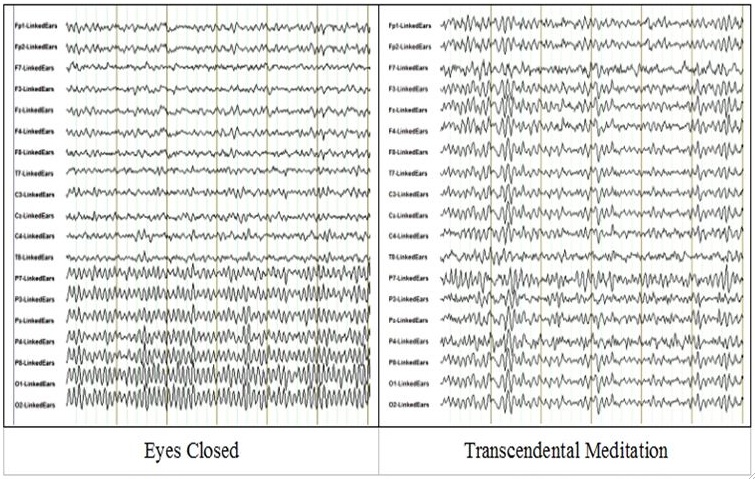
Comparative EEG Tracings

These raw EEG tracings during eyes-closed rest (left) and Transcendental Meditation (right) represent 18 tracings over 6 seconds. The top tracings are from frontal sensors; the middle tracings are from central sensors; the bottom tracings are from parietal and occipital sensors [back]. Note the high-density alpha activity in posterior leads during eyes-closed rest, and the global alpha bursts across all brain areas during Transcendental Meditation practice.

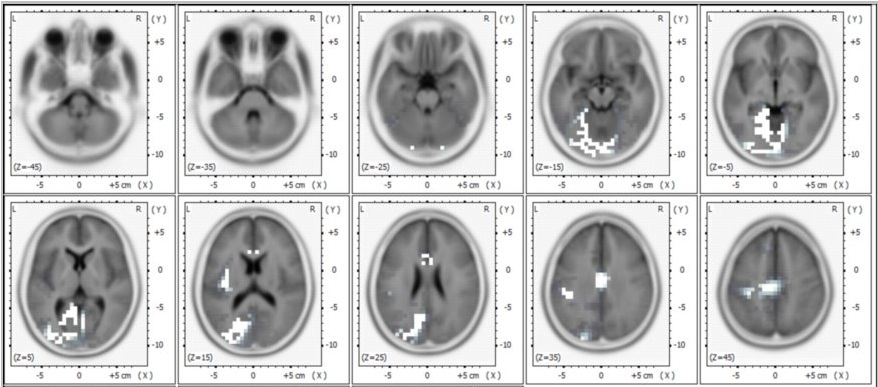
eLORETA Images of Significance Differences

These are eLORETA images of sources of alpha EEG during TM compared to eyes-closed rest in the default mode network (the white areas).

Images credit: Cognitive Processing, Volume 11 (2010), Issue 1

Article title: A self-referential default brain state: patterns of coherence, power, and eLORETA sources during eyes-closed rest and Transcendental Meditation practice, DOI: 10.1007/s10339-009-0343-2. Also on PubMed.

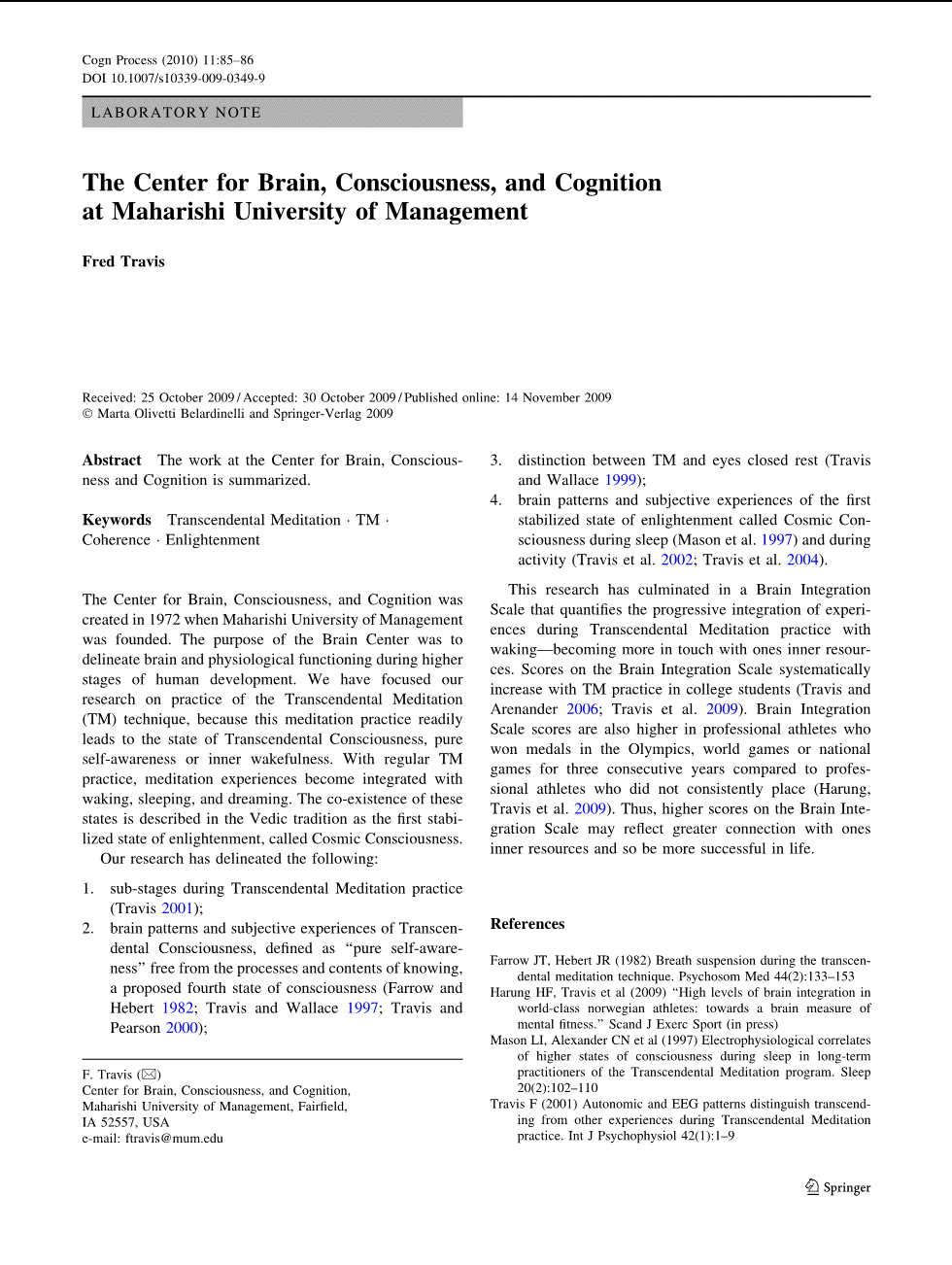
Laboratory Note: The work of the Center for Brain, Consciousness, and Cognition at Maharishi University of Management is summarized and featured in this same issue: