How TM helped calm and center a young woman’s busy mind—inspiring article in new Irish magazine

October 11, 2013

A new magazine, Upside News, came out on Dublin’s north side in Ireland. Their website is still under construction, but here is a description on their Facebook page. They asked someone for an article on Transcendental Meditation.
John Burns

John Burns

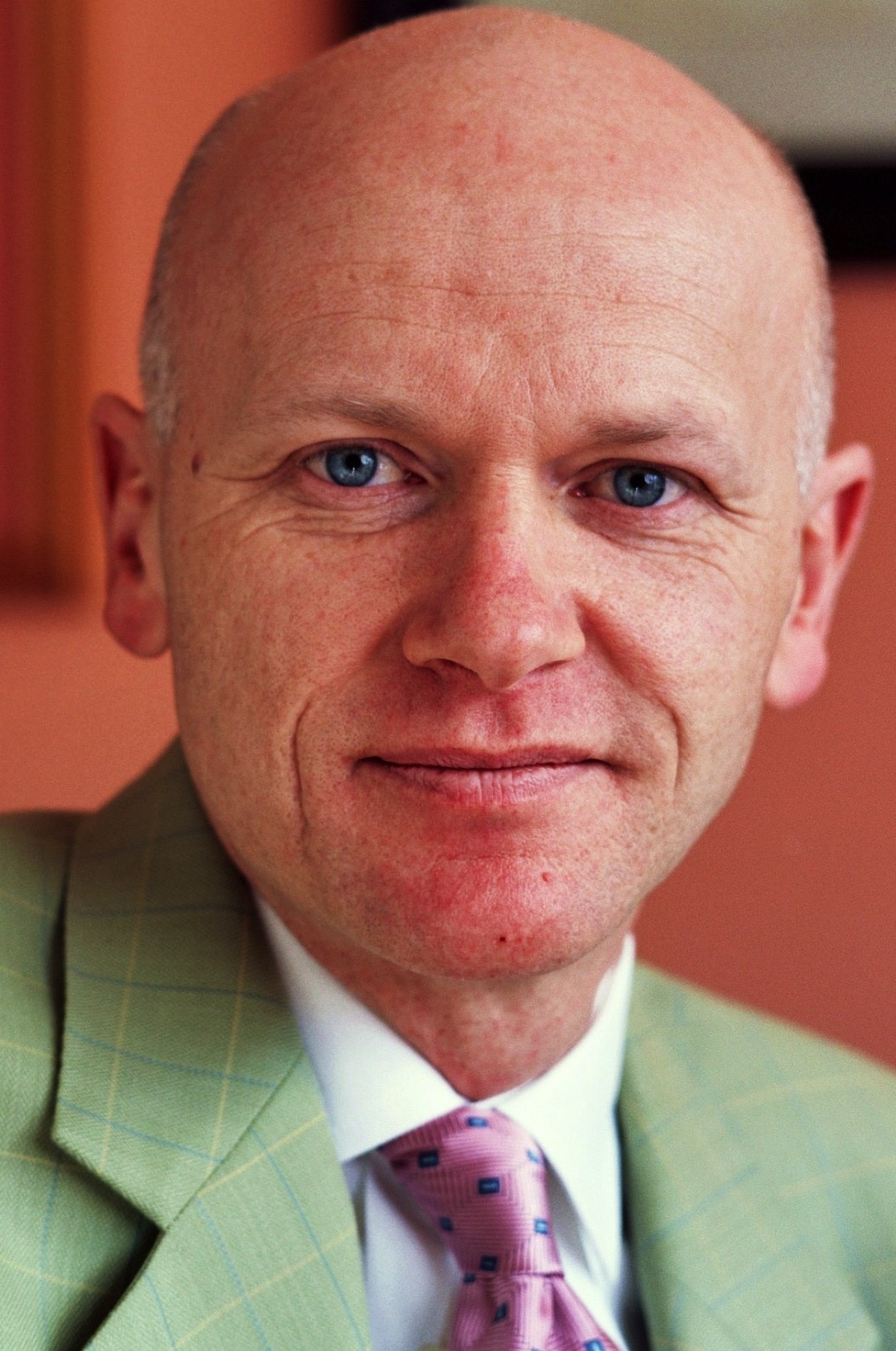
Since Christine Ryan was the contact person, John Burns, Communications Director for TM in Ireland, persuaded her to write about her experience of the technique. John said he sent the editor an article he had written along with Christine’s TM experience and told him he thought what she had written was so good that he should use it instead if space was an issue. The editor got back to John and said that he would print Christine’s piece.

Good decision; it’s a fantastic personal account! When I asked John to tell me more about the author, he said, “Christine is training to be a school teacher. She is just someone who really appreciates her TM.” I asked John to send a picture of Christine, a PDF of the magazine article, and a link when it’s posted online, which I’ll add when they’re available. Here’s what she wrote:

“As a twenty-four year old trying to find your place in the world, weaving your way around the many forks in the road that separate all of the possible paths down which to venture, it can be hard to tease out your own true voice in an increasingly noisy world.

I am an introverted, intellectual, always-something-to-think-about child of the technological generation. It seems easy to assume I would have trouble turning my awareness away from words on a page, the lure of the internet, my mobile phone, the radio buzzing and the drilling noise vibrating from the neighbour’s house a few doors down where a posse of hard-working, bellowing construction workers are knocking down two walls in her house only to put six back up. But TM is natural and it is effortless, when you learn how to do it.

What TM gives me is stillness and silence. For twenty minutes twice a day, I go to a place of silence that already exists within me. It happens effortlessly and spontaneously. As a helpless analyser of all things, this initially seemed impossible for me to swallow but I very quickly discovered its truth. The noise of the world disappears and I arrive at a place of beautiful quiet.

TM is like diving into a pool of light that washes away dirt and darkness, and emerging fresh and invigorated. During my TM practice, I feel my body settle into a deep state of rest and an overwhelming sense of calm and stillness pervades it. I feel free from the shackles of stress and exhaustion. I experience a sense of unity and peace. Without any resolve to do so, this sense of wholeness and calm lingers on when my meditation has ended; the effects of my TM practice spontaneously ripple forward into my activity.

Almost seven months into my second year of practising TM, I feel greater clarity in my thinking; as a busy thinker this has been such a profound change that TM has brought me. My relationships are infused with a sense of ease now. My thinking is sharper, ideas flow more easily, and my energy is lasting and productive. I feel less uncertain about decisions to be made and a greater vibrancy in my creative endeavours.

As I continue to meditate, the effects grow stronger. My wonderful TM teacher, Ann, put it simply: “It’s like going to the gym,” she said. “You feel great for the first few weeks that you’re going, but if you stop going, you’ll lose the benefits bit by bit.” I may not get to the gym (or exercise for that matter!) every day, but sitting in a chair in my sweats, with messy un-brushed hair, allowing my mind to simply settle down to a place of profound stillness and emerging twenty minutes later energised and renewed—now that I can do!

I was never one to easily identify with, or apply, the principle of “go with the flow,” but as I continue to practise TM I edge all the more closer to fully understanding exactly what that means. TM has resigned stress and anxiety to a state out of tune with the natural rhythm and flow of my body and mind. It puts things into perspective. To connect with that constant centre of calm and stillness that lies within me, regardless of what is happening in my life, and to find that stillness lingering during activity has been one of the greatest joys of learning TM.

Visionary filmmaker, veteran meditator, and prolific speaker and activist for TM, David Lynch, said it best when he said: “TM is for human beings.” The truth of his words find significance in the shared experiences of the benefits of TM by meditators around the globe, young and old, from all religions and all walks of life, from those behind bars to those raised high on a platform called “celebrity.”

In the monthly group meditation meetings I meet meditators of all ages: veterans to novices, students to retirees and everything in between. In a world that breeds so much disconnection and discord, it is a joy to practice a simple technique that allows for an awareness of the integral similarity between us all.

TM recharges me mentally and physically. My morning and evening TM practice have become the pillars onto which I anchor my day. I can hear my own inner voice more clearly again and those forks in the road don’t loom quite so ominously now.”

Effects of TM Practice on Trait Anxiety: A Meta-Analysis of Randomized Controlled Trials

October 10, 2013

A new meta-analysis published today (Oct 9, 2013) in the Journal of Alternative and Complementary Medicine (2013;19(10):1-12)1 found the Transcendental Meditation® technique (TM) has a large effect on reducing trait anxiety for people with high anxiety. Trait anxiety is a measure of how anxious a person usually is, as opposed to state anxiety, which refers to how anxious we are at the moment. A meta-analysis is an objective means to draw conclusions from all the research in a field.

This meta-analysis covered 16 randomized controlled trials, the gold standard in medical research, and included 1295 subjects from various walks of life, age groups, and life situations. TM was compared with various control groups, including treatment-as-usual, individual and group psychotherapy, and various relaxation techniques. Studies on high stress groups, such as veterans suffering from PTSD and prison inmates, showed dramatic reductions in anxiety from TM practice, whereas studies of groups with only moderately elevated anxiety levels, such as normal adults and college students, showed more modest changes.

A chart shows that studies of individuals with anxiety levels in the 90th percentile (higher than 90% of the rest of the adult population) showed dramatic reductions in anxiety down to the 57th percentile from TM practice. This is just a little higher than the average anxiety level, which is the 50th percentile. Study groups that started in the 60th percentile, a little above average, showed more modest reductions, to the 48th percentile, a little below average.

Lead author on the meta-analysis, Dr. David Orme-Johnson, an independent research consultant, commented: “It makes sense that if you are not anxious to begin with, that TM practice is not going to reduce your anxiety that much. Groups with elevated anxiety received significant relief from TM, and that reduction occurred rapidly in the first few weeks of practice.”

TM was also found to produce significant improvements in other areas worsened by anxiety, such as blood pressure, insomnia, emotional numbness, family problems, employment status, and drug and alcohol abuse.

This chart shows that studies of individuals with anxiety levels in the 90th percentile (higher than 90 percent of the rest of the adult population) showed dramatic reductions in anxiety down to the 57th percentile from TM practice. This is just a little higher than the average anxiety level, which is the 50th percentile. Study groups that started in the 60th percentile, a little above average, showed more modest reductions, to the 48th percentile, a little below average. (Photo Credit: Dr. David Orme-Johnson)

Co-author Dr. Vernon Barnes of the Georgia Prevention Center, Georgia Regents University, Augusta, Georgia explains what happens with control groups in these studies. “Control groups who received usual treatment did not show dramatic reductions in anxiety. In fact, control groups that were highly anxious to begin with, if anything, tended to become more anxious over time.”

When asked about the effect of other approaches to reduce anxiety, he added, “However, progressive muscle relaxation was also effective in reducing anxiety. But, it did not have the other side benefits of TM, such as increasing overall mental health, and increasing the rate of recovery of the physiology from stressors.”

Dr. Orme-Johnson answered a commonly asked question about placebo effects. He said: “Since anxiety is a self-reported measure, one might wonder whether the effects of TM practice or any other treatment program were a placebo effect. Placebos are great. If you give a person a sugar pill and tell them that it will reduce anxiety, it probably will, but only for a little while before the effect wears off. But the effects of TM were shown to be lasting and include objective benefits. For example a recent study showed that TM reduces heart attacks, strokes, and death over a ten-year period. So we know its effects are real and are not just due to a placebo.”

The meta-analysis also examined the issue of bias with TM studies on anxiety. There was no evidence of missing studies and studies conducted by scientists who were in any way associated with Maharishi University of Management or any of its sister universities did not have stronger effects than research conducted at independent universities.

Two previous meta-analyses on TM have found that it is highly effective in reducing trait anxiety, and is more effective than other meditation and relaxation techniques, including mindfulness meditation.2,3

###

Background Information on Transcendental Meditation

The Transcendental Meditation (TM) technique is a simple, natural, effortless procedure practiced 20 minutes twice each day while sitting comfortably with the eyes closed. It is not a religion, philosophy, or lifestyle. It is the most widely practiced, most researched, and most effective method of self-development. For more information visit: http://www.tm.org.

Background information on anxiety

Anxiety disorders are the most common mental health problem in the United States, affecting 40 million adults (about 18% of the population) and costing more than $42 billion a year.4,5 Anxiety is considered a negative mood disturbance that results from failure to predict, control, and obtain desired goals6 and is associated with dysfunctional cognition, behavior, and physiologic over-activity.7 Anxiety further impairs health by motivating increased use of tobacco and alcohol8 and predisposes the individual to chronic diseases such as coronary heart disease.7,8

  1. Orme-Johnson DW, Barnes VA. Effects of the Transcendental Meditation technique on Trait Anxiety: A Meta-Analysis of Randomized Controlled Trials. J Altern Complement Med 2013;19(10):1-12. http://online.liebertpub.com/doi/abs/10.1089/acm.2013.0204
  2. Eppley K, Abrams AI, Shear J. Differential effects of relaxation techniques on trait anxiety: A meta-analysis. J Clin Psychol 1989;45(6):957-974.
  3. Sedlmeier P, Eberth J, Schwarz M, et al. The psychological effects of meditation: A meta-analysis. Psychol Bull 2012;138(6):1139-1171.
  4. ADAA. The Anxiety and Depression Association of America. 2013; http://www.adaa.org/about-adaa. Accessed January 10, 2013.
  5. Greenberg PE, Sisitsky T, Kessler RC, et al. The economic burden of anxiety disorders in the 1990′s. J Clin Psychiatry 1999;60(7):472-435.
  6. Barlow DH. Unraveling the mysteries of anxiety and its disorders from the prespective of emotion theory. Am Psychol 2000;55:1247-1263.
  7. Kolzet JA, Inra M. Anxiety. In: Allan R, Fisher J, eds. Heart and Mind: The Practice of Cardiac Psychology. 2nd ed. Washington, DC: American Psychological Association; 2012.
  8. Sawchuk CN, Olatunji BO. Anxiety, health risk factors, and chronic disease. Am J Lifestyle Med 2011;5(6):531-541.
Source: EurekAlert! and Maharishi University of Management.
Posted on Science Codex, Medical News Today, Helio: Psychiatric Annals, PubMed, and many other science and medical news sites. Also on the TM Blog: New Research on TM and Anxiety. Here is a PDF of the paper made available by Renncap.

Watch the 1968 film of Maharishi at Lake Louise

September 24, 2013

See my earlier post on a segment from this film: Maharishi describes the nature of inner life: bondage and liberation, and gaining bliss consciousness through Transcendental Meditation. Maharishi is seen walking and talking about the nature of life, with the beautiful scene of Lake Louise and the Rocky Mountains behind him. He describes the lake, its surface and depth, and the reflections on it, as a metaphor to explain the spiritual content of life and how it gets lost and overshadowed when we identify with only the surface material objects of life, a state of bondage, at the expense of our own inner unbounded nature, bliss consciousness, which gets unfolded and integrated through the practice of his Transcendental Meditation technique, into a state of liberation. I transcribe Maharishi’s words there, the film’s essential spiritual message.

maharishi signs gita for ken

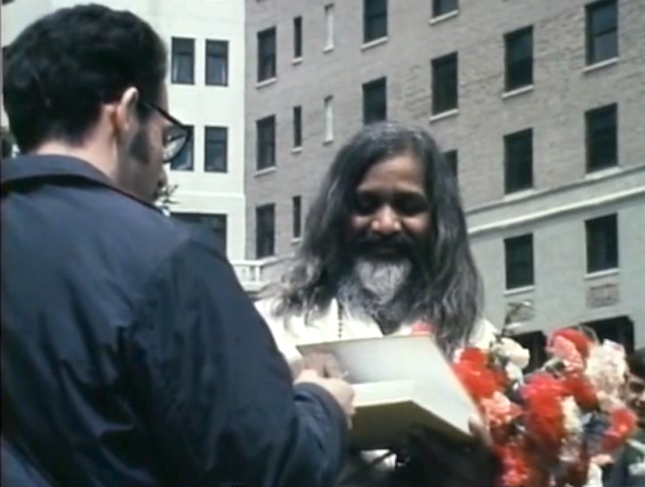
In the opening scenes of this complete video of the CBC documentary, we were all walking up to Maharishi to give him a flower. At 2:07-2:10, I’m seen coming up to Maharishi asking him to sign a copy of his translation and commentary on the Bhagavad-Gita, Chapters 1-6. The film closes with more of the same footage, which was all actually shot towards the end of the course. That wonderful week was the first time a lot of us got to meet Maharishi. It was an unforgettable divine experience in a most sublime natural setting!

Four years later, my mother, two sisters and I would meet privately with Maharishi at Queens University in Kingston, Ontario, where a Symposium on the Science of Creative Intelligence with many of Canada’s intellectual luminaries was taking place. But that’s another amazing story!

Forty years after I started TM, and thirty-nine years after having met Maharishi, I was able to assist an ITN Factual commissioned producer in making the A&E biographical film, Maharishi Mahesh Yogi, for the History International Channel (November 2007). Luckily I was able to procure vintage footage taken by Eileen Learoyd, a Victoria, BC journalist, and the first national leader of the Canadian TM Movement. Grania Litwin, her daughter and also a Victoria journalist, was kind enough to send us those home movies transferred to videos taken by her mother. We found one of Maharishi at Catalina Island from 1962 that was still in the original film canister! We had them all digitized and sent selections to the producer for use in the film. She was delighted to have received such historical footage. We also returned the videos with new DVDs to Grania.

I also put the producer in touch with Alan Waite, who had made the award-winning 1968 documentary, Maharishi Mahesh Yogi – Sage for a New Generation, and she ended up using many segments from that film as well. Also lined up interviews for her when she came to MUM in Fairfield, Iowa, as well as Mike Love in LA and Donovan in London.

Eileen and Hubert with Maharishi

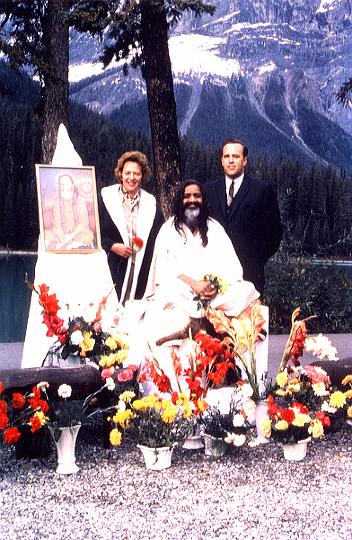
Eileen and Hubert with Maharishi at Emerald Lake, British Columbia

Eileen Learoyd and her brother Hubert Gray organized a seminar for meditators with Maharishi at Emerald Lake, British Columbia in 1964. Elieen would later organize the 1972 SCI Symposium. In June 1968 they arranged for the CBC to film Maharishi at the Lake Louise, Alberta course. Interestingly, after Maharishi signed my copy of the Gita, we both turned it toward the camera. That footage was edited out, but it seemed to be a symbolic gesture for what I would end up doing with a large part of my life in my own small way — helping to teach, promote and publicize Maharishi and his world-transforming Vedic knowledge and TM technique. And for that I am most thankful and fulfilled. Jai Guru Dev, Maharishi. Na Guror Adhikam.

And last year, (2012) a small crew from DLF.TV and I were fortunate to have assisted Oprah’s producers by providing them with more b-roll footage for the OWN program on the meditators of Fairfield, Iowa, referred to as “TM Town” by Oprah. They even gave us a credit! Here’s a post with Video segments of Oprah’s Next Chapter on OWN: Oprah Visits Fairfield, Iowa—”TM Town”—America’s Most Unusual Town.

I later found a photo of Hubert and Eileen on either side of Maharishi arriving in the lobby of the Fairmont Chateau Lake Louise Five-Star Hotel. That’s when I saw him for the first time, from the other side of the lobby, and felt the thought, ‘Prince of Peace’. At the end of the course, we took a group photo with Maharishi outside in front of the lake to complete that sublime one-week residence course, June 9-14, 1968.

Enlightenment, the Transcendental Meditation Magazine, also published an article on Maharishi at Lake Louise discussing the blissful nature of the practice of the Transcendental Meditation® technique.

In the summer of 2014 I retired from my position at MUM. A year later I was featured on the TMhome website: PR to poetry – how things sometimes happen to Ken Chawkin. They followed up with The story behind the making of the International History documentary on Maharishi Mahesh Yogi (International History Channel documentary on Maharishi Mahesh Yogi). A nice way to go out. I continue to write, blog, and freelance as a publicist for the movement as needed.

On September 30, 2014 I had posted how I learned #TMmeditation 47 years ago today. In there I share more information about the making of the CBC Telescope film, The Guru, of Maharishi at Lake Louise. Richard Day shared a story he had heard many years later about the director of the film, Colin Smith, who told Maharishi that he wanted to film him saying something that would encapsulate all his teachings. Maharishi said, “I’ll walk by the lake, you walk with me, and I’ll tell you everything about spiritual development.” He did it in one take! That’s the part I had transcribed and posted in the first link above.

Save

On August 2, 2020, Bob Roth, CEO of the David Lynch Foundation, and Mario Orsatti, Executive Director of the Center for Health and Wellness, a division of the David Lynch Foundation, discuss this historic documentary on TM Talks.

New York poet laureate Marie Howe reads “Annunciation” to Krista Tippett On Being

September 22, 2013

New York poet laureate Marie Howe speaks with Krista Tippett about her poetry on the NPR show, On Being. Closing the interview, The Poetry of Ordinary Time, recorded In The Room, April 2013, Howe reads a poem in the voice of Mary, mother of Jesus, describing the Annunciation, which, her friend and mentor, Stanley Kunitz, said no one had ever gotten right. She wrote several versions, tore them up, and then this final one came through her.

Marie Howe said it had nothing to do with her. It just came through her, a reminder that the best poetry comes through us when we get out of the way. When we are emptied of our small self, “by being no one,” transcend our senses and turn within and are open to the higher Self, then that great creative force of Love within us creates, and the miracle of life, of poetry, happens. You can hear “Annunciation” by Marie Howe on SoundCloud. 

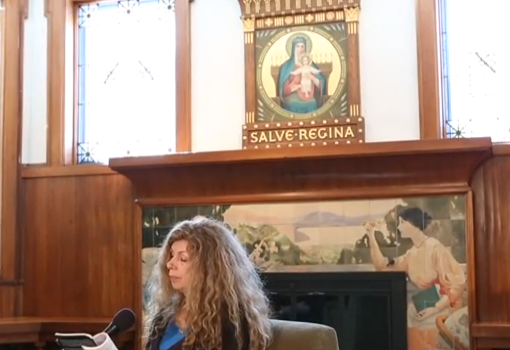
Thought this screen save from the video is most appropriate with the poster of Mother Mary holding the infant Jesus!

Marie Howe reads her poem Annunciation to Krista Tippett for On Being

Marie Howe reads her poem “Annunciation” to Krista Tippett for On Being

Annunciation

Even if I don’t see it again—nor ever feel it
I know it is—and that if once it hailed me
it ever does—

And so it is myself I want to turn in that direction
not as towards a place, but it was a tilting
within myself,

as one turns a mirror to flash the light to where
it isn’t—I was blinded like that—and swam
in what shone at me

only able to endure it by being no one and so
specifically myself I thought I’d die
from being loved like that.

This amazingly beautiful and profound poem can be found at 1:36:02 at the end of the interview, but she starts talking about it at 1:34:45. There are six audio clips of Howe reading her poems posted on SoundCloud recorded on March 16, 2003, at the College of Saint Benedict in Saint Joseph Minnesota.

On Being later recorded: Marie Howe — The Power of Words to Save Us.

Also see An Evening with New York State Poet Laureate Marie Howe.

This relates: David Whyte describes the mysterious way a poem starts inside you with the lightest touch. Whyte also uses a biblical reference, comparing poetic revelation to Lazarus walking to the light.

Enjoy reading: The Millions Interviews Marie Howe—Words Can Sustain and Save Us, published January 11, 2018, where Marie describes what the writing and reading of poetry has done for her, and what it can do for the rest of us. This Q&A particularly reinforces the point Marie Howe made to Krista Tippett when writing “Annunciation.”

TM: Do you think of writing as a spiritual act at its core?

MH: I do, because it involves a wonderful contradiction, which is, in order for it to happen, you have to be there, and you have to disappear. Both. You know, nothing feels as good as that. Being there and disappearing—being possessed by something else. Something happening through you, but you’re attending it. There are few other things in the world like that, but writing is pretty much a relief from the self—and yet the self has to be utterly there.

I know exactly what she means. I had a similar experience when “I wrote” ODE TO THE ARTIST: Sketching Lotus Pads at Round Prairie Park.

William Stafford in his poem, Rx Creative Writing: Identity, also writes about being open to “that bone light,” which “belongs inside of things.” And “You know so sure there burns a central vividness.” He reiterates this idea of being a recipient, a receptacle, and an attendant, a reporter: “It tells you; all you do is tell about it.”

In her poem, Mindful, Mary Oliver delights in the world around her, which leaves her “like a needle in the haystack of light. It was what I was born for — to look, to listen, to lose myself inside this soft world — to instruct myself over and over in joy, and acclamation.”

Oliver codifies this message in 3 short, powerful sentences in the 4th stanza of Sometimes, where she gives us “Instructions for living a life: Pay attention. Be astonished. Tell about it.”

Both poems are included in this post: Attentive to and delighting in her surroundings, Mary Oliver lived a life writing astonishing poetry.

Later added this article/interview by Kim Rosen for Spirituality&Health, Feb 16, 2014: Marie Howe: Holding the Silence. The acclaimed poet reflects on prayer, desperation, and letting go of what can’t be said. (PDF)

Newly added, Nov 2, 2022: What the Living Do—Marie Howe’s ‘letter’ to her brother—an elegy to loss and how she lives with it.

— Written and compiled (citing sources) by Ken Chawkin for The Uncarved Blog.

Haiku of the Heart – for Sali

September 22, 2013

This past Thursday, September 19, 2013, turned out to be an early Full Moon night. For some reason I ended up visiting Sali 3 times that day, twice to drop off things. The first time I stayed with her as she and the other residents were going to be entertained by a country music band. Their gentle songs from the fifties brought back memories when I first heard them as a child. It was very relaxing and healing for us as we listened together. When I returned later that night to read to her, she was already in bed. I leaned in and looked closely into her eyes. We both started laughing out loud, with great joy in our hearts. While sharing this experience with a friend at lunch today, the day of the autumnal equinox, I spoke of experiencing an orgasm of the heart. She repeated that line, and said it was something special. I noticed it also had seven syllables and wrote it down. Later, when we all went out for a walk together, the rest of the haiku easily assembled itself. I shared it with her; it sounded powerful. She said it gave her goosebumps, from head to toe and back.

Haiku of the Heart
for Sali

♥ ♥ ♥

Such joy between us
An orgasm of the heart
Looking in your eyes

♥ ♥ ♥

© Ken Chawkin
Experienced Thursday, September 19, 2013, Full Moon Night
Written Sunday, September 22, 2013, Autumnal Equinox
Fairfield, Iowa, USA

I remember another joyful time Being with Sali, August 1, 2012, also on a full moon night: Capturing an authentic moment in writing.

On August 31, 2017 I posted this related entry: ‘In Our Loving Eyes’ a poem by @kenchawkin remembering a special love with Sally Peden.

Writers’ Voices interviews B. Steven Verney, author of “The Best of All Possible Worlds”

September 10, 2013

Writers’ Voices: Author in the house –
B. Steven Verney and “The Best of All Possible Worlds”

Writers' Voices  Verney up close

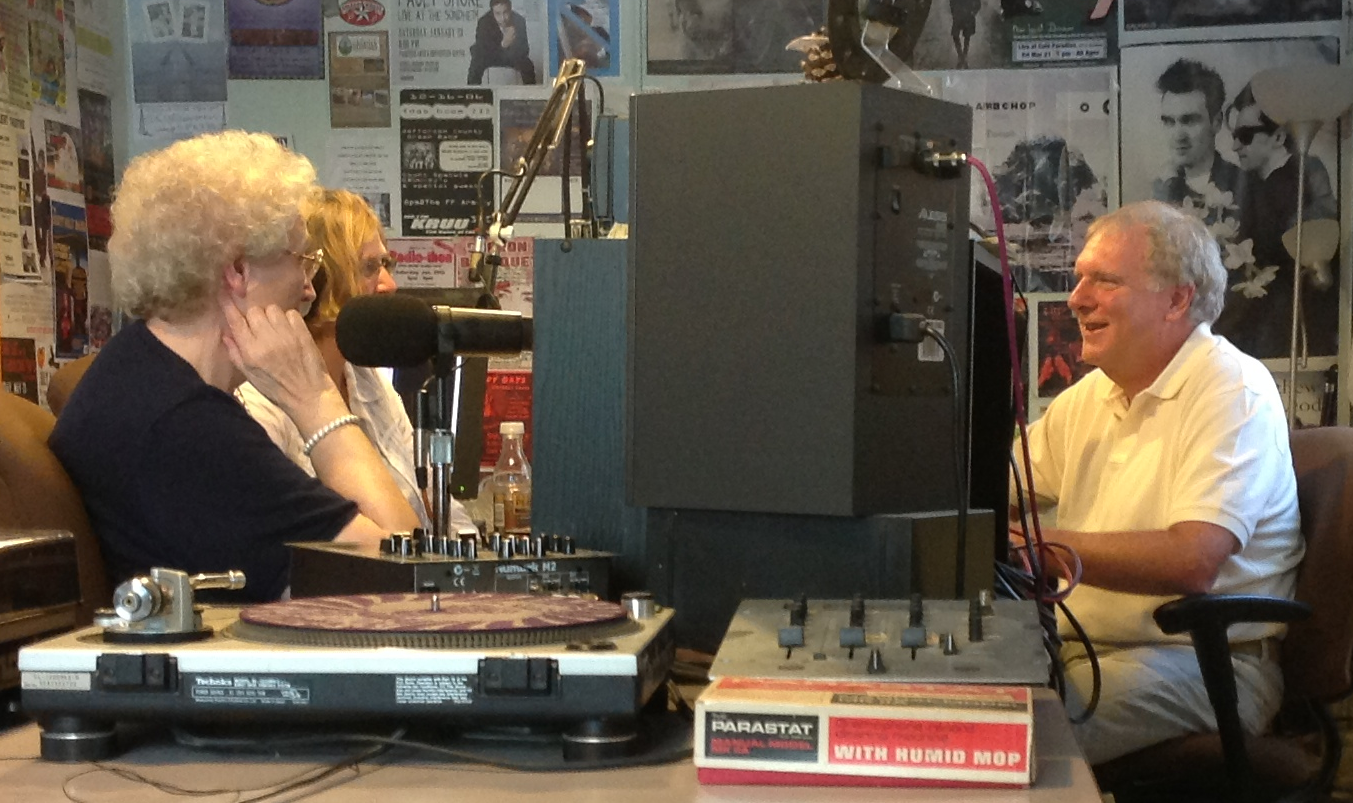
Monica Hadley and Caroline Kilbourn are delighted to welcome first-time novelist and former MIU student B. Steven Verney to KRUU 100.1 FM and Writers’ Voices, as he returns to Fairfield from his home in Massachusetts to join in the festivities of the MUM Literature Reunion being held this weekend, August 30 – September 2. See the press release: MUM Celebrates Literature Reunion 2013.*

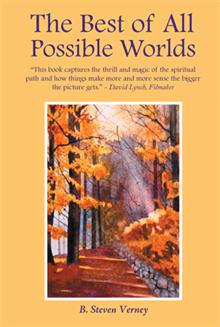
The Best of All Possible WorldsIn “The Best of All Possible Worlds,” published May 2012, Verney combines story-telling, philosophy, and the history of the TM movement into a unique and engaging novel. Anyone who attended TM teacher training courses in Switzerland or learned to meditate at Amherst in the early 70’s may just recognize pieces of their own personal history in this novel, while younger meditators, and even non-meditators with no connection to those events, will get a much deeper perspective of what all the fuss was about. This interview aired live, Fri Aug 30 1:00 pm – 2:00 pm and replayed, Mon Sep 02 8:00 am – 9:00 am. Here is an MP3 of it.

A newer interview recorded before Christmas 2013 was later posted in the new year: @MaharishiU Dean of Faculty, Dr. Cathy Gorini, interviews author Steven Verney on MUM’s KHOE.

If you went to MIU, Bruce Verney, as he was known back then, was student body president and won the Enlightened Leadership Award. He graduated in 1981 in Philosophy and married fellow student Kay Noble the following year. For the next 24 years, Steve and Kay started and operated three different businesses while raising their two sons. They’ve resided in New Salem, MA and currently live in Wellfleet, MA. This is his first novel.

I highly recommend the book. It won’t disappoint. The ending is mind-blowing! Steven said it took him 18 months to get the first draft down, and 3 years to revise and shape it, with some help from an editor, who curiously enough, turned out to be the person who had taught him Transcendental Meditation in Cambridge, MA decades earlier!

Although Steve is now writing his second novel, this first one is finally taking on a life of its own. David Lynch loved it and gave Steven a quote to help promote the book. “This book captures the thrill and magic of the spiritual path and how things make more and more sense the bigger the picture gets.” — David Lynch, Filmaker

The book will no doubt spread by word of mouth. George Ellis, author of A Symphony of Silence: An Enlightened Vision, said it should be turned into a screenplay. I agree. It’s destined to become a classic. I’m sure we’ll be hearing more of B. Steven Verney.

Visit Steve’s new website one of his son’s designed for him http://steveverney.com and blog. Read the overview of the book and see the Xlibris Book Trailer: The Best of All Possible Worlds.

*You may also enjoy The Flow of Consciousness: Maharishi Mahesh Yogi on Literature and Language, 1971 to 1976, edited by Rhoda F. Orme-Johnson, Ph.D. and Susan K. Anderson, Ph.D., two former chairpersons of the MIU/MUM Literature department who attended the Literature Reunion 2013.

Another novel about a meditating philosophy professor worth reading is, “To Be Enlightened” by Alan J. Steinberg.

The GQ Guide to Transcendental Meditation: The Totally Stressed-Out Man’s Guide to Meditation

September 10, 2013

The GQ Guide to Transcendental Meditation

GQ

Men’s Lives

The Totally Stressed-Out Man’s Guide to Meditation

by Josh Dean | Illustrations by Brian Cronin | September 2013

The most successful, innovative men alive do it. Overworked, very, very busy (and insanely rich) hedge-fund managers swear by it. So the question is: Should you cross your legs, close your eyes, and join in?  Read more >

This is the best no-nonsense, hip, informed article on Transcendental Meditation I have ever come across. See “6 Things TM Can Make You Better At” on page 1, listing  what TM will do for busy execs, including the results of a school project implemented by the David Lynch Foundation.

Check out The Tree of Ommmm on page 2 of the 3-page article, which has a chart with pictures of Maharishi to Paul McCartney representing The Beatles, to two levels of Celebrities with David Lynch as guru to the stars. Click on the picture and it will enlarge so you can see and read it better. I also added this comment posted there. GQ also embedded the video described in the comment with the link.

There’s a great video of Maharishi Mahesh Yogi giving a brief answer about what TM is and how it is taught. You won’t won’t find a reference that gives more insight into the technique itself and the teaching methodology used to teach it than this: Mantra and Transcendental Meditation explained by Maharishi.

To see what the whole article looks like with the illustrations, pick up a copy of the magazine, otherwise see it online by clicking on the title. Here is a scanned PDF of the article as it appears in the magazine. It’s an enjoyable read!

See a review of  “The Totally 
Stressed-Out 
Man’s Guide 
to Meditation” on the TM Blog by Mario Orsatti.

This article was updated and republished Oct 18, 2016 with the same title, but a different comparison chart: GQ-The Totally Stressed-Out Man’s Guide to Meditation.

Also see Renowned (TM) meditation teacher Bob Roth featured on The Third Metric and HuffPost Live.

Watch David Lynch on Esquire Network, How I Rock It, talking about Transcendental Meditation, which contains a link to a lucid description of Josh Zabar’s experiences with TM: Daily Reset – A Look Into Transcendental Meditation.

On March 19, 2025, GQ published an excellent article on TM and DLF. Colin Groundwater spoke with Bob Roth about the history, mission, and growth of the Foundation and David Lynch’s immense contribution. See David Lynch Was Transcendental Meditation’s Greatest Ambassador. What Happens to the Movement Now?

— Written and compiled (citing sources) by Ken Chawkin for The Uncarved Blog.

a writing tanka on writing tanka by ken chawkin

September 8, 2013

writing tanka
a writing tanka on writing tanka

stare at the blank page
intimidating or what
now just start writing

no matter what you put down
it will all come back to you

© Ken Chawkin
Fairfield, Iowa, USA
September 7, 2013

WRITING TANKA—Preparing to Write

Writing—a poem on the writing process

Haiku On The Nature of Haiku

The Beatles “Dear Prudence”: A Portrait of Prudence Farrow Bruns, Maharishi and TM

September 6, 2013

Dear Prudence: A Portrait of Prudence Farrow Bruns

Enjoy this video portrait of Prudence Farrow Bruns, the inspiration for the Beatles song “Dear Prudence”. Prudence discusses her personal journey, meditating with the Beatles in India, the transformation her generation tried to bring about in the world, and the change that can only come from within through Transcendental Meditation.

Directed, shot and edited by Kryshan Randel, music by Mike Pellarin, produced by David Shaw for iTranscend TM, a concept created by Ashley Cooper. For more information on Transcendental Meditation, visit these websites: http://maharishi.ca (Canada) and http://www.tm.org (USA).

Visit the newly launched Dear Prudence Foundation and click on About Prudence to read about her journey and why she set up a foundation: http://dearprudencefoundation.org.

See these other interviews with Prudence: 1) Amitava Sanyal, Allahabad, for BBC News India: Prudence Farrow — subject of the Beatles song Dear Prudence — visits India’s Kumbh Mela, and two videos: 2) Ted Henry interviews “Dear Prudence” Farrow Bruns about her life with TM and Maharishi, and 3) MicCameraAction: PRUDENCE FARROW BRUNS.

Other iTranscend TM Portraits

Another video portrait made by Canadian filmmaker Kryshan Randel is about Paralympian Daniel Westley. Westley had represented Canada in the 1988 Paralympic Games in Seoul, South Korea. As Paralympic Games grew, Daniel went on to participate in both the summer and winter games in a wide range of sports that included everything from wheelchair racing to skiing. Read this inspiring story: Meditation key to finding balance for Paralympian Daniel Westley — special to The Vancouver Sun, which contains the video, Physical Meditation: A Portrait Of Daniel Westley.

Both videos appear on the iTranscend TM YouTube channel series along with other heartfelt testimonials from new meditators, meditators dicussing meditation, and portraits of veteran meditators — people from all walks of life telling their stories — a physiotherapist, bakery story owner, musician, students, sharing how they are realizing their potential through the profound life-changing benefits of their Transcendental Meditation practice. And this video is an edited composite of some celebrities talking about the value of meditation, TM, in their lives: iTranscend Hollywood.

See: Who was Dear Prudence the Beatles sang to in India? What happened to her? Here is her story.

Prudence’s memoir is now out: Dear Prudence: The Story Behind the Song.

Read this excellent article in the Pensacola News Journal: Woman behind Beatles ‘Dear Prudence’ reads at Open Books.

Norman E. Rosenthal, M.D.’s new book, The Gift of Adversity, helps us to look at life differently

September 1, 2013

Throughout his storied career as a research psychiatrist, Dr. Norman E. Rosenthal has searched outside the box for ways to help people struggling with depression and other mood disorders.  This search led him to diagnose and name seasonal affective disorder (SAD) and develop light therapy as a wonderfully effective treatment while at the National Institute of Mental Health. He went on to write several books that brought alternative, non-pharmaceutical treatments straight into public awareness, including “Winter Blues,” “St. John’s Wort: The Herbal Way to Feeling Good,” and, most recently, the New York Times bestseller, “Transcendence,” which explores the power of Transcendental Meditation in healing and transformation.

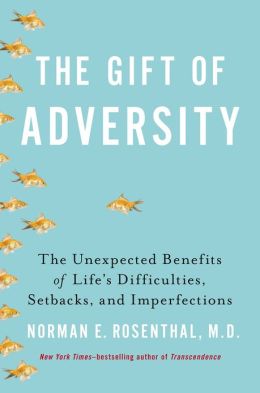
The Gift of AdversityIn his new book, “The Gift of Adversity: The Unexpected Benefits of Life’s Difficulties, Setbacks and Imperfections,” Dr. Rosenthal shares personal stories of adversity, as well as case studies and lessons he has learned from his heroes. Less scientific than his previous books, “The Gift of Adversity” is part memoir, part inspiration, and thoroughly enjoyable to read.

Adversity is an irreducible fact of life. Although we can and should learn from all experiences, both positive and negative, bestselling author Dr. Norman E. Rosenthal, believes that adversity is by far the best teacher most of us will ever encounter.

Whether the adversity one experiences is the result of poor decision-making, a desire to test one’s mettle, or plain bad luck, Rosenthal believes life’s most important lessons—from the value of family to the importance of occasionally cutting corners—can be best learned from it. Running counter to society’s current prevailing message that “excellence” must always be aspired to, and failure or mistakes of any sort are to be avoided at all costs, Rosenthal shows that engaging with our own failures and defeats is one of the only ways we are able to live authentic and meaningful lives, and that each different type of adversity carries its own challenges and has the potential to yield its own form of wisdom.

David Lynch Foundation executive director and author, Bob Roth, interviews Dr. Norman Rosenthal on how he went from writing “Transcendence” to “The Gift of Adversity.”

In this excerpt from the interview, Dr. Rosenthal shares with Bob Roth the gift he received from a very adverse situation early on in his life.

There are many reviews and interviews coming out on The Gift of Adversity and with Norman Rosenthal. Here are a few of them on Huffington Post and elsewhere: The Gift of Adversity: A Book Review by Lloyd I. Sederer, MD on HuffPost’s HealthyLiving. Norman Rosenthal on the Surprising Benefits of Life’s Biggest Challenges on Bookish. Norman Rosenthal ‏posted an article on HuffingtonPost: The Gift of Adversity. Norman wrote Your Mind, Your Body, How to live a happier, healthier life, for Psychology Today. Jeanne Ball ‏ posted 3 Ways Meditation Helps You Deal With Adversity also on HealthyLiving. The TM Blog posted an article by Dr. Norman Rosenthal: From Transcendence to The Gift of Adversity. And this excellent review by Jane E. Brody in the Personal Health section of the New York Times titled, Life’s Hard Lessons.

Norman Rosenthal was interviewed on Writers’ Voices: Looking for the Silver Lining with Dr. Norman E. Rosenthal and “The Gift of Adversity”. Dennis Raimondi on his show Speaking Freely asks Norman Rosenthal about his new book, The Gift of Adversity on KRUU-LP 100.1 FM (23:51).

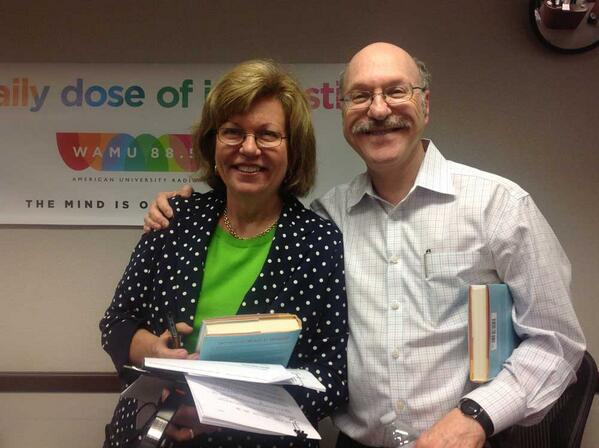
Susan Page and Norman Rosenthal at WAMU 88.5 FM

Guest host Susan Page interviewed Dr. Norman Rosenthal on The Diane Rehm Show

Norman Rosenthal was booked on the Diane Rehm Show to discuss his latest book, The Gift of Adversity, Wednesday, Sept 4, 11:00am to noon ET. Listen live on WAMU 88.5 FM or online.

As it turned out, Diane was on vacation, and guest host Susan Page, American Journalist and Washington Bureau Chief for USA Today, conducted the interview. Visit their post to read an excerpt of the book, Dr. Norman Rosenthal: “The Gift Of Adversity”, and listen to a replay of the interview on their audioplayer.

He was also interviewed by Dr. Sherrill Sellman on her show What Women Must Know – The Gift of Adversity with Norman E. Rosenthal – 09/26/13.

As I continue to read this wonderful book I find myself quietly reflecting on my own life’s experiences and lessons learned, triggered by reading Dr. Rosenthal’s and those of the people he discusses. Each chapter has a takeaway point, something to reflect on and learn from the transforming alchemy of adversity.

I am reminded of two quotes that beautifully encapsulate the message of the book: One by Buddha: “Every experience, no matter how bad it seems, holds within it a blessing of some kind. The goal is to find it.” And the other by Tom Bodett: “In school, you’re taught a lesson, then given a test. In life, you’re given a test that teaches you a lesson.” Dr. Rosenthal looks for and finds the blessings and lessons that adversity has brought him and the subjects in his book. It should be required reading for young adults to help them build empathy and understanding, preparing them for their journey through life.

Dr. Rosenthal also gives us hope when he says that the stressful experiences of adversity can also lead to growth. Quoting Friedrich Nietzsche’s famous dictum: “That which does not kill us makes us stronger,” he tells us of the dividend of PTG from the payment of PTS, the post-traumatic growth that may come from the post-traumatic stress we’ve endured. And he also gives us the tools to deal with the stress, mentioned in his earlier books, like “Winter Blues”, using light therapy to chase away the winter blues, and from “Transcendence”, his most recent bestseller, extolling the healing and transformational virtues of Transcendental Meditation. Discovering what Dr. Rosenthal says in his books is like finding a thoughtful friend who dispenses wise advice.

On December 20, 2013 he spoke in New York at TEDx: Norman Rosenthal on The Gift of Adversity in which he describes the three kinds of adversities, and mentions his three heroes.