Haiku of Sali Eating
Burp…hiccup…giggle…
Sounds Sali makes while eating
Tell us she’s all right
11-13-15
© Ken Chawkin
Fairfield, Iowa
See these related poems: Two spontaneous haiku while talking to Sali.
Haiku of Sali Eating
Burp…hiccup…giggle…
Sounds Sali makes while eating
Tell us she’s all right
11-13-15
© Ken Chawkin
Fairfield, Iowa
Last Friday night, as I was walking into Revelations for some dinner, I saw a sign in the window for a poetry reading by a friend I knew. It also said a birthday cake would be shared afterwards. I bought a big bowl of soup and headed downstairs. The place was packed and I had to stand at the back by a desk having my soup. The birthday poet was Karen Karns. Her husband, Don (aka, Ark-hal) Karns, offered me his seat, but the owner brought me a chair in time. Don, Karen and I used to work together as Maharishi Ayurveda technicians in the late ’80’s & early 90’s.
 Karen Karns has a Masters in Divinity from Earlham School of Religion, a Quaker seminary, and is a Life Counselor. She has twenty years of experience in Fairfield, Iowa offering individual, pre-marital & couples counseling, which she continues to do in the afternoons. As a Sidha, Karen has been on the Invincible America Assembly continuously since its inception in 2006!
I’ve always found Karen to be a very friendly, cheerful, compassionate and gentle person. You’d never know she had reached retirement age. Maybe all that meditation has kept her looking eternally young and beautiful, inside and out!
Now I discover she’s a poet! Karen was shy about reading her poems in front of an audience, but she did well. The last poem took our collective breath away as she shared an intimate experience of a poem coming to her during a deep meditation in the Ladies Golden Dome.
When a poem comes to you and you don’t write it down, you never forgive yourself. That’s what happened to Karen the first time. But, luckily for her, and us, it came back again during her next meditation in the dome and she quickly wrote it down. This happened during Guru Purnima this year, a special gift. I’ll let her words speak for themselves as the poem asks us, tells us, what could be more intimate.
WHAT COULD BE MORE INTIMATE
than these shimmering sheets of light
enfolding the features of each face
as we meditate in silence together,
our spines, divining rods for the deepest
currents and reservoirs of peace.
What could be more intimate
than to be held captive by this
moment, its piracy complete
with all the spoils and riches
from past and future laid
immediately at our feet.
What could be more intimate
than this play of hide and seek,
peeking around corners, into doors—
only to find ourselves hidden
in the marrow of every beam
and rafter in our own huge house.
What could be more intimate
than the waking up of sleep
inside itself
spellbound by the sound
of its own sweet voice
humming an ancient lullaby.
What could be more intimate
than the filling and emptying,
the steady pump of liquid love
as it funnels its way into the portals
and pathways of our bodies, joyfully
mothering each tender cell.
What could be more intimate
than the downpour and drench of bliss.
What could be more intimate than this?
Karen Karns
Guru Purnima 2015
I was so blown away I had to post it on my blog. Luckily she agreed, so I could share it with all of you. I also took her photo to go with the poem.
When I asked Karen if she just wrote it down as a scribe or if she had to work at it, she replied, “I scribed and scrubbed both,” with a smiley face.
That’s been my experience too—creative expression is a collaborative process, especially when the muse whispers something to you! You start with a seed idea, words, even lines, if you’re lucky, and you work at it until it’s done, you polish it until it’s right. Karen sure got this one right!
The discussion on Vedic cognition at the end of “Are you Mr. William Stafford?” is very relevant to Karen’s experience as a poet!
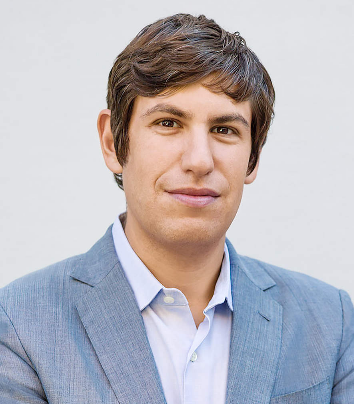
Ari Berman, courtesy of Ports Bishop (cropped)
I updated an earlier post with links to Ari Berman’s new book, Give Us the Ballot: The Modern Struggle for Voting Rights in America; his NY Times Op-Ed piece; Democracy Now interview; Fresh Air interview with Terry Gross; and his invitation to participate at The White House panel commemorating the 50th Anniversary of the Voting Rights Act in the presence of President Barack Obama. I added those White House photos, as well as links to PDFs of Time Magazine’s The Nutshell; and articles in The Fairfield Ledger and Fairfield Weekly Reader. Originally posted http://wp.me/pD0BA-1sN. See Comments below for additional coverage like IPR, NYT, and WP.
Here is a quote from Rep. John Lewis, in a Washington Post article reviewing Ari’s book: “A must-read…This book should become a primer for every American…It is the first history of the contemporary voting rights movement in the United States. It is long overdue, but Berman’s extensive reporting makes it well worth the wait.”

by Cheryl Fusco Johnson
 Ari Berman is a contributing writer for The Nation magazine and an Investigative Journalism Fellow at The Nation Institute.
Ari Berman, born in New York City, raised in Fairfield, Iowa, and a former high school journalism student of mine, recently penned Herding Donkeys: The Fight to Rebuild the Democratic Party and Reshape American Politics (Farrar, Straus and Giroux, 2010). Released last month, his book has already garnered a starred review from Kirkus Reviews and laudatory comments from political writers Jonathan Alter, John Heilemann, Joe Conason, and Michael Tomasky. While visiting Fairfield recently to attend his ten-year high school reunion, Ari sat down with me for a chat.
When you attended the Medill School of Journalism at Northwestern University, did you plan to become a political reporter?
When I went to journalism…
View original post 967 more words
 A first book from Valerie Gangas, ENLIGHTENMENT IS SEXY: Every Woman’s Guide To A Magical Life, is out today, and it’s not just for women!
Valerie is a great writer. She’s colorful, direct, and pulls no punches. Her effervescent personality shines through the amazing stories she shares with her readers, awakening them to their own inherent greatness.
The book is divided into short easy-to-read chapters packed with practical insightful wisdom. It’s also an inspirational testimony to the transformational power of TM, and I am enjoying reading every word of it!
Valerie sent us this intro to her story.
Awakening to Me
In 2011, I woke up and realized everything I thought I knew was wrong.
~ Valerie Gangas
For as long as I can remember, I have been running. Waking up in the morning and running to the gym. Running to the hospital to support my mother, who battled cancer for 13 years. Running to my job, managing an extremely busy Chicago restaurant/bar. Running from boyfriend to boyfriend. Running from one social event to another. Running to deal with the pressures modern women face to be perfect, to get the job done right, to be a caretaker, to look good—let’s face it: to be Wonder Woman.
Then one day, I was forced to stop running.
In late 2010, the restaurant I’d managed for 15 years was sold . . . but it turned out to be a weird sort of blessing, in that I got to spend day and night with my beautiful mother who, by Thanksgiving that year only had a couple of months left on the planet.
All of this time, I had been on a steady diet of double espressos, bottles of Cabernet and late nights eating steaks, cooked rare. (Did I mention I don’t eat meat?)
I was losing my mind as I watched her slowly slip away. I’d had a bad case of insomnia for years, my depression was deepening, and the distractions I’d held up like masks were no longer working well . . . make that, at all.
My mom passed away on January 25, 2011. And my world went black.
After she died, I felt like I’d died right along with her. I was out of a job, suicidal and completely unhealthy. My “diet”—mainly fueled by booze and caffeine—had caught up with me. I was the thinnest I’d been since high school, and my nerves were on fire. And it was like Groundhog’s Day—every night was the same scene. Go to bed, wake up at 3 a.m., stare at the ceiling, my thoughts reeling, feeling like complete crap, until I had to get up a couple hours later. Then my “day cycle” would start again. Down some caffeine, make myself workout (I had to fit in my cocktail dresses, duh!) and then never stop throughout the workday, ‘til I collapsed later that night.
Reflecting back, thoughts of suicide regularly arose in my mind. I didn’t feel like I could go on without my mom, who’d been my best friend. Clearly, I was a broken woman. Yes, I had been seeing a therapist and was trying to get my head above water. But nothing seemed to be working. My suicidal thoughts were getting stronger and stronger. I had gone so far as to ask my aunt and uncle to take my dog (I couldn’t bear messing up her little life), and I didn’t get a new car when my lease was up . . . because people who are going to kill themselves don’t need a car. I also wrote out my will.
Yep, I was gearing up to end my life.
One particularly horrible day I was on my knees in the shower, when I just collapsed and screamed out, “God, Mom, anyone, please help me kill myself or please save me!” In that moment, I completely surrendered. I was nothing. I was no one. And I completely gave myself and my fate over to God.
A week later, a friend suggested I learn Transcendental Meditation (TM). My only hope, at the time, was that I would be able to get some sleep. I hadn’t read anything about meditation, hadn’t thought about it or even wondered about it. But I was in such a dark place, one morning I made the call.
Within days, I borrowed that same friend’s car and drove to a Transcendental Meditation center in Chicago. The home which doubled as a TM center had a feeling of calm I couldn’t quite put my finger on—the air seemed lighter, somehow, and the view was all lake. Even upon entering the center’s lobby, I felt a bit calmer. Huh, I thought, these people who work here are super different. They were so chilled and completely filled with love . . . it was immediately clear to me they were there to help me. My next thought was, I’m here, so I might as well learn how to do this.
I sat down with my teacher and after a short, but beautiful ceremony, I was given my “mantra”—a sound she said my awareness would naturally follow, as it subsided into the depths of silence in my mind. When we both closed our eyes, I easily and effortlessly said the mantra to myself less than five times . . . and just like that, I was gone. I dove into a part of my body and mind I never knew existed—boundless, limitless and totally awesome. Yes-sir, something major had just happened . . . but soon I was discovering I’d only glimpsed the tip of the iceberg.
Driving home down Lake Shore Drive, I immediately began noticing how the world seemed so much different to me than it had on my way to the center. The colors all around me were more vivid, the sounds of the birds felt like sweet music to my ears, I seemed to be connected to all of the trees I saw . . . and above all, I felt happy. But, my mind called out to me, Is this really happening?! Do I really feel happy? How? Why? What the hell?
Fortunately, the essence of that experience stuck and stayed, and I came to find it was in fact “real”—that in twenty minutes, my whole life had changed. I woke up and realized everything I thought I knew was wrong. My life was no longer defined by outer circumstances. I was having a direct experience of what I have come to know as my true Self.
I cannot explain what followed . . . you know, the why of it. Within weeks of learning to meditate, I was standing in front of Oprah Winfrey, explaining how her newfound TM practice was going to make her limitless and boundless. Now, one would think standing in front of one of the most powerful women in the world would cause some serious butterflies in the stomach. But this wasn’t my experience. In that moment, when I stood at the front of the room and described my journey to her, I could only “see” her. The fame and the power didn’t exist. I was only concerned with helping the beautiful human in front of me the only way I knew how . . . with honesty, passion and a dash of humor.
I walked out of Harpo Studios that Friday morning and knew I was about to head down a very different life path. My soul and heart were breaking open and I was watching the right words leave my lips before my mind could even think them. I felt the power of the whole universe in my little body. That day, I decided to give everything I had to try to bring peace and goodness to the world. To do my part.
It has actually taken me the past few years to really understand this new way of living: that is, from the inside out. I felt compelled to write in my journal every night. I mean, the realizations I was having were just too profound not to write them down. I turned what I wrote about into a manuscript . . . and today I am proud to say I have just published my first book, Enlightenment Is Sexy: Every Woman’s Guide To A Magical Life. I’ve also started a brand I love and have continued to speak about consciousness, happiness, freedom, and above all, Transcendental Meditation.
Learning to meditate saved my life . . . but it also gave me more than I could have ever dreamt of: awakening to the real me.
###
George Foster of Foster Covers, with help from wife Mary, designed the colorful cover! Order the book on Amazon and read the nice comments.
Here’s a photo of the three of them during Valerie’s book-signing at Health & Wholeness on a 1st Friday’s Art Walk in Fairfield, Iowa.
Related: Read an interview with Valerie Gangas at TM Home, and this poem I wrote for her: Scheherazade Incarnate. TM Home also posted this today: Valerie Gangas reveals her top 5 reasons to learn Transcendental Meditation. And Val posted and sent this out. Transcendental Meditation for Women also posted Awakening to Me.
Valerie Gangas Shows Why Enlightenment Is Sexy on Writers’ Voices.
Spirit Matters Talk Interview with Valerie
Listen to this great interview with Nick Digilio and Valerie Gangas on WGN Radio 720, Chicago, January 16, 2020. On Slowing down and finding peace in anxious times with Valerie Gangas.
At the Lake
A fish leaps like a black pin — then — when the starlight strikes its side —
like a silver pin. In an instant the fish’s spine alters the fierce line of rising
and it curls a little — the head, like scalloped tin, plunges back, and it’s gone.
This is, I think, what holiness is: the natural world, where every moment is full
of the passion to keep moving. Inside every mind there’s a hermit’s cave full of light,
full of snow, full of concentration. I’ve knelt there, and so have you,
hanging on to what you love, to what is lovely. The lake’s
shining sheets don’t make a ripple now, and the stars are going off to their blue sleep,
but the words are in place — and the fish leaps, and leaps again from the black plush of the poem, that breathless space.
~ Mary Oliver ~
Rolf Erickson’s Mirror Lake creates a cosmic connection for the reader.
Enjoy these other lovely poems by Mary Oliver: Summer Day, Varanasi, Praying, Wild Geese, Sunrise, White Owl Flies Into And Out Of The Field, The Journey, One, The Loon, and When Death Comes, which was included in her obituary Jan 17, 2019.
See this remembrance of Mary Oliver (1935-2019) and her astonishing poetry, with links to articles, interviews, and readings, as well as more of her favorite poems I’ve loved and posted over the years.
— Written and compiled (citing sources) by Ken Chawkin for The Uncarved Blog.Enjoy the poetic genius and humor of Billy Collins reading his poem “January in Paris” on Page Meets Stage, November 12, 2005. The video was posted by Taylor Mali who shared the stage with Collins. A poet and teacher, Mali curates the Page Meets Stage series, which takes place at The DL Lounge in New York City. A version of this poem was published in “Ballistics” (Random House, 2010). I read it in my copy of Aimless Love: New and Selected Poems, pages 89–91 (Random House, 2013).
January in Paris
Poems are never completed—they are only abandoned.
— Paul Valéry
That winter I had nothing to do
but tend the kettle in my shuttered room
on the top floor of a pensione near a cemetery,
but I would sometimes descend the stairs,
unlock my bicycle, and pedal along the cold city streets
often turning from a wide boulevard
down a narrow side street
bearing the name of an obscure patriot.
I followed a few private rules,
never crossing a bridge without stopping
mid-point to lean my bike on the railing
and observe the flow of the river below
as I tried to better understand the French.
In my pale coat and my Basque cap
I pedaled past the windows of a patisserie
or sat up tall in the seat, arms folded,
and clicked downhill filling my nose with winter air.
I would see beggars and street cleaners
in their bright uniforms, and sometimes
I would see the poems of Valéry,
the ones he never finished but abandoned,
wandering the streets of the city half-clothed.
Most of them needed only a final line
or two, a little verbal flourish at the end,
but whenever I approached,
they would retreat from their ashcan fires
into the shadows—thin specters of incompletion,
forsaken for so many long decades
how could they ever trust another man with a pen?
I came across the one I wanted to tell you about
sitting with a glass of rosé at a café table—
beautiful, emaciated, unfinished,
cruelly abandoned with a flick of panache
by Monsieur Paul Valéry himself,
big fish in the school of Symbolism
and for a time, president of the Committee of Arts and Letters
of the League of Nations if you please.
Never mind how I got her out of the café,
past the concierge and up the flights of stairs—
remember that Paris is the capital of public kissing.
And never mind the holding and the pressing.
It is enough to know that I moved my pen
in such a way as to bring her to completion,
a simple final stanza, which ended,
as this poem will, with the image
of a gorgeous orphan lying on a rumpled bed,
her large eyes closed,
a painting of cows in a valley over her head,
and off to the side, me in a window seat
blowing smoke from a cigarette at dawn.
© Billy Collins
I love his clever association of completing a poem to an act of lovemaking with his pen as a sexual organ. Very funny! Reminds me of a poem I wrote about The Power of The Pen.
Enjoy other poems and videos: Billy Collins humorously disagrees with Heraclitus showing how to go into the same water twice | Billy Collins suggests more creative ways to respond to poetry than analyzing it to death | Billy Collins discusses the value of getting to the end of a poem and what can happen afterwards.
The Library of Congress Web Guides: Billy Collins: Online Resources.
— Written and compiled (citing sources) by Ken Chawkin for The Uncarved Blog.
As we’ve seen in a recent post about the writing and teaching of poetry, Billy Collins wants the poem he’s writing to complete itself, to come to an end. When he writes a poem, he says meaning is the furthest thing on his mind. He’s just trying to get to the next line, to arrive at the ending. “It’s not a search for insight, particularly. It’s a search to be over with.”
In this interview with Ginger Murchison at the 9th Annual Palm Beach Poetry Festival, Billy Collins reveals more about the ending of a poem, how what happens is even more important than the last line of the poem.
During the interview, Ginger Murchison mentions something Billy Collins had alluded to about the end of a poem, and asks him:
What happens at the end of the poem? I want to know about that white space after the last period, for the poet and the reader. You said your poem goes towards somewhere. How do you see that as being more important than even the last line of the poem, that space at the end?
He answers her by describing the significance of the white space:
Well, the white space at the end is just like the white space around the rest of the poem. It stands for silence. And maybe the white space after the end of the poem is a little more silent than the other silences. I think of a poem as an interruption of silence.
He also talks about how satisfying it can be to find the ending to a poem. The implication being, the silence that follows the ending as something new that is created within the writer and the reader.
Once you find it, it’s incredibly satisfying. You found something that didn’t exist before. That the poem brings, calls into existence, through a series of steps, it gains some kind of ground, and out of that ground, there occurs something that had never existed before. It comes as a sort of gain, surprise.
I certainly can relate to that, and described in the previous post how certain poems completed themselves in ways I hadn’t imagined. When that happens, and when a poem enlivens a silence, within and between both the poet and the reader, or listener, it creates a deep feeling of fulfillment.
After hearing a discussion with Bill Moyers and 3 well-known poets on the Diane Rehm show discussing the creation of a poem and the effect it had on an audience when recited, I was inspired to write a poem about this mysterious creative process as something elemental, transcendental.
Poetry—The Art of The Voice, describes the source, course, and goal of poetry springing from and returning to silence, through a poet’s inner voice or consciousness, to a listener’s heart and mind. It also relates to the notion of a writer finding and expressing his or her own voice as a poet.
Another poem I wrote shows how Silence ultimately speaks for itself. See Telling the Story of Silence by Ken Chawkin.
Creation comes about through sounds and silences, expressions and gaps, within which the dynamics of transformation occur. See Coalescing Poetry: Creating a Uni-verse.
For a more detailed explanation of these dynamics in language and creation, see Singing Image of Fire, a poem by Kukai, with thoughts on language, translation, and creation, and Yunus Emre says Wisdom comes from Knowing Oneself — a Singularity that contains the Whole.
George Plimpton interviewed Billy Collins for The Paris Review
As referenced by Ginger Murchison, George Plimpton had interviewed Billy Collins for The Paris Review in 2001 after news of his appointment as the new poet laureate by the Library of Congress. He would go on to serve two terms, 2001-2003. Although published 14 years ago, this interview is definitely worth reading: Billy Collins, The Art of Poetry No. 83.
The interview opens with Plimpton asking Collins how he starts to write a poem. He says he doesn’t write that regularly, much of his time is waiting and watching; he’s vigilant. But when he’s engaged he usually writes a poem quickly, in one sitting.
I think what gets a poem going is an initiating line. Sometimes a first line will occur, and it goes nowhere; but other times—and this, I think, is a sense you develop—I can tell that the line wants to continue. If it does, I can feel a sense of momentum—the poem finds a reason for continuing. The first line is the DNA of the poem; the rest of the poem is constructed out of that first line. The first few lines keep giving birth to more and more lines.
That makes perfect sense. He doesn’t know where he’s going and hopes the poem is one step ahead of him, holding his interest, leading him down the trail to that elusive mysterious ending. I love the different metaphors he uses to describe the pen as a tool to help him discover that something he’s not yet aware of.
Like most poets, I don’t know where I’m going. The pen is an instrument of discovery rather than just a recording implement. If you write a letter of resignation or something with an agenda, you’re simply using a pen to record what you have thought out. In a poem, the pen is more like a flashlight, a Geiger counter, or one of those metal detectors that people walk around beaches with. You’re trying to discover something that you don’t know exists, maybe something of value.
He explains how he likes to invite the reader into a poem with something ordinary, then take him or her, and himself to a place he hasn’t been to yet.
I want to start in a very familiar place and end up in a strange place. The familiar place is often a comic place, and the strange place is indescribable except by reading the poem again.
There’s a lot more to the interview, but he concludes humbly by saying that he’s just trying to be a good writer.
No matter what I’m thinking about when I’m writing a poem, no matter what is captivating my attention, all I’m really trying to do is write good lines and good stanzas.
There’s a reason he’s called America’s most popular poet. He has made poetry accessible to millions of Americans. He continues to write, publish, sell books, teach, and is in constant demand to give poetry readings.
It is a delight to read his poetry. His subtle sense of humor puts a smile on my face. It’s also enjoyable to hear him recite his poems. Seemingly ordinary, they give you a unique perspective on things that were previously unimaginable, and that’s refreshing!
See the previous post: Billy Collins suggests more creative ways to respond to poetry than analyzing it to death. Enjoy the poetic genius and humor of Billy Collins reading his poem “January in Paris” and Billy Collins humorously disagrees with Heraclitus showing how to go into the same water twice.
The Library of Congress Web Guides: Billy Collins: Online Resources.
— Written and compiled (citing sources) by Ken Chawkin for The Uncarved Blog.
The New York Times calls Billy Collins “the most popular poet in America.” In his poem, Introduction to Poetry, the former two-term U.S. Poet Laureate (2001-2003) suggests more creative ways to respond to poetry than analyzing it to death. This blog post also reveals how Collins writes and teaches poetry. It may surprise you.
Introduction to Poetry
I ask them to take a poem
and hold it up to the light
like a color slide
or press an ear against its hive.
I say drop a mouse into a poem
and watch him probe his way out,
or walk inside the poem’s room
and feel the walls for a light switch.
I want them to waterski
across the surface of a poem
waving at the author’s name on the shore.
But all they want to do
is tie the poem to a chair with rope
and torture a confession out of it.
They begin beating it with a hose
to find out what it really means.
The Apple that Astonished Paris © 1988, 1996
Listen to Billy Collins read his poem, Introduction to Poetry.
Billy Collins speaks to English teachers in this poem who look at poetry as something to be analyzed and dissected. They teach their students to try to find out what a poem means instead of emotionally responding to it. To make his point, Collins amusingly suggests ways students might approach and experience a poem, instead of “beating it with a hose to find out what it really means.”
Writing and Teaching Poetry
Collins reveals more about his writing process and how he teaches poetry when answering a question from a middle school English teacher. He acknowledges the search for meaning in a poem, but when he writes a poem, meaning is the furthest thing on his mind. He’s just trying to get to the next line, and the next, to finally arrive at the ending.
Basically when you’re teaching poetry, despite that poem (Introduction to Poetry), you’re talking about meaning. We’re basically extracting meaning from the poem. And I realized at some point, that when I wrote a poem, meaning was the last thing on my mind. I never gave it a thought.
Basically, in a poem, I’m just trying to find the next line. I’m trying to find a way for the poem to go. And I’m trying to get to some destination. I’m not thinking about, ‘What’s the poem about, or meaning?’ Or, I’m not thinking of, ‘How will people write study questions about this poem and make any sense out of it?’
So I try to bring some of that into my teaching. I try to substitute for the question, ‘What does a poem mean?’ the question, ‘How does a poem go?’ ‘How does a poem get where its going?’ (It goes from the beginning to the end, maneuvering through shift points along the way, in search of a destination.) A poem is always searching for its own ending. And that’s what poets are thinking about. It’s not a search for insight, particularly. It’s a search to be over with.
PBS NewsHour’s Jeffrey Brown interviewed Billy Collins on their Poetry Series about his new collection, Aimless Love: New and Selected Poems. “I knew that poets seemed to be miserable,” said Collins about his younger self, yearning to fit in. While he admits he “faked a miserable character” at the start of his career, he’s since embraced his sense of humor. Poet Billy Collins on humor, authenticity and ‘Aimless Love’
William Stafford on Writing Poetry
William Stafford was Poetry consultant for the Library of Congress in 1970, what a Poet Laureate was called before they created the office. He was named Poet Laureate of Oregon from 1975-93. Stafford’s style of writing and teaching was process-oriented. He gave no praise or blame to his students’ writing. He encouraged English teachers and writing students to be innocent when writing poetry, without any preconceived notions of how it should go, and to be open to discovering the unexpected turns a poem could take on the way to its own completion.
Stafford was very open to spontaneity and receptivity when writing poetry. He said most teachers would spell out what a piece of writing should look like, and expected their students to reproduce the same. This product-oriented approach left no room for the imagination. “They want a wilderness with a map.” But, he asks, “how about errors that give a new start?” Errors, he said, “make a music that nobody hears. Your straying feet find the great dance,” and “stumbling always leads home.” That’s how he wrote poems, early every morning. Enjoy reading these William Stafford poems, A Course in Creative Writing, and You and Art.
My Own Experience as a Writer
I agree with Collins and Stafford that the creative process is a mystery, and coming to the end of a poem is a wonderful relief, especially when I see it finishing itself. It also surprises me with what it’s about, sometimes revealing a deeper meaning at the end than imagined. This meaningful sense of completion is why writing poetry can be so fulfilling.
Two early meta-poems describe this process: Writing—a poem on the writing process, and Sometimes Poetry Happens: a poem about the mystery of creativity. Two early poems I’d written that surprised me with their endings are, As Above So Below, and later, Pine Cone Trees.
My son Nathanael Chawkin wrote a poem called INSPIRATION, an outcome from the first homework assignment in his Grade Six Literature class. He felt strongly that you couldn’t force a student to write a poem; it had to come on its own accord. The poem innocently and profoundly expresses the spontaneity of the poetic process. I also added information with links after his poem about the writing process you may find interesting.
Update
Just added a part two: Billy Collins discusses the value of getting to the end of a poem and what can happen afterwards. Enjoy the poetic genius and humor of Billy Collins reading his poem “January in Paris” and Billy Collins humorously disagrees with Heraclitus showing how to go into the same water twice.
The Library of Congress Web Guides: Billy Collins: Online Resources.
— Written and compiled (citing sources) by Ken Chawkin for The Uncarved Blog.
This Quiet Time article appeared in the Waterloo-Cedar Falls Courier. It is published here with permission from the columnist, Scott Cawelti, a retired professor of English at the University of Northern Iowa, freelance writer and musician. Contact him at cawelti@forbin.net. Click here to see Scott Cawelti BIO. Photo by Doug Hines.
It’s about time for “Quiet Time”
Nothing succeeds like success, as they say, and I’m here to report two genuine successes. One is small, the other large, a possible game-changer.
The small success involves my own daily meditation practice. It began over 30 years ago and continues to this day.
As a young assistant professor teaching anywhere from 90 to 250 students in three classes, struggling with writing conference papers, grading piles of student essays, meeting with students, attending multiple faculty committees, facing constant pressure to do more and do better, I was stressed. I mean, stressed out, exhausted, short-tempered and chronically anxious. I was staying afloat, but barely.
In those days, Cedar Falls had a Transcendental Meditation Center down on Third and Main streets, and a couple of friends each recommended I try TM.
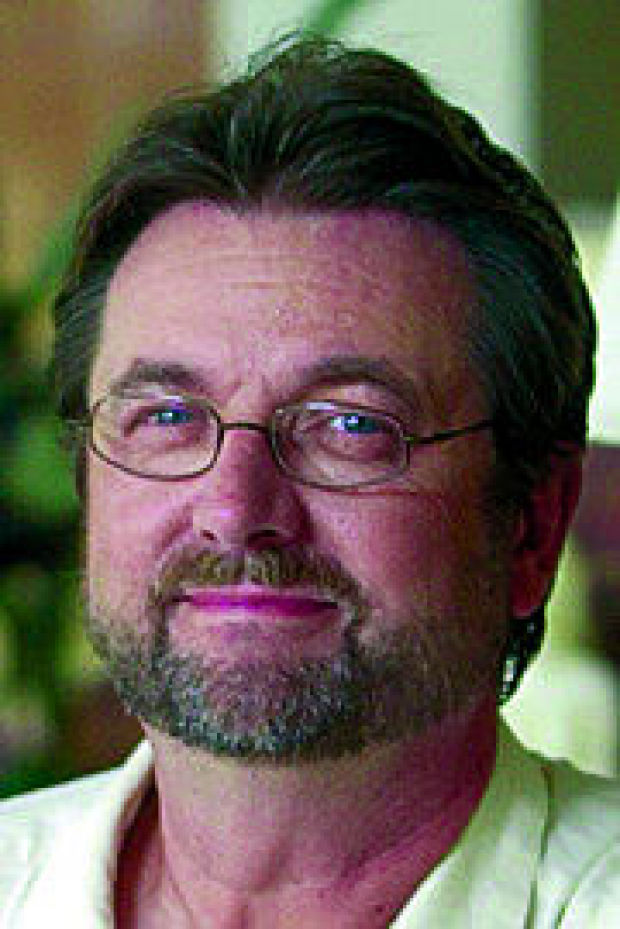
Scott Cawelti
I did, and it worked. Within a few days of twice-daily meditation, I began feeling relaxed, then peaceful, then downright blissed out. Well, not quite, but close.
And it continued. No one was more surprised than I.
Over the years I’ve attended meditation workshops, modified my practice slightly, and still continue meditating twenty minutes, twice a day. It has made all the difference in my stress level, and I’m still alive, well and pushing 72.
I’m convinced regular brain-quieting has given me more, and better, years. That’s what meditation does, by the way: quiets our always-buzzing brains.
I recommend some form of meditation for anyone who feels overwhelmed with pushes and pulls beyond their control. If it worked for me, it will work for you.
Beyond my own small life, there’s a much larger meditation success story that recently made national news.
At Visitacion Valley Middle School in San Francisco, they began a program in 2007 of twice-daily “quiet time” breaks for the entire school. This particular school sits in a rough, even violent, neighborhood. Attendance, academic scores and teacher and student retention were dismal.
Teachers and students alike hated the chaos of school days. In other words, the school made no progress toward anything but failure.
Now, after over seven years, they can judge Quiet Time’s success. It’s been dramatic, schoolwide and heartening. This is how David Kirp, a professor of public policy at Berkeley, describes the results:
“In the first year of Quiet Time, the number of suspensions fell by 45 percent. Within four years, the suspension rate was among the lowest in the city. Daily attendance rates climbed to 98 percent, well above the citywide average. Grade point averages improved markedly. About 20 percent of graduates are admitted to Lowell High School – before Quiet Time, getting any students into this elite high school was a rarity. Remarkably, in the annual California Healthy Kids Survey, these middle school youngsters recorded the highest happiness levels in San Francisco.”
Amazing but true. Kirp continues:
“On the California Achievement Test, twice as many students in Quiet Time schools have become proficient in English, compared with students in similar schools where the program doesn’t exist, and the gap is even bigger in math. Teachers report they’re less emotionally exhausted and more resilient.”
Incidentally, students are not forced to practice TM. They can simply close their eyes, daydream, nap — as long as they’re quiet during those two 15-minute periods.
Parents must give permission if they want their child to learn the meditation technique.
I can hear objections: wasting valuable school time, returning to hippie-dom, imposing a religious practice in a state school. All of these seem to be satisfactorily answered, since the program’s success with the parents’ permission for seven years speaks for itself.
Best of all, Quiet Time costs virtually nothing, and it affects whole schools so positively (based on real data) it’s at least worth a look.
My own small success story offers unqualified support.
Much more power to them.
# # #
Quiet Time at Visitacion Valley Middle School
Principal James Dierke first implemented the Quiet Time Program at Visitacion Valley Middle School in San Francisco. As a result of his school’s dramatic turnaround he was selected NASSP National Middle School Principal of the Year in 2008. Principal Dierke wrote an article about it (a Quiet Transformation) for Leadership, a publication of the Association of California School Administrators. He concluded, “I retire with the lowest blood pressure I have had in 10 years and a great optimism about our ability to realize this vision for education.”
NBC Nightly News reports on the Quiet Time Program
NEW VIDEO: With the successful transformation of Visitacion Valley Middle School several schools in the San Francisco Unified School District also incorporated the meditation-based Quiet Time Program with amazing results. Cynthia McFadden visited both Visitacion Valley Middle School and Burton High School and filed a report on December 30, 2014 for NBC Nightly News: San Francisco Schools Transformed by the Power of Meditation. Visit the David Lynch Foundation for more on the Quiet Time program in schools.
Edutopia reported on Quiet Time at Visitacion Valley Middle School

 The Uncarved Blog