Archive for the ‘Writing’ Category

Craig Pearson interview and articles on awakened consciousness, transcendence and enlightenment

February 22, 2013

Since the theme of The Uncarved Blog deals with Transcendental Meditation, consciousness & enlightenment, and poetry, I’d like to introduce someone to you who has been studying these ideas in great people’s lives for some time now and has complied them all in a book.

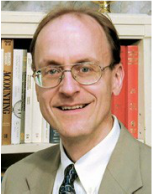
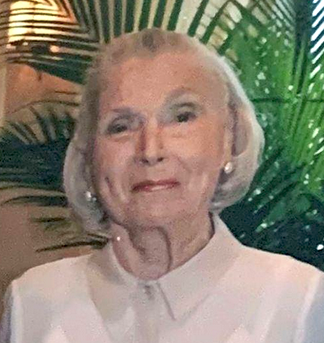
Craig Pearson-EECraig Pearson, Ph.D., is the author of the forthcoming book, The Supreme Awakening, Experiences of Enlightenment Throughout Time — And How We Can Cultivate Them. He has spent many years researching the expression of higher states of consciousness in the writings of great philosophers, saints, scientists, artists, and writers. 

Dr. Pearson is the Executive Vice-President of Maharishi International University in Fairfield, Iowa. He has served the University in a variety of roles over the past 33 years, (42 years, updated 2022) including Dean of Faculty, Dean of Students, Director of Maharishi University of Management Press, Director of Freshman Composition, and Professor of Professional Writing.

In this interview for Issue 5 of Enlightenment Magazine, Linda Egenes asks Craig Pearson about humanity’s age-old quest for enlightenment. Dr. Pearson highlights his answers with examples of exceptional people throughout history who had described experiences of higher states of consciousness. It was originally titled, The Quest for Enlightenment: Transcendence in the Lives of Great Seers and Thinkers. Linda also posted the text of the article on her blog. It was later republished in the newer Enjoy TM News, The Transcendental Meditation magazine: Exploring Higher States of Consciousness, the Ultimate Goal of Meditation. How to cultivate the state of enlightenment

Some of the people mentioned in the article are available in a list of quotes complied on the TM Blog in an Author Archive. Click on each quote and it will take you to an article about each one, and many more.

Enlightenment: What is the relationship of enlightenment and human potential?

Dr. Pearson: Enlightenment is a term that has been used for thousands of years, in traditions east and west, to refer to the most fully developed expression of human potential, far beyond the ordinary.

Enlightenment: How common is it?

Dr. Pearson: Although this extraordinary experience has been described by individuals in different cultures over the millennia and is celebrated in the world’s spiritual traditions, it seems to be exceedingly rare. But obviously it lies within the realm of human potential.

Enlightenment: What has Maharishi contributed to the understanding of enlightenment?

Dr. Pearson: Maharishi Mahesh Yogi is often credited with reintroducing the concept of enlightenment in a systematic manner in our modern age. He has put forward a comprehensive understanding of enlightenment that embraces the great traditions and thinkers who have described this experience across time. Maharishi was also the first to promote scientific investigation into enlightenment, bringing the phenomenon of spiritual development into the arena of modern science.

Enlightenment: How does Maharishi describe enlightenment?

Dr. Pearson: For Maharishi, enlightenment is the ultimate development of one’s inner potential as a human being. It means being established in the highest state of human consciousness.

Enlightenment begins with experiencing the reality of your innermost Self as unbounded and eternal and being established at that level. This means the consciousness of an enlightened person is no longer subject to the ups and downs of emotions, mind, and body but steadfast, anchored in inner silence.

Enlightenment brings the ultimate unfoldment of one’s creativity and intelligence. It means living in harmony with all the laws of nature and easily fulfilling your desires. It means being of maximum use to yourself and others and creating a powerfully nourishing effect in one’s environment.

At the highest stage, enlightenment means experiencing the universe as the expression of your unbounded Self. It is a state of perpetual freedom and bliss, supreme fulfillment.

Enlightenment: Can we relate this in any way to our day-to-day experience?

Dr. Pearson: Although this vision of human development may seem idealistic, we have all had experiences in this direction. Some days we just feel happier inside, more appreciative of others—life is easier, fuller, richer, and more rewarding. We may have moments of enhanced mental clarity or heightened levels of creativity, when we surprise ourselves with how quickly the solution to a problem may come. Athletes sometimes experience the zone—periods of peak performance that are effortless and euphoric.

At these times we are using a bit more of our potential. But enlightenment is far, far more than this. It goes far beyond just having a good day. People who have had experiences of enlightenment report that words simply cannot capture the sublimity of the experience.

Enlightenment: You have researched how individuals from different historical epochs and different parts of the world have shared this same experience. Can you talk about that?

Dr. Pearson: In traditions throughout time we find remarkably similar descriptions of this extraordinary experience of human life lived to its fullest—in the writings of great philosophers, religious figures, artists, scientists, and writers, as well as in the great religious traditions of the world. The terminology may vary from tradition to tradition and age to age. But when you have the clear and precise description of enlightenment provided by Maharishi, it becomes easy to appreciate what these people are talking about.

Enlightenment: So the experience is universal?

Dr. Pearson: Yes. And the recognition that many have shared this experience throughout history is not new either. Some scholars have called it the perennial philosophy or the primordial tradition. The perennial philosophy holds that although various spiritual and philosophical traditions appear different on the surface, at their core all traditions share common, universal principles.

Enlightenment: What are these universal principles?

Dr. Pearson: The perennial philosophy has three basic tenets: (1) Underlying the diversity of the world is a field of unity. (2) We can subjectively experience this field of unity deep within us. (3) The purpose of life is ultimately to experience and live this inner, divine reality of life.

This inner field goes by different names. Laozi called it the Tao. Plato called it the Good, the One, and the Beautiful. Aristotle called it Being. The Greek-Roman philosopher Plotinus called it the Infinite. In Judaism it is called Ein Sof, in Christianity the kingdom of heaven within. In more modern times, Ralph Waldo Emerson called it the Oversoul.

These different names are not referring to mere philosophical or spiritual ideals. They point to the inner reality of life—a reality that can be experienced directly and, when experienced, brings fulfillment beyond words.

Enlightenment: How does Maharishi talk about this inner field?

Dr. Pearson: Maharishi characterizes it as an unbounded field of pure consciousness, an all-pervading ocean of creativity, intelligence, and bliss, beyond space and time. Maharishi asserts, moreover, that this field of pure consciousness is identical with the unified field of natural law that modern physics describes mathematically. Thus the inner field that gives rise to all our thoughts and feelings is the same field that gives rise to the entire universe.

Enlightenment: And we can experience this inner field of pure consciousness?

Dr. Pearson: Every human being has the natural ability to experience this field. It simply requires “diving within,” allowing the mind to settle inward, beyond the thinking process. This is called transcending.

People throughout history have described and celebrated this experience. It is a simple and natural experience—but by most accounts seems to be rare and fleeting. People have lacked a technique for experiencing it systematically. This is the gift Maharishi has given us—the Transcendental Meditation technique, a simple, natural, effortless procedure by which anyone can dive within at will.

Until Maharishi started teaching in the West, the understanding of how to transcend had for the most part been lost. The Transcendental Meditation technique, which has its origin in the ancient Vedic tradition, provides direct experience of pure consciousness. It is easy to learn and practice, validated by hundreds of scientific research studies, and practiced by millions of people throughout the world.

Read the rest of this fascinating article, which includes experiences from Rabindranath Tagore; Alfred, Lord Tennyson; Hakuin Ekaku; and a woman known as Peace Pilgrim.

Many other experiences have also been written up by Dr. Pearson and posted on the TM Blog. Here they are, from recent to earlier posts:

‘Freedom and Self-Realization’: Excerpts from Jack Forem’s book on TM
Howard Thurman: Experiencing “the Great Silence” within us
Rabbi Abraham Isaac Kook: Connecting with the “deep soul”
The Buddha: Rapturous Joy Transcending Any Other
Meister Eckhart: It is in the purest thing that the soul is capable of
D.H. Lawrence: Sitting in a Timeless Stillness
St. John of the Cross: Transcending all knowledge
William Wordsworth: We are laid asleep in body, and become a living soul
Emily Dickinson: The Soul’s Superior instants
Albert Einstein: There is Neither Evolution nor Destiny; Only Being
Zhuangzi: Why don’t you try wandering with me to the Palace of Not-Even-Anything
St. Teresa: A state of great quiet and deep satisfaction
Johannes Brahms: In tune with the Infinite
Rumi: I have passed beyond all thoughts
Plato: And this state of the soul is called wisdom
Jesus: The kingdom of God is within you
Henry David Thoreau: We become like a still lake of purest crystal
Ralph Waldo Emerson: Within man is the soul of the whole; the wise silence; the universal beauty
Walt Whitman: The luminousness of real vision
Alfred, Lord Tennyson: A state of transcendent wonder
Helen Keller: I feel the flame of eternity in my soul
Laozi: His mind becomes as vast and immeasurable as the night sky
 

Update: Craig Pearson’s book, The Supreme Awakening, is now available. Executive Vice President Dr. Craig Pearson was interviewed on KHOE’s “A Chat With The Dean” by Dr. Cathy Gorini on his new book, “The Supreme Awakening – Experiences of Enlightenment Throughout Time, and How You Can Cultivate them.”

Listen to a presentation Dr. Pearson gave in Dalby Hall on the book, which was recorded for broadcast by KHOE.

Listen to Dr. Pearson on KRUU FM, Writers’ Voices recorded Feb 21, 2014.

Listen to Craig Pearson on KRUU FM show, Writers’ Voices, discussing his new book, The Supreme Awakening.

Here is a video of Dr. Pearson’s recent presentation on his book, The Supreme Awakening, in Dalby Hall on the MUM campus seen on the MaharishiUniversity channel.

Craig Pearson has since updated his book with new entries. Here is an informative interview by Jeanne Ball, April 20, 2016, in the Huffington Post: The Supreme Awakening: What Did Buddha, Emerson, Einstein and Saint Teresa Have in Common?

Guest blogger and author William T. Hathaway reviews Craig Pearson’s book, The Supreme Awakening.

Other talks on this topic by Craig Pearson are available in this MIU Webinar at Dalby Hall published in Enjoy TM News and this interview on TM Talks.

Mar 4, 2024: Simplest State‘s Ron Decter interviewed Craig Pearson, Author: “The Supreme Awakening: Experiences of Enlightenment Throughout Time”.

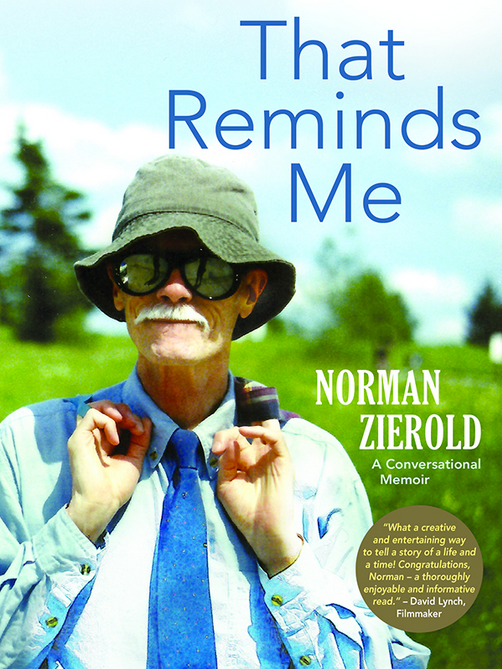
That Reminds Me: A Conversational Memoir by Hollywood biographer Norman Zierold is now out!

January 10, 2013

ThatRemindsMe Lynch quote

That Reminds Me is a conversational memoir by Hollywood biographer and award-winning author Norman Zierold. Rather than a chronology of his life, the author engages the reader in a conversational manner, relating various episodes from his life that come to mind, one triggering another. There’s never a dull moment!

Norman Zierold’s charmed life started humbly in the Amana Colonies of Iowa. All that changed after Norman joined the Navy. The war came to an end and Norman used the GI Bill of Rights to attend Harvard, where he graduated cum laude. He then earned a graduate degree in English Literature at the University of Iowa.

While looking for work he was given the opportunity to teach English in France. One of his jobs was enjoying English conversations with the son of the President of France. They even invited him to watch the coronation of Britain’s Queen Elizabeth II on television at their personal residence. Other meetings with cultural luminaries ensued.

Upon Norman’s return to the States he headed for New York, where he worked his way up to becoming the editorial director of Theatre Arts Magazine. Eventually he went to Hollywood to fulfill his lifelong calling to become a writer and published several noted Hollywood biographies: The Child Stars, The Moguls: Hollywood’s Merchants of Myth, Garbo, Sex Goddesses of the Silent Screen; and two true-crime accounts, Little Charley Ross: The story of America’s first kidnapping for ransom, and Three Sisters in Black, which garnered a Special Edgar Allen Poe Award from the Mystery Writers of America. He also wrote a science-fiction novel titled The Skyscraper Doom.

In the late 1960s, when Barbara Walters was an anchor on NBC’s Today Show, she interviewed Norman on his recently published book, Little Charley Ross. He describes a humorous account of what happened as they were preparing to go on air. Before the segment was about to begin Barbara was pressing her leg against Norman’s under the table in what seemed to him a suggestive fashion. He wondered if she might be coming on to him and didn’t know what to do. She asked him if he felt that, and he sheepishly said he did. She then explained that this was the signal for him to quickly finish his sentence during the interview so they could break for a commercial. Norman felt relieved. After the interview they had a private chat off camera about Judy Garland since Norman had written about her in The Child Stars, and Barbara’s then husband, Lee Guber, had produced one of Judy’s world tours. They had met and Judy’s issues about her mother came up. Barbara had her own opinion about Judy’s relationship with her mother, but you’ll have to read the book to find out what she said and Norman’s take on it.

In addition to Barbara Walters, Norman met many cultural icons of the day, like Andy Warhol, Shelley Winters, Anthony Quinn, Mae West, Groucho Marx, Roddy McDowall, Jackie Coogan, Rex Harrison, Anaïs Nin, Tennessee Williams, E.E. Cummings, Dylan Thomas, a president of France, the gifted composer Francis Poulenc, and TM founder Maharishi Mahesh Yogi, to mention a few. Anaïs mentioned Norman in her diary. Norman spent months with Anthony Quinn helping him edit down his thousand-page biography into something publishable. It did very well.

In the early 70’s Norman took up the practice of Transcendental Meditation. He found it so satisfying he became a teacher and taught the TM technique to several hundred people. Since 2002 he has been living in Fairfield, Iowa, and works in his retirement years as a part-time publicist in the communications office at Maharishi University of Management.

WHERE TO ORDER THAT REMINDS ME

Sit down with Norman Zierold and enjoy a fascinating conversation. Order copies of That Reminds Me from Amazon or Barnes & Noble in the US. Release date is January 12, 2013. Also available in Canada, the UK, Europe, Germany, Russia, and Brazil in paperback, and Amazon’s Kindle worldwide.

Cover design by George Foster, front cover photo by Mary Drew, and interior design by Allen Cobb for Anapurna Press.

ARTICLES

Diane Vance interviewed Norman Zierold at Revelations Café for The Fairfield Ledger, which came out March 12, 2013: Fairfield author talks about recent work. In case you can’t access the full article online you can see what it looks like here: Fairfield author talks about recent work – By DIANE VANCE – Fairfield, IA – Fairfield Ledger. I also posted it here: Diane Vance and Norman Zierold discuss his new memoir, That Reminds Me, at Revelations Café.

Tony Ellis wrote a feature article in the March 2013 issue of The Iowa Source, Iowa’s Enlightening Magazine: Norman Zierold: A Charmed Life: Celebrated Hollywood Author Reminisces on Six Decades of Extraordinary Encounters. You can also download a PDF of the article on Norman Zierold as it appears in The Iowa Source.

An edited version of Tony’s article later appeared in Britain’s National Transcendental Meditation Magazine—Transcendental Meditation News • June 2013 • Vol. 19 • No. 7 • Pages 12 and 13, titled, The Hollywood Biographer Who Found Bliss (Page 7 of PDF).

British writer & editor, Julie Eagleton also reviewed That Reminds Me by Norman Zierold.

Here’s a great article about Norman Zierold in The Chronicle of Higher Education: Notes From Academe: The Spokesman Who Kept Calling.

Here’s a comprehensive article Norman Zierold wrote for Healthy Referral on THE REMARKABLE DAVID LYNCH FOUNDATION.

INTERVIEWS

Norman Zierold was interviewed by KMCD host Steve Smith for the MUM Spotlight show on January 10, 2013. Click here to listen. (17:23)

Norman Zierold will be interviewed on 100.1 FM KRUU in Fairfield. The show, Writers’ Voices, airs Friday, January 11, 2013, 1:00–2:00 p.m. CT, and replays Monday, January 14, 2013, 8:00–9:00 a.m. CT. Tune in: Listen Live.

This great description posted by host Monica Hadley says it all: From Iowa, Around the World, and Back Again with Norman Zierold. “That Reminds Me: A Conversational Memoir” by Norman Zierold, takes the reader on an exuberant journey, both outward and inward, from pre-Depression-era Iowa (the Amana Colonies), to Europe, NYC, Hollywood, and back again to Iowa (Fairfield, that is.) Join Writers’ Voices hosts Monica Hadley and Caroline Kilbourn to learn from Norman the inside stories that only the author of such Hollywood biographies as “Garbo”, “The Child Stars”, and “The Moguls” would know. How did a boy from the Amanas come to rub elbows with the rich and famous of the mid-20th century? And what brought him back to Iowa?

Update: If you missed it, the Writers’ Voices Archives now has Norman’s interview (59:51) posted there as well as on monicahadley’s Audio page. And KRUU station manager James Moore created a permanent link to the interview here: http://www.kruufm.com/node/14926. KRUU’s website was rebuilt. The interview is now posted on the Writers Voices website.

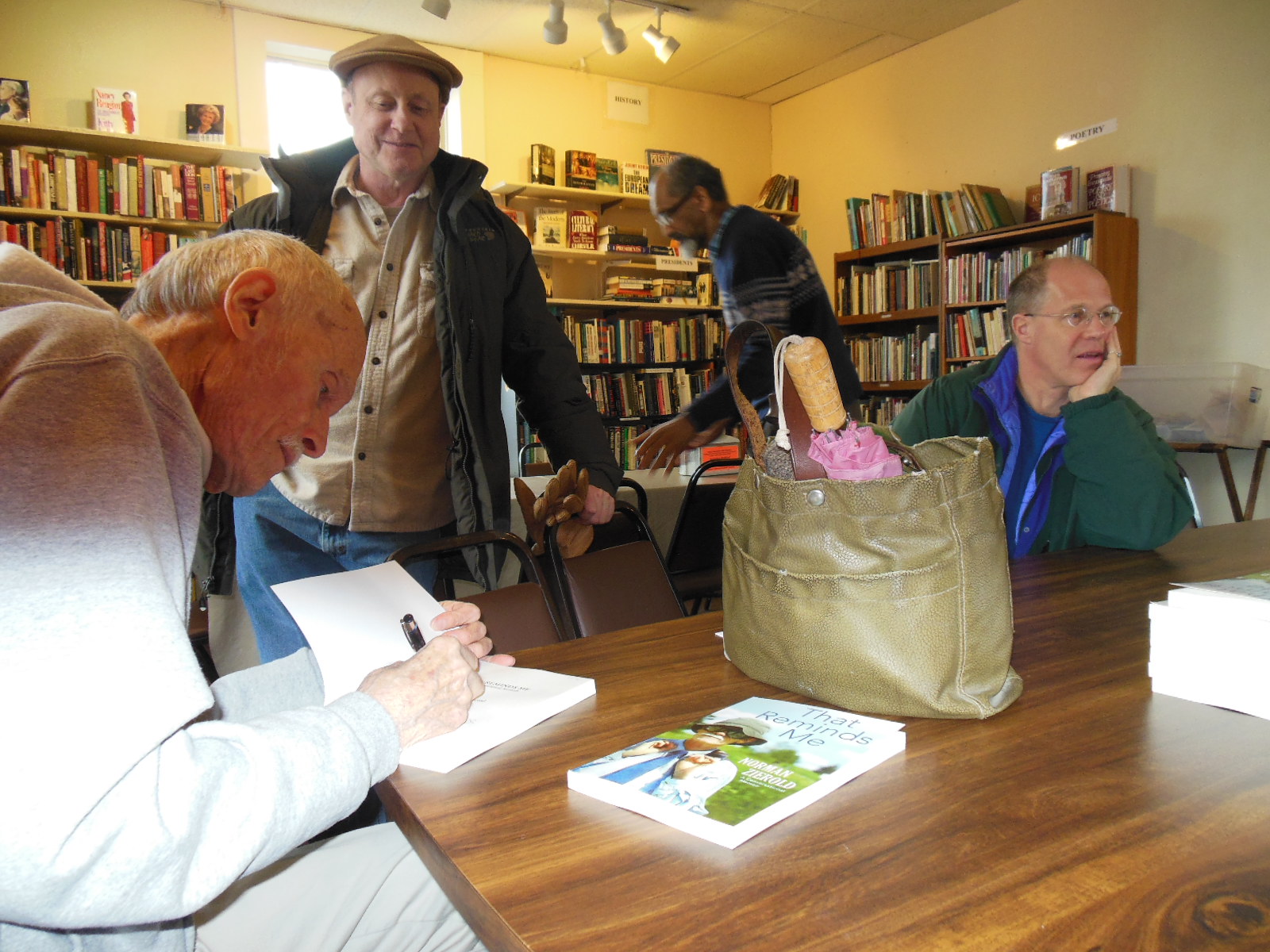
A third interview took place at a book signing in the Maharishi University of Management Library on Saturday afternoon, March 2, 2013. Rustin Larson talked with Norman Zierold about his conversational memoir, That Reminds Me. Download and enjoy this very entertaining interview. (87 MB) It’s now available on YouTube.

A fourth interview took place on KHOE, the MUM campus radio station. Author and M.U.M.: Publicist Norman Zierold, interviewed by Dean Cathy Gorini and station manager Stan Stansberry on his newly published book “That Reminds Me.” Listen online here: http://link.mum.edu/NormanZierold.

Stan says: [This is] “a real-life adventure conversational memoir by our esteemed Norman Zierold. [Norman takes us from] “his hometown Amana Colonies, to the U.S. Navy, to New York City, to Hollywood, to finding Transcendental Meditation, teaching TM, and to the campus of Maharishi University of Management. Along the way he interviewed and hob-nobbed with famous New York and Hollywood actors, writers and people like Barbara Walters.” mp3 63 min, 18MB.

Here is the latest interview on KRUU FM with Producer, Writer & Host, Cheryl Fusco Johnson of The Studio: Small Town Boy to Hollywood Biographer: Norman Zierold’s Memoir, THAT REMINDS ME, July 14+16, 2014. You can listen here at this archived link: The Studio – 20140715-Norman Zierold.

How did small-town Iowa boy Norman Zierold become a Hollywood biographer, recording the stories of movie moguls, child stars, and famous actors? Even more exciting than his tales about the many celebrities he’s encountered is Norman’s own story. Lucky us! Norman’s recorded his journey from shelling peas beside cooks in his family’s Amana colonies restaurant to rubbing knees with Barbara Walters on TV. This week on The Studio with Cheryl, Norman discusses the mentors and experiences that inspired his life choices. Learn about his life and about THAT REMINDS ME, his stream-of-consciousness memoir (and what a consciousness it is!), by tuning in to The Studio with Cheryl and Norman this week.

Enlightenment, The Transcendental Meditation Magazine, has posted an article on Norman in Issue 16 under My Story: From Utopia to Hollywood and Back. In this column meditators share their stories of how they started the Transcendental Meditation technique and what kinds of positive changes have occurred in their lives.

The book has been updated with chapter headings, a table of contents, and a list of praise for the book, including a cover quote from filmmaker David Lynch, which reads: “What a creative and entertaining way to tell a story of a life and a time! Congratulations, Norman — a thoroughly enjoyable and informative read.”

March 9, 2018: Remembering Norman Zierold: Hollywood biographer, novelist, TM Teacher, member of Maharishi’s Purusha program, raconteur, publicist, beloved by all.

Cheryl Strayed, author of WILD, talks about the unique role of artists and writers in the world

January 10, 2013

Cheryl Strayed

“I think that artists are here, and writers are here, to be the truth-tellers of the human experience, the world we live in. And so, if you’re not going to tell the truth, don’t bother.” — Cheryl Strayed

I love this frank quote from memoirist Cheryl Strayed on the role of artists and writers in society during this CBC interview, Publishing phenom Cheryl Strayed, with Q host Jian Ghomeshi posted on Q Blog Monday, December 31, 2012. Here’s their description.

Cheryl Strayed had a banner year in 2012. Wild, her memoir of hiking the Pacific Crest Trail while working through grief, divorce, and a dalliance with drugs, was a bestseller. Oprah Winfrey even relaunched her book club for it.

Strayed also outed herself as the popular online advice columnist Dear Sugar, and published a collection of columns as Tiny Beautiful Things to rave reviews.  Back in September, she dropped by Studio Q to talk about literary success and what it really means to be a “fearless” writer.

From the Best of Q: Originally aired September 13, 2012

Listen: 16:47

Download and listen to the complete introduction and interview: http://www.cbc.ca/q/popupaudio.html?clipIds=2278707963

Watch the 15:38 edited version minus the formal introduction on YouTube: “Wild” author Cheryl Strayed in Studio Q.

See what other writers have to say about writing on The Uncarved Blog.

Found this interesting article: The Wandering Writer: A Tour through Inner Northeast Portland with Cheryl Strayed.

Found in translation: Local literary legend finds her voice by interpreting the words of others

November 12, 2012

Ovation

Local literary legend finds her voice by interpreting the words of others

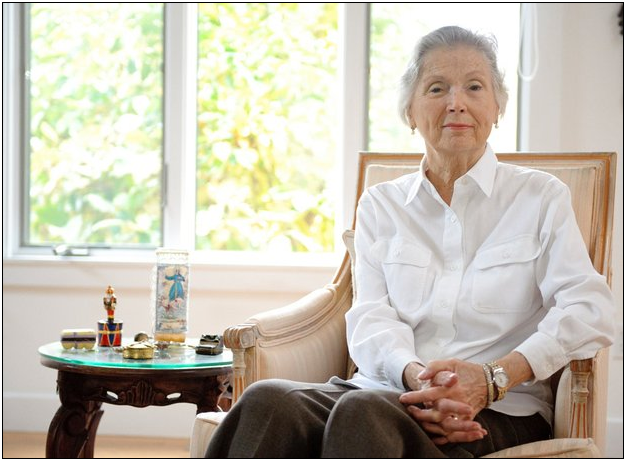
Margaret Peden has spent her career translating Spanish and Latin American works into English. Ryan Henriksen | Buy this photo

By Jill Renae Hicks

Sunday, October 28, 2012

“We who have attempted a translation often disagree in both meaning and expression. I believe nevertheless that there is a perfect translation, and that it lies among the lines of all the versions produced by diligent and sincere ‘readers,’ ” said Margaret Sayers Peden, professor emerita of Spanish at the University of Missouri, in the introduction to one of her works. Near the end of a decadeslong career translating Spanish and Latin American literature into English, Peden was recently awarded the prestigious PEN/Ralph Manheim Medal for Translation. She traveled to New York City to accept her award this week, surrounded by such authors as E.L. Doctorow, Barbara Kingsolver and Susan Nussbaum. Only a handful of translators have been recognized with the award since its inception.

Peden, known by many simply as “Petch,” was born in West Plains and attended MU for her degrees in Spanish. She began her translation career somewhat by chance in the latter part of the 1960s. At the time, she was working on her Ph.D. and came across a small novel by the playwright Emilio Carballido. She told her husband, English Professor William Peden, how interesting it was.

“And he said, ‘Well, you know I can’t read Spanish. Why don’t you translate it?’ ” she remembered. She did — “and I found I loved it, so I just kept doing it.” Peden has translated some 65 books, including most of Isabel Allende’s novels and nonfiction works, books by Carlos Fuentes and Octavio Paz, the writings of intelligent and progressive 17th-century nun Sor Juana Inés de la Cruz, Juan Rulfo’s novel “Pedro Páramo,” and, most recently, Fernando de Rojas’ “Celestina,” a turn-of-the-16th-century work of Spanish literature second in cultural significance only to “Don Quixote.”

That work, published by Yale University Press in 2009, earned Peden the Lewis Galantière Award, sponsored by the American Translators Association. “Celestina” was one of the more complicated works she has translated, Peden said, because of the centuries-old language and the Spanish history she had to research. But she appreciated the challenge of immersing herself in the world from which the tome emerged, and the resultant English translation remains complex in its tragicomic ironies yet is accessible to today’s readers. In comparison, another work Peden said is one of her favorites is Allende’s contemporary memoir “Paula,” which tells the story of her daughter Paula’s coma and subsequent passing, mixed together with vivid, poetic stories of Paula’s and Isabel’s own history and ancestry.

When Peden first began her translation work, she was teaching Latin American literature at MU. Translation courses at universities were not very common, and she did much of the work on her own time. Later she would strive to teach her own students to unearth the true essence of each text while translating, rather than simply switching the language word for word. “I tried to teach my students this: You have to scrape off the words, get down to an under-level. … That’s where the meaning is, below the words,” she emphasized. Gregory Rabassa, a friend and fellow translator, said in Peden’s PEN award statement that her translated characters “speak as they would have had they been born to English and their authors likewise acquire a style in their transformed tongue that is true to what they say or are trying to say.”

Peden will often rewrite five to 10 pages of a work in Spanish at a time, using a combination of both Spanish and English. Then she returns to the beginning and revises, looking up the words she doesn’t understand, and revises again. By the time each book is published, she has pored over it numerous times. She has another hard rule that she judges her work by, a telling aphorism Rabassa passed on to her: “‘You can’t commit the sin of improvement.’ That’s not the point. If it’s a bad book, it has to be a bad book!” she reasoned with a laugh. “Though I try not to ever get one.”

Translating a work is a constant solving of puzzles, Peden noted. “And that’s one of the nice things I love about it, is that you don’t get bored. You can’t get bored.” Often she does as much as or more research than academic writers and critics for the works because she must learn everything she can about a book’s historical and cultural contexts, the way the Spanish language is used in those contexts, and the specific vocabulary and voice of each author — not to mention the voices of all the author’s characters, if applicable. “I don’t have a writing style except the ones I pick up from the books I translate,” Peden explained. “I have done a lot of writing, but that’s not my thing. I’m just better at hearing what somebody else writes.” Indeed, Roberto González Echevarría, Yale professor of Hispanic and comparative literature, praises her ability to nearly turn “herself into” the writers she translates. In his introduction to “Celestina,” he said Peden “is today the most accomplished active translator of Spanish-language literature into English.”

People don’t typically realize how dependent they have been on translations, Peden mused about the often-overlooked role of a translator. “Look at our Western civilization. It came to us in translation: the Greeks, the Bible, all these things.” She is proud to be part of that long tradition and recognizes that she has gained other benefits from walking the “road less traveled” of her chosen career, including a greater tolerance for elements of other cultures she might have felt impatient with before. But Peden added perhaps the best part of her journey has been the relationships she has gained — with her authors, with translators and with other readers who love and respect good literature as much as she. “I’m lucky, the people I’ve met,” she said.

Jill Renae Hicks has previously written arts features for the Tribune and now works as a freelance writer, editor and illustrator. She is interested in the local literary and writing scene and how it connects to the rest of the arts and the greater Columbia community.

Reach Jill Renae Hicks at 573-815-1714 or e-mail jrhicks@columbiatribune.com.

This article was published on page C5 of the Sunday, October 28, 2012 edition of The Columbia Daily Tribune with the headline “Found in translation: ” Click here to Subscribe.

You may be wondering why I posted this well-written article on Margaret Peden, legendary literary translator. There is a personal connection here. Petch is my sweetheart Sally Peden’s step-mother. Petch will be celebrated for her lifetime achievements in translation at Missouri University this Friday, November 16, 2012. I asked her if there was an article about it and she mentioned this one, which came out two Sundays ago. Petch is a great lady, and its always fun being around her and her husband Robert Harper.

UPDATE: Sept 2, 2020: I received a call from a family member that Petch had passed away this summer. I had been wondering how she was doing since it had been several years since we had spoken. Her obituary was posted online July 12, 2020 in The Columbia Daily Tribune, Columbia, MO. You can read it here: Margaret “Petch” Sayers Peden, 1927-2020. It was also published July 9, 2020, courtesy of the family, in the Columbia Missourian: Margaret ‘Petch’ Sayers Peden, May 10, 1927 — July 5, 2020.

I saved it as a PDF with the photo, which I cropped here. You can download it below to get a fuller appreciation for this incredible woman. Here are some of the professional highlights:

Margaret “Petch” Sayers Peden, professor emerita of Spanish at the University of Missouri and renowned translator of Spanish-language literature, passed away at her home on July 5, 2020, surrounded by loved ones. She was 93.

Petch was among the preeminent scholars in the field of translation and one of its greatest champions, working to propel it as a creative effort in its own right.

During and after Petch’s teaching career at the University of Missouri, she continued translating literary works from Spanish to English. She was considered to be one of the leading translators of her time. As a perfectionist, she felt that words could be “unreliable,” “slippery,” “stretchy, treacherous.” She once said, “We [translators] should be evaluated as an actor or opera singer is evaluated, as performing a previously established text.” This acknowledged the complexity of her job as translator, that it was never just finding the English word for the Spanish one, but getting underneath to the essence, or soul of a work. This genius of elucidation is why she was asked to translate works by Carlos Fuentes, Isabel Allende, Pablo Neruda, Octavio Paz, as well as bringing to life her personal hero, the 17th century nun Sor Juana Inez de la Cruz, who, like Petch, was “a woman of genius.” Her deft approach resulted in numerous literary awards including the PEN Translation Prize in 2004, the Lewis Galantiere Translation Prize in 2010 and the PEN/Ralph Manheim Medal for Translation, a lifetime achievement award, in 2012, among many others.

Over five years later, I came across another article, a more personal one, written by Cathy Salter, published Jul 22, 2020 by Boone County Journal: A Literary Remembrance of Margaret Sayers Peden. Cathy and her husband Kit met Petch over two decades ago at a Peden Prize event—an annual event honoring her first husband, Dr. William Peden, (Sally’s father) who founded “The Missouri Review.” She wrote: “More recently, books connected us again when Petch and her second husband, Robert Harper, became regulars at monthly book talks that Kit organizes for Osher Lifelong Learning.” (I’ll paste a little more.)

It was during those monthly Saturday morning gatherings of local writers, published authors, book enthusiasts, poets, and local publishers that we came to know Petch as a true lover of words and the craft of writing. This grand lady has translated over 65 works by esteemed Spanish-language writers—including Isabel Allende, Carlos Fuentes, Octavio Paz, and Pablo Neruda. In 2012, we proudly shared the news that Petch had been awarded the coveted PEN-Ralph Manheim Medal for Translation, a lifetime achievement award.  

Early the following year, Petch reluctantly agreed to do a book talk, saying it would likely be her last.  The morning of her talk, Petch took her audience of 65 fellow lovers of language on a mesmerizing, unexpected literary journey.  She opened by asking, “In the past year, how many of you have read a poem?”  A few hands went up. She then proceeded to introduce us to two of her favorite Spanish-language poets.   

Click the title to finish this wonderful article, also saved as a PDF. It was previously published July 20, 2020 in the Columbia Daily Tribune: Notes From Boomerang Creek: A literary remembrance of Margaret Sayers Peden. Both CDT articles are behind paywalls, why I found other options.

Taylor & Francis published an Obituary in Translation Review Volume 107, 2020 – Issue 1, by Rainer Schulte, Page 135, online Nov 9, 2020: MARGARET “PETCH” SAYERS PEDEN, 1927-2020. They concluded: “The community of translators celebrates the achievements and elegance of Petch Peden.” and encouraged readers to see her obituary in the Columbia Missourian, mentioned above: Margaret ‘Petch’ Sayers Peden, May 10, 1927 — July 5, 2020. (PDF)

Friday, November 14, 2025, Cathy Salter posted this updated remembrance with photos: Celebrating Margaret Sayers Peden. She emailed me, as I had requested, with the link, saying: “Today is the day my weekly blog is published. This one is for the good folks who attended monthly Saturday Morning Book Talks gatherings in Columbia that my darling husband Kit organized for over a decade. As I send it to you, I have a copy of my book Notes From Boomerang Creek in my lap opened to a page with a comment that means the world to me as a writer who loves swimming in a sea of words and memories.”

Cathy added Petch’s blurb for the book from the top of the page under Praise for Cathy Salter’s Notes From Boomerang Creek. “In this delicious book Cathy Salter leads us through the full scope of life’s adventures. Columbia, Missouri has known her for years, and now we share her with a wider world of readers. We follow her down country roads, into U.S. and foreign cities, and enter intimate corners of her life. Be grateful to be showered with luminous words as you turn these pages.” — Margaret Sayers Peden, Award-winning Translator, 2012 Winner of PEN/Ralph Manheim Medal for Translation. The book is available on Amazon.

— Written and compiled (citing sources) by Ken Chawkin for The Uncarved Blog.

Cheryl Fusco Johnson interviews Philip Goldberg, author of American Veda: How Indian Spirituality Changed the West

November 8, 2012

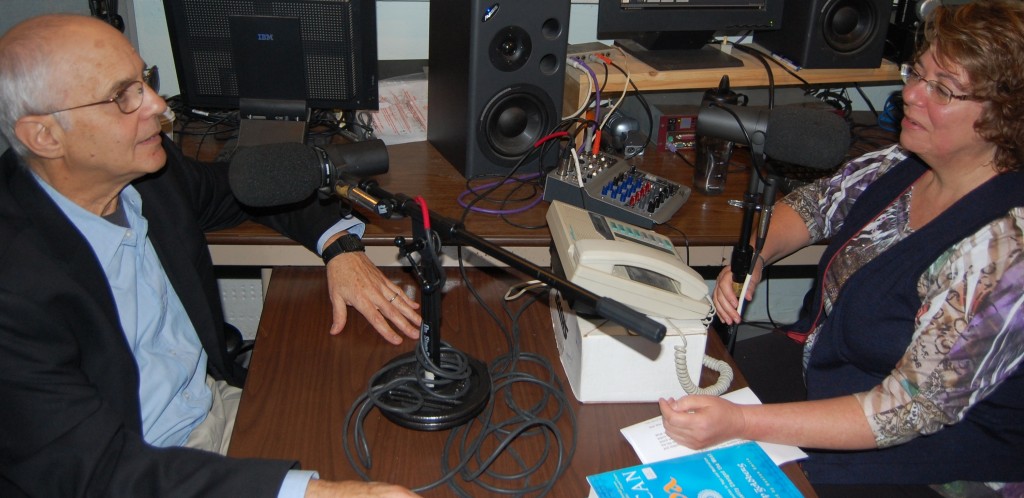
Writers’ Voices host Cheryl Fusco Johnson interviewed author Philip Goldberg on American Veda: How Indian Spirituality Changed the West, at KRUU FM studios, October 12, 2012. The show is now available online: http://www.kruufm.com/node/14325.

Philip Goldberg, American Veda: How Indian Spirituality Changed the West by Cheryl Fusco Johnson

Philip Goldberg with Cheryl Fusco Johnson in KRUU FM studio  Photo: Ken Chawkin

Los Angeles-based author Philip Goldberg is a screenwriter, Huffington Post religious-issues blogger, novelist, and nonfiction writer. His book American Veda: From Emerson and the Beatles to Yoga and Meditation, How Indian Spirituality Changed the West was named one of the top ten books on religion in 2010 by the Huffington Post.

The American Library Association’s Booklist Online awarded it the same honor in 2011. Philip has authored or co-authored nineteen books and has much to say about spirituality, publishing, and how both have changed during his lifetime.

From Cheryl’s Blog: Philip Goldberg: How He Became a HuffPost Blogger

Many people ask Philip Goldberg, author of American Veda: How Indian Spirituality Changed the West, how he became a religious-issues blogger for The Huffington Post. During our Writers Voices radio interview today, Philip explained what happened. Waiting at a bookstore to begin giving a book talk, he was thinking about how few people were there to hear him speak. A woman came into the store looking for something she thought she’d left behind. She noticed Philip standing by a sign advertising the topic of his talk and said, “You should be a blogger for The Huffington Post. My daughter’s an editor there.” Was this a lucky break? Or was it a just reward for the many years Philip spent researching spirituality and honing his writing and speaking skills through repeated practice?

Listen to an earlier show on KRUU FM where Dennis Raimondi interviews Philip Goldberg on Speaking Freely about his latest book American Veda, Nov 22, 2010.

Here is an article about Philip Goldberg and his book American Veda: ‘Vedanta and yoga perfect match for certain American values’.

And here are two related articles by Philip Goldberg: George Harrison: The not-so-quiet Beatle, article by Philip Goldberg in LA YOGA Magazine and Huffington Post: Transcendental Meditation: Topping The Bestseller List Since 1975

Red Dirt Report reviews both “American Veda” by Philip Goldberg and “Transcendence” by Norman Rosenthal.

Dana Sawyer, professor of religion and philosophy at the Maine College of Art, reviewed American Veda for tricyle: How Hinduism Seeped into American Soil.

My Empowered World also posted the tricyle book review adding photos: From Emerson to the Beatles. Watch a video of MEW’s Luzzette McDonald’s Interview with Author – Philip Goldberg about his books American Veda and The Intuitive Edge. Answering Luzzette’s final question about the one empowering tool he would recommend Phil mentions meditation. He says all the other practices are improved by having a good deep meditation practice. Phil mentions his TM practice, which he has been doing since 1968, and concludes saying he thinks of it as the empowering tool for all the other empowering tools.

See this related article by Phil on THEWORLDPOST: Beatles in India: The Retreat That Reverberates Across the Universe.


Celeb Spiritual Report: Jane Mag, May, 2004: David Lynch: One significant day in my life

July 24, 2012

One significant day in my life

By David Lynch

Jane – May, 2004

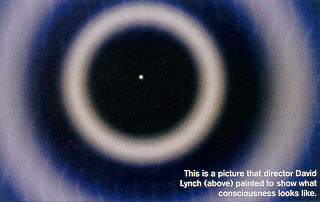
A significant event occurred in my life the day I learned that our human physiology, our body, is made of consciousness.

Consciousness???

“What???” I asked out loud in wonder.

I learned that our human physiology is so magnificent and complex, and so exquisite in its design and makeup, as to be wondrous beyond imagination. We are spun out of unbounded, infinite, eternal consciousness.

I learned that underlying all matter is a vast, unbounded, infinite and eternal field of consciousness called the Unified Field. I found out that modern science started taking this field seriously about 25 years ago and that all matter is unified at this level in a state of perfect symmetry, or balance. The entire universe emerges from this field in a process called “spontaneous sequential symmetry breaking.”

Are you still with me?

I also learned that there is another science called Vedic Science. This Vedic Science is ancient, and it has always talked of the Unified Field.

Interesting!

Veda, I learned, means “total knowledge.” The home of total knowledge is the Unified Field. It is also the home of all the laws of nature. The branches of Veda, 40 in total, make up the language of the Unified Field, the impulses of this eternal field.

I realized this Unified Field is quite an interesting place. It is not manifest and is full, meaning it is no thing, yet all things in potential. It manifests and permeates all things: the whole universe, everything, while still remaining full and not manifest.

Amazing!

Is this mind-boggling or what?

Now comes the hippest part. I have learned that any human being can “experience” the Unified Field.

Really?

Or: So what?

Why in the world would we care to experience the Unified Field?

First, another question.

Have you ever heard that most of us human beings use only 5 percent of our brain, our mind? Have you ever wondered what in the heck the other 95 percent is all about?

This is the beautiful part coming up.

The “experience” of the Unified Field actually unfolds “enlightenment”—higher states of consciousness culminating in Unity Consciousness, the highest state of consciousness. These higher states use that 95 percent of the brain. That is what the 95 percent is there for—to give us permanent, all-time enlightenment.

Now, what is enlightenment? If you were a light bulb, let’s say, your “glow” might light up your whole house and surrounding yard. In enlightenment, your “glow” would be unbounded, infinite and eternal. That would be some glow!

Enlightenment is fulfillment. Supreme fulfillment. Unbounded, infinite, eternal bliss, consciousness, intelligence, creativity, harmony, dynamic peace.

Enlightenment, I have learned, is our “full potential.” It is the birthright of every human being to enjoy enlightenment.

Is this good news? I think it is such good news.

In Vedic Science, the Unified Field is called “Atma.” Translated, that is “Self”—the Self of us all.

The Unified Field is not something foreign, or even something far away. It is right within each of us at the base of our mind, the source of thought. A great sage from the Himalayas, Maharishi Mahesh Yogi, brought a beautiful gift to our world in the form of Transcendental Meditation. Transcendental Meditation is an easy and effortless, yet supremely profound, technique that allows any human to dive within and experience that unbounded ocean of pure bliss, pure consciousness, the Unified Field, our Self.

It may be interesting for you to know that millions of people are practicing Transcendental Meditation all around the world. People from all religions, and all walks of life. Over 600 studies have been done in universities and research institutes validating the profound benefits of Maharishi’s Transcendental Meditation Program.

Having this kind of knowledge and technologies of consciousness available to us in this age is, in my mind, a significant event. Yet the “experience” of that Unified Field is the most significant event, because it unfolds what we truly are—totality.

David’s movies include Eraserhead, Dune, Blue Velvet and Mulholland Drive. He is looking forward to Creating World Peace Day, to be held mid-September at the Maharishi University of Management in Fairfield, Iowa (www.mum.edu).

Copyright 2004 Fairchild Publications, Inc.

Back to the David Lynch articles page.

Jane – May, 2004 – David Lynch’s Celeb Spiritual Report

Haiku on The Nature of Haiku

July 19, 2012

Haiku Defined

3 lines, 2 spaces,
17 feet to walk thru;
then, the unending

Haiku Discovered

a poem unfolds
as words take their place in line
this one’s a haiku

Art of the Haiku

do away with words
and you’ll have a way with words
speak less and say more

When Writing Haiku

trim off excess words
expose the bones of meaning
enter Truth deeply

© Ken Chawkin

Other haiku you might enjoy: Transformed—my first haikuCOMMITTED (a two-haiku poem) | Art of the Haiku by Ken Chawkin | Five Haiku | 13 Ways to Write Haiku: A Poet’s Dozen | A Haiku on Haiku Poets | A Haiku on The Heart of Haiku. Search this blog for more haiku and tanka.

Art of the Haiku by Ken Chawkin

July 19, 2012

Art of the Haiku

do away with words
and you’ll have a way with words
speak less and say more

© Ken Chawkin

Also see Haiku On The Nature of Haiku

Finding peace in Fairfield by Diane Vance

April 13, 2012

Finding peace in Fairfield

By DIANE VANCE, Ledger staff writer | Apr 12, 2012

At the Transcendental Meditation Blog, www.tm.org/blog, Mario Orsatti wrote on April 4, the TM.org website was flooded with visitors the week following Oprah Winfrey’s televised take on TM, Fairfield and her October visit here.

The hour show, one in her series of “Next Chapter” programs first aired on the Oprah Winfrey Network TV channel April 1. It was repeated on Easter Sunday and will air again at 6 p.m. this Sunday. Video segments also are available online.

It’s resulted in “thousands of Americans learning the TM technique,” Orsatti wrote.

While Oprah’s endorsements have propelled other products, some may doubt her embrace of TM will make much difference in Fairfield.

However, the planners and shakers in the TM community are preparing.

A summer session will be newly offered at the Maharishi University of Management, moving its annual graduation ceremony to May 26, rather than its typical mid-summer date.

“Experience the Self” course, offered as a one- or two-week course in July, promises to address consciousness, one’s body and mind, allow participants to discover sustainable living projects, relax in nature and celebrate the cultural opportunities of Fairfield.

As I mentioned in my introduction column the fourth day of Ledger employment in October, I was a student at M.U.M. in the Spring 2010 semester. It was not my first time on campus.

I moved to southeast Iowa in the summer of 1997 with my former husband and two children. We had moved after five years in a small town north of Davenport, after my spouse left 13 years of active duty Army in 1992. (Yes, this San Diego native has now lived in the Midwest 20 years!)

At my job at Keokuk’s newspaper the Daily Gate City, I heard remarks about those weird “flyers” up in Fairfield.

As the education reporter, many press releases from schools around the state and region passed through my desk. I began learning more about M.U.M.

When Vedic City, became incorporated, we drove up here to look around. Dirt lanes took us past cute little white houses with golden topknots and white picket fences.

In October 2007, my spouse and I traveled to Fort Hood, Texas, (where we lived in 1981) to hug our youngest good-bye. His Cavalry Scout unit was deploying to Iraq for 15 months. He was on the older side of 23 years of age.

Having a child at war makes it hard to breathe.

He was at a remote place in the Diyala Province. His care packages needed to include the basics, such as razor blades, toothpaste, etc. He asked for canned soup because it could be heated on the Bradley’s radiator when they spent days at a time away from base camp.

Sending a small Christmas tree and chocolates (chocolates and other meltables can only be mailed October-March) comforted me probably more than my son.

Still, the weeks dragged on. And on. I had a large wall map of Iraq on the wall of my cubicle. I read daily Associated Press stories about Iraq and the U.S. military. I always volunteered to do the stories on local veterans and active military.

When a press release about an April 2008 David Lynch weekend landed in my in-box, I investigated.

The TM promise of stress relief kept calling. I signed up, received a scholarship for the four-day weekend, came to Fairfield and fell in love with this place.

I was delighted to see, and hear, John Hagelin, because I had watched “What the Bleep Do We Know” video a few years earlier. I was astounded to see Donovan, a musician from my youth! And though I didn’t know who David Lynch was, I enjoyed his interaction with all of us visitors that weekend.

I traipsed around in the light rain and mud to view the on-campus green house and one of the golden domes. I ate organic, vegetarian meals (new experience).

And yes, I learned TM that weekend, in a comfortable, non-threatening space from a sweet woman, Linda Mainquist, who happens to be married to Mario Orsatti, where I started this column.

I have to admit to being sort of a slacker; I don’t always make time in my day for 20 minutes each morning and evening. But TM has helped with my stress levels — a good thing!

My son returned from Iraq in January 2009 having survived through two I.E.D.s blowing up the Bradleys he rode in.

And I have survived — and hopefully thrived; through my son-in-law’s year deployment to Guantanamo in 2008; both Army “sons” in Iraq in 2009 and 2010; and my divorce in 2010.

Calming peace is good to have in any form it comes.

Diane Vance is a Ledger staff writer. See other Columns by Diane Vance.

Reprinted with permission from The Fairfield Ledger.

See NPR: Fairfield, Iowa: Where ‘Art Belongs To Everyone’

Dr. Norman Rosenthal gives an engaging talk to medical staff at Northern Westchester Hospital

February 22, 2012

Dr. Norman Rosenthal addresses medical staff at NWH

Dr. Norman Rosenthal recently gave a wonderfully engaging talk on the Transcendental Meditation technique to the medical staff of Northern Westchester Hospital as part of their Health Education program.

Norman E. Rosenthal, MD, a world-renowned psychiatrist and author who described seasonal affective disorder (SAD) and pioneered the use of light therapy to treat it has improved the health of millions of people. His latest book Transcendence: Healing and Transformation Through Transcendental Meditation (Tarcher-Penguin, 2011) explores the value of this ancient meditation technique for healing and transformation in today’s modern world.

Dr. Rosenthal began his talk by highlighting the key themes of healing and transformation brought about by TM, and explained how certain parts of the brain are effected by stress and improved by meditation. He humorously described the conflict that exists neurologically in a stressed mind between the prefrontal cortex and the amygdala by using the simple analogy of the CEO of a company and the fire marshall. It made a lot of sense. Everyone got it.

Drawing on anecdotes from his best-selling book, Transcendence, Dr. Rosenthal’s relaxed narrative style held the audience’s attention throughout the presentation. He shared personal stories of how TM had improved the lives of those interviewed for the book, like Hollywood filmmaker David Lynch, actress Laura Dern, Pulitzer-prize-winning journalist Tim Page, neuropsychologist William Stixrud, as well as patients from his own practice.

A former NIH researcher, Dr. Rosenthal had looked into, and was impressed by, the volume of scientific research studies on TM in the fields of mental and physical health, education and social behavior. He cited some of these studies, including more recent ones.

Dr. Rosenthal also mentioned a published pilot study he had conducted on Veterans with PTSD that showed a 50% reduction in symptoms within two months. He posted an article about it on his blog, along with an emotionally-charged video of one of the Veterans and his mother:  The Case for Using Transcendental Meditation to Treat Combat Related PTSD.

He told the amazing story of Jim Dierke, principal of Visitacion Valley Middle School, and how he had transformed violent, stressed under-achieving, low-attending students to motivated harmonious academically successful ones with the highest attendance ever, after he had introduced the TM/Quiet Time program to his staff and students. The program was implemented and funded by the David Lynch Foundation. Here is a recent article, with a video of principal Dierke, posted on the TM Blog: Breaking the “predictive power of demographics”: SF principal talks about how TM helps his students.

Dr. Rosenthal also shared his own story of how he started TM as a college student in South Africa back in the 70’s. “As they say, if you remember the 70’s you probably weren’t there, but I was there,” he quipped, and giggled. Like most of us he was inspired by the Beatles traveling to India to study Transcendental Meditation with Maharishi Mahesh Yogi. But, he says, he was overwhelmed with his medical studies and didn’t take the time to meditate regularly. He dropped the meditation, yet returned to it decades later after one of his patients recommended he do it based on his own experiences. He went to the local TM center to refresh his practice. After looking into some of the research studies, and noticing subtle yet lasting changes in his own life, he was convinced that this simple, natural process could really make a difference in people’s lives.

Dr. Rosenthal swore he would never write another book; it takes too much time and energy, but after seeing how much of a difference TM was making in his life, and in the lives of his patients, he just had to write this one last book. He felt as compelled to write about TM as he had been about his earlier medical discovery. He was also pleasantly surprised with how enjoyable the whole process went, compared to earlier experiences. He felt the joy of being in the flow, of being in the moment, totally engaged in the creative process. He said the whole experience was very rewarding, uplifting and fulfilling.

He concluded his talk with the value of groups, organizations, practicing TM together, and the impact that has. As an example he mentioned Oprah and how she chose to give TM to her whole organization, and the amazing transformations that brought about. She wrote about it in her magazine, What I Know for Sure.

You can enjoy watching Dr. Rosenthal’s entertaining and informative presentation here on the Northern Westchester Hospital website: http://www.nwhc.net/home/about-us/video-suite/health-education.

Credit and appreciation goes to Sally Rosenfeld, a Certified Teacher of the Transcendental Meditation program, in Westchester County, NY, for arranging to have Dr. Rosenthal speak at Northern Westchester Hospital. Sally said it was a great event, with around 100 people attending from both the hospital and community. Several of them later came to the TM Center to learn how to meditate. Considering how progressive NWH is with their alternative offerings, adding the TM program to the mix would seem like a natural outcome of the meeting.