Archive for the ‘Writing’ Category

How TM helped calm and center a young woman’s busy mind—inspiring article in new Irish magazine

October 11, 2013

A new magazine, Upside News, came out on Dublin’s north side in Ireland. Their website is still under construction, but here is a description on their Facebook page. They asked someone for an article on Transcendental Meditation.
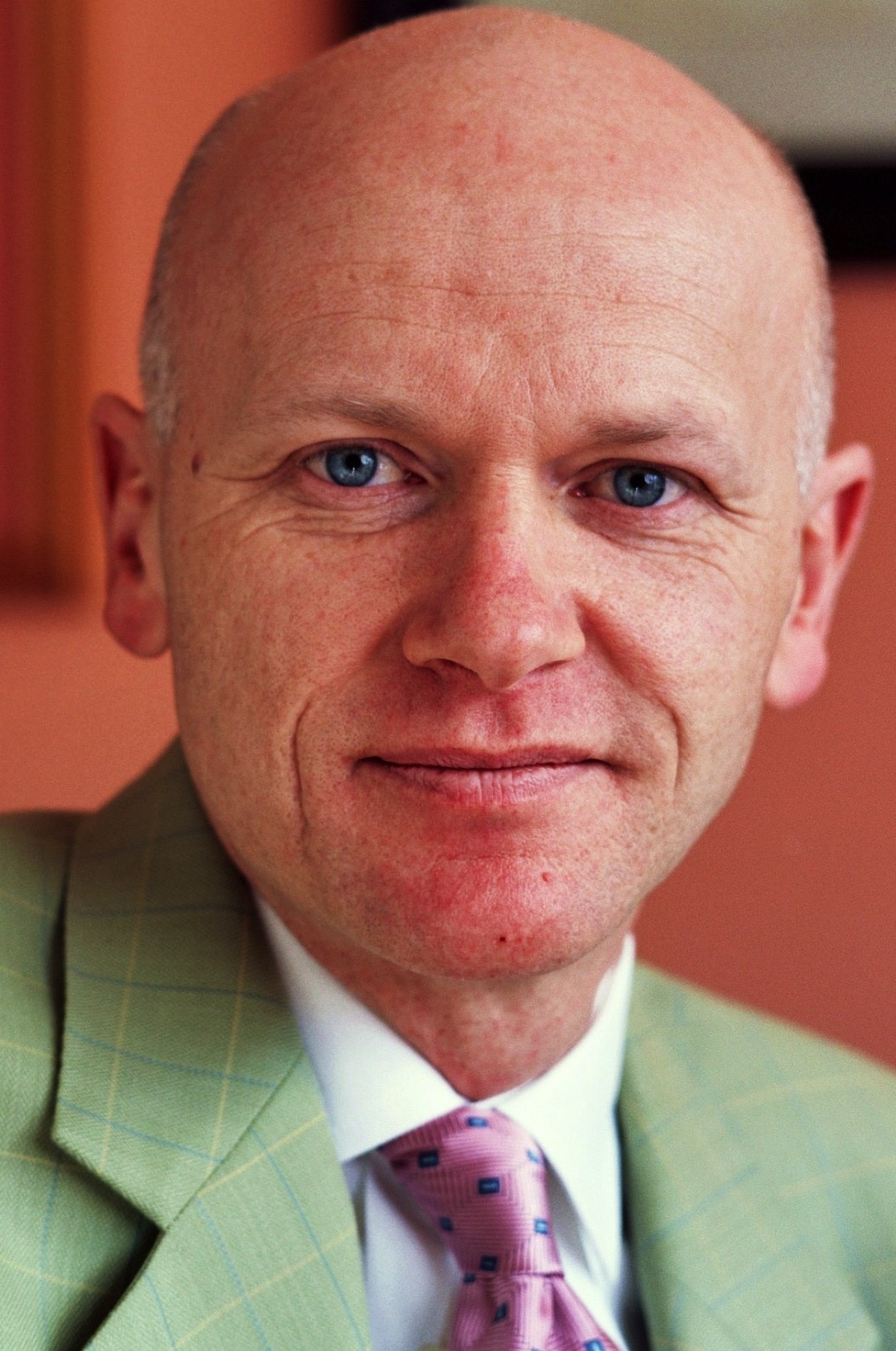
John Burns

John Burns

Since Christine Ryan was the contact person, John Burns, Communications Director for TM in Ireland, persuaded her to write about her experience of the technique. John said he sent the editor an article he had written along with Christine’s TM experience and told him he thought what she had written was so good that he should use it instead if space was an issue. The editor got back to John and said that he would print Christine’s piece.

Good decision; it’s a fantastic personal account! When I asked John to tell me more about the author, he said, “Christine is training to be a school teacher. She is just someone who really appreciates her TM.” I asked John to send a picture of Christine, a PDF of the magazine article, and a link when it’s posted online, which I’ll add when they’re available. Here’s what she wrote:

“As a twenty-four year old trying to find your place in the world, weaving your way around the many forks in the road that separate all of the possible paths down which to venture, it can be hard to tease out your own true voice in an increasingly noisy world.

I am an introverted, intellectual, always-something-to-think-about child of the technological generation. It seems easy to assume I would have trouble turning my awareness away from words on a page, the lure of the internet, my mobile phone, the radio buzzing and the drilling noise vibrating from the neighbour’s house a few doors down where a posse of hard-working, bellowing construction workers are knocking down two walls in her house only to put six back up. But TM is natural and it is effortless, when you learn how to do it.

What TM gives me is stillness and silence. For twenty minutes twice a day, I go to a place of silence that already exists within me. It happens effortlessly and spontaneously. As a helpless analyser of all things, this initially seemed impossible for me to swallow but I very quickly discovered its truth. The noise of the world disappears and I arrive at a place of beautiful quiet.

TM is like diving into a pool of light that washes away dirt and darkness, and emerging fresh and invigorated. During my TM practice, I feel my body settle into a deep state of rest and an overwhelming sense of calm and stillness pervades it. I feel free from the shackles of stress and exhaustion. I experience a sense of unity and peace. Without any resolve to do so, this sense of wholeness and calm lingers on when my meditation has ended; the effects of my TM practice spontaneously ripple forward into my activity.

Almost seven months into my second year of practising TM, I feel greater clarity in my thinking; as a busy thinker this has been such a profound change that TM has brought me. My relationships are infused with a sense of ease now. My thinking is sharper, ideas flow more easily, and my energy is lasting and productive. I feel less uncertain about decisions to be made and a greater vibrancy in my creative endeavours.

As I continue to meditate, the effects grow stronger. My wonderful TM teacher, Ann, put it simply: “It’s like going to the gym,” she said. “You feel great for the first few weeks that you’re going, but if you stop going, you’ll lose the benefits bit by bit.” I may not get to the gym (or exercise for that matter!) every day, but sitting in a chair in my sweats, with messy un-brushed hair, allowing my mind to simply settle down to a place of profound stillness and emerging twenty minutes later energised and renewed—now that I can do!

I was never one to easily identify with, or apply, the principle of “go with the flow,” but as I continue to practise TM I edge all the more closer to fully understanding exactly what that means. TM has resigned stress and anxiety to a state out of tune with the natural rhythm and flow of my body and mind. It puts things into perspective. To connect with that constant centre of calm and stillness that lies within me, regardless of what is happening in my life, and to find that stillness lingering during activity has been one of the greatest joys of learning TM.

Visionary filmmaker, veteran meditator, and prolific speaker and activist for TM, David Lynch, said it best when he said: “TM is for human beings.” The truth of his words find significance in the shared experiences of the benefits of TM by meditators around the globe, young and old, from all religions and all walks of life, from those behind bars to those raised high on a platform called “celebrity.”

In the monthly group meditation meetings I meet meditators of all ages: veterans to novices, students to retirees and everything in between. In a world that breeds so much disconnection and discord, it is a joy to practice a simple technique that allows for an awareness of the integral similarity between us all.

TM recharges me mentally and physically. My morning and evening TM practice have become the pillars onto which I anchor my day. I can hear my own inner voice more clearly again and those forks in the road don’t loom quite so ominously now.”
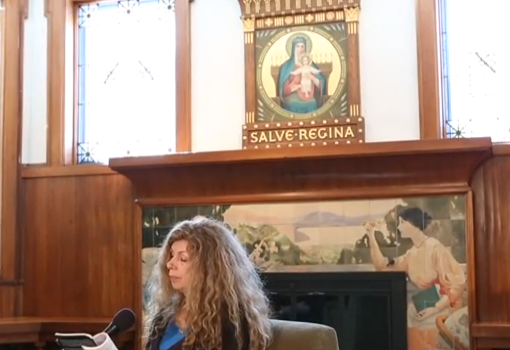
New York poet laureate Marie Howe reads “Annunciation” to Krista Tippett On Being

September 22, 2013

New York poet laureate Marie Howe speaks with Krista Tippett about her poetry on the NPR show, On Being. Closing the interview, The Poetry of Ordinary Time, recorded In The Room, April 2013, Howe reads a poem in the voice of Mary, mother of Jesus, describing the Annunciation, which, her friend and mentor, Stanley Kunitz, said no one had ever gotten right. She wrote several versions, tore them up, and then this final one came through her.

Marie Howe said it had nothing to do with her. It just came through her, a reminder that the best poetry comes through us when we get out of the way. When we are emptied of our small self, “by being no one,” transcend our senses and turn within and are open to the higher Self, then that great creative force of Love within us creates, and the miracle of life, of poetry, happens. You can hear “Annunciation” by Marie Howe on SoundCloud. 

Thought this screen save from the video is most appropriate with the poster of Mother Mary holding the infant Jesus!

Marie Howe reads her poem Annunciation to Krista Tippett for On Being

Marie Howe reads her poem “Annunciation” to Krista Tippett for On Being

Annunciation

Even if I don’t see it again—nor ever feel it
I know it is—and that if once it hailed me
it ever does—

And so it is myself I want to turn in that direction
not as towards a place, but it was a tilting
within myself,

as one turns a mirror to flash the light to where
it isn’t—I was blinded like that—and swam
in what shone at me

only able to endure it by being no one and so
specifically myself I thought I’d die
from being loved like that.

This amazingly beautiful and profound poem can be found at 1:36:02 at the end of the interview, but she starts talking about it at 1:34:45. There are six audio clips of Howe reading her poems posted on SoundCloud recorded on March 16, 2003, at the College of Saint Benedict in Saint Joseph Minnesota.

On Being later recorded: Marie Howe — The Power of Words to Save Us.

Also see An Evening with New York State Poet Laureate Marie Howe.

This relates: David Whyte describes the mysterious way a poem starts inside you with the lightest touch. Whyte also uses a biblical reference, comparing poetic revelation to Lazarus walking to the light.

Enjoy reading: The Millions Interviews Marie Howe—Words Can Sustain and Save Us, published January 11, 2018, where Marie describes what the writing and reading of poetry has done for her, and what it can do for the rest of us. This Q&A particularly reinforces the point Marie Howe made to Krista Tippett when writing “Annunciation.”

TM: Do you think of writing as a spiritual act at its core?

MH: I do, because it involves a wonderful contradiction, which is, in order for it to happen, you have to be there, and you have to disappear. Both. You know, nothing feels as good as that. Being there and disappearing—being possessed by something else. Something happening through you, but you’re attending it. There are few other things in the world like that, but writing is pretty much a relief from the self—and yet the self has to be utterly there.

I know exactly what she means. I had a similar experience when “I wrote” ODE TO THE ARTIST: Sketching Lotus Pads at Round Prairie Park.

William Stafford in his poem, Rx Creative Writing: Identity, also writes about being open to “that bone light,” which “belongs inside of things.” And “You know so sure there burns a central vividness.” He reiterates this idea of being a recipient, a receptacle, and an attendant, a reporter: “It tells you; all you do is tell about it.”

In her poem, Mindful, Mary Oliver delights in the world around her, which leaves her “like a needle in the haystack of light. It was what I was born for — to look, to listen, to lose myself inside this soft world — to instruct myself over and over in joy, and acclamation.”

Oliver codifies this message in 3 short, powerful sentences in the 4th stanza of Sometimes, where she gives us “Instructions for living a life: Pay attention. Be astonished. Tell about it.”

Both poems are included in this post: Attentive to and delighting in her surroundings, Mary Oliver lived a life writing astonishing poetry.

Later added this article/interview by Kim Rosen for Spirituality&Health, Feb 16, 2014: Marie Howe: Holding the Silence. The acclaimed poet reflects on prayer, desperation, and letting go of what can’t be said. (PDF)

Newly added, Nov 2, 2022: What the Living Do—Marie Howe’s ‘letter’ to her brother—an elegy to loss and how she lives with it.

— Written and compiled (citing sources) by Ken Chawkin for The Uncarved Blog.

Haiku of the Heart – for Sali

September 22, 2013

This past Thursday, September 19, 2013, turned out to be an early Full Moon night. For some reason I ended up visiting Sali 3 times that day, twice to drop off things. The first time I stayed with her as she and the other residents were going to be entertained by a country music band. Their gentle songs from the fifties brought back memories when I first heard them as a child. It was very relaxing and healing for us as we listened together. When I returned later that night to read to her, she was already in bed. I leaned in and looked closely into her eyes. We both started laughing out loud, with great joy in our hearts. While sharing this experience with a friend at lunch today, the day of the autumnal equinox, I spoke of experiencing an orgasm of the heart. She repeated that line, and said it was something special. I noticed it also had seven syllables and wrote it down. Later, when we all went out for a walk together, the rest of the haiku easily assembled itself. I shared it with her; it sounded powerful. She said it gave her goosebumps, from head to toe and back.

Haiku of the Heart
for Sali

♥ ♥ ♥

Such joy between us
An orgasm of the heart
Looking in your eyes

♥ ♥ ♥

© Ken Chawkin
Experienced Thursday, September 19, 2013, Full Moon Night
Written Sunday, September 22, 2013, Autumnal Equinox
Fairfield, Iowa, USA

I remember another joyful time Being with Sali, August 1, 2012, also on a full moon night: Capturing an authentic moment in writing.

On August 31, 2017 I posted this related entry: ‘In Our Loving Eyes’ a poem by @kenchawkin remembering a special love with Sally Peden.

Writers’ Voices interviews B. Steven Verney, author of “The Best of All Possible Worlds”

September 10, 2013

Writers’ Voices: Author in the house –
B. Steven Verney and “The Best of All Possible Worlds”

Writers' Voices  Verney up close

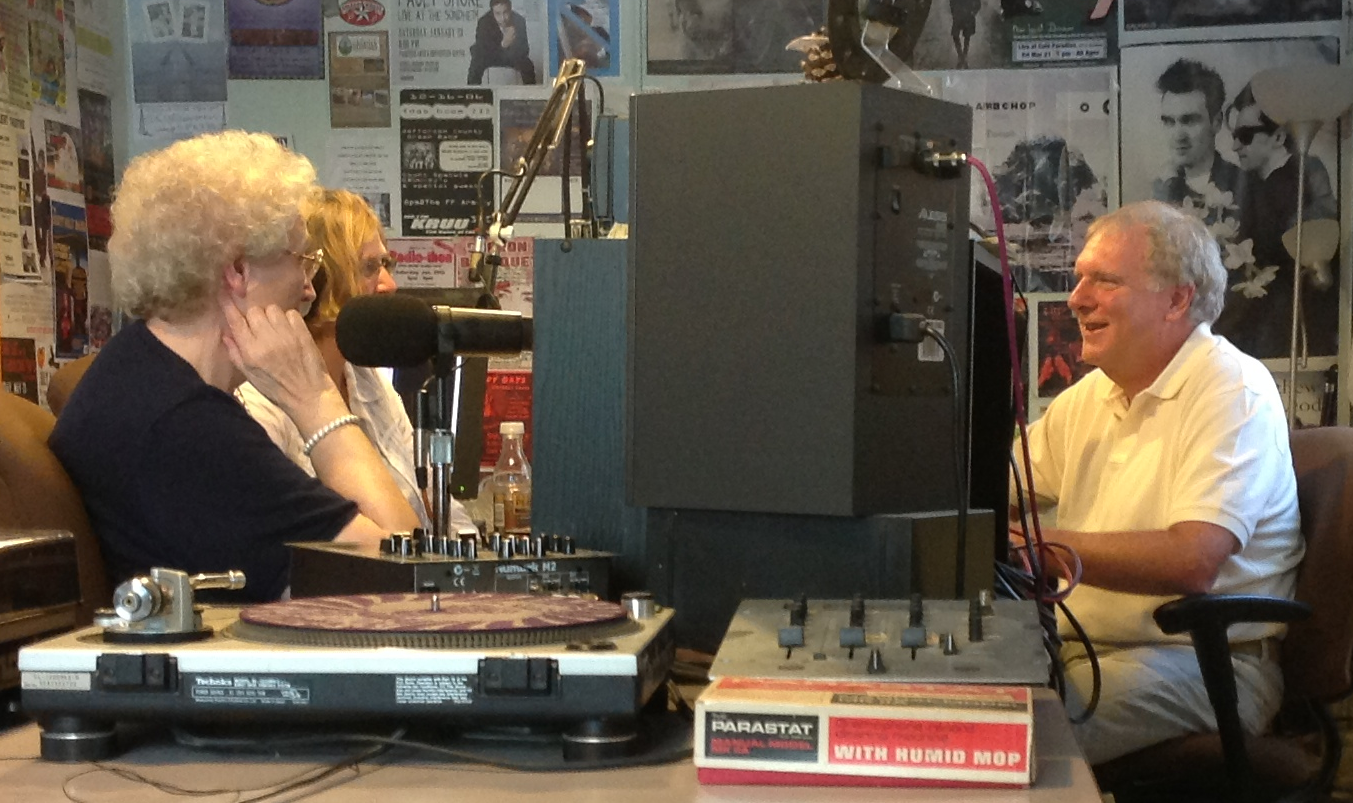
Monica Hadley and Caroline Kilbourn are delighted to welcome first-time novelist and former MIU student B. Steven Verney to KRUU 100.1 FM and Writers’ Voices, as he returns to Fairfield from his home in Massachusetts to join in the festivities of the MUM Literature Reunion being held this weekend, August 30 – September 2. See the press release: MUM Celebrates Literature Reunion 2013.*

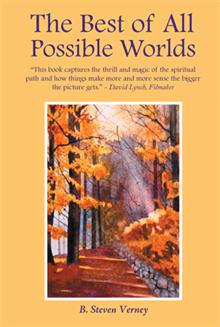
The Best of All Possible WorldsIn “The Best of All Possible Worlds,” published May 2012, Verney combines story-telling, philosophy, and the history of the TM movement into a unique and engaging novel. Anyone who attended TM teacher training courses in Switzerland or learned to meditate at Amherst in the early 70’s may just recognize pieces of their own personal history in this novel, while younger meditators, and even non-meditators with no connection to those events, will get a much deeper perspective of what all the fuss was about. This interview aired live, Fri Aug 30 1:00 pm – 2:00 pm and replayed, Mon Sep 02 8:00 am – 9:00 am. Here is an MP3 of it.

A newer interview recorded before Christmas 2013 was later posted in the new year: @MaharishiU Dean of Faculty, Dr. Cathy Gorini, interviews author Steven Verney on MUM’s KHOE.

If you went to MIU, Bruce Verney, as he was known back then, was student body president and won the Enlightened Leadership Award. He graduated in 1981 in Philosophy and married fellow student Kay Noble the following year. For the next 24 years, Steve and Kay started and operated three different businesses while raising their two sons. They’ve resided in New Salem, MA and currently live in Wellfleet, MA. This is his first novel.

I highly recommend the book. It won’t disappoint. The ending is mind-blowing! Steven said it took him 18 months to get the first draft down, and 3 years to revise and shape it, with some help from an editor, who curiously enough, turned out to be the person who had taught him Transcendental Meditation in Cambridge, MA decades earlier!

Although Steve is now writing his second novel, this first one is finally taking on a life of its own. David Lynch loved it and gave Steven a quote to help promote the book. “This book captures the thrill and magic of the spiritual path and how things make more and more sense the bigger the picture gets.” — David Lynch, Filmaker

The book will no doubt spread by word of mouth. George Ellis, author of A Symphony of Silence: An Enlightened Vision, said it should be turned into a screenplay. I agree. It’s destined to become a classic. I’m sure we’ll be hearing more of B. Steven Verney.

Visit Steve’s new website one of his son’s designed for him http://steveverney.com and blog. Read the overview of the book and see the Xlibris Book Trailer: The Best of All Possible Worlds.

*You may also enjoy The Flow of Consciousness: Maharishi Mahesh Yogi on Literature and Language, 1971 to 1976, edited by Rhoda F. Orme-Johnson, Ph.D. and Susan K. Anderson, Ph.D., two former chairpersons of the MIU/MUM Literature department who attended the Literature Reunion 2013.

Another novel about a meditating philosophy professor worth reading is, “To Be Enlightened” by Alan J. Steinberg.

— Written and compiled (citing sources) by Ken Chawkin for The Uncarved Blog.

a writing tanka on writing tanka by ken chawkin

September 8, 2013

writing tanka
a writing tanka on writing tanka

stare at the blank page
intimidating or what
now just start writing

no matter what you put down
it will all come back to you

© Ken Chawkin
Fairfield, Iowa, USA
September 7, 2013

WRITING TANKA—Preparing to Write

Writing—a poem on the writing process

Haiku On The Nature of Haiku

Norman E. Rosenthal, M.D.’s new book, The Gift of Adversity, helps us to look at life differently

September 1, 2013

Throughout his storied career as a research psychiatrist, Dr. Norman E. Rosenthal has searched outside the box for ways to help people struggling with depression and other mood disorders.  This search led him to diagnose and name seasonal affective disorder (SAD) and develop light therapy as a wonderfully effective treatment while at the National Institute of Mental Health. He went on to write several books that brought alternative, non-pharmaceutical treatments straight into public awareness, including “Winter Blues,” “St. John’s Wort: The Herbal Way to Feeling Good,” and, most recently, the New York Times bestseller, “Transcendence,” which explores the power of Transcendental Meditation in healing and transformation.

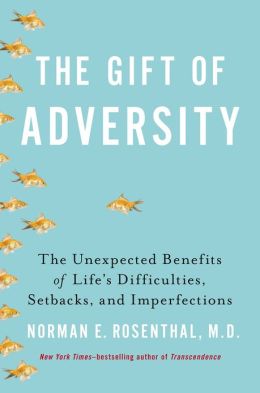
The Gift of AdversityIn his new book, “The Gift of Adversity: The Unexpected Benefits of Life’s Difficulties, Setbacks and Imperfections,” Dr. Rosenthal shares personal stories of adversity, as well as case studies and lessons he has learned from his heroes. Less scientific than his previous books, “The Gift of Adversity” is part memoir, part inspiration, and thoroughly enjoyable to read.

Adversity is an irreducible fact of life. Although we can and should learn from all experiences, both positive and negative, bestselling author Dr. Norman E. Rosenthal, believes that adversity is by far the best teacher most of us will ever encounter.

Whether the adversity one experiences is the result of poor decision-making, a desire to test one’s mettle, or plain bad luck, Rosenthal believes life’s most important lessons—from the value of family to the importance of occasionally cutting corners—can be best learned from it. Running counter to society’s current prevailing message that “excellence” must always be aspired to, and failure or mistakes of any sort are to be avoided at all costs, Rosenthal shows that engaging with our own failures and defeats is one of the only ways we are able to live authentic and meaningful lives, and that each different type of adversity carries its own challenges and has the potential to yield its own form of wisdom.

David Lynch Foundation executive director and author, Bob Roth, interviews Dr. Norman Rosenthal on how he went from writing “Transcendence” to “The Gift of Adversity.”

In this excerpt from the interview, Dr. Rosenthal shares with Bob Roth the gift he received from a very adverse situation early on in his life.

There are many reviews and interviews coming out on The Gift of Adversity and with Norman Rosenthal. Here are a few of them on Huffington Post and elsewhere: The Gift of Adversity: A Book Review by Lloyd I. Sederer, MD on HuffPost’s HealthyLiving. Norman Rosenthal on the Surprising Benefits of Life’s Biggest Challenges on Bookish. Norman Rosenthal ‏posted an article on HuffingtonPost: The Gift of Adversity. Norman wrote Your Mind, Your Body, How to live a happier, healthier life, for Psychology Today. Jeanne Ball ‏ posted 3 Ways Meditation Helps You Deal With Adversity also on HealthyLiving. The TM Blog posted an article by Dr. Norman Rosenthal: From Transcendence to The Gift of Adversity. And this excellent review by Jane E. Brody in the Personal Health section of the New York Times titled, Life’s Hard Lessons.

Norman Rosenthal was interviewed on Writers’ Voices: Looking for the Silver Lining with Dr. Norman E. Rosenthal and “The Gift of Adversity”. Dennis Raimondi on his show Speaking Freely asks Norman Rosenthal about his new book, The Gift of Adversity on KRUU-LP 100.1 FM (23:51).

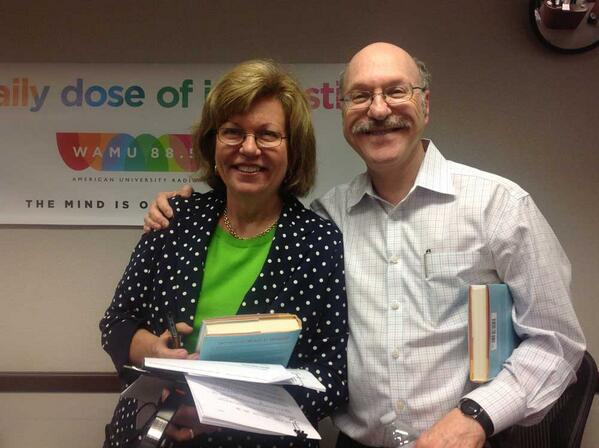
Susan Page and Norman Rosenthal at WAMU 88.5 FM

Guest host Susan Page interviewed Dr. Norman Rosenthal on The Diane Rehm Show

Norman Rosenthal was booked on the Diane Rehm Show to discuss his latest book, The Gift of Adversity, Wednesday, Sept 4, 11:00am to noon ET. Listen live on WAMU 88.5 FM or online.

As it turned out, Diane was on vacation, and guest host Susan Page, American Journalist and Washington Bureau Chief for USA Today, conducted the interview. Visit their post to read an excerpt of the book, Dr. Norman Rosenthal: “The Gift Of Adversity”, and listen to a replay of the interview on their audioplayer.

He was also interviewed by Dr. Sherrill Sellman on her show What Women Must Know – The Gift of Adversity with Norman E. Rosenthal – 09/26/13.

As I continue to read this wonderful book I find myself quietly reflecting on my own life’s experiences and lessons learned, triggered by reading Dr. Rosenthal’s and those of the people he discusses. Each chapter has a takeaway point, something to reflect on and learn from the transforming alchemy of adversity.

I am reminded of two quotes that beautifully encapsulate the message of the book: One by Buddha: “Every experience, no matter how bad it seems, holds within it a blessing of some kind. The goal is to find it.” And the other by Tom Bodett: “In school, you’re taught a lesson, then given a test. In life, you’re given a test that teaches you a lesson.” Dr. Rosenthal looks for and finds the blessings and lessons that adversity has brought him and the subjects in his book. It should be required reading for young adults to help them build empathy and understanding, preparing them for their journey through life.

Dr. Rosenthal also gives us hope when he says that the stressful experiences of adversity can also lead to growth. Quoting Friedrich Nietzsche’s famous dictum: “That which does not kill us makes us stronger,” he tells us of the dividend of PTG from the payment of PTS, the post-traumatic growth that may come from the post-traumatic stress we’ve endured. And he also gives us the tools to deal with the stress, mentioned in his earlier books, like “Winter Blues”, using light therapy to chase away the winter blues, and from “Transcendence”, his most recent bestseller, extolling the healing and transformational virtues of Transcendental Meditation. Discovering what Dr. Rosenthal says in his books is like finding a thoughtful friend who dispenses wise advice.

On December 20, 2013 he spoke in New York at TEDx: Norman Rosenthal on The Gift of Adversity in which he describes the three kinds of adversities, and mentions his three heroes.

Nature’s Bi-Cycle, a poem from/for the child in us

August 8, 2013

I wrote a poem the first day on my job working for the Vancouver Board of Parks and Recreation as a paper-picker in Queen Elizabeth Park. It was in the mid-1990’s, during the wintertime. The job kept me active, walking miles each day, spent mostly in nature, in a beautiful park setting. And I made more money doing that than teaching kids writing after school at a Sylvan Learning Center in North Vancouver. It was what I needed at the time. But that’s a whole other story.

The park attendant would leave each year to go to California for the winter. Some friends who had done the job for him the previous winter introduced us. A fellow poet and a meditator (not TM), we shared common interests. He offered me the job and said I could stay in the caretaker facility he lived in across the street from Q.E. Park in Hillsdale Park. In exchange I would cover his utilities. I just had to get his boss’s approval, who did hire me, but wasn’t happy about the arrangement. He said there were people ahead of me in line for such a hard-to-come-by job. But it worked out well and he later hired me for the summer in Stanley Park when the caretaker returned from California.

I was lucky to get that prized job, doing simple work, like cleaning the park facilities and picking up trash. I also appreciated the beautiful park settings and composed poems as I walked the grounds. I actually amused myself that first day. I thought of how things grew from seed to tree, and their interrelationships with the animals. Dark berries turned white in winter and the birds who ate them caught my attention as I thought of the cycles in nature.

My inner child loved composing and hearing the sounds and meanings of the words. Every time I shared this poem with kids, they’d squeal with delight! Maybe the child in you will like it too.

NATURE’S BI-CYCLE

Berries are meant to be eaten by birds
who poop out the seeds contained in their turds
this process prepares seeds to sprout in the spring
’til one day they’re trees and in them birds sing

© Ken Chawkin

Read Park Poems from Ken Chawkin for more details on this story and other poems inspired from Q.E. Park and others I visited in the Greater Vancouver area.

Celeb Spiritual Report: One significant day in my life by David Lynch for Jane Magazine (May 2004)

August 3, 2013

Here is an article I helped facilitate for David Lynch when we first started working with him, a year before the idea for the David Lynch Foundation was created under the dynamic leadership of Bob Roth, executive director for the Foundation. Up to this point David had kept his Transcendental Meditation practice private. When he made the decision to go public and help the TM movement he turned out to be a most unique and brilliant spokesman.

One event was a project to create world peace. We sent out our press release to the media and set up a NY press conference David would attend. Jauretsi Saizarbitoria, the entertainment editor for Jane magazine at the time, emailed back saying she was interested in David’s meditating and suggested he write an article for their special celeb issue on the topic: One significant day in my life. We mentioned it to him and he sent us an article of the day he learned that our human physiology, our body, was made of consciousness, which we forwarded to them. Knowing he was a painter, they also wanted to know what consciousness looked like to David. He sent a jpeg of an image he had created and they included it, giving him a whole page and titling it a Celeb Spiritual Report, with that announcement on the bottom right side of the magazine cover. It was published in their May, 2004 celeb issue. Jane was a popular woman’s magazine, published from 1997-2007. David posted the report on his website with other earlier David Lynch articles and interviews.

Here is David’s love of Maharishi’s Vedic knowledge explained in such a simple conversational tone that’s truly David Lynch. He’s actually a brilliant writer and speaker! They put the text on the bottom right of this photo. Here it is with the text underneath.

Jane – May, 2004
One significant day in my life

By David Lynch

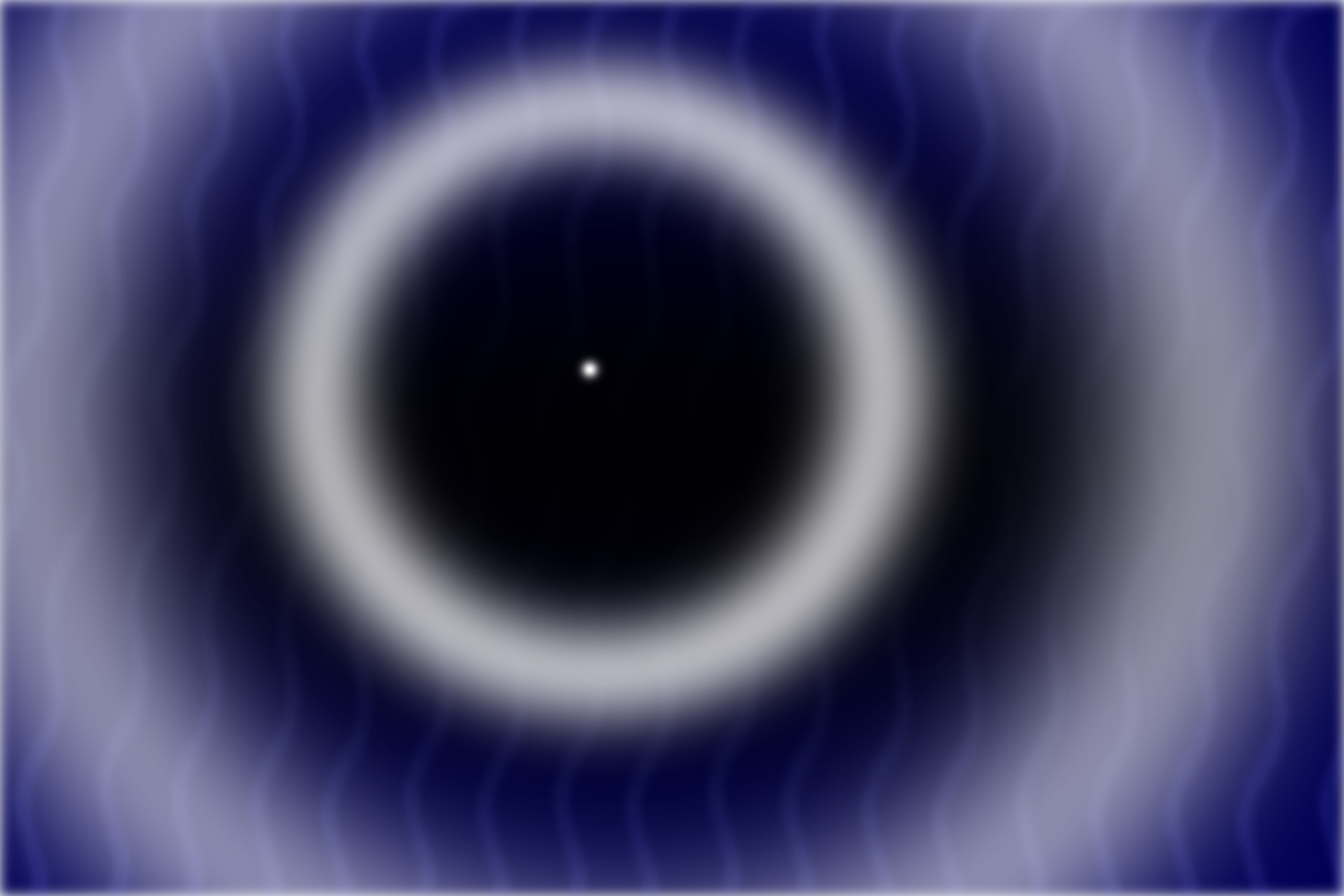
This is a picture that director David Lynch (above) painted to show what consciousness looks like.

This is a picture that director David Lynch (above) painted to show what consciousness looks like.

A significant event occurred in my life the day I learned that our human physiology, our body, is made of consciousness.

Consciousness???

“What???” I asked out loud in wonder.

I learned that our human physiology is so magnificent and complex, and so exquisite in its design and makeup, as to be wondrous beyond imagination. We are spun out of unbounded, infinite, eternal consciousness.

I learned that underlying all matter is a vast, unbounded, infinite and eternal field of consciousness called the Unified Field. I found out that modern science started taking this field seriously about 25 years ago and that all matter is unified at this level in a state of perfect symmetry, or balance. The entire universe emerges from this field in a process called “spontaneous sequential symmetry breaking.”

Are you still with me?

I also learned that there is another science called Vedic Science. This Vedic Science is ancient, and it has always talked of the Unified Field.

Interesting!

Veda, I learned, means “total knowledge.” The home of total knowledge is the Unified Field. It is also the home of all the laws of nature. The branches of Veda, 40 in total, make up the language of the Unified Field, the impulses of this eternal field.

I realized this Unified Field is quite an interesting place. It is not manifest and is full, meaning it is no thing, yet all things in potential. It manifests and permeates all things: the whole universe, everything, while still remaining full and not manifest.

Amazing!

Is this mind-boggling or what?

Now comes the hippest part. I have learned that any human being can “experience” the Unified Field.

Really?

Or: So what?

Why in the world would we care to experience the Unified Field?

First, another question.

Have you ever heard that most of us human beings use only 5 percent of our brain, our mind? Have you ever wondered what in the heck the other 95 percent is all about?

This is the beautiful part coming up.

The “experience” of the Unified Field actually unfolds “enlightenment”—higher states of consciousness culminating in Unity Consciousness, the highest state of consciousness. These higher states use that 95 percent of the brain. That is what the 95 percent is there for—to give us permanent, all-time enlightenment.

Now, what is enlightenment? If you were a lightbulb, let’s say, your “glow” might light up your whole house and surrounding yard. In enlightenment, your “glow” would be unbounded, infinite and eternal. That would be some glow!

Enlightenment is fulfillment. Supreme fulfillment. Unbounded, infinite, eternal bliss, consciousness, intelligence, creativity, harmony, dynamic peace.

Enlightenment, I have learned, is our “full potential.” It is the birthright of every human being to enjoy enlightenment.

Is this good news? I think it is such good news.

In Vedic Science, the Unified Field is called “Atma.” Translated, that is “Self”—the Self of us all.

The Unified Field is not something foreign, or even something far away. It is right within each of us at the base of our mind, the source of thought. A great sage from the Himalayas, Maharishi Mahesh Yogi, brought a beautiful gift to our world in the form of Transcendental Meditation. Transcendental Meditation is an easy and effortless, yet supremely profound, technique that allows any human to dive within and experience that unbounded ocean of pure bliss, pure consciousness. the Unified Field, our Self.

It may be interesting for you to know that millions of people are practicing Transcendental Meditation all around the world. People from all religions, and all walks of life. Over 600 studies have been done in universities and research institutes validating the profound benefits of Maharishi’s Transcendental Meditation Program.

Having this kind of knowledge and technologies of consciousness available to us in this age is, in my mind, a significant event. Yet the “experience” of that Unified Field is the most significant event, because it unfolds what we truly are—totality.

David’s movies include Eraserhead, Dune, Blue Velvet and Mulholland Drive. He is looking forward to Creating World Peace Day, to be held mid-September at the Maharishi University of Management in Fairfield, Iowa (www.mum.edu).

Copyright 2004 Fairchild Publications, Inc.

(more…)

Inspiring excerpts – David Lynch: Catching the Big Fish – Meditation, Consciousness, and Creativity

July 28, 2013

Inspiring excerpts from a book by David Lynch: Catching the Big Fish – Meditation, Consciousness, and Creativity

Ideas are like fish. If you want to catch little fish, you can stay in the shallow water. But if you want to catch the big fish, you’ve got to go deeper. Down deep, the fish are more powerful and more pure. They’re huge and abstract. And they’re beautiful. Everything, anything that is a thing, comes up from the deepest level. Modern physics calls that level the Unified Field. The more your consciousness – your awareness – is expanded, the deeper you go toward this source, and the bigger fish you can catch.

Catching the Big Fish: Meditation, Consciousness, and Creativity
–David Lynch

David Lynch (b. 1946) – director, visual artist, musician and, most significantly, long-term Transcendental Meditation practitioner – is best known for his surrealist films, having developed his own unique cinematic style, characterized by dream imagery and meticulous sound design. In the course of his career, he has received numerous nominations and awards, including the illustrious Palme d’Or at the Cannes Film Festival and a Golden Lion award for lifetime achievement at the Venice Film Festival.

His most popular and critically-acclaimed film projects include Eraserhead, The Elephant Man, Wild at Heart, Twin Peaks, Blue Velvet, Mulholland Drive and INLAND EMPIRE. He has also embraced the internet as a medium, producing several web-based shows, such as the animation, Dumbland, and the surrealist sitcom, Rabbits.

He has also produced a brilliant literary offering, Catching the Big Fish: Meditation, Consciousness, and Creativity. Written in short chapters on themes as diverse as painting, filmmaking, meditation, consciousness, the texture of a dead body and other such profound matters, it is an absolute treat for any aspiring artist who is also keen to dive deep for the so-called bigger fish and is looking for a truly authentic and honest interpretation of life.

Desire
Desire for an idea is like bait. When you’re fishing, you have to have patience. You bait your hook, and you wait. The desire is the bait that pulls those fish in – those ideas.

The beautiful thing is that when you catch one fish that you love, even if it’s a little fish – a fragment of an idea – that fish will draw in another fish, and they’ll hook onto it. Then you’re on your way. Soon there are more and more and more fragments, and the whole thing emerges. But it starts with desire.

Consciousness
Through meditation one realizes the unbounded. That which is unbounded is happy. There is no happiness in the small.
Upanishads

Little fish swim on the surface, but the big ones swim down below. If you can expand the container you’re fishing in – your consciousness – you can catch bigger fish.

Here’s how it works: Inside every human being is an ocean of pure, vibrant consciousness. When you ‘transcend’ in Transcendental Meditation, you dive down into that ocean of pure consciousness. You splash into it. And it’s bliss. You can vibrate with this bliss. Experiencing pure consciousness enlivens it, expands it. It starts to unfold and grow.

Intuition
Know That by knowing which everything is known.
Upanishads

Life is filled with abstractions, and the only way we make heads or tails of it is through intuition. Intuition is seeing the solution – seeing it, knowing it. It’s emotion and intellect going together. That’s essential for the filmmaker.

How do you get something to feel right? Everybody’s got the same tools: the camera and the tapes and the world and the actors. But in putting those parts together, there are differences. That’s where intuition enters.

Personally, I think intuition can be sharpened and expanded through meditation, diving into the Self. There’s an ocean of consciousness inside each of us, and it’s an ocean of solutions. When you dive into that ocean, that consciousness, you enliven it.

You don’t dive for specific solutions; you dive to enlighten that ocean of consciousness. Then your intuition grows and you have a way of solving those problems – knowing when it’s not right and knowing a way to make it feel correct for you. That capacity grows and things go much more smoothly.

Identity
The thing about meditation is: You become more and more you.

Sound
Sometimes you hear a piece of music, and it marries to a scene in the script. When I’m shooting, I will often play that piece of music in the headphones whilst listening to the dialogue. Hearing the music is just a verification that things are going the right way – for instance, the right pace or lighting. It’s just another tool to ensure that you’re following that original idea and being true to it.

Ask The Idea
The form which embodies that wish appeared in consciousnesses – that is to be held within consciousness.
Upanishads

The idea is the whole thing. If you stay true to the idea, it tells you everything you need to know, really. You just keep working to make it look like that idea looked, feel like it felt, sound like it sounded, and be the way it was. And it’s weird, because when you veer off, you sort of know it. You know when you’re doing something that is not correct because it feels incorrect. It says, ‘No, no; this isn’t like the idea said it.’ And when you’re getting into it the correct way, it feels correct. It’s an intuition: You feel-think your way through.

You start one place, and as you go, it gets more and more finely tuned. But all along it’s the idea talking. At some point, it feels correct to you. And you hope that it feels somewhat correct to others.

Suffering
It’s good for the artist to understand conflict and stress. Those things can give you ideas. But I guarantee you, if you have enough stress, you won’t be able to create. And if you have enough conflict, it will get in the way of your creativity. You can understand conflict, but you don’t have to live in it.

In stories, in the worlds that we can go into, there’s suffering, confusion, darkness, tension and anger. There are murders; there’s all kinds of stuff. But the filmmaker doesn’t have to be suffering to show suffering. You can show it, show the human condition, show conflicts and contrasts, but you don’t have to go through that yourself. You are the orchestrator of it, but you’re not in it. Let your characters do the suffering.

It’s common sense: The more the artist is suffering, the less creative he is going to be. It’s less likely that he is going to enjoy his work and less likely that he will be able to do really good work.

Light of the Self
He who sees everything as nothing but the Self,
and the Self in everything he sees,
such a seer withdraws from nothing.
For the enlightened, all that exists is nothing but the Self,
so how could any suffering or delusion continue
for those who know Oneness?
Upanishads

Negativity is like darkness. So what is darkness? You look at darkness, and you see that it’s nothing: It’s the absence of something. You turn on the light, and darkness goes.

But sunlight, for instance, doesn’t get rid of negativity. It gets rid of darkness but not negativity. So what light can you turn on that removes negativity the way sunlight removes darkness? It’s the light of pure consciousness, the Self – the light of unity.

Don’t fight the darkness. Don’t even worry about the darkness. Turn on the light and the darkness goes. Turn up that light of pure consciousness: Negativity goes.

The Box and the Key
I don’t have a clue what those are.

Fire
Sitting in front of a fire is mesmerizing. It’s magical. I feel the same way about electricity. And smoke. And flickering lights.

Advice 
The Truth upholds the fragrant Earth and makes the living
water wet. Truth makes fire burn and the air move,
Makes the sun shine and all life grow. A hidden truth
supports everything. Find it and win.
Ramayana

Stay true to yourself. Let your voice ring out, and don’t let anybody fiddle with it. Never turn down a good idea, but never take a bad idea. And meditate. It’s very important to experience the Self, that pure consciousness. It’s really helped me. I think it would help any filmmaker. So start diving within, enlivening that bliss consciousness. Grow in happiness and intuition. Experience the joy of doing. And you’ll glow in this peaceful way. Your friends will be very, very happy with you. Everyone will want to sit next to you. And people will give you money!

Thanks to StillnessSpeaks.com for compiling this list.

See Fishing For Fallen Light: A Tanka inspired by David Lynch and Pablo Neruda with links to videos of David talking about these ideas.

Documentary film on David Lynch titled “Meditation Creativity Peace”

Since the book, David Lynch made a 16-country tour around the world when he spoke to government leaders, film students, and the press. It was made into a documentary film and premiered in NY. Watch the trailer for a new documentary film on David Lynch titled “Meditation Creativity Peace”.

This was later followed by a premier in Los Angeles: Russell Brand and David Lynch at LA Premiere of ‘Meditation, Creativity, Peace’ Documentary. Also see David Lynch, Russell Brand, Bob Roth Q&A after screening Meditation, Creativity, Peace documentary at Hammer Museum. Links to videos and articles are available at the bottom of each post.

The film continues to be shown in major cities around the world. Check your local TM center and the David Lynch Foundation for more information.

The documentary film was made available online, March 3, 2016. You can watch it here on The Uncarved Blog.

Fishing For Fallen Light: A Tanka inspired by David Lynch and Pablo Neruda

July 28, 2013

I thought of David Lynch and his book, Catching the Big Fish, when I read a particular poem by Pablo Neruda in The Sea and the Bells. Both deal with the search for illumination; finding and clarifying a creative idea.

In this video David answers a question about his creative process, describing where ideas come from and how they coalesce into a finished product: David Lynch: ‘Ideas Are Like Fish.’ He says ideas are like fish and the deeper you go the more powerful, abstract and beautiful they are. Your desire for an idea is like a bait on a hook. When you catch one, others get attracted to it. Lynch sometimes gets a part of an idea and others come along. He writes them down. He advises that you have to stay true to the initial idea as it begins to form, even in ways you may not have anticipated, until it all comes together and you get it right. He describes how a script for a film can come about in this way.

The last line-stanza in Neruda’s poem uses the same idea, described here as sitting on the rim of a well of darkness fishing for fallen light.

Talk about transcending and patiently waiting to catch the big fish, an idea that will illuminate the mind and inform a work of art!

Here is that poem by Pablo Neruda in The Sea and the Bells (pp. 82/83):

Si cada día
dentro de cada noche,
hay un pozo
donde la claridad está encerrada.

Hay que sentarse a la orilla
del pozo de la sombra
y pescar luz caída
con paciencia.

If each day falls
inside each night,
there exists a well
where clarity is imprisoned.

We need to sit on the rim
of the well of darkness
and fish for fallen light
with patience.

Here is my tanka inspired by David Lynch and Pablo Neruda:

Fishing For Fallen Light

Catching the big fish
will illuminate the mind
and inform the work

Look within to find the light
ideas are swimming there

More information on David Lynch and his book:

This audio book review provides a clear synopsis of David’s book and the ideas expressed in it. See Inspiring excerpts – David Lynch: Catching the Big Fish – Meditation, Consciousness, and Creativity, which lists quotes by topic posted on StillnessSpeaks.com. You can listen to Catching the Big Fish (FULL AUDIOBOOK) on YouTube. Excerpts by topic can be found on YouTube, for example, the notion of suffering to create.

David Lynch says meditation has allowed him to remove stress and access deeper more beautiful ideas he falls in love with and translates into film, painting, sculpture or music. In this talk filmmaker David Lynch describes his experience of the creative process in the light of his practice of Transcendental Meditation at the Majestic Theater in Boston. He says, “It’s a great thing for the filmmaker.”

See Inspiring excerpts – David Lynch: Catching the Big Fish – Meditation, Consciousness, and Creativity.