Archive for the ‘Writing’ Category

Hafiz said to leave something in the marketplace, and Jesse Winchester sure did before he left us.

April 23, 2014

Hafiz’s poem, translated by Daniel Ladinsky, of leaving something behind in the world to inspire others, is exemplified in the singer-songwriting musical skills of the late Jesse Winchester. Read Hafiz’s poem, Leave something in the marketplace, then listen and be moved when Jesse sings this love song, Sham-A-Ling-Dong-Ding.

Leave something in the marketplace

Sometimes it can happen to these cheeks
when a poem visits my mind for the first time
and begins to look around.

They can wonder why rain is falling on them,
and causing my nose to run too.

O boy, what a mess love makes of me. But
there is nothing else right now I would rather

be doing . . . than reaping something from a
field in another dimension

and leaving it in the marketplace for any who
might happen by.

Leave something in the marketplace for us
before you leave this world.

A Year With Hafiz: Daily Contemplations
Daniel Ladinsky, March 20, page 88.
See more profound poems by Hafiz posted on this blog.

Jesse Winchester

Singer-songwriter Jesse Winchester (May 17, 1944 – April 11, 2014) left many beautiful songs for us in the marketplace (IMDb). Jesse appeared on Week 2 of Elvis Costello’s TV show, Spectacle. Elvis Costello, Ron Sexsmith, Sheryl Crow, and Neko Case joined Jesse Winchester to perform “Payday“. Jesse also a sang about the sweet shyness of young love. Listen to the poetic melodic musings of Sham-A-Ling-Dong-Ding as it wets your cheeks and lifts your mouth into a wistful smile.

April 26, 2009: Music Fog recorded Jesse Winchester singing this tender song at the opulent “Mansion on O” in Washington. MusicFog.com’s Jessie Scott spoke with Jesse about his new album “Love Filling Station,” growing up in Memphis, and the songwriting process.

Meeting Jesse Winchester

I first met Jesse in Montreal at a friend’s place during the summer of ’67. He had been drafted to fight in the Vietnam War, which he did not support, and came to Canada instead. He stayed and made a name for himself as a fine singer-songwriter.

Robbie Robertson of The Band produced Jesse’s first album. But he couldn’t return to the states to tour until after all “draft dodgers” were pardoned by President Carter. I remember him singing The Brand New Tennesse Waltz and Yankee Lady, which ended up on his self-titled debut album. I also liked Say What (Talk Memphis), which became a hit. Mississippi You’re On My Mind (Learn to Love It) is another beautiful, vividly-written song.

Many top recording artists would go on to perform Jesse’s songs, and he became known as a first-rate songwriter. Even Bob Dylan was famously quoted as saying of Mr. Winchester: “You can’t talk about the best songwriters and not include him. If you know me well, you know I think Jesse IS the very best.” Lyle Lovett also spoke highly of him. In 2007, a special musical tribute was given to singer-songwriter Jesse Winchester, when he was honored with The ASCAP Foundation Life in Music Award.

You can’t talk about the best songwriters and not include him. If you know me well, you know I think Jesse IS the very best. — Bob Dylan

Listen to Jesse sing I Can’t Stand Up Alone a cappella with Bonnie Raitt and Emmylou Harris in his 1977 special. Falconer Pictures created a Jesse Winchester Tribute with photos of him throughout his career and added his song, Ghosts. You can hear more videos on YouTube.

Decades later, I went to one of Jesse’s concerts on his tour through Iowa. He was surprised to find me here. It was sweet to see him again, now free to play in the states and accept the recognition for his great talent.

Remembering Jesse Winchester

jesse-winchester-memphis1-602x481

Here is some news coverage of Jesse’s recent passing, reviewing his life and career, in The Commercial Appeal, USA Today, Rolling Stone, The New York Times, and C-Ville Weekly. From all his fans, and friends who knew him, I’m sure they would agree with Hafiz that Jesse Winchester did leave a lot of good music in the marketplace, and love in their hearts. You did well, Jesse. We thank you!

Jesse Winchester Radio Special: Listen to a special 2007 radio interview and music special with Jesse Winchester recorded by Donna Green-Townsend for WUFT-FM before Jesse’s scheduled performance at the Butterfly Festival in Gainesville, FL. In this program Jesse talked about his early years in Mississippi and Memphis, the inspiration for many of his songs and what he thinks about the music industry today. He also talks about the number of artists who have recorded many of his songs including The Everly Brothers, Waylon Jennings, Wynonna Judd, Bonnie Raitt, Emmylou Harris, Reba McEntire, and Elvis Costello to name a few. RIP Jesse.

Roots Music Canada uploaded a Jesse Winchester interview on April 13, 2010 with RMC’s editor-in-chief David Newland, from Hugh’s Room, Toronto, a venue Jesse launched about a decade ago, and one for which he has the highest regard.

Roots Music Canada produced a show on April 16, 2014: Remembering Jesse Winchester, him and other artists singing his songs. To see the song list click on Playlist: Folk Roots/Folk Branches – Remembering Jesse Winchester. Jesse Winchester sings a slower version of Sham-A-Ling-Dong-Ding on his album Love Filling Station (Appleseed) with a backup group. I prefer the solo performance.

September 2, 2014: Rolling Stone: Hear the Late Jesse Winchester’s Chilling Dissertation on Dying — Song Premiere. “Every Day I Get the Blues” appears on the final album by Winchester, who died April 11th. A Reasonable Amount of Trouble, is a gentle collection of playful songs about love, memory and gratitude that amounts to one of the most moving, triumphant albums of Winchester’s 45-year career.

In November 2014 Jesse Winchester was posthumously inducted into the Memphis Music Hall of Fame.  Jesse and rockabilly legend Carl Perkins were among nine inductees with Memphis roots in the Hall’s third induction class.

Previous inductees include: Elvis Presley, Jerry Lee Lewis, Johnny Cash, Otis Redding, B.B. King, Isaac Hayes, Al Green, Howlin’ Wolf, Sam Phillips, Bobby ‘Blue’ Bland, Albert King, Rufus Thomas, Willie Mitchell, Carla Thomas, Booker T & The MGs, The Staple Singers, and the ‘Father of The Blues’ W.C. Handy.

Visit Jesse’s wonderful comprehensive website www.jessewinchester.com for his Albums / Lyrics, Interviews / Articles / Liner Notes / Obituaries & Remembrances / Covers of Jesse Winchester Songs / Videos / Photos / and more.

To see other inspiring artists featured on The Uncarved Blog, scroll through the Archive of the ‘Music’ Category.

— Written and compiled (citing sources) by Ken Chawkin for The Uncarved Blog.

Two kinds of knowledge about living and learning

April 8, 2014

I’m not young enough to know everything. ― Oscar Wilde (1854–1900)

By the time you’re eighty years old you’ve learned everything.
You only have to remember it. ― George Burns (1896–1996)

Two kinds of knowledge

There are two kinds of knowledge:
Youth knows it all, without having lived;
And having lived and learned, Old Age
Soon forgets what it’s come to know.

Then there’s the wisdom
Of knowing you know nothing;
But knowing your Self.

― Ken Chawkin (1944–still learning)

The Coming Of Wisdom With Time

Though leaves are many, the root is one;
Through all the lying days of my youth
I swayed my leaves and flowers in the sun;
Now I may wither into the truth.

― William Butler Yeats (1865–1939)

The only true wisdom is in knowing you know nothing.

Socrates (469–399 B.C.E.)

Know thyself.

Ancient Greek aphorism on the Temple of Apollo at Delphi

Those who know others are wise; those who know themselves are enlightened.

Laozi (5th or 4th century BC. Tao Te Ching #33)

Yesterday I was clever, so I wanted to change the world. Today I am wise, so I am changing myself.

Rumi (13th century Persian poet and Sufi mystic.)

The older I get, the surer I am that I’m not running the show. 
—Leonard Cohen

Also see: Searching For The Meaning Of Your Life.

And this related poem: Seeing Is Being.

Newly added: Quotes from famous thinkers on the nature of truth, its rejection, and acceptance over time. One of the quotes is by Søren Kierkegaard (1813-1855) who said: Life can only be understood backwards; but it must be lived forwards. Life is not a problem to be solved, but a reality to be experienced.

Later added: These two famous quotes from an older more mature place in one’s life hold much wisdom.

When I was young, I admired clever people. Now that I am old, I admire kind people. — Abraham Joshua Heschel

I’ve learned that people will forget what you said, people will forget what you did, but people will never forget how you made them feel. ― Maya Angelou

Craig Pearson on KRUU FM show, Writers’ Voices, discusses his new book, The Supreme Awakening

February 26, 2014
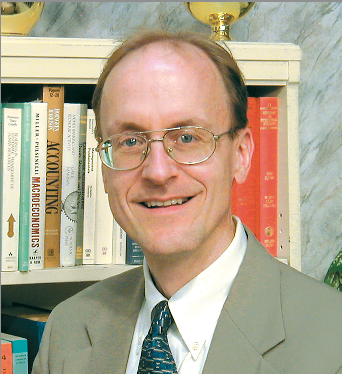
Craig_Pearson

Craig Pearson, PhD

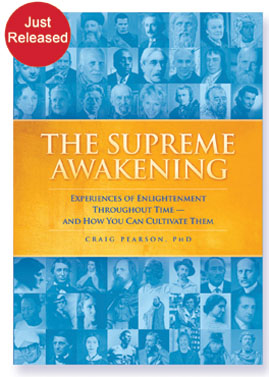
Enjoy this interview with author Craig Pearson, PhD and his latest book, The Supreme Awakening: Experiences of Enlightenment Throughout Time  – and How We Can Cultivate Them. If you click on the links you’ll read more about the concept and structure of the book. See the website for The Supreme Awakening book here, where you can read comments by David Lynch, Norman Rosenthal, and others, chapter headings, and the first chapter, Moments of Awakening. See a mailer for the book.

Here is an interview that took place last Friday on a popular KRUU FM radio show in Fairfield, Iowa called Writers’ Voices. Monica Hadley and her mother Caroline invited Dr. Pearson to discuss his book The Supreme Awakening. Craig is truly an inspiring speaker! Click here to listen: Writers’ Voices – 20140221 – Craig Pearson. Monica writes on her blog:

The_Supreme_Awak_52d4535363d15This week on Writers’ Voices, Monica and Caroline welcome MUM Executive Vice President Craig Pearson to discuss his recently released book, “The Supreme Awakening: Experiences of Enlightenment Throughout Time  – and How We Can Cultivate Them.” The product of research Dr. Pearson did for his doctoral dissertation, this book allows the reader to share the enlightened experiences of people throughout history. By gathering these many stories from across history, from saints and mystics, writers, world leaders, even athletes, Dr. Pearson provides a unique perspective on what is obviously a universal experience.

Many of the people profiled within are expected, people who are well-known for their spiritual experiences – Buddha, St. Teresa of Avila, Thoreau, Rumi. But there are many surprises here as well – Anwar Sadat, Einstein, Plato and many more.  I was most fascinated by these stories.  It made me realize that the accomplishments of many great persons may have been a direct result of their experiences with other states of consciousness.

Dr. Pearson is also the author of The Complete Book of Yogic Flying.

Craig Pearson was also interviewed on The Alan Colmes Show on FOX News following Writers’ Voices on Friday. Another interview aired on KHOE’s A Chat With The Dean by Dr. Cathy Gorini on the new book. You can also listen to a presentation Dr. Pearson gave in Dalby Hall on the book, which was recorded for broadcast by KHOE.

I posted an interview and series of articles you can link to by Dr. Pearson on my blog: Craig Pearson interview and articles on awakened consciousness, transcendence and enlightenment.

Here is a video of Dr. Pearson’s recent presentation on his book, The Supreme Awakening, in Dalby Hall on the MUM campus seen on the MaharishiUniversity channel.

Guest blogger and author William T. Hathaway reviews Craig Pearson’s book, The Supreme Awakening.

Other talks on this topic by Craig Pearson are available in this MIU Webinar at Dalby Hall published in Enjoy TM News and this interview on TM Talks.

WINTER HAIKU written by Ken for Sali his muse

February 11, 2014

Sitting with Sali on a cold winter Sunday afternoon at Parkview Care Center, looking out the window of her room at the powdered snow being blown off the white roofs in swirls. At one point, with the sun shining through in front of us, you could almost see a rainbow; only it was a snowbow! Made that up. We laughed. I had been in a rough mood, but what I saw, and the spontaneous playful art of composing a haiku, transformed me. The second and third lines came out first, and the first line last. I changed wind blows to winds blow to rhyme with snow. The rhythms, rhymes and meanings of the words sort of sound like what we saw. They’re powerful. Say them aloud a few times and see what happens. Sali seemed to like it. I love it! it’s fun! Here’s the poem.

WINTER HAIKU

The winter winds blow
Swirling whirling dervishes
Of powdery snow

© Ken Chawkin
Feb 9, 2014
Fairfield, Iowa

@MaharishiU Dean of Faculty, Dr. Cathy Gorini, interviews author Steven Verney on MUM’s KHOE

January 2, 2014

Steve Verney Cathy Gorini

Steve Verney  Cathy Gorini

Author Steven Verney is interviewed by Dr. Cathy Gorini, Dean of Faculty at M.U.M. on the KHOE radio program “A Chat with the Dean.” Titled “The Best of all Possible Worlds” Steven Verney’s novel is based on his experiences as a teacher of Maharishi Mahesh Yogi‘s Transcendental Meditation.

Steven sprinkles gems of Maharishi’s knowledge before the reader along with threads of life-changing experiences many teachers of TM will relate to while going about the business of bringing enlightenment to the individual and the world and balancing life in the “real world.” Readers have found it difficult to put down this well-written book.

Click to listen: Steven Verney and Cathy Gorini – mp3 58 min, 16.8MB

A generous percentage of book sales will benefit the David Lynch Foundation teaching Transcendental Meditation to at-risk populations.

To find out more about Steven and his book, read this post and listen to an earlier interview on KRUU FM: Writers’ Voices interviews B. Steven Verney, author of “The Best of All Possible Worlds”.

Visit Steve’s new website one of his son’s designed for him http://steveverney.com and blog. Read the overview of the book and see the Xlibris Book Trailer: The Best of All Possible Worlds.

Steven is at work on his second book, about a lama that got away. The main protagonist is also a philosophy professor. I’ve read an excerpt and can’t wait to see the book when it comes out. If it’s anything like his first one, which I thoroughly enjoyed, then we’re in for another treat!

David Lynch on meditation in the NewStatesman: Heaven is a place on earth

November 1, 2013

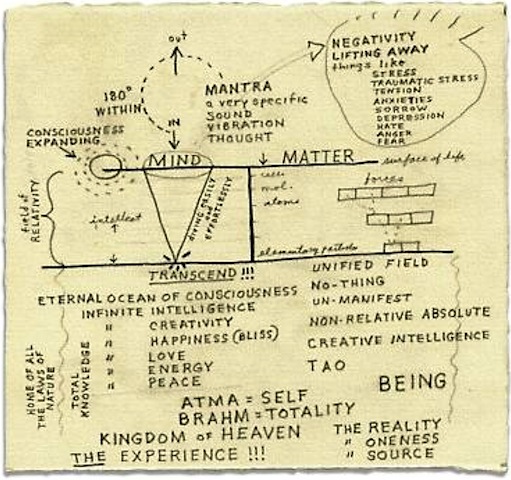
This week Russell Brand was guest editor of the UK’s NewStatesman, which came out October 24, 2013. He invited David Lynch to contribute an article on meditation. The diagram looks like it may be the same one David drew during an interview with a French journalist in Paris as he was explaining Transcendental Meditation to her. A large part of the article reads like a transcription of that brilliant explanation, which was woven throughout a documentary film made of David’s 16-country tour, Meditation Creativity Peace.

David Lynch on meditation: Heaven is a place on earth

Transcending is the only experience in life that gives total brain coherence. Any other thing we do utilises different small parts of the brain, this small part for painting, another small part for mathematics, that small part for playing the piano.
By David Lynch Published 31 October 2013 14:45

Mind and matter: Lynch’s diagram of Transcendental Meditation. Image: copyright David Lynch

Mind and matter: Lynch’s diagram of Transcendental Meditation.
Image: copyright David Lynch

What is Transcendental Meditation? What is transcending? Where do you go when you transcend? And what good is it to transcend? To help answer these questions, I’ve done a little drawing and you can refer to it from time to time. You will notice a line at the top of the drawing representing the surface of life. We live on the surface and see surfaces everywhere. This right side represents matter and the left side will represent mind. Mind and matter.

About 300 years ago, scientists started wondering: what was matter, what was wood, what was air, what was water, what was flesh, etc? And they started looking into matter and they began to find things – things that we now learn about in school. They found cells and molecules. They went deeper and found atoms; they went deeper and deeper, all the way down to the tiniest particles – the elementary particles.

They found four forces that act upon the particles. And on a deeper level, they found that the four forces became three. Some unification started. And, on a deeper level, the three forces became two. About 35 years ago, modern science, quantum physics, discovered the Unified Field at the base of all matter. This field is the unity of all the particles and all the forces of creation. This is a field of nothing, but the scientists say that out of this nothing emerges everything that is a thing. This Unified Field is unmanifest yet all manifestation comes from this field.

Ancient Vedic science, the science of consciousness, has always known of this field. Believers say that it is an eternal unbounded ocean of consciousness. And this consciousness has qualities. So this Unified Field, this ocean of consciousness, is a field of unbounded intelligence, unbounded creativity, unbounded happiness, unbounded love, energy and peace.

Transcendental Meditation is a mental technique, an ancient form of meditation brought back for this time by Maharishi Mahesh Yogi. It is a technique that allows any human being to dive within, through subtler levels of mind and intellect, and then transcend – that is experience, that ocean of pure consciousness at the base of all mind and matter – to experience this Unified Field within with those all-positive qualities.

In Transcendental Meditation you’re given a mantra. A mantra is a very specific sound vibration – thought. The mantra that Maharishi gives is like a law of nature designed for a specific purpose and that purpose is to turn the awareness 180 degrees from out, out, out to within, within, within. Once pointed within, one will dive easily and effortlessly. It is easy and effortless because the nature of the human mind is always to want to go to fields of greater happiness.

Each deeper level of mind and each deeper level of intellect has more and more happiness – charm, as they say. So the happiness growing is like a magnet that gently pulls us within. And at the border of intellect, one then transcends and experiences the transcendent, the Unified Field, the ocean of pure consciousness, the kingdom of heaven that lies within – the Tao, the home of total knowledge, being or divine being; Atma, meaning the Self, the Self with a capital “S”.

There’s a line we’ve all heard: “Know thyself.” This is the Self they’re talking about. This field is also known as Brahm, meaning totality. First seek the kingdom of heaven that lies within and all else will be added unto you. All else is totality.

Every time a human being transcends, they infuse some of this all-positive consciousness and they truly begin to expand whatever consciousness they had to begin with. There is a side effect to expanding consciousness, and that side effect is that negativity begins to recede. Things like stress, traumatic stress, anxieties, tension, sadness, depression, hate, anger, rage and fear start to lift away very naturally.

The analogy is: negativity is just like darkness. When this light of consciousness begins to truly expand, it is like being in a dark room with a light on a dimmer. As the light gets brighter, the darkness starts to go. And when the light is full on, there is no darkness. Likewise with the light of unity – consciousness – growing, negativity very naturally starts to recede, automatically and without you having to worry about it. This heavy weight of negativity lifting gives such a joyful feeling of freedom to a human being. So you could say the person practising Transcendental Meditation each day is infusing gold and getting rid of garbage.

Transcending is the key word!!! Transcending is truly experiencing that deepest eternal level of life. It is this experience that does everything good for a human being. Every human being has consciousness but not every human being has the same amount. The good news is, every human being has the potential for infinite consciousness. Every time you experience this ocean of consciousness within, you expand more and more consciousness and you are unfolding your full potential as a human being. The full potential of the human being is called enlightenment – infinite consciousness, infinite happiness, total fulfilment. Totality.

Transcending is a holistic experience, meaning that all avenues of life will start improving. The things that used to stress you will still be out there in the world but they will not be able to hit you so hard. You’ll still be able to feel sadness but the sadness won’t last so long. It will lift away more quickly. The same with anger; the anger will leave more quickly. It won’t stay with you and poison you and the environment. Fears begin to lift – you work in more and more freedom. This is a field of infinite creativity. You will see creativity and problem-solving start to expand. Through research, scientists know that IQ can go up because of transcending each day.

Happiness comes more and more and you feel good in your body and enjoy the doing of things more and more. The field within is a field of universal love. This universal love feeds personal love and relationships improve. This field within is a field of infinite energy. People today are so fatigued and here within each of us is an infinite amount of energy to fuel our work and play. There is infinite peace within and that is deep, deep contentment, harmony, coming up inside the human being. It is so beautiful.

Transcendental Meditation is, as I said, easy and effortless. Many people might think that because it is easy it is not as good as other meditation techniques. This is wrong thinking. Concentration forms of meditation, contemplation forms of meditation, will keep a human being hovering on the surface. There will be no transcending. And it is hard work and it is boring and the reward is not there.

Transcendental Meditation as taught by Maharishi Mahesh Yogi is a technique that has been here many times before and it is a blessing. It is the real thing. It works. Brain research scientists have found a wondrous thing. When a human being truly transcends, hooked up to an EEG machine, then the full brain gets engaged in concert. They call this “total brain coherence”.

Transcending is the only experience in life that gives this total brain coherence. Any other thing we do utilises different small parts of the brain, this small part for painting, another small part for mathematics, that small part for playing the piano, and so on. Scientists have always told us before that we use only 5 per cent or 10 per cent of our brain but transcending is an experience that utilises the full brain.

This shows us something of the relationship of the human being to this glorious Unified Field within. The more we transcend, the more this coherence stays with us and this eventually gives rise to higher states of consciousness, culminating with supreme enlightenment. On the EEG machine, Transcendental Meditation meditators are seen to transcend many times in each 20-minute meditation. Those meditators who practise concentration or contemplation forms of meditation do not transcend. They do not get the experience of that ocean of bliss consciousness, the Unified Field.

A ten-year-old child can practise this technique of Transcendental Meditation; a 110-year-old can do it, easily and effortlessly, and they will each get the experience they are yearning for. It is a sublime experience to transcend and feel that rejuvenation and that happiness and all those other all-positive qualities growing.

Transcendental Meditation is not a religion. People from all religions practise this technique and they see there is no conflict with their religion. On the contrary, they say they understand and appreciate their religion more because understanding and appreciation for all things grow by transcending each day. It is a technique for human beings, no matter what walk of life, what religion or where you are from. People who have experienced great suffering have gotten this technique and happily said, “Now I have my life back again.” The real story is: THE NATURE OF LIFE IS BLISS and THE INDIVIDUAL IS COSMIC.

Russell Brand’s article in this paper is about revolution. Revolutions are usually associated with violence or force. Transcendental Meditation leads to a beautiful, peaceful revolution. A change from suffering and negativity to happiness and a life more and more free of any problems. The secret has always been within. We just need a technique that works to get us there to unfold a most beautiful future.

Find out even more about Transcendental Meditation at: davidlynchfoundation.org.uk.

For American readers, visit www.tm.org and davidlynchfoundation.org.

See Russell Brand and David Lynch at LA Premiere of ‘Meditation, Creativity, Peace’ Documentary and related links to other videos and articles. Visit http://meditationcreativitypeace.com to see a preview of the film and where it may be playing.

This is an excellent interview: David Lynch speaks with Alan Colmes about his 16-country tour film Meditation Creativity Peace.

The NewStatesman article reads like a transcription from this film, which you can now see: “Meditation Creativity Peace”—A documentary of David Lynch’s 16-country tour during 2007–2009.

See an earlier article written by David Lynch published in Jane Magazine: Celeb Spiritual Report: One significant day in my life by David Lynch for Jane Magazine (May 2004).

William T. Hathaway’s Wellsprings: A Fable of Consciousness, concerns future eco-crisis and TM

October 19, 2013

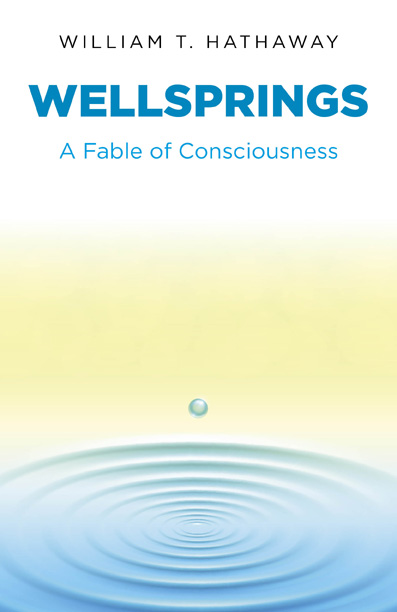
Wellsprings coverWellsprings: A Fable of Consciousness, William T. Hathaway’s just-published book, concerns Transcendental Meditation and the environmental crisis. It is set in 2026 as the earth’s ecosystem has broken down under human abuse. Water supplies are shrinking. Rain is rare, and North America is gripped in the Great Drought with crops withering and forests dying. In the midst of environmental and social collapse, an old woman and a young man set out to heal nature and reactivate the cycle of flow by using techniques of higher consciousness. But the corporations that control the remaining water lash out to stop them. A blend of adventure, ecology, and mystic wisdom, Wellsprings: A Fable of Consciousness is a frightening but hopeful look into a future that is looming closer every day.

Bob, 18, and Jane, 77, meet at a California hot springs and set out together on a quest. Jane is convinced North America’s water has retreated into a deep subterranean aquifer, and she is searching for the place where it comes close enough to the surface to access it. She teaches him to meditate, and their visions help them find the cavern that connects to the water.

A selection:

Jane and I drive around to the north side of Mt. Shasta, hoping to be able to sense the subterranean springs from there. In the moonlight the mountain looks like a silver pyramid soaring up from the horizon into the starry purple night. The ancient volcano is lord of all it surveys. Veils of clouds are blowing around its peak.

We find a grassy glade in the forest, but the grass is dry and brittle and the tree branches droop from the drought. As we are spreading our blankets out to meditate, motion on the other side of the clearing catches our eyes. Out of the trees steps a black-tailed doe. She sees us and pauses, one foot raised, sniffing, listening, looking. Jane and I stare enthralled. As the doe gazes at us, our eyes join across the space, across the species. Communication flows between us: cautious curiosity about a fellow creature. She breaks contact, begins nibbling, then looks back at us as if saying, As long as you stay on your side, it’s OK.

We watch her in delight until she trots off, then we close our eyes to meditate. At first my mantra goes with my heartbeat then slows and goes with my breath. The sound stretches out into a long hum floating through me. I seem to be beyond my skin, filling the whole clearing. I feel like I’m sinking into the earth. I want to hold on, to keep from disappearing, but something tells me to let everything go. I free-fall through space, then realize it’s impossible to fall because there’s no down. I’m hovering … like a dragonfly over water. The sound fades away, leaving me without thoughts. I seem to expand beyond all space and boundaries to unite with everything. For a moment I know I am everything, the whole universe, but as soon as I think, I’m everything, I’m not anymore. I’m just Bob Parks sitting on a blanket over cold ground.

I start the mantra again. Its whisper clears my thoughts away, and my mind becomes quiet. Part of me is watching the quietness of my mind and enjoying it. I never knew I had this watching part before. It doesn’t need to think. It’s just there, aware of everything but separate from it — a wise old part of me.

I realize I’m off the mantra, drifting on thoughts, so I pick up the sound again and follow it as it gets fainter and finer until it becomes more visual, pulsing light behind my closed eyes. It seems to shine into something, a big cavern that’s inside of me but also outside of me. The boundaries between me and everything else disappear — no difference now between inside and outside. I can see dimly into the cavern. The walls and ceiling are crystal, its facets glinting in the mantra light. Below them in all directions stretches a vast dark sea of water, its ripples gleaming. It’s deep, deep as the earth, and I want to plunge in and dive all the way to the bottom. I’m sitting above it. Down there beneath me, beneath these rocks and dirt, rests the water.

I can sense this sea’s immensity, stretching from California under the Great Basin of Nevada, Utah, and Arizona, the parched American desert, the last place the corporate drillers would’ve looked. We’re sitting by the tip of it closest to the surface. From here it goes deeper and deeper, soaking through strata of sand and porous rock, a huge aquifer waiting to be freed and flow again.

I want to jump up and yell, “I found it!” but that thought makes it disappear. I take a deep breath and am back sitting cross-legged on my blanket. Too stunned to say anything, I lie back and feel the ground under me, this good ground with all that good water under it.

###

A further sample of Wellsprings: A Fable of Consciousness is posted at http://www.cosmicegg-books.com/books/wellsprings.

William T. Hathaway’s other books include A World of Hurt (Rinehart Foundation Award), CD-Ring, Summer Snow, and Radical Peace: People Refusing War. He and his wife, Daniela, direct the Transcendental Meditation Center in Oldenburg, Germany. A selection of his writing is available at www.peacewriter.org.

REVIEWS & ENDORSEMENTS

….. Although this is a little book (only 100 pages), its message is huge. It has so much to offer in the way of warning and of hope. It tells a vital truth about our connection with all life and with water, which is the basic component of life and which unifies us with all other forms of life. Hathaway warns us that we must do something about the ecological disaster that we are facing, and in order to succeed at this awesome task we must change our consciousness. This “Fable of Consciousness” provides an engaging lesson in unified consciousness and how to achieve it through meditation. It is a must read! ~ Jan Krause Greene, Goodreads

William Hathaway’s new novella, “Wellsprings – A Fable of Consciousness” – is a coming of age story located in a not too distant, nor unlikely, future. Hathaway weaves concepts of unifying consciousness as a mechanism for addressing environmental crisis in an age of corporate ownership of all natural resources. A second, though important, theme of the book is that we can control our reactions to situations. This is an important message in a time when everything seems to push us towards non-reflective responses. Hathaway’s novel serves as both a teaching tool and a cautionary tale. ~ Rowan Wolf, Author

Also see: Radical Peace: People Refusing War, by William T. Hathaway.

And here is another TM-based novel written from a different perspective: Writers’ Voices interviews B. Steven Verney, author of “The Best of All Possible Worlds.”

How TM helped calm and center a young woman’s busy mind—inspiring article in new Irish magazine

October 11, 2013

A new magazine, Upside News, came out on Dublin’s north side in Ireland. Their website is still under construction, but here is a description on their Facebook page. They asked someone for an article on Transcendental Meditation.

John Burns

John Burns

Since Christine Ryan was the contact person, John Burns, Communications Director for TM in Ireland, persuaded her to write about her experience of the technique. John said he sent the editor an article he had written along with Christine’s TM experience and told him he thought what she had written was so good that he should use it instead if space was an issue. The editor got back to John and said that he would print Christine’s piece.

Good decision; it’s a fantastic personal account! When I asked John to tell me more about the author, he said, “Christine is training to be a school teacher. She is just someone who really appreciates her TM.” I asked John to send a picture of Christine, a PDF of the magazine article, and a link when it’s posted online, which I’ll add when they’re available. Here’s what she wrote:

“As a twenty-four year old trying to find your place in the world, weaving your way around the many forks in the road that separate all of the possible paths down which to venture, it can be hard to tease out your own true voice in an increasingly noisy world.

I am an introverted, intellectual, always-something-to-think-about child of the technological generation. It seems easy to assume I would have trouble turning my awareness away from words on a page, the lure of the internet, my mobile phone, the radio buzzing and the drilling noise vibrating from the neighbour’s house a few doors down where a posse of hard-working, bellowing construction workers are knocking down two walls in her house only to put six back up. But TM is natural and it is effortless, when you learn how to do it.

What TM gives me is stillness and silence. For twenty minutes twice a day, I go to a place of silence that already exists within me. It happens effortlessly and spontaneously. As a helpless analyser of all things, this initially seemed impossible for me to swallow but I very quickly discovered its truth. The noise of the world disappears and I arrive at a place of beautiful quiet.

TM is like diving into a pool of light that washes away dirt and darkness, and emerging fresh and invigorated. During my TM practice, I feel my body settle into a deep state of rest and an overwhelming sense of calm and stillness pervades it. I feel free from the shackles of stress and exhaustion. I experience a sense of unity and peace. Without any resolve to do so, this sense of wholeness and calm lingers on when my meditation has ended; the effects of my TM practice spontaneously ripple forward into my activity.

Almost seven months into my second year of practising TM, I feel greater clarity in my thinking; as a busy thinker this has been such a profound change that TM has brought me. My relationships are infused with a sense of ease now. My thinking is sharper, ideas flow more easily, and my energy is lasting and productive. I feel less uncertain about decisions to be made and a greater vibrancy in my creative endeavours.

As I continue to meditate, the effects grow stronger. My wonderful TM teacher, Ann, put it simply: “It’s like going to the gym,” she said. “You feel great for the first few weeks that you’re going, but if you stop going, you’ll lose the benefits bit by bit.” I may not get to the gym (or exercise for that matter!) every day, but sitting in a chair in my sweats, with messy un-brushed hair, allowing my mind to simply settle down to a place of profound stillness and emerging twenty minutes later energised and renewed—now that I can do!

I was never one to easily identify with, or apply, the principle of “go with the flow,” but as I continue to practise TM I edge all the more closer to fully understanding exactly what that means. TM has resigned stress and anxiety to a state out of tune with the natural rhythm and flow of my body and mind. It puts things into perspective. To connect with that constant centre of calm and stillness that lies within me, regardless of what is happening in my life, and to find that stillness lingering during activity has been one of the greatest joys of learning TM.

Visionary filmmaker, veteran meditator, and prolific speaker and activist for TM, David Lynch, said it best when he said: “TM is for human beings.” The truth of his words find significance in the shared experiences of the benefits of TM by meditators around the globe, young and old, from all religions and all walks of life, from those behind bars to those raised high on a platform called “celebrity.”

In the monthly group meditation meetings I meet meditators of all ages: veterans to novices, students to retirees and everything in between. In a world that breeds so much disconnection and discord, it is a joy to practice a simple technique that allows for an awareness of the integral similarity between us all.

TM recharges me mentally and physically. My morning and evening TM practice have become the pillars onto which I anchor my day. I can hear my own inner voice more clearly again and those forks in the road don’t loom quite so ominously now.”

New York poet laureate Marie Howe reads “Annunciation” to Krista Tippett On Being

September 22, 2013

New York poet laureate Marie Howe speaks with Krista Tippett about her poetry on the NPR show, On Being. Closing the interview, The Poetry of Ordinary Time, recorded In The Room, April 2013, Howe reads a poem in the voice of Mary, mother of Jesus, describing the Annunciation, which, her friend and mentor, Stanley Kunitz, said no one had ever gotten right. She wrote several versions, tore them up, and then this final one came through her.

Marie Howe said it had nothing to do with her. It just came through her, a reminder that the best poetry comes through us when we get out of the way. When we are emptied of our small self, “by being no one,” transcend our senses and turn within and are open to the higher Self, then that great creative force of Love within us creates, and the miracle of life, of poetry, happens. You can hear “Annunciation” by Marie Howe on SoundCloud. 

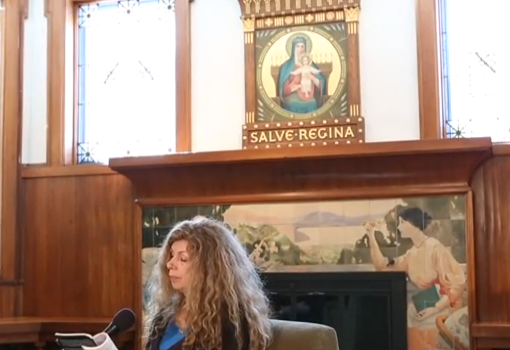
Thought this screen save from the video is most appropriate with the poster of Mother Mary holding the infant Jesus!

Marie Howe reads her poem Annunciation to Krista Tippett for On Being

Marie Howe reads her poem “Annunciation” to Krista Tippett for On Being

Annunciation

Even if I don’t see it again—nor ever feel it
I know it is—and that if once it hailed me
it ever does—

And so it is myself I want to turn in that direction
not as towards a place, but it was a tilting
within myself,

as one turns a mirror to flash the light to where
it isn’t—I was blinded like that—and swam
in what shone at me

only able to endure it by being no one and so
specifically myself I thought I’d die
from being loved like that.

This amazingly beautiful and profound poem can be found at 1:36:02 at the end of the interview, but she starts talking about it at 1:34:45. There are six audio clips of Howe reading her poems posted on SoundCloud recorded on March 16, 2003, at the College of Saint Benedict in Saint Joseph Minnesota.

On Being later recorded: Marie Howe — The Power of Words to Save Us.

Also see An Evening with New York State Poet Laureate Marie Howe.

This relates: David Whyte describes the mysterious way a poem starts inside you with the lightest touch. Whyte also uses a biblical reference, comparing poetic revelation to Lazarus walking to the light.

Enjoy reading: The Millions Interviews Marie Howe—Words Can Sustain and Save Us, published January 11, 2018, where Marie describes what the writing and reading of poetry has done for her, and what it can do for the rest of us. This Q&A particularly reinforces the point Marie Howe made to Krista Tippett when writing “Annunciation.”

TM: Do you think of writing as a spiritual act at its core?

MH: I do, because it involves a wonderful contradiction, which is, in order for it to happen, you have to be there, and you have to disappear. Both. You know, nothing feels as good as that. Being there and disappearing—being possessed by something else. Something happening through you, but you’re attending it. There are few other things in the world like that, but writing is pretty much a relief from the self—and yet the self has to be utterly there.

I know exactly what she means. I had a similar experience when “I wrote” ODE TO THE ARTIST: Sketching Lotus Pads at Round Prairie Park.

William Stafford in his poem, Rx Creative Writing: Identity, also writes about being open to “that bone light,” which “belongs inside of things.” And “You know so sure there burns a central vividness.” He reiterates this idea of being a recipient, a receptacle, and an attendant, a reporter: “It tells you; all you do is tell about it.”

In her poem, Mindful, Mary Oliver delights in the world around her, which leaves her “like a needle in the haystack of light. It was what I was born for — to look, to listen, to lose myself inside this soft world — to instruct myself over and over in joy, and acclamation.”

Oliver codifies this message in 3 short, powerful sentences in the 4th stanza of Sometimes, where she gives us “Instructions for living a life: Pay attention. Be astonished. Tell about it.”

Both poems are included in this post: Attentive to and delighting in her surroundings, Mary Oliver lived a life writing astonishing poetry.

Later added this article/interview by Kim Rosen for Spirituality&Health, Feb 16, 2014: Marie Howe: Holding the Silence. The acclaimed poet reflects on prayer, desperation, and letting go of what can’t be said. (PDF)

Newly added, Nov 2, 2022: What the Living Do—Marie Howe’s ‘letter’ to her brother—an elegy to loss and how she lives with it.

— Written and compiled (citing sources) by Ken Chawkin for The Uncarved Blog.

Haiku of the Heart – for Sali

September 22, 2013

This past Thursday, September 19, 2013, turned out to be an early Full Moon night. For some reason I ended up visiting Sali 3 times that day, twice to drop off things. The first time I stayed with her as she and the other residents were going to be entertained by a country music band. Their gentle songs from the fifties brought back memories when I first heard them as a child. It was very relaxing and healing for us as we listened together. When I returned later that night to read to her, she was already in bed. I leaned in and looked closely into her eyes. We both started laughing out loud, with great joy in our hearts. While sharing this experience with a friend at lunch today, the day of the autumnal equinox, I spoke of experiencing an orgasm of the heart. She repeated that line, and said it was something special. I noticed it also had seven syllables and wrote it down. Later, when we all went out for a walk together, the rest of the haiku easily assembled itself. I shared it with her; it sounded powerful. She said it gave her goosebumps, from head to toe and back.

Haiku of the Heart
for Sali

♥ ♥ ♥

Such joy between us
An orgasm of the heart
Looking in your eyes

♥ ♥ ♥

© Ken Chawkin
Experienced Thursday, September 19, 2013, Full Moon Night
Written Sunday, September 22, 2013, Autumnal Equinox
Fairfield, Iowa, USA

I remember another joyful time Being with Sali, August 1, 2012, also on a full moon night: Capturing an authentic moment in writing.

On August 31, 2017 I posted this related entry: ‘In Our Loving Eyes’ a poem by @kenchawkin remembering a special love with Sally Peden.