Archive for the ‘Poetry’ Category

Mary Oliver’s poem, Praying, is a lesson on attention, receptivity, listening and writing

March 14, 2013

Praying

It doesn’t have to be
the blue iris, it could be
weeds in a vacant lot, or a few
small stones; just
pay attention, then patch

a few words together and don’t try
to make them elaborate, this isn’t
a contest but the doorway

into thanks, and a silence in which
another voice may speak.

~ Mary Oliver ~

(Thirst)

Another example of this theme is her poem, Mindful, in this later post: Attentive to and delighting in her surroundings, Mary Oliver lived a life writing astonishing poetry.

An inspiration for a poem came to me from such receptivity to a tree. The first words entered my mind while admiring it. I wrote them down, and the next morning, I rewrote them as a stanza, and then the sequential stanzas naturally followed, reiterating what Mary Oliver describes. It was as if I was given a creative seed and it sprouted. This gift from the tree was much appreciated. I later called it Being in Nature. Its sequel, trees, was about the nature of trees, and what we can learn from them. Another poem once came to me from a rock with a sense of humor. You can read RIVER ROCK SPEAKS in my Vancouver Park Poems.

An early encounter with nature inspired my creativity. It turned into my first published poem, which won an award: ODE TO THE ARTIST, Sketching Lotus Pads at Round Prairie Park.

Her poem also reminds me of The nurturing effect of rainwater in Mary Oliver’s poems Lingering In Happiness At Blackwater Pond and William Stafford’s poem, B.C., which I later added.

Read about Mary Oliver (1935-2019) and her astonishing poetry in this memorial acknowledgment to her poetic legacy. It contains links to articles, interviews, and poetry readings, as well as many of her favorite poems I’ve loved and posted over the years.

— Written and compiled (citing sources) by Ken Chawkin for The Uncarved Blog.

Journeying god—traditional Ghanaian prayer song

March 10, 2013
journeying god
I found this beautiful traditional prayer song from Ghana, and photo, posted in the Panhala Archive. The translator is unknown.

Journeying god,
pitch your tent with mine
so that I may not become deterred
by hardship, strangeness, doubt.
Show me the movement I must make
toward a wealth not dependent on possessions,
toward a wisdom not based on books,
toward a strength not bolstered by might,
toward a god not confined to heaven.
Help me to find myself as I walk in other’s shoes.

Tanka for Ibu Robin Lim, CNN Hero of the Year

March 1, 2013

Tanka for Robin Lim
2011 CNN Hero Robin Lim*

Holding out her hands
At the door between both worlds
She welcomes new souls

Ibu Robin is her name
Catching babies is her game

*Midwife is her claim to fame

See Fairfield Ledger: CNN Hero Robin Lim visiting Fairfield, and early news coverage for Robin Lim is the 2011 CNN Hero Of The Year.

See these videos: Fairfield honors 2011 CNN Hero of the Year Robin Lim at Sondheim Theater for the Performing Arts. And these school presentations: CNN Hero of the Year for 2011, Robin Lim, speaks on Becoming a Hero at the Maharishi School for the Age of Enlightenment in Fairfield, Iowa on November 14, 2012. Robin Lim on Finding the Hero Inside Yourself at the Fairfield High School. (better sound quality)

For more information, visit Robin Lim’s websites: BumiSehatBali.org, and WisdomBirth.org, still under construction.

Craig Pearson interview and articles on awakened consciousness, transcendence and enlightenment

February 22, 2013

Since the theme of The Uncarved Blog deals with Transcendental Meditation, consciousness & enlightenment, and poetry, I’d like to introduce someone to you who has been studying these ideas in great people’s lives for some time now and has complied them all in a book.

Craig Pearson-EECraig Pearson, Ph.D., is the author of the forthcoming book, The Supreme Awakening, Experiences of Enlightenment Throughout Time — And How We Can Cultivate Them. He has spent many years researching the expression of higher states of consciousness in the writings of great philosophers, saints, scientists, artists, and writers. 

Dr. Pearson is the Executive Vice-President of Maharishi International University in Fairfield, Iowa. He has served the University in a variety of roles over the past 33 years, (42 years, updated 2022) including Dean of Faculty, Dean of Students, Director of Maharishi University of Management Press, Director of Freshman Composition, and Professor of Professional Writing.

In this interview for Issue 5 of Enlightenment Magazine, Linda Egenes asks Craig Pearson about humanity’s age-old quest for enlightenment. Dr. Pearson highlights his answers with examples of exceptional people throughout history who had described experiences of higher states of consciousness. It was originally titled, The Quest for Enlightenment: Transcendence in the Lives of Great Seers and Thinkers. Linda also posted the text of the article on her blog. It was later republished in the newer Enjoy TM News, The Transcendental Meditation magazine: Exploring Higher States of Consciousness, the Ultimate Goal of Meditation. How to cultivate the state of enlightenment

Some of the people mentioned in the article are available in a list of quotes complied on the TM Blog in an Author Archive. Click on each quote and it will take you to an article about each one, and many more.

Enlightenment: What is the relationship of enlightenment and human potential?

Dr. Pearson: Enlightenment is a term that has been used for thousands of years, in traditions east and west, to refer to the most fully developed expression of human potential, far beyond the ordinary.

Enlightenment: How common is it?

Dr. Pearson: Although this extraordinary experience has been described by individuals in different cultures over the millennia and is celebrated in the world’s spiritual traditions, it seems to be exceedingly rare. But obviously it lies within the realm of human potential.

Enlightenment: What has Maharishi contributed to the understanding of enlightenment?

Dr. Pearson: Maharishi Mahesh Yogi is often credited with reintroducing the concept of enlightenment in a systematic manner in our modern age. He has put forward a comprehensive understanding of enlightenment that embraces the great traditions and thinkers who have described this experience across time. Maharishi was also the first to promote scientific investigation into enlightenment, bringing the phenomenon of spiritual development into the arena of modern science.

Enlightenment: How does Maharishi describe enlightenment?

Dr. Pearson: For Maharishi, enlightenment is the ultimate development of one’s inner potential as a human being. It means being established in the highest state of human consciousness.

Enlightenment begins with experiencing the reality of your innermost Self as unbounded and eternal and being established at that level. This means the consciousness of an enlightened person is no longer subject to the ups and downs of emotions, mind, and body but steadfast, anchored in inner silence.

Enlightenment brings the ultimate unfoldment of one’s creativity and intelligence. It means living in harmony with all the laws of nature and easily fulfilling your desires. It means being of maximum use to yourself and others and creating a powerfully nourishing effect in one’s environment.

At the highest stage, enlightenment means experiencing the universe as the expression of your unbounded Self. It is a state of perpetual freedom and bliss, supreme fulfillment.

Enlightenment: Can we relate this in any way to our day-to-day experience?

Dr. Pearson: Although this vision of human development may seem idealistic, we have all had experiences in this direction. Some days we just feel happier inside, more appreciative of others—life is easier, fuller, richer, and more rewarding. We may have moments of enhanced mental clarity or heightened levels of creativity, when we surprise ourselves with how quickly the solution to a problem may come. Athletes sometimes experience the zone—periods of peak performance that are effortless and euphoric.

At these times we are using a bit more of our potential. But enlightenment is far, far more than this. It goes far beyond just having a good day. People who have had experiences of enlightenment report that words simply cannot capture the sublimity of the experience.

Enlightenment: You have researched how individuals from different historical epochs and different parts of the world have shared this same experience. Can you talk about that?

Dr. Pearson: In traditions throughout time we find remarkably similar descriptions of this extraordinary experience of human life lived to its fullest—in the writings of great philosophers, religious figures, artists, scientists, and writers, as well as in the great religious traditions of the world. The terminology may vary from tradition to tradition and age to age. But when you have the clear and precise description of enlightenment provided by Maharishi, it becomes easy to appreciate what these people are talking about.

Enlightenment: So the experience is universal?

Dr. Pearson: Yes. And the recognition that many have shared this experience throughout history is not new either. Some scholars have called it the perennial philosophy or the primordial tradition. The perennial philosophy holds that although various spiritual and philosophical traditions appear different on the surface, at their core all traditions share common, universal principles.

Enlightenment: What are these universal principles?

Dr. Pearson: The perennial philosophy has three basic tenets: (1) Underlying the diversity of the world is a field of unity. (2) We can subjectively experience this field of unity deep within us. (3) The purpose of life is ultimately to experience and live this inner, divine reality of life.

This inner field goes by different names. Laozi called it the Tao. Plato called it the Good, the One, and the Beautiful. Aristotle called it Being. The Greek-Roman philosopher Plotinus called it the Infinite. In Judaism it is called Ein Sof, in Christianity the kingdom of heaven within. In more modern times, Ralph Waldo Emerson called it the Oversoul.

These different names are not referring to mere philosophical or spiritual ideals. They point to the inner reality of life—a reality that can be experienced directly and, when experienced, brings fulfillment beyond words.

Enlightenment: How does Maharishi talk about this inner field?

Dr. Pearson: Maharishi characterizes it as an unbounded field of pure consciousness, an all-pervading ocean of creativity, intelligence, and bliss, beyond space and time. Maharishi asserts, moreover, that this field of pure consciousness is identical with the unified field of natural law that modern physics describes mathematically. Thus the inner field that gives rise to all our thoughts and feelings is the same field that gives rise to the entire universe.

Enlightenment: And we can experience this inner field of pure consciousness?

Dr. Pearson: Every human being has the natural ability to experience this field. It simply requires “diving within,” allowing the mind to settle inward, beyond the thinking process. This is called transcending.

People throughout history have described and celebrated this experience. It is a simple and natural experience—but by most accounts seems to be rare and fleeting. People have lacked a technique for experiencing it systematically. This is the gift Maharishi has given us—the Transcendental Meditation technique, a simple, natural, effortless procedure by which anyone can dive within at will.

Until Maharishi started teaching in the West, the understanding of how to transcend had for the most part been lost. The Transcendental Meditation technique, which has its origin in the ancient Vedic tradition, provides direct experience of pure consciousness. It is easy to learn and practice, validated by hundreds of scientific research studies, and practiced by millions of people throughout the world.

Read the rest of this fascinating article, which includes experiences from Rabindranath Tagore; Alfred, Lord Tennyson; Hakuin Ekaku; and a woman known as Peace Pilgrim.

Many other experiences have also been written up by Dr. Pearson and posted on the TM Blog. Here they are, from recent to earlier posts:

‘Freedom and Self-Realization’: Excerpts from Jack Forem’s book on TM
Howard Thurman: Experiencing “the Great Silence” within us
Rabbi Abraham Isaac Kook: Connecting with the “deep soul”
The Buddha: Rapturous Joy Transcending Any Other
Meister Eckhart: It is in the purest thing that the soul is capable of
D.H. Lawrence: Sitting in a Timeless Stillness
St. John of the Cross: Transcending all knowledge
William Wordsworth: We are laid asleep in body, and become a living soul
Emily Dickinson: The Soul’s Superior instants
Albert Einstein: There is Neither Evolution nor Destiny; Only Being
Zhuangzi: Why don’t you try wandering with me to the Palace of Not-Even-Anything
St. Teresa: A state of great quiet and deep satisfaction
Johannes Brahms: In tune with the Infinite
Rumi: I have passed beyond all thoughts
Plato: And this state of the soul is called wisdom
Jesus: The kingdom of God is within you
Henry David Thoreau: We become like a still lake of purest crystal
Ralph Waldo Emerson: Within man is the soul of the whole; the wise silence; the universal beauty
Walt Whitman: The luminousness of real vision
Alfred, Lord Tennyson: A state of transcendent wonder
Helen Keller: I feel the flame of eternity in my soul
Laozi: His mind becomes as vast and immeasurable as the night sky
 

Update: Craig Pearson’s book, The Supreme Awakening, is now available. Executive Vice President Dr. Craig Pearson was interviewed on KHOE’s “A Chat With The Dean” by Dr. Cathy Gorini on his new book, “The Supreme Awakening – Experiences of Enlightenment Throughout Time, and How You Can Cultivate them.”

Listen to a presentation Dr. Pearson gave in Dalby Hall on the book, which was recorded for broadcast by KHOE.

Listen to Dr. Pearson on KRUU FM, Writers’ Voices recorded Feb 21, 2014.

Listen to Craig Pearson on KRUU FM show, Writers’ Voices, discussing his new book, The Supreme Awakening.

Here is a video of Dr. Pearson’s recent presentation on his book, The Supreme Awakening, in Dalby Hall on the MUM campus seen on the MaharishiUniversity channel.

Craig Pearson has since updated his book with new entries. Here is an informative interview by Jeanne Ball, April 20, 2016, in the Huffington Post: The Supreme Awakening: What Did Buddha, Emerson, Einstein and Saint Teresa Have in Common?

Guest blogger and author William T. Hathaway reviews Craig Pearson’s book, The Supreme Awakening.

Other talks on this topic by Craig Pearson are available in this MIU Webinar at Dalby Hall published in Enjoy TM News and this interview on TM Talks.

Mar 4, 2024: Simplest State‘s Ron Decter interviewed Craig Pearson, Author: “The Supreme Awakening: Experiences of Enlightenment Throughout Time”.

“Sanctifying Morning” is a poem by Ken Chawkin on one way to be “spiritual but not religious”

February 17, 2013

Sanctifying Morning is a poem I wrote four years and one month ago today. It may remind you of the phrase, “spiritual but not religious,” how millions of Americans now identify themselves, a trend I was not aware of until I learned about it from Philip Goldberg, author of American Veda. TM* is my way of being spiritual but not religious.

Sanctifying Morning

Charcoal in a church,
Incense-filled smoke,
Knees on the ground,
Wafer on a tongue —
Prayers ascend the sky.

It’s Sunday morning,
And I have my own rituals.
The smell of burnt toast sanctifies the morning air.
Orange rinds round out the debris of breakfast.
Fumes float upwards from a hot coffee cup.

Having pacified the body’s urges,
With no work to be done today,
Though the senses focus outward,
It’s time to bring them within,
And prepare for this peaceful morning.

I retire to my meditation room,
Sit comfortably, and close the eyes.
Thinking my mantra, effortlessly,
I descend to the depths of my mind,
And transcend.

My body follows —
Breath slows, and suspends,
Heart beats quieter,
Brain cells speak softly, in unison —
I’m at peace with myself.

This is the true communion of the spirit
Within the church of the Self.
No pews are required here
As one prepares to meet the maker
Of one’s life.

© Ken Chawkin
January 17, 2009
Fairfield, Iowa, USA

*TM stands for Transcendental Meditation. It’s not a religion. To me, it’s a spiritual practice that is compatible with any or no religion. Today millions of Americans admit to practicing some form of meditation. Members of different faiths practice Transcendental Meditation, including monks, nuns, priests and rabbis. Even atheists and agnostics meditate. You may too, some day, if you haven’t, already.

Publication and Update

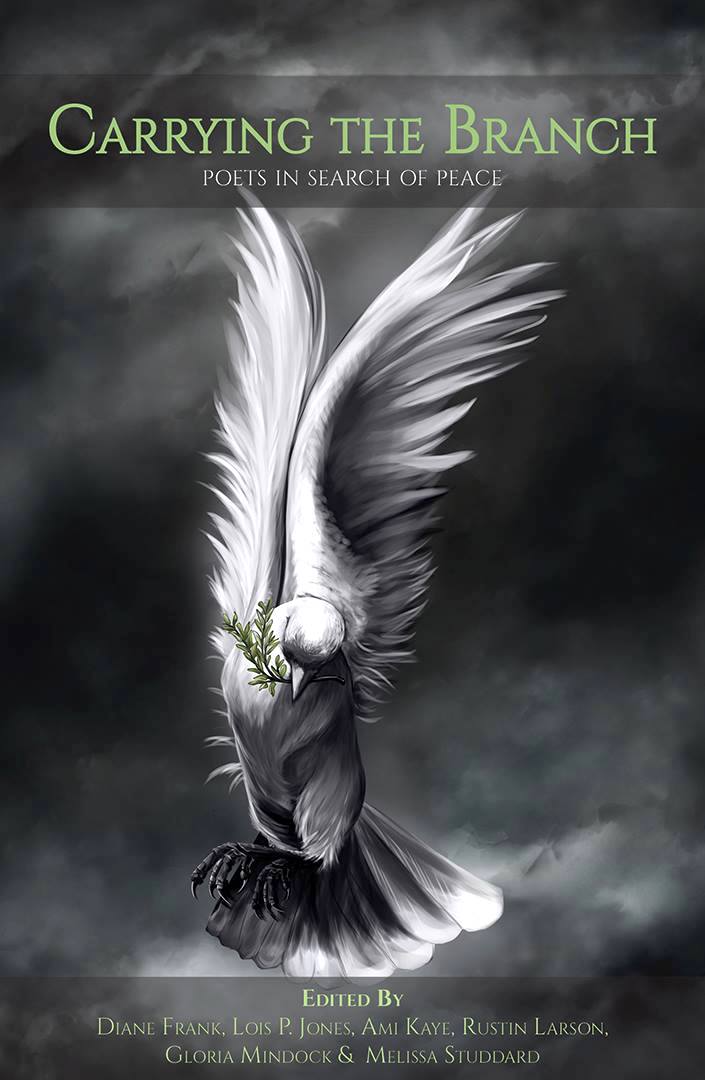
Carrying the Branch-Poets in Search of Peace

Thanks to Iowa poet and editor Rustin Larson for selecting “Sanctifying Morning,” which was later included in Carrying the Branch: Poets in Search of Peace. The book was published by Glass Lyre Press October 1, 2017 and edited by Ami Kaye. My poem is found on page 132. These other poets also submitted their poems and participated as editors soliciting poems and curating their sections for this anthology: Diane Frank, Lois P. Jones, Gloria Mindock, and Melissa Studdard. All profits after printing go to the Red Cross and Doctors Without Borders.

It is also an honor to be included among so many distinguished authors and poet laureates, like Robert Pinsky, W. E. Butts, Joy Harjo, Rita Dove, and Jane Hirshfield, to name a few collected here.

Blogger Chris Rice Cooper was the first to review our anthology, (January 17, 2018): Receiving & Giving Peace in the anthology CARRYING THE BRANCH POETS IN SEARCH OF PEACE . . . She put a lot of work into it with photos, excerpts, and links to an alphabetical listing of the poets and their websites. Next to my photo she provided the link to an article: PR to poetry – how things sometimes happen to Ken Chawkin.

After describing the different problem areas the poems deal with, Cooper says, “In this specific piece I’d like to focus on the poems that offer suggestions of acts and thoughts that we as individual human beings can do or think to bring peace into our own lives, the lives of our communities, and the lives of the entire world.”

Surprisingly, she includes my poem in her review: “In Ken Chawkin’s poem “Sanctifying Morning” the speaker of the poem experiences his own peace by having “church” in his own body, in his own home where he retreats to his meditation room and meditates mentally, emotionally, and spiritually.”

She concludes by saying, “There are numerous lessons to be learned from this anthology but the top two are:  we must love the enemy within and without ourselves; and we must transcribe our experiences down, rather on paper or canvas – only then will the next generation receive their rightful inheritance – their own branch of peace.”

Reposting that wonderful poem by E.E. Cummings for Valentine’s Day

February 5, 2013

Ken Chawkin's avatarThe Uncarved Blog

For Valentine’s Day: i carry your heart with me by E.E. Cummings

[i carry your heart with me(i carry it in]

i carry your heart with me(i carry it in
my heart)i am never without it(anywhere
i go you go,my dear;and whatever is done
by only me is your doing,my darling)
                                                      i fear
no fate(for you are my fate,my sweet)i want
no world(for beautiful you are my world,my true)
and it’s you are whatever a moon has always meant
and whatever a sun will always sing is you

here is the deepest secret nobody knows
(here is the root of the root and the bud of the bud
and the sky of the sky of a tree called life;which grows
higher than soul can hope or mind can hide)
and this is the wonder that’s keeping the stars apart

i carry your heart(i carry it in my heart)

“[i carry…

View original post 352 more words

Blue Dragonfly—A Love Renga for Valentine’s Day

February 2, 2013

Here’s a poem for those alone on Valentine’s Day.

Blue Dragonfly

A Blue Dragonfly
Flits about the light-filled pond
Looking for its mate

Do you get blue sometimes too
Wandering the world for love

If you’re still enough
You may find yourself being
The one to attract

As sattva gathers the means
So love comes to those who wait

© Ken Chawkin
February 2, 2013
Fairfield, Iowa, USA

The best preparation to love another is to first love yourself. Nobel Poet Laureate Derek Walcott explains it beautifully in Love After Love.

Found in translation: Local literary legend finds her voice by interpreting the words of others

November 12, 2012

Ovation

Local literary legend finds her voice by interpreting the words of others
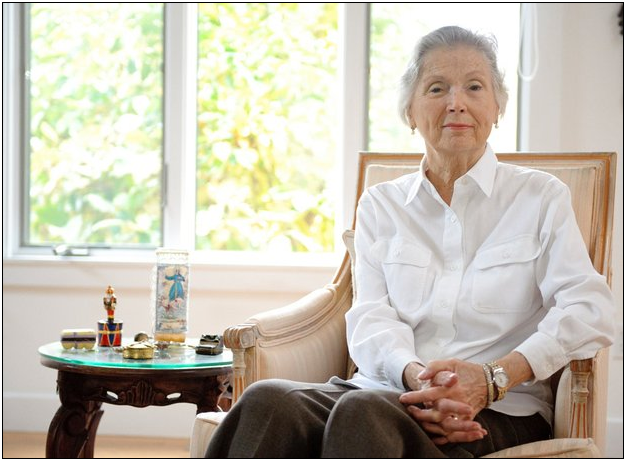
Margaret Peden has spent her career translating Spanish and Latin American works into English. Ryan Henriksen | Buy this photo

By Jill Renae Hicks

Sunday, October 28, 2012

“We who have attempted a translation often disagree in both meaning and expression. I believe nevertheless that there is a perfect translation, and that it lies among the lines of all the versions produced by diligent and sincere ‘readers,’ ” said Margaret Sayers Peden, professor emerita of Spanish at the University of Missouri, in the introduction to one of her works. Near the end of a decadeslong career translating Spanish and Latin American literature into English, Peden was recently awarded the prestigious PEN/Ralph Manheim Medal for Translation. She traveled to New York City to accept her award this week, surrounded by such authors as E.L. Doctorow, Barbara Kingsolver and Susan Nussbaum. Only a handful of translators have been recognized with the award since its inception.

Peden, known by many simply as “Petch,” was born in West Plains and attended MU for her degrees in Spanish. She began her translation career somewhat by chance in the latter part of the 1960s. At the time, she was working on her Ph.D. and came across a small novel by the playwright Emilio Carballido. She told her husband, English Professor William Peden, how interesting it was.

“And he said, ‘Well, you know I can’t read Spanish. Why don’t you translate it?’ ” she remembered. She did — “and I found I loved it, so I just kept doing it.” Peden has translated some 65 books, including most of Isabel Allende’s novels and nonfiction works, books by Carlos Fuentes and Octavio Paz, the writings of intelligent and progressive 17th-century nun Sor Juana Inés de la Cruz, Juan Rulfo’s novel “Pedro Páramo,” and, most recently, Fernando de Rojas’ “Celestina,” a turn-of-the-16th-century work of Spanish literature second in cultural significance only to “Don Quixote.”

That work, published by Yale University Press in 2009, earned Peden the Lewis Galantière Award, sponsored by the American Translators Association. “Celestina” was one of the more complicated works she has translated, Peden said, because of the centuries-old language and the Spanish history she had to research. But she appreciated the challenge of immersing herself in the world from which the tome emerged, and the resultant English translation remains complex in its tragicomic ironies yet is accessible to today’s readers. In comparison, another work Peden said is one of her favorites is Allende’s contemporary memoir “Paula,” which tells the story of her daughter Paula’s coma and subsequent passing, mixed together with vivid, poetic stories of Paula’s and Isabel’s own history and ancestry.

When Peden first began her translation work, she was teaching Latin American literature at MU. Translation courses at universities were not very common, and she did much of the work on her own time. Later she would strive to teach her own students to unearth the true essence of each text while translating, rather than simply switching the language word for word. “I tried to teach my students this: You have to scrape off the words, get down to an under-level. … That’s where the meaning is, below the words,” she emphasized. Gregory Rabassa, a friend and fellow translator, said in Peden’s PEN award statement that her translated characters “speak as they would have had they been born to English and their authors likewise acquire a style in their transformed tongue that is true to what they say or are trying to say.”

Peden will often rewrite five to 10 pages of a work in Spanish at a time, using a combination of both Spanish and English. Then she returns to the beginning and revises, looking up the words she doesn’t understand, and revises again. By the time each book is published, she has pored over it numerous times. She has another hard rule that she judges her work by, a telling aphorism Rabassa passed on to her: “‘You can’t commit the sin of improvement.’ That’s not the point. If it’s a bad book, it has to be a bad book!” she reasoned with a laugh. “Though I try not to ever get one.”

Translating a work is a constant solving of puzzles, Peden noted. “And that’s one of the nice things I love about it, is that you don’t get bored. You can’t get bored.” Often she does as much as or more research than academic writers and critics for the works because she must learn everything she can about a book’s historical and cultural contexts, the way the Spanish language is used in those contexts, and the specific vocabulary and voice of each author — not to mention the voices of all the author’s characters, if applicable. “I don’t have a writing style except the ones I pick up from the books I translate,” Peden explained. “I have done a lot of writing, but that’s not my thing. I’m just better at hearing what somebody else writes.” Indeed, Roberto González Echevarría, Yale professor of Hispanic and comparative literature, praises her ability to nearly turn “herself into” the writers she translates. In his introduction to “Celestina,” he said Peden “is today the most accomplished active translator of Spanish-language literature into English.”

People don’t typically realize how dependent they have been on translations, Peden mused about the often-overlooked role of a translator. “Look at our Western civilization. It came to us in translation: the Greeks, the Bible, all these things.” She is proud to be part of that long tradition and recognizes that she has gained other benefits from walking the “road less traveled” of her chosen career, including a greater tolerance for elements of other cultures she might have felt impatient with before. But Peden added perhaps the best part of her journey has been the relationships she has gained — with her authors, with translators and with other readers who love and respect good literature as much as she. “I’m lucky, the people I’ve met,” she said.

Jill Renae Hicks has previously written arts features for the Tribune and now works as a freelance writer, editor and illustrator. She is interested in the local literary and writing scene and how it connects to the rest of the arts and the greater Columbia community.

Reach Jill Renae Hicks at 573-815-1714 or e-mail jrhicks@columbiatribune.com.

This article was published on page C5 of the Sunday, October 28, 2012 edition of The Columbia Daily Tribune with the headline “Found in translation: ” Click here to Subscribe.

You may be wondering why I posted this well-written article on Margaret Peden, legendary literary translator. There is a personal connection here. Petch is my sweetheart Sally Peden’s step-mother. Petch will be celebrated for her lifetime achievements in translation at Missouri University this Friday, November 16, 2012. I asked her if there was an article about it and she mentioned this one, which came out two Sundays ago. Petch is a great lady, and its always fun being around her and her husband Robert Harper.

UPDATE: Sept 2, 2020: I received a call from a family member that Petch had passed away this summer. I had been wondering how she was doing since it had been several years since we had spoken. Her obituary was posted online July 12, 2020 in The Columbia Daily Tribune, Columbia, MO. You can read it here: Margaret “Petch” Sayers Peden, 1927-2020. It was also published July 9, 2020, courtesy of the family, in the Columbia Missourian: Margaret ‘Petch’ Sayers Peden, May 10, 1927 — July 5, 2020.

I saved it as a PDF with the photo, which I cropped here. You can download it below to get a fuller appreciation for this incredible woman. Here are some of the professional highlights:

Margaret “Petch” Sayers Peden, professor emerita of Spanish at the University of Missouri and renowned translator of Spanish-language literature, passed away at her home on July 5, 2020, surrounded by loved ones. She was 93.

Petch was among the preeminent scholars in the field of translation and one of its greatest champions, working to propel it as a creative effort in its own right.

During and after Petch’s teaching career at the University of Missouri, she continued translating literary works from Spanish to English. She was considered to be one of the leading translators of her time. As a perfectionist, she felt that words could be “unreliable,” “slippery,” “stretchy, treacherous.” She once said, “We [translators] should be evaluated as an actor or opera singer is evaluated, as performing a previously established text.” This acknowledged the complexity of her job as translator, that it was never just finding the English word for the Spanish one, but getting underneath to the essence, or soul of a work. This genius of elucidation is why she was asked to translate works by Carlos Fuentes, Isabel Allende, Pablo Neruda, Octavio Paz, as well as bringing to life her personal hero, the 17th century nun Sor Juana Inez de la Cruz, who, like Petch, was “a woman of genius.” Her deft approach resulted in numerous literary awards including the PEN Translation Prize in 2004, the Lewis Galantiere Translation Prize in 2010 and the PEN/Ralph Manheim Medal for Translation, a lifetime achievement award, in 2012, among many others.

Over five years later, I came across another article, a more personal one, written by Cathy Salter, published Jul 22, 2020 by Boone County Journal: A Literary Remembrance of Margaret Sayers Peden. Cathy and her husband Kit met Petch over two decades ago at a Peden Prize event—an annual event honoring her first husband, Dr. William Peden, (Sally’s father) who founded “The Missouri Review.” She wrote: “More recently, books connected us again when Petch and her second husband, Robert Harper, became regulars at monthly book talks that Kit organizes for Osher Lifelong Learning.” (I’ll paste a little more.)

It was during those monthly Saturday morning gatherings of local writers, published authors, book enthusiasts, poets, and local publishers that we came to know Petch as a true lover of words and the craft of writing. This grand lady has translated over 65 works by esteemed Spanish-language writers—including Isabel Allende, Carlos Fuentes, Octavio Paz, and Pablo Neruda. In 2012, we proudly shared the news that Petch had been awarded the coveted PEN-Ralph Manheim Medal for Translation, a lifetime achievement award.  

Early the following year, Petch reluctantly agreed to do a book talk, saying it would likely be her last.  The morning of her talk, Petch took her audience of 65 fellow lovers of language on a mesmerizing, unexpected literary journey.  She opened by asking, “In the past year, how many of you have read a poem?”  A few hands went up. She then proceeded to introduce us to two of her favorite Spanish-language poets.   

Click the title to finish this wonderful article, also saved as a PDF. It was previously published July 20, 2020 in the Columbia Daily Tribune: Notes From Boomerang Creek: A literary remembrance of Margaret Sayers Peden. Both CDT articles are behind paywalls, why I found other options.

Taylor & Francis published an Obituary in Translation Review Volume 107, 2020 – Issue 1, by Rainer Schulte, Page 135, online Nov 9, 2020: MARGARET “PETCH” SAYERS PEDEN, 1927-2020. They concluded: “The community of translators celebrates the achievements and elegance of Petch Peden.” and encouraged readers to see her obituary in the Columbia Missourian, mentioned above: Margaret ‘Petch’ Sayers Peden, May 10, 1927 — July 5, 2020. (PDF)

Friday, November 14, 2025, Cathy Salter posted this updated remembrance with photos: Celebrating Margaret Sayers Peden. She emailed me, as I had requested, with the link, saying: “Today is the day my weekly blog is published. This one is for the good folks who attended monthly Saturday Morning Book Talks gatherings in Columbia that my darling husband Kit organized for over a decade. As I send it to you, I have a copy of my book Notes From Boomerang Creek in my lap opened to a page with a comment that means the world to me as a writer who loves swimming in a sea of words and memories.”

Cathy added Petch’s blurb for the book from the top of the page under Praise for Cathy Salter’s Notes From Boomerang Creek. “In this delicious book Cathy Salter leads us through the full scope of life’s adventures. Columbia, Missouri has known her for years, and now we share her with a wider world of readers. We follow her down country roads, into U.S. and foreign cities, and enter intimate corners of her life. Be grateful to be showered with luminous words as you turn these pages.” — Margaret Sayers Peden, Award-winning Translator, 2012 Winner of PEN/Ralph Manheim Medal for Translation. The book is available on Amazon.

— Written and compiled (citing sources) by Ken Chawkin for The Uncarved Blog.

Read a beautiful poem Today by William Stafford

November 1, 2012
“Today” is a beautiful poem written by William Stafford, selected from his book My Name is William Tell by Beth Atchison and contributed to Panhala, which is how I found out about it today.

Today

The ordinary miracles begin. Somewhere
a signal arrives: “Now,” and the rays
come down. A tomorrow has come. Open
your hands, lift them: morning rings
all the doorbells; porches are cells for prayer.
Religion has touched your throat. Not the same now,
you could close your eyes and go on full of light.

And it is already begun, the chord
that will shiver glass, the song full of time
bending above us. Outside, a sign:
a bird intervenes; the wings tell the air,
“Be warm.” No one is out there, but a giant
has passed through town, widening streets, touching
the ground, shouldering away the stars.

~ William Stafford ~

Telling the Story of Silence by Ken Chawkin

September 13, 2012

Telling the Story of Silence
Yato vacho nivartante tad dhama-paramam mama*

That Silent place
From where speech returns
Is where Poetry begins

Scrawling across the page
It transforms itself
Into language

Standing up it walks
Straight into your heart
Singing its song

You have to emphasize
The nothingness
For something to be said

It speaks for itself

*From where the speech returns, that is my supreme abode.
Taittriya Upanishad 2.4.1 and Bhagavad-Gita 15.6, 8.21

© Ken Chawkin

This poem, What You May Not Know About Frankenstein, by Bill Graeser, was an inspiration! This poem by my son says it all: INSPIRATION, a poem by Nathanael Chawkin.

Related poems on this theme: Coalescing Poetry: Creating a Universe  Storytelling—a poem on the storytelling process | Poetry—The Art of the Voice | Silence | A Wake-Up Haiku.

Cliffhouse Deck at Dusk, 6th haiku in 13 Ways to Write Haiku: A Poet’s Dozen, brings our attention to a tiny soft sound, making us aware of the ‘loud’ vast silence, a point that enlivens infinity. John Cage would agree.

Just came across this 16-second introduction by John Cage to his composition 4’33” which says the same thing, in his own inimitable way. His literal truth and sense of humor come through.

The material of music is sound and silence.
Integrating these is composing.
I have nothing to say,
and I am saying it.

For the musicians who ‘performed’ the piece, and the audience who listened, the silence was palpable, as you’ll hear from Tommy Pearson’s introduction and concluding comments with Tom Service in this BBC Symphony Orchestra performance of John Cage at the Barbican. Towards the end he quotes Cage as saying, “Everything we do is music.”

You may also enjoy Writers on Writing–What Writing Means To Writers and the links at the end to other posts on writing.