Archive for the ‘Articles’ Category

Varanasi by Mary Oliver in A Thousand Mornings

March 16, 2013

I previously posted Mary Oliver’s poem, Praying, and Philip Goldberg emailed me to say that someone recently showed him the last poem in her new collection (A Thousand Mornings). He said, “It’s called ‘Varanasi,’ and it’s exquisite.” I started looking for it and found the poem posted by another poet, Bob Arnold, on his website. After reading it I agreed – it’s stunning! That’s why I’m posting it here for you to enjoy. I also came across a musical video of the poem with images from the Ganges. After you’ve read the poem, see Diane Walker’s poetic reaction to it below. But take a break from this busy introduction, and then enjoy the enlightened peaceful simplicity of Mary Oliver’s visit to Varanasi.

VARANASI

Early in the morning we crossed the ghat,

where fires were still smoldering,

and gazed, with our Western minds, into the Ganges.

A woman was standing in the river up to her waist;

she was lifting handfuls of water and spilling it

over her body, slowly and many times,

as if until there came some moment

of inner satisfaction between her own life and the river’s.

Then she dipped a vessel she had brought with her

and carried it filled with water back across the ghat,

no doubt to refresh some shrine near where she lives,

for this is the holy city of Shiva, maker

of the world, and this is his river.

I can’t say much more, except that it all happened

in silence and peaceful simplicity, and something that felt

like that bliss of a certainty and a life lived

in accordance with that certainty.

I must remember this, I thought, as we fly back

to America.

Pray God I remember this.

_______________________

Mary Oliver
A Thousand Mornings
(Penguin, 2012)

Now read this beautiful poetic reaction to the poem, Mary Oliver’s Varanasi, that Diane Walker, a contemplative photographer, posted on her website.

Among the NPR Poetry series is this interview ‘A Thousand Mornings’ With Poet Mary Oliver. You can also read the transcript here. I especially love this remark she makes about poetry:

“One thing I do know is that poetry, to be understood, must be clear. It mustn’t be fancy. I have the feeling that a lot of poets writing now are – they sort of tap dance through it. I always feel that whatever isn’t necessary shouldn’t be in a poem.”

Enjoy this wonderful Maria Shriver Interview With Mary Oliver.

See this remembrance of Mary Oliver with links to more of her poems.

Speaking of another famous American visiting the Ganges, see Prudence Farrow — subject of the Beatles song Dear Prudence — visits India’s Kumbh Mela.

— Written and compiled (citing sources) by Ken Chawkin for The Uncarved Blog.

Mary Oliver’s poem, Praying, is a lesson on attention, receptivity, listening and writing

March 14, 2013

Praying

It doesn’t have to be
the blue iris, it could be
weeds in a vacant lot, or a few
small stones; just
pay attention, then patch

a few words together and don’t try
to make them elaborate, this isn’t
a contest but the doorway

into thanks, and a silence in which
another voice may speak.

~ Mary Oliver ~

(Thirst)

Another example of this theme is her poem, Mindful, in this later post: Attentive to and delighting in her surroundings, Mary Oliver lived a life writing astonishing poetry.

An inspiration for a poem came to me from such receptivity to a tree. The first words entered my mind while admiring it. I wrote them down, and the next morning, I rewrote them as a stanza, and then the sequential stanzas naturally followed, reiterating what Mary Oliver describes. It was as if I was given a creative seed and it sprouted. This gift from the tree was much appreciated. I later called it Being in Nature. Its sequel, trees, was about the nature of trees, and what we can learn from them. Another poem once came to me from a rock with a sense of humor. You can read RIVER ROCK SPEAKS in my Vancouver Park Poems.

An early encounter with nature inspired my creativity. It turned into my first published poem, which won an award: ODE TO THE ARTIST, Sketching Lotus Pads at Round Prairie Park.

Her poem also reminds me of The nurturing effect of rainwater in Mary Oliver’s poems Lingering In Happiness At Blackwater Pond and William Stafford’s poem, B.C., which I later added.

Read about Mary Oliver (1935-2019) and her astonishing poetry in this memorial acknowledgment to her poetic legacy. It contains links to articles, interviews, and poetry readings, as well as many of her favorite poems I’ve loved and posted over the years.

— Written and compiled (citing sources) by Ken Chawkin for The Uncarved Blog.

Diane Vance and Norman Zierold discuss his new memoir, That Reminds Me, at Revelations Café

March 12, 2013

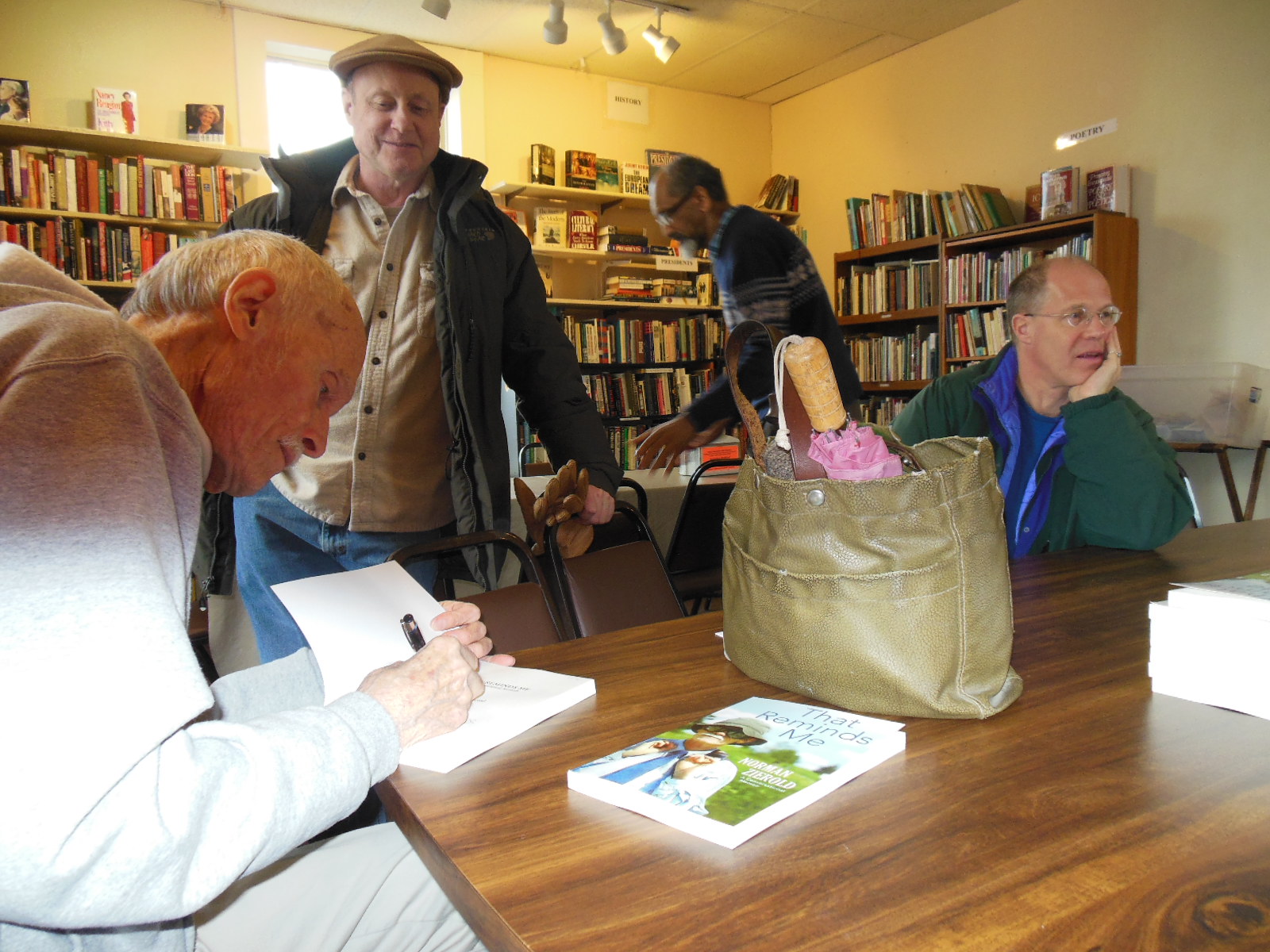
Norman Zierold, author of “That Reminds Me,” autographs one of his books for Peter Ecob Saturday at Revelations Café, after a book discussion. Freddy Fonseca, center, pushes in a chair after attending Zierold’s interview while Terry Weiss, seated, talks with others across the table.

Norman Zierold, author of “That Reminds Me,” autographs one of his books for Peter Ecob Saturday at Revelations Café, after a book discussion. Freddy Fonseca, center, pushes in a chair after attending Zierold’s interview while Terry Weiss, seated, talks with others across the table. Photo by Diane Vance

Fairfield author talks about recent work

By DIANE VANCE
Ledger staff writer
Tuesday, March 12, 2013

More than a dozen people attended a book discussion Saturday featuring Fairfield author Norman Zierold talking about his latest publication, “That Reminds Me.”

An Iowa native, born and raised in the Amana Colonies, Zierold has written and published eight books, but this latest, subtitled, “A Conversational Memoir,” comes 40 years after his seventh book, “Sex Goddesses of the Silent Screen.”

Those first seven books, beginning with “The Child Stars,” published in 1965, mostly deal with Zierold’s first-hand encounters, insights and research about authors, stars of stage and movies, his life and work in New York and Hollywood.

Zierold moved to Fairfield more than a decade ago and works at Maharishi University of Management.

“For about 50 years, people have said I should write a memoir,” he said. “I was always doing other things. I moved to Fairfield — though I’d been in and out of here before — and it took a couple years to begin writing.”

Having committed words to paper, he wasn’t sure how to get it all together in a readable fashion. He asked a co-worker and friend, Ken Chawkin, for help.

“Ken helped me get it all on my computer so I could manage it,” said Zierold.

“I always felt like I’d do a memoir; I knew I had one more book inside. Everyone has one book in them — everyone has ups and downs, traumas and experiences, and if presented well, it makes an interesting read. Everyone has a book,” he said.

So while Zierold happily drops names throughout his memoir, it is not about bragging or a “kiss-and-tell” expose.

Rather, Zierold keeps the little-boy wonder of the Iowa farm kid who spoke only German in his youngest years and relates everyday incidents, family dynamics and serendipitous meetings with the likes of Andy Warhol, Dylan Thomas, T.S. Eliot, E.E. Cummings, Anais Nin, Groucho Marx and many more.

Working for nearly a decade in New York City at Theatre Arts Magazine, Zierold’s job included interviewing Noel Coward and others, attending theatre productions and rubbing elbows with intellectuals, playwrights and celebrities at Sardis.

Even before his magazine job, his service to country and Navy uniform got him in to see performances of Ethel Merman, Edith Piaf and Mae West— including a back-stage meeting with her after the show.

Anthony Quinn hired Zierold to help him organize writing his autobiography. Part one took place around Los Angeles, with Quinn’s favorite retreat for working on his writing in California’s Death Valley. Part two took Zierold on a six-week encampment in Libya in 1979 while Quinn was shooting a movie on location in the Sahara Desert.

Zierold’s second book, “Little Charlie Ross,” published in 1967, is a true crime story about the first kidnapping for ransom in America in July 1874. His book landed Zierold an interview on the “Today Show” in New York, with Barbara Walters.

While studying for a master’s degree in English at the University of Iowa, Zierold was alone in a faculty lounge when the Welsh poet Dylan Thomas walked in.

“He was lecturing classes there for awhile, and he walks in and we have a visit, then I hear him again when he’s teaching the class,” said Zierold. “His reading of poetry is incomparable.”

Zierold is an avid reader. Before the book discussion began Saturday, he was perusing the biography bookshelves at Revelations Café while his audience gathered.

“I grew up reading, and especially liked Scott Fitzgerald and Ernest Hemingway,” he said. “Now I read biographies.”

He refers to Voltaire and Henry James as other favorites.

“I would encourage anyone to write,” he said. “Writing has a rhythm. Write without censoring yourself. Put it all in — you can take it out later. But if you leave it out and think you’ll go back to put something in later, it can interrupt the flow and not fit. It’s much easier to take something out than add it later.”

“That Reminds Me,” is a memoir, but it is not written in a chronological fashion. Zierold “puts it all in there,” and lets it flow as a conversation with a friend — this thought leads to another topic; that incident reminds him of another story.

Reading the slim paperback gives a full glimpse of a life, as he wrote in Chapter Five: “These digestible portions of prose will add up in time to a fully drawn portrait, just you wait and see. It will be like nature’s unfolding of a rose, petal by petal.”

Zierold writes about cocktail parties and gala weekends spent at various friends homes, at the shore or in Mexico. He writes about eventually asking himself if getting high, waking with hangovers and being witty at parties is all there is?

He relocates from L.A. to nearby-but-a-different-world, Laguna Beach. He describes the town’s peacefulness and incomparable beauty and power of the Pacific Ocean.

He sees a poster about Maharishi Mahesh Yogi and decides to attend a meeting, where he meets young people who have learned Transcendental Meditation. At age 45, Zierold discerns meditation seemed to work for them, so he signs up to learn TM in 1972. It is a quiet, gradual transformation for Zierold that leads to transcendence, bliss and months of euphoria, then becoming a TM teacher himself. He adds more travels to his passport and continues learning.

One of the gems among the jewels in this book is Zierold’s story about his own father and their relationship as adults.

Zierold asks questions about life and offers some answers.

Posted with permission from The Fairfield Ledger. This article was featured prominently on the front and back pages.

Here’s an earlier announcement Diane Vance wrote Thursday, March 7 on the upcoming book discussion and signing at Revelations Café.

Author speaking about new book

Iowa native and Fairfield resident since 2002, Norman Zierold, will talk about his latest book, “That Reminds Me,” at 2 p.m. Saturday upstairs at Revelations Café in Fairfield.

Everyone is welcome to this meet-the-author session.

This is Zierold’s eighth book, which he’s subtitled, “A Conversational Memoir.” Reading it is nearly like having a conversation with him. He tells stories from his days of rubbing elbows with celebrities, including authors, artists, movie stars, Broadway stars, TV stars, news anchors and more.

Saturday provides an opportunity to have an actual conversation with Zierold. A time for questions and answers is planned.

Born and raised in the Amana Colonies, Zierold enlisted in the navy, graduated cum laude from Harvard and earned a master’s degree in English Literature at the University of Iowa.

He always wanted to write, but also travel, and he spent two years in France on a French Government Teaching Assistantship. After Paris, he spent a decade in New York City, teaching at Brearley School and working at Collier’s Encyclopedia before landing rewarding assignments with Theater Arts Magazine and Show.

His first book, “The Child Stars,” was published in 1965 and is available at the Fairfield Public Library. It features stories about the child stars of the 1920s and 1930s, including Shirley Temple, Mickey Rooney and Judy Garland.

Other books followed: “Little Charlie Ross,” in 1967; “Three Sisters in Black,” in 1968, which won a Special Edgar Allen Poe Award; “The Moguls,” and “Garbo,” both in 1969; “The Skyscraper Doom,” in 1972; and “Sex Goddesses of the Silent Screen,” in 1973.

His books run the gamut of true crime novels, tales of Hollywood’s golden age in the 1940s and 1950s, and science fiction.

Posted with permission from The Fairfield Ledger.

For more information and other articles and interviews on Norman, see: That Reminds Me: A Conversational Memoir by Hollywood biographer Norman Zierold is now out!Norman Zierold: Hollywood biographer, novelist, TM Teacher, member of Maharishi’s Purusha program, raconteur, publicist, beloved by all

Maharishi University Students Win National Collegiate Hackathon Competition, Visit Silicon Valley High Tech Companies

March 9, 2013

Fairfield, Iowa: Maharishi University Computer Science students were among 10 finalists in a national collegiate hackathon competition to win a trip to Silicon Valley. During their visit they met with high tech leaders from 15 companies.

Hackathons are growing in popularity. Companies like Facebook, Google, and now the White House have employed this strategy to come up with innovative software solutions to problems. Last month a company called HackerRank announced a national collegiate computer-programming competition. Over 400 students from the nation’s top schools participated in the hackathon. Contestants were given 24 hours to complete six challenges. Some of the high tech companies sponsoring the competition were Amazon, Facebook, Twitter, and Dropbox.

MUM students Khongor Enkhbold and Khasan Bold were among top ten finalistsin a National Collegiate Hackathon Competition who won a trip to Silicon Valley

MUM students Khasan Bold and Khongor Enkhbold were two of the top ten finalists in a National Collegiate Hackathon Competition to visit Silicon Valley

Two students from Maharishi University of Management’s Masters in Computer Science program went up against students from tech titans Carnegie Mellon, Harvard, Princeton, Purdue, MIT, University of California-Berkeley, and both made it into the top ten. Khongor Enkhbold placed 5th and Khasan Bold, 7th. The top ten final positions were: 3 from Berkeley, 2 each from Harvard and MUM, and 1 each from UCLA, Purdue, and Nebraska.

All finalists earned an all-expenses-paid trip to Silicon Valley where they met with tech professionals from 15 top companies. They had to sign nondisclosure agreements before entering each company and were not allowed to take any pictures because of work posted on the walls.

“We visited about 15 companies like Facebook, Twitter, LinkedIn, Palantir, Rocket Fuel, OpenTable, Dropbox and others,” said Khasan Bold. “We saw Mark Zuckerberg and also met with D’Angelo, the CEO and the founder of Quora.”

When they visited LinkedIn they noticed their neighbors, Google and NASA. Khasan remarked on “one cool thing—Google supports the entire city of Mountain View with Wi-Fi. That means we could have accessed Google’s Wi-Fi from anywhere in town!”

He noted that almost every company they visited provided many games for their employees to play like PlayStation, Foosball, Ping Pong, Billiards, as well as a lot of free food and drinks.

Khongor Enkhbold at Twitter headquarters. Note the logoed lawn game and color-coordinated deck furniture.

Khasan Bold at Twitter headquarters. Note the logoed lawn game and color-coordinated deck furniture.

They also took time to speak with employees at Twitter. Khasan said the trip gave him a “real quick screenshot of the top US IT companies” and hopes it will help him find his future job here in the US.

Khongor and Khasan have won computer-programming competitions before. In 2010 they were on a 3-person team that took the championship cup for all of Mongolia. In 2009, they won bronze medals in the ACM International Collegiate Programming Competition, sponsored by IBM, in the Asian region in Shanghai, China. In 2010 and 2011, Khongor also won bronze and silver medals with different teammates at the same venue. When asked why they compete in these events, Khongor replied, “We don’t compete because we need to… We compete because we love to!”

Khonger Enkhbold and Khasan Bold have their picture taken by San Francisco’s Golden Gate Bridge during their trip to high-tech companies.

Khasan Bold and Khongor Enkhbold by San Francisco’s Golden Gate Bridge during their trip to Silicon Valley’s high-tech companies.

Khasan and Khongor heard about Maharishi University from their friends. They applied to the MS in Computer Science because of the unique opportunity MUM affords its students in gaining practical IT experience with high-level US companies, as well as the cutting-edge curriculum offered by the University’s top faculty. They also found Fairfield, Iowa to be a peaceful, creative city making it an ideal place to study.

Founded in 1971, Maharishi University of Management (MUM) is a unique private institution that offers Consciousness-Based℠ Education, a traditional academic curriculum enhanced with self-development programs like the Transcendental Meditation® technique. Students are encouraged to follow a more sustainable routine of study, socializing and rest without the typical college burnout. All aspects of campus life nourish the body and mind, including organic vegetarian meals served fresh daily. Located in Fairfield, Iowa, MUM is accredited by The Higher Learning Commission and offers bachelor’s, master’s, and doctoral degrees in the arts, sciences, humanities, and business. Visitors Weekends are held throughout the year. For more information, call the Admissions Office at 800-369-6480 or visit http://www.mum.edu.

PRWeb press release posted March 09, 2013, 9:40 a.m. CST: MUM Computer Science Students Win National Collegiate Hackathon Competition and Trip to Silicon Valley.

For more information on Khasan and Khongor, see the Computer Professionals Newsletter announcing their win.

See Maharishi University Computer Science Students Continue to Solve Problems and Win Competitions.

Fairfield honors 2011 CNN Hero of the Year Robin Lim at Sondheim Theater for the Performing Arts

March 2, 2013

When Robin Lim returned home to Fairfield for a hero’s welcome she was honored by the City of Fairfield with a proclamation given to her by Mayor Ed Malloy. Robin also shared some birthing stories with us. One of them was very funny of a Russian couple who wanted to have a home birth, an orgasmic birth. This video begins with several video clips about Robin and her CNN introduction, presentation and acceptance speeches.

Founded in 1995, Bumi Sehat is a non-profit, village-based organization that runs two by-donation community health centers in Bali and Aceh, Indonesia. They provide over 17,000 health consultations for both children and adults per year. Midwifery services to ensure gentle births is at the heart of Bumi Sehat and our clinics welcome approximately 600 new babies into the world each year.

Their mission is to reduce maternal and child morbidity and mortality and to support the health and wise development of communities. Toward this goal, we provide general health services, emergency care, prenatal, postpartum, birth services and breastfeeding support, in addition to education and environmental programs. Yayasan Bumi Sehat is devoted to working in partnership with people to improve quality of life and to improve peace.

For more information, visit Robin Lim’s websites: BumiSehatBali.org, and WisdomBirth.org, still under construction.

See Fairfield Ledger: CNN Hero Robin Lim visiting Fairfield, and early news coverage for Robin Lim is the 2011 CNN Hero Of The Year. While in Fairfield Robin Lim spoke on Becoming a Hero at the Maharishi School for the Age of Enlightenment in Fairfield, Iowa on November 14, 2012, and on Finding the Hero Inside Yourself at the Fairfield High School.

See this Tanka for Ibu Robin Lim, CNN Hero of the Year.

Prudence Farrow — subject of the Beatles song Dear Prudence — visits India’s Kumbh Mela

February 23, 2013

Beatles song muse visits India’s Kumbh Mela
By Amitava Sanyal, Allahabad, for BBC News India
February 21, 2013 | Last updated at 06:37 ET

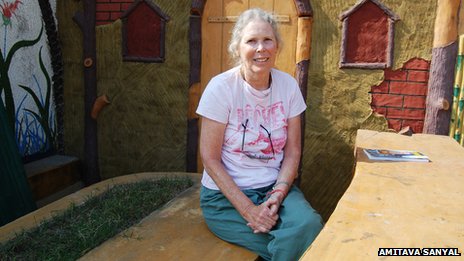
Prudence Farrow at Kumbh Mela
Prudence Farrow says the Beatles were “real people”

The subject of a Beatles song is among the many foreign pilgrims visiting India’s Kumbh Mela festival.

Prudence Farrow, about whom John Lennon wrote the song Dear Prudence, is also sister of Hollywood actor Mia Farrow.

The Kumbh Mela, which is held every 12 years, is billed as the world’s biggest gathering of humanity.

Millions of Hindu ascetics and pilgrims take a dip at Sangam, the confluence of the Ganges and Yamuna rivers in Allahabad city.

Ms Farrow says she waited for four decades to come to the Kumbh Mela.

She had first visited India in 1968 as a student of meditation and met the Beatles at Indian guru Maharishi Mahesh Yogi’s retreat in Rishikesh.

“I wanted to come to the Kumbh with the Maharishi, but that never happened,” she told the BBC. Her guru died in 2008.

This year Ms Farrow finally made it to the Kumbh Mela with her husband Albert Bruns.

‘Exotic’

“India has changed so much since I first came here,” says Ms Farrow, 65, sitting in the brightly-painted porch of her rented flat in Allahabad.

“Back then it was exotic. We were staying in the forest outside Rishikesh. Life was quite agricultural even in the cities.

“There were animals on the road, there were very few telephones and there was hardly any electricity where we were staying.”

Ms Farrow says she was in for a shock when she first arrived at the festival ground last month.

At first, she insisted on staying in one of the tens of thousands of tents that have been put up on the banks of the river.

Ms Farrow, who has a doctoral degree in South Asian studies and runs foundations to promote meditation, says she was in search of “an inner silence”.

But, ironically, the blare of three loudspeakers every morning at the festival grounds shattered her peace and she shifted into the city.

This was, she says, in sharp contrast to the peaceful times she spent with her sister Mia at her guru’s retreat in Rishikesh in 1968.

At the retreat, the Farrow sisters met the Beatles.

“Because of Mia there were too many people coming in and out of our block,” says Ms Farrow.

“And then in the evenings George Harrison would jam with John Lennon and others would join in. I wasn’t getting the silence.

“People said: ‘You are being too fanatical, you should come out.’ Yes, I was extreme because I thought it was a privileged time. I still think it was the most important time in my life.”

So while the rest of the students partied, Ms Farrow says she locked herself up in her room and practised meditation.

That is when, she says, Lennon, wrote the song Dear Prudence, which appears on the band’s White Album.

DEAR PRUDENCE

Dear Prudence, won’t you come out to play

Dear Prudence, greet the brand new day

The sun is up, the sky is blue

It’s beautiful and so are you

Opening verses of Dear Prudence, written by John Lennon

The song’s hand-written lyrics, lined with doodles, sold at a Sotheby’s auction in 1987 for $19,500 (£12,800).

“The reason he wrote I was beautiful – and there were much more beautiful people around – was because I was so much like George,” says Ms Farrow.

“George and I were there for very much the same reasons – we were both very spiritual and we wanted to find a solution for ourselves and the world. George would say that through his music he wanted to help people become more settled, more quiet and more sensitive.”

Ms Farrow says she did not want to meet the Beatles as “great people never lived up to their image”.

Did they disappoint her?

“What didn’t disappoint me was that they were still real people. They weren’t more important than anybody else,” says Ms Farrow.

“Fame has that quality – it corrupts you. You begin to feel that you’re separate from other people, you’re more powerful. But they didn’t have that.

“They were going through the same things as we were. That’s why they were the voice of the times.”

Article URL: http://www.bbc.co.uk/news/world-asia-india-21530477

See the Dear Prudence Foundation http://dearprudencefoundation.org

For information on Maharishi and his Transcendental Meditation technique visit: http://www.tm.org/maharishi

Also see Maharishi Mahesh Yogi on History International Channel (November 2007)

See: Who was Dear Prudence the Beatles sang to in India? What happened to her? Here is her story.

Here is a related post: Varanasi by Mary Oliver in A Thousand Mornings.

See Ted Henry interviews “Dear Prudence” Farrow Bruns about her life with TM and Maharishi, and an interview with PRUDENCE FARROW BRUNS by MicCameraAction after her return from the Kumbh Mela. She talks about her time with Maharishi and the Beatles in India and her new Dear Prudence Foundation to make Transcendental Meditation available to those who want it but need a scholarship to help pay for it. And this video: The Beatles “Dear Prudence”: A Portrait of Prudence Farrow Bruns, Maharishi and TM.

This is a funny video of Prudence’s sister, Mia Farrow: Dear Prudence.

Prudence’s memoir is now out: Dear Prudence: The Story Behind the Song.

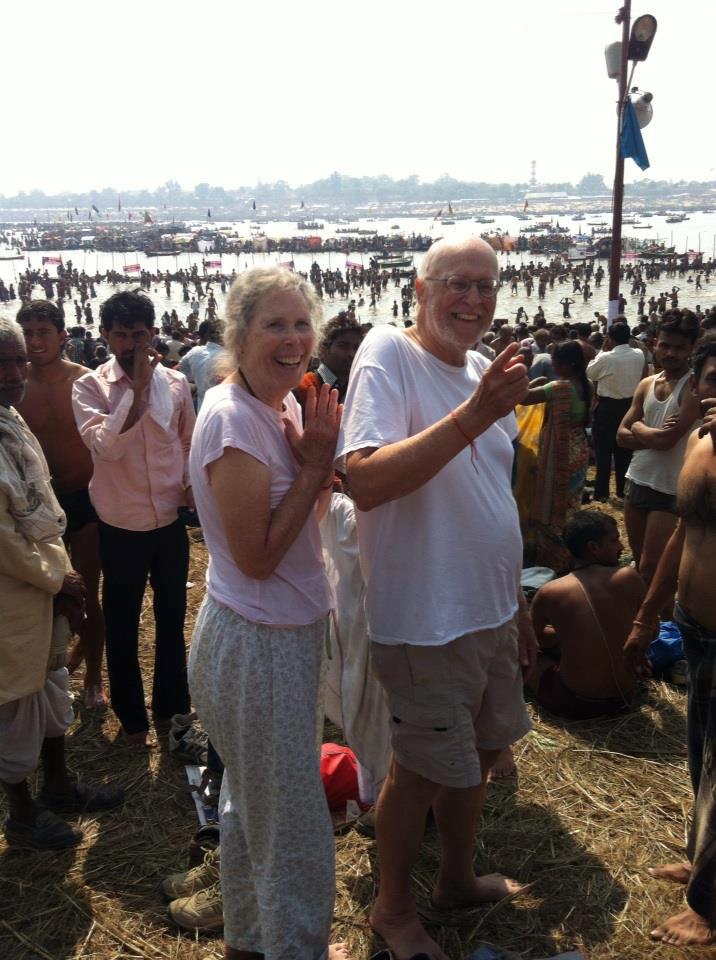
Here’s a photo of Prudence and Albert getting ready to bathe in the Ganges at the Kumbh Mela. I’ve never seen them looking so happy!

Prudence and Albert getting ready to bathe in the Ganges at the Kumbh Mela

Craig Pearson interview and articles on awakened consciousness, transcendence and enlightenment

February 22, 2013

Since the theme of The Uncarved Blog deals with Transcendental Meditation, consciousness & enlightenment, and poetry, I’d like to introduce someone to you who has been studying these ideas in great people’s lives for some time now and has complied them all in a book.

Craig Pearson-EECraig Pearson, Ph.D., is the author of the forthcoming book, The Supreme Awakening, Experiences of Enlightenment Throughout Time — And How We Can Cultivate Them. He has spent many years researching the expression of higher states of consciousness in the writings of great philosophers, saints, scientists, artists, and writers. 

Dr. Pearson is the Executive Vice-President of Maharishi International University in Fairfield, Iowa. He has served the University in a variety of roles over the past 33 years, (42 years, updated 2022) including Dean of Faculty, Dean of Students, Director of Maharishi University of Management Press, Director of Freshman Composition, and Professor of Professional Writing.

In this interview for Issue 5 of Enlightenment Magazine, Linda Egenes asks Craig Pearson about humanity’s age-old quest for enlightenment. Dr. Pearson highlights his answers with examples of exceptional people throughout history who had described experiences of higher states of consciousness. It was originally titled, The Quest for Enlightenment: Transcendence in the Lives of Great Seers and Thinkers. Linda also posted the text of the article on her blog. It was later republished in the newer Enjoy TM News, The Transcendental Meditation magazine: Exploring Higher States of Consciousness, the Ultimate Goal of Meditation. How to cultivate the state of enlightenment

Some of the people mentioned in the article are available in a list of quotes complied on the TM Blog in an Author Archive. Click on each quote and it will take you to an article about each one, and many more.

Enlightenment: What is the relationship of enlightenment and human potential?

Dr. Pearson: Enlightenment is a term that has been used for thousands of years, in traditions east and west, to refer to the most fully developed expression of human potential, far beyond the ordinary.

Enlightenment: How common is it?

Dr. Pearson: Although this extraordinary experience has been described by individuals in different cultures over the millennia and is celebrated in the world’s spiritual traditions, it seems to be exceedingly rare. But obviously it lies within the realm of human potential.

Enlightenment: What has Maharishi contributed to the understanding of enlightenment?

Dr. Pearson: Maharishi Mahesh Yogi is often credited with reintroducing the concept of enlightenment in a systematic manner in our modern age. He has put forward a comprehensive understanding of enlightenment that embraces the great traditions and thinkers who have described this experience across time. Maharishi was also the first to promote scientific investigation into enlightenment, bringing the phenomenon of spiritual development into the arena of modern science.

Enlightenment: How does Maharishi describe enlightenment?

Dr. Pearson: For Maharishi, enlightenment is the ultimate development of one’s inner potential as a human being. It means being established in the highest state of human consciousness.

Enlightenment begins with experiencing the reality of your innermost Self as unbounded and eternal and being established at that level. This means the consciousness of an enlightened person is no longer subject to the ups and downs of emotions, mind, and body but steadfast, anchored in inner silence.

Enlightenment brings the ultimate unfoldment of one’s creativity and intelligence. It means living in harmony with all the laws of nature and easily fulfilling your desires. It means being of maximum use to yourself and others and creating a powerfully nourishing effect in one’s environment.

At the highest stage, enlightenment means experiencing the universe as the expression of your unbounded Self. It is a state of perpetual freedom and bliss, supreme fulfillment.

Enlightenment: Can we relate this in any way to our day-to-day experience?

Dr. Pearson: Although this vision of human development may seem idealistic, we have all had experiences in this direction. Some days we just feel happier inside, more appreciative of others—life is easier, fuller, richer, and more rewarding. We may have moments of enhanced mental clarity or heightened levels of creativity, when we surprise ourselves with how quickly the solution to a problem may come. Athletes sometimes experience the zone—periods of peak performance that are effortless and euphoric.

At these times we are using a bit more of our potential. But enlightenment is far, far more than this. It goes far beyond just having a good day. People who have had experiences of enlightenment report that words simply cannot capture the sublimity of the experience.

Enlightenment: You have researched how individuals from different historical epochs and different parts of the world have shared this same experience. Can you talk about that?

Dr. Pearson: In traditions throughout time we find remarkably similar descriptions of this extraordinary experience of human life lived to its fullest—in the writings of great philosophers, religious figures, artists, scientists, and writers, as well as in the great religious traditions of the world. The terminology may vary from tradition to tradition and age to age. But when you have the clear and precise description of enlightenment provided by Maharishi, it becomes easy to appreciate what these people are talking about.

Enlightenment: So the experience is universal?

Dr. Pearson: Yes. And the recognition that many have shared this experience throughout history is not new either. Some scholars have called it the perennial philosophy or the primordial tradition. The perennial philosophy holds that although various spiritual and philosophical traditions appear different on the surface, at their core all traditions share common, universal principles.

Enlightenment: What are these universal principles?

Dr. Pearson: The perennial philosophy has three basic tenets: (1) Underlying the diversity of the world is a field of unity. (2) We can subjectively experience this field of unity deep within us. (3) The purpose of life is ultimately to experience and live this inner, divine reality of life.

This inner field goes by different names. Laozi called it the Tao. Plato called it the Good, the One, and the Beautiful. Aristotle called it Being. The Greek-Roman philosopher Plotinus called it the Infinite. In Judaism it is called Ein Sof, in Christianity the kingdom of heaven within. In more modern times, Ralph Waldo Emerson called it the Oversoul.

These different names are not referring to mere philosophical or spiritual ideals. They point to the inner reality of life—a reality that can be experienced directly and, when experienced, brings fulfillment beyond words.

Enlightenment: How does Maharishi talk about this inner field?

Dr. Pearson: Maharishi characterizes it as an unbounded field of pure consciousness, an all-pervading ocean of creativity, intelligence, and bliss, beyond space and time. Maharishi asserts, moreover, that this field of pure consciousness is identical with the unified field of natural law that modern physics describes mathematically. Thus the inner field that gives rise to all our thoughts and feelings is the same field that gives rise to the entire universe.

Enlightenment: And we can experience this inner field of pure consciousness?

Dr. Pearson: Every human being has the natural ability to experience this field. It simply requires “diving within,” allowing the mind to settle inward, beyond the thinking process. This is called transcending.

People throughout history have described and celebrated this experience. It is a simple and natural experience—but by most accounts seems to be rare and fleeting. People have lacked a technique for experiencing it systematically. This is the gift Maharishi has given us—the Transcendental Meditation technique, a simple, natural, effortless procedure by which anyone can dive within at will.

Until Maharishi started teaching in the West, the understanding of how to transcend had for the most part been lost. The Transcendental Meditation technique, which has its origin in the ancient Vedic tradition, provides direct experience of pure consciousness. It is easy to learn and practice, validated by hundreds of scientific research studies, and practiced by millions of people throughout the world.

Read the rest of this fascinating article, which includes experiences from Rabindranath Tagore; Alfred, Lord Tennyson; Hakuin Ekaku; and a woman known as Peace Pilgrim.

Many other experiences have also been written up by Dr. Pearson and posted on the TM Blog. Here they are, from recent to earlier posts:

‘Freedom and Self-Realization’: Excerpts from Jack Forem’s book on TM
Howard Thurman: Experiencing “the Great Silence” within us
Rabbi Abraham Isaac Kook: Connecting with the “deep soul”
The Buddha: Rapturous Joy Transcending Any Other
Meister Eckhart: It is in the purest thing that the soul is capable of
D.H. Lawrence: Sitting in a Timeless Stillness
St. John of the Cross: Transcending all knowledge
William Wordsworth: We are laid asleep in body, and become a living soul
Emily Dickinson: The Soul’s Superior instants
Albert Einstein: There is Neither Evolution nor Destiny; Only Being
Zhuangzi: Why don’t you try wandering with me to the Palace of Not-Even-Anything
St. Teresa: A state of great quiet and deep satisfaction
Johannes Brahms: In tune with the Infinite
Rumi: I have passed beyond all thoughts
Plato: And this state of the soul is called wisdom
Jesus: The kingdom of God is within you
Henry David Thoreau: We become like a still lake of purest crystal
Ralph Waldo Emerson: Within man is the soul of the whole; the wise silence; the universal beauty
Walt Whitman: The luminousness of real vision
Alfred, Lord Tennyson: A state of transcendent wonder
Helen Keller: I feel the flame of eternity in my soul
Laozi: His mind becomes as vast and immeasurable as the night sky
 

Update: Craig Pearson’s book, The Supreme Awakening, is now available. Executive Vice President Dr. Craig Pearson was interviewed on KHOE’s “A Chat With The Dean” by Dr. Cathy Gorini on his new book, “The Supreme Awakening – Experiences of Enlightenment Throughout Time, and How You Can Cultivate them.”

Listen to a presentation Dr. Pearson gave in Dalby Hall on the book, which was recorded for broadcast by KHOE.

Listen to Dr. Pearson on KRUU FM, Writers’ Voices recorded Feb 21, 2014.

Listen to Craig Pearson on KRUU FM show, Writers’ Voices, discussing his new book, The Supreme Awakening.

Here is a video of Dr. Pearson’s recent presentation on his book, The Supreme Awakening, in Dalby Hall on the MUM campus seen on the MaharishiUniversity channel.

Craig Pearson has since updated his book with new entries. Here is an informative interview by Jeanne Ball, April 20, 2016, in the Huffington Post: The Supreme Awakening: What Did Buddha, Emerson, Einstein and Saint Teresa Have in Common?

Guest blogger and author William T. Hathaway reviews Craig Pearson’s book, The Supreme Awakening.

Other talks on this topic by Craig Pearson are available in this MIU Webinar at Dalby Hall published in Enjoy TM News and this interview on TM Talks.

Mar 4, 2024: Simplest State‘s Ron Decter interviewed Craig Pearson, Author: “The Supreme Awakening: Experiences of Enlightenment Throughout Time”.

War veterans say Transcendental Meditation could help with PTSD

February 11, 2013

War veterans say meditation could help with PTSD

By Agence France-Presse
Tuesday, February 5, 2013 6:27 EST

Meditation might sound an unlikely activity for men trained in killing people and blowing things up in Afghanistan and Iraq. But US war veterans say meditation could help heal the post-war mental disturbances that afflict a growing number of American soldiers, including possibly the ex-Marine who gunned down the country’s most famous sniper over the weekend.

Luke Jensen, a former undercover police officer who fell apart mentally on arrival in Afghanistan, said that after trying to commit suicide in front of his family, he agreed to try Transcendental Meditation — and was saved.

“There’s a lot of coping methods out there that are offered to our veterans. This needs to be one of them,” the heftily built man said in a shaking voice at a meeting of the David Lynch Foundation, which promotes meditation for treating post-traumatic stress disorder.

Jensen said he has since taken a job in the government’s Department of Veterans Affairs, helping other stressed out vets. Just two weeks ago, one of those he worked with committed suicide.

Transcendental Meditation “needs to be implemented. It needs to be an option,” Jensen told the panel in New York.

After years of being a little-talked about subject, PTSD is increasingly acknowledged as a mental health epidemic in the United States and one of the less easily quantifiable costs of America’s wars on the other side of the world.

The Department of Veterans Affairs estimates that PTSD occurs in between 11 and 20 percent of veterans from the Afghan and Iraq wars, and in 31 percent of Vietnam war veterans.

Although combat is commonly assumed to be the main cause of PTSD, simply witnessing the effects of bombings, for example, or the stress of being in a hostile country, are also blamed.

Another major source of PTSD, though less often discussed, is what the government calls military sexual trauma. Veterans Affairs figures show that 23 percent of women report sexual assault in the ranks, while more than half have experienced sexual harassment.

The most frightening result associated with PTSD is the rising number of suicides, which now run at 22 a day among military veterans, according to a government study released last week.

And the problem is no less alarming among active duty soldiers, with a record 349 killing themselves in 2012 — more than were killed by the Taliban or other enemy in the field.

In the latest incident to highlight the violence engulfing former soldiers, an ex-Marine in Texas was accused Saturday of shooting dead another veteran who had devoted himself to helping comrades adjust to peaceful life.

Adding to the shock value, the victim, Chris Kyle, was an author of a best-selling book about his former exploits as a sniper with 150 confirmed kills.

In the effort to address the problem of PTSD, meditation is an outlier.

However, early studies show remarkable success, and demand is growing, advocates at filmmaker Lynch’s foundation said.

Transcendental Meditation involves entering “a state of rest in many cases deeper than sleep,” said Bob Roth, executive director of the David Lynch Foundation. “This allows deeply rooted stresses to be dissolved.”

Retired rear admiral Richard Schneider, president of the private military institute Norwich University, said tests showed that cadets using the techniques increased focus in class and were better “emotionally prepared.”

The meditation instructor, a chisel-faced air force veteran called David Zobeck, said a stigma long attached to meditation was evaporating among students, who are preparing for careers as officers.

“They’re not getting the weird stares anymore,” he said.

Jerry Yellin, a fighter pilot in World War II who spoke of losing comrades and making dangerous missions in the bloody Pacific theater, said he began suffering nightmares, then behavioral problems on return home at a time when PTSD was rarely discussed.

“The hard stuff began in my life, because I didn’t sleep,” he said. “I had an addiction that ruled my life.”

Meditating, he said, “got my life back 100 percent.”

The Raw Story published this report from Agence France-Presse.

See more articles on PTSD and TM posted on The Uncarved Blog.

Cheryl Strayed, author of WILD, talks about the unique role of artists and writers in the world

January 10, 2013

Cheryl Strayed

“I think that artists are here, and writers are here, to be the truth-tellers of the human experience, the world we live in. And so, if you’re not going to tell the truth, don’t bother.” — Cheryl Strayed

I love this frank quote from memoirist Cheryl Strayed on the role of artists and writers in society during this CBC interview, Publishing phenom Cheryl Strayed, with Q host Jian Ghomeshi posted on Q Blog Monday, December 31, 2012. Here’s their description.

Cheryl Strayed had a banner year in 2012. Wild, her memoir of hiking the Pacific Crest Trail while working through grief, divorce, and a dalliance with drugs, was a bestseller. Oprah Winfrey even relaunched her book club for it.

Strayed also outed herself as the popular online advice columnist Dear Sugar, and published a collection of columns as Tiny Beautiful Things to rave reviews.  Back in September, she dropped by Studio Q to talk about literary success and what it really means to be a “fearless” writer.

From the Best of Q: Originally aired September 13, 2012

Listen: 16:47

Download and listen to the complete introduction and interview: http://www.cbc.ca/q/popupaudio.html?clipIds=2278707963

Watch the 15:38 edited version minus the formal introduction on YouTube: “Wild” author Cheryl Strayed in Studio Q.

See what other writers have to say about writing on The Uncarved Blog.

Found this interesting article: The Wandering Writer: A Tour through Inner Northeast Portland with Cheryl Strayed.

Here’s the WordPress.Com Annual Report for The Uncarved Blog. See 2012’s most popular posts.

December 30, 2012

The WordPress.com stats helper monkeys prepared a 2012 annual report for this blog. Here’s an excerpt:

19,000 people fit into the new Barclays Center to see Jay-Z perform. This blog was viewed about 62,000 times in 2012. If it were a concert at the Barclays Center, it would take about 3 sold-out performances for that many people to see it.

Click here to see the complete report.