Archive for the ‘Education’ Category

David Lynch on meditation in the NewStatesman: Heaven is a place on earth

November 1, 2013

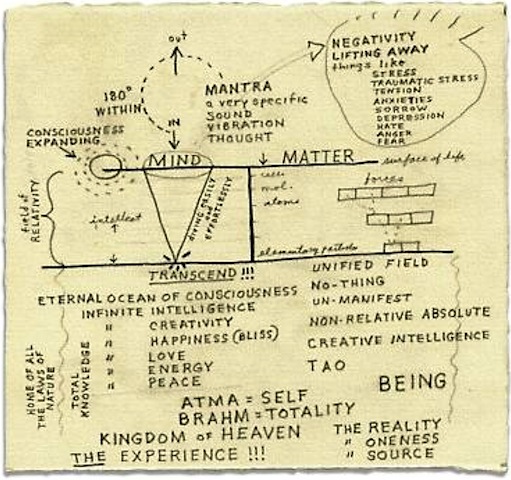
This week Russell Brand was guest editor of the UK’s NewStatesman, which came out October 24, 2013. He invited David Lynch to contribute an article on meditation. The diagram looks like it may be the same one David drew during an interview with a French journalist in Paris as he was explaining Transcendental Meditation to her. A large part of the article reads like a transcription of that brilliant explanation, which was woven throughout a documentary film made of David’s 16-country tour, Meditation Creativity Peace.

David Lynch on meditation: Heaven is a place on earth

Transcending is the only experience in life that gives total brain coherence. Any other thing we do utilises different small parts of the brain, this small part for painting, another small part for mathematics, that small part for playing the piano.

By David Lynch Published 31 October 2013 14:45

Mind and matter: Lynch’s diagram of Transcendental Meditation. Image: copyright David Lynch

Mind and matter: Lynch’s diagram of Transcendental Meditation.
Image: copyright David Lynch

What is Transcendental Meditation? What is transcending? Where do you go when you transcend? And what good is it to transcend? To help answer these questions, I’ve done a little drawing and you can refer to it from time to time. You will notice a line at the top of the drawing representing the surface of life. We live on the surface and see surfaces everywhere. This right side represents matter and the left side will represent mind. Mind and matter.

About 300 years ago, scientists started wondering: what was matter, what was wood, what was air, what was water, what was flesh, etc? And they started looking into matter and they began to find things – things that we now learn about in school. They found cells and molecules. They went deeper and found atoms; they went deeper and deeper, all the way down to the tiniest particles – the elementary particles.

They found four forces that act upon the particles. And on a deeper level, they found that the four forces became three. Some unification started. And, on a deeper level, the three forces became two. About 35 years ago, modern science, quantum physics, discovered the Unified Field at the base of all matter. This field is the unity of all the particles and all the forces of creation. This is a field of nothing, but the scientists say that out of this nothing emerges everything that is a thing. This Unified Field is unmanifest yet all manifestation comes from this field.

Ancient Vedic science, the science of consciousness, has always known of this field. Believers say that it is an eternal unbounded ocean of consciousness. And this consciousness has qualities. So this Unified Field, this ocean of consciousness, is a field of unbounded intelligence, unbounded creativity, unbounded happiness, unbounded love, energy and peace.

Transcendental Meditation is a mental technique, an ancient form of meditation brought back for this time by Maharishi Mahesh Yogi. It is a technique that allows any human being to dive within, through subtler levels of mind and intellect, and then transcend – that is experience, that ocean of pure consciousness at the base of all mind and matter – to experience this Unified Field within with those all-positive qualities.

In Transcendental Meditation you’re given a mantra. A mantra is a very specific sound vibration – thought. The mantra that Maharishi gives is like a law of nature designed for a specific purpose and that purpose is to turn the awareness 180 degrees from out, out, out to within, within, within. Once pointed within, one will dive easily and effortlessly. It is easy and effortless because the nature of the human mind is always to want to go to fields of greater happiness.

Each deeper level of mind and each deeper level of intellect has more and more happiness – charm, as they say. So the happiness growing is like a magnet that gently pulls us within. And at the border of intellect, one then transcends and experiences the transcendent, the Unified Field, the ocean of pure consciousness, the kingdom of heaven that lies within – the Tao, the home of total knowledge, being or divine being; Atma, meaning the Self, the Self with a capital “S”.

There’s a line we’ve all heard: “Know thyself.” This is the Self they’re talking about. This field is also known as Brahm, meaning totality. First seek the kingdom of heaven that lies within and all else will be added unto you. All else is totality.

Every time a human being transcends, they infuse some of this all-positive consciousness and they truly begin to expand whatever consciousness they had to begin with. There is a side effect to expanding consciousness, and that side effect is that negativity begins to recede. Things like stress, traumatic stress, anxieties, tension, sadness, depression, hate, anger, rage and fear start to lift away very naturally.

The analogy is: negativity is just like darkness. When this light of consciousness begins to truly expand, it is like being in a dark room with a light on a dimmer. As the light gets brighter, the darkness starts to go. And when the light is full on, there is no darkness. Likewise with the light of unity – consciousness – growing, negativity very naturally starts to recede, automatically and without you having to worry about it. This heavy weight of negativity lifting gives such a joyful feeling of freedom to a human being. So you could say the person practising Transcendental Meditation each day is infusing gold and getting rid of garbage.

Transcending is the key word!!! Transcending is truly experiencing that deepest eternal level of life. It is this experience that does everything good for a human being. Every human being has consciousness but not every human being has the same amount. The good news is, every human being has the potential for infinite consciousness. Every time you experience this ocean of consciousness within, you expand more and more consciousness and you are unfolding your full potential as a human being. The full potential of the human being is called enlightenment – infinite consciousness, infinite happiness, total fulfilment. Totality.

Transcending is a holistic experience, meaning that all avenues of life will start improving. The things that used to stress you will still be out there in the world but they will not be able to hit you so hard. You’ll still be able to feel sadness but the sadness won’t last so long. It will lift away more quickly. The same with anger; the anger will leave more quickly. It won’t stay with you and poison you and the environment. Fears begin to lift – you work in more and more freedom. This is a field of infinite creativity. You will see creativity and problem-solving start to expand. Through research, scientists know that IQ can go up because of transcending each day.

Happiness comes more and more and you feel good in your body and enjoy the doing of things more and more. The field within is a field of universal love. This universal love feeds personal love and relationships improve. This field within is a field of infinite energy. People today are so fatigued and here within each of us is an infinite amount of energy to fuel our work and play. There is infinite peace within and that is deep, deep contentment, harmony, coming up inside the human being. It is so beautiful.

Transcendental Meditation is, as I said, easy and effortless. Many people might think that because it is easy it is not as good as other meditation techniques. This is wrong thinking. Concentration forms of meditation, contemplation forms of meditation, will keep a human being hovering on the surface. There will be no transcending. And it is hard work and it is boring and the reward is not there.

Transcendental Meditation as taught by Maharishi Mahesh Yogi is a technique that has been here many times before and it is a blessing. It is the real thing. It works. Brain research scientists have found a wondrous thing. When a human being truly transcends, hooked up to an EEG machine, then the full brain gets engaged in concert. They call this “total brain coherence”.

Transcending is the only experience in life that gives this total brain coherence. Any other thing we do utilises different small parts of the brain, this small part for painting, another small part for mathematics, that small part for playing the piano, and so on. Scientists have always told us before that we use only 5 per cent or 10 per cent of our brain but transcending is an experience that utilises the full brain.

This shows us something of the relationship of the human being to this glorious Unified Field within. The more we transcend, the more this coherence stays with us and this eventually gives rise to higher states of consciousness, culminating with supreme enlightenment. On the EEG machine, Transcendental Meditation meditators are seen to transcend many times in each 20-minute meditation. Those meditators who practise concentration or contemplation forms of meditation do not transcend. They do not get the experience of that ocean of bliss consciousness, the Unified Field.

A ten-year-old child can practise this technique of Transcendental Meditation; a 110-year-old can do it, easily and effortlessly, and they will each get the experience they are yearning for. It is a sublime experience to transcend and feel that rejuvenation and that happiness and all those other all-positive qualities growing.

Transcendental Meditation is not a religion. People from all religions practise this technique and they see there is no conflict with their religion. On the contrary, they say they understand and appreciate their religion more because understanding and appreciation for all things grow by transcending each day. It is a technique for human beings, no matter what walk of life, what religion or where you are from. People who have experienced great suffering have gotten this technique and happily said, “Now I have my life back again.” The real story is: THE NATURE OF LIFE IS BLISS and THE INDIVIDUAL IS COSMIC.

Russell Brand’s article in this paper is about revolution. Revolutions are usually associated with violence or force. Transcendental Meditation leads to a beautiful, peaceful revolution. A change from suffering and negativity to happiness and a life more and more free of any problems. The secret has always been within. We just need a technique that works to get us there to unfold a most beautiful future.

Find out even more about Transcendental Meditation at: davidlynchfoundation.org.uk.

For American readers, visit www.tm.org and davidlynchfoundation.org.

See Russell Brand and David Lynch at LA Premiere of ‘Meditation, Creativity, Peace’ Documentary and related links to other videos and articles. Visit http://meditationcreativitypeace.com to see a preview of the film and where it may be playing.

This is an excellent interview: David Lynch speaks with Alan Colmes about his 16-country tour film Meditation Creativity Peace.

The NewStatesman article reads like a transcription from this film, which you can now see: “Meditation Creativity Peace”—A documentary of David Lynch’s 16-country tour during 2007–2009.

See an earlier article written by David Lynch published in Jane Magazine: Celeb Spiritual Report: One significant day in my life by David Lynch for Jane Magazine (May 2004).

Maharishi University of Management’s Ye Shi Named Lean Accounting Student of the Year

October 26, 2013

Maharishi University of Management PhD candidate, Ye Shi (Linlin), was awarded the 2013 Lean Enterprise Institute’s annual Excellence in Lean Accounting Student Award during their Lean Accounting Summit this month in Orlando, Florida. This award continues a pattern of recognition for MUM from LEI: Dr. Andrew Bargerstock was named Lean Accounting Professor of the Year in 2009, and Manjunath Rao was selected as Lean Accounting Student of the Year in 2011 for his PhD dissertation.

Tabitha Dubois (right), LEI's Director of Finance and Administration, gave the Lean Accounting Student Award to MUM’s Ye Shi, and the Lean Accounting Professor Award to WWU's Dr. Audrey Taylor.

Tabitha Dubois (right), LEI’s Director of Finance and Administration, gave the Lean Accounting Student Award to MUM’s Ye Shi, and the Lean Accounting Professor Award to WWU’s Dr. Audrey Taylor.

Fairfield, Iowa (PRWEB) October 25, 2013

By Ken Chawkin

Maharishi University of Management PhD candidate, Ye Shi (Linlin), was awarded the 2013 Lean Enterprise Institute’s annual Excellence in Lean Accounting Student Award during their Lean Accounting Summit this month in Orlando, Florida. The Lean Enterprise Institute (LEI) is a non-profit educational association, which recognizes students who have been actively engaged in research, education, and the development of Lean Accounting and accounting for Lean.

Andrew Bargerstock, PhD, CPA, director of MUM’s MBA programs, had nominated Linlin for this award based on her accomplishments in lean accounting. “We are very happy that Lin Lin’s accomplishments are recognized by one of the biggest names in Lean Accounting, James Huntzinger, in his role as the chair of the Student of the Year selection committee for Lean Enterprise Institute (LEI) and the Lean Accounting Summit.”

Jim Huntzinger

Jim Huntzinger, president and founder of Lean Frontiers

On September 23rd Jim Huntzinger, president and founder of Lean Frontiers, and author of Lean Cost Management: Accounting for Lean by Establishing Flow, notified Linlin of her selection as Lean Accounting Student of the Year. Huntzinger founded the Lean Accounting Summit in 2005, as well as produced many other Lean summits.

As to why she was selected, Jim Huntzinger said, “Linlin was recognized as LEI Lean Accounting Student for 2013 due to her commitment to help others understand and develop a deep understanding of the new paradigm in Lean Accounting. We hope that she will continue to deepen her knowledge of this area and encourage more students and faculty to join the Lean Accounting adventure, and utilize her PhD research to both deepen and further her understanding of lean accounting.”

This award continues a pattern of recognition for MUM from LEI. Dr. Andrew Bargerstock was named Lean Accounting Professor of the Year in 2009, and Manjunath Rao was selected as Lean Accounting Student of the Year in 2011 for his PhD dissertation.

Linlin completed both the MBA in Accounting (2011) and the Post-graduate Certificate in Lean Accounting (2012) at MUM. In September 2013 she began her second year of teaching three of the two-credit courses in the Lean Accounting Certificate program.

In collaboration with Dr. Bargerstock, Linlin has developed case studies to illustrate how to implement kaizen methodologies to improve accounts payable processing. Linlin is currently taking coursework in the PhD program at MUM and expects to begin her dissertation next year.

Linlin is passionate about Lean, which she says is “the great strategic thinking that leads to true sustainable development. Lean accounting is an advanced way of articulating business through present and real financial numbers compared to the historical and sometimes misleading numbers provided by traditional accounting.”

Linlin says Lean enables better communication and employee engagement, and greatly enhances leadership. She adds, “It’s also a great illustration of how to do less and accomplish more, which is a fundamental principle of our university’s educational approach, Consciousness-Based Education.”

Ye Shi (Linlin) with MUM Professor Andrew Bargerstock at the 2013 Lean Accounting Summit

Ye Shi (Linlin) with MUM Professor Andrew Bargerstock at 2013 Lean Accounting Summit

Linlin says she is thrilled and honored to be recognized as the Lean Accounting Student of the year. “I am grateful for the support from MUM, Lean Frontiers, LEI and IMA. I appreciate the guidance and support from Dr. Andrew Bargerstock and other mentors and friends. Without them, any personal development for me would not have been possible.”

The summit offered Linlin, and other participants, the opportunity to meet with elite academic lean professionals and business lean practitioners. “It’s thought provoking to hear the speakers from different fields articulating the Whys and Hows of lean accounting based on their empirical research and practical experience. To be able to talk to them face to face and exchange opinions during the open discussions was fantastic. Also, the Q&A session with the executive team from the renowned Institute and the rest of the speakers provided the practical solutions for any problems people may encounter during lean transformation. It was really exciting to learn the live examples and have the inspiring conversations.”

Included in Linlin’s award was a complimentary registration at the Summit and $500 towards her travel expenses.

Photos of LEI Award Winners are available at garrethoover.com/LEI. Tabitha Dubois (red dress), Director of Finance and Administration for LEI, gave the Excellence in Lean Accounting Student Award to MUM’s Ye Shi, and the Excellence in Lean Accounting Professor Award to Dr. Audrey Taylor, Professor of Accounting at Western Washington University.

Founded in 1971, Maharishi University of Management (MUM) offers Consciousness-Based℠ Education, a traditional academic curriculum enhanced with self-development programs like the Transcendental Meditation® technique. Students are encouraged to follow a more sustainable routine of study, socializing and rest without the typical college burnout. All aspects of campus life nourish the body and mind, including organic vegetarian meals served fresh daily. Located in Fairfield, Iowa, MUM is accredited by The Higher Learning Commission and offers bachelor’s, master’s, and doctoral degrees in the arts, sciences, humanities, and business. Visitors Weekends are held throughout the year. For more information, call the Admissions Office at 800-369-6480 or visit http://www.mum.edu.

Source: PRWeb: MUM’s Ye Shi Named LEI’s 2013 Lean Accounting Student of the Year

In an effort to encourage more faculty to attend the The Lean Accounting Summit, organizers interviewed Andy Bargerstock on Friday, October 18, 2013 in Orlando, FL. He was asked to share what he had learned from previous summits. Of all the interviewees, they selected Andy to go in their LEAF (Lean Education Advancement Foundation) newsletter. You can see both here: A Special Letter to Lean Accounting Summit Participants from the LEAF Board of Directors.
Also posted on AndyB’s Blog: MUM’s Ye Shi Named LEI’s 2013 Lean Accounting Student of the Year

See MUM MBA Students Win at CAPSIM: The Role of Business Simulation Competitions in Higher Education.

See: Maharishi University’s Rao and Bargerstock published in Management Accounting Quarterly.

See Maharishi University MBA Students Win National Business Simulation Competition.

Renowned (TM) meditation teacher Bob Roth featured on The Third Metric and HuffPost Live

October 14, 2013

Huffington Post Senior Writer profiled Bob Roth, Executive Director of the David Lynch Foundation, an exemplary representative for The Third Metric: Redefining Success Beyond Money and Power. huff.to/1albfF9 (10/14/2013)

Meditation Teacher To The Stars: His clients include Oprah, Russell Brand, Martin Scorcese and Dr. Oz, but renowned meditation teacher Bob Roth also serves low-income and under-served communities by sharing his passion: Transcendental Meditation.

Bob Roth was also interviewed on @HuffPostLive: Stress Is The New Black Plague: Meditation guru Bob Roth ‏@meditationbob joins host Nancy Redd ‏@nancyredd to explain the benefits of meditation: Bob Roth Talks Transcendental Meditation @TMmeditation. Watch this lively interview http://huff.lv/GZQpn9 (12:46).

Bob Roth: Bringing Calm To The Center Of Life's Storm

Bob Roth: Bringing Calm To The Center Of Life’s Storm

If there was a perfect year in which to discover Transcendental Meditation, it might just have been 1968. That was the year that Bob Roth was a freshman at UC Berkeley — a campus considered Ground Zero for the anti-war movement and the cultural changes sweeping through the country at the time. He remembers living surrounded by helicopters spewing tear gas over student war protesters and Army tanks parked outside his front door. Demonstrations. Riots. Chaos.

And against this backdrop, Roth did what many college students do: He took a part-time job. He sold scoops of ice cream at Swenson’s ice cream parlor, never expecting that amid the rush of pending social changes engulfing him, it would be at the ice cream shop where he would meet a guy who would ultimately alter the course of his life forever.

The college crew at Swenson’s was the usual motley collection of hippies, straights and everything in between, recalls Roth. But one guy stood out: Peter Stevens. “He was like a quiet reflection pool amid the chaos,” recalls Roth, “and I was drawn to him.”

“Peter was centered, energetic, super-smart, kind to all, easy-going, never agitated, with an ineffable calm about him,” Roth told The Huffington Post. He learned that Peter “meditated,” something that Roth said was a bit of a disconnect for him. “Meditation was not in my vocabulary.” But he was intrigued and curious, and went with Stevens to a class in Transcendental Meditation, a meditative practice derived from the ancient Vedic tradition in India. After just one class, Roth was hooked.

Today, Roth is the executive director of the David Lynch Foundation, where he has helped bring Transcendental Meditation programs to more than 300,000 at-risk kids in 35 countries, as well as veterans suffering from post-traumatic stress disorder, and women and girls who are survivors of domestic violence. He’s also the national director of the Center for Leadership Performance, which introduces the TM program to business, industry and government organizations — and even some United Nations groups.

Today, Roth’s student roster includes a lot of very recognizable names: Oprah, Russell Simmons, Russell Brand, Martin Scorsese, Mehmet Oz, Hugh Jackman and dozens of others. He’d be embarrassed to be called “meditation teacher to the stars,” but such a description wouldn’t be far off. For the past 40 years, he has meditated twice a day no matter where he is, in places as discombobulating as an airplane when need be.

He explains Transcendental Meditation with the following analogy: The surface of the ocean is waves and white caps. But deeper down, the ocean is still. How TM differs from other meditations, he says, is that it doesn’t attempt to still the waves, but rather allow access to the stillness. By practicing it twice a day for 20 minutes, he said, studies have shown that people sleep better, reduce their stress, and lower their blood pressure. In children, the practice can reduce ADHD symptoms and symptoms of other learning disorders.

Not all Roth’s clients are rich and famous. One of the key focuses of the David Lynch Foundation is to target those who aren’t and improve their lives through TM. There’s a story that Roth likes to tell about the DLF’s Quiet Time program — where thousands of at-risk children are taught TM in school. It involves a little girl he called Jessica (not her real name) who lives in a crime-infested neighborhood of San Francisco. Jessica showed up one day at school wearing a white dress splattered with what her teacher, at first glance, thought was red paint. It was blood — blood from Jessica’s uncle who had been shot that morning in a random drive-by while waiting with her at the bus stop.

Instead of running home, Jessica ran to school so that she could meditate, she told her teachers. The DLF Quiet Time program had been in her school for about a year at the time and for her, it made school a safe place whereas her home often couldn’t be. “For me,” said Roth, “that says it all.”

As part of the Quiet Time Program, the foundation supplies teachers for each child to have one-on-one meditation instruction and follow-up. “In a school with 1,000 students,” he said, “we bring in 20 teachers.”

The results have been gratifying, said Roth, who believes that results must be quantifiable to matter. “Change needs to show up in grades, reduced number of suspensions and dropout rates,” he said. And the Quiet Time program has done all that. The San Francisco Unified School District reports an 86 percent reduction in suspensions over two years in schools where the program has been introduced; a 65 percent decrease in violent conflict at the John O’Connell High School; and the Journal of Psychiatry shows reduced ADHD symptoms and symptoms of other learning disorders among students who practice TM.

Carlos Garcia, retired superintendent of the San Francisco Unified School District, heralded the program as one which is “transforming lives.” He said, “It is transforming schools and neighborhoods, and it will transform our society.”

All of which is music to Roth’s ears. TM is a life-changer for individuals, he said, but also a game changer in the broader sense. It may start with an individual’s desire to sleep better or reduce stress, but results are similar to what happens when you pull on one leg of the table, said Roth. “The whole table moves.” And what moves in this case are blood pressure numbers, heart attack risk factors, and the overall ability to make better decisions with a more focused mind. “You are thinking more clearly, are able to make decisions more ethically, perform more creatively.” It’s like when you water a plant because some leaves are wilting, he said, but the whole plant benefits from the water. And it spills over into those around you in a chain reaction.

Companies interested in innovation are drawn to TM because of the positive impact it has on their work force. It’s why Oprah had Roth bring his program to her staff of 400. “It’s not just about learning to relax,” said Roth. “TM wakes up the brain and the executive functions. It resets the brain to perform in a less ‘flight or fight’ manner.”

And yes, it reduces stress. Whether he is teaching a homeless guy — the DLF has a program that works with New York City homeless — or a billionaire, “they both suffer from stress,” said Roth.

But as one celebrity who shall remain unnamed quipped when Roth asked her why she wanted to learn to meditate, “I want to maintain a permanent connection with the intelligence of the universe. I also can’t sleep.”

TM training allows people to access an ability they already are hard wired for: to take a profound rest at will.

Roth says the tipping point has been reached in regard to the public’s understanding of the value of meditation. As he wrote on Maria Shriver’s blog, “It feels like something foundational can be done to help transform lives through meditation, not only among those most at-risk to suffer traumas in life, but also the teen in the private school who battles the very real demons of substance abuse and unspoken thoughts of suicide; the parent who is struggling to survive an ugly divorce and still keep the family intact; or just the person — man, woman, boy, girl — who is navigating life’s daily vicissitudes and can’t seem to catch a breath, turn off the noise, get a good night’s sleep.”

Ann Brenoff can be reached at: ann.brenoff@huffingtonpost.com.

Here is a lovely reproduction of the Huffington Post article with more pictures created by the David Lynch Foundation: Meditation Man.

See The GQ Guide to Transcendental Meditation: The Totally Stressed-Out Man’s Guide to Meditation, an excellent article written by Josh Dean who learned TM from Bob Roth and interviewed him.

Bob Roth is also featured in the April 2, 2014 issue of MANHATTAN Magazine: Transcendental Inspiration.

Bob Roth (S)(C)On July 16, 2015, Harper Spero, a New York City-based lifestyle and career coach, published this wonderful interview on her blog: (So)(Co) Sit Down with Bob Roth. While working at Agent of Change, she produced the Women.Meditation.Stress. Luncheon and Panel Discussion for the David Lynch Foundation (DLF), which is how she met Bob, its executive director. It contains a nice large-sized photo of Bob at the bottom of the blog post.

Watch the 1968 film of Maharishi at Lake Louise

September 24, 2013

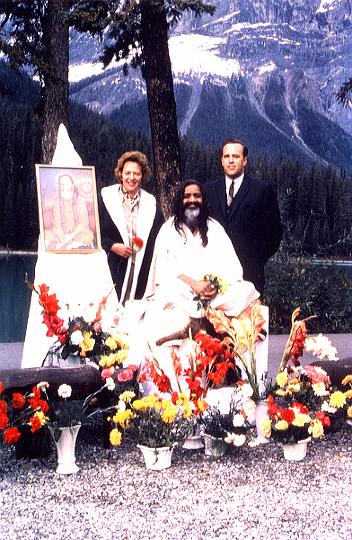
See my earlier post on a segment from this film: Maharishi describes the nature of inner life: bondage and liberation, and gaining bliss consciousness through Transcendental Meditation. Maharishi is seen walking and talking about the nature of life, with the beautiful scene of Lake Louise and the Rocky Mountains behind him. He describes the lake, its surface and depth, and the reflections on it, as a metaphor to explain the spiritual content of life and how it gets lost and overshadowed when we identify with only the surface material objects of life, a state of bondage, at the expense of our own inner unbounded nature, bliss consciousness, which gets unfolded and integrated through the practice of his Transcendental Meditation technique, into a state of liberation. I transcribe Maharishi’s words there, the film’s essential spiritual message.

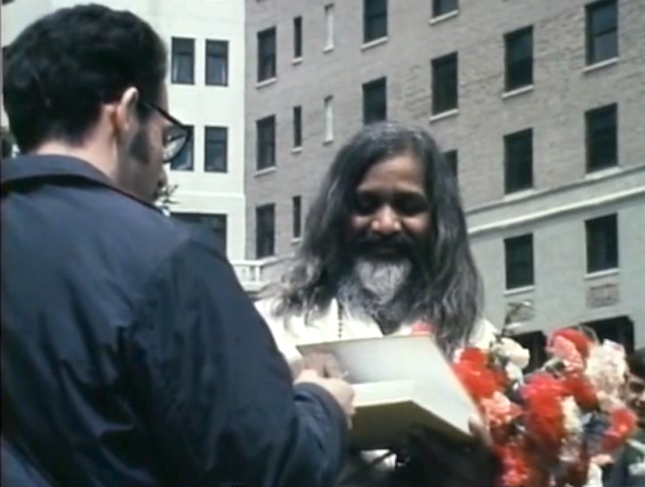
maharishi signs gita for ken

In the opening scenes of this complete video of the CBC documentary, we were all walking up to Maharishi to give him a flower. At 2:07-2:10, I’m seen coming up to Maharishi asking him to sign a copy of his translation and commentary on the Bhagavad-Gita, Chapters 1-6. The film closes with more of the same footage, which was all actually shot towards the end of the course. That wonderful week was the first time a lot of us got to meet Maharishi. It was an unforgettable divine experience in a most sublime natural setting!

Four years later, my mother, two sisters and I would meet privately with Maharishi at Queens University in Kingston, Ontario, where a Symposium on the Science of Creative Intelligence with many of Canada’s intellectual luminaries was taking place. But that’s another amazing story!

Forty years after I started TM, and thirty-nine years after having met Maharishi, I was able to assist an ITN Factual commissioned producer in making the A&E biographical film, Maharishi Mahesh Yogi, for the History International Channel (November 2007). Luckily I was able to procure vintage footage taken by Eileen Learoyd, a Victoria, BC journalist, and the first national leader of the Canadian TM Movement. Grania Litwin, her daughter and also a Victoria journalist, was kind enough to send us those home movies transferred to videos taken by her mother. We found one of Maharishi at Catalina Island from 1962 that was still in the original film canister! We had them all digitized and sent selections to the producer for use in the film. She was delighted to have received such historical footage. We also returned the videos with new DVDs to Grania.

I also put the producer in touch with Alan Waite, who had made the award-winning 1968 documentary, Maharishi Mahesh Yogi – Sage for a New Generation, and she ended up using many segments from that film as well. Also lined up interviews for her when she came to MUM in Fairfield, Iowa, as well as Mike Love in LA and Donovan in London.

Eileen and Hubert with Maharishi

Eileen and Hubert with Maharishi at Emerald Lake, British Columbia

Eileen Learoyd and her brother Hubert Gray organized a seminar for meditators with Maharishi at Emerald Lake, British Columbia in 1964. Elieen would later organize the 1972 SCI Symposium. In June 1968 they arranged for the CBC to film Maharishi at the Lake Louise, Alberta course. Interestingly, after Maharishi signed my copy of the Gita, we both turned it toward the camera. That footage was edited out, but it seemed to be a symbolic gesture for what I would end up doing with a large part of my life in my own small way — helping to teach, promote and publicize Maharishi and his world-transforming Vedic knowledge and TM technique. And for that I am most thankful and fulfilled. Jai Guru Dev, Maharishi. Na Guror Adhikam.

And last year, (2012) a small crew from DLF.TV and I were fortunate to have assisted Oprah’s producers by providing them with more b-roll footage for the OWN program on the meditators of Fairfield, Iowa, referred to as “TM Town” by Oprah. They even gave us a credit! Here’s a post with Video segments of Oprah’s Next Chapter on OWN: Oprah Visits Fairfield, Iowa—”TM Town”—America’s Most Unusual Town.

I later found a photo of Hubert and Eileen on either side of Maharishi arriving in the lobby of the Fairmont Chateau Lake Louise Five-Star Hotel. That’s when I saw him for the first time, from the other side of the lobby, and felt the thought, ‘Prince of Peace’. At the end of the course, we took a group photo with Maharishi outside in front of the lake to complete that sublime one-week residence course, June 9-14, 1968.

Enlightenment, the Transcendental Meditation Magazine, also published an article on Maharishi at Lake Louise discussing the blissful nature of the practice of the Transcendental Meditation® technique.

In the summer of 2014 I retired from my position at MUM. A year later I was featured on the TMhome website: PR to poetry – how things sometimes happen to Ken Chawkin. They followed up with The story behind the making of the International History documentary on Maharishi Mahesh Yogi (International History Channel documentary on Maharishi Mahesh Yogi). A nice way to go out. I continue to write, blog, and freelance as a publicist for the movement as needed.

On September 30, 2014 I had posted how I learned #TMmeditation 47 years ago today. In there I share more information about the making of the CBC Telescope film, The Guru, of Maharishi at Lake Louise. Richard Day shared a story he had heard many years later about the director of the film, Colin Smith, who told Maharishi that he wanted to film him saying something that would encapsulate all his teachings. Maharishi said, “I’ll walk by the lake, you walk with me, and I’ll tell you everything about spiritual development.” He did it in one take! That’s the part I had transcribed and posted in the first link above.

Save

On August 2, 2020, Bob Roth, CEO of the David Lynch Foundation, and Mario Orsatti, Executive Director of the Center for Health and Wellness, a division of the David Lynch Foundation, discuss this historic documentary on TM Talks.

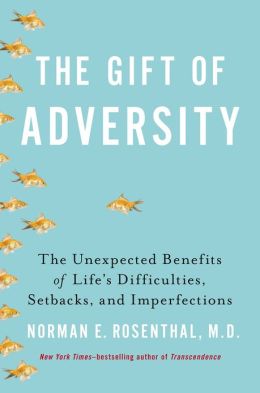
Norman E. Rosenthal, M.D.’s new book, The Gift of Adversity, helps us to look at life differently

September 1, 2013

Throughout his storied career as a research psychiatrist, Dr. Norman E. Rosenthal has searched outside the box for ways to help people struggling with depression and other mood disorders.  This search led him to diagnose and name seasonal affective disorder (SAD) and develop light therapy as a wonderfully effective treatment while at the National Institute of Mental Health. He went on to write several books that brought alternative, non-pharmaceutical treatments straight into public awareness, including “Winter Blues,” “St. John’s Wort: The Herbal Way to Feeling Good,” and, most recently, the New York Times bestseller, “Transcendence,” which explores the power of Transcendental Meditation in healing and transformation.

The Gift of AdversityIn his new book, “The Gift of Adversity: The Unexpected Benefits of Life’s Difficulties, Setbacks and Imperfections,” Dr. Rosenthal shares personal stories of adversity, as well as case studies and lessons he has learned from his heroes. Less scientific than his previous books, “The Gift of Adversity” is part memoir, part inspiration, and thoroughly enjoyable to read.

Adversity is an irreducible fact of life. Although we can and should learn from all experiences, both positive and negative, bestselling author Dr. Norman E. Rosenthal, believes that adversity is by far the best teacher most of us will ever encounter.

Whether the adversity one experiences is the result of poor decision-making, a desire to test one’s mettle, or plain bad luck, Rosenthal believes life’s most important lessons—from the value of family to the importance of occasionally cutting corners—can be best learned from it. Running counter to society’s current prevailing message that “excellence” must always be aspired to, and failure or mistakes of any sort are to be avoided at all costs, Rosenthal shows that engaging with our own failures and defeats is one of the only ways we are able to live authentic and meaningful lives, and that each different type of adversity carries its own challenges and has the potential to yield its own form of wisdom.

David Lynch Foundation executive director and author, Bob Roth, interviews Dr. Norman Rosenthal on how he went from writing “Transcendence” to “The Gift of Adversity.”

In this excerpt from the interview, Dr. Rosenthal shares with Bob Roth the gift he received from a very adverse situation early on in his life.

There are many reviews and interviews coming out on The Gift of Adversity and with Norman Rosenthal. Here are a few of them on Huffington Post and elsewhere: The Gift of Adversity: A Book Review by Lloyd I. Sederer, MD on HuffPost’s HealthyLiving. Norman Rosenthal on the Surprising Benefits of Life’s Biggest Challenges on Bookish. Norman Rosenthal ‏posted an article on HuffingtonPost: The Gift of Adversity. Norman wrote Your Mind, Your Body, How to live a happier, healthier life, for Psychology Today. Jeanne Ball ‏ posted 3 Ways Meditation Helps You Deal With Adversity also on HealthyLiving. The TM Blog posted an article by Dr. Norman Rosenthal: From Transcendence to The Gift of Adversity. And this excellent review by Jane E. Brody in the Personal Health section of the New York Times titled, Life’s Hard Lessons.

Norman Rosenthal was interviewed on Writers’ Voices: Looking for the Silver Lining with Dr. Norman E. Rosenthal and “The Gift of Adversity”. Dennis Raimondi on his show Speaking Freely asks Norman Rosenthal about his new book, The Gift of Adversity on KRUU-LP 100.1 FM (23:51).

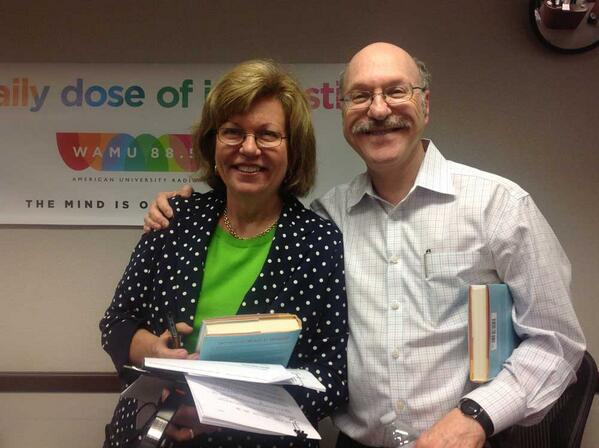
Susan Page and Norman Rosenthal at WAMU 88.5 FM

Guest host Susan Page interviewed Dr. Norman Rosenthal on The Diane Rehm Show

Norman Rosenthal was booked on the Diane Rehm Show to discuss his latest book, The Gift of Adversity, Wednesday, Sept 4, 11:00am to noon ET. Listen live on WAMU 88.5 FM or online.

As it turned out, Diane was on vacation, and guest host Susan Page, American Journalist and Washington Bureau Chief for USA Today, conducted the interview. Visit their post to read an excerpt of the book, Dr. Norman Rosenthal: “The Gift Of Adversity”, and listen to a replay of the interview on their audioplayer.

He was also interviewed by Dr. Sherrill Sellman on her show What Women Must Know – The Gift of Adversity with Norman E. Rosenthal – 09/26/13.

As I continue to read this wonderful book I find myself quietly reflecting on my own life’s experiences and lessons learned, triggered by reading Dr. Rosenthal’s and those of the people he discusses. Each chapter has a takeaway point, something to reflect on and learn from the transforming alchemy of adversity.

I am reminded of two quotes that beautifully encapsulate the message of the book: One by Buddha: “Every experience, no matter how bad it seems, holds within it a blessing of some kind. The goal is to find it.” And the other by Tom Bodett: “In school, you’re taught a lesson, then given a test. In life, you’re given a test that teaches you a lesson.” Dr. Rosenthal looks for and finds the blessings and lessons that adversity has brought him and the subjects in his book. It should be required reading for young adults to help them build empathy and understanding, preparing them for their journey through life.

Dr. Rosenthal also gives us hope when he says that the stressful experiences of adversity can also lead to growth. Quoting Friedrich Nietzsche’s famous dictum: “That which does not kill us makes us stronger,” he tells us of the dividend of PTG from the payment of PTS, the post-traumatic growth that may come from the post-traumatic stress we’ve endured. And he also gives us the tools to deal with the stress, mentioned in his earlier books, like “Winter Blues”, using light therapy to chase away the winter blues, and from “Transcendence”, his most recent bestseller, extolling the healing and transformational virtues of Transcendental Meditation. Discovering what Dr. Rosenthal says in his books is like finding a thoughtful friend who dispenses wise advice.

On December 20, 2013 he spoke in New York at TEDx: Norman Rosenthal on The Gift of Adversity in which he describes the three kinds of adversities, and mentions his three heroes.

Great article on TM helping students boost grades shows the Beatles were way ahead of their time

June 22, 2013

Here is that great article written by , Science Correspondent for The Telegraph, published June 11, 2013, 9:00PM BST: Transcendental Meditation may boost student grades. He says, It may have seemed simply a phase in pop history, but it seems the Beatles may have been on to something after all during their fabled journey to India.

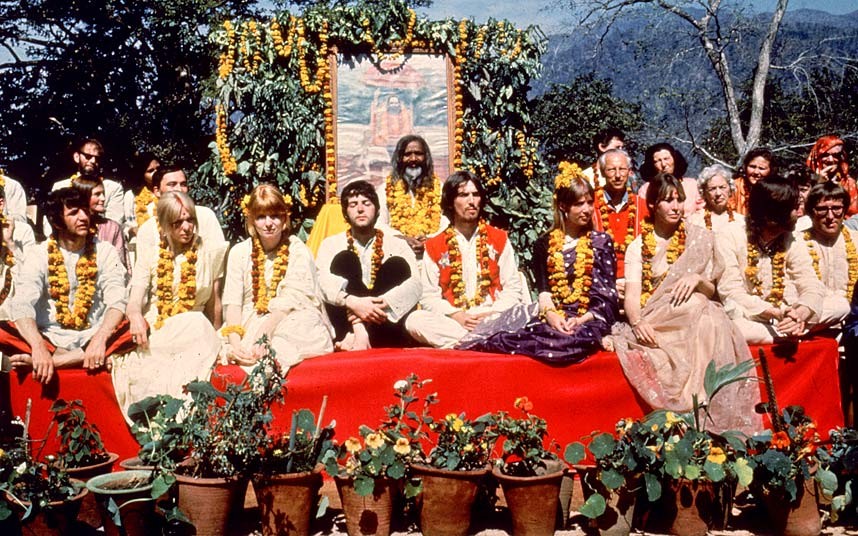
BEATLES_2587635kIt seems the Beatles may have been on to something after all during their fabled journey to India.  Photo: GETTY IMAGES

A form of meditation made popular by John Lennon and his band mates during the “flower power” era has been found to improve students’ grades.

A study of school pupils found that performing two 20-minute sessions of Transcendental Meditation each day improves academic achievement.

The practice involves sitting still with eyes closed while chanting a mantra – also sometimes derided as “oming”.

It became synonymous with hippy culture in the 1960s after The Beatles embraced it following a visit to India where they were taught the technique by the late Maharishi Mahesh Yogi.

Now a growing body of research is suggesting it can have a positive effect on people’s lives.

Recent studies have shown that it can be used to treat high blood pressure and help people overcome psychological problems.

The latest research found that US school pupils who performed the meditation technique had higher graduation rates than those who did not.

The effect was even greater among those who had the lowest academic grades, the research conducted by the University of Connecticut and Maharishi University of Management, Iowa, found.

Researchers found that Transcendental Meditation increased the number of students graduating by 15 per cent while among those with the lowest academic grades, a further 25 per cent graduated compared to those not meditating.

Professor Robert Colbert, from the Neag School of Education at the University of Connecticut, said: “Transcendental Meditation appears to hold tremendous promise for enriching the lives of students.”

He added that the meditation technique was a viable method for turning around “poor student academic performance and low graduation rates”.

Sanford Nidich, a professor of education at Maharishi University of Management who conducted the research, added: “These results are the first to show that the Transcendental Meditation program can have a positive impact on student graduation rates.

“The largest effect was found in the most academically challenged students.

“Recently published research on increased academic achievement and reduced psychological stress in urban school students may provide possible mechanisms for the higher graduation rates found in this study.”

It is estimated that around 6 million people now practice Transcendental Meditation around the world.

The technique aims to concentrate the mind inwards by uttering the mantra and is intended to empty the mind of thoughts and feelings.

Proponents of the technique claim it can aid concentration and help to rid them of negative emotions.

The Beatles’ time with Maharishi Mahesh Yogi, at his teaching centre in the foothills of the Himalayas in 1968, produced some of the most famous images of the Fab Four, dressed in white and draped in flower garlands.

It was also one of their most productive periods musically, with Lennon declaring that between them they wrote around 30 new songs during their visit to Rishikesh.

The tracks, which ended up on The Beatles, also known as the White Album, and Abbey Road, include Back in the USSR, Blackbird, Revolution and Mean Mr Mustard.

In an interview conducted in 2009, Paul McCartney and drummer Ringo Starr spoke candidly about how the meditation technique helped them.

Starr said: “Since then, sometimes a lot, sometimes a little, I have meditated. It is a gift he [the Maharishi] gave me.”

McCartney added: “It wasn’t all about meditation, it’s just you were focused – but yeah, there were very blissful moments.

“It is one of the few things anyone has ever given to me that means so much to me. For us, it came at a time when we were looking for something to stabilise us at the end of the crazy sixties.”

McCartney has also in the past called for Transcendental Meditation to be used in schools.

He said: “I believe that in the future meditation could be as commonplace in schools and society as eco-awareness is now. It interests me that an ancient cure may be the solution to a modern problem.”

The new research, which involved 235 students in their senior year at an urban school on the US east coast, was funded by the David Lynch Foundation, which has been campaigning to have meditation incorporated into the school day.

They claim that where meditation has been used in schools, it has helped to reduce stress and anxiety in pupils while also lowering suspension rates.

The foundation was set up two years ago by film director David Lynch after he used meditation to overcome his own anger issues.

Describing the difference it has made to his life, he said: “When I started meditating I had a real anger in me, and I would take this out on my first wife.

“Two weeks after I started meditating, this anger lifted.”

See EurekAlert! press release for the study: Transcendental Meditation positively impacts student graduation rates, new research shows.

See this related post on some of the news coverage: New study shows TM significantly improved school graduation rates, world press reports.

This article was later highlighted on the University of Connecticut Neag School of Education website on their Spotlight page reporting the latest news: Transcendental Meditation May Boost Student Grades.

See The former Beatles Paul McCartney and Ringo Starr reunion for David Lynch’s benefit concert airs on New York’s THIRTEEN, Sunday, April 29.

New study shows TM significantly improved school graduation rates, world press reports

June 14, 2013

New Transcendental Meditation Study Published in Education

This week the world press have been reporting on a collaborative study conducted by researchers Robert Colbert of the University of Connecticut and Sanford Nidich of Maharishi University of Management on meditation and graduation rates. The study, Effect of the Transcendental Meditation Program on Graduation, College Acceptance and Dropout Rates for Students Attending an Urban Public High School, was funded by the David Lynch Foundation, and published in the journal Education, Vol. 133, No. 4, Summer 2013.

The new study is the first to look at the effect of Transcendental Meditation practice on graduation, college acceptance and dropout rates, and follows previously published research by Nidich et al on increased academic achievement and reduced psychological stress in urban school students. The press release, Transcendental Meditation positively impacts student graduation rates, new research shows, included two graphs, and was sent out worldwide to over 5000 science writers by EurekAlert!/AAAS. Here is the Summary and citation for this latest study:

High school graduation rates remain low with racial and ethnic gaps adding to the decline. Graduating versus dropping out translates into higher earning potential, less crime and incarceration, and less dependence on government assistance. A new study published in the journal Education shows practice of the Transcendental Meditation technique resulted in a 15 percent higher graduation rate compared to controls. In low academically performing students a 25 percent difference in graduation rates was observed.

Colbert, R.D. and Nidich, S. (2013). Effect of the Transcendental Meditation Program on Graduation, College Acceptance and Dropout Rates for Students Attending an Urban Public High School. Education, 133 (4), 495-501.

World Press Reports

Many science and medical news websites have reported the news, including PhysOrg; ScienceBlog; Science Codex; RedOrbit; Medical Daily with the headline Transcendental Meditation Boosts High School Graduation Rates, As Policymakers Look To AlternativesMedical News Today; PsychCentral, with their succinct headline, Transcendental Meditation Linked to Higher Graduation Rates; The British Psychological Society, Meditation improves behaviour in school; Counsel & Heal; and examiner.com, How transcendental meditation impacts public high school graduation rates.

The mainstream press then reported the news, led by UK’s Richard Gray, respected science correspondent for The Telegraph, and his wonderfully topical and comprehensive piece, Transcendental Meditation may boost student grades. Underneath the top headline was one of the iconic photos of the Beatles with Maharishi in India and this subheading: It may have seemed simply a phase in pop history, but it seems the Beatles may have been on to something after all during their fabled journey to India.

This prompted Anna Hodgekiss of The Daily Mail to follow up with: The best way to boost brain power and improve exam grades? Chant ‘Om’ like the Beatles did, using an earlier picture of the Beatles with Maharishi taken at the London Hilton when they first met. BTW, there is no chanting in TM, and “Om” is never used.

These articles must have influenced The Times journalist William Chester to write, Exams go better with a Sixties mantra in mind, which was posted on the NW London TM Blog: Exams go better with a Sixties mantra in mind – The Times June 12th 2013.

Other international press also reported on the study. ANI sent out their version of the release and it was picked up by The Times of India, Transcendental meditation boosts grades, Newstrack India, OnePakistan, newKerala.com, and Medindia. India.NYDailyNews.com reproduced the Telegraph article but used a different photo of the Beatles, Donovan, Mia and Prudence Farrow with Maharishi in Rishikesh.

In Chile, the science journalist from El Mecurio, Sebastián Urbina, emailed questions about the study, which were answered by Sandy Nidich. I also suggested he interview Rafael de la Puenta, the TM national leader, and he did. The article appeared as the top story in their Life, Science and Technology section, A15, with a photo of a member of the Trinity College Women’s Squash Team meditating on the court. See a PDF of the article: www.meditacion.cl/prensa/MT_MERCURIO-Santiago-06-11-2013.pdf.

Other countries reporting on the study that we know of include France’s HuffPost C’est La Vie; Italy’s AGI; Spain’s Tendencias21 and La Razon; Holland’s Volkskrant; and Brazil’s Veja.

Some of the previous articles were reproduced on many blogs and websites. Will add any other newer articles as they are found. A few are slated to come out from reporters who asked for the paper, but this report should give you an idea of the kind of news coverage that came out on this promising study. For example, The TM Blog later reported New Study Finds Transcendental Meditation Boosts Student Grades, Graduation Rates.

See the Great article on TM helping students boost grades shows the Beatles were way ahead of their time. That article was later highlighted on the University of Connecticut Neag School of Education on their Spotlight page reporting the latest news: Transcendental Meditation May Boost Student Grades.

Iowa Senator Tom Harkin inspires M.U.M.’s Class of 2013 with his Top Ten Rules to Live By

June 2, 2013

Iowa Senator Tom Harkin Inspired M.U.M.’s Class of 2013 with his Top Ten Rules To Live By at the University’s largest graduating class.

In true David Letterman-style, Iowa Senator Tom Harkin presented the M.U.M. Class of 2013 with his top-10 list—Harkin’s Top Ten Rules To Live By. Senator Harkin gave the Commencement Address after receiving an honorary doctorate from the University and inspired everyone with his humorous wit and down-to-earth wisdom.

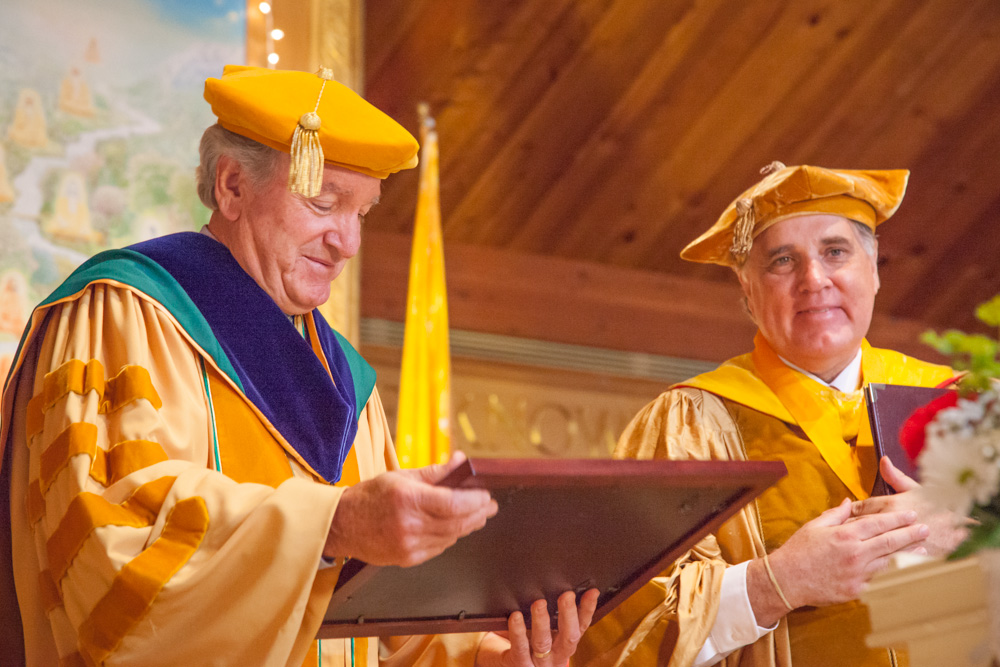
Senator Tom Harkin receives an honorary doctoral degree from M.U.M. President Dr. Bevan Morris.

Senator Tom Harkin receives an honorary doctoral degree from M.U.M. President Dr. Bevan Morris. / Ken West Photography

Iowa Senator Tom Harkin received an honorary Ph.D. from Maharishi University of Management before delivering the Commencement Address at the start of M.U.M.’s Graduation exercises, which took place last Saturday, May 25, 2013, in the Maharishi Patanjali Golden Dome of Pure Knowledge.

The University’s 38th Commencement graduated its largest class ever of 334 students from 54 countries, out of the 88 represented on campus. The Class of 2013 included 251 graduates and 83 undergraduates. Check this link to see a menu of videos from M.U.M.’s Commencement 2013 http://www.mum.edu/commencement-2013. See the full PRWeb press release here bit.ly/17bxT6k for more details.

Senator Harkin was awarded a Doctor of Laws Honoris Causa degree for his extraordinary lifelong service and compassionate and progressive leadership for the state of Iowa and the United States of America. He has served in the Senate since 1985 and also served in the House of Representatives from 1975–1985. He is chairman of the Senate Committee on Health, Education, Labor and Pensions and is the seventh most senior Senator overall.

In his introduction, M.U.M. president Dr. Bevan Morris said, “We honor you for a lifetime of service to the State of Iowa and the United States of America, and your compassionate and progressive leadership. You have recognized that the quality of American life is shaped by the quality of American education.”

He said that Senator Harkin has been a very good friend of the University and greatly enjoyed all his visits here. “He has given us advice and encouragement for all the University’s programs—for natural methods of prevention of disease, organic agriculture, sustainable living, our Sustainable Living Center, as well as to our town, which is rising to being one of the greenest in the nation, under the leadership of Mayor Ed Malloy.”

Senator Harkin began his commencement address on a humorous note. He thanked the University for this distinguished award and said, “I come before you with a measure of humility. I realize I was probably selected to be your speaker today because Oprah wasn’t available.” This elicited a lot of laughter as he was referring to Oprah’s visit to Fairfield last year, which she aired, including a profile of the Maharishi School on the M.U.M. campus.

He then went on to say, “But I do want you to know of my highest respect and admiration that I have for this university, for what you have done, what you have become here, in Iowa, the nation, and the world, and especially for what I consider to be the best holistic approach to education and wellness in life at any university anywhere on the globe.”

He was referring to Maharishi University’s unique system of Consciousness-Based education and leadership role in wellness research and sustainability. M.U.M. was designated as a Center for Natural Medicine and Prevention and has received over $25 million from the NCCAM and NHLBI over the past 20 years to conduct collaborative medical research on the use of Transcendental Meditation as a complementary alternative approach to treat hypertension and cardiovascular disease in underserved minority populations, the results of which have been published in top peer-reviewed scientific journals.

The most recent study was published and publicized by the American Heart Association. Last year the AHA Journal Circulation published a long-term study showing a 48% lower risk of heart attack, stroke and death in a group already afflicted by heart disease that learned the practice of Transcendental Meditation. And this year the AHA published a paper recommending Transcendental Meditation as the only meditation practice that has been shown to lower blood pressure.

“Graduation,” Harkin said, “is one of the five great milestones in life; the others being birth, marriage, death, and the day you finally pay off your student loans.”

“I know exactly what you’re thinking. You’re wondering, ‘How long is that guy gonna talk?’ The answer is not long.”

To answer he quoted advice from Father John Ryan, the Irish priest in his hometown when he was first asked to give a commencement address. The role of a commencement speaker is like the body at an old-fashioned Irish wake: “They need you in order to have the party but they don’t expect you to say very much.”

Senator Harkin said he chose a method for the day’s occasion that has imparted wisdom to millions of people throughout the years—“I speak of course, not of the Ten Commandments, but of David Letterman’s top ten list.” But his were more like suggestions for students to choose, depending on which ones they liked.

Harkin’s Top Ten Rules To Live By

10. Don’t panic. You will find a job. Don’t worry. “My confidence is based on one thing — because you came to the right school. I have nothing, as I said, but admiration for what this university has accomplished in such a short period of time. In a unique way you have put the ‘higher’ in higher education.”

“You folks would agree with William Butler Yeats who said that education is not about filling up a bucket but lighting a fire. And you carry that one step further. At this university education is also about training, focusing, freeing the mind. It’s about raising consciousness. Here you have been beautifully prepared intellectually and spiritually for all the challenges you will face in the world out there, so you should go forth with confidence.” He encouraged students to move to smaller Iowa towns to make a contribution.

(more…)

Senator Tom Harkin gives Commencement Address during Graduation day at M.U.M.

May 31, 2013

The Fairfield Ledger

Graduation day at MUM

By ANDY HALLMAN | May 28, 2013

Iowa Sen. Tom Harkin, right, gives the sign language symbol for “I love you” during his commencement address Saturday afternoon inside the Maharishi Patanjali Golden Dome of Pure Knowledge at Maharishi University of Management. Also pictured is M.U.M. vice president Craig Pearson.

Iowa Sen. Tom Harkin, right, gives the sign language symbol for “I love you” during his commencement address Saturday afternoon inside the Maharishi Patanjali Golden Dome of Pure Knowledge at Maharishi University of Management. Also pictured is M.U.M. vice president Craig Pearson.

Reprinted with permission from The Fairfield Ledger

More coverage: Iowa Senator Tom Harkin delivers M.U.M.’s commencement address—report by KTVO’s Laura Simon.

See Iowa Senator Tom Harkin inspires M.U.M.’s Class of 2013 with his Top Ten Rules to Live By.

Iowa Senator Tom Harkin delivers M.U.M.’s commencement address—report by KTVO’s Laura Simon

May 26, 2013

An Iowa Senator delivers MUM’s commencement address
by Laura Simon for KTVO News | Saturday, May 25, 2013

Iowa Senator Tom Harkin speaking at the M.U.M commencement ceremony.  / Laura Simon

Iowa Senator Tom Harkin speaking at the M.U.M commencement ceremony. / Laura Simon

FAIRFIELD, IOWA — The Morales-Rivera family moved from Chile to Iowa in 1984 in pursuit of the American Dream.

“We wanted a consciousness-based education for our daughters,” Tina Morales-Rivera said.

That place for a Consciousness-Based℠ education was at Maharishi University. Tina is graduating with a master’s degree and her 26-year-old twin daughters are receiving their bachelor’s degrees.

“It’s a beautiful thing,” Tina said. “It’s a great privilege. It’s really an honor to be with my daughters today.”

The Class of 2013 is made up of 334 students who represent 54 countries. This includes 251 graduates and 83 undergraduate degrees.

“They graduated their largest class in history which really underscores the trend the university’s going through right now,” Mayor of Fairfield Ed Malloy said. “They really are on a growth path.”

“I’ve been to a lot of commencements and I don’t think I’ve ever been on a platform where I’ve had as many different nations represented as there are here,” Iowa Senator Tom Harkin said.

Senator Harkin delivered a humorous, yet moving commencement speech. He says the most important thing to remember in life is to be apart of something bigger than yourself.

“Get involved in something,” Harkin said. “Think about the pebble you throw in the pond that makes waves that get bigger and bigger and bigger. Even if you’re a pebble, even if you’re not a senator or a governor, that doesn’t make any difference, you can start something in a community.”

The Morales-Rivera twins plan on taking Senator Harkin’s words to heart, furthering their media and communications education in the fall to obtain their master’s degrees.

“We’ve always loved movies and simply the world of media,” Coral Morales-Rivera said. “We want to change it and bring it to be more self-conscious of the beauty of life.”

For more information see the MUM press release announcing the MUM 2013 Awards Ceremony the night before and today’s graduation. An archive of it can be seen on Livestream. An archive of the graduation will be posted at a later time on the MaharishiUniversity YouTube Channel.

More coverage: Senator Tom Harkin gives Commencement Address during Graduation day at M.U.M.

See Iowa Senator Tom Harkin inspires M.U.M.’s Class of 2013 with his Top Ten Rules to Live By.