Posts Tagged ‘Transcendental Meditation’

CNN’s Candy Crowley to give Commencement Address at Maharishi University of Management

May 23, 2012

FAIRFIELD, IA: The entire Fairfield community is invited to attend the Maharishi University of Management 2012 Commencement in the Men’s Dome at 1 pm on Saturday, May 26.

A total of 275 degrees will be given to 268 graduating students: 67 undergraduates for 74 degrees, including 7 double-majors, and 201 graduate degrees, for 196 Master’s and 5 Ph.D.
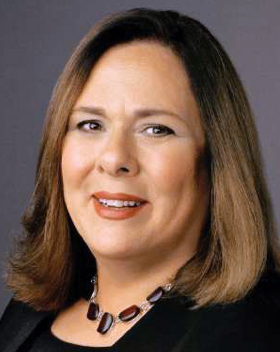
M.U.M.’s Commencement speaker is Candy Crowley, CNN’s award-winning chief political correspondent and anchor of “State of the Union with Candy Crowley,” a political hour of newsmaker interviews and analysis of the week’s most important issues.

In her role as chief political correspondent, Ms. Crowley covers a broad range of stories, including presidential, congressional and gubernatorial races and major legislative developments on Capitol Hill.

Since arriving at CNN from NBC in 1987, Ms. Crowley has won some of broadcasting’s major awards: a Peabody, Emmy, and Gracie Allen Award.

Ms. Crowley has been practicing the Transcendental Meditation technique since 2009. Along with Dr. Mehmet Oz, she was a co-host of the David Lynch Foundation “Change Begins Within” benefit gala at the Metropolitan Museum of Art in New York City in 2010. She also hosted the 2011 launch for DLF’s Operation Warrior Wellness in Washington, DC.

Ms. Crowley was nominated for a Maharishi Award by the Maharishi University of Management (MUM) Global Student Council this past December but was unable to attend the award ceremony. This award will be presented to her when she is on campus.

“She said she is ‘very honored and excited’ to be able to speak at our 2012 commencement ceremony,” said MUM executive vice-president Craig Pearson.

Candy will be attending many of the Commencement events, but has to return immediately to Washington, DC after graduation in order to anchor her national political talk show on Sunday morning.

Florence Lillian Nickerson is this year’s Salutatorian, and the Valedictorian is Patrik Nils-Olof Siljestam.

The University of Iowa Faculty Brass Quintet will play the music for the Graduation Processional.

Numbers and Types of Degrees

74 Undergraduate degrees:

BA Art 2
BFA 1
BA Business 14
BA in Sustainable Community Development 1
BA in Education 1
BA in Literature 7
BA in Media and Communications 12
BA in Maharishi Vedic Science 2
BA in Physiology and Health 8
BA in Physiology and Health, Pre-Medicine 7
BS in Mathematics 1
BS in Sustainable Living 18

196 Master’s degrees:

MA in Education 3
MA in Maharishi Vedic Science 15
MA in Teaching 3
MBA Sustainable Business 33
MBA Accounting 23
MS Computer Science 119

5 Ph.D. degrees:

Ph.D. in Management 5

During her recent visit to Fairfield, Iowa to deliver the Commencement Address at Maharishi University of Management, CNN chief political correspondent Candy Crowley visited the local community-supported solar-powered radio station, KRUU-FM, to tape an interview on Speaking Freely with Dennis Raimondi. Burt Chojnowski of Fairfield First! Buzz filmed that interview and also asked and posted 3 Questions with Candy Crowley about her impressions of Fairfield, writing, and leadership, recorded on May 26, 2012. You can hear and see those interviews in this new post: Candy Crowley visits KRUU-FM before delivering Commencement Address at Maharishi University.

Also see this article by Diane Vance who spoke with Candy on her way out here and also attended her commencement address: Fairfield Ledger: Crowley speaks to M.U.M. grads.

CNN anchor Candy Crowley gives Commencement Address at Maharishi University of Management is now available on the YouTube channel.

The 8.15 train to Nirvana: How you can meditate your stresses away… even on the daily commute

May 23, 2012
The 8.15 train to Nirvana: How you can meditate your stresses away… even on the daily commute

By Marianne Power
12 May 12, 2012

Last summer I bumped into an old colleague. We hadn’t seen each other for years and it transpired that in the previous 18 months, her mother had died of cancer, her father had moved in with her and she had been made redundant.

Yet she seemed remarkably calm. How on earth was she coping? After joking about the healing power of gin, she admitted her secret: she had learned how to meditate.

We have all read about the healing powers of meditation. Medical research has found that it can reduce the risk of everything from heart disease to strokes, depression and insomnia – but this was the first time I had seen its benefits up close.

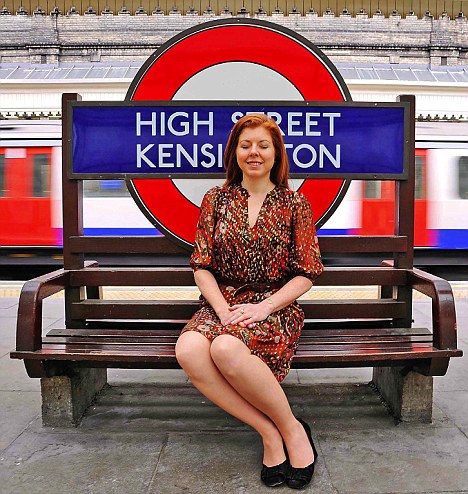
Down time: Marianne Power meditates as she waits for a Tube train in London

Soon I was meditating twice a day, too, even learning to fit it into train journeys to work or sneaking a few quiet minutes in a bathroom cubicle at the office.

Before I bumped into my colleague I was running on empty. By day I was stressed by silly things that made me snap at people.

By night I would try to unwind with too many hours of television and too many glasses of wine before lying awake in bed stewing over all my worries.

I was run-down, got every cold going and at my very lowest points was prescribed antidepressants. My friend recommended Transcendental Meditation, which is different from other forms of meditation.

Instead of focusing on your breathing, you are given a Sanskrit word, known as a mantra, that you repeat in your head. The idea is that the repetition of the sound calms your mind.

The practice was made famous by The Beatles, who became devotees after meeting its founder, Maharishi Mahesh Yogi, in the Sixties. Since then everyone from Clint Eastwood to William Hague and Nick Clegg has become a fan.

Latest research from Oxford University’s Department of Psychiatry has shown that meditation brings about neurological changes. After  a few months of meditation, the parts of the brain with a tendency to worry are switched off.

Clinical trials have proved that as a standalone treatment it can  prevent relapse of depression and is effective alongside medication.

But I was most interested in its effects in counteracting stress. And I can say that learning to meditate has changed my life.

At my first lesson I was given my mantra, which you don’t share with anyone, and told to close my eyes and repeat it again and again in my head. Straight away I was hooked.

There’s something about the sound vibration of the mantra going over and over in your mind that lulls you into a kind of trance. The repetition of the sound is like a lullaby.

You go into your own world and yet you are still aware of your surroundings. You’re neither awake, nor asleep, nor dreaming – just beautifully relaxed. It’s like a warm bath for your brain.

After that first lesson, I felt calm and focused and that night I enjoyed a longer, deeper sleep than I’ve had since I was a child. And I’ve been sleeping well ever since.

The more I meditate, the less I seem to be bothered by things. Situations that would once have sent me into a tailspin no longer have the same effect.

My heart doesn’t race in the way it once did; I have become more calm and rational; my concentration at work has also improved.

I think this is primarily because I am better rested and less stressed, but scans have shown that meditation actually increases the size of your hippocampus – the part of the brain associated with memory and learning. I also feel healthier.

I have had only one cold in the past seven months. And then there are the less tangible changes, the ones to your personality and relationships.

Friends have commented on the fact that I seem more relaxed. I  certainly feel more content, less inclined to snap or overreact.

So is this a miracle? Am I now the perfect person? Hardly. Like most of the good things in life, it takes work. Like going to the gym or eating well, you have to keep doing it even on days when you tell yourself you are too busy.

I meditate for 20 minutes morning and night. After breakfast, and then at 4pm – and on days when that’s not possible, on the train or in a taxi. Every little helps. It doesn’t matter whether I close my eyes for two minutes or 20, when I open them I feel better.

I have yet to experience the so-called ‘bliss’ that devotees talk about but I’m just so happy that I’ve found a tool that helps me perform well in the day and sleep better at night.

I wish I’d been taught this at school – it’s the best life skill I’ve ever learnt. But it’s not cheap.

When I turned up for the first open evening at my local TM centre (they’re all over the country), I was told that fees were charged according to income. I would have to  pay £490.

But I did it – and it was the best money I’ve ever spent.

uk.tm.org

Published by Associated Newspapers Ltd, part of the Daily Mail, The Mail on Sunday & Metro Media Group. Also published in Independent Online: The 8.15 train to Nirvana.

Here is a related article, The Power of Transcendental Meditation, by Julie Eagleton, another British journalist who also learned to meditate and wrote about it. Julie has covered arts & culture, fashion, food, health & beauty and travel. Find out more at http://www.julieeagleton.com.

Also see this article by Julie: Meditation Creativity Peace: A Documentary of David Lynch’s 16 Country Tour.

14 Executives Who Swear By Meditation–10 do TM

May 19, 2012

Business Insider, a U.S. business news and analysis website, serves as an aggregator of top news stories from around the web. Their original articles are cited by media outlets like the New York Times and National Public Radio.

The May 9 issue compiled a list of 14 successful business executives who meditate, 9 of whom practice TM. They swear by it. This makes sense as a growing number of business executives have been turning to the Transcendental Meditation program to increase alertness, eliminate stress and fatigue, and enhance their creativity. It’s a major factor accounting for their ongoing success.

This list is posted on the website’s War Room page filed under Strategy. Not all the executives say what kind of meditation they practice, but their reasons for doing so are practical and compelling. The ones who do mention TM are: Bridgewater Associates founder and CEO Ray Dalio, who tops the list; former Medtronic CEO Bill George; Def Jam Founder Russell Simmons; Oprah Winfrey; Legal Sea Foods CEO Roger Berkowitz; Ramani Ayer, former Chairman and CEO of The Hartford Financial Services Group; Steve Rubin, former CEO and chairman of United Fuels International; Executive Management Associates CEO Nancy Slomowitz; Marnie Abramson, of the family-owned Tower Companies real estate firm; and Tupperware CEO Rick Goings.

14 Executives Who Swear By Meditation

Jhaneel Lockhart and Melanie Hicken | May 9, 2012, 2:40 PM

CEOs have stressful jobs, and some have taken to intense hobbies to find solace from the daily grind.

Some practice meditation—or even Transcendental Meditation, a mantra-based technique derived about 50 years ago from ancient Indian practices.

We’ve compiled a list of leaders who say that meditating gives them an edge in the competitive business world. Some have even built it into their company’s culture.

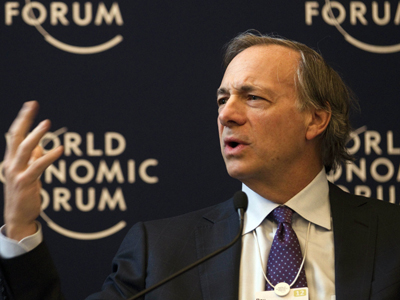
Hedge fund manager Ray Dalio uses Transcendental Meditation to check his ego

Dalio — founder and CEO of Bridgewater Associates, the world’s largest hedge fund — has built many of the TM principles into his firm’s culture. According to a New York Magazine profile, Transcendental Meditation informed Dalio’s “belief that a person’s main obstacle to improvement was his own fragile ego; at his firm, he would make constant, unvarnished criticism the norm, until critiques weren’t taken personally and no one held back a good idea for fear of being wrong.”

Click here to read how meditation helped the others become more effective executives. Some even paid for their employees to meditate, reducing healthcare costs and increasing productivity—a smart investment with a profitable return for themselves, and their employees.

For more information on TM for executives, visit this website for the Center for Leadership Performance: Optimizing Wellness, Productivity and Profitability: http://www.tmbusiness.org.

Speaking of Ray Dalio, he’s mentioned in a new book by Maneet Ahuja that comes out May 29, 2012: The Alpha Masters: unlocking the genius of the world’s top hedge fund managers. (ISBN: 979-1-118-06552)

I haven’t seen it yet, but a friend said the first Chapter is on Ray Dalio. In it he speaks highly of TM and is quoted saying it is “the single biggest influence” on his life. He later gives more reasons why he finds it helpful.

Also see: 14 Business Leaders Who Swear By Meditation.

Newer article: Celebs who meditate featured in The Daily Beast.

See Fortune, Forbes, Business Insider report on the beneficial effects of @TMmeditation in business.

CBS/FOX News: Kelsey Minor’s Report: Meditation Town: Fairfield Iowa’s Key to Education Success

May 18, 2012

MEDITATION TOWN: Fairfield Iowa’s Key to Education Success

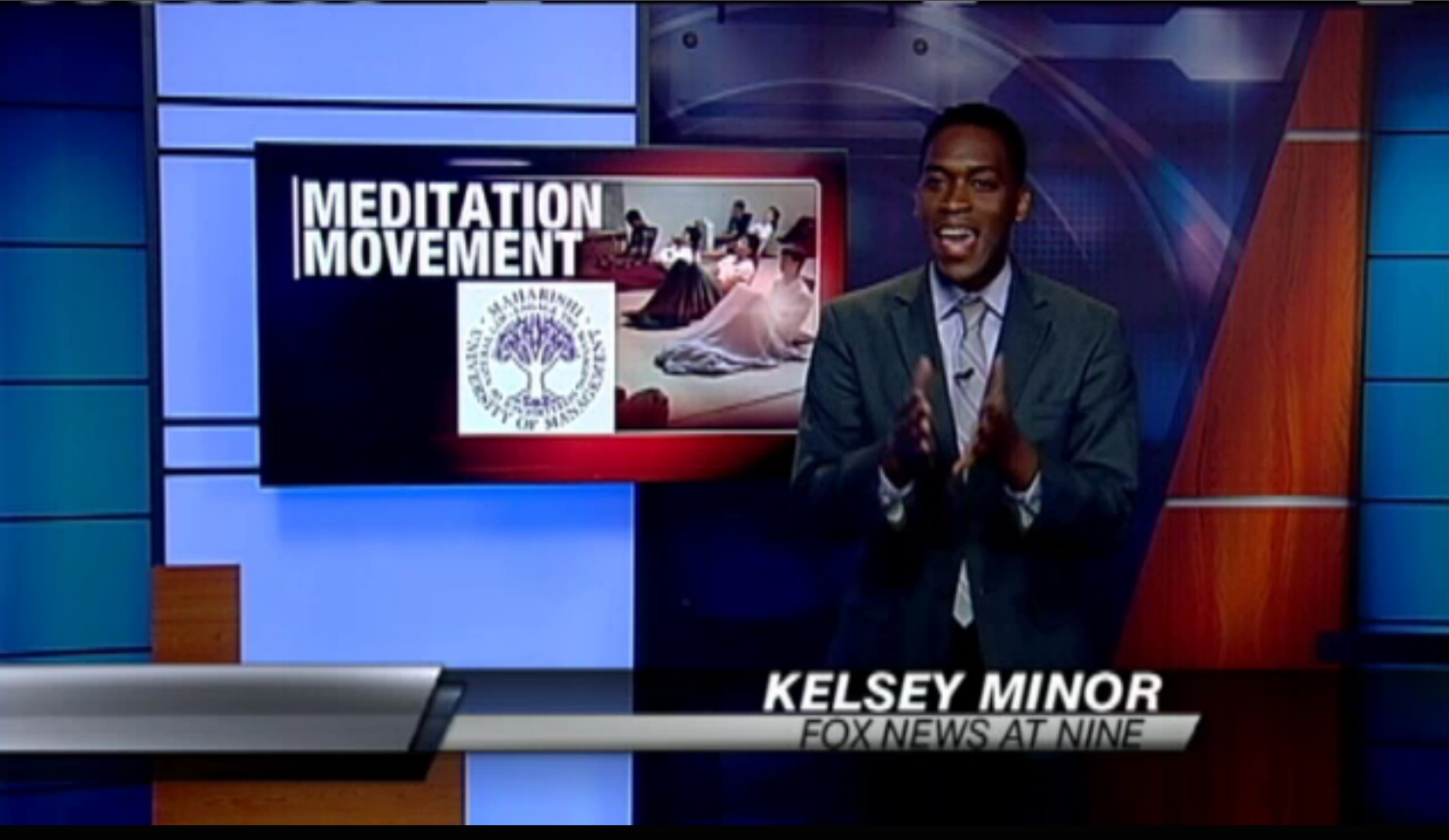
Kelsey Minor visits Maharishi School for a special report on Fairfield Iowa’s Key to Education Success, on FOX 28 News at Nine and CBS 2 News at Ten, May 17, 2012.

Thursday, May 17 2012, 10:05 PM CDT | Kelsey Minor | FOX 28 | CBS 2

Tiffany O’Donnell: On the surface it looks just like any other Iowa town square, but if you look a little closer, you’ll find it’s international flare.

Jack Miller: And that’s not the only reason people are flocking to Fairfield. It’s the center of a meditation movement. And our Kelsey Minor spent some time there to uncover the big mystery behind how meditating is helping the people there thrive. Kelsey?

Kelsey Minor: I know Tiffany’s excited about it; she’s been there. Jack, you need to get there.

You don’t often hear of Iowa being associated with meditation, but it’s happening right here in Eastern Iowa, and it’s in the process of shaping some of our state’s youngest minds, as well as the minds of Fairfield’s leaders.

FAIRFIELD, IA (KGAN/KFXA) — Tucked deep in Iowa’s flatland, among the barns and fields, is one of the 12 great places Mother Earth News says you’ve probably never been. It’s Fairfield, Iowa, and something’s been happening in this city of 95-hundred, a mystery, until now.

“Trust me, we want to get the secret out. We’d love for people to come and discover our community. We believe that’s happening now,” says Mayor Ed Malloy.

This small place, less than a two-hour drive away from Cedar Rapids, has its international flavor with its Indian restaurants and Italian coffee houses. But that’s not the mystery. I have to bring you here, to the Maharishi School of the Age of Enlightenment, where for nearly four decades, the simple act of meditating, twice a day, everyday, has attracted all sorts of people, including the students in this private school.

“We’ve been the kind of pioneering or flagship school for this approach we call Consciousness-Based education,” says Head of School, Dr. Richard Beall.

It’s like any other college prep school across the State of Iowa but here the students, faculty, and staff all take time to practice Transcendental Meditation or T-M.

“So we are taking a significant amount of time in the morning and afternoon, bookends, before and after school, to practice meditation and yoga, so that our kids when they go into the classroom are wide awake,” Beall said.

Those 20 minutes, says school officials, rids everyone of stress making it easy to learn and perform better.

“Of course there are cynics out there who may say that this doesn’t work, and your argument against that would be what,” CBS 2’s Kelsey Minor asked.

“We kind of welcome skepticism because you can put it to the test and I think it stands up really well,” says Beall.

And so far it has. This consciousness-based learning helps send more than 95 percent of its seniors to top colleges and universities across the country. They always score in the top one percent in Iowa’s standardized test, not to mention the top honors in Math, Science, the Arts, and Sports.

“All that’s evidence that something good is happening here,” says Beall.

But this isn’t just a school thing. Roughly 25 percent of Fairfield’s population practices TM, including Mayor Ed Malloy who’s been practicing for 38 years.

“The science shows that there is an influence of reduction of crime and stress,” says Malloy.

A town that takes TM seriously.

“You have arrived right when people are first arriving for their meditation,” says resident Jim Mayhew.

Each day between four and five o’clock the cars and the people start to arrive, joining together in large numbers for meditation groups. This is the end result of that rush hour traffic—a parking lot full of cars, their owners meditating inside these golden domes. It’s a town like no other, and the people who practice TM say what they do inside these domes helps create change. And it all started here, at the school where consciousness-based learning is helping to shape tomorrow’s leaders.

“They say it takes a village to raise a child and I couldn’t imagine a better village,” says student Caroline Fulcher.

(A great village it is indeed.) Now Transcendental Meditation has become so popular that other schools across the country are now implementing the program for its students. As for Fairfield, there’s plenty to do there, and if you haven’t been already, they sure would like to see you.

In the studio, Kelsey Minor, FOX 28 News at Nine/CBS 2 News.

Links to see this news report on FOX 28 News at Nine: http://www.kgan.com/shared/newsroom/top_stories/videos/kgan_vid_11222.shtml, and on YouTube for CBS 2 News at Ten, which includes introductory comments by the news anchors: http://youtu.be/FZdOStcEkC4.

Related stories on Fairfield: Video segments of Oprah’s Next Chapter on OWN: Oprah Visits Fairfield, Iowa—“TM Town”—America’s Most Unusual Town | The Iowan: Sizing Up Small Towns: Rethinking Success in Rural Iowa: Fairfield Thinks Inclusively | The Cultural Oasis of The Midwest: Fairfield, Iowa | Finding peace in Fairfield by Diane Vance

Star Tribune: Meditation brings peace to war vets

May 17, 2012

Meditation brings peace to war vets

May 16, 2012 | Lifestyle | Star Tribune | Kristin Tillotson

Transcendental meditation has its detractors, but many veterans say it helps them with post-war stress.

Fernando Franco, who served in both Bosnia and Iraq, uses meditation techniques to control stress. — Photo: Carlos Gonzalez, Star Tribune

Like many veterans, Fernando A. Franco had trouble sleeping through the night.

A major in the Minnesota National Guard, he was deployed twice between 2003 and 2007, once to Bosnia and once to Iraq, with barely six months’ break in between. The place where he was stationed near Balad, Iraq, was nicknamed “Mortaritaville” because “we were attacked every day,” he said.

After Franco got back home to St. Paul, he was hard-wired to wake up at 3 every morning, the same hour that in Mortaritaville he and his fellow soldiers would start hearing the shells aimed their way and brace for battle. Once he woke up, he’d stay up, living in a state of perpetual exhaustion.

“It really affected not only my work, but my relationship with my wife and kids,” he said. Then he heard about TM.

Transcendental meditation, or TM for short, is hailed by its devotees as good for just about anything that ails you. Skeptics call it everything from a bunch of hooey to a brainwashing cult, but those who do it daily claim they feel calmer, have more energy and feel healthier, both mentally and physically, than they used to. It’s not a religion, they say, just a practice that reduces anxiety and improves well-being.

Now the U.S. military — not known for embracing the mystical — has taken note. The Department of Veterans Affairs has invested $5 million in a dozen trial programs studying TM’s effects on post-traumatic stress disorder (PTSD), including one at the Minneapolis VA Health Care System.

The VA hopes to recruit 30 vets for the trial beginning in about a month, said spokesman Ralph Huessner, noting that it should not be confused with Mindfulness-Based Stress Reduction, a different meditation program already offered.

‘A part of the universe’

Franco, 49, works in human resources for Target Corp. No matter how busy he gets, he always takes 20 minutes twice a day, at about the same time every day, to meditate, using the discipline he learned as a soldier to strictly maintain his schedule.

“The only way to get the full benefit is to do it morning and afternoon, no matter what,” he said, “even if you have to do it standing up in a bathroom stall.”

TM practitioners call the state they go into one of “restful alertness.” Transcendence is achieved, they say, by repeating a mantra and emptying the mind. So how does it feel?

“There is a moment when you go into a void, an emptiness, and you feel a part of the universe,” Franco said. “It’s like in the movie ‘Avatar’ when the creature says they are a part of everything. That’s how I would explain it.”

He first heard about TM for veterans through Operation Warrior Wellness, an initiative launched last year by the foundation run by film director and TM advocate David Lynch.

“I’m Roman Catholic, but I’m very open-minded about Eastern philosophies,” Franco said.

In October, he attended training classes at the TM center in St. Paul. Six months later, he usually sleeps through the night and has passed his enthusiasm for TM along to his 15-year-old son.

“When you come back from war, where you’ve learned to shut down your emotions, you have to relearn how to be with your family,” he said. “It helps you not only to reconnect with yourself, but other people. I’ve also noticed I’m able to concentrate better.”

Some critics of the TM movement have accused it of being a religion, of amassing wealth for its leaders, and of brainwashing. Franco, who learned TM through a scholarship from Operation Warrior Wellness, said he’s seen none of that.

“I have never felt coerced into making this a religious path, and have encountered people of all faiths  who do it,” he said. “I have never been asked to make a donation.”

Although Franco said he does not have PTSD, he thinks meditation could help veterans who do.

“It’s different for everyone, and you still might need counseling and pills, but TM is one of the best tools for stress out there,” he said.

The draw of Oprah’s blessing

Long, white and stately, the local Peace Palace — which is what the international TM network calls its specially constructed education centers — sits just off a freeway frontage road on the eastern edge of St. Paul. Next door to an insurance office and a hop and a skip from Culver’s, the Maharishi Invincibility Center is hard to miss, an Eastern architectural presence in Midwestern suburbia.

At a recent open house, center director Billie Jean Billman led visitors on a tour. Since Oprah aired a special extolling the virtues of TM in April, Billman said, there has been a spike in interest. The center recently doubled its instructors from two to four.

“TM is not a panacea for everything, but it’s a non-pharmacological process that wakes up the body and the brain,” Billman said.

Two veterans who recently started TM, Sarah Ditto and Pat Watson, were also on hand to describe the benefits they’ve experienced.

“I was amazed at how completely calm I felt,” said Watson, 54. “It’s like pancake batter spreading across a griddle, slowly turning golden brown. You really are resting but awake. After I meditate, people ask me what I’ve been doing.”

“I was really energized after the first time I did it,” said Ditto, 25, who works with disabled veterans at the Metropolitan Center for Independent Living in St. Paul. “I went home and did a bunch of yard work. It’s helped me to focus better, too.”

Ditto likes to visit the center to do her meditating because its minimally decorated rooms are ideal for it. But, she says, she sometimes encounters a problem.

“I meditate facing Culver’s, and instead of my mantra I start saying in my head, Chocolate custard. Chocolate custard. Chocolate custard.”

Kristin Tillotson • 612-673-7046

For more information visit these websites:

www.tm.org and www.operationwarriorwellness.org.

Related articles: Washington Post: VA testing whether meditation can help treat PTSDPOLITICO: Coping with PTSD | Norwich University President Receives “Resilient Warrior Award” at National Veterans Summit in Washington, DC | Washington Post: Does Transcendental Meditation help veterans with PTSD? | Transcendental Meditation Drastically Turns Life Around For Veteran With PTSD | David Lynch gives $1M to teach vets meditation | David Lynch donates $1 million in grants through his foundation to teach veterans to meditate | Replay of David Lynch Foundation Launch of Operation Warrior Wellness Los Angeles | Post Traumatic Stress and How Transcendental Meditation Can Help [Infographic]

South Asian Heart Center uses Transcendental Meditation to prevent and manage heart disease

May 12, 2012

South Asians are becoming painfully aware of the high incidence of heart attacks, often fatal, frequently among seemingly healthy, trim, and physically active close family & friends.

The South Asian Heart Center (SAHC) at El Camino Hospital in Mountain View, California has developed a four-pronged approach to prevent and successfully manage heart disease among men and women of South Asian descent living and working in America. Here is an introduction to their work presented by Executive Director Ashish Mathur, and SAHC Medical Director Cesar Molina, MD, FACC: South Asian Heart Center Helps South Asians Fight Heart Disease.

In this fourth of a four-part series on Therapeutic Lifestyle Changes Dr. Molina focuses on the importance of deep rest and its effect on heart-health and diabetes. He specifically covers the importance of meditation (or restful alertness) on longevity and health, and the science behind the effective technique of Transcendental Meditation (TM), which produces a “hypo-metabolic state of restful alertness.” Learn the evidence on the profound impact of this unique form of meditation on a whole class of chronic ailments. This is a very clear and comprehensive presentation!

South Asian Heart Center Webinar: TLC – Restful Sleep & Restful Alertness April 25, 2012, published on Apr 26, 2012 by sahcsathi.

At 26:26 of Part 4, Dr. César Molina begins talking about resting while awake with Transcendental Meditation and how it impacts our health, especially for South Asians and their propensity toward heart disease. One of the therapeutic modalities from the South Asian Heart Center is Transcendental Meditation as a stress-reduction technique. Dr. Molina reviews his talk starting at 56:18. He summarizes the lifestyle methodology to prevent heart disease and enhance longevity at the South Asian Heart Center: nutrition, physical activity, the importance of restful sleep, and the importance and benefit for stress reduction through Transcendental Meditation decreasing cardiovascular risk factors, decreasing hospital expenditures and admissions, and enhancing longevity.

Dr. César Molina presents Wednesday Lunch-hour Webinar Series TLC: Therapeutic Lifestyle Changes. Here are the 4 topics where you can download the video and a PDF of the main points and graphs for each talk. The recommendations can be applied to all Americans regardless of ethnicity or geographical location.

1. TLC: Therapeutic Lifestyle Changes Overview: May 2, noon
2. TLC: Exercise as Medicine: May 9, noon
3. TLC: The Dinner vs. the Diner: May 30, noon
4. TLC: Restful Sleep and Restful Alertness: June 20, noon

For more information: www.southasianheartcenter.org and www.tm.org.

Washington Post: VA testing whether meditation can help treat PTSD

May 4, 2012
 

VA testing whether meditation can help treat PTSD

By Steve Vogel, Published: May 3

Seeking new ways to treat post-traumatic stress, the Department of Veterans Affairs is studying the use of transcendental meditation to help returning veterans of Iraq and Afghanistan.

Veterans Affairs’ $5.9 billion system for mental-health care is under sharp criticism, particularly after the release of an inspector general’s report last month that found that the department has greatly overstated how quickly it treats veterans seeking mental-health care.

VA has a “huge investment” in mental-health care but is seeking alternatives to conventional psychiatric treatment, said W. Scott Gould, deputy secretary of veterans affairs.

“The reality is, not all individuals we see are treatable by the techniques we use,” Gould said at a summit Thursday in Washington on the use of TM to treat post-traumatic stress suffered by veterans and active-duty service members.

By some estimates, 10 percent of veterans returning from Iraq and Afghanistan show effects of post-traumatic stress disorder, numbers that are overwhelming the department

“Conventional approaches fall woefully short of the mark, so we clearly need a new approach,” said Norman Rosenthal, a clinical professor of psychiatry at Georgetown University’s medical school.

Rosenthal told the gathering that TM, a meditative practice that advocates say helps manage stress and depression, is “possibly even a game-changer” in how to treat PTSD.

VA is spending about $5 million on a dozen clinical trials and demonstration studies of three meditation techniques involving several hundred veterans from a range of conflicts, including Iraq and Afghanistan. Results from the studies will not be available for 12 to 18 more months.

But Gould said he was “encouraged” by the results of other trials presented at the summit.

Two independent pilot studies of Iraq and Afghanistan veterans showed a 50 percent reduction in symptoms of post-traumatic stress after eight weeks, according to the summit’s sponsor, the David Lynch Foundation, a charitable organization founded by the American filmmaker and television director.

Results from the initial phase of a long-term trial investigating the effects of TM on 60 cadets at Norwich University, a private military college in Vermont, have shown promise, school officials said at the summit.

Students practising TM at Norwich showed measurable improvement in the areas of resilience, constructive thinking and discipline over a control group not using the method. “The statistical effect we found in only two months was surprisingly large,” Carole Bandy, an associate professor of psychology who is directing the Norwich study, said at the summit.

“For us, it’s all about the evidence,” said Norwich President Richard W. Schneider, who added that he was a skeptic before the trial began.

Operation Warrior Wellness, an initiative of the David Lynch Foundation, is providing TM training to troops recovering from wounds at Joint Base Lewis-McChord in Washington state. Soldiers report “dramatic improvements” in sleep, according to the foundation, as well as significant reductions in pain, stress and the use of prescription medications.

Lynch, the director of “Blue Velvet,” “Mulholland Drive” and the television series “Twin Peaks,” is a longtime practitioner of TM.

“The VA is very interested in what this can do,” Lynch said in a telephone interview Thursday. He acknowledged that many in the military are wary of transcendental meditation, with its New Age and mystic connotations.

“Big-time,” Lynch said. “They’re skeptical until they start hearing stories, or experiencing it for themselves.”

Related articles: Washington Post: Does Transcendental Meditation help veterans with PTSD? | POLITICO: Coping with PTSD | Norwich University President Receives “Resilient Warrior Award” at National Veterans Summit in Washington, DC | Huffington Post: David Lynch Brings Transcendental Meditation To D.C.

Norwich University President Receives “Resilient Warrior Award” at National Veterans Summit in Washington, DC

May 4, 2012

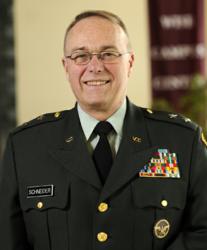
Norwich University President was honored with the “Resilient Warrior Award” during a National Veterans Summit in Washington, DC for his leadership in exploring the use of Transcendental Meditation in building resilient warriors

“The disturbing prevalence of PTSD among returning troops underlines the need for more effective resilience training among our cadets.” — Norwich University President Richard W. Schneider, RADM USCGR (Ret.)

Washington, DC (PRWEB) May 03, 2012

Dr. Richard W. Schneider, RADM USCGR (Ret.), the 23rd President of Norwich University in Northfield, Vt., received the inaugural “Resilient Warrior Award” for 2012 during a national summit on “Resilience, the Brain and Meditation,” held on Thursday, May 3, at the Army and Navy Club in Washington D.C.

The award was presented to President Schneider by veterans of four wars who direct Operation Warrior Wellness, a division of the David Lynch Foundation 501(c)(3) nonprofit organization, which has provided Transcendental Meditation (TM) scholarships for more than 250,000 at-risk youth and veterans and their families who suffer from post traumatic stress disorder (PTSD).

The award cites Schneider for “leading and training a new generation of resilient warriors who will safeguard America and secure the peace with honor and integrity.”

Under Schneider’s leadership, Norwich University recently completed the initial phase of a long-term, longitudinal, randomized controlled trial with 60 cadets, investigating the effects of TM on psychological distress and resilience. Key results of the first nine-week period included reduced perceived stress, improved constructive thinking, decreased state anxiety, increased behavioral coping, reduced depression and improved dispositional resilience.

“Norwich is proud to be in partnership with the David Lynch Foundation and the Educational Foundation of America for providing the resources for this wonderful effort,” Schneider said.

“The disturbing prevalence of PTSD among returning troops underlines the need for more effective resilience training among our cadets. Based on existing data and preliminary results of ongoing trials at Norwich, I believe the Transcendental Meditation technique represents an essential tool to promote resilience in cadets.”

Ed Schloeman, CMS (Ret.), national co-chair of Operation Warrior Wellness, praised President Schneider for “equipping his cadets with the most important of tools—one that will help them overcome stress and promote resilience throughout their life in the military—throughout their life. He is a great educator, a wise man, and a true leader.”

After receiving the news of the award, Schneider said: “I am honored to accept this award on behalf of all those who have worked so hard on this project to experiment with providing our future soldiers, sailors, and airmen the tools necessary to become more resilient, even better warriors, and better human beings.”

Other speakers at the Summit included W. Scott Gould, the US Deputy Secretary of the Veterans Administration, and Norman Rosenthal, M.D., clinical professor of psychiatry, Georgetown University Medical School and author of a breakthrough research study, which found a 50% reduction in the symptoms of PTSD among veterans who practice TM.

Reported in newstimes.com. Related articles: Washington Post: Does Transcendental Meditation help veterans with PTSD? | POLITICO: Coping with PTSD | Washington Post: VA testing whether meditation can help treat PTSD |

POLITICO: Coping with PTSD

May 4, 2012
Opinion Contributor
Coping with PTSD

More than 500,000 returning veterans suffer from psychological injuries, the author said. | AP Photo

By RICHARD W. SCHNEIDER | 5/3/12 9:24 AM EDT

Developing military leaders who are smart, strong and courageous — both on and off of the battlefield — is essential. We are still learning how to create soldiers prepared for the emotional wounds of war. We need to teach coping skills to help these men and women reduce the terrible effects of post-traumatic stress disorder.

Veterans, who have experienced the horrors of war, are the most common sufferers. More than 500,000 returning veterans from Iraq and Afghanistan suffer from psychological injuries — including PTSD or major depression.

But even military cadets, when in a highly disciplined and rigorous academic environment, can feel similarly overwhelmed. Under intense stress, many men and women just give up. They don’t have the tools to stay focused and grounded.

We must give them the tools they need. This means helping them to be successful socially, emotionally and in a military setting. Our future leaders need this knowledge.

Transcendental Meditation has demonstrated an ability to help those suffering from PTSD and high stress environments. Recent trials of TM’s effects on psychological distress have revealed: reduced perceived stress, improved constructive thinking, decreased state anxiety, increased behavioral coping and reduced depression. This is the focus of the David Lynch Foundation, which highlights TM’s positive effects.

TM helps military cadets become more resilient, according to Norwich University studies, so that they can be better soldiers on the battlefield as well as better equipped to recover from the traumas of war and have a normal life after returning home.

Evidence suggests that TM may help people handle the stresses that come before as well as during military service and when they return to civilian life.

A 2011 Norwich University study, with funding from the David Lynch Foundation and the Educational Foundation of America, showed the positive effects that TM can have on helping students cope with the stresses of leadership in being a member of the Norwich University Corps of Cadets. TM has proven to be a highly effective coping strategy and has set a high bar to further explorations and research.

Many cadets who enter the military will likely be exposed to trauma that can have a destructive effect on their lives and the lives of their families. Whether a veteran or a military cadet, the method of dealing with PTSD is crucial.

For these “invisible wounds” can take a high toll — on family, quality of life and work performance. There is also a greater risk for violent and self-destructive behavior.

Effective treatments have been difficult to identify. Many expensive combinations of chemicals, for example, have been explored. But TM is an evidence-based technique that is available anywhere and at any time. Those who practice it develop the ability to improve daily stresses in the workplace and in life.

The technique helps address anxiety, mood change and situational awareness. Its powerful impact can produce long-term results in improving daily lives.

The goal is clear: to develop the whole person with maximized abilities and capacity in all situations.

Richard W. Schneider, a rear admiral USCGR (Ret.) is the president of Norwich University. The David Lynch Foundation on Thursday is hosting its first annual National Summit, investigating effects of Transcendental Meditation on active-duty personnel and veterans suffering from PTSD, cadets in training — and their families.

Short URL: http://politi.co/JPLv7Z

Related articles: Washington Post: Does Transcendental Meditation help veterans with PTSD? | Norwich University President Receives “Resilient Warrior Award” at National Veterans Summit in Washington, DC | Washington Post: VA testing whether meditation can help treat PTSD

Washington Post: Does Transcendental Meditation help veterans with PTSD?

May 4, 2012

Posted at 02:45 PM ET, 05/03/2012.
This story has been updated. Previously titled: Summit Examines Use of Transcendental Meditation to help Vets with PTSD. Later published in Washington Post: VA testing whether meditation can help treat PTSD

Does Transcendental Meditation help veterans with PTSD?

By Steve Vogel

Seeking new ways to treat post-traumatic stress, the Department of Veteran Affairs is studying the use of transcendental meditation to help returning veterans of Iraq and Afghanistan.

“The reality is not all individuals we see are treatable by the techniques we use,” said W. Scott Gould, deputy secretary for the Department of Veterans Affairs, told a summit on the use of TM to treat post traumatic stress Thursday in Washington.

Director David Lynch founded a charitable organization that funded a summit on using Transcendental Meditation to treat military veterans with PTSD. (David Livingston – GETTY IMAGES)

The VA is spending about $5 million on a dozen trials involving several hundred veterans from a range of conflicts, including Iraq and Afghanistan. Results from the trials will not be available for another 12 to 18 months.

But Gould said he was “encouraged” by the results of trials which were presented at the summit.

Two independent pilot studies of Iraq and Afghanistan veterans showed a 50 percent reduction in symptoms of post-traumatic stress after eight weeks, according to the summit’s sponsor, the David Lynch Foundation, a charitable organization founded by the American filmmaker and television director.

Results from the initial phase of a long-term trial investigating the effects of Transcendental Meditation on 60 cadets at Norwich University, a private military college in Vermont, have been encouraging, school officials said at the summit, held at The Army and Navy Club.

Students practising TM showed measurable improvement in the areas of academic performance and discipline over a control group. “The statistical effect we found in only two months was surprisingly large,” Carole Bandy, an associate professor of psychology who is directing the study at the university, said at the summit.

“For us, it’s all about the evidence,” said Richard W. Schneider, president of the university, who added that he was a skeptic before the trial began.

“Conventional approaches fall woefully short of the mark, so we clearly need a new approach,” Norman Rosenthal, a clinical professor of of psychiatry at Georgetown University Medical School.

Operation Warrior Wellness, a division of the foundation, is providing TM training to troops recovering from wounds at Joint Base Lewis-McChord in Washington state. Troops report “dramatic improvements” in sleep, according to the foundation, as well as significant reductions in pain, stress and the use of prescription medications

Lynch, the director of “Blue Velvet,” “Mullholland Drive” and the television series “Twin Peaks,” is a longtime practitioner of TM, a meditative practice advocates say helps manage stress and depression.

Related articles: POLITICO: Coping with PTSD | Norwich University President Receives “Resilient Warrior Award” at National Veterans Summit in Washington, DC | Huffington Post: David Lynch Brings Transcendental Meditation To D.C.