Posts Tagged ‘Transcendental Meditation’

New study shows TM significantly improved school graduation rates, world press reports

June 14, 2013

New Transcendental Meditation Study Published in Education

This week the world press have been reporting on a collaborative study conducted by researchers Robert Colbert of the University of Connecticut and Sanford Nidich of Maharishi University of Management on meditation and graduation rates. The study, Effect of the Transcendental Meditation Program on Graduation, College Acceptance and Dropout Rates for Students Attending an Urban Public High School, was funded by the David Lynch Foundation, and published in the journal Education, Vol. 133, No. 4, Summer 2013.

The new study is the first to look at the effect of Transcendental Meditation practice on graduation, college acceptance and dropout rates, and follows previously published research by Nidich et al on increased academic achievement and reduced psychological stress in urban school students. The press release, Transcendental Meditation positively impacts student graduation rates, new research shows, included two graphs, and was sent out worldwide to over 5000 science writers by EurekAlert!/AAAS. Here is the Summary and citation for this latest study:

High school graduation rates remain low with racial and ethnic gaps adding to the decline. Graduating versus dropping out translates into higher earning potential, less crime and incarceration, and less dependence on government assistance. A new study published in the journal Education shows practice of the Transcendental Meditation technique resulted in a 15 percent higher graduation rate compared to controls. In low academically performing students a 25 percent difference in graduation rates was observed.

Colbert, R.D. and Nidich, S. (2013). Effect of the Transcendental Meditation Program on Graduation, College Acceptance and Dropout Rates for Students Attending an Urban Public High School. Education, 133 (4), 495-501.

World Press Reports

Many science and medical news websites have reported the news, including PhysOrg; ScienceBlog; Science Codex; RedOrbit; Medical Daily with the headline Transcendental Meditation Boosts High School Graduation Rates, As Policymakers Look To AlternativesMedical News Today; PsychCentral, with their succinct headline, Transcendental Meditation Linked to Higher Graduation Rates; The British Psychological Society, Meditation improves behaviour in school; Counsel & Heal; and examiner.com, How transcendental meditation impacts public high school graduation rates.

The mainstream press then reported the news, led by UK’s Richard Gray, respected science correspondent for The Telegraph, and his wonderfully topical and comprehensive piece, Transcendental Meditation may boost student grades. Underneath the top headline was one of the iconic photos of the Beatles with Maharishi in India and this subheading: It may have seemed simply a phase in pop history, but it seems the Beatles may have been on to something after all during their fabled journey to India.

This prompted Anna Hodgekiss of The Daily Mail to follow up with: The best way to boost brain power and improve exam grades? Chant ‘Om’ like the Beatles did, using an earlier picture of the Beatles with Maharishi taken at the London Hilton when they first met. BTW, there is no chanting in TM, and “Om” is never used.

These articles must have influenced The Times journalist William Chester to write, Exams go better with a Sixties mantra in mind, which was posted on the NW London TM Blog: Exams go better with a Sixties mantra in mind – The Times June 12th 2013.

Other international press also reported on the study. ANI sent out their version of the release and it was picked up by The Times of India, Transcendental meditation boosts grades, Newstrack India, OnePakistan, newKerala.com, and Medindia. India.NYDailyNews.com reproduced the Telegraph article but used a different photo of the Beatles, Donovan, Mia and Prudence Farrow with Maharishi in Rishikesh.

In Chile, the science journalist from El Mecurio, Sebastián Urbina, emailed questions about the study, which were answered by Sandy Nidich. I also suggested he interview Rafael de la Puenta, the TM national leader, and he did. The article appeared as the top story in their Life, Science and Technology section, A15, with a photo of a member of the Trinity College Women’s Squash Team meditating on the court. See a PDF of the article: www.meditacion.cl/prensa/MT_MERCURIO-Santiago-06-11-2013.pdf.

Other countries reporting on the study that we know of include France’s HuffPost C’est La Vie; Italy’s AGI; Spain’s Tendencias21 and La Razon; Holland’s Volkskrant; and Brazil’s Veja.

Some of the previous articles were reproduced on many blogs and websites. Will add any other newer articles as they are found. A few are slated to come out from reporters who asked for the paper, but this report should give you an idea of the kind of news coverage that came out on this promising study. For example, The TM Blog later reported New Study Finds Transcendental Meditation Boosts Student Grades, Graduation Rates.

See the Great article on TM helping students boost grades shows the Beatles were way ahead of their time. That article was later highlighted on the University of Connecticut Neag School of Education on their Spotlight page reporting the latest news: Transcendental Meditation May Boost Student Grades.


Ted Henry interviews “Dear Prudence” Farrow Bruns about her life with TM and Maharishi

June 9, 2013

This wonderful interview is also available from on Vimeo. Retired TV journalist Ted Henry conducts interviews with spiritual people for Souljourns. Last month he interviewed Prudence Bruns Farrow. You can also see the interview on their Vimeo channel: http://vimeo.com/67166559. Here is their introduction to the video:

From the very beginning Prudence Farrow Bruns recognized an added layer or texture to her life, a spiritual dimension that would take her deep within.

She was among the first in the West to become initiated into Transcendental Meditation and in the mid sixties she traveled to Rishikesh, India to learn to become a TM teacher. Her own teacher in India, Maharishi Mahesh Yogi who is credited for bringing TM to the world.

In India with her at this time, her sister and acclaimed actress, Mia Farrow, The Beatles, Mike Love of the Beach Boys, Donovan and others.

Prudence and her husband, Albert Bruns who is also a TM instructor, live in Seagrove along the Gulf of Mexico in Northwest Florida.

The interview was recorded in Seagrove, Florida in May, 2013.

See this related BBC news item: Prudence Farrow — subject of the Beatles song Dear Prudence — visits India’s Kumbh Mela. And this video: The Beatles “Dear Prudence”: A Portrait of Prudence Farrow Bruns, Maharishi and TM.

Who was Dear Prudence the Beatles sang to in India? What happened to her? Here is her story.

Article on the multi-talented Lanny Shuler: artist, consultant, surfboard designer, and TM instructor

June 9, 2013

What’s going on in that purple building?

You might have noticed Shuler Surfboards before – it’s located in a purple building south of Seaside at milepost 24 on U.S. Highway 101.

Lanny Shuler, owner of Shuler Surfboards, rides the waves of creativity in business and in life

Thursday, June 6, 2013 8:00 am

Article and photos by DWIGHT CASWELL for COAST WEEKEND: ARTS & ENTERTAINMENT: COASTAL LIFE.

I can’t tell you how many times I’ve driven by that purple building just south of Seaside. The sign by the side of U.S. Highway 101 says “Shuler,” and the windows are lined with surfboards. I always wonder, “A surfboard factory in Seaside?”

My curiosity finally got the best of me, and I stopped by. What I found surprised me. Yes, there are surfboards being made here – custom-made, state-of-the-art boards – but there’s a lot more going on. There’s an artist, a materials consultant to Corning and Dow, a creativity consultant to Nike, a Transcendental Meditation (TM) instructor.

From the outside, the building doesn’t seem large enough to house all those people, and it couldn’t if not for the fact that all those people are one: Lanny Shuler, who has been doing all those things on the North Coast since relocating here in 1983.

Shuler grew up in West Long Beach and Huntington Beach, Calif., where he learned to surf at the age of 7 and built his first surfboard 10 years later. “We were water kids,” he says of his childhood friends, “so surfing was a natural thing to pursue, and I was never attracted to organized sports. It was easier to just go surfing, to have fun even if I wasn’t with friends.” Surfing was, at the time, an outsider sport. “This was before the Beach Boys,” he says, “and before ‘Gidget,’” the first surfing movie, made in 1959. “That was the beginning of cultural awareness of surfing,” he continues, “but I was never interested in surfing culture.”

As a young man in 1972, Shuler moved to Astoria to help his father, Don, build a commercial fishing boat, eventually moving back to southern California to make and lose a fortune in real estate. He studied art and architecture in school and began to practice TM, a mantra-based meditation technique that is practiced twice daily for 15 to 20 minutes. Through TM, Shuler found an inner peace and wakefulness, and he left formal education to study under TM founder Maharishi Mahesh Yogi, eventually becoming a certified TM teacher.

In 1983, having discovered that “a simpler life was more to my liking,” he returned to Oregon, just in time to catch the wave of windsurfing tourism in the Columbia Gorge. In addition to his surfboard business in Seaside, Shuler opened Shuler Sailboards in the Gorge and discovered that building both sailboards and surfboards gave him a more diverse outlet for innovation and creativity, as he constantly modified and reinvented his cutting edge board designs.

Shuler’s innovations with resins, fiberglass and foam led to consultancy work with Dow Chemical and Owens Corning. Word of Shuler’s creativity also got around to Nike’s product development team, called the “Innovation Kitchen,” prompting their visit to the purple building for inspiration on long-term maintenance of creativity. Shuler credits TM for his daily charge of inspiration and enthusiasm in new ideas, and his capacity to incorporate them into his career. Since that first meeting he has been invited to the Nike Campus to bolster employee creativity through lectures and TM lessons.

Shuler stresses that “It is a challenge for everyone to have many dimensions and diversities to integrate into one’s life, many demands into one combined fulfilling experience.”

The latest aspect of Shuler’s diversity is his return to art. “My art interests have often fallen aside to other priorities,” says Shuler. “Regardless, whenever I applied artwork on my surfboards, people would take notice.”

Lanny Shuler with a sample of his surfboard art.As an art student Shuler was uninspired painting on flat surfaces, but his enthusiasm returned when he began painting the sculptural form of his surfboards. “I found inseparability between my color interests and the three dimensionality of the surfboards I was painting on. Without my intending it, my art had become more challenging and engaging.”

Shuler’s “relationship with the aesthetic of the three dimensional form” also resulted in his art becoming more abstract. “It’s much less calculated and more intuitive, and there is a more intimate relationship with the creative silence of my daily meditation, with inner restful alertness and more abstract consciousness.”

Shuler is now working on a gallery show of paintings on what he calls “nonfunctional painted sculptures that can’t be surfed on.” He explains, “My surfboards have always been painted sculptures, but because they were functional, their value was mostly perceived in the terms of sporting equipment rather than higher valued art. That’s changing now.”

Which is not to say that he is abandoning functional surfboards. In fact, he is introducing an entirely new type of board designed to allow novices and experienced surfers alike to more easily develop their surfing skills and have more fun surfing in a variety of conditions.

The new boards and Shuler’s art will soon make an appearance on a redesigned website, www.shulersurfboards.com, and stay tuned for the next dimension of Lanny Shuler’s multifaceted life.

© 2013 Coast Weekend.

David Lynch, Russell Brand, Bob Roth Q&A after screening Meditation, Creativity, Peace documentary at Hammer Museum

May 24, 2013

David Lynch: Meditation, Creativity, Peace Q&A

Filmmaker David Lynch, comedian Russell Brand, and David Lynch Foundation Executive Director Bob Roth answer questions about Transcendental Meditation following a screening of the documentary Meditation, Creativity, Peace. (Run Time: 41 minutes, April 2, 2103.)

Published on May 2, 2013 by hammermuseum

See related videos: Russell Brand and David Lynch at LA Premiere of ‘Meditation, Creativity, Peace’ Documentary and Watch the trailer for a new documentary film on David Lynch titled “Meditation Creativity Peace”

Enlightenment, The TM Magazine, also reported on the event: Meditation Creativity Peace: How the David Lynch Foundation Brings Change from Within.

David Lynch speaks with Alan Colmes about his 16-country tour film Meditation Creativity Peace.

Visit the new website, Meditation Creativity Peace, for a list of upcoming and previous screenings: http://meditationcreativitypeace.com.

Fairfield learns about mission to Mars from Dane Elsa Jensen, MSSS mission operations manager

April 25, 2013

Fairfield learns about mission to Mars

By ANDY HALLMAN | Apr 24, 2013

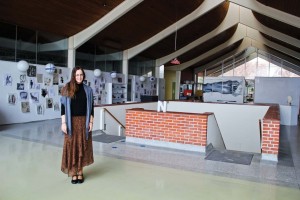
Elsa Jensen holds a photograph of “Curiosity,” NASA’s rover that is studying and photographing Mars. Jensen helped develop Curiosity’s cameras, which she spoke about April 13 at the Argiro Student Center on the campus of Maharishi University of Management.

Elsa Jensen holds a photograph of “Curiosity,” NASA’s rover that is studying and photographing Mars. Jensen helped develop Curiosity’s cameras, which she spoke about April 13 at the Argiro Student Center on the campus of Maharishi University of Management.

A woman who helped design the cameras that have taken photographs on Mars spoke to a few hundred people April 13 at the Argiro Student Center at Maharishi University of Management.

Elsa Jensen is the mission operations manager for Malin Space Science Systems in San Diego. She helped develop the science cameras on NASA’s Mars rover, “Curiosity.”

Jensen was born and raised in Denmark. She has had an interest in space exploration as long as she can remember. She spoke about how entering the space program seemed like an unrealistic goal in her youth, and she assumed she would have to find another outlet for her passion.

A schoolteacher once asked her what she wanted to be when she grew up. She told him she wanted to go to space, but she added she knew little girls from Denmark don’t go to space.

“Why not?” the teacher responded, and with that Jensen embarked on a quest to fulfill her dream.

NASA launched the Curiosity rover from Earth in November 2011 and landed it on Mars in August 2012. The rover is a robot that is controlled from Earth. It can move on wheels, take photographs and collect data about Mars’s climate and geology by analyzing the chemical composition of rocks on the planet.

Jensen said people in the audience were probably curious why NASA sent a rover to Mars.

“We wanted to explore,” she said. “We wanted to reach farther than mankind has ever reached before.”

The rover’s intended destination was a crater in the middle of a mountain. This site was chosen because it would be the most interesting scientifically since the rover could study multiple layers of sediment in a small area. It is tasked with finding out if Mars could have supported life at one time.

Jensen said the camera her company designed for Mars takes photographs in red, green and blue pixels, just as many cameras do on Earth. She said the photographs on Mars appear comparable to those taken with a 2-megapixel camera.

Curiosity has a camera on an arm which it can extend 6 feet. The rover took a series of pictures of itself with its arm extended. Jensen and her crew pieced those photos together to get a self-portrait of Curiosity without its arm in the picture, making it appear someone or something else took the photo.

Jensen’s work with the rover has produced a few stressful situations, none more stressful than what has been dubbed the “seven minutes of terror.” That is the length of time between Curiosity’s entry into the Martian atmosphere and when it touched down. That was when Curiosity was most likely to crash.

The first problem Curiosity encountered was the heat. Curiosity descended to the Martian surface in a protective heat shell because the friction of traveling through the atmosphere produced a temperature of 3,800 degrees Fahrenheit.

The other problem Curiosity faced was speed. The spacecraft was traveling 13,000 miles per hour upon entering the atmosphere. A parachute slowed the craft down to 200 miles per hour. Once Curiosity was two kilometers above the surface, it released its parachute and turned on a jetpack on its bottom side that allowed it to gradually descend. As it approached 20 meters above the surface, the rover itself was lowered on a tether from its jetpack so it did not land in the middle of the dust storm the jetpack had created.

Jensen not only told the audience about Curiosity’s descent but actually showed a video of it from the Mars Orbiter, an orbiting satellite 400 miles above the surface.

Jensen and her team members work according to Martian time instead of Earth time so they can be at their posts when the rover and orbiter are sending information back to Earth. A Martian day is slightly longer than an Earth day at 24 hours and 40 minutes.

NASA has made exciting discoveries about Mars because of Curiosity. Jensen said the rover has found key chemical ingredients such as carbon, hydrogen, nitrogen, phosphorous and sulfur.

“The mineralogy indicates a long interaction with liquid water,” she said.

Jensen said she was able to manage the stress of her job through Transcendental Meditation, which she learned a week before Curiosity landed on Mars.

Published with permission from The Fairfield Ledger.

Two years later a former Computer Science MUM faculty member would make the top 100 cut for a trip to Mars! Read the Des Moines Register cover story: Former Iowan among finalists for Mars trip.

Article reports meditation studies done on stressed students with beneficial outcomes

April 24, 2013

Here is an informative article. I applaud the authors’ efforts for putting together this collection of beneficial meditation studies related to stressed students dealing with the pressures of school and college, inspiring them to not only consider the idea of meditation, but also the practice of it. I didn’t change a word, except capitalize Transcendental Meditation to honor its unique trademarked practice. Comments and additional information are added at the end of the article.

10 Telling Studies Done on Student Meditation

Posted on Monday March 26, 2012 by Staff Writers of Best Colleges Online

As the semester draws to a close, many college students are starting to feel the pressure of completing projects, writing final papers, giving presentations, and of course, studying for finals. Add to that holding down a job and you’ve got a perfect storm of stress. How to calm your mind? Meditation may be the answer.

Scientific studies are increasingly revealing some pretty amazing benefits of regular meditation practice, both for the general public and students in particular. Meditation can help you better deal with stress and may make your life as a student healthier and happier overall, a great tradeoff for just a few minutes of mindful thinking a day. Read on to learn about some of the latest and most telling studies on student meditation to learn the amazing benefits it can offer you this finals season and beyond.

Meditation improves standardized academic achievement

A 2009 study of 189 students in California who were performing below proficiency levels in English and math found that meditation actually helped to improve their test scores on the California Standards Tests. Students were asked to practice Transcendental Meditation twice a day over a three-month period. At the end of that period, 41% of students participating in the study showed improvement in both math and English scores, sometimes moving up an entire performance level, compared with just 15% who didn’t participate in the program showing improvement.

Meditation improves brain functioning in ADHD students

Those who have ADHD may find meditation an effective method for improving concentration and brain function, at least according to one study published in The Journal of Psychology. A paper called “ADHD, Brain Functioning, and Transcendental Meditation Practice” appeared in the journal just last year, showcasing the results of a study that followed a group of middle school students with ADHD as they participated in a program that asked them to meditate twice a day for three months. At the end of the three-month period, students reported 50% reductions in stress, anxiety, and ADHD symptoms. Researchers also found improved brain functioning, increased brain processing, and improved language-based skills among ADHD students who practiced Transcendental Meditation.

Meditation can reduce academic stress

Several studies have been conducted on the effect of meditative practices on reducing academic stress, all with a similar finding: it works. In 2007 researchers at SIU in Carbondale, Ill. released a multi-year study on 64 post-baccalaureate medical students who participated in a deep breathing meditation program. Students in the study were found to have reduced perceptions of test anxiety, nervousness, self-doubt, and concentration loss. Another study of students at American University had similar results, finding that students who participated in three months of Transcendental Meditation practice reported lower levels of stress (as well as increased concentration, more alertness, and greater resistance to the physical effects of stress, as well as brain function changes) during finals, often the most stressful part of the academic year.

Meditating may improve the integrity and efficiency of certain connections in the brain

It should come as no surprise that meditation practice can cause physical changes in the structure of the brain; monks have been saying this for years. Yet a surprisingly small amount of meditation can have an impact, even with as little as 11 hours of meditating. A 2010 study looked at 45 University of Oregon students, having 22 of them participate in an integrative body-mind meditation training program while the control group simply completed a relaxation program. The IBMT students were found to have changes in the fibers in the brain area related to regulating emotions and behavior, changes which became clear via brain imaging equipment with just 11 hours of practice. The same changes were not seen in the control group. Researchers believe that meditation may help students to better control their actions, resolve conflict, and manage stress by actually physically changing the brain connections that regulate these functions.

Meditation reduces drug and alcohol abuse

It’s no secret that many college students go overboard with drugs and alcohol, many binging on potentially dangerous substances multiple nights a week. Yet meditation practice may help limit the desire to engage in these activities, a study in Alcoholism Treatment Quarterly reveals. Looking at both students and adults, the study found that daily Transcendental Meditation practice greatly reduced both substance abuse problems and antisocial behaviors. The results held true for all classes of drugs including illegal substances, alcohol, cigarettes, and prescription medications, with meditation being in many cases two or three times more effective than traditional drug prevention and education programs.

Meditation reduces behavior incidents and absenteeism in high school students

In 2003, researchers Vernon Barnes, Lynnette Bauza, and Frank Treiber set out to study the effects of meditation on adolescents, specifically looking at the way it could potentially reduce stress and affect school infractions. Their results were pretty striking. Forty-five high school-aged African-American students were studied, some in a control group and others practicing Transcendental Meditation on a daily basis for four months. At the end of the study, the researchers found that the meditation group had lower levels of absenteeism, lower levels of behavior incidents at school, and lower levels of suspension. On the flip side, these behaviors actually increased in the group that didn’t meditate, suggesting that the meditation helped reduce the psychological stress, emotional instability, or hostility that was leading to negative and often self-destructive behaviors in these teens.

Meditation may make students happier and boost self-esteem

Meditation might not just help your studies, it might also help you be happier and more satisfied as well. Researchers at the University of Michigan found 60 sixth-graders to participate in a study, asking a group of them to take part in daily practice of Transcendental Meditation over a four-month period. At the end of the study, researchers reported that students had undergone some positive changes in emotional development, with students getting higher scores on affectivity, self-esteem, and emotional competence than when they started the program and when compared to their peers who did not meditate.

Meditation has heart health benefits

Meditation is as good for your body as it is for your mind, a study at American University reports. A study published by the university in conjunction with the Maharishi University of Management found that regular Transcendental Meditation helps to reduce blood pressure, anxiety, and depression among college students. The study chose 298 students at random to either be part of the meditation group or a control group, with a subset of students at risk for hypertension also analyzed. After three months, students were measured on blood pressure, psychological distress, and coping ability. Students who were formerly at-risk of hypertension showed a major change in blood pressure, associated with a 52% lower risk of developing hypertension in later years.

Meditation reduces depression and anxiety

Feeling a little overwhelmed with college life? You’re not alone. Studies are demonstrating that meditation may offer one solution to better coping with the stress, anxiety, and even depression that many college students experience. Research at Charles Drew University in LA and the University of Hawaii in Kohala found that adults who participated in a Transcendental Meditation program showed significant reductions in depressive symptoms (an average of 48% lower than the control group), even those who had indications of clinically significant depression. Similar results have been found in students, with decreases in depression and anxiety symptoms at significant levels after participating in a meditation program.

Meditation may increase intelligence

A study done by the Maharishi University of Management suggests that meditation is a great way to work out your brain and that it might even have positive effects on intelligence when practiced regularly. Looking at three different studies, the university found that high school students who participated in a Transcendental Meditation program had significant increases in creativity and intelligence levels, compared to those who took part in a napping or contemplative meditation program. Students in the Transcendental Meditation group saw increases in brain function across the board, but most dramatically in measurements of creative thinking, practical intelligence, and IQ.

Comments and further information

There were 8 comments posted at the end of this article making the same point. The reason being, I think, is that the authors gave simple instructions taken from various websites on how to meditate, then listed 10 studies on meditation, 9 of which are all done on one specific meditation technique, Transcendental Meditation® (http://www.tm.org).

Assigning all improvements to a generic notion of meditation can be misleading and could generate false expectations in those willing to experiment on their own. That’s why the comments contributed to a better understanding of the subject. Still, the authors’ efforts were sincere, and those readers who are interested in learning meditation can always seek out more information and actual classes.

Since most of the studies listed were on the Transcendental Meditation technique, I would naturally recommend those interested to find a certified TM teacher in their area. Call 888-LEARN-TM (888-532-7686) or go to http://www.tm.org/contact-us.

A recent paper published in Consciousness and Cognition gives a scientific explanation of different categories of meditation from major traditions, their practices, brainwave signatures and outcomes. See Are all meditation techniques the same?

Maharishi University featured in ALT magazine

April 24, 2013

Journalism students from Grandview University in Des Moines, Iowa came to Maharishi University of Management in Fairfield, Iowa to find out what we were all about. The result of that visit is this article, MAHARISHI, which can be found in Volume 7 of ALT Magazine. You can see it online, pages 25-26/33, http://altmagonline.com/Maharishi, and can download a PDF to see the layout as it appears in print on pages 46-49, http://altmagonline.com/wp-content/uploads/2013/04/ALTVol7.pdf.

IMG_1157

Google describes Transcendental Meditation as “A technique for detaching oneself from anxiety and promoting harmony and self-realization by meditation and repetition of a mantra.”

In a Southeastern Iowa town, TM, or Transcendental Meditation®, is the method the Maharishi community eats, sleeps and breathes.

Maharishi Mahesh Yogi developed the TM technique that the students of the Maharishi University of Management, a liberal arts school (M.U.M.), use everyday to decompress and get away from the stresses of college and everyday life.

STUDENT PERSPECTIVES

Hannelore Clemenson, a 32-year-old student from Des Moines and single mother, has been a student for two years at MUM and practices TM daily.

Clemenson found Fairfield and TM by word of mouth. Her dance teacher suggested going to MUM and when she thought her son was missing out on “small town life” she made the trip to Fairfield and hasn’t left.

Clemenson said, “I came across this school ten years ago and it was always a possibility and something definitely different from all the other schools I had been to before. If I was going to go back to school with my son it was going to have to be a special place.”

The soft-spoken Clemenson said MUM provides students with a Consciousness-Based℠ education that helps get rid of fatigue and stress and keeps students awake in class. M.U.M. uses block scheduling, which means they have only one class a month and attend six days a week.

IMG_1110-300x200Clemenson said the classes are very hands on, which allows her to pursue music depending on which class she has that particular month. With the block scheduling, students take one class for an entire month, allowing them to do more in-depth projects.

Class is only part of the MUM college experience. Clemenson, along with the rest of the M.U.M. students, are required to take a six-week course that introduces the students to Maharishi’s knowledge. In the second week, students are taught how to meditate and learn the proper technique of meditation. Students are required to meditate for 20 minutes before coming to their morning class, and after their morning class is completed they do a ten-minute meditation, which Clemenson said is very helpful.

“That’s really benefited me, even though it’s not a full meditation. I have a lot of stomach problems, so when I started meditating before I went to eat it helped soothe me,” Clemenson said.

When the afternoon classes end around 2:45 p.m., students take a break and attend their second full meditation together.

Clemenson said, “It’s a really nice way to unwind and shake your eyes from the computer screen. It’s just 20 minutes, twice a day, it’s the most incredible thing. I’ve noticed it’s changed me little by little. All these things have improved; the way I operate, the way I think and react to things, it’s just happened and I’m grateful everyday that I do this.”

Clemenson said, “Learning TM was the best thing that’s happened to me; it’s sweet to have that be a part of everybody’s life.”

AHEAD OF ITS TIME

IMG_1143Have you ever been in a building that creates more energy then it uses? Or in a building that is held up by tree logs and made entirely of Earth blocks? It’s unlikely because many of us haven’t been to Fairfield, Iowa to visit Lawrence Gamble and his Sustainable Living Center.

The Sustainable Living Center on the Maharishi campus is a classroom, a workshop and an office building, all while not leaving behind a carbon footprint.

On a sunny day, the center will generate ten or twenty times more power than what is actually used and on an annual basis, the building produces 30% more than what they use, for not only electricity, but for heating and cooling as well. The building has produced 3,000 more kilowatts than what it’s used.

The building is one of a kind, made entirely of earth blocks that were formed by former M.U.M. students and large tree logs that support the building. Everything in the building is all-natural.

The paint that goes on these earth blocks is made of sand, chopped straw and cow manure which helps everything stick together. The building is heated by a flow of water running throughout the entire center and is lit only by strategically placed windows. In classrooms, the desks that students sit in are hand-made from wood.

MISTER GREEN

Gamble, the Curriculum Director for the Department of Sustainable Living, said, “A large percentage of energy in a building like this is for lighting, and there are environmental consequences for building solar panels and wind generators, so we want to use that energy really wisely.”

Gamble continued by saying the classrooms stay lit by, “Putting the windows in the right places.” The building has taller windows that allow more light to enter and the main corridor is designed to let light in.

Gamble said, “In our program, what we are designed to do is give students the skills to be successful in a world that doesn’t exist yet. We are giving them a way of looking at the world with a new set of eyes, and we are trying to give them a broad perspective.”

Sustainable Living Programs are comparable to environmental science classes, and the area that M.U.M. and Gamble decided to focus on was environmental problem solving.

“We rolled our sleeves up and got right to work asking ourselves what are the practical things we can start doing now,” Gamble said. “The development of consciousness, which is kind of the central unique feature of M.U.M., is essential to this whole process.”

Another feature to the Sustainable Living Center is the Greenhouse or student lounge. The windows in the Greenhouse face south and this is one of the main ways the building is heated. Solar panels sit on top of the Greenhouse and provide shade in the summertime. With the sun’s position in the summer, the panels shade the windows so that the building does not get unnecessary heat, keeping the building cool.

Gamble said, “We like to do a lot of project based learning. I’ve taken kids to an island off the coast of Alaska.”

He said that him as well as a group of students over a period of years, helped setup solar powered energy in an Alaskan Village.

The students that worked on that project learned how to install solar panels and when they returned they started their own company. Last year, they sold a million dollars worth of solar panels.

Gamble, as well as every other professor at M.U.M. believes TM is essential for a student to fully maximize their potential in the classroom.

Gamble said, “Transcendental Meditation has such a simple way of allowing your mind to settle down, get deep rest and have that experience of being inside you that everything in nature is connected. Then when you come out of that meditation and you study sustainable living, you are intellectually exploring how everything is connected.”

MEDITATION BENEFITS

Transcendental Meditation, TM, benefits more than studying habits. According to tm.org, the techniques help develop the brain and increase creativity and intelligence while improving decision making and problem solving skills.

THE BRAIN OF TM

Dr. Fred Travis, Director for the Center of Brain, Consciousness and Cognition at M.U.M. studies the brain to understand consciousness.

Travis said, “The brain is the interface between us and the world. The brain is a way that allows us to actually see the world and interact with the world.”

Travis, who taught at Iowa Wesleyan College in Mount Pleasant, Iowa, said M.U.M. is different from other places he’s taught at.

“It’s quite unlike any other place,” Travis said. “The students don’t have their heads on the table, they keep you on your toes with very challenging questions.”

Travis said that when the brain is stressed and tired, it doesn’t allow you to take in as much information as it would if you were rested and aware. By adding TM it opens the student’s mind and brain to an entirely new way of thinking.

Travis observed that stress takes frontal executive circuits off line and so keeps students from being able to see larger implications of what they are learning.  He noticed that the students he taught at Iowa Wesleyan were are able to follow the lecture, but he couldn’t tell them everything that he knew.

“What you would be giving them is very much superficial, facts and how the facts relate,” Travis said. “The more fundamental ideas of underlying principles and how this relates to the meaning of life and how it relates to the environment, you can’t go into that because they don’t have the framework to take it in.”

Travis believes that the scheduling at M.U.M. plays a major role in how the students succeed in the classroom.

“At M.U.M., students take one class at a time. Instead of juggling two or three courses at once, you can focus on one subject,” Travis said. “The part of your brain used when you focus is the memory center. The part of the brain during multitasking is that part of your brain that has to do with sequencing.”

Travis said, “TM practice adds another engine to learning. Learning requires localized areas of the brain to function. In contrast, TM practice is a process of transcending and the brain is restful and alert as suggested by global alpha brain coherence.”

With regular TM practice, these brain changes are seen during a person’s daily activity after meditation practice. This gives a new platform to see the world. You are more awake, and more alert.

Writers Joey Aguirre & Stephanie Ivankovich Designer Allie McFayden Photographer Stephanie Ivankovich

I asked Fred Travis to revise his quotes to appear closer to what he said. – Ken Chawkin

1. Dining Hall 2. Argiro Lobby Flags 3. SLC Tree Posts 4. SLC Earth Blocks 5. Veda Bhavan:CBCC

See this article from Drake University journalism honor students: Students find their centers at Maharishi.

Celebs who meditate featured in The Daily Beast

April 24, 2013

This article on Transcendental Meditation was one of the rotating stories on The Daily Beast today, April 23, 2013. It was the 9th top story of rotating images in the big box on the upper left corner of the home page. The article appeared as a result of Rupert Murdoch learning to meditate last weekend. It was supposed to be private, but he tweeted about it and drew media attention. Click on the links below to see photos and descriptions of the 14 featured meditating celebs.

Celebs who meditate -The Daily Beast

Celebs Who Meditate – The Daily Beast – Invision/AP; WireImage

Oprah & More Stars Who Do Transcendental Meditation

The Daily BeastTranscendental Meditation has made its rounds with celebrities as far back as when the Beatles were a unit, but is once again creeping up as the latest trend among celebrities. Rupert Murdoch recently tweeted on his indoctrination into the mantra meditation movement, Oprah Winfrey devoted an entire show to it, and David Lynch even launched a nonprofit foundation for the practice.

The technique was established in India by Maharishi Mahesh Yogi in the 1950s and has spread worldwide since, used as a means to relieve stress and build personal development. The practice involves twice-a-day, 15- to 20-minute meditations, and courses are taught by certified instructors for a fee. See which other stars are endorsing the practice and taking time for some inner peace!

Read celebrity descriptions and view all (15) photos in fullscreen. Most of these celebrities, in order of appearance, practice and/or are connected with TM in some way: Rupert Murdoch, David Lynch, Russell Brand, Shirley MacLaine, Sheryl Crow, Paul McCartney, Oprah Winfrey, Moby, Katy Perry, Howard Stern, Hugh Jackman, George Lucas, Clint Eastwood, and Candy Crowley.

Read a related article: 14 Executives Who Swear By Meditation–10 do TM.

Also see Why CEOs, actors, and pop stars love Transcendental Meditation | Well+Good NYC and What do Stephen Collins, Ellen DeGeneres, Russell Brand, Russell Simmons, David Lynch and Oprah have in common? and The New York Times: Look Who’s Meditating Now.

New study shows Transcendental Meditation significantly reduces PTS in African refugees

April 11, 2013

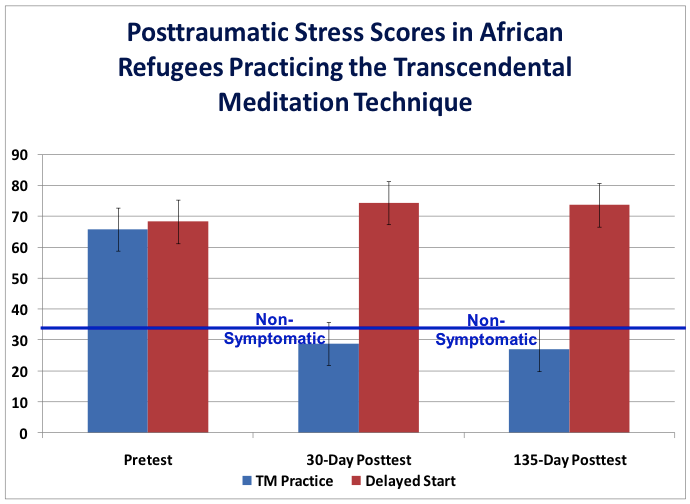
African war refugees practicing Transcendental Meditation®, a simple and effective stress-reducing meditation technique, experienced immediate and dramatic reductions in severe posttraumatic stress symptoms to a non-symptomatic level in just 30 days, according to a new study published this week in the April 2013 issue of the Journal of Traumatic Stress (Volume 26, Issue 2, pp. 295-298.)

A significant percentage of veterans are returning home from wars exhibiting symptoms of posttraumatic stress (PTS). It is now recognized as a serious health problem that can trigger suicidal tendencies. But what about the victims of such violence? Homeless refugees live with the constant reminder of what war has done to their lives and those of their families.

While studies have shown the Transcendental Meditation (TM®) technique to effectively lower posttraumatic stress in veterans of Vietnam and Iraq/Afghanistan wars, this is the first (randomized/matched) study to look at PTS in African war refugees. It measured the severity of posttraumatic stress symptoms before and after learning the TM technique, and the reductions were immediate and dramatic.

PTS Scores Graph

The Post-Traumatic Stress Disorder Checklist scores in the TM group went from high PTS symptoms at baseline to a non-symptomatic level after 30-days TM practice, and remained low at 135-days, while scores in the control group trended upward from baseline to the two posttests.

For more study details and comments by the surprised researchers, click the EurekAlert! press release, graph and video with descriptions, and a PDF of the published JTS TM-PTS Study.

The study was funded by the David Lynch Foundation.

In the past 20 years, 18 African nations have been ravaged by war. Tens of millions of Africans have been victims of violence or witnessed horrific acts of terror—and now suffer from post-traumatic stress. The DLF Africa PTSD Relief Project was set up to raise funds to teach the TM program to many more African refugees. Here is a short documentary with actor, director Bill Duke, Ambassador for African PTSD Relief. Please visit http://www.davidlynchfoundation.org/africa to learn more.

The news was reported on MedicalXpress.com: Transcendental Meditation significantly reduces posttraumatic stress in African refugees, and linked to it from many other websites. Also by News-Medical.net: Study: Transcendental meditation reduces posttraumatic stress in African refugees. And Medical News Today: Posttraumatic Stress Significantly Reduced By Transcendental Meditation. Psychiatric Annals/Helio: Meditation reduced posttraumatic stress symptoms in African refugees.

Here is an excellent comprehensive report with quotes from Russell Simmons, and David Lynch about the study posted on People of Shambala: Transcendental Meditation significantly reduces post-traumatic stress for Congolese refugees: study. Google posted this excellent article by AFP: Filmmaker David Lynch touts meditation for PTSD.

More on Global Good News: Transcendental Meditation significantly reduces posttraumatic stress in African refugees, and  Johannesburg Transcendental Meditation Center: Post Traumatic Stress help for African Refugees.

See the Second study to show Transcendental Meditation reduces PTSD in African Refugees—in just 10 days.

Russell Brand and David Lynch at LA Premiere of ‘Meditation, Creativity, Peace’ Documentary

April 5, 2013
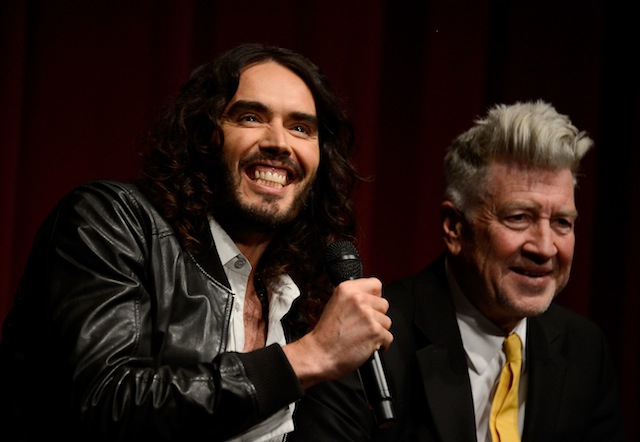
Comedian Russell Brand and Founder/Director David Lynch speak during the 'Meditation In Education' Global Outreach Campaign at The Billy Wilder Theater at the Hammer Museum on April 2, 2013 in Los Angeles, California. (Photo by Frazer Harrison/Getty Images)

Comedian Russell Brand and Founder/Director David Lynch speak during the ‘Meditation In Education’ Global Outreach Campaign at The Billy Wilder Theater at the Hammer Museum on April 2, 2013 in Los Angeles, California. (Photo by Frazer Harrison/Getty Images)

David Lynch and Russell Brand joined forces to help bring Transcendental Meditation to 1,000,000 at-risk youth at the U.S. premiere of ‘Meditation, Creativity, Peace’ at the Hammer Museum’s Billy Wilder Theater in Los Angeles on Tuesday, April 2. The premiere marked the launch of the “Meditation in Education” global outreach campaign.

“Proceeds from the global distribution of the documentary will be used to help students in the United States and across the world overcome traumatic stress, improve learning ability and raise performance through Transcendental Meditation,” said Lynch.

The response to the film was overwhelming with only 300 seats and over 1,000 people showing up. An overflow hall and outdoor screens were set up so hundreds more could see the film, and the dynamic 41-minute interview that followed with David Lynch, Russell Brand, and DLF executive director, Bob Roth. Hopefully that interview will be posted soon.* Roth said the overwhelming response was indicative of a change in collective consciousness since the film was first shown in New York a year and a half ago.**

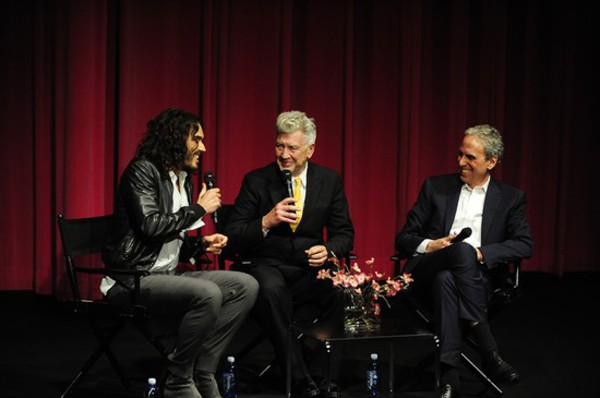
Russell Brand and David Lynch talk Transcendental Meditation with Bob Roth. Credit/Copyright: Amy Graves via The TASC Group

Russell Brand and David Lynch talk Transcendental Meditation with Bob Roth. Credit/Copyright: Amy Graves via The TASC Group

Following last night’s debut in L.A., the documentary will go on to screen in 12 major international cities, including London, Paris, Berlin, Tel Aviv, Johannesburg, Tokyo, Rio de Janeiro, Buenos Aires and Toronto, in May and June. The film will also be screened at the Palm Beach International Film Festival in West Palm Beach, FL on Saturday, April 6. Visit the new website, Meditation Creativity Peace, for a list of upcoming and previous screenings: http://meditationcreativitypeace.com.

Read more of what happened that night in these reports: Look to the Stars: Russell Brand And David Lynch Bring Meditation To At-Risk Youth and LAist: David Lynch & Russell Brand Changing Lives With ‘Meditation Creativity Peace’, which include photos and videos. Sean Macaulay covered the event, including an interview, for The Daily Beast: David Lynch Discusses Transcendental Meditation in Los Angeles. Google posted this excellent article by AFP: Filmmaker David Lynch touts meditation for PTSD.

Here are some videos by World Monitor TV covering the event. In this first one, Russell Brand and David Lynch arrive at ‘Meditation Creativity Peace’ US premier, after posing for photographers, David and Russell walk over to Puki Freeberg for an interview, which starts around 1:38. It’s difficult to make out what they’re saying with the many people talking in the room and photographers shouting at the celebrities to turn their way. At first David complains about the bright lights, saying they need to be covered with gels. But then David introduces the “fantastic” Puki to Russell who lights up and exclaims, “Oh you’re Puki! I hear a lot about you, and I met you once after a show in a different context, in a different dress, in a different light.

Puki asks Russell why he supports the David Lynch Foundation and he answers, “Because of the wonderful work it does in schools, with veterans, and because meditation is something everyone can use in their life, and because David asked me.”

David smiles and tells Puki that “Russell Brand is going to start a revolution…for peace and enlightenment…for all the people…and that’s why Russell’s here. And also Russell has a gift, somewhat of a gift for humor, and it’s really good to have him here.”

Puki asks David how he feels about premiering his documentary (Meditation, Creativity, Peace) in LA tonight, and he says, “I feel very good about it, because, hopefully, the documentary holds good news for the people…and we’ll see how it goes tonight…we’ll see if they think it’s good news.” There’s more discussion about the interview, which Russell says was very successful, but it’s hard to discern the rest of what they’re saying as they bring it to an end. Here is a more recent updated clearer version:

 Other meditating celebrities arrive and are seen in these videos: Maya Stojan, Russell Brand arrive at ‘Meditation Creativity Peace’ US premier | ‘Meditation Creativity Peace’ US premiere – Matt Bomer, Russell Brand, Nick Zano | Matt Bomer, Nick Zano all smiles at ‘Meditation Creativity Peace’ US premiere.

*The Hammer Museum did post the 41-minute interview the following month: David Lynch, Russell Brand, Bob Roth Q&A after screening Meditation, Creativity, Peace documentary at Hammer Museum. Richard Broome also posted it on his website highlighting key quotes from the interview.

**Here is an earlier post on the film when it was shown in NYC: Watch the trailer for a new documentary film on David Lynch titled “Meditation Creativity Peace”.

Enlightenment, The TM Magazine, also reported on the event: Meditation Creativity Peace: How the David Lynch Foundation Brings Change from Within.

David Lynch speaks with Alan Colmes about his 16-country tour film Meditation Creativity Peace.