Posts Tagged ‘Operation Warrior Wellness’

Fairfield Ledger cover article by Diane Vance: Combat stress subject of public forum Saturday

July 26, 2012

Combat stress subject of public forum Saturday
Travis to speak at forum

By DIANE VANCE, Ledger staff writer | Jul 25, 2012

Jerry Yellin

Two U.S. Army veterans, more than five decades apart in age, and a five-wars-with-U.S.-involvement difference, will share their stories and their experiences in making peace with the effects of war and combat, in the hope of reaching other wounded veterans.

World War II P-51 fighter pilot, Fairfield resident, author and co-chair of Operation Warrior Wellness, Jerry Yellin and Luke Jensen, a 12-year Army Reserves Military Police soldier, Operation Enduring Freedom/Afghanistan veteran from Story County will join in a public forum at 2 p.m. Saturday at the Fairfield Arts & Convention Center.

The forum, Healing the Hidden Wounds of War, is open to everyone at no charge.

“The military is experiencing an extreme suicide rate,” said Yellin. “The July 23, 2012, Time magazine has a story, ‘War on Suicide’ on the cover. One U.S. soldier commits suicide each day. Why?”

Another chilling statistic: More soldiers have died by suicide than have been killed in combat in Afghanistan.

“A representative from the Surgeon General’s office is coming to our forum in Fairfield,” said Yellin.

Yellin and Jensen are authorities on the effects of combat stress and Post Traumatic Stress Disorder. Yellin describes suffering from it for 30 years; Jensen is healing after struggling for nearly two years.

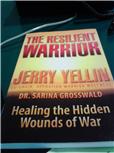
Yellin tells his story in his published book, “The Resilient Warrior.” He was 17-years-old on the day Japan attacked the U.S. navel fleet at Pearl Harbor, Dec. 7, 1941.

“It felt as if someone had invaded my home, and I had to do something about it,” he wrote.

When talking about his story, Yellin says, “I lost 16 friends, other pilots. Do you want to hear their names?”

And he recites the 16 names beginning 69 years ago, how they died and when they died.

Yellin flew 19 long-range bombing missions over Japan from his base in Iwo Jima, in the company of 11 “other young pilots, all of them friends,” none who lived to return home.

But he returned home, to New Jersey, in December 1945. In his book, he describes himself as a former captain, a combat squadron leader, and a fighter pilot, but “emotionally I was just a 17-year old high school graduate. I was a lost soul, with no one to talk to and no real life experiences to fall back on,” he wrote.

“During the war, I had a purpose, it was clearly defined,” said Yellin from his 88-years’ perspective. “When I came home, I was completely empty.

“I developed an addiction — to golf,” he said. “I had no interest in working, no interest in furthering my education.

“I had dreams about my friends killed, I had nightmares about the ones lost and no bodies recovered,” he said. “I couldn’t think about the guys killed during the day.”

“Stress is like a virus of the brain,” said Yellin. “It needs something to relieve that stress. The best way I’ve found for relieving that stress is Transcendental Meditation.”

His wife Helene saw Maharishi Mahesh Yogi on the Merv Griffin TV show in 1975, and became interested in learning TM. After his wife and one of his sons learned, Yellin also decided to take the TM course.

“Thirty years after World War II, I found TM could take my stress away,” said Yellin.

His other three sons also learned and eventually, the family moved to Fairfield.

Since 2010, Yellin has been on a mission to help veterans, and their families, from any wars, learn TM to relieve stress, he said.

“I don’t want other veterans to go through what I went through,” he said.

Through Operation Warrior Wellness, supported by the David Lynch Foundation, offering this help, learning TM, is given at no cost to veterans and families.

Yellin has spoken about PTSD and TM in New York, Washington, D.C., South Dakota and Los Angeles. But it isn’t only from the podium to large crowds he makes his appeals; Yellin also deals up close and personal.

A year ago, his son brought home the Des Moines Register with a front-page story that grabbed Yellin’s attention.

“I don’t read newspapers a lot,” he admitted. “But the July 17, 2011, Register had the story of a young man, Luke Jensen and his family living in Story County, ‘A War with PTSD.’”

Luke Jensen

Des Moines Register writer Reid Forgrave wrote about Jensen, who grew up in a loving family, always wanted to be in law enforcement and joined the Army Reserves after high school.

The news story tells about Jensen’s hiring at the police department in Nevada, Iowa, in 2001, his yearlong deployment after 9/11 to seaports around the country, then upon returning, his advancement in local law enforcement. He worked on the Central Iowa Drug Task Force as an undercover cop, making drug buys, drug busts and felony arrests.

By 2009, he and his wife had two young daughters. His unit was called up to deploy to Afghanistan. He wasn’t looking forward to leaving his family, but it was his commitment and he would be deploying with his close-knit group of military buddies. But then, just before the unit left the states, the mission changed and the unit was split into smaller groups and dispersed to seven separate bases.

Jensen experienced soldiers dying and artillery fire shaking his bed day and night. Within a month, he felt defenseless, helpless, sleepless and eventually hopeless. He lost 25 pounds and experienced panic attacks all day long. He sweated profusely and was depressed. After 53 days he was medically evacuated.

Going through seven weeks of therapy at Fort Campbell, Ky., before returning to Iowa didn’t help. Relaxation classes, yoga and prescriptions didn’t help.

One April night in 2010 Forgrave wrote, Jensen finished drinking a 12-pack of beer and argued with his wife. He got his 45-caliber pistol and “stalked around his house, crouched toward the floor, making strange noises. ‘You don’t know what I’ve seen!’ he screamed at his wife” at 3 a.m.

When she said she was calling police, after locking herself and daughters in the bathroom, Jensen screamed he’d kill himself, wrote Forgrave.

That one-night crisis de-escalated, but Jensen was still very unbalanced. Then he lost his job as a Story County deputy. The family started going in debt.

Jensen vacillated between not sleeping and sleeping all the time. His blood pressure, at age 32, was very high. He was put on blood pressure medication. And he kept thinking about suicide, something he hadn’t really stopped thinking about since serving in Afghanistan.

He continued with counseling therapy and took a job in Story County Veteran Affairs Office, helping other veterans access services and file claims. He was making improvements, accepting his war experiences and his mental breakdown from it.

That’s the story Yellin read in the newspaper last summer. The following day, he called Story County Veterans Affairs Office and asked for Jensen.

“Yeah, he called me at the office,” said Jensen. “He told me he was an 87-year-old guy who knew what I’d been going through.”

“I told him about TM and offered to bring Luke and [his wife] Abi to Fairfield and learn TM, and it wouldn’t cost him anything,” said Yellin. “I told him I’d do anything I could for him. We put them up in a Fairfield inn, fed them and each of them took the TM course.”

It was all paid for through Operation Warrior Wellness.

“Jerry [Yellin] and I are still in constant contact,” said Jensen. “He wants to help other veterans and so do I. I have Jerry’s book in my office. I have brochures about TM and offer them to anybody who’s interested. Anytime I go to a conference or a training for Veterans Affairs, I do some local promoting about Transcendental Meditation and Operation Warrior Wellness. It has sparked some interesting conversations. And since I’m 33 and have been to Afghanistan, more younger veterans are finding their way into the office.”

Jensen said in the year since learning TM he has been able to get off his anxiety medications and sleep-aides, lower the doses on his blood pressure medication and depression medication.

“I’m sleeping much better,” he said. “I’m attending night classes through William Penn University, studying business management.

“I’ve recommended TM to family members, and besides my wife, an uncle and a cousin also learned.”

Abi also appreciates Yellin’s outreach.

“I felt we had a lot of support from family and had close military ties with Luke’s unit. I thought when he came home, we’d just go back to our former lives,” she said. “Even though I knew he had suicidal thoughts, I thought all that would go away once he was home again. I thought I was strong enough to overcome all of this.

“I didn’t want to know about all the hidden wounds, I didn’t want Luke to be changed,” she said. “One thing I’ve always adored about Luke is he’s a very tender, loving father.

“But I got to the point of being so overwhelmed,” said Abi. “I had a lot of anxiety about money. Seeing the changes in Luke was scary.”

She said learning TM over a weekend last summer, gave her hope.

“After one week of practicing TM, I could face what I needed to do, about money, about healing … it just blows me away,” she said. “Luke and I meditate together. It has helped so much. He’s better, a better husband, a better father, a better man, even now than he was before going to Afghanistan. He’s a happy guy to be around. And he’s become a good public speaker, I’m looking forward to this forum on Saturday.”

Yellin encourages anyone interested in the topic to attend Saturday’s forum

“We prefer if people register at www.operationwarriorwellness.org/iowa if they are attending,” he said.

Travis to speak at forum

Along with Luke Jensen and Jerry Yellin, Fred Travis. a professor at Maharishi University of Management and director of the Center for Brain, Consciousness and Cognition, will present information at Saturday’s forum, Healing the Hidden Wounds of War.

Travis is a published researcher about the functions of the brain and effects of Transcendental Meditation on the brain.

“The main point to remember, is experience changes the brain,” he said.

That is, whatever we view, are exposed to, listen to, learn or experience, affects our brains.

“Post Traumatic Stress Disorder is a natural response to an unnatural event,” said Travis. “The brain’s Amygdala attaches an emotional tag to any experience to remember it.

“PTSD is a way of the brain wanting you to remember an event, except it also causes hyper vigilance and low self-esteem and makes those experiencing PTSD not trust others,” said Travis.

“Just as experience can change the brain, Transcendental Meditation can change the brain,” he said. “When meditating in TM, the person transcends thought, which allows the brain to reset itself. If affects the body and the mind.

“How can I say this? Because we have research to back it up.”

Front page article reprinted with permission from The Fairfield Ledger

See: Military veterans speak on need to increase resiliency: by Diane Vance, Fairfield Ledger  |  WHO TV 13: WARRIOR WELLNESS: Healing Hidden Wounds  |  Des Moines Register: Fairfield and Ames war veterans team up to bring meditation (TM) to fellow Iowa vets with PTSD  |   KTVO: Veterans speak out on post-traumatic stress, offer a proven way to heal PTSD  |  Healing the Hidden Wounds of War: open forum for Iowa veterans and their families affected by PTSD, sponsored by Operation Warrior Wellness  |  Mark Newman: Courier: Iowa soldier seeks peace of mind through meditation and medication  |  KTVO News: How one soldier regained his life with help from WWII veteran and TM for PTSD  |  TM Blog: “TM saved my life”—Suicidal Afghanistan war veteran who suffered from PTSD

Veterans speak out on post-traumatic stress, offer a proven way to heal PTSD

July 18, 2012

Jerry Yellin, WWII Veteran and author of four books, speaks with fellow vet Luke Jensen on how they survived PTSD.  KTVO’S Kate Allt

FAIRFIELD, IOWA — Across the country, more and more veterans are returning home from war with symptoms of post-traumatic stress. Veterans who have been home for decades still struggle with traumatic experiences and memories.

Two Iowa veterans are inviting all soldiers from all wars and their families to the Sondheim Center in Fairfield, Iowa on July 28 to hear how a unique lesson went miles to improve the quality of their lives.

Jerry Yellin is not only a veteran of World War II and the author of four books, he has dedicated his life to helping veterans of all wars and their families. Yellin met Vietnam vet Ed Schloeman in 2010 and after both of them learned Transcendental Meditation, and saw the immediate benefits to their health and well-being, Operation Warrior Wellness was born.

Yellin knows first-hand what combat can do to a person’s mental and physical health.

“On August 14, the war was over and I came home and I was an empty shell at the age of 21,” he said. “Combat took everything out of me. I had a pure purpose for life, pure purpose for living, pure purpose for serving my government, serving my country, and then no purpose of life for 30 years. Stressed out, many jobs, and then I learned Transcendental Meditation, and I got my life back. There are hundreds upon hundreds of thousands of families – not only soldiers – but families, suffering from post traumatic stress and stress is relieved by Transcendental Meditation.”

Yellin firmly believes that Transcendental Meditation, or TM, saved his life. His, and many others. He has saved countless testimonials from veterans across the country who have seen the effects of TM work wonders on them and their families.

Luke Jensen of Des Moines is just one example. He returned from Afghanistan three years ago a broken man.

“I tried many, many things that did not work for me,” Jensen said. “And my family continued to push me to try new things, to get help when I first got back from Afghanistan. I wasn’t having any luck with anything or getting relief from anything until I learned TM with Jerry. It can change your life, and it did for myself and for Jerry and for many other veterans who went through – I know veterans who went through much worse, more experiences than I did and it helped them.”

Even scientists say TM has a relieving effect on the brain, and helps get rid of traumatic and stressful experiences stored into memory. Dr. Fred Travis, at the Center for Brain, Consciousness, and Cognition at Maharishi University, said the brain is not constant and unchanging. Rather, experience changes the brain, and oftentimes, traumatic or stressful experiences leave a permanent effect on the brain, and the amygdala – the fear center – is permanently turned on.

The way to reverse that change in the brain is to offer a direct opposite experience, one of calmness and deep thought.

“What Transcendental Meditation seems to do is turns off the amygdala and suddenly the person – remember, the brain is the interface between inner and outer – so now suddenly the person can see the situation in a different way,” said Dr. Travis. “This is what we see in the research of veterans of the Vietnam era, of Iraq, of Afghanistan, is the process of transcending from TM helps them very quickly reduce flashbacks, eliminate the anger and anxiety inside allowing them to sleep, allowing their heart and feelings to flow towards other people.”

“It helped me become a person, helped me become a better person, better husband, better father, a better person with a purpose in life,” Yellin said. “And I would like every veteran to expose themselves to this modality of Transcendental Meditation.”

This news report aired Wednesday, July 18, 2012 on ABC 3 and CBS 3.2.

To learn more about the July 28, 2 pm event – Healing the Hidden Wounds of War – at the Sondheim in Fairfield, or to register, visit http://operationwarriorwellness.org/iowa.

Find out more here: Healing the Hidden Wounds of War: open forum for Iowa veterans and their families affected by PTSD, sponsored by Operation Warrior Wellness

Here is a wonderful  interview with Jerry Yellin and Lisa Cypers Kamen of Harvesting Happiness Talk Radio July 18th. You can listen online to Jerry Yellin, Operation Warrior Wellness and Debbie Gregory, Military Connection or download the the podcast.

Other news coverage:  WHO-TV 13 News: WARRIOR WELLNESS: Healing Hidden Wounds with Meditation for Veterans  |  Des Moines Register: Fairfield and Ames war veterans team up to bring meditation (TM) to fellow Iowa vets with PTSD  |  Fairfield Ledger cover article by Diane Vance: Combat stress subject of public forum Saturday Story County Veteran Once Suicidal Finds Relief from PTSD with Transcendental Meditation: AmesPatch article by Jessica Miller

Healing the Hidden Wounds of War: open forum for Iowa veterans and their families affected by PTSD, sponsored by Operation Warrior Wellness

July 10, 2012

Healing the Hidden Wounds of War, an open forum for Iowa veterans and their families affected by PTSD, sponsored by Operation Warrior Wellness, a division of the David Lynch Foundation, in Fairfield, Iowa.

Veterans are overcoming PTSD through meditation and reclaiming their lives. Meditation Saves A Veteran From Suicide is a video of Iowa veteran Luke Jensen describing his experiences in Afghanistan, how he tried to deal with his PTSD, and what finally worked for him.

After reading about Luke’s situation in a Des Moines Register article: Former undercover cop, MP battles PTSD: How Afghanistan service affected one soldier, Jerry Yellin, co-director for Operation Warrior Wellness, reached out to Luke and offered him a scholarship from the David Lynch Foundation to learn Transcendental Meditation.

As a result of learning to meditate, and the relief it brought him and his wife, Abi, Luke wanted to join Jerry in making this program available to other Iowa veterans and their families suffering from PTSD. They are organizing a special open forum, Healing the Hidden Wounds of War, to take place Saturday, July 28, 2012 at 2 pm in the Fairfield Arts & Convention Center in Fairfield, Iowa.

Iowa veterans can find relief from combat-induced stress and escape the self-destructive cycle of drugs, alcohol, and depression. To learn more, or to register, visit http://operationwarriorwellness.org/iowa.

Uploaded by on Jul 10, 2012

Some excerpts from the video:

“The first week I was there three soldiers got killed there….I was certain I wasn’t going to make it back home and I started thinking about suicide. I felt I was going to die anyway, so why be miserable day after day when it’s going to happen? I was just certain it was going to happen….I tried five or six different kinds of depression medicine, two or three different kinds of anxiety medicines. When I continued to try and try and try and things weren’t helping, hopelessness really was taking over and I still continued to think almost daily that suicide was going to be the option.”

In 2011, Luke Jensen learned the Transcendental Meditation (TM) technique – a stress reducing practice, proven to combat the effects of PTSD.

“For the first time in I don’t know how long I felt hope….I don’t take anxiety medicine at all anymore….It’s made me a better father, a better husband. I’d consistently thought about suicide before I learned TM. It was the first thing to kind of get that away and get that off my mind. It changed everything.”

To support the David Lynch Foundation’s Operation Warrior Wellness program: http://www.operationwarriorwellness.org/how-to-help

Operation Warrior Wellness has been championed since 2010 by a coalition of meditating veterans spanning four wars. Their mission is to deliver rapid and profound relief to veterans and active-duty military suffering from PTSD, promote resiliency among military personnel and cadets, and provide much needed support to military families serving the rewarding but often taxing job of caring for their loved ones.

See this KTVO News report: Veterans speak out on post-traumatic stress, offer a proven way to heal PTSD.

A few related articles: POLITICO: Coping with PTSD  |  Post Traumatic Stress and How Transcendental Meditation Can Help [Infographic] Transcendental Meditation Drastically Turns Life Around For Veteran With PTSD  |  Star Tribune: Meditation brings peace to war vets  |  Ruben Rosario: Recovered veteran’s latest mission: helping those like him

Here is a wonderful  interview with Jerry Yellin and Lisa Cypers Kamen of Harvesting Happiness Talk Radio July 18th. You can listen online to Jerry Yellin, Operation Warrior Wellness and Debbie Gregory, Military Connection or download the the podcast.

THE REMARKABLE DAVID LYNCH FOUNDATION — written by Norman Zierold for Healthy Referral

June 8, 2012

Posted 27 January 2012 in Healthy Referral Newspaper

THE REMARKABLE DAVID LYNCH FOUNDATION

It’s no secret that problems abound in our society, but two areas that quickly come to mind are major sources of national stress—at-risk school children and veterans returning from wars abroad with post-traumatic stress.

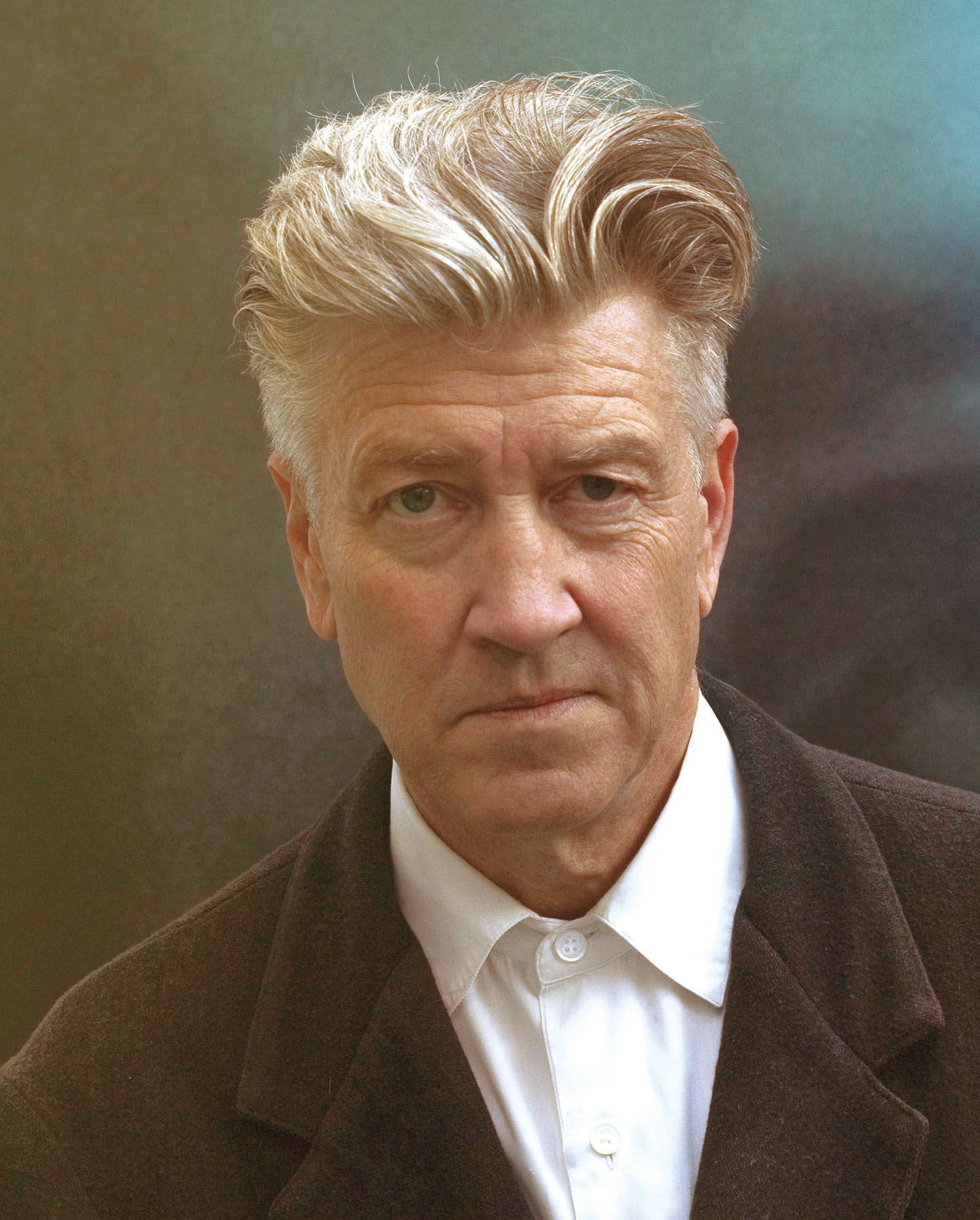
Enter iconic American filmmaker David Lynch, director of TV’s groundbreaking Twin Peaks, and feature films that include Eraserhead, Elephant Man, Blue Velvet, Mulholland Drive, The Straight Story, and most recently, Inland Empire. The United Kingdom’s highly reputed Guardian has dubbed Lynch “the most important film-maker of the current era,” but an illustrious career has not impeded his concern for the needy.

Mind you, many individuals and organizations have stepped forward in the troubled areas of our society. Much has been done, yet even more remains to be done. What is his modality of choice to help? Meditation, he declares, and specifically Transcendental Meditation, or TM, which is neither a religion nor a philosophy, and therefore requires no change of lifestyle.

Transcendental Meditation is a simple, easily learned technique, practiced for 20 minutes twice daily while sitting comfortably in a chair with eyes closed. This quiet time provides the mind and body with a unique state of “restful alertness” which allows stress and fatigue to be released in a natural way, resulting in better health, greater energy, more clarity of mind, and overall enhancement of the joy of life. It utilizes the natural tendency of the mind to go to a field of greater happiness, hence is basically effortless, differing thereby from all other meditation techniques, which invariably involve either concentration or contemplation, modalities that tend to keep the mind on the surface level of thought and so impede the transcending process.

John Hagelin, Ph.D., world-renowned quantum physicist (“What The Bleep Do We Know!?” and “The Secret”) and recipient of the coveted Kilby Award in physics, describes Transcendental Meditation as “a systematic means to turn the attention powerfully within, to experience and explore deeper levels of mind, quieter levels of human awareness, a state of rest for the body deeper than sleep, where deep-seated stress is dissolved, providing an effective prevention and treatment for stress-related illness.”

Over 600 scientific studies have been conducted on Transcendental Meditation at 250 medical schools and universities in over 30 countries to verify its wide range of benefits for the individual and society. Most notably, the U.S. National Institutes of Health, or NIH, funded in recent decades $26 million in grants to study the effects of TM practice on high blood pressure, atherosclerosis, obesity, and heart disease. Subjects for research have been readily available because the TM technique has now been taught to six million people in over 120 countries.

The timeless knowledge of TM derives from the Vedic heritage of India, the world’s oldest system of knowledge. Veda means truth, or knowledge, and this tradition provides knowledge about many areas of life. For example, Yoga comes from the Vedic tradition, as does Ayurveda, the world’s most ancient system of health care, and Sthapatya Veda, knowledge about building in accord with Natural Law. The knowledge of Transcendental Meditation was revived in our era by the revered sage Maharishi Mahesh Yogi, launched, in 1957, a worldwide movement to make it available on every continent. Maharishi first came to the United States in 1959, and on various occasions thereafter, to oversee the progress of the local TM movement.

Why did David Lynch take up the TM practice? Well, he just couldn’t think of anything better to do. Just kidding. Lynch not only writes, produces, and directs his own films, but also composes popular music, and paints stunning pictures that are exhibited in major art galleries. And oh, yes, crowning a plethora of other avocations, he recently opened his own nightclub in Paris.

As for Transcendental Meditation, his sister first brought it to his attention. “My sister called, and she had started TM,” he reminisces. “There was something in her voice—less stress and more happiness, a certain upbeat lilt. ‘I gotta have that,’ I said to myself. When I actually started, it was like boom, as if a cable had been cut and the elevator plunged right down into pure consciousness.

“I have been ‘diving within’ through the Transcendental Meditation technique for over 30 years now,” he continues. “It has changed my life, my world, allowing me to release stress that was causing fear and anxiety, opening the door to heightened creativity and bliss.”

“Not long ago, when I heard about the crippling levels of stress and violence in the lives of children today, about the need for armed guards to patrol school corridors, and about widespread use of prescription drugs with deleterious side effects, I became concerned about what this was doing to the health of these children and their ability to learn.”

“Discussing the matter with a friend, the thought came that in today’s turbulent world all school kids should have a class period to begin and end the school day where they can dive within and experience the field of silence, the transcendental level of life, which is an enormous reservoir of energy and intelligence within all of us.”

To help at-risk students, the director established the David Lynch Foundation for Consciousness-Based Education and World Peace—and promptly made hefty donations to give it a jump-start.

Since then the DLF has helped fund “Quiet Time” programs, which are always voluntary, around the world, teaching TM to over 250,000 children in the United States and Latin America, the Middle East, Europe, and Africa. The US schools can be found in more than a dozen states.

Progress was made in the financial area by a benefit concert given at New York’s Radio City Music Hall and featuring such renowned meditating artists as Beatles Sir Paul McCartney and Ringo Starr, legendary singer/songwriter Donovan, Mike Love of the Beach Boys, flute virtuoso Paul Horn, Sheryl Crow, Moby, Eddie Vedder, Ben Harper, Russell Simmons, co-founder of the pioneering hip-hop label Def Jam, and Jerry Seinfeld in a winning stand-up comic skit. Since a huge number of schools around the world remain on a waiting list for Quiet Time programs, plans are underway for future benefit concerts in different venues. Watch News conference Highlights from the day before the concert, and Watch Event Highlights, which include clips of David Lynch interviewing Paul, Ringo, Sheryl, Eddie, and excerpts from that amazing magical evening. Check here for other DLF featured past events.

Transcendental Meditation in Education

Dr. Sanford Nidich, professor of education and physiology at Maharishi University of Management, has been working with at-risk adolescents in U.S. schools and reports on a study conducted at the University of Connecticut involving 106 secondary school students from three public schools, primarily from lower-income, minority populations. “Meditating students,” he relates, showed significant reductions in anxiety, emotional problems, and hyperactivity, and improved overall mental health after an average of four months compared to controls.”

“Something must be done to help today’s youth deal with the enormous amount of stress in their lives,” says Dr. Robert Colbert, professor at the University of Connecticut and co-author of the study. “This study shows that something can help immediately—and it is easy to implement in any school setting.

Two more recent studies out last year, also funded by the David Lynch Foundation, showed TM improved standardized academic achievement and effectively lowered record stress levels in students.

The study, published in the journal Education, reported students who practiced the Transcendental Meditation program showed significant increases in math and English scale scores and performance level scores over a one-year period. Forty-one percent of the meditating students showed a gain of at least one performance level in math compared to 15.0% of the non-meditating controls.

The latest study published in the Journal of Instructional Psychology found the Transcendental Meditation technique significantly decreased psychological distress in at-risk racial and ethnic minority public school students by 36 percent over 4 months compared to controls. The study also found significant decreases in trait anxiety and depressive symptoms.

In the area of students with learning disabilities, one study, published in the 2009 issue of the peer-reviewed Current Issues in Education, followed a group of 10 middle-school students with ADHD who were practicing the Transcendental Meditation technique twice a day at school. After three months, researchers found over 50% reduction in stress and anxiety, and improvements in ADHD behavior regulation.

“The effect was much greater than we expected,” says Dr. Sarina Grosswald, Ed.D., a George Washington University-trained cognitive learning specialist and lead researcher on the study. “The children also showed improvements in attention, working memory, and organization.” The study was funded by grants from the Abramson Family Foundation and the David Lynch Foundation.

A follow-up study, also funded by the David Lynch Foundation, came out last year. This random-assignment controlled study conducted over a period of 6 months in an independent school for children with language-based learning disabilities in Washington, DC, found improved brain functioning, decreased symptoms of attention-deficit/hyperactivity disorder, (ADHD), and improved language-based skills among ADHD students practicing the Transcendental Meditation technique. The paper, ADHD, Brain Functioning, and Transcendental Meditation Practice, was published in Mind & Brain, The Journal of Psychiatry.

At the Ideal Academy Public Charter School in Washington, D.C., students from the 5th through 12th grades now practice the TM/Quiet Time program. “It changed the whole climate of the school, says principal Dr. George Rutherford, a highly regarded D.C. educator. “It was just beautiful. The academic achievement has gone up, and behavioral problems have gone down. I could never work in a school that doesn’t have the TM/Quiet Time program.”

One student at the Ideal Academy reports, “I notice I haven’t been mad for a while, since I learned TM. I used to get in fights and talk to people behind their back. And it helps me to not get distracted.”

A student at the Tucson, Arizona, Museum of Art School was struggling in math, but now says, “I’m doing really good in there, and my behavior’s been a lot better.” One of the students at the Kingsbury School in Washington, D.C., states that just two weeks after practicing TM twice a day the nightmares he was having stopped, allowing him to sleep much better and so avoid the fatigue that usually followed during the day.

“I have had the pleasure of meeting many students who are “diving within” and experiencing Consciousness-Based Education,” sums up DLF founder David Lynch. “These students are all unique individuals, very much themselves. They are amazing, self-sufficient, wide-awake, energetic, blissful, creative, powerfully intelligent and peaceful human beings. Meeting these students, for me, was the proof that Consciousness-Based Education is a profoundly good thing for our schools and for our world.”

Principal James Dierke agrees. The 2008 National Association of Secondary School Principals—National Middle School Principal of the Year, says, “Stress is the number one enemy of public education, especially in inner-city schools. It creates tension, violence, and compromises the cognitive and psychological capacity of students to learn and grow. The TM/Quiet Time program is the most powerful, effective program I have come across in my 39 years as a public school educator for addressing this problem. It is nourishing children and providing them an immensely valuable tool for life. It is saving lives.”

TM for Veterans: Operation Warrior Wellness

While the DLF’s work with at-risk children got into full gear, founder David Lynch was given the staggering statistics from the Veterans Administration showing that more soldiers are dying from the trauma of combat incurred in Iraq and Afghanistan than at the hands of enemy combatants. Over 500,000 veterans have been diagnosed with post-traumatic stress, or PTS, since 2001, with 18 veterans committing suicide each day.

To help meet this challenging situation, the David Lynch Foundation launched Operation Warrior Wellness, a national outreach to help 10,000 war veterans suffering from PTS by teaching them Transcendental Meditation. A December 2010 press conference and follow-up fund-raiser Gala Event at the Metropolitan Museum of Art in New York was supported by noted film directors Clint Eastwood and Martin Scorsese, fashion maven Donna Karan, pop music mogul Russell Simmons, and yet another Russell, versatile actor/comedian Russell Brand, plus “America’s Doctor,” Dr. Mehmet Oz.

A year later on December 2, 2011 the David Lynch Foundation launched Operation Warrior Wellness in Los Angeles with a global press conference at the Beverly Hills Hotel where David Lynch presented a check for one million dollars for Veterans to learn Transcendental Meditation. The 3rd Annual Change Begins Within Gala Event took place at the Los Angeles County Museum of Art.Ellen DeGeneres opened the evening and then turned the proceedings over to host Russell Brand. Photos can be seen on the David Lynch Foundation photo stream.

Combatants from past and present conflicts delivered testimonials of their devastating war experiences and told of how TM gave them a new lease on life. World War II pilot Jerry Yellin spoke eloquently of the toll that extensive bombing raids against Japan had on his nervous system so that for three decades after the end of the war he felt no satisfaction from anything he did. “At 51,” he recounted, “I took up TM and only then did I finally find peace.”

Vietnam vet Dan Burks gave a moving account of the mental scars he carried after a battle in which he killed Vietnamese soldiers and lost many of his own comrades. “PTS is a wound,” he concluded. “It takes your life away, just like losing a limb. But guess what? You can get rid of that wound. My life, after the discovery of Transcendental Meditation, was like the difference between heaven and hell.”

Finally, David George, 23, a former infantry soldier, told of the trauma he experienced not only in Iraq, but also on returning home, where long ago battles still raged deep within his system. “Happily,” he said, “I found TM and that cleared the air and I could tell where I was going. I felt this warm, groovy feeling. It just keeps getting better and better.”

Veterans with PTS showed a 50 percent reduction in their symptoms after just eight weeks of practicing the stress-reducing Transcendental Meditation technique, according to a pilot study published in June 2011 in the scientific journal Military Medicine. The study found that Transcendental Meditation produced significant reductions in stress and depression and marked improvements in relationships and overall quality of life.

The paper’s senior researcher, Norman Rosenthal, M.D., is clinical professor of psychiatry at Georgetown University Medical School and director of research at Capital Clinical Research Associates in Rockville, Maryland. “These young men were in extreme distress as a direct result of trauma suffered during combat,” he affirms, “and the simple and effortless Transcendental Meditation technique literally transformed their lives.”

The findings were similar to those from a randomly controlled study of Vietnam veterans conducted by researchers at the University of Colorado School of Medicine in 1985. In that study, published in the Journal of Counseling and Development, after three months of twice-daily TM practice, the veterans had fewer symptoms than those receiving conventional psychotherapy of the day. In fact, most of the TM-treated subjects required no further treatment.

“The soldiers are truly suffering,” affirms David Lynch. “No one knows what they’ve been through. No one knows what they’ve done, what they’ve experienced, what they’ve seen, and their lives in many cases are a true nightmare. That’s why we want to offer them Transcendental Meditation. It’s a beautiful thing for the human being. It’s a big stress-buster, and when these soldiers get this simple effortless technique, they’re going to get their lives back again. It’s not hocus-pocus. It’s going to save lives, and help not only the soldiers, but all the families who are suffering, and their friendships as well.”

For the already noted Operation Warrior Wellness benefit at New York’s Metropolitan Museum of Art, Clint Eastwood, best known for playing violent, hardened characters on-screen, sent a video in which he stated his strong support of Transcendental Meditation. “I’ve been using it for almost 40 years now,” he declared. “It’s a great tool to combat stress, especially considering the stress our men and women in the armed forces are going through. There’s enough studies out there that show TM is something that can benefit everybody.”

***************************************************

Norman Zierold is the author of a bevy of books on Hollywood, including The Child Stars, The Moguls, Garbo, and Sex Goddesses of the Silent Screen, as well as two true-crime stories—Little Charley Ross: The Story of America’s First Kidnapping for Ransom, and Three Sisters in Black, recipient of a Special Edgar Allan Poe Award from the Mystery Writers of America. He has also published articles in a plethora of magazines, ranging from New York Magazine, McCall’s, and Popular Mechanics to Good Housekeeping, Variety, and Reader’s Digest.

REFERENCES:

David Lynch Foundation http://www.davidlynchfoundation.org

Operation Warrior Wellness http://www.operationwarriorwellness.org

The Transcendental Meditation program http://tm.org

Ask the Doctors: Specialists answer your questions about TM and health http://askthedoctors.com

ADHD, the Mind and the TM technique http://www.adhd-tm.org

Maharishi University of Management http://www.mum.edu

If read in the UK, use this for The Transcendental Meditation Program: http://www.t-m.org.uk

****************************************

Related article by Norman Zierold: Embody: focus on TM: Iconic Filmmaker David Lynch has a viable solution to a pressing problem.

And enjoy this article about Norman: The Chronicle of Higher Education: Notes From Academe: The Spokesman Who Kept Calling.

Here is an excellent Huffington Post interview with David Lynch that came out two years later, Dec 9, 2014: Interview With David Lynch: His Mission to Change the World Through Meditation.

Candy Crowley visits KRUU-FM before delivering Commencement Address at Maharishi University

May 28, 2012

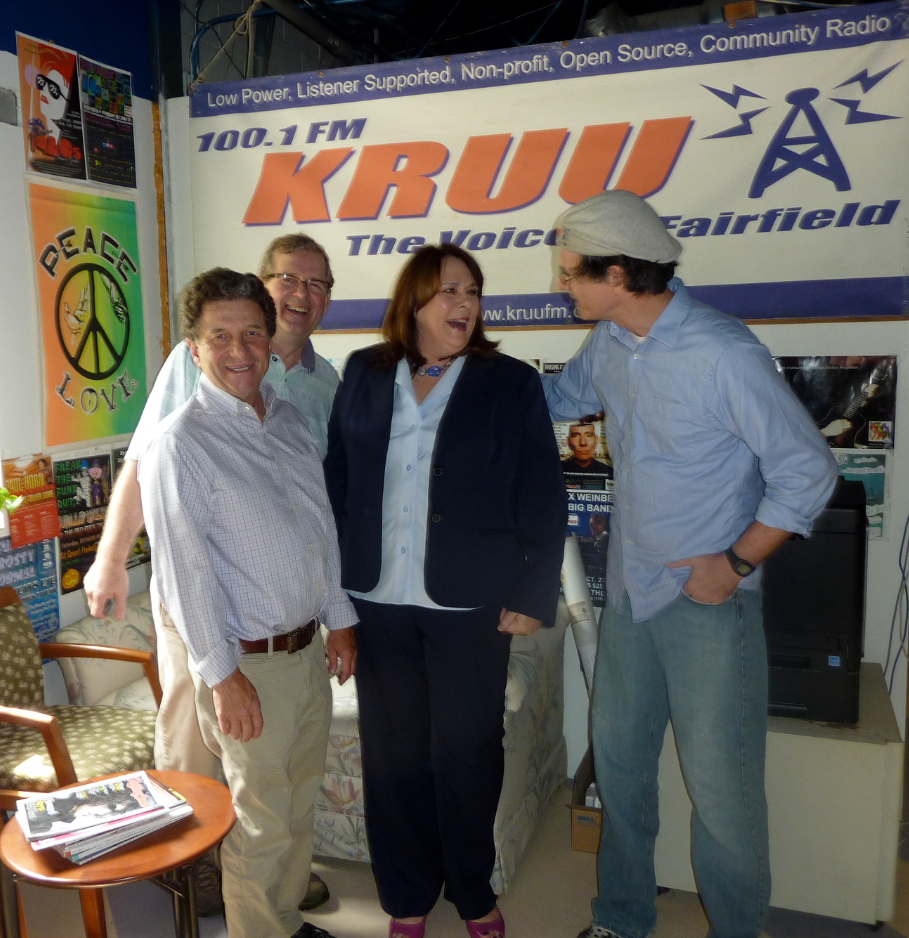
Dennis Raimondi, Burt Chojnowski, and KRUU-FM station manager James Moore enjoy a short visit with CNN’s Candy Crowley. She was in Fairfield, Iowa to deliver the Commencement Address at Maharishi University of Management, May 26, 2012. (Photo taken by Ken Chawkin)

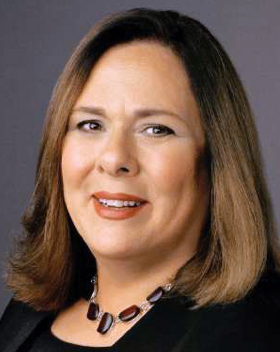
During her recent visit to Fairfield, Iowa to deliver the Commencement Address at Maharishi University of Management, CNN chief political correspondent Candy Crowley visited the local community-supported solar-powered radio station, KRUU-LP 100.1 FM, to tape an interview on Speaking Freely with Dennis Raimondi. The show aired Saturday, May 26, 2012 and Monday, May 28 at 1:00 and 6:30 pm. The complete interview is archived at: http://kruufm.com/node/13289. Station manager James Moore also posted a photo and quote from Candy on her love of radio.

Dennis mentions that Candy was one of the first to make it possible for other women to become broadcast journalists. She thanks him for that observation, if it is true, but did not set out to purposefully make that happen. With television being a visual medium, she says, “I’m clearly not the 20-something blonds that are currently on TV. But you can do it your way, you can be who you are, and do what you want. You might have to work a little harder, you might have to be that much better. … You have to be so good at what you do that they can’t ignore you.”

Burt Chojnowski of Fairfield First! Buzz also produced a film of Dennis’s interview in the KRUU-FM studio: Candy Crowley on Speaking Freely with Dennis Raimondi. This Candy Crowley on Speaking Freely – Unplugged version includes the pre-interview banter starting off with her reciting the Gettysburg Address! Burt also enjoyed asking and posting 3 Questions with Candy Crowley.mov about her impressions of Fairfield, writing, and leadership, also recorded on May 26, 2012.

Candy told Burt she had lived in Iowa before, in Des Moines, for 5 years, and could probably see herself living here in Fairfield. She said, stepping off the plane, you can really feel yourself breathing deeply, for the first time. Burt asked Candy what she would say to women in third-world countries to inspire them to become leaders. She said the best leaders, not the ones that got the most votes, but the ones who did something, are the best listeners. “A leader has to be able to take the hopes and desires of the people looking to him or her and make it into reality. Well, what’s the first step of that—what are those hopes and desires? The leaders listen first, and if you skip that step, you’re never gonna be a leader.” Speaking of leaders, a big thank you to Bob Roth for listening and bringing Candy Crowley into the studio despite her tight schedule!

CNN anchor Candy Crowley gives Commencement Address at Maharishi University of Management is now available on the YouTube channel.

See Fairfield Ledger: Crowley speaks to M.U.M. grads and CNN’s Candy Crowley to give Commencement Address at Maharishi University of Management.


CNN’s Candy Crowley to give Commencement Address at Maharishi University of Management

May 23, 2012

FAIRFIELD, IA: The entire Fairfield community is invited to attend the Maharishi University of Management 2012 Commencement in the Men’s Dome at 1 pm on Saturday, May 26.

A total of 275 degrees will be given to 268 graduating students: 67 undergraduates for 74 degrees, including 7 double-majors, and 201 graduate degrees, for 196 Master’s and 5 Ph.D.

M.U.M.’s Commencement speaker is Candy Crowley, CNN’s award-winning chief political correspondent and anchor of “State of the Union with Candy Crowley,” a political hour of newsmaker interviews and analysis of the week’s most important issues.

In her role as chief political correspondent, Ms. Crowley covers a broad range of stories, including presidential, congressional and gubernatorial races and major legislative developments on Capitol Hill.

Since arriving at CNN from NBC in 1987, Ms. Crowley has won some of broadcasting’s major awards: a Peabody, Emmy, and Gracie Allen Award.

Ms. Crowley has been practicing the Transcendental Meditation technique since 2009. Along with Dr. Mehmet Oz, she was a co-host of the David Lynch Foundation “Change Begins Within” benefit gala at the Metropolitan Museum of Art in New York City in 2010. She also hosted the 2011 launch for DLF’s Operation Warrior Wellness in Washington, DC.

Ms. Crowley was nominated for a Maharishi Award by the Maharishi University of Management (MUM) Global Student Council this past December but was unable to attend the award ceremony. This award will be presented to her when she is on campus.

“She said she is ‘very honored and excited’ to be able to speak at our 2012 commencement ceremony,” said MUM executive vice-president Craig Pearson.

Candy will be attending many of the Commencement events, but has to return immediately to Washington, DC after graduation in order to anchor her national political talk show on Sunday morning.

Florence Lillian Nickerson is this year’s Salutatorian, and the Valedictorian is Patrik Nils-Olof Siljestam.

The University of Iowa Faculty Brass Quintet will play the music for the Graduation Processional.

Numbers and Types of Degrees

74 Undergraduate degrees:

BA Art 2
BFA 1
BA Business 14
BA in Sustainable Community Development 1
BA in Education 1
BA in Literature 7
BA in Media and Communications 12
BA in Maharishi Vedic Science 2
BA in Physiology and Health 8
BA in Physiology and Health, Pre-Medicine 7
BS in Mathematics 1
BS in Sustainable Living 18

196 Master’s degrees:

MA in Education 3
MA in Maharishi Vedic Science 15
MA in Teaching 3
MBA Sustainable Business 33
MBA Accounting 23
MS Computer Science 119

5 Ph.D. degrees:

Ph.D. in Management 5

During her recent visit to Fairfield, Iowa to deliver the Commencement Address at Maharishi University of Management, CNN chief political correspondent Candy Crowley visited the local community-supported solar-powered radio station, KRUU-FM, to tape an interview on Speaking Freely with Dennis Raimondi. Burt Chojnowski of Fairfield First! Buzz filmed that interview and also asked and posted 3 Questions with Candy Crowley about her impressions of Fairfield, writing, and leadership, recorded on May 26, 2012. You can hear and see those interviews in this new post: Candy Crowley visits KRUU-FM before delivering Commencement Address at Maharishi University.

Also see this article by Diane Vance who spoke with Candy on her way out here and also attended her commencement address: Fairfield Ledger: Crowley speaks to M.U.M. grads.

CNN anchor Candy Crowley gives Commencement Address at Maharishi University of Management is now available on the YouTube channel.

Star Tribune: Meditation brings peace to war vets

May 17, 2012

Meditation brings peace to war vets

May 16, 2012 | Lifestyle | Star Tribune | Kristin Tillotson

Transcendental meditation has its detractors, but many veterans say it helps them with post-war stress.

Fernando Franco, who served in both Bosnia and Iraq, uses meditation techniques to control stress. — Photo: Carlos Gonzalez, Star Tribune

Like many veterans, Fernando A. Franco had trouble sleeping through the night.

A major in the Minnesota National Guard, he was deployed twice between 2003 and 2007, once to Bosnia and once to Iraq, with barely six months’ break in between. The place where he was stationed near Balad, Iraq, was nicknamed “Mortaritaville” because “we were attacked every day,” he said.

After Franco got back home to St. Paul, he was hard-wired to wake up at 3 every morning, the same hour that in Mortaritaville he and his fellow soldiers would start hearing the shells aimed their way and brace for battle. Once he woke up, he’d stay up, living in a state of perpetual exhaustion.

“It really affected not only my work, but my relationship with my wife and kids,” he said. Then he heard about TM.

Transcendental meditation, or TM for short, is hailed by its devotees as good for just about anything that ails you. Skeptics call it everything from a bunch of hooey to a brainwashing cult, but those who do it daily claim they feel calmer, have more energy and feel healthier, both mentally and physically, than they used to. It’s not a religion, they say, just a practice that reduces anxiety and improves well-being.

Now the U.S. military — not known for embracing the mystical — has taken note. The Department of Veterans Affairs has invested $5 million in a dozen trial programs studying TM’s effects on post-traumatic stress disorder (PTSD), including one at the Minneapolis VA Health Care System.

The VA hopes to recruit 30 vets for the trial beginning in about a month, said spokesman Ralph Huessner, noting that it should not be confused with Mindfulness-Based Stress Reduction, a different meditation program already offered.

‘A part of the universe’

Franco, 49, works in human resources for Target Corp. No matter how busy he gets, he always takes 20 minutes twice a day, at about the same time every day, to meditate, using the discipline he learned as a soldier to strictly maintain his schedule.

“The only way to get the full benefit is to do it morning and afternoon, no matter what,” he said, “even if you have to do it standing up in a bathroom stall.”

TM practitioners call the state they go into one of “restful alertness.” Transcendence is achieved, they say, by repeating a mantra and emptying the mind. So how does it feel?

“There is a moment when you go into a void, an emptiness, and you feel a part of the universe,” Franco said. “It’s like in the movie ‘Avatar’ when the creature says they are a part of everything. That’s how I would explain it.”

He first heard about TM for veterans through Operation Warrior Wellness, an initiative launched last year by the foundation run by film director and TM advocate David Lynch.

“I’m Roman Catholic, but I’m very open-minded about Eastern philosophies,” Franco said.

In October, he attended training classes at the TM center in St. Paul. Six months later, he usually sleeps through the night and has passed his enthusiasm for TM along to his 15-year-old son.

“When you come back from war, where you’ve learned to shut down your emotions, you have to relearn how to be with your family,” he said. “It helps you not only to reconnect with yourself, but other people. I’ve also noticed I’m able to concentrate better.”

Some critics of the TM movement have accused it of being a religion, of amassing wealth for its leaders, and of brainwashing. Franco, who learned TM through a scholarship from Operation Warrior Wellness, said he’s seen none of that.

“I have never felt coerced into making this a religious path, and have encountered people of all faiths  who do it,” he said. “I have never been asked to make a donation.”

Although Franco said he does not have PTSD, he thinks meditation could help veterans who do.

“It’s different for everyone, and you still might need counseling and pills, but TM is one of the best tools for stress out there,” he said.

The draw of Oprah’s blessing

Long, white and stately, the local Peace Palace — which is what the international TM network calls its specially constructed education centers — sits just off a freeway frontage road on the eastern edge of St. Paul. Next door to an insurance office and a hop and a skip from Culver’s, the Maharishi Invincibility Center is hard to miss, an Eastern architectural presence in Midwestern suburbia.

At a recent open house, center director Billie Jean Billman led visitors on a tour. Since Oprah aired a special extolling the virtues of TM in April, Billman said, there has been a spike in interest. The center recently doubled its instructors from two to four.

“TM is not a panacea for everything, but it’s a non-pharmacological process that wakes up the body and the brain,” Billman said.

Two veterans who recently started TM, Sarah Ditto and Pat Watson, were also on hand to describe the benefits they’ve experienced.

“I was amazed at how completely calm I felt,” said Watson, 54. “It’s like pancake batter spreading across a griddle, slowly turning golden brown. You really are resting but awake. After I meditate, people ask me what I’ve been doing.”

“I was really energized after the first time I did it,” said Ditto, 25, who works with disabled veterans at the Metropolitan Center for Independent Living in St. Paul. “I went home and did a bunch of yard work. It’s helped me to focus better, too.”

Ditto likes to visit the center to do her meditating because its minimally decorated rooms are ideal for it. But, she says, she sometimes encounters a problem.

“I meditate facing Culver’s, and instead of my mantra I start saying in my head, Chocolate custard. Chocolate custard. Chocolate custard.”

Kristin Tillotson • 612-673-7046

For more information visit these websites:

www.tm.org and www.operationwarriorwellness.org.

Related articles: Washington Post: VA testing whether meditation can help treat PTSDPOLITICO: Coping with PTSD | Norwich University President Receives “Resilient Warrior Award” at National Veterans Summit in Washington, DC | Washington Post: Does Transcendental Meditation help veterans with PTSD? | Transcendental Meditation Drastically Turns Life Around For Veteran With PTSD | David Lynch gives $1M to teach vets meditation | David Lynch donates $1 million in grants through his foundation to teach veterans to meditate | Replay of David Lynch Foundation Launch of Operation Warrior Wellness Los Angeles | Post Traumatic Stress and How Transcendental Meditation Can Help [Infographic]

Washington Post: VA testing whether meditation can help treat PTSD

May 4, 2012
 

VA testing whether meditation can help treat PTSD

By Steve Vogel, Published: May 3

Seeking new ways to treat post-traumatic stress, the Department of Veterans Affairs is studying the use of transcendental meditation to help returning veterans of Iraq and Afghanistan.

Veterans Affairs’ $5.9 billion system for mental-health care is under sharp criticism, particularly after the release of an inspector general’s report last month that found that the department has greatly overstated how quickly it treats veterans seeking mental-health care.

VA has a “huge investment” in mental-health care but is seeking alternatives to conventional psychiatric treatment, said W. Scott Gould, deputy secretary of veterans affairs.

“The reality is, not all individuals we see are treatable by the techniques we use,” Gould said at a summit Thursday in Washington on the use of TM to treat post-traumatic stress suffered by veterans and active-duty service members.

By some estimates, 10 percent of veterans returning from Iraq and Afghanistan show effects of post-traumatic stress disorder, numbers that are overwhelming the department

“Conventional approaches fall woefully short of the mark, so we clearly need a new approach,” said Norman Rosenthal, a clinical professor of psychiatry at Georgetown University’s medical school.

Rosenthal told the gathering that TM, a meditative practice that advocates say helps manage stress and depression, is “possibly even a game-changer” in how to treat PTSD.

VA is spending about $5 million on a dozen clinical trials and demonstration studies of three meditation techniques involving several hundred veterans from a range of conflicts, including Iraq and Afghanistan. Results from the studies will not be available for 12 to 18 more months.

But Gould said he was “encouraged” by the results of other trials presented at the summit.

Two independent pilot studies of Iraq and Afghanistan veterans showed a 50 percent reduction in symptoms of post-traumatic stress after eight weeks, according to the summit’s sponsor, the David Lynch Foundation, a charitable organization founded by the American filmmaker and television director.

Results from the initial phase of a long-term trial investigating the effects of TM on 60 cadets at Norwich University, a private military college in Vermont, have shown promise, school officials said at the summit.

Students practising TM at Norwich showed measurable improvement in the areas of resilience, constructive thinking and discipline over a control group not using the method. “The statistical effect we found in only two months was surprisingly large,” Carole Bandy, an associate professor of psychology who is directing the Norwich study, said at the summit.

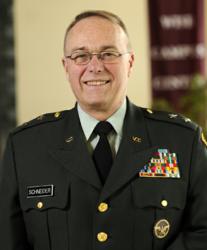
“For us, it’s all about the evidence,” said Norwich President Richard W. Schneider, who added that he was a skeptic before the trial began.

Operation Warrior Wellness, an initiative of the David Lynch Foundation, is providing TM training to troops recovering from wounds at Joint Base Lewis-McChord in Washington state. Soldiers report “dramatic improvements” in sleep, according to the foundation, as well as significant reductions in pain, stress and the use of prescription medications.

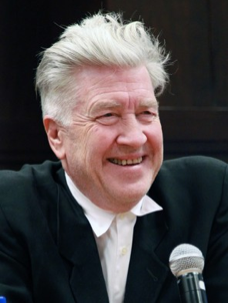
Lynch, the director of “Blue Velvet,” “Mulholland Drive” and the television series “Twin Peaks,” is a longtime practitioner of TM.

“The VA is very interested in what this can do,” Lynch said in a telephone interview Thursday. He acknowledged that many in the military are wary of transcendental meditation, with its New Age and mystic connotations.

“Big-time,” Lynch said. “They’re skeptical until they start hearing stories, or experiencing it for themselves.”

Related articles: Washington Post: Does Transcendental Meditation help veterans with PTSD? | POLITICO: Coping with PTSD | Norwich University President Receives “Resilient Warrior Award” at National Veterans Summit in Washington, DC | Huffington Post: David Lynch Brings Transcendental Meditation To D.C.

Norwich University President Receives “Resilient Warrior Award” at National Veterans Summit in Washington, DC

May 4, 2012

Norwich University President was honored with the “Resilient Warrior Award” during a National Veterans Summit in Washington, DC for his leadership in exploring the use of Transcendental Meditation in building resilient warriors

“The disturbing prevalence of PTSD among returning troops underlines the need for more effective resilience training among our cadets.” — Norwich University President Richard W. Schneider, RADM USCGR (Ret.)

Washington, DC (PRWEB) May 03, 2012

Dr. Richard W. Schneider, RADM USCGR (Ret.), the 23rd President of Norwich University in Northfield, Vt., received the inaugural “Resilient Warrior Award” for 2012 during a national summit on “Resilience, the Brain and Meditation,” held on Thursday, May 3, at the Army and Navy Club in Washington D.C.

The award was presented to President Schneider by veterans of four wars who direct Operation Warrior Wellness, a division of the David Lynch Foundation 501(c)(3) nonprofit organization, which has provided Transcendental Meditation (TM) scholarships for more than 250,000 at-risk youth and veterans and their families who suffer from post traumatic stress disorder (PTSD).

The award cites Schneider for “leading and training a new generation of resilient warriors who will safeguard America and secure the peace with honor and integrity.”

Under Schneider’s leadership, Norwich University recently completed the initial phase of a long-term, longitudinal, randomized controlled trial with 60 cadets, investigating the effects of TM on psychological distress and resilience. Key results of the first nine-week period included reduced perceived stress, improved constructive thinking, decreased state anxiety, increased behavioral coping, reduced depression and improved dispositional resilience.

“Norwich is proud to be in partnership with the David Lynch Foundation and the Educational Foundation of America for providing the resources for this wonderful effort,” Schneider said.

“The disturbing prevalence of PTSD among returning troops underlines the need for more effective resilience training among our cadets. Based on existing data and preliminary results of ongoing trials at Norwich, I believe the Transcendental Meditation technique represents an essential tool to promote resilience in cadets.”

Ed Schloeman, CMS (Ret.), national co-chair of Operation Warrior Wellness, praised President Schneider for “equipping his cadets with the most important of tools—one that will help them overcome stress and promote resilience throughout their life in the military—throughout their life. He is a great educator, a wise man, and a true leader.”

After receiving the news of the award, Schneider said: “I am honored to accept this award on behalf of all those who have worked so hard on this project to experiment with providing our future soldiers, sailors, and airmen the tools necessary to become more resilient, even better warriors, and better human beings.”

Other speakers at the Summit included W. Scott Gould, the US Deputy Secretary of the Veterans Administration, and Norman Rosenthal, M.D., clinical professor of psychiatry, Georgetown University Medical School and author of a breakthrough research study, which found a 50% reduction in the symptoms of PTSD among veterans who practice TM.

Reported in newstimes.com. Related articles: Washington Post: Does Transcendental Meditation help veterans with PTSD? | POLITICO: Coping with PTSD | Washington Post: VA testing whether meditation can help treat PTSD |

Washington Post: Does Transcendental Meditation help veterans with PTSD?

May 4, 2012

Posted at 02:45 PM ET, 05/03/2012.
This story has been updated. Previously titled: Summit Examines Use of Transcendental Meditation to help Vets with PTSD. Later published in Washington Post: VA testing whether meditation can help treat PTSD

Does Transcendental Meditation help veterans with PTSD?

By Steve Vogel

Seeking new ways to treat post-traumatic stress, the Department of Veteran Affairs is studying the use of transcendental meditation to help returning veterans of Iraq and Afghanistan.

“The reality is not all individuals we see are treatable by the techniques we use,” said W. Scott Gould, deputy secretary for the Department of Veterans Affairs, told a summit on the use of TM to treat post traumatic stress Thursday in Washington.

Director David Lynch founded a charitable organization that funded a summit on using Transcendental Meditation to treat military veterans with PTSD. (David Livingston – GETTY IMAGES)

The VA is spending about $5 million on a dozen trials involving several hundred veterans from a range of conflicts, including Iraq and Afghanistan. Results from the trials will not be available for another 12 to 18 months.

But Gould said he was “encouraged” by the results of trials which were presented at the summit.

Two independent pilot studies of Iraq and Afghanistan veterans showed a 50 percent reduction in symptoms of post-traumatic stress after eight weeks, according to the summit’s sponsor, the David Lynch Foundation, a charitable organization founded by the American filmmaker and television director.

Results from the initial phase of a long-term trial investigating the effects of Transcendental Meditation on 60 cadets at Norwich University, a private military college in Vermont, have been encouraging, school officials said at the summit, held at The Army and Navy Club.

Students practising TM showed measurable improvement in the areas of academic performance and discipline over a control group. “The statistical effect we found in only two months was surprisingly large,” Carole Bandy, an associate professor of psychology who is directing the study at the university, said at the summit.

“For us, it’s all about the evidence,” said Richard W. Schneider, president of the university, who added that he was a skeptic before the trial began.

“Conventional approaches fall woefully short of the mark, so we clearly need a new approach,” Norman Rosenthal, a clinical professor of of psychiatry at Georgetown University Medical School.

Operation Warrior Wellness, a division of the foundation, is providing TM training to troops recovering from wounds at Joint Base Lewis-McChord in Washington state. Troops report “dramatic improvements” in sleep, according to the foundation, as well as significant reductions in pain, stress and the use of prescription medications

Lynch, the director of “Blue Velvet,” “Mullholland Drive” and the television series “Twin Peaks,” is a longtime practitioner of TM, a meditative practice advocates say helps manage stress and depression.

Related articles: POLITICO: Coping with PTSD | Norwich University President Receives “Resilient Warrior Award” at National Veterans Summit in Washington, DC | Huffington Post: David Lynch Brings Transcendental Meditation To D.C.