Posts Tagged ‘meditation’

South Asian Heart Center uses Transcendental Meditation to prevent and manage heart disease

May 12, 2012

South Asians are becoming painfully aware of the high incidence of heart attacks, often fatal, frequently among seemingly healthy, trim, and physically active close family & friends.

The South Asian Heart Center (SAHC) at El Camino Hospital in Mountain View, California has developed a four-pronged approach to prevent and successfully manage heart disease among men and women of South Asian descent living and working in America. Here is an introduction to their work presented by Executive Director Ashish Mathur, and SAHC Medical Director Cesar Molina, MD, FACC: South Asian Heart Center Helps South Asians Fight Heart Disease.

In this fourth of a four-part series on Therapeutic Lifestyle Changes Dr. Molina focuses on the importance of deep rest and its effect on heart-health and diabetes. He specifically covers the importance of meditation (or restful alertness) on longevity and health, and the science behind the effective technique of Transcendental Meditation (TM), which produces a “hypo-metabolic state of restful alertness.” Learn the evidence on the profound impact of this unique form of meditation on a whole class of chronic ailments. This is a very clear and comprehensive presentation!

South Asian Heart Center Webinar: TLC – Restful Sleep & Restful Alertness April 25, 2012, published on Apr 26, 2012 by sahcsathi.

At 26:26 of Part 4, Dr. César Molina begins talking about resting while awake with Transcendental Meditation and how it impacts our health, especially for South Asians and their propensity toward heart disease. One of the therapeutic modalities from the South Asian Heart Center is Transcendental Meditation as a stress-reduction technique. Dr. Molina reviews his talk starting at 56:18. He summarizes the lifestyle methodology to prevent heart disease and enhance longevity at the South Asian Heart Center: nutrition, physical activity, the importance of restful sleep, and the importance and benefit for stress reduction through Transcendental Meditation decreasing cardiovascular risk factors, decreasing hospital expenditures and admissions, and enhancing longevity.

Dr. César Molina presents Wednesday Lunch-hour Webinar Series TLC: Therapeutic Lifestyle Changes. Here are the 4 topics where you can download the video and a PDF of the main points and graphs for each talk. The recommendations can be applied to all Americans regardless of ethnicity or geographical location.

1. TLC: Therapeutic Lifestyle Changes Overview: May 2, noon
2. TLC: Exercise as Medicine: May 9, noon
3. TLC: The Dinner vs. the Diner: May 30, noon
4. TLC: Restful Sleep and Restful Alertness: June 20, noon

For more information: www.southasianheartcenter.org and www.tm.org.

The H20 Network on Blog Talk Radio interviews Janet Hoffman about Transcendental Meditation

May 2, 2012

Click on this link to go to the website and listen to this great interview! http://www.blogtalkradio.com/theh2onetwork/2012/05/02/transcendental-meditation-with-janet-hoffman

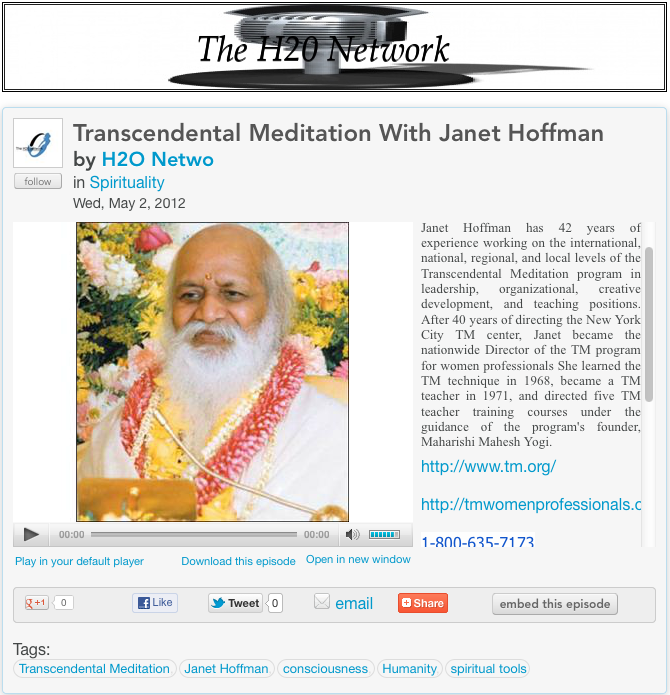
Janet Hoffman has 42 years of experience working on the international, national, regional, and local levels of the Transcendental Meditation program in leadership, organizational, creative development, and teaching positions. After 40 years of directing the New York City TM center, Janet became the nationwide Director of the TM program for women professionals She learned the TM technique in 1968, became a TM teacher in 1971, and directed five TM teacher training courses under the guidance of the program’s founder, Maharishi Mahesh Yogi.

To sign up for the July conference on women and consciousness go to: http://www.gmdousa.org/4Day.

For more information on the Transcendental Meditation program: http://tmwomenprofessionals.org, http://www.tm.org, 800-635-7173.

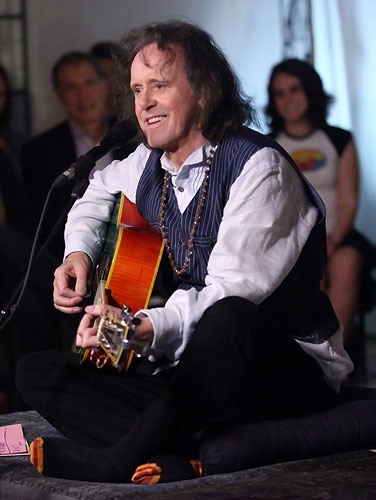
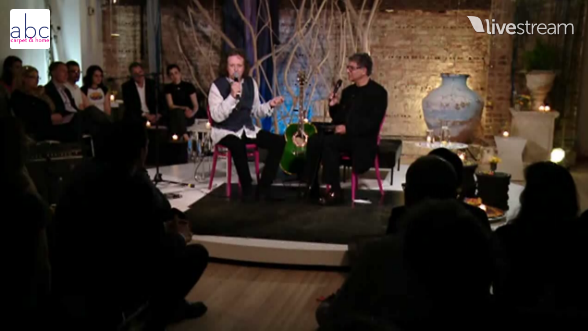
Donovan and Deepak talk about meditation, music, on abc carpet & home via livestream

May 2, 2012

Astrid Stawiarz/Getty Images

Here’s an online streaming event with Donovan and Deepak talking about the old days with Maharishi, Transcendental Meditation, The Beatles, and the music from the 60’s. Thanks to Linda, Donovan’s wife and muse, for suggesting Donovan be on this special event: http://livestre.am/1IWyp on abc carpet & home via @livestream.

Also see: Donovan shares his excitement and fulfillment after playing at the Rock and Roll Hall of Fame | Billboard interview: Donovan Q&A: Catching Up With a Folk Rock Superman | Ode to Donovan by Meghan for Altavoz: Conan introduces Donovan while holding the DLF Music vinyl box-set “Music That Changes The World” | Donovan Inducted into Rock and Roll Hall of Fame | Donovan and Ben Lee on Good Day LA | The former Beatles Paul McCartney and Ringo Starr reunion for David Lynch’s benefit concert airs on New York’s THIRTEEN, Sunday, April 29

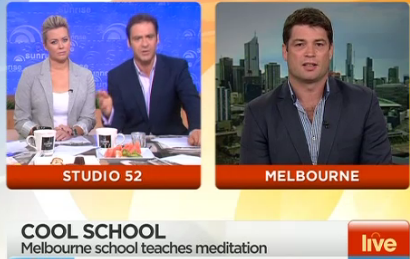
Australian TV: Cool School: Melbourne school teaches meditation to students

April 22, 2012

One with learning in peace

One Melbourne school is helping parents take some of the stress out of school children by teaching them meditation.

Nick, the Australian Sunrise TV reporter, asks a Maharishi School student how he feels after meditation. “Really peaceful and relaxed…ya,” the boy answers. “Peaceful and relaxed…how old are you?” Nick asks him. “Ten,” he replies. “I don’t hear many ten-year-olds thinking about being peaceful and relaxed,” Nick tells him. The boy looks him straight in the eye and says confidently, “I do.” Click on URL to see this lovely report! http://bit.ly/Ji8zys

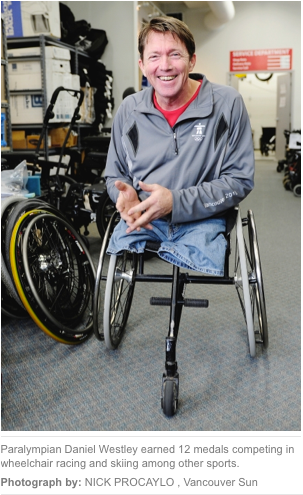
Meditation key to finding balance for Paralympian Daniel Westley — special to The Vancouver Sun

April 5, 2012
By TOM HILL, Special to The Sun April 4, 2012

Daniel Westley has been on so many podiums you’d think he’d been playing sports all his life. In fact, he had barely shown any interest in athletics until after a tragic accident forced doctors to amputate both of his legs.

While in the hospital, Westley happened to meet a young Rick Hansen who, years before raising millions for spinal cord injury research, introduced Westley to wheelchair athletics.

Westley was hooked. After being released from the hospital he started playing sports as much as possible, earning his spot in the 1988 Paralympic Games in Seoul, South Korea.

“I happened to get involved in 1988 and at that time they embraced disabled sports.” recalls Westley, who lives in New Westminster.

But as the Paralympic Games grew in size and popularity, so too did the pressure of training and competing on the world stage. Westley was now participating in both the summer and winter games in a wide range of sports that included everything from wheelchair racing to skiing.

“Any given day I was racing two and three times a day,” he explains. “It was a pretty high intensity to be competing at.”

To perform at the highest level, Westley relied on Transcendental Meditation, a technique that involves two 15- to 20-minute sessions each day and promises a clear and quiet calmness for its practitioners.

”It gave me a chance to settle down and recover from my training,” he says. “I thought that if I wanted to do really well, I’d have to rest really well.”

With his meditation keeping him centred, Westley certainly did do well, going on to win 12 Paralympic medals – four of which were gold medals – in five Paralympic Games.

And yet, for Westley, who now works in sales for a home medical equipment company, the positive influence of meditation extended far beyond sports and has helped him sustain a positive attitude in all facets of his life.

“If you really step into the moment and are really relaxed then the outcomes take care of themselves.”

See the excellent accompanying Sun video report: story.html?tab=VID.

Empowered Health airs Thursdays on CJDC at 11 a.m.; CHEK-TV Vancouver and Victoria, CFJC and CKPG at 7 p.m. and CHAT at 7:30 p.m. The show is broadcast Tuesdays on CFTK at 11:30 a.m. You can also view episodes online at vancouversun.com/empoweredhealth.

© Copyright (c) The Vancouver Sun

Related: Watch this inspiring Chek TV program: North of 49: A guide to the rest of your life: Former paralympian Daniel Westley talks about achieving balance in your life as you head North of 49 from Season 2, Episode 1.

Later reported in the TM Blog: Paralympic Medalist Daniel Westley Relies on TM to Ease Training Pressures

Sharpen your mind with meditation, by David Hughes, in March 2012 issue of Choice Magazine

March 20, 2012

Thought you might like to see this article, Sharpen your mind with meditation, published in the March 2012 issue of Choice, a national magazine in the UK aimed at the over-50s, which may include most of us, these days! Here is the text taken from their Health section on pages 48-49. There is a slight typo on the bottom left of page 48 — they put Dr Rosenthal’s photo with a caption belonging to another doctor quoted in the article. But he was fine about it, and thought it was a good article. I agree; it is very well written. You can download a PDF of the article, which is nicely laid out with photos and quotes. Choice – March 2012. Since this is in print, I activated the links at the end and added some.

Sharpen your mind with meditation

Once dismissed as hippyish humbug, meditation is being increasingly recognised by medical science as a way to keep your mind sharp, reports David Hughes.

FORTY YEARS ago, most busy people in the West would probably have preferred to reveal an interest in bear-baiting than meditation.

Associated with otherworldly images of incense, chanting and flower-power, meditation was generally viewed as faintly eccentric. Taking it up aroused suspicion of imminent departure on the Kathmandu trail – if not to somewhere decidedly warmer, in the view of some religious fundamentalists. Not any more.

Maybe it’s the fast pace of life and the stresses that go with it, but nowadays everyone seems to be closing the eyes and seeking nirvana. No celebrity feature is complete without mention of the meditative flavour of the month, despite which – or maybe because of it – the whole subject has become not merely respectable, but downright fashionable.

Richard Gere, Goldie Hawn and many others champion Buddhist-related practices, while film-maker David Lynch has recruited a host of fellow Transcendental Meditators – including Sir Paul McCartney, who describes the technique as ‘a lifelong gift’ – to support his campaigns to teach TM to groups as diverse as youngsters in inner-city schools, the homeless, and veterans with Post-Traumatic Stress Disorder.

Everyone, it seems, can benefit from meditation. Yet while celebrity endorsement is one engine which has driven this trend, there’s another, less glamorous but more impressive: scientific research.

Since 1970, thousands of studies have been performed on all kinds of meditative practices – cautiously at first, as the field hardly seemed scientifically respectable, but with increasing enthusiasm as initial, promising findings led to a host of impressive long-term results. Meditation, it seems, can be a highly effective way of ‘de-stressing’ mind and body, enabling us to boost physical energy, stay mentally alert, improve memory, and live longer, happier and more successful lives.

Transcending thought
The best-researched practice, Transcendental Meditation – with more than 340 studies published in peer-reviewed scientific and medical journals – involves two 20-minute sessions per day sitting comfortably with eyes closed. Easy to learn and effortless to practice, the technique – which has no religious or philosophical links – has been discovered to offer a simple antidote to the ‘fight or flight’ response associated with stress.

During TM, the attention moves automatically to a silent state of restful alertness at the source of the thinking process, while the body responds by settling to a level of physical rest deeper than ordinary eyes-closed relaxation.

“The benefits of TM are considerable,” says Dr William Weir, a consultant in infectious diseases. “It has a beneficial effect on various areas of psychological functioning; it improves one’s stress levels, it has a beneficial effect on blood pressure, it has been shown in one or two studies to have a beneficial effect on cholesterol levels; and more than 600 studies of various kinds have validated the general proposition that it is an extremely helpful and life-enhancing technique.

“It produces levels of psychological rest, as well as physical rest, which are really hitherto unobtainable by someone who doesn’t know how to practice a technique like this.”

Reduced heart attacks and stroke
Practical results in daily life could be of huge potential advantage to the NHS. A nine-year study on TM presented to the American Heart Association Conference in 2009 measured a 47 per cent reduction in heart attack, stroke and mortality rates among coronary patients who practised the technique.

“If this kind of result was observed for a new prescription drug, it would be a billion-dollar industry to make it available to everyone immediately,” says Dr Norman Rosenthal, the psychiatrist and scientist who first described Seasonal Affective Disorder (SAD).

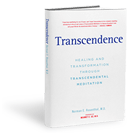
So impressed was Dr Rosenthal with the research on Transcendental Meditation that he has written a best-selling book on the subject – Transcendence – the UK edition of which is published this month by Hay House.

Concentration and contemplation
While transcending thought appears to provide the most wide-ranging spectrum of benefits if engaged in regularly, other forms of meditation are also widely popular, particularly methods of ‘Mindfulness’, where practitioners learn to monitor thoughts or breath, and systems which involve concentration or focused attention. Much research is being carried out on such methods, with dozens of papers appearing every month.

For example, a recent study on a group in the USA who attended a meditation retreat with a Buddhist scholar found the concentration practices used enhanced attention spans in daily life, while a Mindfulness-based stress reduction technique helped breast cancer sufferers recover from the disease, according to research from the University of Missouri published at the end of last year.

With today’s blossoming of interest in meditation, a much clearer understanding of the variety of meditation types is emerging.

Preliminary work in cataloguing the various methods has been started by Dr Fred Travis, a neuroscientist and Director of Brain Research at the Center for Leadership Performance in New York, and Jonathan Shear of Virginia Commonwealth University.

Three main types
“All experience changes the brain,” says Dr Travis. However, he points out, different experiences can be expected to give rise to different changes, and so produce different outcomes. Meditations involving concentration and directed focus will produce a different effect on the brain from those requiring contemplative monitoring, and a different impact again from transcending thought altogether.

Examining published studies on meditation, Travis and Shear were able to identify three main categories of meditation based on brain patterns:
• Focused attention practices (including loving-kindness-compassion, Diamond Way Buddhism, Qigong and Zen-3rd Venticle) were characterised by Gamma brain patterns (30-50Hz) and Beta 2 (20-30Hz)
• Open Monitoring practices – non-evaluative awareness of experience (including Vipassana meditation, ZaZen meditation, Sahaja Yoga and Concentrative Qigong) – showed brain activity in the Theta waveband (5-8Hz)
• Studies on Automatic Self-Transcending (Transcendental Meditation) displayed brain patterns in the Alpha 1 waveband (8-10Hz).

The measuring of meditation is to be welcomed, as increased scientific understanding will help speed the integration of the most useful meditation practices into the health services and other areas where they may be of great help in combating the stress-related ailments of our time. And on that note, perhaps the last word should go to The Beatles.

For people of our generation, the first exposure to meditation was probably when the Fab Four trooped off to Bangor to learn Transcendental Meditation with Maharishi Mahesh Yogi in 1967. And exotic as it all seemed then, 45 years on – as in many other ways – The Beatles look ahead of their time. Says Sir Paul McCartney in Transcendence, summing up his lifetime’s TM practice: “In moments of madness, meditation has helped me find moments of serenity – and I would like to think that it would help provide young people with a quiet haven in a not-so-quiet world.

“I think meditation offers a moment in your day to be at peace with yourself and therefore the universe – which once was thought of as a slightly silly hippie idea, but now it’s much more accepted and even fits with some of the most advanced scientific thinking.”

Find out more
• Transcendental Meditation, website: (www.t-m.org.uk)
• Network of Buddhist organisations: (www.nbo.org.uk)
• Mindfulness: (www.bemindful.co.uk).
Dr. Norman Rosenthal gives an engaging talk to medical staff at Northern Westchester Hospital

February 22, 2012

Dr. Norman Rosenthal addresses medical staff at NWH

Dr. Norman Rosenthal recently gave a wonderfully engaging talk on the Transcendental Meditation technique to the medical staff of Northern Westchester Hospital as part of their Health Education program.

Norman E. Rosenthal, MD, a world-renowned psychiatrist and author who described seasonal affective disorder (SAD) and pioneered the use of light therapy to treat it has improved the health of millions of people. His latest book Transcendence: Healing and Transformation Through Transcendental Meditation (Tarcher-Penguin, 2011) explores the value of this ancient meditation technique for healing and transformation in today’s modern world.

Dr. Rosenthal began his talk by highlighting the key themes of healing and transformation brought about by TM, and explained how certain parts of the brain are effected by stress and improved by meditation. He humorously described the conflict that exists neurologically in a stressed mind between the prefrontal cortex and the amygdala by using the simple analogy of the CEO of a company and the fire marshall. It made a lot of sense. Everyone got it.

Drawing on anecdotes from his best-selling book, Transcendence, Dr. Rosenthal’s relaxed narrative style held the audience’s attention throughout the presentation. He shared personal stories of how TM had improved the lives of those interviewed for the book, like Hollywood filmmaker David Lynch, actress Laura Dern, Pulitzer-prize-winning journalist Tim Page, neuropsychologist William Stixrud, as well as patients from his own practice.

A former NIH researcher, Dr. Rosenthal had looked into, and was impressed by, the volume of scientific research studies on TM in the fields of mental and physical health, education and social behavior. He cited some of these studies, including more recent ones.

Dr. Rosenthal also mentioned a published pilot study he had conducted on Veterans with PTSD that showed a 50% reduction in symptoms within two months. He posted an article about it on his blog, along with an emotionally-charged video of one of the Veterans and his mother:  The Case for Using Transcendental Meditation to Treat Combat Related PTSD.

He told the amazing story of Jim Dierke, principal of Visitacion Valley Middle School, and how he had transformed violent, stressed under-achieving, low-attending students to motivated harmonious academically successful ones with the highest attendance ever, after he had introduced the TM/Quiet Time program to his staff and students. The program was implemented and funded by the David Lynch Foundation. Here is a recent article, with a video of principal Dierke, posted on the TM Blog: Breaking the “predictive power of demographics”: SF principal talks about how TM helps his students.

Dr. Rosenthal also shared his own story of how he started TM as a college student in South Africa back in the 70’s. “As they say, if you remember the 70’s you probably weren’t there, but I was there,” he quipped, and giggled. Like most of us he was inspired by the Beatles traveling to India to study Transcendental Meditation with Maharishi Mahesh Yogi. But, he says, he was overwhelmed with his medical studies and didn’t take the time to meditate regularly. He dropped the meditation, yet returned to it decades later after one of his patients recommended he do it based on his own experiences. He went to the local TM center to refresh his practice. After looking into some of the research studies, and noticing subtle yet lasting changes in his own life, he was convinced that this simple, natural process could really make a difference in people’s lives.

Dr. Rosenthal swore he would never write another book; it takes too much time and energy, but after seeing how much of a difference TM was making in his life, and in the lives of his patients, he just had to write this one last book. He felt as compelled to write about TM as he had been about his earlier medical discovery. He was also pleasantly surprised with how enjoyable the whole process went, compared to earlier experiences. He felt the joy of being in the flow, of being in the moment, totally engaged in the creative process. He said the whole experience was very rewarding, uplifting and fulfilling.

He concluded his talk with the value of groups, organizations, practicing TM together, and the impact that has. As an example he mentioned Oprah and how she chose to give TM to her whole organization, and the amazing transformations that brought about. She wrote about it in her magazine, What I Know for Sure.

You can enjoy watching Dr. Rosenthal’s entertaining and informative presentation here on the Northern Westchester Hospital website: http://www.nwhc.net/home/about-us/video-suite/health-education.

Credit and appreciation goes to Sally Rosenfeld, a Certified Teacher of the Transcendental Meditation program, in Westchester County, NY, for arranging to have Dr. Rosenthal speak at Northern Westchester Hospital. Sally said it was a great event, with around 100 people attending from both the hospital and community. Several of them later came to the TM Center to learn how to meditate. Considering how progressive NWH is with their alternative offerings, adding the TM program to the mix would seem like a natural outcome of the meeting.

Watch the trailer for a new documentary film on David Lynch titled “Meditation Creativity Peace”

February 9, 2012

“Meditation Creativity Peace”

“Meditation Creativity Peace” is David Lynch Foundation Television’s compelling new documentary film featuring exclusive, candid footage from David Lynch’s 16-country tour around the world when he spoke to government leaders, film students, and the press during 2007 and 2008. David’s unique, free-styling demeanor grabs your attention from the very beginning of the film. David has also selected deeply insightful quotes from great thinkers and revered texts throughout history, which reveal how the practice of meditation, developing creativity, and enjoying true inner peace are the birthright of everyone. As David says in the documentary, “Transcendental Meditation is for human beings—it doesn’t matter where you live.” Watch the trailer for this new documentary film here: Meditation Creativity Peace.*

About the David Lynch Foundation

The David Lynch Foundation, a 501(c)(3) organization, was established in 2005 to fund the implementation of scientifically proven stress-reducing modalities including Transcendental Meditation, for at-risk populations such as underserved inner-city students; veterans with PTSD and their families; American Indians suffering from diabetes, cardiovascular disease, and high suicide rates; homeless men participating in reentry programs striving to overcome addictions; and incarcerated juveniles and adults. The Foundation also funds university and medical school research to assess the effects of the program on academic performance, ADHD and other learning disorders, anxiety, depression, substance abuse, cardiovascular disease, post-traumatic stress disorder, and diabetes.

Related Websites and Posts

David Lynch Foundation http://www.davidlynchfoundation.org
Operation Warrior Wellness http://www.operationwarriorwellness.org
David Lynch Foundation Music http://davidlynchfoundationmusic.org
David Lynch Foundation Television http://dlf.tv
Transcendental Meditation http://www.tm.org
Click here for DLF Featured Past Events

Announcements and Reviews: Julie Eagleton: Meditation Creativity Peace: A Documentary of David Lynch’s 16 Country Tour | BlackBook: David Lynch’s Transcendental Meditation Documentary Gets a New York Premiere | New York Times: David Lynch Double Bill | Gothamist: David Lynchian Events Happening All Over NYC This Weekend | Yelp: An Evening with the Work of David Lynch, from Transcendental Meditation to Eraserhead

Related articles: HUFFPOST: David Lynch: Why I Meditate | Meditation for Students: Results of the David Lynch Foundation’s Quiet Time/TM Program in San Francisco Schools | Replay of David Lynch Foundation Launch of Operation Warrior Wellness Los Angeles | Third Annual David Lynch Foundation Benefit Gala | David Lynch gives $1M to teach vets meditation | David Lynch donates $1 million in grants through his foundation to teach veterans to meditateRussell Brand Does Stand-Up for Transcendental Meditation | What do Stephen Collins, Ellen DeGeneres, Russell Brand, Russell Simmons, David Lynch and Oprah have in common?

New related posts: Russell Brand and David Lynch at LA Premiere of ‘Meditation, Creativity, Peace’ Documentary, and David Lynch, Russell Brand, Bob Roth Q&A after screening Meditation, Creativity, Peace documentary at Hammer Museum. Enlightenment, The TM Magazine, reported on the LA Premiere: Meditation Creativity Peace: How the David Lynch Foundation Brings Change from Within. David Lynch speaks with Alan Colmes about his 16-country tour film Meditation Creativity Peace.

*Visit the new website, Meditation Creativity Peace, for a list of upcoming and previous screenings. You can also ask your local TM Center if they have a copy and plan to show it. http://meditationcreativitypeace.com

You can now see the film “Meditation Creativity Peace”—A documentary of David Lynch’s 16-country tour during 2007–2009.

Singing Image of Fire, a poem by Kukai, with thoughts on language, translation, and creation

January 2, 2012

We read in Genesis that creation came into being with the first utterance: “Let there be light.” So sound came first, then light, followed by forms. Interestingly, the seemingly nonsensical phrase, abracadabra, a magician says when performing a trick, derives its meaning from the ancient biblical language, Aramaic: abraq ad habra, which means, “I will create as I speak.” I discovered that on page 170 of Poemcrazy: Freeing Your Life with Words, a delightful book on finding and writing poetry in many creative simple ways, by Susan Wooldridge, writer, poet and teacher.

This poem by Kukai says a lot about language, creation, consciousness, and our integral relationship to things.

Singing Image of Fire

A hand moves, and the fire’s whirling takes different shapes,
Triangles, squares: all things change when we do.
The first word, “Ah,” blossomed into all others.
Each of them is true.

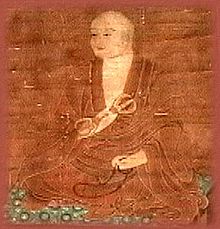
This poem on language, translation, and creation, the pictorial/written representation of vocal sounds and meanings, was written by Kūkai (空海), also known posthumously as Kōbō-Daishi (弘法大師 The Grand Master Who Propagated the Buddhist Teaching), 774–835, a Japanese monk, civil servant, scholar, poet, artist, and founder of the Shingon or “True Word” school of Buddhism. He allegedly developed the system using Chinese characters to write Japanese words. The word “Shingon” is the Japanese reading of the Kanji for the Chinese word Zhēnyán (真言), literally meaning “True Words”, which in turn is the Chinese translation of the Sanskrit word mantra (मन्त्र). The concern was to be as true as possible when translating texts, to have and use the right word when describing something. The Sanskrit language had this perfect one-to-one correspondence between name and form.

The poem was mentioned in Nine Gates: Entering the Mind of Poetry (HarperCollins, 1997) by Jane Hirshfield, a classic collection of essays about the mysterious ways poetry comes to us. In her chapter, The World is Large and Full of Noises: Thoughts on Translation, she highlights this theme with What Rainer Maria Rilke inscribed on the copy of The Duino Elegies he gave his Polish translator.

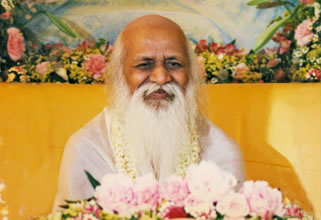
When I read that line in Kukai’s poem, about the first word, “Ah,” blossoming into all others, and each of them being true, it reminded me of what Maharishi Mahesh Yogi says about the first sound of creation, “A”, how it represents infinity collapsing to a point, “K”, and through its own sequential self-interacting dynamics, creates the whole alphabet, words, verses of Rk Veda, the whole Vedic literature, and their subsequent forms, the universe. This is part of Maharishi’s Apaurusheya Bahashya, the unwritten commentary of the Veda, unfolding itself and commenting on itself to itself. Apaurusheya Bhashya: Rk Veda is said to be nitya, eternal, and apaurusheya, uncreated. Maharishi explains that the sequential unfoldment of Rk Veda is its own uncreated, or unmanifest, commentary on itself, rather than that of an individual making an ‘external’ commentary on Rk Veda.

See Maharishi’s Apaurusheya Bhashya discussed in Everything is made of Vedic Sounds by William F. Sands, PhD. Also see Modern Science and Vedic Science: An Introduction by Kenneth Chandler, PhD.

In his Introduction to Maharishi Vedic University, Maharishi gives us a comprehensive cosmic perspective on the role Sanskrit, the language of Nature, plays in the process of creation. Through the self-interacting dynamics of pure consciousness, the Self, or Atma, reverberates within itself and creates the eternal uncreated sounds of the Veda, its own language, which in turn express themselves into forms—the individual body, Sharir, and the cosmic body, Vishwa. The eternal Silence and its own inherent Dynamism, evolve all parts of itself constantly referring them back to their source. He says it’s a start-stop process of Infinity collapsing to a point, referring it back to Itself, and evolving the next sequential sound, and subsequent form. Full realization, or enlightenment, comes when one comprehends all of creation: Atma, Veda, Sharir, Vishwa, Brahman, or Totality, as the full potential of one’s own consciousness. Aham Brahmasmi. I am totality.

On Page 65 Maharishi writes, “The basic process of change, this basic process of transformation, continuously maintains the momentum of evolution of different levels of expression, creating different levels of manifestation upholding the process of evolution.

“It is this that promotes the eternally self-referral dynamics of Samhita into the sequential evolution of sound, speech, forms of speech in alphabets, words, phrases, verses etc., with corresponding material forms. This process continues eternally, resulting in the ever-expanding universe.” (Samhita is the togetherness of Rishi, Devata, Chhandas; knower, process of knowing, and known.)

I’ve written a poem about this process in Coalescing Poetry: Creating a Universe, (into haiku forms).

To learn more about the source of words, creation, both literal and literary, and their connection to consciousness, read: The Flow of Consciousness: Maharishi Mahesh Yogi on Literature and Language.

Also see: Before He Makes Each One by Rainer Maria Rilke.

Nine years later I posted: Japanese culture: poetic aesthetics, artistry, and martial arts, inspired me to write haiku and tanka.

Meditation for Students: Results of the David Lynch Foundation’s Quiet Time/TM Program in San Francisco Schools

December 24, 2011

David Lynch Foundation Event in San Francisco: Meditation for Students

The David Lynch Foundation held a benefit gala in San Francisco on June 1 at the Legion of Honor, to showcase the successes of a five-year project to bring the stress-reducing Transcendental Meditation technique to students in inner-city San Francisco schools. In this video, you will hear James Dierke, principal of Visitacion Valley Middle School talk about the unprecedented academic achievements of his meditating students; iconic filmmaker David Lynch talk about the inspiring work of his foundation among at-risk populations; and Dr. Norman Rosenthal, internationally renowned psychiatrist and NY Times bestselling author, discuss the amazing results of scientific research on the TM technique. See other featured past events posted on the David Lynch Foundation website. To hear more about the David Lynch Foundation and it’s programs, please visit: http://www.davidlynchfoundation.org.

Uploaded by on Jul 7, 2011.

See selected highlights of Inspiring results from the TM-Quiet Time Program in the San Francisco Unified School District.