Archive for the ‘Peace’ Category

Craig Pearson interview and articles on awakened consciousness, transcendence and enlightenment

February 22, 2013

Since the theme of The Uncarved Blog deals with Transcendental Meditation, consciousness & enlightenment, and poetry, I’d like to introduce someone to you who has been studying these ideas in great people’s lives for some time now and has complied them all in a book.
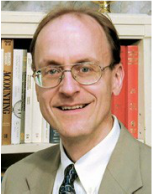
Craig Pearson-EECraig Pearson, Ph.D., is the author of the forthcoming book, The Supreme Awakening, Experiences of Enlightenment Throughout Time — And How We Can Cultivate Them. He has spent many years researching the expression of higher states of consciousness in the writings of great philosophers, saints, scientists, artists, and writers. 

Dr. Pearson is the Executive Vice-President of Maharishi International University in Fairfield, Iowa. He has served the University in a variety of roles over the past 33 years, (42 years, updated 2022) including Dean of Faculty, Dean of Students, Director of Maharishi University of Management Press, Director of Freshman Composition, and Professor of Professional Writing.

In this interview for Issue 5 of Enlightenment Magazine, Linda Egenes asks Craig Pearson about humanity’s age-old quest for enlightenment. Dr. Pearson highlights his answers with examples of exceptional people throughout history who had described experiences of higher states of consciousness. It was originally titled, The Quest for Enlightenment: Transcendence in the Lives of Great Seers and Thinkers. Linda also posted the text of the article on her blog. It was later republished in the newer Enjoy TM News, The Transcendental Meditation magazine: Exploring Higher States of Consciousness, the Ultimate Goal of Meditation. How to cultivate the state of enlightenment

Some of the people mentioned in the article are available in a list of quotes complied on the TM Blog in an Author Archive. Click on each quote and it will take you to an article about each one, and many more.

Enlightenment: What is the relationship of enlightenment and human potential?

Dr. Pearson: Enlightenment is a term that has been used for thousands of years, in traditions east and west, to refer to the most fully developed expression of human potential, far beyond the ordinary.

Enlightenment: How common is it?

Dr. Pearson: Although this extraordinary experience has been described by individuals in different cultures over the millennia and is celebrated in the world’s spiritual traditions, it seems to be exceedingly rare. But obviously it lies within the realm of human potential.

Enlightenment: What has Maharishi contributed to the understanding of enlightenment?

Dr. Pearson: Maharishi Mahesh Yogi is often credited with reintroducing the concept of enlightenment in a systematic manner in our modern age. He has put forward a comprehensive understanding of enlightenment that embraces the great traditions and thinkers who have described this experience across time. Maharishi was also the first to promote scientific investigation into enlightenment, bringing the phenomenon of spiritual development into the arena of modern science.

Enlightenment: How does Maharishi describe enlightenment?

Dr. Pearson: For Maharishi, enlightenment is the ultimate development of one’s inner potential as a human being. It means being established in the highest state of human consciousness.

Enlightenment begins with experiencing the reality of your innermost Self as unbounded and eternal and being established at that level. This means the consciousness of an enlightened person is no longer subject to the ups and downs of emotions, mind, and body but steadfast, anchored in inner silence.

Enlightenment brings the ultimate unfoldment of one’s creativity and intelligence. It means living in harmony with all the laws of nature and easily fulfilling your desires. It means being of maximum use to yourself and others and creating a powerfully nourishing effect in one’s environment.

At the highest stage, enlightenment means experiencing the universe as the expression of your unbounded Self. It is a state of perpetual freedom and bliss, supreme fulfillment.

Enlightenment: Can we relate this in any way to our day-to-day experience?

Dr. Pearson: Although this vision of human development may seem idealistic, we have all had experiences in this direction. Some days we just feel happier inside, more appreciative of others—life is easier, fuller, richer, and more rewarding. We may have moments of enhanced mental clarity or heightened levels of creativity, when we surprise ourselves with how quickly the solution to a problem may come. Athletes sometimes experience the zone—periods of peak performance that are effortless and euphoric.

At these times we are using a bit more of our potential. But enlightenment is far, far more than this. It goes far beyond just having a good day. People who have had experiences of enlightenment report that words simply cannot capture the sublimity of the experience.

Enlightenment: You have researched how individuals from different historical epochs and different parts of the world have shared this same experience. Can you talk about that?

Dr. Pearson: In traditions throughout time we find remarkably similar descriptions of this extraordinary experience of human life lived to its fullest—in the writings of great philosophers, religious figures, artists, scientists, and writers, as well as in the great religious traditions of the world. The terminology may vary from tradition to tradition and age to age. But when you have the clear and precise description of enlightenment provided by Maharishi, it becomes easy to appreciate what these people are talking about.

Enlightenment: So the experience is universal?

Dr. Pearson: Yes. And the recognition that many have shared this experience throughout history is not new either. Some scholars have called it the perennial philosophy or the primordial tradition. The perennial philosophy holds that although various spiritual and philosophical traditions appear different on the surface, at their core all traditions share common, universal principles.

Enlightenment: What are these universal principles?

Dr. Pearson: The perennial philosophy has three basic tenets: (1) Underlying the diversity of the world is a field of unity. (2) We can subjectively experience this field of unity deep within us. (3) The purpose of life is ultimately to experience and live this inner, divine reality of life.

This inner field goes by different names. Laozi called it the Tao. Plato called it the Good, the One, and the Beautiful. Aristotle called it Being. The Greek-Roman philosopher Plotinus called it the Infinite. In Judaism it is called Ein Sof, in Christianity the kingdom of heaven within. In more modern times, Ralph Waldo Emerson called it the Oversoul.

These different names are not referring to mere philosophical or spiritual ideals. They point to the inner reality of life—a reality that can be experienced directly and, when experienced, brings fulfillment beyond words.

Enlightenment: How does Maharishi talk about this inner field?

Dr. Pearson: Maharishi characterizes it as an unbounded field of pure consciousness, an all-pervading ocean of creativity, intelligence, and bliss, beyond space and time. Maharishi asserts, moreover, that this field of pure consciousness is identical with the unified field of natural law that modern physics describes mathematically. Thus the inner field that gives rise to all our thoughts and feelings is the same field that gives rise to the entire universe.

Enlightenment: And we can experience this inner field of pure consciousness?

Dr. Pearson: Every human being has the natural ability to experience this field. It simply requires “diving within,” allowing the mind to settle inward, beyond the thinking process. This is called transcending.

People throughout history have described and celebrated this experience. It is a simple and natural experience—but by most accounts seems to be rare and fleeting. People have lacked a technique for experiencing it systematically. This is the gift Maharishi has given us—the Transcendental Meditation technique, a simple, natural, effortless procedure by which anyone can dive within at will.

Until Maharishi started teaching in the West, the understanding of how to transcend had for the most part been lost. The Transcendental Meditation technique, which has its origin in the ancient Vedic tradition, provides direct experience of pure consciousness. It is easy to learn and practice, validated by hundreds of scientific research studies, and practiced by millions of people throughout the world.

Read the rest of this fascinating article, which includes experiences from Rabindranath Tagore; Alfred, Lord Tennyson; Hakuin Ekaku; and a woman known as Peace Pilgrim.

Many other experiences have also been written up by Dr. Pearson and posted on the TM Blog. Here they are, from recent to earlier posts:

‘Freedom and Self-Realization’: Excerpts from Jack Forem’s book on TM
Howard Thurman: Experiencing “the Great Silence” within us
Rabbi Abraham Isaac Kook: Connecting with the “deep soul”
The Buddha: Rapturous Joy Transcending Any Other
Meister Eckhart: It is in the purest thing that the soul is capable of
D.H. Lawrence: Sitting in a Timeless Stillness
St. John of the Cross: Transcending all knowledge
William Wordsworth: We are laid asleep in body, and become a living soul
Emily Dickinson: The Soul’s Superior instants
Albert Einstein: There is Neither Evolution nor Destiny; Only Being
Zhuangzi: Why don’t you try wandering with me to the Palace of Not-Even-Anything
St. Teresa: A state of great quiet and deep satisfaction
Johannes Brahms: In tune with the Infinite
Rumi: I have passed beyond all thoughts
Plato: And this state of the soul is called wisdom
Jesus: The kingdom of God is within you
Henry David Thoreau: We become like a still lake of purest crystal
Ralph Waldo Emerson: Within man is the soul of the whole; the wise silence; the universal beauty
Walt Whitman: The luminousness of real vision
Alfred, Lord Tennyson: A state of transcendent wonder
Helen Keller: I feel the flame of eternity in my soul
Laozi: His mind becomes as vast and immeasurable as the night sky
 

Update: Craig Pearson’s book, The Supreme Awakening, is now available. Executive Vice President Dr. Craig Pearson was interviewed on KHOE’s “A Chat With The Dean” by Dr. Cathy Gorini on his new book, “The Supreme Awakening – Experiences of Enlightenment Throughout Time, and How You Can Cultivate them.”

Listen to a presentation Dr. Pearson gave in Dalby Hall on the book, which was recorded for broadcast by KHOE.

Listen to Dr. Pearson on KRUU FM, Writers’ Voices recorded Feb 21, 2014.

Listen to Craig Pearson on KRUU FM show, Writers’ Voices, discussing his new book, The Supreme Awakening.

Here is a video of Dr. Pearson’s recent presentation on his book, The Supreme Awakening, in Dalby Hall on the MUM campus seen on the MaharishiUniversity channel.

Craig Pearson has since updated his book with new entries. Here is an informative interview by Jeanne Ball, April 20, 2016, in the Huffington Post: The Supreme Awakening: What Did Buddha, Emerson, Einstein and Saint Teresa Have in Common?

Guest blogger and author William T. Hathaway reviews Craig Pearson’s book, The Supreme Awakening.

Other talks on this topic by Craig Pearson are available in this MIU Webinar at Dalby Hall published in Enjoy TM News and this interview on TM Talks.

Mar 4, 2024: Simplest State‘s Ron Decter interviewed Craig Pearson, Author: “The Supreme Awakening: Experiences of Enlightenment Throughout Time”.
War veterans say Transcendental Meditation could help with PTSD

February 11, 2013

War veterans say meditation could help with PTSD

By Agence France-Presse
Tuesday, February 5, 2013 6:27 EST

Meditation might sound an unlikely activity for men trained in killing people and blowing things up in Afghanistan and Iraq. But US war veterans say meditation could help heal the post-war mental disturbances that afflict a growing number of American soldiers, including possibly the ex-Marine who gunned down the country’s most famous sniper over the weekend.

Luke Jensen, a former undercover police officer who fell apart mentally on arrival in Afghanistan, said that after trying to commit suicide in front of his family, he agreed to try Transcendental Meditation — and was saved.

“There’s a lot of coping methods out there that are offered to our veterans. This needs to be one of them,” the heftily built man said in a shaking voice at a meeting of the David Lynch Foundation, which promotes meditation for treating post-traumatic stress disorder.

Jensen said he has since taken a job in the government’s Department of Veterans Affairs, helping other stressed out vets. Just two weeks ago, one of those he worked with committed suicide.

Transcendental Meditation “needs to be implemented. It needs to be an option,” Jensen told the panel in New York.

After years of being a little-talked about subject, PTSD is increasingly acknowledged as a mental health epidemic in the United States and one of the less easily quantifiable costs of America’s wars on the other side of the world.

The Department of Veterans Affairs estimates that PTSD occurs in between 11 and 20 percent of veterans from the Afghan and Iraq wars, and in 31 percent of Vietnam war veterans.

Although combat is commonly assumed to be the main cause of PTSD, simply witnessing the effects of bombings, for example, or the stress of being in a hostile country, are also blamed.

Another major source of PTSD, though less often discussed, is what the government calls military sexual trauma. Veterans Affairs figures show that 23 percent of women report sexual assault in the ranks, while more than half have experienced sexual harassment.

The most frightening result associated with PTSD is the rising number of suicides, which now run at 22 a day among military veterans, according to a government study released last week.

And the problem is no less alarming among active duty soldiers, with a record 349 killing themselves in 2012 — more than were killed by the Taliban or other enemy in the field.

In the latest incident to highlight the violence engulfing former soldiers, an ex-Marine in Texas was accused Saturday of shooting dead another veteran who had devoted himself to helping comrades adjust to peaceful life.

Adding to the shock value, the victim, Chris Kyle, was an author of a best-selling book about his former exploits as a sniper with 150 confirmed kills.

In the effort to address the problem of PTSD, meditation is an outlier.

However, early studies show remarkable success, and demand is growing, advocates at filmmaker Lynch’s foundation said.

Transcendental Meditation involves entering “a state of rest in many cases deeper than sleep,” said Bob Roth, executive director of the David Lynch Foundation. “This allows deeply rooted stresses to be dissolved.”

Retired rear admiral Richard Schneider, president of the private military institute Norwich University, said tests showed that cadets using the techniques increased focus in class and were better “emotionally prepared.”

The meditation instructor, a chisel-faced air force veteran called David Zobeck, said a stigma long attached to meditation was evaporating among students, who are preparing for careers as officers.

“They’re not getting the weird stares anymore,” he said.

Jerry Yellin, a fighter pilot in World War II who spoke of losing comrades and making dangerous missions in the bloody Pacific theater, said he began suffering nightmares, then behavioral problems on return home at a time when PTSD was rarely discussed.

“The hard stuff began in my life, because I didn’t sleep,” he said. “I had an addiction that ruled my life.”

Meditating, he said, “got my life back 100 percent.”

The Raw Story published this report from Agence France-Presse.

See more articles on PTSD and TM posted on The Uncarved Blog.

8,000 Mayan and indigenous tribal students meditate for peace to mark the end of an era

December 22, 2012

8,000 Mayan, Zapotec, and Mixtec Students Meditate for World Peace and Restructure the Apocalypse to Create the End of the [War-torn] World

By David Leffler | December 23, 2012  | The Liberian Dialogue

Mexico students meditate for peace

Nine countries in Latin America are implementing Transcendental Meditation and Yogic Flying in military and/or educational settings.

With much media fanfare worldwide, the Mayan calendar came to an end on 21 December 2012, with far-flung predictions of global apocalypse. But most of us are still here, so perhaps the “end of the world” was in fact a new beginning – the end of the world as we know it, and the dawn of a new and more enlightened age.

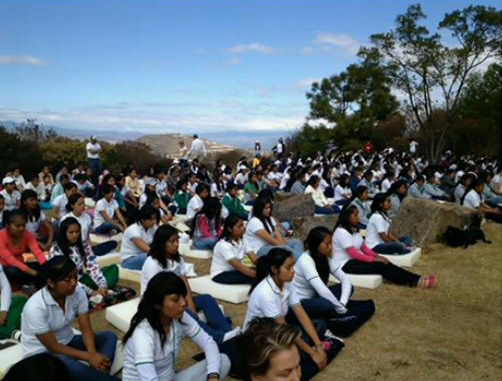
On that apocalyptic day, 8,000 young children – descendants of the Mayans, Mixtec, Zapotec, and other indigenous tribes – gathered at Monte Alban, a sacred mountain of the Zapotec people in southern Mexico, to meditate together for world peace. Around the world, people of all ages, cultures, and religions participated with them in simultaneous group practice of the non-religious Transcendental Meditation® (TM) program and its advanced TM-Sidhi program, both founded by the late Maharishi Mahesh Yogi.

In Latin American military circles, this collective TM practice by large groups of peace-creating experts is known as the Invincible Defense Technology (IDT) due to its scientifically confirmed ability to neutralize the destabilizing influence of collective stress, held to be the root cause of terrorism, war, and violent crime.

These young Mexican children, along with many students in other Latin America countries, had been trained in these peace-creating technologies for approximately eight months. Their gathering at Monte Alban was a demonstration to the world of the effectiveness of these technologies in defusing social violence and “averting the danger that has not yet come” – a principle of collective coherence drawn from the ancient Yoga Sutras.

Is this gathering something out of a “New Age” science fiction thriller? No. This unusual defense strategy really works. It is advocated by the Global Union of Scientists for Peace (GUSP, http://www.gusp.org), a coalition of Nobel laureates and leading scientists who see it as the best way to avert the growing threats of nuclear proliferation, terrorism, and weapons of mass destruction; to create national security in every country; and to establish lasting world peace.

John Hagelin, Ph.D., a renowned Harvard-trained quantum physicist who heads this group, says, “In recent years, [this] powerful, innovative approach to peace has been extensively field-tested – in the Middle East and throughout the world. The consistent result has been dramatic reductions in terrorism, war, and social violence. These findings have been replicated, published in leading academic journals, and endorsed by hundreds of independent scientists and scholars. The efficacy of this approach is beyond question.” [An Op-Ed piece: “Reducing Tension in the Middle East” was recently published worldwide advocating this approach.]

According to Luis Intof Alvarez, the organizer of the Monte Alban gathering, the advanced TM-Sidhi practice has been taught to 8,000 students in 54 schools in southern Mexico and Guatemala during just the past weeks. With over 250 Latin American schools now participating in this program, at least 20,000 students will be collectively practicing these peace-creating technologies by this time next year. Alvarez says that our world leaders now have a choice. Which direction do we want to take: continued violence or creating peace?

His point is made more vivid by the tragic recent events at the Sandy Hook elementary school in Newton, Connecticut, USA. Throughout the U.S., students in schools and colleges continue to be the victims of senseless violence. By contrast, the Mayan and other tribal students throughout Latin America are creating peace, not only within themselves but also on a much grander scale – for their schools, cities, and nation as a whole.

Latin American students in both civilian and military  schools are learning and applying this strategy. Currently, at least nine Latin American countries are soon due to have fully operational peace-creating groups in military and/or educational settings. Military leaders worldwide will soon be surprised to learn that students can actually do a much better, safer, and more effective job of protecting their nations with an advanced TM meditation practice than with expensive hi-tech military weaponry. Informed Latin American leaders, especially those now in charge of military schools, have already deployed this approach. Lieutenant General José Martí Villamil, a pioneering former Vice-Minister of Defense for Ecuador, first conducted a military field-test during their war with Peru in the early 1990s, with promising results.

In the past, in non-Latin American countries, field tests of these coherence-creating groups achieved measurable positive results that were also apparent from news reports. In trouble spots, violence and war deaths subsided, peace negotiations improved, and/or treaties were signed. The first head of state to ever implement such a program was President Joachim Chissano of Mozambique. Read the amazing story of what happened when members of his government and military learned to meditate. (See: Psychology Today, “Can Meditation Change the World?“)

Over fifty studies have scientifically documented the profound and measurable benefits of this approach to peace. In one such study, conducted during the first Lebanon war, the predicted effects and publicly available measures to be used were specified in advance for scientific review boards in North America and Israel. The outcomes of this and other such experiments have been published in respected peer-reviewed journals, including the Journal of Conflict Resolution, 1988, 32: 776–812; Social Indicators Research, 1999, 47: 153-201; Journal of Offender Rehabilitation, 2003, 36 (1-4): 283-302; Journal of Social Behavior and Personality, 2005, 17(1): 339-373; Journal of Social Behavior and Personality, 2005, 17(1): 285-338; and Journal of Scientific Exploration, 2009, 23(2): 139-166.

It could be argued that the positive social effects of these deployments are already beginning to be documented. In a 2011 poll, Gallup measured positive emotions in 148 countries and found that Latin Americans are the most positive people in the world. Their region is home to eight of the top 10 countries for positive emotions worldwide.

Certainly Evo Morales Ayma, the President of Bolivia, believes that “the end of the world” is only the end of the world as we know it. At the 67th General Assembly of the United Nations, he said:

“And I would like to say that according to the Mayan calendar on the 21 of December is the end of the non-time and the beginning of time. It is the end of the Macha and the beginning of the Pacha, the end of selfishness and the beginning of brotherhood, it is the end of individualism and the beginning of collectivism – 21 of December this year. The scientists know very well that this marks the end of an anthropocentric life and the beginning of a bio-centric life.

It is the end of hatred and the beginning of love, the end of lies and beginning of truth. It is the end of sadness and the beginning of happiness, it is the end of division and the beginning of unity, and this is a theme to be developed. That is why we invite all of you, those of you who bet on mankind, we invite those who want to share their experiences for the benefit of mankind.”

Dr. David Leffler received his Ph.D. in Consciousness-Based Military Defense (Invincible Defense Technology – IDT) from The Union Institute & University in Cincinnati. He served as an Associate of the Proteus Management Group at the Center for Strategic Leadership, US Army War College. He has published articles in over 400 locations worldwide about IDT and now serves as the Executive Director at the Center for Advanced Military Science (CAMS). Dr. Leffler teaches IDT and is available at http://www.StrongMilitary.org

More photos of the meditating students are available at the end of David Leffler’s article posted here. These are the countries where the article has been featured so far: INDIA – Mangalorean; LIBERIA – The Liberian Dialogue; NIGERIA – Nigeria Sun; AUSTRALIA – The International News Magazine U.S. Edition; UK – The News Tribe, a bilingual news website covering Pakistan, South Asia, Middle East and UK; Global Edition – One News Page. Global Good News reported the news as well as an earlier backgrounder of how the parents and students prepared for this special event: Mexico: Thousands of indigenous students to meditate together at traditional celebration.

For a scientific explanation behind the power of large groups collectively practicing the Transcendental Meditation and TM-Sidhi program including Yogic Flying, read The Power of The Collective, by John Hagelin. Also see Op-Ed peace piece spreading around the world: Reducing Tension in the Middle East and Ken Wilber said meditation can change the world. Jaochim Chissano showed it could – Steve Taylor.

Ken Wilber said meditation can change the world. Jaochim Chissano showed it could – Steve Taylor.

December 19, 2012

Can Meditation Change the World?
The amazing story of the ‘meditating president.’
Published on December 10, 2012 by Steve Taylor in Out of the Darkness

Ken WilburLast week a group of my students were giving a presentation on the spiritual philosopher Ken Wilber. It included a video interview in which Wilber remarked, ‘The best way to stop famine in the world is to meditate.’ Some students were outraged, and my initial thought was that the comment was glib and offensive. Surely the best way to stop famine is to provide food, to donate money, or at least to end conflict or reduce corruption? However, there is a case study which illustrates Wilber’s meaning very clearly. It’s the story of the ‘meditating president’, Joachim Chissano of Mozambique.

In 1992, Mozambique’s civil war came to an end, after 15 years of devastation, and around a million casualties. The country was completely broken, and showing all signs of being trapped in the cycle of conflict and corruption which has afflicted many African countries. But Joachim Chissano – whose forces had won the war – surprised the world by acting sensibly and empathically. Rather than trying to shore up his own power base and enacting revenge, Chissano treated the rebel forces who had been trying to overthrow his government with respect. He made compromises, promised there would be no prosecutions or punishments and offered the rebels half of the places in the Mozambiquan army. He gave them the chance of gaining power through political means. Rather than trying to crush the rebels, he began to work with them.

Two years later, Mozambique’s first ever multi-party elections were held, and Chissano and the former rebel leader came face to face in the polls. Chissano won the election, and set about the task of establishing lasting peace by reducing poverty. Between 1997 and 2003, almost three million people were rescued from extreme poverty, out of a total population of almost 20 million. This lead to a 35% decrease in the number of children dying under the age of five, and an increase of 65% in the number of children going to primary school. Through Chissano’s ability to set aside differences and connect with his former enemies, Mozambique was brought back from the brink of self-destruction and has instead become one of Africa’s most stable and peaceful countries.

What was it that made Chissano so rational and compassionate as a leader?

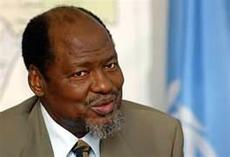
Joachim Chissano

In 1992, he learned Transcendental Meditation. Quickly becoming aware of the benefits of the practice himself, he taught it to his family, then his cabinet ministers and his wider government. In 1994, it became a requirement for all military and police recruits to meditate twice a day, for 20 minutes.

Chissano himself is in no doubt that this collective meditation was responsible for the peace and increasing prosperity of the country. As he said, ‘The result has been political peace and balance in nature in my country…The culture of war has to be replaced by the culture of peace. For that purpose, something deeper has to be changed in our mind and in our consciousness to prevent the recurrence of war.’

In 2004, Chissano’s second term in office came to end. Rather than pursuing a third term – as he would have been legally able to do under Mozambique law – he stepped aside. Since then he has been an elder statesman, campaigning for peace and working as an envoy and negotiator for the United Nations. In 2007, on his 68th birthday, he was awarded Africa’s equivalent of the Nobel Prize, the $5 million prize for Achievement in African Leadership.

This is Wilber’s point, of course. In the short term, meditation reduces anger and aggression. In the long term, it increases our capacity for empathy, compassion and rationality. It leads to less self-centred behaviour, and reduces cravings for power and wealth. It generates a sense of well-being which makes us less liable to be affected by slights or prejudices.

Research has confirmed these effects. In 2003, scientists at the University of Wisconsin scanned the brain of people with a long experience of Buddhist meditation. They found that their left pre-frontal lobes – the areas of the brain linked with positive moods and emotions – were unusually active. In other words, they seemed to be happier than normal. In a 2011 study at the University of Massachusetts Center for Mindfulness 16 people meditated for an average of 27 minutes each day. MRI scans after 8 weeks showed increased ‘grey matter’ in parts of the brain associated with compassion, introspection and learning.

So Wilber’s seemingly glib comments may well be right. Human social behaviour is a manifestation of our inner state. Discord in the world stems from discord in our minds, and there will only be harmony and peace in the world once there is harmony and peace inside us.

Steve Taylor is a lecturer in psychology at Leeds Metropolitan University, UK. He is the author of Back to Sanity: Healing the Madness of the Human Mind. Eckhart Tolle has called his work ‘an important contribution to the shift in consciousness happening on our planet at this time.’ stevenmtaylor.co.uk | Follow Steve on Facebook and Twitter

###

What Steve Taylor says in this Psychology Today article is true. In addition, there have also been hundreds of scientific studies on Transcendental Meditation showing improvements in mental and emotional development as well as health and social behavior. See Hard evidence grows for including meditation in government-sponsored health programs and Excellent article by Tom Jacobs on Meditation: Strong Preventative Medicine for Heart Patients.

But one of the most striking effects is the impact large numbers of people practicing Transcendental Meditation together in large groups in one or more places can have on their environment. This is what happened in Mozambique. The longtime drought also came to an end as balance was restored in nature; the rain came!

Over fifty studies have scientifically documented the profound and measurable benefits of this approach to peace. Many have been published in respected peer-reviewed journals, including the Journal of Conflict Resolution, 1988, 32: 776–812; Social Indicators Research, 1999, 47: 153-201; Journal of Offender Rehabilitation, 2003, 36 (1-4): 283-302; Journal of Social Behavior and Personality, 2005, 17(1): 339-373; Journal of Social Behavior and Personality, 2005, 17(1): 285-338; and Journal of Scientific Exploration, 2009, 23(2): 139-166.

For a scientific explanation behind the power of large groups collectively practicing the Transcendental Meditation and TM-Sidhi program including Yogic Flying, read The Power of The Collective, by John Hagelin. Also see this Op-Ed peace piece spreading around the world: Reducing Tension in the Middle East

And here is a newly published study on this topic: Can group meditation prevent violent crime? Surprisingly, the data suggests yes: New study (SAGE Open Apr 2016, 6 (2).

One last point, and that is comparing different meditation practices and generalizing their results can be a bit misleading. With the aid of fMRI, EEG, and other methods, we can now see that different parts of the brain are effected by different meditation techniques, which utilize their own approaches, like concentration, open monitoring, or transcending. To better understand these differences and outcomes scientists have created categories of meditation, matching approaches with their scientific measurements. See Are all meditation techniques the same?. And this more recently published paper using fMRI:  New study highlights unique state of “restful alertness” during Transcendental Meditation.

For a current perspective on how TM has been successfully applied in various settings, see this recent video presentation: John Hagelin speaks on meditation as a powerful tool for health, education & post-traumatic stress at TEDxWomen 2012.

Read two reviews of Can meditation change the world? in the January 28, 2013, UK TM News blog, and below in a print copy from the February 2013 issue (Vol. 19, No. 5.) of UK Transcendental Meditation News. Click twice on the image to read it.

Update: Athens Democracy Award Goes to Mozambique’s Joaquim Chissano. This article, published Sept 18, 2018, references President Chissano’s use of TM. “Besides bringing peace, reconciliation, stable democracy and economic progress to Mozambique, and supporting LGBT rights in Africa, Chissano is said to have introduced Transcendental Meditation techniques to government officials, police and military.”

(more…)

Study suggests meditation may help prevent PTSD—Boston Globe article by Bryan Bender

December 3, 2012

Study suggests meditation may help prevent PTSD

By Bryan Bender | Globe Staff | December 02, 2012

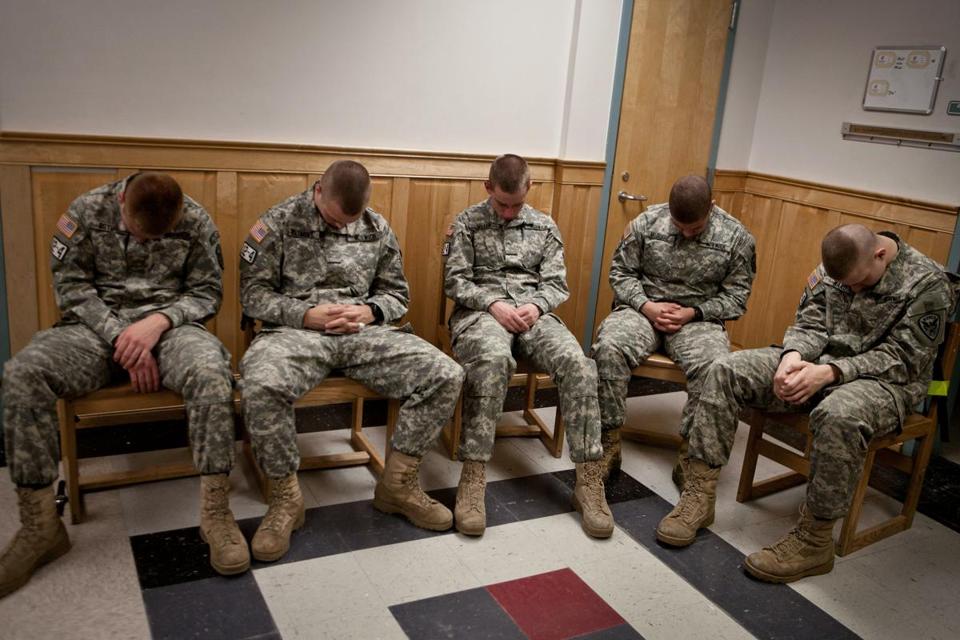
Norwich Rooks Meditate after classes

Lance Ostby, Rob Wetmore, Matt Miller, Aaron McDuffie, and Jeremy Ward practiced meditation following afternoon classes. Kayana Szymczak for the Boston Globe

NORTHFIELD, Vt. — It is part of a highly regimented daily routine at Norwich University, the nation’s oldest private military academy and a cultivator of battlefield leaders for nearly two centuries.

Dressed in combat fatigues and boots, a platoon of first-year cadets — “Rooks” — are up early in their barracks. On the orders of their instructor, the young men and women take their places. At 0800 sharp, they sit on wooden chairs in a circle and begin — to meditate.

The first-of-its-kind training is part of a long-term study to determine whether regular brief periods of silent, peaceful consciousness can improve troops’ performance. Ultimately, researchers hope the transcendental meditation training might be made available across all branches of the military to help inoculate troops against acute post-traumatic stress disorder, which has reached epidemic proportions and is blamed for a record number of suicides in the ranks.

For an institution that demands that incoming cadets exhibit physical and mental toughness, meditation training is a radical approach. The broader military culture had long associated meditation with a leftist, antiwar philosophy. Known by its shorthand, TM was widely introduced to the West by Maharishi Mahesh Yogi, the Hindu leader who once served as the spiritual guru to the Beatles.

“I was very skeptical at first,” said Norwich president Richard W. Schneider, a retired Coast Guard admiral who is among several university officials who have also been trained in the technique. “I’m not a touchy-feely guy.”

But the preliminary results of the study, now in its second year, surprised even its lead researchers. They have been methodically tracking the dozens of participants and several control groups of non-meditating cadets through detailed questionnaires as well as brain wave and eye scans to measure levels of stress, anxiety, and depression.

“All those things decreased significantly,” said Dr. Carole Bandy, a Norwich psychology professor overseeing the project. “In fact, they decreased very significantly.”

Positive traits such as critical thinking and mental resilience improved, according to preliminary findings shared with the Globe that Bandy and her team plan to publish next year.

The project has garnered high-level attention from the Army.

“Becoming more psychologically fit is just like becoming physically fit. It is better to do it before you are injured,” said retired Brigadier General Rhonda Cornum, a surgeon who until recently ran the Army’s Comprehensive Soldier Fitness Program and visited Norwich three times to be briefed on the work. “There seems to be no question that meditation is, frankly, good for you. I am very encouraged by the Norwich University study.”

(more…)

Why CEOs, actors, and pop stars love Transcendental Meditation | Well+Good NYC

November 30, 2012

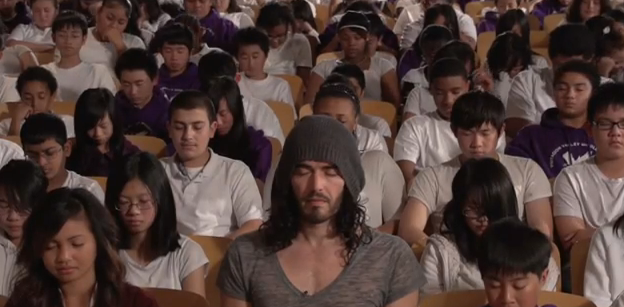
Here is an excerpt from a Well + Good NYC article, Why CEOs, actors, and pop stars love Transcendental Meditation, posted under their Good Advice column on Tuesday, November 27, 2012. The top photo shows Russell Brand meditating with students at a San Francisco Middle School.

Russell Brand meditates with students in a San Francisco School

The Beatles famously credited Transcendental Meditation with helping them write their best music. Oprah swears by her daily practice. So does billionaire hedge fund founder Ray Dalio, British comedian Russell Brand, and music mogul Russell Simmons.

In fact, the list of celebrities and Fortune 500 CEOs who say Transcendental Meditation has helped them in their personal and professional lives is so long that we may need to start a new list: “Successful People Who Don’t Practice Transcendental Meditation.”

Just what is this popular style of meditation and how does it differ from others? We’ll tell you!

“TM,” the acronym used by insiders, is the practice of sitting for 20 minutes, twice a day, repeating a personal mantra given to you by a TM teacher. The technique is based on a Vedic tradition, an ancient Indian process of enlightenment. Fifty years ago, spiritual leader Maharishi Mahesh Yogi introduced the practice to the rest of the world, founding the Transcendental Meditation Program.

“A Creative Edge”

According to the program, TM allows your mind to settle into a state of pure awareness, known as transcendental consciousness. In this state, the body is at its most relaxed, and the brain supposedly has the greatest access to its creative energy. Devotees claim that TM gives them a creative edge, allowing them to be more focused throughout the day and access innovative ideas.

Shel Pink, founder of the cutting-edge SpaRitual line of nail polishes and cosmetics, credits TM for helping her run her successful business. David Lynch, the movie director who is arguably TM’s biggest (and most recognizably creative) spokesperson at the moment, told an auditorium of film students how indispensable TM is to the craft: “it boosts awareness of pure vibrant consciousness” and “experiencing the act of enlivening your consciousness makes creativity flow.” (Check it out here at minute 7.)

But Lynch would also say TM is not just for film students (or celebrities and CEOs). It’s also a potent healing practice. That’s why The David Lynch Foundation raises money to offer TM programs for high-stress, at-risk populations, such as inner-city students and the homeless.

Peter Trivelas, a Navy veteran who now teaches TM to other veterans, agrees that this simple practice has powerful benefits for post-traumatic stress. “TM teaches you to put your brain in a state of profound rest, so your body can begin to repair itself on a profound level.”

See the rest of this great article with photos of David Lynch and Shel Pink here: t.co/p0UJwQ6W.

Also see 14 Executives Who Swear By Meditation–10 do TM.


Op-Ed peace piece spreading around the world: Reducing Tension in the Middle East

November 29, 2012

In a response to the current volatile situation in the Middle East co-authors David Orme-Johnson and David Leffler ask if we want to continue repeating history, killing and destroying to solve political problems, or transform ourselves with a more enlightened alternative approach that’s been scientifically proven to create peace.

Modern unified field theory supports the perennial philosophy of all major cultural traditions that there exists a transcendental field at the most fundamental level of natural law, which can be directly accessed as the silent transcendental level of the human mind. Hundreds of studies have shown that experience of transcendental consciousness breaks the chain of conditioned reflexes coming on from past behavior, as seen in reduced addictive behaviors of all kinds, decreased prison recidivism, and reduced behavioral problems in inner-city children.

Are we as nations to go on like rats trapped in a conditioning cage, reacting the same way decade after decade? Or shall we step out of the cage into the transcendental level of our own consciousness and grow up into enlightened human beings, rather than continuing to resort to destroying and killing? This is the choice we have right now.

Read this paradigm-shifting Op-Ed piece on how we can put an end to war and create permanent peace: Reducing Tension in the Middle East. It’s being posted on news websites and online journals around the world. The AsiaN published it as Transcendental meditation proved helpful in solving enmity among nations. The Israel Herald published it under: Lasting peace in Middle East may need warring parties to meditate, and the Palestinian News: Meditation cited as possible remedy to reduce tensions in Mideast conflict.

Here is a list of publications under dates in the countries where the article was published, over 50 times so far: Israel, Afghanistan, Romania, UK, Nepal, USA, Pakistan, Greece, Cyprus, Ghana, Liberia, Balkans, India, Ivory Coast, Africa, Australia/Tonga, Canada, Jordan, Balkans, Palestine, South Korea, Kashmir, Ireland, China, South Africa, Egypt, Germany, France, Denmark, Spain, Thailand. Check them all posted here: Op-Ed Piece “Reducing Tension in the Middle East” by Drs. Orme-Johnson and Leffler is Available Worldwide in over 50 Locations.

For more information on this powerful benign approach, see: The Power of The Collective, by John Hagelin and John Hagelin — “Only Higher Consciousness Can Transform Our World” — Beyond Awakening Blog. Here are reports: Group Meditations Reduce Crime, As Predicted and Explanation to Steady Decline in Major Crime in the US.

Training from the Inside: Treating PTSD with TM

November 11, 2012

Training from the Inside: Treating PTSD with Transcendental Meditation

“I deal with pain every day. I have nerve problems in my leg and the PTSD that the doctors diagnosed me with…functioning becomes impossible, lack of sleep, your work ethic sucks, you can’t focus at work, you can’t do anything, everybody pisses you off…it’s different for everybody. Memories saturate your mind…for me every day is a constant reminder — you relive the same crap over and over and over.” – Sgt James Thrasher, USMC

“I myself have been deployed eight times and been to combat four times. I was diagnosed with PTSD, depression, insomnia. We fight through whatever problems we have, we suck it up, and I did that for many many years. The trauma that I’ve seen the situations that I’ve been through…you take all of that stuff and you put it in a bag and we keep filling up our bag with all these problems rather than dealing with them. – GySgt Richard Wilson, USMC

“What peaked my interest in TM was all the research that’s been done and how incredibly effective it is for trauma, stress…the evidence now is that in combat stress the trauma actually changes the brain so that the ability to self-regulate isn’t there. Meditation helps with information processing, helps with self-regulation. Here we have another tool that is fabulous and they can do for themselves.” – Anna Benson, PhD, Clinical Psychologist

“I was interested in the TM program but I was skeptical at the same time. The power of the TM meditation…it really came out fast and it was surprising to me. Having that inner peace after meditation really really emboldened me to deal with things that I’d been just kind of stuffing away. So to be able to have relief from agitation, have relief from anger, frustration, sleeplessness, alcoholism, drug addiction…that’s huge.” – Sgt James Thrasher, USMC

Uploaded by on Aug 28, 2012

See updated article with photos by Mario Orsatti posted on the TM Blog December 13, 2012: U.S. Marines Talk About the Effect of TM on PTSD.

For more information on the David Lynch Foundation’s Operation Warrior Wellness program please visit http://operationwarriorwellness.org.

For more information on the Transcendental Meditation technique please visit http://tm.org.

Since 2005 the David Lynch Foundation has shared Transcendental Meditation with our most stressed populations. The David Lynch Foundation runs entirely on donations and there is a long list of veterans and sufferers of post-traumatic stress eager to participate.

If you were inspired by this video and would like to make a donation please visit: http://www.operationwarriorwellness.org/how-to-help. Your donations will be used in 3 ways—to help active duty military and veterans suffering from PTS, cadets in training and activated soldiers, and family members of retired and active service personnel. Thank you!

Related news: Soledad O’Brien interviews Russell Simmons and Bob Roth of the David Lynch Foundation on TM for Vets with PTS on CNN’s Starting Point | Military Leaders to Promote Meditation at Iowa Summit to Help Reduce Veteran Suicide EpidemicMatt Kelley of Radio Iowa interviews Jerry Yellin about an Iowa Veterans Summit solution to PTSD | See video highlights of the Iowa Veterans Summit – PTSD and Transcendental Meditation | KTVO News: How one soldier regained his life with help from WWII veteran and TM for PTSDFairfield and Ames war veterans team up to bring meditation (TM) to fellow Iowa vets with PTSD | Mark Newman: Courier: Iowa soldier seeks peace of mind through meditation and medicationMilitary veterans speak on need to increase resiliency: by Diane Vance, Fairfield Ledger | Story County Veteran Once Suicidal Finds Relief from PTSD with Transcendental Meditation: AmesPatch article by Jessica Miller | Veterans speak out on post-traumatic stress, offer a proven way to heal PTSD | Healing the Hidden Wounds of War: open forum for Iowa veterans and their families affected by PTSD, sponsored by Operation Warrior Wellness | Post Traumatic Stress and How Transcendental Meditation Can Help [Infographic] | Meditation Improves Performance at Military University | Meditation Saves A Veteran From PTSD and SuicideDr. Oz on the Benefits of the TM Technique

Happy Birthday Katy Perry! Thank you for supporting the David Lynch Foundation

October 24, 2012

The David Lynch Foundation Wishes Happy Birthday to Katy Perry

For her birthday, Katy Perry tweets fans to support Transcendental Meditation for school kids and veterans https://twitter.com/katyperry

Katy Perry says that Transcendental Meditation changed her life and, for her October 25 birthday, she is asking her fans to donate to the David Lynch Foundation, a US-based charity that provides meditation instruction at no charge to inner-city school kids and veterans suffering from the traumatic stress of combat.

In a tweet to her 27 million twitter followers, Perry writes:

“Transcendental Meditation changed my life. For my birthday I would love to pay it forward. In lieu of gifts, donate to www.davidlynchfoundation.org/katyperry.”

Perry joins a growing number of A-list celebs who practice Transcendental Meditation, or “TM”as it is called, including Oprah Winfrey, Ellen DeGeneres, Dr. Mehmet Oz, Russell Simmons, Jerry Seinfeld, Paul McCartney, Ringo Starr, Martin Scorsese, Clint Eastwood, Cheryl Crow, Moby, Ben Harper, and Laura Dern.

On the David Lynch Foundation donation webpage, Perry writes about her support for TM:

“I have been meditating for two years now, and it’s the best thing I have ever done to help bring more creativity, positive energy and peace to my life. When I’m tired, stressed, anxious or depressed, I meditate, and it clears my mind, and makes me feel relaxed and happier. I have shared the meditation experience with my friends, and recommend it to everyone I know.

“I support the David Lynch Foundation because it brings Transcendental Meditation to millions of adults and children all over the world who suffer from post-traumatic stress, such as veterans, inner-city school kids, and women and girls who are victims of violence.

“Please help me celebrate my birthday by making a donation to DLF. Your donation is not only special to me, but to all of the people whose lives you will help through the lifelong gift of meditation.”

Last year, Perry urged her fans to “pay it forward” with donations to the ASPCA to care for abused animals.

For more information, please contact heather@davidlynchfoundation.org.

About The DLF

Find out how Transcendental Meditation is being used to help at-risk students, veterans, and abused women and girls overcome stress. Watch

Celebrity websites have reported the news. See Look to the Stars: The World of Celebrity Giving: Katy Perry Urges Fans To Support Meditation Charity For Her Birthday. All the celebrities listed there are TM-ers who support the David Lynch Foundation. Examiner: Katy Perry birthday wish: 28 million fans support the David Lynch Foundation. MTV: act: Sweet Tweet: Katy Perry Asks for Charitable Donations For Her Birthday

Matt Kelley of Radio Iowa interviews Jerry Yellin about an Iowa Veterans Summit solution to PTSD

October 11, 2012

Veteran shares story in hopes of helping others deal with impact of war

October 11, 2012 By

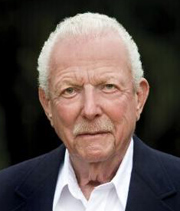
Jerry Yellin

A study finds more veterans die by suicide every year than are killed annually in Iraq and Afghanistan.

A World War Two fighter pilot from southeast Iowa is telling his story today at an Iowa Veterans Summit in hopes more veterans can be saved and find peace.

Eighty-eight-year-old Jerry Yellin, of Fairfield, says he joined the service as an 18-year-old in February of 1942 and, in his words, “I learned how to kill.”

“I flew P-51s in combat over Japan,” Yellin says. “I flew with 16 guys who didn’t come back. One day, I had a pure purpose of living and the next day the war was over and I had no purpose of living. I came home and I was an empty soul. I had no ambition, no direction.”

Yellin says he “wandered for 30 years” and suffered from addiction until he learned Transcendental Meditation in 1975 and “got my life back.”

“It was just as easy as that,” Yellin says. “A very simple technique, not a philosophy, not a belief. Not what you think but how you think. It puts you into the zone of life, twice a day, 20 minutes a day.” Yellin is now the national co-chairman of Operation Warrior Wellness and he’s among the featured speakers at the summit in West Des Moines.

He says more veterans and their families are turning to meditation to ease the trauma of combat and to pave the way to a healthier life. “It’s a very inexpensive modality to remove stress,” Yellin says.

“It’s a 5,000-year-old traditional warrior’s way of learning to cope with stress.” Yellin says he suffered from “shell shock” for three decades after the end of World War Two, but it wasn’t something that was considered “manly” to discuss. Today, the condition is known as PTSD.

“Post-Traumatic Stress Disorder is a civilian term,” Yellin says. “I would like to see it changed to Post-Combat Stress Injury because it is a mental injury.” He says PTSD is now blamed for 18 veterans’ suicides daily. The Iowa Veterans Summit and luncheon begins at noon at the West Des Moines Marriott.

A release says it will present the research and clinical applications of Transcendental Meditation for reducing stress, PTSD, substance abuse and suicide, depression and enhancing resilience and performance.

Learn more by calling 866-962-0108 or visit: www.operationwarriorwellness.org.

Audio: Radio Iowa’s Matt Kelley interviews Jerry Yellin 5:36.

See Military Leaders to Promote Meditation at Iowa Summit to Help Reduce Veteran Suicide Epidemic.

See video highlights of the Iowa Veterans Summit – PTSD and Transcendental Meditation.