Archive for the ‘Peace’ Category

Article reports meditation studies done on stressed students with beneficial outcomes

April 24, 2013

Here is an informative article. I applaud the authors’ efforts for putting together this collection of beneficial meditation studies related to stressed students dealing with the pressures of school and college, inspiring them to not only consider the idea of meditation, but also the practice of it. I didn’t change a word, except capitalize Transcendental Meditation to honor its unique trademarked practice. Comments and additional information are added at the end of the article.

10 Telling Studies Done on Student Meditation

Posted on Monday March 26, 2012 by Staff Writers of Best Colleges Online

As the semester draws to a close, many college students are starting to feel the pressure of completing projects, writing final papers, giving presentations, and of course, studying for finals. Add to that holding down a job and you’ve got a perfect storm of stress. How to calm your mind? Meditation may be the answer.

Scientific studies are increasingly revealing some pretty amazing benefits of regular meditation practice, both for the general public and students in particular. Meditation can help you better deal with stress and may make your life as a student healthier and happier overall, a great tradeoff for just a few minutes of mindful thinking a day. Read on to learn about some of the latest and most telling studies on student meditation to learn the amazing benefits it can offer you this finals season and beyond.

Meditation improves standardized academic achievement

A 2009 study of 189 students in California who were performing below proficiency levels in English and math found that meditation actually helped to improve their test scores on the California Standards Tests. Students were asked to practice Transcendental Meditation twice a day over a three-month period. At the end of that period, 41% of students participating in the study showed improvement in both math and English scores, sometimes moving up an entire performance level, compared with just 15% who didn’t participate in the program showing improvement.

Meditation improves brain functioning in ADHD students

Those who have ADHD may find meditation an effective method for improving concentration and brain function, at least according to one study published in The Journal of Psychology. A paper called “ADHD, Brain Functioning, and Transcendental Meditation Practice” appeared in the journal just last year, showcasing the results of a study that followed a group of middle school students with ADHD as they participated in a program that asked them to meditate twice a day for three months. At the end of the three-month period, students reported 50% reductions in stress, anxiety, and ADHD symptoms. Researchers also found improved brain functioning, increased brain processing, and improved language-based skills among ADHD students who practiced Transcendental Meditation.

Meditation can reduce academic stress

Several studies have been conducted on the effect of meditative practices on reducing academic stress, all with a similar finding: it works. In 2007 researchers at SIU in Carbondale, Ill. released a multi-year study on 64 post-baccalaureate medical students who participated in a deep breathing meditation program. Students in the study were found to have reduced perceptions of test anxiety, nervousness, self-doubt, and concentration loss. Another study of students at American University had similar results, finding that students who participated in three months of Transcendental Meditation practice reported lower levels of stress (as well as increased concentration, more alertness, and greater resistance to the physical effects of stress, as well as brain function changes) during finals, often the most stressful part of the academic year.

Meditating may improve the integrity and efficiency of certain connections in the brain

It should come as no surprise that meditation practice can cause physical changes in the structure of the brain; monks have been saying this for years. Yet a surprisingly small amount of meditation can have an impact, even with as little as 11 hours of meditating. A 2010 study looked at 45 University of Oregon students, having 22 of them participate in an integrative body-mind meditation training program while the control group simply completed a relaxation program. The IBMT students were found to have changes in the fibers in the brain area related to regulating emotions and behavior, changes which became clear via brain imaging equipment with just 11 hours of practice. The same changes were not seen in the control group. Researchers believe that meditation may help students to better control their actions, resolve conflict, and manage stress by actually physically changing the brain connections that regulate these functions.

Meditation reduces drug and alcohol abuse

It’s no secret that many college students go overboard with drugs and alcohol, many binging on potentially dangerous substances multiple nights a week. Yet meditation practice may help limit the desire to engage in these activities, a study in Alcoholism Treatment Quarterly reveals. Looking at both students and adults, the study found that daily Transcendental Meditation practice greatly reduced both substance abuse problems and antisocial behaviors. The results held true for all classes of drugs including illegal substances, alcohol, cigarettes, and prescription medications, with meditation being in many cases two or three times more effective than traditional drug prevention and education programs.

Meditation reduces behavior incidents and absenteeism in high school students

In 2003, researchers Vernon Barnes, Lynnette Bauza, and Frank Treiber set out to study the effects of meditation on adolescents, specifically looking at the way it could potentially reduce stress and affect school infractions. Their results were pretty striking. Forty-five high school-aged African-American students were studied, some in a control group and others practicing Transcendental Meditation on a daily basis for four months. At the end of the study, the researchers found that the meditation group had lower levels of absenteeism, lower levels of behavior incidents at school, and lower levels of suspension. On the flip side, these behaviors actually increased in the group that didn’t meditate, suggesting that the meditation helped reduce the psychological stress, emotional instability, or hostility that was leading to negative and often self-destructive behaviors in these teens.

Meditation may make students happier and boost self-esteem

Meditation might not just help your studies, it might also help you be happier and more satisfied as well. Researchers at the University of Michigan found 60 sixth-graders to participate in a study, asking a group of them to take part in daily practice of Transcendental Meditation over a four-month period. At the end of the study, researchers reported that students had undergone some positive changes in emotional development, with students getting higher scores on affectivity, self-esteem, and emotional competence than when they started the program and when compared to their peers who did not meditate.

Meditation has heart health benefits

Meditation is as good for your body as it is for your mind, a study at American University reports. A study published by the university in conjunction with the Maharishi University of Management found that regular Transcendental Meditation helps to reduce blood pressure, anxiety, and depression among college students. The study chose 298 students at random to either be part of the meditation group or a control group, with a subset of students at risk for hypertension also analyzed. After three months, students were measured on blood pressure, psychological distress, and coping ability. Students who were formerly at-risk of hypertension showed a major change in blood pressure, associated with a 52% lower risk of developing hypertension in later years.

Meditation reduces depression and anxiety

Feeling a little overwhelmed with college life? You’re not alone. Studies are demonstrating that meditation may offer one solution to better coping with the stress, anxiety, and even depression that many college students experience. Research at Charles Drew University in LA and the University of Hawaii in Kohala found that adults who participated in a Transcendental Meditation program showed significant reductions in depressive symptoms (an average of 48% lower than the control group), even those who had indications of clinically significant depression. Similar results have been found in students, with decreases in depression and anxiety symptoms at significant levels after participating in a meditation program.

Meditation may increase intelligence

A study done by the Maharishi University of Management suggests that meditation is a great way to work out your brain and that it might even have positive effects on intelligence when practiced regularly. Looking at three different studies, the university found that high school students who participated in a Transcendental Meditation program had significant increases in creativity and intelligence levels, compared to those who took part in a napping or contemplative meditation program. Students in the Transcendental Meditation group saw increases in brain function across the board, but most dramatically in measurements of creative thinking, practical intelligence, and IQ.

Comments and further information

There were 8 comments posted at the end of this article making the same point. The reason being, I think, is that the authors gave simple instructions taken from various websites on how to meditate, then listed 10 studies on meditation, 9 of which are all done on one specific meditation technique, Transcendental Meditation® (http://www.tm.org).

Assigning all improvements to a generic notion of meditation can be misleading and could generate false expectations in those willing to experiment on their own. That’s why the comments contributed to a better understanding of the subject. Still, the authors’ efforts were sincere, and those readers who are interested in learning meditation can always seek out more information and actual classes.

Since most of the studies listed were on the Transcendental Meditation technique, I would naturally recommend those interested to find a certified TM teacher in their area. Call 888-LEARN-TM (888-532-7686) or go to http://www.tm.org/contact-us.

A recent paper published in Consciousness and Cognition gives a scientific explanation of different categories of meditation from major traditions, their practices, brainwave signatures and outcomes. See Are all meditation techniques the same?

Celebs who meditate featured in The Daily Beast

April 24, 2013

This article on Transcendental Meditation was one of the rotating stories on The Daily Beast today, April 23, 2013. It was the 9th top story of rotating images in the big box on the upper left corner of the home page. The article appeared as a result of Rupert Murdoch learning to meditate last weekend. It was supposed to be private, but he tweeted about it and drew media attention. Click on the links below to see photos and descriptions of the 14 featured meditating celebs.

Celebs who meditate -The Daily Beast

Celebs Who Meditate – The Daily Beast – Invision/AP; WireImage

Oprah & More Stars Who Do Transcendental Meditation

The Daily BeastTranscendental Meditation has made its rounds with celebrities as far back as when the Beatles were a unit, but is once again creeping up as the latest trend among celebrities. Rupert Murdoch recently tweeted on his indoctrination into the mantra meditation movement, Oprah Winfrey devoted an entire show to it, and David Lynch even launched a nonprofit foundation for the practice.

The technique was established in India by Maharishi Mahesh Yogi in the 1950s and has spread worldwide since, used as a means to relieve stress and build personal development. The practice involves twice-a-day, 15- to 20-minute meditations, and courses are taught by certified instructors for a fee. See which other stars are endorsing the practice and taking time for some inner peace!

Read celebrity descriptions and view all (15) photos in fullscreen. Most of these celebrities, in order of appearance, practice and/or are connected with TM in some way: Rupert Murdoch, David Lynch, Russell Brand, Shirley MacLaine, Sheryl Crow, Paul McCartney, Oprah Winfrey, Moby, Katy Perry, Howard Stern, Hugh Jackman, George Lucas, Clint Eastwood, and Candy Crowley.

Read a related article: 14 Executives Who Swear By Meditation–10 do TM.

Also see Why CEOs, actors, and pop stars love Transcendental Meditation | Well+Good NYC and What do Stephen Collins, Ellen DeGeneres, Russell Brand, Russell Simmons, David Lynch and Oprah have in common? and The New York Times: Look Who’s Meditating Now.

Our Conscious Future: Leading Visionaries Offer TED-Style Talks at Maharishi University April 20

April 19, 2013

Fairfield, Iowa (PRWEB) April 18, 2013

The Institute of Science, Technology and Public Policy at Maharishi University of Management presents a visionary conference event titled, Our Conscious Future.

On Saturday, April 20th, eight remarkable thought leaders and innovators will converge on the MUM campus to present TED-style talks that will go right to the heart of what it means to be fully human in the 21st century.

Each speaker will explore different facets of mind, body, society and consciousness and present the most recent discoveries and solutions to help enhance individual life and change the world. These ideas are emerging to create new paradigms for humankind—paradigms that can potentially enrich individual life and change the world.

The short presentations, featuring world-class speakers and local luminaries, will be in the style of the intellectually stimulating TED Talks that are popular on the Internet.

Featured speakers and their topics include:

Dr. Pamela Peeke, internationally-renowned physician, scientist, “medutainer” and expert in the fields of nutrition, stress, and fitness explores the neurological basis of food addiction: Your Brain’s Reward Center: Hacked By a Cupcake.

Father Gabriel Mejia, a renowned humanitarian who has rescued over 100,000 children off the streets of Columbia, restoring their rights and dignity, offering them a brighter future: Love and Transcendence: The Secrets of Lasting Rehabilitation.

Thomas McCabe, mathematician, entrepreneur, author and software pioneer, who has shifted his focus from an exploration of how algorithms think to the math of how we think: Inner Genius, Empathy & the Math of Your Mind.

John Hagelin, world-renowned quantum physicist and peace proponent has forged a connection between quantum mechanics, our inner experience, and lasting peace: Higher States: Harnessing the Power of Consciousness to Fulfill Your Desires and Change the World.

Robert Keith Wallace: from his breakthrough discovery of a fourth major state of consciousness to recent developments in the brain signatures of high-performance individuals, this ground-breaking scientist continues to expand our vision of human potential. Dr. Wallace will present The Neurophysiology of Peak Performance, with neuroscientist Fred Travis who has published papers on this topic.

Lonnie Gamble: with the mind of an engineer, the dedication of an educator and the heart of a community activist, this sustainability bioneer has blazed a visionary trail in the sustainability movement: The Sustainability Revolution & the Transformation of Humankind.

Prudence Farrow Bruns, Sanskrit scholar and film producer, the meditative muse for the Beatles’ “Dear Prudence” offers her personal insights on the evolution of yoga in the West, beginning with her seminal time in India with Maharishi and the Beatles: The “Dear Prudence” Story.

Special Music Performances by the Chamber Singers of Southeast Iowa, MUM’s International Ensemble, and more. Additional Speakers to be Announced.

Saturday, April 20 • 1:00-4:30 & 7:45-9:30 pm • Dalby Hall • Argiro Student Center • MUM campus • Register Now • Space is Limited

For information and to register, see http://www.mum.edu/our-conscious-future

Admission is $25 general, $15 for staff, faculty, and IAA, and $10 for MUM students.

Please check the website and register online for Free Online Streaming Option. Now available: Our Conscious Future Schedule of Presentations.

Founded in 1971, Maharishi University of Management (MUM) offers Consciousness-Based℠ Education, a traditional academic curriculum enhanced with self-development programs like the Transcendental Meditation® technique. Students are encouraged to follow a more sustainable routine of study, socializing and rest without the typical college burnout. All aspects of campus life nourish the body and mind, including organic vegetarian meals served fresh daily. Located in Fairfield, Iowa, MUM is accredited by The Higher Learning Commission and offers bachelor’s, master’s, and doctoral degrees in the arts, sciences, humanities, and business. Visitors Weekends are held throughout the year. For more information, call the Admissions Office at 800-369-6480 or visit http://www.mum.edu.

Related news in The Fairfield Ledger and Radio Iowa:

Dr. Pamela Peeke to speak at Maharishi University visionary conference event

Maharishi University conference focuses on health: Pam Peeke speaks on food addictions

Related articles by Linda Egenes for Enlightenment: The Transcendental Meditation® Magazine:

How the TM Technique Can Help Stop Food Addiction: An Interview with Dr. Pam Peeke

Saving the Disposable Ones: TM Practice Offers a New Life to the Street Children of Colombia

Replays available on Livestream:

Part one starts @10:00: http://new.livestream.com/mum/events/2039710/videos/16900526
Part two starts @28:00: http://new.livestream.com/mum/events/2039710/videos/16941492

MUM Achievements reported on the event: MUM Hosts Conference on Consciousness 

UPDATED

See Our Conscious Future Highlights here. Visit the Consciousness Talks Archive to see these and other inspiring presentations.

Save

New study shows Transcendental Meditation significantly reduces PTS in African refugees

April 11, 2013

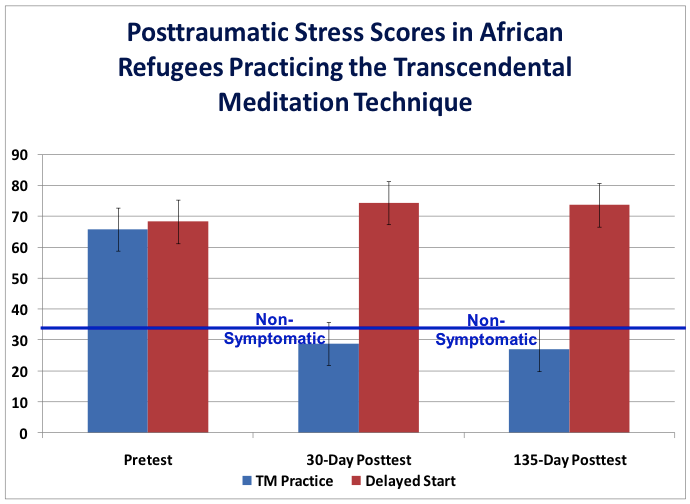
African war refugees practicing Transcendental Meditation®, a simple and effective stress-reducing meditation technique, experienced immediate and dramatic reductions in severe posttraumatic stress symptoms to a non-symptomatic level in just 30 days, according to a new study published this week in the April 2013 issue of the Journal of Traumatic Stress (Volume 26, Issue 2, pp. 295-298.)

A significant percentage of veterans are returning home from wars exhibiting symptoms of posttraumatic stress (PTS). It is now recognized as a serious health problem that can trigger suicidal tendencies. But what about the victims of such violence? Homeless refugees live with the constant reminder of what war has done to their lives and those of their families.

While studies have shown the Transcendental Meditation (TM®) technique to effectively lower posttraumatic stress in veterans of Vietnam and Iraq/Afghanistan wars, this is the first (randomized/matched) study to look at PTS in African war refugees. It measured the severity of posttraumatic stress symptoms before and after learning the TM technique, and the reductions were immediate and dramatic.

PTS Scores Graph

The Post-Traumatic Stress Disorder Checklist scores in the TM group went from high PTS symptoms at baseline to a non-symptomatic level after 30-days TM practice, and remained low at 135-days, while scores in the control group trended upward from baseline to the two posttests.

For more study details and comments by the surprised researchers, click the EurekAlert! press release, graph and video with descriptions, and a PDF of the published JTS TM-PTS Study.

The study was funded by the David Lynch Foundation.

In the past 20 years, 18 African nations have been ravaged by war. Tens of millions of Africans have been victims of violence or witnessed horrific acts of terror—and now suffer from post-traumatic stress. The DLF Africa PTSD Relief Project was set up to raise funds to teach the TM program to many more African refugees. Here is a short documentary with actor, director Bill Duke, Ambassador for African PTSD Relief. Please visit http://www.davidlynchfoundation.org/africa to learn more.

The news was reported on MedicalXpress.com: Transcendental Meditation significantly reduces posttraumatic stress in African refugees, and linked to it from many other websites. Also by News-Medical.net: Study: Transcendental meditation reduces posttraumatic stress in African refugees. And Medical News Today: Posttraumatic Stress Significantly Reduced By Transcendental Meditation. Psychiatric Annals/Helio: Meditation reduced posttraumatic stress symptoms in African refugees.

Here is an excellent comprehensive report with quotes from Russell Simmons, and David Lynch about the study posted on People of Shambala: Transcendental Meditation significantly reduces post-traumatic stress for Congolese refugees: study. Google posted this excellent article by AFP: Filmmaker David Lynch touts meditation for PTSD.

More on Global Good News: Transcendental Meditation significantly reduces posttraumatic stress in African refugees, and  Johannesburg Transcendental Meditation Center: Post Traumatic Stress help for African Refugees.

See the Second study to show Transcendental Meditation reduces PTSD in African Refugees—in just 10 days.

Russell Brand and David Lynch at LA Premiere of ‘Meditation, Creativity, Peace’ Documentary

April 5, 2013
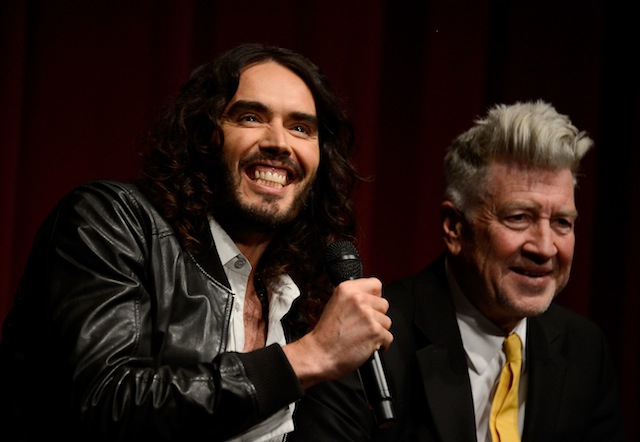
Comedian Russell Brand and Founder/Director David Lynch speak during the 'Meditation In Education' Global Outreach Campaign at The Billy Wilder Theater at the Hammer Museum on April 2, 2013 in Los Angeles, California. (Photo by Frazer Harrison/Getty Images)

Comedian Russell Brand and Founder/Director David Lynch speak during the ‘Meditation In Education’ Global Outreach Campaign at The Billy Wilder Theater at the Hammer Museum on April 2, 2013 in Los Angeles, California. (Photo by Frazer Harrison/Getty Images)

David Lynch and Russell Brand joined forces to help bring Transcendental Meditation to 1,000,000 at-risk youth at the U.S. premiere of ‘Meditation, Creativity, Peace’ at the Hammer Museum’s Billy Wilder Theater in Los Angeles on Tuesday, April 2. The premiere marked the launch of the “Meditation in Education” global outreach campaign.

“Proceeds from the global distribution of the documentary will be used to help students in the United States and across the world overcome traumatic stress, improve learning ability and raise performance through Transcendental Meditation,” said Lynch.

The response to the film was overwhelming with only 300 seats and over 1,000 people showing up. An overflow hall and outdoor screens were set up so hundreds more could see the film, and the dynamic 41-minute interview that followed with David Lynch, Russell Brand, and DLF executive director, Bob Roth. Hopefully that interview will be posted soon.* Roth said the overwhelming response was indicative of a change in collective consciousness since the film was first shown in New York a year and a half ago.**

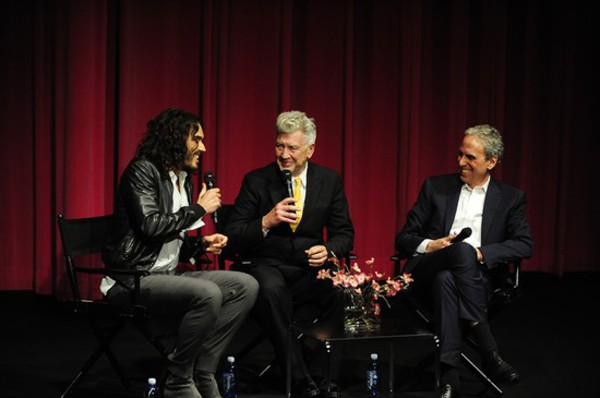
Russell Brand and David Lynch talk Transcendental Meditation with Bob Roth. Credit/Copyright: Amy Graves via The TASC Group

Russell Brand and David Lynch talk Transcendental Meditation with Bob Roth. Credit/Copyright: Amy Graves via The TASC Group

Following last night’s debut in L.A., the documentary will go on to screen in 12 major international cities, including London, Paris, Berlin, Tel Aviv, Johannesburg, Tokyo, Rio de Janeiro, Buenos Aires and Toronto, in May and June. The film will also be screened at the Palm Beach International Film Festival in West Palm Beach, FL on Saturday, April 6. Visit the new website, Meditation Creativity Peace, for a list of upcoming and previous screenings: http://meditationcreativitypeace.com.

Read more of what happened that night in these reports: Look to the Stars: Russell Brand And David Lynch Bring Meditation To At-Risk Youth and LAist: David Lynch & Russell Brand Changing Lives With ‘Meditation Creativity Peace’, which include photos and videos. Sean Macaulay covered the event, including an interview, for The Daily Beast: David Lynch Discusses Transcendental Meditation in Los Angeles. Google posted this excellent article by AFP: Filmmaker David Lynch touts meditation for PTSD.

Here are some videos by World Monitor TV covering the event. In this first one, Russell Brand and David Lynch arrive at ‘Meditation Creativity Peace’ US premier, after posing for photographers, David and Russell walk over to Puki Freeberg for an interview, which starts around 1:38. It’s difficult to make out what they’re saying with the many people talking in the room and photographers shouting at the celebrities to turn their way. At first David complains about the bright lights, saying they need to be covered with gels. But then David introduces the “fantastic” Puki to Russell who lights up and exclaims, “Oh you’re Puki! I hear a lot about you, and I met you once after a show in a different context, in a different dress, in a different light.

Puki asks Russell why he supports the David Lynch Foundation and he answers, “Because of the wonderful work it does in schools, with veterans, and because meditation is something everyone can use in their life, and because David asked me.”

David smiles and tells Puki that “Russell Brand is going to start a revolution…for peace and enlightenment…for all the people…and that’s why Russell’s here. And also Russell has a gift, somewhat of a gift for humor, and it’s really good to have him here.”

Puki asks David how he feels about premiering his documentary (Meditation, Creativity, Peace) in LA tonight, and he says, “I feel very good about it, because, hopefully, the documentary holds good news for the people…and we’ll see how it goes tonight…we’ll see if they think it’s good news.” There’s more discussion about the interview, which Russell says was very successful, but it’s hard to discern the rest of what they’re saying as they bring it to an end. Here is a more recent updated clearer version:

 Other meditating celebrities arrive and are seen in these videos: Maya Stojan, Russell Brand arrive at ‘Meditation Creativity Peace’ US premier | ‘Meditation Creativity Peace’ US premiere – Matt Bomer, Russell Brand, Nick Zano | Matt Bomer, Nick Zano all smiles at ‘Meditation Creativity Peace’ US premiere.

*The Hammer Museum did post the 41-minute interview the following month: David Lynch, Russell Brand, Bob Roth Q&A after screening Meditation, Creativity, Peace documentary at Hammer Museum. Richard Broome also posted it on his website highlighting key quotes from the interview.

**Here is an earlier post on the film when it was shown in NYC: Watch the trailer for a new documentary film on David Lynch titled “Meditation Creativity Peace”.

Enlightenment, The TM Magazine, also reported on the event: Meditation Creativity Peace: How the David Lynch Foundation Brings Change from Within.

David Lynch speaks with Alan Colmes about his 16-country tour film Meditation Creativity Peace.

The Intelligent Optimist’s Consciousness Issue Features Maharishi’s Approach to World Peace

March 24, 2013

The new Intelligent Optimist is out with The Consciousness Issue

Features articles on Maharishi Mahesh Yogi’s approach to world peace.

Optimist Jan-Feb 2013 The Intelligent Optimist, formerly OdeWire, is a magazine that pays attention to what’s good in the world. The new Consciousness Issue shows people meditating, connected to everyone else, with the words: The revenge of the spirit: A new consciousness is coming—and it will change everything. The Jan/Feb 2013 issue will be posted on their website. The editor-in-chief, Jurriaan Kamp, is inviting readers to receive The Consciousness Issue in digital format in their e-mailbox, for free.

There are two major articles on Maharishi’s approach to world peace: When monks rule: Rigorous research shows that group meditation reduces conflict and violence in society (pages 44–48), and Levitating for a better world: Selling his telecom company made Paul Gelderloos rich. Now he plans to spend millions reducing world poverty—through meditation (pages 50–53). You can also download PDFs of the articles: When monks rule and Levitating for a better world.

Optimist-When monks ruleThe Dutch-American publisher, Jurriaan Kamp, has written a most intelligent article. It’s actually one of the most enlightened pieces I’ve ever read about our approach to collectively transform society from within through the ongoing global world peace project. I especially loved his piece on Paul Gelderloos, our “Flying Dutchman!” 🙂 You’ll know what I mean when you see the photo they put together. I believe it was Paul who encouraged Jurriaan to write about Maharishi’s World Peace Project and the means to transform society. He did a brilliant job! You’ll enjoy it.

Of interest are Jurriaan Kamp’s Letter from the Editor: Your attention, please (page 5), and his editorial article (pages 36–40): The revenge of the spirit: Humanity stands at the threshold of a new era: the era of consciousness. After conquering the external world, human beings will discover their inner selves.

Here is an invitation from the Publisher and Editor-in-Chief of The Intelligent Optimist, Jurriaan Kamp. (more…)

Celebrating Paul Horn and his Contribution to Jazz, World Music, Meditation and Spirituality

March 20, 2013

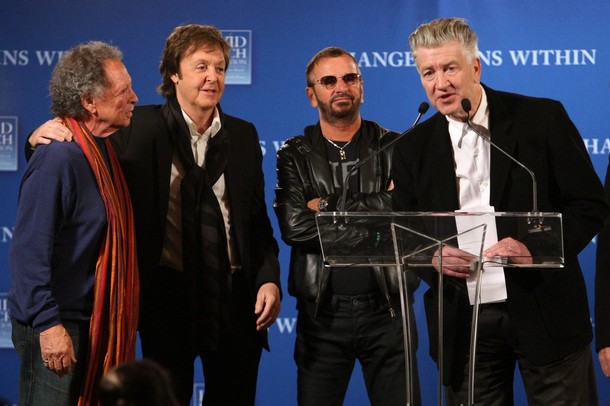
Paul Horn, Sir Paul McCartney, Ringo Starr and David Lynch attend the press conference for the David Lynch Foundation “Change Begins Within” Benefit Concert at Radio City Music Hall on April 3, 2009 in New York City. (Photo by Bryan Bedder/Getty Images)

It was St. Patrick’s Day on Sunday, March 17, 2013. It was also Paul Horn’s 83rd birthday, and I had sent around an email about it with links to Paul’s participation (:55–1:22) in the Change Begins Within Press Conference Highlights from Radio City Music Hall in NYC, April 3, 2009, and the concert the following night. Here’s an overview of the Change Begins Within Press Conference and musical Paul McCartney & Ringo Starr Concert Highlights. This is a great collection of concert clips and interviews, and DLF school clips: Paul McCartney and Ringo Starr Collaborate for Meditation in Schools. PBS later aired an edited version.

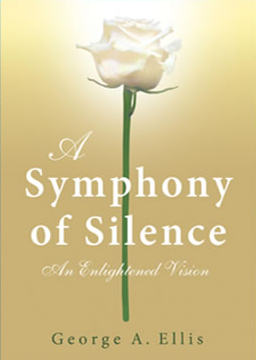
A Symphony of SilenceI also read an interview with Paul Horn in the first chapter of A Symphony of Silence: An Enlightened Vision by George A. Ellis. Paul spoke about his philosophy of music and improvisation, how he communicated musically with a killer whale at an aquarium in Victoria, BC, and in Hawaii. He also spoke about his own spiritual quest, how he started Transcendental Meditation and met Maharishi Mahesh Yogi. He discussed how he was invited to join a course in India with Maharishi and his experiences there. George Ellis also asked Paul questions about his becoming a TM teacher in those early days, and also playing his flute in the Taj Mahal. It’s a great interview, and a wonderful way to start the book! It got me hooked.

Rolf Erickson, editor-in-chief of Enlightenment, The Transcendental Meditation Magazine, emailed to say there’s an excerpt of the interview with Paul Horn in the latest issue, number 11, called The Music of Meditation. In it, George cites a beautiful quote from Paul’s own book, Inside Paul Horn: The Spiritual Odyssey of a Universal Traveler, highlighted at the top of the article: “We are traveling in historical time, from the present to the distant past. We are traveling inwardly as well, through the music of meditation.” Rolf also contributed an article about George Ellis, Sharing the Symphony of Silence, describing what he had accomplished as a TM teacher and entrepreneur, and his heartfelt tribute to Maharishi with this book. Visit http://asymphonyofsilence.com.

Here is an excerpt from the book A Symphony of Silence by George Ellis on Paul Horn and the Music of Meditation published in Enjoy TM News.

Here’s an earlier post from a few years ago: Iconic Jazz Musician Paul Horn Performs Inside MUM’s Golden Dome in Historic Concert May 15. The concert was in the context of a Symposium on Music and Consciousness during which Paul Horn was honored for his lifelong contribution to music, as a jazz musician and Father of New Age Music; and consciousness, as a longtime teacher of Maharishi’s Transcendental Meditation technique. Paul taught thousands of people to meditate in the 70’s. Here is Paul’s great talk at that Symposium: Improvisation: The Ultimate Art of Self-Expression — Paul Horn at MUM. Click here to see all of the Lecture and Performance Videos including Q & A.

During his visit to MUM and Fairfield, Jo Ann Gesner interviewed Paul for an article, Paul Horn: Improvisation from the Inside Out, published in Enlightenment Magazine’s 6th issue as Inside with Musician Paul Horn, with a beautiful photo that Jo Ann took of Paul and his wife, Ann Mortifee, in front of the mural painted by Lynne Teeple in Café Paradiso.

This video, Inside Paul Horn, is an overview of Paul Horn’s career. Originally titled, Inside Paul Horn Special Edition, it includes clips from Story of a Jazz Musician – David Wolper Presents, and was uploaded on Jan 14, 2011 by annmortifee. It seems to have been taken down now but you can see the full 3-part film here.

For more on the music of Paul Horn and Ann Mortifee, visit http://paulhornmusic.com and http://annmortifee.com.

Listen to Monica Hadley interview George A. Ellis on KRUU’s Writer’s Voices – 20130712 and how his book Symphony of Silence came about. Also posted on Writer’s Voices website.

See my Haiku With My Muse, Sali, inspired by Paul Horn.

See Snapshots: Paul Horn in Conversation: History & Influences.

Paul Horn died June 29, 2014. There were many memorial articles about the jazz flutist, composer and creator of new age music who also became a teacher of  Maharishi’s Transcendental Meditation at his ashram in Rishikesh, India. He taught thousands to meditate in the United States and returned to make a film about Maharishi when the Beatles happened to be there to learn more about TM at his ashram. The Guardian announced his passing: Paul Horn, father of new age music, dies aged 84, then published a more detailed obituary.

Update July 4, 2020: A Symphony of Silence: An Enlightened Vision: 3rd Edition Abridged Paperback – June 28, 2020 and Kindle Edition. Also available in Spanish as Sinfonia del Silencio.

Varanasi by Mary Oliver in A Thousand Mornings

March 16, 2013

I previously posted Mary Oliver’s poem, Praying, and Philip Goldberg emailed me to say that someone recently showed him the last poem in her new collection (A Thousand Mornings). He said, “It’s called ‘Varanasi,’ and it’s exquisite.” I started looking for it and found the poem posted by another poet, Bob Arnold, on his website. After reading it I agreed – it’s stunning! That’s why I’m posting it here for you to enjoy. I also came across a musical video of the poem with images from the Ganges. After you’ve read the poem, see Diane Walker’s poetic reaction to it below. But take a break from this busy introduction, and then enjoy the enlightened peaceful simplicity of Mary Oliver’s visit to Varanasi.

VARANASI

Early in the morning we crossed the ghat,

where fires were still smoldering,

and gazed, with our Western minds, into the Ganges.

A woman was standing in the river up to her waist;

she was lifting handfuls of water and spilling it

over her body, slowly and many times,

as if until there came some moment

of inner satisfaction between her own life and the river’s.

Then she dipped a vessel she had brought with her

and carried it filled with water back across the ghat,

no doubt to refresh some shrine near where she lives,

for this is the holy city of Shiva, maker

of the world, and this is his river.

I can’t say much more, except that it all happened

in silence and peaceful simplicity, and something that felt

like that bliss of a certainty and a life lived

in accordance with that certainty.

I must remember this, I thought, as we fly back

to America.

Pray God I remember this.

_______________________

Mary Oliver
A Thousand Mornings
(Penguin, 2012)

Now read this beautiful poetic reaction to the poem, Mary Oliver’s Varanasi, that Diane Walker, a contemplative photographer, posted on her website.

Among the NPR Poetry series is this interview ‘A Thousand Mornings’ With Poet Mary Oliver. You can also read the transcript here. I especially love this remark she makes about poetry:

“One thing I do know is that poetry, to be understood, must be clear. It mustn’t be fancy. I have the feeling that a lot of poets writing now are – they sort of tap dance through it. I always feel that whatever isn’t necessary shouldn’t be in a poem.”

Enjoy this wonderful Maria Shriver Interview With Mary Oliver.

See this remembrance of Mary Oliver with links to more of her poems.

Speaking of another famous American visiting the Ganges, see Prudence Farrow — subject of the Beatles song Dear Prudence — visits India’s Kumbh Mela.

Fairfield honors 2011 CNN Hero of the Year Robin Lim at Sondheim Theater for the Performing Arts

March 2, 2013

When Robin Lim returned home to Fairfield for a hero’s welcome she was honored by the City of Fairfield with a proclamation given to her by Mayor Ed Malloy. Robin also shared some birthing stories with us. One of them was very funny of a Russian couple who wanted to have a home birth, an orgasmic birth. This video begins with several video clips about Robin and her CNN introduction, presentation and acceptance speeches.

Founded in 1995, Bumi Sehat is a non-profit, village-based organization that runs two by-donation community health centers in Bali and Aceh, Indonesia. They provide over 17,000 health consultations for both children and adults per year. Midwifery services to ensure gentle births is at the heart of Bumi Sehat and our clinics welcome approximately 600 new babies into the world each year.

Their mission is to reduce maternal and child morbidity and mortality and to support the health and wise development of communities. Toward this goal, we provide general health services, emergency care, prenatal, postpartum, birth services and breastfeeding support, in addition to education and environmental programs. Yayasan Bumi Sehat is devoted to working in partnership with people to improve quality of life and to improve peace.

For more information, visit Robin Lim’s websites: BumiSehatBali.org, and WisdomBirth.org, still under construction.

See Fairfield Ledger: CNN Hero Robin Lim visiting Fairfield, and early news coverage for Robin Lim is the 2011 CNN Hero Of The Year. While in Fairfield Robin Lim spoke on Becoming a Hero at the Maharishi School for the Age of Enlightenment in Fairfield, Iowa on November 14, 2012, and on Finding the Hero Inside Yourself at the Fairfield High School.

See this Tanka for Ibu Robin Lim, CNN Hero of the Year.

Prudence Farrow — subject of the Beatles song Dear Prudence — visits India’s Kumbh Mela

February 23, 2013

Beatles song muse visits India’s Kumbh Mela
By Amitava Sanyal, Allahabad, for BBC News India
February 21, 2013 | Last updated at 06:37 ET

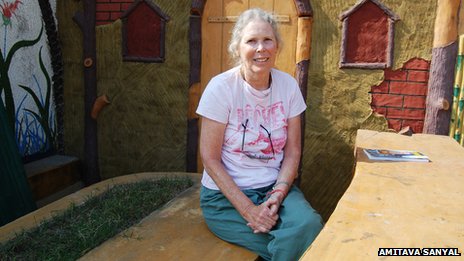
Prudence Farrow at Kumbh Mela
Prudence Farrow says the Beatles were “real people”

The subject of a Beatles song is among the many foreign pilgrims visiting India’s Kumbh Mela festival.

Prudence Farrow, about whom John Lennon wrote the song Dear Prudence, is also sister of Hollywood actor Mia Farrow.

The Kumbh Mela, which is held every 12 years, is billed as the world’s biggest gathering of humanity.

Millions of Hindu ascetics and pilgrims take a dip at Sangam, the confluence of the Ganges and Yamuna rivers in Allahabad city.

Ms Farrow says she waited for four decades to come to the Kumbh Mela.

She had first visited India in 1968 as a student of meditation and met the Beatles at Indian guru Maharishi Mahesh Yogi’s retreat in Rishikesh.

“I wanted to come to the Kumbh with the Maharishi, but that never happened,” she told the BBC. Her guru died in 2008.

This year Ms Farrow finally made it to the Kumbh Mela with her husband Albert Bruns.

‘Exotic’

“India has changed so much since I first came here,” says Ms Farrow, 65, sitting in the brightly-painted porch of her rented flat in Allahabad.

“Back then it was exotic. We were staying in the forest outside Rishikesh. Life was quite agricultural even in the cities.

“There were animals on the road, there were very few telephones and there was hardly any electricity where we were staying.”

Ms Farrow says she was in for a shock when she first arrived at the festival ground last month.

At first, she insisted on staying in one of the tens of thousands of tents that have been put up on the banks of the river.

Ms Farrow, who has a doctoral degree in South Asian studies and runs foundations to promote meditation, says she was in search of “an inner silence”.

But, ironically, the blare of three loudspeakers every morning at the festival grounds shattered her peace and she shifted into the city.

This was, she says, in sharp contrast to the peaceful times she spent with her sister Mia at her guru’s retreat in Rishikesh in 1968.

At the retreat, the Farrow sisters met the Beatles.

“Because of Mia there were too many people coming in and out of our block,” says Ms Farrow.

“And then in the evenings George Harrison would jam with John Lennon and others would join in. I wasn’t getting the silence.

“People said: ‘You are being too fanatical, you should come out.’ Yes, I was extreme because I thought it was a privileged time. I still think it was the most important time in my life.”

So while the rest of the students partied, Ms Farrow says she locked herself up in her room and practised meditation.

That is when, she says, Lennon, wrote the song Dear Prudence, which appears on the band’s White Album.

DEAR PRUDENCE

Dear Prudence, won’t you come out to play

Dear Prudence, greet the brand new day

The sun is up, the sky is blue

It’s beautiful and so are you

Opening verses of Dear Prudence, written by John Lennon

The song’s hand-written lyrics, lined with doodles, sold at a Sotheby’s auction in 1987 for $19,500 (£12,800).

“The reason he wrote I was beautiful – and there were much more beautiful people around – was because I was so much like George,” says Ms Farrow.

“George and I were there for very much the same reasons – we were both very spiritual and we wanted to find a solution for ourselves and the world. George would say that through his music he wanted to help people become more settled, more quiet and more sensitive.”

Ms Farrow says she did not want to meet the Beatles as “great people never lived up to their image”.

Did they disappoint her?

“What didn’t disappoint me was that they were still real people. They weren’t more important than anybody else,” says Ms Farrow.

“Fame has that quality – it corrupts you. You begin to feel that you’re separate from other people, you’re more powerful. But they didn’t have that.

“They were going through the same things as we were. That’s why they were the voice of the times.”

Article URL: http://www.bbc.co.uk/news/world-asia-india-21530477

See the Dear Prudence Foundation http://dearprudencefoundation.org

For information on Maharishi and his Transcendental Meditation technique visit: http://www.tm.org/maharishi

Also see Maharishi Mahesh Yogi on History International Channel (November 2007)

See: Who was Dear Prudence the Beatles sang to in India? What happened to her? Here is her story.

Here is a related post: Varanasi by Mary Oliver in A Thousand Mornings.

See Ted Henry interviews “Dear Prudence” Farrow Bruns about her life with TM and Maharishi, and an interview with PRUDENCE FARROW BRUNS by MicCameraAction after her return from the Kumbh Mela. She talks about her time with Maharishi and the Beatles in India and her new Dear Prudence Foundation to make Transcendental Meditation available to those who want it but need a scholarship to help pay for it. And this video: The Beatles “Dear Prudence”: A Portrait of Prudence Farrow Bruns, Maharishi and TM.

This is a funny video of Prudence’s sister, Mia Farrow: Dear Prudence.

Prudence’s memoir is now out: Dear Prudence: The Story Behind the Song.

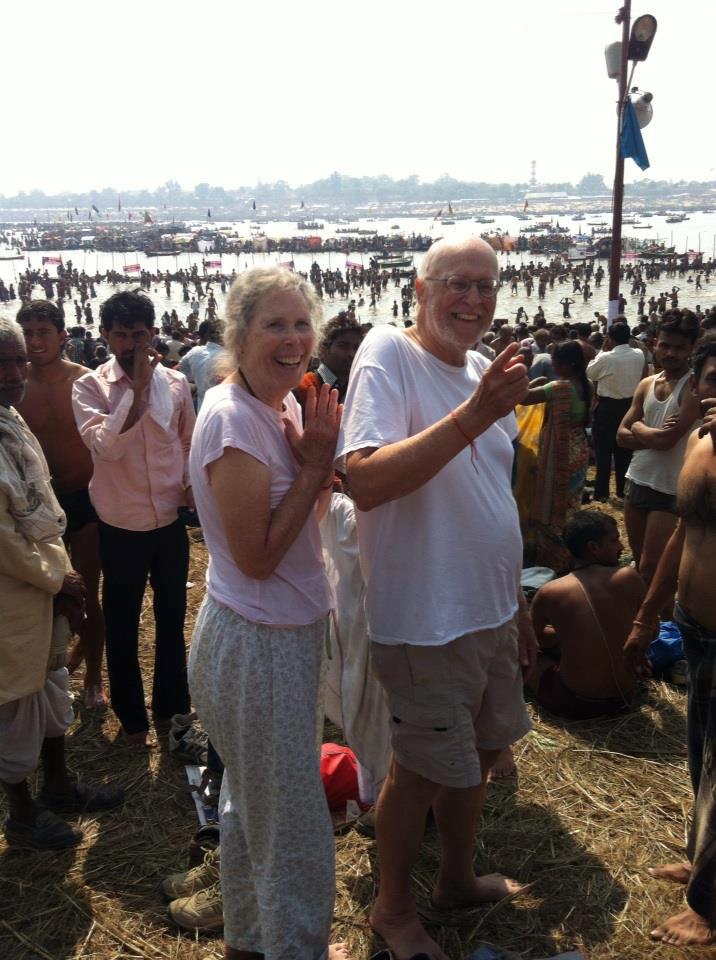
Here’s a photo of Prudence and Albert getting ready to bathe in the Ganges at the Kumbh Mela. I’ve never seen them looking so happy!

Prudence and Albert getting ready to bathe in the Ganges at the Kumbh Mela