Archive for the ‘Education’ Category

Robin Lim Day — CNN Hero Returns to Fairfield, Iowa for a Hometown Hero’s Welcome

November 4, 2012

Robin Lim Day

Robin Lim Returns to Fairfield, Iowa for a Hometown Hero’s Welcome

Recent articles on 2011 CNN Hero Robin Lim appear in the October and November 2012 issues of The Iowa Source. Robin was on the October cover in a feature article, Midwives: Better Birth Outcomes, and in the November issue: Robin Lim Honored in Her Hometown.

Mayor Ed Malloy officially declared Robin Lim Day in Fairfield, Iowa on November 13, 2012. Robin is returning to Fairfield to accept the honor and give a free lecture on midwifery and her work in Indonesia Tuesday at 8 p.m. at the Sondheim Center in the Fairfield Arts and Convention Center. Admission is free.

Several events will take place between November 8 to 15, 2012, starting with a free showing of the award-winning documentary film, Guerrilla Midwife, at the Fairfield Public Library. The film was made by Robin’s daughter, Deja Bernhardt, about her mother’s work.

Robin will also be giving a series of talks starting at Des Moines University in the Student Education Center Auditorium at 7 p.m. Sunday. The event at the Sondheim honoring Robin takes place Tuesday night, followed by talks on Wednesday morning at the Maharishi School, on being a hero by pursuing your dreams and passions, and evening at 7:30 p.m. on sustainable parenting, in Dalby Hall in the Argiro Student Center on the Maharishi University campus, concluding Thursday morning at Fairfield Public High School.

In addition to her work in Bali at Bumi Sehat (Healthy Mother Earth), Robin and her team helped save lives and opened a second free clinic and birthing center in Aceh, that part of Indonesia most heavily hit by the tsunami in 2004. She later used her newfound disaster-response skills to aid victims of the earthquake that leveled parts of Haiti in 2010.

Elizabeth Gilbert, author of the best-selling book, Eat, Pray, Love (the last part takes place in Bali), met Robin and had this to say about her: “Robin Lim is what we should strive to be—a great, abundant, generous, warm and tirelessly running faucet of humanity and grace.”

See the Sondheim Center for the Performing Arts announcement CNN Hero of the Year Robin Lim Speaks in her Hometown.

For more information on Robin Lim and her work visit Wikipedia, Bumi Sehat Foundation International, and YouTube Channel.

See Fairfield Ledger: CNN Hero Robin Lim visiting Fairfield and news coverage for Robin Lim is the 2011 CNN Hero Of The Year.

Happy Birthday Katy Perry! Thank you for supporting the David Lynch Foundation

October 24, 2012

The David Lynch Foundation Wishes Happy Birthday to Katy Perry

For her birthday, Katy Perry tweets fans to support Transcendental Meditation for school kids and veterans https://twitter.com/katyperry

Katy Perry says that Transcendental Meditation changed her life and, for her October 25 birthday, she is asking her fans to donate to the David Lynch Foundation, a US-based charity that provides meditation instruction at no charge to inner-city school kids and veterans suffering from the traumatic stress of combat.

In a tweet to her 27 million twitter followers, Perry writes:

“Transcendental Meditation changed my life. For my birthday I would love to pay it forward. In lieu of gifts, donate to www.davidlynchfoundation.org/katyperry.”

Perry joins a growing number of A-list celebs who practice Transcendental Meditation, or “TM”as it is called, including Oprah Winfrey, Ellen DeGeneres, Dr. Mehmet Oz, Russell Simmons, Jerry Seinfeld, Paul McCartney, Ringo Starr, Martin Scorsese, Clint Eastwood, Cheryl Crow, Moby, Ben Harper, and Laura Dern.

On the David Lynch Foundation donation webpage, Perry writes about her support for TM:

“I have been meditating for two years now, and it’s the best thing I have ever done to help bring more creativity, positive energy and peace to my life. When I’m tired, stressed, anxious or depressed, I meditate, and it clears my mind, and makes me feel relaxed and happier. I have shared the meditation experience with my friends, and recommend it to everyone I know.

“I support the David Lynch Foundation because it brings Transcendental Meditation to millions of adults and children all over the world who suffer from post-traumatic stress, such as veterans, inner-city school kids, and women and girls who are victims of violence.

“Please help me celebrate my birthday by making a donation to DLF. Your donation is not only special to me, but to all of the people whose lives you will help through the lifelong gift of meditation.”

Last year, Perry urged her fans to “pay it forward” with donations to the ASPCA to care for abused animals.

For more information, please contact heather@davidlynchfoundation.org.

About The DLF

Find out how Transcendental Meditation is being used to help at-risk students, veterans, and abused women and girls overcome stress. Watch

Celebrity websites have reported the news. See Look to the Stars: The World of Celebrity Giving: Katy Perry Urges Fans To Support Meditation Charity For Her Birthday. All the celebrities listed there are TM-ers who support the David Lynch Foundation. Examiner: Katy Perry birthday wish: 28 million fans support the David Lynch Foundation. MTV: act: Sweet Tweet: Katy Perry Asks for Charitable Donations For Her Birthday

The Age features Transcendental Meditation and the Maharishi School in national education article

October 22, 2012

Australia’s The Age features Transcendental Meditation and the Maharishi School in a national education article written by Denise Ryan: School puts stress on staying calm: Meditation techniques embraced by the Beatles are helping students in Reservoir. October 22, 2012. (I added links.)
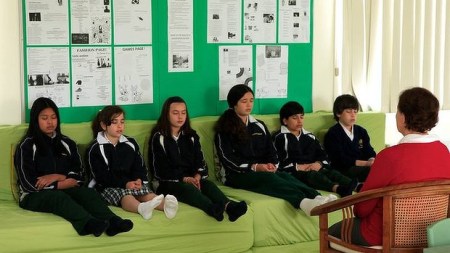
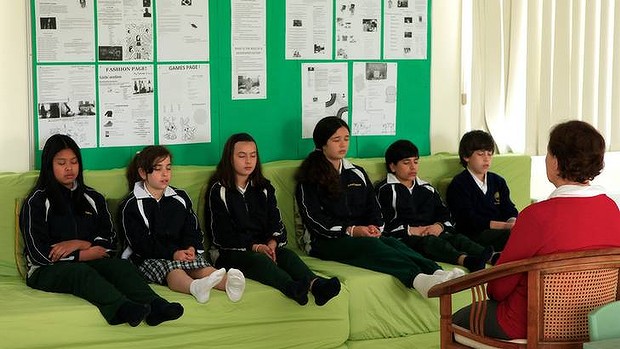
Students practise Transcendental Meditation at the Maharishi School in Reservoir. Photo: Eddie Jim

MOST children wouldn’t describe their primary school as “peaceful” or all their teachers and classmates as “kind”. But that’s how Bridgette Nicolosi views her new school.

The year 4 student says she used to feel “confused” in her former mathematics class, but since she has learnt Transcendental Meditation at the Maharishi School in Reservoir, she is no longer as “scared” of maths as she was. She also feels more accepted and included.

Isabelle Coates, the year 6 captain, is not surprised. She has compared how “calm and happy” she feels with the state of mind of friends at other schools. “I seem to be more relaxed,” she says. “I think if I didn’t meditate I would be more stressed.”

Fellow year 6 student Supreeya Bullock says meditation has helped her with schoolwork and in playing sport. Perrin Broszczyk says it has helped him relax and has improved his tennis.

These students are making big claims but their positive experiences from two 10-minute Transcendental Meditation sessions each day is backed by a wealth of international research.
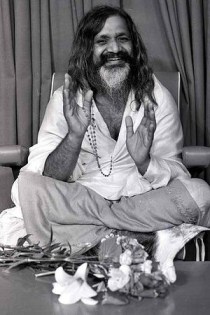
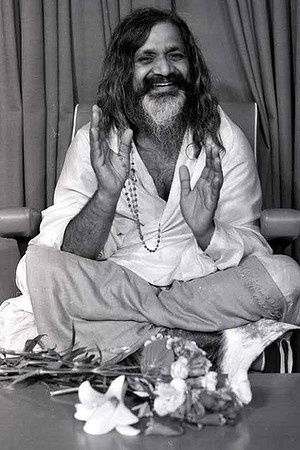
Maharishi Mahesh Yogi
Photo: Trevor Dallen

Transcendental Meditation was developed by Maharishi Mahesh Yogi and was first taught in India in the 1950s. Pop group the Beatles extolled its virtues, writing almost 50 songs while studying with Maharishi at his ashram in the foothills of the Himalayas in the late 1960s. Hollywood stars Mia Farrow and Shirley MacLaine also took it up. It is practised by millions world-wide, despite Maharishi’s death in 2008.

Some might regard the practice as New Age or bohemian but it has become mainstream, particularly in the US where it is used in some hospitals to help chronically or terminally ill patients manage their stress.

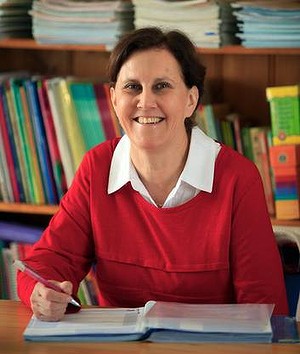
Principal Frances Clarke
Photo: Eddie Jim

Maharishi School founder and principal Frances Clarke says meditating in silence has profound results. Since the 1970s hundreds of research studies on Transcendental Meditation have been undertaken at more than 200 universities and research institutes across many countries.

These studies report benefits such as increased creativity, intelligence and learning ability, higher levels of brain function, improved memory and school behaviour. Studies have reported an increased sense of calm, decreased anxiety and reduced conflict.

When Ms Clarke founded this independent school with like-minded families in Bundoora in 1997, it had 20 students. The school gained a following since moving to Reservoir, drawing families from local suburbs such as Northcote. It now has 80 students, rising to 100 next year.

The school teaches the standard curriculum but adds a subject called Science of Creative Intelligence, and also the meditation sessions. In the extra class, students might do maths as part of learning such principles as that every action has a reaction.

An ancient system of architecture and design known as Maharishi Vedic principles have been included in two new buildings. For example, they are entered from the east, capturing early morning sun. The principles are different but are along the lines of Feng Shui, in that they seek to maximise health and success.

Ms Clarke first learnt to meditate at age 22. She found it helpful to deal with stress when she became a secondary school teacher. When she heard that the Maharishi School of the Age of Enlightenment in Iowa was getting outstanding results, she decided to visit.

The Iowa school is open entry yet it continues to record some of the top academic results in the state and its students regularly win awards for sports, science, art and problem-solving competitions. TV star Oprah Winfrey has highlighted the school’s results on her program.

Some US schools that deal specifically with Attention Deficit Hyperactivity Disorder have adopted Transcendental Meditation techniques after also witnessing its success at a Detroit Middle School.

A Maharishi School in Lancashire, England, has performed in the top 2.5 per cent of schools for 25 years, despite also being open entry. As a result, the education department has fully funded it. Other Maharishi Schools are being established there too.

Ms Clarke’s husband Larry, who has also taught Transcendental Meditation for many years, says it has a following in the US, Europe, South America and Thailand but has been slower to take off in Australia, despite the established benefits.

“It’s a bit of a sleepy hollow here, yet 6 million people have been trained world-wide.”

Transcendental Meditation differs from some other forms of meditation in that it allows the mind to effortlessly “transcend thought”.

“It does not require contemplation or concentration,” says Dr Clarke. He regards concentrating on breathing or an object, such as a candle flame, as an arduous practice where the mind is still active.

“In TM the mind becomes quieter and quieter until it is doing absolutely nothing. TM uses the natural tendency for the mind to move towards something more interesting or charming. It moves into subtler and subtler states until thought dissolves into silent wakefulness, or pure consciousness.”

Ms Clark says meditation helps children find their passion. “Around years 3 or 4 they discover what they love, and go for it.”

She says this is because children can concentrate. “Some schools spend all their time doing English and mathematics but our students focus so well they have time for everything else.”

The small scale also helps. “Students don’t get lost. Everyone has the opportunity to have a go at everything, whether it be a science or drama competition or to be in the school concert.”

Parents pay $1300 each term to send their children to this alternative school. At least one parent must practise or learn Transcendental Meditation also. The school offers a four-day course for parents. On weekends children meditate with their parents.

Students up to the age of 10 meditate with eyes open, walking about. Older children are seated in comfortable spots in the classroom. Ten-minute sessions are held about 9.30am and 3pm each day, which means students head home in a calm state. “But they don’t want to go home,” Ms Clark says. “It’s a small community and parents and students love to hang around after school.”

Teacher Samantha Russell loves the strong relationship between staff and parents. “I feel really sorry for my friends in other schools who don’t see the parents and don’t have the same objectives as them.”

She says parents talk to her about their experiences of meditating and it makes for a closer bond.

Students sometimes get a shock when they move from this environment to high school.

“They often express surprise that other students don’t want to learn and spend a lot of time mucking around,” says Ms Clarke.

She sees the government’s recent pressure on teachers to improve what they do as misplaced. “Transcendental Meditation develops the consciousness of the student so they are much more capable of learning. You can’t teach a class if children aren’t awake, alert or aware.”

Article URLs: http://bit.ly/TBUgpw and updated http://bit.ly/RqwoWW.

Earlier this year the Maharishi School was featured on Australian TV: Cool School: Melbourne school teaches meditation to students.

URLs for Maharishi School: http://www.maharishischool.vic.edu.au and TM in Australia: http://tm.org.au

Here is an image of the layout in Monday’s Age in Melbourne, Australia. Will replace it with a better resolution when available. (more…)
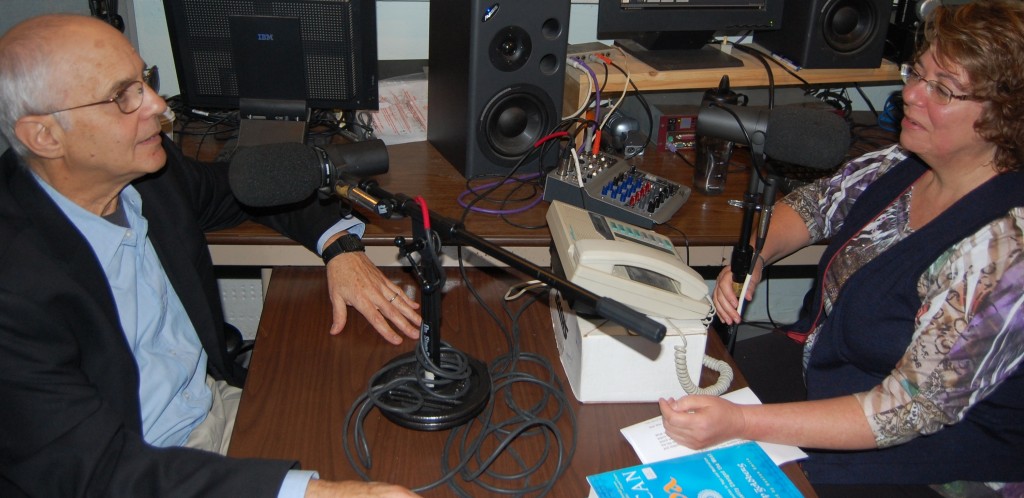

Norman Rosenthal spoke in Chicago on Light and Transcendence—alternative modalities to reduce stress, optimize health

September 11, 2012

Norman Rosenthal, M.D., was in Chicago September 5-7 to deliver a series of talks at various medical, educational, and public venues. His main theme was using Light and Transcendence as alternative approaches to reduce stress and optimize health. Dr. Rosenthal addressed 200 people at the University of Chicago Gleacher Center Wednesday evening, spoke on Thursday with staff and students at Stritch School of Medicine at Loyola, and talked with health care and other professionals as a guest of the Chicago Lakeshore Hospital at a Friday luncheon.

Dr. Norman E. Rosenthal is the world-renowned psychiatrist and author whose research in describing seasonal affective disorder (SAD) and pioneering the use of light therapy has helped millions of people. The New York Times best-seller, Transcendence: Healing and Transformation Through Transcendental Meditation, is out in paperback this month (September 2012), with a Foreword written by Mehmet C. Oz M.D., and a new concluding chapter, After Transcendence.

At the same time, Winter Blues: Everything You Need to Know to Beat SAD, which the New York Times called “a landmark book,” is being released in its revised and updated fourth edition. It includes a chapter, Meditation for the Winter Blues.

Stressful times affect health and happiness

Economic challenges, the feeble job market and information overload, not to mention the drought, conspire to stretch people to the breaking point. Everyone is experiencing some degree of stress and anxiety in their lives. In fact, the NIMH (National Institute of Mental Health) estimates that 40 million adults, one in seven, have some type of anxiety disorder.

Dr. Rosenthal pointed out the current epidemic of stress has resulted in cardiovascular disease as well as psychiatric disorders. It effects everyone from war veterans to the general public. “Having witnessed the mental and spiritual anguish of many hundreds of people,” he said, “I find the potential clinical power of this technique (TM) amazing.”

Transcendental Meditation—a simple effective solution

A Clinical Professor of Psychiatry at Georgetown University Medical School, Dr. Rosenthal was initially very skeptical about the effectiveness of the Transcendental Meditation technique for beating stress and anxiety. After examining the research, however, he said, “I came to scoff and remained to pray,” paraphrasing a famous line from Irish writer, playwright, and physician Oliver Goldsmith‘s poem The Deserted Village.

Dr. Rosenthal at University of Chicago Gleacher Center explained three different categories of meditation and how they effect the brain producing different results

The former NIMH researcher explained three different categories of meditation and how they effect the brain. He said having the right instruction in meditation can make a world of difference in the results.

Dr. Rosenthal described research examining the Transcendental Meditation program resulting in hard evidence not seen with other meditation techniques. He cited improvements in cardiovascular health, reduced drug, alcohol and tobacco use, reduced PTS symptoms in veterans, and studies showing significant reductions in health care costs and utilization resulting from twice daily TM practice.

Mr. Ulrich Sandmeyer, co-owner with his wife Ellen, of Sandmeyer’s Bookstore, an independent Chicago bookseller, brought Dr. Rosenthal’s books to every event. He does this service for speakers 3-4 times a week and has done so for 20 years.  He said that Norman Rosenthal was the most compelling speaker he has ever encountered. Coming from Mr. Sandmeyer that says a lot!

Thanks to Carla Brown, Ed.D., co-director of the Transcendental Meditation Program in the Greater Chicago Area, for organizing these events for Dr. Rosenthal and for sending us some highlights of the tour.

Click on Transcendental Meditation Visualized [Infographic] to see this new post on Dr. Rosenthal’s blog. He says, “The infographic below is brought to you as a resource and extension of the book ‘Transcendence,’ which features some of the main points about Transcendental Meditation that I highlighted in the book.”

Related posts on this topic

Dr. Norman Rosenthal gives an engaging talk to medical staff at Northern Westchester Hospital

PsychCentral reviews Norman Rosenthal’s book Transcendence: Transcendental Meditation: What Is It and How Does It Work?

Dr. Catherine Ulbricht interviews psychiatrist and author Dr. Norman Rosenthal for Natural Standard

A Transcendental Cure for Post-Traumatic Stress by David Lynch and Norman E. Rosenthal

Additional information on Norman Rosenthal, Transcendence and Winter Blues are listed below and available in his Press Kit.

(more…)

Canadian artist Greg Thatcher goes to Painswick every summer to paint its famous yew trees

August 23, 2012

Stroud News and Journal, 4:00pm Tuesday 7th August 2012 in News Canadian artist travels to Painswick every year to paint its famous yew trees by Hayley Mortimer, Reporter. Includes a galley of 5 photos.

A CANADIAN artist has travelled to Painswick to paint its famous yew trees.

Greg Thatcher, 63, who lives in Iowa, has been painting the trees at St Mary’s Church for more than 20 years and works on location from June to August every year.

The yew trees were planted in the Middle Ages and Mr Thatcher says they form the most beautiful yew tree avenues in the world.

He first saw them in a travel brochure while working in Lancashire in 1991.

At first, he worked from photographs but after visiting the churchyard he was inspired by the different shapes and intricate details.

Mr Thatcher said: “I have been drawn to them. I just keep seeing deeper and deeper levels of where I can start. It is an ongoing relationship.

“The process is very stimulating and nourishing to my creativity and imagination.

“Even after 20 years I am still finding more angles and more information to work with.

“I love Painswick and enjoy coming back each year. My trips have been pivotal to my career. It has given me access to a unique and inspiring landscape.”

Mr Thatcher spends between six and eight hours a day working on the drawings and many take more than 350 hours to complete.

He and his wife stay a mile away from the churchyard so Mr Thatcher can cycle to and from the site every day.

Mr Thatcher teaches art and art history to children aged 13 to 17 in a small school in Iowa.

He has a bachelor of fine art from the University of Victoria and a masters in painting and drawing from the University of Saskatchewan.

A series of drawings of the yew trees has been exhibited in the United States, Canada, England and France and his work hangs in corporate and private collections across the world.

For more information go to www.gregthatchergallery.com.

You can see photos of Greg, the trees, and his drawings in the online article bit.ly/Rg2k25, and in a pdf of Inspiration found under the boughs.

###

Later Additions

Canadian artist returns to Painswick.

Artist inspired by Painswick yew trees will share his skills at class.

February 25, 2020: Iowa Public Radio News: New Exhibit Explores The “Sacred” Beauty Of Yew Trees. On this edition of Talk of Iowa, host Charity Nebbe is joined by Fairfield-based artist Greg Thatcher, who has been making art inspired by yew trees for more than 30 years. Thatcher talks about his “Sacred Yew” exhibit at the Greater Des Moines Botanical Garden and his multi-decade relationship with a single grove of yew trees in a small English town. (Listen: 17 minutes)

August 20, 2023: Artist’s labour of love records Painswick’s yew trees by Simon Pizzey for Stroud News. See a layout of the article.

KTVO’s Tess Hedrick interviews Dr. Richard Beall, Head of Maharishi School, on the new school year

August 18, 2012
New additions for MSAE
Posted: 08.17.2012

Published on Aug 17, 2012 by

Maharishi School of the Age of Enlightenment staff is preparing for the first day of school / KTVO’s Tess Hedrick

FAIRFIELD, IOWA — Wednesday August 22 is when school begins for students at the Maharishi School of the Age of Enlightenment.

You’ll be seeing some new faces around the school this year.

Dr. Richard Beall, the head of Maharishi School says there are more new staff and faculty members this year than any other year in the history of the school.

“Fortunately a lot of those are young staff members, young faculty, that are graduates of our school. They’ve come back to be a part of the community. They’re doing some interesting things so we’ve got this renewal sense of infusion of new talent, new energy, new creativity that we’re really excited about,” said Dr. Beall.

Not only will there be new staff this year but also a brand new demonstration kitchen that will be the culmination of the school’s sustainability program.

“We have a 4,000 square foot greenhouse. So the children for many years have planted and grown and nurtured and ate things. Now they can do things we call seed to plate. So they’ll be taking what they’ve grown in the greenhouses and bring it back into the kitchen. And the nice thing is we’ll integrate that in, not only an elective on cooking, but also the chemistry of food preparatory, especially in our social studies — looking at culturally like that,” said Dr. Beall.

Dr. Beall said that the special thing about Maharishi School is that the staff allows their students to grow from the inside out by stopping each day to practice Transcendental Meditation.

“That pays in two ways. They get rid of stress and it also optimizes their brain so when they go to the classroom — the kids who walk to school here or they get out of their cars — they don’t go directly to the classroom, they go to a meditation, they do yoga and meditation. So I say, the student that goes into the classroom is not the same one who got out of the car right here. They’ve been able to get rid of stress and now they’re really awake and that pays all kinds of dividends during the day,” said Dr. Beall.

Maharishi University places 4 winning MBA teams in top 10 at international CAPSIM competition

August 9, 2012

M.U.M. Students Excellent In CAPSIM Competition
by Johnny Mangano
Published on Aug 9, 2012 by KTVOtv

FAIRFIELD, IA — Four MBA teams from the Maharishi University of Management placed in the top 10 of the international CAPSIM Foundation simulation.

The simulation tests MBA students acumen in areas such as sales forecasting, inventory management, operations management,  human resources, finance, and quality management.

M.U.M. competed with other schools across the continent including Villanova and Drexel even though enrollment at the school is just around 1,000 students.

The competition is spread out over a six month period and is very rigorous.

Dr. Andrew Bargerstock, Director of MBA Programs at M.U.M. led the students in this endeavor.

In the past three years, M.U.M. has placed teams in the top ten of the competition with a team actually placing first last year.

When asked whether he values that or this year with four teams placing in the top ten, Dr. Bargerstock preferred the latter because it speaks to how deep and knowledgable his MBA students are.

The simulation is scored on a Balanced Scorecard concept which measures both short and long term growth across four perspectives: financial, customer, internal business processes, and learning and growth.

The four teams were named Chester, Digby, Baldwin, and Andrews.

The Chester team placed in the 97th percentile and included Enkhbat Byambaakhuu, Laxman Bhandari, Visakha Ly, Phirada Khuon, and Nan Cao.

The Digby team was in the 95th percentile and included Seka Ellepo, Njei Akuro, Gurmu Negeri, and Eshetu Debru.

The Baldwin team finished in the 93rd percentile with team members Xiaoxu Chen, Zhou Jiang, Yue Pan, Daina Zhang, and Bo Wu.

The Andrews team placed in the 90th percentile with Eliana Freeman, Mokhlis Awad, Joseph Marquez, and Mila Zhang.

For more information on MUM’s Accounting MBA program visit: http://www.mum.edu/accounting-mba.

Also listen to the KMCD August 9 MUM Spotlight Show with Andy Bargerstock, MUM Professor and Director of MBA programs, as he discusses the significance of the CAPSIM simulation within the Accounting MBA program at MUM and how it prepares his students to compete and win against other top universities in North America.

See the MUM Blog: Four MBA Teams Place in International Competition and Dr. Andrew Bargerstock’s blog: MUM’s Four MBA CAPSIM Teams All Finish in Top 10.

Also see last year’s winning teams, one taking first place: Maharishi University MBA Students Win National Business Simulation Competition and Students Place 1st in National Business Simulation and MBA Students Win National Business Competition and this video: CAPSIM winners: MBA teams at Maharishi University of Management.

First international article on TM in Education: Meditation helps students, by Dana Micucci

August 7, 2012

International Education: Meditation helps students

By Dana Micucci

Published: Tuesday, February 15, 2005

NEW YORK — New research appears to be strengthening the case for teaching Transcendental Meditation in U.S. schools, showing it to be a means to improve the concentration of students and a way to enhance their physical and mental well-being.

Proponents say that students who meditate daily are calmer, less distracted and less stressed and less prone to violent behavior.

A study conducted at the Medical College of Georgia in Augusta, Georgia, which will be published in the April issue of the American Journal of Hypertension, found that Transcendental Meditation reduced high blood pressure in African-American teenagers. The study tracked 156 inner-city black adolescents in Augusta, Georgia, with elevated blood pressures. Those who practiced 15 minutes of Transcendental Meditation twice daily steadily lowered their daytime blood pressures over four months compared to non-meditating teens who participated in health education classes and experienced no significant change.

The technique was developed 50 years ago by the Maharishi Mahesh Yogi, and consists of silently repeating a mantra for about 20 minutes a day. It found its way into classrooms 30 years ago after Robert Keith Wallace, a medical researcher at the University of California, Los Angeles, published the first study on its positive physiological effects.

Since then, studies at universities like Harvard, Stanford and UCLA have shown that Transcendental Meditation can ease stress and enhance both physical and mental health and behavior.

Bolstered by these studies, groups of educators, parents and physicians across the United States have turned to Transcendental Meditation as a possible antidote to rising anxiety, violence and depression among students. Committees for Stress-Free Schools were established last year in New York, Washington, Los Angeles, Chicago and other cities. These committees serve as information resources about the potential benefits of meditation for students and teachers.

Transcendental Meditation is a simple mental technique that can have profound physiological effects,” says Gary Kaplan, a neurologist and clinical associate professor of neurology at New York University School of Medicine and chairman of the New York Committee for Stress-Free Schools. “It produces a state of restful alertness that provides the body with deep, rejuvenating rest and allows the mind to reach higher levels of creativity, clarity and intelligence.”

However, initial efforts to introduce the teaching of Transcendental Meditation in schools were controversial. Opponents criticized it as a religious practice and in the mid-1970s a group of citizens brought a lawsuit against several New Jersey high schools, forcing them to withdraw their programs. At the time, a New Jersey court ruled that Transcendental Meditation had religious overtones and therefore could not be offered in a public school.

“The challenge lies in educating people that although Transcendental Meditation is rooted in the Indian Vedic spiritual tradition, it is not a religious practice,” says Kaplan.

At the Fletcher-Johnson School, an elementary and junior high school in a rough Washington neighborhood, meditation has been reported to help to improve student performance and reduce fighting. George Rutherford, the principal who introduced Transcendental Meditation 10 years ago, said, “We saw immediate results.”

He added, “There was a lot of violent crime around the school. But after we trained our students in Transcendental Meditation, they were calmer. There was less fighting, and attendance increased. Students scored better on standardized tests. Transcendental Meditation helped to remove a lot of their stress.”

Now, as principal at Ideal Academy (Public Charter School) in Washington, Rutherford is training teachers in Transcendental Meditation to combat teacher burnout.

At the Nataki Talibah Schoolhouse in Detroit, an elementary and middle school, students and teachers have been practicing Transcendental Meditation twice daily for the past seven years. Carmen N’Namdi, co-founder and principal of the school, says that “given the enormous stresses of today’s world, children, like adults, need to learn how to rest and relieve tension.”

Recent research spearheaded by Rita Benn, director of education at the Center for Complementary and Alternative Medicine at the University of Michigan, found that meditating students at Nataki Talibah Schoolhouse were happier, handled stress better, had higher self-esteem and got along better with their peers than non-meditating students at another Detroit school.

In addition to improving the emotional and social development of children, meditation can also be effective in treating brain disorders such as attention deficit hyperactivity disorder, according to a study conducted in April 2004 at Chelsea School in Silver Spring, Maryland, a private school for children with learning disabilities.

“We compared students before and after they learned Transcendental Meditation,” said the principal investigator, Sarina Grosswald, president of S J Grosswald & Associates, a consulting firm in medical education in Alexandria, Virginia. “Kids who practiced Transcendental Meditation for 10 minutes twice each day for three months reported being calmer, less distracted, less stressed, and better able to control their anger and frustration.”

This New York Times article was first published earlier that day by the Paris editor of the International Herald Tribune. Click on Meditation helps some students to download a PDF of this groundbreaking article on the front page of the Tribune’s Education section.

Around that time in early 2005, the David Lynch Foundation for Consciousness-Based Education and World Peace had been established to provide Transcendental Meditation to at-risk students around the world. Today many educational institutions have successfully implemented this Quiet Time program in their schools.

The David Lynch Foundation has since gone on to provide scholarships for TM instruction for other at-risk populations: Native American Indians, the homeless, prisoners, girls and women victims of abuse, and veterans from all wars and their families suffering from post-traumatic stress.

For more information and videos on these programs, visit www.davidlynchfoundation.org.

For veterans, visit www.operationwarriorwellness.org.

For a short overview see these Excerpts From David Lynch Foundation Videos: Changing Lives With Transcendental Meditation.

Search for more DLF and OWW articles and videos posted on this blog.

Highlights of David Lynch Foundation honoring legendary manager and producer George Shapiro at first annual Night of Comedy

July 12, 2012

Los Angeles: June 30, 2012: The David Lynch Foundation hosted its first annual “Night of Comedy” to honor legendary manager and producer (and 30-year meditator) George Shapiro. Proceeds went to support TM programs for at-risk youth, veterans with PTSD, and women and girls who have been victims of violence and abuse. Headliners included Jerry Seinfeld, Jay Leno, Russell Brand, Garry Shandling and Sarah Silverman. Over 500 people attended. Thanks to all who participated and attended! Here is a quick edit of a fun 15-minute highlight reel from that very blissful evening. – Bob Roth, executive director, David Lynch Foundation.

Related coverage: Blue Carpet Interviews before the David Lynch Foundation Fundraiser Honoring George Shapiro  |  Chicago Tribune: A standup hero: Comedians fete Shapiro  |  Los Angeles Times Ministry of Gossip reports on the David Lynch Foundation’s Night of Comedy honoring George Shapiro  |  VIEW EVENT PHOTOS ON FACEBOOK

Watch this great interview of George Shapiro posted on Emmy TV Legends in the Archive of American Television. He shares great stories of comics he represented, including Andy Kaufman and Jerry Seinfeld. http://www.emmytvlegends.org/interviews/people/george-shapiro

Research breakthrough: High brain integration underlies winning performances

June 18, 2012

Research breakthrough: High brain integration underlies winning performances

World-class performers in management, sports and music often have uniquely high mind-brain development

Scientists trying to understand why some people excel—whether as world-class athletes, virtuoso musicians, or top CEOs—have discovered that these outstanding performers have unique brain characteristics that make them different from other people.

A study published in May in the journal Cognitive Processing found that 20 top-level managers scored higher on three measures—the Brain Integration Scale, Gibbs’s Socio-moral Reasoning questionnaire, and an inventory of peak experiences—compared to 20 low-level managers that served as matched controls. This is the fourth study in which researchers have been able to correlate the brain’s activity with top performance and peak experiences, having previously studied world-class athletes and professional classical musicians.

“What we have found,” says Fred Travis, director of the Center for Brain, Consciousness, and Cognition at Maharishi University of Management in Fairfield, Iowa, “is an astonishing integration of brain functioning in high performers compared to average-performing controls. We are the first in the world to show that there is a brain measure of effective leadership.”

“Everyone wants excellence,” says Harald Harung of the Oslo and Akershus University College of Applied Sciences in Norway. “Yet, current understanding of high performance is fragmented. What we have done in our research, is to use quantitative and neurophysiological research methods on topics that so far have been dominated by psychology.”

Dr. Travis, Dr. Harung, and colleagues have carried out a total of four empirical studies comparing world-class performers to average performers. This recent study and two others have examined top performers in management, sports, and classical music. In addition, a number of years ago Dr. Harung and colleagues published a fourth study on a variety of professions, such as public administration, management, sports, arts and education.

Measured Brain Activity

The studies carried out by the researchers include measurements of the performers’ brains by using electroencephalography, EEG. Hospitals use this equipment and method to determine possible brain injuries after traffic accidents. EEG, however, can also be used to look at the extent of integration and development of several brain processes.

The researchers looked at three different measurements that all reflect how well the brain works as a whole: 1) Coherence, which shows how well the various parts of the brain cooperate, 2) Amount of alpha waves, which reflect restful alertness, and 3) How economically or effectively the brain works.

The three measurements are then put together in an expression of brain refinement, the Brain Integration Scale.

World-class performance has so far been mostly regarded from a psychological point of view, especially speaking of management. Researchers often explain management skills as a result of special personal or psychological characteristics that some have, and others don’t.

“Our research in brain activity and brain integration is done from more of a natural science angle. By such means, we hope we are closer to an effective and comprehensive understanding of why some succeed better than others,” says Harung.

In all the groups of top performers, measurements were checked by using control groups. The controls were average performers, such as low-level managers or amateur musicians. The data gave one surprising result: Among the musicians, both the professionals and the amateurs turned out to have a high level of brain integration. In the two other studies, this measurement showed major differences between the persons with top-level performance and the control groups.

“We believe that for musicians, the explanation might be that classical music in itself contributes to such integration, regardless of your performance level,” says Dr. Harung.

Peak Experience

The researchers found it’s not just that their brains function differently; the world-class performers also had particular subjective experiences that were associated with their top performances.

Called peak experiences, these experiences are characterized by happiness, inner calm, maximum wakefulness, effortlessness and ease of functioning, absence of fear, transcendence of ordinary time and space, and a sense of perfection and even invincibility.

The first study was done on world-class athletes selected by the National Olympic Training Center in Norway and the Norwegian School of Sport Sciences. Besides screening athletes’ brains using EEG, each athlete was interviewed about their experiences while performing at their very best. The result was a wide range of peak experiences.

Former cross-country skier Thomas Alsgaard, who won 11 gold medals in Olympic Games and World Championships, said:

“The senses are so open that you have the ability to receive signals that are almost scary: In a way it is a ‘high.’ I receive an unbelievable amount of information. Much, much more—10-20 times more information—than what I manage to take in if I sit down and concentrate and try to perceive things. But I am so relaxed. And the more relaxed I am, the more information I register.”

Another athlete who participated in the research is the Norwegian handball keeper, Heidi Tjugum, who was part of the Norwegian national team that won one World Championship, one European Championship, two European Cups and a number of silver and bronze medals. She says:

“Sometimes I have felt that I am an observer—I just watch what happens. This is a good feeling. It is a very beautiful feeling; it is not that I feel I don’t have control. But it goes by itself—in reality I do not have to initiate anything at all. Extremely here and now—nothing else matters.”

These statements are similar to those the researchers gathered from other top-class performers, both among the musicians and the business leaders. As seen, they found a significant difference amongst the top performers and controls on several quantitative measures.

“Therefore, there must be some common inner attributes and processes that make top performers able to deliver at top level, regardless of profession or activity,” says Travis. “We found this common inner dimension to be what we called higher mind-brain development.”

Higher mind-brain development includes that various aspects and parts of the brain work together in an integrated way. Among world-class performers this integration is especially well developed.

Presenting a New Theory

The researchers have developed a new theory, a Unified Theory of Performance, which suggests that higher levels of mind-brain development form a platform for higher performance, regardless of profession or activity.

“It seems like these mind-brain variables represent a fundamental potential for being good, really good, in the particular activity one has decided to carry out,” says Harung.

For all three recent studies the researchers also found that top-level performers outscored the control groups in a test of moral development. Higher moral development implies an expanded awareness where one is able to satisfy the interests of other people and not just their own needs. Harung finds it remarkable that high levels of performance, in a wide spectrum of activities, are connected to high moral standards.

“This should give an extra push to act morally, in addition to a better self-image, fewer sleepless nights and a good reputation,” Dr. Harung says. “The key to top-level performance, therefore, seems to be that we make more use of our inherent capabilities.”

Implications of the Research

The discovery that the brains of world-class performers have similar characteristics raises some important questions, such as: 1) Is there a way one can develop one’s brain to have more of these characteristics and thereby perform at a higher level? And 2) Can measuring a person’s brain predict the potential for someone to be a world-class performer?

These and other researchers have actively explored whether meditation techniques, for example, can help to actively cultivate one’s brain. Research by Dr. Travis and others has found that Transcendental Meditation practitioners do have greater EEG coherence, greater presence of alpha waves, and, in some advanced practitioners, a very efficiently functioning brain. A coherent brain is a high-performing brain.

In addition, researchers have been exploring possible applications to predict performance ability in general and leadership ability in particular. For example, if a corporation has preliminarily selected five candidates for its CEO position, the above measures could be administered to aid in the final decision. Or these measures can be used to assess the effectiveness of training or education in increasing an individual’s performance capacity.

###

Scientific Literature

1. Harung, H. S., Travis, F., (2012) Higher mind-brain development in successful leaders: testing a unified theory of performance. Cognitive Processing Vol 13, Number 2, 171-181, DOI: 10.1007/s10339-011-0432-x

2. Harung, H. S. (2012). Illustrations of Peak Experiences during Optimal Performance in World-class Performers: Integration Eastern and Western Insights. Journal of Human Values, 18(1), 33-52, doi:10.1177/097168581101800104

3. Travis, F., Harung, H. S., & Lagrosen, Y. (2011). Moral Development, Executive Functioning, Peak Experiences and Brain Patterns in Professional and Amateur Classical Musicians: Interpreted in Light of a Unified Theory of Performance. Consciousness and Cognition, 20(4), 1256-1264

4. Harung, H.S., Travis, F., Pensgaard, A. M., Boes, R., Cook-Greuter, S., Daley, K. (2011). Higher psycho-physiological refinement in world-class Norwegian athletes: brain measures of performance capacity. Scandinavian Journal of Medicine & Science in Sports, Vol 21, Issue 1, pages 32, February 2011, doi: 10.1111/j.1600-0838.2009.01007.x

5. Harung, H. S., Heaton, D. P., Graff, W. W., & Alexander, C. N. (1996). Peak performance and higher states of consciousness: A study of world-class performers. Journal of Managerial Psychology, Vol. 11, No. 4, pp. 3-23

Related Articles

New study sheds light on “peak experiences” in world-class performers | New research looks at brain integration in top athletes and in long-time meditators | ‘Brilliant minds’—New Research on the Brain State of Virtuoso Musicians and How it Relates to TM | ScienceDaily: Musicians’ Brains Highly Developed | Freakonomics: Do Musicians Have Better Brains?

Source: EurekAlert!

Latest Study

Does Practice Make Perfect Or Are Some People More Creative Than Others? Study finds brain integration correlates with greater creativity in product-development engineers. The study was discussed on TMHome: Brain integration, the key to creativity, citing Medical News Today’s report on the study. Science writer Fiona Macrae had some questions for researchers Fred Travis and Yvonne Lagrosen before she completed her article for The Daily Mail: Forget ‘practice makes perfect’ – meditation is the key to success, study claims.