Posts Tagged ‘Transcendental Meditation’

Veteran Dan Burks on Overcoming the Stresses of War with Transcendental Meditation

January 18, 2011

Veteran Dan Burks on Overcoming the Stresses of War with TM

DavidLynchFoundation | December 12, 2010

Transcription: “December 18th 1967 – Newsweek, five days after my birthday. This is a story called ‘The Days Work.’ And this is my unit, we went out and got ambushed, and this is me doing my job. We were attacked at this place called Buddha. That fight went on for two weeks. The first night I killed 14 people. There were 25 hundred of them, 250 of us. The next morning in front of my fighting position there were 18 of our men dead. So this is very, very, very distressing, and it creates huge amounts of distress in your system.”

“Later in the magazine there’s this… this is an article Maharishi Mahesh Yogi and a couple guys in my platoon, one of them got the magazine and came running over and said ‘Burks, you gotta read this!’ So I did. And I said, ‘I’m going to do that….’ Because it talks about stress release, about becoming a whole person.”

“The next part of the story is about getting home. And that’s a whole big deal, because things changed. All of a sudden you’re in a different culture. They don’t understand you. They have no idea. They don’t understand that you’re always still in the rubber plantation in the jungle. You’re always on an adrenalin high. You’re looking to protect your buddies, you’re looking to protect yourself and you’re looking to kill the enemy.”

Help us heal our Veterans – http://www.davidlynchfoundation.org

See two other videos: AFP: Meditation soothes war veterans and 50% reduction in PTSD symptoms within 4 weeks of Veterans practicing Transcendental Meditation.

See AFP’s How Clint Eastwood keeps his cool, Meditation May Ease PTSD for Vets, and watch highlights of the David Lynch Foundation‘s Operation Warrior Wellness press conference and the second annual Change Begins Within benefit gala.

50% reduction in PTSD symptoms within 4 weeks of Veterans practicing Transcendental Meditation

January 18, 2011

Reduction of PTSD Symptoms in Veterans with Transcendental Meditation

DavidLynchFoundation http://www.davidlynchfoundation.org/

Norman Rosenthal, M.D. (Clinical Professor of Psychiatry, Georgetown University Medical School): Over half a million of our veterans from Iraq and Afghanistan are suffering from Post Traumatic Stress Disorder. These are people who have been exposed to violence on the battlefield serving for our country. And, as one of my patients said, it can happen once in your life but a hundred times in your mind. The echos linger on.

Sarina Grosswald, Ed.D. (Cognitive Learning Specialist): With traumatic stress it’s really some enormous stress that’s more than the body can process, and it leaves a big impression on your brain. The estimates are that at least 30% of returning veterans are experiencing PTSD and really the estimates are that it’s probably much greater than that. I think that maybe as many as 50% who are experiencing these symptoms aren’t actually even seeking help.

Dr. Rosenthal: They get bombarded on a daily basis by memories and flashbacks and it’s a shocking statistic that 18 veterans every day commit suicide.

Dr. Grosswald: We’ve lost more to suicide than actually have been lost in combat. That’s the first time ever.

Dr. Rosenthal: One thing that we who are interested in Transcendental Meditation are seeking is could TM be one of the answers or one of the ways in which we can treat PTSD?

Dr. Grosswald: We put together a pilot study with returning veterans from the OEF-OIF war, which is the Iraq/Afghanistan war, and what we saw was for these young men there was, within 4 weeks, a 50% reduction in the PTSD symptoms. That’s pretty dramatic, I don’t think there’s anything that shows that level of response that quickly.

Dr. Rosenthal: Because of TM’s ability to settle down the nervous system, to quiet it down, to slow down the fight-or-flight response, I believe it is a very promising direction for us to explore. I think it’s definitely something we should be trying and testing and studying.

See AFP: Meditation soothes war veterans

Meditation May Ease PTSD for Vets

December 19, 2010

Health Stories Meditation May Ease PTSD for Vets

Tuesday, December 14, 2010 7:59 AM

Hollywood A-listers including Clint Eastwood joined grizzled U.S. military veterans Monday to promote what they called the near-miraculous powers of meditation in overcoming war stress.

The event in New York drew an unlikely alliance ranging from fashion designer Donna Karan to traumatized veterans of World War II, Vietnam, and Iraq.

Uniting them was a belief that transcendental meditation, dubbed TM for short, is the cheapest, most effective, and medication-free way of healing people who have suffered severe stress in war and any other extreme experience.

“I’m a great supporter of transcendental meditation. I’ve been using it for almost 40 years now. I think it’s a great tool for anyone to have,” said Eastwood, best known for playing violent, hardened characters on screen.

The fund-raising event at the Metropolitan Museum of Art in New York was organized by experimental filmmaker David Lynch, whose Foundation for Consciousness-Based Education and World Peace encourages meditation along the lines espoused by famed guru Maharishi Mahesh Yogi.

Lynch said his project, named “Operation Warrior Wellness,” aims to train 10,000 veterans in the art of finding inner peace.

Critics have cast doubt on the value of meditation for treating psychological disorders.

But Lynch said there are “a lot of misunderstandings about meditation.”

The director of “Blue Velvet” and “Mulholland Drive” said the technique can help everyone from disruptive school pupils to soldiers with post-traumatic stress disorder, or PTSD.

PTSD is an increasingly high-profile problem among servicemen returning from Afghanistan and Iraq, a large number of whom are believed to fear revealing their disorder to military health staff.

Vietnam vet Dan Burks gave a moving account of the mental scars he carried after a battle in which he says he killed Vietnamese soldiers and lost many of his own troops.

PTSD, he said, “is a wound. It takes your life away, just like losing a limb.”

“But guess what: You can get rid of it,” he said, describing his life after discovery of transcendental meditation as “the difference between heaven and hell.”

Another veteran, World War II pilot Jerry Yellin, told the fund-raiser that for three decades after the end of the war against Japan he “found no satisfaction in life in anything I did.”

At age 51, he took up TM and says he found peace. “We have the ability to teach young people who are suffering tremendously … young people who are in a foreign land,” he said of today’s veterans.

One of those, a former infantry soldier in Iraq, said TM “cleared the skies and I could tell where I was going.”

“I felt this warm groovy feeling,” he said. “It just gets better and better.”

The star-studded event hosted by Lynch also saw testimonials from Karan and British comedian Russell Brand.

Brand said he had suffered severe stress from his much-publicized sex-and-drugs addictions and also found solace in TM.

“I felt love, sort of love for myself but also love for everyone else,” he said in a rambling speech delivered in his trademark hyper-energized style.

“I am a human being and it is applicable to all human beings. Someone, everyone can draw from it.”

Skeptics may question whether war veterans already unwilling to speak about their mental problems will embrace regular meditation. Lynch says they can.

“Clint Eastwood is about as macho as they get and he’s been meditating longer than I have,” he told The Wall Street Journal.

“We’re behind this technique and we think it can help veterans reclaim their lives and save themselves, their families, and their friendships.”

Copyright AFP

Newsmax is one of the nation’s leading news sites; and AFP, Agence France Presse, is one of the world’s major news services. This AFP story was picked up by hundreds of news markets around the world.

Watch David Lynch Foundation Press Conference and the Change Begins Within Benefit Celebration

December 14, 2010

Watch livestream rebroadcasts of two extraordinary events: the David Lynch Foundation Press Conference to launch Operation Warrior Wellness, from the Paley Center for Media, and the Change Begins Within Gala Event at the Metropolitan Museum of Art, New York City, Monday, December 13, 2010. See David Lynch Foundation’s Photos – Change Begins Within and Broadway World photo coverage of the 2nd Annual David Lynch Foundation’s Change Begins Within Benefit Celebration. Watch highlights of both events: the press conference and the second annual benefit gala.

The Huffington Post: Jeanne Ball: David Lynch Talks About the Benefits of Meditation

December 13, 2010
Writer for the David Lynch Foundation,
Meditation Teacher for 25 Years
Posted: December 13, 2010 05:49 PM

David Lynch Talks About the Benefits of Meditation

“Change Begins Within,” a benefit event featuring David Lynch, Clint Eastwood, Russell Brand, Katy Perry, Dr. Mehmet Oz and Candy Crowley, takes place tonight, Dec. 13 at the Metropolitan Museum of Art in New York. You can watch it LIVE beginning at 9 p.m. EST.

We know David Lynch for his award-winning films — “Mulholland Drive” was recently voted movie of the decade by the LA Film Critics Association. Seems like every night there’s a “Twin Peaks” party going on somewhere. Lynch is also known as an artist, musician, philanthropist and proponent of meditation. He has been meditating twice a day for 37 years. His interests in meditation have led him to India and the Far East, as well as university EEG labs where brain researchers are exploring meditation’s effects on the brain.

I caught up with him amid his preparations for the David Lynch Foundation‘s upcoming benefit, happening tonight, to provide meditation training to 10,000 veterans with PTSD.

Click here to read the interview.

WATCH David Lynch speak about consciousness and creativity:

THP: How Meditation Techniques Compare

September 23, 2010

Posted: September 22, 2010 04:50 PM

How Meditation Techniques Compare — Zen, Mindfulness, Transcendental Meditation and more

Meditation shopping? Sounds like an oxymoron, right? Yet millions of Americans are seeking tools to turn within. As a nation we’ve tried to fix our problems with everything from psychotherapy and Prozac to positive thinking and politics. Now people everywhere are ready to close their eyes and take a dive — not to escape, but to more fully be.

Having lectured on meditation for 25 years, I find that audiences no longer need to be convinced of meditation’s practical benefits. But people do often ask, “Aren’t all meditation techniques basically the same?”

Experts in the venerated traditions of meditation have always marveled at the mind’s subtlety, appreciating its keen responsiveness and sensitivity to different mental procedures. Great master teachers of meditation have recognized that the various techniques engage the mind in different ways and naturally produce different results. With advancements in neurophysiology, scientists are now identifying distinctions among varieties of meditation practices.

The Myth of the Relaxation Response

The old “scientific” myth that meditation practices all induce the same, general state of physiological rest — called the “relaxation response” — has been overturned. Though many practices provide relaxation, decades of research show that not all techniques produce the same physiological, psychological or behavioral effects.1

Recently a doctor came to me for meditation instruction. He had learned a “relaxation response” technique in a class on integrative medicine during his training at Harvard. He was attracted to meditation by the promise of deeper insight into consciousness — access to the mind’s hidden, transcendent potentialities. He enjoyed the relaxation technique but yearned for deeper experience and understanding.

Reviewing the science journals, the doctor arrived at the same conclusion reached by leading meditation researchers: the “relaxation” model was based on inconclusive evidence and had never been substantiated. Hundreds of published studies on meditation techniques show varying effects from different practices — ranging from measures of rest much deeper than the “relaxation response” to physiological states no different from sliding back into your easy chair.

The emerging paradigm: three major categories of meditation

Meditation labs have sprung up at universities across the country–places such as Yale, UCLA, University of Oregon, UW Madison and Maharishi University of Management. Their contributions have helped researchers identify three major categories of techniques, classified according to EEG measurements and the type of cognitive processing or mental activity involved:

  • Controlled focus: Classic examples of concentration or controlled focus are found in the revered traditions of Zen, Tibetan Buddhism, Qiqong, Yoga and Vedanta, though many methods involve attempts to control or direct the mind. Attention is focused on an object of meditation–such as one’s breath, an idea or image, or an emotion. Brain waves recorded during these practices are typically in the gamma frequency (20-50 Hz), seen whenever you concentrate or during “active” cognitive processing.2
  • Open monitoring: These mindfulness type practices, common in Vipassana and Zazen, involve watching or actively paying attention to experiences–without judging, reacting or holding on. Open monitoring gives rise to frontal theta (4-8 Hz), an EEG pattern commonly seen during memory tasks or reflection on mental concepts.3
  • Automatic self-transcending: This category describes practices designed to go beyond their own mental activity–enabling the mind to spontaneously transcend the process of meditation itself. Whereas concentration and open monitoring require degrees of effort or directed focus to sustain the activity of meditation, this approach is effortless because there is no attempt to direct attention–no controlled cognitive processing. An example is the Transcendental Meditation technique. The EEG pattern of this category is frontal alpha coherence, associated with a distinct state of relaxed inner wakefulness.4

2010-09-22-graph.jpg
Some techniques may fall under more than one category: Guided meditation is controlled focus if the instruction is, “Hold attention on your breath.” But if the instructor says, “Now just watch your thoughts, letting them come and go,” then you’re probably doing open monitoring–and your EEG would say for sure.

Different practices, different results

Without the scientific research (or until we have a cell phone app for measuring our EEG and biochemistry), meditative states and their effects remain subjective. Brain research, along with findings on psychological and behavioral effects, gives a more objective framework for health professionals or anyone to determine which meditation technique might be most beneficial for a given purpose.

For example, research suggests that concentration techniques may improve focusing ability. A study on advanced Buddhist monks–some of whom had logged more 10,000 hours of meditation — found that concentrating on “loving kindness and compassion” increased those feelings and produced synchronous gamma activity in the left prefrontal cortex — indicating more powerful focus.

The effect of open monitoring or non-judgmental observation is said to increase even-mindedness in daily life; studies on mindfulness-type practices indicate better pain management and reduction of “negative rumination.”

For relief from stress, research suggests that an automatic self-transcending technique might serve you better than a practice that keeps the mind engaged in continuous mental effort. Because of the natural mind/body relationship, the more deeply settled the mind, the more deeply rested is the body. Studies show that the deep rest of “transcending” calms the sympathetic nervous system and restores physiological balance — lowering high blood pressure, alleviating chronic anxiety and reducing stress hormones such as cortisol.

More research is needed to verify benefits of controlled focus, but there are numerous studies on mindfulness practices and automatic self-transcending, with over 600 studies on the Transcendental Meditation technique alone.

As meditation becomes a new frontier of scientific research, more and more people are becoming aware of the mind’s enormous potential for impacting health and wellbeing. I find that most meditators are no longer concerned that a technique might come from the East or have roots in a spiritual tradition–their main concern is that the practice works, and science can help remove the guesswork.

Americans are opting for meditation to counterbalance a life that’s been plugged in, outer directed and over stimulated, and we’re turning to something as simple as our own inner silence.

Whether you’re an athlete aiming for the “zone,” an executive striving for peak performance or a harried mother needing some serenity, a reliable meditation practice can be your best friend.

1. Orme-Johnson, Walton, 1998. American Journal of Health Promotion 2(5), 297-299.
2. Lutz, Greischar, Rawlings, Ricard, Davidson, 2004. Proc Natl Acad Sci U S A 101,16369-73.
3. Cahn, Delorme, & Polich, 2010. Cognitive Processing 2010 11(1):39-56.
4. Travis et al, 2010. Cognitive Processing 11(1), 21-30.

————————————————————————————

Also see: THP: Keeping Your Prefrontal Cortex Online: Neuroplasticity, Stress and Meditation

And: Are all meditation techniques the same?

See this article and infographic on Three Categories of Meditation.

THP: Keeping Your Prefrontal Cortex Online: Neuroplasticity, Stress and Meditation

August 12, 2010

Keeping Your Prefrontal Cortex Online: Neuroplasticity, Stress and Meditation

As we go through life, our brain is always changing and adapting, say neuroscientists. During the first 18-20 years of life the brain is developing circuits that will form the basis of decision-making for a lifetime. Brain researchers have found that unhealthy lifestyles can inhibit normal brain development in adolescents and lead to impaired judgment and destructive behavior that carries over into adulthood. Traumatic experiences, alcohol and drug abuse, growing up neglected in a broken home, living in fear of violence and crime, or even a bad diet can interfere with development of the frontal lobes, the brain’s executive system. This can cause behavioral problems. Brain researcher Dr. Fred Travis explains: “When a person’s frontal lobes don’t develop properly, he lives a primitive life. He doesn’t — and can’t — plan ahead. His world is simplistic, and he can only deal with what’s happening to him right now. Thinking becomes rigid: ‘You’re either with me or against me,’ or ‘Me and my gang are good, and everyone else is bad.'”

The good news: meditation improves brain function

Brain researchers have also found that the brain can be changed in a positive direction through healthy lifestyle choices. This ability of the brain to reorganize its network of neurons is called “neuroplasticity.” Studies recently published in Cognitive Processing show that brain development can be enhanced — not only during adolescence but at any age — through the practice of meditation, and that different meditation techniques have different effects on the brain. For example, during the Transcendental Meditation (“TM”) technique there is increased alpha coherence in the brain’s frontal areas. “Within a few months of practice of the TM technique,” says Travis, “we see high levels of integration of frontal brain connectivity. And interestingly, that integration does not disappear after meditation. Increasingly and over time, this orderly brain functioning is found in daily activity.”

When the different parts of the brain are better integrated they work together more harmoniously — our brain is healthier. Higher levels of brain integration are associated with higher moral reasoning, emotional stability and decreased anxiety, according to a 1981 study in the International Journal of Neuroscience. Research shows that world-class athletes have higher brain integration than controls. Brain integration is important because one’s environment and circumstances are constantly shifting, and you need a flexible, integrated brain to successfully evaluate where you are, where you want to be and the necessary steps to get there.

Keeping your prefrontal cortex “online”

The prefrontal cortex — said to be the brain’s executive center or “CEO” — plays a crucial role in higher judgment, discrimination and decision-making. When we are overly tired or under intense mental, emotional or physical stress, our brain tends to bypass its higher, more evolved rational executive circuits, defaulting to more primitive stimulus/response pathways. We respond to challenges without thinking, making impulsive, shortsighted decisions. When the brain’s CEO goes “offline,” strong emotions such as fear and anger can adversely color or distort our perception of the world. Interestingly, the brain’s crucial frontal area is where the highest levels of EEG coherence are typically recorded during TM practice, indicating improved communication between the prefrontal cortex and other parts of the brain.

When a person transcends during meditation (goes beyond the active levels of the mind), the experience is commonly reported as a state of deep silence and inner wakefulness, without particular qualities or attributes — just pure consciousness. According to research studies, such as the previously mentioned study in Cognitive Processing, it is this ‘transcendental’ experience that creates the more efficient, integrated brain functioning seen during TM practice. While focused attention and other mental processes activate local brain areas, the experience of transcending activates the whole brain, enabling different parts of the brain to function together better as a whole.

Helping kids grow healthier brains

Fortunately, transcending is easy — we’re hardwired for it. With proper instruction and right practice, anyone can do it, including students with ADHD. Experiencing the quiet, transcendental field of orderliness deep within the mind doesn’t mean conjuring up a new outlook on life or accepting new beliefs, nor does it require an attitude change. It’s a natural, universal experience that produces a healthy response in the brain.

With help from the David Lynch Foundation and other private benefactors, thousands of at-risk students are now learning meditation during structured, in-school programs around the world. Researchers monitoring the results are finding that meditation improves learning ability, memory, creativity and IQ. Findings such as these may be opening a new frontier of research — establishing an expanded, more enlightened view about what is possible for the human brain.

VIDEO of Dr. Fred Travis, Director, Center for Brain, Consciousness, and Cognition in Fairfield, Iowa: Brain Plasticity and Transcendental Meditation with Dr Fred Travis.


Read More: Meditation, Neuroplasticity, Transcendental Meditation, Living News

Also see: THP: How Meditation Techniques Compare

Spirit of Change: Ayurvedic Restoration

August 5, 2010

Getting Well: Summer 2010

“New England’s Alternative Health and Medicine Resource since 1987”

Ayurvedic Restoration View this in the digital edition

The most ancient of medicines is exquisitely restored at the pearly gates of the Maharishi Ayurveda Health Center in Lancaster, MA

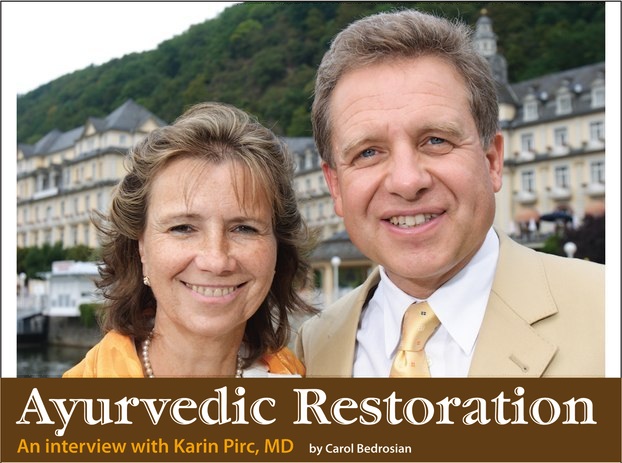
Lothar and Dr. Karin Pirc, Ayurvedic clinic directors, in front of the famous Maharishi Ayurveda Clinic in Bad Ems, Germany. Situated along the scenic Rhine River, home to many historic castles and fortresses, the clinic occupies the former German imperial palace of King Wilhelm II. Bad means “bath” in German.

Ayurveda is one of the oldest known systems of medicine in the world. Practices that predate written records, handed down by word of mouth, are believed to have originated in the second millennium BC. Literally, the word ayurveda translates into “science of life,” offering not only a prescription for a healthy body, but also a life of wellness and balance. Ayurveda continues to be widely practiced in India, where, according to the National Institute of Health, nearly 80 percent of the population (approximately 900 million people) use it exclusively or combined with conventional (Western) medicine.1
Ayurveda stresses a balance of three elemental energies or doshas within each body — vata, pitta and kapha — and outlines specific measures of healthful living known to correct dosha imbalances that are the cause of disease and toxicity. Treatment programs are tailored to each individual’s constitution and include a thorough Ayurvedic assessment, dietary and herbal remedies, detoxification procedures, specific recommendation for yoga/exercise and meditation. Patients must be active participants in their healing because many Ayurvedic treatments may require changes in diet, lifestyle and habits to restore balance.
Panchakarma, meaning “five actions,” is an Ayurvedic therapy that purifies the body by cleansing its deep tissues of toxins and opens subtle energy channels to increased life energy, health and immunity. A full treatment includes at least five different procedures over a period of several days or more, usually in a retreat or clinic setting. In countries where citizens enjoy more vacation time, panchakarma retreats are popular destinations allowing people to use their vacation time to de-stress, detox and rejuvenate on a regular basis.
Without the extended stay, individual panchakarma treatments can also provide relief from ailments and reactivate the body’s own self-healing and self-repair mechanisms. The images most popularly associated with Ayurveda — abhyanga (the two-person synchronized oil massage) and shirodhara (the steady stream of warm oil poured over the forehead) — lend a luxurious and exotic air to a medical system that is anything but mysterious. Thoroughly grounded in practical knowledge, Ayurveda provides a complete system of natural healing, disease prevention and enhancement of immunity for the human body regardless of race or location.
Nestled amidst 215 acres in the quintessential New England countryside, the Maharishi Ayurveda Health Center Lancaster in Lancaster, Massachusetts opened its doors in 1985 when few people in this country had even heard of Ayurveda. Established as the first Maharishi Ayurveda clinic in the West, for years it was widely regarded as a health spa for celebrities, presumably attracted to the glamour of the extraordinary healing treatments imported from India via famed Beatles guru Maharishi Mahesh Yogi, founder of the Transcendental Meditation program. As familiarity with alternative medicine grew over the next two decades, more people began seeking out the benefits of Ayurveda themselves, peering past its exotic aura to discover a complete and natural healing system of medicine noted for its success with chronic conditions.
Despite this increased interest, the Lancaster center eventually struggled to generate the resources required to update its facility. Enter Lothar Pirc, managing director, and Karin Pirc, MD, medical director of the famous Maharishi Ayurveda Health Center Bad Ems in Bad Ems, Germany. Founded in 1992, the center is one of the leading Ayurveda institutions in Europe. Dr. Pirc was the first European to receive the Indian Global Hakim Ajmal Khan Award of “Best Ayurvedic Physician 2006” for outstanding achievements in the field of Ayurveda.
Karin recalls, “Lothar was invited to consider taking over the management of the center in early 2009. It had been quite a famous place to do panchakarma, so we made trips and spent time looking over every detail of the property and interviewing all the employees. We were inspired by its beauty and the profound quality of the healing environment there. This opportunity revived an earlier interest of ours to begin developing clinics around the word, which was on hold while establishing our clinic in Bad Ems and raising our family. We became excited that the Lancaster center could be restored as a model facility for new centers around the world, so we finalized everything in May.”
When I visited the Lancaster center last fall to meet the new directors and sample Ayurvedic treatments there, it was obvious the Pircs had wasted no time in their restoration. A gentle aura of well-being permeates the beautiful acres of forests, meadows and lawns, carried indoors where every nuance of design and function gracefully emanates healing intention. During the visit no detail of my comfort was overlooked, culminating in the blissful three hours of purification during the warm, aromatic oil treatments of abhyanga and shirodhara. The Pircs were due to return to Germany the following day so I scheduled a phone interview with Dr. Pirc for a later date and floated home luxuriously relaxed and rejuvenated after my treatment.
One of the most experienced Ayurvedic physicians in the western world, Dr. Pirc opened the first Ayurvedic clinic in Germany in 1986 and has treated more than 20,000 patients from around the world. She is an MD with a Ph.D. in psychology, has authored eight books on Ayurveda and now serves as the medical advisor in Lancaster, while maintaining her practice as medical director in Bad Ems. Dr. Pirc engages Ayurveda with a systematic thoroughness that reveals both its practical, cost-effective simplicity for daily health maintenance and its effectiveness as a comprehensive natural medical system that is free from harmful side effects.

Carol Bedrosian: How did you come to be involved in Ayurveda?

Karin Pirc: I had the idea when I was a small girl that I wanted to help people with their body and their mind. So that was the first thing. I was very sick when I was a girl and at 19 years of age I started Transcendental Meditation. Gradually the whole disease went away so I was very interested in meditation and thought the spiritual dimension should also be included if you treat people. I studied psychology first at the university, and then I still had time, so I studied medicine.
When I was 33 or 34 I heard about Ayurveda, though I hardly knew what it was. A seminar for doctors was being offered in the Netherlands and I was in a situation where I thought I could try something new, so I went. After some days of training, I thought, “Wow this is exactly it.” I always had the feeling there should be something like this in medicine but maybe it will come in 2050, very far away.
The training was very systematic so I went home with all I had learned in those 4 weeks and started incorporating the new approaches with my patients. I was very lucky to have a place to start right away. I could give a lecture to about 800 people at that time and it went out right from the beginning and spread.
For about half a year I remember I would say to myself, “I don’t understand it. Everything is so easy.” I remember there was a lady who had functional heart problems, and they couldn’t treat it even with modern medicine. She was there in the clinic for 10 days and it was gone forever. Normally you have to prescribe strong heart drugs for these diseases. So then you sit there as a doctor and say, “What is this?”

Carol Bedrosian: So what is it?

Karin Pirc: How can it work? After the 6 months I was absolutely sure I would stick with it because of seeing these miracles everyday. In the next few years I did more doctor trainings to go deeper into the knowledge. It’s really great how much help you can give to people to really recover and understand what their body and mind are for and how to use them in a happy and healthy way.

Carol Bedrosian: Are you strictly doing Ayurvedic treatments now in your own practice?

Karin Pirc: Yes, because if you want to do something really, really good then you have to stick to it. And Ayurveda is so comprehensive. We have herbal preparations, we have rejuvenation, we have meditation, we have yoga, we have the purification treatments, and people can do the beneficial self-massage at home and breathing exercises. All these things are included in Ayurveda and I still don’t know everything. It’s a lifelong study and experience and I think it’s good if you concentrate on just one holistic health care system.

Carol Bedrosian: Can you tell me a little bit about your clinic in Germany?

Karin Pirc: The Maharishi Ayurveda Health Center in Bad Ems is very well known and patients come from all over Europe to be treated here. We are not a hospital, but we have the capacity to treat and accommodate about 40-50 patients at a time. They live in the hotel area and they can walk right over to the treatment area in their gowns. It’s very cozy for them. We have a large Ayurvedic treatment area and doctor consultation rooms, a yoga room, a meditation room and two or three lecture rooms. We give lectures every evening so guests can learn about their body, their mind and about Ayurveda so they are motivated when they go home to change some things in their lives.

Carol Bedrosian: What makes your clinic so successful?

Karin Pirc: I think it’s the successful treatments that are most important and also the orderly, structured and friendly way in which all the employees treat the patients. We are always improving our clinic. Just like in the United States, people have to pay for this themselves. It’s quite expensive because with Ayurveda you basically need two employees for every patient. So for 40 patients we have 80 employees; it’s not a cheap thing.

Carol Bedrosian: It’s very labor intensive.

Karin Pirc: It’s not only the treatments, but also what the patients don’t see in preparing things. Everything is freshly prepared — the herbs, the medicated oils and pastes — all these things sum up to a large labor cost. Sheets and the towels have to be replaced every six months because they are worn out by all the washing from the oils. The most important thing is the transformation and deep rejuvenation a person feels from the treatments.
The Ayurvedic purification treatment basically is ten days. You start with a gentle internal cleansing, and for that you need at least 3-5 days. You can take more but that’s the smallest time possible to start. Then after that there’s all these wonderful massages and detoxifying procedures. The ten-day treatment is a systematic way of loosening toxins, bringing it to the eliminative systems like sweating, the kidneys, the intestines and purifying all the organs. Once the impurities go out of the body, a person feels much better after that. There is just no chance you will go out of here and not feel better because you feel better when you are pure. It’s very easy.

Carol Bedrosian: Do people stay longer than ten days?

Karen Pirc: For people who are just tired and overworked and need some purification and refreshment, ten days makes a big difference in their wellbeing. If you are seeking more profound balance or have a chronic condition, 14 days or more is appropriate. After the in-residence program, the doctor will make personalized recommendations to use at home including herbs, exercise, diet and daily routine.

Carol Bedrosian: How is Ayurvedic health care perceived in Germany? Is it very popular?

Karin Pirc: It is quite popular. I would think that at least most people in Germany have heard the word, but we are a smaller country and when we first started with Ayurveda, nobody knew it. Now many hotels offer the wellness part of Ayurveda — not with the sophisticated quality that we offer — but it is quite well known. When you go to a sauna, many offer Ayurveda massage. It doesn’t really have much to do with Ayurveda, but at least they use the word!

Carol Bedrosian: Overall, how is the healthcare in Germany different than it is here in America?

Karin Pirc: We’re all forced to have health insurance in Germany, which is quite expensive. It can be a state run or private one, but you are forced to do it and it costs you many hundred euros per month. It is really a big part of your income. For that you get nearly everything free. Free means you pay for a recipe [prescription] just 10 euros.
But basically what you get is modern medicine only. You are forced to pay hundreds of euros a month and you are not allowed to decide what you get for that. There are three private insurances that pay for Ayurveda but the additional monthly premium you have to pay is much higher so I’m not sure if that’s a good idea to take it or not. So it’s basically like the US and people have to pay for Ayurvedic medicine from their own pocket, including panchakarma and other treatments that are expensive because of the labor and preparation involved.
But there are many things that anyone can afford. Sometimes just the right preparation can give you back all the energy, vitamins and minerals you need. For example, one patient who did not have much money, I was so glad about the success with his remedy I called my husband to tell him! He had hypertension, depression, diabetes, blindness from diabetes, and he hardly felt his feet anymore due to the diabetes. His improvements were so dramatic that he was able to reduce many of the modern medicines he was taking that may have been contributing to his problems.
And that’s what you see with Ayurveda. It was not expensive for this man so it was really worth it. For any of the major diseases, if people knew what great things could occur, they would try it — get their diagnosis and take the preparations. Normally, you’ll feel the first improvements quite quickly — after 3, 4, 5 weeks — and eventually the symptoms will reduce until they are gone. And that’s what we want. This other goal of modern medicine to just suppress symptoms for the rest of your life and tell people it is a chronic disease that cannot be cured is, fortunately, not true if you treat with Ayurveda.

Carol Bedrosian: I thought Germany was overall more progressive and holistic with their healthcare.

Karin Pirc: Yes, I think so. But all the pharmaceutical industries have tons of money and they go to all the politicians, so they have everything. They have the money to do the studies. The studies today are so expensive. A little study with 30 or 60 people will cost you millions and who can afford it? Nearly all the studies that are done here are pharmaceutical-sponsored. So in that case the US people are better off.

Carol Bedrosian: Why is that?

Karin Pirc: Because the NIH pays for studies in the US. I know they have paid about thirty million dollars for studies on the effects of TM [Transcendental Meditation] on high blood pressure and reduction of arthrosclerosis. In that part they are freer to go in a more holistic angle to see if there’s anything healthy we can give to our people to reduce all these modern problems.

Carol Bedrosian: Do these studies focus more on TM rather then other Ayurvedic treatments?

Karin Pirc: These big studies, yes, but we have some other Ayurvedic studies. A study was done in the US with panchakarma patients showing that approximately 50% of herbicides and pesticides that are stored in the fat tissues were reduced by up to 50% in 12 days. And that’s what the patients feel — this lightness and easiness in the body when they do the treatments. When all this mud goes out, you feel it. It’s not just something theoretical. That’s why I say it’s not possible for you to come out being less healthy than before you went in for treatment.

DR. KARIN PIRC’S SIMPLE AYURVEDIC DIET TIPS

Drink hot filtered water. Boil your water for 10 to 20 minutes in the morning and store it in a thermos so it’s available throughout the day. This hot water goes more quickly through your cells walls than cold water and the purification is deeper. Drink this as hot or as warm as it is convenient for you. In a week or two, you will start to feel more lightness in your body. It also takes the edge off the feeling of having to eat a little chocolate here or a little bread there so you can more easily stick to three meals a day and not eat things in between. You can add some fresh ginger slices in case you feel extremely heavy and congested, which makes it more purifying.

Eat large meals earlier in the day. Eat as early as possible, not later then 6:00pm. Avoid heavy-to-digest foods like meat, fish or cheese in the evening. Keep it light, like soup, grains, cooked vegetables, noodles, fresh tomato sauce, etc.

Eliminate between meal eating. Drink hot water instead. It may be boring, but it works!

Liquid fast one day per week. If you want to reduce weight and your amount of toxins, take only liquid food one day a week, no alcohol. You can have fresh juice, fresh soup from vegetables or grains. Take this 3, 5, 7 times a day — you don’t have to be hungry — and have the hot water in between. The next day you will feel light, the way you should be. It’s very quick, but, of course, it needs a little discipline.
When you first begin and especially if you have lots of toxins stored in your cells or you have a diet where you eat meat two times a day and drink lots of cola or alcohol, you may get a headache after six hours or so. This is a good sign that the toxins from your cells are circulating in the blood and can be flushed out. When you repeat this fasting day for several weeks it gets easier and easier since the body doesn’t need to digest so much during this day and it can release all the rubbish from the cells. If you drink the hot water you will see in the first week the headache comes on after 6 hours or so, the next week after 8 hours and then 8 hours again until gradually it stops. The hot water is very important. It liquefies waste and toxins so they are easier to get rid of. The heat of the hot water increases metabolism, which increases purification. I could talk for 3 hours about hot water.

Avoid iced drinks. If you go to countries where there is a warm climate and the people have been there for centuries, nobody drinks cool things. They all drink warm things like teas. When it’s warm outside the body metabolism gets reduced because the body has to cool down as a natural reflex. So it starts with sweating. All the heat goes outside so you have less power to digest. You will also see in these countries they have many hot spices for their food, which they need to gain more digestive power.
But the American people didn’t bring the culture to this country to have warm teas. Now they want to reduce the outer heat with cold drinks that cool you down perfectly in the first moments when you drink, but it also cools down your digestive system so you cannot digest so well. I believe that a big portion of the overweight problem in the US is from people drinking ice drinks. Increasing the metabolism power inside the intestines with hot drinks helps increase weight reduction. It’s very simple and very cheap; you just have to do it.

1. National Institute of Health http://nccam.nih.gov/health/ayurveda/introduction.htm

Interviewer Carol Bedrosian is the publisher and editor of Spirit of Change with 25 years of satisfied experience using all natural healthcare. She can be reached at carol@spiritofchange.org or 508-278-9640, ext 3.

Learn more about Maharishi Ayurveda Health Center Lancaster at http://www.lancasterhealth.com or call 877-890-8600.

Miraculous Turnaround in a Stressed Israeli Arab High School after Implementing the TM Program

July 19, 2010

The Second Miracle of Daburia

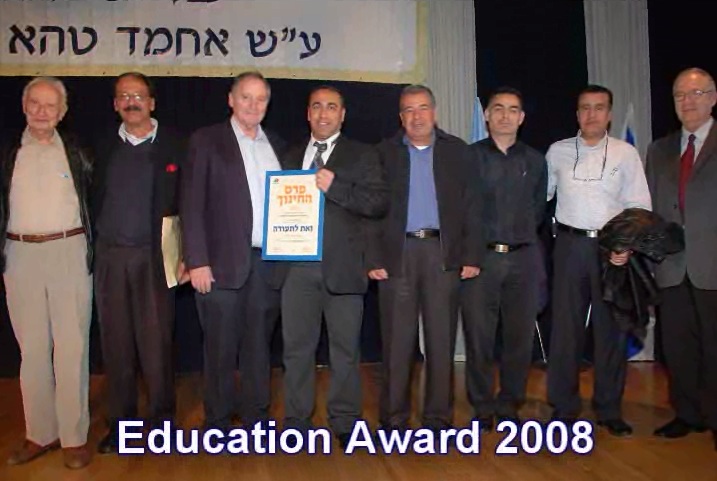
On July 14, 2010, Maharishi’s Global Family Chat included a special broadcast on News from Israel involving the Transcendental Meditation program. Dr. Reuven Zelinkowsky reported on the success of implementing the TM porgram in the Daburiya High School, an Arab school in Israel that was about to close due to poor academic performance by the students and problems in the school. After the TM program was implemented, there were dramatic improvements in all areas including the school achieving 2nd place in the National Education Award in 2008 and placing 3rd in the National Education Award in 2009. This is the first time that any school in Israel received the award in two consecutive years.

The principal of the Daburia High School, Abed Elsalam Masalcha, explained why his school received the 2008 National Education Award. He said it was because of the way they tackled the discipline problem—with meditation. “Meditation is at the core of everything we did.” He went on to elaborate how using the Transcendental Meditation program addressed and solved the core problem of disciplining a student’s behavior.

We have seen that in order to change the student’s behavior, or to overcome the discipline problem, we need to change something within the students. What I mean to say that it is not enough to make rules and try to make everyone follow them. In fact you don’t change their behavior at all. That is why we adopted meditation. So practicing meditation, the students will start to really change. Not just for a year, or two or three. We are giving the student the possibility, that throughout his life, he will not only succeed at school for a short time, but through the meditation, also succeed throughout his life.

When the school received the 2009 National Education Award, the committee justified its decision with these words:

The award was given to the school for its program in preventing violence and improving the school’s environment based on the Consciousness-Based Education program. This Consciousness-Based Education program is based upon the development of both students and teachers abilities and uncovers the unlimited creative potential of the human being. The program prevents the problems by tackling them at the root and provides the base for actualization of both the scholastic aspirations of the students, teachers and parents.

The most important element of the Consciousness-Based Education program is the Transcendental Meditation program. It is a simple, natural, mental technique that improves behavior and the ability to learn. It elicits success and enjoyment in learning, creates a focused atmosphere in the classroom, improves academic achievement, increases self-esteem, reduces violence and chaos and increases teacher satisfaction in their work.

The teachers, school board and parents are involved at all levels of the program and closely follow the process in the school.

You can also view the Daburiya High School video, The Second Miracle of Daburia here: http://www.cbe.org.il/video/daburia_jE.wmv. The You Tube short link is: http://bit.ly/bYF6On. If you wish to download the actual video go to: http://www.cbe.org.il/video/cbe.htm. This miracle is happening in hundreds of schools around the world. For details visit www.davidlynchfoundation.org.

To become more competitive, Trinity College Women’s Squash Team tries out a new technique — the Transcendental Meditation Program

July 14, 2010

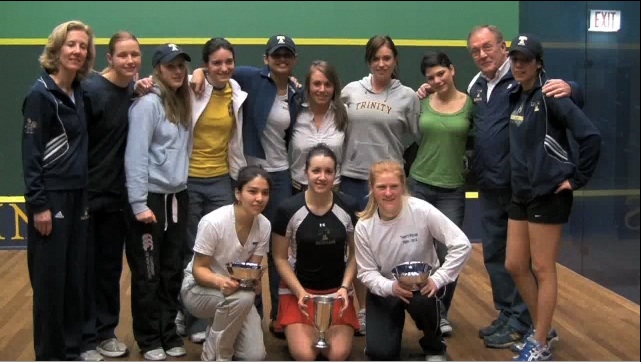
This video reports on the use of the TM Program by the 2009–2010 Women’s Squash team at Trinity College in Hartford, Connecticut.

The whole team including the coaches learned the TM technique. They finished the season as the #3 Women’s Squash team in the country.

Trinity College Psychology major Emily Lindon did her thesis on the Effects of Transcendental Meditation on Perceived Self-Efficacy of College Students. One of the groups she researched was the Women’s Squash Team. Emily found significant increases in self-efficacy among the pre- and post-tests.

The Trinity Women’s Squash Team was trained in the Transcendental Meditation technique through a grant from the David Lynch Foundation. TM is a technique for focus and stress reduction. It is not connected to any religion or belief system but rather it is a simple, effortless, natural meditative technique with scientifically proven effectiveness. The team placed third nationally for the 2009/2010 college squash season. For more information, contact Dr. Randy Lee at randolph.lee@trincoll.edu

Dr. Lee posted this 8 minute video of the winning Trinity College Women’s Squash team on You Tube. The  video was produced and directed by Lynn Kaplan. Peter Trivelas was the cameraman and editor. Executive producer was the David Lynch Foundation. It’s also posted on David Lynch Foundation Television http://dlf.tv/2010/trinity-squash.

Global Good News‘s Excellence In Action posted an article on this story: Peak Performance: Exploring a transcendental technique for success.

See a new article on this subject written by Linda Egenes: Transcendental Meditation and The Mind of an Athlete (December 17, 2014).