Posts Tagged ‘PTSD’

Healing the Hidden Wounds of War: open forum for Iowa veterans and their families affected by PTSD, sponsored by Operation Warrior Wellness

July 10, 2012

Healing the Hidden Wounds of War, an open forum for Iowa veterans and their families affected by PTSD, sponsored by Operation Warrior Wellness, a division of the David Lynch Foundation, in Fairfield, Iowa.

Veterans are overcoming PTSD through meditation and reclaiming their lives. Meditation Saves A Veteran From Suicide is a video of Iowa veteran Luke Jensen describing his experiences in Afghanistan, how he tried to deal with his PTSD, and what finally worked for him.

After reading about Luke’s situation in a Des Moines Register article: Former undercover cop, MP battles PTSD: How Afghanistan service affected one soldier, Jerry Yellin, co-director for Operation Warrior Wellness, reached out to Luke and offered him a scholarship from the David Lynch Foundation to learn Transcendental Meditation.

As a result of learning to meditate, and the relief it brought him and his wife, Abi, Luke wanted to join Jerry in making this program available to other Iowa veterans and their families suffering from PTSD. They are organizing a special open forum, Healing the Hidden Wounds of War, to take place Saturday, July 28, 2012 at 2 pm in the Fairfield Arts & Convention Center in Fairfield, Iowa.

Iowa veterans can find relief from combat-induced stress and escape the self-destructive cycle of drugs, alcohol, and depression. To learn more, or to register, visit http://operationwarriorwellness.org/iowa.

Uploaded by on Jul 10, 2012

Some excerpts from the video:

“The first week I was there three soldiers got killed there….I was certain I wasn’t going to make it back home and I started thinking about suicide. I felt I was going to die anyway, so why be miserable day after day when it’s going to happen? I was just certain it was going to happen….I tried five or six different kinds of depression medicine, two or three different kinds of anxiety medicines. When I continued to try and try and try and things weren’t helping, hopelessness really was taking over and I still continued to think almost daily that suicide was going to be the option.”

In 2011, Luke Jensen learned the Transcendental Meditation (TM) technique – a stress reducing practice, proven to combat the effects of PTSD.

“For the first time in I don’t know how long I felt hope….I don’t take anxiety medicine at all anymore….It’s made me a better father, a better husband. I’d consistently thought about suicide before I learned TM. It was the first thing to kind of get that away and get that off my mind. It changed everything.”

To support the David Lynch Foundation’s Operation Warrior Wellness program: http://www.operationwarriorwellness.org/how-to-help

Operation Warrior Wellness has been championed since 2010 by a coalition of meditating veterans spanning four wars. Their mission is to deliver rapid and profound relief to veterans and active-duty military suffering from PTSD, promote resiliency among military personnel and cadets, and provide much needed support to military families serving the rewarding but often taxing job of caring for their loved ones.

See this KTVO News report: Veterans speak out on post-traumatic stress, offer a proven way to heal PTSD.

A few related articles: POLITICO: Coping with PTSD  |  Post Traumatic Stress and How Transcendental Meditation Can Help [Infographic] Transcendental Meditation Drastically Turns Life Around For Veteran With PTSD  |  Star Tribune: Meditation brings peace to war vets  |  Ruben Rosario: Recovered veteran’s latest mission: helping those like him

Here is a wonderful  interview with Jerry Yellin and Lisa Cypers Kamen of Harvesting Happiness Talk Radio July 18th. You can listen online to Jerry Yellin, Operation Warrior Wellness and Debbie Gregory, Military Connection or download the the podcast.

Star Tribune: Meditation brings peace to war vets

May 17, 2012

Meditation brings peace to war vets

May 16, 2012 | Lifestyle | Star Tribune | Kristin Tillotson

Transcendental meditation has its detractors, but many veterans say it helps them with post-war stress.

Fernando Franco, who served in both Bosnia and Iraq, uses meditation techniques to control stress. — Photo: Carlos Gonzalez, Star Tribune

Like many veterans, Fernando A. Franco had trouble sleeping through the night.

A major in the Minnesota National Guard, he was deployed twice between 2003 and 2007, once to Bosnia and once to Iraq, with barely six months’ break in between. The place where he was stationed near Balad, Iraq, was nicknamed “Mortaritaville” because “we were attacked every day,” he said.

After Franco got back home to St. Paul, he was hard-wired to wake up at 3 every morning, the same hour that in Mortaritaville he and his fellow soldiers would start hearing the shells aimed their way and brace for battle. Once he woke up, he’d stay up, living in a state of perpetual exhaustion.

“It really affected not only my work, but my relationship with my wife and kids,” he said. Then he heard about TM.

Transcendental meditation, or TM for short, is hailed by its devotees as good for just about anything that ails you. Skeptics call it everything from a bunch of hooey to a brainwashing cult, but those who do it daily claim they feel calmer, have more energy and feel healthier, both mentally and physically, than they used to. It’s not a religion, they say, just a practice that reduces anxiety and improves well-being.

Now the U.S. military — not known for embracing the mystical — has taken note. The Department of Veterans Affairs has invested $5 million in a dozen trial programs studying TM’s effects on post-traumatic stress disorder (PTSD), including one at the Minneapolis VA Health Care System.

The VA hopes to recruit 30 vets for the trial beginning in about a month, said spokesman Ralph Huessner, noting that it should not be confused with Mindfulness-Based Stress Reduction, a different meditation program already offered.

‘A part of the universe’

Franco, 49, works in human resources for Target Corp. No matter how busy he gets, he always takes 20 minutes twice a day, at about the same time every day, to meditate, using the discipline he learned as a soldier to strictly maintain his schedule.

“The only way to get the full benefit is to do it morning and afternoon, no matter what,” he said, “even if you have to do it standing up in a bathroom stall.”

TM practitioners call the state they go into one of “restful alertness.” Transcendence is achieved, they say, by repeating a mantra and emptying the mind. So how does it feel?

“There is a moment when you go into a void, an emptiness, and you feel a part of the universe,” Franco said. “It’s like in the movie ‘Avatar’ when the creature says they are a part of everything. That’s how I would explain it.”

He first heard about TM for veterans through Operation Warrior Wellness, an initiative launched last year by the foundation run by film director and TM advocate David Lynch.

“I’m Roman Catholic, but I’m very open-minded about Eastern philosophies,” Franco said.

In October, he attended training classes at the TM center in St. Paul. Six months later, he usually sleeps through the night and has passed his enthusiasm for TM along to his 15-year-old son.

“When you come back from war, where you’ve learned to shut down your emotions, you have to relearn how to be with your family,” he said. “It helps you not only to reconnect with yourself, but other people. I’ve also noticed I’m able to concentrate better.”

Some critics of the TM movement have accused it of being a religion, of amassing wealth for its leaders, and of brainwashing. Franco, who learned TM through a scholarship from Operation Warrior Wellness, said he’s seen none of that.

“I have never felt coerced into making this a religious path, and have encountered people of all faiths  who do it,” he said. “I have never been asked to make a donation.”

Although Franco said he does not have PTSD, he thinks meditation could help veterans who do.

“It’s different for everyone, and you still might need counseling and pills, but TM is one of the best tools for stress out there,” he said.

The draw of Oprah’s blessing

Long, white and stately, the local Peace Palace — which is what the international TM network calls its specially constructed education centers — sits just off a freeway frontage road on the eastern edge of St. Paul. Next door to an insurance office and a hop and a skip from Culver’s, the Maharishi Invincibility Center is hard to miss, an Eastern architectural presence in Midwestern suburbia.

At a recent open house, center director Billie Jean Billman led visitors on a tour. Since Oprah aired a special extolling the virtues of TM in April, Billman said, there has been a spike in interest. The center recently doubled its instructors from two to four.

“TM is not a panacea for everything, but it’s a non-pharmacological process that wakes up the body and the brain,” Billman said.

Two veterans who recently started TM, Sarah Ditto and Pat Watson, were also on hand to describe the benefits they’ve experienced.

“I was amazed at how completely calm I felt,” said Watson, 54. “It’s like pancake batter spreading across a griddle, slowly turning golden brown. You really are resting but awake. After I meditate, people ask me what I’ve been doing.”

“I was really energized after the first time I did it,” said Ditto, 25, who works with disabled veterans at the Metropolitan Center for Independent Living in St. Paul. “I went home and did a bunch of yard work. It’s helped me to focus better, too.”

Ditto likes to visit the center to do her meditating because its minimally decorated rooms are ideal for it. But, she says, she sometimes encounters a problem.

“I meditate facing Culver’s, and instead of my mantra I start saying in my head, Chocolate custard. Chocolate custard. Chocolate custard.”

Kristin Tillotson • 612-673-7046

For more information visit these websites:

www.tm.org and www.operationwarriorwellness.org.

Related articles: Washington Post: VA testing whether meditation can help treat PTSDPOLITICO: Coping with PTSD | Norwich University President Receives “Resilient Warrior Award” at National Veterans Summit in Washington, DC | Washington Post: Does Transcendental Meditation help veterans with PTSD? | Transcendental Meditation Drastically Turns Life Around For Veteran With PTSD | David Lynch gives $1M to teach vets meditation | David Lynch donates $1 million in grants through his foundation to teach veterans to meditate | Replay of David Lynch Foundation Launch of Operation Warrior Wellness Los Angeles | Post Traumatic Stress and How Transcendental Meditation Can Help [Infographic]

Norwich University President Receives “Resilient Warrior Award” at National Veterans Summit in Washington, DC

May 4, 2012

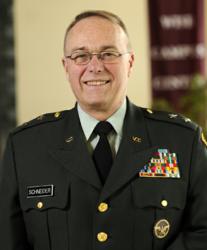
Norwich University President was honored with the “Resilient Warrior Award” during a National Veterans Summit in Washington, DC for his leadership in exploring the use of Transcendental Meditation in building resilient warriors

“The disturbing prevalence of PTSD among returning troops underlines the need for more effective resilience training among our cadets.” — Norwich University President Richard W. Schneider, RADM USCGR (Ret.)

Washington, DC (PRWEB) May 03, 2012

Dr. Richard W. Schneider, RADM USCGR (Ret.), the 23rd President of Norwich University in Northfield, Vt., received the inaugural “Resilient Warrior Award” for 2012 during a national summit on “Resilience, the Brain and Meditation,” held on Thursday, May 3, at the Army and Navy Club in Washington D.C.

The award was presented to President Schneider by veterans of four wars who direct Operation Warrior Wellness, a division of the David Lynch Foundation 501(c)(3) nonprofit organization, which has provided Transcendental Meditation (TM) scholarships for more than 250,000 at-risk youth and veterans and their families who suffer from post traumatic stress disorder (PTSD).

The award cites Schneider for “leading and training a new generation of resilient warriors who will safeguard America and secure the peace with honor and integrity.”

Under Schneider’s leadership, Norwich University recently completed the initial phase of a long-term, longitudinal, randomized controlled trial with 60 cadets, investigating the effects of TM on psychological distress and resilience. Key results of the first nine-week period included reduced perceived stress, improved constructive thinking, decreased state anxiety, increased behavioral coping, reduced depression and improved dispositional resilience.

“Norwich is proud to be in partnership with the David Lynch Foundation and the Educational Foundation of America for providing the resources for this wonderful effort,” Schneider said.

“The disturbing prevalence of PTSD among returning troops underlines the need for more effective resilience training among our cadets. Based on existing data and preliminary results of ongoing trials at Norwich, I believe the Transcendental Meditation technique represents an essential tool to promote resilience in cadets.”

Ed Schloeman, CMS (Ret.), national co-chair of Operation Warrior Wellness, praised President Schneider for “equipping his cadets with the most important of tools—one that will help them overcome stress and promote resilience throughout their life in the military—throughout their life. He is a great educator, a wise man, and a true leader.”

After receiving the news of the award, Schneider said: “I am honored to accept this award on behalf of all those who have worked so hard on this project to experiment with providing our future soldiers, sailors, and airmen the tools necessary to become more resilient, even better warriors, and better human beings.”

Other speakers at the Summit included W. Scott Gould, the US Deputy Secretary of the Veterans Administration, and Norman Rosenthal, M.D., clinical professor of psychiatry, Georgetown University Medical School and author of a breakthrough research study, which found a 50% reduction in the symptoms of PTSD among veterans who practice TM.

Reported in newstimes.com. Related articles: Washington Post: Does Transcendental Meditation help veterans with PTSD? | POLITICO: Coping with PTSD | Washington Post: VA testing whether meditation can help treat PTSD |

POLITICO: Coping with PTSD

May 4, 2012
Opinion Contributor
Coping with PTSD

More than 500,000 returning veterans suffer from psychological injuries, the author said. | AP Photo

By RICHARD W. SCHNEIDER | 5/3/12 9:24 AM EDT

Developing military leaders who are smart, strong and courageous — both on and off of the battlefield — is essential. We are still learning how to create soldiers prepared for the emotional wounds of war. We need to teach coping skills to help these men and women reduce the terrible effects of post-traumatic stress disorder.

Veterans, who have experienced the horrors of war, are the most common sufferers. More than 500,000 returning veterans from Iraq and Afghanistan suffer from psychological injuries — including PTSD or major depression.

But even military cadets, when in a highly disciplined and rigorous academic environment, can feel similarly overwhelmed. Under intense stress, many men and women just give up. They don’t have the tools to stay focused and grounded.

We must give them the tools they need. This means helping them to be successful socially, emotionally and in a military setting. Our future leaders need this knowledge.

Transcendental Meditation has demonstrated an ability to help those suffering from PTSD and high stress environments. Recent trials of TM’s effects on psychological distress have revealed: reduced perceived stress, improved constructive thinking, decreased state anxiety, increased behavioral coping and reduced depression. This is the focus of the David Lynch Foundation, which highlights TM’s positive effects.

TM helps military cadets become more resilient, according to Norwich University studies, so that they can be better soldiers on the battlefield as well as better equipped to recover from the traumas of war and have a normal life after returning home.

Evidence suggests that TM may help people handle the stresses that come before as well as during military service and when they return to civilian life.

A 2011 Norwich University study, with funding from the David Lynch Foundation and the Educational Foundation of America, showed the positive effects that TM can have on helping students cope with the stresses of leadership in being a member of the Norwich University Corps of Cadets. TM has proven to be a highly effective coping strategy and has set a high bar to further explorations and research.

Many cadets who enter the military will likely be exposed to trauma that can have a destructive effect on their lives and the lives of their families. Whether a veteran or a military cadet, the method of dealing with PTSD is crucial.

For these “invisible wounds” can take a high toll — on family, quality of life and work performance. There is also a greater risk for violent and self-destructive behavior.

Effective treatments have been difficult to identify. Many expensive combinations of chemicals, for example, have been explored. But TM is an evidence-based technique that is available anywhere and at any time. Those who practice it develop the ability to improve daily stresses in the workplace and in life.

The technique helps address anxiety, mood change and situational awareness. Its powerful impact can produce long-term results in improving daily lives.

The goal is clear: to develop the whole person with maximized abilities and capacity in all situations.

Richard W. Schneider, a rear admiral USCGR (Ret.) is the president of Norwich University. The David Lynch Foundation on Thursday is hosting its first annual National Summit, investigating effects of Transcendental Meditation on active-duty personnel and veterans suffering from PTSD, cadets in training — and their families.

Short URL: http://politi.co/JPLv7Z

Related articles: Washington Post: Does Transcendental Meditation help veterans with PTSD? | Norwich University President Receives “Resilient Warrior Award” at National Veterans Summit in Washington, DC | Washington Post: VA testing whether meditation can help treat PTSD

Transcendental Meditation Drastically Turns Life Around For Veteran With PTSD

March 15, 2012

Transcendental Meditation Drastically Turns Life Around For Veteran With PTSD

Posted on March 15, 2012 by admin

David George Uses the Power Within for PTSD Stress Relief

By Christine Leccese

At first glance, David George’s story sounds similar to many service members returning from Iraq or Afghanistan. While deployed in Iraq, he witnessed and was part of a traumatic event. His compound was car bombed and about 50 people were injured. And he saw it all. About a year after returning home, he was anxious, depressed, drank a lot, and prone to recklessness. His life was spinning out of control. The rest of David’s story, however, is different than that of many returning veterans with PTSD, and one that Operation Warrior Wellness made possible for him.

After returning from Iraq, the barracks’ normal sounds would make David’s heart pound. A slamming door or artillery practice in the distance could cause him to panic. The smell of burning rubber could take him right back to the war. Stopping at a red light at night? Forget it. That made him feel like a sitting target. He describes the keyed up feeling he had day and night: “You know that feeling you have just before a race? That jittery feeling? I had that all the time.”

David sought help from a bottle  — Jack Daniels and whiskey could bring him a little relief, but that, of course, brought its own problems. He had several car crashes, and didn’t care whether he lived or died. His mother was frantic and said she woke up every morning not knowing whether her son would be dead or alive. Relationships and lost jobs were casualties of David’s PTSD. He wanted it to stop so he sought help. The VA was treating him with medication, but it wasn’t making a difference for David.

Here’s where David’s story takes a twist. One day, while listening to the radio in between classes, he heard an ad for a research study that was looking at the effects of transcendental meditation on PTSD. Someone had told him about TM a year or so earlier, but he could not afford to take the classes to learn how to do it. He jumped at the chance to be part of the research study, and signed up.

The first time he practiced TM, he noticed that for that 20 minutes he was free of anxiety. He started looking forward to the next day’s practice knowing that he would have another 20 minutes without anxiety. Then, the calm that he felt during his TM practice started seeping into other parts of his day. Eventually, David’s symptoms subsided.  He credits it all to TM.

“The first time I meditated, I experienced this relief from the constant anxiety attack my life had become,” David said. “You have to give yourself a chance to make yourself feel better, because no one else is going to do it for you.”

David says that he will never stop meditating. “I’m so happy and I’ll never stop. It has this compounding effect and gets better every day.”  Today, David meditates for about 20 minutes twice a day. If he is stressed about something, he’ll do a little 10-minute meditation. When he sits up in bed in the morning, he meditates, and also if he has any other opportunities, such as sitting in the waiting room of a doctor’s office. Transcendental meditation turned David’s life around, and could be a great option for other people with PTSD. If you are wondering whether your own symptoms are likely a result of PTSD, depression, anxiety, or alcohol use, you can take a free, anonymous screening. Service members who want to learn more about TM can check out Operation Warrior Wellness.

Christine Leccese is the marketing and communications manager for Military Pathways.

Related articles: Medication or Meditation for Veterans with PTSD? | David Lynch Foundation launches Veteran’s Day national meditation initiative | A Transcendental Cure for Post-Traumatic Stress by David Lynch and Norman E. Rosenthal | ABC News: Study finds meditation helps soldiers overcome trauma, PTSD | Meditation Promoted For Troops With PTSD | How meditation saved the life of a veteran with PTSD.

Watch the trailer for a new documentary film on David Lynch titled “Meditation Creativity Peace”

February 9, 2012

“Meditation Creativity Peace”

“Meditation Creativity Peace” is David Lynch Foundation Television’s compelling new documentary film featuring exclusive, candid footage from David Lynch’s 16-country tour around the world when he spoke to government leaders, film students, and the press during 2007 and 2008. David’s unique, free-styling demeanor grabs your attention from the very beginning of the film. David has also selected deeply insightful quotes from great thinkers and revered texts throughout history, which reveal how the practice of meditation, developing creativity, and enjoying true inner peace are the birthright of everyone. As David says in the documentary, “Transcendental Meditation is for human beings—it doesn’t matter where you live.” Watch the trailer for this new documentary film here: Meditation Creativity Peace.*

About the David Lynch Foundation

The David Lynch Foundation, a 501(c)(3) organization, was established in 2005 to fund the implementation of scientifically proven stress-reducing modalities including Transcendental Meditation, for at-risk populations such as underserved inner-city students; veterans with PTSD and their families; American Indians suffering from diabetes, cardiovascular disease, and high suicide rates; homeless men participating in reentry programs striving to overcome addictions; and incarcerated juveniles and adults. The Foundation also funds university and medical school research to assess the effects of the program on academic performance, ADHD and other learning disorders, anxiety, depression, substance abuse, cardiovascular disease, post-traumatic stress disorder, and diabetes.

Related Websites and Posts

David Lynch Foundation http://www.davidlynchfoundation.org
Operation Warrior Wellness http://www.operationwarriorwellness.org
David Lynch Foundation Music http://davidlynchfoundationmusic.org
David Lynch Foundation Television http://dlf.tv
Transcendental Meditation http://www.tm.org
Click here for DLF Featured Past Events

Announcements and Reviews: Julie Eagleton: Meditation Creativity Peace: A Documentary of David Lynch’s 16 Country Tour | BlackBook: David Lynch’s Transcendental Meditation Documentary Gets a New York Premiere | New York Times: David Lynch Double Bill | Gothamist: David Lynchian Events Happening All Over NYC This Weekend | Yelp: An Evening with the Work of David Lynch, from Transcendental Meditation to Eraserhead

Related articles: HUFFPOST: David Lynch: Why I Meditate | Meditation for Students: Results of the David Lynch Foundation’s Quiet Time/TM Program in San Francisco Schools | Replay of David Lynch Foundation Launch of Operation Warrior Wellness Los Angeles | Third Annual David Lynch Foundation Benefit Gala | David Lynch gives $1M to teach vets meditation | David Lynch donates $1 million in grants through his foundation to teach veterans to meditateRussell Brand Does Stand-Up for Transcendental Meditation | What do Stephen Collins, Ellen DeGeneres, Russell Brand, Russell Simmons, David Lynch and Oprah have in common?

New related posts: Russell Brand and David Lynch at LA Premiere of ‘Meditation, Creativity, Peace’ Documentary, and David Lynch, Russell Brand, Bob Roth Q&A after screening Meditation, Creativity, Peace documentary at Hammer Museum. Enlightenment, The TM Magazine, reported on the LA Premiere: Meditation Creativity Peace: How the David Lynch Foundation Brings Change from Within. David Lynch speaks with Alan Colmes about his 16-country tour film Meditation Creativity Peace.

*Visit the new website, Meditation Creativity Peace, for a list of upcoming and previous screenings. You can also ask your local TM Center if they have a copy and plan to show it. http://meditationcreativitypeace.com

You can now see the film “Meditation Creativity Peace”—A documentary of David Lynch’s 16-country tour during 2007–2009.

Meditation for Students: Results of the David Lynch Foundation’s Quiet Time/TM Program in San Francisco Schools

December 24, 2011

David Lynch Foundation Event in San Francisco: Meditation for Students

The David Lynch Foundation held a benefit gala in San Francisco on June 1 at the Legion of Honor, to showcase the successes of a five-year project to bring the stress-reducing Transcendental Meditation technique to students in inner-city San Francisco schools. In this video, you will hear James Dierke, principal of Visitacion Valley Middle School talk about the unprecedented academic achievements of his meditating students; iconic filmmaker David Lynch talk about the inspiring work of his foundation among at-risk populations; and Dr. Norman Rosenthal, internationally renowned psychiatrist and NY Times bestselling author, discuss the amazing results of scientific research on the TM technique. See other featured past events posted on the David Lynch Foundation website. To hear more about the David Lynch Foundation and it’s programs, please visit: http://www.davidlynchfoundation.org.

Uploaded by on Jul 7, 2011.

See selected highlights of Inspiring results from the TM-Quiet Time Program in the San Francisco Unified School District.

Medication or Meditation for Veterans with PTSD?

September 9, 2011

 National Office • 654 Madison Avenue • Suite 806 • New York, NY 10065 Tel: 212-644-9880 • OperationWarriorWellness.org

MEDICATION OR MEDITATION
FOR VETERANS WITH PTSD?

Filmmaker David Lynch Announces $500,000 Matching Grant
to Teach Transcendental Meditation to 10,000 Veterans

Iconic filmmaker David Lynch will announce this September 11 a $500,000 matching grant to be used to teach the Transcendental Meditation technique to 10,000 veterans with post-traumatic stress disorder (PTSD) and their families.

Lynch is inviting philanthropists and foundations to match the offer by Veterans Day, November 11, 2011.

Hollywood directors Clint Eastwood, Martin Scorsese, and George Lucas, as well as Dr. Mehmet Oz, Paul McCartney, Jerry Seinfeld, and Russell Brand have joined Lynch in support of the outreach.

Lynch’s veteran’s initiative comes from Operation Warrior Wellness (OWW), a division of the David Lynch Foundation, a 501(c)(3) nonprofit established in 2005 to bring Transcendental Meditation to at-risk populations.

Jerry Yellin, a distinguished World War II fighter pilot and national co-chair of Operation Warrior Wellness, said the need is urgent for Lynch’s initiative. “We are in a crisis of epidemic proportions. More soldiers died from suicide last year than died in combat. This is unconscionable. We must give our active duty personnel and our veterans something more than a handful of pills to help them overcome the nightmare of PTSD. Research shows Transcendental Meditation is the best way to go.”

Ed Schloeman, a Marine Vietnam service disabled veteran and national co-chair of Operation Warrior Wellness, says Americans need to help their military, now:  “I call on civilian America to support the men and women who are returning from Iraq and Afghanistan—alive but wounded. Let’s come together for our military, as they have come together for us.”

Evidence-Based Meditation

According to Norman Rosenthal, M.D., psychiatrist, clinical professor of psychiatry at Georgetown University Medical School, and author of the New York Times bestseller, Transcendence, research on the Transcendental Meditation technique on OEF-OIF veterans as well as Vietnam veterans demonstrates its effectiveness for reducing symptoms of PTSD—and treating a number of the disorders associated with the illness. Findings include:

Reduced PTSD: 40 to 50 percent reduction in PTSD symptoms, including depression, anxiety, flashbacks, and insomnia (see PTSD)

Greater resiliency: Reduced stress levels and quicker recovery from stress (see Resiliency to stress)

Reduced cardiovascular disease: Decreased blood pressure, harmful cholesterol, and atherosclerosis; and a 47 percent reduction in cardiovascular-related mortality (see Cardiovascular disease)

Decreased substance abuse: Decreased smoking, alcohol, and drug abuse (see Substance abuse)

Decreased medical expenditures: 14 percent reduction in annual medical expenditures, as compared to the norm (see Decreased healthcare utilization)

“Operation Warrior Wellness is giving our dedicated service men and women a meditation technique that is a traumatic stress buster—it’s not hocus-pocus,” said David Lynch. “When they get this simple, effortless technique they will get their lives back.”

Operation Warrior Wellness is working with veterans’ service organizations, army bases, and military colleges to bring Transcendental Meditation to active duty personnel and veterans and their families.

• For more information on how to contribute to the matching grant campaign of Operation Warrior Wellness, please contact Heather Hartnett at 212-644-9880, or email Heather@OperationWarriorWellness.org.

• Veterans of four wars, from WWII to the present, launched the OWW initiative in December 2010. Researchers and celebrities joined founding veterans Jerry Yellin, Ed Schloeman, and Col. Brian Rees, MD, at a press conference and inaugural gala event at the Metropolitan Museum of Art in New York City.

• In June this year, CNN anchor, Candy Crowley, hosted an event honoring the initiative at American University in Washington, DC. Crowley concluded: “The initial research offers so much hope: reduced anxiety, depression, hypervigilance, and insomnia, as well as reductions in substance abuse, violent behavior, and suicidal tendencies—better than many things being tried and at far less a cost.”

• For recent press coverage of Operation Warrior Wellness visit the OWW News and Archives.

• More news coverage, including  interviews, and the NYC OWW launch at Urban Zen, is also available on this blog’s archive.

• To arrange press interviews with leaders of Operation Warrior Wellness, please contact Steve Yellin at 641-455-9999, or email Steven@OperationWarriorWellness.org.

News Reports: , Paul McCartney Examiner: Paul McCartney lends support to 9/11 TM veterans outreach | The PR Newswire press release, Medication or Meditation for Veterans With PTS?, was also posted by: The Sacramento Bee | MarketWatchDigitalJournal.com | Hola Arkansas | SunHerald.com | SYS-CON MediaRedOrbitMedIndia | Virtual Press Office: Filmmaker David Lynch Announces $500,000 Matching Grant to Teach Transcendental Meditation to 10,000 Veterans | SourceMedia Group: Kathleen Serino for Eastern Iowa News Now: Fairfield Resident Helps Veterans Recover (more articles listed there) | Odewire: Diving deep with David Lynch | Wall Street Journal: A Transcendental Cure for Post-Traumatic Stress by David Lynch and Norman E. Rosenthal | Huffington Post: What Meditation Did for Me: A War Vet’s Story.

A Transcendental Cure for Post-Traumatic Stress by David Lynch and Norman E. Rosenthal

July 13, 2011
THE WALL STREET JOURNAL OPINION JULY 13, 2011
A Transcendental Cure for Post-Traumatic Stress
One study of soldiers showed a 50% reduction in symptoms after eight weeks of meditation.

By DAVID LYNCH and NORMAN E. ROSENTHAL

War wounds come in many forms. Some are obvious, such as scars, gashes and amputations. Others, the psychological ones, are less visible but equally devastating. The numbers in this second group are staggering: The military’s latest mental health survey of combat troops in Afghanistan found that 20%—one in five—suffer from post-traumatic stress disorder.

People with combat-related PTSD often suffer from periods of emotional numbness and depression that may coexist or alternate with intense anxiety and delusional thinking. Their days may be afflicted by flashbacks to traumatic situations. Their nights are often disrupted by sleeplessness and nightmares, from which they awake drenched in sweat as though back on the battlefield.

Yet most veterans with PTSD do not receive adequate treatment for various reasons, including fear of stigma, a dearth of effective treatments, and insufficient government resources. Gen. Peter Chiarelli, vice chief of staff of the U.S. Army, recently acknowledged that, “The therapies used for treatment of brain injuries lag behind the advanced medical science employed for treating mechanical injuries.”

Clearly, there is a need for new, creative approaches: Transcendental Meditation, better known as TM, is a promising candidate. An ancient Vedic technique developed in India, TM was brought to the West in the late 1950s by Maharishi Mahesh Yogi. It involves sitting comfortably with eyes closed for 20 minutes twice a day while thinking a mantra. It does not require adherence to any religious belief system or ritual practices. Yet to date there are over 340 peer-reviewed papers describing the beneficial effects of TM on the mind and body.

lynch

The David Lynch Foundation recently hosted an event to help raise funds to teach TM to our wounded warriors returning home from Iraq and Afghanistan. We heard from veterans of three wars: Jerry Yellin, a fighter pilot in World War II who flew 19 missions over Japan; Dan Burks, who served in Vietnam; and David George, a veteran of Operation Iraqi Freedom. Despite differences in age and wartime experiences, these men had two things in common: All suffered terribly from PTSD, and all experienced tremendous relief from TM. Life became once again peaceful and even joyful for them.

What was clear from these men’s stories was how great a toll their symptoms took on their families, as well as on themselves. In a poignant video, Mr. George’s mother described the transformation of her son from a courteous young man into a hard-drinking, depressed and deeply disturbed veteran, who she feared would take his own life or someone else’s.

All that changed when Mr. George began to meditate on a regular basis. According to Ms. George, TM saved her son’s life.

In a study of Vietnam vets conducted by James S. Brooks and Thomas Scarano and published in the Journal of Counseling and Development in November 1985, TM outperformed the conventional psychotherapy of the day. More recently, a pilot study of five Iraq and Afghanistan veterans published in the June 2011 issue of Military Medicine showed a 50% reduction in PTSD symptoms after just eight weeks of practicing TM.

There is a scientific basis for the observed benefits of TM for combat-related PTSD. In several studies, TM has been shown to buffer fight-or-flight responses, which are thought to be overactive in people with PTSD, as evidenced by their hypervigilance, anxiety and exaggerated startle responses.

In addition, TM has been found to reduce blood pressure and decrease the risk of heart attacks and strokes—other conditions in which an overactive fight-or-flight response may play a role. In a similar manner, TM may modulate nervous system responses, thereby allowing affected veterans to relax and leave behind the traumas of war.

Regardless of how TM helps, the mounting evidence leads to one conclusion: If a simple, low-cost technique like TM can substantially alleviate the suffering of even some of the thousands of veterans afflicted with PTSD, how can we afford not to give it a try?

Mr. Lynch is a filmmaker and the founder of the David Lynch Foundation. Dr. Rosenthal is a clinical professor of psychiatry at Georgetown University Medical School and the author of “Transcendence: Healing and Transformation Through Transcendental Meditation” (Tarcher-Penguin, 2011).

Photo credit: Associated Press
Link to article: http://on.wsj.com/rg8tYC

WSJ: LETTERS: VA Meditating on Good Therapies, July 22, 2011

In “A Transcendental Cure for Post-Traumatic Stress” (op-ed, July 13) David Lynch and Norman E. Rosenthal pose a challenge for the federal agency entrusted with caring for our nation’s 23 million veterans: “If a simple, low-cost technique like TM can substantially alleviate the suffering of even some of the thousands of veterans afflicted with PTSD, how can we afford not to give it a try?” In fact, Transcendental Meditation has received substantial attention at the Department of Veterans Affairs, the Department of Defense and the National Institutes of Health. Indeed, meditation and other forms of complementary and alternative medicine are already used at VA to help veterans suffering from PTSD. We have embarked on a series of clinical investigations to evaluate all forms of meditation, TM among them, in order to determine whether this promising technique can produce results consistently for our patients, and which kind of meditation, from among several practiced widely today, would be most helpful to them. VA is beginning demonstration projects across the country in different care settings. We are looking for a simple, natural, culturally neutral and repeatable technique that can augment existing PTSD treatments. These studies require us to be open to new techniques for prevention and treatment, as well as structured in our approach to determining their value and efficacy. The studies already conducted, and those currently underway, are listed at http://tinyurl.com/3gx74o3.

The promising personal experiences mentioned in the article and the dedicated efforts of our VA, DoD and NIH team offer us all hope for finding more effective treatments for PTSD. We can’t afford not to.

W. Scott Gould

Deputy Secretary

DVA

Robert A. Petzel, M.D.

Under Secretary for Health

DVA

Washington

ABC News: Study finds meditation helps soldiers overcome trauma, PTSD

June 28, 2011

Study finds meditation helps soldiers overcome trauma, PTSD

Short video link: http://bcove.me/dug2ceme

By Cynne’ Simpson WJLA – ABC 7

June 28, 2011 – 06:45 pm

More than 20 percent of soldiers returning from Iraq and Afghanistan suffer from post-traumatic stress disorder, according to the Department of Defense.

New research suggests one way to combat the symptoms is through meditation.

David George was sleeping in his cot during his deployment to Iraq when a car bomb exploded 25 yards away.

“I turn the lights on, and see a white cloud billowing into the room,” the 27-year-old recalls. “All the windows were blown out.”

Since then, he’s struggled with PTSD, is often anxious, angry and depressed. At one point, back at home in Maryland, he stopped himself from buying a pistol.

“I never bought a pistol because I was pretty sure I was going to shoot myself,” George said.

His mother noticed a change in her son’s behavior, too. “When he came back, he was not the boy I raised,” Julia Elena George said.

Medications and therapy didn’t help. George started drinking heavily.

Then he joined a study for veterans with PTSD using transcendental meditation, a mind-based practice involving repeating a mantra to focus one’s thoughts.

“It made me feel, and that’s the biggest sense I lost,” George said. “From that moment, I knew it was something I’d do for the rest of my life.”

The study’s findings are published in this month’s Military Medicine journal. The study found participants saw their symptoms reduced by half within two months of participating in the meditation.

Dr. Norman Rosenthal says transcendental meditation settles down the nervous system.

“People become calmer, less reactive, less jumpy,” he said. “I think the time is right for us to seriously consider this as a viable treatment.”

George meditates twice a day and says he finally feels like himself again.

“There’s something else than pills or therapies or substance abuse – there’s yourself that you can always count on,” he said.

George is working with operation warrior wellness and the David Lynch foundation to reach their goal to help 30,000 veterans through transcendental meditation in the next three years.

Short URL: http://wj.la/kKqDh3

