Have you ever heard of Eva Cassidy, or heard her sing? Eva Marie Cassidy (February 2, 1963 – November 2, 1996) was an unpretentious humble girl from small town Bowie, Maryland. She worked hard with her mother in their nursery growing flowers and plants. But Eva also sang. She had the voice of an angel, and delivered songs with purity, passion, and power. She accompanied herself on guitar, and also sang with a band. She would immerse herself in the words, she “connected to the lyric” and lived the songs. Her voice communicated directly to the hearts of her listeners. Rarely was there a dry eye in the place.
In the film Eva Cassidy: Timeless Voice, Carrie Grant, a British vocal coach who worked with top recording artists in the UK and US, was amazed when she heard Eva’s voice. After listening to Over The Rainbow, she said, “I cannot imagine what Eva Cassidy was thinking of when she chose to make it sound the way it does. But it’s just genius!” She describes how she redefines the song in unexpected ways, “yet for some reason it just works.”
She also explained the effect that Eva’s voice had on listeners. “She sounds like she’s singing just to you. And that is what makes it so intimate. And that becomes even more profound once you know she’s no longer alive. Because it’s haunting. And it’s personal.”
Eva sang the songs that she liked, regardless of genres, which is why record companies would not sign her during the days of manufactured music. They couldn’t slot her into a specific category. She sang blues, jazz, gospel, folk, old standards, and more. At first she was extremely shy, didn’t care for stage presence or how she dressed. With the help of local musicians she performed at Blues Alley, a local jazz spot in Georgetown, Maryland. One of her shows was later recorded. She sold two locally produced CDs out of the trunk of her car. You can listen to Live At Blues Alley on Spotify.
We might wonder how her singing was recorded in the first place when no company would sign her. One comment on Ain’t No Sunshine explained that the world owes Chris Biondo a debt of gratitude. Chris worked as a bassist, guitarist, keyboardist, recording engineer, and producer. He owned a studio in the 80s and 90s, and Eva would come in for session work. He recognized her ability, and said he “would just roll tape and stay out of her way.” At one point they were romantically involved. Chris “was the one who recognized her transcendent, ageless genius.”
In 1986 Chris began recording the then-unknown singer Eva Cassidy. For the next ten years he worked with Eva to develop her as a recording artist, producing most of her recordings available today. In the years since Eva’s death in 1996, her recordings have sold more than 10 million copies and achieved international renown, including three albums that reached number one in the UK charts. Chris has received numerous Gold and Platinum records in the U.S. and internationally for his work with Eva.
Bill Straw of Blix Street Records signed her up and continues to release and reissue her music, like the 20th anniversary of the new 32 track/2CD Nightbird album, The Best Of Eva Cassidy, Simply Eva, and eight other collections listed there that you can sample.
Sting himself was blown away when he heard her rendition of his song. He put a copy of her Songbird CD into record producer David Foster’s hands who quoted him saying, “‘If you want to hear the greatest version of my song ever’—he didn’t say it in an egotistical way—he said, ‘listen to Fields Of Gold with this girl, it’ll change your life.’ And her voice is life-changing, she’s that spiritual.” I love that song and remember hearing it on an airplane’s music channel during a flight. It was astounding! I had to find out who this singer was.
Another singer-songwriter who was overwhelmed by Eva Cassidy singing one of his songs was award-winning acoustic bluesman Doug MacLeod. During an interview he was asked: “Your songs have been recorded by many artists, so which are your favorite interpretations?” He said he had a couple of favorites, and that Eva Cassidy’s version of Nightbird was one of them. He told the story of how he first heard Eva sing when his wife put on her CD in the car. He said it moved him so much, “I pulled over to the side of the road and I was weeping.” When people ask him to play Nightbird, he tells them that “if they want to hear THE version, she is the one to listen to.” Read the whole interesting story in the highlighted comment Harvey Bobb posted to Eva Cassidy – Nightbird.
A relatively unknown singer in America at the time, somehow her music made its way across the Atlantic. From the first time Sir Terry Wogan, a BBC radio broadcaster, listened to Eva sing, he knew “she was an outstanding talent.” He said, “It was pure sound. A bell-like voice. She had this perfect pitch.” He couldn’t wait to play it on the radio. His was the most listened to program in the country at the time. It created a huge response from many of their seven million listeners wanting to know who she was. Unfortunately they found out that she had died two years earlier of cancer at the young age of 33.
When Mark Hagon, a Top of the Pops BBC (TOTP2) producer at the time, agreed to play that homemade video of Eva Cassidy singing Over The Rainbow, people kept calling in for weeks wanting to know her name. The listening public created a demand for her music. It was a groundswell! Sales of her CDs went from a hundred thousand to over a million in the UK. “Radio broke it. Television exploded it.”
Cropped screensaver taken from the video of Eva Cassidy singing Over The Rainbow at Blues Alley, Georgetown, DC, January 3, 1996.
At one point five of her CDs became top sellers at the same time, a feat usually held by the Beatles and Rolling Stones. She was then discovered back home in the USA. ABC Nightline in Washington, DC researched and produced The Eva Cassidy Story (18:40). It was shown in many countries around the world and within a week of it airing her CDs went to the top of the local charts.
In Timeless Voice, Terry Wogan concluded, “You’d have to say about Eva Cassidy that her talent was pretty timeless. The voice has a quality of timelessness about it. Anytime you would hear it, whether it was thirty years ago, or thirty years from now, it’ll still be worth listening to, and still strike a responsive chord in most people’s hearts.”
Mick Fleetwood of Fleetwood Mac who knew Eva said, “She was brilliant. She had the magic. And I call it, It. She had It!”
Eva Cassidy: 25 years ago, a little known singer, Eva Cassidy, and her producer scraped together enough money to record a gig and self-produce an album. This is the story of one night – 3rd January 1996 – at a jazz club in Georgetown, Washington D.C., a set of recordings that almost never happened, and the extraordinary success that followed told by her band members who played with her that night. No one could have imagined that the audio and video recordings from that night would prove to be the foundation of her unparalleled posthumous worldwide success.
True to the end, Leonard Cohen‘s work charted the arc of his career, between life and death (Sept 21, 1934 – Nov 7, 2016). His search for redemption also influenced his fans. Cohen’s evolving understanding of life, beautifully expressed through his music, shone a light through the cracks of a broken humanity in a dark suffering world. He never claimed to have found all the answers, but seemed to have reached a kind of inner peace toward the end of his life, between himself and his God.
There is a repeated stanza in one of his songs, Anthem, that conveys the redeeming acceptance of light illuminating the darkness, compassion and love overcoming bigotry and hatred: “Ring the bells that still can ring/ Forget your perfect offering/ There is a crack in everything/ That’s how the light gets in.”
There may be a crack in everything, but how does the light get in—from without, or is it released from within? I’ve often thought about the profundity of those lines, and there have been many interpretations of what he may be implying. See mine below.* I think he sang about finding that divinity within and among our broken humanity. I wrote this tanka in honor of Leonard Cohen.
Leonard Cohen’s music lit up a dark world A tanka in honor of the poet by Ken Chawkin
Leonard Cohen said There’s a crack in everything How the light gets in
It came through him and lit up a broken humanity
Of course there is a kind of irony here when he says, “Forget your perfect offerings,” since he labored for months, sometimes years, on getting the lyrics to his songs perfect. At some point, though, he must’ve given up, admitted his imperfection, and sent them out into the world. As Leonardo da Vinci once said: Art is never finished, only abandoned. Other famous artists and writers have said and done the same thing.
Artistic Genius—Two Creative Approaches
There is a story about Leonard Cohen and Bob Dylan. They happened to be in Paris at the same time and decided to meet at a certain café. During their conversation, Dylan, one of the first to sing Cohen’s song “Hallelujah” in his concerts, asked Cohen how long it took him to write it. Cohen was embarrassed to tell him the truth so he lied and said 2 years. Then Leonard asked Bob how long it took him to write “I And I“, and he replied 15 minutes. I think he said he wrote it in the back of a cab. Cohen later told this story to an interviewer and confessed that it took him more like 5 years to write that song. He never could complete it, even after 30 verses! Their styles reflect thedifferent philosophical approaches of ‘first thought, best thought’ versus ‘revise, revise, revise’.
You can read the fascinating history of that song in Alan Light’s book, The Holy or the Broken: Leonard Cohen, Jeff Buckley, and the Unlikely Ascent of “Hallelujah”. Malcolm Gladwell, in Season 1, Episode 7 of his Revisionist History podcast, discusses the history of “Hallelujah”with Alan Light. That segment starts at 21:35 and explains how this obscure song was first covered by only a few artists 15 years after Cohen had recorded it. The theme is about two kinds of artists—those who seem to create spontaneously, and others who labor for a very long time—the differences between Mozart and Beethoven, or Picasso and Cezanne. It first aired July 28, 2016. Later added on YouTube March 8, 2023 starting at 18:13. Also listen to BBC – SOUNDS – Soul Music – Series 20 – Hallelujah. First broadcast on BBC Radio 4 in April 14, 2015. (27:50)
During Leonard Cohen’s final public appearance at the Canadian consulate in Los Angeles on October 13, 2016, the day Bob Dylan was awarded the Nobel Prize in Literature, he was asked what he thought about that and said: “To me, it’s like pinning a medal on Mount Everest for being the highest mountain.”
Hallelujah: Leonard Cohen, a Journey, a Song
I later read the Guardian article (6-29-2022) that this book served as the basis for the new documentary Hallelujah: Leonard Cohen, A Journey, A Song. Directed and produced by Dayna Goldfine and Dan Geller, the film takes both a micro and macro view of the song and Cohen, along with their respective and deeply intertwined places in culture. See ‘More than a song’: the enduring power of Leonard Cohen’s Hallelujah. In a new documentary, fans and experts explore the legacy of a song originally shunned before becoming a timeless classic.
I saw this documentary at the FilmScene in Iowa City (Saturday, August 6, 2022). It was very well put together. The ending moved me to tears. Netflix later offered it: Hallelujah: Leonard Cohen, A Journey, A Song. From there it would later move to Hulu and Disney+. You can rent it on Amazon and other platforms.
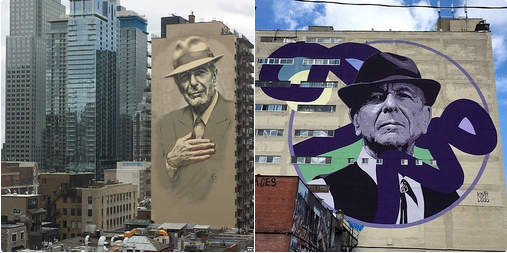
Murals mark 1-year anniversary of Leonard Cohen’s death
Montreal murals made by Gene Pendon (l) and Kevin Ledo (r)
November 7, 2017 is the 1-year anniversary of Leonard Cohen’s death. To personally commemorate this date, Sylvie Simmons tweeted a picture of herself standing in front of a large mural of Leonard Cohen painted by Kevin Ledo on the side of a 9-storey Montreal building close to where Leonard kept a home. It was the center piece for the fifth Mural International Public Art Festival in June. CBC Arts interviewed Kevin Ledo while he was working on it: Montreal Remembers Leonard Cohen With This Massive Mural. The Montreal Gazette’s Bill Brownstein had written an article about the making of it. He also mentions another mural, a tribute to Leonard Cohen made by artist Gene Pendon, which was painted on the side of a 20-storey downtown building, as part of Montreal’s 375th billion dollar birthday bash. The Globe and Mail described them in detail: Leonard Cohen and a tale of two Montreal murals. ET Canada reported on the official inauguration today, a year after Cohen’s passing. Josée Cloutier posted photos of both murals in one tweet, shown above.
The M.A.C.’s Exhibition on Leonard Cohen: A Crack in Everything
The Guardian published Leonard Cohen: A Crack in Everything – Montreal’s tribute to its favourite son. The new exhibition was conceived as part of the city’s 375th anniversary celebrations – but has morphed into a thorough investigation of all things Cohen. On 9 November, the Musée d’art contemporain de Montréal (AKA the Mac) will open the doors to Leonard Cohen : une brèche en toute chose/A Crack in Everything, a tribute to the artist, poet and musician, filled with multi-disciplinary works inspired by Cohen’s songs of life. This special exhibition at the Montreal Museum of Contemporary Art will conclude 9 April 2018.
The show takes its title from Cohen’s song Anthem, which contains the famous line “There is a crack in everything, that’s how the light gets in.” The song also inspired artist Kara Blake’s piece for the show, an immersive installation called The Offerings. “The song apparently took Cohen 10 years to craft and is just one example of his many artistic offerings that get inside the beautifully flawed nature of being human,” says Blake. “I wanted my piece to present visitors with a sampling of the creativity, wit and insight Cohen has gifted us with.”
Julia Holter contributed a cover of Cohen’s Take This Waltz, which will play on rotation in the Listening Room. “I enjoyed getting into the feeling of this passionate, seductive, demented waltz,” says Holter, who incorporated field recordings she made during a visit to the Greek island of Hydra, where Cohen had a home. “Being there was incredible,” she says.
For Holter, being invited to contribute to the show is the perfect way for her to give back to an artist she was introduced to as a child and who inspired her love of poetry. “What was special about Leonard Cohen’s work was its calm mystery. I think that can be an inspiration to the world right now,” she says. “The world needs this subtle beauty right now.”
And of course, who could ever forget Suzanne, Leonard’s mysterious poetic song that started it all, thanks to Judy Collins who wanted to cover it right after she heard Leonard sing it to her. It launched his career as a singer-songwriter. The song was inspired by Suzanne Verdal, the then estranged wife of his friend, sculptor Armand Vaillancourt. Read Suzanne’s 1998 BBC Radio 4 interview.
I enjoyed reading Sylvie’s wonderful biography, I’m Your Man: The Life of Leonard Cohen. It will be published next year in a new French edition with an added afterword that will be included in a revised English edition by McClelland & Stewart.
The afterword is Cohen’s response to the question about what was the driving force that propelled his output. Simmons calls it Traveling Light, and quotes Cohen’s answer in this interview for The Senior Times: Biographer Sylvie Simmons pays tribute to Montreal’s favourite son.
Leonard Cohen was very active towards the end of his life. Due to his declining health he tried to bring as many projects to completion as possible. One of them was his last album, You Want It Darker, produced by his son Adam Cohen. A new poetry book, The Flame, will be released next year.
The Flame: Poems Notebooks Lyrics Drawings
On Oct 1, 2018 CBC q host Tom Power interviewed Adam Cohen on the legacy of his father Leonard Cohen. It’s been almost two years since the passing of Leonard Cohen, but we’re about to hear from the legendary singer and poet again. The Flame is a posthumous collection of his final writing that features never before published poems that Leonard Cohen wrote in the final few years of his life. The day before it’s release, Adam Cohen returns to q to talk about mourning his father’s life and and celebrating his legacy on the morning of the book’s release.
*My reply to Quora question about the crack and the light
I agree with a number of interpretations posted here, quoting William Blake, the Kabbalah, and other esoteric sources, to explain what Leonard Cohen may be referring to in that line. They all make good sense to me. I also think that the light, of clarity, understanding, call it what you will, comes from within, not without. Metaphorically we may imagine light coming into a dark broken place from outside. But it can also light up the darkness from inside, if one knows how to turn on the switch. Another interpretation then, is no matter how broken, incomplete we are, with the proper approach, meditation technique, one can transcend, go beyond our limitations and just Be, experience that unbroken inner light of pure consciousness. With repeated exposures to one’s inner divine nature, the outer vessel, our body, can begin to heal, mend the broken cracks, and become whole. One way to experience this inner and outer development is with the regular practice of Transcendental Meditation.
New information on this topic later found and added
I recently discovered a quote by Rumi, which led me to believe this is where Leonard may have received the idea of the light entering the crack. Rumi wrote: “The wound is the place where the Light enters you.”
In the documentary, Andrea Bocelli – The Power of Silence, the interviewer quotes Rumi to Andrea. Here, ‘wound’ replaces ‘crack’, and he changes ‘you’ to ‘the heart’, but the idea is the same. It seems more intimate. “The wound is the place where the Light enters the heart.” They discuss the notion of the value of suffering and he asks him, “When did the light enter your heart? When did that light strike Andrea?”
Andrea gives him an unexpected, beautiful, religious answer. “So the vision of Rumi the philosopher that you quoted is very interesting and I agree with what he says. In my case I didn’t think it was a wound, not such a painful wound that opened up and allowed the light to enter. No, I think the light entered my heart thanks to the grace of God.”
He asks him, “Are you happy?” and Bocelli replies, “I am happy, yes, but more importantly, I am serene. To me happiness is a transitory condition and it can sometimes be a bit dangerous; whereas being serene is a state of mind that can be consolidated and it can stay with us forever.”
In 1991 media mogul Moses Znaimer inducted Leonard Cohen into the Canadian Music Hall of Fame at The JUNO Awards in Vancouver. Leonard gave a brilliant and humorous acceptance speech.
k.d. lang agreed to pay tribute to the legendary singer-songwriter with a rendition of his beloved song, “Hallelujah.” She had never performed the song for Cohen and “was excruciatingly nervous” knowing he would be in the audience. She received a standing ovation, and as the credits began to roll, she ran down the stage steps towards Leonard to offer him her reverence and appreciation. He rose to meet her and they warmly, respectfully embraced. Cohen’s partner, singer Anjani Thomas, looked at Cohen and said, “Well, I think we can lay that song to rest now! It’s really been done to its ultimate blissful state of perfection.” He agreed. A few years later, in a CBC interview, Cohen recalled that performance and said, “that really touched me.” He was asked about the history of that song, and said, “the only person who seemed to recognize the song was Dylan.” During her world tour in 2008, lang gave a beautiful performance of the song backed by the BBC Concert Orchestra in a concert filmed at St. Luke’s Church in London. And two years later, lang sang Leonard Cohen’s “Hallelujah” at the Vancouver 2010 Olympics Opening Ceremony. It was spectacular!
Leonard Cohen on Q TV (CBC exclusive). To celebrate Q’s 2nd anniversary — poet, novelist, songwriter, legend…a special exclusive feature interview with Leonard Cohen… recorded at his home in Montreal. Posted Apr 15, 2009.
Listen to CBC Radio’s As It Happens interview Marianne’s close friend, filmmaker Jan Christian Mollestad, the week she died: So long, Marianne. Leonard Cohen’s final letter to his muse. At Marianne’s request, Jan had conveyed a message to Leonard that she was dying. He wrote back to her, the subject of the interview. There is also a link to Leonard Cohen’s Facebook page with Jan’s reply to Leonard, saying his letter to Marianne gave her deep peace of mind, and described her peaceful passing to him.
Jan Christian Mollestad was one of the executive producers on the film. He had posted a video celebrating Marianne’s 80th birthday that previous year on Hydra, including Adam Cohen singing “So long, Marianne” in Oslo, and Marianne and Judy Collins enjoying singing “Famous Blue Raincoat” together.
Listen to the beautiful soundtrack by Nick Laird-Clowes: Marianne & Leonard: Words of Love (Original Score) https://lnk.to/WordsOfLove. Where you can watch the movie.
Leonard and Marianne: A portrait of Leonard Cohen and Marianne Ihlen, the woman who inspired Cohen’s song ‘So Long, Marianne’. Based on Kari Hesthamar’s NRK award-winning documentary ‘So Long, Marianne’. Falling Tree Productions made this 27:33 minute piece. Produced by Alan Hall, it was first broadcast August 2, 2008 on BBC Radio 4. Leonard Cohen’s muse when he turned from poetry to song-writing was a beautiful Norwegian woman immortalised in the song So Long, Marianne—this is their story. Listen to in on SoundCloud. It won Best Feature Bronze Award at the Sony Radio Academy Awards (2009).
November 22, 2019 brings the release of the first posthumous Leonard Cohen album, Thanks For the Dance. For the nine-track LP, Cohen’s son, Adam, took leftover sketches and poems from his father’s 2016 LP, You Want it Darker, and fleshed them out with the assistance of Beck, Damien Rice, The National’s Bryce Dessner, and others. Following last month’s teaser track, “The Goal”, “Happens to the Heart” has now been released as the album’s first official single.
July 7, 2022, Directors Dan Geller and Dayna Goldfine, and head of the Cohen estate/Executive Producer Robert Kory discuss HALLELUJAH: Leonard Cohen, A Journey, A Song at the Rock & Roll Hall of Fame. This was the first RRHF screening and discussion since the covid pandemic had shut them down for a year. See the 42-minute video.
Speaking of The Coming of Wisdom in Time, as William Butler Yeats put it, Leonard Cohen came to a similar realization when he said: “The older I get, the surer I am that I’m not running the show.”
I later found this video posted on YouTube by AirGigs on Jan 18, 2022: 10 Pearls Of Wisdom From Leonard Cohen. In this episode we look at his thoughts on success, writing, talent and much more.
Apr 9, 2024, Contra Costa JCC presented, Leonard Cohen: Untold Stories. Award-winning writer, playwright, journalist, and author of seven books, Michael Posner, joined the Under One Tent audience online on Tuesday, April 9, 2024. He introduced the third volume of his book, “Leonard Cohen: Untold Stories,” a must-read for fans of Leonard Cohen.
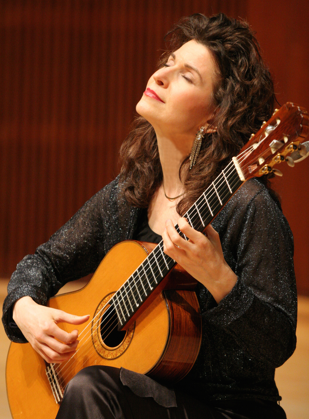
Classical guitarist Sharon Isbin has been a trailblazer for both female musicians, and the guitar’s place in the world of classical music. A winner of two Grammys, she is the director of guitar programs at the Juilliard School and at the Aspen Music Festival. Liz Robbins interviewed Ms. Isbin for The New York Times and wrote this fascinating article on the world’s greatest classical guitarist: Sharon Isbin: Seeking Out Serenity. The Jan 2, 2015 Sunday Routine featured photos, other aspects of her life, and a short video of Sharon playing guitar. The article was well-written and richly put together. This part took me by surprise:
I have done Transcendental Meditation since I was 17 years old. I do 20 minutes in the morning and 20 minutes in the afternoon. I really believe it has helped make me the person that I am. Because it is an extraordinary way to release stress and allow it to dissolve, so that you can focus on what you want to focus on, and have your energy towards very positive things.
Sharon Isbin: Cosmic Performer
An earlier insightful article written by Linda Egenes for Enlightenment, The Transcendental Meditation Magazine (Issue 7) sheds more light on this topic: An Interview with Sharon Isbin: The Monet of Classical Guitar. Knowing that Sharon had been practicing TM since she was 17 years old, Linda asked how it had benefited her life, especially performing in front of live audiences. Her amazing reply reveals an enlightened performer.
As a musician, TM enhances my mental stamina, memory, concentration, and ability to learn. It puts me in touch with my innermost creative core and enables its expression through music. Most importantly, it facilitates instant access to a state of “cosmic immersion,” that feeling of being in the flow, or in “the zone.”
When I perform onstage, I enter a state of being very similar to the one I enter daily when practicing TM. It’s a sense of communion with the energy of the universe, the audience, the composer, and the music—without ego or interference. It’s a feeling of unity between me and the listeners, a sense of “oneness” in which we are all experiencing the beauty of the music together. That sensation is one of the reasons live performances can be so powerful—everyone is focused and transported, and the experience is unique and in the moment, never to be replicated.
Guitar Passions: Sharon Isbin & Friends
Linda also asked Sharon questions about her musical influences and her work as a performer, teacher and collaborator, in particular about her new CD at the time, (August 30, 2011) Guitar Passions: Sharon Isbin & Friends. This promotional video shares music and interviews with Sharon and Steve Vai; in studio with Nancy Wilson (Heart) and Stanley Jordan; previews with Steve Morse, Paul Winter, Rosa Passos, Romero Lubambo, and Thiago de Mello.
Documentary Film: Sharon Isbin: Troubadour
Sharon Isbin is also featured in a new documentary film that came out towards the end of last year, and is still being aired on public television: Sharon Isbin: Troubadour. The one-hour documentary produced by Susan Dangel (2014), includes guests Martina Navratilova, Michelle Obama, Joan Baez, Steve Vai, Stanley Jordan, Garrison Keillor, David Hyde Pierce, Janis Ian, Lesley Gore, Mark O’Connor, Tan Dun, John Corigliano, Christopher Rouse, Joan Tower, Leonard Slatkin, Thiago de Mello, Paul Winter, and more, with Isbin’s performances showcased from international concert stages to the GRAMMYs and White House.
American Public Television presents the national broadcast on nearly 200 public television stations in the US Nov 2014 – March 2015. Video Artists International will release it on DVD/Blu-ray with added performances. See http://www.sharonisbintroubadour.com for screenings, broadcast, and release information.
Sharon Isbin on The Leonard Lopate Show
Today, Wed, January 7, 2015, WNYC’s Leonard Lopate interviewed Sharon Isbin about the program: A New Documentary On The Acclaimed Classical Guitarist, Sharon Isbin (16:33). Leonard asks Sharon about her Transcendental Meditation practice at the 10:50 mark. She answers at 11:08–12:20. Leonard mentions Julliard School inviting Sharon to head up a guitar department in their Music division and asks if Transcendental Meditation is part of the program. At the request of the David Lynch Foundation, Sharon did invite teachers to introduce the TM technique to Julliard faculty, staff, and students, offering to make it available for free. Listen to the interview here: http://www.wnyc.org/story/sharon-isbin.
Hafiz’s poem, translated by Daniel Ladinsky, of leaving something behind in the world to inspire others, is exemplified in the singer-songwriting musical skills of the late Jesse Winchester. Read Hafiz’s poem, Leave something in the marketplace, then listen and be moved when Jesse sings this love song, Sham-A-Ling-Dong-Ding.
Leave something in the marketplace
Sometimes it can happen to these cheeks when a poem visits my mind for the first time and begins to look around.
They can wonder why rain is falling on them, and causing my nose to run too.
O boy, what a mess love makes of me. But there is nothing else right now I would rather
be doing . . . than reaping something from a field in another dimension
and leaving it in the marketplace for any who might happen by.
Leave something in the marketplace for us before you leave this world.
Singer-songwriter Jesse Winchester (May 17, 1944 – April 11, 2014) left many beautiful songs for us in the marketplace (IMDb). Jesse appeared on Week 2 of Elvis Costello’s TV show, Spectacle. Elvis Costello, Ron Sexsmith, Sheryl Crow, and Neko Case joined Jesse Winchester to perform “Payday“. Jesse also a sang about the sweet shyness of young love. Listen to the poetic melodic musings of Sham-A-Ling-Dong-Dingas it wets your cheeks and lifts your mouth into a wistful smile.
I first met Jesse in Montreal at a friend’s place during the summer of ’67. He had been drafted to fight in the Vietnam War, which he did not support, and came to Canada instead. He stayed and made a name for himself as a fine singer-songwriter.
Robbie Robertson of The Band produced Jesse’s first album. But he couldn’t return to the states to tour until after all “draft dodgers” were pardoned by President Carter. I remember him singing The Brand New Tennesse Waltz and Yankee Lady, which ended up on his self-titled debut album. I also liked Say What (Talk Memphis), which became a hit. Mississippi You’re On My Mind (Learn to Love It) is another beautiful, vividly-written song.
Many top recording artists would go on to perform Jesse’s songs, and he became known as a first-rate songwriter. Even Bob Dylan was famously quoted as saying of Mr. Winchester: “You can’t talk about the best songwriters and not include him. If you know me well, you know I think Jesse IS the very best.” Lyle Lovett also spoke highly of him. In 2007, a special musical tribute was given to singer-songwriter Jesse Winchester, when he was honored with The ASCAP Foundation Life in Music Award.
You can’t talk about the best songwriters and not include him. If you know me well, you know I think Jesse IS the very best. — Bob Dylan
Decades later, I went to one of Jesse’s concerts on his tour through Iowa. He was surprised to find me here. It was sweet to see him again, now free to play in the states and accept the recognition for his great talent.
Remembering Jesse Winchester
Here is some news coverage of Jesse’s recent passing, reviewing his life and career, in The Commercial Appeal, USA Today, Rolling Stone, The New York Times, and C-Ville Weekly. From all his fans, and friends who knew him, I’m sure they would agree with Hafiz that Jesse Winchester did leave a lot of good music in the marketplace, and love in their hearts. You did well, Jesse. We thank you!
Jesse Winchester Radio Special: Listen to a special 2007 radio interview and music special with Jesse Winchester recorded by Donna Green-Townsend for WUFT-FM before Jesse’s scheduled performance at the Butterfly Festival in Gainesville, FL. In this program Jesse talked about his early years in Mississippi and Memphis, the inspiration for many of his songs and what he thinks about the music industry today. He also talks about the number of artists who have recorded many of his songs including The Everly Brothers, Waylon Jennings, Wynonna Judd, Bonnie Raitt, Emmylou Harris, Reba McEntire, and Elvis Costello to name a few. RIP Jesse.
Roots Music Canada uploaded a Jesse Winchester interview on April 13, 2010 with RMC’s editor-in-chief David Newland, from Hugh’s Room, Toronto, a venue Jesse launched about a decade ago, and one for which he has the highest regard.
September 2, 2014: Rolling Stone: Hear the Late Jesse Winchester’s Chilling Dissertation on Dying — Song Premiere. “Every Day I Get the Blues” appears on the final album by Winchester, who died April 11th. A Reasonable Amount of Trouble, is a gentle collection of playful songs about love, memory and gratitude that amounts to one of the most moving, triumphant albums of Winchester’s 45-year career.
Previous inductees include: Elvis Presley, Jerry Lee Lewis, Johnny Cash, Otis Redding, B.B. King, Isaac Hayes, Al Green, Howlin’ Wolf, Sam Phillips, Bobby ‘Blue’ Bland, Albert King, Rufus Thomas, Willie Mitchell, Carla Thomas, Booker T & The MGs, The Staple Singers, and the ‘Father of The Blues’ W.C. Handy.
Enjoy this great interview Christopher Caplan conducted with Omar Akram, published June 25, 2013 at 12:15 pm in RYOT Reports. I was pleasantly surprised to learn how Transcendental Meditation freed the creativity of this Grammy award-winning composer and recording artist, and the respect he has for David Lynch and the David Lynch Foundation.
Omar Akram, 2013 New Age Music Grammy Award Winner
I recently sat down with Omar Akram, the first Afghan American to win a Grammy award to learn a bit more about his creative process. He has been referred to as a cultural diplomat by many, and the musical equivalent of Khaled Hosseini, author of The Kite Runner, in that he is (gradually) mending cultural differences between war-torn nations through art. His recent article on The Huffington Post bespeaks of a well traveled life in which he has mingled with Cuban dictators and contributed to peace in the Middle East. What’s particularly interesting about Omar is the way he uses Transcendental Meditation in his creative process, as well as his support and admiration of the David Lynch Foundation.
Q: When and how did you first discover Transcendental Meditation?
I began using TM about 5 years ago. I was going through some creative blocks, so to speak, and a friend of mine suggested it. I’d known about it for years, but I had never taken the time to try it. I started to meditate slowly, and after doing it a few times, I got hooked.
Q: How has TM helped your creative process over the years?
I think it definitely brings you closer to the source of creativity. I feel this way almost every time. I remember David Lynch was talking about it. He said it was like “searching for the big fish,” or in other words, reaching deep down. I can reach deep down inside of myself and get to the big fish — that big creative idea. That’s what it’s all about, the big creative idea, and TM helps me find this.
Q: Have you tried other forms of meditation?
Yes, I’ve tried straight meditation, on and off for many years. But five years ago I became a lot more serious about it.
Q: How do you feel about David Lynch’s recent advocacy of TM?
I think what he’s doing is fantastic because he is really trying to get it out to school kids and to people that have never been exposed to it before. I think that once people try it, I mean really try it, they realize how beneficial it is.
Q: How do you think TM can help children and students?
One thing that I know is that kids sometimes have a hard time focusing on anything. Especially nowadays because they are being bombarded with so much media. I think it’s really helpful for kids once they give it a chance. They learn the value of meditation and focus. It will be hard in the beginning to understand what they’re doing, but with proper guidance they’ll learn. I think that not only will it help them become more creative, but they will improve in all aspects of schooling and self-esteem.
Q: Do you use TM when you are in the recording studio?
I try to do it a couple of times a day, once in the morning, and once in the evening. It has been really helpful both with creativity and dealing with the stress and deadlines of my upcoming album, “Daytime Dreamer.” It kind of sets the course of my whole day. Once I’m in the studio, I like to take a few minutes, but it’s hard to do it during the day, and that’s my routine. When I do it the morning it helps me focus for the whole day, and shift everything so I have a clearer sense of what I need to do. In the evening I can absorb everything that I’ve done, and refresh my mind all over again.
Q: What do you see for the future of TM and its continuing acceptance in the mainstream?
I think the more people are exposed to TM the more they’re going to realize the benefits of it. A lot of people are not aware of TM, and that’s what David is doing, he’s going around and introducing it to a lot of people that otherwise would never be exposed to it. The more people are exposed to it, the more practitioners there will be, and I think it’s going to be huge. Guys like David Lynch are pioneers in that. I have nothing but respect for him, especially with what he’s doing in schools. I think it’ll make a huge difference.
RYOT NOTE: Transcendental Meditation not only helps to reduce stress, it also helps with clearing the mind and allowing people to be more creative. The David Lynch Foundation provides millions of dollars of free services every year, implementing these scientifically proven stress-reducing modalities for at-risk populations and communities. See other related articles on David Lynch from RYOT posted at the bottom of this article, and click the gray box to learn more, donate and Become the News!
In an April 29, 2019 interview in Thrive Global, Omar was asked:
Which tips would you recommend to your colleagues in your industry to help them to thrive and not “burn out”?
What helps me is meditation. I would highly recommend it to my
colleagues. I’ve been doing Transcendental Meditation for many years and
it has had a big difference in my life.
The legendary Dave Stewart and the lovely, Jihae (pronounced “Jee-heh”) teamed up to create this beautiful song called Man To Man (Woman To Woman) for Transcendental Music (formerly the David Lynch Foundation Music, a charity record label).
The song is the official theme song for Secretary of State Hillary Clinton’s 2012 Hours Against Hate—Walk A Mile campaign (www.2012WalkAMile.com), a worldwide initiative to promote tolerance and health. The project is run on smartphones, using the SoFit, a free social gaming application that allows you to earn rewards while staying fit and making the world a better place. Look for WAM at the 2012 Olympics in London.
Here is an earlier version of this song Dave Stewart donated to David Lynch Foundation Music. It’s a great song! Thought it was a hit when I first heard it. I actually prefer this version, but they’re both great. Here are the liner notes.
This track from the prolific performer, producer and songwriter Dave Stewart evokes an awe-inspired contemplation of the human condition. “Man to Man” is a heart-strung symphony about passing the torch of consciousness, the soaring transactions of the heart. This is Muhammad Ali, this is Mother Teresa, this is a canoe trip, a love letter, a photograph with your lover by a geyser. “Man to Man” just might be the courage you need to finally get down on one knee and propose to your Higher Self.
Transcendental Music is committed to releasing unique, high-quality music digital downloads, LPs and meditation branded lifestyle products, to help raise vital funds and awareness to support The David Lynch Foundation.
We are committed to creating a new, trailblazing, charity based music label. Involved in this model will be the creation of strong brands and fresh marketing concepts for our artists, releases and cause. In turn, our image will be reflected by the genres and artists involved with the various releases on the label.
We’ll capture the imagination of the music buying public by leveraging the influence of long established artists, and high profile world leaders and activists. We’ll create market demand by offering exclusive products featuring one-of-a-kind packaging and forward-thinking distribution.
Your exact errors make a music that nobody hears. Your straying feet find the great dance, walking alone. And you live on a world where stumbling always leads home.
Year after year fits over your face— when there was youth, your talent was youth; later, you find your way by touch where moss redeems the stone;
and you discover where music begins before it makes any sound, far in the mountains where canyons go still as the always-falling, ever-new flakes of snow.
I later included the last stanza of this Stafford poem in response to The Poetry Society’s tweet of the last half of Wallace Stevens’s poem, The Snow Man, which they liked. The imagery is similar, and the GIF they used of snow falling also fits perfectly with both poems.
My poem, Poetry—The Art of the Voice, communicates that silent music from nature to poet to audience, where it “begins before it makes any sound” as Stafford wrote at the end of You and Art.
And my poem, Telling the Story of Silence by Ken Chawkin, allows that silence to tell its own story, the “Nothing that is not there and the nothing that is” as Stevens wrote in The Snow Man.
Later found and added: Henry Lyman interviewed William Stafford for NPR’s series, Poems to a Listener, later posted on YouTube. Stafford reads several poems, including You and Art.
I found this quote by James Joyce (Ulysses): “A man of genius makes no mistakes. His errors are volitional and are the portals of discovery.” It seems to reiterate this notion that mistakes lead to discovering something new and unexpected, i.e., thinking out of the box.
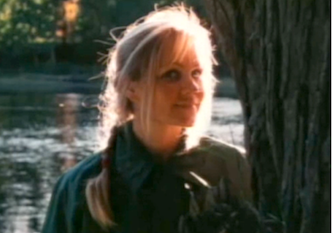
 In the film Eva Cassidy: Timeless Voice, Carrie Grant, a British vocal coach who worked with top recording artists in the UK and US, was amazed when she heard Eva’s voice. After listening to Over The Rainbow, she said, “I cannot imagine what Eva Cassidy was thinking of when she chose to make it sound the way it does. But it’s just genius!” She describes how she redefines the song in unexpected ways, “yet for some reason it just works.”
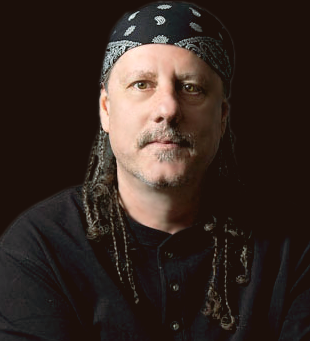 We might wonder how her singing was recorded in the first place when no company would sign her. One comment on Ain’t No Sunshine explained that the world owes Chris Biondo a debt of gratitude. Chris worked as a bassist, guitarist, keyboardist, recording engineer, and producer. He owned a studio in the 80s and 90s, and Eva would come in for session work. He recognized her ability, and said he “would just roll tape and stay out of her way.” At one point they were romantically involved. Chris “was the one who recognized her transcendent, ageless genius.”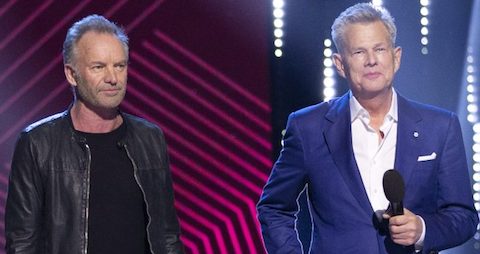
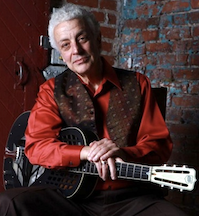 Another singer-songwriter who was overwhelmed by Eva Cassidy singing one of his songs was award-winning acoustic bluesman Doug MacLeod. During an interview he was asked: “Your songs have been recorded by many artists, so which are your favorite interpretations?” He said he had a couple of favorites, and that Eva Cassidy’s version of Nightbird was one of them. He told the story of how he first heard Eva sing when his wife put on her CD in the car. He said it moved him so much, “I pulled over to the side of the road and I was weeping.” When people ask him to play Nightbird, he tells them that “if they want to hear THE version, she is the one to listen to.” Read the whole interesting story in the highlighted comment Harvey Bobb posted to Eva Cassidy – Nightbird.
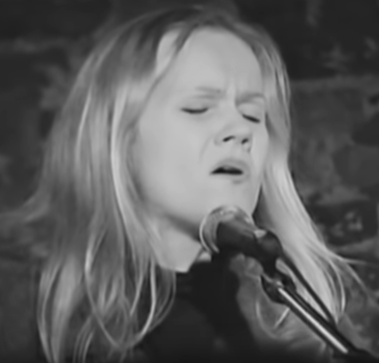 When Mark Hagon, a Top of the Pops BBC (TOTP2) producer at the time, agreed to play that homemade video of Eva Cassidy singing Over The Rainbow, people kept calling in for weeks wanting to know her name. The listening public created a demand for her music. It was a groundswell! Sales of her CDs went from a hundred thousand to over a million in the UK. “Radio broke it. Television exploded it.”
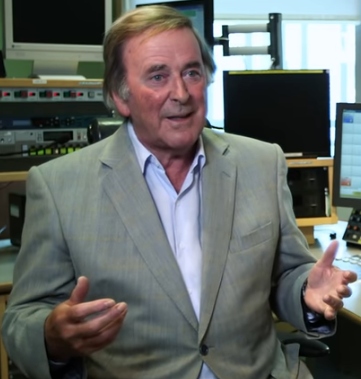 In Timeless Voice, Terry Wogan concluded, “You’d have to say about Eva Cassidy that her talent was pretty timeless. The voice has a quality of timelessness about it. Anytime you would hear it, whether it was thirty years ago, or thirty years from now, it’ll still be worth listening to, and still strike a responsive chord in most people’s hearts.”


 The Uncarved Blog