Posts Tagged ‘meditation’

Health India’s Editorial Team says Transcendental Meditation (TM) is taking the world by storm

January 14, 2014

Health India

Transcendental Meditation — a meditation technique that is taking the world by storm

Editorial Team January 14, 2014 at 5:24 pm

Meditation, a simple yet deep-rooted technique that helps you think better, control your emotions with finesse and even makes you a better person. First practiced in India, meditation is a method carried down through the ages. It was first mentioned in the Vedas and is well-known in India as a doorway to nirvana. But now the Americans have woken up to its benefits.

According to study carried out by Fred Travis, director of the centre for brain, consciousness, and cognition at Maharishi University of Management in the US, physiological measures and first-person descriptions of transcendental experiences and higher states have only been investigated during practice of the Transcendental Meditation (TM) technique.

After analysing descriptions of transcendental consciousness from 52 people practicing TM, Travis found that they experienced ‘a state where thinking, feeling, and individual intention were missing, but self-awareness remained’. A systematic analysis of their experiences revealed three themes – absence of time, space and body sense.

‘This research focuses on the larger purpose of meditation practices – to develop higher states of consciousness,’ explained Travis. With regular meditation, experiences of transcendental consciousness begin to co-exist with sleeping, dreaming and even while one is awake.

This state is called cosmic consciousness in the Vedic tradition, said the paper published in the journal Annals of the New York Academy of Sciences. Whereas people practicing TM describe themselves in relation to concrete cognitive and behavioural processes, those experiencing cosmic consciousness describe themselves in terms of a continuum of inner self-awareness that underlies their thoughts, feelings and actions, added the paper.

‘The practical benefit of higher states is that you become more anchored to your inner self, and, therefore, less likely to be overwhelmed by the vicissitudes of daily life,’ said Travis. TM is an effortless technique for automatic self-transcending, different from the other categories of meditation – focused attention or open monitoring.

It allows the mind to settle inward beyond thought to experience the source of thought – pure awareness or transcendental consciousness. This is the most silent and peaceful level of consciousness – one’s innermost self, said the study.

Wondering what it is? Here is all you need to know about the TM technique

Transcendental Meditation?

Also called the TM technique, Transcendental Meditation is a simple practice one does for 20 minutes twice in a day. All you need to do is sit comfortably and close your eyes. This meditation technique is not a religion, philosophy or lifestyle, it is simply a way to reach self-development.

This technique allows your mind to settle and gives you a chance to experience pure awareness, also known as transcendental consciousness. It allows you to experience the most silent and peaceful level of consciousness – your innermost self. It also allows your brain to attain deep rest helping you be more efficient and betters your cognitive functions.

Where did this technique originate?

About 50 years ago, Maharishi Mahesh Yogi introduced Transcendental Meditation to the world. Maharishi Mahesh Yogi is considered the representative of Vedic tradition in our day and age. This form of meditation helped in restoring knowledge and helps people experience a higher state of consciousness. The most important aspect of this technique is that it is still practiced with the same technique and principles as it was when the Vedas were first written, giving it maximum effectiveness.

How do I learn?

The TM technique has local teachers who will guide you through the process. It consists of seven steps after which one can practice the TM technique on their own.

Benefits of the TM technique

The TM technique is known to calm your mind, directly affecting the stress that your brain experiences on a daily basis. According to the experts, practicing the TM technique regularly helps in developing total brain control, thereby making you more equipped to deal with every day stress. It indirectly reduces the production on hormones that are commonly produced when one is stressed and thereby stops the damage that is normally produced.

Apart from all this, a calm mind and body is the best way to protect your body from cardiovascular stress. The TM technique also has great benefits for students, it helps improve their memory, IQ and helps them fight stress.

With inputs from: IANS

Reference: Transcendental Meditation

Related: Transcendental experiences during meditation practice – paper published in @AcademyAnnals.

Health India also posts: Practice Transcendental Meditation to lower BP, heart and mortality risks.

See more news coverage: Transcendental Meditation and lifestyle changes both stimulate genes that reduce blood pressure and extend lifespan.

Transcendental experiences during meditation practice – paper published in @AcademyAnnals

January 13, 2014

Overview of research on individuals experiencing higher states of consciousness published in Annals of the New York Academy of Sciences

Today, millions of Americans say they practice some form of yoga and/or meditation. It’s become a health fad. Yet the goal of these practices seems unknown or elusive to many practitioners — transcendence.

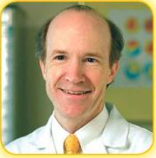
Dr. Travis, PhD, Director, Center for Brain, Consciousness, and Cognition, Maharishi University of Management

Fred Travis, PhD, is the Director of the Center for Brain, Consciousness, and Cognition at Maharishi University of Management

An article: Transcendental experiences during meditation practice, by Fred Travis, PhD, Director of the Center for Brain, Consciousness, and Cognition at Maharishi University of Management, provides an overview of research on individuals experiencing higher states of consciousness. It is published today in Annals of the New York Academy of Sciences: January 2014, Volume 1307, Advances in Meditation Research: Neuroscience and Clinical Applications, pages 1-8.

The paper is based on a presentation Dr. Travis was invited to give at “Advances in Meditation Research” (AMR), a meeting of the nation’s top meditation researchers, which took place a year ago  at the New York Academy of Sciences New York City.

In his paper Dr. Travis explains that different meditations have different effects, and that meditation can lead to nondual or transcendental experiences, a sense of self-awareness without content.

However, after a search of the scientific literature he reported that physiological measures and first-person descriptions of transcendental experiences and higher states have only been investigated during practice of the Transcendental Meditation® (TM) technique.

TM is an effortless technique for automatic self-transcending, different from the other categories of meditation — focused attention or open monitoring. It allows the mind to settle inward beyond thought to experience the source of thought — pure awareness or Transcendental Consciousness. This is the most silent and peaceful level of consciousness — one’s innermost Self.

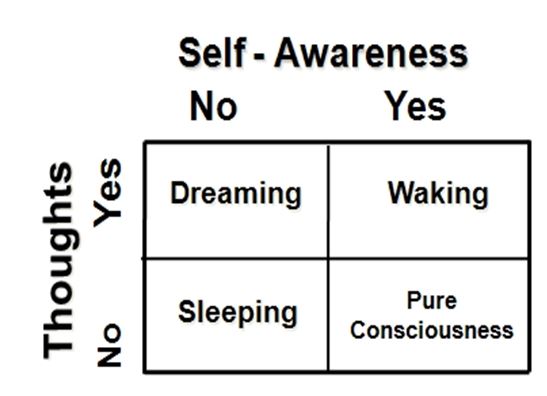
This figure, a 2 X 2 table, compares subjective and objective experiences during waking, sleeping, dreaming, and pure consciousness. As seen in this table, waking state contains a sense of self and mental content, thoughts and perceptions. In contrast, during pure consciousness, there is only Self-awareness, without any sense of time, space, and body awareness.

This figure, a 2 X 2 table, compares subjective and objective experiences during waking, sleeping, dreaming, and pure consciousness. As seen in this table, waking state contains a sense of self and mental content — thoughts and perceptions. In contrast, during pure consciousness (Transcendental Consciousness), there is only Self-awareness, without any sense of time, space, and body awareness.

Dr. Travis discusses a study of descriptions of Transcendental Consciousness from 52 subjects practicing the Transcendental Meditation technique and found that they experienced “a state where thinking, feeling, and individual intention were missing, but Self-awareness remained.” A systematic analysis of their experiences revealed three themes: absence of time, space, and body sense.

Specific physiological changes are associated with this subjective experience of Transcendental Consciousness. These include changes in breath rate, skin conductance, and EEG patterns.

Dr. Travis further explains that with regular meditation, experiences of Transcendental Consciousness begin to co-exist with sleeping, dreaming, and even while one is awake. This state is called Cosmic Consciousness, in the Vedic tradition. The paper presents first-person accounts followed by an overview of the physiological patterns associated with Cosmic Consciousness.

Whereas control subjects describe themselves in relation to concrete cognitive and behavioral processes, those experiencing Cosmic Consciousness describe themselves in terms of a continuum of inner self-awareness that underlies their thoughts, feelings, and actions.

In addition, the Cosmic Consciousness subjects showed the EEG patterns seen during Transcendental Consciousness along with the EEG patterns when they were asleep, and during waking tasks. This leads to higher scores on the Brain Integration Scale developed by Dr. Travis.

Dr. Travis suggests that such higher states of consciousness can be seen as normal developments beyond the classic stages described by Piaget. One simply needs a technique to experience transcendence and thereby facilitate the development of these states. The practical benefit of higher states, he says, is that you become more anchored to your inner Self, and therefore less likely to be overwhelmed by the vicissitudes of daily life.

“This research focuses on the larger purpose of meditation practices — to develop higher states of consciousness,” explained Dr. Travis. “This paper is the outgrowth of meetings at Esalen and the Institute for Noetic Sciences to chart the future of meditation research.”

Source: EurekAlert!

The Annals of the New York Academy of Sciences is the oldest continuously published scientific serial in the United States and among the most cited of multidisciplinary scientific serials worldwide. Established in 1823, the Annals is the premier publication of the Academy, offering volumes of review articles in special topical areas and proceedings of conferences sponsored by the Academy as well as other scientific organizations. You can find out more about them here: http://www.nyas.org/whatwedo/publications/annals.aspx.

Read the Foreword to Advances in Meditation Research: Neuroscience and Clinical Applications, by editor Sonia Sequeira.

Related: Health India’s Editorial Team says Transcendental Meditation (TM) is taking the world by storm

Medical News Today: Overview of research on individuals experiencing higher states of consciousness during transcendental meditation.

A PDF of the study is now available at ResearchGate.

Transcendental Meditation @TMmeditation article in @THR on @DAVID_LYNCH

January 11, 2014

Here is an excellent article about Transcendental Meditation published in the latest issue of The Hollywood Reporter, part of a Health series on how stress effects celebrities and what they do to relieve it. This one is on David Lynch. Click on the title to see the original article with photos.

How David Lynch and His Hollywood Friends Are Bringing Back Transcendental Meditation

One of film’s darkest directors, with help from Jerry Seinfeld and Hugh Jackman, is shining a light by bringing meditation to everyone from PTSD sufferers to inner-city kids.

January 10, 2014 | by Seth Abramovitch

Call it the ultimate comeback. Transcendental meditation — which involves speaking a silent mantra to oneself for 20 minutes, twice daily — is an ancient practice that is now attracting some of Hollywood’s biggest names, who insist that its stress-relief benefits are nothing short of miraculous: Among its most powerful practitioners are Jerry Seinfeld, Hugh Jackman and Russell Brand — who all have become supporters of David Lynch and his plans to bring meditation to people in dire need of stress relief. A directing genius whose dark dreamscapes are littered with severed ears and plastic-wrapped homecoming queens, Lynch, 67, has morphed into one of the world’s most enthusiastic if unlikely TM cheerleaders.

Lynch first encountered TM in 1974, as he searched for ways to combat mounting anger and depression relating to his epic struggle to get his first feature, the mind-bending Eraserhead, to the big screen. “I had a weakness inside,” says Lynch from his Hollywood Hills studio, a splash of sunlight illuminating his famous white pompadour. “That kind of thing, in this business, you’re a sitting duck. You could get slaughtered.” It was then that he decided to try his hand at TM, an ancient practice revived by the late Maharishi Mahesh Yogi, an expat from India who rocketed to stardom during the 1960s as The Beatles‘ spiritual adviser. Lynch feared TM might dull his artistic edge, but he says the opposite happened — it helped him to access untapped fonts of creativity. He even goes so far as to credit the practice with potentially having saved his life: “I was even thinking at the time, ‘If I didn’t have this meditation, I might have seen that a way out was suicide.’ ”

The Twin Peaks mastermind hasn’t missed a single day of meditation in the 40 years since. In 2005, that devotion led him to found The David Lynch Foundation for Consciousness-Based Education and World Peace, a nonprofit that brings TM to inner-city students, veterans with post-traumatic stress disorder and victims of domestic violence. The foundation has taught the fundamentals to more than 500,000 at-risk candidates, and Lynch says the effects have been astonishing: “Before too long, they’re saying, ‘Thank you very much. I got my life back again.’ ” In celebration of Lynch’s birthday on Jan. 20, DLF Live, the foundation’s live-performance arm, is mounting a benefit at the El Rey Theatre, where Ringo Starr is set to receive the Lifetime of Peace & Love Award. Ben Harper and Ben Folds are slated to perform. And on Feb. 27, Dixie Chicks will headline a night at the Beverly Wilshire Hotel honoring record producer (and longtime TM practitioner) Rick Rubin. For the admittedly shy director, Hollywood’s ongoing love affair with TM offers a highly effective method of spreading the gospel. “Life gets better and better and better,” says Lynch of his 40-year journey. “That’s the long and the short of it.”

This Pret-a-Reporter story first appeared in the Jan. 17 issue of The Hollywood Reporter magazine.

@MaharishiU’s Dr. Robert Schneider presents @TMmeditation research to @uiowa Hospitals and Clinics medical staff

January 9, 2014

Doctor touts health benefits of Transcendental Meditation
Written by Sara Agnew, Iowa City Press-Citizen
Jan. 7, 2014 8:55 PM

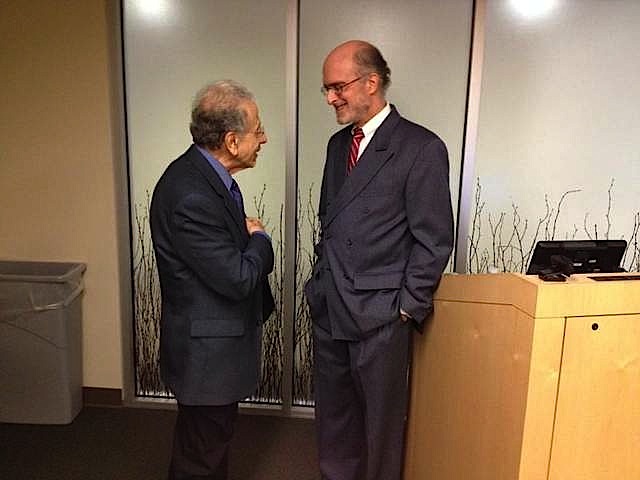
Dr. Francois Abboud, left, talks with Dr. Robert H. Schneider, who spoke with medical staff at University of Iowa Hospitals and Clinics Tuesday about how the practice of Transcendental Meditation can reduce the risk of heart disease and lower blood pressure. / Sara Agnew / Iowa City Press-Citizen

Dr. Francois Abboud, left, talks with Dr. Robert H. Schneider, who spoke with medical staff at University of Iowa Hospitals and Clinics Tuesday about how the practice of Transcendental Meditation can reduce the risk of heart disease and lower blood pressure. / Sara Agnew / Iowa City Press-Citizen

If you want to reduce your risk of cardiovascular disease and lower your blood pressure without taking medication, Dr. Robert H. Schneider has a suggestion: Transcendental Meditation.

Schneider says he has been involved in studies that show this type of meditation can reduce the rate of death from cardiovascular disease by 30 percent and from cancer by 40 percent.

The key is you need to know the “techniques” of Transcendental Meditation to experience the benefits — sitting with your eyes closed for 10 minutes won’t cut it.

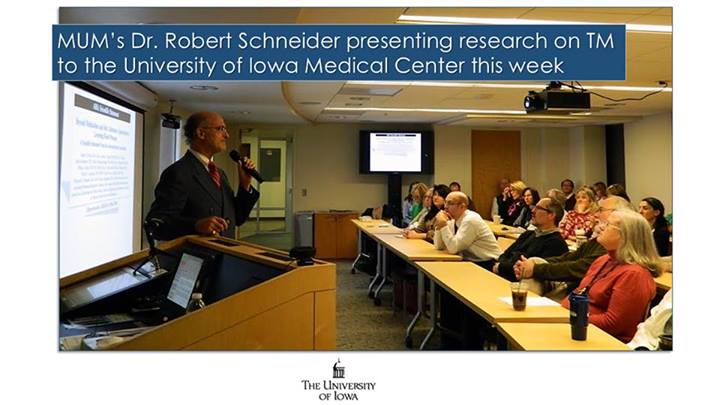
That’s the message Schneider shared with about 40 hospital personnel Tuesday during an hourlong presentation called MIND-BODY-HEART: Evidence for Meditation in Hypertension and Cardiovascular Disease at University of Iowa Hospitals and Clinics. It was his first visit with staff and doctors at UIHC.

“It was breakthrough,” he said of his visit.

Schneider is director of the Institute for Natural Medicine and Prevention and dean of medical programs at Maharishi University of Management in Fairfield. As a physician and scientist, Schneider has spent the past 30 years researching evidence-based natural approaches for treating heart disease, high blood pressure, stress and other cardiovascular factors. Over the past 20 years, he has received more than $20 million in research grants from the National Institutes of Health for his natural approaches to treating heart disease.

Much of his work centers on the benefits of Transcendental Meditation.

Schneider said TM is an effortless technique for “automatic self-transcending.” It allows your mind to settle inward beyond thought to experience the source of thought — pure awareness. This is the most silent and peaceful level of consciousness and what many who practice TM call your innermost self.

“It takes a technique that you learn in an eight-hour course,” Schneider said. “Once you have the technique, it happens quite easily.”

Schneider said humans have an “inborn ability” to practice this type of meditation.

“But we have lost this simple and natural technique,” he said.

Schneider said much of his research about the correlation between mind and body were affirmed last June when the American Heart Association announced that Transcendental Meditation is the only meditation practice that has shown to lower blood pressure. In addition, AHA reported lower blood pressure through TM is associated with substantially reduced rates of death, heart attack and stroke.

Ultimately, Schneider said the AHA recommended that TM be recommended for consideration as an alternative treatment for individuals with blood pressure greater than 120/80 mm Hg.

Schneider said he learned about TM 40 years ago as a college student.

“I was always interested in how we can tap into the body’s own cell repair and healing abilities,” he said. “I thought I’d try it and see if it works.”

He read the research and gave TM a try.

“I found I could study better and learn better and had more energy,” Schneider said.

Later, when he was a fellow in hypertension at the University of Michigan Medical School, Schneider took an interest in the connection between the brain and heart.

“I thought maybe we could use the brain to lower blood pressure,” he said.

Schneider believes his years of research on managing the mind-body connection is paying off as organizations such as the AHA begin recognizing the benefits of TM.

During his presentation at UIHC, Schneider highlighted a 2012 study that showed blacks with heart disease who practiced TM regularly were 48 percent less likely to have a heart attack, stroke or die from all causes compared with blacks who attended a health education class over more than five years.

Those practicing TM also “lowered their blood pressure and reported less stress and anger,” Schneider said.

Schneider is interested in researching how TM can be used to help military veterans recover from post-traumatic stress disorder.

Dr. Francois Abboud, the namesake of UI’s Cardiovascular Research Center, asked, “How will I know if I am meditating correctly?”

Linda Rainforth, a certified TM teacher from Iowa City, said people who are practicing TM reach a “deep, deep level of silence and stillness” in which they experience an “expansion of the mind.”

One listener wondered whether men or women followed through most consistently in practicing TM during research studies.

“Men and women both get results,” Schneider said. “But in some of our studies, there was slightly more compliance with the women.”

If you go

Learn more about Transcendental Meditation by attending one of the following presentations by certified teachers in TM. All presentations will be at the Iowa City Public Library, meeting room E.
• 7:30 to 8:30 p.m. Thursday.
• 3 to 5 p.m. Saturday.
• 6:30 p.m. Jan. 16.
TM sessions also can be by appointment by calling Iowa City Transcendental Meditation Program at 936-1986, 641-472-0827 or 641-919-7282. For more information, go to www.tm.org.

MUM's Dr. Robert Schneider presenting research at UIMC

Dr. Robert Schneider was also interviewed by Steve Smith on KMCD’s MUM Spotlight Show about the American Heart Association’s recommendation of Transcendental Meditation to lower high blood pressure. He also reported on his visit to UI’s Medical Center. Steve asked some great questions. It was a lively discussion. Listen here: http://fairfieldiowaradio.com/audio/spotlight%201-9.mp3. (20:45)

See Dr. Schneider on New Zealand Television’s Breakfast ONE News describing the value of TM for heart health. http://tvnz.co.nz/breakfast-news/meditating-your-heart-video-5602306

David Lynch on Esquire Network, How I Rock It, talking about Transcendental Meditation

December 21, 2013

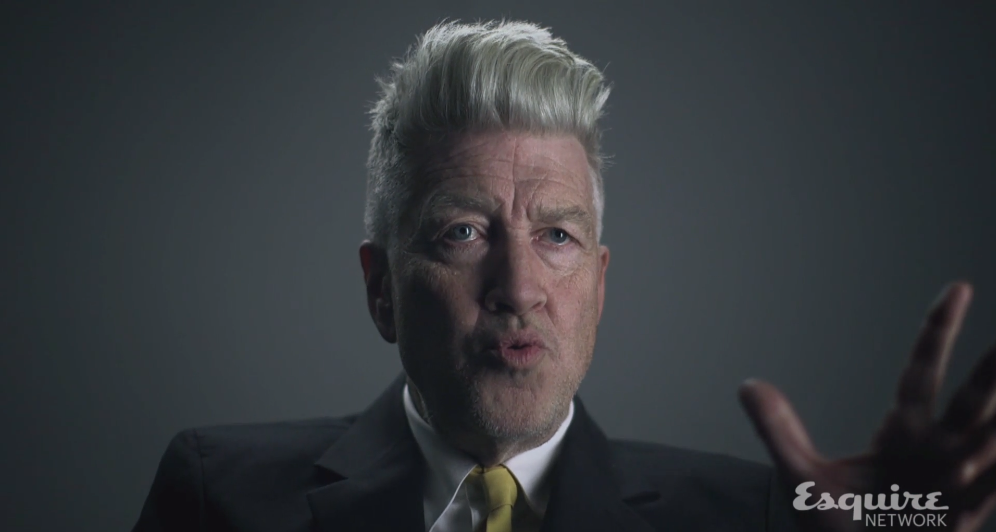
How I Rock It: Filmmaker David Lynch & Transcendental Meditation

Filmmaker David Lynch describes how he develops and gains personal happiness and inner peace in his style and work through the art of Transcendental Meditation.

David describes his first blissful experience of transcending

David describes his first blissful experience of transcending

I tried to embed the video but it didn’t work in this space. Click here to see this short (2:20) impressive video on the Esquire TV Network website: It’s really good, as David would say.

In addition to the interview, some of the footage is taken from a pre-screening reception for the film, Meditation Creativity Peace, about David’s 16-Country tour, shown in the Billy Wilder Theater. Watch the hilarious, but informative, post-screening discussion with David Lynch, Russell Brand, and Bob Roth.

Read this lucid description by of his experiences with TM: Daily Reset – A Look Into Transcendental Meditation. And see The GQ Guide to Transcendental Meditation: The Totally Stressed-Out Man’s Guide to Meditation.

Related: Style.com: David Lynch and Italo Zucchelli on their creativity and Transcendental Meditation.

Maharishi University’s Fred Travis talks about the brain and meditation on What Women Must Know

November 21, 2013
Sherrill Sellman

Sherrill Sellman

Sherrill Sellman, host of What Women Must Know, interviewed Fred Travis of Maharishi University of Management on the Progressive Radio Network, PRN.fm, “The #1 Internet Radio Station for Progressive Minds,” on November 21, 2013. Listen to this interesting interview as they discuss different stages of the brain’s development and how it is affected by PTSD, ADHD, and different meditations. Today’s show is titled Your Brain, Rejuvenation and Meditation with Dr. Fred Travis.

Dr. Fred Travis

Dr. Fred Travis

Dr. Fred Travis is Professor of Maharishi Vedic Science, Chair of the Department of Maharishi Vedic Science, Dean of the Graduate School, and Director of the Center for Brain, Consciousness, and Cognition, at Maharishi University of Management. He earned an M.S. and Ph.D. in Psychology from Maharishi University of Management, and a B.S. in Design and Environmental Analysis from Cornell University. He is also the author of Your Brain is a River, Not a Rock. Visit his website for video presentations, publications and more: drfredtravis.com.

Listen to a Podcast of the show or search for it in the Archives.

Renowned (TM) meditation teacher Bob Roth featured on The Third Metric and HuffPost Live

October 14, 2013

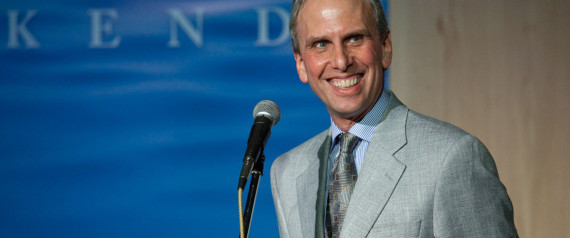
Huffington Post Senior Writer profiled Bob Roth, Executive Director of the David Lynch Foundation, an exemplary representative for The Third Metric: Redefining Success Beyond Money and Power. huff.to/1albfF9 (10/14/2013)

Meditation Teacher To The Stars: His clients include Oprah, Russell Brand, Martin Scorcese and Dr. Oz, but renowned meditation teacher Bob Roth also serves low-income and under-served communities by sharing his passion: Transcendental Meditation.

Bob Roth was also interviewed on @HuffPostLive: Stress Is The New Black Plague: Meditation guru Bob Roth ‏@meditationbob joins host Nancy Redd ‏@nancyredd to explain the benefits of meditation: Bob Roth Talks Transcendental Meditation @TMmeditation. Watch this lively interview http://huff.lv/GZQpn9 (12:46).

Bob Roth: Bringing Calm To The Center Of Life's Storm

Bob Roth: Bringing Calm To The Center Of Life’s Storm

If there was a perfect year in which to discover Transcendental Meditation, it might just have been 1968. That was the year that Bob Roth was a freshman at UC Berkeley — a campus considered Ground Zero for the anti-war movement and the cultural changes sweeping through the country at the time. He remembers living surrounded by helicopters spewing tear gas over student war protesters and Army tanks parked outside his front door. Demonstrations. Riots. Chaos.

And against this backdrop, Roth did what many college students do: He took a part-time job. He sold scoops of ice cream at Swenson’s ice cream parlor, never expecting that amid the rush of pending social changes engulfing him, it would be at the ice cream shop where he would meet a guy who would ultimately alter the course of his life forever.

The college crew at Swenson’s was the usual motley collection of hippies, straights and everything in between, recalls Roth. But one guy stood out: Peter Stevens. “He was like a quiet reflection pool amid the chaos,” recalls Roth, “and I was drawn to him.”

“Peter was centered, energetic, super-smart, kind to all, easy-going, never agitated, with an ineffable calm about him,” Roth told The Huffington Post. He learned that Peter “meditated,” something that Roth said was a bit of a disconnect for him. “Meditation was not in my vocabulary.” But he was intrigued and curious, and went with Stevens to a class in Transcendental Meditation, a meditative practice derived from the ancient Vedic tradition in India. After just one class, Roth was hooked.

Today, Roth is the executive director of the David Lynch Foundation, where he has helped bring Transcendental Meditation programs to more than 300,000 at-risk kids in 35 countries, as well as veterans suffering from post-traumatic stress disorder, and women and girls who are survivors of domestic violence. He’s also the national director of the Center for Leadership Performance, which introduces the TM program to business, industry and government organizations — and even some United Nations groups.

Today, Roth’s student roster includes a lot of very recognizable names: Oprah, Russell Simmons, Russell Brand, Martin Scorsese, Mehmet Oz, Hugh Jackman and dozens of others. He’d be embarrassed to be called “meditation teacher to the stars,” but such a description wouldn’t be far off. For the past 40 years, he has meditated twice a day no matter where he is, in places as discombobulating as an airplane when need be.

He explains Transcendental Meditation with the following analogy: The surface of the ocean is waves and white caps. But deeper down, the ocean is still. How TM differs from other meditations, he says, is that it doesn’t attempt to still the waves, but rather allow access to the stillness. By practicing it twice a day for 20 minutes, he said, studies have shown that people sleep better, reduce their stress, and lower their blood pressure. In children, the practice can reduce ADHD symptoms and symptoms of other learning disorders.

Not all Roth’s clients are rich and famous. One of the key focuses of the David Lynch Foundation is to target those who aren’t and improve their lives through TM. There’s a story that Roth likes to tell about the DLF’s Quiet Time program — where thousands of at-risk children are taught TM in school. It involves a little girl he called Jessica (not her real name) who lives in a crime-infested neighborhood of San Francisco. Jessica showed up one day at school wearing a white dress splattered with what her teacher, at first glance, thought was red paint. It was blood — blood from Jessica’s uncle who had been shot that morning in a random drive-by while waiting with her at the bus stop.

Instead of running home, Jessica ran to school so that she could meditate, she told her teachers. The DLF Quiet Time program had been in her school for about a year at the time and for her, it made school a safe place whereas her home often couldn’t be. “For me,” said Roth, “that says it all.”

As part of the Quiet Time Program, the foundation supplies teachers for each child to have one-on-one meditation instruction and follow-up. “In a school with 1,000 students,” he said, “we bring in 20 teachers.”

The results have been gratifying, said Roth, who believes that results must be quantifiable to matter. “Change needs to show up in grades, reduced number of suspensions and dropout rates,” he said. And the Quiet Time program has done all that. The San Francisco Unified School District reports an 86 percent reduction in suspensions over two years in schools where the program has been introduced; a 65 percent decrease in violent conflict at the John O’Connell High School; and the Journal of Psychiatry shows reduced ADHD symptoms and symptoms of other learning disorders among students who practice TM.

Carlos Garcia, retired superintendent of the San Francisco Unified School District, heralded the program as one which is “transforming lives.” He said, “It is transforming schools and neighborhoods, and it will transform our society.”

All of which is music to Roth’s ears. TM is a life-changer for individuals, he said, but also a game changer in the broader sense. It may start with an individual’s desire to sleep better or reduce stress, but results are similar to what happens when you pull on one leg of the table, said Roth. “The whole table moves.” And what moves in this case are blood pressure numbers, heart attack risk factors, and the overall ability to make better decisions with a more focused mind. “You are thinking more clearly, are able to make decisions more ethically, perform more creatively.” It’s like when you water a plant because some leaves are wilting, he said, but the whole plant benefits from the water. And it spills over into those around you in a chain reaction.

Companies interested in innovation are drawn to TM because of the positive impact it has on their work force. It’s why Oprah had Roth bring his program to her staff of 400. “It’s not just about learning to relax,” said Roth. “TM wakes up the brain and the executive functions. It resets the brain to perform in a less ‘flight or fight’ manner.”

And yes, it reduces stress. Whether he is teaching a homeless guy — the DLF has a program that works with New York City homeless — or a billionaire, “they both suffer from stress,” said Roth.

But as one celebrity who shall remain unnamed quipped when Roth asked her why she wanted to learn to meditate, “I want to maintain a permanent connection with the intelligence of the universe. I also can’t sleep.”

TM training allows people to access an ability they already are hard wired for: to take a profound rest at will.

Roth says the tipping point has been reached in regard to the public’s understanding of the value of meditation. As he wrote on Maria Shriver’s blog, “It feels like something foundational can be done to help transform lives through meditation, not only among those most at-risk to suffer traumas in life, but also the teen in the private school who battles the very real demons of substance abuse and unspoken thoughts of suicide; the parent who is struggling to survive an ugly divorce and still keep the family intact; or just the person — man, woman, boy, girl — who is navigating life’s daily vicissitudes and can’t seem to catch a breath, turn off the noise, get a good night’s sleep.”

Ann Brenoff can be reached at: ann.brenoff@huffingtonpost.com.

Here is a lovely reproduction of the Huffington Post article with more pictures created by the David Lynch Foundation: Meditation Man.

See The GQ Guide to Transcendental Meditation: The Totally Stressed-Out Man’s Guide to Meditation, an excellent article written by Josh Dean who learned TM from Bob Roth and interviewed him.

Bob Roth is also featured in the April 2, 2014 issue of MANHATTAN Magazine: Transcendental Inspiration.

Bob Roth (S)(C)On July 16, 2015, Harper Spero, a New York City-based lifestyle and career coach, published this wonderful interview on her blog: (So)(Co) Sit Down with Bob Roth. While working at Agent of Change, she produced the Women.Meditation.Stress. Luncheon and Panel Discussion for the David Lynch Foundation (DLF), which is how she met Bob, its executive director. It contains a nice large-sized photo of Bob at the bottom of the blog post.

How TM helped calm and center a young woman’s busy mind—inspiring article in new Irish magazine

October 11, 2013

A new magazine, Upside News, came out on Dublin’s north side in Ireland. Their website is still under construction, but here is a description on their Facebook page. They asked someone for an article on Transcendental Meditation.

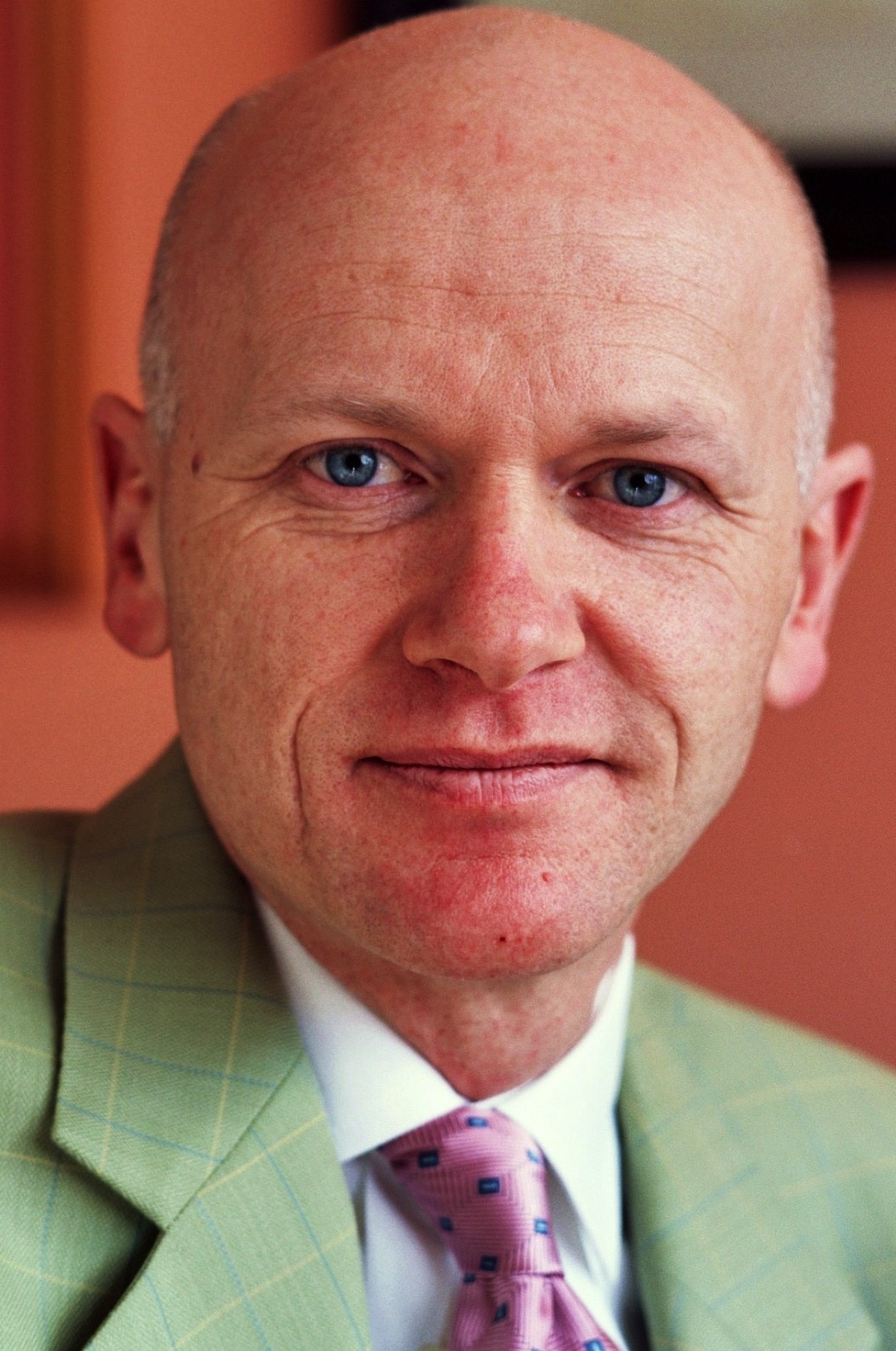
John Burns

John Burns

Since Christine Ryan was the contact person, John Burns, Communications Director for TM in Ireland, persuaded her to write about her experience of the technique. John said he sent the editor an article he had written along with Christine’s TM experience and told him he thought what she had written was so good that he should use it instead if space was an issue. The editor got back to John and said that he would print Christine’s piece.

Good decision; it’s a fantastic personal account! When I asked John to tell me more about the author, he said, “Christine is training to be a school teacher. She is just someone who really appreciates her TM.” I asked John to send a picture of Christine, a PDF of the magazine article, and a link when it’s posted online, which I’ll add when they’re available. Here’s what she wrote:

“As a twenty-four year old trying to find your place in the world, weaving your way around the many forks in the road that separate all of the possible paths down which to venture, it can be hard to tease out your own true voice in an increasingly noisy world.

I am an introverted, intellectual, always-something-to-think-about child of the technological generation. It seems easy to assume I would have trouble turning my awareness away from words on a page, the lure of the internet, my mobile phone, the radio buzzing and the drilling noise vibrating from the neighbour’s house a few doors down where a posse of hard-working, bellowing construction workers are knocking down two walls in her house only to put six back up. But TM is natural and it is effortless, when you learn how to do it.

What TM gives me is stillness and silence. For twenty minutes twice a day, I go to a place of silence that already exists within me. It happens effortlessly and spontaneously. As a helpless analyser of all things, this initially seemed impossible for me to swallow but I very quickly discovered its truth. The noise of the world disappears and I arrive at a place of beautiful quiet.

TM is like diving into a pool of light that washes away dirt and darkness, and emerging fresh and invigorated. During my TM practice, I feel my body settle into a deep state of rest and an overwhelming sense of calm and stillness pervades it. I feel free from the shackles of stress and exhaustion. I experience a sense of unity and peace. Without any resolve to do so, this sense of wholeness and calm lingers on when my meditation has ended; the effects of my TM practice spontaneously ripple forward into my activity.

Almost seven months into my second year of practising TM, I feel greater clarity in my thinking; as a busy thinker this has been such a profound change that TM has brought me. My relationships are infused with a sense of ease now. My thinking is sharper, ideas flow more easily, and my energy is lasting and productive. I feel less uncertain about decisions to be made and a greater vibrancy in my creative endeavours.

As I continue to meditate, the effects grow stronger. My wonderful TM teacher, Ann, put it simply: “It’s like going to the gym,” she said. “You feel great for the first few weeks that you’re going, but if you stop going, you’ll lose the benefits bit by bit.” I may not get to the gym (or exercise for that matter!) every day, but sitting in a chair in my sweats, with messy un-brushed hair, allowing my mind to simply settle down to a place of profound stillness and emerging twenty minutes later energised and renewed—now that I can do!

I was never one to easily identify with, or apply, the principle of “go with the flow,” but as I continue to practise TM I edge all the more closer to fully understanding exactly what that means. TM has resigned stress and anxiety to a state out of tune with the natural rhythm and flow of my body and mind. It puts things into perspective. To connect with that constant centre of calm and stillness that lies within me, regardless of what is happening in my life, and to find that stillness lingering during activity has been one of the greatest joys of learning TM.

Visionary filmmaker, veteran meditator, and prolific speaker and activist for TM, David Lynch, said it best when he said: “TM is for human beings.” The truth of his words find significance in the shared experiences of the benefits of TM by meditators around the globe, young and old, from all religions and all walks of life, from those behind bars to those raised high on a platform called “celebrity.”

In the monthly group meditation meetings I meet meditators of all ages: veterans to novices, students to retirees and everything in between. In a world that breeds so much disconnection and discord, it is a joy to practice a simple technique that allows for an awareness of the integral similarity between us all.

TM recharges me mentally and physically. My morning and evening TM practice have become the pillars onto which I anchor my day. I can hear my own inner voice more clearly again and those forks in the road don’t loom quite so ominously now.”

The Beatles “Dear Prudence”: A Portrait of Prudence Farrow Bruns, Maharishi and TM

September 6, 2013

Dear Prudence: A Portrait of Prudence Farrow Bruns

Enjoy this video portrait of Prudence Farrow Bruns, the inspiration for the Beatles song “Dear Prudence”. Prudence discusses her personal journey, meditating with the Beatles in India, the transformation her generation tried to bring about in the world, and the change that can only come from within through Transcendental Meditation.

Directed, shot and edited by Kryshan Randel, music by Mike Pellarin, produced by David Shaw for iTranscend TM, a concept created by Ashley Cooper. For more information on Transcendental Meditation, visit these websites: http://maharishi.ca (Canada) and http://www.tm.org (USA).

Visit the newly launched Dear Prudence Foundation and click on About Prudence to read about her journey and why she set up a foundation: http://dearprudencefoundation.org.

See these other interviews with Prudence: 1) Amitava Sanyal, Allahabad, for BBC News India: Prudence Farrow — subject of the Beatles song Dear Prudence — visits India’s Kumbh Mela, and two videos: 2) Ted Henry interviews “Dear Prudence” Farrow Bruns about her life with TM and Maharishi, and 3) MicCameraAction: PRUDENCE FARROW BRUNS.

Other iTranscend TM Portraits

Another video portrait made by Canadian filmmaker Kryshan Randel is about Paralympian Daniel Westley. Westley had represented Canada in the 1988 Paralympic Games in Seoul, South Korea. As Paralympic Games grew, Daniel went on to participate in both the summer and winter games in a wide range of sports that included everything from wheelchair racing to skiing. Read this inspiring story: Meditation key to finding balance for Paralympian Daniel Westley — special to The Vancouver Sun, which contains the video, Physical Meditation: A Portrait Of Daniel Westley.

Both videos appear on the iTranscend TM YouTube channel series along with other heartfelt testimonials from new meditators, meditators dicussing meditation, and portraits of veteran meditators — people from all walks of life telling their stories — a physiotherapist, bakery story owner, musician, students, sharing how they are realizing their potential through the profound life-changing benefits of their Transcendental Meditation practice. And this video is an edited composite of some celebrities talking about the value of meditation, TM, in their lives: iTranscend Hollywood.

See: Who was Dear Prudence the Beatles sang to in India? What happened to her? Here is her story.

Prudence’s memoir is now out: Dear Prudence: The Story Behind the Song.

Read this excellent article in the Pensacola News Journal: Woman behind Beatles ‘Dear Prudence’ reads at Open Books.

David Lynch speaks with Alan Colmes about his 16-country tour film Meditation Creativity Peace

August 8, 2013

banner-colmesLegendary Filmmaker David Lynch

Award-winning filmmaker David Lynch speaks with Alan Colmes about his 16-country tour, teaching millions of struggling people how to achieve peace through Transcendental Meditation. Click on the title to go to the website and listen to this dynamic and inspiring interview: [Video] Alan’s FASCINATING interview with legendary filmmaker David Lynch! and here: David Lynch On The Value Of Transcendental Meditation.

Watch the trailer for a new documentary film on David Lynch titled “Meditation Creativity Peace” | Russell Brand and David Lynch at LA Premiere of ‘Meditation, Creativity, Peace’ Documentary | Russell Brand and David Lynch at LA Premiere of ‘Meditation, Creativity, Peace’ Documentary | Enlightenment, The TM Magazine: Meditation Creativity Peace: How the David Lynch Foundation Brings Change from Within.

Visit the new website, Meditation Creativity Peace, for a list of upcoming and previous screenings: http://meditationcreativitypeace.com.

You may also enjoy this earlier article David Lynch wrote for Jane Magazine’s celeb issue: Celeb Spiritual Report: One significant day in my life by David Lynch for Jane Magazine (May 2004).