Posts Tagged ‘meditation’

Enlightenment Is Sexy, a memoir by Valerie Gangas, is out today, and it’s not just for women!

July 14, 2015

EIS Book CoverA first book from Valerie Gangas, ENLIGHTENMENT IS SEXY: Every Woman’s Guide To A Magical Life, is out today, and it’s not just for women!

Valerie is a great writer. She’s colorful, direct, and pulls no punches. Her effervescent personality shines through the amazing stories she shares with her readers, awakening them to their own inherent greatness.

The book is divided into short easy-to-read chapters packed with practical insightful wisdom. It’s also an inspirational testimony to the transformational power of TM, and I am enjoying reading every word of it!

Valerie sent us this intro to her story.

Awakening to Me

In 2011, I woke up and realized everything I thought I knew was wrong.

~ Valerie Gangas

For as long as I can remember, I have been running. Waking up in the morning and running to the gym. Running to the hospital to support my mother, who battled cancer for 13 years. Running to my job, managing an extremely busy Chicago restaurant/bar. Running from boyfriend to boyfriend. Running from one social event to another. Running to deal with the pressures modern women face to be perfect, to get the job done right, to be a caretaker, to look good—let’s face it: to be Wonder Woman.

Then one day, I was forced to stop running.

In late 2010, the restaurant I’d managed for 15 years was sold . . . but it turned out to be a weird sort of blessing, in that I got to spend day and night with my beautiful mother who, by Thanksgiving that year only had a couple of months left on the planet.

All of this time, I had been on a steady diet of double espressos, bottles of Cabernet and late nights eating steaks, cooked rare. (Did I mention I don’t eat meat?)

I was losing my mind as I watched her slowly slip away. I’d had a bad case of insomnia for years, my depression was deepening, and the distractions I’d held up like masks were no longer working well . . . make that, at all.

My mom passed away on January 25, 2011. And my world went black.

After she died, I felt like I’d died right along with her. I was out of a job, suicidal and completely unhealthy. My “diet”—mainly fueled by booze and caffeine—had caught up with me. I was the thinnest I’d been since high school, and my nerves were on fire. And it was like Groundhog’s Day—every night was the same scene. Go to bed, wake up at 3 a.m., stare at the ceiling, my thoughts reeling, feeling like complete crap, until I had to get up a couple hours later. Then my “day cycle” would start again. Down some caffeine, make myself workout (I had to fit in my cocktail dresses, duh!) and then never stop throughout the workday, ‘til I collapsed later that night.

Reflecting back, thoughts of suicide regularly arose in my mind. I didn’t feel like I could go on without my mom, who’d been my best friend. Clearly, I was a broken woman. Yes, I had been seeing a therapist and was trying to get my head above water. But nothing seemed to be working. My suicidal thoughts were getting stronger and stronger. I had gone so far as to ask my aunt and uncle to take my dog (I couldn’t bear messing up her little life), and I didn’t get a new car when my lease was up . . . because people who are going to kill themselves don’t need a car. I also wrote out my will.

Yep, I was gearing up to end my life.

One particularly horrible day I was on my knees in the shower, when I just collapsed and screamed out, “God, Mom, anyone, please help me kill myself or please save me!” In that moment, I completely surrendered. I was nothing. I was no one. And I completely gave myself and my fate over to God.

A week later, a friend suggested I learn Transcendental Meditation (TM). My only hope, at the time, was that I would be able to get some sleep. I hadn’t read anything about meditation, hadn’t thought about it or even wondered about it. But I was in such a dark place, one morning I made the call.

Within days, I borrowed that same friend’s car and drove to a Transcendental Meditation center in Chicago. The home which doubled as a TM center had a feeling of calm I couldn’t quite put my finger on—the air seemed lighter, somehow, and the view was all lake. Even upon entering the center’s lobby, I felt a bit calmer. Huh, I thought, these people who work here are super different. They were so chilled and completely filled with love . . . it was immediately clear to me they were there to help me. My next thought was, I’m here, so I might as well learn how to do this.

I sat down with my teacher and after a short, but beautiful ceremony, I was given my “mantra”—a sound she said my awareness would naturally follow, as it subsided into the depths of silence in my mind. When we both closed our eyes, I easily and effortlessly said the mantra to myself less than five times . . . and just like that, I was gone. I dove into a part of my body and mind I never knew existed—boundless, limitless and totally awesome. Yes-sir, something major had just happened . . . but soon I was discovering I’d only glimpsed the tip of the iceberg.

Driving home down Lake Shore Drive, I immediately began noticing how the world seemed so much different to me than it had on my way to the center. The colors all around me were more vivid, the sounds of the birds felt like sweet music to my ears, I seemed to be connected to all of the trees I saw . . . and above all, I felt happy. But, my mind called out to me, Is this really happening?! Do I really feel happy? How? Why? What the hell?

Fortunately, the essence of that experience stuck and stayed, and I came to find it was in fact “real”—that in twenty minutes, my whole life had changed. I woke up and realized everything I thought I knew was wrong. My life was no longer defined by outer circumstances. I was having a direct experience of what I have come to know as my true Self.

I cannot explain what followed . . . you know, the why of it. Within weeks of learning to meditate, I was standing in front of Oprah Winfrey, explaining how her newfound TM practice was going to make her limitless and boundless. Now, one would think standing in front of one of the most powerful women in the world would cause some serious butterflies in the stomach. But this wasn’t my experience. In that moment, when I stood at the front of the room and described my journey to her, I could only “see” her. The fame and the power didn’t exist. I was only concerned with helping the beautiful human in front of me the only way I knew how . . . with honesty, passion and a dash of humor.

I walked out of Harpo Studios that Friday morning and knew I was about to head down a very different life path. My soul and heart were breaking open and I was watching the right words leave my lips before my mind could even think them. I felt the power of the whole universe in my little body. That day, I decided to give everything I had to try to bring peace and goodness to the world. To do my part.

It has actually taken me the past few years to really understand this new way of living: that is, from the inside out. I felt compelled to write in my journal every night. I mean, the realizations I was having were just too profound not to write them down. I turned what I wrote about into a manuscript . . . and today I am proud to say I have just published my first book, Enlightenment Is Sexy: Every Woman’s Guide To A Magical Life. I’ve also started a brand I love and have continued to speak about consciousness, happiness, freedom, and above all, Transcendental Meditation.

Learning to meditate saved my life . . . but it also gave me more than I could have ever dreamt of: awakening to the real me.

###

George Foster of Foster Covers, with help from wife Mary, designed the colorful cover! Order the book on Amazon and read the nice comments.

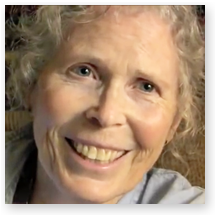
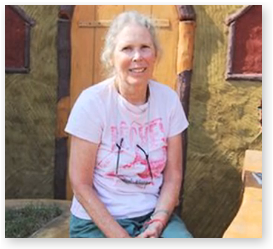
Here’s a photo of the three of them during Valerie’s book-signing at Health & Wholeness on a 1st Friday’s Art Walk in Fairfield, Iowa.

Related: Read an interview with Valerie Gangas at TM Home, and this poem I wrote for her: Scheherazade Incarnate. TM Home also posted this today: Valerie Gangas reveals her top 5 reasons to learn Transcendental Meditation. And Val posted and sent this out. Transcendental Meditation for Women also posted Awakening to Me.

Valerie Gangas Shows Why Enlightenment Is Sexy on Writers’ Voices.

Spirit Matters Talk Interview with Valerie

Big Waves Strong Boat: Mary Waldon interviews Valerie Gangas, author of the best-selling book: Enlightenment Is Sexy™: Every Woman’s Guide to a Magical Life.

Listen to this great interview with Nick Digilio and Valerie Gangas on WGN Radio 720, Chicago, January 16, 2020. On Slowing down and finding peace in anxious times with Valerie Gangas.
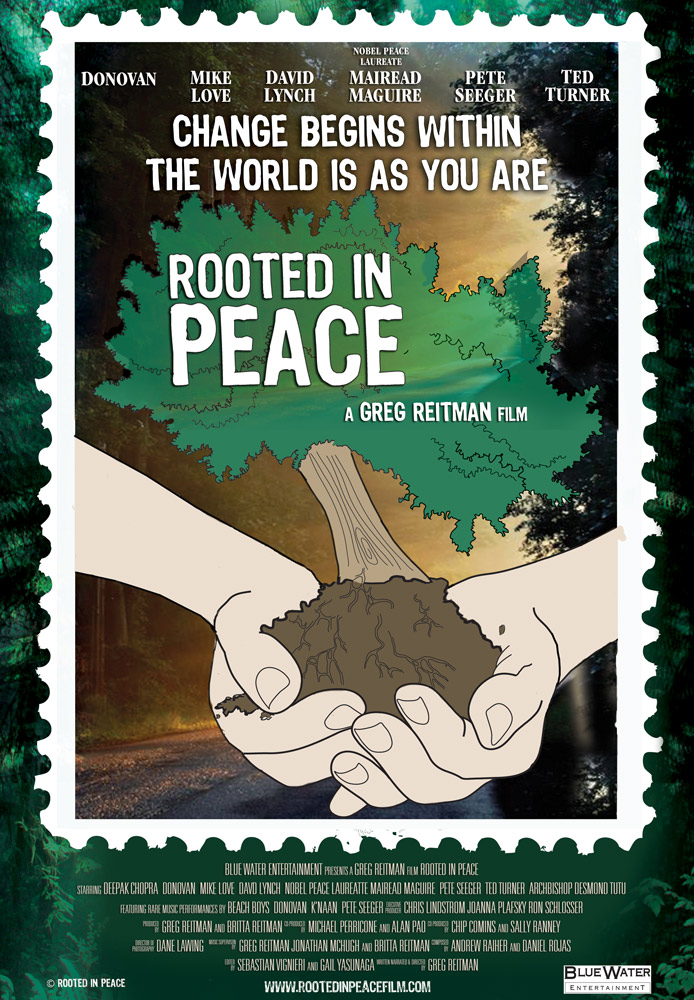
ROOTED in PEACE to play Martha’s Vineyard and an Iowa premiere at Fairfield’s Sondheim Center

July 10, 2015

ROOTED-V.10js_r3More screenings are coming up this summer for Hollywood director Greg Reitman’s documentary feature film.

Martha’s Vineyard Film Society

This month, Martha’s Vineyard Film Society will present ROOTED in PEACE on Wednesday, July 15, 2015, at 7:30pm. There will be a special post-screening Q&A with director Greg Reitman.

Read this interesting interview with Zip Creative’s Joanne Zippel on her blog: Fast Forward Friday with Greg Reitman, published today in advance of the MVFS showing.

Iowa Premiere in Sondheim Center

In early August the film will premiere in Fairfield, Iowa. Read how this Hollywood filmmaker came to Fairfield for a Beach Boys concert, returned for a David Lynch Weekend at MUM, learned TM and more, in the July issue of the Iowa Source in their All About FAIRFIELD section: Getting Rooted In PeaceGreen Producer Greg Reitman Brings New Documentary to Sondheim for Iowa Premiere. Here is a PDF of the print version.

Included in the film are interviews from those visits with filmmaker David Lynch; musicians Donovan and Mike Love; Bob Roth, executive director of the David Lynch Foundation; and Fred Travis, director of Maharishi University’s Center for Brain, Consciousness, and Cognition; as well as historical footage of Maharishi Mahesh Yogi, founder of the Transcendental Meditation® technique, and Maharishi University of Management.

Blue Water Entertainment and the David Lynch Foundation are presenting the Iowa premiere of this inspirational documentary feature film, Sunday, August 2nd at 7pm in the Sondheim Center for the Performing Arts. There will be a Q&A following the showing with Sundance award-winning Director Greg Reitman and Executive Producer Joanna Plafsky. Joanna is an established international film producer and distributor, and member of the DLF Board of Directors.

Visit the Fairfield Arts and Convention Center website to find out more about Greg and his film, including production stills and the movie trailer, and if you’ll be in town at that time, to purchase tickets. Here is a PDF of the ROOTED in PEACE poster for Fairfield with affordable ticket prices.

The Fairfield Weekly Reader will publish an article on the event July 23rd.

Previous posts about the film can be seen here.

Arrangements are being finalized for the first international premiere, to be announced in the next film post.

Great article on TM’s successful resurgence and supportive applications in health and education

April 28, 2015

FORBES: PHARMA & HEALTHCARE 4/27/2015 @ 11:20AM
Contributor Alice G. Walton covers health, medicine, psychology and neuroscience.

Transcendental Meditation Makes A Comeback, With The Aim Of Giving Back

Transcendental meditation (TM) has been having a renaissance in recent years: Celebrities, businesspeople, and regular folk are practicing it in record numbers. Last week, the David Lynch Foundation, the major non-profit champion of TM, hosted an event in New York City at which public figures like Arianna Huffington, Robin Roberts, and Cynthia McFadden discussed the transforming role of TM in their lives. They made compelling arguments for what the practice had done for them, as previously harried and stressed-to-the-max businesspeople – they may still be stressed, but at least they’re able to balance it with a sense of calm. But the Foundation has a larger goal: To bring TM to schoolchildren, domestic abuse survivors, veterans, and prison inmates to help give them tools to process their trauma and reclaim the capacity to live fulfilling lives. And that’s not a bad goal to have.

The TM movement itself has had some bumps in its past. Developed in the 1950s by Maharishi Mahesh Yogi, it rose to popularity after The Beatles “discovered” and helped propagate it – by the late 70s, 4% of Americans were practicing TM, according to a Gallup poll. Then things started to get shaky – and TM began to be associated with some cultishness. But in the last decade or so, the practice has gained back the respect and indeed acclaim, as people – some very famous ones – began to flock to it for its simple and straightforward method to find inner peace.

The business-meets-meditation stories are everywhere these days. Huffington told the endearing but jarring story of when she’d awoken in a pool of her own blood in her office, having passed out from exhaustion; it was then, she said, that she realized that money and power were only two legs of a three-legged stool – self-care, including meditation, being the other critical leg. And the list of companies that encourage their employees to meditate – by teaching it to them and by providing meditation time and space – is growing. Google, Target, Nike, Aetna, and Goldman Sachs have integrated meditation into their cultures.

But the more pressing focus of the David Lynch Foundation is to give psychological support in the form of TM, at low or no cost, to those who need it most: Veterans, schoolchildren, prison inmates, and women and children who have survived domestic abuse. To be sure, TM isn’t the only meditative practice that’s been used to help these groups of people. Yoga, mindfulness, and other forms of meditation are other increasingly common tools in the “service” arena. But, says Bob Roth, CEO of the David Lynch Foundation, there’s something quite simple and powerful about TM which makes it particularly well-suited to touch people who have been through emotional turmoil, or worse. Perhaps its greatest benefit is that it’s relatively quick to learn and easy to master. No waiting weeks or months of practice before you see results: TM cuts right to the chase, taking only days – or for some, minutes – before one feels reprieve from their painful and overwhelming thoughts.

“With TM, you’re given a mantra – a word with no meaning – and taught how to use it,” says Roth. “The active thinking mind settles down to a state of inner calm without any effort. It’s not clearing your mind, as in focused awareness meditation, and not gently observing thoughts as in open monitoring (which is vipassana, or mindfulness). I can put it even more succinctly: TM uses sounds or mantra that has no meaning as a vehicle to experience a quieter, less agitated thought process.”

With the two classical forms of meditation – focused awareness (samatha) and open monitoring/mindfulness (vipassana) there’s generally more practice involved. With focused awareness, the practitioner uses a mantra or other object of concentration to bring a wandering mind back, again and again. With open monitoring/mindfulness, people observe their thoughts with curiosity and some detachment, so that they eventually lose their charge. Though the former is typically learned before the latter, they ultimately work in tandem and complement one another in practice.

To describe TM’s psychological effects, Roth often uses an ocean analogy: An agitated mind, he says, is like 30-foot surges at the surface of the ocean. Focused awareness tries to stop the waves at the top, he says, while open monitoring tries to observe them until they go away. TM, on the other hand, says Roth, has its practitioners plunge deep below the waves, to a quieter depth that’s perfectly still, and blissful. Roth adds that unlike the two classic forms of meditation, “the third form of meditation, TM, is self-transcending. It’s not concentration, and it’s not simply observing thought. TM creates a specific type of alpha brain waves, which is indicative of a unique state of ‘restful alertness.’”

The practice does seem to be helping a great number of people. Roth says the Foundation has helped bring meditation to half a million school children all over the world, and hopes to bring it to three million adults and children in the next five years. It’s also taught TM to 2,000 veterans and as many female victims of domestic abuse through Family Justice Centers across the country, where it’s offered free of charge. The Foundation has also just begun to teach the perpetrators of that abuse, Roth says. The Foundation can barely keep up with all the requests it has from school systems, family centers, and prisons to teach TM.

“There is no medicine, no wonder drug you can take to prevent trauma and toxic stress. And there is no pill you can take to treat or cure it,” says Roth, “Ambien and Xanax, while perhaps helpful to some, are often abused or mere Band-Aid solutions.” There is some relatively strong evidence that TM can affect the stress response, and much of the scientific support for TM comes from its effects on the cardiovascular system, and blood pressure reduction. “The problem of stress is not going away, it’s getting worse and worse,” says Roth. “TM can be an effective tool. It helps you navigate increasingly stressful times. I’m a skeptical person. There’s nothing to believe in. There’s no buy-in. It just works.”

Read the rest of the article here: http://onforb.es/1IfgdIl

Our Meditation Love Poem for Valentine’s Day

February 14, 2015

I wrote Our Meditation Love Poem, about 4 ½ years ago, and decided to post it now, for Valentine’s Day. I was visiting my sweetheart during the week at her care facility and wrote the poem and story behind it that Saturday, September 4, 2010, almost 4 ½ months after she moved in.

OurMeditationLovePoemForSali

I was remembering the meditation we had this week; my chest area filled up with a great inner warmth and bliss of loving you. Tonight, I was listening to Leonard Cohen singing his songs of love, and started writing this poem from that memory, that feeling, and also remembered the quote in the film, Tristan and Isolde, when he is dying and he says to her, “You were right—life is greater than death, but love is greater than either.” He was referring to what she had said when they first met, about following your heart, and that love in one’s life fills up what would otherwise be an empty shell of duty and honor, quoting John Donne’s The Good Morrow, where he writes:

My face in thine eye, thine in mine appeares,
And true plaine hearts doe in the faces rest,
…..
If our two loves be one, or, thou and I
Love so alike, that none doe slacken, none can die.

So I came up with this poem, Our Meditation Love Poem. I found myself writing a 17-syllable line, the sum of a haiku in 3 lines. I liked the flow and decided to make each line 17 syllables long, each one having its own internal rhythm and flow. I wanted to write 11 lines for some reason, maybe thinking there were 11 syllables in each line. But now I remember there are 17. But I would then have to write 6 more lines, and right now I can’t see it. I naturally divided them into 2 stanzas of 4 lines each followed by a stanza of 3 at the end. It seems to have worked well.

Related: See this for : i carry your heart with me by e.e. cummings. This Quiet Love, a #LovePoem from Kenny, for Sally on #ValentinesDay. ‘In Our Loving Eyes’ a poem by @kenchawkin remembering a special love with Sally Peden.

Enjoy reading other beautiful love poems posted on The Uncarved Blog.

Author Philip Goldberg Remembers January 12 as A Double Guru Birthday Fest on HUFFPOST TASTE

February 3, 2015

Philip Goldberg, HUFFPOST Blogger, Interfaith Minister, and author of ‘American Veda: How Indian Spirituality Changed the West‘ remembers January 12: A Double Guru Birthday Fest

MMY-HUFFPOST

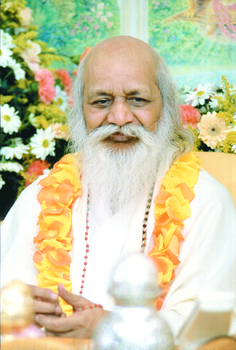
Maharishi Mahesh Yogi

January 12 is celebrated throughout India, and in countries with large Hindu populations, as the birthday of Swami Vivekananda. A national hero, Vivekananda is revered for updating the wisdom of India’s ancient sages and bringing those teachings to the West, in 1893. By coincidence – or astrological design, take your pick – another vital figure in that East-West transmission was also born on that date, and he too deserves to be celebrated.

The man who became known as Maharishi Mahesh Yogi was born Mahesh Prasad Varma, on January 12, 1917, or perhaps 1918, in Central India. While attending Allahabad University, he heard that a famous saint named Swami Brahmananda Saraswati was in the area, and he went to him “as a thirsty man at a well.” Mahesh asked to become the swami’s disciple. The reply was the same one many future gurus received when they were eager young seekers: first finish school. After graduating with a degree in physics, he was formally accepted as a disciple. By then, the swami had been persuaded to accept the much-esteemed, and long-vacant, seat of Shankaracharya of Jyotir Math–one of four monastic lineages established centuries earlier by the great reformer Shankara. The Shankaracharya would become a legend, and so would the humble disciple who served him primarily as a clerk for thirteen years.

After his guru died, in 1953, Mahesh spent a few years in the Himalayas before traveling to the sacred sites of South India. In Trivandrum, a stranger asked him to give a public talk. He was evidently good at it. Before long, he found himself on what we now call a speaking tour. At a festival in Kerala in 1955, people were impressed enough to call him a “Maharishi”–maha meaning great, rishi meaning sage–and the appellation stuck. When he became world famous a dozen years later, the naïve press treated “Maharishi” as his name, and that’s what he’s been called ever since.

That global fame, as most people know, resulted from his historic encounter with the biggest celebrities of the postwar era. In August, 1967, at the suggestion of George Harrison’s then-wife Patti, the Beatles went to hear Maharishi speak about his Transcendental Meditation at the London Hilton. They became instant enthusiasts and, six months later, went to India for an extended stay at Maharishi’s ashram. In the opening paragraph of American Veda, I refer to that as “the most momentous spiritual retreat since Jesus spent those forty days in the wilderness.” It was as if the earth itself had tilted, allowing the insights of India’s yogis to pour into the West at an accelerated pace.

It was easy at the time for reporters to write off “the Beatles’ guru” as a lucky guy who got rich and famous off the lads’ monumental celebrity. It was easy to label him “the giggling guru” because he had an infectious, high-pitched laugh and he found much of modern life rather amusing. It was easy to mock him as the face of guruhood at a time when yoga and meditation were seen as accessories of flower-power counterculture. All of which belies the fact that Maharishi was a very practical man who took his mission–to spiritually regenerate the world by expanding individual consciousness–very seriously, and he worked longer hours in its service than most CEOs could endure.

He had been planting seeds non-stop for a dozen years when the Beatles sought him out, repeatedly circling the globe and teaching his simple, powerful form of meditation to all comers, and he kept at it for another forty years after the Fab Four made Rishikesh a pilgrimage site for Western yogis. If history is fair, he will be recognized as one of the key figures in the transmission, adaptation and assimilation of Yogic teachings into the mainstream of American life.

Nowadays, everyone from ordinary physicians to giant HMOs recommends meditation to reduce stress and prevent illness. This, to put it mildly, was not the case in 1968. It was Maharishi who convinced scientists to study the practice, and he made sure his systematic TM procedures were compatible with research protocols. He understood that ours is an evidence-driven age, and that Americans would embrace something as exotic as meditation only if science demonstrated its value. The first paper on the physiology of meditation was published in 1970, by one of Maharishi’s students, a UCLA doctoral candidate named Robert Keith Wallace. The collective research juggernaut that followed ushered meditation from the fringes of society to the center, and directly into your armchair, cushion or yoga mat.

So, for whatever stars and planets were aligned on those two January 12s, we can be doubly thankful.

Published 01/09/2015 02:30 pm ET | Updated Mar 11, 2015

Scott Cawelti: It’s about time for “Quiet Time”

January 12, 2015

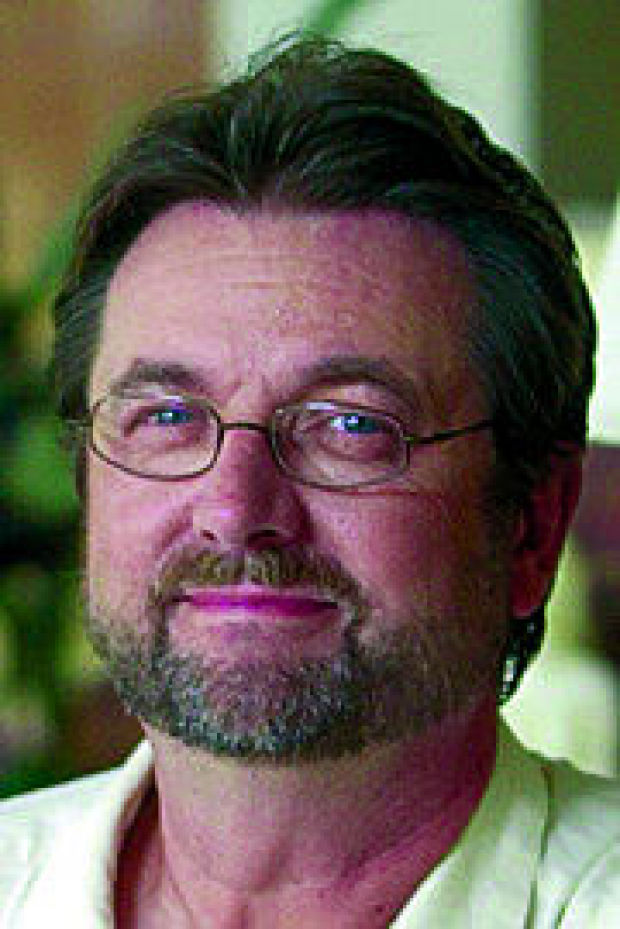
This Quiet Time article appeared in the Waterloo-Cedar Falls Courier. It is published here with permission from the columnist, Scott Cawelti, a retired professor of English at the University of Northern Iowa, freelance writer and musician. Contact him at cawelti@forbin.net. Click here to see Scott Cawelti BIO. Photo by Doug Hines.

It’s about time for “Quiet Time”

January 11, 2015 6:00 am  • 

Nothing succeeds like success, as they say, and I’m here to report two genuine successes. One is small, the other large, a possible game-changer.

The small success involves my own daily meditation practice. It began over 30 years ago and continues to this day.

As a young assistant professor teaching anywhere from 90 to 250 students in three classes, struggling with writing conference papers, grading piles of student essays, meeting with students, attending multiple faculty committees, facing constant pressure to do more and do better, I was stressed. I mean, stressed out, exhausted, short-tempered and chronically anxious. I was staying afloat, but barely.

In those days, Cedar Falls had a Transcendental Meditation Center down on Third and Main streets, and a couple of friends each recommended I try TM.

Scott Cawelti

Scott Cawelti

I did, and it worked. Within a few days of twice-daily meditation, I began feeling relaxed, then peaceful, then downright blissed out. Well, not quite, but close.

And it continued. No one was more surprised than I.

Over the years I’ve attended meditation workshops, modified my practice slightly, and still continue meditating twenty minutes, twice a day. It has made all the difference in my stress level, and I’m still alive, well and pushing 72.

I’m convinced regular brain-quieting has given me more, and better, years. That’s what meditation does, by the way: quiets our always-buzzing brains.

I recommend some form of meditation for anyone who feels overwhelmed with pushes and pulls beyond their control. If it worked for me, it will work for you.

Beyond my own small life, there’s a much larger meditation success story that recently made national news.

At Visitacion Valley Middle School in San Francisco, they began a program in 2007 of twice-daily “quiet time” breaks for the entire school. This particular school sits in a rough, even violent, neighborhood. Attendance, academic scores and teacher and student retention were dismal.

Teachers and students alike hated the chaos of school days. In other words, the school made no progress toward anything but failure.

Now, after over seven years, they can judge Quiet Time’s success. It’s been dramatic, schoolwide and heartening. This is how David Kirp, a professor of public policy at Berkeley, describes the results:

“In the first year of Quiet Time, the number of suspensions fell by 45 percent. Within four years, the suspension rate was among the lowest in the city. Daily attendance rates climbed to 98 percent, well above the citywide average. Grade point averages improved markedly. About 20 percent of graduates are admitted to Lowell High School – before Quiet Time, getting any students into this elite high school was a rarity. Remarkably, in the annual California Healthy Kids Survey, these middle school youngsters recorded the highest happiness levels in San Francisco.”

Amazing but true. Kirp continues:

“On the California Achievement Test, twice as many students in Quiet Time schools have become proficient in English, compared with students in similar schools where the program doesn’t exist, and the gap is even bigger in math. Teachers report they’re less emotionally exhausted and more resilient.”

Incidentally, students are not forced to practice TM. They can simply close their eyes, daydream, nap — as long as they’re quiet during those two 15-minute periods.

Parents must give permission if they want their child to learn the meditation technique.

I can hear objections: wasting valuable school time, returning to hippie-dom, imposing a religious practice in a state school. All of these seem to be satisfactorily answered, since the program’s success with the parents’ permission for seven years speaks for itself.

Best of all, Quiet Time costs virtually nothing, and it affects whole schools so positively (based on real data) it’s at least worth a look.

My own small success story offers unqualified support.

Much more power to them.

# # #

Quiet Time at Visitacion Valley Middle School

Principal James Dierke first implemented the Quiet Time Program at Visitacion Valley Middle School in San Francisco. As a result of his school’s dramatic turnaround he was selected NASSP National Middle School Principal of the Year in 2008. Principal Dierke wrote an article about it (a Quiet Transformation) for Leadership, a publication of the Association of California School Administrators. He concluded, “I retire with the lowest blood pressure I have had in 10 years and a great optimism about our ability to realize this vision for education.”

NBC Nightly News reports on the Quiet Time Program

NEW VIDEO: With the successful transformation of Visitacion Valley Middle School several schools in the San Francisco Unified School District also incorporated the meditation-based Quiet Time Program with amazing results. Cynthia McFadden visited both Visitacion Valley Middle School and Burton High School and filed a report on December 30, 2014 for NBC Nightly News: San Francisco Schools Transformed by the Power of Meditation. Visit the David Lynch Foundation for more on the Quiet Time program in schools.

Edutopia reported on Quiet Time at Visitacion Valley Middle School

David Markus, former Editorial Director of Edutopia, had visited the school and produced this report: Risking Peace at a Troubled School. Below is the video: How Daily Meditation Improves Behavior. Here is another video on the school’s program: Meditation in San Francisco School Improves Learning

From Jerry Seinfeld to the US Army, regular TM energizes, clarifies, and heals mind and body

December 21, 2014

You don’t have to be a wounded warrior returning home traumatized and depressed to benefit from Transcendental Meditation. Even comedian Jerry Seinfeld says his regular TM practice gives him a rested body and a clear mind, and the energy to do almost anything. For Jerry, it’s his ultimate work tool for success! Here are two articles about TM’s value.

TM is the ultimate work tool for Jerry Seinfeld

New York Magazine’s Dan Hyman interviewed Jerry Seinfeld, again, for Vulture: Jerry Seinfeld on the Comedians in Cars Season Finale and Late-Night TV. It’s excellent and revealing! At the end, Dan asks Jerry how he stops obsessing about creating his comedy bits and web series, and mentions his longtime TM practice. Jerry’s reply beautifully sums up the value of regular Transcendental Meditation practice!

How do you relax when not obsessing over your bits or working on your web series? I know you’re a longtime practitioner of Transcendental Meditation.

I’m obsessed about that, too. In fact, that’s what I’m going to do as soon as we hang up. I started doing TM in ’72, and that’s kind of how I recover from doing things that are tiring. It keeps my energy really high. I don’t know if it clears your mind. What it really does is it helps your body and mind to rest. They don’t really get a good rest in sleep. And this has been studied by virtually every medical school in America these past 40 years or whatever that this stuff has gotten popular here. And if you just look at the medical research of what goes on in the brain and the body in this process, it’s totally different from sleep. So forget about relaxation or anything like that: It’s the ultimate work tool to me. It’s like you have a phone and someone hands you the charger and you go, “Just try plugging this in and watch what your phone will do now.”

It’s the ultimate work tool to me. It’s like you have a phone and someone hands you the charger and you go, “Just try plugging this in and watch what your phone will do now.”

Listen to Jerry Seinfeld talk about TM in other venues posted here.

US Army uses TM to help heal wounded warriors

This article, Transcendental meditation: A path to healing, is archived on WWW.ARMY.MIL, The Official Homepage of the United States Army. Written by Wesley Elliott, DDEAMC Public Affairs Officer, it first appeared on the front page of The Fort Gordon Signal: Soldiers meditate as alternative therapy.

After nine months of combat in Afghanistan, Staff Sgt. Todd Knauber was wounded. Upon his return home he was told things would get better, but instead they got worse. He was in pain, depressed, taking a cocktail of medications, and didn’t know where to turn for help. Then someone gave him an opportunity to participate in Transcendental Meditation as part of his treatment at the Eisenhower Army Medical Center. TM was being offered as an alternative way to help heal his wounds, both physical and mental. It turned his life around. Here is an excerpt from the article.

“I got to a tipping point. Things were bad, but then I was given the greatest gift I have ever received from a stranger.”

Knauber was offered an opportunity to participate in Transcendental Meditation as part of his treatment at Eisenhower Army Medical Center.

Transcendental Meditation was something he had never heard of but it offered him the possibility of dealing with the medications, the nightmares, and the physical and emotional pain.

“It was not a branch for me to grab hold of but rather a taproot under my feet. A stable platform which gives me a moment’s respite so I can put my pain into perspective enough that I can reattempt the climb.”

Since he began meditating, there has been a change in his life. He meditates twice a day for 20 minutes and over the course of four months, he has been able to entirely discontinue two medications, Prazosin and Trazadone, and has reduced his Zoloft by half.

In addition to the calm he says he experiences through Transcendental Meditation, Knauber says it has made it easier to manage his physical pain from his injuries.

“I typically have a regimen of several pain medications to manage my physical injuries. Rather than taking a handful of pills seven days a week, I can manage my pain regularly with a few tablets, two to three times a week.”

Others have even told him that he looks like an entirely different person after starting to meditate.

“I am vibrant, I smile, and I look much more grounded. The truth is you can’t practice Transcendental Meditation without it positively affecting you.”

The truth is you can’t practice Transcendental Meditation without it positively affecting you.” — Staff Sgt. Todd Knauber

Doctors promised him through medication and hard work he could potentially heal over the course of years, but since Transcendental Meditation he has moved much closer to achieving his recovery in months.

“At times the troubling thoughts and nightmares come back, but as a whole, the progress is palatable.”

“I feel more in control of my life now, and I’m becoming hopeful about rebuilding and getting better.”

See many more articles on the value of TM for Veterans posted on this blog, here, here, and here. Check out this website to find out more about TM for Veterans.

The David Lynch Foundation brings support and programs to Veterans and their families. Visit their website: Operation Warrior Wellness.

Who was Dear Prudence the Beatles sang to in India? What happened to her? Here is her story.

December 21, 2014

See the full article with more photos and quotes featured in the 21st issue of Enlightenment: The Transcendental Meditation® Magazine (Enjoy TM News): The “Dear Prudence” Story by Rolf Erickson. Reprinted here with permission including the video: Dear Prudence: A Portrait Of Prudence Farrow Bruns.

The “Dear Prudence” Story

BY ROLF ERICKSON

photo_prudence01Prudence Farrow Bruns, PhD, is the daughter of actress Maureen O’Sullivan and award-winning writer/director, John Farrow. She has been practicing the Transcendental Meditation technique for 48 years, and has been a teacher of the TM program for 46 years.

It all started so simply. It was 1966, and 18-year-old Prudence Farrow was sitting on a bluff overlooking the Pacific Ocean at her brother’s home in Los Angeles. She was reading a book on meditation when she heard a voice say, “If you’re interested in meditation, I know just the meditation for you.”

The voice was that of Peter Wallace, a friend of her brother. Peter had spent six months traveling through India, where he met Maharishi Mahesh Yogi and began the Transcendental Meditation technique. He told her how simple and effortless the technique was, and yet how profound the experience and benefits could be.

“It was the simplicity of the practice that struck me most,” Prudence said. “I’d been trying different methods of meditation for some time, but they had all been complicated and difficult. When Peter described a simple, natural practice of diving deep within, I knew he was truly onto something.”

So Prudence learned the TM technique at UCLA. After experiencing the positive effects of TM for herself, Prudence wanted more. She wanted to meet Maharishi and to study with him. “At that time Maharishi had courses in India,” says Prudence. “He brought people there, and they studied for three or four months with him. You meditated for long periods under his guidance.”

On January 23, 1968, three days after her 20th birthday, Prudence traveled with Maharishi from New York to Rishikesh, India to attend her TM teacher training course. And that’s when the “Dear Prudence” story really began.

The Beatles Make the Scene

One month after Prudence arrived in Rishikesh, The Beatles showed up to study with Maharishi. While they all spent some time there, John Lennon and George Harrison stayed the longest.

“The Beatles were all very nice, humble, modest, kind, and down-to-earth people,” Prudence remembers. “I was closest to John and George, since they were my ‘course buddies’ during our studies with Maharishi. We were supposed to look out for each other during the course.”

photo_prudence02

Prudence (left) sat next to Ringo in course photo.

Prudence soon became known for her tendency to keep to herself in her room, focused on her meditation practice. “I was deeply immersed in my studies and meditation, locked away in my quarters. John, as my course buddy, was concerned and wanted to bring me out of my room to enjoy the experience more.”

John and George would come over to her room and play their guitars, encouraging her to come out and sing with them. It was this experience that became the inspiration for their song “Dear Prudence” in which John sings, “Dear Prudence, won’t you come out to play?”

Before he left Rishikesh, George mentioned to Prudence that they had written a song about her, but she had no idea what it was. She didn’t hear the song until it came out on their 1968 album The Beatles, commonly known as the “White Album.”

Prudence’s dedication to her meditation practice did pay off. After four months, she graduated from the course and became one of the first and youngest teachers of the Transcendental Meditation technique at that time.

But that was just the beginning of the “Dear Prudence” story.

Prudence Comes out to Play

Once she completed her teacher training course in India, Prudence definitely did come out to play. Over the past 46 years, she’s instructed thousands of people in the TM technique throughout the United States and Canada. She married TM teacher Al Bruns in 1969, and they have three children and four grandchildren.

She’s produced Hollywood feature films and a play in Manhattan. She was an assistant to the curator of the “Theatre Collection” of the Museum of the City of New York. She has been a magazine writer. She’s written two books.

Prudence earned a BA, an MA, and a PhD from the University of California at Berkeley. She received her doctoral degree in 2007, with a major in South Asian Studies and Sanskrit. She has made presentations to conferences at numerous universities, including Harvard, the University of Texas at Austin, and the University of Hawaii. She’s taught courses at UC Berkeley and Rutgers University.

TM and Yoga

Prudence continues to teach the TM program in Florida. In fact, she’s the most successful teacher in the U.S. at setting up Affiliate Programs in yoga studios. Maybe that’s not so surprising, considering that she’s a lifelong yoga practitioner, and she opened a yoga institute in Boston back in 1967.

photo_prudence03

Prudence attended India’s Kumbh Mela last year.

Maharishi Foundation created the Affiliate Program to bring TM to yoga studios and fitness centers. When a studio becomes an Affiliate, their members can learn TM at a reduced course fee, and the studio receives a share of the income. Everyone benefits—the new TM student, the yoga studio, and the local TM teachers.

Today most people think of yoga as a series of physical postures. But Maharishi has explained that in the Yoga Sutras, Patanjali identifies eight limbs of yoga, and the eighth limb is Samadhi or transcendental consciousness. Maharishi said that with the practice of TM, Samadhi is actually the easiest limb of yoga to achieve, since no effort is required. We simply tap into the natural tendency of the mind to go within, to transcend, and that transcendence nourishes and supports all the other limbs.

“I do think that Transcendental Meditation is—of the meditations that are available to us—the most direct, and the simplest,” says Prudence. “When you meditate, when you transcend, it allows your heart and mind to balance. And when they’re balanced, that’s when you are really healthy. You are happy. You’re happy mentally, happy emotionally, and happy spiritually. Those three are all components of what make a human being, so that connection to transcendence is absolutely necessary for health.”

Creating a Better World

Fortunately for us all, Prudence did come out to play.

“The years of meditating have enriched my life so much,” Prudence says. “And that’s why at this point in my life, I’m giving back. We need a better world. We need people to be more conscious, to be more evolved. And expanding the mind, like TM does, is absolutely vital to bring about stronger people. If you can strengthen people inside, you’ve changed the world.”

So even today, 48 years later, the “Dear Prudence” story continues.

[In July 2018, this article was updated and published in Enjoy TM News.]

###

Last year, Prudence Farrow Bruns participated in a series of Consciousness Talks at Maharishi University of Management, called Our Conscious Future. Here is a clip from her talk where she discusses a conversation she had with George Harrison about his spiritual awakening. Prudence, George and John Lennon said they felt it was happening to many in their generation, and that it would continue long after they were gone. Listen to Prudence describe The “Dear Prudence” Story. For other fascinating presentations, visit ConsciousnessTalks.org, or see Our Conscious Future Highlights.

Years later, The Beatles released many versions of their songs on the 50th Anniversary of The White Album, now out on Spotify, which include The Esher Tapes. There are 3 versions of Dear Prudence there: the Esher version of John Lennon singing on guitar; one of just vocal, guitar, and drums; and the 2018 mix.

Another beautiful song that John Lennon wrote about his experience with Transcendental Meditation was, Across the Universe. Spotify included John Lennon on guitar singing Across The Universe–Take 6.

This article was also published in GGN: World Peace News. Here are some related videos and interviews with Prudence Farrow Bruns: The Beatles “Dear Prudence”: A Portrait of Prudence Farrow Bruns, Maharishi and TM and Ted Henry interviews “Dear Prudence” Farrow Bruns about her life with TM and Maharishi and Prudence Farrow — subject of the Beatles song Dear Prudence — visits India’s Kumbh Mela.

Prudence’s memoir is now out: Dear Prudence: The Story Behind the Song. Listen to an interview with Prudence about the book online at Spirit Matters with Dennis Raimondi and Philip Goldberg. Read an interview about the book in Rolling Stone: The Real ‘Dear Prudence’ on Meeting Beatles in India. Read this excellent article in the Pensacola News Journal: Woman behind Beatles ‘Dear Prudence’ reads at Open Books. Here is another interview: In Conversation With: Prudence F. Bruns, Transcendental Meditation Teacher and Inspiration Behind “Dear Prudence”. Prudence Farrow Bruns | Conversations with Jeff Weeks | WSRE Pensacola PBS.

Watch the A&E biographical film, Maharishi Mahesh Yogi on History International Channel (November 2007) and the earlier CBC documentary of Maharishi at Lake Louise. TMhome also posted the International History Channel documentary on Maharishi Mahesh Yogi: How it was made: The story behind the film.

Watch this November 8, 2018 Lyndsey Parker interview for Yahoo Music: Mike Love remembers ‘beautiful, spiritual’ beginnings of the Beatles’ ‘White Album’ in India.

Read The Story Behind ‘Dear Prudence’ by Jennie McKeon, Dec 23, 2018, for wuwf 88.1, NPR for Florida’s Great Northwest.

August 9, 2019: ‘Dear Prudence’ Bruns in Parade discusses world peace, the ’60s, and why kids love the Beatles.

June 29, 2020: Who was Bungalow Bill from the Beatles White Album and what happened to him? He tells us! I later updated this post on September 9, 2020 with the online premiere of Meeting the Beatles in India, a film by Paul Saltzman.

Dec 21, 2020, Bob Roth announced on Instagram that a free rental of the film, “Meeting the Beatles in India” by Paul Saltzman, will be available between during the last week of 2020 thanks to @LynchFoundation and @TM_Program.

NEW: Enjoy TM News posted this more recent discussion. Mario Orsatti, the host of TM Talks and Senior Teacher of the Center for Health and Wellness, a division of the David Lynch Foundation, interviewed Dr. Bruns on June 14, 2020. This popular episode was rebroadcast on September 4, 2022. Watch the interview with Dr. Prudence Farrow Bruns (55:17)

Iowa Public Radio reports on how far we’ve come treating PTSD in Veterans, from lobotomies to TM

March 27, 2014

Iowa Public Radio news correspondent Rick Fredericksen reports on Veterans: Lobotomies to Meditation

Listen to today’s (March 27, 2014) Iowa Public Radio report on how Iowa Veterans have been historically treated for what is now known as PTSD — from lobotomies, to drugs and therapy, to finally a more benign approach, that of meditation, specifically Transcendental Meditation.

Iowa Public Radio correspondent Rick Fredericksen produced an impressive historical report on the subject. Early attempts to deal with this misunderstood medical problem were crude and frightening. Introducing TM as a viable option shows you how far we’ve come in dealing more humanely with Veterans suffering from PTSD!

It aired twice this morning with a third broadcast on All Things Considered this afternoon at 4:50pm CST. You can listen to the 7:30 minute report online http://bit.ly/QjMY00, where you can also see a 3-photo slideshow, and link to the Wall Street Journal investigation.

Dan Gannon, IDVA, meditates in IPR studio

Marine veteran Daniel Gannon meditates in the IPR studios.

Interviews with meditating Iowa veterans include Luke Jensen, Afghanistan veteran; Vietnam veteran Daniel Gannon, Iowa Dept of Veterans Affairs; and Jerry Yellin, WWII veteran, and national TM advocate for veterans.

Rick Fredericksen did a fantastic job! What a testament to TM, and boost for MUM, gearing up to welcome veterans as students!

This story is also reported on the TM Blog: PTSD Treatments: From Lobotomies to Meditation.

PTSD Treatments: From Lobotomies to Meditation

Related news items:

Matt Kelley of Radio Iowa interviews Jerry Yellin about an Iowa Veterans Summit solution to PTSD

Military Leaders to Promote Meditation at Iowa Summit to Help Reduce Veteran Suicide Epidemic

See video highlights of the Iowa Veterans Summit – PTSD and Transcendental Meditation

AFP report: War veterans say Transcendental Meditation could help with PTSD


Capetown’s Shafiq Morton interviews David Leffler on a solution to the violence in Kiev

February 20, 2014

The VoicThe Voice of the Capee of the Cape’s after five Drivetime Show has a national and international flavor focusing on issues making news where the biggest story of the day or week is analyzed. South African host Shafiq Morton interviewed American Dr. David Leffler this week, Wednesday, Feb. 19, 2014, on a unique solution to the growing violence in Kiev.

Dr-David-LefflerDavid R. Leffler, Ph.D. is the Executive Director of the Center for Advanced Military Science (CAMS) at the Institute of Science, Technology and Public Policy, in Fairfield, Iowa, USA. He spoke on IDT, Invincible Defense Technology, as a viable solution to the rising crisis. Dr. Leffler explained how increasing stress levels erupt into opposing factions, violence and war, and how group practice of Transcendental Meditation and its advanced procedures can defuse such collective stress and prevent war, softening the atmosphere for people and groups to more harmoniously discuss solutions to their problems without resorting to violence.

Listen to the 20-minute interview on 91.3 FM http://iono.fm/e/74837.

I was so impressed by Morton’s questions and responses to Leffler’s informative answers, I posted this comment:

When Marconi said we could communicate through the airwaves they thought he was crazy. He was just using a technology that was able to take advantage of the electromagnetic field that was already there. Invincible Defense Technology similarly uses an advanced procedure to allow our minds to collectively enliven the all-powerful, all-nourishing Unified Field, the source of all the force and matter fields, the home of all the laws of nature, for the good of society, and the world, depending on the size of the group. Thank you for exposing your listeners to this hopeful and intelligent out-of-the-box proven approach to creating world peace!

The editorial piece referred to in the interview was co-authored by Dr. Leffler and Dr. Mykola Didukh, National Director for TM in Ukraine. Titled, “Proven Strategy to Prevent Turmoil in Ukraine,” how Invincible Defense Technology could be implemented to solve the crisis, the Op-Ed was published earlier this month in a number of locations: NEPAL: Review Nepal; WORLD SERVICE: The Common Ills; UNITED STATES & CANADA: Times of Earth; INDONESIA: Sigma News; and UKRAINE: Evening Lugansk, which was also published in Russian and Ukrainian.

(more…)