Posts Tagged ‘David Lynch Foundation’

The Atlantic’s Jennie Rothenberg Gritz visited schools where @TMmeditation was being used for stress-reduction and well-being

December 11, 2015

Jennie Rothenberg grew up in Fairfield, Iowa, went to Maharishi School of the Age of Enlightenment, and attended UCBerkeley on a scholarship to study Journalism. She became a professional writer, a wife and a mother. Jennie is a former senior editor at The Atlantic, is now a senior editor at Smithsonian magazine.

The last piece Jennie wrote for The Atlantic, published November 10, 2015, was about the Quiet Time program, promoted by the David Lynch Foundation, and its success sponsoring the Transcendental Meditation technique in schools across the country.

The magazine introduces the article: After growing up with Transcendental Meditation as a spiritual practice, the author visits public schools where it’s being used as a simple tool for stress-reduction and well-being.

In 1974, the year before I was born, my parents had a small wedding in my aunt’s living room and then spent their honeymoon becoming teachers of Transcendental Meditation. Those were the days when just about everyone seemed to be doing it. “Plainly,” wrote the author Adam Smith in The Atlantic’s October 1975 cover story on meditation, “TM was the greatest thing since peach ice cream.” Meditation was enough of a cultural phenomenon that Woody Allen could use it as a punch line. The L.A. party scene in Annie Hall ends with Jeff Goldblum’s character placing a businesslike call to his instructor: “Yeah, I forgot my mantra.”

Considering how many 20-somethings learned to meditate in the 1970s, one might have predicted an explosion of meditating schools in the 1980s. Instead, Americans mostly forgot about the trend as they settled into the Reagan era. My parents were exceptions: They enrolled me in a small private school where the day began and ended with TM. It was an idyllic childhood in many ways, but my classmates and I always knew we lived in a bubble. One summer, at a resort in the Catskills, I listened as my aunt tried to explain my upbringing to a couple of her friends.

“Sure, I remember TM,” one woman replied. “I guess some people got caught up in meditation, just like some people got caught up in drugs.”

“And the rest of us,” her husband finished, “grew up and moved on with our lives.”

So I was fascinated when meditation recently started becoming mainstream again. Coworkers told me about mindfulness apps they were trying and friends mentioned yoga retreats they were planning to attend. The general idea seemed to be that meditation was not so much a technique for spiritual enlightenment as a common-sense lifestyle habit, like getting enough exercise or eating green vegetables. ….

Jennie visited several schools in poor, stressed inner-city locations where children from different ethnic backgrounds and broken homes came to school already traumatized. She wondered how administrators, teachers and students would react to such a program, and how it could be implemented.

It’s hard to change the circumstances that create this kind of stress, though plenty of people are trying. But if you teach kids to meditate in the meantime, the thinking goes, you can help them reduce the stress itself. That reasoning always made sense to me, as someone who has been practicing TM since childhood and seen the research on adults, especially for stress-related problems like heart disease. Struggling schools need lots of things: better food, stronger math programs, and higher-quality teachers, to name just a few. One of those needs seems to be a way to reduce stress so kids can absorb information and go into the world as well-balanced, successful people.

Still, I had a hard time envisioning how meditation programs actually worked when they were dropped suddenly into public schools. Who were the principals who brought them in—did they have hidden mystical streaks, or were their motivations purely practical? Were the teachers enthusiastic or did they see meditation as yet another gimmick imposed on them from the outside? And how did the students really feel about it? Did they roll their eyes when the meditation bell rang or did they actually enjoy it? What was it like to grow up with just meditation—and no spiritual trappings surrounding it?

The article continues with visits to some of the schools where the program was introduced. Jennie interviews principals, teachers, and the students to get their personal reactions to this meditation program and its effects on them.

Read the rest of this objective revealing report: Mantras Before Math Class by Jennie Rothenberg Gritz. This is journalism at its best!

PDF: Quiet Time Brings Transcendental Meditation to Public Schools.

You can follow Jennie Gritz on Twitter.

A year later, Jennie moved to The Smithsonian and published this excellent article: Director David Lynch Wants Schools to Teach Transcendental Meditation to Reduce Stress. The acclaimed filmmaker has become the champion of the practice that’s now been adopted by thousands of kids.

Digital storyteller Sharad Kharé speaks with David Lynch Foundation executive director Bob Roth

November 26, 2015

Canadian digital storyteller Sharad Kharé was invited to attend the David Lynch Foundation‘s star-studded Change Begins Within benefit concert in New York City earlier this month. He wrote a wonderful review and also managed to interview the Foundation’s enthusiastic executive director, Bob Roth.

“I usually attend these events for media coverage with my cameras, but earlier in the week I got a chance to get on a quick call with Bob Roth who personally said to come as a guest and enjoy the evening. For that, I am truly honored and grateful.”

Sharad gave us permission to share the lovely video he produced and posted on his HUFFPOST vlog.

Sharad Kharé has a Masters in Communications and lives in Vancouver, British Columbia. His background in television and social media production made him a natural choice as the current curator for TEDxVancouver. Find out more about Sharad at http://sharadkhare.ca

New: Sharad Kharé @kharecom interviews Bob Roth @meditationbob, CEO @LynchFoundation, on TM. This second interview was published January 30, 2019 on Thrive Global.

Bob Roth explains how Transcendental Meditation works on Fox5NY’s Good Day New York (WNYW)

October 14, 2015

Bob Roth, executive director of the David Lynch Foundation, appeared on this week’s Fox 5 WNYW Good Day New York morning newscast* with Rosanna Scotto and Greg Kelly to talk about Transcendental Meditation. Rosanna’s friends were telling her about it, and she was interested in learning. So she invited the in-demand TM teacher to the show.

Fox5GoodDay

Bob explained how easy and effortless it is to learn and practice TM, and how different it is from other more difficult approaches. He also described some of the many scientific published research studies showing improvements in health, education, and rehabilitation.

He emphasized TM wasn’t just for the needy or wealthy segments of society. Everyone could benefit from it.  People from every walk of life were practicing it — military personnel, Wall Street brokers, educators, physicians, housewives, students, anyone dealing with today’s stressful challenges. More than just relaxation, he said TM gives you more energy, focus and drive to get things done.

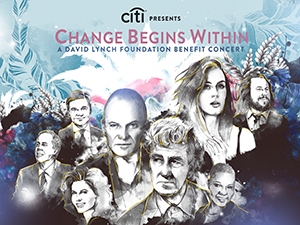
Rosanna asked about the work of the Foundation and the upcoming concert. Bob described the various DLF projects helping different at-risk sectors of society, and announced the November 4th Change Begins Within Benefit Concert at Carnegie Hall.

CHANGE BEGINS WITHIN 2015 BENEFIT CONCERT

This event features performances by Katy Perry, Sting, Jerry Seinfeld, Jim James, Angelique Kidjo, and Sharon Isbin, with musical direction from Rob Mathes and hosted by David Lynch and George Stephanopoulos.

ChangeBeginsWithin2015

Proceeds from the event will benefit the David Lynch Foundation’s Meditate New York initiative to provide Transcendental Meditation instruction at no cost to 10,000 at-risk New Yorkers, including underserved youth, veterans with post-traumatic stress, and women and children who are victims of domestic violence.

*This morning news show originally aired on Tuesday, Oct. 13th, 2015. You can watch the 10-minute interview in a larger format from the Fox 5 archive HERE and at the TM Blog.

Rosanna Scotto attended the DLF benefit concert and talked with Greg Kelly about it on Good Day New York.

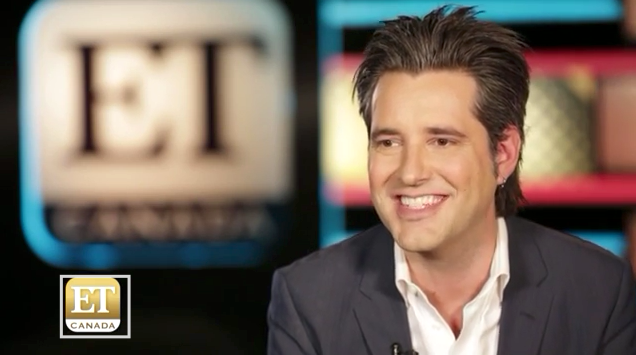
ET Canada correspondent and Radio host Roz Weston says Transcendental Meditation made him a better broadcaster

August 17, 2015

ET Canada correspondent and Radio host Roz Weston shares how Transcendental Meditation helped him become a better professional broadcaster. Roz Weston first learned broadcasting while interning with the Howard Stern Show. “The lesson that I took away from that is that success at that level is about being professional.” Today he co-hosts his own morning show on Toronto’s KISS 92.5 FM and interviews many top celebrities for ET Canada.

Read this Special to The Globe and Mail: Radio host Roz Weston finds success in meditation and professionalism. I really enjoyed this article. It’s filled with sound professional advice and tips on how to be an authentic interviewer. And for someone who works 13-hour days, it also says a lot about the sustaining power of Transcendental Meditation! The article was published Sunday, Aug. 16, 2015. I posted the introduction and the section on his TM practice. ET Canada posted this on their YouTube Channel: Roz Weston: Behind The Story.

Roz Weston ET Canada

As a correspondent on ET Canada, Roz Weston has interviewed A-listers like George Clooney and It Girls like Amy Schumer. When he’s not working the red carpet, the former Howard Stern intern is the co-host of Kiss 92.5 radio morning show The Roz and Mocha Show. It’s a hectic schedule, which is why Weston takes twenty minutes out of every day to meditate. Here, he shares some of the secrets to his success, including why he would happily interview Alec Baldwin every day.

The secret to boundless energy in 20 minutes

A few years ago I was feeling very overwhelmed by the pace of my life and the responsibilities I had. I was looking for something and I didn’t know what. I heard about Transcendental Meditation [a form of “relaxed awareness” meditation founded by the Maharishi Mahesh Yogi in the mid-1950s and practiced by notables such as Jerry Seinfeld and Oprah Winfrey] from a friend. I’m not a religious person at all, so it was nothing to do with that. It was first described to me as yoga for your mind. You shut everything down, you go deep and when you come out of it you have so much energy. It is a literal recharge. In the middle of the day when we all break for lunch, my colleagues all go to the cafeteria and I go to my dressing room and meditate for 20 minutes and then I’m good to go. A 13-hour workday with five hours’ sleep is not a problem. It’s not like the kind of meditation where you sit cross-legged and clear your head of all thoughts. Thoughts come into your head and they sit there and you let them go and you go deeper and deeper. I now have  the ability to deal with issues, thoughts, information so much more effectively than I did before. I no longer feel overwhelmed. I used to feel overwhelmed every second of the day.

Read the rest of this excellent article filled with some solid career advice: http://www.theglobeandmail.com/arts/radio-host-roz-weston-finds-success-in-meditation-and-professionalism/article25970740/

The Back Story and More

Roz had a desire to learn about Transcendental Meditation and wasn’t sure how to do it properly. So, in September 2013, they welcomed the most calm relaxing guest in Roz & Mocha history! They interviewed actor, comedian, and Certified Toronto TM teacher Lucie Guest about Transcendental Meditation on KiSS 92.5.

As you just read, Roz did finally learn TM and benefited greatly from it. This June, he was invited to meet Amy Schumer, Judd Apatow, Dave Attell, Vanessa Bayer, Mike Birbiglia, and Colin Quinn—members of the TrainWreck Comedy Tour who were performing at Massey Hall. They were donating VIP tickets to the David Lynch Foundation to help bring Transcendental Meditation to at-risk teens and abused women who suffer from trauma and toxic stress. Roz also met with DLF Executive Director Bob Roth.

Speaking of Alec Baldwin, you can listen to him on his WNYC talk show, Here’s The Thing, asking Jerry Seinfeld how he found out about and learned Transcendental Meditation.

And since Roz interned at The Howard Stern Show, you may also enjoy eavesdropping on Howard and Jerry sharing their own TM stories. They seemed to have learned around the same time on Long Island. Much to Jerry’s surprise, Howard shares with him how his mother’s life was turned around after learning TM, how she took him to the local Center to learn to meditate, and how Howard had actually interviewed Maharishi twice. Fabulous!

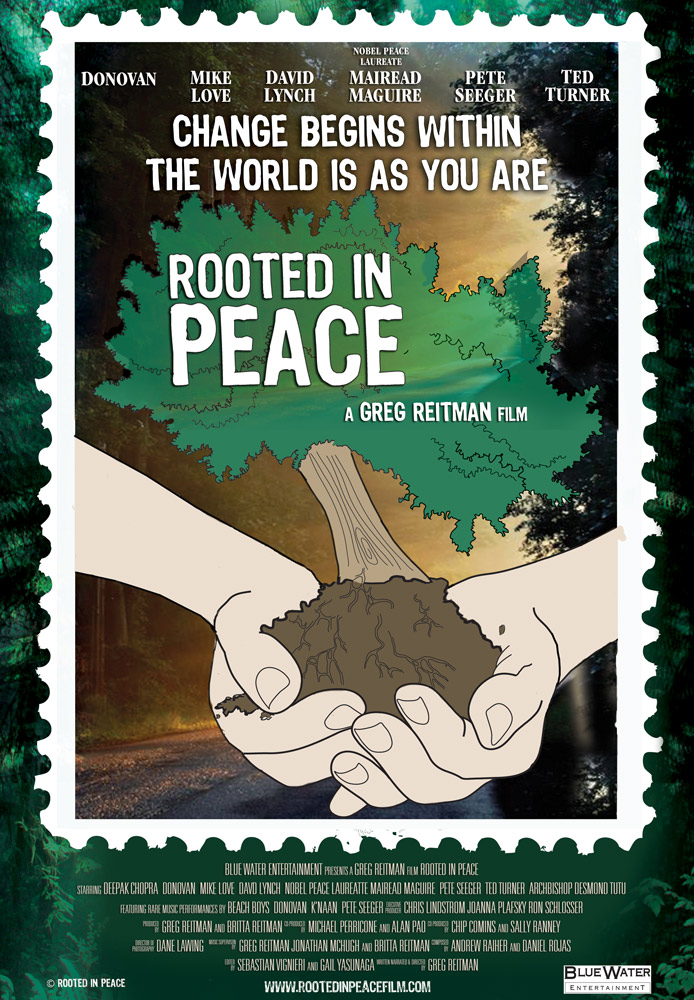
ROOTED in PEACE to play Martha’s Vineyard and an Iowa premiere at Fairfield’s Sondheim Center

July 10, 2015

ROOTED-V.10js_r3More screenings are coming up this summer for Hollywood director Greg Reitman’s documentary feature film.

Martha’s Vineyard Film Society

This month, Martha’s Vineyard Film Society will present ROOTED in PEACE on Wednesday, July 15, 2015, at 7:30pm. There will be a special post-screening Q&A with director Greg Reitman.

Read this interesting interview with Zip Creative’s Joanne Zippel on her blog: Fast Forward Friday with Greg Reitman, published today in advance of the MVFS showing.

Iowa Premiere in Sondheim Center

In early August the film will premiere in Fairfield, Iowa. Read how this Hollywood filmmaker came to Fairfield for a Beach Boys concert, returned for a David Lynch Weekend at MUM, learned TM and more, in the July issue of the Iowa Source in their All About FAIRFIELD section: Getting Rooted In PeaceGreen Producer Greg Reitman Brings New Documentary to Sondheim for Iowa Premiere. Here is a PDF of the print version.

Included in the film are interviews from those visits with filmmaker David Lynch; musicians Donovan and Mike Love; Bob Roth, executive director of the David Lynch Foundation; and Fred Travis, director of Maharishi University’s Center for Brain, Consciousness, and Cognition; as well as historical footage of Maharishi Mahesh Yogi, founder of the Transcendental Meditation® technique, and Maharishi University of Management.

Blue Water Entertainment and the David Lynch Foundation are presenting the Iowa premiere of this inspirational documentary feature film, Sunday, August 2nd at 7pm in the Sondheim Center for the Performing Arts. There will be a Q&A following the showing with Sundance award-winning Director Greg Reitman and Executive Producer Joanna Plafsky. Joanna is an established international film producer and distributor, and member of the DLF Board of Directors.

Visit the Fairfield Arts and Convention Center website to find out more about Greg and his film, including production stills and the movie trailer, and if you’ll be in town at that time, to purchase tickets. Here is a PDF of the ROOTED in PEACE poster for Fairfield with affordable ticket prices.

The Fairfield Weekly Reader will publish an article on the event July 23rd.

Previous posts about the film can be seen here.

Arrangements are being finalized for the first international premiere, to be announced in the next film post.

Great article on TM’s successful resurgence and supportive applications in health and education

April 28, 2015

FORBES: PHARMA & HEALTHCARE 4/27/2015 @ 11:20AM
Contributor Alice G. Walton covers health, medicine, psychology and neuroscience.

Transcendental Meditation Makes A Comeback, With The Aim Of Giving Back

Transcendental meditation (TM) has been having a renaissance in recent years: Celebrities, businesspeople, and regular folk are practicing it in record numbers. Last week, the David Lynch Foundation, the major non-profit champion of TM, hosted an event in New York City at which public figures like Arianna Huffington, Robin Roberts, and Cynthia McFadden discussed the transforming role of TM in their lives. They made compelling arguments for what the practice had done for them, as previously harried and stressed-to-the-max businesspeople – they may still be stressed, but at least they’re able to balance it with a sense of calm. But the Foundation has a larger goal: To bring TM to schoolchildren, domestic abuse survivors, veterans, and prison inmates to help give them tools to process their trauma and reclaim the capacity to live fulfilling lives. And that’s not a bad goal to have.

The TM movement itself has had some bumps in its past. Developed in the 1950s by Maharishi Mahesh Yogi, it rose to popularity after The Beatles “discovered” and helped propagate it – by the late 70s, 4% of Americans were practicing TM, according to a Gallup poll. Then things started to get shaky – and TM began to be associated with some cultishness. But in the last decade or so, the practice has gained back the respect and indeed acclaim, as people – some very famous ones – began to flock to it for its simple and straightforward method to find inner peace.

The business-meets-meditation stories are everywhere these days. Huffington told the endearing but jarring story of when she’d awoken in a pool of her own blood in her office, having passed out from exhaustion; it was then, she said, that she realized that money and power were only two legs of a three-legged stool – self-care, including meditation, being the other critical leg. And the list of companies that encourage their employees to meditate – by teaching it to them and by providing meditation time and space – is growing. Google, Target, Nike, Aetna, and Goldman Sachs have integrated meditation into their cultures.

But the more pressing focus of the David Lynch Foundation is to give psychological support in the form of TM, at low or no cost, to those who need it most: Veterans, schoolchildren, prison inmates, and women and children who have survived domestic abuse. To be sure, TM isn’t the only meditative practice that’s been used to help these groups of people. Yoga, mindfulness, and other forms of meditation are other increasingly common tools in the “service” arena. But, says Bob Roth, CEO of the David Lynch Foundation, there’s something quite simple and powerful about TM which makes it particularly well-suited to touch people who have been through emotional turmoil, or worse. Perhaps its greatest benefit is that it’s relatively quick to learn and easy to master. No waiting weeks or months of practice before you see results: TM cuts right to the chase, taking only days – or for some, minutes – before one feels reprieve from their painful and overwhelming thoughts.

“With TM, you’re given a mantra – a word with no meaning – and taught how to use it,” says Roth. “The active thinking mind settles down to a state of inner calm without any effort. It’s not clearing your mind, as in focused awareness meditation, and not gently observing thoughts as in open monitoring (which is vipassana, or mindfulness). I can put it even more succinctly: TM uses sounds or mantra that has no meaning as a vehicle to experience a quieter, less agitated thought process.”

With the two classical forms of meditation – focused awareness (samatha) and open monitoring/mindfulness (vipassana) there’s generally more practice involved. With focused awareness, the practitioner uses a mantra or other object of concentration to bring a wandering mind back, again and again. With open monitoring/mindfulness, people observe their thoughts with curiosity and some detachment, so that they eventually lose their charge. Though the former is typically learned before the latter, they ultimately work in tandem and complement one another in practice.

To describe TM’s psychological effects, Roth often uses an ocean analogy: An agitated mind, he says, is like 30-foot surges at the surface of the ocean. Focused awareness tries to stop the waves at the top, he says, while open monitoring tries to observe them until they go away. TM, on the other hand, says Roth, has its practitioners plunge deep below the waves, to a quieter depth that’s perfectly still, and blissful. Roth adds that unlike the two classic forms of meditation, “the third form of meditation, TM, is self-transcending. It’s not concentration, and it’s not simply observing thought. TM creates a specific type of alpha brain waves, which is indicative of a unique state of ‘restful alertness.’”

The practice does seem to be helping a great number of people. Roth says the Foundation has helped bring meditation to half a million school children all over the world, and hopes to bring it to three million adults and children in the next five years. It’s also taught TM to 2,000 veterans and as many female victims of domestic abuse through Family Justice Centers across the country, where it’s offered free of charge. The Foundation has also just begun to teach the perpetrators of that abuse, Roth says. The Foundation can barely keep up with all the requests it has from school systems, family centers, and prisons to teach TM.

“There is no medicine, no wonder drug you can take to prevent trauma and toxic stress. And there is no pill you can take to treat or cure it,” says Roth, “Ambien and Xanax, while perhaps helpful to some, are often abused or mere Band-Aid solutions.” There is some relatively strong evidence that TM can affect the stress response, and much of the scientific support for TM comes from its effects on the cardiovascular system, and blood pressure reduction. “The problem of stress is not going away, it’s getting worse and worse,” says Roth. “TM can be an effective tool. It helps you navigate increasingly stressful times. I’m a skeptical person. There’s nothing to believe in. There’s no buy-in. It just works.”

Read the rest of the article here: http://onforb.es/1IfgdIl

Cameron Diaz tells Bob Roth @LynchFoundation how #TranscendentalMeditation has helped her

February 10, 2015

Watch this Conversation with Cameron Diaz presented by the David Lynch Foundation. Published Feb 7, 2015 on the DavidLynchFoundation channel, actress and author Cameron Diaz was interviewed by DLF Executive Director Bob Roth on her personal practice of the Transcendental Meditation technique. Cameron is sweet and lively as she shares some amazing stories, practical ways that TM helped her deal with personal relationships, acting under stressful conditions, and more. The event took place in New York City at Donna Karan’s Urban Zen, a DLF sponsor.

Visit the David Lynch Foundation to see how they are helping different sectors of society overcome trauma and transform lives: www.davidlynchfoundation.org.

Scott Cawelti: It’s about time for “Quiet Time”

January 12, 2015

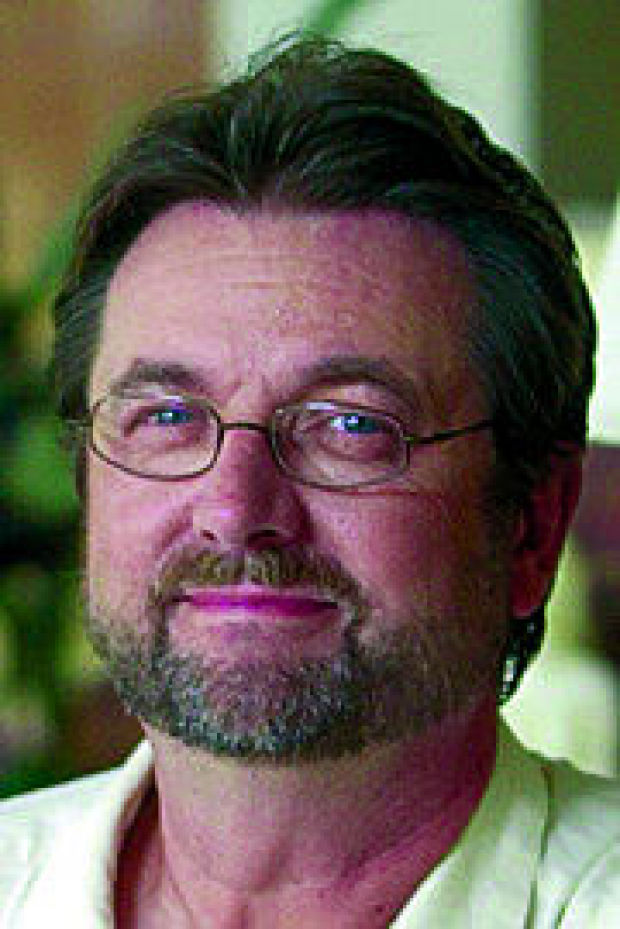
This Quiet Time article appeared in the Waterloo-Cedar Falls Courier. It is published here with permission from the columnist, Scott Cawelti, a retired professor of English at the University of Northern Iowa, freelance writer and musician. Contact him at cawelti@forbin.net. Click here to see Scott Cawelti BIO. Photo by Doug Hines.

It’s about time for “Quiet Time”

January 11, 2015 6:00 am  • 

Nothing succeeds like success, as they say, and I’m here to report two genuine successes. One is small, the other large, a possible game-changer.

The small success involves my own daily meditation practice. It began over 30 years ago and continues to this day.

As a young assistant professor teaching anywhere from 90 to 250 students in three classes, struggling with writing conference papers, grading piles of student essays, meeting with students, attending multiple faculty committees, facing constant pressure to do more and do better, I was stressed. I mean, stressed out, exhausted, short-tempered and chronically anxious. I was staying afloat, but barely.

In those days, Cedar Falls had a Transcendental Meditation Center down on Third and Main streets, and a couple of friends each recommended I try TM.

Scott Cawelti

Scott Cawelti

I did, and it worked. Within a few days of twice-daily meditation, I began feeling relaxed, then peaceful, then downright blissed out. Well, not quite, but close.

And it continued. No one was more surprised than I.

Over the years I’ve attended meditation workshops, modified my practice slightly, and still continue meditating twenty minutes, twice a day. It has made all the difference in my stress level, and I’m still alive, well and pushing 72.

I’m convinced regular brain-quieting has given me more, and better, years. That’s what meditation does, by the way: quiets our always-buzzing brains.

I recommend some form of meditation for anyone who feels overwhelmed with pushes and pulls beyond their control. If it worked for me, it will work for you.

Beyond my own small life, there’s a much larger meditation success story that recently made national news.

At Visitacion Valley Middle School in San Francisco, they began a program in 2007 of twice-daily “quiet time” breaks for the entire school. This particular school sits in a rough, even violent, neighborhood. Attendance, academic scores and teacher and student retention were dismal.

Teachers and students alike hated the chaos of school days. In other words, the school made no progress toward anything but failure.

Now, after over seven years, they can judge Quiet Time’s success. It’s been dramatic, schoolwide and heartening. This is how David Kirp, a professor of public policy at Berkeley, describes the results:

“In the first year of Quiet Time, the number of suspensions fell by 45 percent. Within four years, the suspension rate was among the lowest in the city. Daily attendance rates climbed to 98 percent, well above the citywide average. Grade point averages improved markedly. About 20 percent of graduates are admitted to Lowell High School – before Quiet Time, getting any students into this elite high school was a rarity. Remarkably, in the annual California Healthy Kids Survey, these middle school youngsters recorded the highest happiness levels in San Francisco.”

Amazing but true. Kirp continues:

“On the California Achievement Test, twice as many students in Quiet Time schools have become proficient in English, compared with students in similar schools where the program doesn’t exist, and the gap is even bigger in math. Teachers report they’re less emotionally exhausted and more resilient.”

Incidentally, students are not forced to practice TM. They can simply close their eyes, daydream, nap — as long as they’re quiet during those two 15-minute periods.

Parents must give permission if they want their child to learn the meditation technique.

I can hear objections: wasting valuable school time, returning to hippie-dom, imposing a religious practice in a state school. All of these seem to be satisfactorily answered, since the program’s success with the parents’ permission for seven years speaks for itself.

Best of all, Quiet Time costs virtually nothing, and it affects whole schools so positively (based on real data) it’s at least worth a look.

My own small success story offers unqualified support.

Much more power to them.

# # #

Quiet Time at Visitacion Valley Middle School

Principal James Dierke first implemented the Quiet Time Program at Visitacion Valley Middle School in San Francisco. As a result of his school’s dramatic turnaround he was selected NASSP National Middle School Principal of the Year in 2008. Principal Dierke wrote an article about it (a Quiet Transformation) for Leadership, a publication of the Association of California School Administrators. He concluded, “I retire with the lowest blood pressure I have had in 10 years and a great optimism about our ability to realize this vision for education.”

NBC Nightly News reports on the Quiet Time Program

NEW VIDEO: With the successful transformation of Visitacion Valley Middle School several schools in the San Francisco Unified School District also incorporated the meditation-based Quiet Time Program with amazing results. Cynthia McFadden visited both Visitacion Valley Middle School and Burton High School and filed a report on December 30, 2014 for NBC Nightly News: San Francisco Schools Transformed by the Power of Meditation. Visit the David Lynch Foundation for more on the Quiet Time program in schools.

Edutopia reported on Quiet Time at Visitacion Valley Middle School

David Markus, former Editorial Director of Edutopia, had visited the school and produced this report: Risking Peace at a Troubled School. Below is the video: How Daily Meditation Improves Behavior. Here is another video on the school’s program: Meditation in San Francisco School Improves Learning

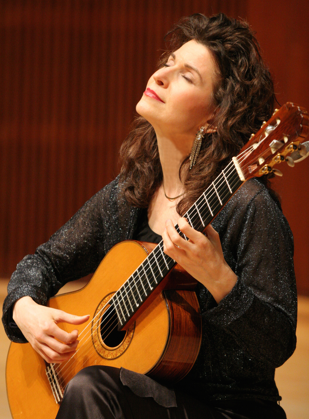
World-famous classical guitarist @SharonIsbin says #TranscendentalMeditation “helped make me the person that I am.”

January 7, 2015

Sharon Isbin: Seeking Out Serenity

Classical guitarist Sharon Isbin has been a trailblazer for both female musicians, and the guitar’s place in the world of classical music. A winner of two Grammys, she is the director of guitar programs at the Juilliard School and at the Aspen Music Festival. Liz Robbins interviewed Ms. Isbin for The New York Times and wrote this fascinating article on the world’s greatest classical guitarist: Sharon Isbin: Seeking Out Serenity. The Jan 2, 2015 Sunday Routine featured photos, other aspects of her life, and a short video of Sharon playing guitar. The article was well-written and richly put together. This part took me by surprise:

I have done Transcendental Meditation since I was 17 years old. I do 20 minutes in the morning and 20 minutes in the afternoon. I really believe it has helped make me the person that I am. Because it is an extraordinary way to release stress and allow it to dissolve, so that you can focus on what you want to focus on, and have your energy towards very positive things.

Sharon Isbin: Cosmic Performer

An earlier insightful article written by Linda Egenes for Enlightenment, The Transcendental Meditation Magazine (Issue 7) sheds more light on this topic: An Interview with Sharon Isbin: The Monet of Classical Guitar. Knowing that Sharon had been practicing TM since she was 17 years old, Linda asked how it had benefited her life, especially performing in front of live audiences. Her amazing reply reveals an enlightened performer.

As a musician, TM enhances my mental stamina, memory, concentration, and ability to learn. It puts me in touch with my innermost creative core and enables its expression through music. Most importantly, it facilitates instant access to a state of “cosmic immersion,” that feeling of being in the flow, or in “the zone.”

Sharon IsbinWhen I perform onstage, I enter a state of being very similar to the one I enter daily when practicing TM. It’s a sense of communion with the energy of the universe, the audience, the composer, and the music—without ego or interference. It’s a feeling of unity between me and the listeners, a sense of “oneness” in which we are all experiencing the beauty of the music together. That sensation is one of the reasons live performances can be so powerful—everyone is focused and transported, and the experience is unique and in the moment, never to be replicated.

Guitar Passions: Sharon Isbin & Friends

Linda also asked Sharon questions about her musical influences and her work as a performer, teacher and collaborator, in particular about her new CD at the time, (August 30, 2011) Guitar Passions: Sharon Isbin & Friends. This promotional video shares music and interviews with Sharon and Steve Vai; in studio with Nancy Wilson (Heart) and Stanley Jordan; previews with Steve Morse, Paul Winter, Rosa Passos, Romero Lubambo, and Thiago de Mello.

Documentary Film: Sharon Isbin: Troubadour

Sharon Isbin is also featured in a new documentary film that came out towards the end of last year, and is still being aired on public television: Sharon Isbin: Troubadour. The one-hour documentary produced by Susan Dangel (2014), includes guests Martina Navratilova, Michelle Obama, Joan Baez, Steve Vai, Stanley Jordan, Garrison Keillor, David Hyde Pierce, Janis Ian, Lesley Gore, Mark O’Connor, Tan Dun, John Corigliano, Christopher Rouse, Joan Tower, Leonard Slatkin, Thiago de Mello, Paul Winter, and more, with Isbin’s performances showcased from international concert stages to the GRAMMYs and White House.

American Public Television presents the national broadcast on nearly 200 public television stations in the US Nov 2014 – March 2015. Video Artists International will release it on DVD/Blu-ray with added performances. See http://www.sharonisbintroubadour.com for screenings, broadcast, and release information.

Sharon Isbin on The Leonard Lopate Show

Today, Wed, January 7, 2015, WNYC’s Leonard Lopate interviewed Sharon Isbin about the program: A New Documentary On The Acclaimed Classical Guitarist, Sharon Isbin (16:33). Leonard asks Sharon about her Transcendental Meditation practice at the 10:50 mark. She answers at 11:08–12:20. Leonard mentions Julliard School inviting Sharon to head up a guitar department in their Music division and asks if Transcendental Meditation is part of the program. At the request of the David Lynch Foundation, Sharon did invite teachers to introduce the TM technique to Julliard faculty, staff, and students, offering to make it available for free. Listen to the interview here: http://www.wnyc.org/story/sharon-isbin.

Visit Sharon Isbin’s website, www.sharonisbin.com, for more information: biography, press, music, videos, tours, and more.

Remembering 9–11, The Merciful Nature of Time

September 11, 2014

Remembering 9–11

When it comes to dealing with adversity, accepting it is not always easy, especially when it involves a devastating sudden loss, like what happened on 9-11, (September 11, 2001), 13 years ago today. Many had to accept it, live with it, and over time, hopefully distance themselves from the painful memories of the loss of their loved ones.

Same thing if it’s an ongoing situation, where you see someone you love disappearing before your eyes due to some incurable disease. Maybe it’s not as devastating. I don’t know. Grief is grief; it’s not easy. But our perspective could change over time. And that can be the merciful nature of time. Here is a haiku about it.

The Merciful Nature of Time

Time is kind to us
It lets us get used to change
Then we can move on

© Ken Chawkin
September 11, 2014

Does Time Heal All Wounds?

They say, Time heals all wounds. But does it? Not according to , a counselor who specializes in end-of-life and bereavement matters. He says it’s what you do with the time that heals. Read his article published  in Psychology Today’s The Journey Ahead.

The David Lynch Foundation

One organization helping people deal with adversity and various forms of traumatic stress and grief is the David Lynch Foundation. Visit their website and see how they are Healing Traumatic Stress and Raising Performance in At-Risk Populations http://davidlynchfoundation.org. See DLF executive director Bob Roth speak at Google Zeitgeist 2014.