The Chicago Tribune article, which came out a few months ago on Fairfield, TM, MUM, and The Raj, continues to be published in major papers throughout the country, and now around the world. The current issue of The Week, a very prestigious weekly magazine, included a synopsis of that story. The Week takes the best of international media and publishes it in their US, UK, and AU editions. So American, British, and Australian subscribers are now reading about us! It is also available online at their websites, but you have to be a subscriber to access it. Here is a shortened link to the article for subscribers: http://bit.ly/fYNcXL. Below is the text copied from a jpg of that page someone sent me. The column, Getting the flavor of…Iowa’s aura, is in the middle of the bottom right corner of a page in the Travel section of the Arts+Life section in this week’s issue: THE WEEK February 25, 2011.
Getting the flavor of…
lowa’s aura
Fairfield is “not just any Iowa town,” said Josh
Noel in the Chicago Tribune. Though “hemmed
in by farms” and rich in traditional Midwestern
charm, this small county seat does double
duty as a mecca for transcendental meditation,
or TM. Maharishi Mahesh Yogi, who began
the TM movement in the late 1950s, moved
his Maharishi International University from
California to Fairfield in 1974. The town got
caught up in the phenomenon, and today “a
quarter to a third of the population” practices
meditation. Twice a day, hundreds of locals,
including the mayor, meditate at precisely the
same time. Visitors are welcome, and can book
tours of various TM sites. I made an appointment
for shirodhara, a treatment that involves
“pouring a steady stream of oil on the forehead”
to balance the mind. “Life’s busy thoughts faded
as the oil rhythmically fell.” travelfairfieldiowa.com
War is an addiction; it’s a curse. We have not learned one thing since David, 5000 years ago, slung a pebble at a guy and killed a giant. All we’ve done is invent better pebbles and better slingshots, human to human. — Jerry Yellin
Mr. Yellin, co-director of Operation Warrior Wellness, a division of the David Lynch Foundation, discusses his wartime experiences, his difficult transition suffering from PTSD, then unknown, and how TM, Transcendental Meditation transformed his life. This ½ hour radio interview was broadcast February 20, 2011, on 5 CBS radio stations in the Tampa Bay area in Florida.
Besides the tragedies of war, the tremendous stresses today’s soldiers and their families are under, and their very difficult transition to civilian life, Jerry also speaks about his goals: to not wait for the government to act but to start treating the soldiers themselves with PTSD, to help the families of war veterans, get warriors to learn TM as part of their basic training, and save government $15 billion a year.
The surgeon general said that America is swimming in an ocean of stress. If this is true, ourchildren are drowning in it. ~ Robert Roth, Vice President of the David Lynch Foundation
A teacher of a Montgomery County high school describes the 7:30 AM morning: kids with hoods pulled over their eyes, practically sleepwalking. At their desks, students are slumped over, exhausted – sleep deprived.
A school counselor describes a student whose deep anxiety constricts her ability to understand a basic math concept, and another student whose pressure to succeed is so intense that anxiety escalates into insomnia, depression, and feelings of suicide.
In most schools in our country, the student himself, and his instrument of learning – his physiology – are being ignored. We are experiencing – possibly promoting – epidemics of sleep deprivation and stress in our schools, and in the general public. Not only do we not pay attention to students’ physical health, we do the opposite: impose physical and mental strain – sometimes to the breaking point – often with serious, long-term results for both physical and emotional health.
In this article, we look at some recommendations and programs addressing this problem. We begin with refreshing our understanding of the goal of ideal education. Next we look at sleep deprivation, stress, anxiety, and related problems of ADHD and depression, and the impact on student health and learning. Next, advice by professionals who work in this field of stress and adolescence will be presented. Finally, we look at promising examples where recommendations are successfully implemented: a school in D.C., the Ideal Academy Public Charter School, experiencing remarkable results by incorporating “Quiet Time” into the daily routine; and breakthrough research on ADHD and “Quiet Time” from several middle schools.
WHAT DOES EDUCATION REALLY MEAN?
All that lies before us and all that lies behind us are tiny matters compared to what lies within us. ~ Emerson.
Education comes from the Latin root ‘educere’, meaning to ‘draw out from within’ or to ‘lead forth’. ‘Education’ means something other than filling up the mind with information. Socrates said, “Education is the kindling of a flame, not the filling of a vessel.” It involves cultivating the
student’s inner genius, innate intelligence, creativity, consciousness.
Quite clearly the two great things for which we aim are the improvement of intelligence and the deepening and the extension of the feeling of friendliness and love. ~ Aldous Huxley
A student truly being educated is not merely learning information. He is cultivating the quality of his awareness: becoming more awake, clear, creative. He is developing his character: virtues of friendliness, helpfulness, compassion. And cultivating a love of learning and sense of vitality: feeling interested, enthusiastic, capable, confident.
The qualities we often find in great people – flexibility, curiosity, energy, receptivity to new ideas, and lovingness – are first found in children and then maintained through adulthood. ~ Dr. Melanie Brown, Attaining Personal Greatness: One Book for Life
But what are we doing to cultivate these qualities in our students? It seems clear that we often forget the meaning and goal of education.
Click on the above title for a Google docs quick view of the entire article, including photos, and/or download the PDF of Taking Care Of The Student – The Forgotten Element In Education, originally printed in the Winter 2009 issue of Pathways Magazine, Washington, DC.
If you enjoy reading inspiring true life stories, Obstacle Illusions: Transforming Adversity into Success is for you. And if you’re a journalist, here’s an amazing human-interest story you may want to cover!
Born profoundly deaf, Stephen J. Hopson didn’t let that stand in the way of fulfilling his dreams. His mother taught him to speak at home and sent him to public school. He attended college and got his first job working in a bank. He eventually left this secure position to further his career as an award-winning Wall Street stockbroker.
At five years old, he told his parents he would become a pilot and was dismissed as being foolish, but as an adult he made aviation history by becoming the world’s first deaf instrument-rated pilot.
Stephen credits his grade 5 teacher for transforming his young life, which gave him the confidence to do anything he set his mind on. “One of the stories includes the three words that forever changed my life as a skinny, bucktoothed kid who wore monstrous hearing aids, and although appeared happy-go-lucky on the outside, had low self-esteem because I was having a very difficult time in school.”
As you will see, Stephen is a risk-taker. A personal experience made him realize that his real purpose and passion at this stage of his life was to become a global transformational speaker and author. In the late 1990’s, he left his lucrative Wall Street job, and after learning how to fly, decided to go back to college. He graduated from MUM in 2010 and continued writing his life story.
Because he wanted to inspire others to overcome their shortcomings, usually imaginary, the way Stephen had experienced his life; he turned his life’s journey into a book entitled, Obstacle Illusions: Transforming Adversity into Success. Through his writings and speeches Stephen is inspiring thousands of people worldwide to believe in themselves and achieve the impossible.
His book contains 25 stories from his life and the lessons he learned from them. Each chapter ends with exercises that ask readers to reflect on their own lives and see beyond their obstacles. His publisher says this is the greatest self-help book ever. “I absolutely recommend it to anyone needing inspiration to get back in the game and win big time!” Read a sample, Chapter 11, from Obstacle Illusions: Harry the Arrogant Bank Boss.
Obstacle Illusions is available from 1st World Publishing, on Amazon,Barnes&Noble, and can also be ordered from Stephen’s website. Mr. Hopson will host a book signing at Revelations in Fairfield on Saturday, March 5, 2:00-4:00 p.m.
Besides in-person interviews, Stephen can also communicate using online video relay services where he and the interviewer speak on the phone while a live operator signs to him on his laptop in real time. Let me know if you’d like to speak with Stephen and I’d be happy to arrange an interview for you. Visit Stephen’s website for more information and a video: http://www.sjhopson.com/.
I enjoyed reading Stephen Hopson’s book Obstacle Illusions: Transforming Adversity into Success. He comes across as a very sincere hard-working risk-taker who wants to keep changing and evolving, learning from each experience—something that hopefully will inspire others to do the same and get out of the rut they’ve allowed themselves to wallow in. Stephen’s transparency will allow readers to see themselves more clearly.
I mention this because Stephen innocently shares his realizations of all that happened to him in his life. He sees it was all for him, and not to him; he’s not a victim. Those incidents and people allowed him to learn, grow, and evolve as a human being. They were there to help him fulfill his life’s ambitions, whether he knew it or not at the time.
Read the book in chronological order. If you don’t you could be missing out on a very special experience. The last chapter is very powerful. It’s the climax of the book. I was literally shaking with excitement as tears were rolling down my cheeks. Even though this chapter is out of chronology, Mr. Hopson was wise to have placed it at the end of the book.
Stephen’s story also demonstrates the power of gratitude when we lovingly, unselfishly want to thank those for whom we are grateful. Events move in our favor to fulfill such a pure desire in ways we never would have imagined, bringing great joy to everyone involved.
Almost morning,
somewhere along the edge of March,
I woke to a moment so still,
I heard the ice cracking
on the frozen waters of the world.
Rising from the valley
between night and day,
I opened my eyes and saw my watch
sleeping on the table,
stopped at midnight.
It was a signal for the beginning
of real time.
Here and now the world is new.
We see by the light of the sun
that shines in the middle of the head,
while invisible winds
blow everything false away.
Who will miss the shadows of our old lives?
This is how we enter the future,
through the door of the present.
This is where we find the place
we have longed for,
where no one needs to ask,
“Where am I? Which way should I go?”
We are made of green earth and gold fire.
The blue sea flows through us,
and the sweet, silver air.
The stars flash from the mind
to the sky,
growing brighter as we look.
Soon, we will not even remember
the time when we were asleep,
dreaming that this would happen.
4.Ken Chawkin February 12, 2011 at 4:48 pm
A dazzling poem, written from the silent gap, where true renewal is possible. Thank you for this brilliant contribution, Roger. You make us all shine!
Innovative ideas are often born in California. This is the home of Silicon Valley, after all. But, that spirit of innovation isn’t limited to finding more ways to plug in to the world of high tech. Innovation also means finding ways to disconnect from it all. This kind of innovation is taking place in three San Francisco public schools that have started school-wide meditation programs. The hope is that a little quiet time and mindfulness will help facilitate learning.
It’s all paid for with private money, and one school says it’s seeing results. Natalie Jones reports on how it works.
* * *
NATALIE JONES: Middle schools do not tend to be quiet places. For many people, middle school is hard enough in the best of circumstances. For students growing up in rough neighborhoods or dealing with difficult family issues, it can be especially stressful.
That’s why four years ago, James Dierke, principal of Visitacion Valley Middle School in San Francisco, decided to implement a meditation program for the entire school to see if it would help students and teachers deal with stress and focus on schoolwork.
JAMES DIERKE: There’s individual stresses of just being a teenager, there’s family stress, there’s community stress, and all those things multiply within a person. So this is something that everyone can do and doesn’t require a tremendous amount of effort on their part but has great results.
The program is called Quiet Time, and it teachers students the practice of Transcendental Meditation.
PA SYSTEM ANNOUNCEMENT: Please excuse this interruption, teachers and students, please prepare for Quiet Time, please prepare for Quiet Time.
Mr. Tagaloa’s homeroom is getting ready for the morning meditation session – they do fifteen minutes at the beginning of their school day, and fifteen minutes at the end.
VAO TAGALOA: Going to start our Quiet Time, let’s start by sitting up straight…close the eyes….let’s enjoy.
The dozen or so 8th graders in the room turn to face front, shut their eyes, and stay that way for a full fifteen minutes, without breaking the silence or fidgeting.
Visitacion Valley is one of the more challenged schools in the district – about two thirds of its students were getting free or reduced lunch last year, and the percentage of students proficient in basic subjects is lower than both the district-wide and the state-wide percentage.
In the last three months alone, there have been two homicides and more than a hundred assaults within just a mile radius of the school. Principal Dierke compares growing up in the neighborhood to living a war zone.
DIERKE: A lot of our kids come down with post-traumatic stress, just like you would if you lived in Iraq. So it’s hard to turn that off when you come in the school building when you sit down and try to study.
Post-traumatic stress is a hard thing to combat, but there are signs that Quiet Time is effective. Since the program started, test scores have gone up a little bit, attendance rates have gone up a little bit, and suspension rates have gone down, although the changes are only by a few percentage points. Most of the evidence of the program is anecdotal. Students and teachers participate willingly and say it’s helpful for them, and surveys that school has done return positive feedback. Though not everyone was enthusiastic at the beginning.
TRISTAN: Well, when they first took me in to train, I wasn’t so sure about the program…
Tristan is an 8th-grader, and has been doing meditation at school since 6th grade.
TRISTAN: But when I started to get into it and started to do it every day I noticed that it really helped me because I was sort of a trouble child, and then when I started to meditate I started to become a leader, I got good grades, so it was really helpful.
Students do have the option of doing something else quiet, such as reading, but Principal Dierke says only a few have chosen to do that. He’s also had strong support from parents.
DIERKE: In the last four years that we’ve been involved in this, I haven’t had one negative parent complaint.
The program, which for this school year costs about $175,000, is funded almost exclusively by the David Lynch Foundation, an organization set up by the filmmaker David Lynch, who’s known for surreal films such as Mulholland Drive and the TV series Twin Peaks. The organization’s goal is to provide Transcendental Meditation in schools and communities that could benefit from stress reduction. The rest of the funds come from private donations, which pay for 3.5 full time staff members who are trained to teach meditation. They spend their time teaching new students, helping returning students remember how to use the method, and training the teachers.
Two other schools in San Francisco are also trying the program – Everett Middle School and John O’Connell High School. They haven’t been doing it as long as Visitacion Valley, but they’re all hoping that meditation can create a refuge for students who wouldn’t otherwise have one.
For Crosscurrents, I’m Natalie Jones.
Natalie Jones is a reporter with the UC Berkeley Graduate School of Journalism.
So, what do you think about meditation for school kids? Would you be behind that? Let us know at 415-264-7106, or send us an email.
An interview took place a few years before David Letterman started Transcendental Meditation. Howard Stern was on his show and David Letterman was asking him about a number of things, one of which was his meditation practice. Howard tells him the story of how he started Transcendental Meditation. It was because of his mother, who saw Maharishi Mahesh Yogi on the Johnny Carson show, and went to the TM Center to learn to meditate. His mother was suffering from depression at the time and called him up one day sounding completely transformed. When he came home for a visit from college she took him to the Center to learn. He said it was easy, and has been practicing it since he was 18 years old.
This part of their discussion is funny. Letterman describes what he didn’t want to get involved in and tried something where he listened to some instructions on a headset. He was told if he fell asleep he wasn’t doing it right. Stern said that wasn’t Transcendental Meditation and that sleeping was fine. David seemed interested. It’s posted on the Center for Leadership Performance Facebook page. And now here:
Anyone can learn more about Transcendental Meditation at http://www.tm.org.
Oprah and Letterman talk about Transcendental Meditation
After David was meditating for about a year or so, he had Oprah Winfrey on his show talking about meditation in general, and then specifically Transcendental Meditation. This is the show where Dave publicly reveals that he and his staff do TM, which they learned from “Meditation Bob” aka, Bob Roth.
About a year or so after that when Lindsay Lohan is on Dave’s show, they pull a prank and call Oprah. She reminds Dave about the last time they spoke about TM, saying they shared the same meditation teacher, Meditation Bob, which is Bob Roth’s twitter address. The Washington Post described the three of them as a Comedy Dream Team.
On his March 19, 2009 show, Howard noted that he recently spoke with director David Lynch and agreed to speak at his upcoming Transcendental Meditation benefit concert. Howard said he began meditating daily after first trying it in college: “All of a sudden I stopped smoking cigarettes…I lost the desire…It wasn’t like a forced thing. I just said, ‘Today, I’m done.'” Howard continued to praise the cult-free technique: “You see changes in yourself. It’s very interesting.”
Every time Howard would talk about TM on his show, especially with guests he knows are meditators, like Hugh Jackman and Russell Brand, the TM Call Center would get inundated with inquiries.
The self-proclaimed king of all media, Howard Stern is best known as a shock jock since he’s outspoken and talks a lot about sex. Private Parts was a hit movie about his life and show. He went from terrestrial radio to SiriusXM Satellite Radio, and brought 20 million listeners with him. That’s paid subscribers! He has an international audience. He recently renegotiated a$500 million dollar five-year contract, making him the highest paid broadcaster/entertainer in the business! You can now get an app and listen to his show on your iPhone!
Looking out onto the world between the slats of the blind— too beautiful a day to stay inside— the light white on everything the wind almost nowhere to be found the trees stand motionless some leaves slowly undulating like the waves on the surface of a calm ocean reflecting sparkling lights off the thin skin of the water
I think of you today and how your world will be when you awaken three hours later—earlier three thousand miles apart as if time and space had their own domains and consigned us confined us to our own separate realities
But you and I— our consciousness—stretches across time across space weaving our own connections under the surface fabric of things to always remain one singularity separate—but joined at the trunk of the tree of this universe
Prominent Brain Researchers Demonstrate How Students Can Overcome Stress Crisis And Function Like Top Achievers
Free Public Lecture: February 8, 2011, 5 p.m. Location: Harper Memorial, #103, 1116 E. 59th Street, Chicago, IL 60637 Sponsored by: Students Transcendental Meditation Association, University of Chicago Contact: Dr. Carla Brown: 773–324–8695, chicago@tm.org
How can today’s students overcome the debilitating effects of heavy stress – made even more difficult by the economy – in order to perform at their best? It is indeed possible, and two prominent brain researchers will demonstrate how and share their compelling research findings on Tuesday, February 8, during a free public lecture at the University of Chicago. Check below for a listing of other lectures at different locations throughout the week.
Dr. William Stixrud, Ph.D., a prominent clinical neuropsychologist from Silver Spring, M.D., and Dr. Fred Travis, a neuroscientist and Director of the Center for Brain, Consciousness and Cognition at Maharishi University of Management in Fairfield, IA, will discuss how meditation can affect functional integration of the brain and enable changes that result in dramatic reductions in stress hormones and cardiovascular disease.
Both doctors agree that students can use these same meditation techniques to help them reduce and overcome stress and pressure, perform better, and engender increased well being and contentment.
Last week the New York Times covered a survey of 200,000 college freshmen that found that their emotional health was at the lowest level surveyed in 25 years. Dr. William Stixrud, who specializes in work with children and adolescents, responded,
“It is possible for students to ‘have it all’—to experience high achievement in a competitive world and still have happiness and peace of mind.”
Dr. Stixrud’s 2008 research found that middle school students with ADHD who practiced the Transcendental Meditation technique twice a day in school experienced over 50% reduction in stress and anxiety, and improvements in ADHD symptoms.
During the lecture on February 8, Dr. Travis will also present a live demonstration of changed brain activity as a result of the Transcendental Meditation® technique and will discuss differences in TM from other mental techniques.
In 2009 Dr. Travis collaborated with the American University Department of Psychology in Washington, D.C. in the first random assignment study of effects of meditation practice on brain and physiological functioning in college students International Journal of Psychophysiology, 2009. Dr. Travis and colleagues randomly assigned American University students to practice the Transcendental Meditation technique. Measured during the height of exam pressures, these students exhibited functional brain integration resembling that of gold medal athletes.
Non-meditating controls in this experiment were overwhelmed and displayed significantly less brain integration, which is brain functioning that was more fragmented and disorganized. Students reported being more anxious and irritable, reflecting the detrimental effects of college life on the students.
According to a study published in the American Journal of Hypertension, December 2009, the Transcendental Meditation technique was shown to be an effective method of reducing blood pressure, anxiety, depression, and anger among at-risk college students.
“The problem is stress,” says Dr. Stixrud, who has studied and lectured frequently on the effects of stress on the brain, particularly the developing brain. Dr. Stixrud added,
“The effects of stress are not pretty. Not only does stress interfere with functions such as attention, memory, organization, and integration, but prolonged stress actually kills brain cells and shrinks the brain’s main memory structures. In fact, the top stress researchers in the world report that lifelong stress level is the best predictor of risk for Alzheimer’s disease and other forms of dementia. In light of this research, I am increasingly struck by how counterproductive it is for students to learn in highly stressful contexts, since stress not only interferes with their learning and retention in the short run but also burns out their brains in the long run.”
FREE PUBLIC LECTURE SERIES:
Diamond Bank, Conference Room, 1800 W. North Avenue, Chicago, IL — Tuesday, February 8th, 11:30 am
University of Chicago, Harper Memorial, #103, 1116 E. 59th Street, Hyde Park, Chicago, IL — Tuesday, February 8th, 5 pm, sponsored by: Students Transcendental Meditation Association
Joliet Junior College, 1215 Houbolt Road, Rm. D 2001, Joliet, Il — Wednesday, February 9th, 1:15 pm. For information, call Pat Tinken 815 280 6660
Oak Park Public Library, Veterans Room (2nd Floor), 834 Lake St., Oak Park, IL — Saturday, February 12th, 2 pm
Chicago, Jan 9 (IANS) There has always been a pervasive but undocumented feeling that Indian philosophy, as manifest in Vedanta on the intellectual plain and yoga on the physical plain, has very significantly influenced the West in general and America in particular. That feeling now finds a meticulously constructed scholastic endorsement in the form of an important new book.
‘The combination of Vedanta and Yoga was a perfect match for certain American values: freedom of choice and religion, individuality, scientific rationality, and pragmatism. They appealed especially to well-educated Americans who were discontent with ordinary religion and unsatisfied by secularism, giving them a way to be authentically spiritual without compromising their sense of reason, their consciences or their personal inclinations,’ Goldberg told IANS in an interview.
He said Indian teachers who came to the US were conscious of the openness of American society and they adapted the teachings accordingly.
Explaining the mainstreaming of Indian philosophy in the US, Goldberg said, ‘I think the remarkable growth of the ‘spiritual but not religious’ cohort of Americans would have been unthinkable without access to the practices derived from Hinduism and Buddhism. In addition, the philosophy was presented so rationally that its premises could be regarded as hypotheses, and the practices were so uniform and so widely applicable that they lent themselves to scientific experimentation.’
The book begins with a claim that is deliberately designed to be an attention grabber. ‘In February 1968 the Beatles went to India for an extended stay with their new guru, Maharishi Mahesh Yogi. It may have been the most momentous spiritual retreat since Jesus spent those 40 days in the wilderness. The media frenzy over the Fab Four made known to the sleek, sophisticated West that meek, mysterious India had something of value. Our understanding and practice of spirituality would never be the same,’ Goldberg writes.
He points out that translated Hindu texts were very much a part of the libraries of John Adams, the second president of the United States and one of its most respected statesmen and political theorists, and Ralph Waldo Emerson, an eminent poet and essayist who led the transcendentalist movement in the mid-19th century. From there those ideas permeated to author and philosopher Henry David Thoreau and poet Walt Whitman among others.
In recounting Thoreau’s perspective about the Bhagavad Gita, Goldberg refers to a much quoted passage from the book Walden. Thoreau writes, ‘In the morning I bathe my intellect in the stupendous and cosmogonal philosophy of the Bhagavad Gita, since whose composition years of the gods have elapsed, and in comparison with which our modern world and its literature seems puny and trivial.’
The book has two distinct trends in support of the author’s primary contention about how Indian spirituality changed the West. One trend is at the operational level where words such as mantra, guru, karma and pundits have so seamlessly become part of the mainstream lexicon. The other trend is much deeper in terms of internalising the core values of Indian philosophy. Asked if the people in the US are conscious of this, Goldberg said, ‘Some are conscious of it, and therefore grateful to the Indian legacy. Others are not: it’s seeped into the American consciousness in subtle but profound ways.’
Goldberg also talks about the ‘Vedization of America’. On whether it can be attributed to the general secularisation/pluralisation significantly caused by the rise of agnostic information technologies, he said, ‘If you mean, could the trends I describe be attributed to the growth of pluralism and other social forces, independent of the Indian influence, it is very hard to say. Certainly, the combination of factors made for a perfect storm. I tend to think that the experiential practices of meditation and yoga, and the intellectual framework of Vedanta, accelerated, deepened and broadened what might have been an inevitable but amorphous evolution.’
On whether he apprehends any organized backlash or pushback against Indian philosophy, he said ‘Not a big one, but some of it is inevitable. There has always been a backlash from both mainstream religion – conservative Christians in particular – and the anti-religious left. Vivekananda faced up to it in 1893, and all the important gurus were confronted by it. Right now, there’s an anti-yoga campaign by some Christian preachers. I’d be very pleased if my book becomes a lightning rod for such a controversy. Bring ’em on!’
On a movement in support of a ‘Christian yoga’ that may be gaining some ground Goldberg said, ‘That’s a more complicated issue than is often realised. The question, ‘Is yoga a form of Hinduism’ depends entirely on how one defines both yoga and Hinduism. That there are people teaching Christian Yoga and Jewish Yoga strikes me as a backhanded compliment to one of the great glories of the Vedic tradition: its universality and adaptability. That having been said, the idea that yoga is ‘a Hindu tool,’ i.e., a form of stealth conversion, strikes me as a projection by Christians of their own messianic drive to convert the ‘heathen’. That conversion is not in the Hindu repertoire – and that the gurus and swamis and yoga masters are content to have their students become better Christians – is hard for many to comprehend.’
(Mayank Chhaya is a US-based writer and commentator. He can be contacted at m@mayankchhaya.net)
Huffington Post named American Vedaone of the top ten religion books of 2010.
 Getting the flavor of…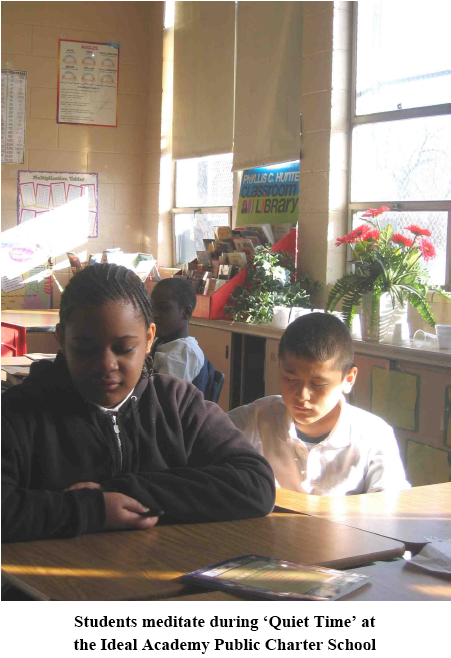




1. Bob Ferguson
February 12, 2011 at 1:21 pm
Beautiful poem Freddy. It lifted my spirits!
Bob
2. K. Kelly
February 12, 2011 at 2:03 pm
Bravo Roger!
3. Bill Graeser
February 12, 2011 at 3:37 pm
a very fine poem-thanks
4. Ken Chawkin
February 12, 2011 at 4:48 pm
A dazzling poem, written from the silent gap, where true renewal is possible. Thank you for this brilliant contribution, Roger. You make us all shine!
5. Michelle Bliss
February 14, 2011 at 9:33 am
This one goes in my pocket for everyday reading. It is certainly what I was supposed to hear today. Thank you Roger.
6. Leah Waller
February 14, 2011 at 11:29 am
really love the first few lines, “Almost morning, somewhere along the edge of March” beautiful!
7. Robin Burkhardt
January 9, 2013 at 7:15 pm
Roger, I enjoyed the poem. I see the Hudson Highlands in it.
Best, Robin B