Maharishi University #MaharishiU MBA students finish in top 1% in worldwide business simulation

February 22, 2017

This is the 4th time MUM MBA students finished in the top percentile at Capsim Management Simulations since they began competing in 2011.

Fairfield, IA – A team of MBA accounting students at Maharishi University of Management in Fairfield recently finished in the 99th percentile in an online business simulation that involved 1,136 master’s-degree-level teams worldwide, competing against teams from schools such as Indiana University, Kansas State, Temple, University of Georgia, University of Northern Iowa, Ohio University, and California State.

This is the fourth time MBA students from MUM have finished in the top percentile since they began participating in the simulation in 2011.

Indicates readiness for job markets

Andy Bargerstock

Andrew Bargerstock, PhD, CPA, Director of MBA Programs at Maharishi University of Management

“We had five teams that participated in the simulation for three weeks in January, and as a group they performed better than two-thirds of participating MBA schools,” said Professor Andy Bargerstock, who taught the capstone course that involved participating in the simulation. “As faculty in the business college, we feel that the simulation results demonstrate the readiness of our students for job markets now and ultimately for executive leadership positions.”

The team’s results in this ongoing simulation were confirmed by Brianne Haustein, client relations consultant with Capsim Management Simulations in Chicago, Illinois.

How the simulation works

In the online Capsim simulation, points are earned through well-defined metrics based on the Balanced Scorecard, a concept developed by Robert Kaplan at Harvard University. It recognizes four perspectives for measuring performance: customer, financial, internal business processes, and learning/growth.

The students must manage both short-term and long-term metrics across eight rounds of decision-making, with each round representing one year. This entails using their knowledge of marketing, finance, operations, human resources, accounting, problem-solving, and data analysis.

The teams act as executives who plan strategies and implement tactics across eight years of business activities.

The basis for comparison

While not a real-time competition per se, the ongoing simulation allows MBA teams to compare their performance with all the other teams who have participated in the previous six-month period from the end date of the last round of decisions.

By the time Dr. Bargerstock’s students participate in the simulation, they have taken a variety of courses such as marketing, finance, human resource management, operations management, business law, and lean management. Then they apply everything they’ve learned by participating in the simulation.

“We began participating in the simulation for a couple reasons,” Dr. Bargerstock said. “It’s an excellent exercise for applying everything they’ve learned. But I was also really curious how our students matched up with other MBA students around the world. It’s gratifying to know that they compare favorably and are clearly ready to be high-level professionals.”

Success in the job world

As students leave campus to fill paid practicum positions, and as they have completed their degree and taken positions as alumni, they have shown remarkable success.

  • Ganesh Baniya, CPA, is the manager of financial accounting and reporting for The Washington Post in Washington, DC. He was on a student MBA team that finished in the top 1% in Capsim.
  • Charles Njoya, CPA, is the director of audit and assurance for Community CPA & Associates, Des Moines, IA. He was on a student MBA team that finished in the top 5% in Capsim.

Many of the students take online distance education courses toward becoming Certified Public Accountants or Certified Management Accountants while in the practicum phase of the program, thereby entering the job world as a CPA or CMA.

200 MBA students enrolled at MUM

rahul-kedia-india-sushil-aryal-nepal-and-ankhbayar-sukhmaa-mongoliaThe top team this year included Rahul Kedia (India), Sushil Aryal (Nepal), and Ankhbayar Sukhmaa (Mongolia).

MBA students at Maharishi University of Management come from around the world. Those participating in the simulation are students in the Accounting Professionals Program. They spend eight months on campus taking specialized courses, and then begin their practicum, in which they work as an accountant for up to two years at a U.S. corporation and complete their MBA via distance education.

Approximately 200 students are currently enrolled in various specializations in the MBA program, including those on campus, those in their practicum phase, and those in special-purpose corporate MBA programs.

Accreditations

In addition to being accredited by the Higher Learning Commission, which accredits universities in the Midwestern region of the U.S., the business program at the bachelor’s, master’s and PhD levels at Maharishi University of Management has met the stringent requirements to be accredited by the International Assembly for Collegiate Business Education.

Contributing writer: Jim Karpen

The Fairfield Ledger: MUM finishes business simulation in top percentile

Related

The Role of Business Simulation Competitions in Higher Education

See more news of previous MUM MBA Capsim wins posted here.

Latest (July 2017)

These MBA in Accounting students also won, a 5th time for MUM! Maharishi University MBAs Receive Top Scores in Global Simulation.

Save

This One by Mary Oliver shows us the beauty and fragility of the world and our place in it together

February 17, 2017

This poem, One, by Mary Oliver, published in Why I Wake Early, shows us the beauty and fragility of the world and our place in it together. See more beautiful poems by this poet posted here.

One

The mosquito is so small
it takes almost nothing to ruin it.
Each leaf, the same.
And the black ant, hurrying.
So many lives, so many fortunes!
Every morning, I walk softly and with forward glances
down to the ponds and through the pinewoods.
Mushrooms, even, have but a brief hour
before the slug creeps to the feast,
before the pine needles hustle down
under the bundles of harsh, beneficent rain.

How many, how many, how many
make up a world!
And then I think of that old idea: the singular
and the eternal.
One cup, in which everything is swirled
back to the color of the sea and sky.
Imagine it!

A shining cup, surely!
In the moment in which there is no wind
over your shoulder,
you stare down into it,
and there you are,
your own darling face, your own eyes.
And then the wind, not thinking of you, just passes by,
touching the ant, the mosquito, the leaf,
and you know what else!
How blue is the sea, how blue is the sky,
how blue and tiny and redeemable everything is, even you,
even your eyes, even your imagination.

— Written and compiled (citing sources) by Ken Chawkin for The Uncarved Blog.

We have reasons to be sad, but happiness cannot be pinned down, explains poet Naomi Shihab Nye

February 6, 2017

So Much Happiness is a beautiful poem by Naomi Shihab Nye (1952) from the same collection of selected poems, Words Under the Words, mentioned in the previous entry on her poem, Kindness.

naomi-shihab-nyeIn this video, Naomi explains how some poems are given to her, when she listens. The first poem, on happiness, came after she and her husband were married. The second poem, on kindness, came after an unsettling event took place on their honeymoon. They had been robbed while traveling on a bus in South America and lost everything. After she wrote the poem, help came in unexpected ways.*

Having both poems read by the poet in this grouping is special! Thanks to Pamela Robertson-Pearce who filmed Naomi Shihab Nye during her visit to the Aldeburgh Poetry Festival in 2006, and to Neil Astley who posted the video for Bloodaxe Books.

One of Naomi’s favorite poets, and mine too, is William Stafford. He said this about her poetry: “In the current literary scene one of the most heartening influences is the work of Naomi Shihab Nye. Her poems combine transcendent liveliness and sparkle along with warmth and human insights. She is a champion of the literature of encouragement and heart. Reading her work enhances life.”

So Much Happiness

It is difficult to know what to do with so much happiness.
With sadness there is something to rub against,
a wound to tend with lotion and cloth.
When the world falls in around you, you have pieces to pick up,
something to hold in your hands, like ticket stubs or change.

But happiness floats.
It doesn’t need you to hold it down.
It doesn’t need anything.
Happiness lands on the roof of the next house, singing,
and disappears when it wants to.
You are happy either way.
Even the fact that you once lived in a peaceful tree house
and now live over a quarry of noise and dust
cannot make you unhappy.
Everything has a life of its own,
it too could wake up filled with possibilities
of coffee cake and ripe peaches,
and love even the floor which needs to be swept,
the soiled linens and scratched records . . .

Since there is no place large enough
to contain so much happiness,
you shrug, you raise your hands, and it flows out of you
into everything you touch. You are not responsible.
You take no credit, as the night sky takes no credit
for the moon, but continues to hold it, and share it,
and in that way, be known.

Copyright © 1995 by Naomi Shihab Nye

*Read more about that incident in the Spirituality & Health interview with Kim Rosen: The Incomparable Naomi Shihab Nye on Kindness. [PDF]

— Written and compiled (citing sources) by Ken Chawkin for The Uncarved Blog.

Poet Naomi Shihab Nye shares how sorrow, and then its opposite, kindness, can transform us

February 6, 2017

In this video, recorded at the Wisdom Ways Center for Spirituality, Palestinian American poet, writer, teacher Naomi Shihab Nye (1952) shares how she wrote one of her favorite poems, Kindness, and then reads it. It came to her, mysteriously, after a dramatic situation, in which she and her husband were robbed during their honeymoon while traveling by bus in South America. When she sat down to write, she said it just came to her. “I actually was the secretary for Kindness.”

Kindness

Before you know what kindness really is
you must lose things,
feel the future dissolve in a moment
like salt in a weakened broth.
What you held in your hand,
what you counted and carefully saved,
all this must go so you know
how desolate the landscape can be
between the regions of kindness.
How you ride and ride
thinking the bus will never stop,
the passengers eating maize and chicken
will stare out the window forever.

Before you learn the tender gravity of kindness
you must travel where the Indian in a white poncho
lies dead by the side of the road.
You must see how this could be you,
how he too was someone
who journeyed through the night with plans
and the simple breath that kept him alive.

Before you know kindness as the deepest thing inside,
you must know sorrow as the other deepest thing.
You must wake up with sorrow.
You must speak to it till your voice
catches the thread of all sorrows
and you see the size of the cloth.
Then it is only kindness that makes sense anymore,
only kindness that ties your shoes
and sends you out into the day to mail letters and purchase bread,
only kindness that raises its head
from the crowd of the world to say
It is I you have been looking for,
and then goes with you everywhere
like a shadow or a friend.

From Words Under the Words: Selected Poems.
Copyright © 1995 by Naomi Shihab Nye.

Kim Rosen (kimrosen.net) interviewed Naomi Shihab Nye, and other poets, for Spirituality & Health. In The Incomparable Naomi Shihab Nye on Kindness, Nye shared more details about that incident, which took place in Columbia in 1978. She also spoke about the power of poetry to transform lives. We want another kind of story, she said, one that helps us feel connected with one another. She feels good poems can harmonize and refocus us, create empathy, more understanding, and lead to more peace in the world.

Also see So Much Happiness, from the same volume of poetry. In the accompanying video, Naomi Shihab Nye reads both poems.

The ending to “Kindness” reminds me in a way of the theme of Derek Walcott’s poem, Love after Love, when you recognize your essential nature, as if for the first time. Love and Kindness are interchangeable, where being kind to yourself is loving yourself, the basis for loving others.

Here is that video of Naomi Shihab Nye reading “Kindness” and telling the story of how it came to her. For some unknown reason I could only embed it at the end of this post. 

— Written and compiled (citing sources) by Ken Chawkin for The Uncarved Blog.

Physician recommends wider use of evidence-based mind-body interventions for prisoners

February 1, 2017

Medical doctor calls for mind-body approaches to help prisoners reduce stress, trauma, and recidivism

image

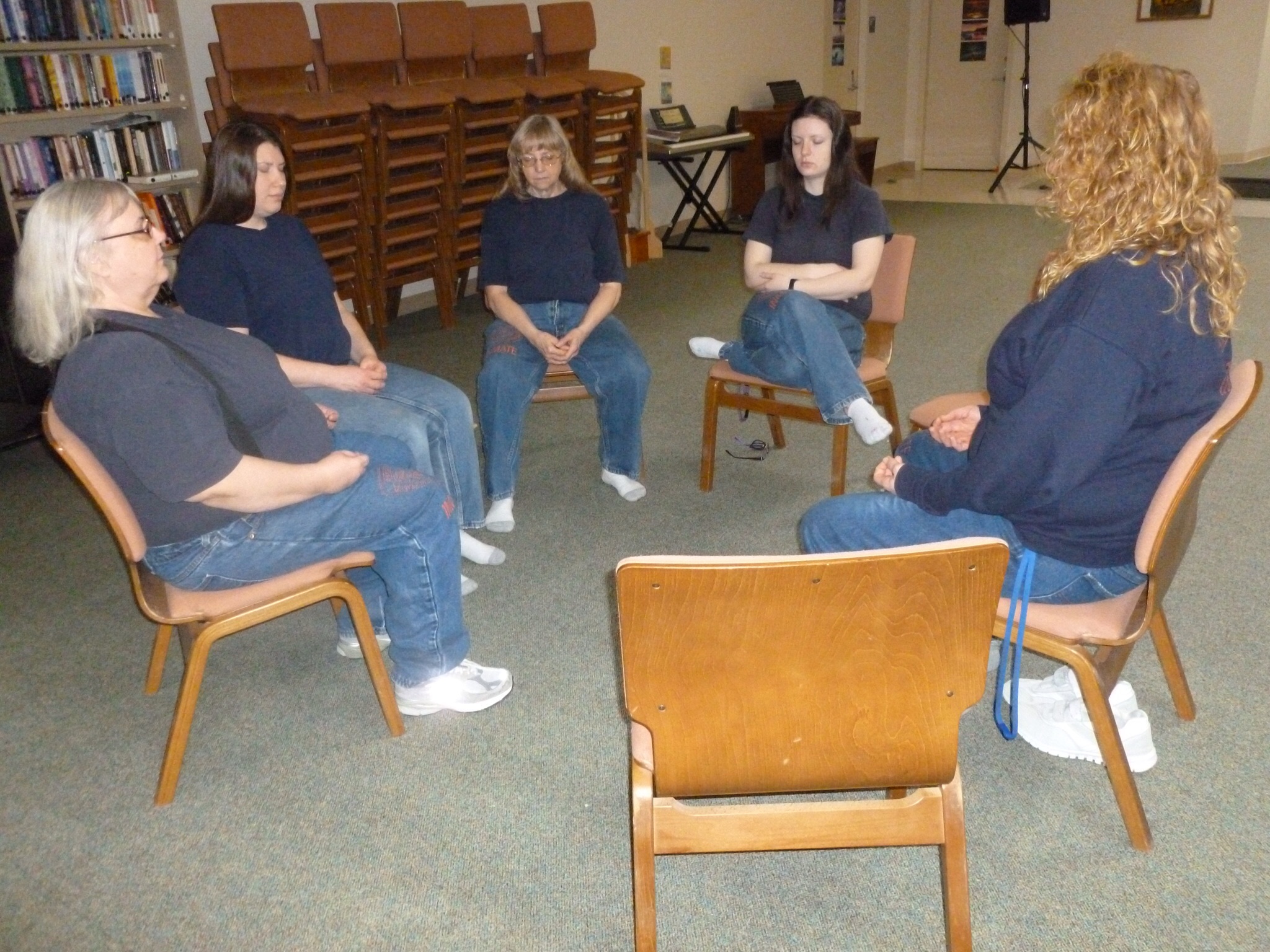
A group of female inmates practicing Transcendental Meditation experienced significant reductions in trauma symptoms compared to a control group. Photo credit: The Oregon Department of Corrections*

A randomized study published online January 17, 2017 in The Permanente Journal on 22 female prisoners found that those practicing Transcendental Meditation for four months had significant reductions in total trauma symptoms compared with a control group. And a similar study in the same journal published October 7, 2016, involving 181 male prisoners found a 47% reduction in total trauma symptoms compared to a non-meditating control group.

In an editorial, published February 1, 2017 to accompany the two studies on Transcendental Meditation in their Winter 2017 print edition, Charles Elder, MD, MPH, FACP, a clinician and researcher with Kaiser Permanente, called for wider use of evidence-based mind-body interventions for prisoners.

Advantages of mind-body interventions for prisoners

Dr. Elder cited many of the advantages of these interventions.

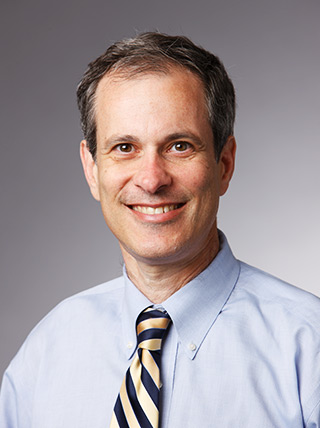
Charles Elder, MD, MPH, FACP

Charles Elder, MD, MPH, FACP

“Mind-body interventions can provide the patient with a simple self-help tool that can effectively reduce anxiety, help treat substance abuse, reduce inmate recidivism, and help address a range of medical conditions,” he wrote, citing research on Transcendental Meditation that supports these benefits.

In addition to these benefits, he points out that a mind-body intervention can be cost-effective. Since Transcendental Meditation has been shown to reduce recidivism — the percentage of inmates returning to prison after their release — it can save money that would otherwise be spent on incarceration. And, he points out, a prisoner who becomes a productive member of society provides an economic benefit, instead of a deficit.

Rebecca Pak of The Women’s Prison Association agrees with Dr. Elder, “The results inside correctional facilities and schools with Transcendental Meditation have been simply astounding. If we shifted our focus from punitive responses to interventions designed to improve mental and physical health, we would have much greater impact.”

Convenience of mind-body interventions

Dr. Elder also describes the convenience of mind-body approaches.

“Once taught the technique, an individual can use the skill for the duration of his or her life, as a stress management tool, providing ongoing benefits across a range of domains…. In addition to helping the inmate cope with the stress of incarceration, there is a range of additional ‘side benefits,’ ranging from reduced recidivism to improved cardiovascular health.”

He says a trained instructor can take Transcendental Meditation directly to the prisoners, rather than their going to a clinic or meditation center. And direct personal instruction is better than trying to learn a mind-body intervention online, since many may be unable or unwilling to engage an online format.

Effectiveness of Transcendental Meditation

image

Sanford Nidich, EdD, lead author

Led by Sanford Nidich, EdD, Director of the Maharishi University of Management Center for Social and Emotional Health, the two recent studies published by The Permanente Journal were conducted at three prisons in Oregon. The hypothesis was that Transcendental Meditation would help prisoners deal with serious trauma and stress. Surveys have shown that prisoners have one of the highest rates of lifetime trauma of any segment of society, with 85% having been a victim of a crime-related event, such as robbery or home invasion, or physical or sexual abuse.

This trauma leads to stress and poor lifestyle choices, including crime and substance abuse. In addition to these recent studies, earlier ones have found that Transcendental Meditation helps inmates deal with trauma and stress and reduces recidivism. Here is a sampling, with some listed in the editorial:

• 2017 — the study described above that found reduced trauma in female prisoners in Oregon

• 2016 — the study mentioned above that found a 47% reduction in total trauma symptoms in male prisoners in Oregon over the course of the four-month study, including a reduction in anxiety, depression, dissociation, and sleep disturbance, as well as a significant decrease in perceived stress

• 2003 — A study of 17 subjects at La Tuna federal penitentiary in Texas showed a reduction on the MMPI psychasthenia scale, suggesting a reduction in obsessive–compulsive behavior, and a decrease in social introversion.

• 2003 — A retrospective followup on 152 inmates who had learned Transcendental Meditation at Walpole prison in Massachusetts found that these inmates were 33% less likely to have returned to prison after 30 days compared to a control group that participated in counseling, drug rehabilitation and religious activities, and 47% less likely compared to all non-meditating control subjects.

• 2003 — A retrospective analysis of 248 inmates at Folsom State Prison used Cox regression analysis to calculate that prisoners who learn Transcendental Meditation are 43.5% less likely to return to prison.

• 1987 — A study of 259 inmates who had learned Transcendental Meditation at several different prisons in California found that they were 40% less likely to have returned to prison one year after release compared to matched controls, and 30% less likely after six years.

• 1978 — A study of 115 inmates at Folsom Prison in California found a reduction in anxiety, negativism, and suspicions, as well as improved sleep.

“The overall body of research suggests that Transcendental Meditation could be used more widely to help prisoners deal with trauma and stress,” said Dr. Nidich, lead author of the recent studies conducted at Oregon prisons.

Source: Mind-Body Training for At-Risk Populations: Preventive Medicine at its Best. [PDF]

About the Transcendental Meditation Technique

Transcendental Meditation® (TM®) is a simple, natural technique practiced 20 minutes twice each day while sitting comfortably with the eyes closed. The TM technique is easy to learn and enjoyable to practice, and is not a religion, philosophy, or lifestyle. Unlike other forms of meditation, TM practice involves no concentration, no control of the mind, no contemplation, no monitoring of thoughts. It automatically and effortlessly allows the active thinking mind to settle down to a state of deep inner calm. For more information visit www.tm.org.

*Photo: The Coffee Creek Correctional Facility in Wilsonville, Oregon.

MarketWired: Medical doctor calls for mind-body approaches to help prisoners reduce stress, trauma, and recidivism

Related posts: New study shows Transcendental Meditation reduces trauma symptoms in female prisoners and Transcendental Meditation reduced stress and trauma symptoms in male prisoners in 4 months

Change begins within, and it starts with me.

January 26, 2017

It Is I Who Must Begin

It is I who must begin.
Once I begin, once I try —
here and now,
right where I am,
not excusing myself
by saying things
would be easier elsewhere,
without grand speeches and
ostentatious gestures,
but all the more persistently
— to live in harmony
with the “voice of Being,” as I
understand it within myself
— as soon as I begin that,
I suddenly discover,
to my surprise, that
I am neither the only one,
nor the first,
nor the most important one
to have set out
upon that road.

Whether all is really lost
or not depends entirely on
whether or not I am lost.

~ Vaclav Havel ~

(Teaching with Fire: Poetry That Sustains the Courage to Teach, ed. by S.M. Intrator and M. Scribner)

This reminds me of Mary Oliver’s poem, The Journey, where leaving home is necessary to “save the only life you could save” and discover what it’s meant to be. Then you can change it, begin it; for as Kukai said in his poem, Singing Image of Fire, “all things change when we do.” Change begins within, and it starts with me.

Celebrating the Glorious Life of Sally M Peden

January 17, 2017

Sally Peden - 1992

Sally Peden, May 26, 1947 – October 1, 2016

A repost celebrating the glorious life of Sally M Peden, which includes descriptions of her peaceful and graceful transition, memorial service, and Vedic cremation ceremony. Many beautiful tributes were added that give a glimpse of how special she was. Included is a poem I wrote about Sali’s passing, and descriptions of the auspicious times of her death, and spreading of her ashes in India’s holy Narmada River. May she reside in the highest heaven.

Source: An early attempt at some kind of closure with a poem on Sali’s passing and auspicious times 

Recently added: Final entries leading up to and after Sali’s passing

Most recently added, June 30, 2017, 9 months after Sali’s passing: For Us—a tanka honoring Sali and what we shared.

And ‘In Our Loving Eyes’ a poem by @kenchawkin remembering a special love with Sally Peden added August 31, 2017.

Added October 1, 2017, A tanka remembering Sali and her gift to me on the one-year anniversary of her passing.

Added November 12, 2017: 1st anniversary of my India trip to spread Sali’s ashes on the Narmada River, visit Bijouri campus and Maharishi Vedic Pandits at the Brahmasthan.

Added June 28, 2019: Poem for Sali—An Undying Love—heals the heart.

I would later record these love poems for Sali (COMMITTED, This Quiet Love, In Our Loving Eyes) for a 2019 Valentine’s Day program on KHOE, MUM’s campus radio station. Click here to read and listen to them.

— Written and compiled (citing sources) by Ken Chawkin for The Uncarved Blog.

New study shows Transcendental Meditation reduces trauma symptoms in female prisoners

January 17, 2017

image

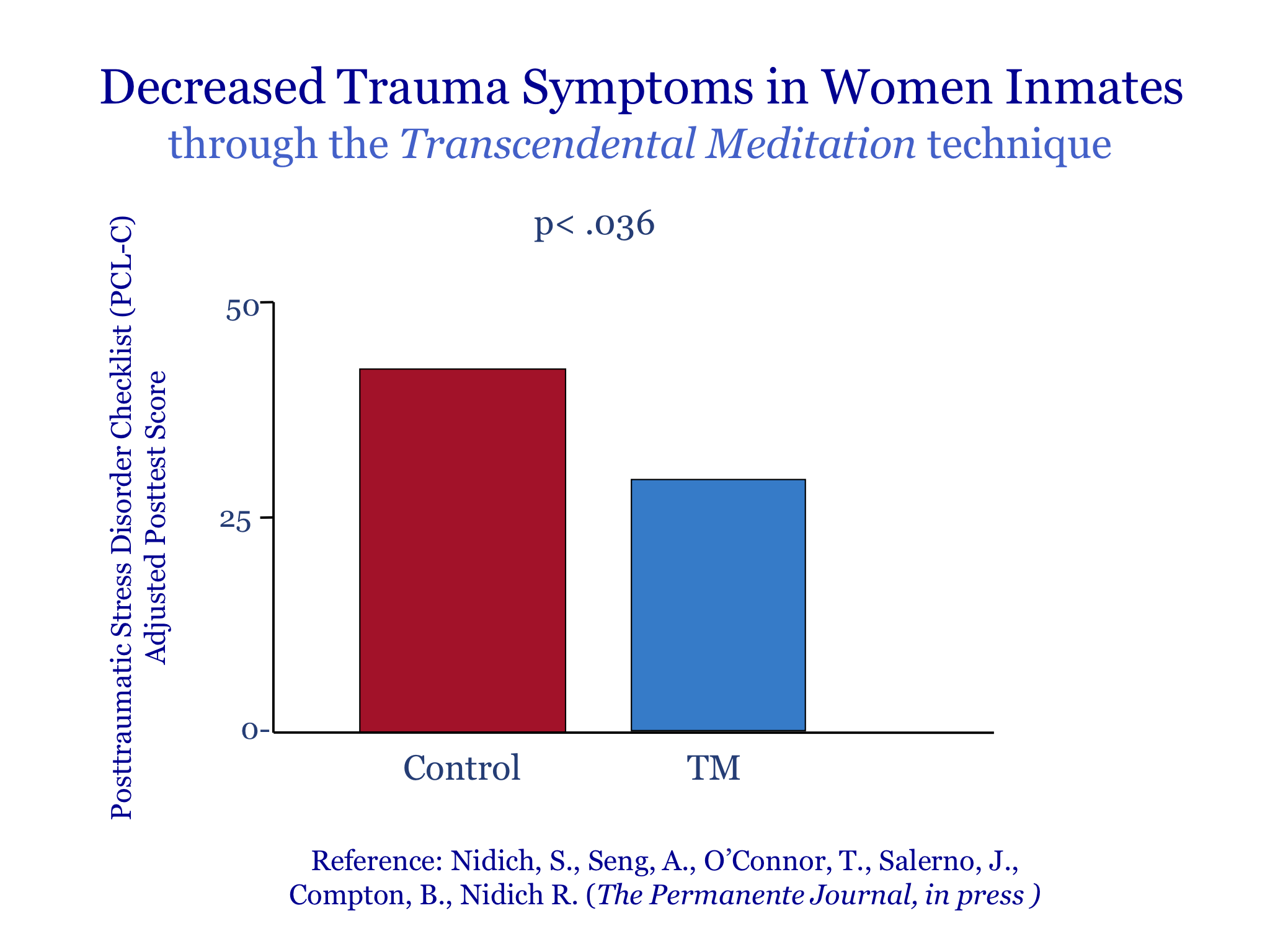
The first study to specifically focus on reducing stress in female prisoners has found that Transcendental Meditation significantly reduces trauma symptoms. Women have become the fastest growing prison population in the U.S., and research shows they suffer from higher rates of mental and emotional trauma, and higher rates of sexual abuse than men. This randomized controlled trial, published in The Permanente Journal, follows a recent study on reduced trauma in male inmates through Transcendental Meditation.

Significant reduction in trauma

The results showed that after four months of practicing the Transcendental Meditation technique, the women inmates in the meditation group had significant reductions in total trauma symptoms, including intrusive thoughts and hyperarousal compared with controls. Trauma symptoms were measured using the Posttraumatic Stress Disorder Checklist-Civilian (PCL-C).

‘This study is a valuable addition to the research literature in women’s mental health, showing a natural and effortless alternative approach to reducing trauma symptoms,” said lead author Dr. Sanford Nidich, director of the Center for Social and Emotional Health at Maharishi University of Management. “It further replicates an earlier randomized controlled trial with Transcendental Meditation (TM) in male prison inmates suffering from high levels of trauma symptoms. Previous studies have shown reduced trauma in other populations, including veterans and African refugees with the TM program.”

Comments from the subjects

Those practicing Transcendental Meditation in their prison cells said they felt a lot better—less stressed, with a greater sense of inner freedom and resilience. Read some of the dramatic changes in their own words, and more details about this study in the press release.

The study was funded by the David Lynch Foundation.

Expanding preventive medicine to include mind-body approaches

In addition to the study on TM, the January 2017 issue of The Permanente Journal includes a companion editorial by Charles Elder, MD, MPH, FACP, titled, “Mind-Body Training for At-Risk Populations: Preventative Medicine at its Best.”

According to Charles Elder, MD, Kaiser Permanente, Northwest, “A principle advantage of the TM technique is a time-tested, standardized intervention protocol…. Once taught the Transcendental Meditation technique, an individual can use the skill for the duration of his or her life, as a stress management tool, providing ongoing benefits across a range of domains. In addition to helping the inmate cope with the stress of incarceration, there is a range of additional ‘side benefits,’ ranging from reduced recidivism to improved cardiovascular health.”

Related: See this recent study explaining how and why Transcendental Meditation is effortless, distinguishing it from other practices.

Transcendental Meditation reduced stress and trauma symptoms in male prisoners in 4 months

January 1, 2017

Prisoners have one of the highest rates of lifetime trauma of any segment of society, with recent surveys showing that 85% have been a victim of a crime-related event, such as robbery or home invasion, or physical or sexual abuse. Trauma is associated with higher rates of recidivism (returning to prison) and mental and physical health conditions, including cardiovascular disease.

A randomized controlled trial of 181 male Oregon state correctional inmates found that the Transcendental Meditation program significantly decreased total trauma symptoms, anxiety, depression, dissociation and sleep disturbance subscales, and perceived stress compared to controls over a four-month period. Trauma symptoms and perceived stress were assessed using the Trauma Symptoms Checklist and the Perceived Stress Scale.

image

Within the TM group, a 47% reduction in total trauma symptoms was observed over the course of the four-month study. Further post-hoc analysis showed a 56% reduction within the TM group for those with the highest level of trauma symptoms above the mean in baseline trauma scores.

Compliance with TM practice was high. Of those randomized to learn the TM program, 88% completed the initial seven-step TM course (total of five sessions) and over 80% were regular with their daily TM practice over the course of the four-month study, which included weekly meetings to ensure continued correct effortless practice.

“To date this is the largest randomized controlled trial with the Transcendental Meditation program on trauma symptoms,” said Dr. Nidich, lead author of the study and director of Maharishi University of Management Center for Social and Emotional Health. “These findings, along with previous published research on veterans, active military personnel, international refugees, and other at-risk populations provide support for the value of the Transcendental Meditation program as an alternative treatment for posttraumatic stress.”

“I have watched inmates learn Transcendental Meditation and become more human after a long and isolating period of becoming less human,” said study co-author Dr. Tom O’Conner, Assistant Professor of Criminal Justice at Western Oregon University. “TM helps to awaken, deepen, and solidify the kind of transformational process that we so badly need in our overburdened and costly correctional system.”

The study, Reduced trauma symptoms and perceived stress in male prison inmates through the Transcendental Meditation program: A randomized controlled trial, was published in The Permanente Journal, and funded by the David Lynch Foundation

Read more valuable information about this study in the press release, from where this content was excerpted, on EurekAlert!/AAAS.

NCBI: https://www.ncbi.nlm.nih.gov/pmc/articles/PMC5101089/

Another study, this one done with female prisoners, also in Oregon, will be published later this month.

How and why Transcendental Meditation is effortless, distinguishing it from other practices

December 31, 2016

imageStudents at Maharishi University of Management practice the effortless technique of Transcendental Meditation twice a day on campus. This study involved 87 students who had been practicing TM from one month to five years. Credit: Maharishi University of Management

As the value of meditation becomes widely recognized, researchers are increasingly trying to understand the differences among approaches. A new study published in Brain and Cognition reports subjective experiences and cortical activation patterns that distinguish the Transcendental Meditation technique from other meditation practices.

It seems TM is able to easily activate the Default Mode Network (DMN), a deeper more integrated structure in the brain, when other types of meditation requiring some form of effort turn it off.

For a clearer explanation of how and why the TM technique is effortless, and can be easily learned and practiced by anyone, with immediate results, read this report: Research validates the defining hallmark of Transcendental Meditation—effortlessness.

Update: March 24, 2018: New study highlights unique state of “restful alertness” during Transcendental Meditation.

For more information on Maharishi University of Management, visit www.mum.edu, and Transcendental Meditation, www.tm.org.