Poet Naomi Shihab Nye shares how sorrow, and then its opposite, kindness, can transform us

February 6, 2017

In this video, recorded at the Wisdom Ways Center for Spirituality, Palestinian American poet, writer, teacher Naomi Shihab Nye (1952) shares how she wrote one of her favorite poems, Kindness, and then reads it. It came to her, mysteriously, after a dramatic situation, in which she and her husband were robbed during their honeymoon while traveling by bus in South America. When she sat down to write, she said it just came to her. “I actually was the secretary for Kindness.”

Kindness

Before you know what kindness really is
you must lose things,
feel the future dissolve in a moment
like salt in a weakened broth.
What you held in your hand,
what you counted and carefully saved,
all this must go so you know
how desolate the landscape can be
between the regions of kindness.
How you ride and ride
thinking the bus will never stop,
the passengers eating maize and chicken
will stare out the window forever.

Before you learn the tender gravity of kindness
you must travel where the Indian in a white poncho
lies dead by the side of the road.
You must see how this could be you,
how he too was someone
who journeyed through the night with plans
and the simple breath that kept him alive.

Before you know kindness as the deepest thing inside,
you must know sorrow as the other deepest thing.
You must wake up with sorrow.
You must speak to it till your voice
catches the thread of all sorrows
and you see the size of the cloth.
Then it is only kindness that makes sense anymore,
only kindness that ties your shoes
and sends you out into the day to mail letters and purchase bread,
only kindness that raises its head
from the crowd of the world to say
It is I you have been looking for,
and then goes with you everywhere
like a shadow or a friend.

From Words Under the Words: Selected Poems.
Copyright © 1995 by Naomi Shihab Nye.

Kim Rosen (kimrosen.net) interviewed Naomi Shihab Nye, and other poets, for Spirituality & Health. In The Incomparable Naomi Shihab Nye on Kindness, Nye shared more details about that incident, which took place in Columbia in 1978. She also spoke about the power of poetry to transform lives. We want another kind of story, she said, one that helps us feel connected with one another. She feels good poems can harmonize and refocus us, create empathy, more understanding, and lead to more peace in the world.

Also see So Much Happiness, from the same volume of poetry. In the accompanying video, Naomi Shihab Nye reads both poems.

The ending to “Kindness” reminds me in a way of the theme of Derek Walcott’s poem, Love after Love, when you recognize your essential nature, as if for the first time. Love and Kindness are interchangeable, where being kind to yourself is loving yourself, the basis for loving others.

Here is that video of Naomi Shihab Nye reading “Kindness” and telling the story of how it came to her. For some unknown reason I could only embed it at the end of this post. 

— Written and compiled (citing sources) by Ken Chawkin for The Uncarved Blog.

Physician recommends wider use of evidence-based mind-body interventions for prisoners

February 1, 2017

Medical doctor calls for mind-body approaches to help prisoners reduce stress, trauma, and recidivism

image

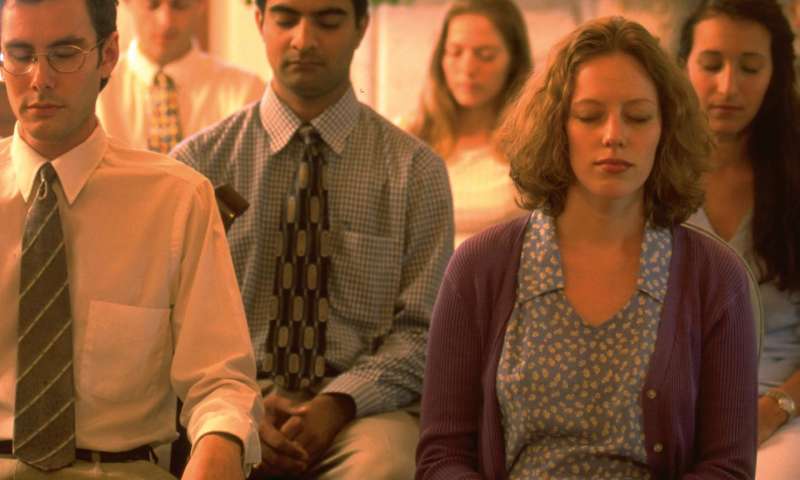
A group of female inmates practicing Transcendental Meditation experienced significant reductions in trauma symptoms compared to a control group. Photo credit: The Oregon Department of Corrections*

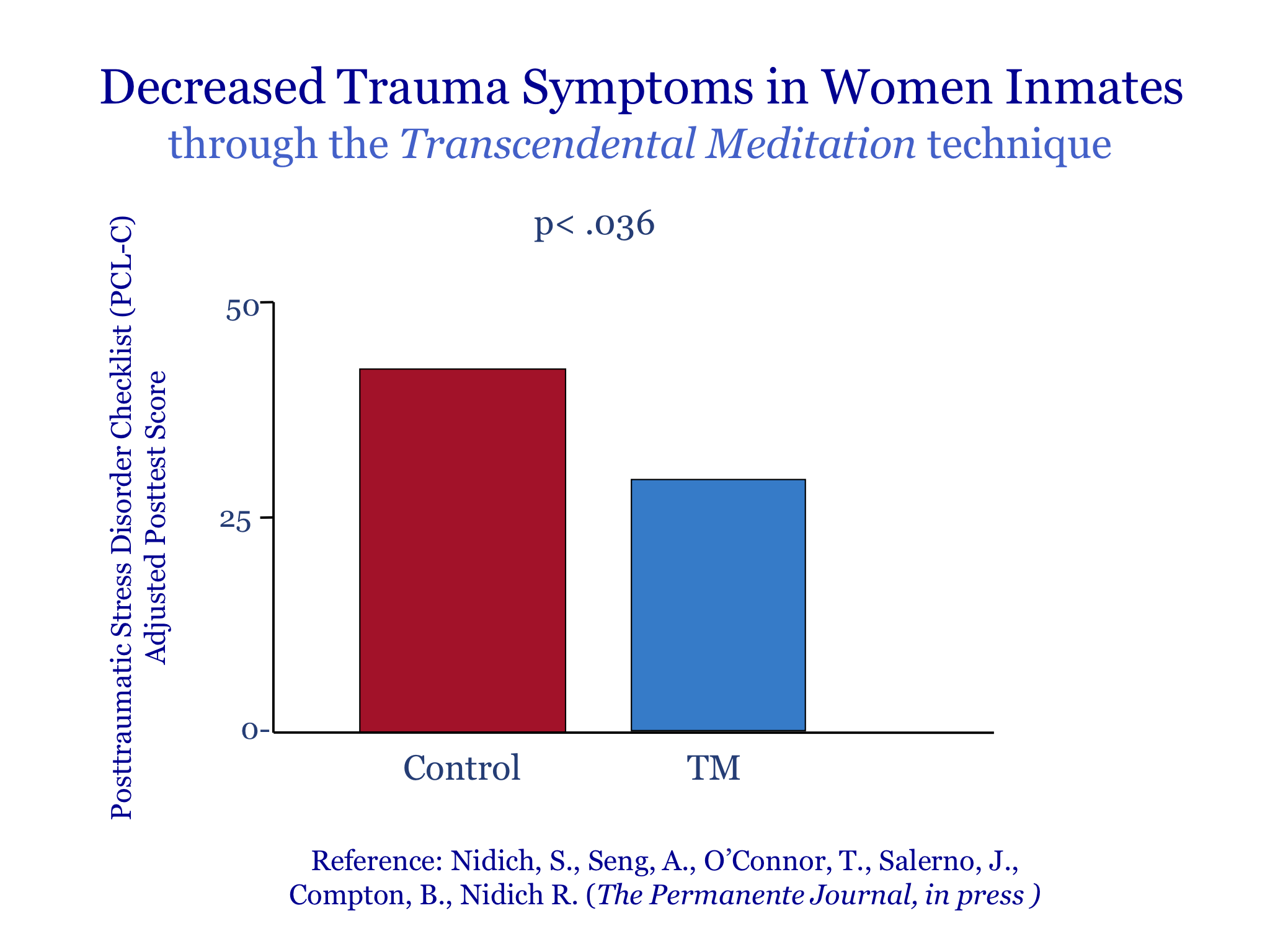
A randomized study published online January 17, 2017 in The Permanente Journal on 22 female prisoners found that those practicing Transcendental Meditation for four months had significant reductions in total trauma symptoms compared with a control group. And a similar study in the same journal published October 7, 2016, involving 181 male prisoners found a 47% reduction in total trauma symptoms compared to a non-meditating control group.

In an editorial, published February 1, 2017 to accompany the two studies on Transcendental Meditation in their Winter 2017 print edition, Charles Elder, MD, MPH, FACP, a clinician and researcher with Kaiser Permanente, called for wider use of evidence-based mind-body interventions for prisoners.

Advantages of mind-body interventions for prisoners

Dr. Elder cited many of the advantages of these interventions.

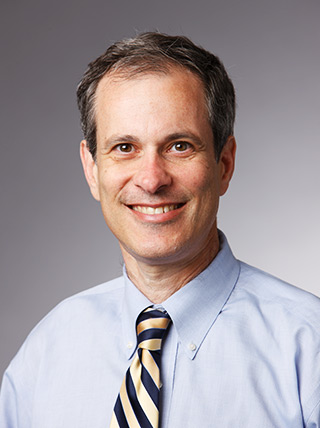
Charles Elder, MD, MPH, FACP

Charles Elder, MD, MPH, FACP

“Mind-body interventions can provide the patient with a simple self-help tool that can effectively reduce anxiety, help treat substance abuse, reduce inmate recidivism, and help address a range of medical conditions,” he wrote, citing research on Transcendental Meditation that supports these benefits.

In addition to these benefits, he points out that a mind-body intervention can be cost-effective. Since Transcendental Meditation has been shown to reduce recidivism — the percentage of inmates returning to prison after their release — it can save money that would otherwise be spent on incarceration. And, he points out, a prisoner who becomes a productive member of society provides an economic benefit, instead of a deficit.

Rebecca Pak of The Women’s Prison Association agrees with Dr. Elder, “The results inside correctional facilities and schools with Transcendental Meditation have been simply astounding. If we shifted our focus from punitive responses to interventions designed to improve mental and physical health, we would have much greater impact.”

Convenience of mind-body interventions

Dr. Elder also describes the convenience of mind-body approaches.

“Once taught the technique, an individual can use the skill for the duration of his or her life, as a stress management tool, providing ongoing benefits across a range of domains…. In addition to helping the inmate cope with the stress of incarceration, there is a range of additional ‘side benefits,’ ranging from reduced recidivism to improved cardiovascular health.”

He says a trained instructor can take Transcendental Meditation directly to the prisoners, rather than their going to a clinic or meditation center. And direct personal instruction is better than trying to learn a mind-body intervention online, since many may be unable or unwilling to engage an online format.

Effectiveness of Transcendental Meditation

image

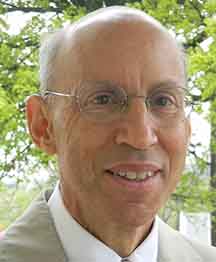
Sanford Nidich, EdD, lead author

Led by Sanford Nidich, EdD, Director of the Maharishi University of Management Center for Social and Emotional Health, the two recent studies published by The Permanente Journal were conducted at three prisons in Oregon. The hypothesis was that Transcendental Meditation would help prisoners deal with serious trauma and stress. Surveys have shown that prisoners have one of the highest rates of lifetime trauma of any segment of society, with 85% having been a victim of a crime-related event, such as robbery or home invasion, or physical or sexual abuse.

This trauma leads to stress and poor lifestyle choices, including crime and substance abuse. In addition to these recent studies, earlier ones have found that Transcendental Meditation helps inmates deal with trauma and stress and reduces recidivism. Here is a sampling, with some listed in the editorial:

• 2017 — the study described above that found reduced trauma in female prisoners in Oregon

• 2016 — the study mentioned above that found a 47% reduction in total trauma symptoms in male prisoners in Oregon over the course of the four-month study, including a reduction in anxiety, depression, dissociation, and sleep disturbance, as well as a significant decrease in perceived stress

• 2003 — A study of 17 subjects at La Tuna federal penitentiary in Texas showed a reduction on the MMPI psychasthenia scale, suggesting a reduction in obsessive–compulsive behavior, and a decrease in social introversion.

• 2003 — A retrospective followup on 152 inmates who had learned Transcendental Meditation at Walpole prison in Massachusetts found that these inmates were 33% less likely to have returned to prison after 30 days compared to a control group that participated in counseling, drug rehabilitation and religious activities, and 47% less likely compared to all non-meditating control subjects.

• 2003 — A retrospective analysis of 248 inmates at Folsom State Prison used Cox regression analysis to calculate that prisoners who learn Transcendental Meditation are 43.5% less likely to return to prison.

• 1987 — A study of 259 inmates who had learned Transcendental Meditation at several different prisons in California found that they were 40% less likely to have returned to prison one year after release compared to matched controls, and 30% less likely after six years.

• 1978 — A study of 115 inmates at Folsom Prison in California found a reduction in anxiety, negativism, and suspicions, as well as improved sleep.

“The overall body of research suggests that Transcendental Meditation could be used more widely to help prisoners deal with trauma and stress,” said Dr. Nidich, lead author of the recent studies conducted at Oregon prisons.

Source: Mind-Body Training for At-Risk Populations: Preventive Medicine at its Best. [PDF]

About the Transcendental Meditation Technique

Transcendental Meditation® (TM®) is a simple, natural technique practiced 20 minutes twice each day while sitting comfortably with the eyes closed. The TM technique is easy to learn and enjoyable to practice, and is not a religion, philosophy, or lifestyle. Unlike other forms of meditation, TM practice involves no concentration, no control of the mind, no contemplation, no monitoring of thoughts. It automatically and effortlessly allows the active thinking mind to settle down to a state of deep inner calm. For more information visit www.tm.org.

*Photo: The Coffee Creek Correctional Facility in Wilsonville, Oregon.

MarketWired: Medical doctor calls for mind-body approaches to help prisoners reduce stress, trauma, and recidivism

Related posts: New study shows Transcendental Meditation reduces trauma symptoms in female prisoners and Transcendental Meditation reduced stress and trauma symptoms in male prisoners in 4 months

Change begins within, and it starts with me.

January 26, 2017

It Is I Who Must Begin

It is I who must begin.
Once I begin, once I try —
here and now,
right where I am,
not excusing myself
by saying things
would be easier elsewhere,
without grand speeches and
ostentatious gestures,
but all the more persistently
— to live in harmony
with the “voice of Being,” as I
understand it within myself
— as soon as I begin that,
I suddenly discover,
to my surprise, that
I am neither the only one,
nor the first,
nor the most important one
to have set out
upon that road.

Whether all is really lost
or not depends entirely on
whether or not I am lost.

~ Vaclav Havel ~

(Teaching with Fire: Poetry That Sustains the Courage to Teach, ed. by S.M. Intrator and M. Scribner)

This reminds me of Mary Oliver’s poem, The Journey, where leaving home is necessary to “save the only life you could save” and discover what it’s meant to be. Then you can change it, begin it; for as Kukai said in his poem, Singing Image of Fire, “all things change when we do.” Change begins within, and it starts with me.

Celebrating the Glorious Life of Sally M Peden

January 17, 2017

Sally Peden - 1992

Sally Peden, May 26, 1947 – October 1, 2016

A repost celebrating the glorious life of Sally M Peden, which includes descriptions of her peaceful and graceful transition, memorial service, and Vedic cremation ceremony. Many beautiful tributes were added that give a glimpse of how special she was. Included is a poem I wrote about Sali’s passing, and descriptions of the auspicious times of her death, and spreading of her ashes in India’s holy Narmada River. May she reside in the highest heaven.

Source: An early attempt at some kind of closure with a poem on Sali’s passing and auspicious times 

Recently added: Final entries leading up to and after Sali’s passing

Most recently added, June 30, 2017, 9 months after Sali’s passing: For Us—a tanka honoring Sali and what we shared.

And ‘In Our Loving Eyes’ a poem by @kenchawkin remembering a special love with Sally Peden added August 31, 2017.

Added October 1, 2017, A tanka remembering Sali and her gift to me on the one-year anniversary of her passing.

Added November 12, 2017: 1st anniversary of my India trip to spread Sali’s ashes on the Narmada River, visit Bijouri campus and Maharishi Vedic Pandits at the Brahmasthan.

Added June 28, 2019: Poem for Sali—An Undying Love—heals the heart.

I would later record these love poems for Sali (COMMITTED, This Quiet Love, In Our Loving Eyes) for a 2019 Valentine’s Day program on KHOE, MUM’s campus radio station. Click here to read and listen to them.

— Written and compiled (citing sources) by Ken Chawkin for The Uncarved Blog.

New study shows Transcendental Meditation reduces trauma symptoms in female prisoners

January 17, 2017

image

The first study to specifically focus on reducing stress in female prisoners has found that Transcendental Meditation significantly reduces trauma symptoms. Women have become the fastest growing prison population in the U.S., and research shows they suffer from higher rates of mental and emotional trauma, and higher rates of sexual abuse than men. This randomized controlled trial, published in The Permanente Journal, follows a recent study on reduced trauma in male inmates through Transcendental Meditation.

Significant reduction in trauma

The results showed that after four months of practicing the Transcendental Meditation technique, the women inmates in the meditation group had significant reductions in total trauma symptoms, including intrusive thoughts and hyperarousal compared with controls. Trauma symptoms were measured using the Posttraumatic Stress Disorder Checklist-Civilian (PCL-C).

‘This study is a valuable addition to the research literature in women’s mental health, showing a natural and effortless alternative approach to reducing trauma symptoms,” said lead author Dr. Sanford Nidich, director of the Center for Social and Emotional Health at Maharishi University of Management. “It further replicates an earlier randomized controlled trial with Transcendental Meditation (TM) in male prison inmates suffering from high levels of trauma symptoms. Previous studies have shown reduced trauma in other populations, including veterans and African refugees with the TM program.”

Comments from the subjects

Those practicing Transcendental Meditation in their prison cells said they felt a lot better—less stressed, with a greater sense of inner freedom and resilience. Read some of the dramatic changes in their own words, and more details about this study in the press release.

The study was funded by the David Lynch Foundation.

Expanding preventive medicine to include mind-body approaches

In addition to the study on TM, the January 2017 issue of The Permanente Journal includes a companion editorial by Charles Elder, MD, MPH, FACP, titled, “Mind-Body Training for At-Risk Populations: Preventative Medicine at its Best.”

According to Charles Elder, MD, Kaiser Permanente, Northwest, “A principle advantage of the TM technique is a time-tested, standardized intervention protocol…. Once taught the Transcendental Meditation technique, an individual can use the skill for the duration of his or her life, as a stress management tool, providing ongoing benefits across a range of domains. In addition to helping the inmate cope with the stress of incarceration, there is a range of additional ‘side benefits,’ ranging from reduced recidivism to improved cardiovascular health.”

Related: See this recent study explaining how and why Transcendental Meditation is effortless, distinguishing it from other practices.

Transcendental Meditation reduced stress and trauma symptoms in male prisoners in 4 months

January 1, 2017

Prisoners have one of the highest rates of lifetime trauma of any segment of society, with recent surveys showing that 85% have been a victim of a crime-related event, such as robbery or home invasion, or physical or sexual abuse. Trauma is associated with higher rates of recidivism (returning to prison) and mental and physical health conditions, including cardiovascular disease.

A randomized controlled trial of 181 male Oregon state correctional inmates found that the Transcendental Meditation program significantly decreased total trauma symptoms, anxiety, depression, dissociation and sleep disturbance subscales, and perceived stress compared to controls over a four-month period. Trauma symptoms and perceived stress were assessed using the Trauma Symptoms Checklist and the Perceived Stress Scale.

image

Within the TM group, a 47% reduction in total trauma symptoms was observed over the course of the four-month study. Further post-hoc analysis showed a 56% reduction within the TM group for those with the highest level of trauma symptoms above the mean in baseline trauma scores.

Compliance with TM practice was high. Of those randomized to learn the TM program, 88% completed the initial seven-step TM course (total of five sessions) and over 80% were regular with their daily TM practice over the course of the four-month study, which included weekly meetings to ensure continued correct effortless practice.

“To date this is the largest randomized controlled trial with the Transcendental Meditation program on trauma symptoms,” said Dr. Nidich, lead author of the study and director of Maharishi University of Management Center for Social and Emotional Health. “These findings, along with previous published research on veterans, active military personnel, international refugees, and other at-risk populations provide support for the value of the Transcendental Meditation program as an alternative treatment for posttraumatic stress.”

“I have watched inmates learn Transcendental Meditation and become more human after a long and isolating period of becoming less human,” said study co-author Dr. Tom O’Conner, Assistant Professor of Criminal Justice at Western Oregon University. “TM helps to awaken, deepen, and solidify the kind of transformational process that we so badly need in our overburdened and costly correctional system.”

The study, Reduced trauma symptoms and perceived stress in male prison inmates through the Transcendental Meditation program: A randomized controlled trial, was published in The Permanente Journal, and funded by the David Lynch Foundation

Read more valuable information about this study in the press release, from where this content was excerpted, on EurekAlert!/AAAS.

NCBI: https://www.ncbi.nlm.nih.gov/pmc/articles/PMC5101089/

Another study, this one done with female prisoners, also in Oregon, will be published later this month.

How and why Transcendental Meditation is effortless, distinguishing it from other practices

December 31, 2016

imageStudents at Maharishi University of Management practice the effortless technique of Transcendental Meditation twice a day on campus. This study involved 87 students who had been practicing TM from one month to five years. Credit: Maharishi University of Management

As the value of meditation becomes widely recognized, researchers are increasingly trying to understand the differences among approaches. A new study published in Brain and Cognition reports subjective experiences and cortical activation patterns that distinguish the Transcendental Meditation technique from other meditation practices.

It seems TM is able to easily activate the Default Mode Network (DMN), a deeper more integrated structure in the brain, when other types of meditation requiring some form of effort turn it off.

For a clearer explanation of how and why the TM technique is effortless, and can be easily learned and practiced by anyone, with immediate results, read this report: Research validates the defining hallmark of Transcendental Meditation—effortlessness.

Update: March 24, 2018: New study highlights unique state of “restful alertness” during Transcendental Meditation.

For more information on Maharishi University of Management, visit www.mum.edu, and Transcendental Meditation, www.tm.org.

An early attempt at some kind of closure with a poem on Sali’s passing and auspicious times

December 28, 2016

Celebrating the Glorious Life of Sally Monroe Peden
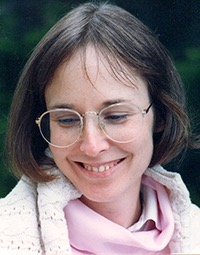
Sally Peden, May 26, 1947 – October 1, 2016

Sally M. Peden, May 26, 1947 – October 1, 2016

This photo of Sali was taken in the summer of 1992, about a year before we would meet. She arrived to register us for a large advanced meditation course in Washington, DC. When Sali came up to me to ask my name and check it on her list, two thoughts immediately entered my mind: Too bad I just got married (again); Too bad she’s on Mother Divine (a course for single women). Our lives would drastically change—my second marriage would end and I would eventually return to Canada, later leave to join Purusha (a course for single men) and travel the world; she would leave her way of life and end up at MUM in Fairfield, Iowa working for John Hagelin’s ISTPP and the NLP. We would meet there 10 years later in the fall of 2003, as if for the first time. A beautiful friendship would grow and transform our lives, a story worth writing one day.

Sally M. Peden, passed peacefully and gracefully on Saturday, October 1, 2016, 11:17pm, during the evening of the first day of the Nine Days of Mother Divine, the start of a new moon. Her Funeral Service and Vedic Cremation Ceremony were held on Wednesday, October 5, 2016, at the Behner Funeral Home in Fairfield, Iowa, USA.

Sali had devoted her life in personal service to Maharishi Mahesh Yogi since 1971. She traveled the world with him as a personal assistant and lived for many years at the International Capital for the Transcendental Meditation movement in Seelisberg, Switzerland working on many important projects. Sali was very humble, the sign of a great soul. She accomplished untold tasks for Maharishi, which pleased him, but never felt the need to draw attention to herself, just pure dynamic devoted service.

Many emails from around the world poured in praising Sali. I’ll reference a few here.

Sheila Chalmers had worked closely with Sali at International on several projects. In her tribute to Sali, which was read aloud, Sheila described Sali’s brilliant mind, amazingly focussed work ethic, and how much she learned from her.

Emily Levin, a close friend of Sali’s, sent this wonderful tribute to Sali, which was also read aloud. Maharishi had paired them up early on, and Emily shines a glorious light on Sali and their fun-filled friendship.

Some other people who used to work with Sali spoke at her Funeral Service. Alarik Arenander, a neuroscientist from the early days of Maharishi European Research University in Seelisberg, described an incident when they were recording an EEG of a meditating subject. Maharishi happened to enter the lab with an important guest. The scientists showed Maharishi the EEG brainwaves being printed out from the moving ink pens. Maharishi asked, “What is that?” Researchers again explained the brainwaves. After asking several times, since the researchers were not ‘getting it,’ Maharishi pulled apart the long ream of neatly folded EEG paper emphatically pointing to the long non-fluctuating line at the bottom below the EEG. The researchers had an ‘aha’ moment when they examined the breath rate signal, which indicated extended periods of no breathing. They had been looking to find a marker for transcending in meditation and there it was, right in front of them, unnoticed, until Maharishi pointed it out. Sali was meditating in the next room, and it was her clear orderly mind and refined nervous system that brought out the understanding of breath suspension during Transcendental Meditation as an indicator of transcendence! That, along with the orderliness of coherent brain functioning producing relaxed alpha waves. The rest is history!

Gerry Geer, an MUM faculty member and ISTPP director of publications, described her extraordinary personality and some of the amazing things she had accomplished early on in her career. Gerry first met Sali around 1970 when he dropped into the Cambridge TM Center to find out what it was all about. She inspired him to learn TM and to become a teacher. Decades later they would work together at the ISTPP. Read Gerry Geer’s tribute to Sali. In it he mentions a very special incident he witnessed between her and Maharishi. It speaks volumes!

Valerie Gangas, a friend and author, posted a personal reaction to that very special day celebrating Sali, and our relationship, on her blog: Life in Love with You. It was a powerful revelation for her! I am so thankful she wrote it. Also definitely worth reading!

October 1, 2017: I am updating this section a year later on the anniversary of Sali’s passing. I had asked a few of Sali’s other friends who had spoken at her Memorial service to send me what they had said or remembered about Sali.

David Orme-Johnson, TM researcher, artist, and retired MUM Professor Emeritus, wrote: “What I said about Sali was that when I arrived at Seelisberg for the first time in 1973, Sally was the number one organizer around Maharishi. Her mind was crystal clear and she radiated bliss and being.”

David’s wife Rhoda, also a founding faculty member at MIU/MUM, recalled her trip with Sali and Rindi to Jyotir Math. They were in a taxi driving up the ever-winding road. To keep from becoming ill from the constant turns, they sang Broadway tunes. Rhoda was amazed that they knew the words and music to all the songs. David recalled that Rindi was on a path to becoming a musician and singer before she found Maharishi and the TM movement. She worked closely with Sali around Maharishi, and later became one of the leaders of the Mother Divine Program.

Kate Ross sent me a description of what she had said about Sali last year. She was Kate Isen when they knew each other, starting in 1968. They shared a close friendship during those days in Cambridge, Mass, and Sali had rented a room in her house. Kate sent me a beautiful description about Sali’s accomplishments and humanity. When Sali returned from her TM Teacher Training Course (TTC) the change was even more dramatic. Kate didn’t think Sali could look even more beautiful, inside and out, but she did. It inspired her to go off to TTC. Later, when Kate joined International Staff in Seelisberg, Switzerland, there was Sali, “working as a dedicated close assistant to Maharishi. She was tremendously efficient and had powerful organizing skills, but in spite of being enormously busy with the greatest of responsibilities, she never lost the human touch to watch over people and do what was right. She was the brightest light, and an inspiration to all who knew her, and personally speaking, I feel so blessed to have been connected to her. We were and always will be spiritual sisters.” Read the rest of Kate’s inspiring speech about Sali.

A few days later, Rannie Boes sent me what she had said at Sali’s Memorial service. She recalled how they first met in Denmark, Rannie’s homeland, in 1973. “She came to Copenhagen with Maharishi’s group when we had organized a big symposium on TM.” Decades later, they worked at MUM in the same departments. Rannie recounts a sweet story of what Sali had said about their relationship during one of her visits to see her at Parkview Care Center. Read At Sali’s Memorial by Rannie Boes.

Dying, Dharma and Devotion

In the weeks leading up to Sali’s transition, I was reading two books to her. The first was an enlightened description of the nearing death experience, clearly delineated by Kathleen Dowling Singh in her reassuring book, The Grace in Dying: How We Are Transformed Spiritually as We Die. I believe this book prepared us for what was to come, to both let go and allow it to happen naturally.

Sali would soon be put back on Hospice for added care, and moved to a private room, which gave us the needed privacy for such an intimate experience. She would pass within a few days, at an auspicious time in the Vedic calendar.

The second book was The Ramayana: A New Retelling of Valmiki’s Ancient Epic–Complete and Comprehensive, written by Linda Egenes, a friend, and Kumuda Reddy. It is an inspiring story as relevant today as it has been throughout the ages, of dharma, duty, triumphing over evil; enlightened leadership; and an ideal love between an evolved man and woman. Listening to that story kept our attention focused on something spiritually elevating during her final days.

I got as far as the end of Chapter 36, where Hanuman, after finding Sita, consoles and reassures her that Rama is preparing an army to free her from her abductor, Ravana, king of the rakshasas. This comes as a great relief to Sita who was at her lowest with no hope in sight.

For the previous two days and nights, Sali’s breathing pattern consisted of short quick breaths, in and out. It was at this point in the story that her breathing began to change. It became softer, slower, and then, stopped. I waited for another, very feeble attempt, then put one hand over her heart and the other on her head. Not finding any sign of life in the body, these words came into my mind: “It’s done. The karma is over.” With a sense of relief and finality, I said: “Peace, Peace, Shanti, Shanti,” and lovingly kissed her forehead, our last goodbye. I felt a profound peacefulness deep within me, which I could not fully comprehend. The answer would come later, in a word, while meditating in India, where I wrote this poem.

UNDIFFERENTIATED
The Peace that Passeth Understanding

The final feeling
Between us was a Great Peace
Deep within the Heart

All that remained was Silence
After you took your last breath

Where was that Peace coming from
In your heart, mine, or ours
Beyond my comprehension

UNDIFFERENTIATED

As promised, I did continue reading the rest of The Ramayana to Sali, wherever she might be, that evening and the following morning, finishing it at the funeral home, after they had picked up her body and brought it there. Her memorial and cremation would take place a few days later, still within the auspicious Nine Days.

Narmada River, Brahmasthan, Atirudrabhishek

At the luncheon in Revelations following Sali’s cremation, one of our friends, Sheila Ross, suggested I take the cremains to the holy Narmada River, where some of Maharishi’s ashes had been placed. She said it was also close to the Brahmasthan, geographic center of India, where meditation courses were being held, and thousands of Maharishi Vedic Pandits were reciting Atirudrabhishek, an ancient Vedic performance to create world peace.

At the invitation of my family, I did go to India, a little over a month after Sali’s cremation, to spread her ashes from a boat at that location near the Gwari Ghat. It turned out to be during a most auspicious time—a celebration of the holy day of Kartika Poornimah, November 14, 2016, also known as Devi Dipavali, the Festival of Lights of the Gods—one of the most spiritually significant days in the Vedic calendar, during the biggest full moon in 70 years, the supermoon! Truly befitting someone of Sali’s spiritual merit.

Staying at the Brahmasthan afterwards for three weeks was healing for me. It was a powerful and blissful experience visiting the Maharishi Vedic Pandits in their large meditation hall, listening to them perform their Vedic recitations! You can sample some of them in these eCards, enhanced with audios, videos and slideshows.

To get an example of Sali’s sweetness and our special relationship, see this previous post from December 8, 2016—Capturing an authentic moment in writing—about Being with Sali on August 1, 2012, during another full moon.

I am so thankful for the support of our families, the Slusers, Kaplans, Mitchells, and Petch Peden and Robert Harper, and for many of our friends who helped handle so many details, especially Kate Ross and Jennifer Hamilton! I also appreciate acupuncturist Sarah Brooks, the staff at Parkview Care Center and Hospice Compassus for their tireless care of Sali, and sometimes me.

Recently Added

Celebrating the Glorious Life of Sally M Peden; Final entries leading up to and after Sali’s passing; and this new poem, Haiku for Her. Added, June 30, 2017, 9 months after Sali’s passing: For Us—a tanka honoring Sali and what we shared. Added Sept 1, 2017: ‘In Our Loving Eyes’ a poem by @kenchawkin remembering a special love with Sally Peden. Added October 1, 2017, A tanka remembering Sali and her gift to me on the one-year anniversary of her passing. Added October 15, 2017, Still Sali Haiku—the persistence of love over grief. Added November 12, 2017: 1st anniversary of my India trip to spread Sali’s ashes on the Narmada River, visit Bijouri campus and Maharishi Vedic Pandits at the Brahmasthan.

June 6, 2018: After rereading this, I realized how spiritually auspicious the dates were of Sali’s passing, on a new moon during the start of the Nine Days of Mother Divine, and the spreading of her ashes 45 days later in India on the holy Narmada River during a full moon, the biggest supermoon in 70 years, and on Devi Dipavali!

According to numerology, these numbers are significant: 45, 4+5 = 9, completion, fulfillment; 70, 7 is made up of two lines, the individual I am, horizontal line, upheld by the Cosmic I Am, vertical line; and 0 is wholeness. Taken together, the whole thing seemed pretty cosmic to me!

Added June 28, 2019: Poem for Sali—An Undying Love—heals the heart.

Save

Save
Capturing an authentic moment in writing

December 8, 2016

Being with Sali, August 1, 2012, on a full moon night

Norman Zierold, an associate and author, had suggested I write about my experiences after visiting my sweetheart Sally Peden at Parkview Care Center, while they were still fresh. That way, he said, I would have an authentic record for some future use, which, he added, would be a lot easier than relying on memory. Aside from the poems inspired by her, I wish I had done so more often. But I did find one precious account from over four years ago that stands out for me. It took place during a full moon night and ended with a poem. Here is that journal entry:

Went to see Sali Wednesday night, August 1, 2012, between 8:45 to 9:30 pm, full moon night. I was dropping off some supplies for her and came into her room to see if she might be awake. She was sort of sleeping in bed. I came up close to her and spoke quietly. She smiled, opened her eyes slightly and started to talk. I spoke to her some more. When it became clear to her that I was really there she became animated trying to say how much she loved me. I said the same to her. She was happy and giggled from time to time. It was a powerful sweet experience just being with her. It was joyful for both of us.

I brought a chair over and sat next to her at the head of the bed. I leaned in through the open space where the bedrail ended and put my arms around her. My heart was at peace, happy; I felt whole again. That sweet memory of what it was like to be together made me see how empty my time alone on the computer back home was compared to sharing this joy.

The peace and bliss I was feeling was palpable. She felt it too and we both laughed from time to time. Even with her physical and mental limitations, she was able to radiate this powerful spiritual reality from within herself.

Life is a mystery, and a blessing, in ways that are unfathomable, in the most unexpected situations. I spontaneously spoke out the experience I was having with her and then quickly wrote these 3 lines down.

This is the calming center
This is the place of sweetness
Lying next to you

Since I wasn’t actually lying next to her I later revised the last line to read: Being here with you. Then I completed the poem.

Being with Sali

This is the calming center
This is the place of sweetness
Being here with you

All that I knew before this
All that I thought important
Simply was not true

You radiate truth … beauty
You’re giving me so much more
Than I’m giving you

Just by being who you are

Ken Chawkin
Fairfield, Iowa
August 4, 2012

I remember another joyful experience with Sali, also on a full moon night, a year and month later: Haiku of the Heart – for Sali.

Sally Peden would pass, October 1, 2016, four years and two months later. I’ll share that experience of our final moments together, which I wrote in a poem; and what happened with her ashes during another full moon, in a future post. An earlier poem, This Quiet Love, with links to others, will give you an understanding of our relationship, and what Sali meant to me; as well as this recent description of her Funeral and Vedic Cremation Ceremony, by friend and author, Valerie Gangas: Life in Love with You.

Here is that update: An early attempt at some kind of closure with a poem on Sali’s passing and auspicious times.

Nine months after her passing, I posted this remembrance with photos on June 30, 2017: For Us—a tanka honoring Sali and what we shared.

On August 31, 2017, I posted, ‘In Our Loving Eyes’ a poem by @kenchawkin remembering a special love with Sally Peden.

On the first anniversary of her passing, October 1, 2017, I posted: A tanka remembering Sali and her gift to me on the one-year anniversary of her passing.

Later on November 12, 2017 I posted: 1st anniversary of my India trip to spread Sali’s ashes on the Narmada River, visit Bijouri campus and Maharishi Vedic Pandits at the Brahmasthan.

On June 28, 2019 I posted Poem for Sali—An Undying Love—heals the heart

Sunshine Superman Donovan is a Very Mellow Fellow, a Hurdy Gurdy Man with Loving Vibes

September 9, 2016

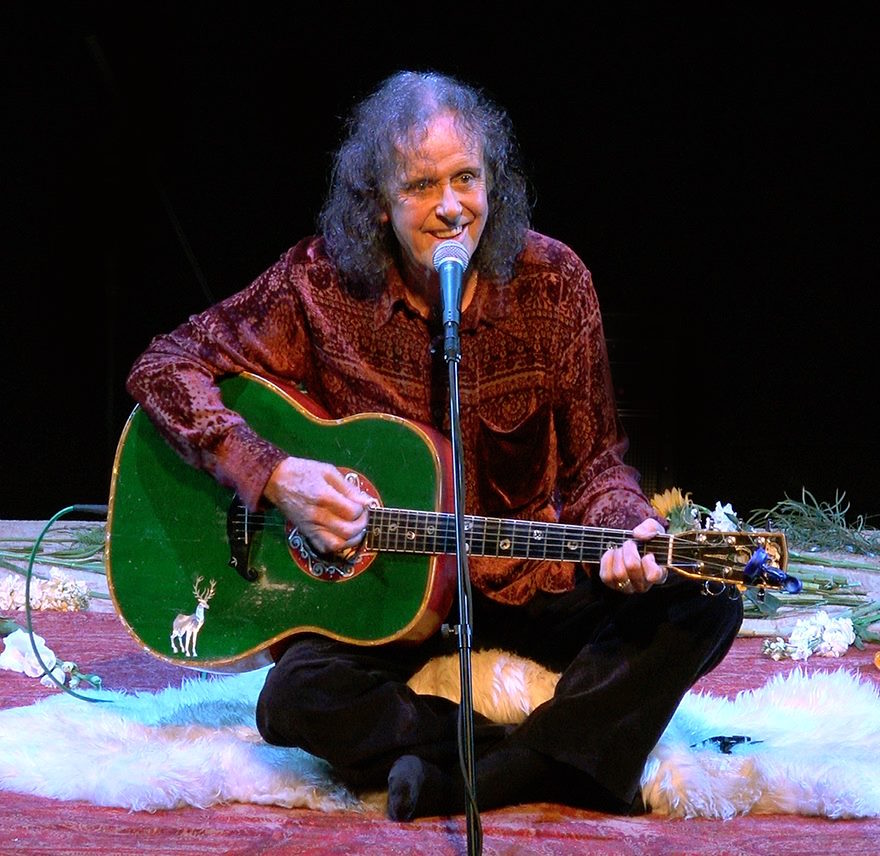
DONOVAN was here over Labor Day Weekend. He played two concerts Sunday night during Fairfest 2016, Fairfield, Iowa’s Roots Music Festival. The first was a fundraiser for Maharishi University’s Global Scholarship Fund at the Fairfield Arts & Convention Center‘s Stephen Sondheim Center for the Performing Arts, and the second was with Bonnie Paine and friends to close out the 3-day musical event on the Main Stage outside. Donovan had never played back-to-back performances like that, but it turned out very well.

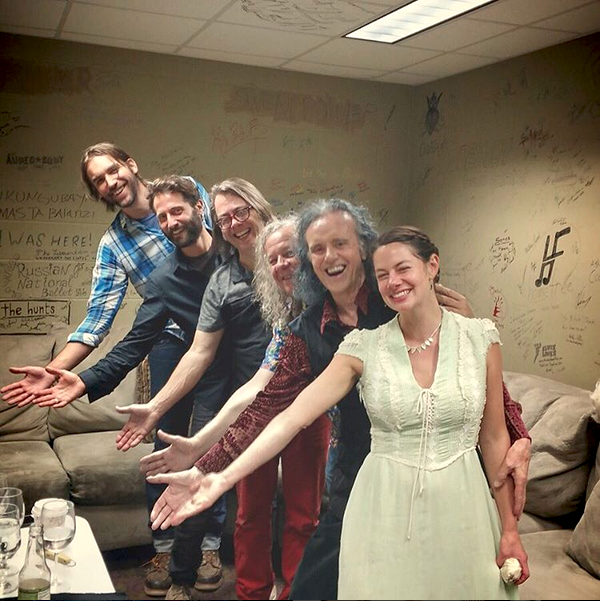
In the Green Room with Donovan.png

After arriving and having lunch, Donovan met the band at the Sondheim theater and went to work rehearsing with them. It was impressive! They consisted of Elephant Revival’s singer Bonnie Paine (percussion), and two from her group, top to bottom: Daniel Rodriguez (guitar, banjo) and Dango Rose (bass), joined by Arthur Lee Land of Great American Taxi (guitar), and Tim Carbone of Railroad Earth (violin, organ).

The MUM concert in the Sondheim was special and intimate, filled mostly with meditators. Donovan then joined the band on the Main Stage after their performance. In both the rehearsal and the concert, Donovan encouraged each one of the musicians playing his songs. They all really enjoyed themselves, as did the audience, and drew the largest crowd of the 3-day event! See video clips below. After the concert, Donovan invited them back to his Green Room to share stories about the music business. What a magical treat for them all!!! Producer Michael Sternfeld took the group photo, choreographed by Donovan.

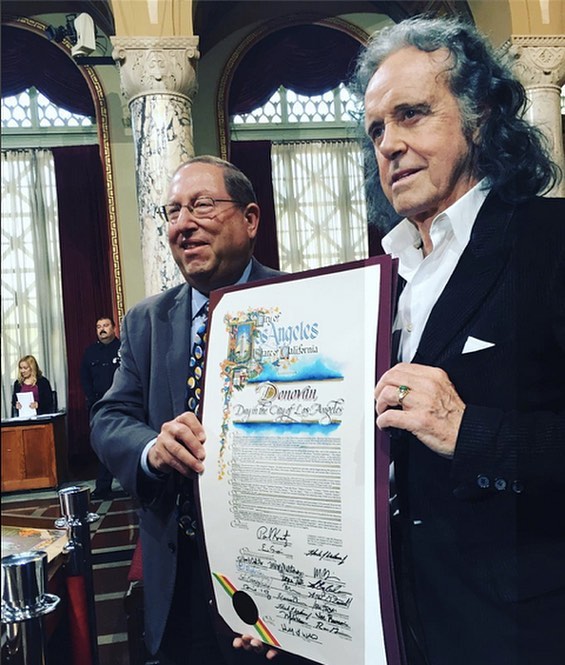
Donovan Day in LA

donovan-day-city-hall-los-angeles

Thank you Mayor Eric Garcetti and Councillor Koretz of City Hall Los Angeles for this singular honor to mark the Fiftieth Birthday of my song SUNSHINE SUPERMAN reaching number one on the Billboard Top 100. A love song for Linda yes, but also when we met we both knew we were on the same journey to raise awareness of a higher consciousness for the future generations. We are still on that journey. Come to my 21 city SUNSHINE SUPERMAN AMERICAN TOUR and share this birthday with me. — Donovan

New addition: Donovan Presentation–LA City Council Meeting.

Some News Coverage

Donovan left Fairfield early Tuesday morning to continue the American wing of his “Sunshine Superman” Tour, which was unofficially launched at East Hampton, Donovan: Flower-Power Icon of Change, then officially on Good Day LA, which discussed Donovan Day in LA. That night he performed on Jimmy Kimmel Live, who said Donovan’s tour was starting in Fairfield, Iowa! After his performance, Jimmy whispered in Donovan’s ear that his interview with Howard Stern was the best ever. Fox News Video also posted this clip: Donovan shows no sign of slowing down.

Billboard later published: Donovan Reflects on ‘Sunshine Superman’ 50th Anniversary, Hanging With The Beatles & Jimmy Page, Flower-Power Era. And then this news, which is so appropriate: Donovan to Be Honored With John Lennon Real Love Award at Tribute Concert. “Donovan is a beautiful soul who was positively influenced by John,” Yoko Ono said in a statement. Read how this came about in this fascinating billboard article.

It’s interesting that Donovan will receive this award in John Lennon’s name. Donovan also had a positive influence on John when the Beatles were with Maharishi in India. John had asked Donovan to show him how he played his guitar. Donovan said it was the claw hammer style he had learned from another musician. It was based on a banjo-picking style converted to guitar.

In a way, it came full circle for John, since his mother, Julia, had taught him how to play chords on a banjo she had given him before he picked up the guitar. John wrote Julia and Dear Prudence using that style. Paul picked it up his way and wrote Mother Nature’s Child and Black Bird. George Harrison said Donovan was all over The Beatles White Album. Donovan mentions all this and more in a Rolling Stone interview (April 19, 2012) after he was inducted into the Rock and Roll Hall of Fame. Watch the video: Donovan: On teaching guitar technique to Beatles.

Fairfield News Coverage

Some regional articles came out to promote the event. The Iowa Source published an article by Michael Sternfeld: Donovan: Sunshine Superman. Michael Braunstein wrote a very interesting article for The Reader in Omaha. Musician and journalist Bob Saar, who has covered David Lynch Weekends and MUM Commencements, wrote a great article for The Hawk Eye: Donovan to perform at FAIRfest 2016. Iowa City’s Little Village’s Arts Editor Genevieve Heinrich published: Musician Donovan Leitch talks legacy of ‘Sunshine Superman’ and importance of Transcendental Meditation, and showed up for the concert with her family. Mark Newman from the Ottumwa Courier dropped by during rehearsal: Donovan performance mends Fairfield hearts. Mark surprised me with a mention, helping Donovan set up. (PDF)

Highlights of FairFest Roots Music Festival

donovan-fairfest-by-wernerelmker

Werner Elmker posted this photo of Donovan from the solo concert, and these Fairfest 2016 Highlights of Day One, Day Two, and Day Three, which contains excerpts from Donovan’s Sondheim and Main Stage concerts.

Professional photographer Kim Green came down from Cedar Rapids and posted a slideshow: Fairfest ~ Labor Day weekend 2016 – Prairie Moon Media- An eclectic mix.

Andy Hayward posted clips from both shows of Donovan at FAIRfest ’16.

FairfieldRocksMe posted these videos:

Fairfield Celebrates Donovan

A Labor Day lunch was hosted by Mayor Ed and Vicki Malloy. Some guests brought their Donovan records and posters for him to sign, and took pictures. In attendance were Bevan Morris, John and Kara Hagelin, and other leading members of the Fairfield/MUM community.

After lunch, Donovan regaled us with stories from Rishikesh, India at Maharishi’s ashram with the Beatles, Mike Love, Prudence Farrow, and others. He told us stories of his times with Maharishi, and a vivid dream he had of him, a week before coming here for the America wing of his 50th anniversary tour.

Donovan then asked me to share the story of what Maharishi had said about him. When I was with Maharishi at Lake Louise, one of my course mates had asked Maharishi about George Harrison and Donovan. About Donovan, Maharishi said he was the most sensitive boy he had ever met.

A few months before he was to join the Beatles and the others in India, Donovan said he was interviewed by John Carpenter for Rolling Stone’s premier issue, (1st and 2nd issues, Nov 9 & 23, 1967). In Part 1, he made a statement that summarized his approach to music: “There’s only one thing in the end, and that’s singing truth in a pleasant way.”

Carpenter asked him about composing, performing, his phenomenal success, and his very recent meeting with Maharishi who had taught him how to meditate. He describes that experience towards the end of Part 2: You just spent three days with Maharishi in Los Angeles. What’s he like?

Read more posts on Donovan here. If you can, see him in concert this time around. Check Donovan’s website for a list of concert dates and locations.

donovan-fairfield-friends

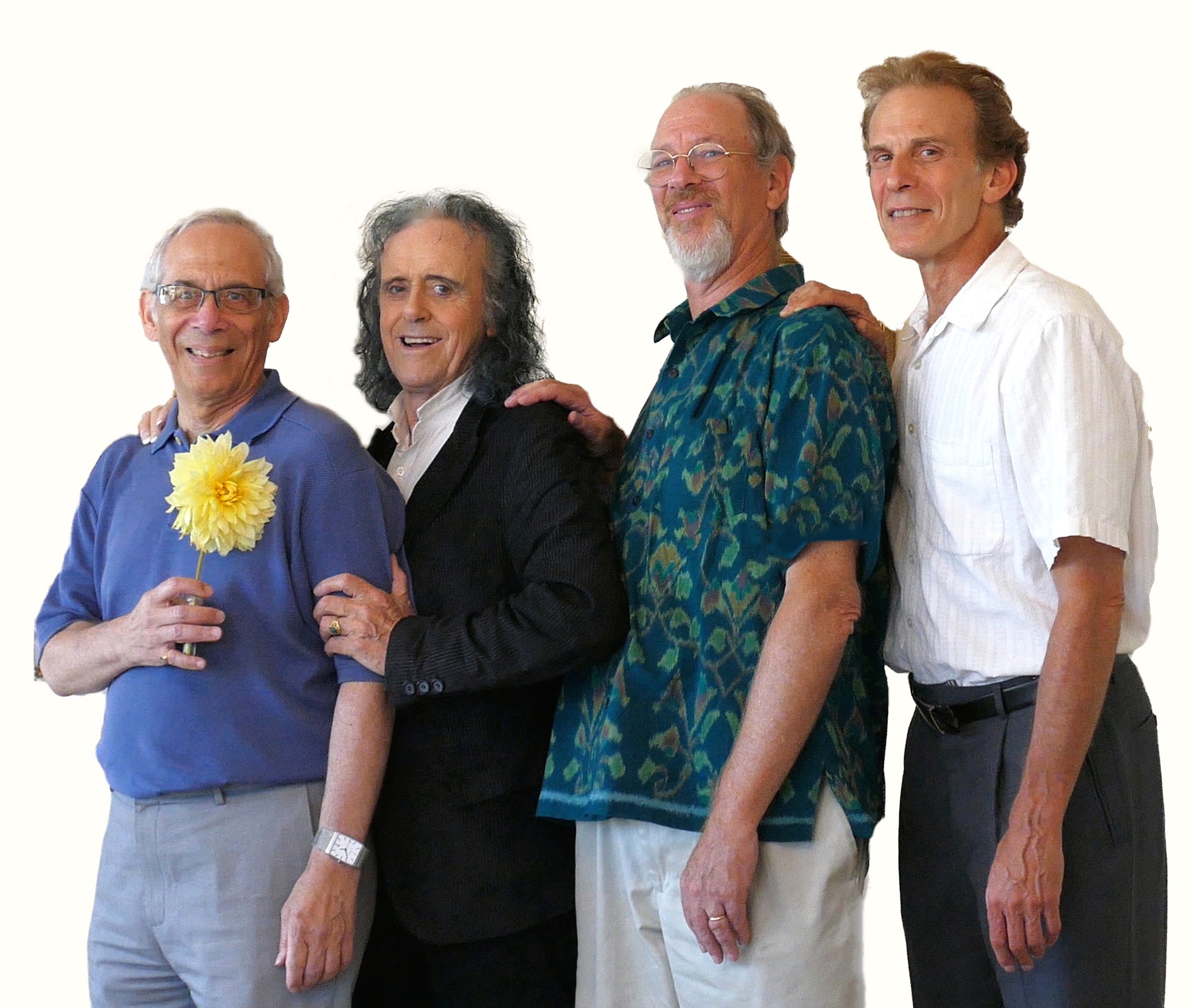
After his last interview for A Fairfield Documentary, a few of us had our picture taken with Donovan. He directed the photo shoot, taken by Werner Elmker. From the tallest to the shortest: Michael Sternfeld, who produced the Sondheim Concert, Bill Goldstein, who introduced the MUM International scholarship students, Donovan, and myself, Ken Chawkin. (Click photo to enlarge it.)

I must say, of all the times I’ve interacted with Donovan over the years, I found him to be most generous and patient with his time and energy while interacting with everyone. Not much ego there, but a very sensitive loving soul, who was kissed by the lord and filled with song to wear his love like heaven. He truly is an evolved Hurdy Gurdy Man, a gift of a rare flower to our garden! Looking forward to seeing him in Fairfield again, next time with his lovely wife Linda.

Update (March 7, 2019): Last year, January 11, 2018, Donovan sent us a link to his interview with Mike Greenblatt for Goldmine Magazine, which had come out the day before: Donovan: Psychedelia’s Poet Laureate. In it he tells the story of how he met the Beatles, shared songwriting with Paul, his spiritual friendship with George, his learning TM from Maharishi, and their trip to India to learn more. And the rest is history, our history!

May 9, 2021: Donovan celebrates 75th birthday, releases video of ‘I Am The Shaman’ produced by David Lynch on May 10, 2021.

— Written and compiled (citing sources) by Ken Chawkin for The Uncarved Blog.