Poetry—The Art of The Voice

September 12, 2009

Poetry—The Art of The Voice

How fine will your breath become
from listening to these words?
How soft will they seem to be
as they settle through the mind
like silent snowflakes falling
from a windless winter sky?

I often marvel at the mystery—
how words can work
on a listener’s heart and mind,
upon hearing a poet’s thoughts,
a poet’s breath, flowing
from an inner voice—
a windless wind, speaking
through a voiceless voice.

—Ken Chawkin

This poem was published in THIS ENDURING GIFT, A Flowering of Fairfield Poetry, 76 Poets Who Found Common Ground in One Small Prairie Town:, and later selected as the POEM OF THE DAY: Poetry – The Art of the Voice, by Ken Chawkin.

INDIAN COUNTRY TODAY: Sustainability quest: Tribes to gather for conference of meditation and renewal

September 11, 2009

Indian Country Today

Sustainability quest

Tribes to gather for conference of meditation and renewal

By Rob Capriccioso

Story Published: Sep 15, 2009

FAIRFIELD, Iowa – Organizers are preparing for a unique gathering of tribal elders, leaders and members to focus on building sustainable communities through meditation, renewable energy, organic agriculture and cultural preservation.

The event, billed as the “International Conference on Building Healthy, Sustainable American Indian Communities,” is largely being put together by the Hocak Elders Council, the Ho-Chunk Elders Advisory Council, the David Lynch Foundation and members of the Winnebago Tribe of Nebraska.

It will be held at the Maharishi University of Management in Fairfield, Iowa Sept. 25 – 27. Planners expect hundreds of participants to attend.

“We are very excited to be able to help offer this one-of-a-kind experience,” said Bob Roth, vice president of the David Lynch Foundation, which focuses on spreading scientifically-proven stress-reduction Transcendental Meditation technique to at-risk youth.

The meditation techniques focus on regular, quiet reflection times aimed at reducing stress and its harmful health impacts.

Studies have shown the methods to have health benefits, such as curbing behavioral disorders in youth and reducing the need for insulin in those with Type 2 diabetes.

Planners with the foundation are using the conference as a platform to highlight their commitment for the past three years to a project called the “Model American Indian Community Initiative” on the Winnebago Reservation.

The project strives to help at-risk youth relieve stress through meditation. It has achieved some promising results which conference organizers are eager to share.

John Boncheff, an event organizer who co-directs the Winnebago project, said Indian youth in the program are not only doing better in school, they are absent less and have a better chance of graduating.

Esteemed Indian leaders have taken note. Joe A. Garcia, president of the National Congress of American Indians; Robert Cook, president of the National Indian Education Association; Lucille Echohawk, a strategic planner for Casey Family Programs; and Kevin Skenandore, acting director of the Bureau of Indian Education are scheduled to attend and present at the sustainability gathering.

The Pine Ridge Reservation in South Dakota and the Passamaquoddy Tribe of Maine have started similar projects, hoping for equally positive results. Planners said many more tribal leaders have requested information.

Roth said it has been an honor to see more tribes get involved and for Native Americans to teach each other the benefits of healthy meditation and its similarity to some traditional spiritual beliefs.

Prosper Waukon, a leader with the Hocak Elders Council and a citizen of the Winnebago Tribe, said the project has also attracted keen interest from his tribe’s elders.

In 2007, Waukon said several older tribal members took a trip to Maharishi University to learn about transcendental meditation, which the institution strongly promotes. Many were suffering from debilitating side effects of diabetes and wanted to understand ways to meditate to improve their well-being.

Some of the elders have since been able to dramatically better their health outcomes, and some rely much less on diabetes medications, Waukon said.

“Many elders found there was something missing with medication alone. Using meditation to relieve stress ended up helping them connect with traditional ways. It has been a win-win situation.”

As a part of studying the elders’ progress, IHS has contributed $560,000 to the project in in-kind testing services. They are hopeful that IHS may end up promoting the program to more tribes in the future upon seeing positive results.

Information about the elder diabetes program will also be highlighted at the conference.

Waukon said the event won’t just be about promoting sustainability through meditation. It will also feature sessions on organic farming, wind and solar energy development and cultural preservation.

“These are areas of sustainability that all connect to each other,” he said, adding that experts in the various fields will be in attendance.

Boncheff would like the conference to raise awareness of the Winnebago project’s success and to see what can be done to take it to the next level. He is hopeful that at least seven more tribes launch similar sustainability projects by next year.

For people who can’t afford to attend the conference, it will be Web cast online. Registration information and more details are also available online.

On February 1, 2012, Indian Country Today published an article, Transcendental Meditation Combating Diabetes in Indian Country, by Mary Annette Pember.

David Lynch Foundation Honored

September 10, 2009

Picture 40

Naturalheroes

THE 
DAVID LYNCH 
FOUNDATION

Promotes a Peaceful World  For Our Children

By Tom Citrano

NATHEROSDavidLynch“In today’s world of fear and uncertainty, 
every child should have one class period a day to dive within himself and experience the field of silence – bliss – the enormous reservoir of energy and intelligence that is deep within all of us. This is the way to save the coming generation.” David Lynch, founder and chairman of the David Lynch Foundation for Consciousness-Based Education and 
World Peace.

This month’s Natural Heroes are Mr. Lynch and the people at the David Lynch Foundation. Director and Producer David Lynch (Blue Velvet, Twin Peaks, Elephant Man, Eraserhead, Mulholland Drive) started his foundation to provide funds for students to learn meditation through Transcendental Meditation centers, hospital-sponsored wellness programs, boys and girls clubs, before-and-after school programs and in schools when invited by the administration.

Instruction is voluntary and provided to children after parental permission has been granted and at no cost to the family, organization or school. This year the David Lynch Foundation granted millions of dollars guaranteeing thousands of students, teachers and families a chance to learn meditation.  The Foundation also funds independent research to study the effects of meditation on creativity, intelligence, brain function, academic performance, ADHD and additional learning disorders, substance abuse and depression.

Lynch believes that stress is taking a big toll on children today. He looks for a day when developing student’s creative potential is part of every school’s curriculum. David Lynch has been a TM practitioner for over 30 years and explains, “There are hundreds of schools, thousands of students, who are eager to relieve stress and bring out the full potential of every student by providing this Consciousness-based education.”

The David Lynch Foundation targets the benefits of TM for students in the following areas:

CLASSROOM STRESS

Children need to feel safe in school because pressure, stress and fear undermine learning. Dr. William Stixrud, Ph.D., a clinical neuropsychologist in Silver Spring, Maryland, specializing in work with children and adolescents, has studied the effects of stress on the developing brain and had this to say about the David Lynch Foundations programs, “Educators have long known the optimal mind/body state of a student is one of relaxed alertness. The question has been how does the student get there? The answer is The Transcendental Meditation Program.”

CLINICAL DEPRESSION
Ten million children in America have been diagnosed as clinically depressed and take antidepressant medications. Most of these medications are categorized as having serious side effects. A study (funded in part by the Daimler/Chrysler Fund and the General Motors Foundation) on meditating children at an inner-city Detroit middle school confirms what previous gathered data and research has documented: The Transcendental Meditation program increases happiness, self-esteem, and self-worth, while also reducing anxiety and depression.

LEARNING 
DISORDERS
If left untreated, ADHD impacts the child in several ways – causing impulsivity, distractibility, hyperactivity and inattentiveness. ADHD is also associated with sleep disorders, depression, bipolar disorder and other disorders. Almost 90% of children diagnosed with ADHD are on medications. Linda Handy, Ph.D., educator and principal of The Waldorf School in Silver Spring, Maryland believes it’s easier for teachers to hold the attention of students who meditate, “Transcendental Meditation has a great effect on students’ learning ability. Teachers can teach more – so students can learn more.”

HIGH BLOOD PRESSURE

High blood pressure is no longer an adult disease. Studies show adolescence is a critical time for the development of hypertension and other coronary disease risk factors. Increasing rates of childhood obesity are further driving up the numbers of children and teens living with hypertension. Vernon Barnes, Ph.D., research scientist at the Georgia Prevention Institute of the Medical College of Georgia in Augusta studied the effects of TM on a random sample selected from a group of 5,000 teens with hypertension. Barnes had this to say about the results, “Decreases in blood pressure observed in the present study have clinical significance. The decreases, if maintained into adulthood, are enough to potentially decrease a child’s long-term risk for heart disease and stroke.”

FULL BRAIN POTENTIAL

Science has confirmed that our brains are not fully developed at birth. As we grow and mature, the brain is being recreated to support all of our new and changing thoughts, decision and behavior. There are different areas of the brain for seeing, hearing, thinking, feeling, etc. The part of the brain that is most critical for evaluating all the information is the frontal lobes. Stressful experiences keep the frontal lobes from developing. Research verifies the TM technique is unique in its ability to exercise this critical part of the brain – to make the brain healthier and better able to work together as a whole.

ACADEMIC ACHIEVEMENT

In his book, A Record of Excellence, Ashley Deans, Ph.D., director of The Maharishi School in Fairfield, Iowa recounts the achievements of his school, which is accredited by the State of Iowa and the Independent Schools Association of the Central States, “Hundreds of scientific studies on Transcendental Meditation program and more than 30 years of classroom experience should be enough to convince anyone that Consciousness-Based education can make education complete, healthy, harmonious and productive.”

For more information about 
the David Lynch Foundation 
and its programs, visit davidlynchfoundation.org.

If you have a Natural Hero in 
your life, send an email to: heroes@nugreencity.com and tell us about that special someone who’s making our city and the planet a better place.

http://www.nugreencity.com/2009/09/naturalheroes-3/

William Stafford—You and Art

September 10, 2009

You and Art

Your exact errors make a music
that nobody hears.
Your straying feet find the great dance,
walking alone.
And you live on a world where stumbling
always leads home.

Year after year fits over your face—
when there was youth, your talent
was youth;
later, you find your way by touch
where moss redeems the stone;

and you discover where music begins
before it makes any sound,
far in the mountains where canyons go
still as the always-falling, ever-new flakes of snow.

—William Stafford

Also see William Stafford—A Course in Creative Writing

Listen to You and Art performed by Daniel Sperry from his CD: William Stafford: Cutting Loose ~ A Tribute To William Stafford.

I later included the last stanza of this Stafford poem in response to The Poetry Society’s tweet of the last half of Wallace Stevens’s poem, The Snow Man, which they liked. The imagery is similar, and the GIF they used of snow falling also fits perfectly with both poems.

My poem, Poetry—The Art of the Voice, communicates that silent music from nature to poet to audience, where it “begins before it makes any sound” as Stafford wrote at the end of You and Art.

And my poem, Telling the Story of Silence by Ken Chawkin, allows that silence to tell its own story, the “Nothing that is not there and the nothing that is” as Stevens wrote in The Snow Man.

Later found and added: Henry Lyman interviewed William Stafford for NPR’s series, Poems to a Listener, later posted on YouTube. Stafford reads several poems, including You and Art.

I found this quote by James Joyce (Ulysses): “A man of genius makes no mistakes. His errors are volitional and are the portals of discovery.” It seems to reiterate this notion that mistakes lead to discovering something new and unexpected, i.e., thinking out of the box.

Beach Boys concert ‘fun, fun, fun’ for all

September 8, 2009

Beach Boys concert ‘fun, fun, fun’ for all


By BOB SAAR for The Hawk Eye


Published online: 9/8/2009

You might guess a band almost half a century old would be populated with superannuated blokes of yore.

Ah, but there are no old guys in the Beach Boys.

There were a lot of “old” baby boomer fans in the audience during Monday’s outdoor concert at Fairfield Middle School, but they were as uninhibited as any bunch of today’s teenagers ogling the Jonas Brothers.

The Beach Boys, centered around originals Mike Love and Bruce Johnston, included lead guitarist and music director Scott Totten, keyboardist Tim Bonhomme, Randell Kirsch on bass, guitarist Christian Love — son of Mike Love — and John Cowsill on drums.

You remember the Cowsills. Sure you do — that family band with the hit “Hair.”

Cowsill provided perfect surf drums for the two-hour concert, keeping many of the more than 4,000 concertgoers up and prancing the entire time. Those “old” folks did the Pony, the Swim, the Shimmy — long-forgotten go-go dances called up from collective memory by the jungle beat of surf music.

Kirsch, who has the daunting job of covering Beach Boy guru Brian Wilson’s high parts, relishes his spot.

“That’s the funnest job in the band,” he said.

Iowa band The Nadas provided the walk-in music with a solid set of roots rock.

“They were spot on awesome,” Iowa City musician Jason Bolinger said.

The main show began when Fairfield Mayor Ed Malloy lauded Love with a proclamation, introducing the 68-year-old singer as “Fairfield’s Energy Czar Emperor.” The concert was a benefit for the David Lynch Foundation and the Fairfield Arts and Convention Center, as well as a kickoff for Fairfield’s new Green Sustainability Plan aimed at energy conservation.

Love practices transcendental meditation at the Maharishi University of Management in Fairfield. MUM was founded by Maharishi Mahesh Yogi; the TM master was popular in the ’60s with the Beach Boys, the Beatles and other music and movie stars.

“Little Honda” got things up and running. At least a few aging Boomers recalled that the song is about motorcycles, not cars.

The vocals took a few songs to loosen up to the point of being totally tuned in and running smoothly, and that was OK — after all, the original band didn’t always hit all eight cylinders in concert.

And it was good and swell that this band didn’t do a clone routine, a “Mike Love Karaoke Hour.” They did all Beach Boy hits — my, those boys had a lot of hit singles — and they were the Beach Boys, without the Wilson boys, sure, but a real band, not some broken-down fossil staggering around the stage with the rights to a band name and a cadre of grungy sidemen to prop him up.

“Barbara Ann,” “Surfin’ Safari,” “California Girls,” “Surfer Girl,” “Sloop John B.” The concert list was seemingly endless.

“Wouldn’t it be nice” was quite nice: “We could be happy,” the band sang, and the crowd sang with them, extremely happy to be there on a storybook Indian summer day in Iowa.

Johnston’s lead vocals, especially on “Do You Wanna Dance?” were as clean and pure as any 25-year-old crooner touring today.

“Why Do Fools Fall In Love,” “Don’t Worry Baby,” “Good Vibrations,” God Only Knows.”

Children frolicked with their elders. Beach balls careened in the sky. Souls soared. People grew younger with each new tune.

A hotrod medley, of course: “Little Deuce Coupe,” “Shut Down,” “I Get Around” — one of surfdom’s best angsty laments — and “409.”

The old people knew the song referred to Chevy’s 409 cubic inch V8 engine coveted by hotrodders of the era. It is not known how many youngsters present wondered why this legendary group was singing about bathroom cleaning products.

The encore was not begged; everyone knew what was coming: “Fun, Fun, Fun.”

All had fun yesterday in Fairfield, all but the police, who had nothing more to do than direct traffic for the polite, smiling concertgoers.

“No fun for me today,” one Jefferson County deputy said. “I gotta work.”

Lynch Foundation Media Relations Director Ken Chawkin said the show was special for the band’s TM enthusiasts, especially Love.

“This must be a huge thrill for Mike, because he’s been coming here for years to meditate and take rejuvenation treatments,” Chawkin said of Love.

Perhaps that explains why there are no old guys in the Beach Boys.

Love was not too worn out afterward to echo the enthusiasm of the well-wishers who surrounded him backstage.

“I think it’s great here in Iowa,” he said. “This place is really special.”

The event producer for the David Lynch Foundation, Michael Sternfeld, was as upbeat as everyone else at the end of the show.

“There’s something about the audiences at Fairfield. … There’s something special here,” he said. “This was the ultimate experience. In terms of energy, we just nailed it.” He stopped to smile up into the blue. “We created serious good vibrations.”

Yeah, man. Good vibes and a whole lot of fun.

http://www.thehawkeye.com/story/beachboys-090809

Beach Boy found life saving cure in Fairfield

September 8, 2009

Radio Iowa News

Beach Boy found life saving cure in Fairfield

Monday, September 7, 2009, 9:39 AM
By Darwin Danielson

Mike LoveThe Beach Boys will play their first-ever concert in Fairfield today but one of the men who founded the legendary band in 1961 says he’s been visiting the southeast Iowa community for decades.

Mike Love learned transcendental meditation in 1967 and says he steals away to Fairfield frequently for R-and-R, that’s rest and relaxation, not rock ‘n’ roll. The singer and songwriter says the community facility, known as the Raj, offers health treatments which he believes have helped prolong and greatly improve his life.

“Ayurveda is an ancient science of health from India,” Love says. “It has all kinds of aspects to it but they have fantastic treatments that reverse the clock biologically speaking, in other words, you can reverse the aging process through a combination of meditation and the Ayurveda, so it’s been really helpful to me.”

Love is 68 years old but when he inputs his vital information before a treadmill workout, he says he usually punches in 50, as that’s how young he says T-M allows him to feel. “It’s been really helpful to me to be able to meditate and get these treatments occasionally because the schedule we keep is pretty intense,” Love says, laughing. “We haven’t had a summer off in 47 years.” He says transcendental meditation helped prevent him from falling into the same traps that have caught and killed many other celebrities.

“That has helped me to stay away from too much drinking, I don’t smoke, all the lifestyle choices that can lead to disease and early death, I’m not interested in that path,” Love says. “I’ve seen plenty people go that way and it’s a drag because I’m sitting there thinking, gee, if they could only learn this technique and benefit by it, it’d be great.”

The concert will be held in the open fields beside Fairfield Middle School. The gates open at noon. For tickets, directions and parking information, call 641-472-2787.

AUDIO: AUDIO: Radio Iowa’s Matt Kelley reports on Mike Love. :46 MP3

Related article: Beach Boys’ Mike Love recharges at The Raj

Beach Boys’ Mike Love recharges at The Raj

September 6, 2009


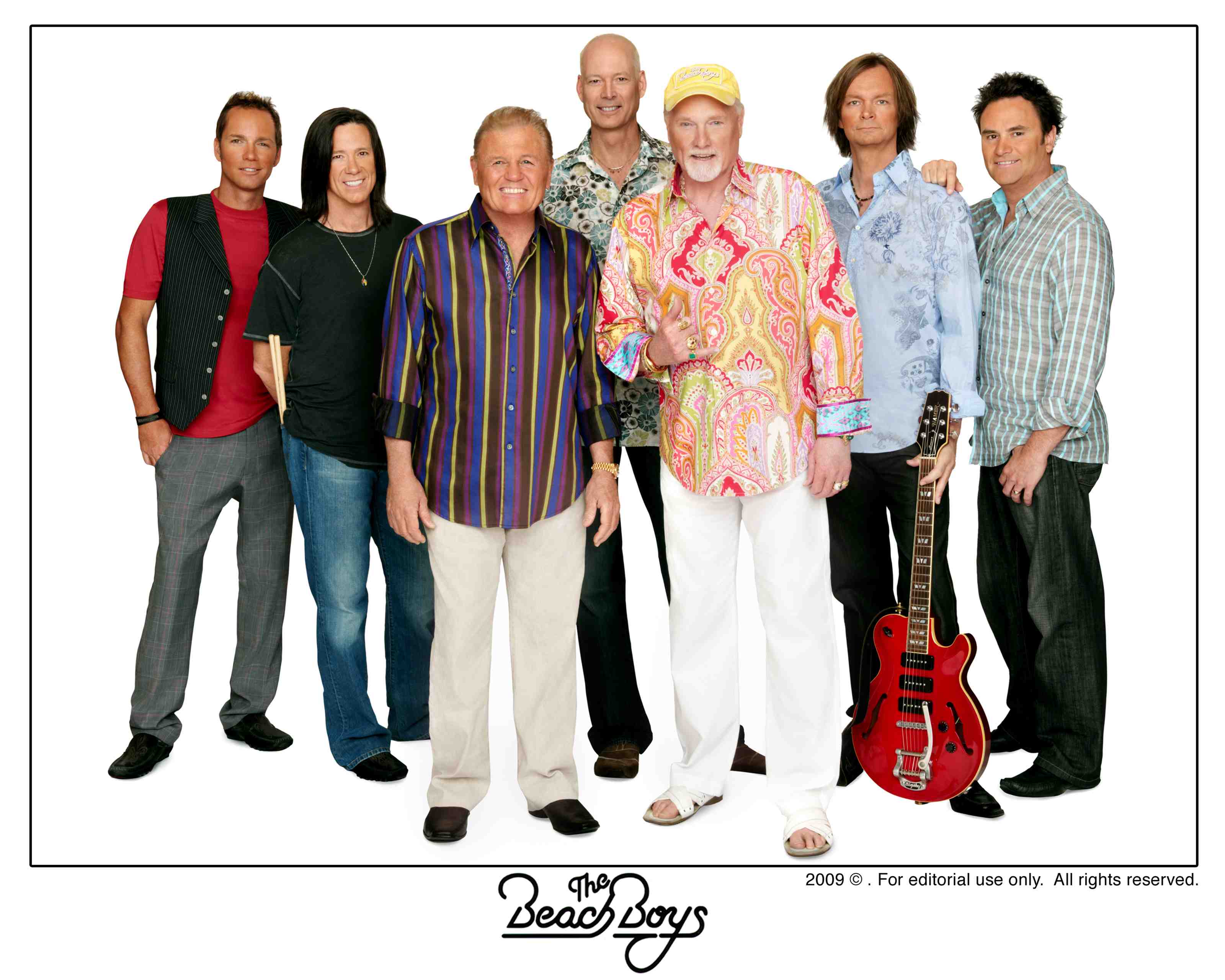
Picture 28WHITE_GROUP_8x10_lo-resSPECIAL TO THE REGISTER
The Beach Boys, from left: Christian Love, John Cowsill, Bruce Johnston,
Randell Kirsch, Mike Love, Scott Totten, Tim Bonhomme. Johnston and
Love have been members of the band since the 1960s.

By SOPHIA AHMAD
September 4, 2009
sahmad@dmreg.com

With its tight falsetto harmonies and sunny lyrics, the Beach Boys’ sound is immediately recognizable to both young fans – who consider it a retro band – and to older fans who grew up on hits such as “California Girls” and “Surfin’ USA.”

The legendary ensemble that has been entertaining audiences since 1961 will perform Monday in Fairfield – a quick return trip to Iowa after a recent show Aug. 14 at Meskwaki Bingo-Casino-Hotel in Tama. But Monday’s outdoor concert on Labor Day at a middle school in Fairfield also will deliver a different “vibration” for singer Mike Love. “My main place for rest and relaxation and recharging has been the Raj and meditating in the domes,” Love said last month during a stopover in Fairfield. The Raj is a Fairfield spa that integrates holistic practices into its treatments.

And Love routinely practices transcendental meditation (T.M.) inside the domes of Maharishi University of Management, founded by Maharishi Mahesh Yogi.

Love, one of the remaining 1960s members of the Beach Boys, will be named Energy Czar for the day by Fairfield Mayor Ed Malloy. He will also help unveil the city’s 40-point Green Sustainability Plan, funded by an $80,000 grant from Iowa’s Office of Energy Independence. The plan calls for energy conservation and support of local farms, among other initiatives. “Energy independence is something that is close to my children and grandchildren and their children’s heart,” Love said.

Proceeds from Monday’s concert also will benefit the David Lynch Foundation, which supports T.M. education, and the Fairfield Arts and Convention Center.

Love is a longtime fan of the eastern Iowa city.

“I’ve been going to Fairfield for a few decades,” he said. “One time I came here for three weeks and did treatments every day, and that was fantastic. I never felt better. “Transcendental meditation is so important to Love that he wrote a song about its founder: “Cool Head, Warm Heart.”

“Maharishi said once in a meeting, ‘You need a cool head and a warm heart,’ so I made a little sound out of it,” Love said about his inspiration for the song.

Love, who performs nearly 150 concerts per year, said he has a special connection to Iowa and its “small-town environment.” He recalled a recent memory of the “little gem in the heartland” when he landed at a Tucson airport. “This woman that drove me from the airport said she heard us at the Dance-land Ballroom in Cedar Rapids … Now how ironic is that?”

Additional Facts
The Beach Boys with The Nadas

WHEN: Monday, gates open at noon.

WHERE: Fairfield Middle School Outdoor Field, 404 West Fillmore

TICKETS: $12-$37.50 through Iowatix. Proceeds benefit the David Lynch Foundation and the Fairfield Arts and Convention Center

INFORMATION: www.fairfieldacc.com

http://bit.ly/4swpoN

Also see Mike Love, Not War | Ireland’s Edwin McGreal interviews Mike Love for The Mayo News | Mike Love of the Beach Boys on Stories of Success | Beach Boys concert ‘fun, fun, fun’ for all | Beach Boys bringing green concert to tiny Fairfield

William Stafford—The Way It Is

September 5, 2009

This is my favorite William Stafford poem, and, much to my surprise, I came across a quote from the Vedic Literature with a similar theme, only it extends it to its ultimate spiritual conclusion. So I call this grouping: uncommon thread … cosmic thread.

THE WAY IT IS

There’s a thread you follow. It goes among
things that change. But it doesn’t change.
People wonder about what you are pursuing.
You have to explain about the thread.
But it is hard for others to see.
While you hold it you can’t get lost.
Tragedies happen; people get hurt
or die; and you suffer and get old.
Nothing you do can stop time’s unfolding.
You don’t ever let go of the thread.

—William Stafford

————

He who knows the fine-drawn thread of which the creatures that we see are spun, who knows the thread of that same thread—he also knows Brahman, the Ultimate.

—Atharva Veda Samhita 10.8.37

————

Listen to an audio recording of William Stafford reciting The Way It Is.

Listen to The Way It Is performed by Daniel Sperry from his CD: William Stafford: Cutting Loose ~ A Tribute To William Stafford.

See a video of cellist and composer Daniel Sperry perform William Stafford’s poem, “The Way It Is.”

And see William Stafford’s last poem: “Are you Mr. William Stafford?” also performed by Daniel Sperry.

This post sheds additional light on the notion of following a thread: William Stafford’s poetry lightened his life having woven a parachute out of everything broken.

In this post, William Stafford prescribed creative writing to find your own voice and reveal your inner light, I mention that Kim Stafford used the lines of the poem, The Way It Is, as chapter headings in his wonderful biography, Early Morning: Remembering My Father, William Stafford.

— Written and compiled (citing sources) by Ken Chawkin for The Uncarved Blog.

Mike Love, Not War

September 4, 2009

Picture 29
Mike Love, Not War
Get Ready for Good Vibrations
by Virginia McEvilley
Picture 28
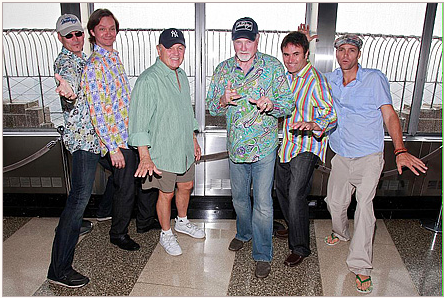
It’s Endless Summer for Beach Boy Mike Love (third from right), as the band wraps up its summer 2009 tour in Fairfield, Iowa, and makes plans for its 50th anniversary celebration in two years.

It may come as a surprise that America’s best-selling band of all time has chosen Fairfield, Iowa, for the grand finale of its 48th annual summer tour. But for long-time lead singer Mike Love, playing Fairfield is nothing short of “special.” And though it has been many years since 1961 when the Beach Boys’ first hit single “Surfin’ ” was released and since Mike Love, together with his cousins Brian, Carl, and Dennis Wilson, hit the charts with the group’s first nationwide hit, “Surfin Safari,” the feelings of happiness generated for millions of people by the Beach Boys’ music is still as lively today as it was almost 50 years ago.

Since then, the Beach Boys have performed their original hit songs recounting the Southern California life experience thousands of times, recapturing the innocence of an era that propelled them to the top of their profession. Mike says he is proud to have been the lead singer for so many of the Beach Boys’ hits, and in spite of the loss of his cousins, Dennis and Carl Wilson, Mike’s experience has remained fundamentally positive.

“I still treasure all the great times we had together,” Mike says. “The loss of Carl Wilson 11 years ago was profound, but I still feel like he’s looking down on us whenever we do ‘Good Vibrations’ and ‘Kokomo.’ At first I thought no one could ever sing our songs like Carl, but as it turns out my son Christian has a beautiful voice and not only can sing Carl’s parts but actually sounds a lot like him. This is great because we like to keep the re-creation of these songs consistent to the best of our ability.” Whether it is to preserve the Beach Boys’ legacy or for the sake of all their loyal fans, this may be one reason why the momentum of the Beach Boys’ greatest hits has lasted until today.

The Beach Boys are, in fact, among the top three groups who recorded from the late ’50s to the early ’70s, along with the Beatles and the Supremes. The Pet Sounds album was voted the number one album of that era and “Good Vibrations” the number one single. The time that passed between “Good Vibrations” in 1966 and “Kokomo” in 1988 was the longest period of time between number one records of any group in history.

“The amazing thing about music,” says Mike, “is that as long as you have the right piece of music and your abilities intact, you can experience great success irrespective of how many years you’ve been at it.” This basic theme of optimism and positivity has pervaded most of the Beach Boys’ musical history.

And just as “Good Vibrations” differed from the earlier surfin’ songs in subject matter, Mike’s lifestyle began to differ from others in the group, and many of those in the recording business in general. While others chose drugs and alcohol as a method of relaxation, Mike chose Transcendental Meditation as taught by Maharishi Mahesh Yogi. Several group members learned the technique from Maharishi in Paris in December of 1967, but Mike was the only one to go to the widely publicized course in Rishikesh, India, two months later, which was also attended by the Beatles, Donovan, and Mia Farrow.

Mike remembers Paul McCartney coming to breakfast one morning strumming his acoustic guitar and playing “Back in the U.S.S.R.,” an experience Paul himself writes about in his autobiography. Mike often recounts other moments in India and has written a song entitled “Pisces Brother” about his 1968 birthday party at Maharishi’s ashram with the late Beatle George Harrison.

Recently, Mike has written a number of other songs that draw from his experience in India, music he says was inspired by Maharishi and the ancient Vedic scriptures. Some of these tunes include “Ram Raj,” “The World is My Family,” and “Make Love Not War.”

After his visit to India in the spring of 1968, Mike attended many meditation courses, becoming a teacher of Transcendental Meditation in Mallorca, Spain, in 1972. “Too many people in my family and my profession paid a heavy price with their health and well-being by not using the knowledge Maharishi made available to us,” Mike says. “This knowledge has relieved me of stresses that certainly would have otherwise accumulated to my detriment, and has also improved my life dramatically.” Mike also schedules regular Ayurvedic treatments for rejuvenation, often at the Raj Resort in Maharishi Vedic City just north of Fairfield.

When asked about retirement, Mike says, “I don’t think of retirement as it is viewed by most people in our society. People work for 20 to 30 years, then get a pension and move to Florida, play bingo, clip coupons, and go on group excursions. . . . For me, my goals would be to become more creative, more productive, and produce more positive, uplifting actions for humanity, while becoming more saturated in knowledge and spiritual life. The retirement of retiring to the self appeals to me—the kind of thing you read about in the spiritual literature of the East. Still, in the future, we may become more selective about how we present our music . . . .”

Mike says there are a lot of other things he envisions for the future. Currently, an Emmy Award-winning documentarian is interested in filming a biography about the Beach Boys for the PBS American Masters series. “So there’s really no need to talk in terms of retirement—there’s no retirement in sight for the Beach Boys at this time,” Mike says. “In fact, we’re really looking forward to our 50th anniversary celebration in two years. We’re getting offers to do concerts in Australia, Japan, Mexico, and the Caribbean.” Even though it can be tiring moving from place to place Mike admits he still enjoys touring. “What’s not to like!” he says.

This relentless positivity and optimism combined with a focus on health and spirituality are the foundations of Mike’s life. This has been his contribution to the Beach Boys since the beginning and is now the engine that drives the band. Together with “I Write the Songs” Bruce Johnston, who has been a Beach Boy on and off for decades, and several other musicians, including Mike’s son, Christian, and John Cowsill of the ’60s group The Cowsills, the good vibrations continue.

Now, for the first time ever, though he has been a frequent visitor to Fairfield over many years, Mike Love and the Beach Boys will be performing all the great songs here that have made them famous the world over as “America’s number one band.”

“Every year we play all the major cities—New York, L.A., Chicago, Dallas, Atlanta,” Mike says, “but those people have so many choices because a myriad of performers come through there. It’s almost like they become a little jaded. That’s why it’s special to go places we’ve never been before. It’s exciting and fun, and we’re inspired by the feeling of appreciation we get.

Don’t miss this special performance sponsored in part by the David Lynch Foundation, whose successful fundraising concert at NYC’s Radio City Music Hall this spring featured Paul McCartney, Ringo Starr, Donovan, Moby, Sheryl Crowe, and others, including Mike Love, who says, “I have great admiration for the David Lynch Foundation. The Love Foundation currently has a project for veterans with post-traumatic stress disorder to learn TM, but we’ve never been as organized and dynamic as the DLF. Their work is inspirational and makes me want to do even more.”

The Beach Boys perform the finale of their Endless Summer Tour in Fairfield on Labor Day Monday, September 7, 2:00 p.m. at the Fairfield Middle School Outdoor Field, 404 W. Fillmore. Tickets range from $12.00 to 37.50, available at http://www.fairfieldacc.com or (641) 472-2787.

Visit the index for more articles on music and musicians.
http://www.iowasource.com/music/2009_09.html

Watch Fairfield’s Beach Boys End of Summer Concert promo on YouTube. http://www.youtube.com/watch?v=t1rOugfBi1k

Related: Here’s an Interview With Mike Love of the Beach Boys posted May 29, 2012 on Stories of Success. At about the 9:55 mark Mike answers the question of what kept him from getting caught up in drugs and alcohol, with the responsibility of acting as a role model, by talking about his TM practice, dharma, and persevering to fulfill your chosen career path. http://vimeo.com/43009744


Time Out Abu Dhabi: Transcendental Meditation

September 3, 2009

Transcendental meditation
Dismissed by cynics, applauded by medics, transcendental meditation is nothing if not controversial

‘It was a great gift,’ said Sir Paul McCartney earlier this year. ‘For me it came at a time when we were looking for some stability towards the end of the crazy ’60s. It’s a lifelong gift that we can call on any time.’

At a press conference for Change Begins Within (an initiative that hopes to get one million children involved in transcendental meditation, or TM, put together by Twin Peaks director David Lynch), Macca’s fond enthusiasm was somewhat at odds with the general malaise that soured the Beatles’ meditation retreat back in 1968. After the fab four followed Maharishi Mahesh Yogi (the man credited with introducing the Indian-Himalayan meditation technique to the West) to Rishikesh, India, John Lennon dismissed him as a charlatan. Though he apologised for his youthful outbursts later, it seemed impossible that a Beatle-tarnished reputation could ever be wiped clean.

Not so. By the mid-’70s some 40,000 Americans per month were reportedly signing up for classes, many of whom found the simple, schedule-friendly techniques so beneficial that they practise it to this day. David Lynch, a practitioner since 1973, has said that a mere fortnight of twice-daily practice was all it took to reduce the angers and anxieties that controlled his life at the time. ‘Those negative things started lifting,’ he said recently. ‘It sounds strange, but I appreciated and enjoyed the doing of things more.’ It’s not just the ageing hippies who talk it up, either. Empirical evaluations have shown that the technique can have an effect on human physiology, reducing stress levels significantly and even having some positive effect on heart diseases. Even the science bods are recommending it now.

‘It’s practised by people of all levels of intelligence, of all ages, cultures and religions,’ explains Surendra Kumar, a teacher at the Creative Intelligence Consultancy in Dubai. ‘There are many reasons they come to us. Some just want to learn, others come for health reasons and many just want to be happy in life.’ Surendra is willing to travel to teach keen students – a kind of TM delivery service, if you will. In fact, he recently finished a TM course in Abu Dhabi, which was hailed a success by its participants.

A misconception commonly held is that TM has religious connotations – possibly cultish in nature. Again, this was an unfortunate by-product of the Maharishi’s association with The Beatles: George Harrison, in particular, was an enthusiastic advocate of Indian religions, and many observers jumped to conclusions. ‘It has nothing to do with religion,’ says Surendra with the air of a man who has had to deal with this line of questioning before. ‘It’s a peaceful mental activity that takes the mind to deeper levels of the thinking process. Though it was only introduced to the Western world 50 years ago, it’s as old as life itself.’ It is estimated that six million students have studied TM in that short space of time, a number that puts it slightly beyond the realms of cult status.

But, why TM rather than other forms of meditation? Put simply: people seem to find it easier. Whereas other techniques require you to blank the mind (often the largest hurdle for many students), or focus on a single aspect, TM uses a repetitive technique – a series of vocal vibrations or sounds, often with no meaning – to lull the mind into a peaceful state, ‘transcending’ the regular thoughts and conundrums that bombard us from minute to minute.

Unfortunately, the mumbo jumbo associated with TM is hard to avoid. Wondering what the effects of ‘bliss consciousness’ and ‘self-referral intelligence’ might be, we spoke to Arif Dawood, a participant on the recent Abu Dhabi course. ‘I’ve done several types of meditation and heard about TM a long time ago,’ he explains. ‘I would say it’s one of the easiest to practise and, although it’s too early to notice any major benefits, it certainly makes me feel very relaxed.’

If it’s so easy, why bother finding a teacher? Well, just as you might benefit from instruction in the gym, an experienced teacher can help shape the techniques to suit your situation. Whether you come to it as a student of relaxation, for health reasons, or even via an out-of-control Beatles obsession, one thing quickly becomes apparent: transcendental meditation may be as old as the hills, but in this frenetic modern world where instant results are imperative, you might find it’s a lifelong gift you wouldn’t wish to return.

For more information on arranging a TM course in Abu Dhabi, call the Creative Intelligence Consultancy on 050 207 0347 or email info@tm.ae. A website will soon be up and running at http://www.tm.ae

Time Out Abu Dhabi 30 August 2009

http://tinyurl.com/kupav7

3 Comments:
Posted by: Dr. Jean Tobin on 01 Sep ‘ 09 at 03:54
Thank you for this article highlighting the benefits of Transcendental Meditation. I’ve read quite a few articles on the subject and your treatment is more precise and fair than most. I wanted to share with your readers a summary of the research on TM. TM distinguishes itself not only in how easy it is to practice, when learned from a qualified teacher, (TM.org) but also in how effective it is when compared with other mental techniques. There has been so much rigorous research validating the benefits of TM in all areas of life. The majority of these studies compared TM to other practices or control groups. 350 peer-reviewed research studies were conducted on over 10,000 subjects who were practicing the TM technique. These studies included numerous randomized controlled trials, along with eight meta-analyses of 597 separate studies on the effects of meditation. The studies were conducted at Harvard Medical School, Yale Medical School, Stanford Medical School, University of PA, University of Kentucky, and more than 200 other independent institutions, and were done by 360 scientists from 29 countries. Learning TM was the best decision I ever made. It has improved my life in every possible way. Thanks again for bringing your readers attention to an important topic.

Posted by: kennyji on 31 Aug ‘ 09 at 18:37
This has to be the most intelligently written article so far assessing the value of the Transcendental Meditation technique for the average individual that I’ve come across. It sifts out the misunderstandings of a confused past and enlightens its readers to the practical benefits of this simple but effective technique for living a less stressed and more productive fulfilling lifestyle. Thank you.

Posted by: Archie on 31 Aug ‘ 09 at 15:21
I love TM and have been practicing it twice a day for over 35 years. It has enriched my life in ways that I never could have expected but would never want to have had to do without. Yes, it has been a lifelong gift that I wouldn’t return for anything in the world. Thank you, Maharishi.