History Haiku/Tanka
Past is a Story
Partially made up by you
As is the Future
In between is the Present
How much are you living Now
© Ken Chawkin
September 1, 2012
Fairfield, Iowa, USA
History Haiku/Tanka
Past is a Story
Partially made up by you
As is the Future
In between is the Present
How much are you living Now
© Ken Chawkin
September 1, 2012
Fairfield, Iowa, USA
Haiku Defined
3 lines, 2 spaces,
17 feet to walk thru;
then, the unending
∞
Haiku Discovered
a poem unfolds
as words take their place in line
this one’s a haiku
∞
Art of the Haiku
do away with words
and you’ll have a way with words
speak less and say more
∞
When Writing Haiku
trim off excess words
expose the bones of meaning
enter Truth deeply
© Ken Chawkin
Other haiku you might enjoy: Transformed—my first haiku | COMMITTED (a two-haiku poem) | Art of the Haiku by Ken Chawkin | Five Haiku | 13 Ways to Write Haiku: A Poet’s Dozen | A Haiku on Haiku Poets | A Haiku on The Heart of Haiku. Search this blog for more haiku and tanka.
Art of the Haiku
do away with words
and you’ll have a way with words
speak less and say more
© Ken Chawkin
Also see Haiku On The Nature of Haiku
These two haiku were composed spontaneously while talking to my friend Sali. She’s also my muse, and keeps me, both of us, amused.
I
Our body’s a purse
containing the universe.
Can you spare some change?
II
The bib testifies
to the lunch that was eaten—
Boy, that was good food!
© Ken Chawkin
Fairfield, Iowa
Phrases come out spontaneously while talking with Sali. I count the syllables and realize they make up the first two lines of a haiku, then come up with the third line. Don’t know where they come from, but the juxtapositions make us laugh. The first haiku was composed mid-morning, and the second while feeding Sali her lunch, on Saturday, June 16, 2012. Posted them today, Fathers Day, Sunday, June 17, 2012.
A koan is an unsolvable riddle meant to stop a Zen meditator’s analytical mind from thinking, and hopefully transition into a state of no-thought, the state of transcendence. There is a classic Zen koan meant to do just that, which asks the question: What is the sound of one hand clapping? Here is one tongue-in-cheek answer meant to enlighten or wake you up.
A Wake-Up Haiku
© Ken Chawkin, May 30, 2012, Fairfield, Iowa
Luckily there is a simpler way—the effortless practice of Transcendental Meditation, which allows the conscious thinking mind to transcend. With the help of a mantra, a specific harmonious suitable meaningless thought-sound, together with step-by-step instructions from a qualified TM teacher, the mind naturally, effortlessly settles down to lesser and lesser states of mental activity, to the least excited state of awareness, when the thought drops off, leaving the mind without an object of attention, yet deeply restful and alert, fully awake inside. This inner unbounded wakefulness is the basis for all clarity, energy, and creativity after meditation.
TM allows the mind to experience its own essential nature beyond thought—transcendental consciousness or pure awareness, called turiya in Sanskrit, a 4th major state of consciousness at the basis of the other 3 relative states of consciousness—waking, dreaming and sleeping. With regular practice, over time, a natural integration occurs in the nervous system as it unfolds its inherent ability to live the two states simultaneously—a 5th style of functioning called Cosmic Consciousness. With continued practice, utilizing advanced techniques, including the TM-Sidhi program, the evolution of even two more states of consciousness develop—a 6th, God Consciousness, a refined experience of the 5th; and ultimately a 7th, Unity Consciousness, where the individual is truly universal.
Related posts: Words—a poem on the nature of words and mind | Upon waking uP by Ken Chawkin | Are all meditation techniques the same? | John Hagelin — “Only Higher Consciousness Can Transform Our World” — Beyond Awakening Blog and THP: How Meditation Techniques Compare.
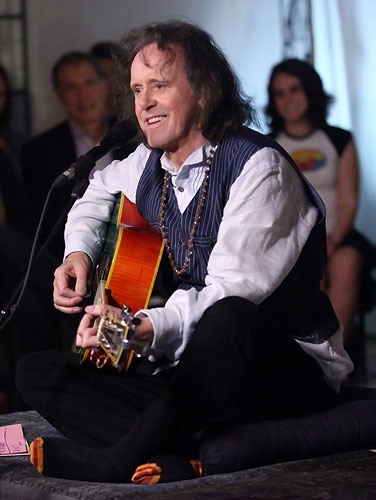
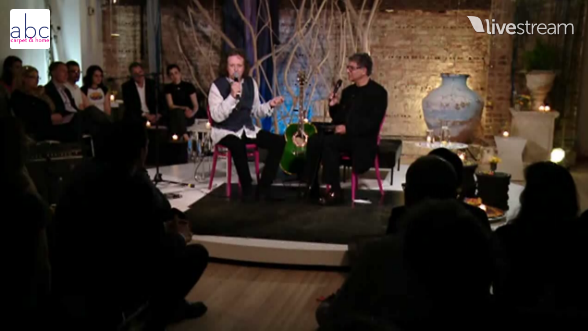
Here’s an online streaming event with Donovan and Deepak talking about the old days with Maharishi, Transcendental Meditation, The Beatles, and the music from the 60’s. Thanks to Linda, Donovan’s wife and muse, for suggesting Donovan be on this special event: http://livestre.am/1IWyp on abc carpet & home via @livestream.
Also see: Donovan shares his excitement and fulfillment after playing at the Rock and Roll Hall of Fame | Billboard interview: Donovan Q&A: Catching Up With a Folk Rock Superman | Ode to Donovan by Meghan for Altavoz: Conan introduces Donovan while holding the DLF Music vinyl box-set “Music That Changes The World” | Donovan Inducted into Rock and Roll Hall of Fame | Donovan and Ben Lee on Good Day LA | The former Beatles Paul McCartney and Ringo Starr reunion for David Lynch’s benefit concert airs on New York’s THIRTEEN, Sunday, April 29
WHAT TO REMEMBER WHEN WAKING
In that first
hardly noticed
moment
to which you wake,
coming back
to this life
from the other
more secret,
moveable
and frighteningly
honest
world
where everything
began,
there is a small
opening
into the new day
which closes
the moment
you begin
your plans.
What you can plan
is too small
for you to live.
What you can live
wholeheartedly
will make plans
enough
for the vitality
hidden in your sleep.
To be human
is to become visible
while carrying
what is hidden
as a gift to others.
To remember
the other world
in this world
is to live in your
true inheritance.
You are not
a troubled guest
on this earth,
you are not
an accident
amidst other accidents
you were invited
from another and greater
night
than the one
from which
you have just emerged.
Now, looking through
the slanting light
of the morning
window toward
the mountain
presence
of everything
that can be,
what urgency
calls you to your
one love? What shape
waits in the seed
of you to grow
and spread
its branches
against a future sky?
Is it waiting
in the fertile sea?
In the trees
beyond the house?
In the life
you can imagine
for yourself?
In the open
and lovely
white page
on the waiting desk?
~ David Whyte ~
Thanks to Joe Riley of Panhala for posting this one!
Here are some complementary poems by John O’Donohue you may also enjoy reading: For a New Beginning and The Inner History of a Day.
And here are two poems I wrote on the subject: Upon waking uP by Ken Chawkin and A Wake-Up Haiku.
In the Parkview Cave
A tanka for Sali inspired by Sarah during an acupuncture treatment
I come to see you
A sanyasin in a cave
Doing her tapas
The transformation is there
Self-contained, blissful, you are
© Ken Chawkin
April 21, 2012
Fairfield, Iowa
My first haiku, Transformed, is appropriate here.
I tried to make sense of the Four Books*,
until love arrived,
and it all became a single syllable.
(*Torah, Psalms, Gospel, Quran, considered by Islamic tradition to be four Divinely revealed books.)
From #21, page 43, chapter II, The Way of Love, in The Drop That Became The Sea, Lyric Poems of Yunus Emre. Translated from the Turkish by Kabir Helminski and Refik Algan.
This theme of the single syllable, the first letter of the alphabet, containing everything, is reiterated in this poem #26, page 52, chapter III, Necessary Lessons, where wisdom is equated with Self-knowledge.
Wisdom comes from knowing wisdom.
Wisdom means knowing oneself.
If you do not know yourself,
what is the point of reading books?
The point of reading is to know something real.
Since you have read and do not know it,
reading is useless.
Don’t say, “I’ve read, I’ve learned.”
Don’t say, “I’ve worshipped a lot.”
If you don’t accept the Perfect Man,
all other works are futile.
The meaning of the Four Books is clear and complete.
It shows itself in the first letter, aleph.
If you don’t know what aleph is,
what do you know of reading?
You recite every syllable of the alphabet.
You say “Aleph,” but how little it means.
Yunus Emre says:
“Hey Hoja, you’ve made a thousand pilgrimages
but never been welcomed by a single heart.”
 The Uncarved Blog