Archive for the ‘My poems’ Category

Redwood Forest Haiku, two versions, inspired by a photo my sister took in a Redwood Forest Park

August 24, 2013

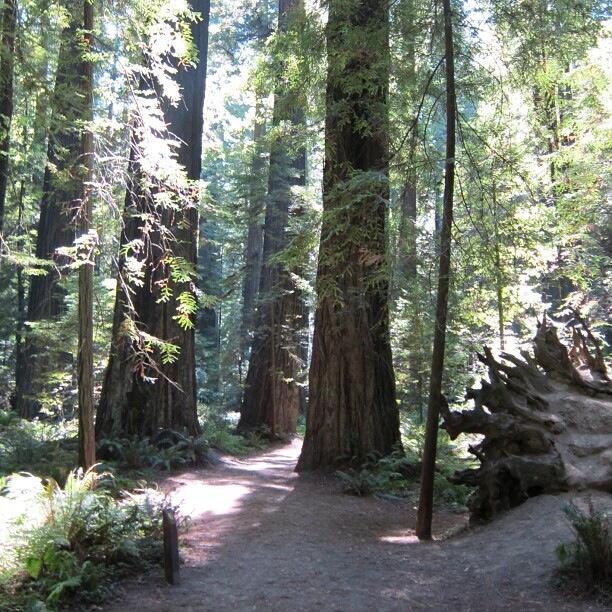
I signed up with Instagram so I could see the pictures my sister took on her vacation to Mendocino in Northern California. They drove north to Humboldt County to see the California Redwood Coast Park Forest. Among the beautiful photos she posted, this one of the Giant Redwoods, considered the largest trees in the world, inspired me to write this haiku. Here is that photo, and two haiku versions, for your enjoyment.

Redwood Forest

Redwood Forest Haiku

~1~

In Redwood Forests
There are Giants among us
Who Hold The Silence

~2~

In Redwood Forests
There are Giants among us
Holding The Silence

© Ken Chawkin
Fairfield, Iowa
written 8/23/2013
posted 8/24/2013

See Being in Nature, a gift from a tree, with links to other tree poems. See Redwood forest photo and haiku inspire others.

River Rock Speaks, poem from a rock

August 8, 2013

I used to go for walks with a friend in Cates Park, located in Deep Cove, a little seaside village situated on the eastern edge of the District of North Vancouver, in British Columbia, Canada. In that park along the Burrard Inlet there is a walk called the Malcolm Lowry Walk, named after author Malcolm Lowry, who squatted in the park from 1940-1954 in a shack with his wife Margerie. He wrote much of his classic novel Under the Volcano there, which was later made into a movie. This short trail takes you through a forest path, past a children’s play area, then along the waterfront to a nice pebble beach with a view of Indian Arm.

On one walk, I noticed a bunch of smooth rocks along the roadside. I thought it was odd for these water-worn rocks to be by the road instead of on the beach. I began thinking of that childhood tune of sticks and stones breaking bones, and was drawn to one of the rocks. It spoke to me. It cracked me up with it’s cosmic sense of humor; I had to write it down. After I wrote the poem, I picked up the rock and took it home.

RIVER ROCK SPEAKS

Deep Cove River Rock
From the Road
Says its Thing
I’ve been Told

Make No Bones
About This
Of All Stones
I AM ONE!

© Ken Chawkin

Read Park Poems from Ken Chawkin for more stories and poems inspired from visits to other parks in the Greater Vancouver area.

Nature’s Bi-Cycle, a poem from/for the child in us

August 8, 2013

I wrote a poem the first day on my job working for the Vancouver Board of Parks and Recreation as a paper-picker in Queen Elizabeth Park. It was in the mid-1990’s, during the wintertime. The job kept me active, walking miles each day, spent mostly in nature, in a beautiful park setting. And I made more money doing that than teaching kids writing after school at a Sylvan Learning Center in North Vancouver. It was what I needed at the time. But that’s a whole other story.

The park attendant would leave each year to go to California for the winter. Some friends who had done the job for him the previous winter introduced us. A fellow poet and a meditator (not TM), we shared common interests. He offered me the job and said I could stay in the caretaker facility he lived in across the street from Q.E. Park in Hillsdale Park. In exchange I would cover his utilities. I just had to get his boss’s approval, who did hire me, but wasn’t happy about the arrangement. He said there were people ahead of me in line for such a hard-to-come-by job. But it worked out well and he later hired me for the summer in Stanley Park when the caretaker returned from California.

I was lucky to get that prized job, doing simple work, like cleaning the park facilities and picking up trash. I also appreciated the beautiful park settings and composed poems as I walked the grounds. I actually amused myself that first day. I thought of how things grew from seed to tree, and their interrelationships with the animals. Dark berries turned white in winter and the birds who ate them caught my attention as I thought of the cycles in nature.

My inner child loved composing and hearing the sounds and meanings of the words. Every time I shared this poem with kids, they’d squeal with delight! Maybe the child in you will like it too.

NATURE’S BI-CYCLE

Berries are meant to be eaten by birds
who poop out the seeds contained in their turds
this process prepares seeds to sprout in the spring
’til one day they’re trees and in them birds sing

© Ken Chawkin

Read Park Poems from Ken Chawkin for more details on this story and other poems inspired from Q.E. Park and others I visited in the Greater Vancouver area.

Fishing For Fallen Light: A Tanka inspired by David Lynch and Pablo Neruda

July 28, 2013

I thought of David Lynch and his book, Catching the Big Fish, when I read a particular poem by Pablo Neruda in The Sea and the Bells. Both deal with the search for illumination; finding and clarifying a creative idea.

In this video David answers a question about his creative process, describing where ideas come from and how they coalesce into a finished product: David Lynch: ‘Ideas Are Like Fish.’ He says ideas are like fish and the deeper you go the more powerful, abstract and beautiful they are. Your desire for an idea is like a bait on a hook. When you catch one, others get attracted to it. Lynch sometimes gets a part of an idea and others come along. He writes them down. He advises that you have to stay true to the initial idea as it begins to form, even in ways you may not have anticipated, until it all comes together and you get it right. He describes how a script for a film can come about in this way.

The last line-stanza in Neruda’s poem uses the same idea, described here as sitting on the rim of a well of darkness fishing for fallen light.

Talk about transcending and patiently waiting to catch the big fish, an idea that will illuminate the mind and inform a work of art!

Here is that poem by Pablo Neruda in The Sea and the Bells (pp. 82/83):

Si cada día
dentro de cada noche,
hay un pozo
donde la claridad está encerrada.

Hay que sentarse a la orilla
del pozo de la sombra
y pescar luz caída
con paciencia.

If each day falls
inside each night,
there exists a well
where clarity is imprisoned.

We need to sit on the rim
of the well of darkness
and fish for fallen light
with patience.

Here is my tanka inspired by David Lynch and Pablo Neruda:

Fishing For Fallen Light

Catching the big fish
will illuminate the mind
and inform the work

Look within to find the light
ideas are swimming there

More information on David Lynch and his book:

This audio book review provides a clear synopsis of David’s book and the ideas expressed in it. See Inspiring excerpts – David Lynch: Catching the Big Fish – Meditation, Consciousness, and Creativity, which lists quotes by topic posted on StillnessSpeaks.com. You can listen to Catching the Big Fish (FULL AUDIOBOOK) on YouTube. Excerpts by topic can be found on YouTube, for example, the notion of suffering to create.

David Lynch says meditation has allowed him to remove stress and access deeper more beautiful ideas he falls in love with and translates into film, painting, sculpture or music. In this talk filmmaker David Lynch describes his experience of the creative process in the light of his practice of Transcendental Meditation at the Majestic Theater in Boston. He says, “It’s a great thing for the filmmaker.”

See Inspiring excerpts – David Lynch: Catching the Big Fish – Meditation, Consciousness, and Creativity.

kintsugi: japanese pottery inspires poetry

April 11, 2013

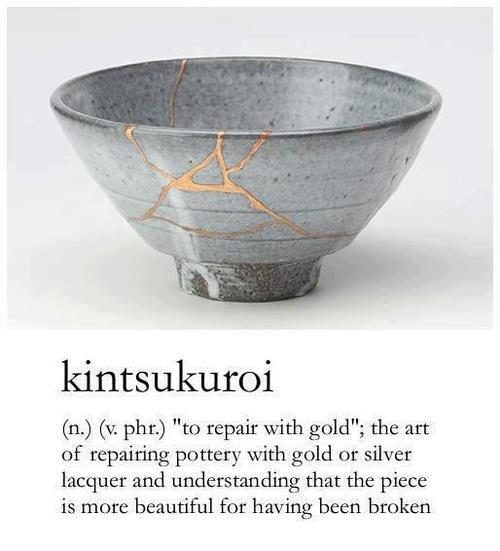
This poem was inspired by a tweet from @RobertYellin The art of making broken pottery more beautiful, kintsugi. pic.twitter.com/Q1ZLWzWQs

I replied @kenchawkin Wow! What a metaphor for turning obstacles into opportunities. Life’s lessons build character.

I thought about it and made it into a haiku, then a tanka, and sent it as another reply to his tweet.

I also thought it was appropriate for a piece of Japanese pottery to have inspired a poem in one of the forms of Japanese poetry. I don’t speak Japanese but am reading kintsukuroi as having five syllables.

Here is a link to Wikipedia explaining kintsugi or kintsukuroi. Read the explanation under the picture of the piece of pottery, then the poem.

kintsugi

kintsugi tanka

kintsukuroi
turning obstacles into
opportunities

life’s lessons build character
what was broken is now whole

Robert Yellin was featured on this blog before. See Takumi is not ‘lost in translation’ in this beautiful film about Japan’s diverse artisan tradition.

Speaking of cracked things, Leonard Cohen said there’s a crack in everything—how the light gets in. It came thru him & lit up a broken humanity.

Same for this Canadian writer, but from a different perspective: Richard Wagamese bravely entered the cracks in his life to reveal the hidden gold buried within.

Another post on this theme: William Stafford’s poetry lightened his life having woven a parachute out of everything broken.

I later put this related post together: Japanese culture: poetic aesthetics, artistry, and martial arts, inspired me to write haiku and tanka.

Haiku With My Muse, Sali, inspired by Paul Horn

March 20, 2013

Haiku With My Muse

You are my soul mate
With you, I can be mySelf
Together, We Are

© Ken Chawkin
With Sali at Parkview
Sunday, March 17, 2013

See Celebrating Paul Horn and his Contribution to Jazz, World Music, Meditation and Spirituality.

(more…)

Tanka for Ibu Robin Lim, CNN Hero of the Year

March 1, 2013

Tanka for Robin Lim
2011 CNN Hero Robin Lim*

Holding out her hands
At the door between both worlds
She welcomes new souls

Ibu Robin is her name
Catching babies is her game

*Midwife is her claim to fame

See Fairfield Ledger: CNN Hero Robin Lim visiting Fairfield, and early news coverage for Robin Lim is the 2011 CNN Hero Of The Year.

See these videos: Fairfield honors 2011 CNN Hero of the Year Robin Lim at Sondheim Theater for the Performing Arts. And these school presentations: CNN Hero of the Year for 2011, Robin Lim, speaks on Becoming a Hero at the Maharishi School for the Age of Enlightenment in Fairfield, Iowa on November 14, 2012. Robin Lim on Finding the Hero Inside Yourself at the Fairfield High School. (better sound quality)

For more information, visit Robin Lim’s websites: BumiSehatBali.org, and WisdomBirth.org, still under construction.

“Sanctifying Morning” is a poem by Ken Chawkin on one way to be “spiritual but not religious”

February 17, 2013

Sanctifying Morning is a poem I wrote four years and one month ago today. It may remind you of the phrase, “spiritual but not religious,” how millions of Americans now identify themselves, a trend I was not aware of until I learned about it from Philip Goldberg, author of American Veda. TM* is my way of being spiritual but not religious.

Sanctifying Morning

Charcoal in a church,
Incense-filled smoke,
Knees on the ground,
Wafer on a tongue —
Prayers ascend the sky.

It’s Sunday morning,
And I have my own rituals.
The smell of burnt toast sanctifies the morning air.
Orange rinds round out the debris of breakfast.
Fumes float upwards from a hot coffee cup.

Having pacified the body’s urges,
With no work to be done today,
Though the senses focus outward,
It’s time to bring them within,
And prepare for this peaceful morning.

I retire to my meditation room,
Sit comfortably, and close the eyes.
Thinking my mantra, effortlessly,
I descend to the depths of my mind,
And transcend.

My body follows —
Breath slows, and suspends,
Heart beats quieter,
Brain cells speak softly, in unison —
I’m at peace with myself.

This is the true communion of the spirit
Within the church of the Self.
No pews are required here
As one prepares to meet the maker
Of one’s life.

© Ken Chawkin
January 17, 2009
Fairfield, Iowa, USA

*TM stands for Transcendental Meditation. It’s not a religion. To me, it’s a spiritual practice that is compatible with any or no religion. Today millions of Americans admit to practicing some form of meditation. Members of different faiths practice Transcendental Meditation, including monks, nuns, priests and rabbis. Even atheists and agnostics meditate. You may too, some day, if you haven’t, already.

Publication and Update
Carrying the Branch-Poets in Search of Peace

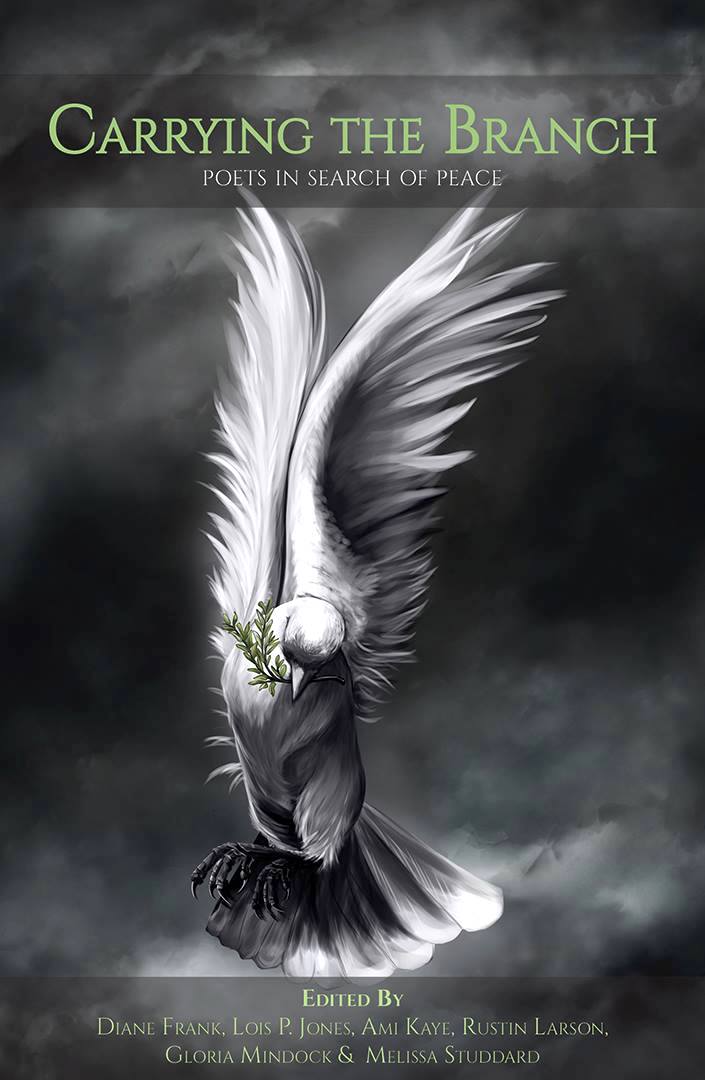
Thanks to Iowa poet and editor Rustin Larson for selecting “Sanctifying Morning,” which was later included in Carrying the Branch: Poets in Search of Peace. The book was published by Glass Lyre Press October 1, 2017 and edited by Ami Kaye. My poem is found on page 132. These other poets also submitted their poems and participated as editors soliciting poems and curating their sections for this anthology: Diane Frank, Lois P. Jones, Gloria Mindock, and Melissa Studdard. All profits after printing go to the Red Cross and Doctors Without Borders.

It is also an honor to be included among so many distinguished authors and poet laureates, like Robert Pinsky, W. E. Butts, Joy Harjo, Rita Dove, and Jane Hirshfield, to name a few collected here.

Blogger Chris Rice Cooper was the first to review our anthology, (January 17, 2018): Receiving & Giving Peace in the anthology CARRYING THE BRANCH POETS IN SEARCH OF PEACE . . . She put a lot of work into it with photos, excerpts, and links to an alphabetical listing of the poets and their websites. Next to my photo she provided the link to an article: PR to poetry – how things sometimes happen to Ken Chawkin.

After describing the different problem areas the poems deal with, Cooper says, “In this specific piece I’d like to focus on the poems that offer suggestions of acts and thoughts that we as individual human beings can do or think to bring peace into our own lives, the lives of our communities, and the lives of the entire world.”

Surprisingly, she includes my poem in her review: “In Ken Chawkin’s poem “Sanctifying Morning” the speaker of the poem experiences his own peace by having “church” in his own body, in his own home where he retreats to his meditation room and meditates mentally, emotionally, and spiritually.”

She concludes by saying, “There are numerous lessons to be learned from this anthology but the top two are:  we must love the enemy within and without ourselves; and we must transcribe our experiences down, rather on paper or canvas – only then will the next generation receive their rightful inheritance – their own branch of peace.”
Blue Dragonfly—A Love Renga for Valentine’s Day

February 2, 2013

Here’s a poem for those alone on Valentine’s Day.

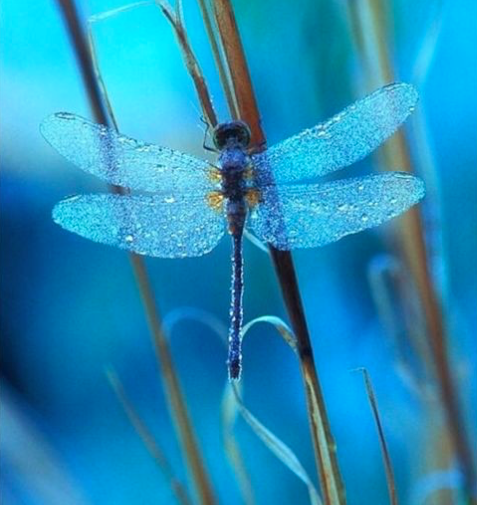
Blue Dragonfly

A Blue Dragonfly
Flits about the light-filled pond
Looking for its mate

Do you get blue sometimes too
Wandering the world for love

If you’re still enough
You may find yourself being
The one to attract

As sattva gathers the means
So love comes to those who wait

© Ken Chawkin
February 2, 2013
Fairfield, Iowa, USA

The best preparation to love another is to first love yourself. Nobel Poet Laureate Derek Walcott explains it beautifully in Love After Love.

Telling the Story of Silence by Ken Chawkin

September 13, 2012

Telling the Story of Silence
Yato vacho nivartante tad dhama-paramam mama*

That Silent place
From where speech returns
Is where Poetry begins

Scrawling across the page
It transforms itself
Into language

Standing up it walks
Straight into your heart
Singing its song

You have to emphasize
The nothingness
For something to be said

It speaks for itself

*From where the speech returns, that is my supreme abode.
Taittriya Upanishad 2.4.1 and Bhagavad-Gita 15.6, 8.21

© Ken Chawkin

This poem, What You May Not Know About Frankenstein, by Bill Graeser, was an inspiration! This poem by my son says it all: INSPIRATION, a poem by Nathanael Chawkin.

Related poems on this theme: Coalescing Poetry: Creating a Universe  Storytelling—a poem on the storytelling process | Poetry—The Art of the Voice | Silence | A Wake-Up Haiku.

Cliffhouse Deck at Dusk, 6th haiku in 13 Ways to Write Haiku: A Poet’s Dozen, brings our attention to a tiny soft sound, making us aware of the ‘loud’ vast silence, a point that enlivens infinity. John Cage would agree.

Just came across this 16-second introduction by John Cage to his composition 4’33” which says the same thing, in his own inimitable way. His literal truth and sense of humor come through.

The material of music is sound and silence.
Integrating these is composing.
I have nothing to say,
and I am saying it.

For the musicians who ‘performed’ the piece, and the audience who listened, the silence was palpable, as you’ll hear from Tommy Pearson’s introduction and concluding comments with Tom Service in this BBC Symphony Orchestra performance of John Cage at the Barbican. Towards the end he quotes Cage as saying, “Everything we do is music.”

You may also enjoy Writers on Writing–What Writing Means To Writers and the links at the end to other posts on writing.