
Archive for the ‘David Lynch Foundation’ Category

Mellow Fellow Donovan

December 28, 2009


MELLOW FELLOW; Crowned a musical icon, Donovan has other priorities…: such as introducing Scotland to transcendental meditation

By JOHN DINGWALL

He is the singer-songwriter who helped out The Beatles.

And his music is still enjoyed four decades after he found fame thanks to a brilliant back catalogue that includes hits such as Mellow Yellow and Hurdy Gurdy Man.

Donovan, 63, has recently been recognised as a legend with a BMI Awards Icon Award but talking to the singer there are none of the airs and graces you might expect from someone who can regard himself as being right up there with the legends of pop and rock royalty.

Instead, Donovan is down to earth. And right now he is more concerned with saving Ayrshire’s River Doon from environmental catastrophe than bragging about his own career highs.

To help the river, Donovan has put a new melody to the famous Burns poem The Banks O’ Doon in the year of Homecoming Live.

His rendition of the Burns poem aims to highlight the plight of the Doon, which is under threat from new power company plans to divert the famous river, which inspired many of Burns’ famous poems.

Donovan revealed: “Everything that can be done to save it is so important. I’ve even recorded a song to raise awareness called Save The Doon, which is available on iTunes.”

Instead of trying to plug his music, Donovan wants Scots to get behind a petition to save the river, insisting I mention http://www.savethedoon.com.

Clearly a man with a conscience, Donovan is finally being recognised for his influence on pop and rock despite starting out as a folk musician.

His BMI award recognises the UK and European songwriters and publishers of the past year’s most played BMI songs on US radio and television. The Icon designation is given to BMI songwriters who have bestowed “a unique and indelible influence on generations of music makers.”

He has joined an elite list of past honorees that includes Bryan Ferry, Peter Gabriel, Ray Davies, Van Morrison, the Bee Gees, Isaac Hayes, Dolly Parton, James Brown, Willie Nelson, Hall & Oates, Paul Simon, Steve Winwood and many more.

It’s a fitting tribute to the singer who transformed popular music in the 1960s and went on to build a legendary career. In the 1960s, he enjoyed 11 consecutive Top 40 hits, including Mellow Yellow, Sunshine Superman, Wear Your Love Like Heaven, There Is a Mountain, Lalena, Epistle to Dippy, Atlantis, Hurdy Gurdy Man, and Jennifer Juniper, all of which he wrote.

His songs have contributed to the soundtracks of films and TV series including Goodfellas, Election, Dumb and Dumber, Rushmore, The Simpsons, Nip/Tuck, Ugly Betty and Clueless.

A huge influence on The Beatles, Donovan became one of an elite handful of artists who collaborated on songs with the band.

He recalled: “I was a friend of The Beatles and I remember being at my place in London one Sunday morning and there was a knock on the door. It was Paul McCartney standing there with his guitar.

“He said, ‘I’ve got this song but I’m having trouble with the lyrics.’ So I told him to come in and he sang a bit of Yellow Submarine. I went into the other room and worked on it for a bit then came back out and sang him a line for the song.

“He said, ‘That’ll do.’ It was funny because The Beatles were really famous and almost to prove the point a policeman came to the door and said, ‘Mr. McCartney, is that your car parked there?’ In those days on a Sunday morning, the streets would be deserted. There was Paul’s sports car badly parked. Instead of giving him a ticket, the policeman asked if he could have the car keys to move it for him. That was the way it was in those days. Even then The Beatles were like royalty.”

Donovan was just 18 years old when he made his first records in 1964, immediately drawing comparisons with Bob Dylan.

He said: “Every British band from the Stones to the Beatles were copying all the American pop and blues artists – this is the way young artists learn. There’s no shame in mimicking a hero or two – it flexes the creative muscles and tones the quality of our composition and technique. I sounded like him for five minutes – others made a career of his sound.”

While Beatlemania was gripping the UK and the US, in 1965, Donovan’s song Catch the Wind earned an Ivor Novello Award for best contemporary folk song. It was the first time the honor was bestowed on an artist’s debut single. Hard at work on a new album entitled Ritual Groove, Donovan is planning to tour throughout 2010, giving him a chance to return to his roots.

Born and brought up in Maryhill, Glasgow, he is hoping to establish Scotland’s first university in Transcendental Meditation.

Donovan said: “During the past two years myself and my wife Linda and David Lynch have traveled the world, presenting the meditation technique of Maharishi Mahesh, Yogi and attracting mass media attention. The technique is now transforming education and students wellbeing wherever it has been introduced.”

It was in 1968 that Donovan, The Beatles, Paul Horn and other seekers of enlightenment went to India to study with their teacher Maharishi. On his return Donovan was at the forefront in promoting meditation to the West.

He said: “The Beatles and I had searched for a teacher of meditation, as we knew from our studies of the books that this was the way truly to make humankind aware of what we were doing to each other and to bring peace to the world .We found Maharishi and he found us.”

In April of this year, the David Lynch Foundation for Consciousness-Based Education and World Peace, of which Donovan is the musical wing, put together an incredible line-up of Donovan, Paul McCartney, and Ringo Starr, for a concert at Radio City Music Hall, New York City.

Lynch, best known for films such as Blue Velvet and Mulholland Drive, has acknowledged the important role that Donovan’s example gave in bringing him to meditation 39 years ago.

Donovan said: “We had earmarked some land just outside Edinburgh and planned to name it the Donovan University of Transcendental Meditation or the Transcendental Meditation University but there are some hoops that we’d have to go through.

“David Lynch and I have introduced it to schools all over America and it has done wonders for the children’s self-esteem. If they could introduce it here it might give a lot of kids self respect they need to go on and make something of their lives.”

http://bit.ly/78BIEi

(c) 2009 Sunday Mail; Glasgow (UK). Provided by ProQuest LLC. All rights Reserved.

A service of YellowBrix, Inc.

The American Chronicle, California Chronicle, Los Angeles Chronicle, World Sentinel, and affiliates are online magazines for national, international, state, and local news. We also provide opinion and feature articles. We have over 5,000 contributors, over 100,000 articles, and over 11 million visitors annually.
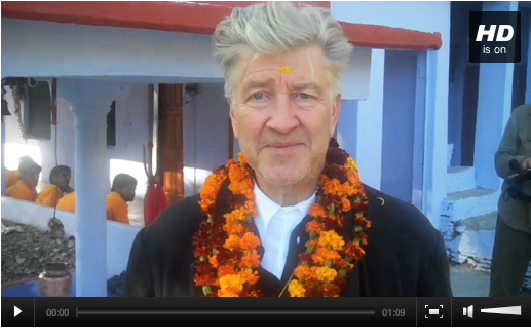
David Lynch on his next film, in Uttarkashi, India, at Maharishi’s house

December 13, 2009

December 10, 2009

DAVID IN INDIA – MAHARISHI’S HOUSE

http://dlf.tv/category/david-in-india/

David Lynch is in India right now, starting work on his film on Maharishi Mahesh Yogi—the founder of Transcendental Meditation. David’s first report comes to DLF.TV from high in the Himalayas, in the small town of Uttarkashi, known as the “Valley of the Saints,” where for thousands of years, seekers of truth have gathered to meditate and rise to enlightenment. Maharishi spent two years in silence in Uttarkashi, from 1953 to 1955, following the passing of his teacher, Guru Dev. More reports from David to follow.

You can also follow Bob Roth, DLF VP, who’s traveling with David, on Twitter. http://twitter.com/bobbyroth. Click back to Dec 4th and read up. Found this interesting comment in one of Bobby’s tweets: Fernando Sulichin and Rob Wilson who work with Oliver Stone and Spike Lee are producers—along with Tabrez who produced Slumdog Millionaire.

Fascinating stuff! This looks like it promises to be the definitive documentary on Maharishi. We all look forward to that, whenever it comes out, hopefully some time next year.

PATH LIGHTS debuts on DLF.TV for one week

December 6, 2009
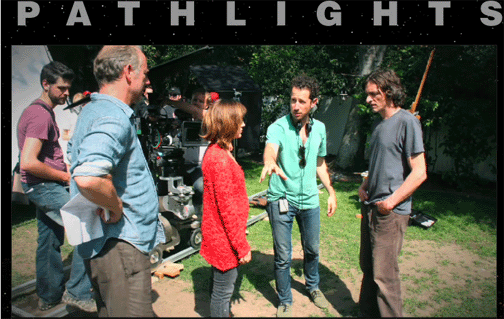
On location, left to right: Xander Berkeley, Sarah Utterback, director Zachary Sluser, lead actor John Hawkes.

Director Zachary Sluser has turned Tom Drury’s New Yorker short story into a short film now debuting on David Lynch Foundation Television. It is up for one week only, from December 2-9, 2009. After this showing, it will be presented at film festivals in 2010.

I highly recommend watching the short film, and the 3-part Behind The Scenes series on the making of this film. Some of the staff at DLF.TV were invited to film and interview the people involved in the making of this short feature—actors and crew. Very inspiring. Gives you a deeper insight and appreciation for these fine young filmmakers from MSAE, MUM, Fairfield, and their LA friends working on set. The value of TM is also mentioned. The bliss generated by everyone dedicating themselves to the project, for free, is special, and DLF.TV was able to capture it—a great example of what this young and vibrant new online TV channel is all about—celebrating consciousness, creativity and bliss. Catch the wave: http://dlf.tv/2009/pathlights/

Path Lights, introduced at the Woodstock Film Festival, has now been selected for the international competition at the 32nd Clermont-Ferrand Short Film Festival, Jan. 29-Feb.6, 2010 in south-central France. It’s the premiere short film festival (they screen short films exclusively) in the world and the second largest film festival in France after, Cannes.  Over 5100 short films were submitted and there are usually around 75 international (non-French) short films in competition. Very exciting. http://www.clermont-filmfest.com/index.php?m=226&c=3&id_film=100077897&o=88.

Following that acceptance was news that Path Lights has been invited to participate in the 39th International Rotterdam Film Festival, which will take place January 27–February 7, 2010. Rotterdam is probably the 4th major film festival after Cannes, Berlin, and Venice.    …. more to come ….

Some recent articles on Path Lights debuting on DLF.TV

THE NEW YORKER
Q&A: Tom Drury
http://www.newyorker.com/online/blogs/backissues/2009/12/q-a-tom-drury.html

IFC.com: The Independent Eye: Turn on your Path Lights.
By Alison Willmore on 12/02/2009
http://www.ifc.com/blogs/indie-eye/2009/12/path-lights.php

USATODAY POPCANDY
David Lynch Foundation spotlights a noteworthy short film
http://content.usatoday.com/communities/popcandy/post/2009/12/david-lynch-foundation-spotlights-a-noteworthy-short-film/1


PASTE MAGAZINE
By Emily Riemer
David Lynch Television Presents Short Film Path Lights
http://www.pastemagazine.com/articles/2009/12/david-lynch-television-presents-short-film-pathlig.html

The Millions: Curiosities
Oh, Tom Drury, how I love thee.
http://www.themillions.com/2009/12/oh-tom-drury-how-i-love-thee.html

UPDATE: Path Lights is now available on Vimeo: https://vimeo.com/117333877.

President Obama, Peace in the Middle East: Scientific solution to your political problem?

December 2, 2009

President Obama, Peace in the Middle East: Scientific solution to your political problem?

Wednesday, 02 December 2009 17:52

Peace in the Middle East is easily within our grasp, as indicated by a new scientific paper recently published in the “Journal of Scientific Exploration.”

The study addresses the possibility that a relatively small group of people practising the Transcendental Meditation™ and TM-Sidhi programme®, as founded by Maharishi Mahesh Yogi, twice daily together in a group can create peace in the Middle East.

The hypothesis is not new. Fifty studies have found that when 1% of the population practises Transcendental Meditation, or sufficiently large groups practise the TM-Sidhi programme together twice daily, it can have a positive influence on society as a whole. The studies show, for example, decreased violence, crime, car accidents, and suicides, and improved quality of life in a society. Critics had questioned the credibility of the evidence in light of the unconventional nature of the proposition.

Reduced conflict and improved quality of life in the Middle East:

August-September 1983

A composite sociological index closely tracks the size of a group practising the Transcendental Meditation and TM-Sidhi programme. (See details in text below.)

The new analysis addresses this question more thoroughly than previously. It presents new statistical evidence that all credible conventional explanations – such as military and political events, public holidays, and the weather – could not explain the observed statistically significant changes in sociological variables shown in an earlier study on the influence of groups practising the TM-Sidhi programme (Orme-Johnson DW, Alexander CN, Davies JL, Chandler HM, & Larimore WE. International peace project in the Middle East: The effect of the Maharishi Technology of the Unified Field. Journal of Conflict Resolution 1988 32:776-812, findings illustrated above). The observed changes in the Middle East included reductions in war deaths of 75%, war intensity of 45%, in crime of 12%, in fires of 30%, plus there were improvements in national mood of 27% and the stock market of 7% during the experimental period.

Although conventional factors did have a measureable influence on the level of violence and other sociological variables, the effect of the Transcendental Meditation group was, according to the researchers, both independent of these other factors and approximately two to five times stronger.

Brain research has found that Transcendental Meditation increases coherence in brain functioning. Lead author of the new study David Orme-Johnson, former Chairman of the Psychology Department at Maharishi University of Management, suggests that: “Given the assumption of Maharishi’s theory that individuals are the units of collective consciousness, increased coherence at the individual level could be expected to have a positive effect on the population level”.

According to a number of earlier studies, this effect is magnified when, in addition to Transcendental Meditation, the more advanced TM-Sidhi programme, which includes Yogic Flying, is practised in a group. In this case, the square root of 1% of a population practising Yogic Flying in a group is the threshold at which changes in social trends begin to be observed. Interestingly, this effect appears to be irrespective of national borders and different cultures. According to the theory, a group of 10,000 generating such an influence of coherence would be sufficient to noticeably influence the collective consciousness of the whole world.

If the science is so watertight, and the potential benefits so great, the obvious question, then, is: Why has no one yet established such a group anywhere in the world? One reason why policy makers have been reluctant to do so is that they take the view that conventional military and political factors must have more influence than Transcendental Meditation and Yogic Flying. However, the new research has shown that this assumption is quite incorrect.

A coherence-creating group of 10,000 people could be established for less than 0.2% of the world’s military expenditure, and yet, according to the research, could ensure a stable state of world peace.

The David Lynch Foundation for Consciousness-Based Education and World Peace, founded by the award-winning filmmaker, joined with Paul McCartney in April to raise funds to teach Transcendental Meditation to one million at-risk children. The benefit concert in New York is said to have raised £2m on ticket sales and fund raising continues. The philanthropic Foundation is already involved in teaching Transcendental Meditation in schools in the Middle East with the explicit aim of creating permanent peace in the region.

Dr. Orme-Johnson is available for interview: Tel 850-231-2866 See his website: http://www.truthabouttm.org
Dr. David Leffler is available for interview and to set up interviews with other military-related people. See this website: http://www.StrongMilitary.org  Tel 845-489-8653

Beautiful film on Algerian artist Malek Salah by Amine Koudier

November 30, 2009

Malek Salah: Majnûn Laylâ – Artist

Enjoy this short film about the Algerian contemporary artist Malek Salah as he prepares for the inaugural exhibition titled ‘Majnûn Laylâ’ for the new Modern Art Museum of Algiers, the first of its kind in the Arab world. The film brings deep insight into Salah’s world—his creative process, the information contained within his work, his relationship to his art, and through it, with the Algerian society.

This beautiful film of a meditating Algerian artist, Malek Salah, is a fine example of a famous artist profiled by one of our MUM students, who later became a videographer for DLF.TV. The young filmmaker, Amine Koudier, a senior student at the time in MUM’s digital media class, was asked to make this film to accompany an opening exhibit of the new Modern Art Museum of Algiers (MaMa), the first of its kind in the Muslim world.

When Amine showed it to me I was really impressed and encouraged him to translate and add English sub-titles and enter it into competitions. I ended up helping him with the French to English translation, and he won first place wherever he entered it. He took the top 2008 Award of Excellence in the student category from the Iowa Motion Picture Association and Winner in the student film category of 2008 Landlocked Film Festival.

David Lynch visited the students when he was here last year and commented on this film. He said he loved the artist, his work, and what he had to say about it, and how Amine had portrayed it—high praise for a student. Amine was later hired to work at David Lynch Foundation Television upon graduating. Read an excellent article in the Iowa Source written by Mo Ellis about him and the film.

Watch the 13-minute film Malek Salah: ‘Majnun Layla’ on DLF.TV, on Vimeo, or on YouTube Part 1 and Part 2. Also see David Lynch Foundation Television to premiere David S. Ware: A World of Sound. The Ware and more profiles by Amine and other DLF.TV filmmakers are available here.

This blog post was published November 30, 2009. After working for the David Lynch Foundation, Amine would become a teacher of Transcendental Meditation and later taught TM and filmmaking at Maharishi University. He gave a wonderful interview to Nylon Magazine, and later invited a photographer from the Ottumwa Courier into his classroom as part of her profile on the university.

DLF.TV Visits Billy Corgan

November 21, 2009

Smashing Pumpkins’ Drummer Auditions Documented in Video

Posted on Nov 19th 2009 4:00PM by Adam Horne

Back in September, we reported that Billy Corgan had found a replacement for original Smashing Pumpkins drummer Jimmy Chamberlin after a quick open casting call. Corgan’s choice of 19-year-old Portland, Ore. native Mike Byrne came as a huge surprise — but in the following video, we’re given a glimpse into the audition process that resulted in the eyebrow-raising pick.

The documentary footage shows the wide-eyed teenager living out the thrill of a lifetime as viewers are made witness to the birth of a musical relationship.

The candid footage comes courtesy of the David Lynch Foundation (DLF.TV), a non-profit artist promotion network, film house and meditation advocacy group founded by the controversial filmmaker. Lynch, whose dark, dreamlike work has plenty in common with the Pumpkins’ musical output, is a noted fan of Corgan’s. “Billy Corgan is a Magical Musician-a singer-songwriter with his own unique voice and way,” he says. “A deep honest coolness emerges every time and his music has big lasting power.”

This documentary short is not the first item the two artists have in common. Back in 1997, Corgan penned a song for Lynch’s film ‘Lost Highway,’ a story he shares in the interview portion of the video. Without giving too much away, let’s just say Shaquille O’Neal is involved. Have a look below.

See “BILLY CORGAN IS A MAGICAL MUSICIAN” DECLARES DAVID LYNCH

David Lynch to shoot film about TM guru Maharishi Mahesh Yogi in India

November 18, 2009


Daily  News & Analysis

Wednesday, November 18, 2009 4:39:00 PM
David Lynch to shoot film about TM guru Maharishi Mahesh Yogi in India
ANI

Oscar nominated director David Lynch will make a film about Transcendental Meditation (TM) guru Maharishi Mahesh Yogi, according to reports. He will reportedly visit India next month in this connection.

This documentary film about the life and teachings and knowledge of Maharishi will involve interviews with people, including a 97-year man associated with him, reports suggest.

David Keith Lynch, 63, has been attempting to introduce TM in schools globally. The Guardian, British daily newspaper from London, described Lynch as “the most important director of this era.”

Welcoming Lynch to India for this new venture, acclaimed Indo-American statesman Rajan Zed, in a statement in Nevada (USA) today, urged world filmmakers to explore many finer and deeper things India offered, instead of just focusing on poverty and crime.

Zed, who is a chairperson of Indo-American Leadership Confederation, pointed out that planet’s most multidimensional country India had snowcapped mountains, palm-fringed and sun-washed beaches, glorious temples, colourful festivals, rich philosophy and spirituality, abundant historical sites, wildlife safaris, recharging treks, historic trade routes, cultural wealth, etc.

Maharishi, who died last year at an age of about 91, introduced TM technique worldwide, and wished to change the world with it.

He initiated ‘The Beatles’ and was associated with various celebrities like American rockers ‘The Beach Boys’, musician Mick Jagger, hairdresser Vidal Sassoon, Golden Globe winner Mia Farrow (Rosemary’s Baby), etc.

He reportedly established about one thousand TM centres worldwide and had about four million followers.

© 2005-2009 Diligent Media Corporation Ltd. All rights reserved

AU College Students Reduce HBP, Anxiety, and Depression Through Transcendental Meditation

November 18, 2009

At-Risk College Students Reduce High Blood Pressure, Anxiety, And Depression Through Transcendental Meditation

The Transcendental Meditation® technique may be an effective method to reduce blood pressure, anxiety, depression, and anger among at-risk college students, according to a new study to be published in the American Journal of Hypertension, December 2009.

The Transcendental Meditation Program, a widely-used standardized program to reduce stress, showed significant decreases in blood pressure and improved mental health in young adults at risk for hypertension,” said David Haaga, PhD, co-author of the study and professor of psychology at American University in Washington, D.C.

This study was conducted at American University with 298 university students randomly allocated to either the Transcendental Meditation technique or wait-list control over a three-month intervention period. A subgroup of 159 subjects at risk for hypertension was analyzed separately. At baseline and after three months, blood pressure, psychological distress, and coping ability were assessed.

For the students at risk for developing hypertension, significant improvements were observed in blood pressure, psychological distress and coping. Compared to the control group, students practicing the Transcendental Meditation program showed reductions of 6.3 mm Hg in systolic blood pressure and 4.0 mm Hg in diastolic blood pressure. These clinically significant reductions are associated with a 52% lower risk for development of hypertension in later years.

The findings are timely. Today, an estimated 18 million students are dealing with mental health issues on college campuses. Statistics from colleges nationwide indicate there has been a 50% increase in the diagnosis of depression, and more than twice as many students are on psychiatric medications as a decade ago. According to recent national surveys of campus therapists, more students than ever are seeking psychiatric help on college campuses all across the United States.

“This is the first randomized controlled study to show in young adults at risk for hypertension reductions in blood pressure that were associated with changes in psychological distress and coping,” said Sanford Nidich, EdD, lead author and senior researcher at the Institute for Natural Medicine and Prevention at Maharishi University of Management. “Previous research has shown that psychological distress such as anxiety, depression, and anger contribute to the development of hypertension in young adults,” said Dr. Nidich.

College students are particularly prone to psychological distress caused by interpersonal and social problems, pressures to succeed academically, financial strains, and uncertain futures. For the entire sample in this study, there was a significant improvement in students’ mental health.

“Hypertension is a common risk factor for cardiovascular disease in adulthood. Yet, decades of research show that high blood pressure begins in youth. This well-controlled clinical trial found that blood pressure can be effectively lowered in students with a stress-reducing intervention. This has major implications for the prevention of hypertension, heart attacks and strokes in adulthood,” said Robert Schneider MD, FACC, specialist in clinical hypertension, Director of the Institute for Natural Medicine and Prevention and study co-author.

This study was supported, in part, by a Specialized Center of Research Grant from the National Institutes of Health–National Center for Complementary and Alternative Medicine, and by the Abramson Family Foundation, David Lynch Foundation, and other private donors.

Facts on Stress and Young Adults

Hypertension affects approximately one-third (33%) of the US adult population.

College-age individuals with blood pressure (BP) elevated beyond the optimal range are three times more likely to develop hypertension than normotensives.

Psychological distresses such as anxiety, depression, and anger/hostility have been found to contribute to the development of hypertension in young adults.

In 2007, around 15% of students reported having been diagnosed with depression at some point in their lives — up from 10% in 2000.

Audience Goes Wild for James McCartney

November 15, 2009
the hawk eye

This Burlington Hawk Eye article was picked up by NewsBlaze.


Audience Goes Wild for James McCartney

By Bob Saar

Rocker James McCartney played his U.S. debut last night at Fairfield’s new Sondheim Center. The two shows were part of the David Lynch Foundation’s fourth annual “Change Begins Within” weekend at Maharishi University.

McCartney, son of Beatle Paul, opened a three-ring musical circus that included Iowan Laura Dawn and folk legend Donovan.

“It’s very different having a famous father,” film director Lynch quipped when introducing McCartney. “My father was Elvis Presley.”

The audience, heavily weighted with aging ’60s boomers, went wild when the 32-year-old singer/guitarist walked on stage with Light, his band.

The four-piece slammed right into their first number as a video crew taped the show for the DLF Web site.

McCartney’s’ music was racy and frenetic, and the 400-plus seat Sondheim has well-designed acoustics that allowed the amps-on-stage rock band to deliver without overwhelming.

James looks a bit like Paul with a shaved head. Ah, those eyes. He is not left-handed, and he played a Fender Stratocaster given to him by Carl Perkins.

His voice was high and clear like his father’s, but at times, he sounded more like John Lennon when roughing things up.

“James has a way with melody and a set of pipes which are more than a match for his dad’s,” Lynch said.

His songwriting style has eerie nuances of the Beatles. “Spirit Guides,” featuring McCartney on piano, bore a haunting resemblance to “Lady Madonna.”

Every song charged ahead with strange melodies flavored with grunge, perhaps like Nirvana covering side two of Abbey Road, backed by the Ramones.

McCartney was stoic, mumbling only song titles between songs.

Laura Dawn and her New York blues-rock band Little Death came out blazing away and had the audience on its feet and dancing before their first song was 12 bars deep.

Dawn, a native of Pleasantville, is a stunning vocalist at the wheel of a powerhouse. She’s somewhat like Janice Joplin before the booze and cigarettes, or perhaps Martina McBride after a night of heavy pubcrawling.

Little Death and their sweetly trashed-out backup duo – the Death Threats – blasted the audience into happy submission, a road-and-bar band with a refined stage presence.

1960s legend Donovan closed the show with a set of hits, from “Catch the Wind” to “Sunshine Superman,” delivered in his trademark quavering voice. Donovan, along with the Beatles and the Beach Boys, brought Transcendental Meditation out of India into Western thought, which ultimately brought Fairfield to the forefront of the practice.

Little Death and the redressed and fully sequined Death Threats backed the folksinger for most of his set. The finale featured the entire cast, including McCartney, singing “Mellow Yellow” with Donovan and the crowd.

After the show, someone asked McCartney if he enjoyed playing in Iowa.

“Yeah, yeah, yeah,” the taciturn singer said. “Definitely.”

—————————————————————————————————————

My Comment:

*WOW! Saar nailed it-every part of it! And the second set was even livelier. Donovan invited Fairfield guitarist Arthur Lee Land on stage for his last two finales, that had Dawn’s husband, lead guitarist Daron Murphy, trading solos with Lee Land, leading to a coherent close, which brought the audience to its feet. What a night! Thank you David Lynch and Fairfield!!

SOURCE: http://www.thehawkeye.com/story/McCartney-review-111509

Other news coverage: McCartney wins over Fairfield audience in U.S. debut concert and Paul McCartney’s son says he’s ready to follow in dad’s footsteps. A few years later James McCartney sings Angel on David Letterman, and performed at the Sundance Film Festival. Enjoy this popular news story: Paul McCartney and Nancy show up to see James play, and surprise the small Brighton club audience.

Maharishi University students get academic credit for daily Transcendental Meditation (TM) practice

November 13, 2009

NewsBlaze

Published: November 12,2009
Send to a friend
Letter to the Editor
AddThis

Response to “Hindus Laud University of Colorado-Boulder Over Meditation Center”

Hindus Laud University of Colorado-Boulder Over Meditation Center

It seems that UCB is just starting to catch on. MUM, Maharishi University of Management, located in Fairfield, Iowa, has offered CBE, Consciousness-Based education, for 35 years, where students, faculty, and staff all practice TM, the Transcendental Meditation technique, twice a day.

Students receive RC credit, research in consciousness, as part of their curriculum. Meditation rooms are made available for students to practice their twice-daily non-religious TM technique. And there are two large golden domes over 25,000 square feet each, one for men and one for ladies, where students, faculty, staff, and meditating townspeople all gather twice a day, morning and evening, to practice TM and the TM-Sidhis program, including Yogic Flying, for world peace.

These ancient meditative practices revived by the founder, Maharishi Mahesh Yogi, dramatically lower stress-related risk factors and increase clarity and orderliness in brain functioning. The results show up in students’ academic and athletic performances as well as improved individual and social well-being. Students are happier and more productive, and don’t resort to alcohol or drug abuse, or express violent behavior.

For those who wish to worship according to their own faith, students attend multi-denominational services in town, and a room is also available for Muslim students who wish to use their prayer rugs to pray. MUM’s diverse student population of over 1000 comes from over 65 different countries this year. And enrollment is growing as more and more discover what this unique university has to offer.

All food is organic vegetarian, some of it grown locally in the university’s large green houses. Visit http://www.mum.edu or come for a Visitors Weekend. One of the most popular Visitors Weekends is the annual David Lynch Weekend. Also check out the David Lynch Foundation website for details.

Ken Chawkin
Media Relations Director
Maharishi University of Management
The David Lynch Foundation
E: kchawkin@mum.edu
W: http://www.mum.edu
W: http://www.davidlynchfoundation.org
B: https://kenchawkin.wordpress.com