Time now for a peaceful musical interlude. Listen to Canadian harpist, Kristan Toczko, play Claude Debussy’s romantic composition, Clair de Lune. It was recorded live on May 12, 2014 at the Church of the Holy Trinity in Toronto, ON, Canada, and later published on her YouTube channel, Kristan Toczko, August 5, 2014. This short classical piece, and her interpretation of it, are just beautiful!! Like a powerful haiku, it leaves you with a deeply peaceful feeling.
Apparently, Clair de Lune, was a French poem written by Paul Verlaine in 1869, and became the inspiration for the third and most famous movement of Debussy’s 1890 Suite Bergamasque of the same name.
On January 4, 2018, CBC Music, Classical Genre, posted 10 surprisingly good covers of Debussy’s ‘Clair de lune’. Robert Rowat says: “Expect to see lots of tributes to Claude Debussy in 2018, the year that marks the 100th anniversary of his death.” Videos of the 10 performances are by Theremin and piano, Electric guitar, Jazz saxophone, Accordion, Men’s choir and piano, Bassoon sextet, Brass quintet, Clarinet quartet, Organ, and Orchestra. Rowat concludes by reminding us how awesome Debussy’s original is with a video of the Angela Hewitt performance listed above. Explore more with Top 10 piano works by Claude Debussy.
Debussy’s Clair de Lune, arranged for guitar by James Edwards, is beautifully interpreted by Roxane Elfasci, Oct 3, 2016, Paris.
Lang Lang wowed tourists in the ‘City of Love’ on Valentine’s Day 2019 as he gave a unique album launch concert in Paris on a boat cruising along the Seine, performing pieces from his new album, Piano Book, such as the French classic ‘Clair de lune’ by Claude Debussy. Enjoy Lang Lang – Debussy: Suite bergamasque, L.75 3.Clair de lune.
You can actually hear Debussy playing Clair de Lune (1913), recorded on a piano roll, Claude Debussy plays Debussy. It is included in the Complete recordings made by Claude Debussy: The Composer as Pianist. Compilation from all Debussy recordings available “Claude Debussy Plays His Finest Works” (1904-1913).
January 12 is celebrated throughout India, and in countries with large Hindu populations, as the birthday of Swami Vivekananda. A national hero, Vivekananda is revered for updating the wisdom of India’s ancient sages and bringing those teachings to the West, in 1893. By coincidence – or astrological design, take your pick – another vital figure in that East-West transmission was also born on that date, and he too deserves to be celebrated.
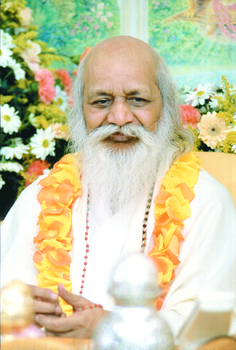
The man who became known as Maharishi Mahesh Yogi was born Mahesh Prasad Varma, on January 12, 1917, or perhaps 1918, in Central India. While attending Allahabad University, he heard that a famous saint named Swami Brahmananda Saraswati was in the area, and he went to him “as a thirsty man at a well.” Mahesh asked to become the swami’s disciple. The reply was the same one many future gurus received when they were eager young seekers: first finish school. After graduating with a degree in physics, he was formally accepted as a disciple. By then, the swami had been persuaded to accept the much-esteemed, and long-vacant, seat of Shankaracharya of Jyotir Math–one of four monastic lineages established centuries earlier by the great reformer Shankara. The Shankaracharya would become a legend, and so would the humble disciple who served him primarily as a clerk for thirteen years.
After his guru died, in 1953, Mahesh spent a few years in the Himalayas before traveling to the sacred sites of South India. In Trivandrum, a stranger asked him to give a public talk. He was evidently good at it. Before long, he found himself on what we now call a speaking tour. At a festival in Kerala in 1955, people were impressed enough to call him a “Maharishi”–maha meaning great, rishi meaning sage–and the appellation stuck. When he became world famous a dozen years later, the naïve press treated “Maharishi” as his name, and that’s what he’s been called ever since.
That global fame, as most people know, resulted from his historic encounter with the biggest celebrities of the postwar era. In August, 1967, at the suggestion of George Harrison’s then-wife Patti, the Beatles went to hear Maharishi speak about his Transcendental Meditation at the London Hilton. They became instant enthusiasts and, six months later, went to India for an extended stay at Maharishi’s ashram. In the opening paragraph of American Veda, I refer to that as “the most momentous spiritual retreat since Jesus spent those forty days in the wilderness.” It was as if the earth itself had tilted, allowing the insights of India’s yogis to pour into the West at an accelerated pace.
It was easy at the time for reporters to write off “the Beatles’ guru” as a lucky guy who got rich and famous off the lads’ monumental celebrity. It was easy to label him “the giggling guru” because he had an infectious, high-pitched laugh and he found much of modern life rather amusing. It was easy to mock him as the face of guruhood at a time when yoga and meditation were seen as accessories of flower-power counterculture. All of which belies the fact that Maharishi was a very practical man who took his mission–to spiritually regenerate the world by expanding individual consciousness–very seriously, and he worked longer hours in its service than most CEOs could endure.
He had been planting seeds non-stop for a dozen years when the Beatles sought him out, repeatedly circling the globe and teaching his simple, powerful form of meditation to all comers, and he kept at it for another forty years after the Fab Four made Rishikesh a pilgrimage site for Western yogis. If history is fair, he will be recognized as one of the key figures in the transmission, adaptation and assimilation of Yogic teachings into the mainstream of American life.
Nowadays, everyone from ordinary physicians to giant HMOs recommends meditation to reduce stress and prevent illness. This, to put it mildly, was not the case in 1968. It was Maharishi who convinced scientists to study the practice, and he made sure his systematic TM procedures were compatible with research protocols. He understood that ours is an evidence-driven age, and that Americans would embrace something as exotic as meditation only if science demonstrated its value. The first paper on the physiology of meditation was published in 1970, by one of Maharishi’s students, a UCLA doctoral candidate named Robert Keith Wallace. The collective research juggernaut that followed ushered meditation from the fringes of society to the center, and directly into your armchair, cushion or yoga mat.
So, for whatever stars and planets were aligned on those two January 12s, we can be doubly thankful.
My personal note: Reader responses to the article are also worth reading. Click on the Title, then scroll down to the Conversations section after the article. It may take a while to load as it’s the original URL located by the WayBackMachine. I enjoyed them all, but found Lawson English’s comments especially enlightening, detailing all the things Maharishi did as Guru Dev’s disciple at the ashram, and what his successor had said about Maharishi.
This Saturday, January 24, 2015, PublicVine will host a private screening of Sundance award-winning director/producer Greg Reitman’s latest film, ROOTED in PEACE. The event will be held at the I-Heart Radio Lounge located in the heart of Sundance on Main Street in Park City, Utah. The film will be presented using PublicVine’s innovative social media platform. There will be a live question and answer after the screening with filmmaker Greg Reitman, PublicVine CEO Nam Mokwunye, and writer/producer Scott Zarakin, followed by an after party for all in attendance.
Greg Reitman says one of the most important issues for filmmakers wanting to get their films out into the marketplace is being able “to reach the widest available audience while retaining as much financial control as possible.” He feels PublicVine’s platform will provide “a perfect balance for releasing our new film, ROOTED in PEACE.” And when it comes to reaching consumers for digital transactions on a world-wide level Reitman adds, “PublicVine’s platform is going to be a game-changer for filmmakers.”
PublicVine CEO Nam Mokwunye points out that Reitman’s screening of ROOTED in PEACE “from his channel on PublicVine could be a first in film history.” He says it will only “give us a glimpse of what is possible with PublicVine and what opportunities lie ahead.”
Read the press release to find out more details about this innovative social video marketplace and how it can benefit filmmakers.
About ROOTED in PEACE
ROOTED in PEACE challenges viewers to examine their values as Americans and human beings. Today we are at war within ourselves, with our environment, and with the world. Director and award-winning filmmaker Greg Reitman invites viewers on a film journey to take notice of the world we live in, proactively seek ways to find personal and ecological peace, and stop the cycle of violence.
The film relies not only on memoir, but also interviews with such luminaries and activists as Deepak Chopra, music legends Donovan, Mike Love, and Pete Seeger, film director David Lynch, Noble Peace Laureate Mairead Maguire, media mogul Ted Turner, Archbishop Desmond Tutu, green architect William McDonough, physician and best-selling author Mark Hyman, neuroscientists Dan Siegel and Fred Travis, sustainability and nutritional experts, and many more.
Reitman learns from all of them, and heeds Maharishi Mahesh Yogi’s words, that if the forest is to be green, every tree must be green; if there’s going to be Peace on earth, then everybody needs to experience that quality of Peace within themselves. And so in asking viewers to do the same, Reitman poses the basic question: How do we want to live?
Reitman’s journey is an example of transformation — how one person can learn to make the necessary changes to enjoy a better life — and in so doing inspire others to want to improve their own lives, and society as a whole.
About Greg Reitman
Greg Reitman is the founder of Blue Water Entertainment, Inc., an independent production company focusing on environmentally conscious entertainment. Widely regarded as Hollywood’s “Green Producer,” Greg produced the 2008 SUNDANCE Audience Award-winning feature documentary “FUEL.” He wrote, produced, and directed the feature documentary “HOLLYWOOD’S MAGICAL ISLAND-CATALINA” (PBS) and returns back on the festival circuit with his latest revolutionary feature documentary film, “ROOTED in PEACE.” He’s currently in development on the motion picture film: “The Roni Levi Story.”
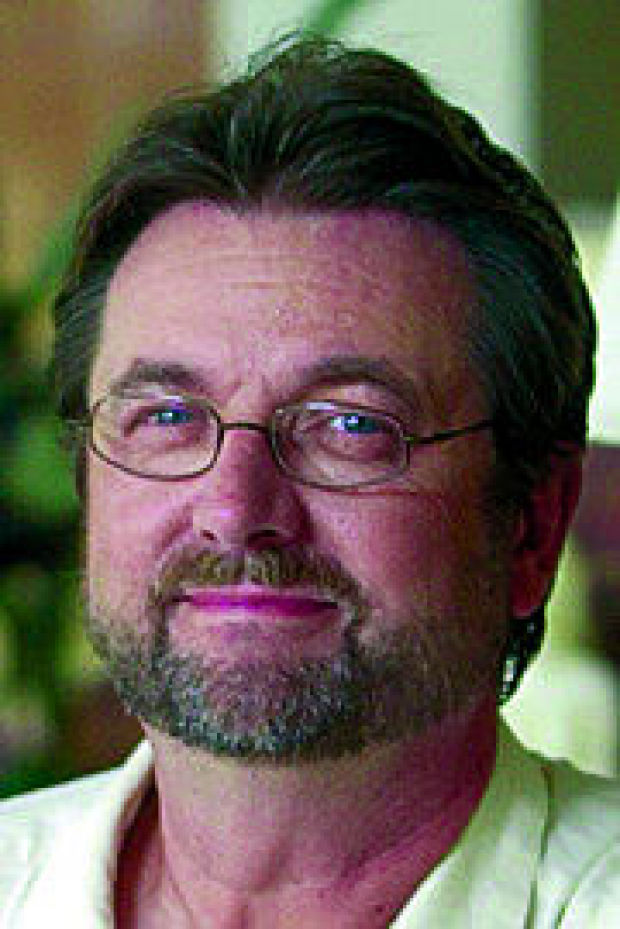
This Quiet Time article appeared in the Waterloo-Cedar Falls Courier. It is published here with permission from the columnist, Scott Cawelti, a retired professor of English at the University of Northern Iowa, freelance writer and musician. Contact him at cawelti@forbin.net. Click here to see Scott Cawelti BIO. Photo by Doug Hines.
Nothing succeeds like success, as they say, and I’m here to report two genuine successes. One is small, the other large, a possible game-changer.
The small success involves my own daily meditation practice. It began over 30 years ago and continues to this day.
As a young assistant professor teaching anywhere from 90 to 250 students in three classes, struggling with writing conference papers, grading piles of student essays, meeting with students, attending multiple faculty committees, facing constant pressure to do more and do better, I was stressed. I mean, stressed out, exhausted, short-tempered and chronically anxious. I was staying afloat, but barely.
In those days, Cedar Falls had a Transcendental Meditation Center down on Third and Main streets, and a couple of friends each recommended I try TM.
Scott Cawelti
I did, and it worked. Within a few days of twice-daily meditation, I began feeling relaxed, then peaceful, then downright blissed out. Well, not quite, but close.
And it continued. No one was more surprised than I.
Over the years I’ve attended meditation workshops, modified my practice slightly, and still continue meditating twenty minutes, twice a day. It has made all the difference in my stress level, and I’m still alive, well and pushing 72.
I’m convinced regular brain-quieting has given me more, and better, years. That’s what meditation does, by the way: quiets our always-buzzing brains.
I recommend some form of meditation for anyone who feels overwhelmed with pushes and pulls beyond their control. If it worked for me, it will work for you.
Beyond my own small life, there’s a much larger meditation success story that recently made national news.
At Visitacion Valley Middle School in San Francisco, they began a program in 2007 of twice-daily “quiet time” breaks for the entire school. This particular school sits in a rough, even violent, neighborhood. Attendance, academic scores and teacher and student retention were dismal.
Teachers and students alike hated the chaos of school days. In other words, the school made no progress toward anything but failure.
Now, after over seven years, they can judge Quiet Time’s success. It’s been dramatic, schoolwide and heartening. This is how David Kirp, a professor of public policy at Berkeley, describes the results:
“In the first year of Quiet Time, the number of suspensions fell by 45 percent. Within four years, the suspension rate was among the lowest in the city. Daily attendance rates climbed to 98 percent, well above the citywide average. Grade point averages improved markedly. About 20 percent of graduates are admitted to Lowell High School – before Quiet Time, getting any students into this elite high school was a rarity. Remarkably, in the annual California Healthy Kids Survey, these middle school youngsters recorded the highest happiness levels in San Francisco.”
Amazing but true. Kirp continues:
“On the California Achievement Test, twice as many students in Quiet Time schools have become proficient in English, compared with students in similar schools where the program doesn’t exist, and the gap is even bigger in math. Teachers report they’re less emotionally exhausted and more resilient.”
Incidentally, students are not forced to practice TM. They can simply close their eyes, daydream, nap — as long as they’re quiet during those two 15-minute periods.
Parents must give permission if they want their child to learn the meditation technique.
I can hear objections: wasting valuable school time, returning to hippie-dom, imposing a religious practice in a state school. All of these seem to be satisfactorily answered, since the program’s success with the parents’ permission for seven years speaks for itself.
Best of all, Quiet Time costs virtually nothing, and it affects whole schools so positively (based on real data) it’s at least worth a look.
My own small success story offers unqualified support.
Much more power to them.
# # #
Quiet Time at Visitacion Valley Middle School
Principal James Dierke first implemented the Quiet Time Program at Visitacion Valley Middle School in San Francisco. As a result of his school’s dramatic turnaround he was selected NASSP National Middle School Principal of the Year in 2008. Principal Dierke wrote an article about it (a Quiet Transformation) for Leadership, a publication of the Association of California School Administrators. He concluded, “I retire with the lowest blood pressure I have had in 10 years and a great optimism about our ability to realize this vision for education.”
NBC Nightly News reports on the Quiet Time Program
NEW VIDEO: With the successful transformation of Visitacion Valley Middle School several schools in the San Francisco Unified School District also incorporated the meditation-based Quiet Time Program with amazing results. Cynthia McFadden visited both Visitacion Valley Middle School and Burton High School and filed a report on December 30, 2014 for NBC Nightly News: San Francisco Schools Transformed by the Power of Meditation. Visit the David Lynch Foundation for more on the Quiet Time program in schools.
Edutopia reported on Quiet Time at Visitacion Valley Middle School
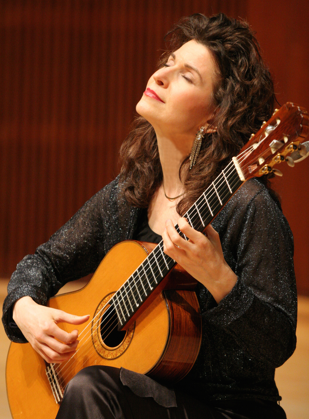
Classical guitarist Sharon Isbin has been a trailblazer for both female musicians, and the guitar’s place in the world of classical music. A winner of two Grammys, she is the director of guitar programs at the Juilliard School and at the Aspen Music Festival. Liz Robbins interviewed Ms. Isbin for The New York Times and wrote this fascinating article on the world’s greatest classical guitarist: Sharon Isbin: Seeking Out Serenity. The Jan 2, 2015 Sunday Routine featured photos, other aspects of her life, and a short video of Sharon playing guitar. The article was well-written and richly put together. This part took me by surprise:
I have done Transcendental Meditation since I was 17 years old. I do 20 minutes in the morning and 20 minutes in the afternoon. I really believe it has helped make me the person that I am. Because it is an extraordinary way to release stress and allow it to dissolve, so that you can focus on what you want to focus on, and have your energy towards very positive things.
Sharon Isbin: Cosmic Performer
An earlier insightful article written by Linda Egenes for Enlightenment, The Transcendental Meditation Magazine (Issue 7) sheds more light on this topic: An Interview with Sharon Isbin: The Monet of Classical Guitar. Knowing that Sharon had been practicing TM since she was 17 years old, Linda asked how it had benefited her life, especially performing in front of live audiences. Her amazing reply reveals an enlightened performer.
As a musician, TM enhances my mental stamina, memory, concentration, and ability to learn. It puts me in touch with my innermost creative core and enables its expression through music. Most importantly, it facilitates instant access to a state of “cosmic immersion,” that feeling of being in the flow, or in “the zone.”
When I perform onstage, I enter a state of being very similar to the one I enter daily when practicing TM. It’s a sense of communion with the energy of the universe, the audience, the composer, and the music—without ego or interference. It’s a feeling of unity between me and the listeners, a sense of “oneness” in which we are all experiencing the beauty of the music together. That sensation is one of the reasons live performances can be so powerful—everyone is focused and transported, and the experience is unique and in the moment, never to be replicated.
Guitar Passions: Sharon Isbin & Friends
Linda also asked Sharon questions about her musical influences and her work as a performer, teacher and collaborator, in particular about her new CD at the time, (August 30, 2011) Guitar Passions: Sharon Isbin & Friends. This promotional video shares music and interviews with Sharon and Steve Vai; in studio with Nancy Wilson (Heart) and Stanley Jordan; previews with Steve Morse, Paul Winter, Rosa Passos, Romero Lubambo, and Thiago de Mello.
Documentary Film: Sharon Isbin: Troubadour
Sharon Isbin is also featured in a new documentary film that came out towards the end of last year, and is still being aired on public television: Sharon Isbin: Troubadour. The one-hour documentary produced by Susan Dangel (2014), includes guests Martina Navratilova, Michelle Obama, Joan Baez, Steve Vai, Stanley Jordan, Garrison Keillor, David Hyde Pierce, Janis Ian, Lesley Gore, Mark O’Connor, Tan Dun, John Corigliano, Christopher Rouse, Joan Tower, Leonard Slatkin, Thiago de Mello, Paul Winter, and more, with Isbin’s performances showcased from international concert stages to the GRAMMYs and White House.
American Public Television presents the national broadcast on nearly 200 public television stations in the US Nov 2014 – March 2015. Video Artists International will release it on DVD/Blu-ray with added performances. See http://www.sharonisbintroubadour.com for screenings, broadcast, and release information.
Sharon Isbin on The Leonard Lopate Show
Today, Wed, January 7, 2015, WNYC’s Leonard Lopate interviewed Sharon Isbin about the program: A New Documentary On The Acclaimed Classical Guitarist, Sharon Isbin (16:33). Leonard asks Sharon about her Transcendental Meditation practice at the 10:50 mark. She answers at 11:08–12:20. Leonard mentions Julliard School inviting Sharon to head up a guitar department in their Music division and asks if Transcendental Meditation is part of the program. At the request of the David Lynch Foundation, Sharon did invite teachers to introduce the TM technique to Julliard faculty, staff, and students, offering to make it available for free. Listen to the interview here: http://www.wnyc.org/story/sharon-isbin.
We are coming to the end of the year 2014. It seemed like a rough one for many, personally, and collectively for the world. I’ve finished reading A Year With Hafiz: Daily Contemplations, translated by Daniel Ladinsky. There is usually one poem a day per page. It was a gift from friend and author Steven Verney. Here are 3 poems towards the end of the book, end of the year, that talk about endings, and, in a way, new beginnings. May they inspire you as we transition into the new year, and for some, into a new life in 2015.
A Prayer I Sometimes Say
It is the Beloved who is revealed in every
face, sought in every sign,
gazed upon by every eye, worshipped in
every object that is adored, pursued in the
visible and in the unseen.
Not a single one of His creatures, not a
single one, my dears, will
fail to someday find the divine Source
in all of its primordial and glorious nature.
And be forever united with the Infinite,
because that—God—is really you.
Muhyiddin Ibn ‘Arabi, look what your
words have become—the restoration of
Truth, the regeneration of Life itself.
December 23, page 391
* * * * *
The Tender Mouth Of The Earth
What will the burial of my body be? The
pouring of a sacred cup of wine into the earth’s
tender mouth and making my dear sweet lover
laugh one more time.
What is the passing of a body? The glorious
lifting of the spirit into the sacred arms of the
Sky, and making existence smile, one more, one more time.
December 28, page 396
* * * * *
A River Understands
I used to know my name. Now I don’t. I
think a river understands me.
For what does it call itself in that blessed
moment when it starts emptying into the
Infinite Luminous Sea,
and opening every aspect of self wider than
it ever thought possible?
Each drop of itself now running to embrace
and unite with a million new friends.
And you were there, in my union with All,
everyone who will ever see this page.
December 29, page 397
* * * * *
One poem about a river is beautifully told by William Stafford in his poem, Ask Me, where he looks to the stillness in the river to inform him, and the person asking him about his life, and, in a way, the creative process in the moment. Another poem of his, Something That Happens Right Now, also leaves you with a similar unbounded feeling as this last Hafiz poem does.
See other inspiring poems by Hafiz, translated by Ladinsky, posted here.
You don’t have to be a wounded warrior returning home traumatized and depressed to benefit from Transcendental Meditation. Even comedian Jerry Seinfeld says his regular TM practice gives him a rested body and a clear mind, and the energy to do almost anything. For Jerry, it’s his ultimate work tool for success! Here are two articles about TM’s value.
TM is the ultimate work tool for Jerry Seinfeld
New York Magazine’s Dan Hyman interviewed Jerry Seinfeld, again, for Vulture: Jerry Seinfeld on the Comedians in Cars Season Finale and Late-Night TV. It’s excellent and revealing! At the end, Dan asks Jerry how he stops obsessing about creating his comedy bits and web series, and mentions his longtime TM practice. Jerry’s reply beautifully sums up the value of regular Transcendental Meditation practice!
How do you relax when not obsessing over your bits or working on your web series? I know you’re a longtime practitioner of Transcendental Meditation.
I’m obsessed about that, too. In fact, that’s what I’m going to do as soon as we hang up. I started doing TM in ’72, and that’s kind of how I recover from doing things that are tiring. It keeps my energy really high. I don’t know if it clears your mind. What it really does is it helps your body and mind to rest. They don’t really get a good rest in sleep. And this has been studied by virtually every medical school in America these past 40 years or whatever that this stuff has gotten popular here. And if you just look at the medical research of what goes on in the brain and the body in this process, it’s totally different from sleep. So forget about relaxation or anything like that: It’s the ultimate work tool to me. It’s like you have a phone and someone hands you the charger and you go, “Just try plugging this in and watch what your phone will do now.”
It’s the ultimate work tool to me. It’s like you have a phone and someone hands you the charger and you go, “Just try plugging this in and watch what your phone will do now.”
Listen to Jerry Seinfeld talk about TM in other venues posted here.
After nine months of combat in Afghanistan, Staff Sgt. Todd Knauber was wounded. Upon his return home he was told things would get better, but instead they got worse. He was in pain, depressed, taking a cocktail of medications, and didn’t know where to turn for help. Then someone gave him an opportunity to participate in Transcendental Meditation as part of his treatment at the Eisenhower Army Medical Center. TM was being offered as an alternative way to help heal his wounds, both physical and mental. It turned his life around. Here is an excerpt from the article.
“I got to a tipping point. Things were bad, but then I was given the greatest gift I have ever received from a stranger.”
Knauber was offered an opportunity to participate in Transcendental Meditation as part of his treatment at Eisenhower Army Medical Center.
Transcendental Meditation was something he had never heard of but it offered him the possibility of dealing with the medications, the nightmares, and the physical and emotional pain.
“It was not a branch for me to grab hold of but rather a taproot under my feet. A stable platform which gives me a moment’s respite so I can put my pain into perspective enough that I can reattempt the climb.”
Since he began meditating, there has been a change in his life. He meditates twice a day for 20 minutes and over the course of four months, he has been able to entirely discontinue two medications, Prazosin and Trazadone, and has reduced his Zoloft by half.
In addition to the calm he says he experiences through Transcendental Meditation, Knauber says it has made it easier to manage his physical pain from his injuries.
“I typically have a regimen of several pain medications to manage my physical injuries. Rather than taking a handful of pills seven days a week, I can manage my pain regularly with a few tablets, two to three times a week.”
Others have even told him that he looks like an entirely different person after starting to meditate.
“I am vibrant, I smile, and I look much more grounded. The truth is you can’t practice Transcendental Meditation without it positively affecting you.”
The truth is you can’t practice Transcendental Meditation without it positively affecting you.” — Staff Sgt. Todd Knauber
Doctors promised him through medication and hard work he could potentially heal over the course of years, but since Transcendental Meditation he has moved much closer to achieving his recovery in months.
“At times the troubling thoughts and nightmares come back, but as a whole, the progress is palatable.”
“I feel more in control of my life now, and I’m becoming hopeful about rebuilding and getting better.”
See many more articles on the value of TM for Veterans posted on this blog, here, here, and here. Check out this website to find out more about TM for Veterans.
Prudence Farrow Bruns, PhD, is the daughter of actress Maureen O’Sullivan and award-winning writer/director, John Farrow. She has been practicing the Transcendental Meditation technique for 48 years, and has been a teacher of the TM program for 46 years.
It all started so simply. It was 1966, and 18-year-old Prudence Farrow was sitting on a bluff overlooking the Pacific Ocean at her brother’s home in Los Angeles. She was reading a book on meditation when she heard a voice say, “If you’re interested in meditation, I know just the meditation for you.”
The voice was that of Peter Wallace, a friend of her brother. Peter had spent six months traveling through India, where he met Maharishi Mahesh Yogi and began the Transcendental Meditation technique. He told her how simple and effortless the technique was, and yet how profound the experience and benefits could be.
“It was the simplicity of the practice that struck me most,” Prudence said. “I’d been trying different methods of meditation for some time, but they had all been complicated and difficult. When Peter described a simple, natural practice of diving deep within, I knew he was truly onto something.”
So Prudence learned the TM technique at UCLA. After experiencing the positive effects of TM for herself, Prudence wanted more. She wanted to meet Maharishi and to study with him. “At that time Maharishi had courses in India,” says Prudence. “He brought people there, and they studied for three or four months with him. You meditated for long periods under his guidance.”
On January 23, 1968, three days after her 20th birthday, Prudence traveled with Maharishi from New York to Rishikesh, India to attend her TM teacher training course. And that’s when the “Dear Prudence” story really began.
The Beatles Make the Scene
One month after Prudence arrived in Rishikesh, The Beatles showed up to study with Maharishi. While they all spent some time there, John Lennon and George Harrison stayed the longest.
“The Beatles were all very nice, humble, modest, kind, and down-to-earth people,” Prudence remembers. “I was closest to John and George, since they were my ‘course buddies’ during our studies with Maharishi. We were supposed to look out for each other during the course.”
Prudence (left) sat next to Ringo in course photo.
Prudence soon became known for her tendency to keep to herself in her room, focused on her meditation practice. “I was deeply immersed in my studies and meditation, locked away in my quarters. John, as my course buddy, was concerned and wanted to bring me out of my room to enjoy the experience more.”
John and George would come over to her room and play their guitars, encouraging her to come out and sing with them. It was this experience that became the inspiration for their song “Dear Prudence” in which John sings, “Dear Prudence, won’t you come out to play?”
Before he left Rishikesh, George mentioned to Prudence that they had written a song about her, but she had no idea what it was. She didn’t hear the song until it came out on their 1968 album The Beatles, commonly known as the “White Album.”
Prudence’s dedication to her meditation practice did pay off. After four months, she graduated from the course and became one of the first and youngest teachers of the Transcendental Meditation technique at that time.
But that was just the beginning of the “Dear Prudence” story.
Prudence Comes out to Play
Once she completed her teacher training course in India, Prudence definitely did come out to play. Over the past 46 years, she’s instructed thousands of people in the TM technique throughout the United States and Canada. She married TM teacher Al Bruns in 1969, and they have three children and four grandchildren.
She’s produced Hollywood feature films and a play in Manhattan. She was an assistant to the curator of the “Theatre Collection” of the Museum of the City of New York. She has been a magazine writer. She’s written two books.
Prudence earned a BA, an MA, and a PhD from the University of California at Berkeley. She received her doctoral degree in 2007, with a major in South Asian Studies and Sanskrit. She has made presentations to conferences at numerous universities, including Harvard, the University of Texas at Austin, and the University of Hawaii. She’s taught courses at UC Berkeley and Rutgers University.
TM and Yoga
Prudence continues to teach the TM program in Florida. In fact, she’s the most successful teacher in the U.S. at setting up Affiliate Programs in yoga studios. Maybe that’s not so surprising, considering that she’s a lifelong yoga practitioner, and she opened a yoga institute in Boston back in 1967.
Prudence attended India’s Kumbh Mela last year.
Maharishi Foundation created the Affiliate Program to bring TM to yoga studios and fitness centers. When a studio becomes an Affiliate, their members can learn TM at a reduced course fee, and the studio receives a share of the income. Everyone benefits—the new TM student, the yoga studio, and the local TM teachers.
Today most people think of yoga as a series of physical postures. But Maharishi has explained that in the Yoga Sutras, Patanjali identifies eight limbs of yoga, and the eighth limb is Samadhi or transcendental consciousness. Maharishi said that with the practice of TM, Samadhi is actually the easiest limb of yoga to achieve, since no effort is required. We simply tap into the natural tendency of the mind to go within, to transcend, and that transcendence nourishes and supports all the other limbs.
“I do think that Transcendental Meditation is—of the meditations that are available to us—the most direct, and the simplest,” says Prudence. “When you meditate, when you transcend, it allows your heart and mind to balance. And when they’re balanced, that’s when you are really healthy. You are happy. You’re happy mentally, happy emotionally, and happy spiritually. Those three are all components of what make a human being, so that connection to transcendence is absolutely necessary for health.”
Creating a Better World
Fortunately for us all, Prudence did come out to play.
“The years of meditating have enriched my life so much,” Prudence says. “And that’s why at this point in my life, I’m giving back. We need a better world. We need people to be more conscious, to be more evolved. And expanding the mind, like TM does, is absolutely vital to bring about stronger people. If you can strengthen people inside, you’ve changed the world.”
So even today, 48 years later, the “Dear Prudence” story continues.
[In July 2018, this article was updated and published in Enjoy TM News.]
Years later, The Beatles released many versions of their songs on the 50th Anniversary of The White Album, now out on Spotify, which include The Esher Tapes. There are 3 versions of Dear Prudence there: the Esher version of John Lennon singing on guitar; one of just vocal, guitar, and drums; and the 2018 mix.
Another beautiful song that John Lennon wrote about his experience with Transcendental Meditation was, Across the Universe. Spotify included John Lennon on guitar singing Across The Universe–Take 6.
NEW: Enjoy TM News posted this more recent discussion. Mario Orsatti, the host of TM Talks and Senior Teacher of the Center for Health and Wellness, a division of the David Lynch Foundation, interviewed Dr. Bruns on June 14, 2020. This popular episode was rebroadcast on September 4, 2022. Watch the interview with Dr. Prudence Farrow Bruns (55:17)
When it comes to dealing with adversity, accepting it is not always easy, especially when it involves a devastating sudden loss, like what happened on 9-11, (September 11, 2001), 13 years ago today. Many had to accept it, live with it, and over time, hopefully distance themselves from the painful memories of the loss of their loved ones.
Same thing if it’s an ongoing situation, where you see someone you love disappearing before your eyes due to some incurable disease. Maybe it’s not as devastating. I don’t know. Grief is grief; it’s not easy. But our perspective could change over time. And that can be the merciful nature of time. Here is a haiku about it.
The Merciful Nature of Time
Time is kind to us
It lets us get used to change
Then we can move on
They say, Time heals all wounds. But does it? Not according to Worth Kilcrease, a counselor who specializes in end-of-life and bereavement matters. He says it’s what you do with the time that heals. Read his article Time Heals All Wounds, or Does It? published on April 24, 2008 in Psychology Today’s The Journey Ahead.
The David Lynch Foundation
One organization helping people deal with adversity and various forms of traumatic stress and grief is the David Lynch Foundation. Visit their website and see how they are Healing Traumatic Stress and Raising Performance in At-Risk Populations http://davidlynchfoundation.org. See DLF executive director Bob Roth speakat Google Zeitgeist 2014.
Erin answers Jon’s questions based on what grieving mothers who had lost a child to city violence, and have now started meditating, are telling her. This is the first time they’ve been able to experience any kind of inner peace for 20 minutes twice a day. For these program participants, TM is bringing relief to their stress-filled days and nights.
HUMBOLDT PARK — Eyes closed in meditation, a small group of grieving women sat in a circle on the second floor of a Humboldt Boys & Girls Club one recent Sunday afternoon.
The lights were dimmed. Except for the hum of the air conditioner and the far away sound of basketballs hitting the gym floor below, the room was awash in a deep silence.
The quiet, say the mothers — most of whom have lost children to Chicago violence — was coming from within, a rediscovered inner peace thought to have died with their children.
“For all these years, I’ve been fighting with my brain. I took medication to forget, but you can never forget,” said 49-year-old Beti Guevara, who was just a girl when her brother was slain 38 years ago.
Erin Meyer says the mothers struggle to find peaceful moments after the death of a child:
With Transcendental Meditation, “I can think clearly, I’m calmer, and I can finally sleep,” he said.
Lynch, an innovator of cinema best known as the director of the TV series “Twin Peaks” and films including “Mulholland Drive” and “Lost Highway,” views TM as a tonic for victims of trauma and a vehicle to world peace.
The New York-based foundation that bears his name teaches TM on American Indian reservations, in prisons and schools, to homeless people, to former soldiers suffering post-traumatic stress disorder and to victims of war in Africa, according to the organization’s website.
Recently, the David Lynch Foundation added to that list Chicago mothers living in the wake of a child’s murder.
Among those participating are: An-Janette Albert, mother of 16-year-old Derrion Albert, whose 2009 beating death outside Fenger High School shocked the nation; Myrna Roman, who lost her first-born in an unprovoked 2010 drive-by in Humboldt Park; and Maria Pike, the mother of an aspiring chef, Ricky Pike, who was gunned down in Logan Square in 2012.
The group met multiple times over the course of a week with a husband-wife TM instruction team, adopted their mantras and started meditating twice a day for 10 to 20 minutes at a time. Four days into the practice, most of the new students said they have found a surprising measure of peace.
Transcendental Meditation is not an ancient technique, but a method developed by the Indian guru Maharishi Mahesh Yogi in the 1950s. It became wider known when it was adopted by members of The Beatles.
On Sunday, at the Union League Boys & Girls Club, meditation teacher Chris Busch described TM as a nonreligious exercise with myriad mind and body benefits ranging from stress reduction to reduced cholesterol and improved cardiovascular health.
“It’s a simple thing,” Busch said. “Even children 10 years old, they can do it,” he said, describing improvements that some schools in San Francisco have seen through the implementation of a TM program for students.
“The Beatles were over with Maharishi in India and lots of people were getting hip to Transcendental Meditation and different kinds of meditation, and I thought it was real baloney,” Lynch said. “I thought I would become a raisin-and-nut eater, and I just wanted to work.”
Then, he heard the phrase, “True happiness is not out there, true happiness lies within.”
“And this phrase had a ring of truth to it,” Lynch said.
He described TM, which usually costs about $1,000 to learn through TM teachers, as “a key that opens the door.”
After spending time with Maharishi Mahesh Yogi, he decided to set up a foundation in 2005 to spread the meditation approach, according to the Times.
“Things like traumatic stress and anxiety and tension and sorrow and depression and hate and bitter, selfish anger and fear start to lift away,” Lynch said. He launched a Women’s Initiative in 2012.
The Chicago mothers, just beginning to see the potential meditation has to bring order to their lives, stumbled into TM.
Maria Pike was telling friends on a recent trip to Washington D.C. about the daily challenges she encounters just trying to live a normal life in the wake of her son’s murder. The friends turned out to be TM practitioners, Pike said.
They made some phone calls, which led to more phone calls. Eventually, supporters of the David Lynch Foundation offered to pay for Pike and her friends to take the TM training.
“I feel like it was meant to be,” Pike said.
Published with permission from the author. See the complete article with photos here.
See executive director Bob Roth speak at Google Zeitgeist 2014 about the work of the David Lynch Foundation offering Transcendental Meditation to at-risk populations, as well as Wall Street executives.



 The Uncarved Blog