Archive for the ‘Articles’ Category

Billy Collins discusses the value of getting to the end of a poem and what can happen afterwards

April 2, 2015

As we’ve seen in a recent post about the writing and teaching of poetry, Billy Collins wants the poem he’s writing to complete itself, to come to an end. When he writes a poem, he says meaning is the furthest thing on his mind. He’s just trying to get to the next line, to arrive at the ending. “It’s not a search for insight, particularly. It’s a search to be over with.”

In this interview with Ginger Murchison at the 9th Annual Palm Beach Poetry Festival, Billy Collins reveals more about the ending of a poem, how what happens is even more important than the last line of the poem.

During the interview, Ginger Murchison mentions something Billy Collins had alluded to about the end of a poem, and asks him:

What happens at the end of the poem? I want to know about that white space after the last period, for the poet and the reader. You said your poem goes towards somewhere. How do you see that as being more important than even the last line of the poem, that space at the end?

He answers her by describing the significance of the white space:

Well, the white space at the end is just like the white space around the rest of the poem. It stands for silence. And maybe the white space after the end of the poem is a little more silent than the other silences. I think of a poem as an interruption of silence.

He also talks about how satisfying it can be to find the ending to a poem. The implication being, the silence that follows the ending as something new that is created within the writer and the reader.

Once you find it, it’s incredibly satisfying. You found something that didn’t exist before. That the poem brings, calls into existence, through a series of steps, it gains some kind of ground, and out of that ground, there occurs something that had never existed before. It comes as a sort of gain, surprise.

I certainly can relate to that, and described in the previous post how certain poems completed themselves in ways I hadn’t imagined. When that happens, and when a poem enlivens a silence, within and between both the poet and the reader, or listener, it creates a deep feeling of fulfillment.

After hearing a discussion with Bill Moyers and 3 well-known poets on the Diane Rehm show discussing the creation of a poem and the effect it had on an audience when recited, I was inspired to write a poem about this mysterious creative process as something elemental, transcendental.

Poetry—The Art of The Voice, describes the source, course, and goal of poetry springing from and returning to silence, through a poet’s inner voice or consciousness, to a listener’s heart and mind. It also relates to the notion of a writer finding and expressing his or her own voice as a poet.

Another poem I wrote shows how Silence ultimately speaks for itself. See Telling the Story of Silence by Ken Chawkin.

Creation comes about through sounds and silences, expressions and gaps, within which the dynamics of transformation occur. See Coalescing Poetry: Creating a Uni-verse.

For a more detailed explanation of these dynamics in language and creation, see Singing Image of Fire, a poem by Kukai, with thoughts on language, translation, and creation, and Yunus Emre says Wisdom comes from Knowing Oneself — a Singularity that contains the Whole.

George Plimpton interviewed Billy Collins for The Paris Review

As referenced by Ginger Murchison, George Plimpton had interviewed Billy Collins for The Paris Review in 2001 after news of his appointment as the new poet laureate by the Library of Congress. He would go on to serve two terms, 2001-2003. Although published 14 years ago, this interview is definitely worth reading:  Billy Collins, The Art of Poetry No. 83.

The interview opens with Plimpton asking Collins how he starts to write a poem. He says he doesn’t write that regularly, much of his time is waiting and watching; he’s vigilant. But when he’s engaged he usually writes a poem quickly, in one sitting.

I think what gets a poem going is an initiating line. Sometimes a first line will occur, and it goes nowhere; but other times—and this, I think, is a sense you develop—I can tell that the line wants to continue. If it does, I can feel a sense of momentum—the poem finds a reason for continuing. The first line is the DNA of the poem; the rest of the poem is constructed out of that first line. The first few lines keep giving birth to more and more lines.

That makes perfect sense. He doesn’t know where he’s going and hopes the poem is one step ahead of him, holding his interest, leading him down the trail to that elusive mysterious ending. I love the different metaphors he uses to describe the pen as a tool to help him discover that something he’s not yet aware of.

Like most poets, I don’t know where I’m going. The pen is an instrument of discovery rather than just a recording implement. If you write a letter of resignation or something with an agenda, you’re simply using a pen to record what you have thought out. In a poem, the pen is more like a flashlight, a Geiger counter, or one of those metal detectors that people walk around beaches with. You’re trying to discover something that you don’t know exists, maybe something of value.

He explains how he likes to invite the reader into a poem with something ordinary, then take him or her, and himself to a place he hasn’t been to yet.

I want to start in a very familiar place and end up in a strange place. The familiar place is often a comic place, and the strange place is indescribable except by reading the poem again.

There’s a lot more to the interview, but he concludes humbly by saying that he’s just trying to be a good writer.

No matter what I’m thinking about when I’m writing a poem, no matter what is captivating my attention, all I’m really trying to do is write good lines and good stanzas.

There’s a reason he’s called America’s most popular poet. He has made poetry accessible to millions of Americans. He continues to write, publish, sell books, teach, and is in constant demand to give poetry readings.

It is a delight to read his poetry. His subtle sense of humor puts a smile on my face. It’s also enjoyable to hear him recite his poems. Seemingly ordinary, they give you a unique perspective on things that were previously unimaginable, and that’s refreshing!

See the previous post: Billy Collins suggests more creative ways to respond to poetry than analyzing it to death. Enjoy the poetic genius and humor of Billy Collins reading his poem “January in Paris” and Billy Collins humorously disagrees with Heraclitus showing how to go into the same water twice.

The Library of Congress Web Guides: Billy Collins: Online Resources.

— Written and compiled (citing sources) by Ken Chawkin for The Uncarved Blog.

Cynthia Lennon, dead at 75 (1939-2015) R.I.P.

April 1, 2015

Cynthia Lennon, dead at 75 of Cancer
Julian Lennon’s Beautiful Memorial Tribute
http://www.cynthialennon.memorial

22nd Annual Massachusetts Multicultural Film Festival ‏@UMassFilm Spotlight Amherst Alum @GREGREITMAN’s @ROOTEDinPEACE

March 24, 2015

mmff-201522nd Annual Massachusetts Multicultural Film Festival
IN THE SPOTLIGHT: ROOTED IN PEACE
A Greg Reitman Film

rooted-peace

UMass Amherst alum Greg Reitman (’93) presents a personal journey of discovery, seeking answers to humanity’s self-destructive cycles of waste, war, and violence in this fascinating documentary. Seeking counsel from famous luminaries and activists, the film asks us how we want to live on this planet and challenges us to examine our own values.

Reitman interviews physician and author Deepak Chopra, music legends Donovan, Mike Love, and Pete Seeger, film director David Lynch, Noble Peace Laureate Mairead Maguire, media mogul Ted Turner, Archbishop Desmond Tutu, green architect William McDonough, neuroscientists Dan Siegel, Fred Travis, and many others. Greg also returned to his alma mater to show where he first came up with the idea of planting trees for peace. [official site | event poster | MMFF site | Rooted in Peace showing]

This 2015 documentary film premiered at the 21st Annual Sedona International Film Festival, February 21–March 1, 2015. See previous blog post on this Sundance Alum: Greg Reitman’s film, ROOTED in PEACE, inspires us to change from within to transform the world. See the trailer. More news: ROOTED in PEACE to play Martha’s Vineyard and an Iowa premiere at Fairfield’s Sondheim Center.

The Amherst-Maharishi-TM-Connection

Amherst is home to the Transcendentalists, Emerson and Thoreau, and Emily Dickinson. So it seemed fitting for the UMass Amherst campus to be selected as the site for a meditation course and symposium in the summer of 1971.

I was one of hundreds who had attended that one-month Transcendental Meditation Teacher Training Course taught by Maharishi Mahesh Yogi. Another course followed on the West Coast at Humboldt State College, now University, in Arcata, California. Over two thousand of us would continue with the next step in our Teacher Training Course with Maharishi the following year in Mallorca, Spain and Fuiggi Fonte, Italy for six months, from January to June, 1972.

One of the Amherst course participants was Beach Boy Mike Love. I was introduced to him by Charles Lloyd, a jazz musician on the course who became a friend. I used to give them lifts to and from the dining hall. I would meet Donovan years later, and David Lynch, decades later. You can imagine my surprise when Greg told me he had graduated from UMass Amherst! It was great to arrange for Greg to interview Donovan and Mike Love on how they met Maharishi and learned TM, and David Lynch and Bob Roth, director of the David Lynch Foundation, about the transformational value of TM in schools and for at-risk populations. Small world! Full circle!

Wednesday, March 25th, tomorrow night’s showing of ROOTED IN PEACE, should be fulfilling for Greg, as he brings it all back home. He’s worked hard on this film and deserves all the kudos for manifesting this vision of personal and global transformation.

Following the course was the First International Symposium on the Science of Creative Intelligence. Maharishi interacted with many leading scientists and thinkers in all areas of life, including Buckminster Fuller. His presentations were so impressive that Maharishi kept interjecting his Vedic perspective in agreement. At a certain point, Fuller turned towards Maharishi and spoke only to him since he felt he was the only one who truly understood what he was saying. At the end he went over to Maharishi who had stood up to greet him and they held hands together. Everyone rose on their feet and applauded for a good ten to fifteen minutes. Those were very heady days! There also was a special press conference with both Fuller and Maharishi following his talk. It’s posted on the Maharishi Mahesh Yogi Channel in 3 parts. I’ll post links here. Very much worth watching!

1/3. Buckminster Fuller and Maharishi Mahesh Yogi Part One of Press
2/3. Buckminster Fuller and Maharishi Mahesh Yogi Part Two of Press
3/3. Buckminster Fuller and Maharishi Mahesh Yogi Part Three of Press

Watch a CBC film of Maharishi at Lake Louise, and a later A&E biography.

I enjoyed reading a fictional story about a young couple who meet at UMass Amherst, learn to meditate and later attend Maharishi’s Transcendental Meditation Teacher Training Course at his Swiss headquarters. Given a mission, they return to live and work in Amherst where a dramatic and inspiring story unfolds. Read more and listen to author B. Steven Verney on Writers’ Voices talk about his enlightening novel, “The Best of All Possible Worlds.”

UPDATE

I tweeted Greg Reitman today about last night’s showing of ROOTED in PEACE and he replied: Full house, engaged audience, lots of questions afterwards … Yes lots of people wanted to buy the DVD which will be available in the fall … That would be the plan and will have 20 minutes of extra scenes on the DVD. … Replying to a tweet I sent out a few days later about the film, Greg replied: It was a real homecoming I was truly surprised how the students responded and for some there were tears.

Billy Collins suggests more creative ways to respond to poetry than analyzing it to death

March 18, 2015

The New York Times calls Billy Collins “the most popular poet in America.” In his poem, Introduction to Poetry, the former two-term U.S. Poet Laureate (2001-2003) suggests more creative ways to respond to poetry than analyzing it to death. This blog post also reveals how Collins writes and teaches poetry. It may surprise you.

Introduction to Poetry

I ask them to take a poem
and hold it up to the light
like a color slide

or press an ear against its hive.

I say drop a mouse into a poem
and watch him probe his way out,

or walk inside the poem’s room
and feel the walls for a light switch.

I want them to waterski
across the surface of a poem
waving at the author’s name on the shore.

But all they want to do
is tie the poem to a chair with rope
and torture a confession out of it.

They begin beating it with a hose
to find out what it really means.

The Apple that Astonished Paris © 1988, 1996

Listen to Billy Collins read his poem, Introduction to Poetry.

Billy Collins speaks to English teachers in this poem who look at poetry as something to be analyzed and dissected. They teach their students to try to find out what a poem means instead of emotionally responding to it. To make his point, Collins amusingly suggests ways students might approach and experience a poem, instead of “beating it with a hose to find out what it really means.”

Writing and Teaching Poetry

Collins reveals more about his writing process and how he teaches poetry when answering a question from a middle school English teacher. He acknowledges the search for meaning in a poem, but when he writes a poem, meaning is the furthest thing on his mind. He’s just trying to get to the next line, and the next, to finally arrive at the ending.

Basically when you’re teaching poetry, despite that poem (Introduction to Poetry), you’re talking about meaning. We’re basically extracting meaning from the poem. And I realized at some point, that when I wrote a poem, meaning was the last thing on my mind. I never gave it a thought.

Basically, in a poem, I’m just trying to find the next line. I’m trying to find a way for the poem to go. And I’m trying to get to some destination. I’m not thinking about, ‘What’s the poem about, or meaning?’ Or, I’m not thinking of, ‘How will people write study questions about this poem and make any sense out of it?’

So I try to bring some of that into my teaching. I try to substitute for the question, ‘What does a poem mean?’ the question, ‘How does a poem go?’ ‘How does a poem get where its going?’ (It goes from the beginning to the end, maneuvering through shift points along the way, in search of a destination.) A poem is always searching for its own ending. And that’s what poets are thinking about. It’s not a search for insight, particularly. It’s a search to be over with.

PBS NewsHour’s Jeffrey Brown interviewed Billy Collins on their Poetry Series about his new collection, Aimless Love: New and Selected Poems. “I knew that poets seemed to be miserable,” said Collins about his younger self, yearning to fit in. While he admits he “faked a miserable character” at the start of his career, he’s since embraced his sense of humor. Poet Billy Collins on humor, authenticity and ‘Aimless Love’

William Stafford on Writing Poetry

William Stafford was Poetry consultant for the Library of Congress in 1970, what a Poet Laureate was called before they created the office. He was named Poet Laureate of Oregon from 1975-93. Stafford’s style of writing and teaching was process-oriented. He gave no praise or blame to his students’ writing. He encouraged English teachers and writing students to be innocent when writing poetry, without any preconceived notions of how it should go, and to be open to discovering the unexpected turns a poem could take on the way to its own completion.

Stafford was very open to spontaneity and receptivity when writing poetry. He said most teachers would spell out what a piece of writing should look like, and expected their students to reproduce the same. This product-oriented approach left no room for the imagination. “They want a wilderness with a map.” But, he asks, “how about errors that give a new start?” Errors, he said, “make a music that nobody hears. Your straying feet find the great dance,” and “stumbling always leads home.” That’s how he wrote poems, early every morning. Enjoy reading these William Stafford poems, A Course in Creative Writing, and You and Art.

My Own Experience as a Writer

I agree with Collins and Stafford that the creative process is a mystery, and coming to the end of a poem is a wonderful relief, especially when I see it finishing itself. It also surprises me with what it’s about, sometimes revealing a deeper meaning at the end than imagined. This meaningful sense of completion is why writing poetry can be so fulfilling.

Two early meta-poems describe this process: Writing—a poem on the writing process, and Sometimes Poetry Happens: a poem about the mystery of creativity. Two early poems I’d written that surprised me with their endings are, As Above So Below, and later, Pine Cone Trees.

My son Nathanael Chawkin wrote a poem called INSPIRATION, an outcome from the first homework assignment in his Grade Six Literature class. He felt strongly that you couldn’t force a student to write a poem; it had to come on its own accord. The poem innocently and profoundly expresses the spontaneity of the poetic process. I also added information with links after his poem about the writing process you may find interesting.

Update

Just added a part two: Billy Collins discusses the value of getting to the end of a poem and what can happen afterwards. Enjoy the poetic genius and humor of Billy Collins reading his poem “January in Paris” and Billy Collins humorously disagrees with Heraclitus showing how to go into the same water twice.

The Library of Congress Web Guides: Billy Collins: Online Resources.

— Written and compiled (citing sources) by Ken Chawkin for The Uncarved Blog.

Selected Wise Words From Rumi

February 28, 2015

There are many wise sayings from Rumi. Some were posted on the blog: something to tell. I copied a few thoughtful and instructive ones:

Raise your words, not voice. It is rain that grows flowers, not thunder.

When someone is counting out gold for you, don’t look at your hands, or the gold. Look at the giver.

Let yourself be silently drawn by the strange pull of what you really love. It will not lead you astray.

You are not just the drop in the ocean. You are the mighty ocean in the drop.

Yesterday I was clever, so I wanted to change the world. Today I am wise, so I am changing myself.

See more quotes and images from this blogger at rumi’s wise words.

You may also enjoy Two kinds of knowledge about living and learning.

Here’s another one: Poems by Rumi and Octavio Paz open our minds to a more cosmic perspective. Also see several inspiring poems by Hafiz.


Time for some humor and love — WELCOME BACK

February 19, 2015

Saw this on a friend’s Twitter feed. Too funny to not share. Made my day! I later found out it’s by Dave Coverly @speedbumpcartoon.

Words are not needed here; it says it all, but I couldn’t resist. Welcome back to the school of life. Seem familiar? Did we learn our lessons well? No? Having to repeat a class? Time for a fresher course, and then some! Maybe we’ll get it right this time around. You think? If not, there’s always the next class, the next life, with more lessons to be learned. 🙂

COMING BACK FOR LOVE IN FIVE ROMANTIC FILMS
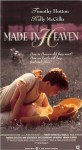
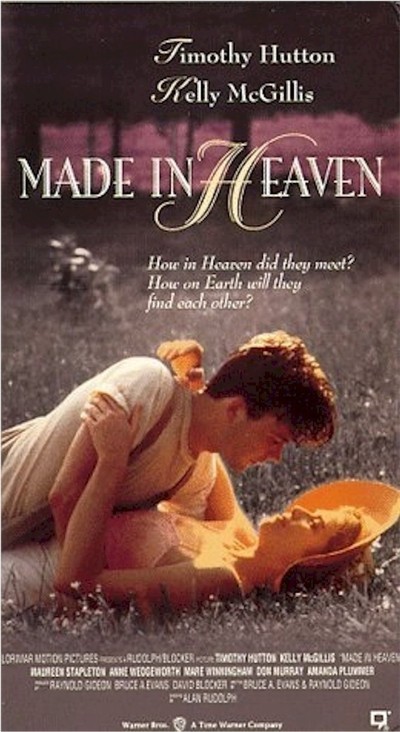
Made in Heaven posterWhen it comes to getting it right for love, I recommend my all-time favorite romantic movie: Made in Heaven (1987), about two souls, played by Timothy Hutton and Kelly McGillis, who meet and fall in love in Heaven. Annie (McGillis) is sent to Earth and Mike (Hutton) makes a deal to be reborn (Elmo) to find her (Ally). But he’s given a time-frame of 30 years in which to do so or he’ll lose her forever. It’s a magical movie filled with surprises. See more on Wikipedia. Rent or buy it on Prime Video. It’s also free with ads on YouTube Movies & TV.

That year, Wim Wenders came out with his amazing film, Wings of Desire, about an angel who tires of overseeing human beings and wishes to become one himself when he falls in love with a mortal.
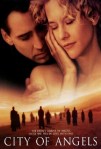
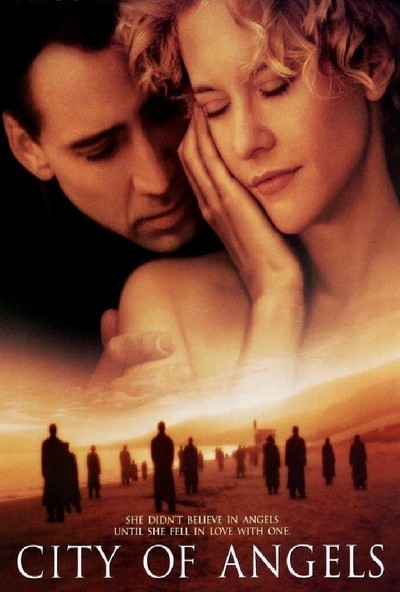
City of Angels posterTen years later it was adapted for English audiences as City of Angels (1998). Wenders co-wrote the screenplay. Nicholas Cage plays the angel who falls in love with a doctor, Meg Ryan, because of her beauty and concern for her patients. She doesn’t believe in angels, but when he reveals himself to her she falls in love with him, and has to decide between him or her fiance. One patient, a former angel, tells him how he became human for a woman. He does the same and experiences the joys and sorrows of love and loss.
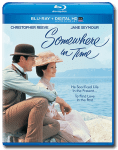
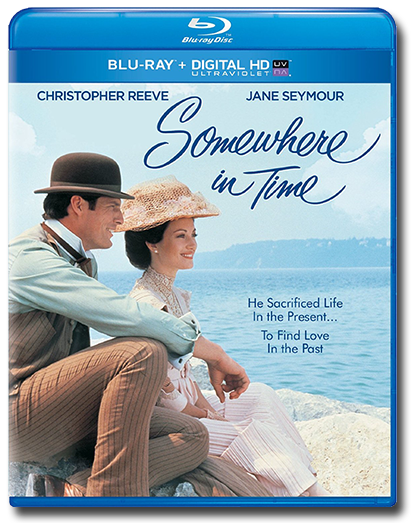
sit-bdAnother great movie is Somewhere in Time (1980adapted from the 1975 novel Bid Time Return by Richard Matheson who also wrote the screenplay. On a getaway to Mackinac Island, Richard Collier (Christopher Reeve), a playwright, falls in love with a picture of Elise McKenna (Jane Seymour), an actress who had performed there a long time ago at the Grand Hotel where he is staying. He discovers he was also there then and finds a way to travel back in time to win her heart. It works, but something unexpected happens that changes everything.

The SAG strike and lack of funds prevented the film from being effectively launched that year. When it was finally shown in New York, critics panned it, squashing plans for a national release. But, with the advent of cable television and late night movies, it soon became a cult classic and went on to win numerous awards.

John Barry composed the beautiful soundtrack including the haunting 18th variation of Sergei Rachmaninoff’s Rhapsody on a Theme of Paganini. Barry had been mourning the death of his parents and was not making himself available for work, but Seymour, a close friend, and the script, persuaded him to get involved. He channeled his emotions into the music, which contributed to the film’s success.

You can now watch the film for free with ads on Prime Video, and other options listed on IMDb. If not, here’s a 12-minute synoptic video of key scenes from the film, and this 11½-minute Somewhere in Time Movie Montage. Explore the movie’s official fan website for news updates at http://www.somewhereintime.tv.

After you’ve seen the movie, watch these behind-the-scenes videos that reveal what was going on between co-stars Reeve and Seymour, where life imitated art. They give us a deeper dimension blending reality with fiction enhancing repeat viewing experiences. She Wasn’t Acting: The Untold Truth Behind Jane Seymour’s Heartbreaking Monologue and The Heartbreaking True Love Story Behind “Somewhere in Time” Revealed! This short video clears up a paradox: Origin of the Somewhere in Time pocket watch finally solved! 

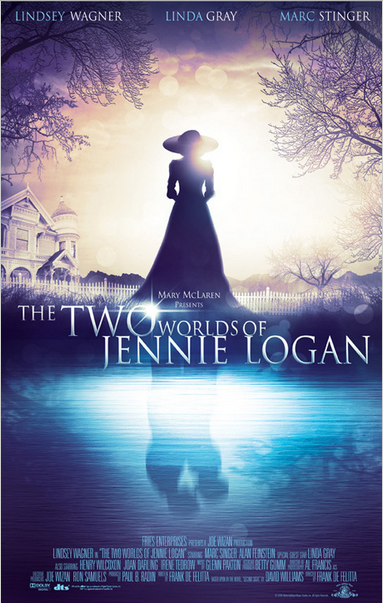
Another beautiful time-travel love story is The Two Worlds of Jennie Logan, a 1979 made-for-television movie based on the much-loved classic novel Second Sight by David Williams.
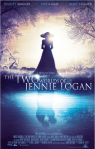
The Two Worlds of Jennie LoganAfter trying on a dress found in the attic of an old Victorian house her husband purchased to try to save their marriage, Jennie Logan accidentally travels into the past. After several visits there she discovers true love. Returning to the present she investigates who he was and how he may have been killed. She travels between both worlds in an attempt to save her lover’s life and alter history. Find out more at IMDb and the Amazon book description and comments. Watch it on YouTube, if it’s still there. Also found a slightly shorter video of it. The picture quality is better.
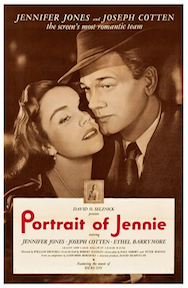
Portrait of Jennie

Portrait of Jennie (1948) is also a magical little film worth watching. A mysterious girl inspires a struggling artist. Eben Adams is a talented but struggling artist in Depression era New York who has never been able to find inspiration for a painting. One day, after he finally finds someone to buy a painting from him, a pretty but odd young girl named Jennie Appleton appears and strikes up an unusual friendship with Eben. See it on YouTube.
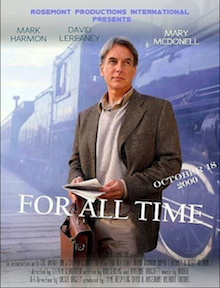
For All Time

For All Time (2000) is another recommended time travel film. A man facing middle-age and a failing marriage finds a time slip that can take him back to the end of the 18th Century. It may still be on YouTube. The film was based on The Twilight Zone episode, “A Stop at Willoughby” written by Rod Serling. Willoughby is the same location for The Love Letter, mentioned below. 

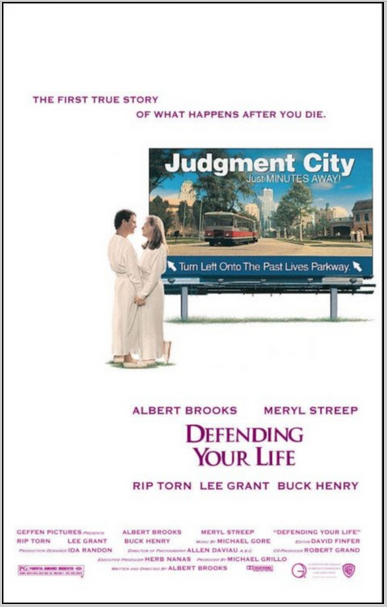
Defending Your LifeOn a lighter note, Albert Brooks wrote, directed and starred, with Meryl Streep, in Defending Your Life (1991), “the first true story of what happens after you die.” The dead are sent to Judgement City, a vacation-style place for the afterlife where representatives using large amounts of their brain potential help you defend your life in front of a court. The opposition also reviews aspects of your life where you showed fear instead of courage, the intent being to learn from past experiences.

Shirley MacLaine has a cameo role inviting people to the Pavilion of Past Lives, which is quite funny. There is also a love interest between the main characters who meet while their lives are undergoing review before they will be sent onto their different destinations. The question is, will he overcome his fears and sacrifice everything to be with this wonderful woman? Rent or buy the film on Prime Video to find out. I later found it on YouTube to make it easier for you. 

Blending heaven and earth, the divine and the mortal, the idyllic past with the unfulfilled present, or unresolved issues exposed in the afterlife, each film provides a different perspective on the sacrifice the main character makes for love, giving up one to gain the other. The ways of karma are unfathomable, but true love is eternal, and transformational!

LEAVING ROMANCE BEHIND TO FIND ONESELF

There was one movie that made a big impression on me when I saw it on television as a teenager. It’s about love, but more the story of one man’s quest for self-realization in a confused and materialistic world.
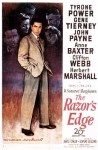
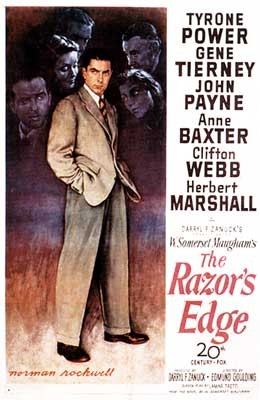
Razors_Edge (1946)The Razor’s Edge tells Larry Darrell’s story and his search for meaning after a comrade dies saving his life on the last day of World War One. Larry leaves love behind to find himself. He rejects the conventional life in search of a more transcendent experience, which takes him to India where he meets a guru. His search for enlightenment fulfilled, he may not have to reincarnate if he can walk the razor’s edge, live in the world and not be overtaken by it, anchored to his Self.

Larry returns to find his friends who are suffering due to a reversal of fortune brought about by the Great Depression. He shares what he’s learned to help them. Read more of the story on Wikipedia. I saw the original 1946 version starring Tyrone Power, based on the book by W. Somerset Maugham, which I later read. I found an audio version of the book (BBC Saturday Night Theatre), and the film on YouTube.
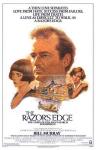
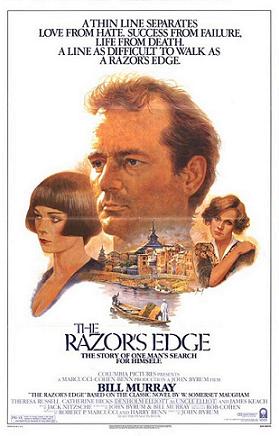
Razors_Edge (1984)It was remade in 1984 with Bill Murray in his first dramatic role. Murray also co-wrote the screenplay with director John Byrum. Visit Wikipedia for a full summary. Byrum couldn’t find a studio to finance it. Dan Aykroyd suggested Murray could appear in Ghostbusters for Columbia Pictures in exchange for the studio funding The Razor’s Edge. Murray agreed and a deal was made. Though the film lost money, Ghostbusters went on to make millions. 

It’s on YouTube with ads. The 1946 and 1984 versions of The Razor’s Edge are available for rent or purchase on Amazon Prime. Both are worth watching for their own values, but I prefer the earlier one. You can see the essence of the original film in Darrell’s search and achievement of his peak experience high in the Himalayas. 

This poem by William Stafford—The Way It Is—perfectly describes the kind of perspective Larry Darrell developed and how he lived his life.

I was asked to read and write a review for this book: Alan J. Steinberg’s debut novel reminds me of the age-old quest ‘To Be Enlightened’ I first read about in Somerset Maugham’s ‘The Razor’s Edge’.

PERSONAL NOTE

Larry Darrell’s quest spoke to me as a young person and unknowingly foreshadowed the direction my life would take during my college years and beyond when I would discover Maharishi Mahesh Yogi and his Transcendental Meditation technique. Our generation was so fortunate to have received the many gifts Maharishi brought out from the Himalayas. He inspired us to develop our full potential as human beings with TM and its advanced techniques, and to work with him to help make this world a better place to live in by applying his life-transforming Vedic knowledge and technologies in health, education, rehabilitation, virtually all areas of life. We are forever grateful. JGD

To find out more about Maharishi, see this HuffPost article by Philip Goldberg on Maharishi. Also watch the 1968 film of Maharishi at Lake Louise and the 2007 A&E biopic on the International History Channel.

UPDATE

I just discovered The Love Letter (1998), a Hallmark  Hall of Fame movie, starring Campbell Scott and Jennifer Jason Leigh. It’s based on a short story of the same name by Jack Finney that was first published in “The Saturday Evening Post” on August 1, 1959 and reprinted in the same magazine on January/February 1988. James S. Henerson wrote the made-for-TV screenplay and produced it.
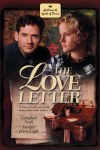
imageThis love story touches two lives that live a century apart. A letter from the past will change their future forever as these souls cross lifetimes for love! Scott, a 20th century computer games designer, exchanges love letters with Elizabeth Whitcomb, a 19th century poet, through an antique desk that can make letters travel through time. We witness parallel lives interact as they fall deeply in love with each other, weaving past, present, and future in a moving, magical way.

There are differences between the movie and the short story. For one thing, Elizabeth Whitcomb’s poetry, somewhat important in the movie, is entirely absent in the short story. It adds so much more to the film. You could read more about it on Wikipedia. If you can’t find this excellent made-for-television movie, Cinematic Journeys Recapped posted an 18-minute review: A Love Story Across Time: He Found Her Letters, She Waited 100 Years for His Reply | Tragic Romance.

Interestingly, Ms. Whitcomb also lives in a town called Willoughby, the same name for Rod Sterling’s Twilight Zone story, which became the basis for the film, For All Time, mentioned above.

Inspired by a question, I saw the film again and transcribed the beautiful poem voiced over by Elizabeth Whitcomb towards the end of the film and posted it in a comment below. It succinctly sums up the essence of the film in 8 short lines.

Of course, when it comes to love being tested by time, The Time Traveler’s Wife (2009) is one worth watching. Rachel McAdams stars as the wife, whose husband keeps disappearing on her at different stages of her life. About Time (2013), is another film about time travel, and how a father teaches his son, who has the same ability, how to improve situations with time travel when he messes up trying to win the heart of a pretty woman, also played by Rachel McAdams. She also stars in The Vow (2012), as a woman who wakes up after a car accident with severe memory loss and forgets that she’s married to her husband. He has to work hard to woo and marry her all over again.

It reminds me of the 1993 blockbuster Groundhog Day starring Bill Murray. Here’s a sort of related cartoon in The New Yorker by Roz Chast.
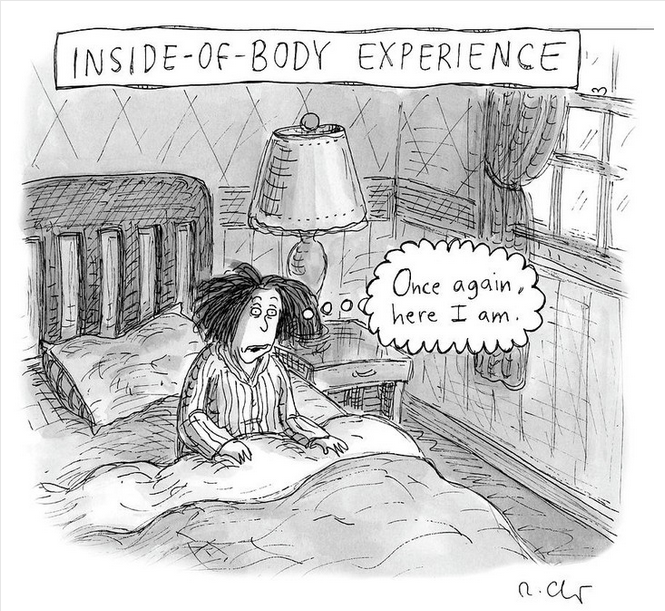
Inside-Of-Body-Experience by Roz Chast TNYcartoons

The film Arrival asks: If you could see your whole life from start to finish, would you change things?

When it comes to a war between words and pictures here’s a poem in a movie inviting you to be who you are.

Newer Updates

‘How Long Will I Love You’ sung by Ellie Goulding highlights 4 Romantic Comedies by Richard Curtis, which includes About Time, starring Rachel McAdams.

Speaking of time travel, romance, and Rachel McAdams, she starred in the 2009 film, The Time Traveler’s Wife, directed by Robert Schwentke, where a Chicago librarian has a gene that causes him to involuntarily time travel, creating complications in his marriage.

The Time Traveler’s Wife was made into a 6-part HBO series in 2022, based on the 2003 novel by Audrey Niffenegger, and starred Rose Leslie as Clare. Developed and written by Steven Moffat, the TV series was cancelled after one season.

The spring rains renew life and the promise of love in this film, A Good Rain Knows, inspired by the poetry of Du Fu.

Writing, literature, life and love intersect in The Guernsey Literary and Potato Peel Pie Society.

Sage advice from William Shakespeare in the film “All Is True” on how to become a truthful writer.

Christopher sings ‘A Beautiful Life’ for this Netflix film—a song about life, loss, becoming, and love.

— Written and compiled (citing sources) by Ken Chawkin for The Uncarved Blog.

Listen to Canadian harpist Kristan Toczko perform Claude Debussy’s Clair de Lune. Just beautiful!

February 12, 2015

Time now for a peaceful musical interlude. Listen to Canadian harpist, Kristan Toczko, play Claude Debussy’s romantic composition, Clair de Lune. It was recorded live on May 12, 2014 at the Church of the Holy Trinity in Toronto, ON, Canada, and later published on her YouTube channel, Kristan Toczko, August 5, 2014. This short classical piece, and her interpretation of it, are just beautiful!! Like a powerful haiku, it leaves you with a deeply peaceful feeling. 

I later discovered a Digital Album Kristan Toczko posted on bandcamp, Dec 7, 2022: The Classics: Popular Classical Works for Solo Harp. Earlier on Oct 11, 2022, she also posted a video of her playing a Harp Cover of Beethoven: Moonlight Sonata, 1st Movement on her YouTube channel. It is also included on her Classics digital album, for Streaming + Download.

I also found this beautiful performance of Claude Debussy “Clair de lune” by Angela Hewitt in a live concert for the Royal Conservatory of Music at Toronto’s Koerner Hall recorded for CBC Music.

This rendition of Claude Debussy – Suite Bergamasque – Clair de Lune by the famous French-American pianist François-Joël Thiollier is sublime! I also found it as Clair de Lune (Moonlight) showing the album cover.

Apparently, Clair de Lune, was a French poem written by Paul Verlaine in 1869, and became the inspiration for the third and most famous movement of Debussy’s 1890 Suite Bergamasque of the same name.

On January 4, 2018, CBC Music, Classical Genre, posted 10 surprisingly good covers of Debussy’s ‘Clair de lune’. Robert Rowat says: “Expect to see lots of tributes to Claude Debussy in 2018, the year that marks the 100th anniversary of his death.” Videos of the 10 performances are by Theremin and piano, Electric guitar, Jazz saxophone, Accordion, Men’s choir and piano, Bassoon sextet, Brass quintet, Clarinet quartet, Organ, and Orchestra. Rowat concludes by reminding us how awesome Debussy’s original is with a video of the Angela Hewitt performance listed above. Explore more with Top 10 piano works by Claude Debussy.

Debussy’s Clair de Lune, arranged for guitar by James Edwards, is beautifully interpreted by Roxane Elfasci, Oct 3, 2016, Paris.

Lang Lang wowed tourists in the ‘City of Love’ on Valentine’s Day 2019 as he gave a unique album launch concert in Paris on a boat cruising along the Seine, performing pieces from his new album, Piano Book, such as the French classic ‘Clair de lune’ by Claude Debussy. Enjoy Lang Lang – Debussy: Suite bergamasque, L.75 3.Clair de lune

You can actually hear Debussy playing Clair de Lune (1913), recorded on a piano roll, Claude Debussy plays Debussy. It is included in the Complete recordings made by Claude Debussy: The Composer as Pianist. Compilation from all Debussy recordings available “Claude Debussy Plays His Finest Works” (1904-1913).

New (Nov 14, 2022): Listen to Serbian harpist Nadja Dornik perform her transcription of Chopin’s Fantaisie-Impromptu Op.66. Also beautiful!

Later added (March 18, 2023): Harpist Nadja Dornik beautifully performs Claude Debussy’s romantic composition Clair de Lune

Norman McLaren’s 1968 NFB film ‘Pas de deux’ creates a spellbinding aesthetic experience

New (Nov 8, 2023): Canadian Harpist Kristan Toczko plays Walking in the Air from the animated film The Snowman

Author Philip Goldberg Remembers January 12 as A Double Guru Birthday Fest on HUFFPOST TASTE

February 3, 2015

Philip Goldberg, HUFFPOST Blogger, Interfaith Minister, and author of ‘American Veda: How Indian Spirituality Changed the West‘ remembers January 12: A Double Guru Birthday Fest

MMY-HUFFPOST

Maharishi Mahesh Yogi

January 12 is celebrated throughout India, and in countries with large Hindu populations, as the birthday of Swami Vivekananda. A national hero, Vivekananda is revered for updating the wisdom of India’s ancient sages and bringing those teachings to the West, in 1893. By coincidence – or astrological design, take your pick – another vital figure in that East-West transmission was also born on that date, and he too deserves to be celebrated.

The man who became known as Maharishi Mahesh Yogi was born Mahesh Prasad Varma, on January 12, 1917, or perhaps 1918, in Central India. While attending Allahabad University, he heard that a famous saint named Swami Brahmananda Saraswati was in the area, and he went to him “as a thirsty man at a well.” Mahesh asked to become the swami’s disciple. The reply was the same one many future gurus received when they were eager young seekers: first finish school. After graduating with a degree in physics, he was formally accepted as a disciple. By then, the swami had been persuaded to accept the much-esteemed, and long-vacant, seat of Shankaracharya of Jyotir Math–one of four monastic lineages established centuries earlier by the great reformer Shankara. The Shankaracharya would become a legend, and so would the humble disciple who served him primarily as a clerk for thirteen years.

After his guru died, in 1953, Mahesh spent a few years in the Himalayas before traveling to the sacred sites of South India. In Trivandrum, a stranger asked him to give a public talk. He was evidently good at it. Before long, he found himself on what we now call a speaking tour. At a festival in Kerala in 1955, people were impressed enough to call him a “Maharishi”–maha meaning great, rishi meaning sage–and the appellation stuck. When he became world famous a dozen years later, the naïve press treated “Maharishi” as his name, and that’s what he’s been called ever since.

That global fame, as most people know, resulted from his historic encounter with the biggest celebrities of the postwar era. In August, 1967, at the suggestion of George Harrison’s then-wife Patti, the Beatles went to hear Maharishi speak about his Transcendental Meditation at the London Hilton. They became instant enthusiasts and, six months later, went to India for an extended stay at Maharishi’s ashram. In the opening paragraph of American Veda, I refer to that as “the most momentous spiritual retreat since Jesus spent those forty days in the wilderness.” It was as if the earth itself had tilted, allowing the insights of India’s yogis to pour into the West at an accelerated pace.

It was easy at the time for reporters to write off “the Beatles’ guru” as a lucky guy who got rich and famous off the lads’ monumental celebrity. It was easy to label him “the giggling guru” because he had an infectious, high-pitched laugh and he found much of modern life rather amusing. It was easy to mock him as the face of guruhood at a time when yoga and meditation were seen as accessories of flower-power counterculture. All of which belies the fact that Maharishi was a very practical man who took his mission–to spiritually regenerate the world by expanding individual consciousness–very seriously, and he worked longer hours in its service than most CEOs could endure.

He had been planting seeds non-stop for a dozen years when the Beatles sought him out, repeatedly circling the globe and teaching his simple, powerful form of meditation to all comers, and he kept at it for another forty years after the Fab Four made Rishikesh a pilgrimage site for Western yogis. If history is fair, he will be recognized as one of the key figures in the transmission, adaptation and assimilation of Yogic teachings into the mainstream of American life.

Nowadays, everyone from ordinary physicians to giant HMOs recommends meditation to reduce stress and prevent illness. This, to put it mildly, was not the case in 1968. It was Maharishi who convinced scientists to study the practice, and he made sure his systematic TM procedures were compatible with research protocols. He understood that ours is an evidence-driven age, and that Americans would embrace something as exotic as meditation only if science demonstrated its value. The first paper on the physiology of meditation was published in 1970, by one of Maharishi’s students, a UCLA doctoral candidate named Robert Keith Wallace. The collective research juggernaut that followed ushered meditation from the fringes of society to the center, and directly into your armchair, cushion or yoga mat.

So, for whatever stars and planets were aligned on those two January 12s, we can be doubly thankful.

Published 01/09/2015 02:30 pm ET | Updated Mar 11, 2015

Check out bizHUMM for all things small business

January 24, 2015

New Free Business Resource Website to Help Small Companies Grow

I’d like to introduce you to a brand new business resource website — bizHUMM.com — for all things small business. A lot of care, thought, creativity, valuable knowledge, and pure fun went into producing this website. It was created and directed by my brother-in-law, Laurie Sluser, with help from the Integrated Internet Marketing team at Galaxy Ninja.

I’ve known Laurie for a long time. We taught TM together in Montreal over 40 years ago and he married one of my sisters. So we’ve been together as a family for a long time. Laurie started this website with another longtime mutual friend, Ruby Finkelstein. We all live in Fairfield, Iowa. I asked Laurie about his new company, where the idea came from, and what he hopes to accomplish with it.

bizHUMM homepage

Click image to enlarge details.

Ken Chawkin: What exactly is bizHUMM?

Laurie Sluser: bizHUMM is a content rich website that offers excellent and practical resources for entrepreneurs, owners and managers to help them grow their small businesses. When you visit our site you will see that we are starting with useful written content and in the coming year we’ll be adding engaging video content, webinars and online training programs — all for small businesses.

KC: How did you come up with the idea?

LS: Well, I’ve worked in business most of my life. Most recently, for the past 16 years, I ran a national software engineering staffing company. I have had the joy of working with smart people, close friends and family and we all wore many hats. And one experience repeated itself over and over again. A problem would arise and we wanted a solution now. Google is great but the searches for our needs were often unsatisfactory. It was obvious that there was a gap in the market.

When I went out on my own last summer I got together with Ruby, a lifelong friend of mine, and we were determined to come up with a solution to this market need. There should be one site with practical answers and useful information for every phase and type of small business — software companies and florists, restaurants and online businesses, consultants and manufacturers. You get the idea — one site that helps all types of small businesses to grow. And from that inspiration bizHUMM emerged.

KC: I see you are in Beta (test) mode now. When do you officially launch, and does it cost anything to join?

LS: It’s taken us the better part of one year but we are finally there and ready to launch our small business resource website. We just launched our Beta version for about a 5-week period and are limiting ourselves to 1000 founding members. It’s free and very easy to sign up. Please go to http://bizhumm.com and set up your own account. It would mean a great deal to me for you to join our Beta group. Kindly share bizHUMM.com with your friends who you think would benefit, and we really look forward to any feedback you may have. Thanks so much, I appreciate your support!

KC: How did you come up with the name, bizHUMM? And who or what is Hummy?

bizHUMM beta logo

LS: Ruby asked me what I wanted to call the business, and the name just burst out of me. It just came right out of the clear blue. Biz, because it had something to do with small business, and humm just came before I could even think about it. So I thought bizHUMM. As soon as I said it, Ruby loved it. He asked me, “How do you spell it?” I answered, “b-i-z-h-u-m-m.” He said, “Shouldn’t it be one m?” And I replied, “No, it’s got to be two m’s.” The whole thing happened in two minutes without thinking. We were laughing, we knew we had a name people would relate to. When I mention it to friends, they love the name.

KC: Why do you spell it the way you do?

LS: It’s for small businesses wanting to create a big HUMM. 🙂

HUMM of the DAYAs for Hummy, we wanted a smart, lovable spokesperson with a name that played off of bizHUMM. We came up with the name Henry Hummingbird, or Hummy for short. He’s a tiny hummingbird with big dreams. You can read more about Hummy on his bio page.

KC: I notice your website has a HUMM of the day. What is that?

LS: The featured post of the day or Humm of the Day is found at the top of the home page each day. But there is a good deal of useful content in every area of business activity.

KC: What can anyone running their own business, or working in one, gain from your website?

LS: We have a free content website that organizes its posts into 5 main categories of Startups, Sales, Marketing, Technology and Finance. These 5 areas are then broken down into almost 50 subcategories such as Sales Training, SEO, Finance Software and so on. The idea is to have one resource that can introduce you to practical content in any area your small business may need to promote its growth.

KC: How can people get more out of your website? Are there any added fees for these services?

LS: The site is and will always be free. Later this year, we will introduce a Premium membership program. However, we will be adding free webinars and video content for our regular members as well.

KC: Thank you for your time. I wish you a lot of success with this new venture, and success to those fortunate enough to take advantage of your generous time and energy.

LS: Thanks Ken. I appreciate you sharing this. Here’s wishing success to all your readers.

Editor’s note: GETTING STARTED: Discover the 12 most popular bizHUMM features: http://bizhumm.com/getting-started.

NEW: Download a PDF of their free ebook: How To Start A Business: The Ultimate Free Guide.

Related news: Business startup expert @AsherFergusson featured among @MaharishU successful alumni.

See this new TMhome.com INTERVIEW: Laurie Sluser on business success, happiness & meditation.

Greg Reitman’s film, ROOTED in PEACE, inspires us to change from within to transform the world

January 22, 2015

Rooted in Peace PosterThis Saturday, January 24, 2015, PublicVine will host a private screening of Sundance award-winning director/producer Greg Reitman’s latest film, ROOTED in PEACE. The event will be held at the I-Heart Radio Lounge located in the heart of Sundance on Main Street in Park City, Utah. The film will be presented using PublicVine’s innovative social media platform. There will be a live question and answer after the screening with filmmaker Greg Reitman, PublicVine CEO Nam Mokwunye, and writer/producer Scott Zarakin, followed by an after party for all in attendance.

Greg Reitman says one of the most important issues for filmmakers wanting to get their films out into the marketplace is being able “to reach the widest available audience while retaining as much financial control as possible.” He feels PublicVine’s platform will provide “a perfect balance for releasing our new film, ROOTED in PEACE.” And when it comes to reaching consumers for digital transactions on a world-wide level Reitman adds, “PublicVine’s platform is going to be a game-changer for filmmakers.”

PublicVine CEO Nam Mokwunye points out that Reitman’s screening of ROOTED in PEACE “from his channel on PublicVine could be a first in film history.” He says it will only “give us a glimpse of what is possible with PublicVine and what opportunities lie ahead.”

Read the press release to find out more details about this innovative social video marketplace and how it can benefit filmmakers.

About ROOTED in PEACE

Greg_ReitmanROOTED in PEACE challenges viewers to examine their values as Americans and human beings. Today we are at war within ourselves, with our environment, and with the world. Director and award-winning filmmaker Greg Reitman invites viewers on a film journey to take notice of the world we live in, proactively seek ways to find personal and ecological peace, and stop the cycle of violence.

The film relies not only on memoir, but also interviews with such luminaries and activists as Deepak Chopra, music legends Donovan, Mike Love, and Pete Seeger, film director David Lynch, Noble Peace Laureate Mairead Maguire, media mogul Ted Turner, Archbishop Desmond Tutu, green architect William McDonough, physician and best-selling author Mark Hyman, neuroscientists Dan Siegel and Fred Travis, sustainability and nutritional experts, and many more.

Reitman learns from all of them, and heeds Maharishi Mahesh Yogi’s words, that if the forest is to be green, every tree must be green; if there’s going to be Peace on earth, then everybody needs to experience that quality of Peace within themselves. And so in asking viewers to do the same, Reitman poses the basic question: How do we want to live?

Reitman’s journey is an example of transformation — how one person can learn to make the necessary changes to enjoy a better life — and in so doing inspire others to want to improve their own lives, and society as a whole.

About Greg Reitman

Greg Reitman is the founder of Blue Water Entertainment, Inc., an independent production company focusing on environmentally conscious entertainment. Widely regarded as Hollywood’s “Green Producer,” Greg produced the 2008 SUNDANCE Audience Award-winning feature documentary “FUEL.” He wrote, produced, and directed the feature documentary “HOLLYWOOD’S MAGICAL ISLAND-CATALINA” (PBS) and returns back on the festival circuit with his latest revolutionary feature documentary film, “ROOTED in PEACE.” He’s currently in development on the motion picture film: “The Roni Levi Story.”

Recently, Mantra Magazine asked Greg Reitman about the Importance of Meditation, how Transcendental Meditation played a role in his life, and why it is important to him as a filmmaker.

FILM UPDATE

ROOTED in PEACE premiered at the 21st Annual Sedona International Film Festival, February 21–March 1, 2015. It was one of five films selected and reviewed for Broadway World by Hebert Paine. See BWW Reviews: ROOTED IN PEACE Meets The Aquarian Conspiracy. An interesting and intelligent review, Paine really understood Greg’s intention in making the movie. He did him and the film justice.

On March 25, 2015, the film was spotlighted in the 22nd Annual Massachusetts Multicultural Film Festival at UMass Amherst, Greg’s alma mater.

ROOTED in PEACE will have its Iowa premiere at the Sondheim Theater for the Performing Arts in Fairfield, Iowa, August 2nd. Get tickets here. Related news: ROOTED in PEACE to play Martha’s Vineyard and an Iowa premiere at Fairfield’s Sondheim Center.