Archive for the ‘Articles’ Category

Breath and fire in the heart feed each other as essential creative forces in Erica Jong’s poetry

April 11, 2020

I’ll admit my ignorance here. All I remember of Erica Jong was her early 70’s infamous best-selling novel, Fear of Flying. I had no idea that she had become such a prolific award-winning writer. Besides being a famous author, she is also a fine poet. She says, “The poetry is the source of absolutely everything I do.” I discovered some of her impressive poems looking inside Becoming Light: New and Selected Poems, and on poetry websites PoemHunter and Poeticous.

Filled with life and passion, Jong uses breath, air, wind, “prana whistling in the dark;” and fire, “a flame in the heart,” “a living lantern,” as imaginary ways to describe the creative forces within the heart of a poet. They are beautifully expressed in these 3 poems: Alphabet Poem: To the Letter I, Poem to Kabir, and Zen & the Art of Poetry. There may be other poems with these motifs I have yet to discover, but these caught my attention for their shared imagery and theme of being a poet, a writer.

Alphabet Poem: To the Letter I (12th/last stanza, 3rd poem in Becoming Light) 

We are all one poet 
and always 
we have one 
communal name, 
god's name, nameless, 
a flame in the heart, 
a breath, 
a gust of air, 
prana whistling in the dark. 
i dies— 
but the breath 
lingers on 
through the medium 
of the magic 
alphabet 
and in its wake 
death is no more 
than metaphor. 

Poem to Kabir   

Kabir says 
the breath inside the breath 
is God   

& I say to Kabir 
you are the breath inside that breath 
which is not to say 
that the poet is God–   

but only that God 
uses the poet 
as the wind 
uses 
a sail.

Zen & the Art of Poetry
 
Letting the mind go,
letting the pen, the breath,
the movement of images in & out
of the mouth
go calm, go rhythmic
as the rise & fall of waves,
as one sits in the lotus position
over the world,
holding the pen so lightly
that it scarcely stains the page,
holding the breath
in the glowing cage of the ribs,
until the heart
is only a living lantern
fueled by breath,
& the pen writes
what the heart wills
& the whole world goes out,
goes black,
but for the hard, clear stars
below.

In the last section of What You Need to Be a Writer, Jong comes clean, listing her fears, then describes what it really takes to be a writer — having something to say so intensely, that it “burns like a coal in your gut…pounds like a pump in your groin,” and concludes with having “the courage to love like a wound that never heals.” Ah, the human condition.

& then there’s all 
I did not 
say:   

to be
a writer
what you need
is
 
something
to say:
 
something
that burns
like a hot coal
in your gut
 
something
that pounds
like a pump
in your groin
 
& the courage
to love
like a wound
 
that never
heals.

In a Mother’s Day Playboy interview last year, the first question daughter and writer Molly Jong-Fast asks her mother is how she knows things, especially what’s happening to women in the socio-political arena. Jong answers: “I think a writer is someone who lives like a wound that never heals. And if you’re a writer, you feel the rumblings in the air.” It’s interesting how she uses the same metaphor for a writer to love or live like “a wound that never heals.” How she’s been bravely living her life.

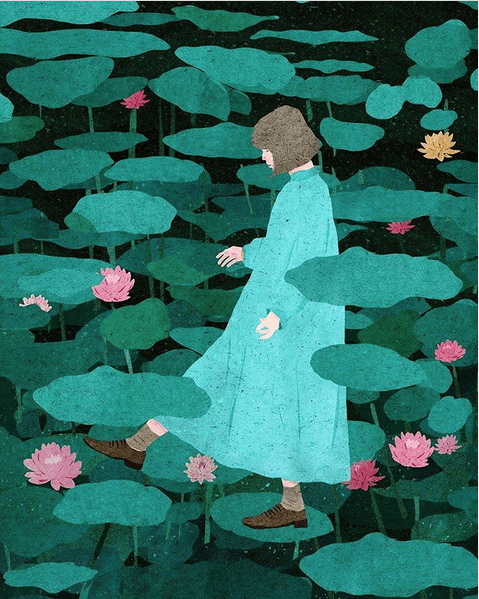
I found this beautiful ethereal painting online, Walking Lily, by Vietnamese artist Xuan Loc Xuan

April 1, 2020

I found a beautiful painting on Colossal by Vietnamese freelance illustrator Xuan Loc Xuan. Titled, Walking Lily, it is also posted on her Instagram page. Her work is available at Toi Art Gallery.

“Life creates art while art changes life.” – Xuan Loc Xuan

Xuân Lộc Xuân was born in Vietnam. Her name means “Spring.” She lives and works in Ho Chi Minh City, Vietnam. Xuan Loc Xuan studied Fine Arts at HCM University, the biggest art school in the south of Vietnam. She’s been working as a freelance illustrator for several years. She uses traditional and digital tools to draw. Her designs tend to be minimalistic and the use of color is a main factor in her artworks. For her, “life creates art while art changes life.”

Independent journalist & editor of The Floating Magazine/TFM Studio, Payal Khandelwal interviewed Xuan via email. She introduces her: Xuan Loc Xuan dresses up melancholy in vibrant colors in most of her artworks, and the results are breathtaking. Having grown up as an introvert child in a large family, Xuan always felt an inherent sense of loneliness and sadness. And the essence of those feelings drips down into most of her work. Her subjects are always shying away from the audience. They are either glancing sideways or have their back to the world, and are always lost in their own thoughts. Most of Xuan’s work also has a very ethereal feel to it. Read the interview: People: Xuan Loc Xuan.

This is a magical, mystical image. I love the various shades of green in the picture, their textures, especially the girl’s dress, the different colored flowers. She appears contemplative, in her own world. This work holds an otherworldly, timeless silence. I found a companion piece, Water Lily, of a boy sleeping among the same water lilies, or lotuses.

Lily could be the girl’s name and/or the lilies, but these are lotuses. Their larger pads and flowers rise high above the water, whereas most water lilies, pads and flowers, float on the water, with some flowers rising a few inches above it. Maybe the word means the same for both in their language, but these are different species.

I learned that distinction over three decades ago in the fall, when a friend and I encountered many tall, large lotus pads and pods at the second Round Prairie Park pond in Fairfield, Iowa. There had been a drought that summer, and many stood high above the lowered water level. She began sketching them, and I attempted to write about the process in a poem as an observer. After several attempts, I gave up, switched perspectives, and surprisingly, the poem wrote itself; we had become the observed! You can read the poem and more about what happened afterwards in Ode to the Artist Sketching Lotus Pads at Round Prairie Park.

I submitted the poem to a poetry competition at Sparrowgrass Poetry Forum and forgot about it. Much to my surprise, on a very special day, I found out by Registered Mail that I had won their Distinguished Poet Award, which included a $100 check! They mailed the plaque separately, published the poem, and sent me a copy of Treasured Poems of America, their anthology, which contained my award-winning poem.

The editor requested a follow-up poem. The only thing I could write about was that mysterious, creative interaction that took place between us and the lotuses. He published Sometimes Poetry Happens in their next issue. Those experiences gave me the confidence to keep writing, and a flood of poems continued to flow from me, for which I was very thankful.

I like Walking Lily so much I ordered a large print of it to hang in my entrance way on the wall above the small antique green cabinet. I was given a 20% discount on my first order and free shipping, a nice surprise!

Another beautiful artwork is of a stunning sunrise or sunset in “A Fjord” painted by Norwegian artist Adelsteen Normann.

Xuan Loc Xuan later posted a new painting on her Instagram called Ocean Blue. It would make for a nice companion piece to Walking Lily. Both girls appear in magical realms where nature and imagination live together in one seamless reality. I love it!

@ParadeMagazine asks @meditationbob what makes #TranscendentalMeditation so special

February 22, 2020

This is one of the most informative articles on Transcendental Meditation I’ve read. Nicole Pajer put it together for the February 19, 2020 issue of Parade. I asked Bob Roth about it and he said, “The reporter sent me a bunch of questions and I answered them, thinking she would lift parts of the answers for an article… instead they printed the whole thing!”

What Is Transcendental Meditation, the Practice Beloved by Celebs—and What Makes It So Special?

If you’ve done any research into the meditation, you’ve likely heard of Transcendental Meditation. Just about every celebrity seems to be practicing it these days. Popularized by The Beatles (who originally learned in 1967), it’s now a favorite of Katy Perry, Hugh Jackman, Sheryl Crow and Liv Tyler. After discovering it herself, Oprah even paid for her 400 employees to become trained in the methodology!

But what exactly is TM and how does it differ from the other types of meditation out there? We caught up with Transcendental Meditation expert and CEO of the David Lynch Foundation, Bob Roth, who walked us through the ins and outs of this popular form of meditation.

What is Transcendental Meditation (TM)?

Transcendental Meditation (TM) is a mental technique that is practiced for 15 to 20 minutes twice a day, sitting comfortably with the eyes closed. During the technique, the mind and body settle down to a unique state of “restful alertness” where the whole physiology is deeply relaxed while the mind is quiet inside, yet wide awake. Hundreds of published studies show the technique is effective for reducing stress, anxiety, insomnia, depression and at the same time, improving health, focus and performance. TM does not involve religion, philosophy or a change in lifestyle. It has been learned by 10 million people.

How does TM differ from other forms of meditation?

The ocean is a great analogy for understanding different approaches to meditation. Just as the ocean can be turbulent on the surface with innumerable waves and quiet at its depth, so, too, the mind is active on the surface with innumerable thoughts but it is also naturally, profoundly quiet deep within. Other forms of meditation work to bring calm to the mind by stopping or observing thoughts—or visualizing new thoughts. This is like trying to create calm in the ocean by stopping the surface waves. On the other hand, Transcendental Meditation doesn’t mind the surface thoughts, it provides access to deeper levels of the mind, which are already calm and peaceful. For this, TM does not require concentration or control of thoughts, nor does it involve visualization or any type of guided practice.

It requires one-on-one instruction to master.

Unlike other forms of meditation that can be learned from a book or tape, TM is always taught in personal, one-to-one instruction by a certified instructor. That is because the ability to “transcend,” to settle down and access a field of silence that lies deep within the mind, while completely natural, is also a special skill that everyone learns at his or her own unique pace. For this, a teacher is incredibly helpful. The TM teacher instructs you in the skill of how to turn the attention of your mind, which is usually directed outward to the world around us, inward and to experience the deepest, most settled level of the mind where you are peaceful and quiet inside, yet wide awake and alert. For this your teacher will give you a mantra and then teach you how to use the mantra properly.

Transcendental Meditation is taught over four consecutive days, about 60 to 90 minutes each day. During the first session, your teacher will give you a mantra and then teach you how to use it properly. During the following three sessions over consecutive days, you learn addition information to stabilize the correct practice of the technique as well as learn about how the body reduces stress, improves health, and enhances brain functioning as you continue to meditate twice a day over the ensuing weeks, months, and years. Visit TM.org to find a certified TM teacher who offers a course in your area.

The technique is learned from a certified instructor, not from a video or book. That said, there are several videos you can watch that will help answer your questions about the technique and help you decide if you would like to learn:

(1) Transcendental Meditation: A Complete Introduction with Bob Roth

(2) An introduction to Transcendental Meditation by Dr. John Hagelin

There are also books that will give you more of a background on this type of meditation: Strength in Stillness: The Power of Transcendental Meditation by Bob Roth and Super Mind: How to Boost Performance and Live and Richer, Happier Life through Transcendental Meditation by Norman Rosenthal, MD.

Your practice will center around your own personal mantra.

The mantras in TM come from an ancient meditation tradition that is over 5,000 years old. A mantra is a specific word or thought that (1) has no meaning associated with it—because if there was a meaning then the mind would be stuck on the surface trying to it out and (2) the mantra is a soothing sound whose effects are known to be positive and life-supporting. When you learn TM, your teacher will give you a mantra and then equally importantly, will teach you how to use the mantra properly, which means effortlessly, without any concentration or control of the mind.

It’s best performed for 15 to 20 minutes, twice a day.

Once in the morning, before the day begins to give you the energy, resilience, and focus to enjoy the day with less stress and fatigue, and again, in the late afternoon or early evening, to wash off the stress of the day so that you can truly enjoy the evening with family and friends and sleep better at night.

How much does Transcendental Meditation cost?

The initial TM course is four sessions, and a one-time fee—based on income and ranging from $380-$960—is charged to cover the teacher’s salary. There is an option to split these payments over four months, and those who receive federal assistance such as SNAP may be eligible for a partial grant to help cover the fee. After these four sessions there is a lifetime of free follow up offered through any of the more than 200 teaching centers in the U.S. and any of the thousands of teaching centers worldwide.

What is a typical TM session like?

You sit comfortably with your eyes closed and you think the mantra in the easy, effortless way that your teacher has instructed you. There is no need for electronic apps or guided imagery. It is a natural process that is equally natural to practice. No tools, no apps, no videos. Just a comfortable place to sit and close your eyes for 20 minutes is all you need to participate.

Who can learn Transcendental Meditation?

Anyone from the age of 10 years and older can learn TM. Children ages 4-10 can learn a technique that is more appropriate for a youngster. TM is ideal for anyone: skeptic or advocate, experienced with other practices or novice. It is ideal for anyone who has had difficulty with techniques in the past that advocate stopping thoughts, clearing the mind of thoughts, or any form of concentration on the breath, sound, or areas of the body.

Is there anyone who shouldn’t do TM?

TM can be learned by anyone and can benefit everyone. That said, if a person is suffering from PTSD or another form of extreme trauma and is under the care of a physician or therapist it is important to continue those treatments along with the addition of TM practice.

What are the health benefits of Transcendental Meditation?

Research shows that TM is highly effective for giving the body deep rest and reducing stress, fatigue and trauma. At the same time, research also shows that TM can have a positive impact on the 80 to 90 percent of the diseases and disorders that are either caused by stress or exacerbated by stress, which includes reductions in high blood pressure, anxiety, depression, and insomnia, along with improvements in focus, creativity, problems-solving, and overall physical and mental health.

###

Related: Other Parade articles posted on this blog: ‘Dear Prudence’ Bruns in Parade discusses world peace, the ’60s, and why kids love the Beatles and What Transcendental Meditation does for Ringo. Parade also covered Lady Gaga’s appearance on Oprah Winfrey’s 2020 Vision: Your Life in Focus tour. She shared her history of trauma and the pain she’s been dealing with, what she’s doing for it, and how TM has been helping her in a big way. They discovered they had both learned TM from Bob Roth. You can see that part of the interview here.

Bob Roth recently appeared on a Frontiers podcast (S2:E4) by The Upside. In this episode Bob shared his journey to bring Transcendental Meditation to the Frontiers of medicine, education and the workplace. You can also listen to it on Apple Podcasts.
Guest: William T. Hathaway reviews The Supreme Awakening, written & compiled by Craig Pearson

February 16, 2020

Author William Hathaway is a frequent guest blogger. His review of The Supreme Awakening appears in 12 online magazines so far, including Conscious Life News. See previous articles by William Hathaway and Craig Pearson posted here on The Uncarved Blog.

The Supreme Awakening

Reviewed by William T. Hathaway

The Supreme Awakening: Experiences of Enlightenment Throughout Time — And How You Can Cultivate Them is the ultimate guide to higher states of consciousness. This latest book from Craig Pearson presents inspiring experiences from mystics and saints, then shows us how we ourselves can live these states permanently in enlightenment.

A sampling from the anthology:

Social reformer and poet Edward Carpenter (England, 1844-1929) describes the stages of transcendental consciousness: “There comes a time … when the … brain is stilled. It does not cease from its natural and joyful activities. But it ceases from that terrified and joyless quest which was inevitable to it as long as its own existence, its own foundation, its own affiliation to the everlasting Being was in question and in doubt. The Man at last lets Thoughts go: he glides past the feeling into the very identity itself, where a glorious all-consciousness leaves no room for separate self-thoughts or emotions. … [A]nd so there comes to him a sense of absolute repose, a consciousness of immense and universal power, such as completely transforms the world for him. … [y]ou come at length to a region of consciousness below or behind thought … a consciousness of quasi-universal quality, and a realization of an altogether vaster self than that to which we are accustomed. … To experience all this with any degree of fullness, is to know that you have passed through Death: because whatever destruction physical death may bring to your local senses and faculties, you know that it will not affect that deeper Self.”

Author Irina Starr (USA, 1911-2002) writes of her experience of unity: “[I]n some peculiar way my consciousness seemed to have expanded until it was present in a general way, far beyond even this planet. I was aware of no specific details of anywhere beyond my immediate vicinity, but I was a vastness somehow, that in no way contradicted or conflicted with my limited individuality. Subject and object had become one — had fused, in some way. There was the objective world around me … but now … there was a vast ‘plus.’ I was both my individual self and in some greater way, ‘I’ was also everything. Not the personal I, but the greater I AM. There were no longer two, only one, I AM.”

Black Elk (USA, 1863-1950), the Sioux medicine man who helped defeat Custer and was injured in the Wounded Knee Massacre, says: “The first peace, which is the most important, is that which comes within the soul of men when they realize their relationship, their oneness with the universe and all its Powers, and when they realize that at the center of the universe dwells Wakan-Tanka [absolute Being], and that this center is really everywhere, it is within each of us. This is the real Peace, and the others are but reflections of this. The second peace is that which is made between two individuals, and the third is that which is made between two nations. But above all you should understand that there can never be peace between nations until there is first known that true peace which, as I have often said, is within the souls of men.”

Other luminaries in the anthology include Emily Dickinson, Wordsworth, Thoreau, Emerson, Rumi, Rita Carter, Goethe, Mary Austin, Meister Eckhart, Dante, Kabir, St. Teresa, Howard Thurman, Whitman, Rabbi Abraham Kook, Helen Keller, and Einstein.

Although these seekers were brilliant, most of them lacked a technique for systematically producing the experiences, which as a result were usually seldom and brief, glimpses of enlightenment treasured for a lifetime. Now, Pearson states, the Transcendental Meditation technique is enabling hundreds of thousands of ordinary people around the world to experience higher states of consciousness, not just occasionally but on a regular basis. Their descriptions match those of the mystics and saints. A sampling of similar reports from TM meditators:

“The experience of bliss consciousness has become more clear, intense, and stable not only during Transcendental Meditation but also during activity. Now I find that a soft but strong feeling of blissful evenness is present most of the time in both mind and body. Physically it is expressed as an extremely delightful liveliness throughout the body.

“This evenness is so deep and stable that it is able to maintain its status even in the face of great activity. Even  when faced with great  problems, this blissful evenness of mind and body continues. Every day it grows stronger and more stable. This evenness cushions one against all possible disruptions and makes all activity easy and enjoyable. Every place is heaven when you feel that evenness. One is completely self-sufficient. Nothing can prevent one from having that fabulous inner mental and physical blissfulness.”

A report of unity consciousness: “Increasingly I experience everything and everyone as nothing other than my own Self. … It seems that Being … is shining and glistening and even smiling at me from the surface of everything. … It’s as if the inner Being, the Self of everything, somehow rises to the surface and makes itself apparent. … With this experience of my own Self in all things, love begins to flow — love without boundaries, without exceptions, without considerations of any sort. Love flows out towards all that I perceive and seems to flow back to me as well.”

A description of permanent enlightenment: ”’Relative life’ is still there, but it is eternally and completely cloaked in, saturated by, and imbued with this indescribable, attributeless softness of one’s own eternal Self. When that is the ultimate reality for you, life is just softer, more filled with those most fundamental qualities of creation: beauty, love, sweetness, and wholeness, in a perfectly integrated way — in their finest, most mist-like, indescribable value. It is lovely beyond words. … One begins to see that one is not the body at all, not the limited personality, but something beyond that — something eternal, unchanging, unbounded, removed from the fray of what we used to consider daily life. … Never before had it been so obvious that I have always been, that there is no end to me.”

Pearson presents scientific research showing Transcendental Meditation effectively and regularly produces higher states of consciousness. It creates a pattern of brain waves, hormonal levels, and metabolic rates significantly different from meditations based on concentration and control, which are mental activities and therefore less effective at reaching the non-active state of samadhi, transcendental consciousness, in which the mind is alert and aware but free of thoughts. TM uses a special method of non-concentrative thinking that takes the mind effortlessly to the deeper, silent, unbounded realms. There it becomes suffused with the energy, intelligence, and happiness at the source of our Being and brings these qualities back into the active, thinking dimension, where they enrich our lives and improve our performance.

The Supreme Awakening first inspires us, then shows us how to make this inspiration a reality by becoming enlightened ourselves. Pearson has given us a practical guide to living an exalted life. Chapters are posted at https://www.amazon.com/-/de/dp/B079K4LSQ1/.

*

William T. Hathaway’s novel of the climate change, Wellsprings: A Fable of Consciousness, tells of an old woman and a young man healing nature through techniques of higher consciousness. Chapters are posted at https://www.johnhuntpublishing.com/cosmicegg-books/our-books/wellsprings. His peace novel, Summer Snow, is the story of an American warrior falling in love with a Sufi Muslim and learning from her that higher consciousness is more effective than violence. Chapters are posted at http://shattercolors.com/fiction/hathaway_summersnow01.htm.

The Poetry and Color of Love for Valentine’s Day

February 15, 2020

Donna Warwick posted this digital painting on her Instagram artsfusionist: “Happy Valentines Day Everyone ! I Love Hue!”

Good homonym! This is so vibrant, like a beating heart! Can you feel it?

Hope you all enjoyed a Happy Valentine’s Day. Whether you were with someone or by yourself, Love Is Love. I emailed most of this content below for Valentine’s Day and decided to post it afterwards with some additions.

The Poetry of Love

For those alone, here is an uplifting poem reminding us to love ourselves: Love after Love, by Derek Walcott, resonates deeply when you first acknowledge yourself. Includes videos of him reading his poetry.

For those sharing love, [i carry your heart with me(i carry it in] by E.E. Cummings is a most beautiful poem about the intimate unity of the lover and the beloved within his heart.

And Emily Dickinson succinctly describes the eternal nature of Love in this short but powerful poem.

Since it was Valentine’s Day, again, I thought I’d mention last year’s post. The audio links have been updated: Dan Fogelberg’s song, Longer, and my 3 love poems complete today’s Valentine’s Day Show. The poems were written for and inspired by my muse and sweetheart Sali. The first two were written earlier in our relationship, the last one after she passed.

The Color of Love

When it comes to art, one artist stands out for me—Marc Chagall. The love for his wife is expressed in his art; his art expresses love in color. He says, “In our life there is a single color, as on an artist’s palette, which provides the meaning of life and art. It is the color of LOVE.”

In our life there is a single color, as on an artist’s palette, which provides the meaning of life and art. It is the color of LOVE. — Marc Chagall

This blog post contains the Canadian documentary film, Marc Chagall: The Colours of Love, and 2 short videos. They cover his life and work, and the love of his life, his muse and wife, Bella. Marc Chagall’s paintings contain beautiful colors of love and a joyful floating lightness of being.

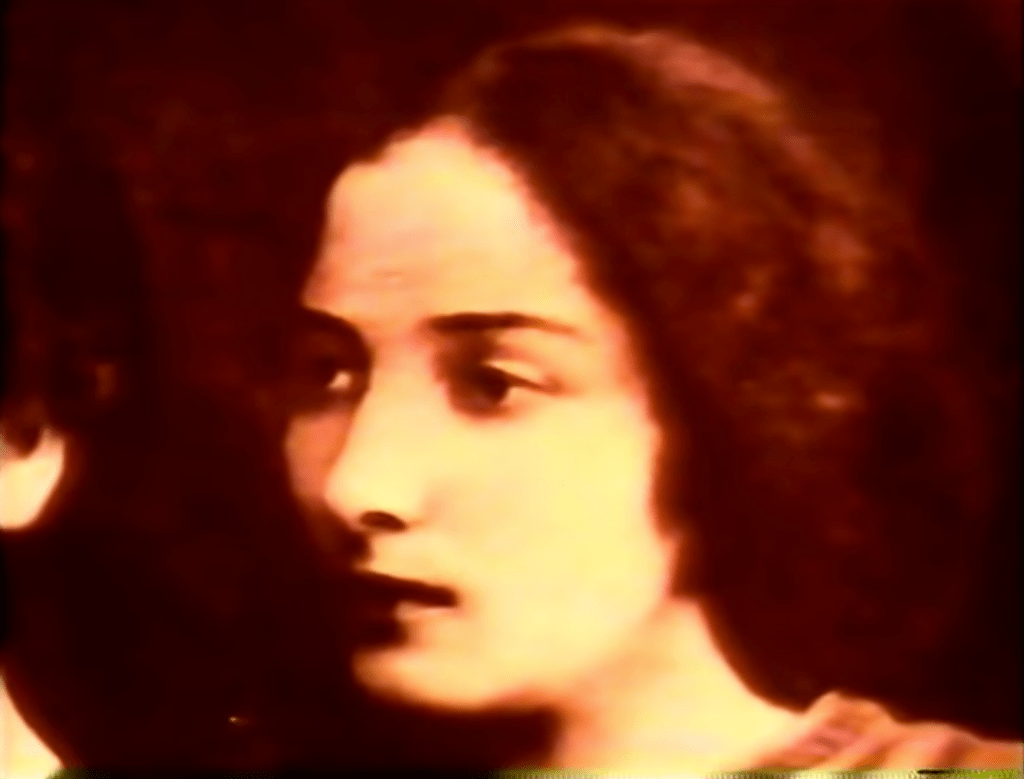
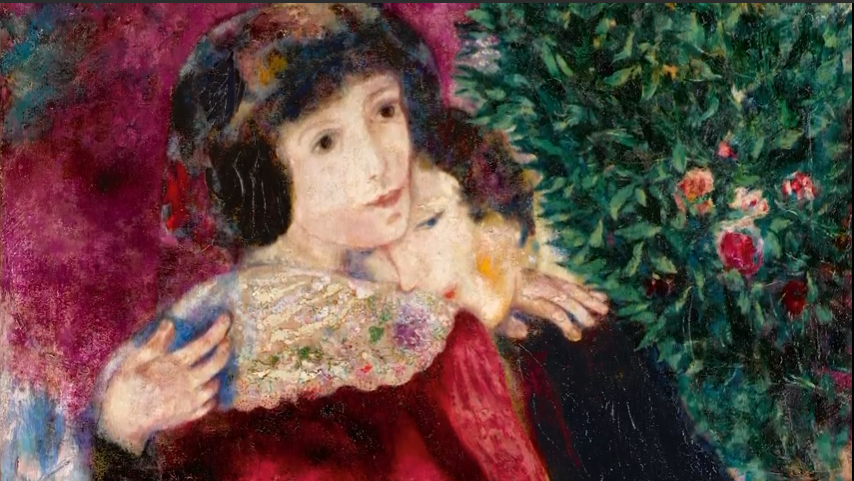
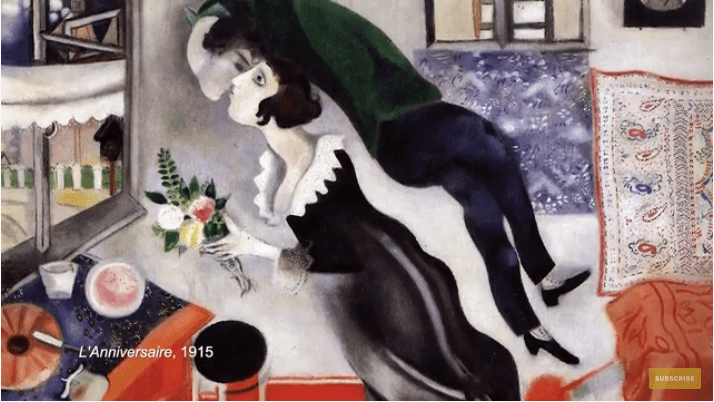
These images are from those films: closeups from an early painting of Chagall’s then fiancée Bella Rosenfeld; of Bella and Marc Chagall in Les Amoureux [Lovers] (1928); and in L’Anniversaire [The Birthday] (1915).

Closeup of Bella Rosenfeld, Marc Chagall’s fiancée
Top section of Les Amoureux (1928)
L’Anniversaire (1915)

The Chagall documentary ends with these words about the poet-artist: “He has painted the unity of the universe in all things. His song of songs is really a song of love, like a bouquet of flowers. Marc Chagall’s light, his message, his life, has been a gift to us all.”

May Love Always Be—within and among us expressed in poetry and art.

— Written and compiled (citing sources) by Ken Chawkin for The Uncarved Blog.

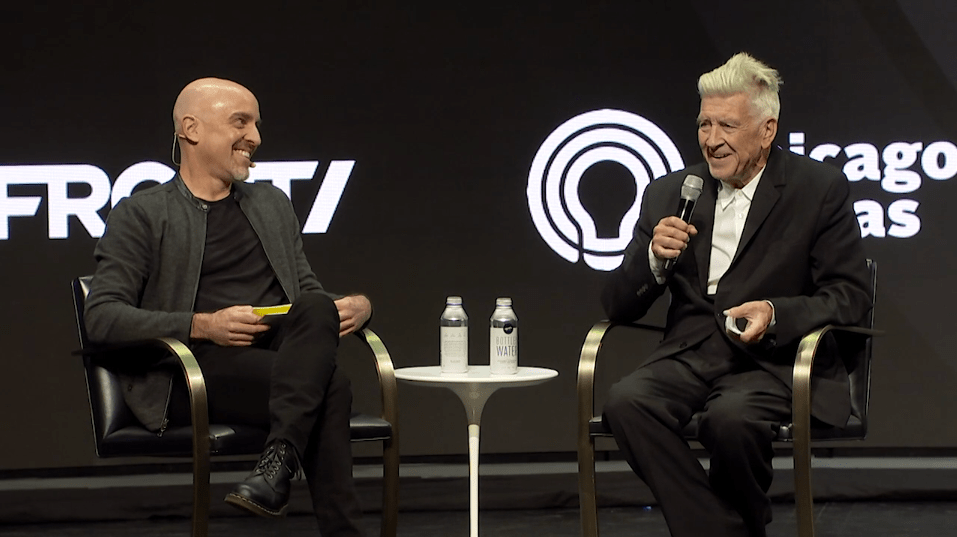
@bradkeywell interviewed @DAVID_LYNCH on #TranscendentalMeditation @chicagoideas

February 2, 2020

I enjoyed this interview that took place recently at a Chicago Ideas event. Filmmaker David Lynch sat down with entrepreneur Brad Keywell to talk about Transcendental Meditation. David gave an in-depth explanation of what TM is, the value of transcending, how it informs his creativity, and why it’s different from other meditation practices.

David also discussed the benefits that his Foundation’s Quiet Time program has been bringing to traumatized students in stressful Chicago schools to help “Silence the Violence.” They showed an excerpt from a video of educators and students talking about the significant results.

The David Lynch Foundation was one of three organizations that received grants to help lower the crime rate in Chicago schools. The Quiet Time school project was funded and researched by the University of Chicago Crime Lab.

The Chicago Tribune had published a report on the project three years ago. The project was so successful, DLF received another larger grant to expand the program in more schools.

Enjoy this lively discussion. David delivers a compelling message!

#TranscendentalMeditation researcher Robert Schneider, M.D., FACC, featured in Thrive Global

January 30, 2020

Based on Dr. Schneider’s recently published TM and heart health studies, which we publicized via EurekAlert!, Thrive Global reached out to us a few weeks ago inviting Dr. Schneider to submit an article on his work. It was published last week, January 24, 2020, in their Wisdom section. I added hyperlinks here to some of the studies mentioned in the article.

Manage Your Mind to Manage Your Heart: Why Transcendental Meditation is Vital for Heart Health

Research studies show regular TM practice reduces risk factors for cardiovascular disease.

By Robert Schneider, M.D., FACC, Dean, College of Integrative Medicine, Maharishi International University

Students at Maharishi International University practice the effortless technique of Transcendental Meditation twice a day on campus.
Students at Maharishi International University practice the effortless technique of Transcendental Meditation twice a day.

My colleagues and I have long been concerned about the high rates of cardiovascular disease in the US that have spread throughout the world. Despite advances in modern medicine, heart attacks and strokes are the leading cause of death globally. One of the reasons for these high rates is the epidemic of stress in modern society. Early in my career, I studied the connection between psychological stress and high blood pressure and heart disease. This was a negative effect of the mind-body connection. About 30 years ago, I decided to investigate how the mind-body-heart connection could be positively managed with effective stress reduction, particularly the Transcendental Meditation® technique.

During that time, we and our colleagues at major academic medical centers in the US, such as Columbia University Medical Center, Medical College of Wisconsin, Cedars Sinai Medical Center and Charles Drew University, received funding from the National Institutes of Health and foundations to study effects of mind-body intervention with Transcendental Meditation in high-risk groups, like African Americans with high blood pressure or established heart disease. The results of this series of well-controlled studies, known as randomized controlled trials, showed that practice of Transcendental Meditation lowered high blood pressure, reduced insulin resistance (aka metabolic syndrome*), reduced atherosclerosis, and prevented abnormal enlargement of the heart (called left ventricular hypertrophy) in one of most recent studies. Some of our published pilot studies suggested improvements in blood flow to the heart and benefits to patients with heart failure.

A landmark study that brought all these findings together followed 200 patients with known heart disease over an average of five years. Half practiced Transcendental Meditation and half attended a class about cardiovascular factors. All participants continued their usual medicines and medical care. At the end of the study, the results showed that the meditating participants had a 48% lower rate of death, heart attack and stroke compared to controls. We believe that this remarkable result was due to redacted risk factors such as high blood pressure, psychological stress, and possibly cardiac enlargement. The results of reduced mortality in long-term TM practitioners were replicated in a separate study of older participants with high blood pressure.  All of these studies have been published in peer-reviewed medical journals, many in top ones like the American Heart Association and American Medical Association.

Based on these findings an American Heart Association scientific statement acknowledged these scientific studies and recommended that Transcendental Meditation be considered in the treatment of all patients with high blood pressure. And that’s a lot of people — according to the most recent guidelines, nearly half of all adults in the US.  The research is continuing, but I would say that if you’re at risk for heart disease — and that’s most men and women — consider managing your mind and body with Transcendental Meditation®. It’s easy to learn and practice, has extensive scientific evidence, and has other positive “benefits” for mental and physical health. It could save your life. For more information, visit https://www.tm.org.

*Video of Dr. Oz presenting TM research at DLF event.

(Click on Page 2 for a photo and Bio of Dr. Schneider.)

Pages: 1 2

John O’Donohue’s 4 short lines say it all for poets

January 27, 2020

These 4 short lines by John O’Donohue describe how he lived his creative life—amazed by each revelatory moment, turning them into poems.

Fluent

I would love to live
Like a river flows,
Carried by the surprise
Of its own unfolding.

— John O’Donohue

I found an interview (What is Beauty?) where John O’Donohue tells Barry Kibrick of Between the Lines how he wrote Fluent and reads it at 22:07.

Enjoy 3 more of his lovely poems: A Blessing of Solitude (Anam Cara: A Book of Celtic Wisdom); The Inner History of a Day and For a New Beginning (To Bless the Space Between Us: A Book of Blessings).

Listen to John O’Donohue — The Inner Landscape of Beauty recorded for The On Being Project, which aired February 28, 2005, Krista Tippett’s Best Loved & Most Shared conversations.

Mary Oliver lived her life that way: “To pay attention, this is our endless and proper work,” and put it into a 3-line poem, Instructions for living a life: Pay attention. / Be astonished. / Tell about it

William Stafford expressed the same notion in his talks and poems of being innocent, spontaneous, and responding creatively in the moment: A Course in Creative Writing, You and Art, and When I Met My Muse.

This poem my son wrote when he was in 6th grade epitomizes this idea: INSPIRATION, a poem by Nathanael Chawkin.

These poems I wrote on the process share in that same sentiment: Writing; Storytelling; and Sometimes Poetry Happens, which turned out to be a commentary on this revealed poem, ODE TO THE ARTIST: Sketching Lotus Pads at Round Prairie Park.

In our efforts to fluently express ourselves, writing, primarily, is a process of self-discovery. Burghild Nina Holzer says journal writing allows us to discover who we are and what we have to say.

Talking to paper is talking to the divine. Paper is infinitely patient. Each time you scratch on it, you trace part of yourself, and thus part of the world, and thus part of the grammar of the universe. It is a huge language, but each of us tracks his or her particular understanding of it.

WHO ARE YOU?, a poem in the film, Words and Pictures, invites us to write and discover who we are. There’s a fascinating story behind it.

In Learning by Teaching, Donald M. Murray said: The most accurate definition of writing, I believe, is that it is the process of using language to discover meaning in experience and to communicate it.

In this collection of Writers on Writing–What Writing Means To Writers, Donald Hall wrote:

A good writer uses words to discover, and to bring that discovery to other people. He rewrites so that his prose is a pleasure that carries knowledge with it. That pleasure-carrying knowledge comes from self-understanding, and creates understanding in the minds of other people.

 — Written and compiled (citing sources) by Ken Chawkin for The Uncarved Blog.

#TranscendentalMeditation eases the busy mind improving both emotional and physical well-being

January 24, 2020

Transcendental Meditation – Helping to ease the busy mind

As the UK slowly sheds its prehistoric attitudes to mental health, meditation is coming to the fore as an accessible and achievable way of improving both emotional and physical well-being.

By Steve Holloway, Monday, 20th January 2020.

Published in Brighton & Hove Independent and Bagnor Regis Observer.

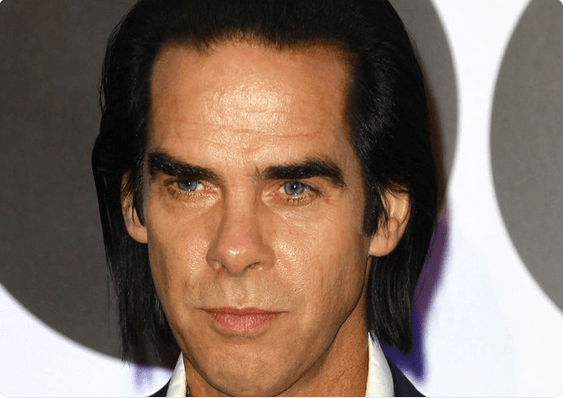
Nick Cave (Photo by Fred Duval/Getty Images)

The growing weight of evidence of its effectiveness in tackling all manner of mental and physical maladies make it an attractive prospect for all of the people whose internal monologue isn’t as measured or as supportive as they’d like it to be.

While business leaders have praised the way meditation helps them to deal with extreme levels of stress, the more artistic types have long waxed lyrical about it as a pathway to creativity.

I had attempted meditation in the past, in the less than stressful environs of Brighton Buddhist Centre, but enjoyable and pleasant as it was, I was unable to immediately tame my ‘monkey mind’, and blundered on with the chaotic maelstrom of life.

Mark Heath, a certified teacher of Transcendental Meditation

But then in June last year I was lucky enough to see Nick Cave perform a memorable show at the Brighton Dome, in which the engaging singer-songwriter espoused the benefits of Transcendental Meditation (TM), and cited it as a contributory factor in his continued recovery following the sudden loss of his 15-year-old son Arthur.

Cave has always been a hugely charismatic figure, but his openness and generosity of spirit in the face of such a harrowing experience, was remarkable, and he provided an incredibly positive and persuasive advert for TM.

Inspired by the words and positive actions of the former Godfather of Goth, I got in touch with the Brighton and Hove branch of Transcendental Meditation.

The worldwide organisation, developed by Maharishi Mahesh Yogi, and famously popularised in the UK by The Beatles, has taught its techniques to more than ten million people of all ages, cultures and religions, who learn to meditate in the hope of attaining inner peace and wellness.

David Lynch. (Photo by Alberto E. Rodriguez/Getty Images)

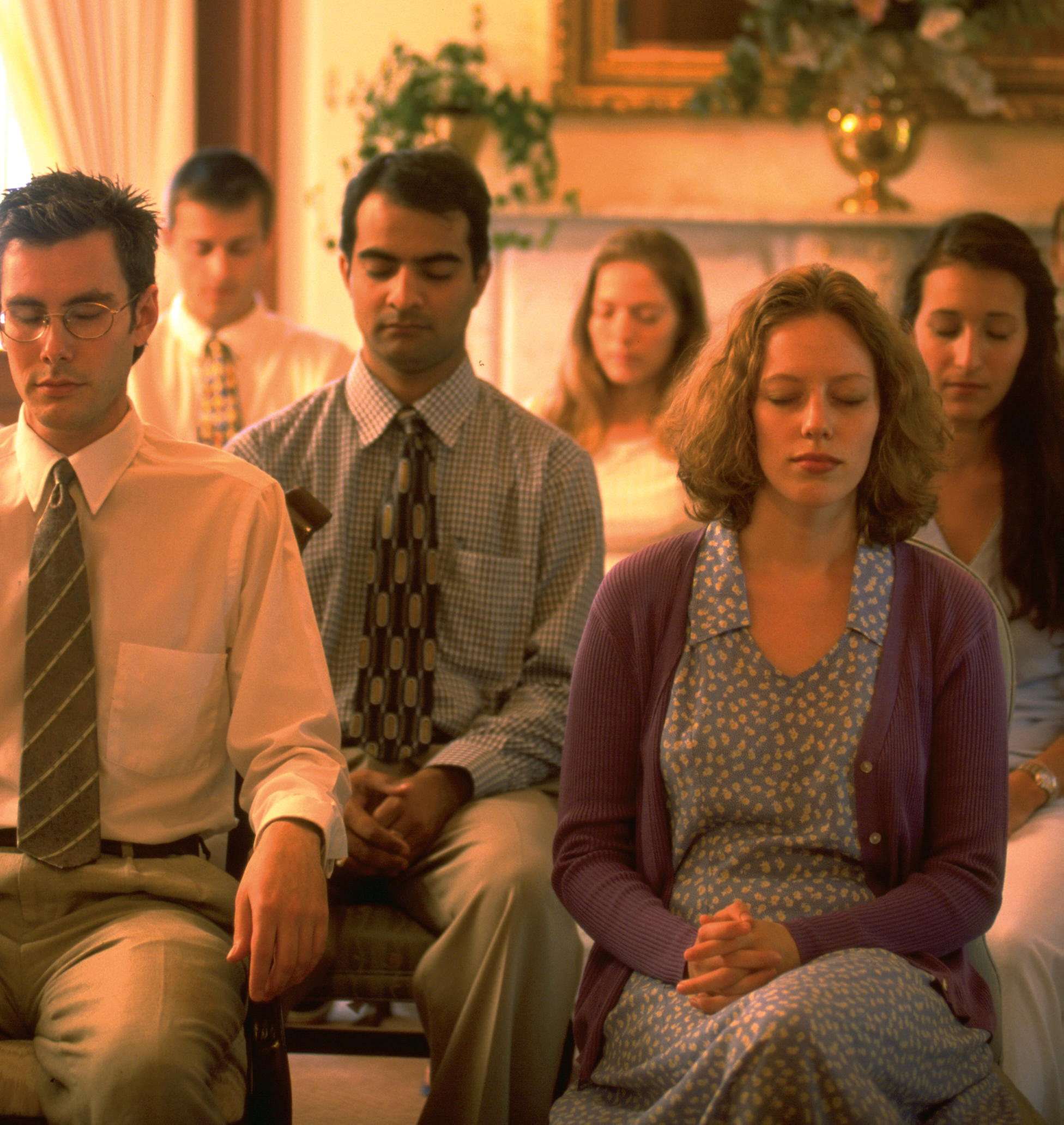
Those techniques are simplicity itself, based on the silent recital of a mantra, whilst seated, for 20 minutes, twice a day.

Film director David Lynch, a passionate advocate of TM, has not missed a single twice-daily meditation in more than 45 years, and has said it has given him ‘effortless access to unlimited reserves of energy, creativity and happiness deep within’.

For Sussex residents the pursuit of that happiness begins in the suitably serene surroundings where Mark Heath teaches the principles of Transcendental Meditation in the cosiest and most welcoming of venues at the Brighton and Hove TM Centre on the northern outskirts of Brighton.

An enjoyable one-to-one session included a simple ceremony where I was given my very own personal mantra and immediately encouraged to embark upon the aforementioned twice-daily meditations.

Maharishi Mahesh Yogi

It was easy as it sounds. And within days, something resembling a meditative state, was, at least intermittently, accessible.

The following week I attended small group sessions with other people who had also just begun their Transcendental Meditation journey, where we discussed our early experiences and Mark, with great enthusiasm and patience, answered our questions.

He also explained the theoretical principles, which he said would subconsciously stop the brain questioning the process and help TM to do its thing.

The mantra is key, obviously, and TM accepts that you won’t immediately be able to banish all other thoughts, but in the moments between the mantra and random thought, will, hopefully, be the moments when you transcend thought.

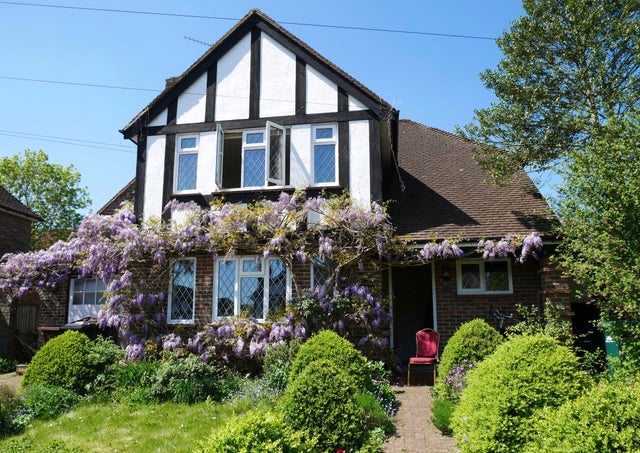
The Brighton and Hove Transcendental Meditation Centre

There were also plenty of great group meditations (which are available on an open-ended basis after the course concluded) and Mark proved to be the perfect guide, full of warmth and the second great advert for TM I’ve encountered.

A month on from completing the course, and looking forward to more group meditations, I’m largely sticking to the twice-daily programme (sometimes life gets in the way) and noticing some benefits and hopeful for more in the future.

I’m miles away from the beatific glow which seems to come across Mark’s face the moment he begins to meditate, and I haven’t quite reached the joyful depths that David Lynch luxuriates in on a twice-daily basis, but I’m happy in the spiritual beginners pool and poised to go deeper…

To find out more about TM visit: uk.tm.org/brighton

###

Here are two enjoyable articles by other UK writers. Both had tried different types of meditation and were in a position to assess what makes TM different and effective. Tara Gardner working in the US for Glam wrote: How Transcendental Meditation Gives Me Mental Clarity Like Nothing Else. Louise O’Neill in Ireland wrote this Good Opinion piece on Transcendental Meditation.

And speaking of the Beatles, here’s a great cover story on Ringo in Parade. It came out last summer on his 79th birthday. I excerpted his profound comments on life and TM in this post: What Transcendental Meditation does for Ringo.

Visit Mark Heath’s YouTube channel to see what Meditators of Brighton & Hove have said about learning Transcendental Meditation. Listen to Holly, an actress, describe how she felt before and after having learned to meditate in May 2019. Holly learnt TM after watching a video of David Lynch explaining how he has never missed a meditation in over 40 years!

Speaking of the legendary filmmaker, Huffington Post writer Marianne Schnall published this excellent interview with David Lynch about his passion for TM and the non-profit foundation (DLF) he founded to help people overcome trauma and transform their lives through the Transcendental Meditation technique.

@ladygaga & @Oprah discover they both learned #TranscendentalMeditation from @meditationbob

January 18, 2020

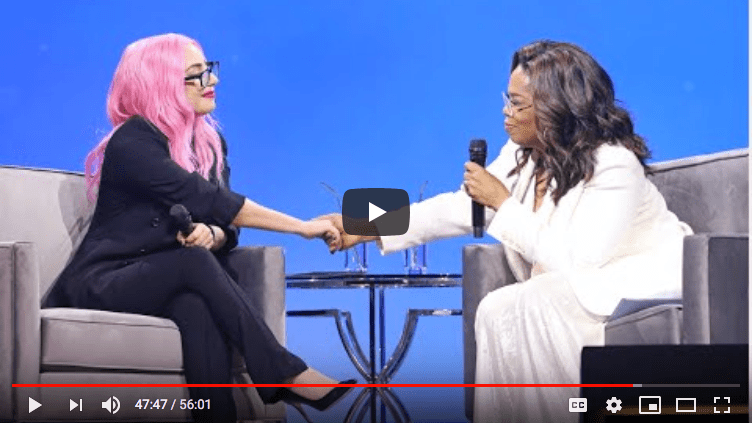
Two weeks ago I was watching this interview between Oprah and Lady Gaga during the launch of Oprah’s 2020 Vision Your Live in Focus Tour in Ft. Lauderdale, Florida.

Lady Gaga Talks Mental Health at Oprah’s 2020 Vision Tour. Lady Gaga shares a lot of her personal history and mental health situation with Oprah. She’s been living with a great deal of pain from fibromyalgia, explains where it came from, and how she is medically and psychologically dealing with it.

Oprah then asks her about the other things she does to keep herself spiritually sound and centered. Lady Gaga answers, “I meditate. I do Transcendental Meditation. It’s great. Bob Roth taught me.” Oprah says, “Bob Roth taught me.” Lady Gaga whispers to Oprah, “Isn’t he great?” Oprah agrees, “He’s great.” Gaga explains when she misses a meditation, “when I slip up on it, you know it’s not the best, because it’s better when I do. And sometimes I can be in a ton of pain, and meditate and it goes away! It’s amazing!”

Some of us had known that Lady Gaga, born Stefani Joanne Angelina Germanotta, had learned Transcendental Meditation, but it was private. This seems to be the first time she’s come out about it publicly, to Oprah and her audience, and how TM’s been helping her.

After the interview, Oprah went backstage to personally thank Lady Gaga for her bravery, honesty and vulnerability, and how great their talk was. It’s on Oprah’s Instagram page.

I was so surprised by this public revelation that I sent it out to my newsletter subscribers and told Bob Roth @meditationbob, DLF CEO, about it. He hadn’t heard about it yet and was also pleasantly surprised.

Within a short time the David Lynch Foundation tweeted it and posted it on their and Bob‘s Instagram accounts. The video clip was also recently posted on Twitter by Maharishi International University @maharishiuni. By now, this video clip has gone viral globally, so I figured I might as well post it on my blog. Enjoy!

CBS This Morning’s David Begnaud reported on the Behind the Scenes with Oprah: Oprah kicks off wellness tour in Florida with Lady Gaga.

On January 7, 2020, CNBC published: Oprah, Ray Dalio and Lady Gaga swear by this simple meditation technique.

See Ray Dalio’s Principle of the Day: Meditate.

Dec 15, 2022: Steven Spielberg tells Martin Scorsese that he learned TM 3 years ago, and how he got David Lynch to be in his new film, The Fabelmans. Bob Roth taught TM to the Spielbergs and Scorseses.