On Tuesday, December 3rd, at the David Lynch Foundation‘s 5th Annual Change Begins Within Gala at the Conrad Hotel in New York City, Jerry Seinfeld took the stage to open the event. We were waiting for this to come out on YouTube. Jerry is absolutely brilliant! He opens with a funny diversion about Amazon and drones, and then segues to the main topic.
Jerry shares how he started Transcendental Meditation in college and has been practicing it for 41 years. But he reveals for the first time that he had only been meditating once a day instead of the twice-a-day instruction. Still, it was because of TM, he says, that he managed to keep it together during the nine years he was producing his successful hit show Seinfeld.
“When I was doing the TV series in which I was the star of the show, the executive producer, the head writer, casting and editing, for 22 to 24 episodes on network television—not cable! Network—for 9 years. Okay? That’s a lot of work. And I’m a regular guy, pretty much. You know, I’m not one of these crazy people that has endless, boundless energy. I’m just a normal guy. But that was not a normal situation to be in. And so what I would do is every day when everybody would have lunch I would do TM [Transcendental Meditation] and then while we’d go back to work and then I would eat while I was working because I had missed lunch. But that is how I survived the 9 years, it was that 20 minutes in the middle of the day would save me.”
George Shapiro, Jerry’s manager and fellow meditator, had written into Jerry’s contract that he was to not do interviews or be disturbed during lunch hours, when he would go to his trailer during the taping of the Seinfeld show. Now we know why. What we didn’t know was that he was only doing it once a day, at that time. And look what he accomplished!
Jerry’s handling a lot these days, touring on weekends, producing his internet show, Comedians in Cars Getting Coffee, raising 3 young kids, and yet has the energy to enjoy it all, at 60, when he was thinking he should be slowing down. Meditating twice a day has transformed his life. Here’s the part where he mentions Bob Roth reminding him to do his morning meditation, at 6 mins, 54 secs, and what happened as a result.
By the way, David Lynch never missed his twice-daily TM during the over 40 years he’s been meditating. He also used to do his meditation (second), in private, on film sets when everyone else went to lunch.
Bob Roth interviewed Jerry Seinfeld for the new Sirius XM radio show on TM starting January 2014. Jerry is his first guest. David Lynch will also be on an episode of the show, as will other high-profile celebrities and expert guests.
New York is really the hub of American consciousness—media, finance, fashion, food, arts and entertainment. TM has created quite the buzz in the city. It’s a more peaceful and friendlier place to be in these days. 2014 holds much promise. May it bring us greater joy and success. Happy New Year!
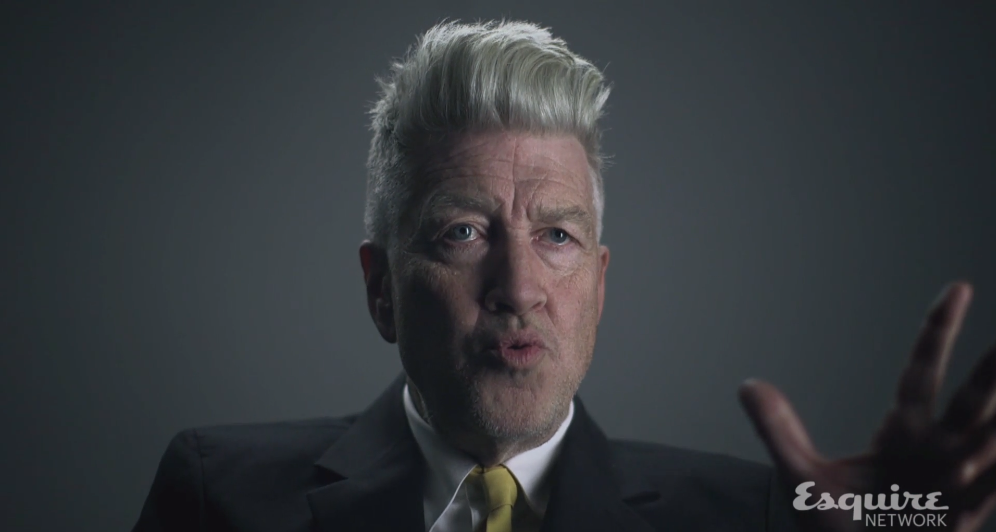
Filmmaker David Lynch describes how he develops and gains personal happiness and inner peace in his style and work through the art of Transcendental Meditation.
David describes his first blissful experience of transcending
I tried to embed the video but it didn’t work in this space. Click here to see this short (2:20) impressive video on the Esquire TV Network website: It’s really good, as David would say.
In addition to the interview, some of the footage is taken from a pre-screening reception for the film, Meditation Creativity Peace, about David’s 16-Country tour, shown in the Billy Wilder Theater. Watch the hilarious, but informative, post-screening discussion with David Lynch, Russell Brand, and Bob Roth.
Dr. Fred Travis is Professor of Maharishi Vedic Science, Chair of the Department of Maharishi Vedic Science, Dean of the Graduate School, and Director of the Center for Brain, Consciousness, and Cognition, at Maharishi University of Management. He earned an M.S. and Ph.D. in Psychology from Maharishi University of Management, and a B.S. in Design and Environmental Analysis from Cornell University. He is also the author of Your Brain is a River, Not a Rock. Visit his website for video presentations, publications and more: drfredtravis.com.
Listen to a Podcast of the show or search for it in the Archives.
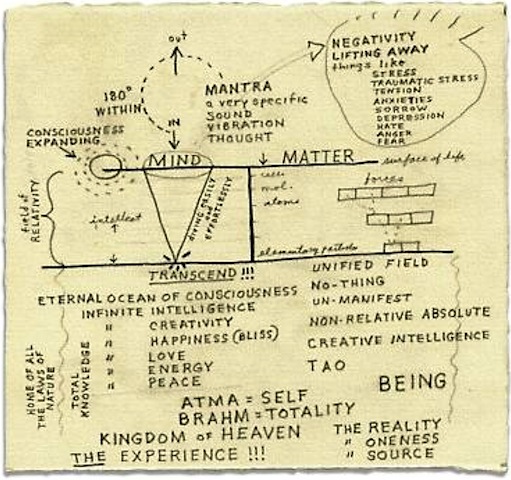
This week Russell Brand was guest editor of the UK’s NewStatesman, which came out October 24, 2013. He invited David Lynch to contribute an article on meditation. The diagram looks like it may be the same one David drew during an interview with a French journalist in Paris as he was explaining Transcendental Meditation to her. A large part of the article reads like a transcription of that brilliant explanation, which was woven throughout a documentary film made of David’s 16-country tour, Meditation Creativity Peace.
Transcending is the only experience in life that gives total brain coherence. Any other thing we do utilises different small parts of the brain, this small part for painting, another small part for mathematics, that small part for playing the piano.
Mind and matter: Lynch’s diagram of Transcendental Meditation. Image: copyright David Lynch
What is Transcendental Meditation? What is transcending? Where do you go when you transcend? And what good is it to transcend? To help answer these questions, I’ve done a little drawing and you can refer to it from time to time. You will notice a line at the top of the drawing representing the surface of life. We live on the surface and see surfaces everywhere. This right side represents matter and the left side will represent mind. Mind and matter.
About 300 years ago, scientists started wondering: what was matter, what was wood, what was air, what was water, what was flesh, etc? And they started looking into matter and they began to find things – things that we now learn about in school. They found cells and molecules. They went deeper and found atoms; they went deeper and deeper, all the way down to the tiniest particles – the elementary particles.
They found four forces that act upon the particles. And on a deeper level, they found that the four forces became three. Some unification started. And, on a deeper level, the three forces became two. About 35 years ago, modern science, quantum physics, discovered the Unified Field at the base of all matter. This field is the unity of all the particles and all the forces of creation. This is a field of nothing, but the scientists say that out of this nothing emerges everything that is a thing. This Unified Field is unmanifest yet all manifestation comes from this field.
Ancient Vedic science, the science of consciousness, has always known of this field. Believers say that it is an eternal unbounded ocean of consciousness. And this consciousness has qualities. So this Unified Field, this ocean of consciousness, is a field of unbounded intelligence, unbounded creativity, unbounded happiness, unbounded love, energy and peace.
Transcendental Meditation is a mental technique, an ancient form of meditation brought back for this time by Maharishi Mahesh Yogi. It is a technique that allows any human being to dive within, through subtler levels of mind and intellect, and then transcend – that is experience, that ocean of pure consciousness at the base of all mind and matter – to experience this Unified Field within with those all-positive qualities.
In Transcendental Meditation you’re given a mantra. A mantra is a very specific sound vibration – thought. The mantra that Maharishi gives is like a law of nature designed for a specific purpose and that purpose is to turn the awareness 180 degrees from out, out, out to within, within, within. Once pointed within, one will dive easily and effortlessly. It is easy and effortless because the nature of the human mind is always to want to go to fields of greater happiness.
Each deeper level of mind and each deeper level of intellect has more and more happiness – charm, as they say. So the happiness growing is like a magnet that gently pulls us within. And at the border of intellect, one then transcends and experiences the transcendent, the Unified Field, the ocean of pure consciousness, the kingdom of heaven that lies within – the Tao, the home of total knowledge, being or divine being; Atma, meaning the Self, the Self with a capital “S”.
There’s a line we’ve all heard: “Know thyself.” This is the Self they’re talking about. This field is also known as Brahm, meaning totality. First seek the kingdom of heaven that lies within and all else will be added unto you. All else is totality.
Every time a human being transcends, they infuse some of this all-positive consciousness and they truly begin to expand whatever consciousness they had to begin with. There is a side effect to expanding consciousness, and that side effect is that negativity begins to recede. Things like stress, traumatic stress, anxieties, tension, sadness, depression, hate, anger, rage and fear start to lift away very naturally.
The analogy is: negativity is just like darkness. When this light of consciousness begins to truly expand, it is like being in a dark room with a light on a dimmer. As the light gets brighter, the darkness starts to go. And when the light is full on, there is no darkness. Likewise with the light of unity – consciousness – growing, negativity very naturally starts to recede, automatically and without you having to worry about it. This heavy weight of negativity lifting gives such a joyful feeling of freedom to a human being. So you could say the person practising Transcendental Meditation each day is infusing gold and getting rid of garbage.
Transcending is the key word!!! Transcending is truly experiencing that deepest eternal level of life. It is this experience that does everything good for a human being. Every human being has consciousness but not every human being has the same amount. The good news is, every human being has the potential for infinite consciousness. Every time you experience this ocean of consciousness within, you expand more and more consciousness and you are unfolding your full potential as a human being. The full potential of the human being is called enlightenment – infinite consciousness, infinite happiness, total fulfilment. Totality.
Transcending is a holistic experience, meaning that all avenues of life will start improving. The things that used to stress you will still be out there in the world but they will not be able to hit you so hard. You’ll still be able to feel sadness but the sadness won’t last so long. It will lift away more quickly. The same with anger; the anger will leave more quickly. It won’t stay with you and poison you and the environment. Fears begin to lift – you work in more and more freedom. This is a field of infinite creativity. You will see creativity and problem-solving start to expand. Through research, scientists know that IQ can go up because of transcending each day.
Happiness comes more and more and you feel good in your body and enjoy the doing of things more and more. The field within is a field of universal love. This universal love feeds personal love and relationships improve. This field within is a field of infinite energy. People today are so fatigued and here within each of us is an infinite amount of energy to fuel our work and play. There is infinite peace within and that is deep, deep contentment, harmony, coming up inside the human being. It is so beautiful.
Transcendental Meditation is, as I said, easy and effortless. Many people might think that because it is easy it is not as good as other meditation techniques. This is wrong thinking. Concentration forms of meditation, contemplation forms of meditation, will keep a human being hovering on the surface. There will be no transcending. And it is hard work and it is boring and the reward is not there.
Transcendental Meditation as taught by Maharishi Mahesh Yogi is a technique that has been here many times before and it is a blessing. It is the real thing. It works. Brain research scientists have found a wondrous thing. When a human being truly transcends, hooked up to an EEG machine, then the full brain gets engaged in concert. They call this “total brain coherence”.
Transcending is the only experience in life that gives this total brain coherence. Any other thing we do utilises different small parts of the brain, this small part for painting, another small part for mathematics, that small part for playing the piano, and so on. Scientists have always told us before that we use only 5 per cent or 10 per cent of our brain but transcending is an experience that utilises the full brain.
This shows us something of the relationship of the human being to this glorious Unified Field within. The more we transcend, the more this coherence stays with us and this eventually gives rise to higher states of consciousness, culminating with supreme enlightenment. On the EEG machine, Transcendental Meditation meditators are seen to transcend many times in each 20-minute meditation. Those meditators who practise concentration or contemplation forms of meditation do not transcend. They do not get the experience of that ocean of bliss consciousness, the Unified Field.
A ten-year-old child can practise this technique of Transcendental Meditation; a 110-year-old can do it, easily and effortlessly, and they will each get the experience they are yearning for. It is a sublime experience to transcend and feel that rejuvenation and that happiness and all those other all-positive qualities growing.
Transcendental Meditation is not a religion. People from all religions practise this technique and they see there is no conflict with their religion. On the contrary, they say they understand and appreciate their religion more because understanding and appreciation for all things grow by transcending each day. It is a technique for human beings, no matter what walk of life, what religion or where you are from. People who have experienced great suffering have gotten this technique and happily said, “Now I have my life back again.” The real story is: THE NATURE OF LIFE IS BLISS and THE INDIVIDUAL IS COSMIC.
Russell Brand’s article in this paper is about revolution. Revolutions are usually associated with violence or force. Transcendental Meditation leads to a beautiful, peaceful revolution. A change from suffering and negativity to happiness and a life more and more free of any problems. The secret has always been within. We just need a technique that works to get us there to unfold a most beautiful future.
Meditation Teacher To The Stars: His clients include Oprah, Russell Brand, Martin Scorcese and Dr. Oz, but renowned meditation teacher Bob Roth also serves low-income and under-served communities by sharing his passion: Transcendental Meditation.
Bob Roth: Bringing Calm To The Center Of Life’s Storm
If there was a perfect year in which to discover Transcendental Meditation, it might just have been 1968. That was the year that Bob Roth was a freshman at UC Berkeley — a campus considered Ground Zero for the anti-war movement and the cultural changes sweeping through the country at the time. He remembers living surrounded by helicopters spewing tear gas over student war protesters and Army tanks parked outside his front door. Demonstrations. Riots. Chaos.
And against this backdrop, Roth did what many college students do: He took a part-time job. He sold scoops of ice cream at Swenson’s ice cream parlor, never expecting that amid the rush of pending social changes engulfing him, it would be at the ice cream shop where he would meet a guy who would ultimately alter the course of his life forever.
The college crew at Swenson’s was the usual motley collection of hippies, straights and everything in between, recalls Roth. But one guy stood out: Peter Stevens. “He was like a quiet reflection pool amid the chaos,” recalls Roth, “and I was drawn to him.”
“Peter was centered, energetic, super-smart, kind to all, easy-going, never agitated, with an ineffable calm about him,” Roth told The Huffington Post. He learned that Peter “meditated,” something that Roth said was a bit of a disconnect for him. “Meditation was not in my vocabulary.” But he was intrigued and curious, and went with Stevens to a class in Transcendental Meditation, a meditative practice derived from the ancient Vedic tradition in India. After just one class, Roth was hooked.
Today, Roth is the executive director of the David Lynch Foundation, where he has helped bring Transcendental Meditation programs to more than 300,000 at-risk kids in 35 countries, as well as veterans suffering from post-traumatic stress disorder, and women and girls who are survivors of domestic violence. He’s also the national director of the Center for Leadership Performance, which introduces the TM program to business, industry and government organizations — and even some United Nations groups.
Today, Roth’s student roster includes a lot of very recognizable names: Oprah, Russell Simmons, Russell Brand, Martin Scorsese, Mehmet Oz, Hugh Jackman and dozens of others. He’d be embarrassed to be called “meditation teacher to the stars,” but such a description wouldn’t be far off. For the past 40 years, he has meditated twice a day no matter where he is, in places as discombobulating as an airplane when need be.
He explains Transcendental Meditation with the following analogy: The surface of the ocean is waves and white caps. But deeper down, the ocean is still. How TM differs from other meditations, he says, is that it doesn’t attempt to still the waves, but rather allow access to the stillness. By practicing it twice a day for 20 minutes, he said, studies have shown that people sleep better, reduce their stress, and lower their blood pressure. In children, the practice can reduce ADHD symptoms and symptoms of other learning disorders.
Not all Roth’s clients are rich and famous. One of the key focuses of the David Lynch Foundation is to target those who aren’t and improve their lives through TM. There’s a story that Roth likes to tell about the DLF’s Quiet Time program — where thousands of at-risk children are taught TM in school. It involves a little girl he called Jessica (not her real name) who lives in a crime-infested neighborhood of San Francisco. Jessica showed up one day at school wearing a white dress splattered with what her teacher, at first glance, thought was red paint. It was blood — blood from Jessica’s uncle who had been shot that morning in a random drive-by while waiting with her at the bus stop.
Instead of running home, Jessica ran to school so that she could meditate, she told her teachers. The DLF Quiet Time program had been in her school for about a year at the time and for her, it made school a safe place whereas her home often couldn’t be. “For me,” said Roth, “that says it all.”
As part of the Quiet Time Program, the foundation supplies teachers for each child to have one-on-one meditation instruction and follow-up. “In a school with 1,000 students,” he said, “we bring in 20 teachers.”
The results have been gratifying, said Roth, who believes that results must be quantifiable to matter. “Change needs to show up in grades, reduced number of suspensions and dropout rates,” he said. And the Quiet Time program has done all that. The San Francisco Unified School District reports an 86 percent reduction in suspensions over two years in schools where the program has been introduced; a 65 percent decrease in violent conflict at the John O’Connell High School; and the Journal of Psychiatry shows reduced ADHD symptoms and symptoms of other learning disorders among students who practice TM.
Carlos Garcia, retired superintendent of the San Francisco Unified School District, heralded the program as one which is “transforming lives.” He said, “It is transforming schools and neighborhoods, and it will transform our society.”
All of which is music to Roth’s ears. TM is a life-changer for individuals, he said, but also a game changer in the broader sense. It may start with an individual’s desire to sleep better or reduce stress, but results are similar to what happens when you pull on one leg of the table, said Roth. “The whole table moves.” And what moves in this case are blood pressure numbers, heart attack risk factors, and the overall ability to make better decisions with a more focused mind. “You are thinking more clearly, are able to make decisions more ethically, perform more creatively.” It’s like when you water a plant because some leaves are wilting, he said, but the whole plant benefits from the water. And it spills over into those around you in a chain reaction.
Companies interested in innovation are drawn to TM because of the positive impact it has on their work force. It’s why Oprah had Roth bring his program to her staff of 400. “It’s not just about learning to relax,” said Roth. “TM wakes up the brain and the executive functions. It resets the brain to perform in a less ‘flight or fight’ manner.”
And yes, it reduces stress. Whether he is teaching a homeless guy — the DLF has a program that works with New York City homeless — or a billionaire, “they both suffer from stress,” said Roth.
But as one celebrity who shall remain unnamed quipped when Roth asked her why she wanted to learn to meditate, “I want to maintain a permanent connection with the intelligence of the universe. I also can’t sleep.”
TM training allows people to access an ability they already are hard wired for: to take a profound rest at will.
Roth says the tipping point has been reached in regard to the public’s understanding of the value of meditation. As he wrote on Maria Shriver’s blog, “It feels like something foundational can be done to help transform lives through meditation, not only among those most at-risk to suffer traumas in life, but also the teen in the private school who battles the very real demons of substance abuse and unspoken thoughts of suicide; the parent who is struggling to survive an ugly divorce and still keep the family intact; or just the person — man, woman, boy, girl — who is navigating life’s daily vicissitudes and can’t seem to catch a breath, turn off the noise, get a good night’s sleep.”
On July 16, 2015, Harper Spero, a New York City-based lifestyle and career coach, published this wonderful interview on her blog: (So)(Co) Sit Down with Bob Roth. While working at Agent of Change, she produced the Women.Meditation.Stress. Luncheon and Panel Discussion for the David Lynch Foundation (DLF), which is how she met Bob, its executive director. It contains a nice large-sized photo of Bob at the bottom of the blog post.
A new meta-analysis published today (Oct 9, 2013) in the Journal of Alternative and Complementary Medicine (2013;19(10):1-12)1 found the Transcendental Meditation® technique (TM) has a large effect on reducing trait anxiety for people with high anxiety. Trait anxiety is a measure of how anxious a person usually is, as opposed to state anxiety, which refers to how anxious we are at the moment. A meta-analysis is an objective means to draw conclusions from all the research in a field.
This meta-analysis covered 16 randomized controlled trials, the gold standard in medical research, and included 1295 subjects from various walks of life, age groups, and life situations. TM was compared with various control groups, including treatment-as-usual, individual and group psychotherapy, and various relaxation techniques. Studies on high stress groups, such as veterans suffering from PTSD and prison inmates, showed dramatic reductions in anxiety from TM practice, whereas studies of groups with only moderately elevated anxiety levels, such as normal adults and college students, showed more modest changes.
A chart shows that studies of individuals with anxiety levels in the 90th percentile (higher than 90% of the rest of the adult population) showed dramatic reductions in anxiety down to the 57th percentile from TM practice. This is just a little higher than the average anxiety level, which is the 50th percentile. Study groups that started in the 60th percentile, a little above average, showed more modest reductions, to the 48th percentile, a little below average.
Lead author on the meta-analysis, Dr. David Orme-Johnson, an independent research consultant, commented: “It makes sense that if you are not anxious to begin with, that TM practice is not going to reduce your anxiety that much. Groups with elevated anxiety received significant relief from TM, and that reduction occurred rapidly in the first few weeks of practice.”
TM was also found to produce significant improvements in other areas worsened by anxiety, such as blood pressure, insomnia, emotional numbness, family problems, employment status, and drug and alcohol abuse.
This chart shows that studies of individuals with anxiety levels in the 90th percentile (higher than 90 percent of the rest of the adult population) showed dramatic reductions in anxiety down to the 57th percentile from TM practice. This is just a little higher than the average anxiety level, which is the 50th percentile. Study groups that started in the 60th percentile, a little above average, showed more modest reductions, to the 48th percentile, a little below average. (Photo Credit: Dr. David Orme-Johnson)
Co-author Dr. Vernon Barnes of the Georgia Prevention Center, Georgia Regents University, Augusta, Georgia explains what happens with control groups in these studies. “Control groups who received usual treatment did not show dramatic reductions in anxiety. In fact, control groups that were highly anxious to begin with, if anything, tended to become more anxious over time.”
When asked about the effect of other approaches to reduce anxiety, he added, “However, progressive muscle relaxation was also effective in reducing anxiety. But, it did not have the other side benefits of TM, such as increasing overall mental health, and increasing the rate of recovery of the physiology from stressors.”
Dr. Orme-Johnson answered a commonly asked question about placebo effects. He said: “Since anxiety is a self-reported measure, one might wonder whether the effects of TM practice or any other treatment program were a placebo effect. Placebos are great. If you give a person a sugar pill and tell them that it will reduce anxiety, it probably will, but only for a little while before the effect wears off. But the effects of TM were shown to be lasting and include objective benefits. For example a recent study showed that TM reduces heart attacks, strokes, and death over a ten-year period. So we know its effects are real and are not just due to a placebo.”
The meta-analysis also examined the issue of bias with TM studies on anxiety. There was no evidence of missing studies and studies conducted by scientists who were in any way associated with Maharishi University of Management or any of its sister universities did not have stronger effects than research conducted at independent universities.
Two previous meta-analyses on TM have found that it is highly effective in reducing trait anxiety, and is more effective than other meditation and relaxation techniques, including mindfulness meditation.2,3
###
Background Information on Transcendental Meditation
The Transcendental Meditation (TM) technique is a simple, natural, effortless procedure practiced 20 minutes twice each day while sitting comfortably with the eyes closed. It is not a religion, philosophy, or lifestyle. It is the most widely practiced, most researched, and most effective method of self-development. For more information visit: http://www.tm.org.
Background information on anxiety
Anxiety disorders are the most common mental health problem in the United States, affecting 40 million adults (about 18% of the population) and costing more than $42 billion a year.4,5 Anxiety is considered a negative mood disturbance that results from failure to predict, control, and obtain desired goals6 and is associated with dysfunctional cognition, behavior, and physiologic over-activity.7 Anxiety further impairs health by motivating increased use of tobacco and alcohol8 and predisposes the individual to chronic diseases such as coronary heart disease.7,8
Orme-Johnson DW, Barnes VA. Effects of the Transcendental Meditation technique on Trait Anxiety: A Meta-Analysis of Randomized Controlled Trials. J Altern Complement Med 2013;19(10):1-12. http://online.liebertpub.com/doi/abs/10.1089/acm.2013.0204
Eppley K, Abrams AI, Shear J. Differential effects of relaxation techniques on trait anxiety: A meta-analysis. J Clin Psychol 1989;45(6):957-974.
Sedlmeier P, Eberth J, Schwarz M, et al. The psychological effects of meditation: A meta-analysis. Psychol Bull 2012;138(6):1139-1171.
ADAA. The Anxiety and Depression Association of America. 2013; http://www.adaa.org/about-adaa. Accessed January 10, 2013.
Greenberg PE, Sisitsky T, Kessler RC, et al. The economic burden of anxiety disorders in the 1990′s. J Clin Psychiatry 1999;60(7):472-435.
Barlow DH. Unraveling the mysteries of anxiety and its disorders from the prespective of emotion theory. Am Psychol 2000;55:1247-1263.
Kolzet JA, Inra M. Anxiety. In: Allan R, Fisher J, eds. Heart and Mind: The Practice of Cardiac Psychology. 2nd ed. Washington, DC: American Psychological Association; 2012.
Sawchuk CN, Olatunji BO. Anxiety, health risk factors, and chronic disease. Am J Lifestyle Med 2011;5(6):531-541.
Throughout his storied career as a research psychiatrist, Dr. Norman E. Rosenthal has searched outside the box for ways to help people struggling with depression and other mood disorders. This search led him to diagnose and name seasonal affective disorder (SAD) and develop light therapy as a wonderfully effective treatment while at the National Institute of Mental Health. He went on to write several books that brought alternative, non-pharmaceutical treatments straight into public awareness, including “Winter Blues,” “St. John’s Wort: The Herbal Way to Feeling Good,” and, most recently, the New York Times bestseller, “Transcendence,” which explores the power of Transcendental Meditation in healing and transformation.
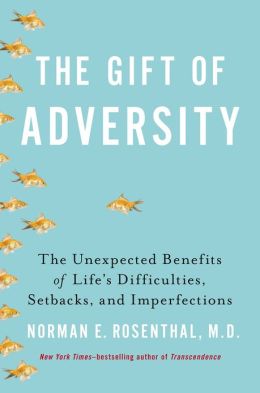
Adversity is an irreducible fact of life. Although we can and should learn from all experiences, both positive and negative, bestselling author Dr. Norman E. Rosenthal, believes that adversity is by far the best teacher most of us will ever encounter.
Whether the adversity one experiences is the result of poor decision-making, a desire to test one’s mettle, or plain bad luck, Rosenthal believes life’s most important lessons—from the value of family to the importance of occasionally cutting corners—can be best learned from it. Running counter to society’s current prevailing message that “excellence” must always be aspired to, and failure or mistakes of any sort are to be avoided at all costs, Rosenthal shows that engaging with our own failures and defeats is one of the only ways we are able to live authentic and meaningful lives, and that each different type of adversity carries its own challenges and has the potential to yield its own form of wisdom.
David Lynch Foundation executive director and author, Bob Roth, interviews Dr. Norman Rosenthal on how he went from writing “Transcendence” to “The Gift of Adversity.”
In this excerpt from the interview, Dr. Rosenthal shares with Bob Roth the gift he received from a very adverse situation early on in his life.
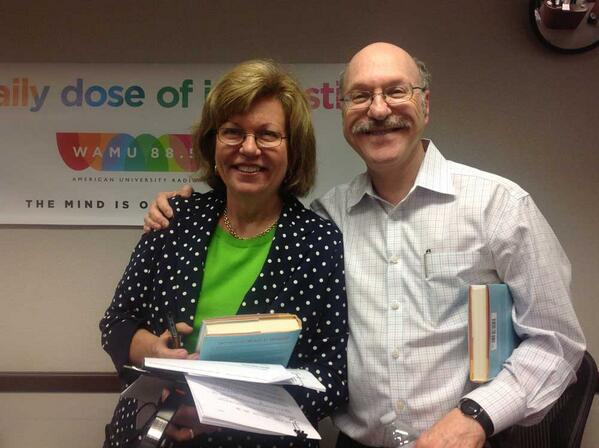
Guest host Susan Page interviewed Dr. Norman Rosenthal on The Diane Rehm Show
Norman Rosenthal was booked on the Diane Rehm Show to discuss his latest book, The Gift of Adversity, Wednesday, Sept 4, 11:00am to noon ET. Listen live on WAMU 88.5 FM or online.
As it turned out, Diane was on vacation, and guest host Susan Page, American Journalist and Washington Bureau Chief for USA Today, conducted the interview. Visit their post to read an excerpt of the book, Dr. Norman Rosenthal: “The Gift Of Adversity”, and listen to a replay of the interview on their audioplayer.
As I continue to read this wonderful book I find myself quietly reflecting on my own life’s experiences and lessons learned, triggered by reading Dr. Rosenthal’s and those of the people he discusses. Each chapter has a takeaway point, something to reflect on and learn from the transforming alchemy of adversity.
I am reminded of two quotes that beautifully encapsulate the message of the book: One by Buddha: “Every experience, no matter how bad it seems, holds within it a blessing of some kind. The goal is to find it.” And the other by Tom Bodett: “In school, you’re taught a lesson, then given a test. In life, you’re given a test that teaches you a lesson.” Dr. Rosenthal looks for and finds the blessings and lessons that adversity has brought him and the subjects in his book. It should be required reading for young adults to help them build empathy and understanding, preparing them for their journey through life.
Dr. Rosenthal also gives us hope when he says that the stressful experiences of adversity can also lead to growth. Quoting Friedrich Nietzsche’s famous dictum: “That which does not kill us makes us stronger,” he tells us of the dividend of PTG from the payment of PTS, the post-traumatic growth that may come from the post-traumatic stress we’ve endured. And he also gives us the tools to deal with the stress, mentioned in his earlier books, like “Winter Blues”, using light therapy to chase away the winter blues, and from “Transcendence”, his most recent bestseller, extolling the healing and transformational virtues of Transcendental Meditation. Discovering what Dr. Rosenthal says in his books is like finding a thoughtful friend who dispenses wise advice.
Iowa Senator Tom Harkin Inspired M.U.M.’s Class of 2013 with his Top Ten Rules To Live By at the University’s largest graduating class.
In true David Letterman-style, Iowa Senator Tom Harkin presented the M.U.M. Class of 2013 with his top-10 list—Harkin’s Top Ten Rules To Live By. Senator Harkin gave the Commencement Address after receiving an honorary doctorate from the University and inspired everyone with his humorous wit and down-to-earth wisdom.
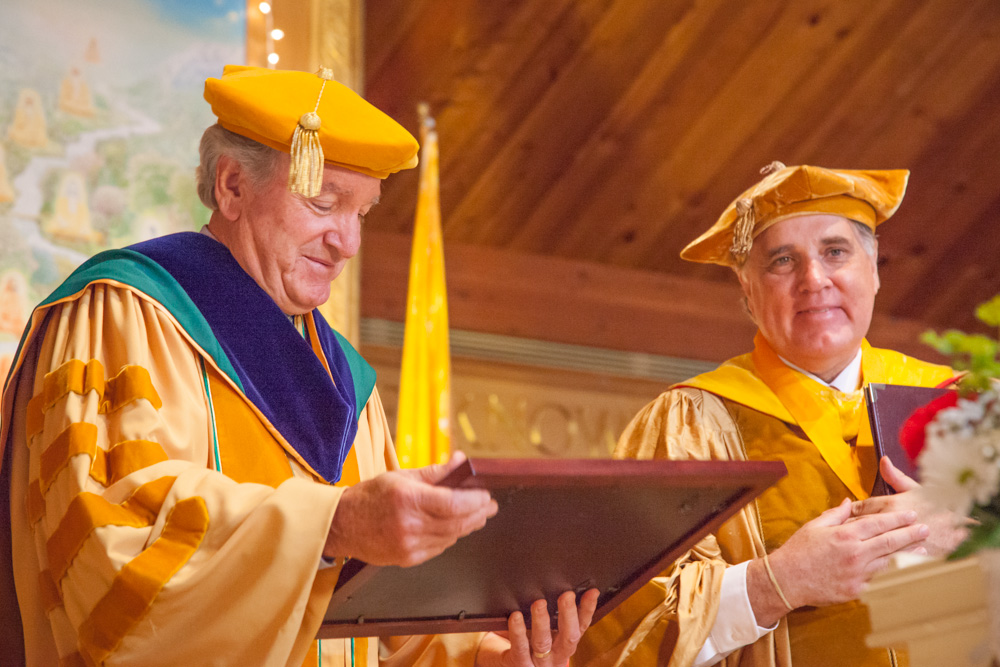
Senator Tom Harkin receives an honorary doctoral degree from M.U.M. President Dr. Bevan Morris. / Ken West Photography
Iowa Senator Tom Harkin received an honorary Ph.D. from Maharishi University of Management before delivering the Commencement Address at the start of M.U.M.’s Graduation exercises, which took place last Saturday, May 25, 2013, in the Maharishi Patanjali Golden Dome of Pure Knowledge.
The University’s 38th Commencement graduated its largest class ever of 334 students from 54 countries, out of the 88 represented on campus. The Class of 2013 included 251 graduates and 83 undergraduates. Check this link to see a menu of videos from M.U.M.’s Commencement 2013 http://www.mum.edu/commencement-2013. See the full PRWeb press release here bit.ly/17bxT6k for more details.
Senator Harkin was awarded a Doctor of Laws Honoris Causa degree for his extraordinary lifelong service and compassionate and progressive leadership for the state of Iowa and the United States of America. He has served in the Senate since 1985 and also served in the House of Representatives from 1975–1985. He is chairman of the Senate Committee on Health, Education, Labor and Pensions and is the seventh most senior Senator overall.
In his introduction, M.U.M. president Dr. Bevan Morris said, “We honor you for a lifetime of service to the State of Iowa and the United States of America, and your compassionate and progressive leadership. You have recognized that the quality of American life is shaped by the quality of American education.”
He said that Senator Harkin has been a very good friend of the University and greatly enjoyed all his visits here. “He has given us advice and encouragement for all the University’s programs—for natural methods of prevention of disease, organic agriculture, sustainable living, our Sustainable Living Center, as well as to our town, which is rising to being one of the greenest in the nation, under the leadership of Mayor Ed Malloy.”
Senator Harkin began his commencement address on a humorous note. He thanked the University for this distinguished award and said, “I come before you with a measure of humility. I realize I was probably selected to be your speaker today because Oprah wasn’t available.” This elicited a lot of laughter as he was referring to Oprah’s visit to Fairfield last year, which she aired, including a profile of the Maharishi School on the M.U.M. campus.
He then went on to say, “But I do want you to know of my highest respect and admiration that I have for this university, for what you have done, what you have become here, in Iowa, the nation, and the world, and especially for what I consider to be the best holistic approach to education and wellness in life at any university anywhere on the globe.”
He was referring to Maharishi University’s unique system of Consciousness-Based education and leadership role in wellness research and sustainability. M.U.M. was designated as a Center for Natural Medicine and Prevention and has received over $25 million from the NCCAM and NHLBI over the past 20 years to conduct collaborative medical research on the use of Transcendental Meditation as a complementary alternative approach to treat hypertension and cardiovascular disease in underserved minority populations, the results of which have been published in top peer-reviewed scientific journals.
The most recent study was published and publicized by the American Heart Association. Last year the AHA Journal Circulation published a long-term study showing a 48% lower risk of heart attack, stroke and death in a group already afflicted by heart disease that learned the practice of Transcendental Meditation. And this year the AHA published a paper recommending Transcendental Meditation as the only meditation practice that has been shown to lower blood pressure.
“Graduation,” Harkin said, “is one of the five great milestones in life; the others being birth, marriage, death, and the day you finally pay off your student loans.”
“I know exactly what you’re thinking. You’re wondering, ‘How long is that guy gonna talk?’ The answer is not long.”
To answer he quoted advice from Father John Ryan, the Irish priest in his hometown when he was first asked to give a commencement address. The role of a commencement speaker is like the body at an old-fashioned Irish wake: “They need you in order to have the party but they don’t expect you to say very much.”
Senator Harkin said he chose a method for the day’s occasion that has imparted wisdom to millions of people throughout the years—“I speak of course, not of the Ten Commandments, but of David Letterman’s top ten list.” But his were more like suggestions for students to choose, depending on which ones they liked.
Harkin’s Top Ten Rules To Live By
10. Don’t panic. You will find a job. Don’t worry. “My confidence is based on one thing — because you came to the right school. I have nothing, as I said, but admiration for what this university has accomplished in such a short period of time. In a unique way you have put the ‘higher’ in higher education.”
“You folks would agree with William Butler Yeats who said that education is not about filling up a bucket but lighting a fire. And you carry that one step further. At this university education is also about training, focusing, freeing the mind. It’s about raising consciousness. Here you have been beautifully prepared intellectually and spiritually for all the challenges you will face in the world out there, so you should go forth with confidence.” He encouraged students to move to smaller Iowa towns to make a contribution.
It’s the home of Vincent and Maggie Argiro, natives of the States who had heard about the friendly island and decided to build a remarkable retirement home there.
Based on an ancient form of Indian architecture — called Maharishi Sthapatya Veda, or Vastu — the home is designed to increase occupants’ health and happiness.
It certainly feels calming and harmonious the moment you enter through the lotus flower gate, cross a lavender-edged terrace and step into the two-storey glass foyer.
The L-shaped building is reflected in an L-shaped pool, and the entire house is oriented to the cardinal directions. Light floods into every room from east and west, through interior and exterior windows, as well as skylights — perhaps one reason the house is supposed to boost clarity and creative thinking.
“A vastu house is said to be a fortune-creating house too,” said Vincent, who seems pretty creative already.
He is a world leader in three-dimensional, advanced visualization software design. His Vital Images Inc. — now a division of Toshiba Medical — produces medical-imaging software, a diagnostic tool used in hospitals worldwide by radiologists, cardiologists, oncologists and other specialists needing to explore inside the body.
In the couple’s home, everything from orientation and proportion to property slope and relationship to nearby bodies of water is governed by vastu design. By great good fortune, soon after arriving on the island, they found an ideal 3.8-hectare site with panoramic views stretching from Mount Baker to Black Tusk in the Garibaldi Range 132 kilometres away.
Designer Everest Lapp said it was a very demanding project. “Siting the building was difficult, as it had to be within a certain envelope with very particular dimensions. Everything was very detailed and exacting.
“In some cases, we had to move a wall a quarter of an inch. Even the rockwork was redone at one point. I’d never done a fireplace like this before, with a high window in the back. I didn’t even know it was possible.”
There were compensations, though.
“The Argiros* are amazing people with so much depth, and although their expectations were very high and it was super-challenging, creating this house has enriched my career,” Lapp said.
“I sometimes wondered if it would come together, but there is no doubt in my mind that Vincent can do anything he wants. He is very, very bright.”
The 3,800-square-foot home has a feeling unlike anything she has experienced, Lapp said. “There is an energy — something ethereal about it.”
Vincent knew a designer called Everest would be up for the challenge.
“She is a former national mountain-biker and snowboarder and I heard there was no slope she couldn’t go down,” he joked, adding he likes challenges, too.
“I read a book years ago with a quote I’ve always remembered: ‘Constraints are gifts to creative people.’ It’s been my maxim and guiding principle all my life,” said the innovator, who is still an active consultant and mentor to other entrepreneurs — and an electric-vehicle buff who has a Tesla Roadster and a Model S, both of which were the first of their kind in B.C.
“In this architecture, we had to follow the rules exactly, the tolerances were very small, up to 1/16th of an inch,” he explained. “But we could be very creative within them.”
Maggie said their island builder, originally from Switzerland, was very precise, too, and really got on board.
“This house was absolutely the toughest I’ve ever built, and I was up there more than two years,” said Robert Huser.
“A lot of the stuff you just don’t see … all the floor joists, for instance, had to be ripped down. A 2×10 is actually 2×9.5, and we had to make them 2×8-and-three-eighths. But the Argiros are great people and it was cost-plus [pricing].”
The owners used as many local craftspeople and materials as possible, said Maggie, who designed the glass catwalk with Lapp. It’s made of kiln-cast, textured glass fabricated in the Vancouver Glass Studio of Joe Berman on Granville Island. A totem beside the stairs was commissioned from First Nations carver Doug LaFortune, depicting eagles and sea otters.
“There is a great spirit in this house,” said Maggie, noting that during construction, there were many coincidences. Time and again, just when they needed something, it would appear: A container of wood, originally headed for Japan, suddenly became available; a barn full of rare wood was discovered at the 11th hour.
The house has hydronic in-floor heat, a forced-air system used mainly for ventilation, a high-efficiency heat pump for hot water and a backup propane generator.
“We need the generator when the power goes out; it can be out for three or four days up here,” said Vincent, and 80 per cent of the lights are LED, which use 80 per cent less energy than incandescent bulbs.
The eco-friendly home is filled with small details, such as a small deck with outdoor shower off the master bath, and a ladder to a rooftop perch. “It’s my cubbyhole,” Vincent said. “You know the old song Up On The Roof? Well I have that bug. I love sitting up there.”
Hanging on the stairway wall is a massive marble slab from an area of southern France famous for Paleolithic cave paintings. “There are amazing iron deposits near Lascaux and when I saw this piece, I immediately thought: That is nature’s painting and it should not be cut up for countertops.
“It weights 800 pounds and hanging it was the most dangerous, demanding part of this whole building.”
Vincent devised stainless-steel rails for it to sit in and a framework of aircraft aluminum bolted onto a reinforced wall.
Maggie’s favourite haunt is the kitchen she designed.
“For years I worked in a postage-stamp-sized kitchen,” said the former home economist, who worked for Continental Mills, testing and developing recipes. “So this is wonderful.
“My main thing is workflow and efficiency. You come in with groceries, put them in the refrigerator, wash and prep them here, chop here, cook here, choose the dishes here, serve here. It works beautifully,” she said, moving clockwise around the area. Her island includes a baking centre with tin-lined drawers.
The commercial fan above her Wolf range was tricky to install at the large window, but she wanted to enjoy the view and check on her outdoor Italian pizza oven.
Vincent is most proud of the “smart home” technology he programmed himself.
“The house has a whole set of rhythms that adjust the lights and thermostats every day, every season. This nervous system shuts down all non-essential power at night, or when we’re on holiday.
“Almost all the wires go dead. The whole house is de-energized, so radiation of all kinds drops dramatically when we sleep, and the house idles at less than 500 watts.”
Vincent explained they took their time finding a place to retire in their mid-50s and toyed with the idea of building a home in Minneapolis, “but it never felt right. Then we heard about Saltspring, this magical community of talented and special people.”
They love the island and their peaceful new house.
“It’s as if there are no walls, no ceilings,” said Maggie. “You feel that nothing stands between you and nature.”
This demanding Saltspring Island home brings out the best in creative design and artisans. The Argiro home is the 5th video, Saltspring Lotus, in a series called, House Beautiful, published by Debra Brash, April 20, 2013 for timescolonist.com.
Here is an informative article. I applaud the authors’ efforts for putting together this collection of beneficial meditation studies related to stressed students dealing with the pressures of school and college, inspiring them to not only consider the idea of meditation, but also the practice of it. I didn’t change a word, except capitalize Transcendental Meditation to honor its unique trademarked practice. Comments and additional information are added at the end of the article.
As the semester draws to a close, many college students are starting to feel the pressure of completing projects, writing final papers, giving presentations, and of course, studying for finals. Add to that holding down a job and you’ve got a perfect storm of stress. How to calm your mind? Meditation may be the answer.
Scientific studies are increasingly revealing some pretty amazing benefits of regular meditation practice, both for the general public and students in particular. Meditation can help you better deal with stress and may make your life as a student healthier and happier overall, a great tradeoff for just a few minutes of mindful thinking a day. Read on to learn about some of the latest and most telling studies on student meditation to learn the amazing benefits it can offer you this finals season and beyond.
A 2009 study of 189 students in California who were performing below proficiency levels in English and math found that meditation actually helped to improve their test scores on the California Standards Tests. Students were asked to practice Transcendental Meditation twice a day over a three-month period. At the end of that period, 41% of students participating in the study showed improvement in both math and English scores, sometimes moving up an entire performance level, compared with just 15% who didn’t participate in the program showing improvement.
Those who have ADHD may find meditation an effective method for improving concentration and brain function, at least according to one study published in The Journal of Psychology. A paper called “ADHD, Brain Functioning, and Transcendental Meditation Practice” appeared in the journal just last year, showcasing the results of a study that followed a group of middle school students with ADHD as they participated in a program that asked them to meditate twice a day for three months. At the end of the three-month period, students reported 50% reductions in stress, anxiety, and ADHD symptoms. Researchers also found improved brain functioning, increased brain processing, and improved language-based skills among ADHD students who practiced Transcendental Meditation.
Several studies have been conducted on the effect of meditative practices on reducing academic stress, all with a similar finding: it works. In 2007 researchers at SIU in Carbondale, Ill. released a multi-year study on 64 post-baccalaureate medical students who participated in a deep breathing meditation program. Students in the study were found to have reduced perceptions of test anxiety, nervousness, self-doubt, and concentration loss. Another study of students at American University had similar results, finding that students who participated in three months of Transcendental Meditation practice reported lower levels of stress (as well as increased concentration, more alertness, and greater resistance to the physical effects of stress, as well as brain function changes) during finals, often the most stressful part of the academic year.
It should come as no surprise that meditation practice can cause physical changes in the structure of the brain; monks have been saying this for years. Yet a surprisingly small amount of meditation can have an impact, even with as little as 11 hours of meditating. A 2010 study looked at 45 University of Oregon students, having 22 of them participate in an integrative body-mind meditation training program while the control group simply completed a relaxation program. The IBMT students were found to have changes in the fibers in the brain area related to regulating emotions and behavior, changes which became clear via brain imaging equipment with just 11 hours of practice. The same changes were not seen in the control group. Researchers believe that meditation may help students to better control their actions, resolve conflict, and manage stress by actually physically changing the brain connections that regulate these functions.
Meditation reduces drug and alcohol abuse
It’s no secret that many college students go overboard with drugs and alcohol, many binging on potentially dangerous substances multiple nights a week. Yet meditation practice may help limit the desire to engage in these activities, a study in Alcoholism Treatment Quarterly reveals. Looking at both students and adults, the study found that daily Transcendental Meditation practice greatly reduced both substance abuse problems and antisocial behaviors. The results held true for all classes of drugs including illegal substances, alcohol, cigarettes, and prescription medications, with meditation being in many cases two or three times more effective than traditional drug prevention and education programs.
In 2003, researchers Vernon Barnes, Lynnette Bauza, and Frank Treiber set out to study the effects of meditation on adolescents, specifically looking at the way it could potentially reduce stress and affect school infractions. Their results were pretty striking. Forty-five high school-aged African-American students were studied, some in a control group and others practicing Transcendental Meditation on a daily basis for four months. At the end of the study, the researchers found that the meditation group had lower levels of absenteeism, lower levels of behavior incidents at school, and lower levels of suspension. On the flip side, these behaviors actually increased in the group that didn’t meditate, suggesting that the meditation helped reduce the psychological stress, emotional instability, or hostility that was leading to negative and often self-destructive behaviors in these teens.
Meditation might not just help your studies, it might also help you be happier and more satisfied as well. Researchers at the University of Michigan found 60 sixth-graders to participate in a study, asking a group of them to take part in daily practice of Transcendental Meditation over a four-month period. At the end of the study, researchers reported that students had undergone some positive changes in emotional development, with students getting higher scores on affectivity, self-esteem, and emotional competence than when they started the program and when compared to their peers who did not meditate.
Meditation is as good for your body as it is for your mind, a study at American University reports. A study published by the university in conjunction with the Maharishi University of Management found that regular Transcendental Meditation helps to reduce blood pressure, anxiety, and depression among college students. The study chose 298 students at random to either be part of the meditation group or a control group, with a subset of students at risk for hypertension also analyzed. After three months, students were measured on blood pressure, psychological distress, and coping ability. Students who were formerly at-risk of hypertension showed a major change in blood pressure, associated with a 52% lower risk of developing hypertension in later years.
Feeling a little overwhelmed with college life? You’re not alone. Studies are demonstrating that meditation may offer one solution to better coping with the stress, anxiety, and even depression that many college students experience. Research at Charles Drew University in LA and the University of Hawaii in Kohala found that adults who participated in a Transcendental Meditation program showed significant reductions in depressive symptoms (an average of 48% lower than the control group), even those who had indications of clinically significant depression. Similar results have been found in students, with decreases in depression and anxiety symptoms at significant levels after participating in a meditation program.
A study done by the Maharishi University of Management suggests that meditation is a great way to work out your brain and that it might even have positive effects on intelligence when practiced regularly. Looking at three different studies, the university found that high school students who participated in a Transcendental Meditation program had significant increases in creativity and intelligence levels, compared to those who took part in a napping or contemplative meditation program. Students in the Transcendental Meditation group saw increases in brain function across the board, but most dramatically in measurements of creative thinking, practical intelligence, and IQ.
Comments and further information
There were 8 comments posted at the end of this article making the same point. The reason being, I think, is that the authors gave simple instructions taken from various websites on how to meditate, then listed 10 studies on meditation, 9 of which are all done on one specific meditation technique, Transcendental Meditation® (http://www.tm.org).
Assigning all improvements to a generic notion of meditation can be misleading and could generate false expectations in those willing to experiment on their own. That’s why the comments contributed to a better understanding of the subject. Still, the authors’ efforts were sincere, and those readers who are interested in learning meditation can always seek out more information and actual classes.
Since most of the studies listed were on the Transcendental Meditation technique, I would naturally recommend those interested to find a certified TM teacher in their area. Call 888-LEARN-TM (888-532-7686) or go to http://www.tm.org/contact-us.



 On July 16, 2015,
 The Uncarved Blog