Archive for November, 2009

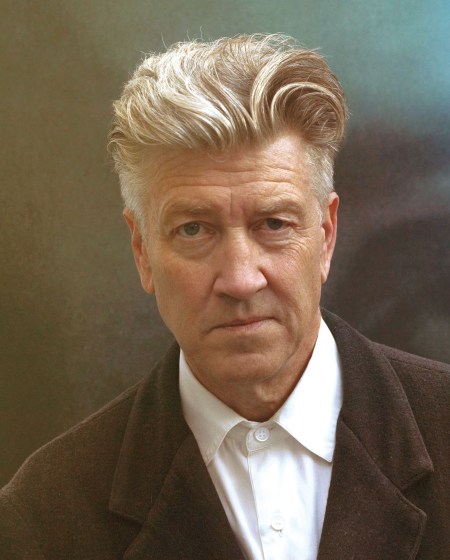
David Lynch to shoot film about TM guru Maharishi Mahesh Yogi in India

November 18, 2009


Daily  News & Analysis

Wednesday, November 18, 2009 4:39:00 PM
David Lynch to shoot film about TM guru Maharishi Mahesh Yogi in India
ANI

Oscar nominated director David Lynch will make a film about Transcendental Meditation (TM) guru Maharishi Mahesh Yogi, according to reports. He will reportedly visit India next month in this connection.

This documentary film about the life and teachings and knowledge of Maharishi will involve interviews with people, including a 97-year man associated with him, reports suggest.

David Keith Lynch, 63, has been attempting to introduce TM in schools globally. The Guardian, British daily newspaper from London, described Lynch as “the most important director of this era.”

Welcoming Lynch to India for this new venture, acclaimed Indo-American statesman Rajan Zed, in a statement in Nevada (USA) today, urged world filmmakers to explore many finer and deeper things India offered, instead of just focusing on poverty and crime.

Zed, who is a chairperson of Indo-American Leadership Confederation, pointed out that planet’s most multidimensional country India had snowcapped mountains, palm-fringed and sun-washed beaches, glorious temples, colourful festivals, rich philosophy and spirituality, abundant historical sites, wildlife safaris, recharging treks, historic trade routes, cultural wealth, etc.

Maharishi, who died last year at an age of about 91, introduced TM technique worldwide, and wished to change the world with it.

He initiated ‘The Beatles’ and was associated with various celebrities like American rockers ‘The Beach Boys’, musician Mick Jagger, hairdresser Vidal Sassoon, Golden Globe winner Mia Farrow (Rosemary’s Baby), etc.

He reportedly established about one thousand TM centres worldwide and had about four million followers.

© 2005-2009 Diligent Media Corporation Ltd. All rights reserved

AU College Students Reduce HBP, Anxiety, and Depression Through Transcendental Meditation

November 18, 2009

At-Risk College Students Reduce High Blood Pressure, Anxiety, And Depression Through Transcendental Meditation

The Transcendental Meditation® technique may be an effective method to reduce blood pressure, anxiety, depression, and anger among at-risk college students, according to a new study to be published in the American Journal of Hypertension, December 2009.

The Transcendental Meditation Program, a widely-used standardized program to reduce stress, showed significant decreases in blood pressure and improved mental health in young adults at risk for hypertension,” said David Haaga, PhD, co-author of the study and professor of psychology at American University in Washington, D.C.

This study was conducted at American University with 298 university students randomly allocated to either the Transcendental Meditation technique or wait-list control over a three-month intervention period. A subgroup of 159 subjects at risk for hypertension was analyzed separately. At baseline and after three months, blood pressure, psychological distress, and coping ability were assessed.

For the students at risk for developing hypertension, significant improvements were observed in blood pressure, psychological distress and coping. Compared to the control group, students practicing the Transcendental Meditation program showed reductions of 6.3 mm Hg in systolic blood pressure and 4.0 mm Hg in diastolic blood pressure. These clinically significant reductions are associated with a 52% lower risk for development of hypertension in later years.

The findings are timely. Today, an estimated 18 million students are dealing with mental health issues on college campuses. Statistics from colleges nationwide indicate there has been a 50% increase in the diagnosis of depression, and more than twice as many students are on psychiatric medications as a decade ago. According to recent national surveys of campus therapists, more students than ever are seeking psychiatric help on college campuses all across the United States.

“This is the first randomized controlled study to show in young adults at risk for hypertension reductions in blood pressure that were associated with changes in psychological distress and coping,” said Sanford Nidich, EdD, lead author and senior researcher at the Institute for Natural Medicine and Prevention at Maharishi University of Management. “Previous research has shown that psychological distress such as anxiety, depression, and anger contribute to the development of hypertension in young adults,” said Dr. Nidich.

College students are particularly prone to psychological distress caused by interpersonal and social problems, pressures to succeed academically, financial strains, and uncertain futures. For the entire sample in this study, there was a significant improvement in students’ mental health.

“Hypertension is a common risk factor for cardiovascular disease in adulthood. Yet, decades of research show that high blood pressure begins in youth. This well-controlled clinical trial found that blood pressure can be effectively lowered in students with a stress-reducing intervention. This has major implications for the prevention of hypertension, heart attacks and strokes in adulthood,” said Robert Schneider MD, FACC, specialist in clinical hypertension, Director of the Institute for Natural Medicine and Prevention and study co-author.

This study was supported, in part, by a Specialized Center of Research Grant from the National Institutes of Health–National Center for Complementary and Alternative Medicine, and by the Abramson Family Foundation, David Lynch Foundation, and other private donors.

Facts on Stress and Young Adults

Hypertension affects approximately one-third (33%) of the US adult population.

College-age individuals with blood pressure (BP) elevated beyond the optimal range are three times more likely to develop hypertension than normotensives.

Psychological distresses such as anxiety, depression, and anger/hostility have been found to contribute to the development of hypertension in young adults.

In 2007, around 15% of students reported having been diagnosed with depression at some point in their lives — up from 10% in 2000.

Meditation ‘eases heart disease’

November 17, 2009

Meditation ‘eases heart disease’

Heart disease patients who practise Transcendental Meditation have reduced death rates, US researchers have said.

At a meeting of the American Heart Association they said they randomly assigned 201 African Americans to meditate or to make lifestyle changes.

After nine years, the meditation group had a 47% reduction in deaths, heart attacks and strokes.

The research was carried out by the Medical College in Wisconsin with the Maharishi University in Iowa.

It was funded by a £2.3m grant from the National Institutes of Health and the National Heart, Lung and Blood Institute.

‘Significant benefits’

The African American men and women had an average age of 59 years and narrowing of the arteries in their hearts.

The meditation group practised for 20 minutes twice a day.

The lifestyle change group received education classes in traditional risk factors, including dietary modification and exercise.

As well as the reductions in death, heart attacks and strokes in the meditating group, there was a clinically significant drop (5mm Hg) in blood pressure.

And a significant reduction in psychological stress in some participants.

Robert Schneider, lead author and director of the Centre for Natural Medicine and Prevention at the Maharishi University in Iowa, said other studies had shown the benefits of Transcendental Meditation on blood pressure and stress, irrespective of ethnicity.

“This is the first controlled clinical trial to show that long-term practise of this particular stress reduction programme reduces the incidence of clinical cardiovascular events, that is heart attacks, strokes and mortality,” he said.

Dr Schneider said that the effect of Transcendental Meditation in the trial was like adding a class of newly discovered drugs for the prevention of heart disease.

He said: “In this case, the new medications are derived from the body’s own internal pharmacy stimulated by the Transcendental Meditation practice.”

Ingrid Collins, a consultant educational psychologist at the London Medical Centre, said: “I’m not at all surprised that a change of behaviour like this can have enormous benefits both emotionally and physically.

“Physical and emotional energy is on a continuum and whatever happens to us physically can effect our emotions and vice versa.”

TRANSCENDENTAL MEDITATION

  • Introduced in India in 1955 by Maharishi Mahesh Yogi
  • In the 60s the Beatles popularised it by travelling to India to learn the technique from the Maharishi
  • The Maharishi Foundation says TM is a programme for the development of consciousness
  • Courses are only available through the foundation
  • They cost from £190 for students to £590 for people with incomes over £40,000
  • Comment on John Hopkins Health Alert: Transcendental Meditation & Your Blood Pressure

    November 16, 2009

    JHHA

    Transcendental Meditation and Your Blood Pressure

    A reader with high blood pressure asks: Will relieving stress help control high blood pressure? Which stress reduction technique has the most evidence backing it up? Here’s the reply from Johns Hopkins.

    In stressful situations, your body releases hormones like epinephrine that cause your blood pressure to rise and your heart rate to accelerate. Whether chronic stress contributes to high blood pressure is less clear. Still, reducing stress may help you follow other lifestyle recommendations and maintain other healthy habits.

    Stress reduction techniques include exercising regularly; practicing relaxation techniques such as deep breathing, guided imagery, or meditation; lightening your work or personal schedule; and having a strong social network of friends and family. Some activities that people believe lower stress — drinking too much alcohol and smoking — actually increase blood pressure.

    The effects of stress on blood pressure are controversial. Likewise, it is unclear if stress-reduction techniques, such as biofeedback, yoga, and tai chi, help lower blood pressure.

    But one method of reducing stress called Transcendental Meditation (TM) has the most evidence. Developed more than 50 years ago, TM involves sitting quietly for 20-minute periods, twice a day, and repeating a one-syllable word called a mantra to relax the mind.

    The effects of TM on blood pressure were recently evaluated in a meta-analysis published in the American Journal of Hypertension. When the researchers considered three high-quality, randomized, controlled trials of TM in people with high blood pressure, they found that this form of meditation reduced systolic blood pressure by 6 mm Hg and diastolic blood pressure by 3 mm Hg. TM likely lowers blood pressure because of its effects on the nervous system, slowing heart rate and reducing tension in the muscles.

    If you are interested in trying TM, you can learn how to do it through books, audiotapes, and DVDs. You may also find a certified instructor giving classes in your area. Keep in mind, however, that TM is not a substitute for the lifestyle measures or medications proven to lower blood pressure. But trying it will cause you no harm.

    Posted in Hypertension and Stroke on November 3, 2009. Reviewed January 2011.

    Comments Johns Hopkins Health Alert Transcendental Meditation and Your Blood Pressure

    Congratulations on this sound advice. However, contrary to what was stated at the end of this article, the Transcendental Meditation® technique as taught by Maharishi Mahesh Yogi, the founder of TM, cannot be learned “through books, audiotapes, and DVDs,” only through “a certified instructor giving classes in your area.” For a qualified TM instructor in your area, call: 1-888-LEARN TM (1-888-532-7686) http://www.tm.org.

    It is also wise advice to not “substitute for the lifestyle measures or medications proven to lower blood pressure.” Most medications tend to mask or modify symptoms, and even though they may appear to be reduced, once medications are stopped, symptoms may return.

    On the other hand, regular TM practice has been shown to have an accumulative effect—it seems to normalize the nervous system over time by dissolving deeply rooted stresses, the underlying cause of most disease conditions, thereby reducing the need for continued medication over time.

    However, just as it is important to not self-medicate, so is it important to not abruptly stop your medications. Continue to have your physician monitor your blood pressure levels, and reduce the need for drugs as appropriate. Indeed, TM “will cause you no harm.” It may even prevent future heart attacks and strokes. Previous, and on-going studies continue bear this out. See Ask The Doctors: Specialists answer your questions about the Transcendental Meditation® program and health. http://askthedoctors.com

    Posted by: kennyji | November 5, 2009

    Medical Disclaimer: This information is not intended to substitute for the advice of a physician. Click here for additional information: Johns Hopkins Health Alerts Disclaimer

    WebMD posted an article on health benefits of Transcendental Meditation

    For more information on the application of TM in people’s lives, see: Norman Rosenthal spoke in Chicago on Light and Transcendence—alternative modalities to reduce stress, optimize health

    Audience Goes Wild for James McCartney

    November 15, 2009
    the hawk eye

    This Burlington Hawk Eye article was picked up by NewsBlaze.


    Audience Goes Wild for James McCartney

    By Bob Saar

    Rocker James McCartney played his U.S. debut last night at Fairfield’s new Sondheim Center. The two shows were part of the David Lynch Foundation’s fourth annual “Change Begins Within” weekend at Maharishi University.

    McCartney, son of Beatle Paul, opened a three-ring musical circus that included Iowan Laura Dawn and folk legend Donovan.

    “It’s very different having a famous father,” film director Lynch quipped when introducing McCartney. “My father was Elvis Presley.”

    The audience, heavily weighted with aging ’60s boomers, went wild when the 32-year-old singer/guitarist walked on stage with Light, his band.

    The four-piece slammed right into their first number as a video crew taped the show for the DLF Web site.

    McCartney’s’ music was racy and frenetic, and the 400-plus seat Sondheim has well-designed acoustics that allowed the amps-on-stage rock band to deliver without overwhelming.

    James looks a bit like Paul with a shaved head. Ah, those eyes. He is not left-handed, and he played a Fender Stratocaster given to him by Carl Perkins.

    His voice was high and clear like his father’s, but at times, he sounded more like John Lennon when roughing things up.

    “James has a way with melody and a set of pipes which are more than a match for his dad’s,” Lynch said.

    His songwriting style has eerie nuances of the Beatles. “Spirit Guides,” featuring McCartney on piano, bore a haunting resemblance to “Lady Madonna.”

    Every song charged ahead with strange melodies flavored with grunge, perhaps like Nirvana covering side two of Abbey Road, backed by the Ramones.

    McCartney was stoic, mumbling only song titles between songs.

    Laura Dawn and her New York blues-rock band Little Death came out blazing away and had the audience on its feet and dancing before their first song was 12 bars deep.

    Dawn, a native of Pleasantville, is a stunning vocalist at the wheel of a powerhouse. She’s somewhat like Janice Joplin before the booze and cigarettes, or perhaps Martina McBride after a night of heavy pubcrawling.

    Little Death and their sweetly trashed-out backup duo – the Death Threats – blasted the audience into happy submission, a road-and-bar band with a refined stage presence.

    1960s legend Donovan closed the show with a set of hits, from “Catch the Wind” to “Sunshine Superman,” delivered in his trademark quavering voice. Donovan, along with the Beatles and the Beach Boys, brought Transcendental Meditation out of India into Western thought, which ultimately brought Fairfield to the forefront of the practice.

    Little Death and the redressed and fully sequined Death Threats backed the folksinger for most of his set. The finale featured the entire cast, including McCartney, singing “Mellow Yellow” with Donovan and the crowd.

    After the show, someone asked McCartney if he enjoyed playing in Iowa.

    “Yeah, yeah, yeah,” the taciturn singer said. “Definitely.”

    —————————————————————————————————————

    My Comment:

    *WOW! Saar nailed it-every part of it! And the second set was even livelier. Donovan invited Fairfield guitarist Arthur Lee Land on stage for his last two finales, that had Dawn’s husband, lead guitarist Daron Murphy, trading solos with Lee Land, leading to a coherent close, which brought the audience to its feet. What a night! Thank you David Lynch and Fairfield!!

    SOURCE: http://www.thehawkeye.com/story/McCartney-review-111509

    Other news coverage: McCartney wins over Fairfield audience in U.S. debut concert and Paul McCartney’s son says he’s ready to follow in dad’s footsteps. A few years later James McCartney sings Angel on David Letterman, and performed at the Sundance Film Festival. Enjoy this popular news story: Paul McCartney and Nancy show up to see James play, and surprise the small Brighton club audience.

    Cynthia Lennon, Pattie Boyd, and the Beatles

    November 15, 2009

    the armenian reporter

    Cynthia, Pattie, and the Beatles

    Former wives of John Lennon and George Harrison in Yerevan
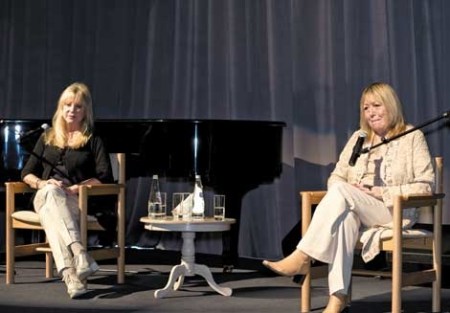
    Cynthia Lennon-Pattie BoydPattie Boyd and Cynthia Lennon during their live interview at the Special Events Auditorium. German Avagyan

    by Maria Titizian

    Published: Saturday November 14, 2009 in Cafesjian Center for the Arts

    Yerevan – John Lennon and George Harrison were two of the four Beatles, one of the most iconic rock groups in history. Their former wives, Cynthia Lennon and Pattie Boyd, were in Yerevan for the grand opening of the Cafesjian Center for the Arts last week. They took part in a live interview with Michael De Marsche, the museum’s executive director, in the brand-new and beautifully appointed Special Events Auditorium, located at the top floor of the complex.

    The first-time-ever joint appearance of Cynthia Lennon and Pattie Boyd, took place in Yerevan. Arranging for that to happen was no small feat, according to De Marsche, who recounted the many telephone calls and arrangements that the museum made to ensure their participation at the opening. Watching the interaction of these two phenomenal women on stage was like taking a trip down memory lane.

    Those in attendance at the live interview at the Cafesjian Center for the Arts cut across a large swath of Armenian society, including Armenia’s deputy foreign minister Arman Kirakossian who was there with his family. Their nostalgia for the Beatles has a deeper meaning.

    The music of the Beatles was repressed during the Soviet era but an underground culture was able to smuggle in and disseminate their music in innovative ways. Their influence was immense; some like the last Soviet leader Mikhail Gorbachev, would say that the cultural, social, and musical revolution they inspired manifested itself years down the road. “More than any ideology, more than any religion, more than Vietnam or any war or nuclear bomb, the single most important reason for the diffusion of the Cold War was the Beatles,” Mr. Gorbachev has said.

    For over an hour, Cynthia and Pattie disclosed intimate moments they shared with their husbands and each other, from fame to drug abuse, to alcoholism, and eventually to break-ups both marital and musical. Those turbulent early years when the Beatles were on the road to becoming one of the most legendary music groups of all times, the wives were along for the ride. However, as they recounted, the ride wasn’t always smooth. Pattie Boyd was very honest when recalling that tumultuous time of her life, “With a lot of help from a psychotherapist I have learned and am a much stronger person now. I am thankful to be free.”

    “We have survived,” Cynthia Lennon said. “We have lost so many people along the way.” Indeed, Paul McCartney and Ringo Starr are the sole surviving members of the Beatles. John Lennon was shot and killed in front of his apartment building on December 8, 1980, by Mark David Chapman. George Harrison died of lung cancer in his Hollywood Hills mansion on November 29, 2001.

    Cynthia Lennon, nee Powell, met John Lennon at the Liverpool Art College in 1957. “We were young and very much in love,” she recalled. The two married in 1962, after Cynthia became pregnant with their son, Julian. Lennon left her shortly after their return from India in 1968 to be with Yoko Ono. In 1978, Cynthia wrote A Twist of Lennon, which included her own illustrations and poetry, and a later biography on the famous Beatle titled simply, John in 2005.

    Pattie Boyd was a model and photographer. In the 60s she modeled in London, New York, and Paris and appeared on the UK and Italian covers of Vogue. She met George Harrison in 1964 when she was cast in The Beatles film “A Hard Day’s Night.” She said at the time that Harrison was “the most beautiful man I had ever seen.” They were married in 1966; Paul McCartney was the best man. They divorced in 1974, after which Boyd married Eric Clapton. One of the audience members asked her how she came to be with Clapton. “Eric kept coming over [to the house she shared with Harrison] and began declaring his love and passion for me,” she said. “Because I was being ignored by my husband and being young, I found it irresistible. Maybe if we weren’t so young, maybe we could have made it work.”

    Boyd’s book, Wonderful Today: George Harrison, Eric Clapton and Me, which came out in 2007, was on the New York Times bestseller list.

    For both Cynthia and Pattie, their fondest memories go back to the time they were all in India in 1968, after the Beatles renounced drugs and became followers of Indian mystic Maharishi Mahesh Yogi. “It was an idyllic, positive situation at the foothills of the Himalayas,” said Ms. Boyd. “I loved it there.”

    “The holidays, the times we went away together” is what Cynthia Lennon remembers as the best times.

    “When George, John, Cynthia, and I went to Tahiti and sailed on a boat” is what Pattie Boyd said was her fondest memory.

    They were hard-pressed to reveal which Beatle song they liked most. “They’re all so different. It’s here, there, and everywhere,” said Cynthia. “But I think that Sergeant Pepper was the most unbelievable album.”

    Pressed to say which Beatles song she liked most, Boyd – who is known to be the inspiration for some of George Harrison’s songs – said, “It’s difficult to say which one is my favorite, but ‘All You Need is Love,’ is so strong and profound.”

    Someone from the audience wanted to know if there were any hidden messages in the Beatles’ songs. “No, people wanted there to be messages, but there weren’t any,” Cynthia assured the audience.

    Questions were asked about what Cynthia’s son, Julian Lennon, was doing musically. Cynthia explained that he completed an album about a year ago, but is still trying to get the best deal, “hopefully by next year.”

    Following the live interview, the two women were available for book signings and Pattie’s exhibition of photographs was opened to the public. Ms. Boyd spent a few minutes speaking with the Armenian Reporter, in between signing her books.

    She said that this was her first visit to Armenia and to the region in general. “After this book signing, I can’t wait to go out and explore the city,” she smiled. “I want to go to Vernissage and the museum at Republic Square.”

    About the Cafesjian Center for the Arts, she said: “I am so blown away; I think this is the most exciting building I have ever seen architecturally; it is so wonderful. I want to bring my friends from London here next year.” She went on to explain that the design of the museum, the different installations on each floor and the gardens were “absolutely beautiful. It’s so beautifully done and the attention to detail is exquisite.”

    Cynthia Lennon and Pattie Boyd both seem to have have found peace and happiness. “I am very, very happy,” Cynthia explained. “The one person who has given me strength and hope is my son and my new husband…. It’s important to still have a sense of humor.”

    (c) 2009 Armenian Reporter

    Also see The Morton Report, by Jaan Uhelszki, Contributor, September 7, 2011: Pattie Boyd: Rock’s Most Beautiful Muse.

    I remember you were the one who introduced everyone to the Maharishi. Tell me about that, and do you still do some kind of spiritual practice now?

    Yeah, I still meditate. I was meditating. Along with a girlfriend I learned Transcendental Meditation and I told George about it. Then the Maharishi was coming to England and I wanted to see him. And I wanted George to meet him. At that time, Paul wanted to meet him as well. That’s why we all went and listened to his lecture, and he was obviously very happy when he heard that they were in the audience, and he wanted to meet them. When he did he suggested that we all go to Wales for a few days to learn more about meditation: he wanted to initiate them. It was really awful because while we were up there, their manager Brian Epstein died. It was just awful. One can think how extraordinary that the one person who had been guiding them throughout their career, from the beginning of their career, died, just as this spiritual leader is taking over.

    Did it feel like a baton had been passed?

    Yes. Well, no, it didn’t last for very long for some of them, but it did for George, for the rest of his life.

    Also see Prudence Farrow — subject of the Beatles song Dear Prudence — visits India’s Kumbh Mela and The former Beatles Paul McCartney and Ringo Starr reunion for David Lynch’s benefit concert airs on New York’s THIRTEEN, Sunday, April 29

    In this Prime Time Russia Today news spot, uploaded on Jul 17, 2011, a reporter asks Pattie Boyd about her trip to India with the Beatles in the context of a her photography exhibit.

    Q: A section of this exhibit is dedicated to the Beatles and your trip with them to India, particularly George Harrison. How important was that time spent in India for you?

    A: It was a very very special time. I loved being in India and I loved everything that we learned from Maharishi, which was an extended course on meditation. And it was very, it was wonderful being there at that time because the Beatles were particularly prolific. They wrote most of the songs for the White Album while we were in India.


    Maharishi University students get academic credit for daily Transcendental Meditation (TM) practice

    November 13, 2009

    NewsBlaze

    Published: November 12,2009
    Send to a friend
    Letter to the Editor
    AddThis

    Response to “Hindus Laud University of Colorado-Boulder Over Meditation Center”

    Hindus Laud University of Colorado-Boulder Over Meditation Center

    It seems that UCB is just starting to catch on. MUM, Maharishi University of Management, located in Fairfield, Iowa, has offered CBE, Consciousness-Based education, for 35 years, where students, faculty, and staff all practice TM, the Transcendental Meditation technique, twice a day.

    Students receive RC credit, research in consciousness, as part of their curriculum. Meditation rooms are made available for students to practice their twice-daily non-religious TM technique. And there are two large golden domes over 25,000 square feet each, one for men and one for ladies, where students, faculty, staff, and meditating townspeople all gather twice a day, morning and evening, to practice TM and the TM-Sidhis program, including Yogic Flying, for world peace.

    These ancient meditative practices revived by the founder, Maharishi Mahesh Yogi, dramatically lower stress-related risk factors and increase clarity and orderliness in brain functioning. The results show up in students’ academic and athletic performances as well as improved individual and social well-being. Students are happier and more productive, and don’t resort to alcohol or drug abuse, or express violent behavior.

    For those who wish to worship according to their own faith, students attend multi-denominational services in town, and a room is also available for Muslim students who wish to use their prayer rugs to pray. MUM’s diverse student population of over 1000 comes from over 65 different countries this year. And enrollment is growing as more and more discover what this unique university has to offer.

    All food is organic vegetarian, some of it grown locally in the university’s large green houses. Visit http://www.mum.edu or come for a Visitors Weekend. One of the most popular Visitors Weekends is the annual David Lynch Weekend. Also check out the David Lynch Foundation website for details.

    Ken Chawkin
    Media Relations Director
    Maharishi University of Management
    The David Lynch Foundation
    E: kchawkin@mum.edu
    W: http://www.mum.edu
    W: http://www.davidlynchfoundation.org
    B: https://kenchawkin.wordpress.com

    Live Webcast: 4th Annual David Lynch Weekend

    November 12, 2009

    FOURTH ANNUAL DAVID LYNCH WEEKEKND

    David_Lynch

    DAVID LYNCH: Live Webcast

    “Exploring the Frontiers of Consciousness, Creativity, and  the Brain”

    Saturday, November 14, 2009
    1:50 pm to 4:20 pm (CST)

    Filmmaker David Lynch
    Quantum physicist Dr. John Hagelin
    Brain researcher Dr. Fred Travis

    Sunday, November 15, 2009
    1:15 pm – 2:15 pm (CST)

    Transforming Lives: How to Get Involved
    with the David Lynch Foundation

    Interactive Panel Discussion
    David Lynch • John Hagelin • Foundation Student Leaders

    Filmmaker David Lynch will highlight a live webcast on “Exploring the Frontiers of Consciousness, Creativity and the Brain” this Saturday, November 14. The webcast will begin at 1:50 p.m. (CDT) and can be viewed at DLF.TV.

    Mr. Lynch will answer questions on consciousness, creativity, and meditation from hundreds of students from all over the U.S. attending the fourth annual David Lynch Weekend. The event is being held November 13 to November 16 at Maharishi University of Management in Fairfield, Iowa.

    Mr. Lynch will be joined by world-renowned quantum physicist Dr. John Hagelin and leading brain researcher Dr. Fred Travis, who will discuss consciousness and peace in the light of new scientific breakthroughs in unified field theories, physiology, and neuroscience.

    Mr. Lynch and Dr. Hagelin will host a second live webcast on Sunday, November 15, from 1:15 p.m. to 2:15 p.m. to present the programs and successes of the David Lynch Foundation for Consciousness-Based Education and World Peace. The Foundation is dedicated to bringing the Transcendental Meditation technique to one million at-risk youth around the world. The Foundation has already provided scholarships for 100,000 students to learn to meditate in public and private schools throughout the U.S., Latin America, the Middle East, Asia, and Africa.

    Research on meditating students shows improved grades and overall academic achievement; reduced stress, depression, and anxiety; and improvements in ADHD and post-traumatic stress disorder among children and teens.

    Mr. Lynch and Dr Hagelin will be joined during the Sunday webcast by student leaders of the David Lynch Foundation, who are helping to establish the Foundation on college campuses nationwide, to provide meditation instruction and internship opportunities for interested students.

    For registration and information, please visit www.dlf.tv or call 641-209-3060.

    How St. Patrick’s stained glass was rescued twice

    November 11, 2009

    How St. Patrick’s stained glass was rescued twice

    By Linda Murphy
    Special to The Herald News
    Posted Nov 08, 2009 @ 01:56 AM

    MadonnaNewport —Divine providence may have led William Vareika to “wake up” from a quick lunchtime Transcendental Meditation and discover the artist that would influence his life. But that was only the beginning of a series of twists of fate that would ultimately lead him to rescuing the most comprehensive collection of the artist’s stained glass windows from destruction at Fall River’s St. Patrick’s convent.

    Vareika, raised in Brockton, was about halfway through Boston College, immersed in the idealism of the late 1960s with a clear vision of going on to law school and, as he put it, “changing the world.” But an art history class thwarted his plans.

    More than a century earlier, the artist, John La Farge, who was also heading for a career in law, decided at the urging of a friend, New York architect Richard Morris Hunt, to move to Newport, R.I., to study painting with his brother, William Morris Hunt. With plans to become a lawyer abandoned, La Farge married a Newport woman, Mary Margaret Perry, daughter of Commodore Oliver Hazard Perry, and immersed himself in Newport’s robust intellectual artistic community, painting landscapes of the seaside city, portraits and flowers.

    Considered to be the father of the American mural movement and the painter of the first Impressionist experiment on American soil, La Farge is regarded today as one of the preeminent 19th century artists for his pioneering stained glass work, including the invention of opaque opalescent glass designs, artistically significant floral painting and early Art Nouveau illustrations.

    Vareika, in an attempt to get out of a final exam in his art history class at Boston College, hastily arranged to opt for a last-minute research paper and was given 24 hours to find a topic. Frantically he headed to nearby Trinity Church, where he often spent his lunch in Transcendental Meditation. Upon awakening, he said, the vision of La Farge’s murals and stained glass in the church revealed his research topic. As part of the project, Vareika stopped at the Boston Museum of Fine Arts, spending his last $10 to purchase a print of La Farge’s landscape “Wood Interior.”

    He said the project was so well-received that the professor urged him to change his major to art history, but he remained steadfast in his determination to become a lawyer.

    Before heading off to law school in 1974, Vareika decided to visit Newport to see the city where La Farge had lived and worked for most of his life. As fate would have it, one of the first people he met was a woman who was trying to save La Farge’s stained glass windows from destruction in an abandoned church.

    Preserving the La Farge windows in that church turned into a six-year battle.

    “I agreed to help them over the summer,” said Vareika. “I was very naïve back then; I had no idea how long something like that would take.”

    Supporting himself as a part-time janitor and art picker, buying and selling art he picked up at yard sales, proved to be lucrative. Like La Farge, Vareika discarded law school plans, married a Newport woman, his wife Alison, and settled into a career in the arts in Newport, eventually opening William Vareika Fine Arts on Bellevue Avenue. Over the years he’s grown to be regarded as an expert and dealer in La Farge’s work, and today he owns the original painting of the $10 “Wood Interior” print he bought back in college as part of his research project.

    “I would say I have a passion for his work,” said Vareika. “He’s played a major role in my life.”

    An art dealer of three centuries of significant American artists, Vareika also handles the work of Benjamin West, Gilbert Stuart and William Trost Richards.

    In the 1890s, La Farge’s broad art career and expertise in stained glass led to the commission of 13 windows for a private chapel in a home on Kay Street. Two wealthy Newport sisters, Mary Gwendolyn Bird Caldwell and Mary Elizabeth Breckenridge Caldwell, who were orphaned at a young age and raised by a guardian, built the chapel in memory of their parents.

    In 1931, during the Great Depression, the chapel with La Farge’s images of the Madonna and child, the motherly St. Elizabeth of Hungary and Saint John the Evangelist was slated for demolition but the art and chapel contents were spared through the efforts of Fall River Bishop James Cassidy. He secured the windows and the other chapel furnishings and installed them in the St. Patrick’s Church Sisters of Mercy convent house.

    Approximately 70 years later, the Diocese of Fall River had merged several parishes into the church at 1589 S. Main St,, which is known today as the Good Shepherd Parish, and announced plans to demolish the former convent for a parking lot.

    Twenty-seven years after saving the first series of La Farge windows, Vareika was called on again to preserve the work of the artist who had played such a prominent role in his art career. This time it was Sister M. Therese Antone, president of Salve Regina University at the time (she’s the chancellor now) and her colleague, Sister Marypatricia Murphy, treasurer of the Sisters of Mercy of America, who contacted the art dealer in 2001 in an effort to save the 13 stained glass windows and original chapel contents from destruction at the convent.

    “It seemed like déjà vu. I thought about the windows we saved back in 1974 and began to wonder what would happen to these windows,” he said.

    Against all odds, Vareika, the two nuns and a committee of volunteers managed to rescue the windows and chapel contents in 2004 and in the process, their preservation effort expanded to include the construction of the new chapel at Salve Regina, scheduled to open in August 2010.

    Michael Semenza, Salve Regina vice president for university relations, said the university, through the efforts of the board of trustees and private donors, raised $350,000 to buy the windows and chapel items from the Fall River diocese.

    “This is the case of how art has inspired a construction project,” said Vareika. “Now they’ll be back in Newport at a Catholic institution and chapel where they can be appreciated for their liturgical value as part of a worship environment.”

    As part of the project, Vareika has assembled the most extensive show and sale of La Farge’s work to date to raise funds to restore the windows, which are being repaired by the Serpentino Stained and Leaded Glass Studio in Needham.

    “This summer I discussed postponing the show with Sister Therese Antone because the economy was so lousy and she told me ‘to have faith,’” he said. “A show like this, with pieces from museums and private collections, can take a year or more to pull together, but in less than six weeks I managed to assemble the entire exhibition.”

    The show, which includes several of the stained glass windows, features approximately 150 pieces of La Farge’s oils, watercolors, drawings and block prints as well as illustrations and paintings of stained glass designs.

    “I set out to put on a survey of every aspect of his work to show how important his work was so people would come together and support the project,” he said.

    One of only two known cartoons (true to size preliminary paintings of stained glass) priced at $225,000 is for sale as part of the show. The only other known La Farge cartoon is in the Worcester Art Museum’s collection.

    “When I lecture to school kids I tell them to be open to signals: If I hadn’t come to Newport I would never would have become an art dealer, I wouldn’t have met my wife and these stained glass windows would never have made their way back to a chapel in Newport. It’s fate,” said Vareika.

    The show at the 212 Bellevue Ave. gallery runs through Nov. 30. For more information and to view additional La Farge artwork see http://www.vareikafinearts.com or call 401-849-6149.

    This stained glass window by John La Farge was once in St. Patrick’s convent in Fall River. — The Herald News

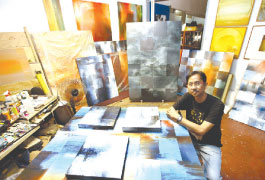
    Scattered Skies and Seas: New Paintings and Collages by Benjie Cabangis

    November 8, 2009
    MANILA BULLETIN
    Benjie Cabangis: Allusions to Hot-tempered Nature
    By PAM BROOKE A. CASIN
    November 8, 2009, 1:38pm

    It was the Beatles that did it. The impact of the quartet’s avant-garde music at that time was too palpable for anyone not to notice; the world has never seen anything like it. Theirs was cult-like. In England and elsewhere, the most famous musical men on the planet were always met with frenzied screams and sighs of admiration. In the Philippines, artists started following their footsteps and took impetus from the rich and powerful imagery of their songs. The young Benjie Cabangis was one of them.

    The abstract artist says that the band’s White Album influenced him a lot. Released in 1968, the album cover was unlike any other. It was white and minimalist and had been stripped off of adornments and color that their previous albums boasted. Songs from the record were mostly inspired by the group’s sojourn in India to study meditation under the celebrated Maharishi Mahesh Yogi. Naturally, the songs were moving and possess simple guitar riffs and lilting melodies that captivated the hearts of many.

    Cabangis’s oeuvre follows suit. (He also meditates first before proceeding to paint and practices transcendental meditation which Yogi founded. The artist attests that meditation helps him to clear his mind and focus on a painting). His current abstractions, collectively known as ‘Scattered Skies and Seas,’ may be a bit unobtrusive aesthetic-wise but the artist’s statement about it is no less than a powerful and ominous reminder to us all of nature’s wrath and provoking complexities.

    Click here to read complete article.