Posts Tagged ‘TM’

Excellent article on Transcendental Meditation written by Sarah Klein in Prevention Magazine

February 14, 2016

Preface: Electrical Analogies

Rosenthal_N

Norman Rosenthal

I find it fascinating that Norman Rosenthal and Jerry Seinfeld have come up with their own opposite electrical analogies to describe how Transcendental Meditation works — as both a surge protector and a battery charger!

People exposed to continual stressful trauma suffer from PTSD. Dr. Norman E. Rosenthal says Transcendental Meditation is like a surge protector against stress. First it calms the amygdala; it turns down that alarm bell where there no longer is a fire.

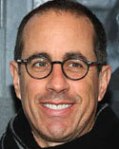
Jerry Seinfeld

Jerry Seinfeld

And equally important, TM acts as a buffer against future stressful reactions. The nervous system becomes more resilient to stressful stimuli; they’re no longer interpreted as such. The individuals have normalized.

Jerry Seinfeld compares TM to a phone charger for your whole body and mind. He reminds us how we charge our cellphones and then use them throughout the whole day. That’s what TM does for him. It sets him up for his day fully charged until his next TM session to recharge.

Prevention Magazine article on Transcendental Meditation

Bob Roth

Bob Roth

Rosenthal was interviewed and Seinfeld mentioned in an excellent article for Prevention Magazine by staff writer Sarah Klein. It’s nicely designed with graphics, photos and relevant links to cited studies and video clips.

Others interviewed were Bob Roth, executive director for the David Lynch Foundation, and Sandy Nidich, professor and researcher at Maharishi University of Management. Others referenced and linked to are Ellen Degeneres, Jim Carrey, and Oprah Winfrey.

Klein seems to understand her subject even though she probably has not experienced it. Her writing is clear and objective. She’s done her homework when it comes to the science, and integrates her interviewees remarks to full advantage. It’s a pleasure to read a TM article like this when someone gets it right!

Enjoy reading This Is Your Brain On Transcendental Meditation.

For information on Transcendental Meditation visit www.tm.org.

Transcendental Meditation at Prevention R3 Summit

A month before the Prevention Magazine article, Bob Roth was invited to give a talk on Transcendental Meditation at the 3rd annual Prevention R3 Summit. He spoke January 15, 2016, the opening night of the Summit, at ACL Live in The Moody Theater in Austin, Texas. Check the DavidLynchFoundation YouTube Channel for a description of his talk. Austin Art Examiner writer Nicolette Mallow was there and interviewed Bob Roth for her article on this self-transcending form of meditation that can transform people’s lives for the better.

In related news, read about The first Transcendental Meditation elective course offered at a major US medical school.

Jennie Gritz explored the use of TM in education in her article for The Atlantic: Quiet Time Brings Transcendental Meditation to Public Schools.

The first Transcendental Meditation elective course offered at a major US medical school

January 30, 2016

The January 2016 issue of Chicago Medicine, (Vol 119, issue 1), a publication of the Chicago Medical Society and the Medical Society of Cook County, published two related articles on the Transcendental Meditation technique and medical education. This is the first time TM has been offered as an elective course for medical students in a major US medical school! http://ssom.luc.edu/meditation

How This Happened
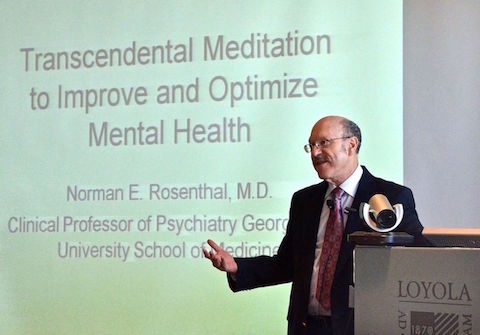
Dr. Norman Rosenthal speaks on TM at Stritch small

I asked TM Teacher Carla Brown how this came about and she explained the back story. Stritch alumnus James Bray MD had sent a letter to his colleague, Dean Linda Brubaker MD, urging her to host George Washington University clinical professor of psychiatry, Norman Rosenthal. Dr. Rosenthal’s talk about the Transcendental Meditation technique and its impact on health moved Linda and Vice Dean of Education Gregory Gruener to invite Duncan and Carla Brown to teach them and their students to meditate. Stritch School of Medicine is the medical school affiliated with Loyola University Chicago.

Since that time a team of MDs and TM teachers have guided Stritch students. The program really took off when Richard Carroll MD, ScM, FACC, joined Duncan and Carla Brown and Deans Gregory Gruener MD and Aaron Michelfelder MD.

“Dr. Carroll helped us create a flexible, blended curriculum,” said Carla. “Students start the TM technique throughout the year as they are free to do so and are able to either attend the five classes given by leading doctors and researchers held throughout the year, or review one or more classes on-line.”
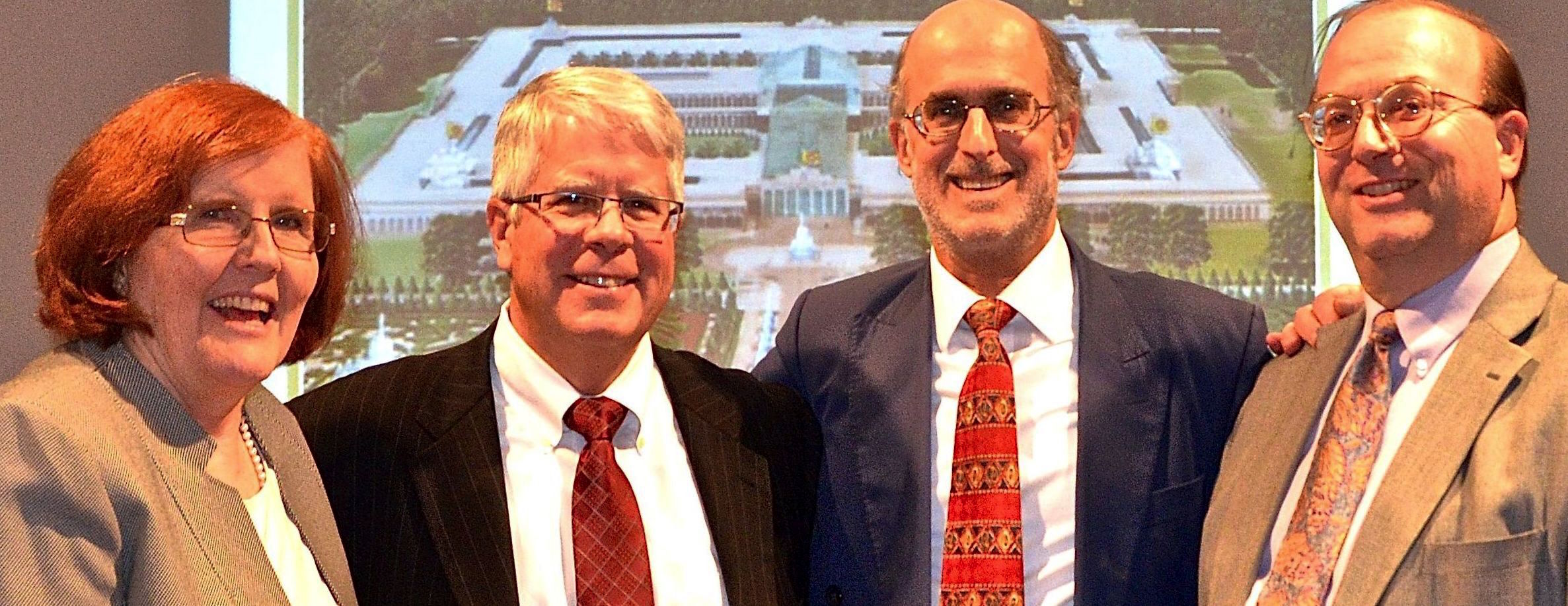
C. Brown,R. Carroll, R. Schneider, D. Brown

Dr. Carla Brown, Dr. Richard Carroll, Dr. Robert Schneider, Duncan Brown

In this picture Dr. Carla Brown, Dr. Richard Carroll and Duncan Brown welcome Robert Schneider MD, FACC (second from right). Dr. Schneider is director, Institute for Natural Medicine and Prevention, Maharishi University of Management, and has led CVD experts and medical researchers from around the country in conducting NIH-funded research over the last 20 years.

Chicago Medicine TM Articles

The first article, Physician, Heal Thyself: Stritch School of Medicine students give new meaning to the adage, was written by Carla L. Brown, EdD, and Gregory Gruener, MD. Students at the Stritch School of Medicine learn about the science and methodology behind the Transcendental Meditation technique in the first TM elective course offered at a major medical school in the United States.

Carla L. Brown, EdD, is an adjunct professor at the Stritch School of Medicine and director of the Center for Leadership Performance, Chicago. Gregory Gruener, MD, MBA, is vice dean for education, and the Ralph P. Leischner, Jr., MD, Professor of Medical Education, and professor and associate chair of the department of neurology at Stritch. The authors conclude with Implications for Patients and Physicians.

Our experience with beginning years of MDED-400 is that students can easily take control of their own wellness by gaining deep rest and improving brain functioning with twice daily TM practice. Attending physicians and students report that TM has added balance to their lives.

Having TM as a tool means our students can recommend something that they know will help, based upon their own experience and upon substantial evidence. They can avoid burnout and maintain their enthusiasm for practicing medicine. They can also become the role models we all aspire to be. Our students have demonstrated that we can join them in restoring our own balance, enthusiasm, and mastery.

The medical profession is in desperate need of support. We’re told, “Physician, heal thyself.” But how? Stritch students have demonstrated that TM might just be the prescription to help answer this charge, by making our profession a more rewarding experience while also offering something of great value for our patients.

Maura Tresch, MDThe second article, The Supporting Science: Multiple studies show the Transcendental Meditation technique can reduce stress, anxiety and cardiovascular disease risk, was written by Maura Tresch, a student who graduated from the program and is now a global health scholar and family medicine resident at St. Vincent’s Medical Center in Jacksonville, Florida. She ends her article with this valuable advice: Take Care of Yourself.

By recommending TM we can inoculate our patients against stress and its associated effects. With TM we do not “manage” stress—we get rid of it. With the stress gone, the health of the body and mind can improve. This is the essence of preventive medicine.

I have been told that “you cannot help others before you help yourself.” When we take an airplane flight, the stewardess tells us that in the event of an emergency, we are to put on our own oxygen mask before we help someone else. To properly care for my patients, I must first care for myself so that I can give them my best possible attentive mind.

Click here to read both articles on pages 22-27. The first one describes the Stritch TM elective, launched in 2014-2015, how the course came about, some of the structure and content, and guest lecturers. It contains photos and some amazing anecdotes from former students now practicing physicians who benefited from TM in challenging circumstances.

Editor’s note: The Chicago Medical Society advocates for 17,000 Chicagoland physicians and their 5 million patients. This issue was mailed to 9,000 physicians, available to patients in their waiting rooms.

Media Response

NPR – WBEZ – The Morning Shift

On Wednesday, February 24, 2016, Chicago NPR station WBEZ’s Tony Sarabia interviewed Dr. Carla Brown and med student Dani Terrell on The Morning Shift. Here is the interview with the lead-in on SoundCloud. Their website introduces this 4th segment of their show: How Loyola’s Meditating Med Students Are Transcending Stress.

The Stritch School of Medicine at Loyola University is the first major medical school in the country to offer a class in Transcendental Meditation. We talk to course instructor Dr. Carla Brown and second-year medical student Danielle Terrell about the class, why it’s being offered, and how the students are using the TM technique to manage the stress and workload of their demanding educational program. [Listen here.]

It’s not easy to get into medical school. Carla said 10,000 students apply to Stritch School of Medicine. They are whittled down to 6,000 and 10%, or 600, are selected for interviews, with only 160 admitted. So Dani represents the cream of the crop!  Listen to her comments in this 15-minute interview.

PBS – WTTW – Chicago Tonight

On Thursday, February 25, 2016, WTTW (PBS 11) Chicago Tonight host Phil Ponce spoke with Linda Brubaker, MD, Dean of Loyola University’s Stritch School of Medicine; Carla Brown, TM Teacher and adjunct professor of the Physician Wellness Program; and Danielle Terrell, a 2nd year med student, about this topic. Watch this impressive interview here.
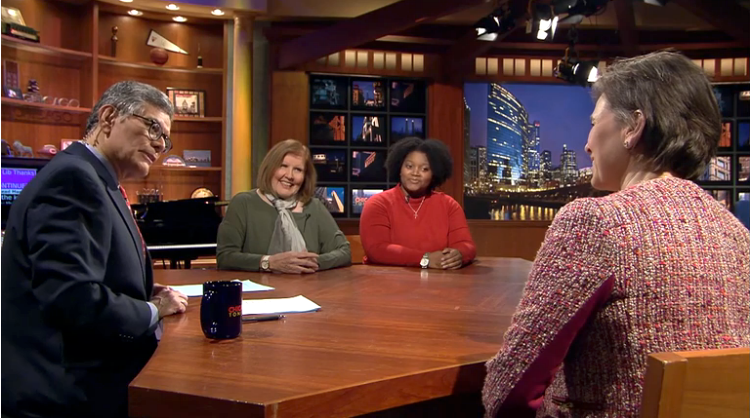
Chicago Tonight-Physician Heal Thyself

Phil Ponce, Carla Brown, Danielle Terrell, Dean Linda Brubaker, MD.

Phil starts by asking Dean Brubaker why the Stritch School of Medicine decided to introduce this course, and she replies that “this is really a no-brainer” for them, ‘there’s no risk to this,” that they want their “students to learn self-care so that they can become resilient doctors, and Transcendental Meditation is one of the things that can help them get there. We want to bring them to their highest potential in spirit, mind, and body, and this hits all of those.”

Thinking it may be an odd course to be teaching at a medical school, Phil asks the Dean how colleagues at other schools are reacting. If anything, she says, they’re getting a lot of calls and emails asking, “Where can I learn this? How can I get on the bandwagon?” She explains, “They see the benefits in our students, staff, and faculty; it has made a big difference at our medical school. This is a core of how we teach our students self-care. And who wouldn’t want a doctor who’s taking good care of themselves, and has more to give to their patients?”

Dean Brubaker elaborates more when Phil asks why the medical profession is so stressful. She tells him it’s “high-stakes work” to properly diagnose, treat, and help patients get well. “It takes a lot of technical skill, a lot of cognitive skill, and continuous learning for the 25, 35, 45 years that you’re practicing as a physician. That’s a long time to be in a high-stakes situation. And it’s important that you learn self-care so that you don’t burnout, that you remain resilient, that you exhibit outstanding professionalism the whole time you practice as a physician.”

Here was the original introduction (PDF), and the newly updated PDF of that show segment. Click the title to see this stellar 12-minute interview: Loyola University Offers Medical Students Meditation to Combat Stress

UPDATES

Members who attended the July meeting of the Association of American Medical Colleges, Vancouver 2016, each received copies of the Chicago Medicine articles. All incoming and existing medical students at LUC/SSOM will receive copies as well. Both students and faculty have been learning TM, and more will start in the next school year.

On August 22, 2016, the Loyola University Health System Newsroom seemed to follow my lead by boldly issuing this press release: LOYOLA FIRST MEDICAL SCHOOL IN COUNTRY TO OFFER ELECTIVE IN TRANSCENDENTAL MEDITATION  an accomplishment they should really be proud of!

A similar situation in military education is taking place at Norwich University. See Norwich University, oldest private U.S. military college, benefits from Transcendental Meditation.

In related news: There is hope for family caregivers burning out taking care of their elderly infirmed loved ones. Also read this Excellent article on Transcendental Meditation written by Sarah Klein in Prevention Magazine. Posted Oct 31, 2017: Central Saanich Police Service and Area Police Officers Benefit from #TranscendentalMeditation.

On September 16, 2017, David Orme-Johnson, PhD gave the first talk in this year’s lecture series to medical students enrolled in the TM program at Loyola University Chicago’s Stritch School of Medicine. He delivered a two-part presentation. Part 1: The Effects of TM on Brain and Cognitive Processes, and Part 2: Effects of TM on the Autonomic Nervous System and Health. Dr. Orme-Johnson reviewed a large body of research showing TM as a powerful tool that can help medical students and doctors reduce stress and improve their ability to assimilate large amounts of information. Click on this title to read his comprehensive presentation filled with graphics: What does 47 years of research tell us about the Transcendental Meditation technique?

On October 15, 2018, the Catholic Health Association of the United States published this excellent article in Catholic Health World: Medical students learn meditation to counter stress, promote physician wellnessSave

On January 20 and 27, 2021, Dr Tony Nader, MD, PhD, made presentations at LOYOLA University Chicago Stritch School of Medicine via Zoom: 1) Psychiatry Grand Rounds, Loyola University, for medical doctors and health care professionals: Effectiveness of the Transcendental Meditation Technique for Dissolving Stress and Improving Health and 2) The Purpose of Meditation: Physician Wellness through the Transcendental Meditation Technique.

On February 13, 2023, Dr. Tony Nader Q&A with Medical Students. In this episode, Dr. Nader answers questions from medical students at Loyola University Chicago Stritch School of Medicine. He’s joined by Fred Travis, the Director of the Center for Brain, Consciousness, and Cognition at Maharishi International University, and Richard J. Carroll MD, ScM, FACC.

The top 25 posts of 2015 on the @TMhome_com website that grabbed people’s attention

December 16, 2015

The popular TMhome.com website publishes a range of beautifully presented articles and interviews on the Transcendental Meditation technique and the people who practice it. They looked back and created a list of their TWENTY-FIVE MOST POPULAR POSTS of 2015.

We made it into the list twice—yours truly (14) and a documentary on Maharishi I facilitated (10), along with a mutual friend, Valerie Gangas (22) and her book, Enlightenment Is Sexy!!!

Well-known supermodel Miranda Kerr (23), Bollywood actress Anushka Sharma (17), business leaders, athletes, the DLF Change Begins Within gala (16) including singer Katy Perry, and TM teachers are listed, along with MUM alumna, singer and mystical poet Lyric Benson Fergusson (7), and former Japan PM Yukio Hatoyama (#24) who delivered MUM’s commencement speech. The telomerase study ranked high (3), and the top post was an interview with Cameron Diaz. The last one is a list of 12 great quotes on creativity. Here are the three I mentioned first.

10

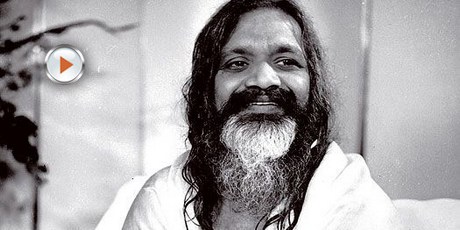
620z_maharishiyogidocumentaryfullmoviehistorychannelw

The full documentary on Maharishi Mahesh Yogi,
now available for watching online.
—— read the article ——
.

14

620z_Kenchawkinpoetry_2
.
We invited Ken Chawkin, the man behind innumerable
written lines and at least one great movie (see no 10 above)
to step into the limelight. .
—— read the article ——
.

22

620z_EnlightenmentisSexybookreviewvaleriegangas_1

Enlightenment is Sexy, Valerie Gangas’s book about
falling in love with the universe made a big splash this summer. .
—— read the article ——

The Atlantic’s Jennie Rothenberg Gritz visited schools where @TMmeditation was being used for stress-reduction and well-being

December 11, 2015

Jennie Rothenberg grew up in Fairfield, Iowa, went to Maharishi School of the Age of Enlightenment, and attended UCBerkeley on a scholarship to study Journalism. She became a professional writer, a wife and a mother. Jennie is a former senior editor at The Atlantic, is now a senior editor at Smithsonian magazine.

The last piece Jennie wrote for The Atlantic, published November 10, 2015, was about the Quiet Time program, promoted by the David Lynch Foundation, and its success sponsoring the Transcendental Meditation technique in schools across the country.

The magazine introduces the article: After growing up with Transcendental Meditation as a spiritual practice, the author visits public schools where it’s being used as a simple tool for stress-reduction and well-being.

In 1974, the year before I was born, my parents had a small wedding in my aunt’s living room and then spent their honeymoon becoming teachers of Transcendental Meditation. Those were the days when just about everyone seemed to be doing it. “Plainly,” wrote the author Adam Smith in The Atlantic’s October 1975 cover story on meditation, “TM was the greatest thing since peach ice cream.” Meditation was enough of a cultural phenomenon that Woody Allen could use it as a punch line. The L.A. party scene in Annie Hall ends with Jeff Goldblum’s character placing a businesslike call to his instructor: “Yeah, I forgot my mantra.”

Considering how many 20-somethings learned to meditate in the 1970s, one might have predicted an explosion of meditating schools in the 1980s. Instead, Americans mostly forgot about the trend as they settled into the Reagan era. My parents were exceptions: They enrolled me in a small private school where the day began and ended with TM. It was an idyllic childhood in many ways, but my classmates and I always knew we lived in a bubble. One summer, at a resort in the Catskills, I listened as my aunt tried to explain my upbringing to a couple of her friends.

“Sure, I remember TM,” one woman replied. “I guess some people got caught up in meditation, just like some people got caught up in drugs.”

“And the rest of us,” her husband finished, “grew up and moved on with our lives.”

So I was fascinated when meditation recently started becoming mainstream again. Coworkers told me about mindfulness apps they were trying and friends mentioned yoga retreats they were planning to attend. The general idea seemed to be that meditation was not so much a technique for spiritual enlightenment as a common-sense lifestyle habit, like getting enough exercise or eating green vegetables. ….

Jennie visited several schools in poor, stressed inner-city locations where children from different ethnic backgrounds and broken homes came to school already traumatized. She wondered how administrators, teachers and students would react to such a program, and how it could be implemented.

It’s hard to change the circumstances that create this kind of stress, though plenty of people are trying. But if you teach kids to meditate in the meantime, the thinking goes, you can help them reduce the stress itself. That reasoning always made sense to me, as someone who has been practicing TM since childhood and seen the research on adults, especially for stress-related problems like heart disease. Struggling schools need lots of things: better food, stronger math programs, and higher-quality teachers, to name just a few. One of those needs seems to be a way to reduce stress so kids can absorb information and go into the world as well-balanced, successful people.

Still, I had a hard time envisioning how meditation programs actually worked when they were dropped suddenly into public schools. Who were the principals who brought them in—did they have hidden mystical streaks, or were their motivations purely practical? Were the teachers enthusiastic or did they see meditation as yet another gimmick imposed on them from the outside? And how did the students really feel about it? Did they roll their eyes when the meditation bell rang or did they actually enjoy it? What was it like to grow up with just meditation—and no spiritual trappings surrounding it?

The article continues with visits to some of the schools where the program was introduced. Jennie interviews principals, teachers, and the students to get their personal reactions to this meditation program and its effects on them.

Read the rest of this objective revealing report: Mantras Before Math Class by Jennie Rothenberg Gritz. This is journalism at its best!

PDF: Quiet Time Brings Transcendental Meditation to Public Schools.

You can follow Jennie Gritz on Twitter.

A year later, Jennie moved to The Smithsonian and published this excellent article: Director David Lynch Wants Schools to Teach Transcendental Meditation to Reduce Stress. The acclaimed filmmaker has become the champion of the practice that’s now been adopted by thousands of kids.

Bob Roth explains how Transcendental Meditation works on Fox5NY’s Good Day New York (WNYW)

October 14, 2015

Bob Roth, executive director of the David Lynch Foundation, appeared on this week’s Fox 5 WNYW Good Day New York morning newscast* with Rosanna Scotto and Greg Kelly to talk about Transcendental Meditation. Rosanna’s friends were telling her about it, and she was interested in learning. So she invited the in-demand TM teacher to the show.

Fox5GoodDay

Bob explained how easy and effortless it is to learn and practice TM, and how different it is from other more difficult approaches. He also described some of the many scientific published research studies showing improvements in health, education, and rehabilitation.

He emphasized TM wasn’t just for the needy or wealthy segments of society. Everyone could benefit from it.  People from every walk of life were practicing it — military personnel, Wall Street brokers, educators, physicians, housewives, students, anyone dealing with today’s stressful challenges. More than just relaxation, he said TM gives you more energy, focus and drive to get things done.

Rosanna asked about the work of the Foundation and the upcoming concert. Bob described the various DLF projects helping different at-risk sectors of society, and announced the November 4th Change Begins Within Benefit Concert at Carnegie Hall.

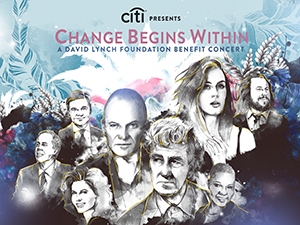
CHANGE BEGINS WITHIN 2015 BENEFIT CONCERT

This event features performances by Katy Perry, Sting, Jerry Seinfeld, Jim James, Angelique Kidjo, and Sharon Isbin, with musical direction from Rob Mathes and hosted by David Lynch and George Stephanopoulos.

ChangeBeginsWithin2015

Proceeds from the event will benefit the David Lynch Foundation’s Meditate New York initiative to provide Transcendental Meditation instruction at no cost to 10,000 at-risk New Yorkers, including underserved youth, veterans with post-traumatic stress, and women and children who are victims of domestic violence.

*This morning news show originally aired on Tuesday, Oct. 13th, 2015. You can watch the 10-minute interview in a larger format from the Fox 5 archive HERE and at the TM Blog.

Rosanna Scotto attended the DLF benefit concert and talked with Greg Kelly about it on Good Day New York.

Be You: Transcendental Meditation helps students succeed in this UK school program

July 25, 2015

I enjoyed watching Be You, an impressive little film documenting the life-transforming power of Transcendental Meditation in one of the schools of the APC, a UK educational alternative for socially-challenged students in need of individual support.

The West Sussex Alternative Provision College is one of four hundred pupil referral units in the United Kingdom, which caters specifically for pupils who are not currently in mainstream education for various reasons. This school offers young people with emotional and behavioral issues a new chance to succeed.

Be You is a start-up, grass-roots, not-for-profit organization founded by Ricky Reemer and Kitty de la Beche. It sets out to transform the lives and prospects of young people who struggle to fulfill their potential within the school system by teaching them valuable life skills and techniques.

The Be You project opened the way for the introduction of Transcendental Meditation to the teachers and pupils in this specialized Unit. With the support of the Be You, the pupils were encouraged to continue their daily practice of TM over a full school year.

A volunteer team climbed Mt Snowdon in order to raise funds for the film project, which was produced by Kitty de la Beche and directed by Nicholai Fischer. Here’s a look at the encouraging results.

Enlightenment Is Sexy, a memoir by Valerie Gangas, is out today, and it’s not just for women!

July 14, 2015

EIS Book CoverA first book from Valerie Gangas, ENLIGHTENMENT IS SEXY: Every Woman’s Guide To A Magical Life, is out today, and it’s not just for women!

Valerie is a great writer. She’s colorful, direct, and pulls no punches. Her effervescent personality shines through the amazing stories she shares with her readers, awakening them to their own inherent greatness.

The book is divided into short easy-to-read chapters packed with practical insightful wisdom. It’s also an inspirational testimony to the transformational power of TM, and I am enjoying reading every word of it!

Valerie sent us this intro to her story.

Awakening to Me

In 2011, I woke up and realized everything I thought I knew was wrong.

~ Valerie Gangas

For as long as I can remember, I have been running. Waking up in the morning and running to the gym. Running to the hospital to support my mother, who battled cancer for 13 years. Running to my job, managing an extremely busy Chicago restaurant/bar. Running from boyfriend to boyfriend. Running from one social event to another. Running to deal with the pressures modern women face to be perfect, to get the job done right, to be a caretaker, to look good—let’s face it: to be Wonder Woman.

Then one day, I was forced to stop running.

In late 2010, the restaurant I’d managed for 15 years was sold . . . but it turned out to be a weird sort of blessing, in that I got to spend day and night with my beautiful mother who, by Thanksgiving that year only had a couple of months left on the planet.

All of this time, I had been on a steady diet of double espressos, bottles of Cabernet and late nights eating steaks, cooked rare. (Did I mention I don’t eat meat?)

I was losing my mind as I watched her slowly slip away. I’d had a bad case of insomnia for years, my depression was deepening, and the distractions I’d held up like masks were no longer working well . . . make that, at all.

My mom passed away on January 25, 2011. And my world went black.

After she died, I felt like I’d died right along with her. I was out of a job, suicidal and completely unhealthy. My “diet”—mainly fueled by booze and caffeine—had caught up with me. I was the thinnest I’d been since high school, and my nerves were on fire. And it was like Groundhog’s Day—every night was the same scene. Go to bed, wake up at 3 a.m., stare at the ceiling, my thoughts reeling, feeling like complete crap, until I had to get up a couple hours later. Then my “day cycle” would start again. Down some caffeine, make myself workout (I had to fit in my cocktail dresses, duh!) and then never stop throughout the workday, ‘til I collapsed later that night.

Reflecting back, thoughts of suicide regularly arose in my mind. I didn’t feel like I could go on without my mom, who’d been my best friend. Clearly, I was a broken woman. Yes, I had been seeing a therapist and was trying to get my head above water. But nothing seemed to be working. My suicidal thoughts were getting stronger and stronger. I had gone so far as to ask my aunt and uncle to take my dog (I couldn’t bear messing up her little life), and I didn’t get a new car when my lease was up . . . because people who are going to kill themselves don’t need a car. I also wrote out my will.

Yep, I was gearing up to end my life.

One particularly horrible day I was on my knees in the shower, when I just collapsed and screamed out, “God, Mom, anyone, please help me kill myself or please save me!” In that moment, I completely surrendered. I was nothing. I was no one. And I completely gave myself and my fate over to God.

A week later, a friend suggested I learn Transcendental Meditation (TM). My only hope, at the time, was that I would be able to get some sleep. I hadn’t read anything about meditation, hadn’t thought about it or even wondered about it. But I was in such a dark place, one morning I made the call.

Within days, I borrowed that same friend’s car and drove to a Transcendental Meditation center in Chicago. The home which doubled as a TM center had a feeling of calm I couldn’t quite put my finger on—the air seemed lighter, somehow, and the view was all lake. Even upon entering the center’s lobby, I felt a bit calmer. Huh, I thought, these people who work here are super different. They were so chilled and completely filled with love . . . it was immediately clear to me they were there to help me. My next thought was, I’m here, so I might as well learn how to do this.

I sat down with my teacher and after a short, but beautiful ceremony, I was given my “mantra”—a sound she said my awareness would naturally follow, as it subsided into the depths of silence in my mind. When we both closed our eyes, I easily and effortlessly said the mantra to myself less than five times . . . and just like that, I was gone. I dove into a part of my body and mind I never knew existed—boundless, limitless and totally awesome. Yes-sir, something major had just happened . . . but soon I was discovering I’d only glimpsed the tip of the iceberg.

Driving home down Lake Shore Drive, I immediately began noticing how the world seemed so much different to me than it had on my way to the center. The colors all around me were more vivid, the sounds of the birds felt like sweet music to my ears, I seemed to be connected to all of the trees I saw . . . and above all, I felt happy. But, my mind called out to me, Is this really happening?! Do I really feel happy? How? Why? What the hell?

Fortunately, the essence of that experience stuck and stayed, and I came to find it was in fact “real”—that in twenty minutes, my whole life had changed. I woke up and realized everything I thought I knew was wrong. My life was no longer defined by outer circumstances. I was having a direct experience of what I have come to know as my true Self.

I cannot explain what followed . . . you know, the why of it. Within weeks of learning to meditate, I was standing in front of Oprah Winfrey, explaining how her newfound TM practice was going to make her limitless and boundless. Now, one would think standing in front of one of the most powerful women in the world would cause some serious butterflies in the stomach. But this wasn’t my experience. In that moment, when I stood at the front of the room and described my journey to her, I could only “see” her. The fame and the power didn’t exist. I was only concerned with helping the beautiful human in front of me the only way I knew how . . . with honesty, passion and a dash of humor.

I walked out of Harpo Studios that Friday morning and knew I was about to head down a very different life path. My soul and heart were breaking open and I was watching the right words leave my lips before my mind could even think them. I felt the power of the whole universe in my little body. That day, I decided to give everything I had to try to bring peace and goodness to the world. To do my part.

It has actually taken me the past few years to really understand this new way of living: that is, from the inside out. I felt compelled to write in my journal every night. I mean, the realizations I was having were just too profound not to write them down. I turned what I wrote about into a manuscript . . . and today I am proud to say I have just published my first book, Enlightenment Is Sexy: Every Woman’s Guide To A Magical Life. I’ve also started a brand I love and have continued to speak about consciousness, happiness, freedom, and above all, Transcendental Meditation.

Learning to meditate saved my life . . . but it also gave me more than I could have ever dreamt of: awakening to the real me.

###

George Foster of Foster Covers, with help from wife Mary, designed the colorful cover! Order the book on Amazon and read the nice comments.

Here’s a photo of the three of them during Valerie’s book-signing at Health & Wholeness on a 1st Friday’s Art Walk in Fairfield, Iowa.

Related: Read an interview with Valerie Gangas at TM Home, and this poem I wrote for her: Scheherazade Incarnate. TM Home also posted this today: Valerie Gangas reveals her top 5 reasons to learn Transcendental Meditation. And Val posted and sent this out. Transcendental Meditation for Women also posted Awakening to Me.

Valerie Gangas Shows Why Enlightenment Is Sexy on Writers’ Voices.

Spirit Matters Talk Interview with Valerie

Big Waves Strong Boat: Mary Waldon interviews Valerie Gangas, author of the best-selling book: Enlightenment Is Sexy™: Every Woman’s Guide to a Magical Life.

Listen to this great interview with Nick Digilio and Valerie Gangas on WGN Radio 720, Chicago, January 16, 2020. On Slowing down and finding peace in anxious times with Valerie Gangas.

ROOTED in PEACE to play Martha’s Vineyard and an Iowa premiere at Fairfield’s Sondheim Center

July 10, 2015

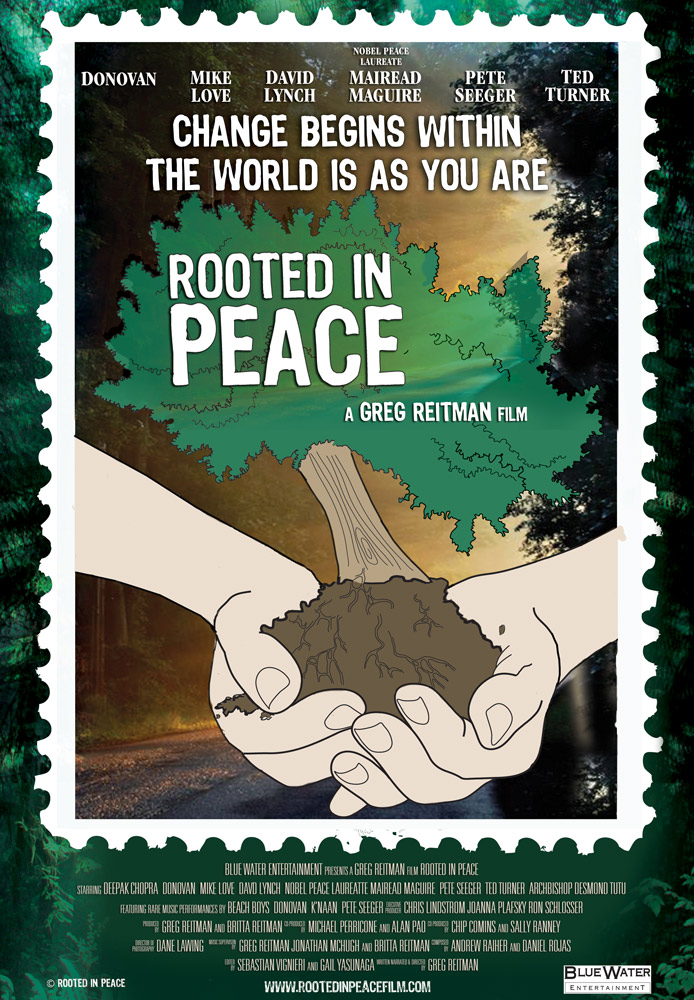
ROOTED-V.10js_r3More screenings are coming up this summer for Hollywood director Greg Reitman’s documentary feature film.

Martha’s Vineyard Film Society

This month, Martha’s Vineyard Film Society will present ROOTED in PEACE on Wednesday, July 15, 2015, at 7:30pm. There will be a special post-screening Q&A with director Greg Reitman.

Read this interesting interview with Zip Creative’s Joanne Zippel on her blog: Fast Forward Friday with Greg Reitman, published today in advance of the MVFS showing.

Iowa Premiere in Sondheim Center

In early August the film will premiere in Fairfield, Iowa. Read how this Hollywood filmmaker came to Fairfield for a Beach Boys concert, returned for a David Lynch Weekend at MUM, learned TM and more, in the July issue of the Iowa Source in their All About FAIRFIELD section: Getting Rooted In PeaceGreen Producer Greg Reitman Brings New Documentary to Sondheim for Iowa Premiere. Here is a PDF of the print version.

Included in the film are interviews from those visits with filmmaker David Lynch; musicians Donovan and Mike Love; Bob Roth, executive director of the David Lynch Foundation; and Fred Travis, director of Maharishi University’s Center for Brain, Consciousness, and Cognition; as well as historical footage of Maharishi Mahesh Yogi, founder of the Transcendental Meditation® technique, and Maharishi University of Management.

Blue Water Entertainment and the David Lynch Foundation are presenting the Iowa premiere of this inspirational documentary feature film, Sunday, August 2nd at 7pm in the Sondheim Center for the Performing Arts. There will be a Q&A following the showing with Sundance award-winning Director Greg Reitman and Executive Producer Joanna Plafsky. Joanna is an established international film producer and distributor, and member of the DLF Board of Directors.

Visit the Fairfield Arts and Convention Center website to find out more about Greg and his film, including production stills and the movie trailer, and if you’ll be in town at that time, to purchase tickets. Here is a PDF of the ROOTED in PEACE poster for Fairfield with affordable ticket prices.

The Fairfield Weekly Reader will publish an article on the event July 23rd.

Previous posts about the film can be seen here.

Arrangements are being finalized for the first international premiere, to be announced in the next film post.

Publicist and Poet @KenChawkin featured @TMhome_com. Learning to let go to let magic happen #creativity #TMmeditation

June 30, 2015

I received an email this morning from a member of the TMhome Team, an international Transcendental Meditation news website. I’ve admired their wonderful work over the years representing TM internationally, especially their interesting interviews with famous, and not so famous people who have benefited from this unique meditation practice.

They wrote to say the article they had been putting together about me was now up. As a publicist who is always concerned with properly promoting other people and their work, this was a complete turnaround for me. I very much enjoyed sharing stories with Liisa of how I started TM, my work as a publicist, and the wonders of the creative process writing poetry. So when I read her article I was very moved; she did an excellent job representing me!

The article is currently featured on their home page and under the People section. I invite you to visit their website and enjoy reading it. They also did a lovely job laying it out with personal photos and two of my poems.

I am thrilled to share this milestone with you! Click on the title of the article to take you there.

PR to poetry – how things sometimes happen to Ken Chawkin

Ken Chawkin - TMhome

June 30, 2015

In 1967, Ken Chawkin walked into the local TM centre without any intention of learning Transcendental Meditation. He simply wanted to buy a copy of The Science of Being and Art of Living written by Maharishi Mahesh Yogi.

Here are the two poems featured in the interview: Ode to the Artist and Sometimes Poetry Happens. This one is also mentioned and now linked: Indonesian Mystery Poem honoring Nyi Roro Kidul.

About 5 months later they followed up with Part 2 with the story behind the making of the International History Channel documentary on Maharishi Mahesh Yogi.

Great article on TM’s successful resurgence and supportive applications in health and education

April 28, 2015

FORBES: PHARMA & HEALTHCARE 4/27/2015 @ 11:20AM
Contributor Alice G. Walton covers health, medicine, psychology and neuroscience.

Transcendental Meditation Makes A Comeback, With The Aim Of Giving Back

Transcendental meditation (TM) has been having a renaissance in recent years: Celebrities, businesspeople, and regular folk are practicing it in record numbers. Last week, the David Lynch Foundation, the major non-profit champion of TM, hosted an event in New York City at which public figures like Arianna Huffington, Robin Roberts, and Cynthia McFadden discussed the transforming role of TM in their lives. They made compelling arguments for what the practice had done for them, as previously harried and stressed-to-the-max businesspeople – they may still be stressed, but at least they’re able to balance it with a sense of calm. But the Foundation has a larger goal: To bring TM to schoolchildren, domestic abuse survivors, veterans, and prison inmates to help give them tools to process their trauma and reclaim the capacity to live fulfilling lives. And that’s not a bad goal to have.

The TM movement itself has had some bumps in its past. Developed in the 1950s by Maharishi Mahesh Yogi, it rose to popularity after The Beatles “discovered” and helped propagate it – by the late 70s, 4% of Americans were practicing TM, according to a Gallup poll. Then things started to get shaky – and TM began to be associated with some cultishness. But in the last decade or so, the practice has gained back the respect and indeed acclaim, as people – some very famous ones – began to flock to it for its simple and straightforward method to find inner peace.

The business-meets-meditation stories are everywhere these days. Huffington told the endearing but jarring story of when she’d awoken in a pool of her own blood in her office, having passed out from exhaustion; it was then, she said, that she realized that money and power were only two legs of a three-legged stool – self-care, including meditation, being the other critical leg. And the list of companies that encourage their employees to meditate – by teaching it to them and by providing meditation time and space – is growing. Google, Target, Nike, Aetna, and Goldman Sachs have integrated meditation into their cultures.

But the more pressing focus of the David Lynch Foundation is to give psychological support in the form of TM, at low or no cost, to those who need it most: Veterans, schoolchildren, prison inmates, and women and children who have survived domestic abuse. To be sure, TM isn’t the only meditative practice that’s been used to help these groups of people. Yoga, mindfulness, and other forms of meditation are other increasingly common tools in the “service” arena. But, says Bob Roth, CEO of the David Lynch Foundation, there’s something quite simple and powerful about TM which makes it particularly well-suited to touch people who have been through emotional turmoil, or worse. Perhaps its greatest benefit is that it’s relatively quick to learn and easy to master. No waiting weeks or months of practice before you see results: TM cuts right to the chase, taking only days – or for some, minutes – before one feels reprieve from their painful and overwhelming thoughts.

“With TM, you’re given a mantra – a word with no meaning – and taught how to use it,” says Roth. “The active thinking mind settles down to a state of inner calm without any effort. It’s not clearing your mind, as in focused awareness meditation, and not gently observing thoughts as in open monitoring (which is vipassana, or mindfulness). I can put it even more succinctly: TM uses sounds or mantra that has no meaning as a vehicle to experience a quieter, less agitated thought process.”

With the two classical forms of meditation – focused awareness (samatha) and open monitoring/mindfulness (vipassana) there’s generally more practice involved. With focused awareness, the practitioner uses a mantra or other object of concentration to bring a wandering mind back, again and again. With open monitoring/mindfulness, people observe their thoughts with curiosity and some detachment, so that they eventually lose their charge. Though the former is typically learned before the latter, they ultimately work in tandem and complement one another in practice.

To describe TM’s psychological effects, Roth often uses an ocean analogy: An agitated mind, he says, is like 30-foot surges at the surface of the ocean. Focused awareness tries to stop the waves at the top, he says, while open monitoring tries to observe them until they go away. TM, on the other hand, says Roth, has its practitioners plunge deep below the waves, to a quieter depth that’s perfectly still, and blissful. Roth adds that unlike the two classic forms of meditation, “the third form of meditation, TM, is self-transcending. It’s not concentration, and it’s not simply observing thought. TM creates a specific type of alpha brain waves, which is indicative of a unique state of ‘restful alertness.’”

The practice does seem to be helping a great number of people. Roth says the Foundation has helped bring meditation to half a million school children all over the world, and hopes to bring it to three million adults and children in the next five years. It’s also taught TM to 2,000 veterans and as many female victims of domestic abuse through Family Justice Centers across the country, where it’s offered free of charge. The Foundation has also just begun to teach the perpetrators of that abuse, Roth says. The Foundation can barely keep up with all the requests it has from school systems, family centers, and prisons to teach TM.

“There is no medicine, no wonder drug you can take to prevent trauma and toxic stress. And there is no pill you can take to treat or cure it,” says Roth, “Ambien and Xanax, while perhaps helpful to some, are often abused or mere Band-Aid solutions.” There is some relatively strong evidence that TM can affect the stress response, and much of the scientific support for TM comes from its effects on the cardiovascular system, and blood pressure reduction. “The problem of stress is not going away, it’s getting worse and worse,” says Roth. “TM can be an effective tool. It helps you navigate increasingly stressful times. I’m a skeptical person. There’s nothing to believe in. There’s no buy-in. It just works.”

Read the rest of the article here: http://onforb.es/1IfgdIl