Here is a 30-second TV news spot some Canadian friends are testing out on CHEK TV in BC. The ad airs 44 times over 3 months during the 5pm, 6pm and 11pm News. The voiceover is by a longtime TM teacher, Bob Chelmick, who was the CBC news anchor in Alberta for decades. It broadcasts throughout Vancouver Island and also in the Lower Mainland including Vancouver, and spills over into Washington State. It was first posted on Garry Foster’s Facebook page and is now on their Transcendental Meditation Canada website as The Antidote to Stress.
Six seconds into the video we see a photo of a helicopter carrying a large specialized water bucket to help put out forest fires. Don Arney, inventor of the Bambi Bucket® for Aerial Firefighting, was inducted into the 2017 National Inventors Hall of Fame for his invention. It is manufactured in Vancouver, Canada and shipped to clients in more than 110 countries.
This personal story is told with sincerity, vulnerability, and transparency. Some fascinating moments give us a glimpse into Tony’s relationship with TM founder Maharishi Mahesh Yogi, and his evolving experiences, in and out of meditation.
This personal story is told with sincerity, vulnerability, and transparency. Some fascinating moments give us a glimpse into Tony’s relationship with TM founder Maharishi Mahesh Yogi, and his evolving experiences, in and out of meditation.
Here is a look into the author’s background, what he’s accomplished during his lifetime, and a description of the book.
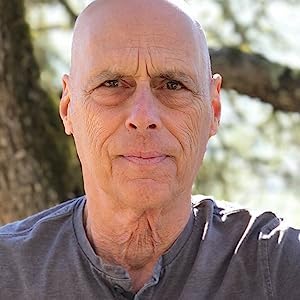
About Tony Anthony
Tony Anthony was born in New York and educated at Syracuse University. He served as a combat correspondent for the 198th Infantry Brigade in Vietnam in 1968 and 1969. His stories and photographs appeared in Stars & Stripes and in newspapers around the world.
He has had a career in the creative arts: as an author, a painter, a photojournalist, and a creative director. As a photojournalist, Anthony photographed the attack on the World Trade Center from a Blackhawk helicopter on September 11, 2001 for the NGO Americares. Days after the US bombed Baghdad in 2005, he photographed the first humanitarian relief mission to Iraq. He has photographed on all eight continents, including the melting ice in Antarctica.
He has written three previous books: Life is War But You Can Win, an inspirational book for Veterans; Beneath Buddha’s Eyes, a novel; Before the Next War, a novel set in Vietnam based on actual events. He has directed a documentary film, Fearless Mountain, about a Buddhist forest monastery. The author is the recipient of an Atlantic Monthly writing award. He resides in Northern California and has two grown sons.
A Joy-Filled Amazement
A Joy-Filled Amazement is the wild and enthralling tale of a spiritual seeker that proves that anything is possible. The book begins at the lowest moments of the author’s life—penniless and mind-ravaged, just back from Vietnam, living in the hold of an anchovy boat. In an inexplicable encounter, he meets Maharishi Mahesh Yogi, the spiritual leader who brought Transcendental Meditation to the West made famous by the Beatles. The great Indian guru enthralls him with a vision of the life he longs for and the way to get there. The story is an eight-year odyssey, to Maharishi’s ashram in Switzerland, to India, and finally to enlightenment. The journey is complex, deeply spiritual, and genuinely captivating.
A generation of seekers
Ours was a generation of seekers. If you’re on the spiritual path or curious about it, this book will satisfy. You will spend time in the heart and mind of a seeker turned finder.
Ours was a generation of seekers. If you’re on the spiritual path or curious about it, this book will satisfy. You will spend time in the heart and mind of a seeker turned finder. Tony also describes some pretty cosmic experiences that will inspire. Glad I read it!
On page 258, Tony shares something that surprised and pleased me. A friend who cleaned Maharishi’s apartment had invited him along, which was unexpected. While his friend “went about about replacing flowers in vases and otherwise straightening up in the sitting room, I took a seat and thumbed through a book of photographs taken by Linda McCartney, Paul McCartney’s wife. On the front piece was a hand-written note to Maharishi saying how much she and Paul loved and appreciated him.”
Book Cover
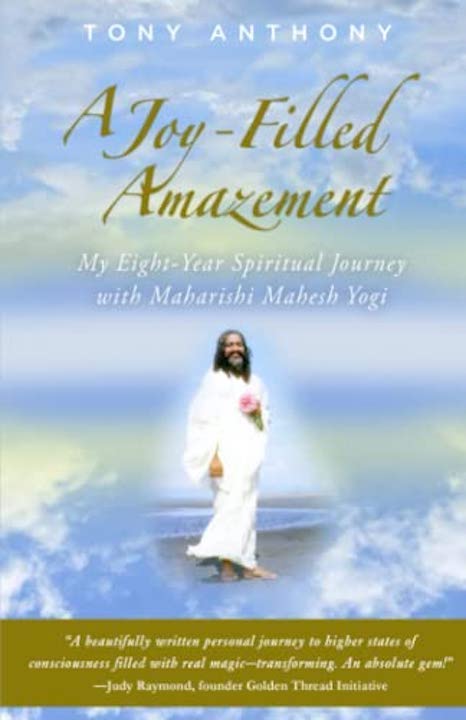
Tony chose Spanish graphic designer Jonas Perez to design the book cover. He selected the typeface and gold color and left the rest to him. Jonas surprised Tony “with the sensitivity and subtlety of the design.”
You may recognize the famous photo of Maharishi on Sands of Parkville, the beach at the former Island Hall resort in Parksville, Vancouver Island, BC, Canada. It was taken by Victoria artist, photojournalist, and filmmakerKarl Spreitz. Eileen Learoyd, a columnist for The Daily Colonist at that time, asked Karl to take the photo for her article on Maharishi (September 20, 1963). An early meditator, Eileen later became a TM teacher. Maharishi appointed her National Leader of Canada. Her daughter, Grania Litwin, also a journalist, sent me the article and the photo, which was also used on a billboard with the words, learn to meditate, and a mailing address.
Book Title
In case you’re wondering, as I was, about the book title, Tony explains that in the 3rd paragraph on page 309 under Acknowledgements.
The title of the book is taken from The Shiva Sutras, revealed by Swami Laksmanjoo, a close friend of Maharishi’s. In Verse 12, he explains the signs by which we can determine that a yogi is established in that supreme state of Lord Siva: “The predominant sign of such a yogi is joy-filled amazement.”
— Written and compiled (citing sources) by Ken Chawkin for The Uncarved Blog.
June 16, 2024: I wrote Tony to tell him about Billy Schulz’s book, The Field of Glow: My Life with Angels and Celestial Beings. He said he had read it and mentioned his new book, A Joy-Filled Awareness, the follow-up to the book about his time with Maharishi, A Joy-Filled Amazement, which now fleshes out the “time before and after” as described by a mutual friend from the United Kingdom in his 5-star Amazon review.
Healthcare providers (HCP) at three Miami hospitals during the height of the Covid crisis, who practiced the Transcendental Meditation technique (TM), showed a rapid and highly significant reduction in stress-related burnout symptoms such as somatization, depression, anxiety, sleep disturbances, and emotional exhaustion, as well as significant improvement in mental well-being, compared to a parallel matched lifestyle-as-usual group (LAU), according to a new study published today in PLOS ONE.
A total of 65 healthcare providers at the three Miami hospitals (Baptist, Mercy, and Encompass Hospitals), were enrolled in the TM group, as well as 65 parallel match controls. Validated surveys were used to assess burnout and stress-related symptoms including the Brief Symptom Inventory-18 scale (BSI), the Insomnia Severity Index (ISI), the Maslach Burnout Inventory-Human Services Survey (MBI), and the Warwick Edinburgh Mental Well Being Scale (WEMWBS).
After two weeks symptoms of somatization, depression, and anxiety in the TM group showed a near 45% reduction and insomnia, emotional exhaustion and well-being had improved by 33%, 16% and 11% respectively. At three months, the TM group showed mean reductions in anxiety of 62%, somatization 58%, depression 50%, insomnia 44%, emotional exhaustion 40%, and improvement in mental well-being of 18% (Examples Figures 1 – 3). TM appeared easy to learn and was maintained by the subjects within an average weekly TM session completion rate of 83%. (Click on Figures 1-3 to enhance details.)
“The results of this study—one of the largest on the effects of TM in a healthcare setting conducted during the height of the Covid crisis—are dramatic, not just because of the size and significance of the improvements in a variety of burnout indices, but notably in how rapidly the results were seen,” said Mark S. Nestor, M.D. Ph.D., the principal investigator, and lead author of the study. Dr. Nestor is Director of the Center for Clinical and Cosmetic Research in Aventura Florida, and Voluntary Professor at the University of Miami Miller School of Medicine. “This rapid and dramatic improvement in stress-related symptoms is not often seen with the use of medications much less with other easy to learn mental techniques.”
The authors point out that “the study confirms and expands on the previously reported benefits of the practice of TM and its positive psychological impact on healthcare providers in high stress settings and should be considered as a rapid intervention for healthcare worker burnout but certainly may have application to other at-risk populations.”
A month later, Psych News Daily reported: Transcendental Meditation reduces burnout, new study finds. A new study has found that Transcendental Meditation reduced symptoms of burnout and insomnia, while improving overall well-being.
— Written and compiled (citing sources) by Ken Chawkin for The Uncarved Blog.
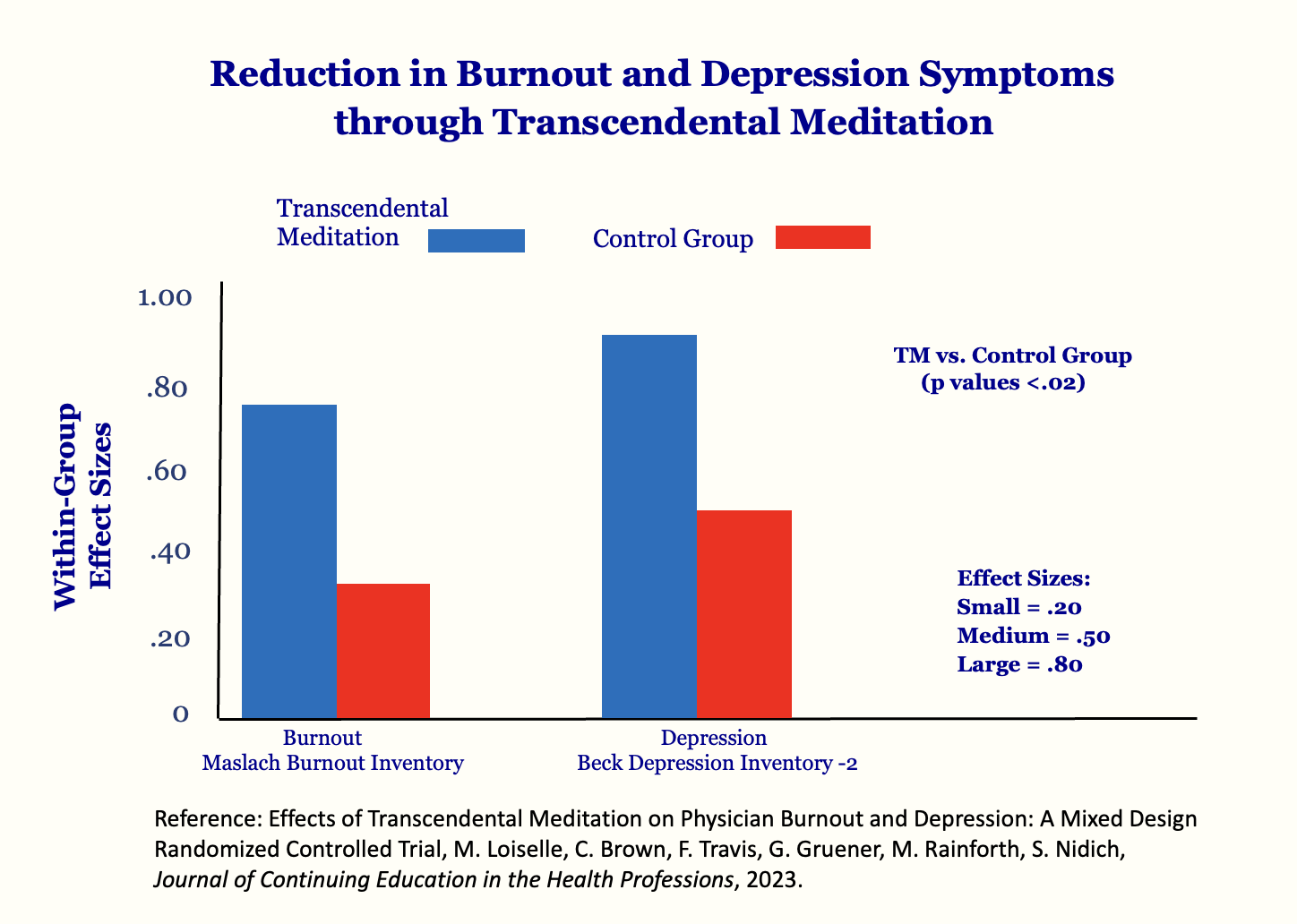
This figure shows the within-group effect sizes (mean change divided by pooled standard deviation) for the Transcendental Meditation group and the treatment-as-usual control group on burnout, as measured by the Maslach Burnout Inventory, and depression symptoms, as measured by the Beck Depression Inventory-2. Between-group statistics comparing TM to the control group yielded significant differences between groups on both burnout and depression symptoms (p values <.02). CREDIT: Maharishi International University Research Institute. (Image posted on EurekAlert!)
According to a randomized controlled study, published in Journal of Continuing Education in the Health Professions, physicians who practiced the Transcendental Meditation (TM) technique showed significant reductions in both burnout and depression symptoms. Research conducted at Stritch School of Medicine, Loyola University Chicago found that practice of Transcendental Meditation produced large effect sizes in decreasing burnout and depression symptoms in academic physicians; controls exhibited smaller effect sizes. The research was done pre-covid.
Marie Loiselle, PhD, lead author and senior researcher at the Center for Social-Emotional Health at Maharishi International University, stated: “Prior to treatment, the physicians were discouraged by the impact that burnout was having on their work and personal lives. To see both burnout and depression reduced significantly across 1- and 4-month posttests for the Transcendental Meditation group indicates a real possibility for alleviating these symptoms throughout the health profession.”
Sanford Nidich, EdD, co-author and director of the Center for Social-Emotional Health, explained that “these findings are consistent with research on Transcendental Meditation recently published in JAMA Network Open and the Journal of the American College of Emergency Physiciansshowing large within-group effect sizes due to TM on burnout and depression symptoms in healthcare provider groups. The findings are also consistent with research on other populations.”
Forty academic physicians were enrolled in the four-month study, comparing the TM technique to treatment-as-usual controls. TM is described as a simple, effortless technique, practiced for 20 minutes twice a day, sitting with eyes closed. TM allows ordinary thinking processes to become more quiescent, resulting in a unique state of restful alertness. Controls continued with their usual care throughout the duration of the study. The primary outcome was total burnout, using the Maslach Burnout Inventory (MBI). The Beck Depression Inventory (BDI-2) was also used to determine effectiveness of TM on depression symptoms over the same time-period.
Repeated measures analysis of covariance was used to assess adjusted mean change scores. Significant improvements were found for the TM group compared to controls in total burnout (P=.020) including the MBI dimensions of emotional exhaustion (P=.042) and personal accomplishment (P=.018), and depression (P=.016).
The following is a sample of responses from semi-structured interviews with TM participants about their experiences:
“I’m more relaxed about things overall, more accepting, calmer, not as revved up by things. I think that is the biggest change.”
“If I am feeling really bothered by the day, I’m able to get over it easier and shift over to focusing on home.”
According to Gregory Gruener, MD, study co-author and Vice Dean for Education, Stritch School of Medicine, Loyola University Chicago: “Longevity in a career that will last 40 to 50 years requires a physician to embrace the ‘long-view’. While knowledge, skills and attitude are fundamental, Transcendental Meditation provides the clarity of mind and calmness that makes this journey as enjoyable and fulfilling as the destination.”
*
Funding support: This study was supported by grants from Loyola University and other private foundations and individual donors.
News Coverage: This study was published Jan 26, 2023 and publicized with an embargoed press release via EurekAlert! It was reported in the medical press. Helio requested a copy of the study and published their review Feb 3, 2023. But you have to register to read it.
When lead author Marie Loiselle read this news she shared her wish that this will motivate more health professionals to start TM and more programs like the one Carla and Duncan Brown teach at Stritch School of Medicine to be implemented.
The evidence continues to mount, which makes it a wise, health-conscious decision, and, since the pandemic, an almost necessary one. Some physicians have also been prescribing TM for their patients. It is a viable alternative and should be covered by health insurance.
It seems to be a matter of time, which reminds me of this famous quote attributed to German philosopher Arthur Schopenhauer: “All truth passes through three stages. First, it is ridiculed. Second, it is violently opposed. Third, it is accepted as being self-evident.”
Burnout is pervasive among physicians and has widespread implications for individuals and institutions. This research study examines, for the first time, the effects of the Transcendental Meditation (TM) technique on academic physician burnout and depression. Mixed methods findings suggest the TM technique is a viable and effective intervention to decrease burnout and depression for academic physicians.
2024 Update: A second Editorial, this one in the Spring 2024 – Volume 44 – Issue 2 of the Journal of Continuing Education in the Health Professions, announced The 2023 Paul Mazmanian JCEHP Award for Excellence in Research was given to Marie Loiselle and her research team for their original study! Their TM and physician burnout paper was selected from 231 original research papers submitted to JCEHP.
— Written and compiled (citing sources) by Ken Chawkin for The Uncarved Blog.
In it, Spielberg mentions how he and his wife had learned TM, Transcendental Meditation, 3 years ago through the David Lynch Foundation. He also revealed how the idea came up to ask David Lynch to play the role of John Ford in the film, how he pulled it off, and how David Lynch prepared for his cameo role. Apparently, David was unrecognizable as he took on the persona of the late, great filmmaker.
Entertainment writer Tomris Laffly was at the Q&A and posted several video clips of that conversation on Twitter, for which we are grateful.
I am watching Steven Spielberg & Martin Scorsese discuss THE FABELMANS. DGA today is a house of worship, ♥️ pic.twitter.com/uLAkT8W1px
And here is a part of that movie clip they talked about, especially the cigar-lighting scene, which Amanda Dugan just tweeted of David Lynch as John Ford in The Fabelmans. She later sent me the full YouTube clip of David Lynch as John Ford, which I’ve embedded here.
David Lynch playing John Ford being directed by Steven Spielberg in a semi-autobiographical film about his life.
Later added: On Jan 5, 2023, Jimmy Kimmel asked Laura Dern to share the story of how Steven Spielberg asked her to get David Lynch to play the role of John Ford in his film. She was the catalyst in bringing both of these master film directors together to “pay homage” to the master filmmaker they both admired. It’s from 4:36-6:40 and is cued up below.
At the bottom of The Film Stage article, they embed a video from 11 years ago — Spielberg/Grazer/Howard – “John Ford” — of Spielberg recounting in detail the real-life story, when he was 15, of meeting John Ford, which, decades later, would became the ending for The Fabelmans.
In this later video by The Back Focus: David Lynch’s Strange & Surprising Acting Career, Brandon Hardesty quotes Spielberg at 21:23 saying: “I got to know David when he played John Ford in The Fabelmans. Here was one of my heroes — David Lynch — playing one of my heroes. It was surreal and seemed like a scene out of one of David’s own movies.”
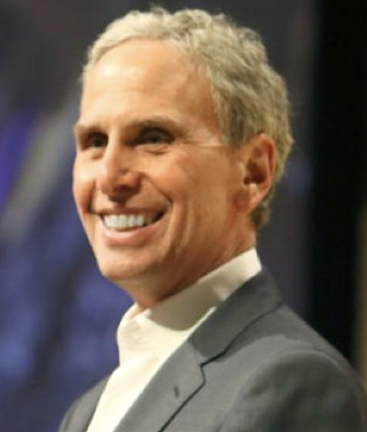
Over the past two years I’ve been joining the daily morning and evening group meditations on Zoom facilitated by Bob Roth, a longtime Transcendental Meditation (TM) teacher, CEO of the David Lynch Foundation (DLF), and author. Before each group meditation, Bob likes to share interesting scientific information about how the body works, or something in nature, and ends the call with an inspirational poem, quotation, or word.
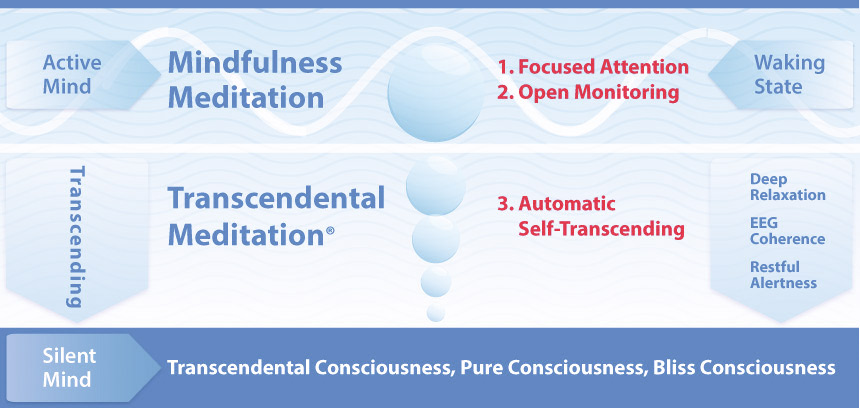
Bob also answers questions that have been sent in. One that comes up often is how is TM different from other types of meditation, in particular mindfulness. Bob’s answer was so clear, I wanted to share it with you. It was transcribed and approved for posting. I found two relevant images in an article on TM Basics in Enjoy TM News that will help highlight Bob’s explanation. He also addresses the notion of the active “monkey mind” and how it can be calmed without effort, a key point.
Bob Roth: I want to address a pretty basic question that many of you know the answer to, but many of you don’t. And since this is a community experience (these group meditations), I want to be sure that everybody feels comfortable and is up to speed. And one of the questions that frequently comes up, even among people who practice TM, is, “How is this different from other types of meditation, or mindfulness meditation?” Because we hear that term: mindfulness meditation.
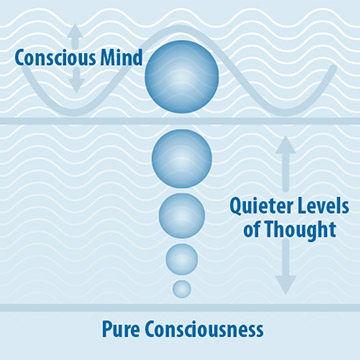
And I like to use a very simple analogy; that you have a cross section of an ocean. (You ever hear me use that analogy in the past?) And you have choppy waves on the surface. And that can be analogous to the thinking mind. And people who are familiar with different types of meditation often talk about the nature of the mind being like a monkey mind. It bounces all over the place and, just in search of, just bouncing, bouncing, bouncing. It’s an active mind.
And if you want to control the mind, if you want to have a calm mind, then you have to stop the monkey mind from bouncing all over the place. And so, many types of either mindfulness meditation or other types of meditation involve some type of control of the mind.
So, in that cross-section of the ocean, it would be attempting to stop the waves on the surface of the ocean. That if you want to have a calm ocean, what disrupts a calm ocean? Waves. So, if you could stop the waves, then you’d have a calm ocean.
By analogy, if you want to have a calm mind, what disrupts a calm mind? Thoughts. So, if you want to have a calm mind, stop thoughts. You’ll have a calm mind.
That approach to meditation is called a cognitive approach. Cognitive means attending to your thoughts, your moods, your feelings, your actions. So, in that type of meditation, there’s some degree of control of the mind.
In Transcendental Meditation, we know there’s no control of the mind.
In Transcendental Meditation, we know there’s no control of the mind. We appreciate that the surface of the ocean may be turbulent, but we also recognize that there’s a vertical dimension to the ocean, and that there’s a depth to the ocean. And the depth to the deeper levels of the ocean? More silence.
In the same way, we appreciate that the mind is an active mind. All of the thoughts that we have during the day—we’re busy people. And we’re upset about things, and we’re happy about things, and we’re depressed about things, and we’re anxious about things, and we’re in love, and then we’re hurt.
All this stuff that’s going on are like waves on the surface, thoughts on the surface of the mind. And we call that the “gotta-gotta-gotta” mind.
Transcendental Meditation recognizes that there’s a vertical dimension to the mind. Just as there’s a vertical dimension to the ocean, there’s a vertical dimension to the mind. And the deeper levels of the mind are increasingly quiet, more settled.
Just as there’s a vertical dimension to the ocean, there’s a vertical dimension to the mind. And the deeper levels of the mind are increasingly quiet, more settled.
We know that when we want to talk to a dear friend about something important to us, we don’t say, Let’s go to a noisy sports bar. We say, Let’s go someplace quiet. Because when it’s quiet, we can think more clearly. We feel more settled within ourselves.
So, deeper levels of the mind—quieter. In Transcendental Meditation, we don’t try to stop thoughts on their surface. We effortlessly access what’s called (go in the direction of what’s called) the source of thought, from where thoughts arise deep within the mind of everyone—from where thoughts arise.
And that level of the mind is naturally quiet, like the ocean depth is naturally quiet. It’s there. That’s the hypothesis. You don’t have to believe in that. That’s the hypothesis. Deep within every human being is a level where the mind is already quiet. All we do in Transcendental Meditation is set up the conditions for our mind to effortlessly access that.
Deep within every human being is a level where the mind is already quiet. All we do in Transcendental Meditation is set up the conditions for our mind to effortlessly access that.
We don’t try to stop thoughts. It’s a waste of time. It’s impossible. It doesn’t accomplish what we hope to accomplish. And what do we hope to accomplish? Just set up the conditions for the mind to settle down within. And why will the mind settle down within? Because your mind doesn’t wander aimlessly. The mind is in search of something more satisfying. When it goes out through the senses, we look for something—something more beautiful, something more delicious, something more fragrant, something more pleasurable.
When we close our eyes, wait a half a minute, and then begin to think the mantra in an effortless way, then the mind is drawn inward to these quieter levels. And as that happens, our body gains deep rest.
And then as we get deep rest, the body throws off stress, and that increases the activity in the body. And then we come up a little bit. And then we settle back down. And we come up and we settle back down. This is Transcendental Meditation.
So, it’s that vertical dimension—accessing a level of the mind that is already quiet. So, no control in this. Concentration and control, just is trying to manipulate the surface. And that is just difficult and uncomfortable and not Transcendental Meditation.
Easy, comfortable, let the attention turn within, and we settle down, we come up. And that is TM—transcendence. Going beyond ordinary human limitations.
More on that in times to come, but let’s do our meditation now.
* * *
This infographic on the TM website compares forms of meditation techniques and their impact on the brain by looking at amount of mental effort required, images of different EEG signatures, types of brainwave activity, and their descriptions identified by the Mayo Clinic.
Enjoy this excellent article on how Transcendental Meditation is benefitting Canadians, especially those with medical issues, ongoing anxieties and even PTSD. Click here to see photos of the people journalist Kate Wilson interviewed for an Edmonton News story published in the Edmonton and Calgary issues of the Alberta Prime Times.
Transcendental meditation (TM) provides benefits to those with medical issues, ongoing anxieties and even PTSD.
By: Kate Wilson for AlbertaPrimeTimes.com (Edmonton and Calgary)
At the Edmonton TM Centre, Ami Stadnick helps clients from all walks of life to better manage a range of issues. Photo Kate Wilson.
Wade McKinley recalls the day he first stepped into a class on Transcendental Meditation (TM). As a young man in Vancouver, he’d been experiencing anxiety and depression, and a friend had recommended enrolling.
“I strolled in not knowing anything and said, Hi, I’d like to learn,” said the Calgary resident.
Now 54, McKinley has been practicing TM for 33 years. He says he values the rest it brings to his nervous system and body.
“There are times when distractions interrupt my peace of mind,” he said, but the stability that twice-daily meditation brings stays with him. “I still do TM exactly the way I was taught, but there’s growth in my experience. The quality of silence and settled-ness, it’s expanded into more aspects of my day.”
Setting the mind to rest
TM is a simple technique based on ancient yogic practices from India and renewed by Maharishi Mahesh Yogi in the middle of the 20th century. It aims to bring the body and mind into a settled state of rest, without any concentrated effort.
A 1978 study in Hormones and Behaviour showed TM reduced cortisol–the ‘stress hormone’–by 30 per cent. A 1987 study published in Psychosomatic Medicine showed TM reduced hospitalizations and doctor visits among seniors, with the biggest reduction–about 70% –in people over 40.
In his 2018 book Strength in Stillness, longtime TM practitioner Bob Roth said the surge in interest in TM is partly due to an epidemic of chronic stress and related illness, and medication’s inability to prevent or cure it. He points to four decades of science showing TM’s capacity for improving brain and cognitive functioning, cardiovascular health and emotional well-being.
Help with medical issues
For Ruth Yanor, TM provides a priceless “reset button”. Seven years ago, she was weathering the debilitating effects of sleep apnea, in which breathing repeatedly stops and starts.
“I was wrung out from poor quality sleep, and pretty close to not being able to function. Nothing was helping,” said the Edmonton resident.
An incident at a cross-walk–where she was hit and dragged by a truck–sent her to the hospital with rib fractures and lung punctures. An allergy to opioids meant Yanor was only given extra strength Tylenol to deal with her pain, so her physician suggested enrolling in a TM program.
“Meditating would clear things. I could keep the pain out of my mind, until someone would ask ‘how’s your pain’,” she said.
Now 63, Yanor concedes that while TM hasn’t corrected her sleep apnea it has been invaluable in allowing her to function over the day.
“I calm my mind down with TM. It’s so wonderful to have this practice.”
Yanor’s instructor, Ami Stadnick, says the simplicity of TM relies on the mind’s natural capacity to settle, despite its tendency to be distracted.
“It may be a favourite piece of music or a conversation. Our attention, at least momentarily, is (wired) to jump to that,” said Stadnick, a registered psychologist. “We know that if given the opportunity, the mind would rather be in a restful state. TM sets the conditions so the mind will move to finer levels of activity. It is nature at work.”
At the Edmonton TM centre (there are centres across Canada, including in Edmonton and Calgary), Stadnick handles requests ranging from people who need to focus in a stressful workplace, to medical referrals to military veterans wanting a medication-free way to deal with anxiety. As a licensed TM practitioner, Stadnick has continuing access to seminars and follow-up training as needed.
TM is now being offered to Canadian veterans and their families thanks to the Canadian Women’s Wellness Institute and a grant from Veterans Affairs Canada. As part of an overall initiative to bring benefits to people in at-risk situations or who are suffering from PTSD, a TM pilot program has been offering veterans and their family members TM instruction and a twice-daily home practice, along with follow-up meetings.
“We know veterans are not prone to sharing their experiences,” said Stadnick, a TM instructor in the pilot program. “Their peer group is always looking for a way to treat PTSD in a more natural way.”
A 2021 report on the program showed participating veterans, who averaged 51 years of age, went from higher levels of stress, depression, anxiety and anger to significantly lower ones after only 3 months of TM practice. Family members also experienced significant decreases in stress and anxiety levels.
Out of the 36 participants, half reported improvements in general health, depression and fatigue. About 60% indicated a better relationship with their spouse and family members, while 86% reported a considerable reduction in stress.
The program is now extended into 2023 in Vancouver, Victoria, Edmonton, Montreal and Fredericton. If you know any veterans who might like to enrol in the TM program, contact Ami Stadnick at astadnick@tm.org.
. . . . .
Update from Canadian Women’s Wellness Initiative on their extended grant from Veterans Affairs Canada
In 2019, he also trained in Transcendental Meditation, a simple mental technique that teaches practitioners how to settle their minds and their bodies, and reinforce the mind-body connection. “I did lots of research into different ways to care for your mental health, and I read that meditation can be good for you,” he recalls. “After meditation, I feel so chill, so incredibly peaceful. It helps you achieve a position of wellness, so that you can make the right decisions in life for yourself,” says Bruno.
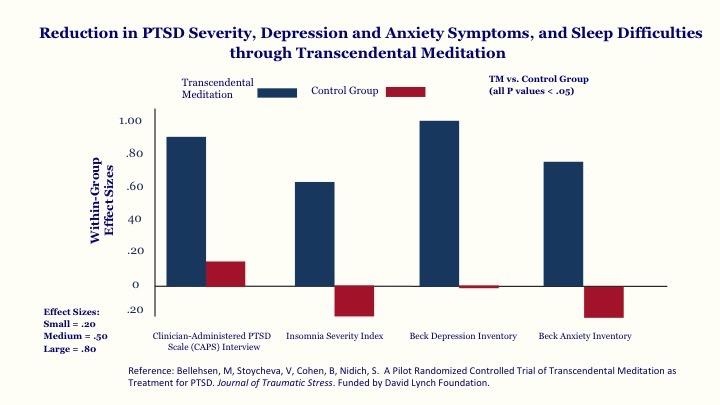
Veterans with PTSD who practiced the Transcendental Meditation technique showed significant reductions in PTSD symptom severity, according to a new study published today in Journal of Traumatic Stress. Fifty percent of the meditating veterans no longer met criteria for PTSD after three months compared to only 10 percent of controls. The randomized controlled study also showed significant reductions in veterans’ symptoms of depression and anxiety, and sleep difficulties.
Fifty percent of veterans who practiced the Transcendental Meditation technique for three months no longer met criteria for PTSD compared to only 10 percent of controls. Meditating veterans also showed significant reductions in symptoms of depression and anxiety, and sleep difficulties. This figure shows the unadjusted mean change in PTSD symptoms, based on the Clinician-Administered PTSD Scale (CAPS), for the Transcendental Meditation group compared to the treatment-as-usual control group (all P values <.05) over the three-month intervention period.
Veterans with PTSD who practiced the Transcendental Meditation technique showed significant reductions in PTSD symptom severity, according to a new study published today in Journal of Traumatic Stress. Fifty percent of the meditating veterans no longer met criteria for PTSD after three months compared to only 10 percent of controls. The randomized controlled study also showed significant reductions in veterans’ symptoms of depression and anxiety, and sleep difficulties.
“Transcendental Meditation is a non-trauma-focused, easy-to-learn technique that was found in this study to improve PTSD symptoms, likely through the experience of physical rest,” said Mayer Bellehsen, Ph.D., director of the Unified Behavioral Health Center for Military Veterans and their Families, Northwell Health, and study principal investigator. “In contrast to commonly administered therapies for PTSD that are trauma-focused and based on a patient’s recall of past traumatic experiences, this intervention does not require extensive review of traumatic history, which some individuals find difficult to engage in. This intervention may therefore be more tolerable for some individuals struggling with PTSD.”
The randomized controlled trial, conducted at Northwell Health in Bay Shore, New York, assigned 40 veterans with documented PTSD to either the Transcendental Meditation (TM) group or treatment as usual control group. The TM treatment provided 16 sessions over 12 weeks, with twice-a-day daily home practice. PTSD symptom severity was assessed with the Clinician-Administered PTSD Scale for DSM-5 (CAPS-5), and patient self-report with the PTSD Checklist for DSM -5 (PCL-5).
The results showed large effect sizes, indicating a strong TM treatment impact in reducing trauma symptoms for both PTSD measures. Other factors associated with trauma, such as depression and anxiety symptoms and sleep problems, also showed a strong impact of TM treatment.
“This trial corroborates the findings of a large clinical trial published in The Lancet Psychiatry,” said Sanford Nidich, Ed.D., Director of the Center for Social-Emotional Health at Maharishi International University Research Institute, and study co-investigator. “The current study further supports the effectiveness of Transcendental Meditation as a first-line treatment for PTSD in veterans. The availability of an additional evidence-based therapy will benefit veterans, both by offering them a greater range of options and by serving as an alternative treatment strategy for those who don’t want to engage in trauma-focused treatment or who aren’t responding to a previous PTSD intervention.”
The authors point out in their research paper that TM may positively affect trauma symptom severity through the reduction of hyperarousal symptoms. Previous research has shown that TM practice decreases physiological responses to stressful stimuli. In addition, recent research indicates that TM may improve resilience and positive coping strategies, providing further benefit to both veterans and active military personnel.
Many science and international news outlets posted the news, including this excellent report in Medical News Today (PDF). And Jim Dwyer MD produced and tweeted this 60-seconds MediBlurb: Transcendental Meditation for PTSD in Veterans, which airs on regional radio in Arizona.
I remember this incident as if it was yesterday, even though it happened around 50 years ago. I had purchased a ticket to see a well-known rock group perform that evening at Place Des Arts, Montreal’s newest and most beautiful arts center at the time.
I had learned Transcendental Meditation a few years earlier and was conscientious about getting both 20-minute meditations in every day. The morning one was easy, but fitting in the evening session could sometimes be a bit of a challenge depending on where I was.
There was a long intermission between performances, when people could go to restrooms or get refreshments on the mezzanine. As audience members around me got up to leave, I decided to stay and do my evening meditation. I closed my eyes and meditated undisturbed. I could hear the buzz of people socializing on the other side of the closed doors to the concert hall, but it didn’t bother me.
After I finished, I went out to see what was happening. People were milling about and talking. There were several oval-shaped bars located on the floor with a few servers behind them. Some people had formed separate lines on all sides leading up to them to purchase drinks or snacks. I joined one of the lines closest to me. I felt calm, relaxed and refreshed, and was in no hurry.
We were moving slowly. Some people spoke casually among themselves. The lady in front of me was antsy. She kept looking at the barman at the front of our line serving customers, wanting him to hurry up and get to her. Frustrated, she blurted out, “He’s everywhere but in front of him.”
“He’s everywhere but in front of him.”
I looked and noticed the barman taking an order from the person in front of him. He then ran to serve a drink to someone further down the bar. Next, he gave change to a customer who had just paid for their drink from another side. He was all over the place.
After seeing how busy he was, I rearranged her words from a different perspective and said, “But everywhere is in front of him!”
“But everywhere is in front of him!”
She anxiously looked again, and this time noticed that he was trying his best to quickly serve as many people as possible. My observational joke had broken the tension. She laughed and said, “That’s a good one.”
I was just as surprised as her at what had spontaneously come out of my mouth. I smiled and said, “You like it? It’s yours.”
Visibly relaxed, she smiled and thanked me. Good thing I had done my TM! Just goes to show you the effect we can have on each other for good.
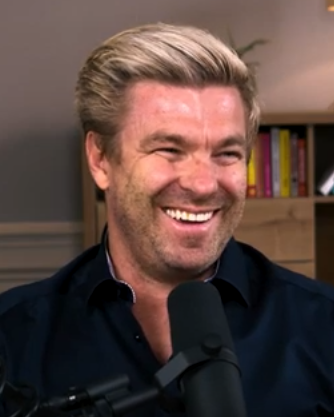
Doug Rexford sent me a link to an interview on The Sigurd Vedal Show. Sigurd Verdal is an American-Norwegian tech entrepreneur, successful multi-business owner, investor, and CEO of Vedal Media Group. Sigurd invited his TM teacher, Lakos Antal, on his show for a lively discussion on how to build a better life with Transcendental Meditation. The names of the host and his guest were unfamiliar to me, but as soon as I saw and heard the TM teacher speak, I recognized him as Tony.
Sigurd Vedal interviews Tony Antal:How to build a better life with Transcendental Meditation.
I had met Tony, as we knew him, and his friend Peter, around 20 years ago on an international TM course for men in the Blue Ridge Mountains of North Carolina. They were friendly young TM teachers from Hungary who had worked on international projects. Coincidentally, years later, Peter had become a student here at MIU, married a fellow student, had a son, and is now completing his doctoral thesis on a TM research study.
Tony had learned TM in high school when he was 15. Within 3 weeks he noticed it gave him added energy and clarity of mind. He was a straight ‘A’ student and was expected to follow his family’s tradition of becoming a medical doctor. During his first year of medical school Tony would come to realize that the medical profession only dealt with treating diseases, not preventing them.
Becoming a TM teacher instead of a doctor
After a year of medical college Tony felt it really wasn’t what he wanted to do with his life and followed his heart’s desire instead to become a TM teacher. Turns out it was the right decision for him. One of the things he did was give Introductory talks to medical students. Many of them started as they needed something to help them deal with the stressful challenges of their chosen profession.
Tony told Sigrud that when he was a student in Budapest, meditation was a foreign concept. Today, millions of people of all ages and backgrounds around the world have learned to meditate, including famous celebrities who praise the benefits of TM. With hundreds of scientific studies verifying its efficacy, TM is part of wellness programs and recommended by doctors to patients with high blood pressure and other stress-related diseases. TM has been shown to help veterans suffering from PTSD.
I emailed some questions to Tony and he said he taught TM to Sigurd in August. Since Sigrud has business ties to Hungary, the interview took place in his Budapest apartment. They had both tested negative for COVID before they got together. Sigurd shared how TM has helped him to maintain a more even perspective in stressful situations, and that he is now able to fall asleep without the aid of sleeping pills.
Sigrud asked Tony some practical questions prompting him to go into more detail, which he did by sketching his ideas out on paper. They also edited in graphs and animated sequences illustrating Tony’s points, as well as video footage of people meditating in different situations.
One story Sigrud really wanted Tony to share was his interaction with TM founder Maharishi Mahesh Yogi at the end of his TM Teacher Training Course. Based on Tony’s answer to a particular question, Maharishi suggested that he contact the president of his homeland, Hungary, with a solution to his governmental problems. Maharishi even gave Tony a message to relay to the president on his behalf! How such an improbable meeting could occur, and how the president would respond to the presentation and Maharishi’s personal message were beyond Tony.
Listen to how it all unfolded, halfway through their conversation. It reveals a fascinating insight into the workings of leadership and collective consciousness—the highlight of this discussion for me. Tony told me that the story about the president made him realize that the government is really just an innocent mirror of the collective consciousness of the nation, as Maharishi had taught us. He explained the mechanics of this concept to Sigurd in the podcast video.


 The Uncarved Blog