These days we are constantly bombarded with social media and advertising messages on our portable devices. Life has become a lot more complicated than in the past. This short poem by Wu-Men reminds us to take time to notice the simple pleasures that each season brings. And with a peaceful mind we can enjoy our best life.
I first discovered this text as one of a four-book compilation by Paul Reps and Nyogen Senzaki in Zen Flesh, Zen Bones: A Collection of Zen and Pre-Zen Writings, published by Tuttle in 1957. I had bought a paperback copy of the 1961 Doubleday Anchor Book from a Montreal used book store in 1967 and carried it around with me.
That summer, I had an awakening experience, and those contradictory koans I read somehow made sense. I had become a seeker and learned Transcendental Meditation (TM) on September 30, 1967, three weeks after Maharishi had visited Expo 67 to speak at the Youth Pavilion. This was during Canada’s Centennial Year and what was considered to be one of the most successful World’s Fairs of the 20th century.
When the school year started, I set up a SIMS club—a chapter of the Students International Meditation Society—then arranged for and publicized a TM Introductory Lecture on the Loyola College campus. Other new meditators had done the same at McGill University, and Sir George Williams University, which, with Loyola, would later become Concordia University.
Many hundreds of students learned TM that school year in Montreal, and some of us would go on to become TM teachers. The same situation occurred in cities across Canada and the United States. It was an exciting time, especially when the Beatles had learned TM and went to Rishikesh, India to study with Maharishi. “Dear Prudence” Farrow Bruns was on that course, along with Beach Boy Mike Love and Donovan. From June 10-14, 1968, I joined other meditators to study with Maharishi at Lake Louise.
I never imagined that posting a little poem by Zen master Wu-men would awaken memories of reading Zen Flesh, Zen Bones, and learning to meditate all those years ago. TM continues to help me live a better life.
Also enjoy reading the fine poetry of Ryōkan, another Zen master.
Stephen Mitchell later translated and read Tao Te Ching by Lao Tzu (The Book of The Way). I first enjoyed reading The Way of Life According to Laotzu translated by Witter Bynner. George Harrison was inspired to write “The Inner Light” based on Chapter 47 of this ancient text. It was first released March 15, 1968 by the Beatles as a B-side to “Lady Madonna”.
— Written and compiled (citing sources) by Ken Chawkin for The Uncarved Blog.
Prudence Bruns, 71, has several claims to fame. First, she’s the daughter of film director John Farrow and actress Maureen O’Sullivan, as well as the younger sister of actress Mia Farrow. Second, she’s a teacher and passionate advocate of Transcendental Meditation who studied with the TM guru, Maharishi Mahesh Yogi in Rishikesh, India, back in the late 1960s. It’s at Maharishi’s retreat in 1968 where Prudence’s fellow students included all four members of the Beatles. Third, her behavior during the retreat led John Lennon to write the song “Dear Prudence,” which appeared on the Beatles’ White Album. So, who is the flesh and blood woman behind the song that Rolling Stone named as No. 63 on its list of “100 Greatest Beatles Songs”? And what’s the story behind the famous song? Parade caught up with Bruns to find out.
You met the Beatles at Maharishi
Mahesh Yogi’s retreat in Rishikesh, India, in 1968, where you’d
traveled with your sister, Mia, to learn Transcendental Meditation. Were
you starstruck?
No, I’d been around famous people before. It wasn’t a big deal to me but I liked them a lot, especially John and George. They came into my room one night to play a song and I could hear them outside on the patio at night playing. But really, I was so focused on getting the most out of my time there. It was my dream to go to India and study with a person who really knew about this meditation. I was pretty extreme.
That’s why John wrote the song, which starts out, “Dear Prudence, won’t you come out to play/Dear Prudence, greet the brand-new day.”
Right. People over the years would have these reasons why I was Dear Prudence that were completely off the wall and almost disturbing, like I was a heroin addict or I lost my mind or all these crazy reasons why John wrote the song. It bothered me in a sense but it seemed over my head, like what can I do about it. I’d tell people, well I had to stay in my room. Nobody believed that I didn’t have an affair with him. I couldn’t tell people. But it all came about because I stayed in my room by myself for five days straight. I hadn’t gone to the bathroom or slept. I didn’t eat. I was trying to see where [meditation] would take me.
And you’ve stayed with meditation all these years?
Yes, I’m back teaching now. At Sofitco Studios, a fitness studio in Santa Rosa Beach, Florida.
What do you love so much about TM?
TM is a yogic meditation but what’s different about it is that it has been streamlined and simplified for those of us who are busy and can’t give our whole lifestyle over to changing how we are and what we’re doing. It makes it so that in just a short period of time you can go extremely deep inside and tap into a part of the mind that is foundational. It’s just silent. It’s like, the ocean has a surface and as you get deeper it becomes less active. And if you can get incredibly deep, it’s still. So the same with the mind. You can get to this part of the mind that is still, but it’s not inert. It’s actually very creative. And so, it’s wonderful. You can actually experience that. Anybody can.
Your memoir, Dear Prudence: The Story Behind the Song, came out in 2015. Why did you decide to write the book so many years (nearly 50!) after John Lennon wrote that song about you?
It was because of my grandson. We’d moved down to Florida and my daughter lived next door. At a certain point when my grandson was in high school, he came over and said, “OK, Grandma, you have to come to my school and speak to my friends.” It surprised me because at that point, I was getting used to accepting myself as being old and kind of irrelevant. I forgot I was Dear Prudence, because my older daughter and son—they were the generation after the Baby Boomers—and their interest in The Beatles was zip.
But there’s been a revived interest in the Beatles among kids and twentysomethings, don’t you think?
Yes, absolutely. Especially with [the game] Guitar Hero. Then you even have little kindergartners knowing all the Beatles songs. Anyway, being Dear Prudence really never mattered. Then when I went to my grandson’s school, it was like one of the Beatles came to see his friends. There were about 30 kids and they all came rushing up and gathered around me with all this respect. I was completely stunned.
Was it your link to the Beatles they were excited about?
Besides the kids noticing the Beatles and actually knowing every song they did and the words to every song, one of the kids asked a question that stood out. “Why did John and the Beatles think there could be such a thing as world peace?” I mean, they really believed there could not possibly be such a thing! This shocked me. It was sad, but it meant that they were actually listening to us. For us, we didn’t listen to anybody over 30! But grandparents? Forget about it. So that they were actually listening and hearing The Beatles and that message was a real wake-up call.
What was the message?
That there can be world peace. I told them, you’re wrong. Just because you don’t see it doesn’t mean we can’t achieve it. I explained to them that if enough of us live more consciously rather than every man for himself, really caring about our culture and our humanity then we can have peace. It was very powerful and that’s when I decided I had to tell my story. I’m Dear Prudence, one of the many that went through the ‘60s. We brought yoga in and the whole perspective of green and organic and all that came in to our culture.
Prudence Farrow Bruns, PhD, is the daughter of actress Maureen O’Sullivan and award-winning writer/director, John Farrow. She has been practicing the Transcendental Meditation technique for 48 years, and has been a teacher of the TM program for 46 years.
It all started so simply. It was 1966, and 18-year-old Prudence Farrow was sitting on a bluff overlooking the Pacific Ocean at her brother’s home in Los Angeles. She was reading a book on meditation when she heard a voice say, “If you’re interested in meditation, I know just the meditation for you.”
The voice was that of Peter Wallace, a friend of her brother. Peter had spent six months traveling through India, where he met Maharishi Mahesh Yogi and began the Transcendental Meditation technique. He told her how simple and effortless the technique was, and yet how profound the experience and benefits could be.
“It was the simplicity of the practice that struck me most,” Prudence said. “I’d been trying different methods of meditation for some time, but they had all been complicated and difficult. When Peter described a simple, natural practice of diving deep within, I knew he was truly onto something.”
So Prudence learned the TM technique at UCLA. After experiencing the positive effects of TM for herself, Prudence wanted more. She wanted to meet Maharishi and to study with him. “At that time Maharishi had courses in India,” says Prudence. “He brought people there, and they studied for three or four months with him. You meditated for long periods under his guidance.”
On January 23, 1968, three days after her 20th birthday, Prudence traveled with Maharishi from New York to Rishikesh, India to attend her TM teacher training course. And that’s when the “Dear Prudence” story really began.
The Beatles Make the Scene
One month after Prudence arrived in Rishikesh, The Beatles showed up to study with Maharishi. While they all spent some time there, John Lennon and George Harrison stayed the longest.
“The Beatles were all very nice, humble, modest, kind, and down-to-earth people,” Prudence remembers. “I was closest to John and George, since they were my ‘course buddies’ during our studies with Maharishi. We were supposed to look out for each other during the course.”
Prudence (left) sat next to Ringo in course photo.
Prudence soon became known for her tendency to keep to herself in her room, focused on her meditation practice. “I was deeply immersed in my studies and meditation, locked away in my quarters. John, as my course buddy, was concerned and wanted to bring me out of my room to enjoy the experience more.”
John and George would come over to her room and play their guitars, encouraging her to come out and sing with them. It was this experience that became the inspiration for their song “Dear Prudence” in which John sings, “Dear Prudence, won’t you come out to play?”
Before he left Rishikesh, George mentioned to Prudence that they had written a song about her, but she had no idea what it was. She didn’t hear the song until it came out on their 1968 album The Beatles, commonly known as the “White Album.”
Prudence’s dedication to her meditation practice did pay off. After four months, she graduated from the course and became one of the first and youngest teachers of the Transcendental Meditation technique at that time.
But that was just the beginning of the “Dear Prudence” story.
Prudence Comes out to Play
Once she completed her teacher training course in India, Prudence definitely did come out to play. Over the past 46 years, she’s instructed thousands of people in the TM technique throughout the United States and Canada. She married TM teacher Al Bruns in 1969, and they have three children and four grandchildren.
She’s produced Hollywood feature films and a play in Manhattan. She was an assistant to the curator of the “Theatre Collection” of the Museum of the City of New York. She has been a magazine writer. She’s written two books.
Prudence earned a BA, an MA, and a PhD from the University of California at Berkeley. She received her doctoral degree in 2007, with a major in South Asian Studies and Sanskrit. She has made presentations to conferences at numerous universities, including Harvard, the University of Texas at Austin, and the University of Hawaii. She’s taught courses at UC Berkeley and Rutgers University.
TM and Yoga
Prudence continues to teach the TM program in Florida. In fact, she’s the most successful teacher in the U.S. at setting up Affiliate Programs in yoga studios. Maybe that’s not so surprising, considering that she’s a lifelong yoga practitioner, and she opened a yoga institute in Boston back in 1967.
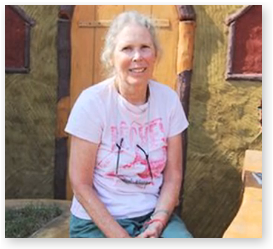
Prudence attended India’s Kumbh Mela last year.
Maharishi Foundation created the Affiliate Program to bring TM to yoga studios and fitness centers. When a studio becomes an Affiliate, their members can learn TM at a reduced course fee, and the studio receives a share of the income. Everyone benefits—the new TM student, the yoga studio, and the local TM teachers.
Today most people think of yoga as a series of physical postures. But Maharishi has explained that in the Yoga Sutras, Patanjali identifies eight limbs of yoga, and the eighth limb is Samadhi or transcendental consciousness. Maharishi said that with the practice of TM, Samadhi is actually the easiest limb of yoga to achieve, since no effort is required. We simply tap into the natural tendency of the mind to go within, to transcend, and that transcendence nourishes and supports all the other limbs.
“I do think that Transcendental Meditation is—of the meditations that are available to us—the most direct, and the simplest,” says Prudence. “When you meditate, when you transcend, it allows your heart and mind to balance. And when they’re balanced, that’s when you are really healthy. You are happy. You’re happy mentally, happy emotionally, and happy spiritually. Those three are all components of what make a human being, so that connection to transcendence is absolutely necessary for health.”
Creating a Better World
Fortunately for us all, Prudence did come out to play.
“The years of meditating have enriched my life so much,” Prudence says. “And that’s why at this point in my life, I’m giving back. We need a better world. We need people to be more conscious, to be more evolved. And expanding the mind, like TM does, is absolutely vital to bring about stronger people. If you can strengthen people inside, you’ve changed the world.”
So even today, 48 years later, the “Dear Prudence” story continues.
[In July 2018, this article was updated and published in Enjoy TM News.]
Years later, The Beatles released many versions of their songs on the 50th Anniversary of The White Album, now out on Spotify, which include The Esher Tapes. There are 3 versions of Dear Prudence there: the Esher version of John Lennon singing on guitar; one of just vocal, guitar, and drums; and the 2018 mix.
Another beautiful song that John Lennon wrote about his experience with Transcendental Meditation was, Across the Universe. Spotify included John Lennon on guitar singing Across The Universe–Take 6.
NEW: Enjoy TM News posted this more recent discussion. Mario Orsatti, the host of TM Talks and Senior Teacher of the Center for Health and Wellness, a division of the David Lynch Foundation, interviewed Dr. Bruns on June 14, 2020. This popular episode was rebroadcast on September 4, 2022. Watch the interview with Dr. Prudence Farrow Bruns (55:17)
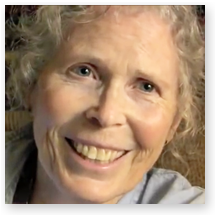
Enjoy this video portrait of Prudence Farrow Bruns, the inspiration for the Beatles song “Dear Prudence”. Prudence discusses her personal journey, meditating with the Beatles in India, the transformation her generation tried to bring about in the world, and the change that can only come from within through Transcendental Meditation.
Directed, shot and edited by Kryshan Randel, music by Mike Pellarin, produced by David Shaw for iTranscend TM, a concept created by Ashley Cooper. For more information on Transcendental Meditation, visit these websites: http://maharishi.ca (Canada) and http://www.tm.org (USA).
Both videos appear on the iTranscend TM YouTube channel series along with other heartfelt testimonials from new meditators, meditators dicussing meditation, and portraits of veteran meditators — people from all walks of life telling their stories — a physiotherapist, bakery story owner, musician, students, sharing how they are realizing their potential through the profound life-changing benefits of their Transcendental Meditation practice. And this video is an edited composite of some celebrities talking about the value of meditation, TM, in their lives: iTranscend Hollywood.
The Institute of Science, Technology and Public Policy at Maharishi University of Management presents a visionary conference event titled, Our Conscious Future.
On Saturday, April 20th, eight remarkable thought leaders and innovators will converge on the MUM campus to present TED-style talks that will go right to the heart of what it means to be fully human in the 21st century.
Each speaker will explore different facets of mind, body, society and consciousness and present the most recent discoveries and solutions to help enhance individual life and change the world. These ideas are emerging to create new paradigms for humankind—paradigms that can potentially enrich individual life and change the world.
The short presentations, featuring world-class speakers and local luminaries, will be in the style of the intellectually stimulating TED Talks that are popular on the Internet.
Featured speakers and their topics include:
Dr. Pamela Peeke, internationally-renowned physician, scientist, “medutainer” and expert in the fields of nutrition, stress, and fitness explores the neurological basis of food addiction: Your Brain’s Reward Center: Hacked By a Cupcake.
Father Gabriel Mejia, a renowned humanitarian who has rescued over 100,000 children off the streets of Columbia, restoring their rights and dignity, offering them a brighter future: Love and Transcendence: The Secrets of Lasting Rehabilitation.
Thomas McCabe, mathematician, entrepreneur, author and software pioneer, who has shifted his focus from an exploration of how algorithms think to the math of how we think: Inner Genius, Empathy & the Math of Your Mind.
John Hagelin, world-renowned quantum physicist and peace proponent has forged a connection between quantum mechanics, our inner experience, and lasting peace: Higher States: Harnessing the Power of Consciousness to Fulfill Your Desires and Change the World.
Robert Keith Wallace: from his breakthrough discovery of a fourth major state of consciousness to recent developments in the brain signatures of high-performance individuals, this ground-breaking scientist continues to expand our vision of human potential. Dr. Wallace will present The Neurophysiology of Peak Performance, with neuroscientist Fred Travis who has published papers on this topic.
Lonnie Gamble: with the mind of an engineer, the dedication of an educator and the heart of a community activist, this sustainability bioneer has blazed a visionary trail in the sustainability movement: The Sustainability Revolution & the Transformation of Humankind.
Prudence Farrow Bruns, Sanskrit scholar and film producer, the meditative muse for the Beatles’ “Dear Prudence” offers her personal insights on the evolution of yoga in the West, beginning with her seminal time in India with Maharishi and the Beatles: The “Dear Prudence” Story.
Special Music Performances by the Chamber Singers of Southeast Iowa, MUM’s International Ensemble, and more. Additional Speakers to be Announced.
Saturday, April 20 • 1:00-4:30 & 7:45-9:30 pm • Dalby Hall • Argiro Student Center • MUM campus • Register Now • Space is Limited
Founded in 1971, Maharishi University of Management (MUM) offers Consciousness-Based℠ Education, a traditional academic curriculum enhanced with self-development programs like the Transcendental Meditation® technique. Students are encouraged to follow a more sustainable routine of study, socializing and rest without the typical college burnout. All aspects of campus life nourish the body and mind, including organic vegetarian meals served fresh daily. Located in Fairfield, Iowa, MUM is accredited by The Higher Learning Commission and offers bachelor’s, master’s, and doctoral degrees in the arts, sciences, humanities, and business. Visitors Weekends are held throughout the year. For more information, call the Admissions Office at 800-369-6480 or visit http://www.mum.edu.
Related news in The Fairfield Ledger and Radio Iowa:


 The Uncarved Blog