
Posts Tagged ‘Norman Rosenthal’

Russell Brand Does Stand-Up for Transcendental Meditation

November 29, 2011

Medical Unit

By Susan Donaldson James

Nov 29, 2011 2:39pm

Russell Brand Does Stand-Up for Transcendental Meditation
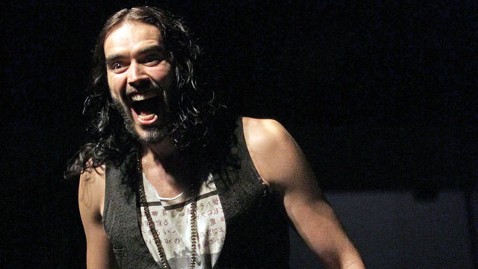
Comic actor Russell Brand credits his sobriety with practicing Transcendental Meditation.

Russell Brand, who credits Transcendental Meditation for helping him stay off addictions to alcohol, drugs and sex, will do a stand-up comedy show tonight at the Palace of the Fine Arts in San Francisco to benefit the David Lynch Foundation.

Brand has said publicly that meditation had helped him find a “deeper state of happiness.”  Other celebrities — including Oprah and Ellen DeGeneres — are devotees of TM.

“What it felt like to me was the dissolution of the idea of myself,” he said at a press conference last year. “Like, I felt separateness evaporated, this tremendous sense of oneness. I’m quite a neurotic thinker, quite an adrenalized person. But after meditation, I felt this beautiful serenity and selfless connection. My tendency towards selfishness, I felt that exposed as a superficial and pointless perspective to have.”

Brand, who is best known for his films, “Get Him to the Greek” and “Arthur” –  and for being the husband of pop start Katy Perry – gave up alcohol nearly a decade ago. He has said,  ”I was really, really committed to that drug addiction.”

The David Lynch Foundation, the brainchild of the filmmaker of the same name, has been committed to helping those who suffer from trauma since 2005. The often dark and abstract director credits his creativity with 37 years of meditation.

Their meditation programs have helped those in the military, who are at higher risk for post-traumatic stress and in schools where students grow up in a climate of fear with bullying, violence and substance abuse. They also work with other at-risk populations like Native Americans and the homeless.

The Lynch foundation now teaches 150,000 students for free in 350 schools around the world; 15 of them are in the United States.

Click here for video of David Lynch discussing His First Meditation.

“It’s not a religion,” Lynch told ABC last year. “It’s not against any religion, it’s not mumbo-jumbo. It truly does transform life. Kids come to school and they meditate together for 15 minutes in the morning. And before they go home they meditate for 15 minutes. A lot of them come from, you know, bad situations, and so this gives them this thing you know, at the beginning and the end of the day, the rest of the time you just watch the violence stop. Watch relationships improve. Watch happiness in the hallways, in the classroom, watch creativity flow more and more, watch that heavy weight that we are living under gently lift away.”

Brand learned TM at the foundation headquarters in Fairfield, Iowa, during a time when he was making a  documentary on happiness with directors Oliver Stone and Albert Maysles.

David Lynch Foundation Executive Director Bob Roth asked Brand if he wanted to learn TM. “I have all the time in the world,” Brand responded, according to foundation spokesman Ken Chawkin. “He taught him and he loved it and came back a second time.”

Brand went to India, where he was married to Perry last year, to research the film. The comedian is a vegetarian and devotee of Buddhism and Hari Krishna. He also practices yoga.

Oprah also meditated with 500 other women at the “dome” in Iowa, according to Chawkin. ”Her companies are now instructed as part of their daily routine,” he said. “It’s awesome. She really got it.”

On Dec. 3, Brand will join actress Ellen DeGeneres and Def Jam’s Russell Simmons in Los Angeles for another benefit performance. The foundation will webcast from their website  a live global news conference on Dec. 2 on its gift of $1 million to teach veterans to meditate. The celebrity event will be replayed online Sunday, Dec 4.

Various studies funded by the David Lynch Foundation have shown that those under stress, particularly ethnic and racial minorities, can reduce their stress levels by 36 percent by practicing TM. Students in “quiet programs” that include meditation have also shown higher rates of achievement.

 ”It allows the thinking process to naturally settle down,” said Chawkin. “And just automatically and quietly you transcend beyond to the source of thought within. You are twice as deep as the deepest point of sleep, while awake inside.”

Brand has said that his stress was rooted in his celebrity. “I used to be poor, now I’m not,” he said last year at a conference with young people. “I didn’t used to be famous, now I am. And I thought that both of these significant transitions would bring a certain amount of satisfaction.

“They did a bit, initially as being famous gives you enormous access to– given there are some young people here– partners in physical nocturnal activities.”

SHOWS:

User Comments

Brand is FUNNY but when he talks about profound stuff like how TM helps him he is REALLY good. I wish I could be there tonight!

Posted by: quirkysquirrel | November 29, 2011 November 29, 2011, 3:15 pm

I’m really impressed with David Lynch’s work as well as Russell Brand speaking up and stepping up to help promote David’s foundation. TM has been a remarkably helpful and profound practice for me, in all areas of my life. Whether you are a vet, a student, a down and out artist to be or a person who could use more chill, more health, more creativity in your life – it’s a fantastic tool.

Posted by: Tlccabin | November 29, 2011 November 29, 2011, 6:42 pm

——–

The David Lynch Foundation will host two events: a live global news conference, webcast from the Beverly Hills Hotel in Los Angeles, Friday, December 2, 11 AM (PT), 2 PM (ET); and the Third Annual David Lynch Foundation Benefit Gala, Saturday, December 3, 5 PM (PT), 8 PM (ET) at the Los Angeles County Museum of Art, which will replay online Sunday, December 4, at 5 PM (PT), 8 PM (ET). Click here for more information: http://www.davidlynchfoundation.org/emailing/2011_11_29.html.

Also see: An Evening of Stand-Up With Russell Brand — a Benefit for the David Lynch Foundation Tuesday, November 29th at the Palace of Fine Arts in San Francisco | The SF Examiner: Russell Brand makes it to the Palace | The Times of India: Russell Brand to headline comedy show for charity | Examiner.com: Russell Brand makes San Francisco laugh for The David Lynch Foundation | What do Stephen Collins, Ellen DeGeneres, Russell Brand, Russell Simmons, David Lynch and Oprah have in common?

Transcending a Different Type of PTSD — Helping Children of the Night

October 11, 2011

OPINION

Transcending a Different Type of PTSD — Helping Children of the Night

By

Published October 08, 2011 | FoxNews.com

Lately there has been a storm of publicity – and deservedly so – about post-traumatic stress disorder (PTSD) in veterans of our wars in Iraq and Afghanistan.

The public has become better educated about this potentially disabling disorder and its symptoms, such as hypervigilance, an exaggerated tendency to startle, flashbacks, nightmares and emotional numbness, to name just a few.

Mental health professionals have emphasized the need to diagnose and treat PTSD wherever it arises.  In this piece, I would like to draw attention to yet another group suffering from PTSD – child victims of prostitution who, against all odds, are trying to go straight and choose a different path in life.

I recently visited a home for such children in the Los Angeles suburbs, part of an organization aptly named “Children of the Night,” which has been operating since 1979 under the guidance of its founder and director, Dr. Lois Lee.

The organization is the most comprehensive social services agency in the country for rescuing America’s children from prostitution – a term Lee prefers to “trafficking,” which she considers too sanitized and not shocking enough for a problem that ought to be shocking but too often hides in plain sight of ordinary citizens.

The story of the young prostitute usually starts with early sexual abuse by a trusted care-giver, creating a trauma that continues to fester in the developing mind and brain of the young person, often resulting in emotional and behavioral difficulties.

The young person runs away – or drifts away – from home and, vulnerable to entrusting his or her safety to untrustworthy adults, goes on to be re-abused by those who pretend to offer love and shelter.

It is an ugly story that inclines us to avert our eyes, change the channel or click on a different web link.  I ask you to resist this natural aversion because these are our children and they can be helped with proper understanding and care. — Lee estimates that her organization has assisted over 10,000 young people since its inception.

In Lee’s opinion, all these children suffer from PTSD.  They are seething with rage, which they either direct outwards – screaming, lashing out, throwing things – or inwards by cutting themselves.

Stressed out in body and mind, many complain of abdominal pains so severe that they need to be taken to the emergency room.  They suffer nightmares and sleep disorders that wake them up at all hours.  Sometimes their distress during sleep is so bad that paramedics need to wake them and help settle them down.

Consider one of these young people, “Annie,” an 18-year-old graduate of the Children of the Night.  When she first came to the program, Annie experienced many symptoms of PTSD.

Like the other girls, she would panic when she saw a black limo driving down the street with its lights off, which reminding her of the pimps in her former life.  Triggered by all sorts of fears and memories, Annie would scream and throw things.  An apparently innocent TV show might remind her of evenings when she and her pimp would watch that same show together in earlier times.  One flashback would lead to another until her system was boiling over with intolerable panic and rage.

All the children in the program receive psychotherapy, but Annie did not find it particularly useful.  One thing that has made a big difference for her is Transcendental Meditation (TM), a technique that Lee has incorporated into her program in the last few years, with excellent results.

According to Annie, TM has reduced the impact of her flashbacks, has made her less angry, and less likely to her take out her distress on others.  As she puts it, “TM helps me calm down and center myself throughout the day, and focus on my schoolwork and tasks. It has also helped me trace back my emotions to when I was really young.  I realize that I couldn’t cry or tell people they had hurt my feelings.  I chose anger instead of hurt.”

The beneficial effects of TM on the PTSD symptoms of the Children of the Night have also been documented for traumatized veterans of combat, and are consistent with the known effects of TM in settling down fight-or-flight responses, which are exaggerated in people with PTSD.

Of Dr. Lee and Children of the Night, Annie says, “The program has done everything for me.  If not for the program, I would have died on the streets.”

Annie’s words are all the more poignant as there are so many other children who have not had the good fortune to stumble across Lee and her program. Keep your eye out for them and spare a thought for how we as a society can prevent the horrible problem of child prostitution and take care of those who have already fallen prey to it.

Norman E. Rosenthal, M.D. is Clinical Professor of Psychiatry at Georgetown University Medical School and author of “Transcendence: Healing and Transformation Through Transcendental Meditation” (Tarcher-Penguin, 2011).

Also see: Children of the Night, movie director David Lynch expand work and Meditation Helps Homeless Children, and another Fox News Opinion piece by Dr. Rosenthal: Could Transcendental Meditation Help Veterans Suffering From Post-Traumatic Stress Disorder?

PsychCentral reviews Norman Rosenthal’s book Transcendence: Transcendental Meditation: What Is It and How Does It Work?

September 16, 2011

Transcendental Meditation: What Is It and How Does It Work?

By Therese Borchard

Transcendental Meditation: What Is It and How Does It Work?Being that my job is to feature and review books on psychology, spirituality, and especially the intersection between the two, I receive my share of books on meditation. And as a person who has been trying to meditate for two years, but who just can’t seem to get the hang of it, I always open the cover a tad sinister, looking for a magic bullet.

The book Transcendence: Healing and Transformation Through Transcendental Meditation was on my decline stack until I read the short bio on Norman Rosenthal, M.D. and became intrigued. He’s a clinical professor of psychiatry at Georgetown Medical School. He conducted research at the National Institute of Mental Health. And he was the one who first described and diagnosed seasonal affective disorder (SAD). Ironically, I knew of him through my good friend Michelle, who had been one of the case studies for him on SAD.

So, with those credentials I opened the book and began to read stories that inspired me and gave me hope that one day I might be a meditator too.

Rosenthal won my trust in that he clearly states in the introduction that Transcendental Meditation is not a stand-alone treatment for emotional disorders, especially when effective treatments are available and work (if not full proof). He writes, “The fact is that no single treatment works every time for any given set of symptoms. We often have to try several different medications or treatment approaches before we find the right mix. I am suggesting that TM should be part of that mix, especially when conventional approaches prove unsatisfactory.” Rosenthal would in no way advise a person to go off his meds and try this type of meditation. However, he believes that practicing it can be the difference between a life of coping and a life of living.

Before reading Rosenthal’s book, I was unaware of the ways different kinds of meditations activate neurons in distinct regions of the brain. For example, Mindful Meditation increases the activity of neurons not only in certain emotional areas of the brain, but also in frontal regions, which are responsible for decision making and other functions. In Transcendental Meditation, there is a more global effect. Characteristic brain wave patterns are seen in many different parts of the brain, so the meditator has a better chance of experiencing the effects of meditation long past the meditation session.

What, exactly, is this Transcendental Meditation? Rosenthal writes:

Transcendental Meditation is always taught one-on-one, at least initially, by a teacher who is a longtime meditator trained not only to instruct new students and provide follow-up, but also to customize the approach for each student. Initial instruction has seven steps: two lectures and a personal interview with a certified teacher, then four teaching sessions on four consecutive days. Each session lasts about ninety minutes. Ideally, the fledgling meditator then follows up with the teacher, perhaps weekly for the first month and monthly thereafter. These thirty-minute “checking” sessions give students a chance to ask questions and make sure their technique is still on track, so they will derive the maximum benefit.

Basically, TM is a nonreligious practice that involves sitting comfortably for twenty minutes twice a day, while using a silent mantra, or nonverbal sound, to attain a profound state of aware relaxation. And just like yoga or martial arts, says Rosenthal, in order to learn it correctly, you need ongoing guidance with a teacher.

A profound gift of TM is that regular practice increases brain wave coherence, meaning that the frequencies of brain waves in different parts of the brain work together as a result of TM. In seasoned meditators, brain wave coherence can be found throughout the day, not only during meditation. Electroencephalograms (EEG) indicate that TM calms the brain while organizing the prefrontal brain regions so that meditators can improve their focus, decision-making, and job performance.

Especially enlightening to me were Rosenthal’s chapters on how TM can help treat acute anxiety, major depression, and bipolar disorder. This psychiatrist and some of his colleagues obtained a grant to study TM in a group of bipolar patients. In the study, eleven people received immediate TM training, while fourteen people were placed on a wait list. Both groups continued with their previous medical treatments. A few from the TM group reported a drop in manic symptoms, however, depressive symptoms were especially relieved, as stated in the patient reports but also upon inspecting the results of TM by Rosenthal and his team. Explains Rosenthal:

Several patients reported increased calmness, improved focus, and improved ability to stay organized and set priorities–no surprise, given TM’s known effects on the prefrontal cortex. TM helped bipolar patients improve their executive function, just as it did for people with anxiety disorders and ADHD… All in all … our study study suggests that TM might be very helpful for bipolar patients. In fact, all the clinicians who worked on the study are now referring certain of their bipolar patients, particularly those with residual depression, for TM training–along with their other treatments.

Check out Rosenthal’s book, Transcendence, for more information on the science and benefits of Transcendental Meditation.

Therese J. Borchard is Associate Editor at Psych Central, where she regularly contributes to World of Psychology. She also writes the daily blog, Beyond Blue, on

Beliefnet.com. Therese is the author of Beyond Blue: Surviving Depression & Anxiety and Making the Most of Bad Genes and The Pocket Therapist. Subscribe to her RSS feed on Psych Central or Beliefnet. Visit her website or follow her on Twitter @thereseborchard.

APA Reference
Borchard, T. (2011). Transcendental Meditation: What Is It and How Does It Work?. Psych Central. Retrieved on September 14, 2011, from http://psychcentral.com/lib/2011/transcendental-meditation-what-is-it-and-how-does-it-work/

Scientifically Reviewed
Last reviewed: By John M. Grohol, Psy.D. on 13 Jul 2011
Published on PsychCentral.com. All rights reserved.

————–
Also listen to an excellent interview with Norman Rosenthal and Jenny Crwys-Williams on South Africa’s 702 Talk Radio. Click to download Podcast. It’s mentioned in this post: Meditation for Health, Happiness and Spirituality.

A Transcendental Cure for Post-Traumatic Stress by David Lynch and Norman E. Rosenthal

July 13, 2011
THE WALL STREET JOURNAL OPINION JULY 13, 2011
A Transcendental Cure for Post-Traumatic Stress
One study of soldiers showed a 50% reduction in symptoms after eight weeks of meditation.

By DAVID LYNCH and NORMAN E. ROSENTHAL

War wounds come in many forms. Some are obvious, such as scars, gashes and amputations. Others, the psychological ones, are less visible but equally devastating. The numbers in this second group are staggering: The military’s latest mental health survey of combat troops in Afghanistan found that 20%—one in five—suffer from post-traumatic stress disorder.

People with combat-related PTSD often suffer from periods of emotional numbness and depression that may coexist or alternate with intense anxiety and delusional thinking. Their days may be afflicted by flashbacks to traumatic situations. Their nights are often disrupted by sleeplessness and nightmares, from which they awake drenched in sweat as though back on the battlefield.

Yet most veterans with PTSD do not receive adequate treatment for various reasons, including fear of stigma, a dearth of effective treatments, and insufficient government resources. Gen. Peter Chiarelli, vice chief of staff of the U.S. Army, recently acknowledged that, “The therapies used for treatment of brain injuries lag behind the advanced medical science employed for treating mechanical injuries.”

Clearly, there is a need for new, creative approaches: Transcendental Meditation, better known as TM, is a promising candidate. An ancient Vedic technique developed in India, TM was brought to the West in the late 1950s by Maharishi Mahesh Yogi. It involves sitting comfortably with eyes closed for 20 minutes twice a day while thinking a mantra. It does not require adherence to any religious belief system or ritual practices. Yet to date there are over 340 peer-reviewed papers describing the beneficial effects of TM on the mind and body.

lynch

The David Lynch Foundation recently hosted an event to help raise funds to teach TM to our wounded warriors returning home from Iraq and Afghanistan. We heard from veterans of three wars: Jerry Yellin, a fighter pilot in World War II who flew 19 missions over Japan; Dan Burks, who served in Vietnam; and David George, a veteran of Operation Iraqi Freedom. Despite differences in age and wartime experiences, these men had two things in common: All suffered terribly from PTSD, and all experienced tremendous relief from TM. Life became once again peaceful and even joyful for them.

What was clear from these men’s stories was how great a toll their symptoms took on their families, as well as on themselves. In a poignant video, Mr. George’s mother described the transformation of her son from a courteous young man into a hard-drinking, depressed and deeply disturbed veteran, who she feared would take his own life or someone else’s.

All that changed when Mr. George began to meditate on a regular basis. According to Ms. George, TM saved her son’s life.

In a study of Vietnam vets conducted by James S. Brooks and Thomas Scarano and published in the Journal of Counseling and Development in November 1985, TM outperformed the conventional psychotherapy of the day. More recently, a pilot study of five Iraq and Afghanistan veterans published in the June 2011 issue of Military Medicine showed a 50% reduction in PTSD symptoms after just eight weeks of practicing TM.

There is a scientific basis for the observed benefits of TM for combat-related PTSD. In several studies, TM has been shown to buffer fight-or-flight responses, which are thought to be overactive in people with PTSD, as evidenced by their hypervigilance, anxiety and exaggerated startle responses.

In addition, TM has been found to reduce blood pressure and decrease the risk of heart attacks and strokes—other conditions in which an overactive fight-or-flight response may play a role. In a similar manner, TM may modulate nervous system responses, thereby allowing affected veterans to relax and leave behind the traumas of war.

Regardless of how TM helps, the mounting evidence leads to one conclusion: If a simple, low-cost technique like TM can substantially alleviate the suffering of even some of the thousands of veterans afflicted with PTSD, how can we afford not to give it a try?

Mr. Lynch is a filmmaker and the founder of the David Lynch Foundation. Dr. Rosenthal is a clinical professor of psychiatry at Georgetown University Medical School and the author of “Transcendence: Healing and Transformation Through Transcendental Meditation” (Tarcher-Penguin, 2011).

Photo credit: Associated Press
Link to article: http://on.wsj.com/rg8tYC

WSJ: LETTERS: VA Meditating on Good Therapies, July 22, 2011

In “A Transcendental Cure for Post-Traumatic Stress” (op-ed, July 13) David Lynch and Norman E. Rosenthal pose a challenge for the federal agency entrusted with caring for our nation’s 23 million veterans: “If a simple, low-cost technique like TM can substantially alleviate the suffering of even some of the thousands of veterans afflicted with PTSD, how can we afford not to give it a try?” In fact, Transcendental Meditation has received substantial attention at the Department of Veterans Affairs, the Department of Defense and the National Institutes of Health. Indeed, meditation and other forms of complementary and alternative medicine are already used at VA to help veterans suffering from PTSD. We have embarked on a series of clinical investigations to evaluate all forms of meditation, TM among them, in order to determine whether this promising technique can produce results consistently for our patients, and which kind of meditation, from among several practiced widely today, would be most helpful to them. VA is beginning demonstration projects across the country in different care settings. We are looking for a simple, natural, culturally neutral and repeatable technique that can augment existing PTSD treatments. These studies require us to be open to new techniques for prevention and treatment, as well as structured in our approach to determining their value and efficacy. The studies already conducted, and those currently underway, are listed at http://tinyurl.com/3gx74o3.

The promising personal experiences mentioned in the article and the dedicated efforts of our VA, DoD and NIH team offer us all hope for finding more effective treatments for PTSD. We can’t afford not to.

W. Scott Gould

Deputy Secretary

DVA

Robert A. Petzel, M.D.

Under Secretary for Health

DVA

Washington