Posts Tagged ‘Maharishi University of Management’

Max Perelman to present “The Green Dragon” at M.U.M. and discuss Sustainable Building in China

January 9, 2010

The Sustainable Living Department of Maharishi University of Management will offer a free showing of the film, The Green Dragon, in Dalby Hall on Monday, January 11, 8:00 pm, at the Argiro Student Center.

The Green Dragon, a documentary film, tells the story about the potential for expanding sustainable construction and development in China. This film portrays the sheer scale of China’s construction industry while engaging the viewer in the reality of how this industry works. It also provides an in-depth discussion of the barriers and opportunities for China to ‘go green.’

“The rapid development of China’s green building movement, from nothing in 2000 to what is now, approximately 4 million m2 of green building construction (not including sustainable developments), is a story worth telling,” says Ken Langer, President, EMSI, an international leader in green building and sustainable community design consulting. For reference, the US now has 12.5 million sqm after 30 years of a green building movement.

Max Perelman
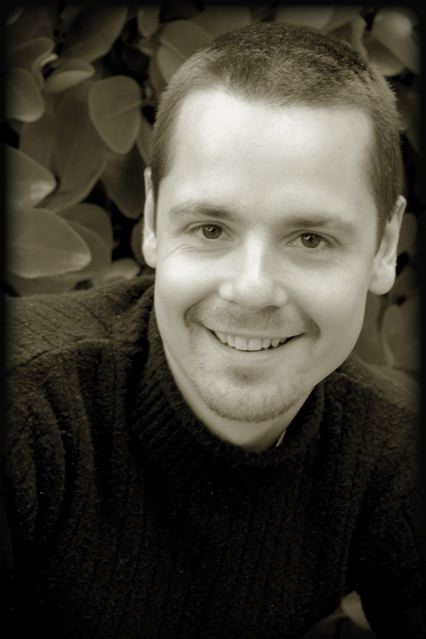
Max Perelman is the research director and co-producer of the Green Dragon Media Project,  a 9-week research and filming expedition to 9 cities along China’s east coast. Interviewees included Chinese government officials as well as the leaders of major developers, professional services firms and product manufacturers.

Based in California, Max Perelman will be in Iowa to show the film, followed by a Q & A session. “Before making this film I had no idea of what an amazing journey I was embarking on. I had been told that over half the world’s construction takes place in this one country, but only when you see it do you believe it.”

Max Perelman is a LEED Accredited Professional and is a project manager with BuildingWise, LLC a high performance building consulting firm headquartered in Moss Landing, CA. Max is also the president of American Environmental & Agricultural, Inc., an import/export and trade consulting firm specializing in environmental technologies and focused on trade between Asia and North America. He is also an advisor to the Joint US-China Cooperation on Clean Energy. Max speaks and reads Japanese and Mandarin Chinese.

Max has a BA from Cornell University, as well as an MBA and MA in International Environmental Policy from the Monterey Institute of International Studies. He has presented at a number of green building conferences including the USGBC’s Greenbuild 2007 in Chicago and WestCoastGreen 2008 in Silicon Valley. He has also published research in the Woodrow Wilson Center’s China Environment Series.

Max’s recent volunteer work includes fundraising for strawbale construction in the Chinese provinces of Heilongjiang and Sichuan, and volunteering for the local Pacific Grove, CA city government as a Planning Commissioner.

While visiting M.U.M. and Fairfield, Max Perelman will also meet with students, faculty, and community leaders, and anyone else interested in sustainable building, international environmental policy, and urban development in China and the US.

This event is free and open to the public.

For more information, email sustainableliving@mum.edu and visit the film’s website www.greendragonfilm.com.


Beautiful film on Algerian artist Malek Salah by Amine Koudier

November 30, 2009

Malek Salah: Majnûn Laylâ – Artist

Enjoy this short film about the Algerian contemporary artist Malek Salah as he prepares for the inaugural exhibition titled ‘Majnûn Laylâ’ for the new Modern Art Museum of Algiers, the first of its kind in the Arab world. The film brings deep insight into Salah’s world—his creative process, the information contained within his work, his relationship to his art, and through it, with the Algerian society.

This beautiful film of a meditating Algerian artist, Malek Salah, is a fine example of a famous artist profiled by one of our MUM students, who later became a videographer for DLF.TV. The young filmmaker, Amine Koudier, a senior student at the time in MUM’s digital media class, was asked to make this film to accompany an opening exhibit of the new Modern Art Museum of Algiers (MaMa), the first of its kind in the Muslim world.

When Amine showed it to me I was really impressed and encouraged him to translate and add English sub-titles and enter it into competitions. I ended up helping him with the French to English translation, and he won first place wherever he entered it. He took the top 2008 Award of Excellence in the student category from the Iowa Motion Picture Association and Winner in the student film category of 2008 Landlocked Film Festival.

David Lynch visited the students when he was here last year and commented on this film. He said he loved the artist, his work, and what he had to say about it, and how Amine had portrayed it—high praise for a student. Amine was later hired to work at David Lynch Foundation Television upon graduating. Read an excellent article in the Iowa Source written by Mo Ellis about him and the film.

Watch the 13-minute film Malek Salah: ‘Majnun Layla’ on DLF.TV, on Vimeo, or on YouTube Part 1 and Part 2. Also see David Lynch Foundation Television to premiere David S. Ware: A World of Sound. The Ware and more profiles by Amine and other DLF.TV filmmakers are available here.

This blog post was published November 30, 2009. After working for the David Lynch Foundation, Amine would become a teacher of Transcendental Meditation and later taught TM and filmmaking at Maharishi University. He gave a wonderful interview to Nylon Magazine, and later invited a photographer from the Ottumwa Courier into his classroom as part of her profile on the university.

AU College Students Reduce HBP, Anxiety, and Depression Through Transcendental Meditation

November 18, 2009

At-Risk College Students Reduce High Blood Pressure, Anxiety, And Depression Through Transcendental Meditation

The Transcendental Meditation® technique may be an effective method to reduce blood pressure, anxiety, depression, and anger among at-risk college students, according to a new study to be published in the American Journal of Hypertension, December 2009.

The Transcendental Meditation Program, a widely-used standardized program to reduce stress, showed significant decreases in blood pressure and improved mental health in young adults at risk for hypertension,” said David Haaga, PhD, co-author of the study and professor of psychology at American University in Washington, D.C.

This study was conducted at American University with 298 university students randomly allocated to either the Transcendental Meditation technique or wait-list control over a three-month intervention period. A subgroup of 159 subjects at risk for hypertension was analyzed separately. At baseline and after three months, blood pressure, psychological distress, and coping ability were assessed.

For the students at risk for developing hypertension, significant improvements were observed in blood pressure, psychological distress and coping. Compared to the control group, students practicing the Transcendental Meditation program showed reductions of 6.3 mm Hg in systolic blood pressure and 4.0 mm Hg in diastolic blood pressure. These clinically significant reductions are associated with a 52% lower risk for development of hypertension in later years.

The findings are timely. Today, an estimated 18 million students are dealing with mental health issues on college campuses. Statistics from colleges nationwide indicate there has been a 50% increase in the diagnosis of depression, and more than twice as many students are on psychiatric medications as a decade ago. According to recent national surveys of campus therapists, more students than ever are seeking psychiatric help on college campuses all across the United States.

“This is the first randomized controlled study to show in young adults at risk for hypertension reductions in blood pressure that were associated with changes in psychological distress and coping,” said Sanford Nidich, EdD, lead author and senior researcher at the Institute for Natural Medicine and Prevention at Maharishi University of Management. “Previous research has shown that psychological distress such as anxiety, depression, and anger contribute to the development of hypertension in young adults,” said Dr. Nidich.

College students are particularly prone to psychological distress caused by interpersonal and social problems, pressures to succeed academically, financial strains, and uncertain futures. For the entire sample in this study, there was a significant improvement in students’ mental health.

“Hypertension is a common risk factor for cardiovascular disease in adulthood. Yet, decades of research show that high blood pressure begins in youth. This well-controlled clinical trial found that blood pressure can be effectively lowered in students with a stress-reducing intervention. This has major implications for the prevention of hypertension, heart attacks and strokes in adulthood,” said Robert Schneider MD, FACC, specialist in clinical hypertension, Director of the Institute for Natural Medicine and Prevention and study co-author.

This study was supported, in part, by a Specialized Center of Research Grant from the National Institutes of Health–National Center for Complementary and Alternative Medicine, and by the Abramson Family Foundation, David Lynch Foundation, and other private donors.

Facts on Stress and Young Adults

Hypertension affects approximately one-third (33%) of the US adult population.

College-age individuals with blood pressure (BP) elevated beyond the optimal range are three times more likely to develop hypertension than normotensives.

Psychological distresses such as anxiety, depression, and anger/hostility have been found to contribute to the development of hypertension in young adults.

In 2007, around 15% of students reported having been diagnosed with depression at some point in their lives — up from 10% in 2000.

Meditation ‘eases heart disease’

November 17, 2009

Meditation ‘eases heart disease’

Heart disease patients who practise Transcendental Meditation have reduced death rates, US researchers have said.

At a meeting of the American Heart Association they said they randomly assigned 201 African Americans to meditate or to make lifestyle changes.

After nine years, the meditation group had a 47% reduction in deaths, heart attacks and strokes.

The research was carried out by the Medical College in Wisconsin with the Maharishi University in Iowa.

It was funded by a £2.3m grant from the National Institutes of Health and the National Heart, Lung and Blood Institute.

‘Significant benefits’

The African American men and women had an average age of 59 years and narrowing of the arteries in their hearts.

The meditation group practised for 20 minutes twice a day.

The lifestyle change group received education classes in traditional risk factors, including dietary modification and exercise.

As well as the reductions in death, heart attacks and strokes in the meditating group, there was a clinically significant drop (5mm Hg) in blood pressure.

And a significant reduction in psychological stress in some participants.

Robert Schneider, lead author and director of the Centre for Natural Medicine and Prevention at the Maharishi University in Iowa, said other studies had shown the benefits of Transcendental Meditation on blood pressure and stress, irrespective of ethnicity.

“This is the first controlled clinical trial to show that long-term practise of this particular stress reduction programme reduces the incidence of clinical cardiovascular events, that is heart attacks, strokes and mortality,” he said.

Dr Schneider said that the effect of Transcendental Meditation in the trial was like adding a class of newly discovered drugs for the prevention of heart disease.

He said: “In this case, the new medications are derived from the body’s own internal pharmacy stimulated by the Transcendental Meditation practice.”

Ingrid Collins, a consultant educational psychologist at the London Medical Centre, said: “I’m not at all surprised that a change of behaviour like this can have enormous benefits both emotionally and physically.

“Physical and emotional energy is on a continuum and whatever happens to us physically can effect our emotions and vice versa.”

TRANSCENDENTAL MEDITATION

  • Introduced in India in 1955 by Maharishi Mahesh Yogi
  • In the 60s the Beatles popularised it by travelling to India to learn the technique from the Maharishi
  • The Maharishi Foundation says TM is a programme for the development of consciousness
  • Courses are only available through the foundation
  • They cost from £190 for students to £590 for people with incomes over £40,000
  • Audience Goes Wild for James McCartney

    November 15, 2009
    the hawk eye

    This Burlington Hawk Eye article was picked up by NewsBlaze.


    Audience Goes Wild for James McCartney

    By Bob Saar

    Rocker James McCartney played his U.S. debut last night at Fairfield’s new Sondheim Center. The two shows were part of the David Lynch Foundation’s fourth annual “Change Begins Within” weekend at Maharishi University.

    McCartney, son of Beatle Paul, opened a three-ring musical circus that included Iowan Laura Dawn and folk legend Donovan.

    “It’s very different having a famous father,” film director Lynch quipped when introducing McCartney. “My father was Elvis Presley.”

    The audience, heavily weighted with aging ’60s boomers, went wild when the 32-year-old singer/guitarist walked on stage with Light, his band.

    The four-piece slammed right into their first number as a video crew taped the show for the DLF Web site.

    McCartney’s’ music was racy and frenetic, and the 400-plus seat Sondheim has well-designed acoustics that allowed the amps-on-stage rock band to deliver without overwhelming.

    James looks a bit like Paul with a shaved head. Ah, those eyes. He is not left-handed, and he played a Fender Stratocaster given to him by Carl Perkins.

    His voice was high and clear like his father’s, but at times, he sounded more like John Lennon when roughing things up.

    “James has a way with melody and a set of pipes which are more than a match for his dad’s,” Lynch said.

    His songwriting style has eerie nuances of the Beatles. “Spirit Guides,” featuring McCartney on piano, bore a haunting resemblance to “Lady Madonna.”

    Every song charged ahead with strange melodies flavored with grunge, perhaps like Nirvana covering side two of Abbey Road, backed by the Ramones.

    McCartney was stoic, mumbling only song titles between songs.

    Laura Dawn and her New York blues-rock band Little Death came out blazing away and had the audience on its feet and dancing before their first song was 12 bars deep.

    Dawn, a native of Pleasantville, is a stunning vocalist at the wheel of a powerhouse. She’s somewhat like Janice Joplin before the booze and cigarettes, or perhaps Martina McBride after a night of heavy pubcrawling.

    Little Death and their sweetly trashed-out backup duo – the Death Threats – blasted the audience into happy submission, a road-and-bar band with a refined stage presence.

    1960s legend Donovan closed the show with a set of hits, from “Catch the Wind” to “Sunshine Superman,” delivered in his trademark quavering voice. Donovan, along with the Beatles and the Beach Boys, brought Transcendental Meditation out of India into Western thought, which ultimately brought Fairfield to the forefront of the practice.

    Little Death and the redressed and fully sequined Death Threats backed the folksinger for most of his set. The finale featured the entire cast, including McCartney, singing “Mellow Yellow” with Donovan and the crowd.

    After the show, someone asked McCartney if he enjoyed playing in Iowa.

    “Yeah, yeah, yeah,” the taciturn singer said. “Definitely.”

    —————————————————————————————————————

    My Comment:

    *WOW! Saar nailed it-every part of it! And the second set was even livelier. Donovan invited Fairfield guitarist Arthur Lee Land on stage for his last two finales, that had Dawn’s husband, lead guitarist Daron Murphy, trading solos with Lee Land, leading to a coherent close, which brought the audience to its feet. What a night! Thank you David Lynch and Fairfield!!

    SOURCE: http://www.thehawkeye.com/story/McCartney-review-111509

    Other news coverage: McCartney wins over Fairfield audience in U.S. debut concert and Paul McCartney’s son says he’s ready to follow in dad’s footsteps. A few years later James McCartney sings Angel on David Letterman, and performed at the Sundance Film Festival. Enjoy this popular news story: Paul McCartney and Nancy show up to see James play, and surprise the small Brighton club audience.

    Maharishi University students get academic credit for daily Transcendental Meditation (TM) practice

    November 13, 2009

    NewsBlaze

    Published: November 12,2009
    Send to a friend
    Letter to the Editor
    AddThis

    Response to “Hindus Laud University of Colorado-Boulder Over Meditation Center”

    Hindus Laud University of Colorado-Boulder Over Meditation Center

    It seems that UCB is just starting to catch on. MUM, Maharishi University of Management, located in Fairfield, Iowa, has offered CBE, Consciousness-Based education, for 35 years, where students, faculty, and staff all practice TM, the Transcendental Meditation technique, twice a day.

    Students receive RC credit, research in consciousness, as part of their curriculum. Meditation rooms are made available for students to practice their twice-daily non-religious TM technique. And there are two large golden domes over 25,000 square feet each, one for men and one for ladies, where students, faculty, staff, and meditating townspeople all gather twice a day, morning and evening, to practice TM and the TM-Sidhis program, including Yogic Flying, for world peace.

    These ancient meditative practices revived by the founder, Maharishi Mahesh Yogi, dramatically lower stress-related risk factors and increase clarity and orderliness in brain functioning. The results show up in students’ academic and athletic performances as well as improved individual and social well-being. Students are happier and more productive, and don’t resort to alcohol or drug abuse, or express violent behavior.

    For those who wish to worship according to their own faith, students attend multi-denominational services in town, and a room is also available for Muslim students who wish to use their prayer rugs to pray. MUM’s diverse student population of over 1000 comes from over 65 different countries this year. And enrollment is growing as more and more discover what this unique university has to offer.

    All food is organic vegetarian, some of it grown locally in the university’s large green houses. Visit http://www.mum.edu or come for a Visitors Weekend. One of the most popular Visitors Weekends is the annual David Lynch Weekend. Also check out the David Lynch Foundation website for details.

    Ken Chawkin
    Media Relations Director
    Maharishi University of Management
    The David Lynch Foundation
    E: kchawkin@mum.edu
    W: http://www.mum.edu
    W: http://www.davidlynchfoundation.org
    B: https://kenchawkin.wordpress.com

    Paul McCartney’s son to perform in U.S. concert in November

    November 2, 2009

    Paul McCartney’s son to perform in U.S. concert in November

    James,Paul,Mary

    James McCartney, son of former Beatle Paul McCartney, will perform with his band Light Nov. 14 in a concert during the upcoming Visitor’s Weekend at the Maharishi University of Management in Fairfield, Iowa.

    The 6:45 p.m. Nov. 14 concert will also feature Laura Dawn and Little Death and singer Donovan. It’s part of Visitor’s Weekend Nov. 13-15 at the University that acts as an open house for prospective students.

    Film maker David Lynch will be host for the event. A concert benefit for his David Lynch Foundation earlier this year at New York’s Radio City Music Hall featured Paul McCartney, Ringo Starr and Donovan.

    For more information, see the university’s website.web statistics

    More About: James McCartney and the concert.

    Fourth Annual David Lynch Weekend for World Peace and Meditation Taking Place in Iowa

    October 31, 2009

    paste-logo

    Fourth Annual David Lynch Weekend for World Peace and Meditation Taking Place in Iowa

    Published at 1:48 PM on October 30, 2009

    By Emily Riemer

    David Lynch, signature director of quintessentially dark, sometimes confusing, occasionally erotic, often non-linear films, is also a representative for world peace and meditation. The Oscar-nominated filmmaker and his David Lynch Foundation will present the fourth annual David Lynch Weekend at Maharishi University of Management in Fairfield, Iowa on Friday, Nov. 13 through Sunday, Nov. 15.

    Lynch will be the keynote speaker at the conference, and other presenters range from 1960s pop star Donovan to quantum physicist and Maharishi professor John Hagelin (who ran for U.S. president three times with the Natural Law Party). The weekend is aimed at those “interested in creativity, film, art, sustainable living, organic agriculture, brain development, consciousness, meditation, natural medicine, renewable living, peace.” Attendees are encouraged to “take part in a greater conversation about the creative process, alternative education and ways to live a better life.”

    The David Lynch Foundation was established in 2005 and, according to its website, has provided millions of dollars to fund and implement the teaching of Transcendental Meditation techniques to students worldwide. The DLF credits the techniques with reducing ADHD and other learning disorders, anxiety, depression, and substance abuse, calling them stress reducing programs that “improve creativity, brain functioning, and academic performance.”

    Maharishi University is an appropriate location for such a conference. The undergraduate and graduate university centers around “consciousness-based education” of Transcendental Meditation, sustainability, peace and natural health.

    Beyond his forays into transcendentalism, David Lynch is best known as the director of films such as Mulholland Drive and the TV show Twin Peaks.

    Got news tips for Paste? Email news@pastemagazine.com.

    Transcendental Meditation reduces stress, improves mental health among women with breast cancer

    October 13, 2009

    [ Back to EurekAlert! ] Public release date: 13-Oct-2009

    Transcendental Meditation reduces stress, improves mental health among women with breast cancer

    Chicago, Ill. (October 13, 2009) – Women with breast cancer reduced stress and improved their mental health and emotional well being through the Transcendental Meditation technique, according to a new study published in the current issue of the peer-reviewed Integrative Cancer Therapies (Vol. 8, No. 3: September 2009).

    “A Randomized Controlled Trial of the Effects of Transcendental Meditation on Quality of Life in Older Breast Cancer Patients” was a collaboration between the Center for Healthy Aging at Saint Joseph Hospital; the Institute for Health Services, Research and Policy Studies at Northwestern University; the Department of Psychology at Indiana State University; and the Institute for Natural Medicine and Prevention at Maharishi University of Management.

    “It is wonderful that physicians now have a range of interventions to use, including Transcendental Meditation, to benefit their patients with cancer,” said Rhoda Pomerantz, M.D., study co-author and chief of gerontology, Saint Joseph Hospital. “I believe this approach should be appreciated and utilized more widely.”

    One hundred thirty women with breast cancer, 55 years and older, participated in the two-year study at Saint Joseph Hospital. The women were randomly assigned to either the Transcendental Meditation technique or to a usual care control group. Patients were administered quality of life measures, including the Functional Assessment of Cancer Therapy-Breast (FACT-B), every six months for two years. The average intervention period was 18 months.

    Stress contributes to the onset and progression of breast cancer

    Breast cancer is the most common cancer in women—striking about 13% of women. Women over the age of 50 have four times the incidence of breast cancer compared to women below 50. Breast cancer remains a leading cause of death among women, according to the National Cancer Institute.

    “Emotional and psychosocial stress contribute to the onset and progression of breast cancer and cancer mortality,” said Sanford Nidich, lead author of the study and senior researcher at the Institute for Natural Medicine and Prevention at Maharishi University of Management.

    “The Transcendental Meditation technique reduces stress and improves emotional well-being and mental health in older breast cancer patients. The women in the study found their meditation practice easy to do at home and reported significant benefits in their overall quality of life,” Dr. Nidich said.

    “Decades of research have shown that stress contributes to the cause and complications of cancer,” said Robert Schneider, M.D., F.A.C.C., co-author and director of Institute for Natural Medicine and Prevention at Maharishi University of Management. “The data from this well-designed clinical trial and related studies suggest that effective stress reduction with the Transcendental Meditation program may be useful in the prevention and treatment and of breast cancer and its deleterious consequences.”

    ###

    Maharishi University of Management

    The study was supported by grants from the Retirement Research Foundation of Chicago and the National Institutes of Health National Center for Complementary and Alternative Medicine.

    Facts on Breast Cancer

    • Breast cancer is the most common cancer in women—and remains a leading cause of death.
    • Breast cancer incidence in the United States is 1 in 8 (about 13%).
    • In 2008, an estimated 250,000 new cases of breast cancer were diagnosed in women in the U.S.
    • Women above the age of 50 have nearly four times the incidence compared to women under 50
    • Newly diagnosed and long-term survivors are affected by impairment in quality of life (QOL), including emotional, physical, functional, social, and spiritual domains.
    • Psychosocial stress contributes to the onset, progression, and mortality from this disease.
    • Clinical diagnosis of breast cancer increases psychological distress, with sustained distress occurring during cancer treatment and continuing long-term.
    • There have been an increasing number of women using complementary and alternative medicine (CAM) for female-specific cancers. In terms of breast cancer, recent studies indicate that CAM use among women may be as high as 90 percent.

    About Saint Joseph Hospital:

    Founded in 1868, Saint Joseph Hospital has a long tradition of providing care to the community. The 335-bed full-service hospital on Chicago’s north side specializes in a full array of services, including cardiology, cancer, orthopedics, family medicine, diabetes and behavioral care. The hospital has more than 550 physicians on staff, representing more than 35 specialties. As a community-based teaching facility, Saint Joseph has six residency programs. Saint Joseph Hospital is a part of Resurrection Health Care.

    In 2009, the hospital received for the sixth year in a row the Stroke Care HealthGrades Specialty Excellence Award, ranking it among the top 5 percent of U.S. hospitals for stroke care. The hospital is also a Blue Distinction Center for Cardiac Care® and is five-star rated in six clinical areas, including cholecystectomy (gall bladder removal), chronic obstructive pulmonary disease (lung disease), heart failure, hip fracture repair, pneumonia and treatment of stroke. The Center for Cancer Care of Saint Joseph Hospital was recently designated the first accredited breast center in Chicago by the American College of Surgeons (ACoS) National Accreditation Program for Breast Centers (NAPBC), one of only three in Illinois. For information, visit sjh.reshealth.org/proven.

    Contact: Susan E. White
    Susan.White2@reshealthcare.org
    773-665-3445
    Saint Joseph Hospital

    http://bit.ly/1ffiTi

    STOLCEL Receives Honorary PhD at MUM

    September 28, 2009

    Times•Colonist

    Saving native languages

    By Jeff Bell, Victoria Times Colonist

    September 27, 2009

    John Elliott’s years of dedication to preserving aboriginal languages — including Sencoten, the language of the Saanich First Nation — has earned him an honorary PhD.

    Elliott, also known by his Saanich name, Stolcel, received the recognition from Maharishi University of Management in Iowa during a major international conference called “Building Healthy, Sustainable American Indian Communities.” Native leaders from across North America are attending the gathering, which wraps up today.

    Elliott, a resident of the Tsartlip reserve and a teacher at the Lauwelnew Tribal School, is a co-founder of FirstVoices.com, a web-based aboriginal-language archive. The concept has prompted more than 60 First Nations to use online services to archive their languages, as well.

    Elliott’s work with language preservation goes back 30 years, and has drawn from the efforts of his late father, Dave. Elliott first began looking at computers and digital videos in his work in 1999, and went on to develop FirstVoices.com with colleague Peter Brand.

    (Mentioned in column: Good News: Makeover planned for Casa Maria emergency house)

    http://bit.ly/Stolcel

    June 10, 2019, UVIC, University of Victoria, bestowed an Honorary Doctor of Education (DEd) on STOLȻEȽ John Edward Elliott Sr. Visit their website for details.