Posts Tagged ‘Maharishi Mahesh Yogi’

Les Crane interviews Maharishi Mahesh Yogi

July 6, 2013

This is a delightful find—early vintage Maharishi—interviewed by a popular LA television talk show host. Les Crane interviewed Maharishi Mahesh Yogi in September 1967 about a month after The Beatles had met and learned Transcendental Meditation from him. They go over the basics of what Transcendental Meditation is and is not. Maharishi is delightful, laughing and quipping throughout the interview. The one-hour show, minus commercials, is 49:30 minutes long.

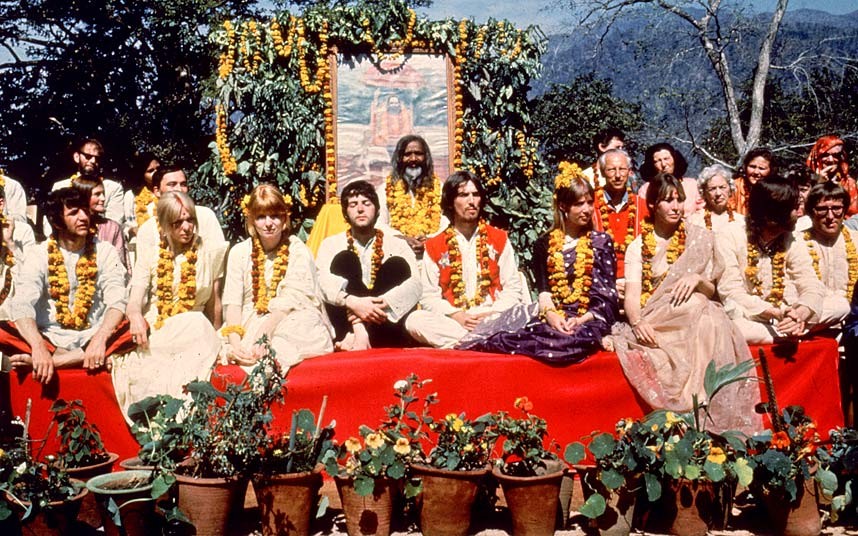
67_beatles_maharishi-mahesh_yogi_002-580x389

Les asks Maharishi when he first heard of the Beatles and when they first met him. He then quotes the Beatles from the current (Sept 22, 1967) Time magazine cover story, THE BEATLES / Their New Incarnation, where they favorably describe Maharishi and how TM fulfilled their search for a genuine spiritual experience.

Les asked some good questions. He was an intelligent man. Halfway into the program Les opens up questions from the audience. He also introduces Efrem Zimbalist Jr. and mentions his association with Maharishi. Les then introduces Jerry Jarvis, national director of SIMS, and asks him to explain the Five Year Plan. Maharishi mentions Charles Lutes and his plan to build an Academy of Meditation in the US. Les asks what the world would look like if many people practiced Transcendental Meditation, and Maharishi gives him a very practical description.

At the end of the program Les apologetically prefaces what he’s about to say when he announces who his guests will be on the next show. “We have been talking about Transcendental Meditation and spiritual enrichment and fulfillment tonight. Tomorrow night we’re going to have a group of people on the program who believe that the way to find inner peace and happiness is an entirely different way. We’re gonna have a few representatives of the Sexual Freedom League on the program.” [laughter, a few more comments, then adds] “I had to say that because that’s what we do here, we look at everything.”

Maharishi: “To search is good.” Les, smiling: “To search is good.” Maharishi adds: “And to find fulfillment is really great.” [loud applause] Les: “Maharishi, thank you very much.” Maharishi: “Good luck to the whole nation through you.” Les: “Good bye. Bless you all.”

See this recent post of The Telegraph reporting on a recent TM study improving graduation rates saying the Beatles may have been on to something after all during their fabled journey to India.

Also see Maharishi interviewed on the BBC in 1967.

The BBC World Service program Witness, will air an interview with Theresa Olson, Monday March 3, 2014, 8:50 GMT. In the spring of 1959, Indian guru Maharishi Mahesh Yogi set off around the world to spread the teachings of Transcendental Meditation. Witness speaks to Theresa Olson, who was ten years old when the Maharishi came to stay in her parents’ house. A photo is shown of Maharishi taken from BBC1, Sunday July 5, 1964, to promote the upcoming interview on The Maharishi’s World Tour.

Another program worth watching from those early days is the 1968 CBC documentary of Maharishi at Lake Louise.

The most recent biography on Maharishi aired on A&E’s History Channel, 40 years after the BBC and Les Crane interviews.

A new BBC report, on the 50th anniversary of that visit to Bangor to learn more about Transcendental Meditation from Maharishi was published today, August 25, 2017. The Beatles: Historians say 1967 Bangor visit was a turning point. The report  includes interviews with people who were there at that time.

Maharishi explains the reason for TM’s worldwide popularity

Maharishi always had an interesting take on world events. In this recently posted 1968 video, he discusses where the worldwide popularity for Transcendental Meditation started. During his visit to England in the summer of 1967, he describes the countrywide concern that was being expressed over the previous 8 months about the deplorable drug problem among the youth. Thanks to Patti Harrison, The Beatles heard Maharishi was going to speak at the London Hilton and got front row seats. They wanted to meet him afterwards and it was arranged. Maharishi inspired them to want to do something good for the youth and they agreed. They wanted to learn how to meditate from Maharishi and he invited them to join him on the long train ride to Wales where he was going to lead a 3-day meditation course. Some reporters overheard their plans. When The Beatles met Maharishi at the train station, they were surrounded by over 50 press and hundreds of fans. The video contains footage from that time as well as photos taken at the lecture and on the train. There is also actual footage taken privately of their discussion, but it has yet to be made public.

Maharishi explains it was not the Beatles that created the worldwide publicity about TM, but the English press who reported on their wanting to learn to meditate, which, they felt would inspire the British youth to give up drugs in favor of meditation. An example of one of the English headlines was the report from the Archbishop of Canterbury congratulating The Beatles for starting Transcendental Meditation. Then the world press picked up this Beatles story and it spread globally. Maharishi emphasized it was not The Beatles, but the tense situation in the country at the time that brought about the news headlines. He said they wanted “to change the psychology of the children, and they succeeded, greatly. So this phase was behind the worldwide publicity.”

Save

Additions: #TranscendentalMeditation founder Maharishi Mahesh Yogi interviewed on Finnish TV in 1973. And Maharishi on the nature of a settled, silent mind in the November 1993 Science of Mind interview. And Rememberances of #TranscendentalMeditation and #MaharishiU founder Maharishi Mahesh Yogi.

Pages 12-13 of the September 2020 issue of Transcendental Meditation News in the UK under The Maharishi Interviews features a transcript of part 1 of Les Crane’s interview with Maharishi in Los Angeles, Autumn 1967. Part 2 continues in their next issue. Transcendental News, Vol 24. No 2, September 2020.

Who was Bungalow Bill from the Beatles White Album and what happened to him? He tells us! This post now includes mention of the new film, Meeting the Beatles in India, by Paul Saltzman. In the Q&A that followed, Rikki Cooke III, aka Bungalow Bill, explained why he thought the remaining Beatles left the ashram abruptly. It made a lot more sense than the usual rumor mentioned in the article. I posted a comment after the Variety article of what he said about it, and included related material.

Great article on TM helping students boost grades shows the Beatles were way ahead of their time

June 22, 2013

Here is that great article written by , Science Correspondent for The Telegraph, published June 11, 2013, 9:00PM BST: Transcendental Meditation may boost student grades. He says, It may have seemed simply a phase in pop history, but it seems the Beatles may have been on to something after all during their fabled journey to India.

BEATLES_2587635kIt seems the Beatles may have been on to something after all during their fabled journey to India.  Photo: GETTY IMAGES

A form of meditation made popular by John Lennon and his band mates during the “flower power” era has been found to improve students’ grades.

A study of school pupils found that performing two 20-minute sessions of Transcendental Meditation each day improves academic achievement.

The practice involves sitting still with eyes closed while chanting a mantra – also sometimes derided as “oming”.

It became synonymous with hippy culture in the 1960s after The Beatles embraced it following a visit to India where they were taught the technique by the late Maharishi Mahesh Yogi.

Now a growing body of research is suggesting it can have a positive effect on people’s lives.

Recent studies have shown that it can be used to treat high blood pressure and help people overcome psychological problems.

The latest research found that US school pupils who performed the meditation technique had higher graduation rates than those who did not.

The effect was even greater among those who had the lowest academic grades, the research conducted by the University of Connecticut and Maharishi University of Management, Iowa, found.

Researchers found that Transcendental Meditation increased the number of students graduating by 15 per cent while among those with the lowest academic grades, a further 25 per cent graduated compared to those not meditating.

Professor Robert Colbert, from the Neag School of Education at the University of Connecticut, said: “Transcendental Meditation appears to hold tremendous promise for enriching the lives of students.”

He added that the meditation technique was a viable method for turning around “poor student academic performance and low graduation rates”.

Sanford Nidich, a professor of education at Maharishi University of Management who conducted the research, added: “These results are the first to show that the Transcendental Meditation program can have a positive impact on student graduation rates.

“The largest effect was found in the most academically challenged students.

“Recently published research on increased academic achievement and reduced psychological stress in urban school students may provide possible mechanisms for the higher graduation rates found in this study.”

It is estimated that around 6 million people now practice Transcendental Meditation around the world.

The technique aims to concentrate the mind inwards by uttering the mantra and is intended to empty the mind of thoughts and feelings.

Proponents of the technique claim it can aid concentration and help to rid them of negative emotions.

The Beatles’ time with Maharishi Mahesh Yogi, at his teaching centre in the foothills of the Himalayas in 1968, produced some of the most famous images of the Fab Four, dressed in white and draped in flower garlands.

It was also one of their most productive periods musically, with Lennon declaring that between them they wrote around 30 new songs during their visit to Rishikesh.

The tracks, which ended up on The Beatles, also known as the White Album, and Abbey Road, include Back in the USSR, Blackbird, Revolution and Mean Mr Mustard.

In an interview conducted in 2009, Paul McCartney and drummer Ringo Starr spoke candidly about how the meditation technique helped them.

Starr said: “Since then, sometimes a lot, sometimes a little, I have meditated. It is a gift he [the Maharishi] gave me.”

McCartney added: “It wasn’t all about meditation, it’s just you were focused – but yeah, there were very blissful moments.

“It is one of the few things anyone has ever given to me that means so much to me. For us, it came at a time when we were looking for something to stabilise us at the end of the crazy sixties.”

McCartney has also in the past called for Transcendental Meditation to be used in schools.

He said: “I believe that in the future meditation could be as commonplace in schools and society as eco-awareness is now. It interests me that an ancient cure may be the solution to a modern problem.”

The new research, which involved 235 students in their senior year at an urban school on the US east coast, was funded by the David Lynch Foundation, which has been campaigning to have meditation incorporated into the school day.

They claim that where meditation has been used in schools, it has helped to reduce stress and anxiety in pupils while also lowering suspension rates.

The foundation was set up two years ago by film director David Lynch after he used meditation to overcome his own anger issues.

Describing the difference it has made to his life, he said: “When I started meditating I had a real anger in me, and I would take this out on my first wife.

“Two weeks after I started meditating, this anger lifted.”

See EurekAlert! press release for the study: Transcendental Meditation positively impacts student graduation rates, new research shows.

See this related post on some of the news coverage: New study shows TM significantly improved school graduation rates, world press reports.

This article was later highlighted on the University of Connecticut Neag School of Education website on their Spotlight page reporting the latest news: Transcendental Meditation May Boost Student Grades.

See The former Beatles Paul McCartney and Ringo Starr reunion for David Lynch’s benefit concert airs on New York’s THIRTEEN, Sunday, April 29.

Ted Henry interviews “Dear Prudence” Farrow Bruns about her life with TM and Maharishi

June 9, 2013

This wonderful interview is also available from on Vimeo. Retired TV journalist Ted Henry conducts interviews with spiritual people for Souljourns. Last month he interviewed Prudence Bruns Farrow. You can also see the interview on their Vimeo channel: http://vimeo.com/67166559. Here is their introduction to the video:

From the very beginning Prudence Farrow Bruns recognized an added layer or texture to her life, a spiritual dimension that would take her deep within.

She was among the first in the West to become initiated into Transcendental Meditation and in the mid sixties she traveled to Rishikesh, India to learn to become a TM teacher. Her own teacher in India, Maharishi Mahesh Yogi who is credited for bringing TM to the world.

In India with her at this time, her sister and acclaimed actress, Mia Farrow, The Beatles, Mike Love of the Beach Boys, Donovan and others.

Prudence and her husband, Albert Bruns who is also a TM instructor, live in Seagrove along the Gulf of Mexico in Northwest Florida.

The interview was recorded in Seagrove, Florida in May, 2013.

See this related BBC news item: Prudence Farrow — subject of the Beatles song Dear Prudence — visits India’s Kumbh Mela. And this video: The Beatles “Dear Prudence”: A Portrait of Prudence Farrow Bruns, Maharishi and TM.

Who was Dear Prudence the Beatles sang to in India? What happened to her? Here is her story.

Article on the multi-talented Lanny Shuler: artist, consultant, surfboard designer, and TM instructor

June 9, 2013

What’s going on in that purple building?

You might have noticed Shuler Surfboards before – it’s located in a purple building south of Seaside at milepost 24 on U.S. Highway 101.

Lanny Shuler, owner of Shuler Surfboards, rides the waves of creativity in business and in life

Thursday, June 6, 2013 8:00 am

Article and photos by DWIGHT CASWELL for COAST WEEKEND: ARTS & ENTERTAINMENT: COASTAL LIFE.

I can’t tell you how many times I’ve driven by that purple building just south of Seaside. The sign by the side of U.S. Highway 101 says “Shuler,” and the windows are lined with surfboards. I always wonder, “A surfboard factory in Seaside?”

My curiosity finally got the best of me, and I stopped by. What I found surprised me. Yes, there are surfboards being made here – custom-made, state-of-the-art boards – but there’s a lot more going on. There’s an artist, a materials consultant to Corning and Dow, a creativity consultant to Nike, a Transcendental Meditation (TM) instructor.

From the outside, the building doesn’t seem large enough to house all those people, and it couldn’t if not for the fact that all those people are one: Lanny Shuler, who has been doing all those things on the North Coast since relocating here in 1983.

Shuler grew up in West Long Beach and Huntington Beach, Calif., where he learned to surf at the age of 7 and built his first surfboard 10 years later. “We were water kids,” he says of his childhood friends, “so surfing was a natural thing to pursue, and I was never attracted to organized sports. It was easier to just go surfing, to have fun even if I wasn’t with friends.” Surfing was, at the time, an outsider sport. “This was before the Beach Boys,” he says, “and before ‘Gidget,’” the first surfing movie, made in 1959. “That was the beginning of cultural awareness of surfing,” he continues, “but I was never interested in surfing culture.”

As a young man in 1972, Shuler moved to Astoria to help his father, Don, build a commercial fishing boat, eventually moving back to southern California to make and lose a fortune in real estate. He studied art and architecture in school and began to practice TM, a mantra-based meditation technique that is practiced twice daily for 15 to 20 minutes. Through TM, Shuler found an inner peace and wakefulness, and he left formal education to study under TM founder Maharishi Mahesh Yogi, eventually becoming a certified TM teacher.

In 1983, having discovered that “a simpler life was more to my liking,” he returned to Oregon, just in time to catch the wave of windsurfing tourism in the Columbia Gorge. In addition to his surfboard business in Seaside, Shuler opened Shuler Sailboards in the Gorge and discovered that building both sailboards and surfboards gave him a more diverse outlet for innovation and creativity, as he constantly modified and reinvented his cutting edge board designs.

Shuler’s innovations with resins, fiberglass and foam led to consultancy work with Dow Chemical and Owens Corning. Word of Shuler’s creativity also got around to Nike’s product development team, called the “Innovation Kitchen,” prompting their visit to the purple building for inspiration on long-term maintenance of creativity. Shuler credits TM for his daily charge of inspiration and enthusiasm in new ideas, and his capacity to incorporate them into his career. Since that first meeting he has been invited to the Nike Campus to bolster employee creativity through lectures and TM lessons.

Shuler stresses that “It is a challenge for everyone to have many dimensions and diversities to integrate into one’s life, many demands into one combined fulfilling experience.”

The latest aspect of Shuler’s diversity is his return to art. “My art interests have often fallen aside to other priorities,” says Shuler. “Regardless, whenever I applied artwork on my surfboards, people would take notice.”

Lanny Shuler with a sample of his surfboard art.As an art student Shuler was uninspired painting on flat surfaces, but his enthusiasm returned when he began painting the sculptural form of his surfboards. “I found inseparability between my color interests and the three dimensionality of the surfboards I was painting on. Without my intending it, my art had become more challenging and engaging.”

Shuler’s “relationship with the aesthetic of the three dimensional form” also resulted in his art becoming more abstract. “It’s much less calculated and more intuitive, and there is a more intimate relationship with the creative silence of my daily meditation, with inner restful alertness and more abstract consciousness.”

Shuler is now working on a gallery show of paintings on what he calls “nonfunctional painted sculptures that can’t be surfed on.” He explains, “My surfboards have always been painted sculptures, but because they were functional, their value was mostly perceived in the terms of sporting equipment rather than higher valued art. That’s changing now.”

Which is not to say that he is abandoning functional surfboards. In fact, he is introducing an entirely new type of board designed to allow novices and experienced surfers alike to more easily develop their surfing skills and have more fun surfing in a variety of conditions.

The new boards and Shuler’s art will soon make an appearance on a redesigned website, www.shulersurfboards.com, and stay tuned for the next dimension of Lanny Shuler’s multifaceted life.

© 2013 Coast Weekend.

The Intelligent Optimist’s Consciousness Issue Features Maharishi’s Approach to World Peace

March 24, 2013

The new Intelligent Optimist is out with The Consciousness Issue

Features articles on Maharishi Mahesh Yogi’s approach to world peace.

Optimist Jan-Feb 2013 The Intelligent Optimist, formerly OdeWire, is a magazine that pays attention to what’s good in the world. The new Consciousness Issue shows people meditating, connected to everyone else, with the words: The revenge of the spirit: A new consciousness is coming—and it will change everything. The Jan/Feb 2013 issue will be posted on their website. The editor-in-chief, Jurriaan Kamp, is inviting readers to receive The Consciousness Issue in digital format in their e-mailbox, for free.

There are two major articles on Maharishi’s approach to world peace: When monks rule: Rigorous research shows that group meditation reduces conflict and violence in society (pages 44–48), and Levitating for a better world: Selling his telecom company made Paul Gelderloos rich. Now he plans to spend millions reducing world poverty—through meditation (pages 50–53). You can also download PDFs of the articles: When monks rule and Levitating for a better world.

Optimist-When monks ruleThe Dutch-American publisher, Jurriaan Kamp, has written a most intelligent article. It’s actually one of the most enlightened pieces I’ve ever read about our approach to collectively transform society from within through the ongoing global world peace project. I especially loved his piece on Paul Gelderloos, our “Flying Dutchman!” 🙂 You’ll know what I mean when you see the photo they put together. I believe it was Paul who encouraged Jurriaan to write about Maharishi’s World Peace Project and the means to transform society. He did a brilliant job! You’ll enjoy it.

Of interest are Jurriaan Kamp’s Letter from the Editor: Your attention, please (page 5), and his editorial article (pages 36–40): The revenge of the spirit: Humanity stands at the threshold of a new era: the era of consciousness. After conquering the external world, human beings will discover their inner selves.

Here is an invitation from the Publisher and Editor-in-Chief of The Intelligent Optimist, Jurriaan Kamp. (more…)

Haiku With My Muse, Sali, inspired by Paul Horn

March 20, 2013

Haiku With My Muse

You are my soul mate
With you, I can be mySelf
Together, We Are

© Ken Chawkin
With Sali at Parkview
Sunday, March 17, 2013

See Celebrating Paul Horn and his Contribution to Jazz, World Music, Meditation and Spirituality.

(more…)

Celebrating Paul Horn and his Contribution to Jazz, World Music, Meditation and Spirituality

March 20, 2013

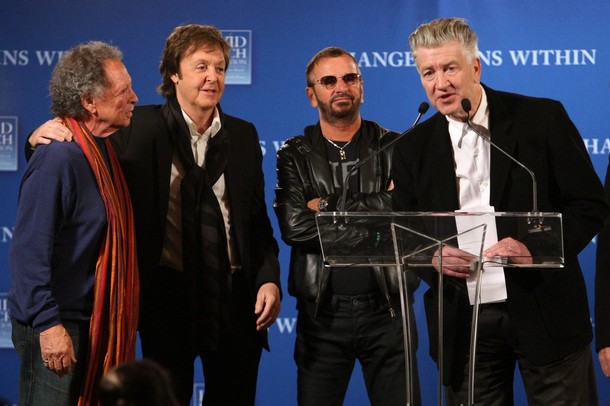
Paul Horn, Sir Paul McCartney, Ringo Starr and David Lynch attend the press conference for the David Lynch Foundation “Change Begins Within” Benefit Concert at Radio City Music Hall on April 3, 2009 in New York City. (Photo by Bryan Bedder/Getty Images)

It was St. Patrick’s Day on Sunday, March 17, 2013. It was also Paul Horn’s 83rd birthday, and I had sent around an email about it with links to Paul’s participation (:55–1:22) in the Change Begins Within Press Conference Highlights from Radio City Music Hall in NYC, April 3, 2009, and the concert the following night. Here’s an overview of the Change Begins Within Press Conference and musical Paul McCartney & Ringo Starr Concert Highlights. This is a great collection of concert clips and interviews, and DLF school clips: Paul McCartney and Ringo Starr Collaborate for Meditation in Schools. PBS later aired an edited version.

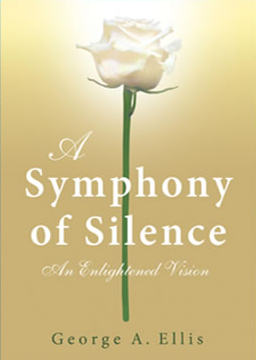
A Symphony of SilenceI also read an interview with Paul Horn in the first chapter of A Symphony of Silence: An Enlightened Vision by George A. Ellis. Paul spoke about his philosophy of music and improvisation, how he communicated musically with a killer whale at an aquarium in Victoria, BC, and in Hawaii. He also spoke about his own spiritual quest, how he started Transcendental Meditation and met Maharishi Mahesh Yogi. He discussed how he was invited to join a course in India with Maharishi and his experiences there. George Ellis also asked Paul questions about his becoming a TM teacher in those early days, and also playing his flute in the Taj Mahal. It’s a great interview, and a wonderful way to start the book! It got me hooked.

Rolf Erickson, editor-in-chief of Enlightenment, The Transcendental Meditation Magazine, emailed to say there’s an excerpt of the interview with Paul Horn in the latest issue, number 11, called The Music of Meditation. In it, George cites a beautiful quote from Paul’s own book, Inside Paul Horn: The Spiritual Odyssey of a Universal Traveler, highlighted at the top of the article: “We are traveling in historical time, from the present to the distant past. We are traveling inwardly as well, through the music of meditation.” Rolf also contributed an article about George Ellis, Sharing the Symphony of Silence, describing what he had accomplished as a TM teacher and entrepreneur, and his heartfelt tribute to Maharishi with this book. Visit http://asymphonyofsilence.com.

Here is an excerpt from the book A Symphony of Silence by George Ellis on Paul Horn and the Music of Meditation published in Enjoy TM News.

Here’s an earlier post from a few years ago: Iconic Jazz Musician Paul Horn Performs Inside MUM’s Golden Dome in Historic Concert May 15. The concert was in the context of a Symposium on Music and Consciousness during which Paul Horn was honored for his lifelong contribution to music, as a jazz musician and Father of New Age Music; and consciousness, as a longtime teacher of Maharishi’s Transcendental Meditation technique. Paul taught thousands of people to meditate in the 70’s. Here is Paul’s great talk at that Symposium: Improvisation: The Ultimate Art of Self-Expression — Paul Horn at MUM. Click here to see all of the Lecture and Performance Videos including Q & A.

During his visit to MUM and Fairfield, Jo Ann Gesner interviewed Paul for an article, Paul Horn: Improvisation from the Inside Out, published in Enlightenment Magazine’s 6th issue as Inside with Musician Paul Horn, with a beautiful photo that Jo Ann took of Paul and his wife, Ann Mortifee, in front of the mural painted by Lynne Teeple in Café Paradiso.

This video, Inside Paul Horn, is an overview of Paul Horn’s career. Originally titled, Inside Paul Horn Special Edition, it includes clips from Story of a Jazz Musician – David Wolper Presents, and was uploaded on Jan 14, 2011 by annmortifee. It seems to have been taken down now but you can see the full 3-part film here.

For more on the music of Paul Horn and Ann Mortifee, visit http://paulhornmusic.com and http://annmortifee.com.

Listen to Monica Hadley interview George A. Ellis on KRUU’s Writer’s Voices – 20130712 and how his book Symphony of Silence came about. Also posted on Writer’s Voices website.

See my Haiku With My Muse, Sali, inspired by Paul Horn.

See Snapshots: Paul Horn in Conversation: History & Influences.

Paul Horn died June 29, 2014. There were many memorial articles about the jazz flutist, composer and creator of new age music who also became a teacher of  Maharishi’s Transcendental Meditation at his ashram in Rishikesh, India. He taught thousands to meditate in the United States and returned to make a film about Maharishi when the Beatles happened to be there to learn more about TM at his ashram. The Guardian announced his passing: Paul Horn, father of new age music, dies aged 84, then published a more detailed obituary.

Update July 4, 2020: A Symphony of Silence: An Enlightened Vision: 3rd Edition Abridged Paperback – June 28, 2020 and Kindle Edition. Also available in Spanish as Sinfonia del Silencio.

Prudence Farrow — subject of the Beatles song Dear Prudence — visits India’s Kumbh Mela

February 23, 2013

Beatles song muse visits India’s Kumbh Mela
By Amitava Sanyal, Allahabad, for BBC News India
February 21, 2013 | Last updated at 06:37 ET

Prudence Farrow at Kumbh Mela
Prudence Farrow says the Beatles were “real people”

The subject of a Beatles song is among the many foreign pilgrims visiting India’s Kumbh Mela festival.

Prudence Farrow, about whom John Lennon wrote the song Dear Prudence, is also sister of Hollywood actor Mia Farrow.

The Kumbh Mela, which is held every 12 years, is billed as the world’s biggest gathering of humanity.

Millions of Hindu ascetics and pilgrims take a dip at Sangam, the confluence of the Ganges and Yamuna rivers in Allahabad city.

Ms Farrow says she waited for four decades to come to the Kumbh Mela.

She had first visited India in 1968 as a student of meditation and met the Beatles at Indian guru Maharishi Mahesh Yogi’s retreat in Rishikesh.

“I wanted to come to the Kumbh with the Maharishi, but that never happened,” she told the BBC. Her guru died in 2008.

This year Ms Farrow finally made it to the Kumbh Mela with her husband Albert Bruns.

‘Exotic’

“India has changed so much since I first came here,” says Ms Farrow, 65, sitting in the brightly-painted porch of her rented flat in Allahabad.

“Back then it was exotic. We were staying in the forest outside Rishikesh. Life was quite agricultural even in the cities.

“There were animals on the road, there were very few telephones and there was hardly any electricity where we were staying.”

Ms Farrow says she was in for a shock when she first arrived at the festival ground last month.

At first, she insisted on staying in one of the tens of thousands of tents that have been put up on the banks of the river.

Ms Farrow, who has a doctoral degree in South Asian studies and runs foundations to promote meditation, says she was in search of “an inner silence”.

But, ironically, the blare of three loudspeakers every morning at the festival grounds shattered her peace and she shifted into the city.

This was, she says, in sharp contrast to the peaceful times she spent with her sister Mia at her guru’s retreat in Rishikesh in 1968.

At the retreat, the Farrow sisters met the Beatles.

“Because of Mia there were too many people coming in and out of our block,” says Ms Farrow.

“And then in the evenings George Harrison would jam with John Lennon and others would join in. I wasn’t getting the silence.

“People said: ‘You are being too fanatical, you should come out.’ Yes, I was extreme because I thought it was a privileged time. I still think it was the most important time in my life.”

So while the rest of the students partied, Ms Farrow says she locked herself up in her room and practised meditation.

That is when, she says, Lennon, wrote the song Dear Prudence, which appears on the band’s White Album.

DEAR PRUDENCE

Dear Prudence, won’t you come out to play

Dear Prudence, greet the brand new day

The sun is up, the sky is blue

It’s beautiful and so are you

Opening verses of Dear Prudence, written by John Lennon

The song’s hand-written lyrics, lined with doodles, sold at a Sotheby’s auction in 1987 for $19,500 (£12,800).

“The reason he wrote I was beautiful – and there were much more beautiful people around – was because I was so much like George,” says Ms Farrow.

“George and I were there for very much the same reasons – we were both very spiritual and we wanted to find a solution for ourselves and the world. George would say that through his music he wanted to help people become more settled, more quiet and more sensitive.”

Ms Farrow says she did not want to meet the Beatles as “great people never lived up to their image”.

Did they disappoint her?

“What didn’t disappoint me was that they were still real people. They weren’t more important than anybody else,” says Ms Farrow.

“Fame has that quality – it corrupts you. You begin to feel that you’re separate from other people, you’re more powerful. But they didn’t have that.

“They were going through the same things as we were. That’s why they were the voice of the times.”

Article URL: http://www.bbc.co.uk/news/world-asia-india-21530477

See the Dear Prudence Foundation http://dearprudencefoundation.org

For information on Maharishi and his Transcendental Meditation technique visit: http://www.tm.org/maharishi

Also see Maharishi Mahesh Yogi on History International Channel (November 2007)

See: Who was Dear Prudence the Beatles sang to in India? What happened to her? Here is her story.

Here is a related post: Varanasi by Mary Oliver in A Thousand Mornings.

See Ted Henry interviews “Dear Prudence” Farrow Bruns about her life with TM and Maharishi, and an interview with PRUDENCE FARROW BRUNS by MicCameraAction after her return from the Kumbh Mela. She talks about her time with Maharishi and the Beatles in India and her new Dear Prudence Foundation to make Transcendental Meditation available to those who want it but need a scholarship to help pay for it. And this video: The Beatles “Dear Prudence”: A Portrait of Prudence Farrow Bruns, Maharishi and TM.

This is a funny video of Prudence’s sister, Mia Farrow: Dear Prudence.

Prudence’s memoir is now out: Dear Prudence: The Story Behind the Song.

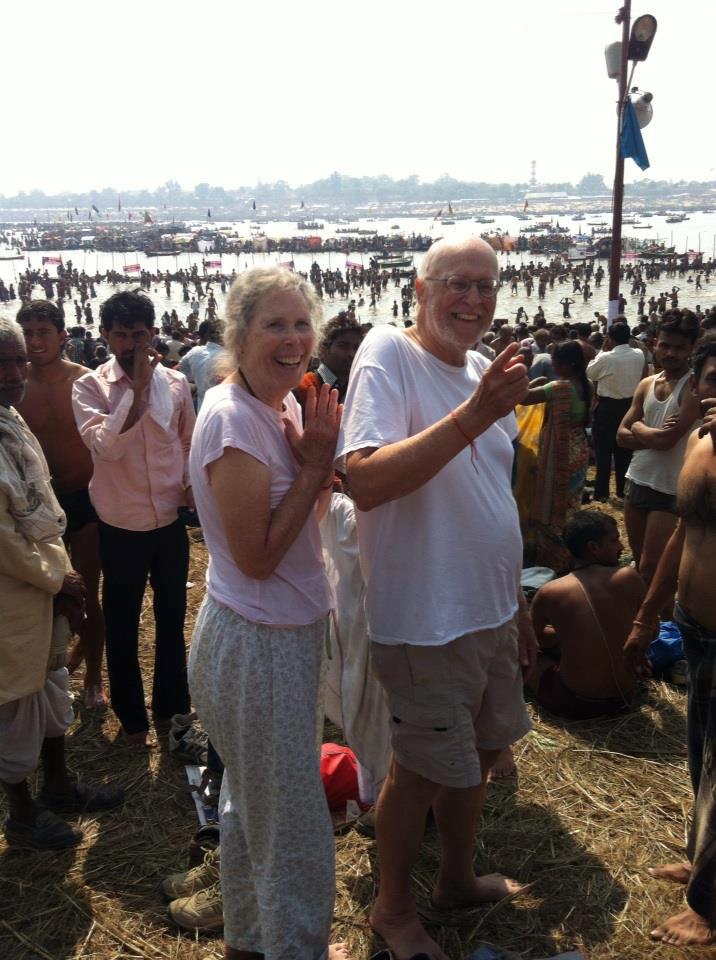
Here’s a photo of Prudence and Albert getting ready to bathe in the Ganges at the Kumbh Mela. I’ve never seen them looking so happy!

Prudence and Albert getting ready to bathe in the Ganges at the Kumbh Mela

Craig Pearson interview and articles on awakened consciousness, transcendence and enlightenment

February 22, 2013

Since the theme of The Uncarved Blog deals with Transcendental Meditation, consciousness & enlightenment, and poetry, I’d like to introduce someone to you who has been studying these ideas in great people’s lives for some time now and has complied them all in a book.

Craig Pearson-EECraig Pearson, Ph.D., is the author of the forthcoming book, The Supreme Awakening, Experiences of Enlightenment Throughout Time — And How We Can Cultivate Them. He has spent many years researching the expression of higher states of consciousness in the writings of great philosophers, saints, scientists, artists, and writers. 

Dr. Pearson is the Executive Vice-President of Maharishi International University in Fairfield, Iowa. He has served the University in a variety of roles over the past 33 years, (42 years, updated 2022) including Dean of Faculty, Dean of Students, Director of Maharishi University of Management Press, Director of Freshman Composition, and Professor of Professional Writing.

In this interview for Issue 5 of Enlightenment Magazine, Linda Egenes asks Craig Pearson about humanity’s age-old quest for enlightenment. Dr. Pearson highlights his answers with examples of exceptional people throughout history who had described experiences of higher states of consciousness. It was originally titled, The Quest for Enlightenment: Transcendence in the Lives of Great Seers and Thinkers. Linda also posted the text of the article on her blog. It was later republished in the newer Enjoy TM News, The Transcendental Meditation magazine: Exploring Higher States of Consciousness, the Ultimate Goal of Meditation. How to cultivate the state of enlightenment

Some of the people mentioned in the article are available in a list of quotes complied on the TM Blog in an Author Archive. Click on each quote and it will take you to an article about each one, and many more.

Enlightenment: What is the relationship of enlightenment and human potential?

Dr. Pearson: Enlightenment is a term that has been used for thousands of years, in traditions east and west, to refer to the most fully developed expression of human potential, far beyond the ordinary.

Enlightenment: How common is it?

Dr. Pearson: Although this extraordinary experience has been described by individuals in different cultures over the millennia and is celebrated in the world’s spiritual traditions, it seems to be exceedingly rare. But obviously it lies within the realm of human potential.

Enlightenment: What has Maharishi contributed to the understanding of enlightenment?

Dr. Pearson: Maharishi Mahesh Yogi is often credited with reintroducing the concept of enlightenment in a systematic manner in our modern age. He has put forward a comprehensive understanding of enlightenment that embraces the great traditions and thinkers who have described this experience across time. Maharishi was also the first to promote scientific investigation into enlightenment, bringing the phenomenon of spiritual development into the arena of modern science.

Enlightenment: How does Maharishi describe enlightenment?

Dr. Pearson: For Maharishi, enlightenment is the ultimate development of one’s inner potential as a human being. It means being established in the highest state of human consciousness.

Enlightenment begins with experiencing the reality of your innermost Self as unbounded and eternal and being established at that level. This means the consciousness of an enlightened person is no longer subject to the ups and downs of emotions, mind, and body but steadfast, anchored in inner silence.

Enlightenment brings the ultimate unfoldment of one’s creativity and intelligence. It means living in harmony with all the laws of nature and easily fulfilling your desires. It means being of maximum use to yourself and others and creating a powerfully nourishing effect in one’s environment.

At the highest stage, enlightenment means experiencing the universe as the expression of your unbounded Self. It is a state of perpetual freedom and bliss, supreme fulfillment.

Enlightenment: Can we relate this in any way to our day-to-day experience?

Dr. Pearson: Although this vision of human development may seem idealistic, we have all had experiences in this direction. Some days we just feel happier inside, more appreciative of others—life is easier, fuller, richer, and more rewarding. We may have moments of enhanced mental clarity or heightened levels of creativity, when we surprise ourselves with how quickly the solution to a problem may come. Athletes sometimes experience the zone—periods of peak performance that are effortless and euphoric.

At these times we are using a bit more of our potential. But enlightenment is far, far more than this. It goes far beyond just having a good day. People who have had experiences of enlightenment report that words simply cannot capture the sublimity of the experience.

Enlightenment: You have researched how individuals from different historical epochs and different parts of the world have shared this same experience. Can you talk about that?

Dr. Pearson: In traditions throughout time we find remarkably similar descriptions of this extraordinary experience of human life lived to its fullest—in the writings of great philosophers, religious figures, artists, scientists, and writers, as well as in the great religious traditions of the world. The terminology may vary from tradition to tradition and age to age. But when you have the clear and precise description of enlightenment provided by Maharishi, it becomes easy to appreciate what these people are talking about.

Enlightenment: So the experience is universal?

Dr. Pearson: Yes. And the recognition that many have shared this experience throughout history is not new either. Some scholars have called it the perennial philosophy or the primordial tradition. The perennial philosophy holds that although various spiritual and philosophical traditions appear different on the surface, at their core all traditions share common, universal principles.

Enlightenment: What are these universal principles?

Dr. Pearson: The perennial philosophy has three basic tenets: (1) Underlying the diversity of the world is a field of unity. (2) We can subjectively experience this field of unity deep within us. (3) The purpose of life is ultimately to experience and live this inner, divine reality of life.

This inner field goes by different names. Laozi called it the Tao. Plato called it the Good, the One, and the Beautiful. Aristotle called it Being. The Greek-Roman philosopher Plotinus called it the Infinite. In Judaism it is called Ein Sof, in Christianity the kingdom of heaven within. In more modern times, Ralph Waldo Emerson called it the Oversoul.

These different names are not referring to mere philosophical or spiritual ideals. They point to the inner reality of life—a reality that can be experienced directly and, when experienced, brings fulfillment beyond words.

Enlightenment: How does Maharishi talk about this inner field?

Dr. Pearson: Maharishi characterizes it as an unbounded field of pure consciousness, an all-pervading ocean of creativity, intelligence, and bliss, beyond space and time. Maharishi asserts, moreover, that this field of pure consciousness is identical with the unified field of natural law that modern physics describes mathematically. Thus the inner field that gives rise to all our thoughts and feelings is the same field that gives rise to the entire universe.

Enlightenment: And we can experience this inner field of pure consciousness?

Dr. Pearson: Every human being has the natural ability to experience this field. It simply requires “diving within,” allowing the mind to settle inward, beyond the thinking process. This is called transcending.

People throughout history have described and celebrated this experience. It is a simple and natural experience—but by most accounts seems to be rare and fleeting. People have lacked a technique for experiencing it systematically. This is the gift Maharishi has given us—the Transcendental Meditation technique, a simple, natural, effortless procedure by which anyone can dive within at will.

Until Maharishi started teaching in the West, the understanding of how to transcend had for the most part been lost. The Transcendental Meditation technique, which has its origin in the ancient Vedic tradition, provides direct experience of pure consciousness. It is easy to learn and practice, validated by hundreds of scientific research studies, and practiced by millions of people throughout the world.

Read the rest of this fascinating article, which includes experiences from Rabindranath Tagore; Alfred, Lord Tennyson; Hakuin Ekaku; and a woman known as Peace Pilgrim.

Many other experiences have also been written up by Dr. Pearson and posted on the TM Blog. Here they are, from recent to earlier posts:

‘Freedom and Self-Realization’: Excerpts from Jack Forem’s book on TM
Howard Thurman: Experiencing “the Great Silence” within us
Rabbi Abraham Isaac Kook: Connecting with the “deep soul”
The Buddha: Rapturous Joy Transcending Any Other
Meister Eckhart: It is in the purest thing that the soul is capable of
D.H. Lawrence: Sitting in a Timeless Stillness
St. John of the Cross: Transcending all knowledge
William Wordsworth: We are laid asleep in body, and become a living soul
Emily Dickinson: The Soul’s Superior instants
Albert Einstein: There is Neither Evolution nor Destiny; Only Being
Zhuangzi: Why don’t you try wandering with me to the Palace of Not-Even-Anything
St. Teresa: A state of great quiet and deep satisfaction
Johannes Brahms: In tune with the Infinite
Rumi: I have passed beyond all thoughts
Plato: And this state of the soul is called wisdom
Jesus: The kingdom of God is within you
Henry David Thoreau: We become like a still lake of purest crystal
Ralph Waldo Emerson: Within man is the soul of the whole; the wise silence; the universal beauty
Walt Whitman: The luminousness of real vision
Alfred, Lord Tennyson: A state of transcendent wonder
Helen Keller: I feel the flame of eternity in my soul
Laozi: His mind becomes as vast and immeasurable as the night sky
 

Update: Craig Pearson’s book, The Supreme Awakening, is now available. Executive Vice President Dr. Craig Pearson was interviewed on KHOE’s “A Chat With The Dean” by Dr. Cathy Gorini on his new book, “The Supreme Awakening – Experiences of Enlightenment Throughout Time, and How You Can Cultivate them.”

Listen to a presentation Dr. Pearson gave in Dalby Hall on the book, which was recorded for broadcast by KHOE.

Listen to Dr. Pearson on KRUU FM, Writers’ Voices recorded Feb 21, 2014.

Listen to Craig Pearson on KRUU FM show, Writers’ Voices, discussing his new book, The Supreme Awakening.

Here is a video of Dr. Pearson’s recent presentation on his book, The Supreme Awakening, in Dalby Hall on the MUM campus seen on the MaharishiUniversity channel.

Craig Pearson has since updated his book with new entries. Here is an informative interview by Jeanne Ball, April 20, 2016, in the Huffington Post: The Supreme Awakening: What Did Buddha, Emerson, Einstein and Saint Teresa Have in Common?

Guest blogger and author William T. Hathaway reviews Craig Pearson’s book, The Supreme Awakening.

Other talks on this topic by Craig Pearson are available in this MIU Webinar at Dalby Hall published in Enjoy TM News and this interview on TM Talks.

Mar 4, 2024: Simplest State‘s Ron Decter interviewed Craig Pearson, Author: “The Supreme Awakening: Experiences of Enlightenment Throughout Time”.

That Reminds Me: A Conversational Memoir by Hollywood biographer Norman Zierold is now out!

January 10, 2013

ThatRemindsMe Lynch quote

That Reminds Me is a conversational memoir by Hollywood biographer and award-winning author Norman Zierold. Rather than a chronology of his life, the author engages the reader in a conversational manner, relating various episodes from his life that come to mind, one triggering another. There’s never a dull moment!

Norman Zierold’s charmed life started humbly in the Amana Colonies of Iowa. All that changed after Norman joined the Navy. The war came to an end and Norman used the GI Bill of Rights to attend Harvard, where he graduated cum laude. He then earned a graduate degree in English Literature at the University of Iowa.

While looking for work he was given the opportunity to teach English in France. One of his jobs was enjoying English conversations with the son of the President of France. They even invited him to watch the coronation of Britain’s Queen Elizabeth II on television at their personal residence. Other meetings with cultural luminaries ensued.

Upon Norman’s return to the States he headed for New York, where he worked his way up to becoming the editorial director of Theatre Arts Magazine. Eventually he went to Hollywood to fulfill his lifelong calling to become a writer and published several noted Hollywood biographies: The Child Stars, The Moguls: Hollywood’s Merchants of Myth, Garbo, Sex Goddesses of the Silent Screen; and two true-crime accounts, Little Charley Ross: The story of America’s first kidnapping for ransom, and Three Sisters in Black, which garnered a Special Edgar Allen Poe Award from the Mystery Writers of America. He also wrote a science-fiction novel titled The Skyscraper Doom.

In the late 1960s, when Barbara Walters was an anchor on NBC’s Today Show, she interviewed Norman on his recently published book, Little Charley Ross. He describes a humorous account of what happened as they were preparing to go on air. Before the segment was about to begin Barbara was pressing her leg against Norman’s under the table in what seemed to him a suggestive fashion. He wondered if she might be coming on to him and didn’t know what to do. She asked him if he felt that, and he sheepishly said he did. She then explained that this was the signal for him to quickly finish his sentence during the interview so they could break for a commercial. Norman felt relieved. After the interview they had a private chat off camera about Judy Garland since Norman had written about her in The Child Stars, and Barbara’s then husband, Lee Guber, had produced one of Judy’s world tours. They had met and Judy’s issues about her mother came up. Barbara had her own opinion about Judy’s relationship with her mother, but you’ll have to read the book to find out what she said and Norman’s take on it.

In addition to Barbara Walters, Norman met many cultural icons of the day, like Andy Warhol, Shelley Winters, Anthony Quinn, Mae West, Groucho Marx, Roddy McDowall, Jackie Coogan, Rex Harrison, Anaïs Nin, Tennessee Williams, E.E. Cummings, Dylan Thomas, a president of France, the gifted composer Francis Poulenc, and TM founder Maharishi Mahesh Yogi, to mention a few. Anaïs mentioned Norman in her diary. Norman spent months with Anthony Quinn helping him edit down his thousand-page biography into something publishable. It did very well.

In the early 70’s Norman took up the practice of Transcendental Meditation. He found it so satisfying he became a teacher and taught the TM technique to several hundred people. Since 2002 he has been living in Fairfield, Iowa, and works in his retirement years as a part-time publicist in the communications office at Maharishi University of Management.

WHERE TO ORDER THAT REMINDS ME

Sit down with Norman Zierold and enjoy a fascinating conversation. Order copies of That Reminds Me from Amazon or Barnes & Noble in the US. Release date is January 12, 2013. Also available in Canada, the UK, Europe, Germany, Russia, and Brazil in paperback, and Amazon’s Kindle worldwide.

Cover design by George Foster, front cover photo by Mary Drew, and interior design by Allen Cobb for Anapurna Press.

ARTICLES

Diane Vance interviewed Norman Zierold at Revelations Café for The Fairfield Ledger, which came out March 12, 2013: Fairfield author talks about recent work. In case you can’t access the full article online you can see what it looks like here: Fairfield author talks about recent work – By DIANE VANCE – Fairfield, IA – Fairfield Ledger. I also posted it here: Diane Vance and Norman Zierold discuss his new memoir, That Reminds Me, at Revelations Café.

Tony Ellis wrote a feature article in the March 2013 issue of The Iowa Source, Iowa’s Enlightening Magazine: Norman Zierold: A Charmed Life: Celebrated Hollywood Author Reminisces on Six Decades of Extraordinary Encounters. You can also download a PDF of the article on Norman Zierold as it appears in The Iowa Source.

An edited version of Tony’s article later appeared in Britain’s National Transcendental Meditation Magazine—Transcendental Meditation News • June 2013 • Vol. 19 • No. 7 • Pages 12 and 13, titled, The Hollywood Biographer Who Found Bliss (Page 7 of PDF).

British writer & editor, Julie Eagleton also reviewed That Reminds Me by Norman Zierold.

Here’s a great article about Norman Zierold in The Chronicle of Higher Education: Notes From Academe: The Spokesman Who Kept Calling.

Here’s a comprehensive article Norman Zierold wrote for Healthy Referral on THE REMARKABLE DAVID LYNCH FOUNDATION.

INTERVIEWS

Norman Zierold was interviewed by KMCD host Steve Smith for the MUM Spotlight show on January 10, 2013. Click here to listen. (17:23)

Norman Zierold will be interviewed on 100.1 FM KRUU in Fairfield. The show, Writers’ Voices, airs Friday, January 11, 2013, 1:00–2:00 p.m. CT, and replays Monday, January 14, 2013, 8:00–9:00 a.m. CT. Tune in: Listen Live.

This great description posted by host Monica Hadley says it all: From Iowa, Around the World, and Back Again with Norman Zierold. “That Reminds Me: A Conversational Memoir” by Norman Zierold, takes the reader on an exuberant journey, both outward and inward, from pre-Depression-era Iowa (the Amana Colonies), to Europe, NYC, Hollywood, and back again to Iowa (Fairfield, that is.) Join Writers’ Voices hosts Monica Hadley and Caroline Kilbourn to learn from Norman the inside stories that only the author of such Hollywood biographies as “Garbo”, “The Child Stars”, and “The Moguls” would know. How did a boy from the Amanas come to rub elbows with the rich and famous of the mid-20th century? And what brought him back to Iowa?

Update: If you missed it, the Writers’ Voices Archives now has Norman’s interview (59:51) posted there as well as on monicahadley’s Audio page. And KRUU station manager James Moore created a permanent link to the interview here: http://www.kruufm.com/node/14926. KRUU’s website was rebuilt. The interview is now posted on the Writers Voices website.

A third interview took place at a book signing in the Maharishi University of Management Library on Saturday afternoon, March 2, 2013. Rustin Larson talked with Norman Zierold about his conversational memoir, That Reminds Me. Download and enjoy this very entertaining interview. (87 MB) It’s now available on YouTube.

A fourth interview took place on KHOE, the MUM campus radio station. Author and M.U.M.: Publicist Norman Zierold, interviewed by Dean Cathy Gorini and station manager Stan Stansberry on his newly published book “That Reminds Me.” Listen online here: http://link.mum.edu/NormanZierold.

Stan says: [This is] “a real-life adventure conversational memoir by our esteemed Norman Zierold. [Norman takes us from] “his hometown Amana Colonies, to the U.S. Navy, to New York City, to Hollywood, to finding Transcendental Meditation, teaching TM, and to the campus of Maharishi University of Management. Along the way he interviewed and hob-nobbed with famous New York and Hollywood actors, writers and people like Barbara Walters.” mp3 63 min, 18MB.

Here is the latest interview on KRUU FM with Producer, Writer & Host, Cheryl Fusco Johnson of The Studio: Small Town Boy to Hollywood Biographer: Norman Zierold’s Memoir, THAT REMINDS ME, July 14+16, 2014. You can listen here at this archived link: The Studio – 20140715-Norman Zierold.

How did small-town Iowa boy Norman Zierold become a Hollywood biographer, recording the stories of movie moguls, child stars, and famous actors? Even more exciting than his tales about the many celebrities he’s encountered is Norman’s own story. Lucky us! Norman’s recorded his journey from shelling peas beside cooks in his family’s Amana colonies restaurant to rubbing knees with Barbara Walters on TV. This week on The Studio with Cheryl, Norman discusses the mentors and experiences that inspired his life choices. Learn about his life and about THAT REMINDS ME, his stream-of-consciousness memoir (and what a consciousness it is!), by tuning in to The Studio with Cheryl and Norman this week.

Enlightenment, The Transcendental Meditation Magazine, has posted an article on Norman in Issue 16 under My Story: From Utopia to Hollywood and Back. In this column meditators share their stories of how they started the Transcendental Meditation technique and what kinds of positive changes have occurred in their lives.

The book has been updated with chapter headings, a table of contents, and a list of praise for the book, including a cover quote from filmmaker David Lynch, which reads: “What a creative and entertaining way to tell a story of a life and a time! Congratulations, Norman — a thoroughly enjoyable and informative read.”

March 9, 2018: Remembering Norman Zierold: Hollywood biographer, novelist, TM Teacher, member of Maharishi’s Purusha program, raconteur, publicist, beloved by all.