Posts Tagged ‘Maharishi Mahesh Yogi’

Time for some humor and love — WELCOME BACK

February 19, 2015

Saw this on a friend’s Twitter feed. Too funny to not share. Made my day! I later found out it’s by Dave Coverly @speedbumpcartoon.

Words are not needed here; it says it all, but I couldn’t resist. Welcome back to the school of life. Seem familiar? Did we learn our lessons well? No? Having to repeat a class? Time for a fresher course, and then some! Maybe we’ll get it right this time around. You think? If not, there’s always the next class, the next life, with more lessons to be learned. 🙂

COMING BACK FOR LOVE IN FIVE ROMANTIC FILMS
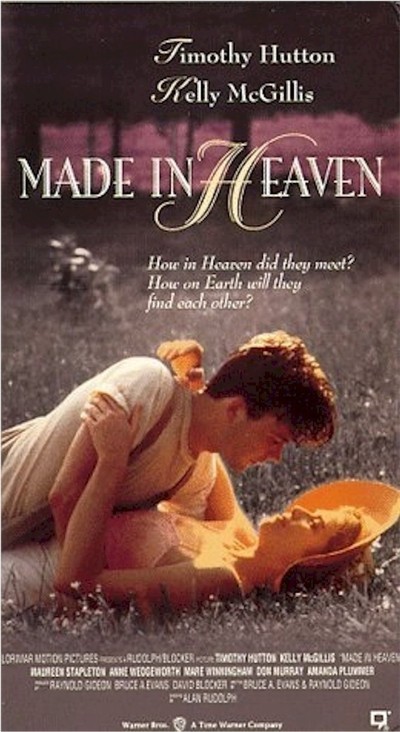
Made in Heaven posterWhen it comes to getting it right for love, I recommend my all-time favorite romantic movie: Made in Heaven (1987), about two souls, played by Timothy Hutton and Kelly McGillis, who meet and fall in love in Heaven. Annie (McGillis) is sent to Earth and Mike (Hutton) makes a deal to be reborn (Elmo) to find her (Ally). But he’s given a time-frame of 30 years in which to do so or he’ll lose her forever. It’s a magical movie filled with surprises. See more on Wikipedia. Rent or buy it on Prime Video. It’s also free with ads on YouTube Movies & TV.

That year, Wim Wenders came out with his amazing film, Wings of Desire, about an angel who tires of overseeing human beings and wishes to become one himself when he falls in love with a mortal.
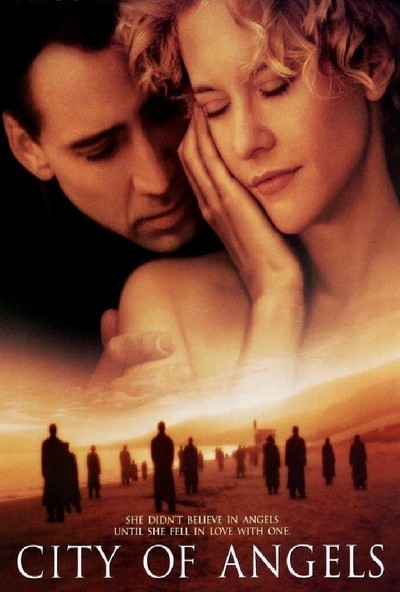
City of Angels posterTen years later it was adapted for English audiences as City of Angels (1998). Wenders co-wrote the screenplay. Nicholas Cage plays the angel who falls in love with a doctor, Meg Ryan, because of her beauty and concern for her patients. She doesn’t believe in angels, but when he reveals himself to her she falls in love with him, and has to decide between him or her fiance. One patient, a former angel, tells him how he became human for a woman. He does the same and experiences the joys and sorrows of love and loss.
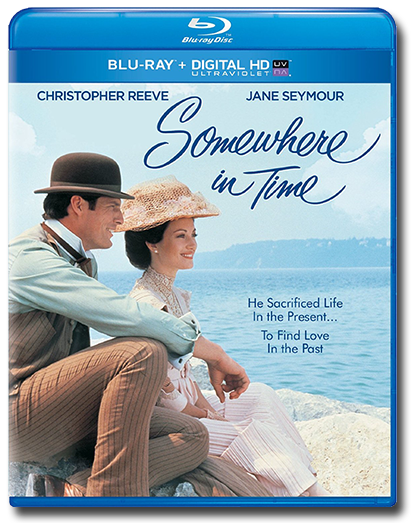
sit-bdAnother great movie is Somewhere in Time (1980adapted from the 1975 novel Bid Time Return by Richard Matheson who also wrote the screenplay. On a getaway to Mackinac Island, Richard Collier (Christopher Reeve), a playwright, falls in love with a picture of Elise McKenna (Jane Seymour), an actress who had performed there a long time ago at the Grand Hotel where he is staying. He discovers he was also there then and finds a way to travel back in time to win her heart. It works, but something unexpected happens that changes everything.

The SAG strike and lack of funds prevented the film from being effectively launched that year. When it was finally shown in New York, critics panned it, squashing plans for a national release. But, with the advent of cable television and late night movies, it soon became a cult classic and went on to win numerous awards.

John Barry composed the beautiful soundtrack including the haunting 18th variation of Sergei Rachmaninoff’s Rhapsody on a Theme of Paganini. Barry had been mourning the death of his parents and was not making himself available for work, but Seymour, a close friend, and the script, persuaded him to get involved. He channeled his emotions into the music, which contributed to the film’s success.

You can now watch the film for free with ads on Prime Video, and other options listed on IMDb. If not, here’s a 12-minute synoptic video of key scenes from the film, and this 11½-minute Somewhere in Time Movie Montage. Explore the movie’s official fan website for news updates at http://www.somewhereintime.tv.

After you’ve seen the movie, watch these behind-the-scenes videos that reveal what was going on between co-stars Reeve and Seymour, where life imitated art. They give us a deeper dimension blending reality with fiction enhancing repeat viewing experiences. She Wasn’t Acting: The Untold Truth Behind Jane Seymour’s Heartbreaking Monologue and The Heartbreaking True Love Story Behind “Somewhere in Time” Revealed! This short video clears up a paradox: Origin of the Somewhere in Time pocket watch finally solved! 

Another beautiful time-travel love story is The Two Worlds of Jennie Logan, a 1979 made-for-television movie based on the much-loved classic novel Second Sight by David Williams.
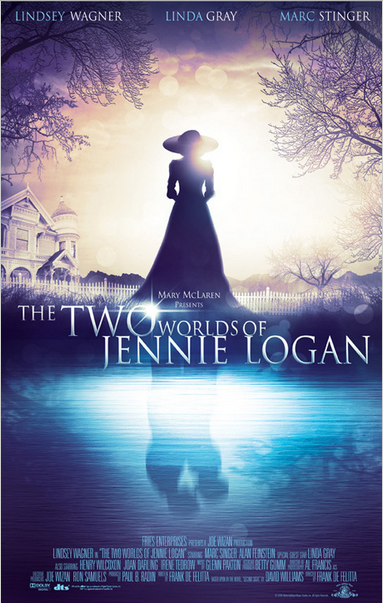
The Two Worlds of Jennie LoganAfter trying on a dress found in the attic of an old Victorian house her husband purchased to try to save their marriage, Jennie Logan accidentally travels into the past. After several visits there she discovers true love. Returning to the present she investigates who he was and how he may have been killed. She travels between both worlds in an attempt to save her lover’s life and alter history. Find out more at IMDb and the Amazon book description and comments. Watch it on YouTube, if it’s still there. Also found a slightly shorter video of it. The picture quality is better.
Portrait of Jennie

Portrait of Jennie (1948) is also a magical little film worth watching. A mysterious girl inspires a struggling artist. Eben Adams is a talented but struggling artist in Depression era New York who has never been able to find inspiration for a painting. One day, after he finally finds someone to buy a painting from him, a pretty but odd young girl named Jennie Appleton appears and strikes up an unusual friendship with Eben. See it on YouTube.
For All Time

For All Time (2000) is another recommended time travel film. A man facing middle-age and a failing marriage finds a time slip that can take him back to the end of the 18th Century. The film was based on The Twilight Zone episode, “A Stop at Willoughby” written by Rod Serling. It’s also available on YouTube.

Defending Your LifeOn a lighter note, Albert Brooks wrote, directed and starred, with Meryl Streep, in Defending Your Life (1991), “the first true story of what happens after you die.” The dead are sent to Judgement City, a vacation-style place for the afterlife where representatives using large amounts of their brain potential help you defend your life in front of a court. The opposition also reviews aspects of your life where you showed fear instead of courage, the intent being to learn from past experiences.

Shirley MacLaine has a cameo role inviting people to the Pavilion of Past Lives, which is quite funny. There is also a love interest between the main characters who meet while their lives are undergoing review before they will be sent onto their different destinations. The question is, will he overcome his fears and sacrifice everything to be with this wonderful woman? Rent or buy the film on Prime Video to find out. I later found it on YouTube to make it easier for you. 

Blending heaven and earth, the divine and the mortal, the idyllic past with the unfulfilled present, or unresolved issues exposed in the afterlife, each film provides a different perspective on the sacrifice the main character makes for love, giving up one to gain the other. The ways of karma are unfathomable, but true love is eternal, and transformational!

LEAVING ROMANCE BEHIND TO FIND ONESELF

There was one movie that made a big impression on me when I saw it on television as a teenager. It’s about love, but more the story of one man’s quest for self-realization in a confused and materialistic world.
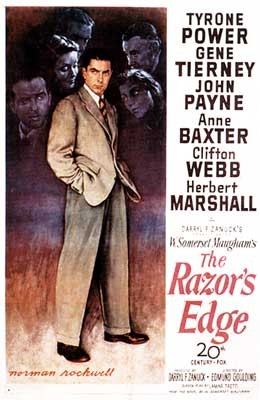
Razors_Edge (1946)The Razor’s Edge tells Larry Darrell’s story and his search for meaning after a comrade dies saving his life on the last day of World War One. Larry leaves love behind to find himself. He rejects the conventional life in search of a more transcendent experience, which takes him to India where he meets a guru. His search for enlightenment fulfilled, he may not have to reincarnate if he can walk the razor’s edge, live in the world and not be overtaken by it, anchored to his Self.

Larry returns to find his friends who are suffering due to a reversal of fortune brought about by the Great Depression. He shares what he’s learned to help them. Read more of the story on Wikipedia. I saw the original 1946 version starring Tyrone Power, based on the book by W. Somerset Maugham, which I later read. I found an audio version of the book (BBC Saturday Night Theatre), and the film on YouTube.
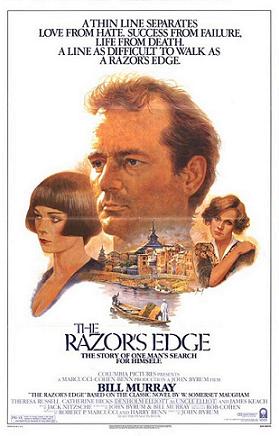
Razors_Edge (1984)It was remade in 1984 with Bill Murray in his first dramatic role. Murray also co-wrote the screenplay with director John Byrum. Visit Wikipedia for a full summary. Byrum couldn’t find a studio to finance it. Dan Aykroyd suggested Murray could appear in Ghostbusters for Columbia Pictures in exchange for the studio funding The Razor’s Edge. Murray agreed and a deal was made. Though the film lost money, Ghostbusters went on to make millions. 

It’s on YouTube with ads. The 1946 and 1984 versions of The Razor’s Edge are available for rent or purchase on Amazon Prime. Both are worth watching for their own values, but I prefer the earlier one. You can see the essence of the original film in Darrell’s search and achievement of his peak experience high in the Himalayas. 

This poem by William Stafford—The Way It Is—perfectly describes the kind of perspective Larry Darrell developed and how he lived his life.

I was asked to read and write a review for this book: Alan J. Steinberg’s debut novel reminds me of the age-old quest ‘To Be Enlightened’ I first read about in Somerset Maugham’s ‘The Razor’s Edge’.

PERSONAL NOTE

Larry Darrell’s quest spoke to me as a young person and unknowingly foreshadowed the direction my life would take during my college years and beyond when I would discover Maharishi Mahesh Yogi and his Transcendental Meditation technique. Our generation was so fortunate to have received the many gifts Maharishi brought out from the Himalayas. He inspired us to develop our full potential as human beings with TM and its advanced techniques, and to work with him to help make this world a better place to live in by applying his life-transforming Vedic knowledge and technologies in health, education, rehabilitation, virtually all areas of life. We are forever grateful. JGD

To find out more about Maharishi, see this HuffPost article by Philip Goldberg on Maharishi. Also watch the 1968 film of Maharishi at Lake Louise and the 2007 A&E biopic on the International History Channel.

UPDATE

I just discovered The Love Letter (1998), a Hallmark  Hall of Fame movie, starring Campbell Scott and Jennifer Jason Leigh. It’s based on a short story of the same name by Jack Finney that was first published in “The Saturday Evening Post” on August 1, 1959 and reprinted in the same magazine on January/February 1988. James S. Henerson wrote the made-for-TV screenplay and produced it.

imageThis love story touches two lives that live a century apart. A letter from the past will change their future forever as these souls cross lifetimes for love! Scott, a 20th century computer games designer, exchanges love letters with Elizabeth Whitcomb, a 19th century poet, through an antique desk that can make letters travel through time. We witness parallel lives interact as they fall deeply in love with each other, weaving past, present, and future in a moving, magical way.

There are differences between the movie and the short story. For one thing, Elizabeth Whitcomb’s poetry, somewhat important in the movie, is entirely absent in the short story. It adds so much more to the film. You could read more about it on Wikipedia, but first watch this excellent made-for-television movie (1:39) on YouTube.

Interestingly, Ms. Whitcomb also lives in a town called Willoughby, the same name for Rod Sterling’s Twilight Zone story, which became the basis for the film, For All Time, mentioned above.

Inspired by a question, I saw the film again and transcribed the beautiful poem voiced over by Elizabeth Whitcomb towards the end of the film and posted it in a comment below. It succinctly sums up the essence of the film in 8 short lines.

Of course, when it comes to love being tested by time, The Time Traveler’s Wife (2009) is one worth watching. Rachel McAdams stars as the wife, whose husband keeps disappearing on her at different stages of her life. About Time (2013), is another film about time travel, and how a father teaches his son, who has the same ability, how to improve situations with time travel when he messes up trying to win the heart of a pretty woman, also played by Rachel McAdams. She also stars in The Vow (2012), as a woman who wakes up after a car accident with severe memory loss and forgets that she’s married to her husband. He has to work hard to woo and marry her all over again.

It reminds me of the 1993 blockbuster Groundhog Day starring Bill Murray. Here’s a sort of related cartoon in The New Yorker by Roz Chast.
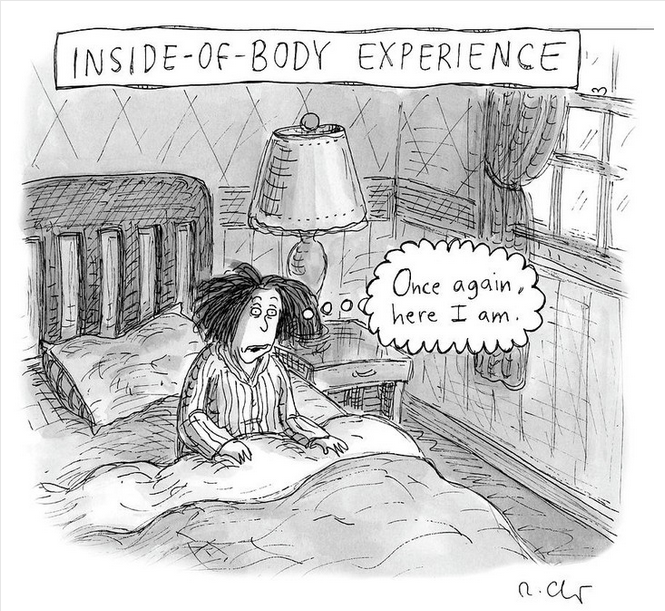
Inside-Of-Body-Experience by Roz Chast TNYcartoons

The film Arrival asks: If you could see your whole life from start to finish, would you change things?

When it comes to a war between words and pictures here’s a poem in a movie inviting you to be who you are.

Newer Updates

‘How Long Will I Love You’ sung by Ellie Goulding highlights 4 Romantic Comedies by Richard Curtis, which includes About Time, starring Rachel McAdams.

Speaking of time travel, romance, and Rachel McAdams, she starred in the 2009 film, The Time Traveler’s Wife, directed by Robert Schwentke, where a Chicago librarian has a gene that causes him to involuntarily time travel, creating complications in his marriage.

The Time Traveler’s Wife was made into a 6-part HBO series in 2022, based on the 2003 novel by Audrey Niffenegger, and starred Rose Leslie as Clare. Developed and written by Steven Moffat, the TV series was cancelled after one season.

The spring rains renew life and the promise of love in this film, A Good Rain Knows, inspired by the poetry of Du Fu.

Writing, literature, life and love intersect in The Guernsey Literary and Potato Peel Pie Society.

Sage advice from William Shakespeare in the film “All Is True” on how to become a truthful writer.

Christopher sings ‘A Beautiful Life’ for this Netflix film—a song about life, loss, becoming, and love.

— Written and compiled (citing sources) by Ken Chawkin for The Uncarved Blog.
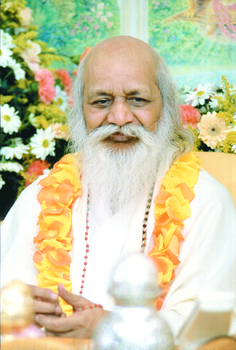
Author Philip Goldberg Remembers January 12 as A Double Guru Birthday Fest on HUFFPOST TASTE

February 3, 2015

Philip Goldberg, HUFFPOST Blogger, Interfaith Minister, and author of ‘American Veda: How Indian Spirituality Changed the West‘ remembers January 12: A Double Guru Birthday Fest

MMY-HUFFPOST

Maharishi Mahesh Yogi

January 12 is celebrated throughout India, and in countries with large Hindu populations, as the birthday of Swami Vivekananda. A national hero, Vivekananda is revered for updating the wisdom of India’s ancient sages and bringing those teachings to the West, in 1893. By coincidence – or astrological design, take your pick – another vital figure in that East-West transmission was also born on that date, and he too deserves to be celebrated.

The man who became known as Maharishi Mahesh Yogi was born Mahesh Prasad Varma, on January 12, 1917, or perhaps 1918, in Central India. While attending Allahabad University, he heard that a famous saint named Swami Brahmananda Saraswati was in the area, and he went to him “as a thirsty man at a well.” Mahesh asked to become the swami’s disciple. The reply was the same one many future gurus received when they were eager young seekers: first finish school. After graduating with a degree in physics, he was formally accepted as a disciple. By then, the swami had been persuaded to accept the much-esteemed, and long-vacant, seat of Shankaracharya of Jyotir Math–one of four monastic lineages established centuries earlier by the great reformer Shankara. The Shankaracharya would become a legend, and so would the humble disciple who served him primarily as a clerk for thirteen years.

After his guru died, in 1953, Mahesh spent a few years in the Himalayas before traveling to the sacred sites of South India. In Trivandrum, a stranger asked him to give a public talk. He was evidently good at it. Before long, he found himself on what we now call a speaking tour. At a festival in Kerala in 1955, people were impressed enough to call him a “Maharishi”–maha meaning great, rishi meaning sage–and the appellation stuck. When he became world famous a dozen years later, the naïve press treated “Maharishi” as his name, and that’s what he’s been called ever since.

That global fame, as most people know, resulted from his historic encounter with the biggest celebrities of the postwar era. In August, 1967, at the suggestion of George Harrison’s then-wife Patti, the Beatles went to hear Maharishi speak about his Transcendental Meditation at the London Hilton. They became instant enthusiasts and, six months later, went to India for an extended stay at Maharishi’s ashram. In the opening paragraph of American Veda, I refer to that as “the most momentous spiritual retreat since Jesus spent those forty days in the wilderness.” It was as if the earth itself had tilted, allowing the insights of India’s yogis to pour into the West at an accelerated pace.

It was easy at the time for reporters to write off “the Beatles’ guru” as a lucky guy who got rich and famous off the lads’ monumental celebrity. It was easy to label him “the giggling guru” because he had an infectious, high-pitched laugh and he found much of modern life rather amusing. It was easy to mock him as the face of guruhood at a time when yoga and meditation were seen as accessories of flower-power counterculture. All of which belies the fact that Maharishi was a very practical man who took his mission–to spiritually regenerate the world by expanding individual consciousness–very seriously, and he worked longer hours in its service than most CEOs could endure.

He had been planting seeds non-stop for a dozen years when the Beatles sought him out, repeatedly circling the globe and teaching his simple, powerful form of meditation to all comers, and he kept at it for another forty years after the Fab Four made Rishikesh a pilgrimage site for Western yogis. If history is fair, he will be recognized as one of the key figures in the transmission, adaptation and assimilation of Yogic teachings into the mainstream of American life.

Nowadays, everyone from ordinary physicians to giant HMOs recommends meditation to reduce stress and prevent illness. This, to put it mildly, was not the case in 1968. It was Maharishi who convinced scientists to study the practice, and he made sure his systematic TM procedures were compatible with research protocols. He understood that ours is an evidence-driven age, and that Americans would embrace something as exotic as meditation only if science demonstrated its value. The first paper on the physiology of meditation was published in 1970, by one of Maharishi’s students, a UCLA doctoral candidate named Robert Keith Wallace. The collective research juggernaut that followed ushered meditation from the fringes of society to the center, and directly into your armchair, cushion or yoga mat.

So, for whatever stars and planets were aligned on those two January 12s, we can be doubly thankful.

Published 01/09/2015 02:30 pm ET | Updated Mar 11, 2015

Who was Dear Prudence the Beatles sang to in India? What happened to her? Here is her story.

December 21, 2014

See the full article with more photos and quotes featured in the 21st issue of Enlightenment: The Transcendental Meditation® Magazine (Enjoy TM News): The “Dear Prudence” Story by Rolf Erickson. Reprinted here with permission including the video: Dear Prudence: A Portrait Of Prudence Farrow Bruns.

The “Dear Prudence” Story

BY ROLF ERICKSON

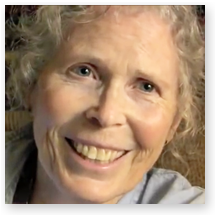
photo_prudence01Prudence Farrow Bruns, PhD, is the daughter of actress Maureen O’Sullivan and award-winning writer/director, John Farrow. She has been practicing the Transcendental Meditation technique for 48 years, and has been a teacher of the TM program for 46 years.

It all started so simply. It was 1966, and 18-year-old Prudence Farrow was sitting on a bluff overlooking the Pacific Ocean at her brother’s home in Los Angeles. She was reading a book on meditation when she heard a voice say, “If you’re interested in meditation, I know just the meditation for you.”

The voice was that of Peter Wallace, a friend of her brother. Peter had spent six months traveling through India, where he met Maharishi Mahesh Yogi and began the Transcendental Meditation technique. He told her how simple and effortless the technique was, and yet how profound the experience and benefits could be.

“It was the simplicity of the practice that struck me most,” Prudence said. “I’d been trying different methods of meditation for some time, but they had all been complicated and difficult. When Peter described a simple, natural practice of diving deep within, I knew he was truly onto something.”

So Prudence learned the TM technique at UCLA. After experiencing the positive effects of TM for herself, Prudence wanted more. She wanted to meet Maharishi and to study with him. “At that time Maharishi had courses in India,” says Prudence. “He brought people there, and they studied for three or four months with him. You meditated for long periods under his guidance.”

On January 23, 1968, three days after her 20th birthday, Prudence traveled with Maharishi from New York to Rishikesh, India to attend her TM teacher training course. And that’s when the “Dear Prudence” story really began.

The Beatles Make the Scene

One month after Prudence arrived in Rishikesh, The Beatles showed up to study with Maharishi. While they all spent some time there, John Lennon and George Harrison stayed the longest.

“The Beatles were all very nice, humble, modest, kind, and down-to-earth people,” Prudence remembers. “I was closest to John and George, since they were my ‘course buddies’ during our studies with Maharishi. We were supposed to look out for each other during the course.”

photo_prudence02

Prudence (left) sat next to Ringo in course photo.

Prudence soon became known for her tendency to keep to herself in her room, focused on her meditation practice. “I was deeply immersed in my studies and meditation, locked away in my quarters. John, as my course buddy, was concerned and wanted to bring me out of my room to enjoy the experience more.”

John and George would come over to her room and play their guitars, encouraging her to come out and sing with them. It was this experience that became the inspiration for their song “Dear Prudence” in which John sings, “Dear Prudence, won’t you come out to play?”

Before he left Rishikesh, George mentioned to Prudence that they had written a song about her, but she had no idea what it was. She didn’t hear the song until it came out on their 1968 album The Beatles, commonly known as the “White Album.”

Prudence’s dedication to her meditation practice did pay off. After four months, she graduated from the course and became one of the first and youngest teachers of the Transcendental Meditation technique at that time.

But that was just the beginning of the “Dear Prudence” story.

Prudence Comes out to Play

Once she completed her teacher training course in India, Prudence definitely did come out to play. Over the past 46 years, she’s instructed thousands of people in the TM technique throughout the United States and Canada. She married TM teacher Al Bruns in 1969, and they have three children and four grandchildren.

She’s produced Hollywood feature films and a play in Manhattan. She was an assistant to the curator of the “Theatre Collection” of the Museum of the City of New York. She has been a magazine writer. She’s written two books.

Prudence earned a BA, an MA, and a PhD from the University of California at Berkeley. She received her doctoral degree in 2007, with a major in South Asian Studies and Sanskrit. She has made presentations to conferences at numerous universities, including Harvard, the University of Texas at Austin, and the University of Hawaii. She’s taught courses at UC Berkeley and Rutgers University.

TM and Yoga

Prudence continues to teach the TM program in Florida. In fact, she’s the most successful teacher in the U.S. at setting up Affiliate Programs in yoga studios. Maybe that’s not so surprising, considering that she’s a lifelong yoga practitioner, and she opened a yoga institute in Boston back in 1967.

photo_prudence03

Prudence attended India’s Kumbh Mela last year.

Maharishi Foundation created the Affiliate Program to bring TM to yoga studios and fitness centers. When a studio becomes an Affiliate, their members can learn TM at a reduced course fee, and the studio receives a share of the income. Everyone benefits—the new TM student, the yoga studio, and the local TM teachers.

Today most people think of yoga as a series of physical postures. But Maharishi has explained that in the Yoga Sutras, Patanjali identifies eight limbs of yoga, and the eighth limb is Samadhi or transcendental consciousness. Maharishi said that with the practice of TM, Samadhi is actually the easiest limb of yoga to achieve, since no effort is required. We simply tap into the natural tendency of the mind to go within, to transcend, and that transcendence nourishes and supports all the other limbs.

“I do think that Transcendental Meditation is—of the meditations that are available to us—the most direct, and the simplest,” says Prudence. “When you meditate, when you transcend, it allows your heart and mind to balance. And when they’re balanced, that’s when you are really healthy. You are happy. You’re happy mentally, happy emotionally, and happy spiritually. Those three are all components of what make a human being, so that connection to transcendence is absolutely necessary for health.”

Creating a Better World

Fortunately for us all, Prudence did come out to play.

“The years of meditating have enriched my life so much,” Prudence says. “And that’s why at this point in my life, I’m giving back. We need a better world. We need people to be more conscious, to be more evolved. And expanding the mind, like TM does, is absolutely vital to bring about stronger people. If you can strengthen people inside, you’ve changed the world.”

So even today, 48 years later, the “Dear Prudence” story continues.

[In July 2018, this article was updated and published in Enjoy TM News.]

###

Last year, Prudence Farrow Bruns participated in a series of Consciousness Talks at Maharishi University of Management, called Our Conscious Future. Here is a clip from her talk where she discusses a conversation she had with George Harrison about his spiritual awakening. Prudence, George and John Lennon said they felt it was happening to many in their generation, and that it would continue long after they were gone. Listen to Prudence describe The “Dear Prudence” Story. For other fascinating presentations, visit ConsciousnessTalks.org, or see Our Conscious Future Highlights.

Years later, The Beatles released many versions of their songs on the 50th Anniversary of The White Album, now out on Spotify, which include The Esher Tapes. There are 3 versions of Dear Prudence there: the Esher version of John Lennon singing on guitar; one of just vocal, guitar, and drums; and the 2018 mix.

Another beautiful song that John Lennon wrote about his experience with Transcendental Meditation was, Across the Universe. Spotify included John Lennon on guitar singing Across The Universe–Take 6.

This article was also published in GGN: World Peace News. Here are some related videos and interviews with Prudence Farrow Bruns: The Beatles “Dear Prudence”: A Portrait of Prudence Farrow Bruns, Maharishi and TM and Ted Henry interviews “Dear Prudence” Farrow Bruns about her life with TM and Maharishi and Prudence Farrow — subject of the Beatles song Dear Prudence — visits India’s Kumbh Mela.

Prudence’s memoir is now out: Dear Prudence: The Story Behind the Song. Listen to an interview with Prudence about the book online at Spirit Matters with Dennis Raimondi and Philip Goldberg. Read an interview about the book in Rolling Stone: The Real ‘Dear Prudence’ on Meeting Beatles in India. Read this excellent article in the Pensacola News Journal: Woman behind Beatles ‘Dear Prudence’ reads at Open Books. Here is another interview: In Conversation With: Prudence F. Bruns, Transcendental Meditation Teacher and Inspiration Behind “Dear Prudence”. Prudence Farrow Bruns | Conversations with Jeff Weeks | WSRE Pensacola PBS.

Watch the A&E biographical film, Maharishi Mahesh Yogi on History International Channel (November 2007) and the earlier CBC documentary of Maharishi at Lake Louise. TMhome also posted the International History Channel documentary on Maharishi Mahesh Yogi: How it was made: The story behind the film.

Watch this November 8, 2018 Lyndsey Parker interview for Yahoo Music: Mike Love remembers ‘beautiful, spiritual’ beginnings of the Beatles’ ‘White Album’ in India.

Read The Story Behind ‘Dear Prudence’ by Jennie McKeon, Dec 23, 2018, for wuwf 88.1, NPR for Florida’s Great Northwest.

August 9, 2019: ‘Dear Prudence’ Bruns in Parade discusses world peace, the ’60s, and why kids love the Beatles.

June 29, 2020: Who was Bungalow Bill from the Beatles White Album and what happened to him? He tells us! I later updated this post on September 9, 2020 with the online premiere of Meeting the Beatles in India, a film by Paul Saltzman.

Dec 21, 2020, Bob Roth announced on Instagram that a free rental of the film, “Meeting the Beatles in India” by Paul Saltzman, will be available between during the last week of 2020 thanks to @LynchFoundation and @TM_Program.

NEW: Enjoy TM News posted this more recent discussion. Mario Orsatti, the host of TM Talks and Senior Teacher of the Center for Health and Wellness, a division of the David Lynch Foundation, interviewed Dr. Bruns on June 14, 2020. This popular episode was rebroadcast on September 4, 2022. Watch the interview with Dr. Prudence Farrow Bruns (55:17)

MUM’s Innovative Sustainable Living Center @MaharishiU Featured in Solar Tribune

November 13, 2014

Small College Makes Solar a Big Priority

Nestled among the cornfields of Southeastern Iowa, Maharishi University of Management is not your typical small college. More than 40 years after its founding, this unique campus has become a showcase of sustainability and solar technology.

Maharishi Mahesh Yogi, best known as man who taught meditation to The Beatles, bought the defunct Parsons College campus in Fairfield, Iowa in 1971 and set up an accredited university to teach his philosophy of world peace and enlightenment through meditation. Along with computer science, accounting and BA, MA and PhD programs, the curriculum stresses healthy lifestyles and a healthy environment.

Biology Professor David Fisher launched the nation’s first four-year BA program in Sustainable Living at MUM in 2003. The Sustainable Living Department offers courses in solar, wind and other alternative energy systems, water management, permaculture, alternative building techniques, and performance design for the built environment, and their building serves as a hands-on showcase for the technologies they teach. On an annual basis, the building is not only a “net zero” building, but actually produces as much as 40% more energy than it consumes. The excess energy offsets electricity used elsewhere on campus.

South wall of MUM Sustainable Living Center

Opened in 2012, the Schwartz-Guich Sustainable Living Center at MUM is a showpiece of green building technology. The 6,900 square foot building features sustainable infrastructure including daylighting, a greenhouse and edible landscaping, gardens, rain catchment, earth block and “whole tree” construction and both solar thermal and solar photovoltaic (PV), as well as a wind turbine. The architectural style, known as “Vedic” architecture, marries eastern and western styles and reflects the philosophy of the university, while exceeding LEED platinum standards.

Daniel Chiras PhD is currently a visiting professor at the Sustainable Living Center. Dan serves as the Director of the Evergreen Institute and is author of over 30 books on solar and sustainability topics, including The Natural House, The Solar House, The Homeowner’s Guide to Renewable Energy and many more. Chiras said of the MUM building: “The Sustainable Living Center is one of the greenest—if not the greenest—classroom buildings on a college campus in the world! It’s an extraordinary model of ecological sustainability and an inspiration to those seeking to build a sustainable human future. The building is a pleasure to teach in and a great learning tool for students.”

Solar Features At The SLC:

The Sustainable Living Center sports 12.5 kW of PV panels to provide electricity. The PV panels are grid-tied by two 2.5 kW and one 5 kW SMA Sunny Boy inverters. An Outback 3.6 kW battery based inverter also stores energy in an off-grid battery bank. The solar PV at the Center puts out an average of 16,250 kWh per year.

A drain-back solar water heating system with 750 square feet of evacuated tube solar thermal collectors capture solar energy that is then stored in a 5,000 gallon tank, where it is then pumped through the in-floor heating system. The collectors provide about 30% of the heating for the building. Additional heat comes from a ground source heat pump, which uses electricity from the solar and wind systems to provide 75,000 BTUs per hour.

In addition to the solar arrays, The Sustainable Living Center features a Bergey XL 10 wind turbine on a 100 foot latticed tower. The estimated annual output is 17,000 kWh, with power production peaking in the winter and spring. This compliments the solar PV, which produces most of its power during the summer months, when wind speeds are typically much lower.

The SLC has an annual energy use of about 30,000 kWh, including lighting, heating and cooling, fresh air circulation office equipment and classrooms, which is already amazingly low for a building of its size.

Not only at the Sustainable Living Center, but across the entire MUM campus, sustainability initiatives are in full effect. In fact, the school achieved a perfect score for sustainable food sourcing and is the first college in the United States to offer an organic, 100% vegetarian menu. The college encourages bicycling and energy efficiency and is currently in the planning stages of a large-scale solar array to offset more of their electrical use with solar energy.

Read more about the MUM Sustainable Living Center at: https://www.mum.edu/academic-departments/sustainable-living/buildings/sl-bldg

Article reprinted with permission from the author. Solar Tribune is a solar news, education, and advocacy website. Article is published under: .

See more news about MUM’s SLC in this Des Moines Register article: Fairfield defines community action. There was a lot of news coverage on the official opening of MUM’s SLC, April 20, 2012. Here are two TV News reports, with links to other reports: KTVO News: Groundbreaking Sustainable Living Center a source of pride in Fairfield and WHO News: BEYOND GREEN: Building Produces Extra Energy. Also see The Fairfield Ledger: M.U.M.’s newest building sets new green standards.

The Value of Service, a poem inspired by my son

October 19, 2014

The Value of Service
(Inspired by a conversation with my son)

Service is a good thing
It frees you from yourself
And that brings happiness
It all comes back to you

All love flows to the Self
It all depends on you

© Ken Chawkin
October 18, 2014
Fairfield, Iowa

And in the end the love you take
Is equal to the love you make
The End, Abbey Road, The Beatles

Maharishi Mahesh Yogi talks about the true nature of love in this 1970 video at Humboldt, California: All Love is Directed Toward the Self

See what self-love looks like in the digital age in this selfie post

The David @LynchFoundation @TMmeditation Program Brings Relief to Traumatized Moms Who Lost a Child to City Violence

August 28, 2014

Here is a great article by Erin Meyer, and inspiring interview with DNAinfo Chicago Radio News Director that aired August 22, 2014: Moms Traumatized by City Violence Join David Lynch Meditation Program.

Erin answers Jon’s questions based on what grieving mothers who had lost a child to city violence, and have now started meditating, are telling her. This is the first time they’ve been able to experience any kind of inner peace for 20 minutes twice a day. For these program participants, TM is bringing relief to their stress-filled days and nights.

HUMBOLDT PARK — Eyes closed in meditation, a small group of grieving women sat in a circle on the second floor of a Humboldt Boys & Girls Club one recent Sunday afternoon.

The lights were dimmed. Except for the hum of the air conditioner and the far away sound of basketballs hitting the gym floor below, the room was awash in a deep silence.

The quiet, say the mothers — most of whom have lost children to Chicago violence — was coming from within, a rediscovered inner peace thought to have died with their children.

“For all these years, I’ve been fighting with my brain. I took medication to forget, but you can never forget,” said 49-year-old Beti Guevara, who was just a girl when her brother was slain 38 years ago.

Erin Meyer says the mothers struggle to find peaceful moments after the death of a child:

With Transcendental Meditation, “I can think clearly, I’m calmer, and I can finally sleep,” he said.

Guevara and her friends are learning the trademarked relaxation method, called TM for short, at the invitation of the David Lynch Foundation for Consciousness-Based Education and World Peace.

Lynch, an innovator of cinema best known as the director of the TV series “Twin Peaks” and films including “Mulholland Drive” and “Lost Highway,” views TM as a tonic for victims of trauma and a vehicle to world peace.

The New York-based foundation that bears his name teaches TM on American Indian reservations, in prisons and schools, to homeless people, to former soldiers suffering post-traumatic stress disorder and to victims of war in Africa, according to the organization’s website.

Recently, the David Lynch Foundation added to that list Chicago mothers living in the wake of a child’s murder.

Among those participating are: An-Janette Albert, mother of 16-year-old Derrion Albert, whose 2009 beating death outside Fenger High School shocked the nation; Myrna Roman, who lost her first-born in an unprovoked 2010 drive-by in Humboldt Park; and Maria Pike, the mother of an aspiring chef, Ricky Pike, who was gunned down in Logan Square in 2012.

The group met multiple times over the course of a week with a husband-wife TM instruction team, adopted their mantras and started meditating twice a day for 10 to 20 minutes at a time. Four days into the practice, most of the new students said they have found a surprising measure of peace.

Transcendental Meditation is not an ancient technique, but a method developed by the Indian guru Maharishi Mahesh Yogi in the 1950s. It became wider known when it was adopted by members of The Beatles.

On Sunday, at the Union League Boys & Girls Club, meditation teacher Chris Busch described TM as a nonreligious exercise with myriad mind and body benefits ranging from stress reduction to reduced cholesterol and improved cardiovascular health.

“It’s a simple thing,” Busch said. “Even children 10 years old, they can do it,” he said, describing improvements that some schools in San Francisco have seen through the implementation of a TM program for students.

Lynch told the New York Times earlier this year that he began TM in 1973.

“The Beatles were over with Maharishi in India and lots of people were getting hip to Transcendental Meditation and different kinds of meditation, and I thought it was real baloney,” Lynch said. “I thought I would become a raisin-and-nut eater, and I just wanted to work.”

Then, he heard the phrase, “True happiness is not out there, true happiness lies within.”

“And this phrase had a ring of truth to it,” Lynch said.

He described TM, which usually costs about $1,000 to learn through TM teachers, as “a key that opens the door.”

After spending time with Maharishi Mahesh Yogi, he decided to set up a foundation in 2005 to spread the meditation approach, according to the Times.

“Things like traumatic stress and anxiety and tension and sorrow and depression and hate and bitter, selfish anger and fear start to lift away,” Lynch said. He launched a Women’s Initiative in 2012.

The Chicago mothers, just beginning to see the potential meditation has to bring order to their lives, stumbled into TM.

Maria Pike was telling friends on a recent trip to Washington D.C. about the daily challenges she encounters just trying to live a normal life in the wake of her son’s murder. The friends turned out to be TM practitioners, Pike said.

They made some phone calls, which led to more phone calls. Eventually, supporters of the David Lynch Foundation offered to pay for Pike and her friends to take the TM training.

“I feel like it was meant to be,” Pike said.

Published with permission from the author. See the complete article with photos here.

See executive director Bob Roth speak at Google Zeitgeist 2014 about the work of the David Lynch Foundation offering Transcendental Meditation to at-risk populations, as well as Wall Street executives.

New film shows David Lynch retracing Maharishi’s footsteps from North to South India and the start of the TM movement

May 14, 2014

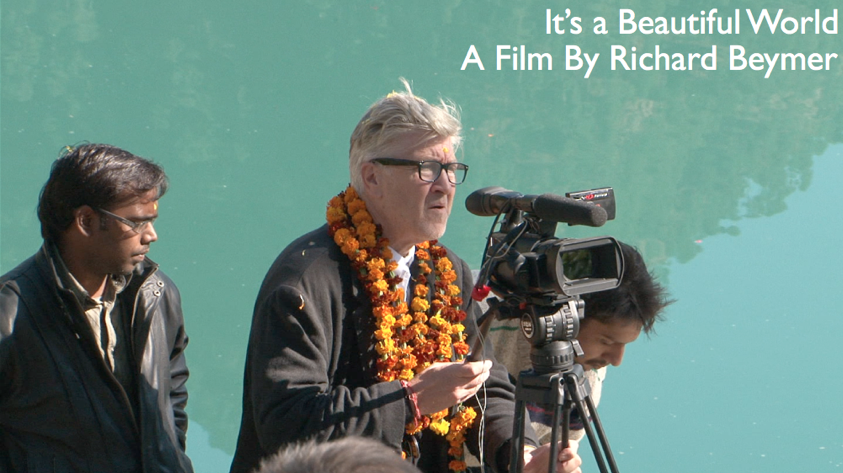
David films in Uttar Kashi

It’s a Beautiful World, is a film made by Richard Beymer as he accompanied David Lynch with Bob Roth and a film crew to India. David went from northern India to the south retracing his master Maharishi Mahesh Yogi’s footsteps for a documentary film he was going to make. Richard records the early stages of the making of that film on Maharishi.

David first visits Jyotir Math where Maharishi served his teacher Guru Dev for 13 years. After his passing, Maharishi went into silence for 2 years in a small cave-like room in a house in Uttar Kashi, the Valley of the Saints. David takes us right into that cave! A persistent thought brought Maharishi out to travel to a famous temple in Rameshwaram. From there he continued on to the great Temple to Mother Divine in Kanyakumari located at the southern-most tip of India where the 3 oceans meet. Along his return journey northwards a man from the Trivandrum Public Library asked Maharishi to speak. The film takes us to those sites and into that library where Maharishi gave his first series of 7 lectures. People had asked to learn what he was teaching, and that was the start of the TM movement. What had taken Maharishi two years, David covered in 10 inspiring eventful-packed days.

About a year or so before David made his trek to India, he also had the opportunity to visit with Maharishi in Vlodrop, Holland at his International Headquarters. A special interview was arranged and David was able to ask Maharishi some questions. It had been recorded, possibly for David to use in his documentary. I mentioned that interview to Richard and he checked with David for permission to use some of it. David directed Richard to use specific segments of an answer Maharishi gave him to a particular question. The film ends with it, coming full circle, of Maharishi explaining why he came out of the Silence of the Himalayas to bring his message to the world. He told David he thought what he had to offer would be useful to humanity. He said that the nature of life is bliss, and the nature of the individual is cosmic. And all those years of teaching TM had borne that out, later verified by hundreds of scientific research studies on the range of benefits in people’s lives, and the development of higher states of consciousness.

This film is also a rare glimpse into David’s personal life. Throughout the journey David reveals snippets of his film career. It’s an intimate look at David Lynch the man, the director in action, the devoted meditator, and his inspiration to share the gift of Transcendental Meditation with the world through his Foundation. Watch this skillfully edited trailer, then visit the website to order the film to stream or download.

Richard Beymer captures David at his best. You can read an excellent review of the film and place your order at Richard Beymer’s website: http://www.twinpeaksarchive.blogspot.com as well as Vimeo On Demand: http://vimeo.com/ondemand/12900. (No longer available.)

Also see “Meditation Creativity Peace”—A documentary of David Lynch’s 16-country tour during 2007–2009.

Of interest may be: Timeless JourneyPilgrimage, and To Jyotir Math, by Sally Peden.

See other films on Maharishi: The story behind the making of the International History documentary on Maharishi Mahesh Yogi and Watch the 1968 film of Maharishi at Lake Louise.

Capetown’s Shafiq Morton interviews David Leffler on a solution to the violence in Kiev

February 20, 2014

The VoicThe Voice of the Capee of the Cape’s after five Drivetime Show has a national and international flavor focusing on issues making news where the biggest story of the day or week is analyzed. South African host Shafiq Morton interviewed American Dr. David Leffler this week, Wednesday, Feb. 19, 2014, on a unique solution to the growing violence in Kiev.

Dr-David-LefflerDavid R. Leffler, Ph.D. is the Executive Director of the Center for Advanced Military Science (CAMS) at the Institute of Science, Technology and Public Policy, in Fairfield, Iowa, USA. He spoke on IDT, Invincible Defense Technology, as a viable solution to the rising crisis. Dr. Leffler explained how increasing stress levels erupt into opposing factions, violence and war, and how group practice of Transcendental Meditation and its advanced procedures can defuse such collective stress and prevent war, softening the atmosphere for people and groups to more harmoniously discuss solutions to their problems without resorting to violence.

Listen to the 20-minute interview on 91.3 FM http://iono.fm/e/74837.

I was so impressed by Morton’s questions and responses to Leffler’s informative answers, I posted this comment:

When Marconi said we could communicate through the airwaves they thought he was crazy. He was just using a technology that was able to take advantage of the electromagnetic field that was already there. Invincible Defense Technology similarly uses an advanced procedure to allow our minds to collectively enliven the all-powerful, all-nourishing Unified Field, the source of all the force and matter fields, the home of all the laws of nature, for the good of society, and the world, depending on the size of the group. Thank you for exposing your listeners to this hopeful and intelligent out-of-the-box proven approach to creating world peace!

The editorial piece referred to in the interview was co-authored by Dr. Leffler and Dr. Mykola Didukh, National Director for TM in Ukraine. Titled, “Proven Strategy to Prevent Turmoil in Ukraine,” how Invincible Defense Technology could be implemented to solve the crisis, the Op-Ed was published earlier this month in a number of locations: NEPAL: Review Nepal; WORLD SERVICE: The Common Ills; UNITED STATES & CANADA: Times of Earth; INDONESIA: Sigma News; and UKRAINE: Evening Lugansk, which was also published in Russian and Ukrainian.

(more…)

Fairfield, Iowa, The Spiritual Sister City, published in Lawrence, Kansas Magazine

February 11, 2014

Susan KrausSunflower Publishing sent Susan Kraus to Fairfield, Iowa to write a travel piece for one of their magazines, Lawrence Magazine, the premier quarterly magazine for Lawrence, Kansas.

Lawrence Magazine Spring 2014Their Spring 2014 issue includes an article on Fairfield, Iowa filed under Journey by travel writer Susan Kraus. Titled, The Spiritual Sister City, the description reads: With a little meditation in the heartland, a rural town in southeast Iowa transforms into a cultural and educational center.

Susan timed her visit last summer to take in a First Fridays Art Walk. Besides exploring Fairfield, she also toured the Maharishi University of Management campus, and learned about Transcendental Meditation, Consciousness-Based Education, and Sustainable Living. She brought her husband, who, decades earlier, when he was a university student, had learned TM.

Susan is also a social worker and her husband works at a university in the video department. They had lunch with Ken West, also from Kansas, who had done some photography in an area Susan was familiar with. They shared a lot about the Kansas and Iowa landscapes, and used some of Ken’s photos for the piece.

Susan wrote an accurate assessment of what she found here in such a refreshing way. You can read her story by clicking on this PDF: Lawrence Magazine spring 2014 for MUM.

See a related article by Des Moines Register editorial columnist Rox Laird. His Sunday Opinion piece features the collaborative civic-minded town of Fairfield and Maharishi University’s Sustainable Living Center. Fairfield defines community action: Jefferson County town shows how to ‘manufacture dreams’ through civic collaboration. MUM obtained permission to make this wonderful article available as a reprint. You can see it beautifully laid out on their website link.mum.edu/GreenFF.

Australian TV show objectively reports on TM

January 30, 2014

Transcendental Meditation on ABC’s Catalyst Sydney, Australia

Published over a year ago, this report on Transcendental Meditation, by the ABC’s Catalyst in Sydney, Australia, takes an objective look at the uniqueness of the practice, and its personal and health benefits. One skeptical physician says most people would sooner pop a pill to lower their blood pressure than waste time meditating. But, based on the scientific research, the American Heart Association now recommends that physicians may safely prescribe only TM for those patients who want to lower their blood pressure naturally, instead of taking long-term costly medications with potentially harmful side effects.

Dr. Robert Schneider’s tour in Australia and New Zealand educating physicians on the value of TM for heart health

Dr. Robert Schneider, MD, FACC, a leading medical researcher on the application of Transcendental Meditation for heart health, toured Australia and New Zealand in the fall of 2013. He presented the breakthrough scientific research findings of TM’s ability to reduce heart attack, stroke and early death by about 50%.

Dr. Schneider also mentioned the AHA statement, based on meta-analyses of data on different relaxation and meditation techniques, that physicians could only recommend TM to their patients wanting to naturally lower their HBP. You can see a video clip from a presentation made at Macquarie University Hospital in Sydney, Australia.

While making presentations in New Zealand, Dr. Schneider appeared on NZTV’s Breakfast ONE News program explaining how TM improves heart health, and the response from the medical community. You see that lively interaction here.

Related: @MaharishiU’s Dr. Robert Schneider presents @TMmeditation research to @uiowa Hospitals and Clinics medical staff | George Stephanopoulos interviews Jerry Seinfeld & Bob Roth on the importance of Transcendental Meditation for PTSD | Transcendental Meditation May Help Fight Heart Disease—article on Chef Marcus Samuelsson’s blog | Effects of TM Practice on Trait Anxiety: A Meta-Analysis of Randomized Controlled Trials.