Posts Tagged ‘David Lynch Foundation’

Jerry Yellin on Loud Miracles with Meital Dohan: Beating PTSD through Transcendental Meditation

May 17, 2011

Click on the title to listen to the interview.

Jerry Yellin: Beating PTSD Through Transcendental Meditation

Meital Dohan talks to Jerry Yellin. They discuss how TM helped him emerge from his PTSD as well as how TM can help better the mind and body in other ways, given that Meital also practices. They discuss the effects of PTSD and how drugs are not the only answer to the hardships and trauma of War.

More about Jerry Yellin

Jerry Yellin is a World War II Veteran who suffered from PTSD after returning home from the war. For many years he suffered from depression that he could not escape, and fell deeper and deeper with no end in sight despite being surrounded by people he cared about and who cared about him. After his wife began to practice Transcendental Meditation, Jerry also tried it. Through TM, which he continues to practice, he got himself out of his depression and has lived a long and healthy life. He speaks widely about his experience and he has has teamed up with the David Lynch Foundation to create Operation Warrior Wellness to provide TM to veterans of our current wars as a way to help heal from the hardships of battle.
 
Listen to other interviews by Meital Dohan and see other articles on Jerry Yellin posted here on The Uncarved Blog.
 
Meital has moved on but her interviews are posted on SoundCloud.
 

Real Life Solution: Combating PTSD with TM

March 25, 2011

March 25, 2011 posted by Veterans Today · Leave a Comment

By Dr. David Leffler

In early 2010 WWII veteran Jerry Yellin was introduced to a young man, Dory Klock, an eight-year Army veteran who had fought in Bosnia. Dory was having difficulty adjusting, keeping a job, and fighting drugs and alcohol. As a combat veteran, Jerry knew these inner struggles all too well. Dory’s wife and two daughters were suffering with him, and Dory’s mom Lin, Jerry’s friend, was beside herself. Then one day Lin called and asked Jerry if he could help her out. “Sure, Lin, anything,” he told her.

She began weeping; she couldn’t speak. Finally, she asked, “Can you help me put Dory’s medals and ribbons on his dress uniform? We want to bury him in it, Jerry. He committed suicide yesterday.” Lin brought Dory’s uniform to Jerry’s home and he put the medals and insignias in place. When Lin left, Jerry broke down. His thoughts ran wild with the suffering so many are experiencing from the life and death of our warriors who experience combat and have nothing to hold onto when they come home. Jerry was a P-51 Pilot who flew 19 missions over Japan and saw the horror of Iwo Jima – a battle involving 90,000 soldiers on a small island where 28,000 people died. He knew from his own experiences as a returning veteran who suffered from what is now called Post-Traumatic Stress Disorder (PTSD) that the problem is overwhelming our nation.

Jerry relates: “Can we expect our warriors to return from the horrors and experiences of war and integrate back into a normal routine without something deep and meaningful to hold onto? I could not. And neither can they. I also know that each and every PTSD victim needs a vehicle, a methodology that will help them help themselves. Antipsychotic and antidepressant drugs are used extensively but are extremely costly, especially for the long haul, and do not provide a cure. Many turn to alcohol and recreational drugs as a temporary escape from problems. Eighteen veterans from all our wars are said to be committing suicide daily. I know that care is dependent on complete willingness and cooperation from the patient. And that takes a long time. America does not have that time now. We are in crisis.”

This article offers a scientifically verified, time-tested solution to how we can help our military personnel, veterans and their families.

Read the rest of Real Life Solution: Combating PTSD with TM.

Also posted on OpEd News and the Purple Heart Service Foundation as Combating PTSD.

The New York Times: Look Who’s Meditating Now

March 19, 2011

Look Who’s Meditating Now

Evan Sung for The New York Times
POSTER BOY Russell Brand with David Lynch at the December Met fundraiser for Mr. Lynch’s foundation, which promotes Transcendental Meditation.

By IRINA ALEKSANDER
Published: March 18, 2011

RUSSELL BRAND, the lanky British comedian, has made a career of his outrageous antics. While a host at MTV UK, he went to work dressed up as Osama bin Laden. At the network’s annual music awards, he likened Britney Spears to a “female Christ.” And he was fired from the BBC after leaving raunchy messages on the voicemail of a 78-year-old actor, a comic bit that even his country’s then-prime minister felt compelled to denounce.

It is jarring then, to say the least, to hear Mr. Brand, 35, speaking passionately and sincerely about the emotional solace he has found in Transcendental Meditation, or TM. Yet there he was in December, onstage at the Metropolitan Museum of Art (as his new wife, the pop singer Katy Perry, waited backstage), describing how TM has helped him repair his psychic wounds.

“Transcendental Meditation has been incredibly valuable to me both in my recovery as a drug addict and in my personal life, my marriage, my professional life,” Mr. Brand said of the technique that prescribes two 15- to 20-minute sessions a day of silently repeating a one-to-three syllable mantra, so that practitioners can access a state of what is known as transcendental consciousness. “I literally had an idea drop into my brain the other day while I was meditating which I think is worth millions of dollars.”

Mr. Brand was the M.C. at a benefit for the David Lynch Foundation, an organization that offers TM at no cost to troubled students, veterans, homeless people, prisoners and others. Like many other guests in the room, Mr. Brand has been personally counseled by Mr. Lynch, the enigmatic film director, who has been a devout practitioner of TM, founded in 1958 by the spiritual leader Maharishi Mahesh Yogi, since its first wave of popularity in the late ’60s. That is when Mia Farrow, after her divorce from Frank Sinatra, joined the Beatles in the Maharishi’s ashram in Rishikesh, India; when George Lucas started meditating and was rumored to have based the Yoda character in “Star Wars” on the Maharishi (the resemblance is eerie); and when the talk show host Merv Griffin, after being introduced to the technique by his tennis buddy, the actor Clint Eastwood, invited the Maharishi to be on his show in 1975.

Since then, the celebrity endorsement, and therefore the enrollment numbers, had quieted down. That is, until the last three years when, according to the national Transcendental Meditation program, enrollment tripled.

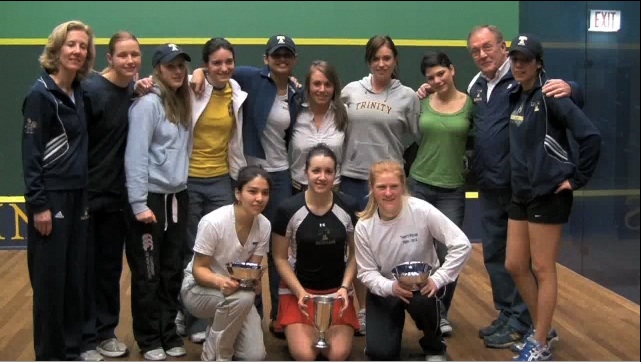
At Trinity College in Hartford, the women’s squash league began meditating together after every practice last year. The Doe Fund, an organization that assists the homeless, has begun offering TM to its residents along with computer skills and job training. And Ray Dalio, the billionaire hedge-fund manager of Bridgewater, has long credited the success of his funds to his daily practice.

The Transcendental Meditation program attributes the spike to a series of recent studies that suggest TM can help reduce blood pressure and stress, and to the relatively recent affordability of TM. (The adult course, which had ballooned from $75 in the ’60s to $2,500 in 2007, dropped, because of the economy, to $1,500 in 2008.) No less important has been Mr. Lynch’s foundation, started in 2005, for which enlisted celebrities like Mr. Brand, interrogated often by news outlets about their diets and alternative lifestyle remedies, have been preaching about the technique.

“It’s like, imagine the ripples on top of an ocean,” Dr. Mehmet Oz, who meditates in an armchair in an enclave off his bedroom, said at Mr. Lynch’s benefit. “And I’m in a rowboat, reactively dealing with the waves and water coming into my boat. What I need to do is dive into the deeper solace, the calmness beneath the surface.”

The actress Susan Sarandon meditates once a day for 20 minutes in bed. “It helps me chill out and focus,” she said. (Ms. Sarandon said she doesn’t practice TM specifically, but was at the benefit to gather insight.)

The singer Moby, another guest, has meditated in the back of a taxicab. “Transcendental Meditation has given me a perspective on agitation,” he said. “That it’s a temporary state of mind and I don’t necessarily need to take it that seriously.” Moby said the technique helped him quit drinking more than a year ago. “I used to think that TM was for weird old hippies,” he added. “But then I heard that David Lynch was involved, and that made me curious.”

ON the afternoon before the benefit, Mr. Lynch, 65, arrived at the museum, holding hands with his wife, Emily Lynch, 32, and was escorted by a museum employee to a green room downstairs. Mr. Lynch, like a cartoon character, has maintained the same uniform for decades: a pressed white shirt under a boxy black suit and a hedge of gray hair. He scooped up a soggy egg-salad sandwich from a tray and explained what brought him to the practice.

“I was not into meditation one bit,” Mr. Lynch said, in his laconic Missoula, Mont., drawl that years of living in Los Angeles has failed to dilute. “I thought it was a fad. I thought you had to eat nuts and raisins, and I didn’t want any part of it.”

Mr. Lynch was persuaded by his sister, Martha, when he began having marital difficulties with the first of his four wives, Peggy, in the early ’70s. “I had a whole bunch of personal anger that I would take out on her,” he said. “I think I was a weak person. I wasn’t self-assured. I was not a happy camper inside. Two weeks after I started, my wife comes to me and says, ‘This anger, where did it go?’ I felt a freedom and happiness growing inside. It was like — poooft! — I felt a kind of smile from Mother Nature. The world looked better and better. It’s an ocean of unbounded love within us, so it’s real hard to get a conflict going.” (Still, a year later, the couple divorced.)

It’s easy to shrug off such utterances as hokey, New Age prattle — who can forget Jeff Goldblum’s flaky character in “Annie Hall” on the phone, complaining that he’d forgotten his mantra? — but less so when the person reciting it has dreamed up his most widely admired, vivid films on the days when he was dropping out of consciousness for at least 30 minutes a day.

“Artists like to say, ‘I like a little bit of suffering and anger,’ ” he said. “But if you had a splitting headache, diarrhea and vomiting, how much would you enjoy the work and how much work would you get done? Maybe suffering is a romantic idea to get girls, but it’s an enemy to creativity.”


A version of this article appeared in print on March 20, 2011, on page ST1 of the New York edition. It was also published Saturday, March 26, 2011, in the TheLedger.com: Transcendental Meditation: Celebrities, Recent Biological Studies Increase Interest in Discipline

Jerry Yellin discusses Operation Warrior Wellness

February 21, 2011

War is an addiction; it’s a curse. We have not learned one thing since David, 5000 years ago, slung a pebble at a guy and killed a giant. All we’ve done is invent better pebbles and better slingshots, human to human. — Jerry Yellin

Listen to CBS radio broadcaster Beecher Martin interview author and decorated WW II veteran fighter pilot Jerry Yellin: Jerry Yellin discusses Operation Warrior Wellness.

Mr. Yellin, co-director of Operation Warrior Wellness, a division of the David Lynch Foundation, discusses his wartime experiences, his difficult transition suffering from PTSD, then unknown, and how TM, Transcendental Meditation transformed his life. This ½ hour radio interview was broadcast February 20, 2011, on 5 CBS radio stations in the Tampa Bay area in Florida.

Besides the tragedies of war, the tremendous stresses today’s soldiers and their families are under, and their very difficult transition to civilian life, Jerry also speaks about his goals: to not wait for the government to act but to start treating the soldiers themselves with PTSD, to help the families of war veterans, get warriors to learn TM as part of their basic training, and save government $15 billion a year.

Jerry mentions the inauguration of Operation Warrior Wellness in New York City at a press conference and evening gala event last December. Watch highlights of both events: the press conference and the second annual Change Begins Within benefit gala.

Also see WW II veteran publishes The Resilient Warrior: Healing the Hidden Wounds of War and PTSD and Transcendental Meditation mentioned in Military Times publications.

PTSD and Transcendental Meditation mentioned in Military Times publications

January 22, 2011

Post-Traumatic Stress Disorder (PTSD) and the Transcendental Meditation (TM) technique were reported in all four Military Times publications in the last 30 days. The Gannett Govt Media Corp publications: Air Force Times, Marine Corps Times, Army Times, and Navy Times, published an article, December 27, 2010, page 3, in their Off Duty section, WatchList: Things You Should be Tracking titled: Transcending trauma: Group hopes to teach 10,000 vets to meditate. It discussed the David Lynch Foundation’s recent launch of Operation Warrior Wellness

Although it is a well-written and positive article, Dr. Matthew Friedman, executive director of the Department of Veterans Affairs National Center for PTSD, was quoted as saying: “There are no published randomized clinical trials testing transcendental meditation for PTSD.”

Col. (Dr.) Brian M. Rees, Army Reserve, and David Leffler, (PhD) coauthored a Letter to the Editor, published Friday, Jan 21, 2011 in the Marine Corps Times and the Navy Times on page 5 in Opening Shots. The letter, Meditation studied in ’85, informed Dr. Friedman of a random assignment study of Vietnam veterans published in the peer-reviewed Journal of Counseling and Development. The study found the Transcendental Meditation technique to be effective against PTSD. Significant reductions in emotional numbness, anxiety, startle response, depression, alcohol consumption, insomnia, and family problems, and improvements in sleep and obtaining/keeping employment, were noted, and 70% of the meditators reported they no longer required the services of the veteran’s center.

An omitted section of the original letter discussed a new pilot study by Rosenthal J, Grosswald SJ, Ross R, and Rosenthal N, titled: “Effects of Transcendental Meditation (TM) in Veterans of Operation Enduring Freedom (OEF) and Operation Iraqi Freedom (OIF) with Post Traumatic Stress Disorder (PTSD): A Pilot Study,” 2010 (in review). In this study, Iraq and Afghanistan veterans experienced a 50% drop in PTSD symptoms by the 4th week, with greater improvements by the 2nd and 3rd months. The study is summarized in Jerry Yellin and Sarina Grosswald‘s new book, The Resilient Warrior: Healing the Hidden Wounds of War (2011). Drs. Rosenthal and Grosswald also discuss this devastating problem and the promising results of their pilot study in the video: Reduction of PTSD Symptoms in Veterans with Transcendental Meditation.

Here is the original version of the Rees-Leffler letter: Meditation Effective PTSD Treatment. David Leffler, executive director of the Center for Advanced Military Science (CAMS), provides more information on TM and PTSD at: http://davidleffler.com/combat-stress-solution.html.

See this powerful personal account: Veteran Dan Burks on Overcoming the Stresses of War with Transcendental Meditation.

And these reports: Dec 14, 2010, Military.com, Celebs, Vets Promote Meditation for PTSD, Dec 15, 2010, On Patrol, Fighting PTSD with Transcendental Meditation, and Jan 5, 2011, Veterans’ Children, Making Transcendental Meditation Available to Veterans.

See Launching ‘Operation Warrior Wellness” — VIDEO HIGHLIGHTS Bringing TM to Veterans suffering from PTSD.

Also see Jerry Yellin: Healing the Hidden Wounds of War, WW II veteran publishes The Resilient Warrior: Healing the Hidden Wounds of War and Jerry Yellin discusses Operation Warrior Wellness.

Veteran Dan Burks on Overcoming the Stresses of War with Transcendental Meditation

January 18, 2011

Veteran Dan Burks on Overcoming the Stresses of War with TM

DavidLynchFoundation | December 12, 2010

Transcription: “December 18th 1967 – Newsweek, five days after my birthday. This is a story called ‘The Days Work.’ And this is my unit, we went out and got ambushed, and this is me doing my job. We were attacked at this place called Buddha. That fight went on for two weeks. The first night I killed 14 people. There were 25 hundred of them, 250 of us. The next morning in front of my fighting position there were 18 of our men dead. So this is very, very, very distressing, and it creates huge amounts of distress in your system.”

“Later in the magazine there’s this… this is an article Maharishi Mahesh Yogi and a couple guys in my platoon, one of them got the magazine and came running over and said ‘Burks, you gotta read this!’ So I did. And I said, ‘I’m going to do that….’ Because it talks about stress release, about becoming a whole person.”

“The next part of the story is about getting home. And that’s a whole big deal, because things changed. All of a sudden you’re in a different culture. They don’t understand you. They have no idea. They don’t understand that you’re always still in the rubber plantation in the jungle. You’re always on an adrenalin high. You’re looking to protect your buddies, you’re looking to protect yourself and you’re looking to kill the enemy.”

Help us heal our Veterans – http://www.davidlynchfoundation.org

See two other videos: AFP: Meditation soothes war veterans and 50% reduction in PTSD symptoms within 4 weeks of Veterans practicing Transcendental Meditation.

See AFP’s How Clint Eastwood keeps his cool, Meditation May Ease PTSD for Vets, and watch highlights of the David Lynch Foundation‘s Operation Warrior Wellness press conference and the second annual Change Begins Within benefit gala.

THP: Keeping Your Prefrontal Cortex Online: Neuroplasticity, Stress and Meditation

August 12, 2010

Keeping Your Prefrontal Cortex Online: Neuroplasticity, Stress and Meditation

As we go through life, our brain is always changing and adapting, say neuroscientists. During the first 18-20 years of life the brain is developing circuits that will form the basis of decision-making for a lifetime. Brain researchers have found that unhealthy lifestyles can inhibit normal brain development in adolescents and lead to impaired judgment and destructive behavior that carries over into adulthood. Traumatic experiences, alcohol and drug abuse, growing up neglected in a broken home, living in fear of violence and crime, or even a bad diet can interfere with development of the frontal lobes, the brain’s executive system. This can cause behavioral problems. Brain researcher Dr. Fred Travis explains: “When a person’s frontal lobes don’t develop properly, he lives a primitive life. He doesn’t — and can’t — plan ahead. His world is simplistic, and he can only deal with what’s happening to him right now. Thinking becomes rigid: ‘You’re either with me or against me,’ or ‘Me and my gang are good, and everyone else is bad.'”

The good news: meditation improves brain function

Brain researchers have also found that the brain can be changed in a positive direction through healthy lifestyle choices. This ability of the brain to reorganize its network of neurons is called “neuroplasticity.” Studies recently published in Cognitive Processing show that brain development can be enhanced — not only during adolescence but at any age — through the practice of meditation, and that different meditation techniques have different effects on the brain. For example, during the Transcendental Meditation (“TM”) technique there is increased alpha coherence in the brain’s frontal areas. “Within a few months of practice of the TM technique,” says Travis, “we see high levels of integration of frontal brain connectivity. And interestingly, that integration does not disappear after meditation. Increasingly and over time, this orderly brain functioning is found in daily activity.”

When the different parts of the brain are better integrated they work together more harmoniously — our brain is healthier. Higher levels of brain integration are associated with higher moral reasoning, emotional stability and decreased anxiety, according to a 1981 study in the International Journal of Neuroscience. Research shows that world-class athletes have higher brain integration than controls. Brain integration is important because one’s environment and circumstances are constantly shifting, and you need a flexible, integrated brain to successfully evaluate where you are, where you want to be and the necessary steps to get there.

Keeping your prefrontal cortex “online”

The prefrontal cortex — said to be the brain’s executive center or “CEO” — plays a crucial role in higher judgment, discrimination and decision-making. When we are overly tired or under intense mental, emotional or physical stress, our brain tends to bypass its higher, more evolved rational executive circuits, defaulting to more primitive stimulus/response pathways. We respond to challenges without thinking, making impulsive, shortsighted decisions. When the brain’s CEO goes “offline,” strong emotions such as fear and anger can adversely color or distort our perception of the world. Interestingly, the brain’s crucial frontal area is where the highest levels of EEG coherence are typically recorded during TM practice, indicating improved communication between the prefrontal cortex and other parts of the brain.

When a person transcends during meditation (goes beyond the active levels of the mind), the experience is commonly reported as a state of deep silence and inner wakefulness, without particular qualities or attributes — just pure consciousness. According to research studies, such as the previously mentioned study in Cognitive Processing, it is this ‘transcendental’ experience that creates the more efficient, integrated brain functioning seen during TM practice. While focused attention and other mental processes activate local brain areas, the experience of transcending activates the whole brain, enabling different parts of the brain to function together better as a whole.

Helping kids grow healthier brains

Fortunately, transcending is easy — we’re hardwired for it. With proper instruction and right practice, anyone can do it, including students with ADHD. Experiencing the quiet, transcendental field of orderliness deep within the mind doesn’t mean conjuring up a new outlook on life or accepting new beliefs, nor does it require an attitude change. It’s a natural, universal experience that produces a healthy response in the brain.

With help from the David Lynch Foundation and other private benefactors, thousands of at-risk students are now learning meditation during structured, in-school programs around the world. Researchers monitoring the results are finding that meditation improves learning ability, memory, creativity and IQ. Findings such as these may be opening a new frontier of research — establishing an expanded, more enlightened view about what is possible for the human brain.

VIDEO of Dr. Fred Travis, Director, Center for Brain, Consciousness, and Cognition in Fairfield, Iowa: Brain Plasticity and Transcendental Meditation with Dr Fred Travis.


Read More: Meditation, Neuroplasticity, Transcendental Meditation, Living News

Also see: THP: How Meditation Techniques Compare

To become more competitive, Trinity College Women’s Squash Team tries out a new technique — the Transcendental Meditation Program

July 14, 2010

This video reports on the use of the TM Program by the 2009–2010 Women’s Squash team at Trinity College in Hartford, Connecticut.

The whole team including the coaches learned the TM technique. They finished the season as the #3 Women’s Squash team in the country.

Trinity College Psychology major Emily Lindon did her thesis on the Effects of Transcendental Meditation on Perceived Self-Efficacy of College Students. One of the groups she researched was the Women’s Squash Team. Emily found significant increases in self-efficacy among the pre- and post-tests.

The Trinity Women’s Squash Team was trained in the Transcendental Meditation technique through a grant from the David Lynch Foundation. TM is a technique for focus and stress reduction. It is not connected to any religion or belief system but rather it is a simple, effortless, natural meditative technique with scientifically proven effectiveness. The team placed third nationally for the 2009/2010 college squash season. For more information, contact Dr. Randy Lee at randolph.lee@trincoll.edu

Dr. Lee posted this 8 minute video of the winning Trinity College Women’s Squash team on You Tube. The  video was produced and directed by Lynn Kaplan. Peter Trivelas was the cameraman and editor. Executive producer was the David Lynch Foundation. It’s also posted on David Lynch Foundation Television http://dlf.tv/2010/trinity-squash.

Global Good News‘s Excellence In Action posted an article on this story: Peak Performance: Exploring a transcendental technique for success.

See a new article on this subject written by Linda Egenes: Transcendental Meditation and The Mind of an Athlete (December 17, 2014).

Saving the Disposable Ones: World Premiere Poster for David Lynch Foundation Documentary

April 3, 2010

URL to download and view full size poster of Saving the Disposable Ones

Watch the extended trailer now

DLF.TV Documentary: Saving the Disposable Ones

We can now watch “Saving the Disposable Ones” at this site.

See the Saving the Disposable Ones article by Linda Egenes in Issue 11 of Enlightenment: The Transcendental Meditation Magazine.

Donovan GDLA and Off-Ramp Interviews

March 15, 2010

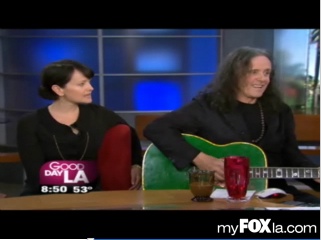
Donovan and Astrella on GDLA

Monday, 15 Mar 2010, 11:40 AM PDT

Los Angeles – Legendary singer Donovan was one of the few artists to collaborate on songs with Beatles and he has played with folk greats Pete Seeger, Joan Baez and Bob Dylan, and has even played with rock legends the Rolling Stones.

Donovan and daughter Astrella visit by “Good Day LA” to talk about a benefit concert for the David Lynch Foundation.

Donovan will be joined by his daughter Astrella Celeste to headline a benefit concert for the David Lynch Foundation on Friday, March 19 at the El Rey Theater in Los Angeles.

For more info on the concert log onto:  www.donovan.ie/en/


Off-Ramp Special Podcast – Donovan in Concert

Monday, March 8, 2010.

They gave us the keys to the podcast, so now we can send out special editions when we’ve got great stuff to share … like 60s icon Donovan and his guitar in studio. This is the full version of the piece we’ll run this weekend on the broadcast edition of Off-Ramp.              Download

Donovan Live at the Mohn Broadcast Center

Donovan is headlining a concert at the El Rey Theatre March 19th to benefit the David Lynch Foundation, which works to teach at-risk schoolkids to meditate. Donovan learned how to meditate with the Beatles and the Maharishi back in the 1960s. In our Off-Ramp interview, Donovan talks about the old days, reducing students’ stress and reliance on ADHD drugs, and the benefits and drawbacks of fame. He also sings three of his favorites. (COME INSIDE for info on the concert, a link to Lynch’s foundation, and to see who is taller — Donovan or Off-Ramp host John Rabe.)

1 comment

Gary Kaplan
5 days, 19 hours ago

Sublime! Donovan is our hero. What a great service he is doing for mankind.